
Karen J. Hartwell, MD, Todd K. Magro, MD, and Kathleen T. Brady, MD, PhD
CHAPTER OUTLINE
■ PREVALENCE
■ SCREENING AND DIFFERENTIAL DIAGNOSIS
■ GENERAL TREATMENT CONSIDERATIONS
■ ALCOHOL AND ANXIETY
■ NICOTINE AND ANXIETY DISORDERS
■ OPIOIDS AND ANXIETY DISORDERS
■ MARIJUANA AND ANXIETY DISORDERS
■ STIMULANTS AND ANXIETY DISORDERS
■ CONCLUSIONS
Numerous studies suggest that anxiety disorders, symptoms of anxiety, and substance use disorders (SUDs) commonly co-occur. The interaction between these disorders and symptoms is not unidirectional, but rather multifaceted and variable. Anxiety disorders may be a risk factor for the development of SUDs. Anxiety disorders modify the presentation and outcome of treatment for SUDs, just as substance use and SUDs modify the presentation and outcome of treatment for anxiety disorders. Anxiety symptoms also emerge during the course of chronic intoxication and withdrawal. Individuals who are defined as having co-occurring anxiety and SUDs should meet criteria for the anxiety disorder independent of periods of acute intoxication and withdrawal. Table 87-1 provides brief descriptions of the major anxiety disorders. In this chapter, the area of co-occurring SUDs and anxiety disorders is reviewed. Prevalence, diagnostic, and treatment issues are addressed.
TABLE 87-1 BRIEF DESCRIPTIONS OF MAJOR ANXIETY DISORDERS

From American Psychiatric Association. Diagnostic and statistical manual of mental disorders, 4th ed. Washington, DC: American Psychiatric Press, Inc., 1994.
PREVALENCE
General Population
A number of epidemiologic studies conducted in the United States over the past 20 years have concluded that anxiety disorders and SUDs co-occur more commonly than would be expected by chance alone (1–3). The National Epidemiological Survey on Alcohol and Related Conditions (NESARC) is the most recent and largest survey study focused on psychiatric and SUDs to date, with a Wave 1 sample of more than 43,000 adults. The study was designed to distinguish between independent (i.e., not attributed to withdrawal or intoxication) and substance-induced mood and anxiety disorders (4). More than 17.7% of respondents with an SUD in the past 12 months also met criteria for an independent anxiety disorder. Approximately 15% of those with any anxiety disorder in the past 12 months had at least one co-occurring SUD (4). The relationship between anxiety disorders and drug use disorders (odds ratio [OR] 2.8) was stronger than the relationship between anxiety and alcohol use disorders (AUDs) (OR 1.7). Hasin explored both 12-month and lifetime diagnoses using the NESARC data. For an AUD, 12-month prevalence was 8.5% and lifetime prevalence was 30.3%. The OR of AUDs co-occurring with any anxiety disorder was 1.9 for 12-month diagnoses and 10.4 for lifetime diagnoses (5). Associations between drug use disorders and specific anxiety disorders were virtually all significantly positive (p < 0.05). In general, the ORs were more positive for abuse compared with dependence and for women compared to men. Marijuana use disorders were the most common drug use disorder among individuals, with anxiety disorders (15.1%) followed by cocaine (5.4%), amphetamine (4.8%), hallucinogen (3.7%), and sedative (2.6%) use disorder (6). A large study examining the relationship between anxiety and substance dependence in 1,747 young adults, 18 to 23 years of age, found that the onset of one or more anxiety disorders (panic disorder [PD], generalized anxiety disorder [GAD], and social anxiety disorder [SAD]) without other comorbid psychiatric disorders such as depression preceded the onset of alcohol and/or other substance dependence 80% of the time (7). In a clinical sample of individuals diagnosed with obsessive–compulsive disorder (OCD), 70% of individuals with a comorbid SUD reported that the OCD preceded the onset of the SUD by at least 1 year (8).
Addiction and Psychiatric Treatment Populations
Because the relationship between anxiety and SUDs is fraught with symptom overlap and diagnostic difficulties, estimates of co-occurring disorders in treatment settings are variable and dependent on diagnostic techniques used and specific disorder being assessed. Specific prevalence estimates are addressed in more detail in sections focused on individual anxiety disorders. One study of opioid users in a needle exchange program found that approximately 15% also had a lifetime anxiety disorder diagnosis (12% males and 21% females) (9). In a larger sample of substance use treatment clinics, 80% had at least one co-occurring anxiety disorder, and comorbidity had a significant relationship to overall mental distress at initial interview and 6 years later (10).
Primary Care Population
Anxiety disorders are common within primary care settings and associated with functional impairment, distress, and high utilization of medical care services (11). GAD in primary care settings is at least twice the rate reported in general population prevalence estimates (12). Recognition of anxiety is poor with only 23% of anxiety patients recognized within primary care as compared to 56% of depression cases (10). SUDs are also common in primary care settings with estimates that 15% to 20% of men and 5% to 10% of women seen in primary care clinics have problem drinking or an AUD (13). The prevalence of primary care practice patients with lifetime use of illicit drugs more than five times was 20%, which is higher than national average (14). Prescription drug misuse and abuse are also common problems in primary care settings. There are very few studies specifically focused on co-occurring disorders in primary care settings. In one large sample of primary care patients, among respondents with PD with or without agoraphobia (AG), 15% also had at least one SUD (15).
SCREENING AND DIFFERENTIAL DIAGNOSIS
Based on prevalence data, individuals seeking treatment for anxiety should be assessed for the presence of an SUD, and conversely, individuals seeking substance abuse treatment should be assessed for comorbid psychiatric disorders, including anxiety disorders. However, one of the most difficult challenges in the area of co-occurring anxiety and SUDs is diagnosis. It is clear that substance use and withdrawal can mimic nearly every psychiatric disorder. Substances of abuse have profound effects on neurotransmitter systems involved in the pathophysiology of anxiety disorders and, with chronic use, may unmask a vulnerability to anxiety or may lead to organic changes that manifest as an anxiety disorder. The best way to differentiate substance-induced, transient symptoms of anxiety from anxiety disorders that warrant treatment is through observation of symptoms during a period of abstinence. Transient substance-related states will improve with time. The duration of abstinence necessary for accurate diagnosis remains controversial and is likely to be based on both the diagnosis being assessed and the substance used. For example, long half-life drugs (e.g., some benzodiazepines, methadone) may require several weeks of abstinence for withdrawal symptoms to subside, but shorter-acting substances (e.g., alcohol, cocaine, short half-life benzodiazepines) require shorter periods of abstinence to make valid diagnoses. A family history of anxiety disorder, the onset of anxiety symptoms before the onset of SUD, and sustained anxiety symptoms during lengthy periods of abstinence all suggest an independent anxiety disorder.
Because of the high rate of co-occurrence of anxiety and SUDs, screening patients presenting at primary care, substance use, or psychiatric treatment settings is critical. This is especially important considering that early diagnosis and treatment can improve treatment outcomes. A number of screening tools are available and easily integrated into everyday practice. For example, the Mini-International Neuropsychiatric Interview has a brief form that contains screening questions for PD, AG, social phobia, specific phobia, OCD, and posttraumatic disorder (16,17). The screener contains one “yes or no” question for each anxiety disorder, and all are based on the DSM-IV criteria (Table 87-2). Numerous self-report questionnaires have been developed to screen for anxiety disorders in the primary care settings. For example, the Four-Dimensional Symptom Questionnaire (4DSQ) is a 50-item self-rating questionnaire developed to distinguish depression, anxiety, and somatization from general distress (18). The Hospital Anxiety and Depression Scale (HADS) is a 14-tem self-rating questionnaire that measures both depression and anxiety (19). In a multisite trial, the 4DSQ and the HADS were administered to 295 patients on sick leave due to psychological problems excluding patients with known depressive or anxiety disorders (20). The 4DSQ demonstrated superiority compared to the HADS in detecting PD, AG, and social anxiety requiring treatment. These self-rating questionnaires and other screening tools can be administered by support staff in the office setting and can help to identify high-risk individuals. However, because of symptom overlap and diagnostic difficulties, a detailed interview may be necessary to fully differentiate substance-induced symptoms from primary mood/anxiety diagnoses.
TABLE 87-2 SCREENING QUESTIONS FOR ANXIETY DISORDERS FROM THE MINI-INTERNATIONAL NEUROPSYCHIATRIC INTERVIEW
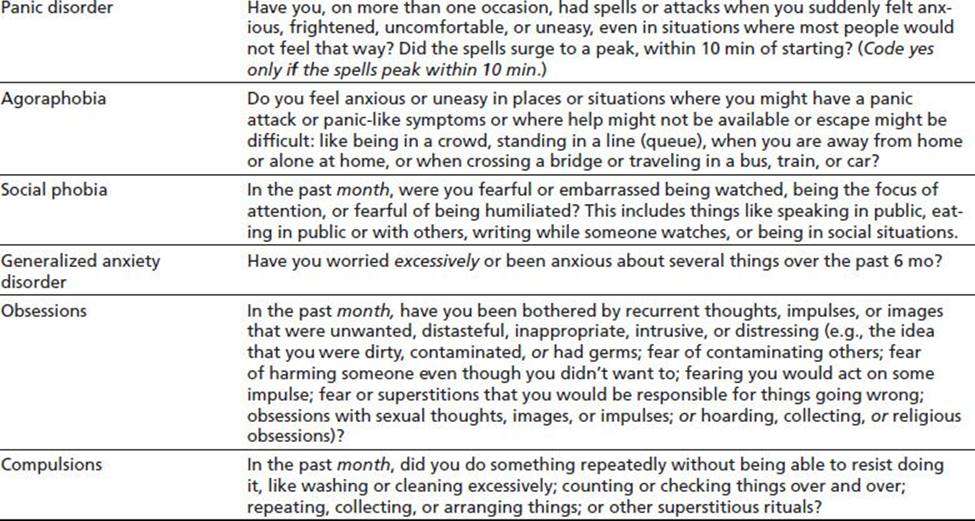
Adapted from Sheehan D, Janavs J, Baker R, et al. MINI Plus: Mini International Neuropsychiatric Interview. 2006. English version 5.0.0. Tampa, FL: University of South Florida, 2006.
GENERAL TREATMENT CONSIDERATIONS
In general, treatment efforts addressing psychiatric and SUDs have developed in parallel. The integration of services and effective treatments from both fields will be critical to the optimal treatment of individuals with co-occurring disorders. It is important to maximize the use of nonpharmacologic treatments. Some research suggests that traditional therapies, including those focused on Alcoholics and Narcotics Anonymous, may be more challenging for some individuals with anxiety disorders. A recent study of individuals entering community-based intensive outpatient substance treatment found that clinically significant social anxiety interfered with recovery-related activities such as attending 12-step recovery programs, finding a sponsor, and speaking up in groups (21). Learning strategies to self-regulate anxiety symptoms can interrupt the cycle of using external agents to combat intolerable subjective states and help individuals to acquire alternative coping strategies. Among psychosocial treatments, cognitive–behavioral therapies (CBTs) are among the most effective for both anxiety disorders and SUDs. The effectiveness of CBT for all of the anxiety disorders is well established in both clinical trials and naturalistic settings (22), and CBT has been utilized extensively in the treatment of SUDs (23). Promising pilot work investigating the integration of effective therapeutic techniques from the anxiety and substance use fields to develop treatments specifically targeting co-occurring disorders will be discussed in the sections that follow, but much work is left to be done.
Research investigating pharmacotherapeutic treatments for both substance use and anxiety disorders is progressing rapidly. The pharmacotherapeutic treatment of specific anxiety disorders will be discussed in detail later, but some general principles apply. The use of psychotropic medications is sometimes discouraged in SUD treatment settings in a way that can undermine treatment (24). Individuals in recovery often have complex and conflicting feelings and attitudes and may see the need for medications as a sign of defectiveness or failure. It is important to address the individual’s feelings about taking medications and to emphasize the need for medication adherence in a proactive manner.
In cases where the relationship of psychiatric symptoms and substance use is unclear, the risk/benefit ratio of using medications must be carefully considered. Pharmacotherapies for anxiety disorders are well established and reviewed in detail in the literature (25). Should the decision to use medication be made, treatment should generally follow routine clinical practice for treatment of the anxiety disorder with some exceptions. It is important to pay attention to potential toxic interactions between the prescription medications and illicit drugs and alcohol in case of relapse. It is also important to use the agent with the least abuse potential. A recent review of pharmacotherapies for the treatment of anxiety disorders indicated that selective serotonin retake inhibitors as a class are generally considered as first-line medications due to overall effectiveness, tolerability, and safety (25). Serotonin–norepinephrine reuptake inhibitors are typically seen at alternate first-line medications with the majority of the research focused on venlafaxine, which has FDA indications for the treatment of GAD, PD, and SAD (25). Mirtazapine has shown promise in several open trials in PD (26) and SAD (27). Other antidepressants such as the tricyclic antidepressants and monoamine oxidase inhibitors are generally used as second-or third-line medications primarily due to problems with tolerability. Buspirone has been found to be efficacious compared to placebo and benzodiazepines for the treatment of GAD but generally not for the treatment of PD or SAD (25). Because of its limited effectiveness, buspirone is most commonly utilized for the treatment of uncomplicated GAD. Anticonvulsants are receiving increasing attention for the treatment of a variety of psychiatric disorders. For the treatment of GAD, pregabalin has the greatest amount of positive support from the literature from six double-blind placebo-controlled randomized clinical trials (RCTs) (25). Gabapentin has also demonstrated promise in case reports and in a double-blind RCT for SAD (28). The serotonergic properties of the atypical antipsychotics are thought to augment the action of antidepressants in the treatment of depression, and as a result, these medications are also being investigated in the treatment of anxiety disorders. In general, double-blind placebo-controlled RCTs of the atypical antipsychotics are still quite limited. The worrisome side effect burden of these medications that includes substantial weight gain and adverse metabolic effects also needs to be addressed in future research and the clinical decision to prescribe these agents.
Despite their effectiveness in immediate relief of panic and other anxiety symptoms, benzodiazepine use is generally avoided in substance-using populations because of their abuse potential. Benzodiazepines may be considered as adjunctive medication during the early treatment phase when activation or latency of onset of the antidepressants is an issue. If a benzodiazepine is prescribed to a patient with a co-occurring SUD, close monitoring for relapse and limited amounts of medication should be given. As a rule, benzodiazepines should be avoided in patients with a current SUD and used with caution in those with a history of substance use. They should be considered for chronic treatment only when other pharmacologic and nonpharmacologic treatment options have been exhausted. If necessary, a benzodiazepine with a low abuse potential such as oxazepam and chlordiazepoxide may be considered.
Finally, the use of agents targeting substance use specifically, such as naltrexone or disulfiram, as add-on treatment for individuals with comorbid SUDs and anxiety disorders is underexplored. In one study of 254 outpatients with alcohol dependence and a variety of comorbid psychiatric disorders, Petrakis et al. (29) investigated the efficacy of disulfiram and naltrexone or their combination in a 12-week randomized trial. Participants treated with naltrexone or disulfiram, as compared with placebo, had significantly more consecutive weeks of abstinence and fewer drinking days per week. In comparison to naltrexone-treated participants, disulfiram-treated participants reported less craving from pre- to post-treatment. The effects of the medications by specific comorbid psychiatric disorder were not discussed, but active medication was associated with greater symptom improvement (e.g., less anxiety). No clear advantage of combining medications was observed. The use of adjunctive pharmacotherapeutic treatment is likely to become more relevant as pharmacotherapeutic treatment options for SUDs increase.
In the sections that follow, the prevalence rates, differential diagnosis, and treatment of GAD, SAD, OCD, and PD will be reviewed. Post-traumatic stress disorder is covered in another chapter, and simple phobia will not be covered because most evidence suggests that this disorder has no specific relationship with SUDs.
ALCOHOL AND ANXIETY
The highly comorbid relationship between alcohol and anxiety has received more attention than that of anxiety and other substances of abuse. This is probably because alcohol is legal, readily available, and many individuals with anxiety report using alcohol to relieve anxiety symptoms. However, the relationship between alcohol use and anxiety is complex and probably varies across anxiety disorders. The short-term relief of anxiety from alcohol use in combination with long-term anxiety induction from chronic drinking and withdrawal can initiate a feed-forward cycle of increasing anxiety symptoms and alcohol consumption (30).
Generalized Anxiety Disorder
In the NESARC study, approximately 50% of those with lifetime GAD had a lifetime comorbid SUD, and of those with both GAD and SUD, over 90% had an AUD (31). Nearly half of those presenting for outpatient treatment of AUD also meet criteria for GAD (32). Self-medication with alcohol was more prevalent in GAD in the NESARC study than with other anxiety disorders (33). In adolescents, the presence of GAD is associated with a more rapid progression from age of first drink to alcohol dependence (34). GAD follows a chronic course with low rates of remission and frequent relapses/recurrences. Comorbid SUD decreases the likelihood of recovery from GAD and increases the risk of exacerbation (35,36).
Differential Diagnosis
GAD symptoms have considerable overlap with acute intoxication from stimulants and withdrawal from alcohol, opioids, sedative, and hypnotic drugs. Because of this, distinguishing substance-induced anxiety symptoms from GAD can be challenging. A DSM-IV diagnosis of GAD requires a 6-month duration of symptoms not directly related to the physiologic effects of a substance; however, many individuals with SUDs have difficulty maintaining abstinence for 6 months, so earlier diagnosis could be important to successful recovery. Careful history taking can establish the timing of GAD symptoms relative to the SUD. Both SUDs and GAD can result in significant occupational, social, and health problems, so it can be challenging to discern if the impairments are related to the SUD, GAD, or both. As patients engage in recovery, ongoing assessment of anxiety symptoms will provide valuable information regarding diagnosis and need for continued treatment.
Treatment
The most current guidelines for the pharmacotherapeutic treatment of GAD are from the Canadian Psychiatric Association (37). First-line medications include paroxetine, escitalopram, sertraline, and venlafaxine XR. Second-line agents include alprazolam, bromazepam (not available in the United States), lorazepam, diazepam, buspirone, imipramine, pregabalin, and bupropion XL. Third-line medications to be considered are mirtazapine, citalopram, trazodone, hydroxyzine, and adjunctive olanzapine or risperidone. Although effective for some individuals, controlled trials do not support the use of beta blockers. Paroxetine, escitalo-pram, and venlafaxine have demonstrated long-term efficacy with increasing response rates over 6 months. Because approximately 20% to 40% of patients with GAD relapse within 6 to 12 months after the discontinuation of pharma-cotherapy, long-term treatment may be needed (38).
There is little evidence-based research to direct treatment decisions for individuals with GAD and comorbid SUDs. Buspirone has been examined in the treatment of highly anxious alcoholics with mixed results. It has the advantage of minimal interactions with alcohol (39) and low abuse potential (40,41). Although selective serotonin reuptake inhibitors (SSRIs) have not been specifically studied in individuals with co-occurring GAD and SUDs, they are efficacious in the treatment of uncomplicated GAD and relatively safe to use in individuals with SUDs, so would be a reasonable choice in individuals with co-occurring disorders. Bupropion should be avoided or used with caution in individuals at risk for seizures, such as alcoholics with a history of withdrawal seizures (42). Benzodiazepines should be used with caution in this population and never as a first-line agent. Topiramate has shown to reduce anxiety, alcohol craving, and relapse in early studies (43). Pregabalin has demonstrated efficacy for GAD and alcohol withdrawal syndrome but has not been evaluated in comorbid AUD and GAD (44). Psychosocial treatments are clearly efficacious in the treatment of GAD. CBT has been most often used in combination with SUD treatment with goals of managing anxious states without medications (38).
Social Anxiety Disorder (SAD)
The lifetime prevalence of SAD ranges from 3% to 13% (45,46). In the recent NESARC, the 12-month and lifetime prevalence rates for SAD were 2.8% and 5.0%, respectively (45). Approximately 20% of individuals with SAD also suffer from an AUD, and the lifetime prevalence of an AUD with SAD (48%) is more than double that of individuals without lifetime SAD (29%) (47). The prevalence of SAD among individuals with AUD is at least 20% (34). SAD serves as a risk factor for alcohol dependence as those with social anxiety may use alcohol to self-medicate, and SAD precedes AUD about 80% of the time (48).
Differential Diagnosis
Symptoms of social anxiety typically precede the onset of SUDs (49). The key symptom, fear of performance or social situations, is specific to SAD and not generally associated with substance use or withdrawal making diagnosis easier than it is for other co-occurring anxiety disorders.
Treatment
Current treatment recommendations for SAD include SSRIs or beta blockers in combination with integrated psychosocial treatment. There are a few studies examining treatment options in comorbid populations. Schade et al. randomized 96 alcohol-dependent patients with comorbid anxiety disorders, including SAD (n = 87) to CBT plus optional fluvoxamine (150 mg/d) versus treatment as usual. There was greater improvement in the combined treatment group in anxiety outcomes. Fluvoxamine was not associated with better outcomes (50). Two small placebo-controlled studies of paroxetine in co-occurring AUD and SAD have demonstrated significant improvement in social anxiety with paroxetine treatment but no significant group differences in alcohol use in either study (51,52).
Several studies of individual CBT for AUD versus concurrent therapy for AUD and comorbid anxiety disorders showed no benefit of integrated treatment and in fact may worsen alcohol outcomes (53). The investigators in one study hypothesized that exposure to anxiety-provoking social situations in concurrent treatment may have increased drinking to cope (54). Terra et al. followed 300 detoxified alcohol-dependent patients with and without SAD after standard treatment and found no difference in treatment adherence and outcomes; however, individuals with SAD chaired Alcoholics Anonymous meetings less often, were more ashamed of attendance, felt less integrated into the group, and were less likely to feel better after a meeting (55). Individuals with SAD may need treatment targeting their social anxiety before being able to benefit from group interventions. Individual therapy may be better tolerated than group therapy, and a period of sobriety and skills training may be important before increasing exposure to social situations.
Obsessive–Compulsive Disorder
The association of OCD and AUDs is less robust than for other anxiety disorders. In the National Comorbidity Survey Replication study, OCD was negatively correlated with AUD (56). The Collaborative Study on the Genetics of Alcoholism found no significant increase in rates of OCD in individuals with AUDs (57). Studies in treatment-seeking samples also suggest a nonsignificant relationship.
Differential Diagnosis
Craving in SUDs has been compared to the intrusive recurrent thoughts that drive behavior in OCD (58), but thoughts and compulsions in individuals with SUDs are restricted to alcohol and drug use and easily distinguished from OCD.
Treatment
There are no controlled studies of pharmacologic treatment of co-occurring OCD and SUDs. First-line medications for OCD are clomipramine, fluoxetine, fluvoxamine, paroxetine, and sertraline. In individuals with SUDs, SSRIs are preferable to clomipramine because of more favorable side effect profiles (59). Fals-Stewart and Schafer randomly assigned 60 substance abusers with OCD in a drug-free therapeutic community to combined OCD and SUD treatment, SUD treatment alone, or SUD treatment plus progressive muscle relaxation. At 12 months, the group receiving combined treatment had higher abstinence, longer duration in treatment, and a greater reduction in OCD symptoms (60).
Panic Disorder (PD)
In the NESARC study, lifetime prevalence of PD (with or without AG) was 5.1% and was twice as common in women as compared to men (61). Drug dependence was the most strongly associated SUD, although the lifetime risk of alcohol dependence was also elevated (62). In a recent review of the literature, the risk of PD in the presence of AUDs was two to four times higher than in the absence of AUD (63). In the Collaborative Study on the Genetics of Alcoholism, lifetime risk for PD was increased in individuals with AUDs (4.2% vs. 1.0%, respectively) (57).
Differential Diagnosis
Alcohol withdrawal can cause panic attacks, which will markedly improve during the first several weeks of abstinence if related to alcohol withdrawal only (57). Alternatively, individuals with panic attacks may use alcohol use to decrease panic symptoms and consequently develop an AUD (63). Panic attacks early in recovery that decrease in frequency may respond to support and reassurance. However, if the panic attacks continue or increase over several weeks of abstinence, the diagnosis of PD should be made. Without treatment, the risk of relapse to alcohol use is increased (64). In one prospective study of alcoholics recruited from acute treatment, PD was the most common diagnosis and was predictive of relapse. After 4 months, approximately 50% of those who had initially met criteria for an anxiety disorder no longer met diagnostic criteria (65). This finding emphasizes the need to carefully track anxiety symptoms early in recovery and to provide normalizing information to patients about common withdrawal symptoms and the typical course of recovery.
Treatment
According to current guidelines, four classes of medications— SSRIs, tricyclic antidepressants, benzodiazepines, and monoamine oxidase inhibitors—have approximately comparable efficacy in the treatment of PD (65). As previously discussed, benzodiazepines are generally avoided in individuals with SUDs. The SSRIs fluoxetine, sertraline, paroxetine, and fluvoxamine have each demonstrated effectiveness in clinical trials and are the best choice for individuals with co-occurring PD and SUD (65).
There is an extensive body of literature supporting the efficacy of CBT in the treatment of PD (65). In one controlled trial of standard alcohol treatment versus combined CBT for PD plus AUD (66), improvement of panic symptoms and relapse rates did not differ between the two groups. A more recent study compared hybrid CBT targeting both alcohol and panic versus treatment as usual in a 28-day chemical dependency program. The investigators showed that hybrid CBT improved drinking outcomes and reduced panic attacks (67).
NICOTINE AND ANXIETY DISORDERS
Among adults 18 years of age or older, current cigarette smoking prevalence rates have declined 42.5% from 1965 to 19.3% in 2010; however, further decreases have stalled, with only a 1.6% decrease in the last 5 years (68). Results from the 2007 National Health Interview Survey found that the age-adjusted smoking prevalence rate among adults with phobias or fears was significantly higher when compared to adults without a history of mental illness, 34.3% and 18.3%, respectively (69). In a more detailed analysis from the 2000 to 2001 NESARC study, the 12-month prevalence rate of nicotine dependence among individuals with anxiety disorders was almost double the rate in the general population, 25% and 13%, respectively, and the risk of an anxiety disorder among nicotine-dependent individuals was more than twice that of any other psychiatric disorder. Conversely, the prevalence rates of nicotine dependence were also increased in individuals with anxiety disorders (PD 40%, SAD 27%, and GAD 33%) (70). Despite the strong associations between smoking, nicotine dependence, and anxiety disorders, there has been relatively little investigation of causal connections or treatment. A recent review suggested that smoking, and nicotine in particular, can alleviate anxiety, but other studies indicate that nicotine use and withdrawal can cause anxiety (71). The Development and Assessment of Nicotine Dependence in Youth study followed a cohort of seventh graders for 3.5 years and found a strong association between trait anxiety and all measures of tobacco use and nicotine dependence. A relaxing effect from initial exposure to nicotine, distinct from relief of withdrawal symptoms, was predictive of a sixfold increase in the risk for nicotine dependence (72). The Netherlands Study of Depression and Anxiety, a longitudinal naturalistic cohort study, found that the onset of anxiety disorders was 5 years earlier for early-onset (10 to 15 years) as compared to late-onset smokers (>15 years), and this relationship remained after controlling for gender, education, and childhood trauma (73). Smokers with a history of panic attacks have significantly more anxiety-related withdrawal symptoms and shorter quit attempts compared with those without panic attacks (74). Models currently being used to explain the relationship between nicotine dependence and anxiety disorders include conditioning theory, cognitive theory, anxiety sensitivity theory, and stress and coping models (71).
Differential Diagnosis
The anxiety and arousal associated with nicotine withdrawal can be distinguished from independent anxiety disorders by the time course. Prospective research suggests that nicotine withdrawal symptoms typically return to baseline within 10 days (75) and anxiety decreases within 4 weeks of quitting among smokers without comorbid psychiatric disorders (76). Anxiety symptoms that persist beyond the withdrawal period warrant further investigation. It is important to note that when individuals enter treatment programs, particularly inpatient treatment, their cigarette smoking is generally significantly curtailed. Anxiety related to nicotine withdrawal should be taken into consideration in any assessment of anxiety in individuals hospitalized for the treatment of either SUDs or psychiatric disorders.
Panic Disorder
The relationship between PD and smoking is the best studied of all the anxiety disorders. In the NESARC study, individuals with PD had elevated 12-month prevalence rates of nicotine dependence (70). In a clinical sample of individuals with anxiety disorders, the PD group had the highest proportion of smoking, 40.4%, and was more likely to be heavy smokers compared to the SAD, 20%, and OCD groups, 22.4% (77). Daily smoking is associated with an increased risk for the first occurrence of a panic attack or PD, and the risk is higher in active smokers than past smokers (78). Early smoking increases the risk for the development of PD (71), and the initiation of smoking may precede the onset of PD by many years (median, 12 years) (79). In addition, individuals with PD who smoke regularly report more severe anxiety symptoms and social impairment as compared to nonsmokers (80).
Social Anxiety Disorder
Few studies have investigated the relationship between SAD and smoking. Although some studies have failed to demonstrate a relationship (81), one prospective longitudinal study of adolescents and young adults found both social fears and SAD were significantly associated with higher rates of nicotine dependence (82). Approximately 50% reported the onset of social anxiety before smoking.
Generalized Anxiety Disorder
Higher rates of smoking have been observed among individuals with GAD (70,83). In one prospective longitudinal study of adolescents and young adults, heavy smoking (≥20 cigarettes per day) was associated with an increased risk of GAD (21%, OR 5.5) during young adulthood (81). A confounding issue is the high rates of co-occurrence of GAD between other anxiety and depressive disorders.
Obsessive–Compulsive Disorder
The prevalence of smoking is the lower in individuals with OCD compared to those with other anxiety disorders (71). In one prospective longitudinal study of youth, no association between smoking and OCD was found (81). Another study found nicotine-dependent individuals had an increased risk for developing OCD (78). Nicotine administration decreases some forms of compulsive behavior in both human and animal studies, and obsessive thoughts can be reduced by transdermal nicotine in humans (71). In one study, nonsmokers with OCD were more symptomatic, worried more, were less self-confident, and were less impulsive as compared to smokers with OCD (84). Further research is needed to examine the relationship of nicotine, obsessive–compulsive symptoms, and OCD.
Treatment
Current guidelines for treating nicotine dependence include a combination of counseling, behavior therapy, and pharmacotherapy. Pharmacotherapy is recommended in all individuals attempting to quit unless there is a contraindication. Medications that reliably increase long-term smoking abstinence include bupropion sustained-release (SR), all forms of nicotine replacement therapy (nicotine gum, nicotine inhaler, nicotine nasal spray, nicotine lozenge, and nicotine patch), and varenicline (85). Given the high prevalence rates of anxiety disorders among smokers, treatments aimed at the specific needs of this population need to be developed; however, there is little empiric evidence to guide treatment at present. Bupropion treatment can be associated with anxiety and agitation in some individuals, so should be used with caution in anxious patients. Buspirone (up to 60 mg/d) had a beneficial effect on abstinence in highly anxious smokers in one randomized controlled trial in high- and low-anxiety smokers. However, buspirone decreased abstinence in the low-anxiety group, and these effects reversed when the drug was withdrawn. No differential effects on abstinence were observed beyond the 3-month follow-up (86). A recent large RCT that included individuals with anxiety disorders (38.5% met criteria for at least one lifetime anxiety disorder GAD, SAD, or panic attacks) compared the efficacy of six brief individual counseling sessions (focused on social support, problem-solving, and coping skills) in combination with six randomized double-blind pharmacologic therapies: nicotine patch, nicotine lozenge, bupropion SR, bupropion SR and nicotine lozenge, nicotine patch and nicotine lozenge, or placebo (87). Compared to placebo, the combination treatments doubled the quit rate; however, participants with a history of an anxiety disorder were less likely to be abstinent at 8 weeks’ or 6 months’ postquit, and neither the monotherapies nor combination therapies were superior to placebo at 6 months. While further research is needed, these results suggest that for smokers with anxiety disorders, many of the first-line medications may be less effective. In contrast, no association was found between anxiety disorders and the cumulative probability of remission from nicotine dependence in an analysis from the 2000 to 2001 NESARC (88). There is little information about the use of varenicline for smoking cessation in individuals with anxiety disorders.
In a recent review, Morisette (71) suggested that interoceptive exposure therapy may be helpful in reducing distress and anxiety during withdrawal by teaching individuals to tolerate internal cues such as negative affect, craving, and withdrawal symptoms. Cognitive therapy may also be helpful by addressing maladaptive thoughts associated with both anxiety and tobacco use. Mindfulness and acceptance-based treatments also hold some promise, but much work remains to be done in investigating optimal treatment for nicotine dependence in individuals with anxiety disorders (71).
OPIOIDS AND ANXIETY DISORDERS
In NESARC, lifetime prevalence of opioid use disorders (OUD) was 1.42% with rates in men double that of women (6). Lifetime prevalence of an OUD was 3.2% in individuals with anxiety disorders. Among individuals with OUDs, lifetime prevalence of any anxiety disorder was 36.3% with a much higher rate in opioid dependence (61%) than opioid abuse (6). In a review of psychiatric comorbidity in OUDs, anxiety disorders were also commonly reported with lifetime rates varying from 8% to 60% (6). In NESARC, lifetime prevalence of SAD was 13% in individuals with OUDs, with a greater association with opioid dependence 21% compared with abuse 10% (6). Across studies, lifetime rates of SAD in individuals with OUDs have been reported between 3% and 39% (89). Approximately one-fourth of heroin users in an inner-city clinic had evidence of elevated social anxiety. The measures were higher in younger individuals with more ties to nonusing family, friends, and associates who are a source of negative feedback compared to older drug users who were more likely to affiliate with other drug users (90). The lifetime prevalence of PD with AG, 5%, was lower compared with PD without AG, 14%, in individuals with OUDs. PDs without AG rates were higher in opioid dependence, 24%, than abuse, 10% (6). The lifetime prevalence rate of GAD among individuals with OUDs was 11% in the NESARC study with 22% in opioid dependence compared with 7% in opioid abuse (6). In one outcome study, the presence of a comorbid SUD decreased the likelihood of recovery from GAD by nearly fivefold and increased the risk of recurrence threefold (35). Furthermore, sensitivity to anxiety at baseline has been shown to predict dropout from residential treatment among patients with OUDs (91).
Diagnosis
Diagnosis of primary anxiety disorders in opioid dependent patients remains a challenge, as the relationship between anxiety and OUDs is complex (92). Several studies have shown that anxiety and the endogenous opioid system are linked. The release of endogenous opioids in response to stress has a modulating effect on anxiety, and blocking the opioid system with an antagonist produces anxiety symptoms in human volunteers and anxiety-linked behaviors in animal models (93). Anxiety is a key feature of opioid withdrawal (94). Stabilization in treatment including pharmacotherapy and psychosocial treatments can significantly reduce withdrawal-related symptoms in as little as 1 week.
Treatment
While no clinical trials of treatments for co-occurring anxiety disorders have been conducted, general treatment principles apply. Patients presenting for treatment of opioid dependence should be screened for anxiety, and the temporal relationship of anxiety symptoms to opioid use and dependence should be assessed (92). A comprehensive treatment plan is necessary to address the opioid use, anxiety, other comorbid SUDs, and chronic pain if present (89). Initial components should include medical detoxification and consideration of buprenorphine or methadone treatment. Treatment with the α2 agonist clonidine has been shown to reduce acute opioid withdrawal symptoms including related panic anxiety (95). In a study comparing clonidine to buprenorphine–naloxone detoxification, subjects receiving buprenorphine–naloxone reported fewer withdrawal symptoms including anxiety and had more successful treatment than subjects receiving clonidine. Subjects in both groups had better outcomes if they had higher baseline anxiety, perhaps because they experienced greater relief of symptoms than subjects without baseline anxiety (96). If anxiety persists after detoxification and stabilization, then specific treatments for anxiety should be considered. Physicians should choose anxiety medications with efficacy for the specific anxiety disorder being treated and with attention to special considerations described in this chapter. Symptoms of chronic pain such as poor sleep, anxiety, and loss of appetite may be misattributed to another psychiatric disorder. Adequate pain treatment may result in resolution of symptoms. Consultation with a pain specialist may be helpful.
MARIJUANA AND ANXIETY DISORDERS
In 2010, there were 17.4 million current American marijuana users over the age of 12, and marijuana was the most commonly used drug (76.8%) by current illicit drug users and was the only drug used by 60.1% of them (97). The relationship between marijuana and anxiety remains unclear. Some studies suggest that marijuana use increases the long-term risk of anxiety (98); others find that marijuana use results in acute anxiety symptoms during intoxication only (99); and anxiety symptoms can develop as part of marijuana withdrawal (98). A number of studies have found an association between early-onset anxiety disorders and marijuana use and cannabis dependence. For example, a longitudinal community-based study of boys from the first grade through high school indicated that GAD predicted earlier use of marijuana and both SAD and GAD predicted progression from first use to marijuana-related problems (100). In a 14-year longitudinal study, individuals who entered the study with a diagnosis of SAD had 6.5 greater odds of developing cannabis dependence after controlling for other relevant factors (101). In another 10-year community longitudinal study that began with adolescents, PD was the anxiety disorder with the strongest association with marijuana use (OR 5.2) and cannabis use disorders (OR 5.9). Participants with any anxiety disorder at baseline were more likely to have a lifetime occurrence of marijuana use (OR 1.5) or a use disorder (OR 1.7) with anxiety generally preceding marijuana use. Zvolensky et al. (102) examined the relationship between marijuana use, panic attacks, and PD in a representative sample and found that after controlling for sociodemographic differences and lifetime SUD, lifetime marijuana use was significantly associated with an increased risk of lifetime panic attacks (OR = 1.6) and current (OR = 1.3) and lifetime diagnosis of PD (OR = 1.6). In contrast, a recent review attempted to determine order of onset and potential causal relationships between marijuana use and anxiety through the examination of seven longitudinal, population-based studies (103). After controlling for confounding factors, there was little evidence to suggest that marijuana use predicted long-term anxiety or anxiety disorders, but it was associated with transient anxiety reactions (103). Marijuana use as a strategy to cope with anxiety is also a focus of recent research. Studies suggest that the use of marijuana as a coping strategy may serve to enhance anxiety through an avoidance– anxiety cycle and users who report coping motives for their use also use marijuana more often (104). Additionally, treatment for marijuana dependence may be affected by comor-bid anxiety. In a recent large multi-site trial investigating the effectiveness of two psychosocial treatments for marijuana dependence, higher anxiety prior to treatment was associated with increased depression at baseline and increased marijuana related problems at baseline and both follow-up time points (105). Of note, the results also suggested marijuana dependent patients may benefit from treatment focused on the development of skills to manage anxiety as anxiety reduction was associated with improved marijuana outcomes. A study comparing successful and unsuccessful quitters with a cannabis use disorder found that successful quitters were more likely to employ coping strategies such as alternative ways to relax and deal with unpleasant emotions than unsuccessful quitters (106). In sum, the relationship between marijuana and anxiety disorders is complex. Some but all of the research to date has found an association between anxiety and marijuana use and disorders. Additional research will be necessary to further delineate the relationship between anxiety and marijuana use disorders.
STIMULANTS AND ANXIETY DISORDERS
There is relatively little research on co-occurring anxiety disorders and cocaine, methamphetamine, and amphetamine use. These agents stimulate noradrenergic systems, and acute intoxication is often associated with anxiety. Because of these anxiogenic effects, it has been postulated that individuals who are vulnerable to anxiety may be less likely to abuse or become dependent on this class of drugs (107). When anxiety symptoms are reported in individuals with stimulant use disorders, careful attention to the time course of anxiety symptoms relative to stimulant use is critical.
Prevalence
In NESARC, the 12-month prevalence of cocaine use disorders was 0.27% and of amphetamine use disorders was 0.16%. Thirty-nine percent of individuals with amphetamine use disorders and 31% of those with cocaine use disorders reported lifetime anxiety disorders. Of individuals with anxiety disorders, 4.8% reported lifetime amphetamine use disorders and 5.4% reported lifetime cocaine use disorders (6). Studies of treatment-seeking individuals indicate that anxiety disorders are relatively less common in cocaine dependent treatment-seeking patients as compared with alcohol and other drug-dependent individuals (108). Myrick and Brady (109) found lifetime prevalence of SAD in a cocaine-dependent population to be 13.9%, with SAD preceding the onset of cocaine dependence in nearly all cases. In one of the few studies examining GAD and drug abuse specifically, Massion et al. (110) found that in a group of subjects with PD or GAD, only 18% had GAD only and 11% had a history of nonalcohol drug abuse or dependence. Crum and Anthony (111) explored the association between cocaine use and OCD and found that the estimated relative risk of OCD among those with cocaine and marijuana and at least one other drug of abuse was 3.2.
In a large sample from the Methamphetamine Treatment Project, participants completed self-report measures of anxiety (112). Women reported higher levels of anxiety than did men. Frequency of methamphetamine use was positively associated with severity of general anxiety and phobic anxiety. At 3-year follow-up, 26.2% of participants met criteria for current or past anxiety disorder, with GAD being most common. Among those with anxiety disorders, treatment adherence was poorer, and self-reported methamphetamine use was significantly higher during the follow-up period (113). In a review of two community surveys, lifetime non-cocaine stimulant use was associated with lifetime diagnoses of nearly every anxiety disorder (114). Onset for SAD preceded use of stimulants and other drugs, and onset of GAD tended to occur after stimulant use onset (114). A study of incarcerated women found that the most common form of drug dependence was methamphetamine and about one-fourth of the sample had GAD, PD, or posttraumatic stress disorder (115). The results regarding anxiety are difficult to interpret because anxiety and depression were not examined as separate outcomes; however, women with combined anxiety and mood disorders had higher rates of methamphetamine dependence than did those with mood disorder only or those with neither disorder. In a sample of current amphetamine users, one-third of respondents reported anxiety symptoms preceding initiation of amphetamine use, two-thirds reported experiencing anxiety since initiation of amphetamine use, and at least half reported panic attacks (116).
Diagnosis
The compulsive foraging for misplaced cocaine that has been noted in cocaine addicts (117) has commonalities with that of OCD. Although this may implicate common neurobiologic processes, these symptoms generally occur only during acute intoxication and withdrawal and do not meet diagnostic criteria for OCD. Cocaine has been reported to precipitate panic attacks in patients without previous PD (118,119). Stimulant withdrawal symptoms may also include low levels of anxiety in the first few days of abstinence (120), and specifically withdrawal from cocaine has been associated with heightened anxiety states (121). Therefore, a period of abstinence is warranted before diagnosing an anxiety disorder in individuals with stimulant use disorders.
Treatment
There is a paucity of research focused on the treatment of co-occurring stimulant use and anxiety disorders. In one small case series, patients with cocaine-induced PD had substantial symptom improvement after treatment with either carbamazepine or clonazepam (119). Because repeated cocaine administration is associated with neuronal sensitization leading to increased limbic excitability (122), it has been hypothesized that this is the mechanism of cocaine-induced panic. Anticonvulsant agents, such as valproate and carbamazepine, have demonstrated efficacy in the treatment of PD. PD in patients with comorbid psychostimulant use may be linked to a sensitization mechanism and may respond particularly well to anticonvulsant medications. This hypothesis warrants further investigation.
There are a number of psychosocial treatments with demonstrated efficacy in the treatment of stimulant dependence including contingency management and cognitive–behavioral therapy (123). Clearly, individuals with co-occurring disorders should be engaged in evidence-based psychosocial treatment for their stimulant use. There are no controlled trials of psychosocial treatments designed specifically to address co-occurring stimulant use and anxiety disorders.
CONCLUSIONS
Because of the high co-occurrence of anxiety and SUDs and their prevalence in the population, primary care and mental health providers will encounter these conditions frequently in the course of their work. It is essential that providers address substance use patients’ anxiety symptoms as a routine part of treatment. This requires careful differential diagnosis that usually requires at least a brief period of sustained abstinence. Providers should also consider the mechanism of action of different medications and choose those with the lowest risk for abuse. Psychosocial treatments for anxiety and SUDs are excellent primary and adjunct treatments for these co-occurring disorders, and referrals should be made as necessary.
REFERENCES
1.Regier DA, Farmer ME, Rae DS, et al. Comorbidity of mental disorders with alcohol and other drug abuse. Results from the Epidemiologic Catchment Area (ECA) Study. JAMA1990;264:2511–2518.
2.Kessler RC, Crum RM, Warner LA, et al. Lifetime co-occurrence of DSM-III-R alcohol abuse and dependence with other psychiatric disorders in the National Comorbidity Survey. Arch Gen Psychiatry1997;54:313–321.
3.Kessler RC, McGonagle KA, Zhao S, et al. Lifetime and 12-month prevalence of DSM-III-R psychiatric disorders in the United States. Results from the National Comorbidity Survey. Arch Gen Psychiatry1994;51:8–19.
4.Grant B, Stinson F, Dawson D, et al. Prevalence and co-occurrence of substance use disorders and independent mood and anxiety disorders: results from the National Epidemiologic Survey on Alcohol and Related Conditions. Arch Gen Psychiatry 2004;61:807–816.
5.Hasin DS, Stinson FS, Ogburn E, et al. Prevalence, correlates, disability, and comorbidity of DSM-IV alcohol abuse and dependence in the United States: results from the National Epidemiologic Survey on Alcohol and Related Conditions. Arch Gen Psychiatry 2007;64:830–842.
6.Conway KP, Compton W, Stinson FS, et al. Lifetime comorbidity of DSM-IV mood and anxiety disorders and specific drug use disorders: results from the National Epidemiologic Survey on Alcohol and Related Conditions. J Clin Psychiatry 2006;67:247–257.
7.Lopez B, Turner RJ, Saavedra LM. Anxiety and risk for substance dependence among late adolescents/young adults. J Anxiety Disord 2005;19:275–294.
8.Mancebo MC, Grant JE, Pinto A, et al. Substance use disorders in an obsessive compulsive disorder clinical sample. J Anxiety Disord 2009;23:429–435.
9.Kidorf M, Disney ER, King VL, et al. Prevalence of psychiatric and substance use disorders in opioid abusers in a community syringe exchange program. Drug Alcohol Depend2004;74:115–122.
10.Bakken K, Landheim AS, Vaglum P. Axis I and II disorders as long-term predictors of mental distress: a six-year prospective follow-up of substance-dependent patients. BMC Psychiatry2007;7:29.
11.Gurmankin Levy A, Maselko J, Bauer M, et al. Why do people with an anxiety disorder utilize more nonmental health care than those without? Health Psychol 2007;26:545–553.
12.Roy-Byrne PP, Wagner A. Primary care perspectives on generalized anxiety disorder. J Clin Psychiatry 2004;65(Suppl 13):20–26.
13.Sullivan EJ, Fleming MF; Center for Substance Abuse Treatment (U.S.). A guide to substance abuse services for primary care clinicians. Treatment improvement protocol (TIP) series. Rockville, MD (Rockwall II, 5600 Fishers Lane, Rockville 20857): U.S. Dept. of Health and Human Services, Public Health Service, Substance Abuse and Mental Health Services Administration, Center for Substance Abuse Treatment, 1997:168.
14.Manwell LB, Fleming MF, Johnson K, et al. Tobacco, alcohol, and drug use in a primary care sample: 90-day prevalence and associated factors. J Addict Dis 1998;17:67–81.
15.Rodriguez BF, Weisberg RB, Pagano ME, et al. Frequency and patterns of psychiatric comorbidity in a sample of primary care patients with anxiety disorders. Compr Psychiatry2004;45:129–137.
16.Sheehan D, Janavs J, Baker R, et al. MINI Plus: Mini International Neuropsychiatric Interview. 2006. English version 5.0.0. Tampa, FL: University of South Florida, 2006.
17.Sheehan DV, Lecrubier Y, Sheehan K, et al. The Mini-International Neuropsychiatric Interview (M.I.N.I): the development and validation of a structured diagnostic psychiatric interview for DSM-IV and ICD-10. J Clin Psychiatry 1998;59:22–33.
18.Terluin B, van Marwijk H, Ader H, et al. The Four-Dimensional Symptom Questionnaire (4DSQ): a validation study of a multidimensional self-report questionnaire to assess distress, depression, anxiety and somatization. BMC Psychiatry 2006;6:34.
19.Zigmond A, Snaith R. The hospital anxiety and depression scale. Acta Psychiatr Scand 1983;67:361–370.
20.Terluin B, Brouwers E, van Marwijk H, et al. Detecting depressive and anxiety disorders in distressed patients in primary care; comparative diagnostic accuracy of the Four-Dimensional Symptom Questionnaire (4DSQ) and the Hospital Anxiety and Depression Scale (HADS). BMC Fam Pract 2009;10:58–69.
21.Book SW, Thomas SE, Dempsey JP, et al. Social anxiety impacts willingness to participate in addiction treatment. Addict Behav 2009;34:474–476.
22.Otte C. Cognitive behavioral therapy in anxiety disorders: current state of the evidence. Dialogues Clin Neurosci 2011;13:413–421.
23.McHugh RK, Hearon BA, Otto MW. Cognitive behavioral therapy for substance use disorders. Psychiatr Clin North Am 2010;33:511–525.
24.Danion JM, Neunreuther C, Krieger-Finance F, et al. Compliance with long-term lithium treatment in major affective disorders. Pharmacopsychiatry 1987;20:230–231.
25.Ravindran LN, Stein MB. The pharmacologic treatment of anxiety disorders: a review of progress. J Clin Psychiatry 2010;71:839–854.
26.Sarchiapone M, Amore M, De Risio S, et al. Mirtazapine in the treatment of panic disorder: an open-label trial. Int Clin Psychopharmacol 2003;18:35–38.
27.Van Veen JF, Van Vliet IM, Westenberg HG. Mirtazapine in social anxiety disorder: a pilot study. Int Clin Psychopharmacol 2002;17:315–317.
28.Pande AC, Davidson JR, Jefferson JW, et al. Treatment of social phobia with gabapentin: a placebo-controlled study. J Clin Psychopharmacol 1999;19:341–348.
29.Petrakis IL, Poling J, Levinson C, et al. Naltrexone and disulfiram in patients with alcohol dependence and comorbid psychiatric disorders. Biol Psychiatry 2005;57:1128–1137.
30.Kushner MG, Abrams K, Borchardt C. The relationship between anxiety disorders and alcohol use disorders: a review of major perspectives and findings. Clin Psychol Rev 2000;20:149–171.
31.Alegria AA, Hasin DS, Nunes EV, et al. Comorbidity of generalized anxiety disorder and substance use disorders: results from the National Epidemiologic Survey on Alcohol and Related Conditions. J Clin Psychiatry 2010;71:1187–1195; quiz 1252–1183.
32.Smith JP, Book SW. Comorbidity of generalized anxiety disorder and alcohol use disorders among individuals seeking outpatient substance abuse treatment. Addict Behav 2010;35:42–45.
33.Robinson J, Sareen J, Cox B, et al. Self-medication of anxiety disorders with alcohol and drugs: results from a nationally representative sample. J Anxiety Disord 2009;23:38–45.
34.Sartor CE, Lynskey MT, Heath AC, et al. The role of childhood risk factors in initiation of alcohol use and progression to alcohol dependence. Addiction 2007;102:216–225.
35.Bruce SE, Yonkers KA, Otto MW, et al. Influence of psychiatric comorbidity on recovery and recurrence in generalized anxiety disorder, social phobia, and panic disorder: a 12-year prospective study. Am J Psychiatry 2005;162:1179–1187.
36.Compton WM III, Cottler LB, Jacobs JL, et al. The role of psychiatric disorders in predicting drug dependence treatment outcomes. Am J Psychiatry 2003;160:890–895.
37.Canadian Psychiatric Association. Clinical practice guidelines. Management of anxiety disorders. Can J Psychiatry 2006;51:9S–91S.
38.McKeehan MB, Martin D. Assessment and treatment of anxiety disorders and co-morbid alcohol/other drug dependency. Alcohol Treat Q 2002;20:45–59.
39.Mattila MJ, Aranko K, Seppala T. Acute effects of buspirone and alcohol on psychomotor skills. J Clin Psychiatry 1982;43:56–61.
40.Cole JO, Orzack MH, Beake B, et al. Assessment of the abuse liability of buspirone in recreational sedative users. J Clin Psychiatry 1982;43:69–75.
41.Griffith JD, Jasinski DR, Casten GP, et al. Investigation of the abuse liability of buspirone in alcohol-dependent patients. Am J Med 1986;80:30–35.
42.Dunner DL, Zisook S, Billow AA, et al. A prospective safety surveillance study for bupropion sustained-release in the treatment of depression. J Clin Psychiatry 1998;59:366–373.
43.Paparrigopoulos T, Tzavellas E, Karaiskos D, et al. Treatment of alcohol dependence with low-dose topiramate: an open-label controlled study. BMC Psychiatry 2011;11:41.
44.Oulis P, Konstantakopoulos G. Pregabalin in the treatment of alcohol and benzodiazepines dependence. CNS Neurosci Ther 2010;16:45–50.
45.American Psychiatric Association. Diagnostic and statistical manual of mental disorders, 4th, text revision ed. Washington, DC: American Psychiatric Press, Inc., 2000.
46.American Psychiatric Association. Diagnostic and statistical manual of mental disorders, 4th ed. Washington, DC: American Psychiatric Press, Inc., 1994.
47.Grant BF, Hasin DS, Blanco C, et al. The epidemiology of social anxiety disorder in the United States: results from the National Epidemiologic Survey on Alcohol and Related Conditions. J Clin Psychiatry2005;66:1351–1361.
48.Buckner JD, Timpano KR, Zovlensky MJ, et al. Implications of comorbid alcohol dependence among individuals with social anxiety disorder. Depress Anxiety 2008;25:1028–1037.
49.Carrigan M, Randall C. Self-medication in social phobia: a review of the alcohol literature. Addict Behav 2003;28:269–284.
50.Schade A, Marquenie LA, van Balkom AJ, et al. The effectiveness of anxiety treatment on alcohol-dependent patients with a comorbid phobic disorder: a randomized controlled trial. Alcohol Clin Exp Res2005;29:794–800.
51.Book SW, Thomas SE, Randall PK, et al. Paroxetine reduces social anxiety in individuals with a co-occurring alcohol use disorder. J Anxiety Disord 2008;22:310–318.
52.Randall CL, Johnson MR, Thevos AK, et al. Paroxetine for social anxiety and alcohol use in dual-diagnosed patients. Depress Anxiety 2001;14:255–262.
53.Hesse M. Integrated psychological treatment for substance use and co-morbid anxiety or depression vs. treatment for substance use alone. A systematic review of the published literature. BMC Psychiatry2009;9:6.
54.Randall CL, Thomas S, Thevos AK. Concurrent alcoholism and social anxiety disorder: a first step toward developing effective treatments. Alcohol Clin Exp Res 2001;25:210–220.
55.Terra MB, Barros HM, Stein AT, et al. Does co-occurring social phobia interfere with alcoholism treatment adherence and relapse? J Subst Abuse Treat 2006;31:403–409.
56.Kessler RC, Chiu WT, Demler O, et al. Prevalence, severity, and comorbidity of 12-month DSM-IV disorders in the National Comorbidity Survey Replication. Arch Gen Psychiatry2005;62:617–627.
57.Schuckit M, Tipp J, Bucholz K, et al. The life-time rates of three major mood disorders and four major anxiety disorders in alcoholics and controls. Addiction 1997;92:1289–1304.
58.Modell JG, Glaser FB, Cyr L, et al. Obsessive and compulsive characteristics of craving for alcohol in alcohol abuse and dependence. Alcohol Clin Exp Res 1992;16:272–274.
59.Koran LM, Hanna GL, Hollander E, et al. Practice guideline for the treatment of patients with obsessive-compulsive disorder. Am J Psychiatry 2007;164:5–53.
60.Fals-Stewart W, Schafer J. The treatment of substance abusers diagnosed with obsessive-compulsive disorder: an outcome study. J Subst Abuse Treat 1992;9:365–370.
61.Grant BF, Hasin DS, Stinson FS, et al. The epidemiology of DSM-IV panic disorder and agoraphobia in the United States: results from the National Epidemiologic Survey on alcohol and related conditions. J Clin Psychiatry 2006;67:363–374.
62.Ormel J, VonKorff M, Ustun TB, et al. Common mental disorders and disability across cultures. Results from the WHO Collaborative Study on Psychological Problems in General Health Care. JAMA1994;272:1741–1748.
63.Cosci F, Schruers KR, Abrams K, et al. Alcohol use disorders and panic disorder: a review of the evidence of a direct relationship.J Clin Psychiatry 2007;68:874–880.
64.American Psychiatric Association. Practice guideline for the treatment of patients with panic disorder. Work Group on Panic Disorder. American Psychiatric Association. Am J Psychiatry1998;155:1–34.
65.Kushner MG, Abrams K, Thuras P, et al. Follow-up study of anxiety disorder and alcohol dependence in comorbid alcoholism treatment patients. Alcohol Clin Exp Res 2005;29:1432–1443.
66.Bowen RC, D’Arcy C, Keegan D, et al. A controlled trial of cognitive behavioral treatment of panic in alcoholic inpatients with comorbid panic disorder. Addict Behav 2000;25:593–597.
67.Kushner MG, Sletten S, Donahue C, et al. Cognitive-behavioral therapy for panic disorder in patients being treated for alcohol dependence: moderating effects of alcohol outcome expectancies. Addict Behav 2009;34:554–560.
68.CDC. Vital signs: current cigarette smoking among adults aged ≥18 years—United States, 2005–2010. Morb Mortal Wkly Rep 2011;60:1207–1212.
69.McClave AK, McKnight-Eily LR, Davis SP, et al. Smoking characteristics of adults with selected lifetime mental illnesses: results from the 2007 National Health Interview Survey. Am J Public Health2010;100:2464–2472.
70.Grant BF, Hasin DS, Chou SP, et al. Nicotine dependence and psychiatric disorders in the United States: results from the National Epidemiologic Survey on Alcohol and Related Conditions. Arch Gen Psychiatry 2004;61:1107–1115.
71.Morissette SB, Tull MT, Gulliver SB, et al. Anxiety, anxiety disorders, tobacco use, and nicotine: a critical review of interrelationships. Psychol Bull 2007;133:245–272.
72.DiFranza J, Savageau J, Rigotti N, et al. Trait anxiety and nicotine dependence in adolescents: a report from the DANDY study. Addict Behav 2004;29:911–919.
73.Jamal M, Does A, Penninx B, et al. Age at smoking onset and the onset of depression and anxiety disorders. Nicotine Tob Res 2011;13:809–819.
74.Zvolensky M, Lejuez C, Kahler C, et al. Nonclinical panic attack history and smoking cessation: an initial examination. Addict Behav 2004;29:825–830.
75.Shiffman S, Patten C, Gwaltney C, et al. Natural history of nicotine withdrawal. Addiction 2006;101:1822–1832.
76.West R, Hajek P. What happens to anxiety levels on giving up smoking? Am J Psychiatry 1997;154:1589–1592.
77.McCabe R, Chudzik S, Antony M, et al. Smoking behaviors across anxiety disorders. J Anxiety Disord 2004;18:7–18.
78.Breslau N, Kilbey M, Andreski P. DSM-III-R nicotine dependence in young adults: prevalence, correlates and associated psychiatric disorders. Addiction 1994;89:743–754.
79.Amering M, Bankier B, Berger P, et al. Panic disorder and cigarette smoking behavior. Compr Psychiatry 1999;40:35–38.
80.Zvolensky M, Schmidt N, McCreary B. The impact of smoking on panic disorder: an initial investigation of a pathoplastic relationship. J Anxiety Disord 2003;17:447–460.
81.Johnson J, Cohen P, Pine D, et al. Association between cigarette smoking and anxiety disorders during adolescence and early adulthood. JAMA 2000;284:2348–2351.
82.Sonntag H, Wittchen H, Hofler M, et al. Are social fears and DSM-IV social anxiety disorder associated with smoking and nicotine dependence in adolescents and young adults? Eur Psychiatry 2000;15:67–74.
83.Lasser K, Boyd JW, Woolhandler S, et al. Smoking and mental illness. JAMA 2000;284:2606–2610.
84.Bejerot S, von Knorring L, Ekselius L. Personality traits and smoking in patients with obsessive-compulsive disorder. Eur Psychiatry 2000;15:395–401.
85.Fiore MB, Bailey WC, Cohen SJ, etal. Treating tobacco use and dependence. Quick reference guide for clinicians. Rockville, MD: Department of Health and Human Services, 2000.
86.Cinciripini PM, Lapitsky L, Seay S, et al. A placebo-controlled evaluation of the effects of buspirone on smoking cessation: differences between high- and low-anxiety smokers. J Clin Psychopharmacol1995;15:182–191.
87.Piper ME, Cook JW, Schlam TR, et al. Anxiety diagnoses in smokers seeking cessation treatment: relations with tobacco dependence, withdrawal, outcome and response to treatment. Addiction2011;106:418–427.
88.Lopez-Quintero C, Hasin DS, de los Cobos JP, et al. Probability and predictors of remission from life-time nicotine, alcohol, cannabis or cocaine dependence: results from the National Epidemiologic Survey on Alcohol and Related Conditions. Addiction 2011;106: 657–669.
89.Strain E. Assessment and treatment of comorbid psychiatric disorders in opioid-dependent patients. Clin J Pain 2002;18:S14–S27.
90.Grenyer BF, Williams G, Swift W, et al. The prevalence of social-evaluative anxiety in opioid users seeking treatment. Int J Addict 1992;27:665–673.
91.Lejuez CW, Zvolensky MJ, Daughters SB, et al. Anxiety sensitivity: a unique predictor of dropout among inner-city heroin and crack/ cocaine users in residential substance use treatment. Behav Res Ther2008;46:811–818.
92.Fatseas M, Denis C, Lavie E, et al. Relationship between anxiety disorders and opiate dependence—a systematic review of the literature: implications for diagnosis and treatment. J Subst Abuse Treat2010;38:220–230.
93.Colasanti A, Rabiner EA, Lingford-Huges A, et al. Opioids and anxiety. J Psychopharmacol 2011;25:1415–1433.
94.Harris AC, Gewirtz JC. Elevated startle during withdrawal from acute morphine: a model of opiate withdrawal and anxiety. Psychopharmacology (Berl) 2004;171:140–147.
95.Gold MS, Pottash AC, Sweeny D, et al. Clonidine decreases opiate withdrawal-related anxiety: possible opiate noradrenergic interaction in anxiety and panic. Subst Alcohol Actions Misuse 1980;1:239–246.
96.Ziedonis DM, Amass L, Steinberg M, et al. Predictors of outcome for short-term medically supervised opioid withdrawal during a randomized, multicenter trial of buprenorphine-naloxone and clonidine in the NIDA clinical trials network drug and alcohol dependence. Drug Alcohol Depend 2009;99:28–36.
97.SAMSHA. Results from the 2010 National Survey on Drug Use and Health: Volume I. Summary of National Findings. Rockville, MD: Office of Applied Studies, 2011.
98.Raphael B, Wooding S, Stevens G, et al. Comorbidity: cannabis and complexity. J Psychiatr Pract 2005;11:161–176.
99.Green B, Kavanagh D, Young R. Being stoned: a review of self-reported cannabis effects. Drug Alcohol Rev 2003;22:453–460.
100.Marmorstein N, White H, Loeber R, et al. Anxiety as a predictor of age at first use of substances and progression to substance use problems among boys. J Abnorm Child Psychol2010;38:211–224.
101.Buckner JD, Schmidt NB, Lang AR, et al. Specificity of social anxiety disorder as a risk factor for alcohol and cannabis dependence. J Psychiatr Res 2008;42:230–239.
102.Zvolensky MJ, Bernstein A, Sachs-Ericsson N, et al. Lifetime associations between cannabis, use, abuse, and dependence and panic attacks in a representative sample. J Psychiatr Res 2006;40:477–486.
103.Moore TH, Zammit S, Lingford-Hughes A, et al. Cannabis use and risk of psychotic or affective mental health outcomes: a systematic review. Lancet 2007;370:319–328.
104.Bonn-Miller MO, Zvolensky MJ, Bernstein A. Marijuana use motives: concurrent relations to frequency of past 30-day use and anxiety sensitivity among young adult marijuana smokers. Addict Behav2007;32:49–62.
105.Buckner JD, Carroll KM. Effect of anxiety on treatment presentation and outcome: results from the Marijuana Treatment Project. Psychiatry Res 2010;178:493–500.
106.Rooke SE, Norberg MM, Copeland J. Successful and unsuccessful cannabis quitters: comparing group characteristics and quitting strategies. Subst Abuse Treat Prev Policy 2011;6:30.
107.De Wit H, Uhlenhuth EH, Johanson CE. Individual differences in the reinforcing and subjective effects of amphetamine and diazepam. Drug Alcohol Depend 1986;16:341–360.
108.Rounsaville BJ, Anton SF, Carroll K, et al. Psychiatric diagnoses of treatment-seeking cocaine abusers. Arch Gen Psychiatry 1991;48: 43–51.
109.Myrick DH, Brady KT. Social phobia in cocaine-dependent individuals. Am J Addict 1996;6:99–104.
110.Massion AO, Warshaw MG, Keller MB. Quality of life and psychiatric morbidity in panic disorder and generalized anxiety disorder. Am J Psychiatry 1993;150:600–607.
111.Crum RM, Anthony JC. Cocaine use and other suspected risk factors for obsessive-compulsive disorder: a prospective study with data from the Epidemiologic Catchment Area surveys. Drug Alcohol Depend 1993;31:281–295.
112.Zweben JE, Cohen JB, Christian D, et al. Psychiatric symptoms in methamphetamine users. Am J Addict 2004;13:181–190.
113.Glasner-Edwards S, Mooney LJ, Marinelli-Casey P, et al. Anxiety disorders among methamphetamine dependent adults: association with post-treatment functioning. Am J Addict2010;19:385–390.
114.Sareen J, Chartier M, Paulus MP, et al. Illicit drug use and anxiety disorders: findings from two community surveys. Psychiatry Res 2006;142:11–17.
115.Vik PW. Methamphetamine use by incarcerated women: comorbid mood and anxiety problems. Womens Health Iss 2007;17:256–263.
116.Vincent N, Schoobridge J, Ask A, et al. Physical and mental health problems in amphetamine users from metropolitan Adelaide, Australia. Drug Alcohol Rev 1998;17:187–195.
117.Brady KT, Lydiard RB, Malcolm R, et al. Cocaine-induced psychosis. J Clin Psychiatry 1991;52:509–512.
118.Aronson TA, Craig TJ. Cocaine precipitation of panic disorder. Am J Psychiatry 1986;143:643–645.
119.Louie AK, Lannon RA, Ketter TA. Treatment of cocaine-induced panic disorder. Am J Psychiatry 1989;146:40–44.
120.McGregor C, Srisurapanont M, Jittiwutikarn J, et al. The nature, time course and severity of methamphetamine withdrawal. Addiction 2005;100:1320–1329.
121.Erb S. Evaluation of the relationship between anxiety during withdrawal and stress-induced reinstatement of cocaine seeking. Prog Neuropsychopharmacol Biol Psychiatry2010;34:798–807.
122.Post RM. Cocaine psychoses: a continuum model. Am J Psychiatry 1975;132:225–231.
123.Roll JM. Contingency management: an evidence-based component of methamphetamine use disorder treatments. Addiction 2007;102 (Suppl 1):114–120.