
Definition
• An antiarrhythmic agent that, along with its metabolite desethylamiodarone, accumulates in tissues, including the lung, and causes direct toxic effects by interfering with phospholipid metabolism
Clinical features
Epidemiology
• Less than 10% of patients taking amiodarone will have pulmonary toxic effects
• Increased risk of having pulmonary toxic effects with higher doses
• Symptoms may develop immediately after first use or after several years of use but are most common within the first 2 to 3 years of initiating therapy
• Men are more often affected than women, and incidence increases with age
Presentation
• Progressive malaise, chest pain, dry cough, and dyspnea
• One third may be seen emergently with clinical symptoms suggestive of pneumonia, including fever and coughing
• Imaging shows asymmetrical alveolar, interstitial, or mixed opacities or diffuse interstitial infiltrates and pleural effusions
Prognosis and treatment
• Cessation of amiodarone combined with corticosteroids leads to clinical improvement over weeks to months in the majority of patients
• Progression to pulmonary fibrosis occurs in a minority of patients
• About a quarter of patients hospitalized for amiodarone pulmonary toxic effects will have a fatal course, especially those with diffuse alveolar damage (DAD)
Pathology
Histology
• Foamy alveolar macrophages containing abundant lipids
• Lipid vacuoles in pneumocytes and endothelial cells
• Interstitium may have mild lymphocytic infiltrate, edema, or mild fibrosis
• Type II pneumocytic hyperplasia and organizing pneumonia are often present
• Pleural inflammation may be present
• Coexistent infection or evidence of heart failure may be present
• Rarely, DAD or pulmonary hemorrhage
Immunopathology/special stains
• Not contributory
Main differential diagnoses
• Amiodarone use at therapeutic doses produces similar histological findings; therefore, clinical correlation is necessary for a diagnosis of amiodarone toxicity
• Infections associated with interstitial pneumonia or foamy macrophages
• Lipoid pneumonia
• Glycogen storage disease
• Other causes of DAD
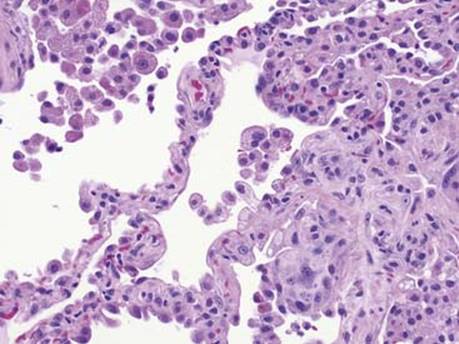
Fig 1 Amiodarone. In this patient with amiodarone toxic effects, type II pneumocytes have foamy cytoplasm and some atypia. In the alveolar spaces, some of the foamy macrophages also contain hemosiderin granules, suggestive of pulmonary hemorrhage likely due to heart failure.
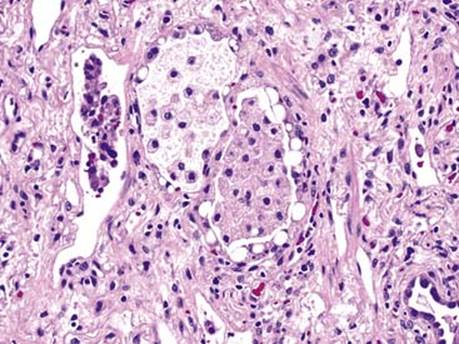
Fig 2 Amiodarone. Hyperplasia of type II pneumocytes with cytoplasmic vacuolization and abundant foamy histiocytes are characteristic features of amiodarone toxicity.

Fig 3 Amiodarone. High magnification of type II pneumocytes and alveolar macrophages with foamy and vacuolated cytoplasm, characteristic of amiodarone toxicity.

Fig 4 Amiodarone. Organizing DAD was found in this patient with amiodarone toxic effects. Note the interstitial inflammatory cells and numerous foamy alveolar macrophages.
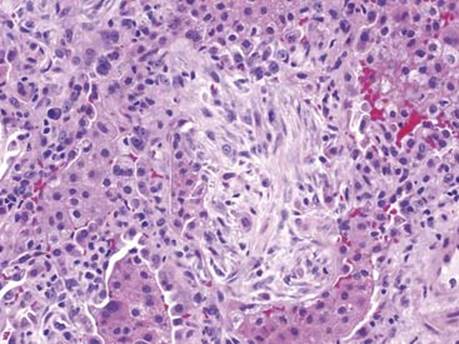
Fig 5 Amiodarone. Another area of lung tissue from the same patient as in Fig 3 showing organizing pneumonia, foamy alveolar macrophages, and type II pneumocytic hyperplasia. Also note the interstitial plasma cells and lymphocytes on the left.

Fig 6 Amiodarone. This patient with amiodarone toxic effects had evidence of organizing pneumonia and pulmonary hemorrhage (hemosiderin). Note the characteristic foamy macrophages and hyperplastic type II pneumocytes with foamy cytoplasm.