
Definition
• Multiple exophytic endobronchial tumors with fibrovascular stalks covered by stratified squamous epithelium
Pathogenesis
• Human papillomavirus (HPV) infection is thought to be acquired during vaginal birth or via instrumentation of the airway
Clinical features
Epidemiology
• Uncommon
• Usually diagnosed in childhood
Presentation
• Asymptomatic or obstructive symptoms
• Most commonly involves the larynx, from where it may spread to the tracheobronchial tree
• Exophytic or dome-shaped mucosal-based nodules can be seen on bronchoscopy
Prognosis and treatment
• Often recurrent in the larynx and major bronchi and can spread deeper into the lungs
• Severe obstruction due to multiple tumors blocking a small pediatric airway can be fatal
• Squamous cell carcinoma can develop in these lesions
Pathology
Histology
• Multiple exophytic or nodular/inverted mucosal-based arborizing papillary fronds with fibrovascular cores lined by keratinizing squamous epithelium
• Features of viral infection with HPV, including nuclear hyperchromasia, koilocytic change, and binucleation, are often present
• Nuclear atypia, dysplasia, and invasive squamous cell carcinoma may be present
Immunopathology/special stains
• In situ hybridization for HPV: types 7 or 11 in uncomplicated cases; types 16 or 18 in cases with atypia or dysplasia
Main differential diagnoses
• Papillary adenocarcinoma: usually peripheral; look for glandular differentiation and invasion
• Papillary adenoma: glandular lining of papillary fronds; not mucosal-based
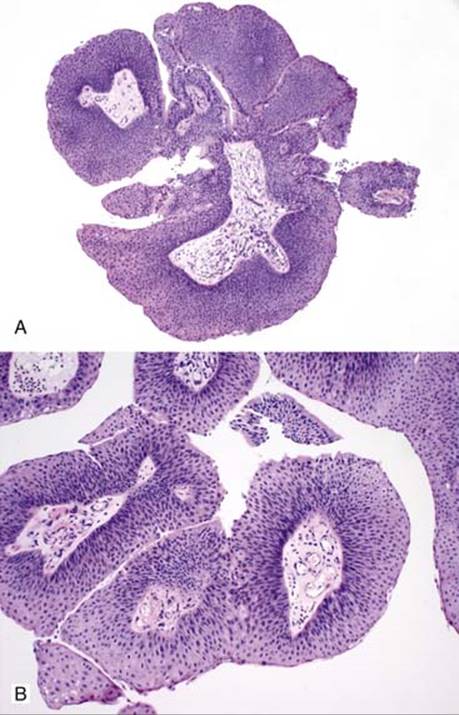
Fig 1 Squamous papillomatosis. Arborizing fronds of squamous mucosa with fibrovascular cores are seen at low (A) and high (B) powers.

Fig 2 Squamous papillomatosis. Squamous cell carcinoma developed in this 13-year-old patient with recurrent squamous papillomatosis seen here at autopsy.