
Definition
• Calcification and ossification (mature bone formation) of lung parenchyma
Pathogenesis
• Considered to be a reactive process, often occurring within a scar
Clinical features
Epidemiology
• Incidental finding; prevalence unknown
• Usually related to chronic lung diseases like interstitial pneumonia, fibrosis, and bronchiectasis
Presentation
• Symptoms of underlying lung disease
• Asymptomatic if not related to chronic lung diseases
Prognosis and treatment
• Treat underlying lung disease
• Prognosis depends on the underlying lung disease
• No clinical significance by itself
Pathology
Histology
• Calcification and mature bone formation of normal or abnormal lung parenchyma
• More common in fibrous lung tissue, such as that in interstitial pneumonia, lung scarring, or pleural plaques
• Sometimes in normal lung parenchyma and cartilage
• Rarely present in malignant lung tissue
Immunopathology/special stains
• Not contributory
Main differential diagnoses
• Hamartoma: composed of cartilage, fat, and immature spindle cells
• Bone marrow emboli: present within blood vessels, usually after resuscitation
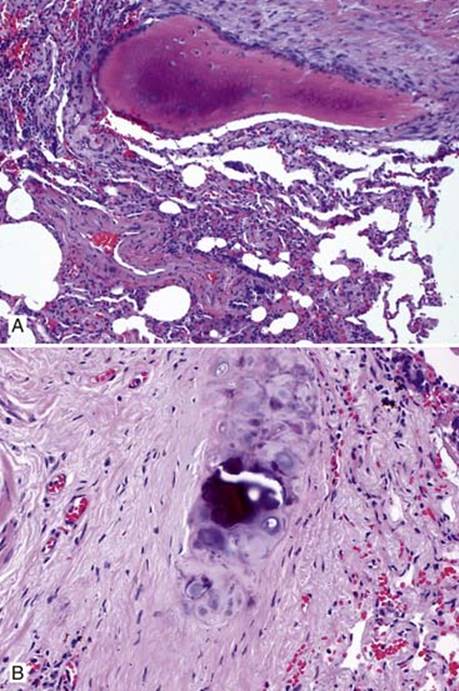
Fig 1 Osseous metaplasia. Osseous metaplasia of relatively normal lung parenchyma (A) and bronchial cartilage (B).
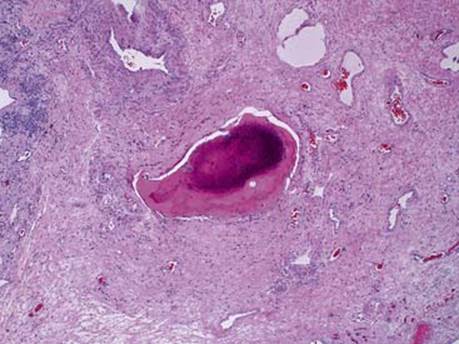
Fig 2 Osseous metaplasia. Ossification of scarred lung tissue.
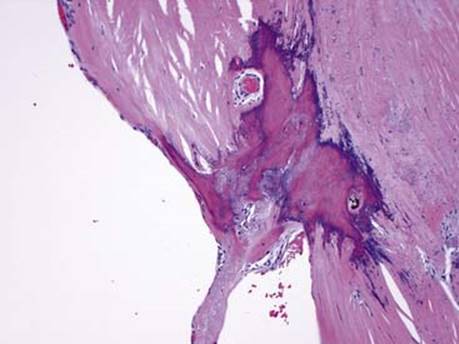
Fig 3 Osseous metaplasia. Calcification and ossification of pleural plaque.
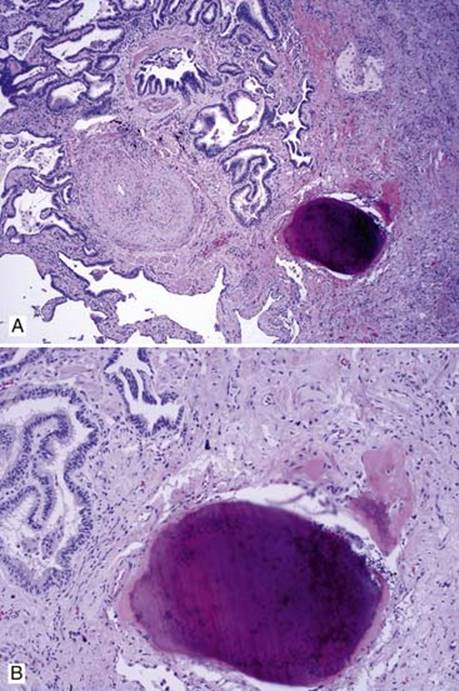
Fig 4 Osseous metaplasia. Ossification of the fibrous area of lung with usual interstitial pneumonia (UIP): low power (A) and medium power (B). Note the UIP changes of background lung with extensive bronchiolar metaplasia (upper left), honeycombing (lower left) and secondary arterial hypertensive changes.