
Definition
• Pneumonitis caused by microaspiration of oral/gastric contents
Clinical features
Epidemiology
• Although it is now known that all people microaspirate occasionally, frequent episodes of subclinical aspiration of small droplets occur in patients with gastroesophageal reflux
• Pediatric aspiration syndromes commonly involve aspiration of oral or gastric contents as a result of gastroesophageal reflux, swallowing dysfunction, or neurological or structural abnormalities. It also encompasses inhalation of any kind of foreign material into the lungs
• In lung transplant patients, it may precipitate acute rejection
Presentation
• Depends on the amount, type of aspirated material, and time course of aspiration
• Microaspiration is typically asymptomatic; over time the patient may develop radiological abnormalities and fibrosis, mostly in the lower lobes
Prognosis and treatment
• Medical or surgical treatment of reflux is often helpful
Pathology
Histology
• Poorly formed granulomas, foreign body giant cells, and lipid-laden macrophages with large vacuoles (exogenous lipoid pneumonia)
• Intraalveolar fibroblastic plugs (Masson bodies, organizing pneumonia)
Immunopathology/special stains
• Sudan black or oil red O can be used to identify lipid-laden macrophages, although this finding is nonspecific
Main differential diagnoses
• Granulomatous infections: fungal and acid-fast stains should be done on multiple slides
• Inhalation talcosis: polarizable crystals are easily identified
• Sarcoidosis: well-formed granulomas with bronchovascular distribution

Fig 1 Aspiration pneumonitis. Peribronchiolar poorly formed granulomas with multinucleated giant cells.
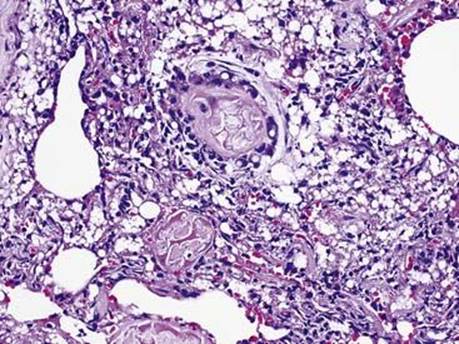
Fig 2 Aspiration pneumonitis. Foreign material within multinucleated giant cells is seen together with lipid-laden macrophages.

Fig 3 Aspiration pneumonitis. Peribronchial fibrosis and bronchiolar metaplasia are seen in this patient with long-standing microaspiration.