
The human body is truly amazing, but it does have its vulnerabilities. Everyone should take the time to learn about the human body in general as well as what it can and can’t do.
A general overview of the body’s main systems and how they work together will help with correct diagnoses and treatments. They are also used in categorizing specific diagnoses and treatments within this book.
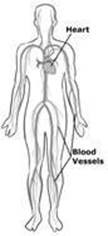
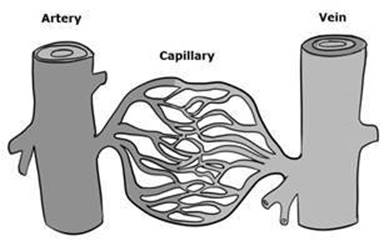
The circulatory system (the cardiovascular system) is made up of the heart and blood vessels (arteries, veins and capillaries). The heart is like a pump which circulates blood to all the different parts of the body via the blood vessels. Blood carries oxygen, nutrients, hormones, waste products etc.
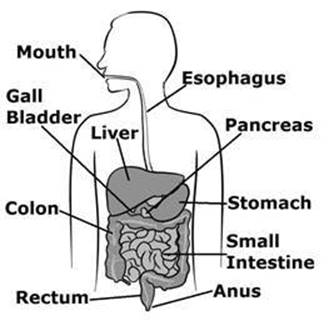
The main job of the digestive system is to break down food and convert it into nutritional molecules. These molecules are distributed to the body via the circulatory system. The digestive system also gets rid of everything that is unused in the form of excrement.
When a bite of food is taken, it marks the beginning of the digestive process. Via chewing and the mixture of saliva, the food begins to be broken down into easily digested pieces. The food is then passed through the throat (larynx) and is swallowed down the esophagus into the stomach.
The stomach adds acid and enzymes to the food while mixing and grinding it into a paste-like. Next is the small intestine, which uses enzymes from the pancreas and bile from the liver as well as some help from the gallbladder (the gallbladder concentrates the bile from the liver, mainly by removing the water) to further break down the food and absorb nutrients into the blood stream.
Whatever is leftover is then passed to the colon (large intestine). Water is removed, leaving mostly food-debris and bacteria, i.e., feces. The feces (stool) are stored in a part of the colon called the sigmoid colon. When the sigmoid colon is full it is emptied into the rectum. The feces stay in the rectum until it is told by the brain that it is okay to empty it. When it is time, the anal sphincters are relaxed and the feces is expelled.
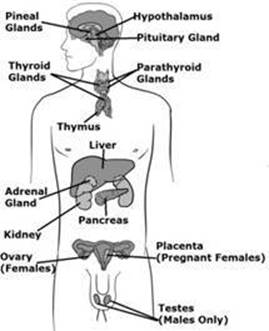
The endocrine system is the main system that co-ordinates the chemicals within the body. Hormones are what carry the body’s chemical messages around the body. A gland is a group of cells that produces and secretes the chemicals.
Although nearly all organs and tissues also produce their systems’ endocrine hormones, the principal endocrine glands are the adrenal, gonads, pancreas, parathyroids, pituitary and thyroid.
The hypothalamus is a bunch of cells in the lower brain. The brain uses the hypothalamus to communicate to the pituitary gland.
At the base of the brain, just below the hypothalamus, is the pituitary gland. The pituitary gland is made up of two parts: the anterior lobe and the posterior lobe. The anterior lobe produces corticotrophin (stimulates the adrenal gland), growth hormones, prolactin (milk production in mothers) and thyrotropin (stimulates the thyroid gland). It also releases endorphins to the nervous system which decrease feelings of pain, releases the hormones which tell the sexual organs to produce sexual hormones and controls ovulation and menstruation in females.
The posterior lobe releases anti-diuretic hormones which help with the balance of water in the body as well as producing oxytocin which triggers uterus contractions during childbirth.
The two adrenal glands also have two parts. The outer part is the adrenal cortex; it produces corticosteroid hormones. The corticosteroid hormones regulate the immune system, metabolism, stress response, sexual development, sexual function and salt and water balance.
The inner part of the adrenal gland is the adrenal medulla; it produces adrenaline (epinephrine). Epinephrine increases blood pressure and heart rate when the body experiences stress.
The gonads are the main source of sexual hormones. In men they are the testes which release androgens such as testosterone. Testosterone regulates puberty in adolescent males, and helps to communicate to the body when to produce more sperm. In females they are the ovaries which produce eggs and release estrogen and progesterone. Estrogen regulates puberty and they both regulate the menstrual cycle and help in pregnancy.
The pancreas produces insulin and glucagon which work together to maintain a steady level of glucose in the blood and to keep the body supplied with fuel for creating and storing energy.
The pineal gland is in the brain; it secretes melatonin which is believed to regulate sleeping patterns.
The thyroid produces the hormones that control the rate at which cells burn fuel from food to produce energy. The more of these hormones there are, the faster chemical reactions are in the body occur.
Attached to the thyroid are the parathyroids, which release the parathyroid hormone. The parathyroid hormone helps to regulate calcium in the blood.
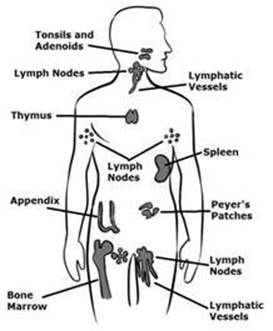
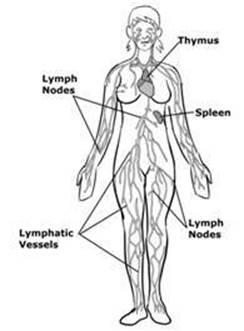
The immune system helps to protect the body from disease. It identifies pathogens (e.g., viruses) distinguishes them from healthy tissue and then fights them.
It uses white blood cells (leukocytes) to combat the invaders. These white blood cells are produced and stored in the lymphoid organs such as bone marrow, the spleen and the thymus. They are also stored around the body in the lymph nodes and other lymphoid tissue.
The leukocytes are transported around the body via the lymphatic vessels and blood vessels.
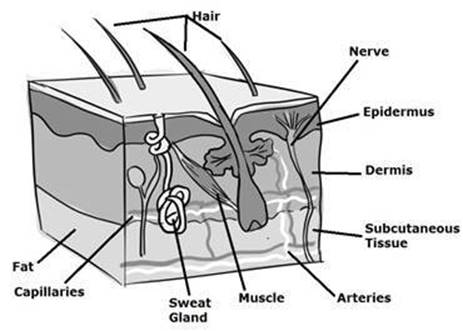
This is everything that covers the outside of the body including hair, nails, skin, sweat glands etc.
It protects the body from the outside world (e.g., infections, temperature) collects information via the skin (e.g., pain, temperature) helps regulate body temperature (e.g., capillary contraction, sweating) and stores water and fat.
The genitourinary system includes the reproductive and the urinary systems.
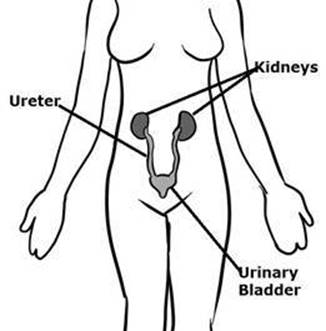
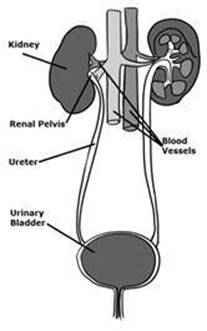
The main function of the urinary system (renal system) is to expel excess ions, waste molecules and water from the blood, i.e., urine. It also regulates blood pressure, blood volume, blood PH, electrolyte levels and metabolite levels.
Blood is carried into the kidneys. The kidneys filter the waste (urine) and pass it to the bladder via the ureters. The urine is stored in the bladder until the time of urination. At that time it passes through the urethra to the outside of the body.
The reproductive system enables us to reproduce. It makes sperm in males and eggs in females. It also gives a way for the eggs and sperm to unite in order to create a new organism, and it provides a place for the new organism to be grown.
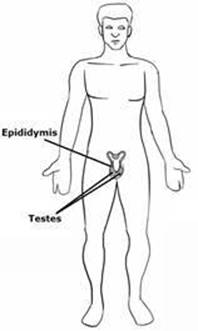
The scrotum acts like a climate control-house for the testes. The testes, which are inside the scrotum, create testosterone and sperm. Once the sperm is made it is stored in the epididymis where it is matured so it is capable of fertilization.
When a man is sexually aroused, the sperm is passed into the vas deferens which transports the mature sperm to the urethra via the ejaculatory ducts. During this time of erection, urine is blocked from the urethra.
Throughout this process the sperm is combined with other fluids to make up semen, neutralize traces of urine and add fructose. This is done with the help of the seminal vesicles, the prostate gland and the bulb-urethral glands. At the time of orgasm, the semen is passed out through the penis.
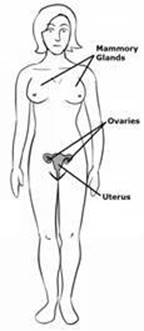
The ova (eggs) are produced in the ovaries. These ova are transported to the fallopian tube where they may be fertilized by the sperm. Once fertilized, the egg moves in the uterus and sticks to the uterine lining so it can mature.
If there is no fertilization, the uterine lining is discarded (menstrual flow).
As women get older the female reproduction system stops making the female hormones needed for the reproduction system to work. This is menopause.
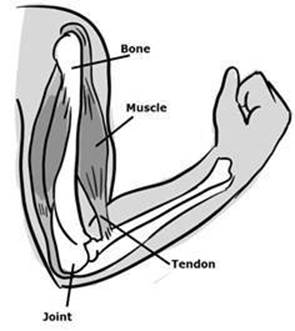
The musculoskeletal system is made up of the muscular system and the skeletal system. It includes all bones, cartilage, tendons, muscles and ligaments. It gives us the ability to move as well as our basic body structure.
The larger bones also produce blood cells (in the bone marrow) and all bones store phosphate and calcium.
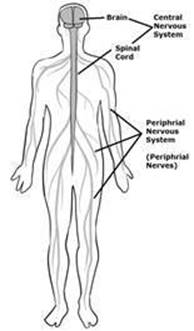
The nervous system is made up of the central nervous system and the peripheral nervous system. Together they use about 100 billion neurons which communicate with each other via electrical signals.
The central nervous system is the brain and spinal cord. The peripheral nervous system is all the nerves and neuron clusters (ganglia) in the rest of the body.
The peripheral nervous system collects information from all areas of the body (the joints, muscles, skin etc.,) and sends it to the brain via the spinal cord. The brain collects information from the ears, eyes, mouth and nose. It analyses all this information, performs all the important functions of the brain (e.g., memory, thinking, planning) and then sends out the instructions to the body, via the nervous system.
This is the system that enables us to breathe. It takes oxygen from the air and expels water and carbon dioxide from the body.
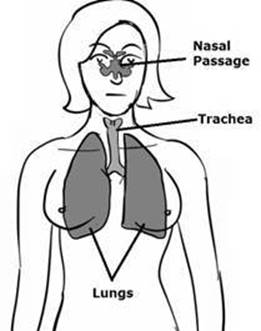
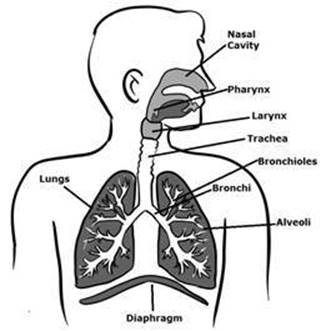
Air gets breathed in and out via the mouth or nose. When being breathed in it passes through the pharynx (throat) to the larynx (voice-box) and then to the trachea (windpipe). The air then gets passed to the bronchi which split like tree branches into the lungs. These bronchi continue to split and get smaller and smaller, turning into bronchioles and then finally into tiny sacs called the alveoli. From the alveoli the gases which make up the air are exchanged to/from the blood cells in the capillaries. The main gases exchanged are oxygen into the body and carbon dioxide out.
The lungs are surrounded by muscles, including the diaphragm and intercostals muscles, which work together like a pump to expand and compress the lungs, i.e., allowing air to be inhaled an exhaled.
To learn more about the human body visit SurviveTravel.com/Human-Body.