
General Diagnoses and Treatments
Specifics depending on the creature are given, but for ease of memory and in case the cause is unknown, here are some general diagnoses and treatments.
These include stings from jellyfish, corals and anemones.
General Symptoms of Marine Toxins
Local pain.
Swelling.
Tenderness.
General Treatment for Marine Toxins
Do not rub/scrape.
Topical decontaminant, e.g., vinegar.
If decontaminant is more than 2 minutes away, rinse wound with seawater then apply decontaminant when available.
If seawater is not available, use freshwater very forcefully.
Remove nematocysts.
Shave site. Be sure to use shaving cream or similar.
Treat wound; Must Read - Open Wounds, Skin Infections and Sepsis - Open Wounds.
These come from marine life such as stingrays, cat fish, stone fish etc.
General Symptoms of Marine Spiny Injuries
Puncture wounds.
Severe pain.
Tenderness.
May have systemic symptoms.
General Treatment for Marine Spiny Injuries
Soak in water as hot as you can tolerate for about an hour or until relief.
Remove any spine fragments during soak.
Treat wound; Must Read - Open Wounds, Skin Infections and Sepsis - Open Wounds.
Barracuda are large saltwater fish that can grow up to 2 m long. They are found in tropical and subtropical oceans all around the world, especially near coral reefs and near the top of the water. They are not usually dangerous to humans, but if bitten they can cause a nasty wound.
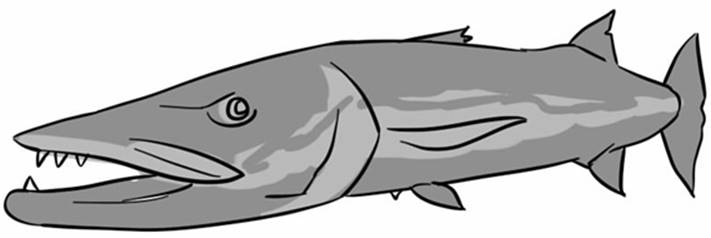
Treatment for a Barracuda Bite
Treat wound; Must Read - Open Wounds, Skin Infections and Sepsis - Open Wounds.
The blue-ringed octopus is a relatively small octopus characterized with yellowish skin and blue and black rings. When agitated, the brown patches will darken and pulsating, blue rings or clumps will appear.
Although they are most commonly found in northern parts of Western Australia, New South Wales and South Australia, they are also present in the eastern Indo-Pacific up to Japan. They enjoy tide pools and coral reefs in shallow coastal waters.
The blue ringed octopus injects its victims with a cocktail of venoms, one of which is the paralytic tetrodotoxin; it is thought that it may be possible to feel minor effects of the envenomation even without being bitten, i.e., just by being near it.
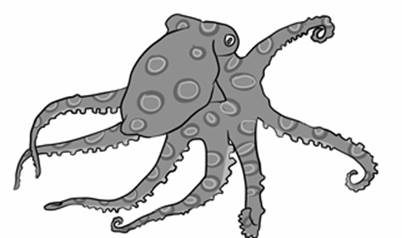
Symptoms of Blue-Ringed Octopus Envenomation
Initial:
Painless or minimal discomfort.
Small laceration with very minimal blood.
Little or no discoloration.
Within 10 minutes:
Difficulty breathing.
Difficulty speaking.
Difficulty swallowing.
Nausea and vomiting.
Numbness.
Paresthesia (tingling).
Progressive muscular weakness.
Visual disturbances.
In severe cases:
Cerebral anoxia (deficiency of oxygen in the brain tissue).
Paralysis.
Respiratory failure.
Treatment for Blue-Ringed Octopus Envenomation
Apply Pressure Immobilization bandaging; Must Read - Immediate First Aid - Pressure Immobilization Technique.
Rescue breathing; Must Read - Immediate First Aid - Critical First Aid – Airway – Rescue Breathing.
The patient will go into respiratory failure, but the effects of the venom will subside after some hours. Rescue breathing must be continued until the patient regains the ability to breathe on his/her own.
Bristle-worms are segmented worms with an elongated body. They can be as small as 3 cm, or as large 60+ cm. They come in a variety of colors with the larger ones usually being brown or gray.
There are many types of bristle-worms, some of which have spines that, when handled, may dislodge into the skin.
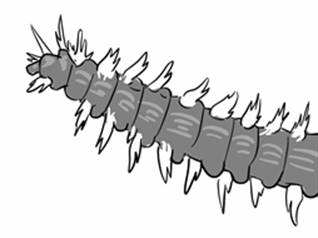
Symptoms of a Bristle-Worm Injury
Burning sensation.
Flaking of the skin.
Itching.
Raised red rash.
Swelling in the soft tissue.
Treatment for a Bristle-Worm Injury
Remove large bristles with forceps.
Dry the skin gently.
Apply sticky adhesive tape and then peel off to remove embedded spines.
Vinegar for 15 minutes will help soothe the pain.
Topical corticosteroid: apply a light layer.
Systemic corticosteroid for severe cases, e.g., prednisone.
Catfish are found all over the world, and the venom is located in their fin-spines. Some even secrete toxin through their skin. The ones that are most likely to sting humans are freshwater catfish and, to a lesser extent, those found amongst coral.
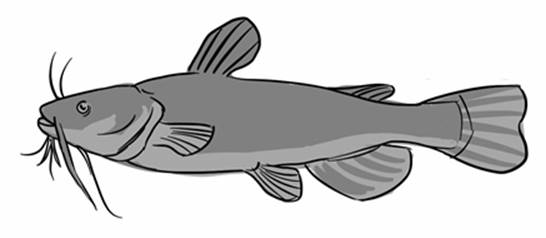
Cyanosis at sting site (blue, gray or purple discoloration of the skin).
Fainting.
General weakness.
Increased perspiration.
Involuntary muscle movement.
Low blood pressure.
Respiratory distress.
Scalding, stinging or throbbing pain which can last up to 48 hours, but generally dissipates within 60 minutes.
Swelling.
Soak in water as hot as you can tolerate for about an hour or until relief.
Remove spine fragments during the soak.
Treat wound; Must Read - Open Wounds, Skin Infections and Sepsis - Open Wounds.
Conus creatures encompass a range of predatory sea snails of various sizes found mainly in the tropics, e.g., cone shells, cone snails.
All conus snails are venomous and use this venom to paralyze their prey by shooting dart-like teeth from their mouths.
Symptoms of Conus Envenomation
Initial:
Cyanosis (blue, gray or purple discoloration of the skin).
Local numbness.
Mild sting.
Advanced:
Altered vision.
Difficulty swallowing.
Fainting.
Itching, tingling, tickling, pricking or burning of skin.
Loss of neurologic reflexes, e.g., knee jerk reaction.
Nausea.
Voice loss.
Weakness.
Muscular paralysis.
Respiratory failure.
Cardiac failure.
Coma.
Treatment for Conus Envenomation
Pressure immobilization technique; Must Read - Immediate First Aid - Pressure Immobilization Technique.
Cuts and abrasions from corals may be nothing but a cut, but sometimes there may be toxins present.
Symptoms of Coral Toxin Contact
Initial reaction:
Itching.
Redness.
Stinging pain.
Followed by:
General sick feeling.
Low-grade fever.
Red, raised welts.
Progressing to:
Skin Infection.
Tissue sloughing (shedding of dead tissue).
Ulceration.
Treatment for Coral Toxin Contact
Subside stinging with diluted vinegar (half-strength) followed by copious water irrigation.
Treat as an open wound with aggressive cleaning and wet to dry dressings; Must Read - Open Wounds, Skin Infections and Sepsis - Open Wounds.
Jellyfish sting with a nematocyst, usually triggered by physical contact. Contact with a tentacle can fire many stinging cells.
Anemones, fire coral and hydroids work in a similar way and are treated as such.
Due to the large variety of jellyfish, knowing which ones are poisonous often requires local knowledge. The best thing to do is to stay away from all jellyfish.
Jellyfish-safe sun-block and stinger-suits are also available in cases where entering infested waters is unavoidable.
There is a massive range of symptoms depending on the specific creature, and they span over most of the body’s functions.
Seeing the creature and/or recognizing it by the site of attack is the best indicator. Local knowledge is needed.
Treatment for Jellyfish Stings
Do not rub/scrape.
Topical decontaminant, e.g., vinegar.
If decontaminant is more than 2 minutes away, rinse wound with seawater then apply decontaminant when available.
If seawater is not available, use freshwater very forcefully.
Remove nematocysts.
Shave site. Be sure to use shaving cream or similar.
Pharmaceuticals:
Corticosteroids.
Treatment for Serious Reactions of Jellyfish Sting:
Seek advanced medical care.
Maintain the airway and administer oxygen.
Treat anaphylaxis if needed; Must Read - Immediate First Aid – Anaphylaxis.
Try to identify species.
If eye damage:
Irrigate with saline.
Seek medical help.
Leeches suck the blood of their hosts until they are full, then they fall off. It is usually painless and can go unnoticed.
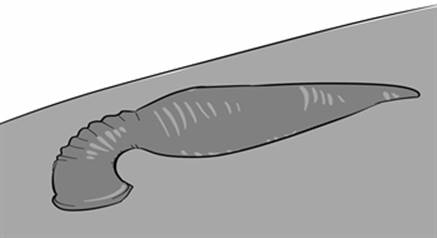
Slow-healing, freely bleeding wound.
Possible allergic reaction, e.g., rash.
Removal:
Do not rip off.
Apply a few drops of alcohol or vinegar.
Holding a flame near site may also help.
After removal:
Inspect for retained mouthparts.
Treat wound; Must Read - Open Wounds, Skin Infections and Sepsis- Open Wounds.
Pharmaceuticals:
Hemostatic.
Morays have an extremely forceful bite which can cause severe puncture wounds. There are many different species, but the basic appearance is similar.
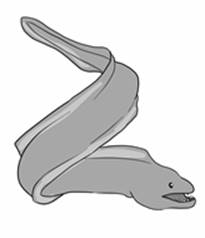
Treat as open wound; Must Read - Open Wounds, Skin Infections and Sepsis - Open Wounds.
Sea Cucumbers are found all over the world. They have an elongated body with leathery skin and produce a toxin in their tentacles.
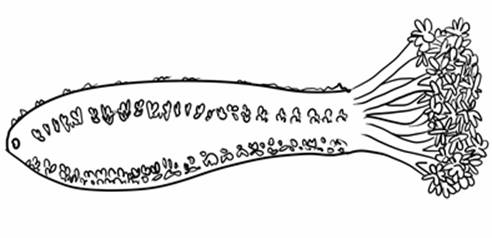
Symptoms of Sea Cucumber Toxin Contact
Dermatitis.
Eye irritation.
Severe illness and possible death if toxin is ingested.
Treatment for Sea Cucumber Toxin Contact
Wash with soap and water.
Topical detoxification, e.g., vinegar.
If eye damage:
Anesthetize.
Irrigate.
Seek advanced medical help.
A bite from a seal or sea lion will result in an infection known as seal finger. It can also result from any contact of an open wound (even very minor) with the animal’s mouth, bones or coat.
Pain.
Swelling of digits.
Taut, shiny skin.
Treat wound; Must Read - Open Wounds and Skin Infections and Sepsis - Open Wounds.
Pharmaceuticals:
Antibiotic: tetracycline 1500 mg initially, then 500 mg every 6 hours for 4 to 6 weeks.
Sea snakes are usually found in warm coastal waters from the Indian Ocean to the Pacific. They are closely related to venomous Australian snakes, and, as such, many of them are very venomous. Fortunately, most bites do not result in envenomation.
Most sea snakes are completely aquatic, but some of them can come on land.
Symptoms of Sea Snake Envenomation
Initial symptoms may not show for up to 8 hours.
Initial:
Anxiety.
Euphoria.
Malaise (general unease).
After 30 to 60 minutes:
Muscle aching and stiffness.
Dysarthria (difficult in using speaking muscles).
Sialorrhea (excessive salivation).
After 3 to 6 hours:
Cyanosis (blue, gray or purple discoloration of the skin).
Dilated pupils.
Moderate to severe pain.
Muscle spasms, starting from the bottom and moving up.
Loss of vision (severe cases).
Nausea.
Vomiting.
Treatment for Sea Snake Envenomation
Pressure immobilization technique; Must Read - Immediate First Aid - Pressure Immobilization Technique.
PROP; Must Read - Immediate First Aid - Critical First Aid - Breathing – PROP.
Pharmaceuticals:
Antivenin (anticipate anaphylaxis); Must Read - Immediate First Aid – Anaphylaxis).
Sea urchins are found in all oceans and come in a variety of colors. They can envenom their victims either via their spine or their pedicellariae (pincer type organs).
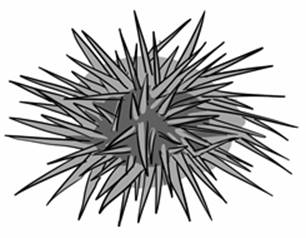
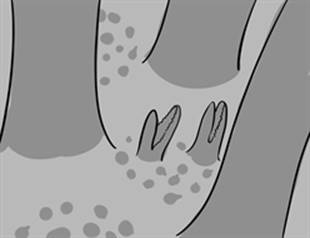
Symptoms of Sea Urchin Envenomation
Aphonia (inability to produce voice).
Black or purple markings.
Burning.
Dizziness.
Fainting.
Hypotension.
Joint pain.
Malaise (general unease).
Muscle aching.
Muscular paralysis.
Pain (intense).
Redness.
Respiratory distress.
Swelling.
Weakness.
Treatment for Sea Urchin Envenomation
Soak in water as hot as you can tolerate for about an hour or until relief.
Remove spines.
Splint if spines remain near a joint.
If pedicellariae are attached, apply shaving foam and scrape them away with a razor.
Sharks are found in all oceans and come in a range of shapes, sizes and aggressiveness.
Treat wound; Must Read - Open Wounds, Skin Infections and Sepsis- Open Wounds.
Abrasions from contact with the shark’s skin should be treated as burns; Diagnoses and Treatments - Environmentally Induced - Heat and/or Sun Induced – Burns.
This covers all fish that envenom via spines, e.g., leatherbacks, lionfish (left picture), ratfish, toadfish, scorpion fish, stonefish (right picture).
Different fish give different levels of envenomation. Stone fish are generally considered the worst, causing the most pain which can be excruciating.
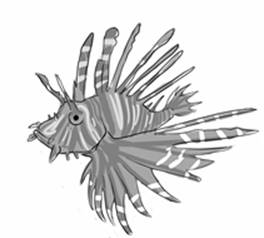
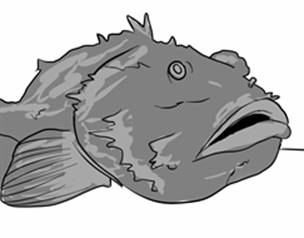
Symptoms of Spine Fish Envenomation
Immediate, intense pain, peaking at about 1 to 2 hours and lasting for up to 12 hours.
Blisters.
Bruising.
Numbness.
Redness.
Swelling.
Tissue shedding.
Many other symptoms may occur depending on the exact species including gastrointestinal problems, paralysis, respiratory and/or cardiovascular failure etc.
Treatment for Spine Fish Envenomation
Soak in water as hot as you can tolerate for about an hour or until relief.
Remove any spine fragments during soak.
Pharmaceuticals:
Antivenin (anticipate anaphylaxis; Must Read - Immediate First Aid – Anaphylaxis).
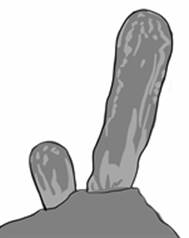
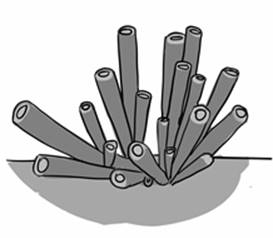
Sponges come in many different shapes, sizes and colors. They are attached to the sea floor or coral beds and are full of pores which allow water to circulate through them. They also contain chemical toxins which can affect humans if touched. Even dry sponges may remain toxic, so do not handle them without gloves.
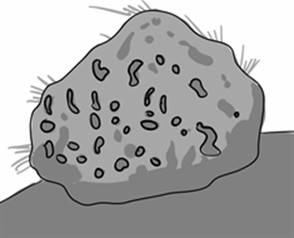
Symptoms of Sponge Toxin Contact
Minor:
Blistering.
Burning sensation.
Itching.
Swelling at joints.
Stiffness at joints.
Minor reactions usually subside within 7 days, faster if treated.
Severe:
Chills.
Dizziness.
General sick feeling.
Feeling like an insect is crawling on or under skin.
Fever.
Muscle cramps.
Nausea.
Skin peeling after 10 days.
Treatment for Sponge Toxin Contact
Gently dry the skin.
Apply and remove sticky adhesive tape to remove adherent spicules.
Soak in vinegar for 10 to 30 minutes, three or four times a day.
Pharmaceuticals:
Hydrocortisone or triamcinolone only after at least 2 vinegar soaks.
Corticosteroid: topical for minor reactions and/or oral for severe reactions.
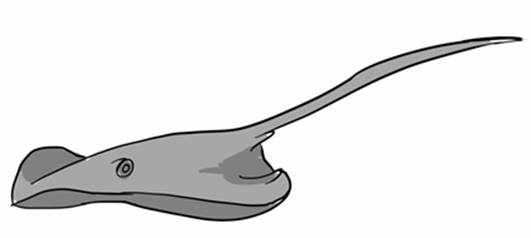
Stingrays are cartilaginous fish related to sharks and come in a variety of colors and sizes. If injured by a stingray sting, the patient may suffer a puncture/laceration as well as envenomation.
Symptoms of Stingray Envenomation
Local:
Dusky discoloration.
Intense pain.
Redness of skin.
Swelling.
Other:
Death of body tissue.
Fat and muscle hemorrhage.
Fainting.
Malaise (general sick feeling).
Muscle Cramps.
Paralysis.
Vertigo (perception of motion, usually spinning).
Treatment for Sting Ray Envenomation
Soak in water as hot as you can tolerate for about an hour or until relief.
Remove spine fragments, which can be done while soaking.
Note: if spine is deep, manage as impaling object; Must Read - Open Wounds, Skin Infections and Sepsis – Impaling Objects, otherwise, treat as open wound; Must Read - Open Wounds, Skin Infections and Sepsis - Open Wounds
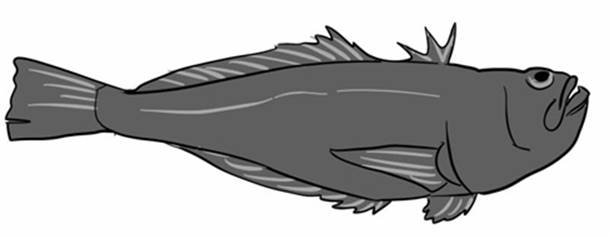
The weever fish is found in the Eastern Atlantic Ocean, European coastal areas and Mediterranean Sea. They are brown and have venomous spines on their first dorsal fins and gills.
Symptoms of Weever Fish Envenomation
Immediate intense pain (burning, crushing or scolding) peaking at 30 minutes and lasting up to 72 hours.
Delirium.
Fainting.
Fever and chills.
Headache.
Irregular heart rate
Nausea and/or vomiting.
Pale wound site, becoming red and warm after 8-ish hours.
Seizures.
Swelling, increasing for up to 10 days.
Treatment for Weever Fish Envenomation
Soak in water as hot as you can tolerate for about an hour or until relief.
Remove any fragments, which can be done while soaking.
Treat wound; Must Read - Open Wounds, Skin Infections and Sepsis - Open Wounds.