
Preet Paul Singh and Shaji K. Kumar
Multiple myeloma (MM) is a neoplastic process characterized by clonal proliferation of plasma cells in the bone marrow, often producing a monoclonal immunoglobulin. This can result in hypercalcemia, renal dysfunction, anemia, or extensive skeletal destruction with osteolytic lesions that are the major presenting signs of the disease. Unlike most other malignancies, diagnosis requires the presence of these clinical features and its attribution to clonal plasma cell proliferation. Newer active agents and autologous stem cell transplantation (ASCT) have led to outcome improvements, from a median survival of 3 years in the late 1990s to nearly 8 years currently, a metric that continues to improve.
EPIDEMIOLOGY
MM accounts for 1% of all cancers and about 10% of all hematologic malignancies. In 2012, 21,700 new cases and 10,710 deaths from MM were estimated in the United States. The annual age-adjusted incidence in the United States is approximately 4 to 5 per 100,000 and has remained stable over time. The median age at diagnosis is about 65 years and MM is slightly more common in men than in women (1.3:1). Incidence among African Americans is two- to threefold higher than that in Caucasians, whereas it is lower in Asians. The risk of developing MM is approximately 3.7-fold higher for persons with a first-degree relative of MM.
PATHOPHYSIOLOGY
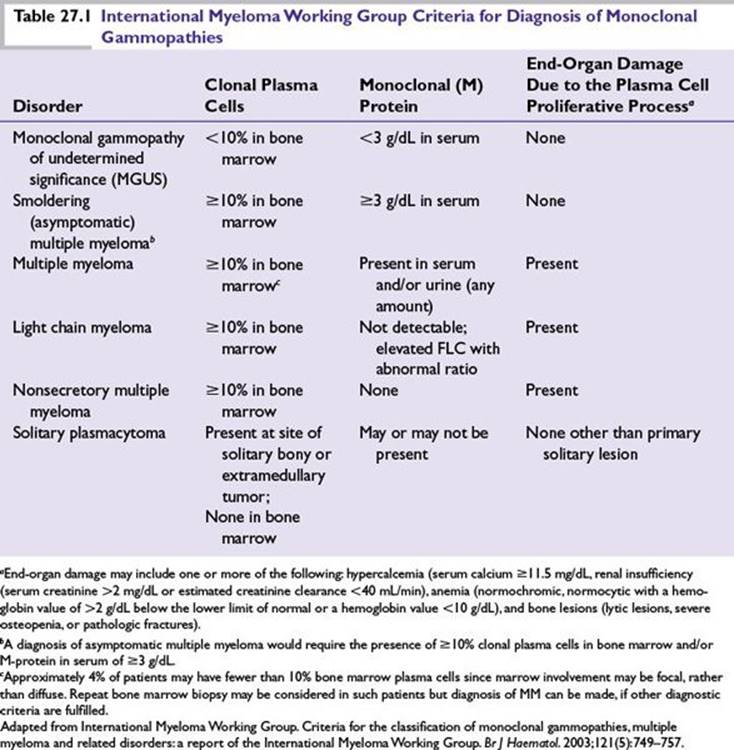
MM is characterized by the proliferation and accumulation of clonal plasma cells in the bone marrow. Almost all patients with MM evolve from an underlying, asymptomatic monoclonal gammopathy of undetermined significance (MGUS). Prevalence of MGUS is over 3% above the age of 50 years, and the rate of progression to MM is roughly 1% per year. Some patients may also develop an intermediate, more advanced stage referred to as smoldering multiple myeloma (SMM) that is defined clinically (Table 27.1). The risk of progression of SMM to symptomatic myeloma is about 10% per year over the first 5 years after diagnosis.
The clonal plasma cells in myeloma are characterized by significant genetic abnormalities, with the majority having one or more well-characterized abnormalities. Five recurrent translocations involving the heavy chain locus on chromosome 14 have been identified and are present in approximately 40% of all myeloma tumors. Trisomies of odd-numbered chromosomes are detected in nearly half of the patients, with monosomies or deletions of other chromosomes overlapping with these two sets of abnormalities. The clinical features of MM are a result of bone marrow infiltration by the malignant clone; damage from high levels of immunoglobulins or free light chains (FLCs) in the circulation or glomeruli; the secretion of osteoclast-activating factors such as RANKL (receptor activator of nuclear factor-κB ligand) and MIP-1 (macrophage inflammatory protein-1) with resultant bone damage; decreased production of the natural RANKL inhibitor OPG (osteoprotegerin); overexpression of dickkopf 1 inhibiting osteoblast differentiation and new bone formation; and impaired immunity, both cell-mediated and humoral.
CLINICAL FEATURES
Bone pain, particularly in the back or chest, and less often in the extremities, is present in nearly 60% of patients with MM. Patients may present with pathologic fractures and can also have loss of height because of vertebral collapse. Other common clinical features include fatigue (32%), weight loss (24%), normocytic normochromic anemia (73%), and hypercalcemia (28%). MM can also result in a low anion gap due to severe hypercalcemia and/or the cationic immunoglobin molecule. Renal insufficiency is seen in almost half the patients with MM at diagnosis and is commonly caused by hypercalcemia and related dehydration, and light chain cast nephropathy. Other etiologies may include renal amyloidosis, light chain deposition disease, cryoglobulinemia, or drug-induced kidney injury. In some patients, amyloidosis can cause a nephrotic syndrome (<5%). Acquired Fanconi syndrome with glycosuria, phosphaturia, and aminoaciduria can also occur with MM. MM patients are at an increased risk for infection due to impaired lymphocyte function, suppression of normal plasma cell function, and hypogammaglobulinemia. Patients can also present with radiculopathy or spinal cord compression that can result from compression of nerve roots by paravertebral plasmacytoma or by fractured vertebral body. Peripheral neuropathy is a rare manifestation and, when present, is almost always secondary to amyloidosis.
DIAGNOSIS AND WORKUP
Diagnosis of MM requires evidence of a clonal plasma cell disorder with the presence of end-organ damage (hypercalcemia, renal insufficiency, anemia, or bone lesions) attributable to the plasma cell disorder. The criteria for diagnosis of monoclonal gammopathies proposed by the International Myeloma Working Group (IMWG) are shown in Table 27.1. When MM is suspected, the diagnostic workup should include a thorough history and physical examination with specific attention to complaints of bone pain, constitutional symptoms, neurologic symptoms, and infections. In addition, for diagnosis and staging, these labs should be performed: complete blood count with differential; serum electrolytes, blood urea nitrogen, serum creatinine, calcium, phosphate, magnesium, uric acid, albumin, β2-microglobulin, and lactate dehydrogenase; serum protein electrophoresis (SPEP) and immunofixation (IFE); serum FLC assay; 24-hour urine protein electrophoresis (UPEP) and IFE; quantitative immunoglobulins; radiographic skeletal survey; and bone marrow aspirate and biopsy.
SPEP is useful in detecting and quantifying the presence of an intact monoclonal protein (M-protein) that is visualized as an M-spike in the gamma region. Serum IFE confirms the presence of the monoclonal immunoglobulin and, more importantly, determines its type (Fig. 27.1). SPEP and/or serum IFE is sometimes inadequate as approximately 15% of patients have only light chains (light chain myeloma), which may rapidly be cleared from the plasma to the urine. Hence, serum FLCs, UPEP, and/or urine IFE should be performed in all patients and are very useful in such patients.
SPEP detects an M-spike in 82% of patients with MM. Addition of serum IFE increases the sensitivity to 93%. The sensitivity increases to 97% or more if either the serum FLC assay or 24 hour UPEP/urine IFE is performed in addition. Patients who lack detectable M-protein by any of these tests, but have end-organ damage and clonal plasma cells in the bone marrow, are considered to have nonsecretory myeloma. The circulating M-protein on IFE is IgG in 52% of cases, IgA in 21%, light chain only (kappa or lambda) in 16%, IgD in 2%, and biclonal in 2%. IgM myeloma is exceedingly rare and is seen in <1% of cases. Kappa is the predominant light chain isotype compared with lambda (ratio 2:1), except in IgD myeloma, where lambda isotype is more common.
Bone marrow studies should include conventional karyotyping and fluorescent in situ hybridization (FISH) designed to detect t(11;14), t(4;14), t(14;16), t(6;14), t(14;20), hyperdiploidy, and deletion 17p for risk stratification. Gene expression profiling, when available, may also be considered for additional prognostic information.
Radiologic changes seen on a skeletal survey include punched-out lytic lesions, severe osteopenia or osteoporosis, and pathologic fractures. A nuclear medicine bone scan is not useful in MM because lytic lesions are not visualized on bone scans. Routine fluoro-deoxyglucose positron emission tomography/computed tomography (PET-CT) and magnetic resonance imaging (MRI) scans are not needed for every patient, but are indicated when symptomatic areas show no abnormality on a radiographic skeletal survey or when there is uncertainty about the true extent of bone disease on radiographs alone. Another indication where these scans should be utilized is when solitary plasmacytoma is suspected, to reliably rule out bony or extramedullary disease. Any patient with significant back pain should also undergo MRI of the spine to evaluate cord compression.
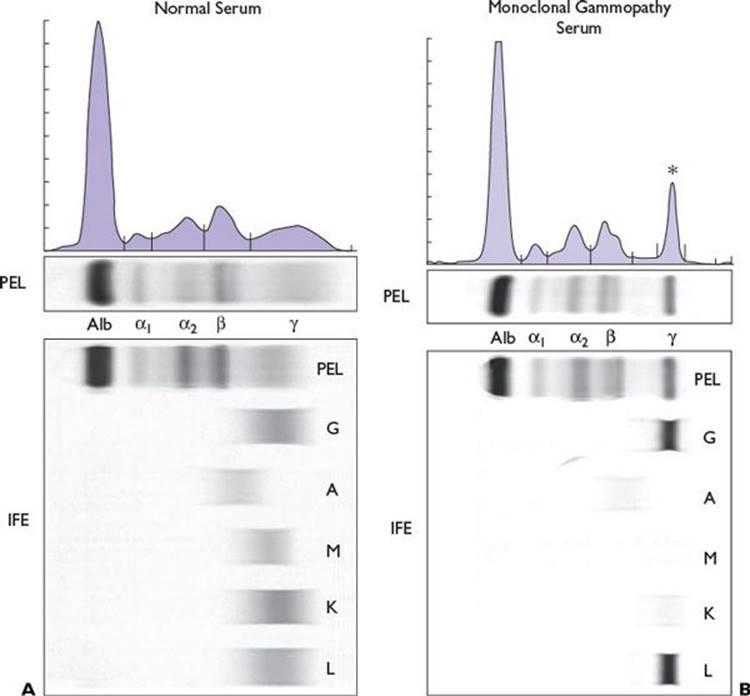
FIGURE 27.1 Electrophoretic pattern of (A) normal human serum and (B) immunoglobulin G (IgG lambda) multiple myeloma. Asterisk indicates M spike in the gamma region.
STAGING
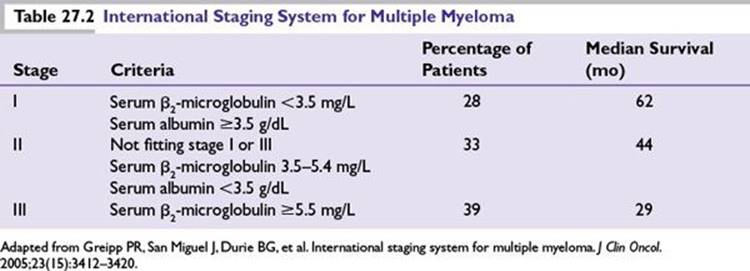
Two main staging systems exist for MM that primarily reflect tumor burden: the International staging system (ISS) that is based on laboratory values and the Durie-Salmon staging system, predominantly a clinical system. Both of these provide prognostic information but are not helpful in making therapeutic choices. Of these, the ISS has become the preferred staging system because of its simplicity and lack of subjectivity (Table 27.2).
PROGNOSIS
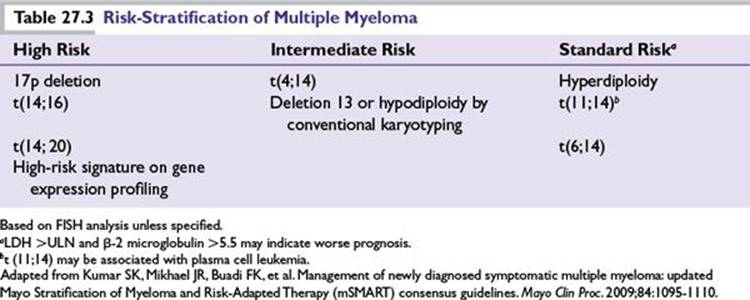
Prognosis in myeloma depends on host factors (age, performance status, and comorbidities), stage, disease aggressiveness, and response to therapy. Other laboratory parameters such as hemoglobin concentration, creatinine, calcium, lactate dehydrogenase, immunoglobulin subtype, plasmablastic morphology, circulating plasma cells, and C-reactive protein have also been shown to be independent risk factors for survival in myeloma. A high plasma-cell–labeling index also strongly predicts poor prognosis, but this test is not commonly available. A risk stratification model based on independent molecular cytogenetic markers to assess disease aggressiveness has been found useful for both prognosis and therapeutic decision-making. Newly diagnosed patients can be stratified using these markers as having standard-, intermediate-, and high-risk disease based on the Mayo stratification for myeloma and risk-adapted therapy (mSMART) classification (Table 27.3). Median survival varies from 8 to 10 years for standard-risk patients versus 2 to 3 years for high-risk myeloma.
TREATMENT
General
Monoclonal Gammopathy of Undetermined Significance
Risk-stratification models have been proposed for progression of monoclonal gammopathy of undetermined significance (MGUS) and assist in detecting patients with higher risk of progression to myeloma. Patients with risk factors consisting of a serum M-protein >1.5 g/dL, IgA or IgM MGUS, and an abnormal serum FLC ratio have a risk of progression at 20 years of 58%; compared with 37% when two risk factors are present; 21% when one risk factor is present; and only 5% when none of the risk factors are present. Patients with MGUS should be monitored indefinitely without treatment because 20% to 25% of them will eventually progress to myeloma at a rate of approximately 1% per year. Patients should be followed with SPEP every 6 months, and if stable can be followed every year for high or intermediate-risk patients and every 2 to 3 years for low-risk patients (no risk factors present) or when myeloma symptoms arise. Treatment is not indicated unless it is part of a clinical trial.
Smoldering (Asymptomatic) Multiple Myeloma
These patients should also be observed closely without therapy, but they have a higher risk of progression to myeloma than MGUS (10% per year vs. 1% per year). These patients should have SPEP, UPEP, complete blood count, and calcium and creatinine measurement 2 to 3 months after the initial diagnosis. If the results are stable, the studies should be repeated every 4 to 6 months during the first year and, if stable, evaluation can be lengthened to every 6 to 12 months. Patients with an abnormal FLC (involved to uninvolved) ratio of >100 have 72% risk of progression to MM in the first 2 years after diagnosis and should be monitored more closely. Currently, treatment is indicated only when there is evidence of progression to symptomatic disease, or as a part of clinical trial, although there is increasing thought that treating high risk patients early (before they develop symptomatic disease) may lead to better outcomes.
Solitary Plasmacytoma
These patients are treated with radiation therapy (solitary bone) and/or surgical removal (extraosseous plasmacytomas) of the affected area, followed by close monitoring of M-protein every 6 months because of the risk of developing MM.
Multiple Myeloma
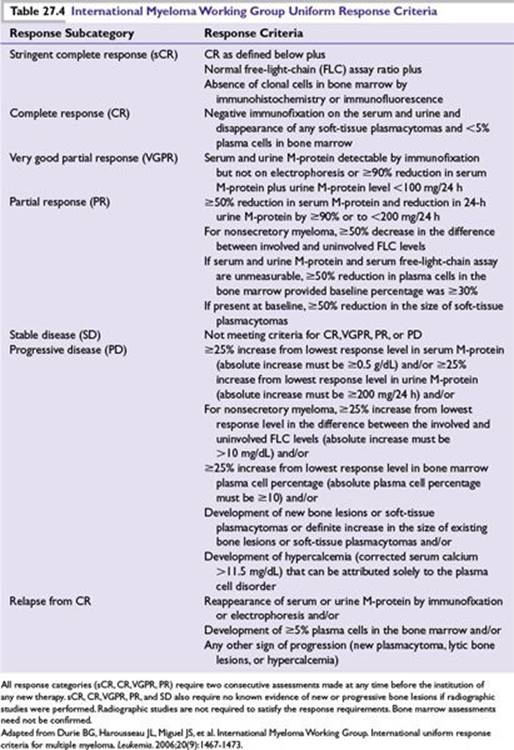
To date, there is no clear curative therapy available for most MM patients and the “cure vs. control” debate is ongoing. In the past decade, the availability of novel highly active drugs such as thalidomide, bortezomib, and lenalidomide has significantly improved the outcome of patients with MM. More recently newer drugs like carfilzomib and pomalidomide have become available for management of relapsed disease. One approach is upfront aggressive multidrug treatment to achieve complete response (CR) versus a sequential disease control approach emphasizing quality of life and prolonged survival. Patients with high-risk disease have better long-term OS if they achieve a CR, justifying an aggressive strategy upfront. For standard-risk patients, achievement of CR does not affect OS and the goal of therapy is to improve quality of life, delay disease progression, and prolong survival. The treatment choice for symptomatic myeloma patients largely depends on eligibility for transplantation and risk stratification (Fig. 27.2). Eligible patients should always be considered for enrollment in clinical trials that evaluate novel treatment strategies. The proposed criteria by the IMWG for evaluating disease response and progression in myeloma patients are outlined in Table 27.4.
Initial Therapies
Induction Treatment for Patients Eligible for Transplantation
Infusional therapy with vincristine, doxorubicin, and dexamethasone (VAD) was commonly used for many years as an induction regimen prior to ASCT. However, VAD is no longer used as initial therapy since several novel drug combinations using thalidomide, bortezomib, or lenalidomide have been shown to be superior to VAD. A summary of these regimens is shown in Table 27.5.
Thalidomide-Dexamethasone This combination has been shown in randomized trials to have higher response rates and improved time to progression as compared to dexamethasone alone. Still, due to inferior activity and toxicity profile as compared to lenalidomide-based regimens, thalidomide-dexamethasone (TD) is not used as front-line therapy, except where lenalidomide may not be available. Thalidomide also has utility in patients with renal failure as no dose adjustments are needed and it can be safely combined with bortezomib. The combination of thalidomide, cyclophosphamide, and dexamethasone has been studied in phase 3 trials, and is an effective initial therapy. Patients are at high risk of developing venous thrombosis and should be on DVT prophylaxis with aspirin, low-molecular-weight heparin, or warfarin.
Lenalidomide-Based Regimens Lenalidomide is a safer and more effective analog of thalidomide, which in combination with dexamethasone has been superior to dexamethasone alone in randomized trials. Combination of lenalidomide with low-dose dexamethasone (40 mg once weekly) (Rd) is significantly less toxic and provides better OS as compared to combination with high-dose dexamethasone (RD). Long-term results suggest an excellent toxicity profile with prolonged therapy with this regimen. All patients should be given antithrombosis prophylaxis with aspirin. Low-molecular-weight heparin and warfarin should be used in patients at high risk of thrombosis. Lenalidomide has been combined with bortezomib as well as older drugs resulting in very active combinations both for initial therapy and for relapsed disease.
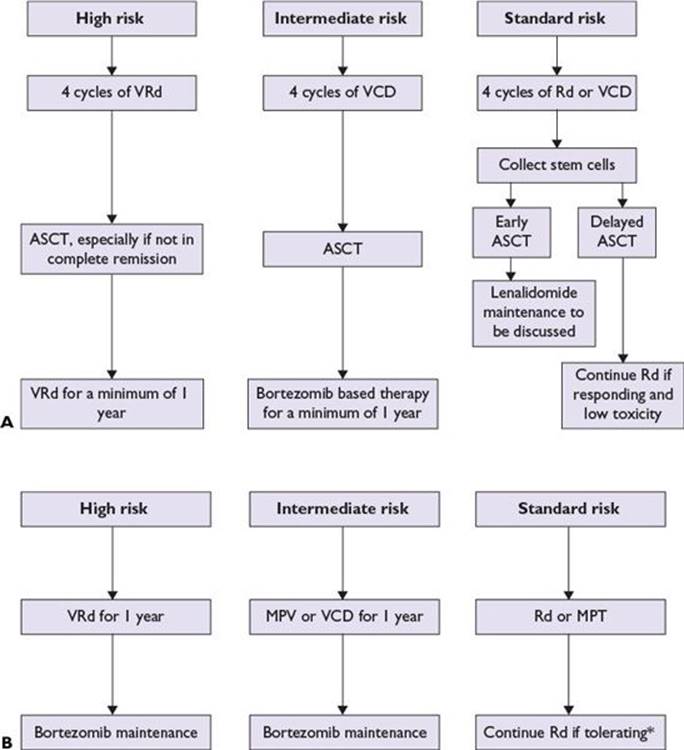
FIGURE 27.2 A suggested treatment algorithm for newly diagnosed multiple myeloma patients. Transplant eligible (A) and transplant ineligible (B). All patients should receive supportive care and must be considered for bisphosphonate treatment and clinical trials. (*Dexamethasone is usually discontinued after 12 months. ASCT, autologous stem cell transplantation; VRd, bortezomib, lenalidomide, dexamethasone; VCD, bortezomib, cyclophosphamide, dexamethasone; Rd, lenalidomide, dexamethasone; MPT, melphalan, prednisone, and thalidomide; MPV, melphalan, prednisone, and bortezomib; CR, complete response; VGPR, very good partial response.) (Adapted from Kumar SK, Mikhael JR, Buadi FK, et al. Management of newly diagnosed symptomatic multiple myeloma: updated Mayo Stratification of Myeloma and Risk-Adapted Therapy (mSMART) consensus guidelines. Mayo Clin Proc. 2009;84:1095-1110; Rajkumar SV. Treatment of multiple myeloma. Nat Rev Clin Oncol.2011;8:479-491.)
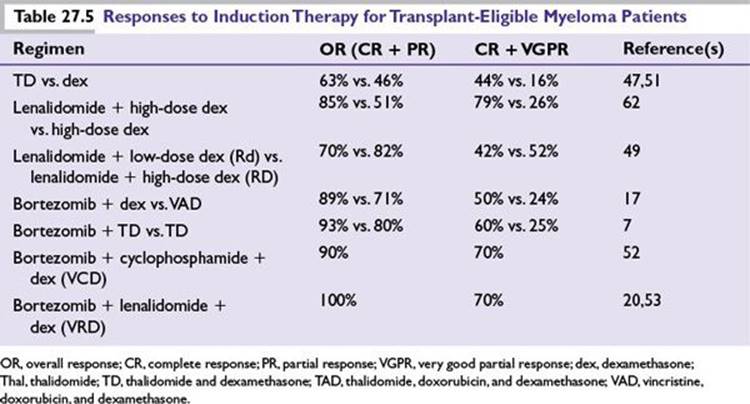
Bortezomib-Based Regimens Randomized trials have shown that bortezomib in combination with dexamethasone (VD) is superior to VAD as pretransplant induction therapy. Three drug combinations containing bortezomib such as combination with thalidomide and dexamethasone (VTD), cyclophosphamide and dexamethasone (VCD), and lenalidomide and dexamethasone (VRD) are highly active in newly diagnosed MM. VTD has been shown to be superior to TD and VD (Table 27.5). VCD is less expensive and better tolerated than VRD with similar activity in newly diagnosed patients. It also appears to overcome the poor prognosis associated with t(4;14) and hence is an excellent choice as front-line therapy for intermediate-risk patients. These three drug combinations have not been directly compared to Rd. Peripheral neuropathy is a significant adverse effect, which may occur early in the disease course with upfront bortezomib-containing regimens. Administering Bortezomib subcutaneously (as compared to intravenously) and on a once-weekly schedule significantly reduces the risk of neuropathy.
Certain regimens may also be preferable in specific clinical scenarios that are not uncommonly seen in MM patients. For patients at high risk of DVT and those with renal insufficiency, bortezomib-based regimens are favored, whereas for patients with history of peripheral neuropathy, Rd would be a preferred choice.
Autologous Stem Cell Transplantation
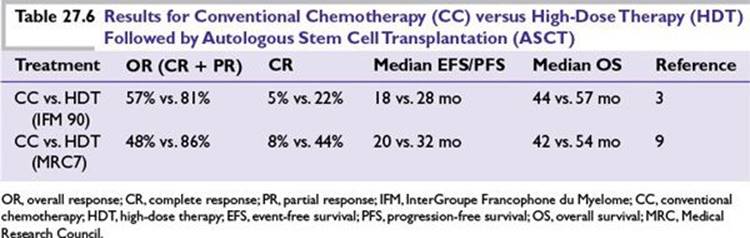
Two large randomized trials, the InterGroupe Francophone du Myelome 90 (IFM 90) trial and the Medical Research Council Myeloma VII Trial, demonstrated that high-dose therapy (HDT) followed by ASCT significantly improves response rate and overall survival by around 12 months compared to conventional chemotherapy in myeloma patients younger than 65 years with good performance status (Table 27.6). The IFM 95 randomized trial demonstrated that 200 mg/m2 of melphalan is less toxic and at least as effective a conditioning regimen as total body irradiation of 8 Gy with 140 mg/m2 melphalan before ASCT. Although ASCT is commonly performed following three to four cycles of induction chemotherapy, a randomized trial comparing early versus late transplantation demonstrated that ASCT could be delayed until relapse without compromising survival provided that the stem cells are harvested and cryopreserved early in the disease course. Lenalidomide may impair peripheral blood stem cells in certain patients, so stem cell mobilization may require cyclophosphamide plus G-CSF or G-CSF and plerixafor in patients who have received prolonged lenalidomide therapy. Bortezomib does not appear to negatively impact stem cell mobilization.
In a Spanish randomized trial (PETHEMA), patients responding to induction therapy had similar overall and progression-free survival with ASCT, suggesting that ASCT provides greatest benefit to the subgroup of patients that are refractory to induction therapy. Therefore, the timing of ASCT is based on patient preference and other conditions, including response to initial induction therapy. Although the benefit of ASCT in terms of event-free and overall survival is yet to be proven after induction therapy with novel agents, it is generally recommended as it has been shown to improve CR rates.
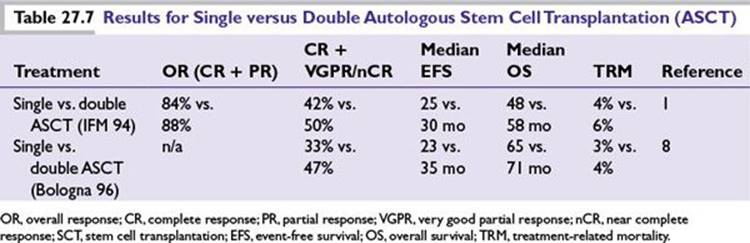
The IFM 94 trial and the Bologna 96 Clinical study from Italy established that double (tandem) transplantation is superior to single autologous transplantation and should be considered as a treatment option, especially for patients younger than 60 years who fail to achieve very good partial response (defined as >90% reduction in serum M-protein level) after first ASCT (Table 27.7).
Induction Treatment for Patients Not Eligible for Transplantation
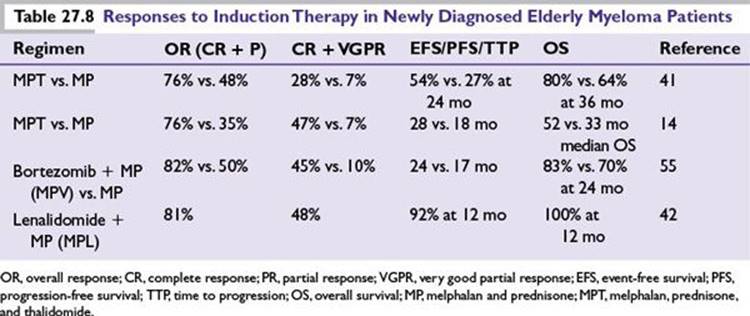
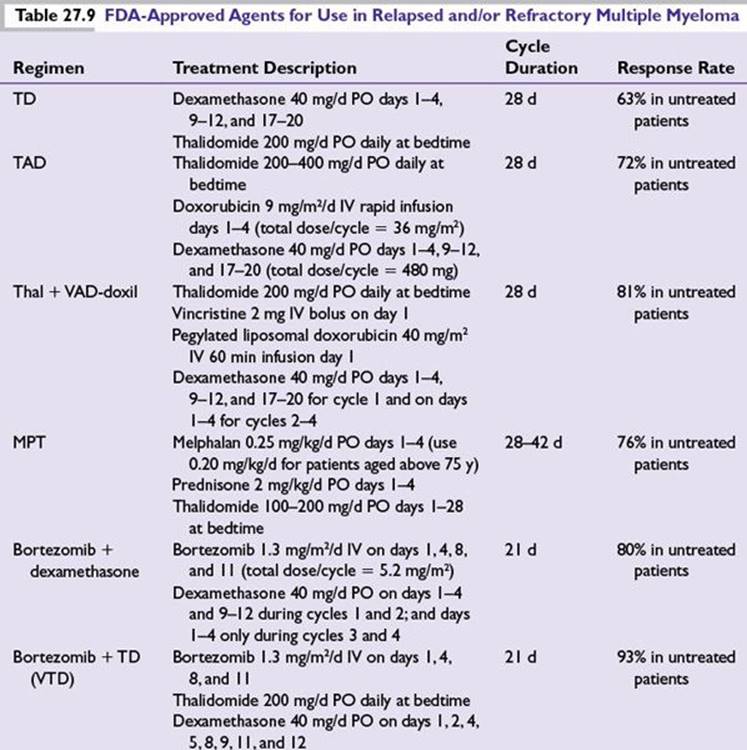
Major options for newly diagnosed MM patients who are considered ineligible for ASCT due to age or other comorbidities include melphalan-based combinations or lenalidomide-dexamethasone (Rd). The duration of therapy is usually 9 to 18 months with the newer combinations as long as toxicity is acceptable. MP has been the standard treatment regimen for MM for more than 40 years. However, randomized trials have now shown that in patients aged ≥65 years, combination of MP with any of the new agents (thalidomide, bortezomib, and lenalidomide) is significantly superior to MP in terms of response rate, event-free survival, and overall survival, although increased toxicity with the newer regimens needs to be considered when choosing therapy (Tables 27.8 and 27.9). These new combinations of MPT, MPV, and MPR are now considered standard of care for elderly patients. Rd is probably a better-tolerated and safer option for elderly patients, with a response rate of 70% in patients older than 70 years that is comparable to MPT or MPV. MP alone may still be considered in elderly patients without access to Rd or are not candidates for MPT or MPV due to advanced age or significant comorbidities.
The preference for one regimen over the other may depend on the patient’s comorbid conditions and other social factors. For patients at risk of DVT and in patients with renal insufficiency, MPV is preferred; for patients with history of peripheral neuropathy, MPL should be the choice; if costs are a concern, MPT is least expensive; if oral therapy is desired, MPT or MPR would be good choices.
Maintenance Therapy
Prior to the availability of novel agents, interferon or corticosteroids had shown little benefit when used as maintenance therapy in clinical trials and are no longer recommended.
Multiple trials have evaluated the role of thalidomide, lenalidomide, and bortezomib in post-ASCT maintenance therapy as well as in elderly patients after induction therapy. Thalidomide has shown PFS and OS improvement in two randomized trials. The feasibility and efficacy of lenalidomide as post-ASCT maintenance therapy have been shown in two recent placebo-controlled randomized trials. In both of these studies, PFS improvement was observed, although an increased number of second malignancies were noted in the lenalidomide arm. Bortezomib administered every 2 weeks as maintenance therapy has been shown to improve PFS and OS in myeloma patients as compared to thalidomide.
Even in elderly patients who are not transplant eligible, lenalidomide maintenance after induction with MPL showed improved PFS, especially in patients aged 65 to 75 years. Bortezomib as maintenance therapy after bortezomib-based induction therapy (MPV or VTP) also showed improvement in CR rates, PFS with acceptable toxicity.
Maintenance treatment can be associated with significant side effects, and none of the drugs evaluated is currently approved for maintenance therapy. Potential benefits and risks should be carefully evaluated and treatment decisions should be individualized based on patient characteristics and preference. This could be particularly important for high-risk patients as well as those who fail to achieve VGPR after ASCT.
Supportive Measures
Bisphosphonates should be considered for all patients with evidence of lytic bone lesions and/or osteopenia. Intravenous pamidronate given monthly reduces bone pain and the incidence of pathologic fractures and the need for surgery or irradiation to the bone in patients with advanced myeloma. A randomized trial demonstrated that zoledronic acid is as effective as pamidronate in reducing skeletal complications, in addition to having the advantage of a shorter administration time. However, pamidronate may be preferred due to the greater risk of development of osteonecrosis of the jaw with zoledronic acid. Bisphosphonate therapy should be continued for 2 years postdiagnosis as long as the disease is in remission.
Infection prophylaxis is crucial during induction therapy. All patients should receive antibacterial prophylaxis with single strength sulfamethoxazole/trimethoprim daily for 4 months. A quinolone or penicillin can be substituted for patients with sulfa allergy or when lenalidomide is used in the induction regimen. Herpes zoster prophylaxis with acyclovir 400 mg twice a day or valacyclovir 500 mg daily should be used in patients receiving bortezomib-containing regimens. For patients on long-term, high-intensity steroid treatment, Pneumocystis jiroveci prophylaxis with sulfamethoxazole/trimethoprim is recommended. Inhaled pentamidine monthly can be substituted for patients with sulfa allergy.
Other supportive measures in myeloma include adequate analgesia and/or local irradiation for bone pain, radiation or surgery for spinal cord compression, surgery for impending pathologic fractures, erythropoietin for anemia, treatment and prevention of hypercalcemia, avoidance of dehydration by a high fluid intake of approximately 3 L per day to maintain renal function, and dialysis if necessary. Intravenous immunoglobulin therapy may be beneficial for patients with recurrent life-threatening infections.
Prophylactic anticoagulation to decrease the risk of thrombotic complications is recommended for myeloma patients receiving thalidomide- or lenalidomide-based therapies. The IMWG recommends a prophylaxis strategy according to a risk-assessment model. Risk factors to be considered include obesity, history of venous thromboembolism, central venous catheter, infections, diabetes, cardiac disease, chronic renal disease, immobilization, surgery, inherited thrombophilia, eythropoietin usage, myeloma diagnosis per se, hyperviscosity, and therapy with high-dose dexamethasone, doxorubicin or multiagent chemotherapy in combination with thalidomide or lenalidomide. Patients with one risk factor should receive prophylaxis with aspirin (81 to 325 mg once daily). Low-molecular-weight heparin (equivalent to a dose of enoxaparin 40 mg per day) is recommended for patients with ≥2 risk factors. Warfarin targeting a therapeutic INR of 2 to 3 is an alternative to low-molecular-weight heparin.
REFRACTORY OR RELAPSED DISEASE
Almost all MM patients eventually relapse and are again treated with multidrug novel agent combinations. The remission duration in MM decreases with each subsequent line of therapy used. Patients with relapsed MM refractory to lenalidomide and bortezomib have a poor prognosis with median PFS and OS of 5 months and 9 months, respectively.
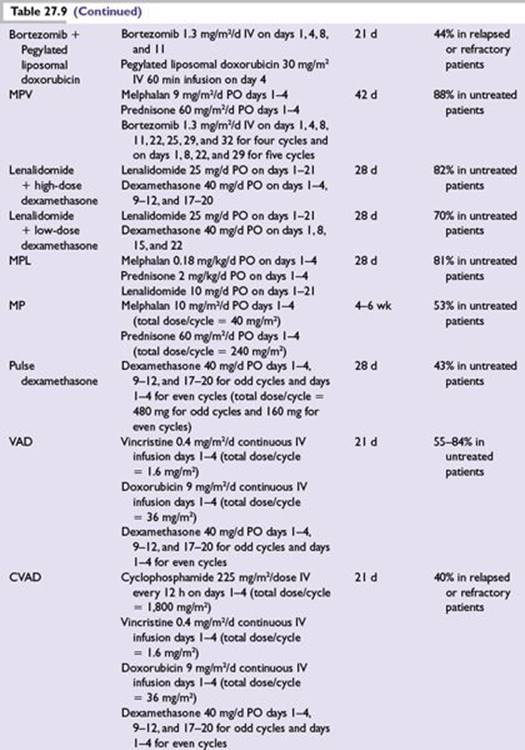
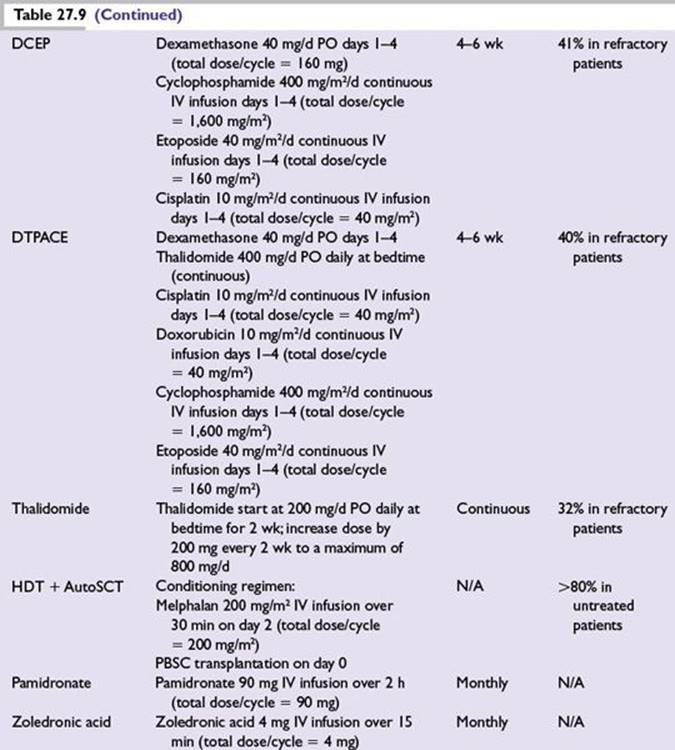
Novel agents that are FDA approved based on phase 3 trials for use in relapsed and/or refractory MM include single-agent bortezomib, bortezomib in combination with pegylated liposomal doxorubicin, and lenalidomide in combination with dexamethasone (Table 27.9). Other salvage regimens that have shown efficacy include thalidomide with or without dexamethasone, bortezomib in combination with dexamethasone, single-agent lenalidomide, high-dose pulse dexamethasone, VAD, cyclophosphamide-VAD, high-dose cyclophosphamide, DCEP, and DT-PACE or VDT-PACE.
Patients relapsing more than 6 months after primary induction therapy may be retreated with the initial regimen or other novel agent combinations (VRD or VTD). Patients who have had only one ASCT should be considered for a second ASCT as salvage therapy. Patients with indolent relapse can be often treated with bortezomib, lenalidomide, or alkylators plus low-dose corticosteroids. Patients with more aggressive relapse or plasma cell leukemia often require aggressive multiagent salvage chemotherapy like VCD, VRd, or VDT-PACE. Duration of therapy in relapsed disease is not standard and discontinuation may be considered to minimize toxicity if a stable disease plateau phase is achieved.
Pomalidomide, a novel immunomodulatory agent, and carfilzomib, a second-generation proteasome inhibitor, are two new drugs with efficacy in relapsed, refractory MM and should be considered for patients refractory to bortezomib and lenalidomide. In MM-002, a multicenter, randomized, open-label study, 221 patients with relapsed and refractory MM who were refractory to lenalidomide and bortezomib were randomized to receive pomalidomide alone or pomalidomide plus low-dose dexamethasone. The overall response rate was 7% in patients treated with pomalidomide alone, and 29% in pomalidomide plus low-dose dexamethasone arm. The median response duration was not evaluable in the pomalidomide alone arm and was 7.4 months in the pomalidomide plus low-dose dexamethasone arm. A multicenter, phase 3 randomized trial (MM-003) comparing pomalidomide plus low-dose dexamethasone (pomalidomide 4 mg on days 1 to 21 and dexamethasone 40 mg on days 1, 8, 15, and 22 in a 28-day cycle) versus high-dose dexamethasone (40 mg on days 1 to 4, 9 to 12, and 17 to 20 in a 28-day cycle) showed that PFS was significantly longer with the combination versus dexamethasone alone (median 15.7 vs. 8.0 weeks). Median duration of treatment was 12.4 weeks in the pomalidomide arm. Frequent grade 3/4 hematologic toxicities included neutropenia (42%), thrombocytopenia (21%), and febrile neutropenia (7%).
In the phase 2 study leading to accelerated FDA approval, single-agent carfilzomib was administered at a dose of 20 mg/m2 intravenously twice weekly for 3 of 4 weeks in cycle 1, and if tolerated, then 27 mg/m2. A total of 95% were refractory to their last therapy; 80% were refractory or intolerant to both bortezomib and lenalidomide. The overall response rate was 23.7% with median duration of response of 7.8 months. The median overall survival was 15.6 months. Fatigue, anemia, and nausea were seen in nearly half of the patients. Thrombocytopenia (39%) and peripheral neuropathy (12.4%) were other adverse events reported in the trial. Carfilzomib has also shown promise in newly diagnosed MM; further studies are ongoing. Currently both pomalidomide and carfilzomib are approved for the treatment of patients with MM who have received at least two prior therapies, including bortezomib and an immunomodulatory agent, and have demonstrated disease progression on or within 60 days of the completion of the last therapy.
Myeloablative as well as nonmyeloablative allogeneic stem cell transplantation may potentially benefit a small percentage of patients because of a powerful graft-versus-myeloma effect, however associated with high treatment-related mortality (TRM) of up to 50% and 10% to 20% respectively. The role of allogeneic transplantation remains controversial and largely investigational. Nevertheless, up to 50% of patients relapse following allogeneic transplantation; therefore, at present, this option is far from ideal for most patients.
REVIEW QUESTIONS
1.A 68-year-old lady is found to have IgA lambda M-spike of 3.1 g/dL on evaluation for lower back pain. Her hemoglobin is 12 g/dL, MCV 87 fL, and platelets 212 × 109/mm3, and serum calcium and creatinine are normal. A skeletal survey reveals no lytic lesions. MRI pelvis and MRI lumbosacral spine are negative for bony deformities, but show a moderate disk bulge at L2 without neural impingement. Her bone marrow biopsy reveals 25% lambda restricted plasma cells. Congo red stain is negative. What is the most likely diagnosis?
A.Monoclonal gammopathy of uncertain significance
B.AL amyloidosis
C.SMM
D.MM
2.A 60-year-old man with IgG kappa MM presents with modest renal insufficiency and bone pain. He is treated with thalidomide plus dexamethasone, but his urine M-spike continues to increase. After 2 months of therapy, he is re-evaluated and found to have hemoglobin of 8.7 g/dL and creatinine of 4.8 mg/dL. His serum calcium is normal. His urine M-spike has further increased. Which of the following treatment options is most appropriate at this time?
A.Bortezomib-based therapy
B.Lenalidomide-based therapy
C.Melphalan and prednisone
D.Increase thalidomide dose
Suggested Readings
1.Attal M, Harousseau JL, Facon T, et al. Single versus double autologous stem-cell transplantation for multiple myeloma. N Engl J Med. 2003;349:2495-2502.
2.Attal M, Harousseau JL, Leyvraz S, et al. Maintenance therapy with thalidomide improves survival in patients with multiple myeloma. Blood. 2006;108:3289-3294.
3.Attal M, Harousseau JL, Stoppa AM, et al. A prospective, randomized trial of autologous bone marrow transplantation and chemotherapy in multiple myeloma. Intergroupe Francais du Myelome. N Engl J Med. 1996;335:91-97.
4.Attal M, Lauwers-Cances V, Marit G, et al. Lenalidomide maintenance after stem-cell transplantation for multiple myeloma. N Engl J Med. 2012;366:1782-1791.
5.Berenson JR, Lichtenstein A, Porter L, et al. Long-term pamidronate treatment of advanced multiple myeloma patients reduces skeletal events. Myeloma Aredia Study Group. J Clin Oncol. 1998;16:593-602.
6.Blade J, Rosinol L, Sureda A, et al. High-dose therapy intensification compared with continued standard chemotherapy in multiple myeloma patients responding to the initial chemotherapy: long-term results from a prospective randomized trial from the Spanish cooperative group PETHEMA. Blood. 2005;106:3755-3759.
7.Cavo M, Tacchetti P, Patriarca F, et al. Bortezomib with thalidomide plus dexamethasone compared with thalidomide plus dexamethasone as induction therapy before, and consolidation therapy after, double autologous stem-cell transplantation in newly diagnosed multiple myeloma: a randomised phase 3 study. Lancet. 2010;376:2075-2085.
8.Cavo M, Tosi P, Zamagni E, et al. Prospective, randomized study of single compared with double autologous stem-cell transplantation for multiple myeloma: Bologna 96 clinical study. J Clin Oncol. 2007;25:2434-2441.
9.Child JA, Morgan GJ, Davies FE, et al. High-dose chemotherapy with hematopoietic stem-cell rescue for multiple myeloma. N Engl J Med. 2003;348:1875-1883.
10.Dimopoulos M, Terpos E, Comenzo RL, et al. International myeloma working group consensus statement and guidelines regarding the current role of imaging techniques in the diagnosis and monitoring of multiple myeloma. Leukemia. 2009;23:1545-1556.
11.Dimopoulos MA, Lacy MQ, Moreau P, et al. Pomalidomide in combination with low-dose dexamethasone: demonstrates a significant progression free survival and overall survival advantage. In: Relapsed/Refractory MM: A Phase 3, Multicenter, Randomized, Open-Label Study. ASH Annual Meeting Abstracts 120:LBA-6-; 2012.
12.Durie BG, Harousseau JL, Miguel JS, et al. International uniform response criteria for multiple myeloma. Leukemia. 2006;20:1467-1473.
13.Durie BG, Salmon SE. A clinical staging system for multiple myeloma. Correlation of measured myeloma cell mass with presenting clinical features, response to treatment, and survival. Cancer. 1975;36:842-854.
14.Facon T, Mary JY, Hulin C, et al. Melphalan and prednisone plus thalidomide versus melphalan and prednisone alone or reduced-intensity autologous stem cell transplantation in elderly patients with multiple myeloma (IFM 99-06): a randomised trial. Lancet. 2007;370:1209-1218.
15.Fermand JP, Ravaud P, Chevret S, et al. High-dose therapy and autologous peripheral blood stem cell transplantation in multiple myeloma: up-front or rescue treatment? Results of a multicenter sequential randomized clinical trial. Blood. 1998;92:3131-3136.
16.Greipp PR, San Miguel J, Durie BG, et al. International staging system for multiple myeloma. J Clin Oncol. 2005;23:3412-3420.
17.Harousseau JL, Attal M, Avet-Loiseau H, et al. Bortezomib plus dexamethasone is superior to vincristine plus doxorubicin plus dexamethasone as induction treatment prior to autologous stem-cell transplantation in newly diagnosed multiple myeloma: results of the IFM 2005-01 phase III trial. J Clin Oncol. 2010;28:4621-4629.
18.International Myeloma Working Group. Criteria for the classification of monoclonal gammopathies, multiple myeloma and related disorders: a report of the International Myeloma Working Group. Br J Haematol. 2003;121:749-757.
19.Jacobus S, Callander N, Siegel D, et al. Outcome of elderly patients 70 years and older with newly diagnosed myeloma in the ecog randomized trial of lenalidomide/high-dose dexamethasone (Rd) versus lenalidomide/low-dose dexamethasone (Rd). Haematologica.2010;95:149, abs. 0370.
20.Kumar S, Flinn I, Richardson PG, et al. Randomized, multicenter, phase 2 study (EVOLUTION) of combinations of bortezomib, dexamethasone, cyclophosphamide, and lenalidomide in previously untreated multiple myeloma. Blood. 2012;119:4375-4382.
21.Kumar SK, Lee JH, Lahuerta JJ, et al. Risk of progression and survival in multiple myeloma relapsing after therapy with IMiDs and bortezomib: a multicenter international myeloma working group study. Leukemia. 2012;26:149-157.
22.Kumar SK, Mikhael JR, Buadi FK, et al. Management of newly diagnosed symptomatic multiple myeloma: updated Mayo Stratification of Myeloma and Risk-Adapted Therapy (mSMART) consensus guidelines. Mayo Clin Proc. 2009;84:1095-1110.
23.Kyle RA, Durie BG, Rajkumar SV, et al. Monoclonal gammopathy of undetermined significance (MGUS) and smoldering (asymptomatic) multiple myeloma: IMWG consensus perspectives risk factors for progression and guidelines for monitoring and management. Leukemia. 2010;24:1121-1127.
24.Kyle RA, Gertz MA, Witzig TE, et al. Review of 1027 patients with newly diagnosed multiple myeloma. Mayo Clin Proc. 2003;78:21-33.
25.Kyle RA, Rajkumar SV. Criteria for diagnosis, staging, risk stratification and response assessment of multiple myeloma. Leukemia. 2008;23:3-9.
26.Kyle RA, Remstein ED, Therneau TM, et al. Clinical course and prognosis of smoldering (asymptomatic) multiple myeloma. N Engl J Med. 2007;356:2582-2590.
27.Kyle RA, Therneau TM, Rajkumar SV, et al. A long-term study of prognosis in monoclonal gammopathy of undetermined significance. N Engl J Med. 2002;346:564-569.
28.Kyle RA, Therneau TM, Rajkumar SV, et al. Incidence of multiple myeloma in Olmsted County, Minnesota: trend over 6 decades. Cancer. 2004;101:2667-2674.
29.Kyle RA, Therneau TM, Rajkumar SV, et al. Prevalence of monoclonal gammopathy of undetermined significance. N Engl J Med. 2006;354:1362-1369.
30.Landgren O, Kyle RA, Pfeiffer RM, et al. Monoclonal gammopathy of undetermined significance (MGUS) consistently precedes multiple myeloma: a prospective study. Blood. 2009;113:5412-5417.
31.Landgren O, Weiss BM. Patterns of monoclonal gammopathy of undetermined significance and multiple myeloma in various ethnic/racial groups: support for genetic factors in pathogenesis. Leukemia. 2009;23:1691-1697.
32.Larocca A, Cavallo F, Bringhen S, et al. Aspirin or enoxaparin thromboprophylaxis for patients with newly diagnosed multiple myeloma treated with lenalidomide. Blood. 2012;119:933-939; quiz 1093.
33.Larsen JT, Kumar SK, Dispenzieri A, et al. Serum free light chain ratio as a biomarker for high-risk smoldering multiple myeloma. Leukemia. 2013;27:941-946.
34.Lynch HT, Ferrara K, Barlogie B, et al. Familial myeloma. N Engl J Med. 2008;359:152-157.
35.Lynch HT, Sanger WG, Pirruccello S, et al. Familial multiple myeloma: a family study and review of the literature. J Natl Cancer Inst. 2001;93:1479-1483.
36.Mateos MV, Oriol A, Martinez-Lopez J, et al. Bortezomib, melphalan, and prednisone versus bortezomib, thalidomide, and prednisone as induction therapy followed by maintenance treatment with bortezomib and thalidomide versus bortezomib and prednisone in elderly patients with untreated multiple myeloma: a randomised trial. Lancet Oncol. 2010;11:934-941.
37.Mateos MV, Oriol A, Martinez-Lopez J, et al. Maintenance therapy with bortezomib plus thalidomide or bortezomib plus prednisone in elderly multiple myeloma patients included in the GEM2005MAS65 trial. Blood. 2012;120:2581-2588.
38.McCarthy PL, Owzar K, Hofmeister CC, et al. Lenalidomide after stem-cell transplantation for multiple myeloma. N Engl J Med. 2012;366:1770-1781.
39.Moreau P, Hulin C, Marit G, et al. Stem cell collection in patients with de novo multiple myeloma treated with the combination of bortezomib and dexamethasone before autologous stem cell transplantation according to IFM 2005-01 trial. Leukemia. 2010;24:1233-1235.
40.Moreau P, Pylypenko H, Grosicki S, et al. Subcutaneous versus intravenous administration of bortezomib in patients with relapsed multiple myeloma: a randomised, phase 3, non-inferiority study. Lancet Oncol. 2011;12:431-440.
41.Palumbo A, Bringhen S, Caravita T, et al. Oral melphalan and prednisone chemotherapy plus thalidomide compared with melphalan and prednisone alone in elderly patients with multiple myeloma: randomised controlled trial. Lancet. 2006;367:825-831.
42.Palumbo A, Falco P, Corradini P, et al. Melphalan, prednisone, and lenalidomide treatment for newly diagnosed myeloma: a report from the GIMEMA—Italian Multiple Myeloma Network. J Clin Oncol. 2007;25:4459-4465.
43.Palumbo A, Hajek R, Delforge M, et al. Continuous lenalidomide treatment for newly diagnosed multiple myeloma. N Engl J Med. 2012;366:1759-1769.
44.Palumbo A, Rajkumar SV, Dimopoulos MA, et al. Prevention of thalidomide- and lenalidomide-associated thrombosis in myeloma. Leukemia. 2008;22:414-423.
45.Rajkumar SV. Treatment of myeloma: cure vs control. Mayo Clinic Proc. 2008;83:1142-1145.
46.Rajkumar SV. Treatment of multiple myeloma. Nat Rev Clin Oncol. 2011;8:479-491.
47.Rajkumar SV, Blood E, Vesole D, et al. Phase III clinical trial of thalidomide plus dexamethasone compared with dexamethasone alone in newly diagnosed multiple myeloma: a clinical trial coordinated by the Eastern Cooperative Oncology Group. J Clin Oncol. 2006;24:431-436.
48.Rajkumar SV, Hayman SR, Lacy MQ, et al. Combination therapy with lenalidomide plus dexamethasone (Rev/Dex) for newly diagnosed myeloma. Blood. 2005;106:4050-4053.
49.Rajkumar SV, Jacobus S, Callander NS, et al. Lenalidomide plus high-dose dexamethasone versus lenalidomide plus low-dose dexamethasone as initial therapy for newly diagnosed multiple myeloma: an open-label randomised controlled trial. Lancet Oncol. 2010;11:29-37.
50.Rajkumar SV, Kyle RA, Therneau TM, et al. Serum free light chain ratio is an independent risk factor for progression in monoclonal gammopathy of undetermined significance. Blood. 2005;106:812-817.
51.Rajkumar SV, Rosinol L, Hussein M, et al. Multicenter, randomized, double-blind, placebo-controlled study of thalidomide plus dexamethasone compared with dexamethasone as initial therapy for newly diagnosed multiple myeloma. J Clin Oncol. 2008;26:2171-2177.
52.Reeder CB, Reece DE, Kukreti V, et al. Cyclophosphamide, bortezomib and dexamethasone induction for newly diagnosed multiple myeloma: high response rates in a phase II clinical trial. Leukemia. 2009;23:1337-1341.
53.Richardson PG, Weller E, Lonial S, et al. Lenalidomide, bortezomib, and dexamethasone combination therapy in patients with newly diagnosed multiple myeloma. Blood. 2010;116:679-686.
54.Rosen LS, Gordon D, Kaminski M, et al. Long-term efficacy and safety of zoledronic acid compared with pamidronate disodium in the treatment of skeletal complications in patients with advanced multiple myeloma or breast carcinoma: a randomized, double-blind, multicenter, comparative trial. Cancer. 2003;98:1735-1744.
55.San Miguel JF, Schlag R, Khuageva NK, et al. Bortezomib plus melphalan and prednisone for initial treatment of multiple myeloma. N Engl J Med. 2008;359:906-917.
56.Siegel DS, Martin T, Wang M, et al. A phase 2 study of single-agent carfilzomib (PX-171-003-A1) in patients with relapsed and refractory multiple myeloma. Blood. 2012;120:2817-2825.
57.Siegel R, Naishadham D, Jemal A. Cancer statistics, 2012. CA Cancer J Clin. 2012;62:10-29.
58.Sonneveld P, Schmidt-Wolf IG, van der Holt B, et al. Bortezomib induction and maintenance treatment in patients with newly diagnosed multiple myeloma: results of the randomized phase III HOVON-65/ GMMG-HD4 trial. J Clin Oncol. 2012;30:2946-2955.
59.Stewart AK, Trudel S, Bahlis NJ, et al. A randomized phase 3 trial of thalidomide and prednisone as maintenance therapy after ASCT in patients with MM with a quality-of-life assessment: the National Cancer Institute of Canada Clinicals Trials Group Myeloma 10 Trial. Blood. 2013;121:1517-1523.
60.Tian E, Zhan F, Walker R, et al. The role of the Wnt-signaling antagonist DKK1 in the development of osteolytic lesions in multiple myeloma. N Engl J Med. 2003;349:2483-2494.
61.Zhou Y, Barlogie B, Shaughnessy JD, Jr. The molecular characterization and clinical management of multiple myeloma in the post-genome era. Leukemia. 2009;23:1941-1956.
62.Zonder JA, Crowley J, Hussein MA, et al. Lenalidomide and high-dose dexamethasone compared with dexamethasone as initial therapy for multiple myeloma: a randomized Southwest Oncology Group trial (S0232). Blood. 2010;116:5838-5841.