
Donald L. Rosenstein, Maryland Pao, Sheryl B. Fleisch, and Daniel E. Elswick
Psychiatric syndromes, predominantly depression and anxiety, occur commonly in patients with cancer, and, if misdiagnosed or poorly managed, can have profoundly negative effects on optimal oncologic care. The comprehensive psychiatric care of patients with cancer includes psychosocial, behavioral, and psychoeducational interventions as well as appropriate pharmacologic and psychotherapeutic treatment. This chapter focuses on the psychopharmacologic management of the major psychiatric syndromes encountered in the oncology setting and includes information on specialist referral. The chapter concludes with specific recommendations for psychopharmacologic management in pediatric oncology.
CONSIDERATIONS PRIOR TO PRESCRIBING PSYCHOPHARMACOLOGIC AGENTS
■Psychiatric symptoms are often manifestations of an underlying medical disorder or complications of its treatment (Table 37.1). For example, specific malignancies (e.g., lung, breast, renal, melanoma) are prone to metastasize to the central nervous system (CNS). In addition, advanced cancer can result in metabolic CNS insults that precipitate psychiatric symptoms. For those patients whose psychiatric symptoms fail to respond to psychopharmacologic treatment, CNS involvement should be reconsidered, even in malignancies that do not commonly metastasize to the brain.
■Medically ill patients are particularly susceptible to CNS adverse effects of medications. Specific examples of medications associated with mood, cognitive, and behavioral symptoms include the following: corticosteroids, interleukin-2, interferon-α, opiates, benzodiazepines (BZDs), and dopamine-blocking antiemetics (e.g., prochlorperazine, metoclopramide, and promethazine). For patients who develop psychiatric symptoms after treatment with such agents, it is often more prudent to lower the dose or discontinue the use of a currently prescribed medication than introduce yet another agent (i.e., a psychotropic) in an attempt to combat the adverse effect as it may exacerbate the psychiatric symptoms.
■Polypharmacy is unavoidable in patients with cancer; however, most clinically significant interactions with psychotropic agents are predictable and can be avoided by choosing alternative agents or by making dose adjustments. The use of monoamine oxidase inhibitors (MAOIs) with either meperidine (Demerol) or selective serotonin reuptake inhibitors (SSRIs) can be life-threatening by causing serotonin syndrome. Serotonin syndrome classically includes mental status changes, autonomic hyperactivity, and neuromuscular abnormalities, but patients can also demonstrate a broad range of clinical signs and symptoms. Supportive care remains the mainstay of treatment. Up-to-date drug interaction resources can be found at several internet websites (e.g., http://medicine.iupui.edu/flockhart/).
■Inadequate pain control frequently induces symptoms of anxiety, irritability, or depression. It is essential to have pain well controlled so that the appropriate psychiatric diagnosis and treatment can proceed (see Chapter 37). One note of caution in this regard concerns the use of SSRIs and tricyclic antidepressants (TCAs), which are occasionally used in combination to treat neuropathic pain. Some SSRIs (e.g., fluoxetine, paroxetine) inhibit the metabolism of TCAs, which can in turn prolong the corrected QT (QTc) interval.

COMMON PSYCHIATRIC SYNDROMES IN THE ONCOLOGY SETTING
Adjustment Disorder
This is a time-limited, maladaptive reaction to a specific stressor that typically involves symptoms of depression, anxiety, or behavioral changes and impairs psychosocial functioning. The diagnostic criteria include the onset of symptoms within 3 months of the stressor but the duration of symptoms is no more than 6 months.
Management
The initial treatment approach includes crisis intervention and brief psychotherapy. Time-limited symptom management with medications may be indicated. For example, anxiety, tearfulness, and insomnia are frequent reactions to the diagnosis of a new or recurrent malignancy. Short-term treatment of these symptoms with BZDs (e.g., lorazepam and clonazepam) is appropriate, effective, and rarely associated with the development of abuse or dependence. Short-term use of non-BZD sleep agents (e.g., zolpidem, eszopiclone) is also commonplace in clinical practice (Table 37.2).

Major Depression
Major depression and subsyndromal depressive disorders are common in patients with cancer. Prevalence rates vary between 5% and 50% depending on how depression is defined, whether study samples are drawn from outpatient clinics or hospital wards and the type of cancer involved. Untreated depression has been correlated with poor adherence with medical care, increased pain and disability, and a greater likelihood of considering euthanasia and physician-assisted suicide. Recent studies suggest that depression is also associated with increased mortality in patients with cancer.
A frequent diagnostic task in the oncology setting is differentiating symptoms of major depression from those symptoms that are caused by the underlying cancer or its treatment. Patients with cancer, especially those with advanced disease who are undergoing chemotherapy, are more likely to experience fatigue, anorexia, weight loss, and insomnia, whether a major depression is present or absent. Our practice is to institute empiric trials of antidepressants using a targeted symptom-reduction approach. In questionable cases, a personal or family history of depression and the presence of symptoms of excessive guilt, poor self-esteem, anhedonia, and ruminative thinking strengthen the argument for a medication trial. Furthermore, because the number of well-tolerated, safe, and effective antidepressants has grown, we have lowered our threshold for treating subsyndromal depression in the oncology setting.
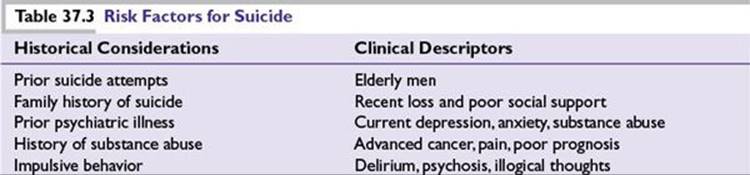
Because patients with cancer have an increased risk of suicide compared with the general population, particular attention should be paid to symptoms of hopelessness, helplessness, suicidal ideation, and intense anxiety (Table 37.3). Cancer at certain sites, including lung, gastrointestinal tract, and head and neck cancers, is associated with an even greater risk of suicide. Risk of suicide appears to be highest immediately after diagnosis and decreases thereafter but remains increased for years as compared to suicide rates in the general population. Suicide rates are higher among patients with advanced disease at diagnosis but not among patients with multiple primary tumors. Other risk factors for suicide include male sex, white race, and being unmarried, similar risk factors for suicide in the general population. In addition, adult survivors of childhood cancers are at increased risk for suicidal ideation related to cancer diagnosis as well as posttreatment mental and physical health problems, even many years after completion of therapy.
Management
Treatment modalities include pharmacotherapy (Table 37.4) and psychotherapy. Electroconvulsive therapy (ECT) is highly effective in the treatment of major depressive disorder resistant to pharmaco- and psychotherapy. Selection of an antidepressant in major depression should be based on a number of considerations such as active medical problems, the potential for drug interactions, prior treatment response, and an optimal match between the patient’s target symptoms and the side-effect profile of the antidepressant (e.g., using a sedating agent for the patient with anxiety and insomnia).


Potential interactions with cancer therapeutics should also be considered. For example, several antidepressants are inhibitors of cytochrome P-450 2D6. This inhibition reduces the metabolism of tamoxifen to its active metabolite, endoxifen. Venlafaxine (Effexor) has the least inhibitory effect at 2D6 and thus is preferred in breast cancer patients taking tamoxifen (Table 37.5).
An antidepressant frequently used in patients with cancer is mirtazapine (Remeron) as it is sedating, causes weight gain, has few significant drug interactions, and is a 5HT-3 receptor antagonist (i.e., has antiemetic properties). Mirtazapine may also be used as an augmentation agent for depression treatment in conjunction with SSRIs. Elderly patients or patients with medical comorbidities (especially hepatic impairment) generally require smaller dose of antidepressants.
Anxiety Disorders
Many medical conditions seen in the oncology setting, such as heart failure, respiratory compromise, seizure disorders, pheochromocytoma, and chemotherapy-induced ovarian failure, may cause anxiety. Additional conditions that may cause both anxiety and depression are listed in Table 37.1. Similarly, anxiety is an adverse effect of numerous medications such as high-dose corticosteroids. In particular, dopamine-blocking antiemetics may cause akathisia, an adverse effect characterized by subjective restlessness and increased motor activity, which is commonly misdiagnosed as anxiety. Initiation of treatment with an antidepressant may also induce a transient anxiety state. It is important to inform patients of this potential side effect in order to improve adherence.
Management
In addition to behavioral therapy and psychotherapy, BZDs are the medications that are most frequently used for the short-term treatment of anxiety (Table 37.6). For anxiety that persists beyond a few weeks, treatment with an antidepressant (see Table 37.4) is indicated. BZDs are often started concurrently with an antidepressant as a “bridge therapy” as there is a typical delay in therapeutic effect for antidepressants of up to several weeks. If the patient has already been taking an SSRI, it is important not to discontinue it (with the exception of fluoxetine because of its long half-life) abruptly to avoid a withdrawal syndrome that may include gastrointestinal distress, flu-like symptoms, insomnia, agitation, and irritability. Low-dose second-generation antipsychotics are often useful for severe and persistent anxiety or for conditions such as anxiety secondary to steroids and delirium (Table 37.7).


The following issues associated with BZD use require attention:
■BZDs are the treatment of choice for delirium caused by alcohol or sedative–hypnotic withdrawal but predictably worsen other types of delirium.
■In patients with hepatic failure, lorazepam, temazepam, or oxazepam are the preferred BZDs as they do not require oxidation for metabolism.
■BZDs may result in “disinhibition,” especially in delirium, substance abuse, “organic” disorders, and preexisting personality disorders. Disinhibition is more common in children and elderly patients.
■The abrupt discontinuation of BZDs with short half-lives (e.g., alprazolam [Xanax]) can cause rebound anxiety and precipitate a withdrawal syndrome.
■Long-term use of BZDs may lead to cognitive problems, tolerance, and dependence. Time-limited use is recommended.
Delirium
Delirium is an acute confusional state characterized by fluctuating cognitive impairment, perceptual disturbances, mood changes, delusions, and sleep–wake cycle disruption. Patients can have a hyperactive (agitated), hypoactive (quiet), or mixed (alternating hyper/hypoactive) delirium. Virtually any psychiatric symptom can be a manifestation of delirium. Anxiety and/or labile mood are common presentations often misdiagnosed as “depression.” Patients who are elderly, on multiple medications, or who have underlying brain pathology are more prone to delirium. Surgical patients who undergo prolonged, extremely invasive, or multiple surgeries with repeated anesthesia are also at higher risk for delirium. Delirium in terminally ill patients is very common and often underdiagnosed. Several cancer-related therapies can induce delirium including methotrexate, ifosfamide, cytosine arabinoside, interferon-α, and interleukin-2. Total brain radiation may also cause cognitive changes and delirium.
Management
The first step in the management of delirium is making sure the patient is safe by attending to environmental cues including reorienting the patient and providing a personal nursing assistant (sitter) to prevent falls. Identifying and treating precipitating factors (including medical conditions such as infection) and discontinuing nonessential medications that may be deliriogenic (such as BZDs, anticholinergics, or opioids) will be important to the treatment of the delirium. Haloperidol (Haldol) continues to be the prototypical first-generation antipsychotic agent most frequently used in delirium because of its ease of administration (oral, IM, or IV) and many clinical trials proving its efficacy. Common adverse effects of the first-generation antipsychotics include sedation and hypotension. Newer second-generation antipsychotics such as olanzapine (Zyprexa) and risperidone (Risperdal) may also be used in the treatment of delirium and are associated with sedation, weight gain, and metabolic syndrome. Recent concerns have been raised about an increased risk of sudden death associated with antipsychotic use in elderly patients. These data suggest a small increase in the relative risk of death which must be weighed against the substantial mortality risks of untreated delirium.
ADDITIONAL CONSIDERATIONS FOR PSYCHOPHARMACOLOGIC MANAGEMENT IN PEDIATRIC ONCOLOGY
Cancer is the fourth leading cause of death among 10- to 24-year-olds and the leading cause of nonacute death among youth. Life-threatening illness in a child or an adolescent is traumatic and can be associated with anxiety and depression. Although many patients cope well with and adapt to the trauma, symptoms of depression such as fatigue, cognitive impairment, decreased social interaction and exploration, and anorexia may be part of a cytokine or immunologic response to cancer and its treatments. Psychotropic medications can improve quality of life for children with cancer. These medications do not replace comprehensive, multimodal, multidisciplinary care but are adjuncts to decrease discomfort and improve functioning of medically ill children.
Assessment and Diagnosis in Pediatric Oncology
A thorough psychiatric assessment is needed to make a correct diagnosis and to institute treatment. Typically, this assessment is based on multiple brief examinations of the child and information gathered from additional sources including family, staff, and teachers. A patient’s biologic vulnerability to depression and anxiety may be inferred from (a) a family history of a mood or anxiety disorder, or other psychiatric disorder, and (b) previous psychiatric symptoms or psychiatric treatment.
Common complaints in medically ill children include
■Anxiety
■Pain
■Difficulty in sleeping
■Fatigue
■Feeling “bored”
Adult psychiatric syndromes of adjustment disorder, major depression, anxiety, and delirium apply to children as well, but anxiety, rather than depression, is the most frequent diagnosis. Important determining factors for pharmacologic intervention are severity and duration of psychiatric symptoms.
Psychopharmacologic Treatment of Pediatric Patients
In 1994, manufacturers and federally funded researchers were mandated to study medications such as antidepressants in children. Although there have been no randomized, controlled antidepressant trials in depressed medically ill children, and the dose of psychiatric medications for children with cancer has not been systematically studied, antidepressants have been useful for treating anxiety and depression. Body weight, Tanner staging, clinical status, and potential for medications to interact are considered in deciding doses. See Tables 37.4 and 37.7 for psychotropics with U.S. Food and Drug Administration (FDA) approval for use in children and adolescents.
BZDs, such as lorazepam and clonazepam, used in low doses in conjunction with nonpharmacologic distraction techniques, may be appropriate for procedures that induce considerable anxiety in children. Clonazepam is longer acting and may be helpful with more pervasive and prolonged anxiety symptoms. BZDs can cause sedation, confusion, and behavioral disinhibition. Their use should be carefully monitored, especially in those patients with CNS dysfunction. BZD withdrawal precipitated by abrupt discontinuation occurs most frequently on transferring the patient from intensive care settings.
Antihistamines have been used to sedate anxious children. Diphenhydramine, hydroxyzine, and promethazine may be helpful for occasional insomnia. However, antihistamines are not helpful for persistent anxiety and their anticholinergic properties can precipitate or worsen delirium. Intravenous diphenhydramine may be misused because it can induce euphoria when given by IV push. Very high doses of IV diphenhydramine can also provoke seizures.
Fluoxetine is the only FDA-approved SSRI for depression in children older than 6 years. Fluoxetine and sertraline are approved for obsessive-compulsive disorder in children older than 6 years while fluvoxamine is approved for those who are 8 years and older. Fluoxetine, with its active metabolite norfluoxetine, and fluvoxamine are potent inhibitors of cytochrome P-450 (CYP) 3A3 and 3A4. They are contraindicated with macrolide antibiotics, azole antifungal agents, and several other medications. Escitalopram is approved for depression in those 12 years and older, while citalopram is not approved for use in those under 18. Amitriptyline is approved for depression in children who are 12 years or older. TCAs are useful for treating insomnia, weight loss, anxiety, and some pain syndromes.
Some antidepressants may contribute to suicidal thinking in children and young adults through age 24 years as noted in FDA black box warnings. This possibility warrants careful monitoring of suicidality in all children treated with antidepressants. Use of non-FDA-approved psychopharmacologic agents in children with cancer may be considered for extreme or prolonged distress and poor functioning but must be monitored closely.
Children and adolescents who cannot tolerate antidepressants may benefit from stimulants for depression and apathy. Psychostimulants are generally well tolerated and have a rapid onset of action. Children with delirium, hallucinations, severe agitation, or aggression may be safely treated with low-dose first-generation antipsychotics such as haloperidol or second-generation antipsychotics such as risperidone and olanzapine.
Although there is a dearth of research in pediatric cancer psychopharmacology, child psychiatry consultation may considerably improve the quality of life for children undergoing cancer treatment and dealing with cancer survival. Routine psychological screening of children with cancer and survivors can detect ongoing distress. Psychopharmacologic consultation may also help children with postradiation or postchemotherapy conditions related to attention, mood, and anxiety disorders.
SPECIALIST REFERRAL
Many psychiatric symptoms can be readily addressed by the primary oncologist or oncology service through counseling and pharmacotherapy. Sometimes it is helpful to involve a psychiatric specialist to assist with psychopharmacology and other supportive interventions. There are a growing number of practitioners working within oncology centers who focus on issues associated with cancer diagnosis, treatment, and survivorship. The subspecialty of psychosocial oncology (or psycho-oncology) has existed in some centers since the 1970s. There is a great deal of variability of access to psychosocial specialists at cancer centers and in the community. Some centers have dedicated services, while others utilize practitioners from palliative, general psychiatric, or psychosomatic medicine services. It may be beneficial for oncologists to establish relationships with local community mental health providers in settings where a dedicated service is not available.
Determining the appropriateness of a referral to assist with psychopharmacology can be difficult for some oncology providers. The National Comprehensive Cancer Network (NCCN) has established guidelines for management and referral for psychosocial issues in The Clinical Practice Guidelines in Oncology. There is a section on Distress Management (current version 2.2013) that includes referral and treatment algorithms for psychiatric, social, pastoral, and substance-related issues. A simple screening tool called the “Distress Thermometer” exists to help determine the need for referral to supportive services including referral to psychiatric care. The NCCN guidelines are available online at http://www.nccn.org/professionals/physician_gls/ f_guidelines.asp#supportive. Additionally, a report from the Institute of Medicine establishes the standard of care for addressing psychosocial issues in the oncology setting (http://www.iom.edu/Reports/2007/Cancer-Care-for-the-Whole-Patient-Meeting-Psychosocial-Health-Needs.aspx).
SUMMARY
Psychiatric syndromes are frequently misdiagnosed and poorly treated in patients with cancer. Before initiating psychopharmacologic therapy, underlying medical disorders and adverse effects of medication must be addressed and potential drug interactions anticipated. Psychiatric symptoms should then be treated promptly and aggressively. Consultation from a psychiatrist is indicated in the following circumstances when the patient (a) has a complex psychiatric history and is taking multiple psychotropic medications; (b) exhibits depressive symptoms associated with extreme guilt, anxiety, and/or suicidal thoughts; (c) is confused, hallucinating, agitated, or violent; and/or (d) is nonadherent with care or rejects treatment and seeks physician-assisted suicide.
REVIEW QUESTIONS
1.A 67-year-old male is receiving interferon-α for metastatic melanoma. He develops pneumonia and is admitted to the inpatient oncology service. He begins treatment with IV antibiotics and shows improvement over 2 days of admission. Unfortunately, he becomes confused on the third day of admission with agitation, difficulty sleeping, and fluctuating level of consciousness. He is afebrile and hemodynamically stable. What should be done next?
A.Start a low dose of lorazepam as needed for sleep and agitation.
B.Schedule low-dose haloperidol just prior to bedtime.
C.Change the patient’s antibiotic regimen.
D.Review the patient’s medication list and systematically look for medical causes of the confusion.
2.A 60-year-old woman has been doing well with treatment with tamoxifen for estrogen receptor-positive breast cancer. She has had several unfortunate events happened including losing her mother and her best friend in the same month. She begins to feel excessively guilty, wakes early in the morning, loses weight, and stops her normal hobbies and exercise routine due to lack of energy. She presents for follow-up and asks for help. What is the best pharmacologic intervention for this patient?
A.Start the patient on venlafaxine.
B.Give the patient a 2-week supply of clonazepam for sleep and excessive guilt.
C.Reduce her tamoxifen dose.
D.Start a combination of zolpidem for sleep and paroxetine for sleep.
3.A 72-year-old male with advanced pancreatic cancer has been struggling with his diagnosis and treatment. He has had severe abdominal pain which has been difficult to control and has essentially stopped eating over the past few weeks. He feels burdensome to his wife and daughter and becomes more detached from those around him. His family is concerned because he has made several statements that he does not feel he deserves to live anymore and his cancer is a “punishment for his life sins.” What would be most important in assessing the patient’s risk for self-harm?
A.His current functional status
B.Any past history of self-harm
C.His current medications
D.His financial status
4.A 7-year-old girl is diagnosed with acute lymphoblastic leukemia. She is admitted to the children’s hospital for induction therapy. The child is noted to be shy on admission and has progressive anxiety over the first few days of treatment. She does not sleep through the night and stays in her bed through the day. Her nurse suspects she may have an anxiety problem. What would be most important in assessing the girl’s symptomology?
A.Administration of a standardized childhood anxiety screening tool
B.A psychiatry consult to screen for anxiety, abuse, and depression
C.Administration of a low dose of an antihistamine as needed
D.A review of the girl’s development and recent social history with her parents
Suggested Readings
1.Academy of Psychosomatic Medicine. Psychiatric aspects of excellent end-of-life care: a position statement of the Academy of Psychosomatic Medicine. Available at: http://www.apm.org/papers/eol-care.shtml. Accessed February 4, 2013.
2.American Psychiatric Association. Diagnostic and Statistical Manual of Mental Disorders. 4th ed. (Text Revision). Washington, DC: American Psychiatric Association; 2000.
3.Cassem EH. Depressive disorders in the medically ill: an overview. Psychosomatics. 1995;36:S2-S10.
4.Cleeland CS, Bennett GJ, Dantzer R, et al. Are the symptoms of cancer and cancer treatment due to a shared biologic mechanism? A cytokine-immunologic model of cancer symptoms. Cancer. 2003;97:2919.
5.Coyle N, Adelhardt J, Foley KM, et al. Character of terminal illness in the advanced patient with cancer: pain and other symptoms during the last four weeks of life. J Pain Symptom Manage. 1990;5:83.
6.Desmarais JE, Looper KJ. Interactions between tamoxifen and antidepressants via cytochrome P450 2D6. J Clin Psychiatry. 2009;70(12):1688-1697.
7.Emanuel EJ, Fairclough DL, Daniels ER, et al. Euthanasia and physician-assisted suicide: attitudes and experiences of oncology patients, oncologists, and the public. Lancet. 1996;347:1805.
8.Endicott J. Measurement of depression in patients with cancer. Cancer. 1984;53:2243.
9.Fang F, Fall K, Mittleman MA, et al. Suicide and cardiovascular death after a cancer diagnosis. N Engl J Med. 2012;366(14):1310-1318.
10.Fawzy I, Greenburg D. Oncology. Textbook of Consultation-Liaison Psychiatry. Washington, DC: American Psychiatric Press; 2001.
11.Gothelf D, Rubinstein M, Shemesh E, et al. (2005). Pilot study: fluvoxamine treatment for depression and anxiety disorders in children and adolescents with cancer. J Am Acad Child Adolesc Psychiatry. 2005;44:1258-1262.
12.Holland J, Breitbart WS, Jacobsen PB et al. Psycho-Oncology. New York: Oxford University Press; 2010.
13.Holland J, Greenberg D, Hughes M, et al. Quick Reference for Oncology Clinicians: The Psychiatric and Psychological Dimensions of Cancer Symptom Management. Charlottesville, VA: IPOS Press; 2006.
14.Kersun LS, Shemesh E. Depression and anxiety in children at the end of life. Pediatr Clin N Am. 2007;54:691-708.
15.Lipsett DR, Payne EC, Cassem NH. On death and dying. Discussion. J Geriatr Psychiatry. 1974;7:108.
16.Lynch ME. The assessment and prevalence of affective disorders in advanced cancer. J Palliat Care. 1995;11:10.
17.Misono S, Weiss NS, Fann JR, Redman M, Yueh B. Incidence of suicide in persons with cancer. J Clin Oncol. 2008;26(29):4731-4738.
18.Pao M, Ballard E, Rosenstein DL, Wiener L, Wayne AS. Psychotropic medication use in pediatric patients with cancer. Arch Pediatr Adolesc Med. 2006;160:818-822.
19.Portteus A, Ahmad N, Tobey D, Leavey P, et al. The prevalence and use of antidepressant medication in pediatric cancer patients. J Child Adolesc Psychopharmacol. 2006;16:467-473.
20.Recklitis C, Diller LR, Li X, Najita J, Robison LL, Zeltzer L. Suicide ideation in adult survivors of childhood cancer: a report from the Childhood Cancer Survivor Study. J Clin Oncol. 2010;28:655.
21.Recklitis C, O’Leary T, Diller L. Utility of routine psychological screening in the childhood cancer survivor clinic. J Clin Oncol. 2003;21:787.
22.Rodin G, Lloyd N, Katz M, et al. The treatment of depression in cancer patients: a systematic review. Support Care Cancer. 2007;15:123.
23.Rosenstein DL. Depression and end-of-life care for patients with cancer. Dialogues Clin Neurosci. 2011;13(1):101-108.
24.Spiegel D, Sands S, Koopman C. Pain and depression in patients with cancer. Cancer. 1994;74:2570.
25.Wise TN. The physician and his patient with cancer. Prim Care. 1974;1:407.