
Raanan Tal1
(1)
Neuro-urology Unit, Urology Department, Rambam Health Care Campus, Haifa, Israel
Raanan Tal
Email: raanantal@gmail.com
17.1 Epidemiology
Prostate cancer is the most common cancer among men with 27 % of all male cancer cases. While prostate cancer is uncommon in young males, its incidence increases with age, affecting 1 in 43 men aged 50–59; 1 in 16 men aged 60–69; and 1 in 9 men aged >70. The life-time risk of developing prostate cancer is estimated to be 1 in every 6 men [1]. With early detection strategies, over 80 % of men with prostate cancer are diagnosed with localized disease, undergo treatment, and are either cured of their prostate cancer or they live many years after the prostate cancer diagnosis. Prostate cancer is responsible for only 10 % of all cancer deaths; hence, most men with prostate cancer die “with” their cancer, rather than “of” their prostate cancer. In the Western World, the median age at prostate cancer diagnosis is 66 years, while the median age at dying of prostate cancer is 80 years. So, among men with prostate cancer, attention for quality-of-life issues and particularly sexual activity is of paramount importance [2].
17.2 Relevant Sexual Function Anatomy and Physiology
The prostate gland resides in the pelvis in the proximity of the other major male sexual organs. The close association between prostate cancer and sexual dysfunction stems from this anatomical proximity (Fig. 17.1). Thus, all prostate cancer treatments have the potential to negatively influence sexual function.
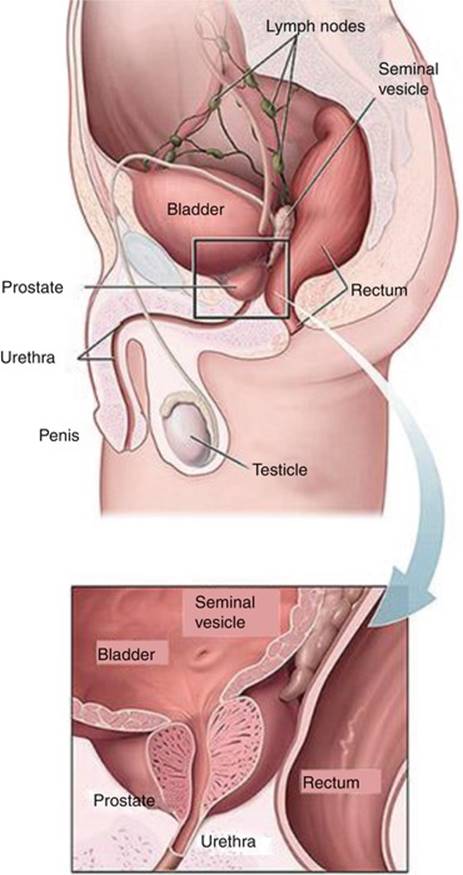
Fig. 17.1
Prostate and nearby organs [2] (http://seer.cancer.gov/statfacts/html/prost.html)
The prostate gland is responsible for the secretion of 30–40 % of the seminal fluid. The reminder of the seminal fluid is secreted by the paired seminal vesicles while the testicle and the epididymis contribute only a few percent to the volume of the seminal fluid. The volume of the sperm cells themselves is negligible. In prostate cancer surgery (radical prostatectomy or RP), the prostate gland and the seminal vesicles are removed and the vasa deferentia are disconnected from the prostate and ligated. This will render the male without ejaculate and infertile. Besides the impact on fertility, loss of ejaculate may have psychological as well as organic consequences on sensation and pleasure at sexual activity.
On the outer surface of the prostate, on both sides adherent to the prostate capsule, travel the cavernous nerves which originate from the pelvic plexus and innervate the erectile tissue and the penile vasculature. Prostate cancer surgery may cause injury to these nerves resulting in erectile dysfunction. At radical prostatectomy (RP), even in the hands of the most skillful surgeons, the cavernous nerves are manipulated to allow prostate gland removal. While complete transection of both erectile nerves will render the male completely unable to achieve any degree of spontaneous erection, even minute traction injury may lead to either transient or permanent erectile dysfunction and most if not all men who had prostate cancer surgery experience some diminution of their erectile capacity. More pronounced penile denervation injury and prolonged penile erectile inactivity may lead to consequent erectile tissue fibrosis and severe irreversible damage.
The urinary tract is adjacent to the prostate. The urinary bladder and the involuntary urinary sphincter at its outlet (the bladder neck) are located just above the prostate, the voluntary striated sphincter is located just below, and the urethra itself travels through the prostate. Injury to the urinary continence mechanism may lead to incontinence in general; however, even men who are fairly continent in daily life activities may encounter urine loss during sexual activity. Incontinence during sexual activity may happen during male sexual arousal with relaxation of the pelvic floor muscles (foreplay incontinence) or during orgasm with reflexive voluntary urinary sphincter relaxation (climacturia).
The sexual organs and mechanisms for arousal, erection, and ejaculation are under hormonal regulation of androgens, the “sex hormones.” Testosterone, the principal male sex hormone, is secreted mainly by the testes (95 %) and to a small amount by the adrenal glands (5 %). Testicular testosterone secretion is regulated by luteinizing hormone (LH), a gonadotropin secreted by the anterior pituitary. This gonadotropin secretion is regulated by the gonadotropins releasing hormone (GnRH), secreted by the hypothalamus (Fig. 17.2). Excess of testosterone is metabolized by aromatization to estrogen. Despite being primarily a female hormone, estrogen has also an important role in male’s health, such as supporting bone health. Both the hypothalamus and the anterior pituitary activity are regulated by the levels of testosterone and other androgens but also by estrogens (negative feedback). Prostate cells and prostate cancer cell multiplication and function are also regulated by testosterone. That is why androgen deprivation is used as a treatment for advanced prostate cancer. Deprivation of pituitary gonadotropins and the consequent depletion of testosterone and its androgenic and estrogenic derivatives have profound impact on the sexual organs and functions, and also on other aspects of men’s health.
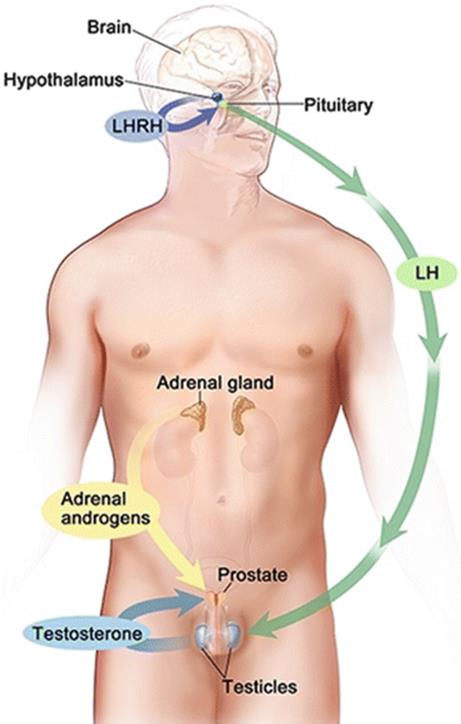
Fig. 17.2
Hormonal regulation of testosterone secretion
17.3 Sexual Dysfunction Upon Cancer Diagnosis
The initial step in prostate cancer diagnosis is prostate biopsy. Using a hollow needle, prostate tissue samples are collected via the rectum under ultrasound guidance. The tissue samples are pathologically evaluated for the presence of cancer, and if found, cancer grade is determined. Prostate biopsy itself has been shown to cause erectile dysfunction, usually of transient nature. Increased incidence and severity of erectile dysfunction was found in the month after biopsy, even before prostate cancer diagnosis was established, with return to baseline erectile function at 12 weeks [3]. Men who were found to have prostate cancer had significant stronger decrease in sexual function than men in whom no cancer was found [4]. That highlights the possible psychological impact of cancer diagnosis on sexual function, even before prostate cancer treatment takes its toll. That was also found in earlier study evaluating sexual dysfunction in men awaiting prostate cancer treatment: 20 % reported decreased sexual activity frequency, 15 % decreased sexual interest, 12 % decreased sexual pleasure, and 10 % reported new-onset erectile dysfunction [5]. The inevitable conclusion from these studies is that it is never too early to discuss and evaluate sexual function and sexuality in men coping with prostate cancer and their partners, even at the very early moment of diagnosis. The transient nature of prostate biopsy-associated erectile dysfunction may be emphasized, to ameliorate worries and provide reassurance.
17.4 Treatment for Prostate Cancer
As long as the cancer is confined to the prostate itself, local treatment can be applied either by surgery or by radiotherapy. When the prostate cancer cells have spread beyond the prostate and the disease is disseminated (metastatic invasion in the rest of the body), local treatment is not effective anymore and systemic hormonal treatment is used to slow down disease progression. The principle of prostate cancer hormonal treatment is lowering androgen levels down to nearly zero (androgen deprivation/chemical castration). With prostate cancer progression, the cancer cells may become “castration resistant” and the mainstay of treatment is chemotherapy. Depending on cancer stage, severity, age, patient’s preferences, and patient’s comorbidity many combination strategies are in use. Since most prostate cancers do not grow very fast, patient’s life expectancy is an important consideration in tailoring the treatment to an individual patient. When life expectancy is limited by medical conditions unrelated to prostate cancer and the patient is expected to die earlier than to die from the prostate cancer, usually nothing is done (“watchful waiting” or “wait and see”). When prostate cancer characteristics are favorable and future cancer growth is estimated to be very slow, close monitoring of cancer progression without any treatment may be advised (“active surveillance”). The basis for this approach is the understanding that all prostate cancer treatments take a toll on patient’s quality of life and there is a considerable potential damage to sexuality and urinary continence.
17.5 Surgical Treatment of Prostate Cancer and Sexual Function
Surgical treatment, namely, radical prostatectomy (RP) is the mainstay of prostate cancer treatment. At RP the whole prostate and the seminal vesicles are removed, and the bladder neck is sutured to the urethral stump, just above the voluntary urethral sphincter. RP is a prostate cancer treatment with curative intent, and it is the prevalent prostate cancer treatment in patients under age 70, with localized disease. RP disrupts the anatomic structure of the genital tract with multidimensional impact on sexual function. An immediate and obvious consequence of RP is the complete loss of ejaculation (anejaculation) due to removal of the seminal fluid-producing organs – the prostate and the seminal vesicles and disconnection of the vasa deferentia. While anejaculation is mainly a concern for men desiring future fertility, it may lead to decreased sexual activity–associated pleasure in men and possibly also for their sexual partners. Experiencing orgasm is still possible. Although anejaculation is an obvious consequence of RP rather than a complication, a significant proportion of men reported that loss of ejaculation had not been discussed before surgery and about a third were not expecting postoperative absence of ejaculation. Despite the difficulties, patients and their partners should receive a comprehensive information regarding their prostate cancer treatment outcomes and be provided with realistic expectations. Unrealistic expectations may act against the patient after surgery and discourage him, when he faces reality and feels that he is doing considerably worse than expected. Not infrequently, more than a single session is needed to allow understanding and processing of the information provided.
The most frequently discussed and studied sexual consequence of RP is erectile dysfunction. Post RP erectile dysfunction is mainly due to neurogenic damage: injury to the cavernous nerves, traveling on the outer surface of the prostate, adherent to its capsule. Till 1982, both cavernous nerves were transected at RP. Then nerve-sparing radical prostatectomy was introduced in an attempt to eliminate RP-associated erectile dysfunction.
Complete sexual function recovery after RP cannot be achieved, as there are irreversible inherent changes in sexual activity, such as the above-mentioned anejaculation.
Immediately after surgery, there is a sharp decline in erectile function, followed by a slow recovery process lasting up to 2 years. When the erection nerves have not been completely transected, partial neural function is expected to recover. Despite more than 30 years worldwide experience in nerve-sparing RP, despite advances in surgical technique, and despite the introduction of robotic assisted RP, erectile dysfunction after radical prostatectomy is still a significant concern. A review of the medical literature gave an erectile function recovery rate of about 60 %, but made also clear that there is a lot of confusion on the outcome criteria [6]. A common definition for erectile function recovery after RP among RP surgeons is “being able to perform penetrative intercourse with or without the aid of phosphodiesterase 5 inhibitors (PDE5i).”
However, 24 months after operation and looking at recovery “back to baseline” only 22 % of all men and only 16 % of men without preoperative erectile dysfunction returned to their baseline erectile function without medication [7]. The men above 60 years of age had significantly poorer outcome, with a return to baseline rate of only 4 %. Once erectile dysfunction is encountered after RP, the first-line treatment is the on-demand use of oral medications – PDE5i. Montorsi et al. reviewed the literature regarding PDE5i response rate after RP (erection sufficient for vaginal intercourse) and found a response rate range of 14–53 %, a combined estimate of response probability of 35 %, and a strong evidence for a lower response rate after non-nerve-sparing (range: 0–15 %) versus nerve-sparing surgery (range: 35–75 %) but not after unilateral (range: 10–80 %) versus bilateral nerve-sparing surgery (range: 46–72 %) [8]. These findings suggest that in order to provide men undergoing RP and their partners with realistic expectations regarding erectile function recovery, we should use their definition, explain that they may never return to baseline, may need to use PDE5i, intracavernosal injections, a vacuum device postoperatively, or even a penile implant in certain cases to be able to resume penile penetrative sexual activity.
After RP, if erections are not achieved on a regular basis, it has been shown that long-standing absence of erections may lead to penile cavernosal tissue degenerative changes, resulting from denervation and hypoxia. To minimize erectile tissue damage and improve chances of erectile function recovery, rehabilitation strategies have been developed. Penile rehabilitation is defined as any intervention employed with no erectogenic intent but aimed to preserve penile tissue health awaiting the cavernosal nerves to recover, a process which may take up to 2 years. Rehabilitation interventions include nightly use of PDE5i, vacuum devices, and intracavernosal injections. Until now there is no consensus on the efficacy of penile rehabilitation and the protocol used (see Chap. 26). At the psychological level, the best approach is to help men to get back on track, as soon as possible. Waiting for spontaneous recovery is harmful to the penis which will develop atrophic changes, harmful to the man who will lose his manhood and self-esteem and harmful to the couple who may give up their sex life and intimacy. Couples should be seen periodically, ineffective interventions should be quickly abandoned and switched by effective treatments. The recovery process is slow and gradual, and both partners should be aware of that. The sexual partner, if available, should be a part in the rehabilitation process. Although some men prefer self-sexual activity, intending to resume mutual sexual activity only after effective erection has been achieved.
Besides anejaculation and erectile dysfunction, there are also other sexual consequences of RP: penile length loss, changes in the nature of orgasm, urinary incontinence at sexual arousal (foreplay incontinence) and at orgasm (climacturia), and possibly an increased risk of developing Peyronie’s disease postoperatively.
Penile length loss of up to 2 cm has been reported following RP. The exact underlying mechanism is still unknown. Early length loss in the first 3–6 months after surgery has been attributed to sympathetic overactivity, caused by greater damage to the parasympathetic nerve fibers and earlier recovery of the sympathetic nerves, known as “competitive sprouting.” This autonomic imbalance causes smooth muscle contraction and a hypertonic retracted penis. In the long term, penile length loss has been attributed to penile structural changes, including erectile tissue collagenization, loss of smooth muscle content, and structural changes in the tunica albuginea. A recent rigorously conducted prospective study of penile length (stretched flaccid penile length) changes after RP found penile length loss in 37 % of men but greater than 10 mm in only 4 % [9]. Calculating and comparing mean penile length pre- and postoperative, penile length loss was evident at 2 months, but not at 6 months after RP. PDE5i use moderated length loss, with patients who regularly used PDE5i having no loss in length. Frey et al. used a questionnaire to assess subjective, not measured, penile length loss and found that about half of men after RP perceived their penis at least 1 cm shorter after surgery (Table 17.1) [1]. In their study, worse erectile function and higher BMI were associated with greater penile shortening. Even with the limited understanding of penile length loss pathophysiology, it seems that preservation of penile length is associated with nerve-sparing surgery and with favorable erectile function outcomes after RP.
Table 17.1
Commonly neglected sexual consequences of radical prostatectomy (N = 256)
|
Sexual consequence |
Rate (%) |
|
Subjective loss of penile length of >1 cm |
47 % |
|
Penile curvature |
10 % |
|
Anorgasmia |
5 % |
|
Decreased orgasm intensity |
60 % |
|
Delayed orgasm |
57 % |
|
Orgasmic pain (dysorgasmia) |
10 % |
|
Urinary incontinence during sexual activity |
38 % |
|
Penile sensory changes |
25 % |
Frey et al. [1]
Peyronie’s Disease
In the unfortunate men who develop Peyronie’s disease after RP, penile structural changes, mainly in the tunica albuginea, lead to curvature, further length loss, aggravation of erectile dysfunction, and other functional and psychological negative consequences. One single retrospective study suggested this increased risk of Peyronie’s disease after RP. With Peyronie’s disease, men are often discouraged and may give up the rehabilitative efforts. Months after surgery, they notice some improvement and gained hope, then another hit they were not expectingPeyronie’s disease. The couple should be reassured and informed that Peyronie’s disease is a prevalent condition, not a life-threatening disease and that it does not preclude the use of ED interventions, such as PDE5i, penile injections, vacuum devices, or penile implants.
Urinary Incontinence
During surgery, the internal involuntary urinary sphincter at the bladder neck is demolished. Then urinary continence solely depends on the external striated voluntary sphincter. Additional injury during surgery to the external sphincter or its innervation may compromise its function, leading to stress urinary incontinence. Even in men with good urinary continence, urine leakage may occur during sexual arousal due to relaxation and loss of pelvic floor muscles tone or during orgasm due to external sphincter relaxation. In the normal physiology, the internal sphincter activity increases during orgasm to avoid urine leakage and the external sphincter relaxes to allow for semen passage during ejaculation. Orgasm-associated incontinence is not uncommon after RP, reported by 40–45 % of men and over time it commonly spontaneously resolves. Any sexual activity–related incontinence may be distressing to the couple, even if it happens infrequently and in low amount. Incontinence may be especially distressing if penetrative vaginal sex is substituted by other sexual practices such as oral sex due to the co-existence of erectile dysfunction and difficulties in penetrating. Providing reassurance to both partners is important with the information that this incontinence is self-limiting. The urine leakage itself is harmless and simple interventions such as voiding completely before sexual activity or use of penile constriction band (penile ring) may lower the amount of or stop the leaking urine.
Orgasm Disturbances
Orgasmic pain has been described in 14 % of men after RP, and the natural course of this pain is self-limiting. Changes in the intensity of orgasm have also been reported in 37–82 % of men after RP, most commonly reduced orgasmic intensity and less commonly complete absence of orgasm or increase orgasmic intensity (reported by only 4 %). Frey et al. surveyed men 3–36 months after radical prostatectomy and reported on the incidence of what they defined as “commonly neglected sexual side effects to radical prostatectomies” and found high incidence of orgasmic changes after RP (Table 17.1) [1].
In summary, RP causes paramount anatomic, physiological, emotional, and couples’ relationship changes related to sexual function. After the prostate cancer diagnosis - men, their partners and the professionals tend to focus mostly on oncological outcomes and survival. After successful treatment, the oncological concerns wane and sexual function difficulties prevail. Nelson et al. used focus groups of men after RP to look at views of men undergoing erectile function rehabilitation program and found six themes that were of importance: (1) frustration with the lack of information about post-surgery erectile dysfunction; (2) negative emotional impact of erectile dysfunction and avoidance of sexual situations; (3) negative emotional experience with penile injections and barriers leading to avoidance; (4) the benefit of focusing on the long-term advantage of erectile function rehabilitation versus short-term anxiety; (5) using humor to help cope; and (6) the benefit of support from partners and peers [10]. These themes should be considered in the care for men and couples after RP.
17.6 Radiation Therapy and Sexual Function
Radiotherapy is also a common curative intervention for localized prostate cancer. Radiation may be applied externally (external beam radiotherapy) or by implanting seeds into the prostate (brachytherapy). The impact of prostate radiation on sexual function in general and on erectile function in particular does not appear immediately, but 1–2 years after treatment. The pathophysiology behind this erectile dysfunction is arterial damage to the penile arterial vasculature and direct penile injury resulting from radiation effects on the penile bulb [11]. The risk of new-onset erectile dysfunction after radiation is higher with increasing radiation dose. Newer radiation techniques allow for delivery of higher dose to the prostate itself but concomitantly to minimize the effects of radiation on the surrounding tissues. Although the penile vasculature cannot be spared with prostate radiotherapy, due to its proximity to the prostate tissue itself, advanced radiation modalities minimize radiation dose to the penile bulb and are less damaging to erection. The prevalence of erectile dysfunction after radiotherapy for prostate cancer varies greatly but cumulative data from prospective studies report a prevalence of 60–70 % [11]. First-line treatment of radiation induced erectile dysfunction is oral PDE5i, with a response rate of about 60 %. For non-responders, the use of intracavernosal injections, a vacuum device, or surgical treatment with a penile implant are all viable options.
There are also other sexual dysfunctions associated with prostate cancer radiotherapy. Anejaculation was reported in 2–56 %, dissatisfaction with sex life was reported in 25–60 %, and decreased libido/sexual desire in 8–58 %. A single study also reported a decreased intensity of orgasm, decreased frequency and rigidity of spontaneous erections, and decreased importance of sex. Not uncommonly, couples tend to cease sexual activity for prolonged periods during and/or after radiation treatment due to unrealistic fear of possible adverse consequences. Although radiation may damage sperm cells, if procreation is not an issue – sexual activity is safe and continue being sexually active should be encouraged. In men undergoing external beam radiotherapy, sexual activity may be continued without interruption. After brachytherapy, it is advisable to defer sexual activity for a period of 1–2 weeks after the procedure, due to concerns of orgasmic pain and expulsion of seeds left in the bladder after implantation. Early resuming sexual activity facilitates direct continuation of pretreatment sexual routine and minimizes the toll of treatment on sexual activity.
17.7 Hormonal Therapy and Sexual Function
Hormonal therapy for prostate cancer (androgen deprivation therapy or ADT) is given in combination with radiation for localized disease or as a sole treatment for metastatic disease. The effects of lowering testosterone to castrate levels on sexual function are pronounced and immediate. Sexual desire and sexual motivation decrease sharply. Absence of testosterone causes also cessation of prostate and seminal vesicles secretion leading to anejaculation and decreased orgasm. Lack of testosterone also causes atrophic changes in the cavernosal tissue, leading in many men to severe erectile dysfunction with poor response to PDE5i. Many of these symptoms of diminished “male sexuality” are a blow to the male identity. Added to that are for some men hot flushes, emotional instability with crying bouts and sometimes gynecomastia (development of breasts), symptoms that are seen as “female.”
After cessation of androgen deprivation therapy, recovery of the hormonal axis is not immediate. Recovery is gradual and may take up to 1–2 years, depending on the duration of treatment, age, pretreatment hormonal function, and other factors. Patient and partner education, support and encouragement, achieving erections on a regular basis with intracavernosal injections, and efforts to keep the routine of sexual activity despite the lack of testosterone may ameliorate the consequences of androgen deprivation therapy. A proactive role of the partner can be very relevant. However, that can be very difficult in the more traditional couples where the man always initiated sexual contact.
Testosterone is also responsible for the man’s assertiveness. That can hinder him also from seeking sexual health care. Hence, sexual health care professionals should be proactive and management options should be raised and discussed. Also the partner needs to be aware of the expected changes in sexual and general behavior. The partner may need to take more initiative and understand that the loss of sexual interest is hormonally derived and does not mean loss of general interest in the partner or not caring for the partner. Maybe the best strategy to cope with sexual consequences of prostate cancer hormonal treatment is prevention. Hormonal treatment has been or possibly still is overused. Restricting hormonal treatment to clinical scenarios in which it has an oncological benefit and using intermittent hormonal therapy instead of long-term protracted therapy are examples of newer approaches, aimed at minimizing the negative impact of androgen deprivation.
There are other, less commonly used, interventions to treat prostate cancer like high-intensity focused ultrasound (HIFU) – delivery of destructive ultrasound energy to the prostate and cryotherapy – freezing of the prostate tissue. Their impact on sexual function has been poorly studied and any previously discussed sexual dysfunction should be anticipated and addressed.
17.8 Summary
Prostate cancer treatments take their toll on various aspects of sexual activity. Nowadays, prostate cancer is frequently diagnosed early and at a younger age, whereas effective treatments allow for survival for decades. Sexual function is an important determinant of quality of life, and there are effective interventions to ameliorate the impact of prostate cancer and its treatments on sexual function. Proactive approach and early intervention is advisable, to achieve optimal results (Table 17.2).
Table 17.2
Principles of sexual health care for men with prostate cancer
|
1. Discuss sexual health issues with the patient and his partner early. It is never too early to provide information and education regarding the expected consequences of prostate cancer treatment on sexual function |
|
2. Provide patients with realistic expectations, evaluate each patient status individually. Epidemiological data derived from large populations may be misleading. Age, comorbidities, pretreatment sexual function, relationship issues, and other personal factors may impact the sexual health treatment plan and the odds of sexual function recovery |
|
3. Address not only erectile dysfunction, but also other sexual dysfunctions that are of concern to men and their sexual partners |
|
4. Continuously adjust expectations and interventions, throughout the treatment and recovery course. Changes in the treatment plan, lack of response to interventions such as PDE5i or intracavernosal injections, newly diagnosed Peyronie’s disease, and other findings may provide useful prognostic information and assist in optimal tailoring the treatment plan to the patient |
|
5. Since the impact of prostate cancer on sexuality is multidimensional, use a multidimensional approach and a multidisciplinary team, including urologists, sexologists, oncologists, and other professionals |
|
6. A trial of PDE5i is the first-line intervention for erectile dysfunction. However, do not exhaust the patient and his partner with repeated unsuccessful attempts. PDE5i efficacy may be limited following prostate cancer treatment and then it is advisable to switch without delay to a second line intervention, e.g., intracavernosal injections |
|
7. Early identification of men with advanced erectile tissue damage and lack of response to non-surgical therapy. These men may benefit greatly from surgical treatment, namely, a penile implant, before frustration and subsequent despair and avoidance ensue |
|
8. Discuss newer intervention modalities such as penile rehabilitation, providing information on possible benefits but also discuss the lack of robust scientific infrastructure to support such interventions |
|
9. Work with the treating oncologist to minimize treatment intensity when possible, without compromising oncological outcomes |
|
10. Be proactive. Do not wait for the patient to raise sexual health concerns. Men and their partners confront significant barriers attempting to discuss their sexual health. A timely simple intervention such as self-intracavernosal injections training may have a paramount contribution to their sexual satisfaction and their general quality of life |
The sexual rehabilitation process should start already before the treatment, with open communication and encouraging continued intimacy. The use of an erectile rehabilitation program may be discussed and early use of such protocol may be considered, even when not yet having clear consensus about the value of such a program and the best rehabilitation regime. In the majority of cases, PDE5i have been used daily or few times per week. The couple should be stimulated to focus on intimacy and pleasure and not only on performance and to cope in a new way with the lost sexual function.
References
1.
Frey A, Sonksen J, Jakobsen H, et al. Prevalence and predicting factors for commonly neglected sexual side effects to radical prostatectomies: results from a cross-sectional questionnaire-based study. J Sex Med. 2014;11:2318–26.CrossRefPubMed
2.
SEER cancer statistics factsheets: prostate cancer. National Cancer Institute. Bethesda, MD. 2015. Available from: http://seer.cancer.gov/statfacts/html/prost.html.
3.
Klein T, Palisaar RJ, Holz A, et al. The impact of prostate biopsy and periprostatic nerve block on erectile and voiding function: a prospective study. J Urol. 2010;184:1447–52.CrossRefPubMed
4.
Helfand BT, Glaser AP, Rimar K, et al. Prostate cancer diagnosis is associated with an increased risk of erectile dysfunction after prostate biopsy. BJU Int. 2013;111:38–43.CrossRefPubMed
5.
Incrocci L, Madalinska JB, Essink-Bot ML, et al. Sexual functioning in patients with localized prostate cancer awaiting treatment. J Sex Marital Ther. 2001;27:353–63.CrossRefPubMed
6.
Tal R, Alphs HH, Krebs P, et al. Erectile function recovery rate after radical prostatectomy: a meta-analysis. J Sex Med. 2009;6:2538–46.CrossRefPubMedPubMedCentral
7.
Nelson CJ, Scardino PT, Eastham JA, et al. Back to baseline: erectile function recovery after radical prostatectomy from the patients’ perspective. J Sex Med. 2013;10:1636–43.CrossRefPubMedPubMedCentral
8.
Montorsi F, McCullough A. Efficacy of sildenafil citrate in men with erectile dysfunction following radical prostatectomy: a systematic review of clinical data. J Sex Med. 2005;2:658–67.CrossRefPubMed
9.
Berookhim BM, Nelson CJ, Kunzel B, et al. Prospective analysis of penile length changes after radical prostatectomy. BJU Int. 2014;113(5b):E131–6.CrossRefPubMed
10.
Nelson CJ, Lacey S, Kenowitz J, et al. Men’s experience with penile rehabilitation following radical prostatectomy: a qualitative study with the goal of informing a therapeutic intervention. Psychooncology. 2015;24:1646–54.CrossRefPubMedPubMedCentral
11.
Incrocci L. Sexual function after external-beam radiotherapy for prostate cancer: what do we know? Crit Rev Oncol Hematol. 2006;57:165–73.CrossRefPubMed