
Kenneth D. Tew
PERSPECTIVES
Alkylating agents were the first anticancer molecules developed, and they are still used today. After more than 50 years of use, the basic chemistry and pharmacology of this drug family is well understood and has not changed substantially. The family contains six major classes: nitrogen mustards, aziridines, alkyl sulfonates, epoxides, nitrosoureas, and triazene compounds, although a few nonstandard agents have recently been developed. Most epoxides tend to be quite nonspecific with respect to their reactivity and, as such, few have useful clinical characteristics. This chapter provides perspective on how the limited varieties of alkylating agents continue to be useful in the therapeutic management of cancer patients.
The alkylating agents are a diverse group of anticancer agents with the commonality that they react in a manner such that an electrophilic alkyl group or a substituted alkyl group can covalently bind to cellular nucleophilic sites. Electrophilicity is achieved through the formation of carbonium ion intermediates and can result in transition complexes with target molecules. Ultimately, reactions result in the formation of covalent linkages by alkylation with a broad range of nucleophilic groups, including bases in DNA, and these are believed responsible for ultimate cytotoxicity and therapeutic effect. Although the alkylating agents react with cells in all phases of the cell cycle, their efficacy and toxicity result from interference with rapidly proliferating tissues. From a historical perspective, the vesicant properties of mustard gas used during World War I were shown to be accompanied by the suppression of lymphoid and hematologic functions in experimental animals1 and led to the development of mechlorethamine as the first alkylating agent used in the management of human cancer.2 Subsequently, a number of related drugs have been developed, and these have roles in the treatment of a range of leukemias, lymphomas, and solid tumors. Most of the alkylating agents cause dose-limiting toxicities to the bone marrow and, to a lesser degree, the intestinal mucosa, with other organ systems also affected contingent on the individual drug, dosage, and duration of therapy. Despite the present trend toward targeted therapies, this class of “nonspecific” drugs maintains an essential role in cancer chemotherapy.
Because of the classic nature of the drug family, there have been relatively few advances in either their use or utility since publication of the previous edition of this book.
CHEMISTRY
Alkylating reactions are generally classified through their kinetic properties as SN1 (nucleophilic substitution, first order) or SN2 (nucleophilic substitution, second order) (Fig. 17.1). The first-order kinetics of the SN1 reactions depend on the concentration of the original alkylating agent. The rate-limiting step is the initial formation of the reactive intermediate, and the rate is essentially independent of the concentration of the substrate. The SN2 alkylation reaction is a bimolecular nucleophilic displacement with second-order kinetics, where the rate depends on the concentration of both alkylating agent and target nucleophile. Reactivity of electrophiles3 suggests that the rates of alkylation of cellular nucleophiles (including thiols, phosphates, amino and imidazole groups of amino acids, and various reactive sites in nucleic acid bases) are most dependent on their potential energy states, which can be defined as “hard” or “soft,” based on the polarizability of their reactive centers.4 Although the metabolism and metabolites of nitrogen mustards and nitrosoureas differ, the active alkylating species of each is the alkyl carbonium ion (see Fig. 17.1), a highly polarized hard electrophile as a consequence of its highly positive charge density at the electrophilic center. Alkyl carbonium ions will react most readily with hard nucleophiles (possessing a highly polarized negative charge density), where the high-energy transition state (a potential energy barrier to the reaction) is most favorable. In specific terms, an active alkylating species from a nitrogen mustard will demonstrate selectivity for cellular nucleophiles in the following order: (1) oxygen in phosphate groups of RNA and DNA, (2) oxygens of purines and pyrimidines, (3) amino groups of purine bases, (4) primary and secondary amino groups of proteins, (5) sulfur atoms of methionine, and (6) thiol groups of cysteinyl residues of protein and glutathione.3 The least favored reactions will still occur, but at much slower rates unless they are catalyzed.

Alkylation through highly reactive intermediates (e.g., mechlorethamine) would be expected to be less selective in their targets than the less reactive SN2 reagents (e.g., busulfan). However, the therapeutic and toxic effects of alkylating agents do not correlate directly with their chemical reactivity. Clinically useful agents include drugs with SN1 or SN2 characteristics, and some with both.5 These differ in their toxicity profiles and antitumor activity, but more as a consequence of differences in pharmacokinetics, lipid solubility, penetration of the central nervous system (CNS), membrane transport, metabolism and detoxification, and specific enzymatic reactions capable of repairing alkylation sites on DNA.
CLASSIFICATION
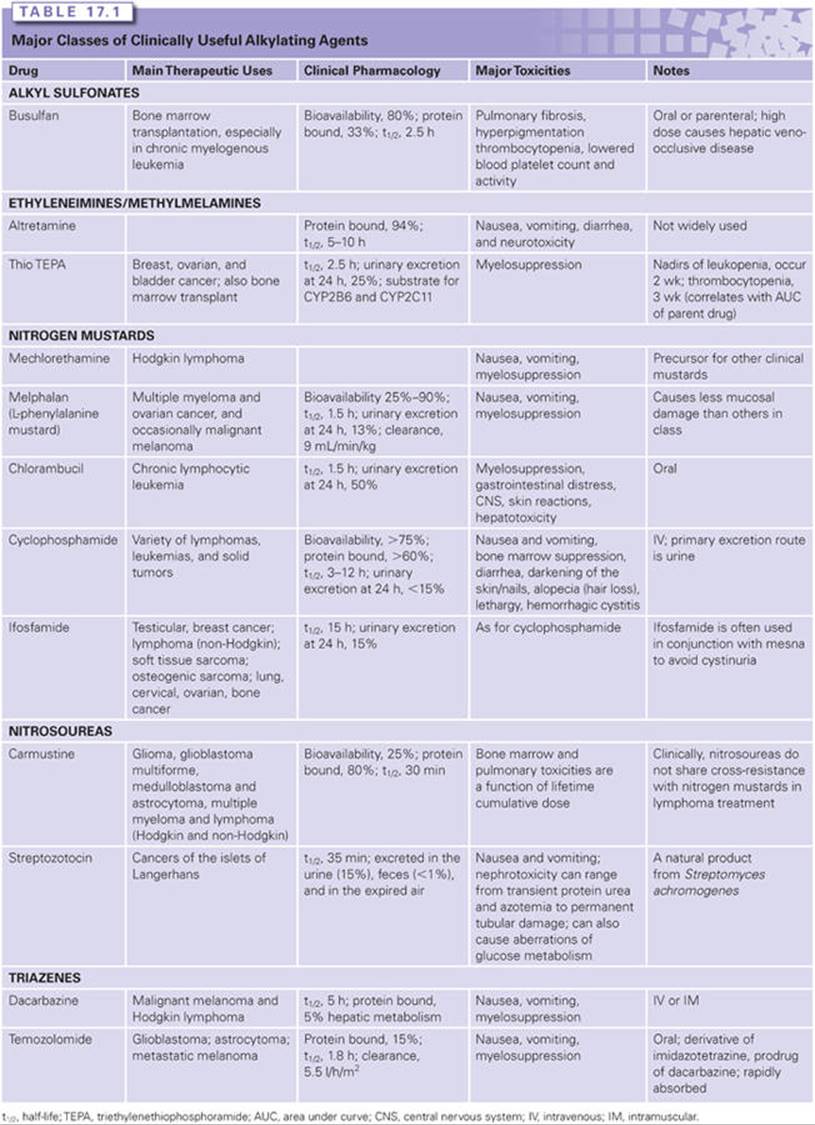
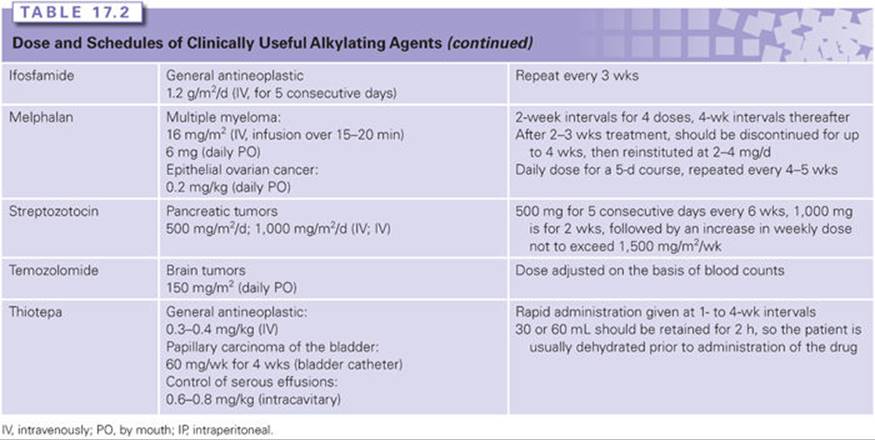
The major classes of clinically useful alkylating agents are illustrated in Table 17.1 and summarized in the following sections. Doses and schedules of the various agents are shown in Table 17.2.

Alkyl Sulfonates
Busulfan is used for the treatment of chronic myelogenous leukemia. It exhibits SN2 alkylation kinetics and shows nucleophilic selectivity for thiol groups, suggesting that it may exert cytotoxicity through protein alkylation rather than through DNA. In contrast to the nitrogen mustards and nitrosoureas, busulfan has a greater effect on myeloid cells than lymphoid cells, thus the reason for its use against chronic myelogenous leukemia.6
Aziridines
Aziridines are analogs of ring-closed intermediates of nitrogen mustards and are less chemically reactive, but they have equivalent therapeutic properties. Thiotepa has been used in the treatment of carcinoma of the breast, ovary, for a variety of CNS diseases, and with increasing frequency as a component of high-dose chemotherapy regimens.7 Thiotepa and its primary desulfurated metabolite triethylenethiophosphoramide (TEPA) alkylate through aziridine ring openings, a mechanism similar to the nitrogen mustards.
Triazines
Perhaps the newest clinical development in the alkylating agent field is the emergence of temozolomide (TMZ). This agent acts as a prodrug and is an imidazotetrazine analog that undergoes spontaneous activation in solution to produce 5-(3-methyltriazen-1-yl) imidazole-4-carboxamide (MTIC), a triazine derivative. It crosses the blood–brain barrier with concentrations in the CNS approximating 30% of plasma concentrations.8 Resistance to the methylating agent occurs quite frequently and has adversely affected the rate and durability of the clinical responses of patients. However, because of its favorable toxicity and pharmacokinetics, TMZ is being combined with numerous other classes of anticancer drugs in an effort to improve response rates in diseases such as malignant melanomas, gliomas, brain metastasis from solid tumors, and refractory leukemias. Many of these trials are currently underway.9
Nitrogen Mustards
Bischloroethylamines or nitrogen mustards are extensively administered in the clinic. As an initial step in alkylation, chlorine acts as a leaving group and the β-carbon reacts with the nucleophilic nitrogen atom to form the cyclic, positively charged, reactive aziridinium moiety. Reaction of the aziridinium ring with an electron-rich nucleophile creates an initial alkylation product. The remaining chloroethyl group achieves bifunctionality through the formation of a second aziridinium. Melphalan (L-phenylalanine mustard), chlorambucil, cyclophosphamide, and ifosfamide (see Table 17.1) replaced mechlorethamine as primary therapeutic agents. These derivatives have electron-withdrawing groups substituted on the nitrogen atom, reducing the nucleophilicity of the nitrogen and rendering them less reactive, but enhancing their antitumor efficacy.
One distinguishing feature of melphalan is that an amino acid transporter responsible for uptake influences its efficacy across cell membranes.10 Although a number of glutathione (GSH) conjugates of alkylating agents are effluxed through adenosine triphosphate–dependent membrane transporters,11 specific uptake mechanisms are generally rare for cancer drugs. Cyclophosphamide and ifosfamide are prodrugs that require cytochrome P-450 metabolism to release active alkylating species. Cyclophosphamide continues to be the most widely used alkylating agent and has activity against a variety of tumors.12A cost saving with equivalent therapeutic activity was recently shown in a modified regimen of high-dose cyclophosphamide plus cyclosporine in patients with severe or very severe aplastic anemia.13
Nitrosoureas
The nitrosoureas form a diverse class of alkylating agents that have a distinct metabolism and pharmacology that separates them from others.14 Under physiologic conditions, proton abstraction by a hydroxyl ion initiates spontaneous decomposition of the molecule to yield a diazonium hydroxide and an isocyanate (see Fig. 17.1). The chloroethyl carbonium ion generated is the active alkylating species. Through a subsequent dehalogenation step, a second electrophilic site imparts bifunctionality.15 Thus, while cross-linking may occur similar to those lesions caused by nitrogen mustards, the chemistry leading to the endpoint is distinct. The isocyanate species generated are also electrophilic, showing nucleophilic selectivity toward sulfhydryl and amino groups that can inhibit a number of enzymes involved in nucleic acid synthesis and thiol balance.16 Because carbamoylation is considered of minor importance to the therapeutic efficacy of clinically used nitrosoureas, chlorozotocin and streptozotocin were designed to undergo internal carbamoylation at the 1- or 3-OH group of the glucose ring, with the consequence that no carbamoylating species are produced.17,18 Streptozotocin is also unusual in that most methylnitrosoureas have only modest therapeutic value. However, its lack of bone marrow toxicity and strong diabetogenic effect in animals led to its use in cancer of the pancreas (see Table 17.1).19 The dose-limiting toxicities in humans are gastrointestinal and renal, but the drug has considerably less hematopoietic toxicity than the other nitrosoureas. Because of their lipophilicity and capacity to cross the blood–brain barrier, the chloroethylnitrosoureas were found to be effective against intracranially inoculated murine tumors. Indeed, early preclinical studies showed that many mouse tumors were quite responsive to nitrosoureas. The same extent of efficacy was not found in humans. Subsequent analyses demonstrated that an enzyme responsible for repair of O-6-alkyl guanine (O6-methylguanine-DNA methyltransferase [MGMT], or the Mer/Mex phenotype)20 was expressed at low levels in mice, but at high levels in humans, a contributory factor in the reduced clinical efficacy of nitrosoureas in humans. In the 1980s, in particular, a number of new nitrosoureas were tested in patients in Europe and Japan, but none established a regular role in standard cancer treatment regimens.
MGMT promoter methylation is crucial in MGMT gene silencing and can predict a favorable outcome in glioblastoma patients receiving alkylating agents.21 This biomarker is on the verge of entering clinical decision making and is currently used to stratify or even select glioblastoma patients for clinical trials. In other subtypes of glioma, such as anaplastic gliomas, the relevance of MGMT promoter methylation might extend beyond the prediction of chemosensitivity, and could reflect a distinct molecular profile. At this time, the standardization of MGMT assays will be critical in establishing prospective prognostic or predictive effects. In addition, eventual clinical trials will need to determine, for each subtype of glioma, the extent to which methylation patterns are predictive or prognostic and whether such assays could be incorporated into an individualized approach to clinical practice.21
CLINICAL PHARMACOKINETICS/PHARMACODYNAMICS
The pharmacokinetics of the alkylating agents are highly variable depending on the individual agent. Nevertheless, they are generally characterized by high reactivity and short half-lives. Although detailed studies on clinical pharmacology are available,22 Table 17.1 summarizes some of the primary kinetic characteristics of the major clinically useful drugs. Mechlorethamine is unstable and is administered rapidly in a running intravenous infusion to avoid its rapid breakdown to inactive metabolites. In contrast, chlorambucil and cyclophosphamide are sufficiently stable to be given orally, and are rapidly and completely absorbed from the gastrointestinal tract, whereas others like melphalan have poor and variable oral absorption. Cyclophosphamide,23 ifosfamide, and dacarbazine are unusual in that they require activation by cytochrome P-450 in the liver before they can alkylate cellular constituents. The nitrosoureas also require activation, albeit nonenzymatic. The major route of metabolism of most alkylating agents is spontaneous hydrolysis, although many can also undergo some degree of enzymatic metabolism. This is particularly pertinent for phase II metabolic conversions where reactivity with nucleophilic thiols precedes conversion to mercapturates, with the result that most of the alkylating agents are excreted in the urine. One example of complex multistep metabolism is provided by cyclophosphamide (see Fig. 17.2). Activation by CYP2B6 is followed by the conversion of aldehyde dehydrogenase to reactive alkylating species or possible detoxification through GSH conjugation reactions. The latter is particularly important for acrolein because it is believed to contribute to the bladder toxicities associated with the drug.

The alkylating agents form covalent bonds with a number of nucleophilic groups present in proteins, RNA, and DNA (e.g., amino, carboxyl, sulfhydryl, imidazole, phosphate). Under physiologic conditions, the chloroethyl group of the nitrogen mustards undergoes cyclization, with the chloride acting as a leaving group forming an intermediate carbonium ion that attacks nucleophilic sites (see Fig. 17.1). Bifunctional alkylating agents (with two chloroethyl side chains) can undergo a subsequent cyclization to form a covalent bond with an adjacent nucleophilic group, resulting in DNA–DNA or DNA–protein cross-links. The N7 or O6 positions of guanine are particularly susceptible and may represent primary targets that determine both the cytotoxic and mutagenic consequences of therapy.24 The nitrosoureas have a similar, but distinct, mechanism of action, spontaneously forming both alkylating and carbamoylating agents in aqueous media (see Fig. 17.1). The carbamoylating moieties are generally believed to be inconsequential to the therapeutic properties of the nitrosoureas.
THERAPEUTIC USES
The alkylating agents are frequently used in combination therapy to treat a variety of types of cancer. Perhaps the most versatile is cyclophosphamide, whereas the other alkylating agents are of more restricted clinical use. Because of early successes, many disease states are managed with drug combinations that contain several alkylating agents. Cyclophosphamide is employed to treat a variety of immune-related diseases and to purge bone marrow in autologous marrow transplant situations.25 A general summary of the clinical uses of the primary alkylating agents is shown in Table 17.1.
TOXICITIES
The alkylating agents show significant qualitative and quantitative variability in the sites and severities of their toxicities. The primary dose-limiting toxicity is suppression of bone marrow function, with secondary limiting effects on the proliferating cells of the intestinal mucosa.
Contraindications to the use of alkylating agents would identify patients with severely depressed bone marrow function and patients with hypersensitivity to these drugs. Other listed precautions to these drugs include carcinogenic and mutagenic effects and impairment of fertility. Precaution is also advised in patients with (1) leukopenia or thrombocytopenia, (2) previous exposure to chemotherapy or radiotherapy, (3) tumor cell infiltration of the bone marrow, and (4) impaired renal or hepatic function. These drugs can also increase toxicity in adrenalectomized patients and interfere with wound healing. A brief summary of dose-limiting toxicities is shown in Table 17.1, and a narrative of each follows here.
Nausea and Vomiting
Nausea and vomiting are frequent side effects of alkylating agent therapy and are not well controlled by conventional antiemetics.24 They are a major source of patient discomfort and a significant cause of lack of drug compliance and even discontinuation of therapy. Frequency and extent are highly variable among patients. The overall frequency of nausea and vomiting is directly proportional to the dose of alkylating agent. The onset of nausea may occur within a few minutes of the administration of the drug or may be delayed for several hours.
Bone Marrow Toxicity
Bone marrow toxicity can involve all of the blood elements, leukocytes, platelets, and red cells.26 The extent and time course of suppression show marked interindividual fluctuation. Relative platelet sparing is a characteristic of cyclophosphamide treatment. Even at the very high doses (<200 mg/kg) of cyclophosphamide (used in preparation for bone marrow transplantation), some recovery of hematopoietic elements occurs within 21 to 28 days. This stem cell–sparing property is further reflected by the fact that cumulative damage to the bone marrow is rarely seen when cyclophosphamide is given as a single agent, and repeated high doses can be given without progressive lowering of leukocyte and platelet counts. The biochemical basis for the stem cell–sparing effect of cyclophosphamide is related to the presence of high levels of aldehyde dehydrogenase in early bone marrow progenitor cells (see Fig. 17.2). Busulfan is particularly toxic to bone marrow stem cells,26 and treatment can lead to prolonged hypoplasia. The hematopoietic depression produced by the nitrosoureas is characteristically delayed. The onset of leukocyte and platelet depression occurs 3 to 4 weeks after drug administration and may last an additional 2 to 3 weeks.22,26 Thrombocytopenia appears earlier and usually is more severe than leukopenia. Even if the nitrosourea is given at 6-week intervals, hematopoietic recovery may not occur between courses, and the drug dose often must be decreased when repeated courses are used.
Renal and Bladder Toxicity
Hemorrhagic cystitis is unique to the oxazaphosphorines (cyclophosphamide and ifosfamide) and may range from a mild cystitis to severe bladder damage with massive hemorrhage.27 This toxicity is caused by the excretion of toxic metabolites (particularly acrolein) (see Fig. 17.2) in the urine, with subsequent direct irritation of the bladder mucosa. The incidence and severity can be lessened by adequate hydration and continuous irrigation of the bladder with a solution containing 2-mercaptoethane sulfonate (MESNA) and frequent bladder emptying.26 MESNA is given in divided doses every 4 hours in dosages of 60% of those of the alkylating agent.
At high cumulative doses, all commonly used nitrosoureas can produce a dose-related renal toxicity that can result in renal failure and death.29 In patients developing clinical evidence of toxicity, increases in serum creatinine usually appear after the completion of therapy and may be first detected up to 2 years after treatment.
Interstitial Pneumonitis and Pulmonary Fibrosis
Long-term busulfan therapy can lead to the gradual onset of fever, a nonproductive cough, and dyspnea, followed by tachypnea and cyanosis, and progressing to severe pulmonary insufficiency and death.30 If busulfan is stopped before the onset of clinical symptoms, pulmonary function may stabilize, but if clinical symptoms are manifest, the condition may be rapidly fatal. Cyclophosphamide, bischloroethylnitrosourea, and methyl-1-(2-chloroethyl)-3-cyclohexyl-1-nitrosourea in cumulative doses exceeding 1,000 mg/m2 may also lead to similar side effects.31 Other alkylating agents, including melphalan, chlorambucil, and mitomycin C, can lead to pulmonary fibrosis after therapy.32 This effect is probably caused by a direct cytotoxicity of the alkylating agent to pulmonary epithelium, resulting in alveolitis and fibrosis.
Gonadal Toxicity, Teratogenesis, and Carcinogenesis
Alkylating agents can have profound toxic effects on reproductive tissue.33 A depletion of testicular germ (but not Sertoli) cells is accompanied by aspermia. In patients with a total absence of germ cells, an increase in plasma levels of follicle-stimulating hormone occurs. However, patients in remission and off alkylating agents for 2 to 7 years show complete spermatogenesis, indicating that testicular damage is reversible.
In women, a high incidence of amenorrhea and ovarian atrophy is associated with cyclophosphamide or melphalan therapy.34 This seems to be age related because it developed after lower doses in older compared with younger patients, and was less likely to be reversible in the older cohort. A pathologic analysis reveals the absence of mature or primordial follicles, and endocrinology studies demonstrate decreased estrogen and progesterone levels and elevated serum follicle-stimulating hormone and luteinizing hormone levels typical of menopause.
The DNA-damaging properties of alkylating agents ensure that they are all teratogenic and carcinogenic to some degree. The administration of alkylating agents during the first trimester of pregnancy presents a definitive risk of a malformed fetus, but the administration of such drugs during the second and third trimesters does not increase the risk of fetal malformation above normal.35
Development of second cancer as a consequence of alkylating agent therapy has been documented. For example, a fulminant acute myeloid leukemia characterized by a preceding phase of myelodysplasia is found in some patients treated with melphalan, cyclophosphamide (which is much less leukemogenic than melphalan), chlorambucil, and the nitrosoureas.33 This circumstance probably reflects the fact that these have been the most widely used of the alkylating agents. Also, the preponderance of patients with multiple myeloma, Hodgkin lymphoma, and carcinoma of the ovary in the reports of leukemogenesis is probably because patients with these diseases may have good responses and are often treated with alkylating agents for a number of years. The rate of occurrence of acute leukemia in patients with ovarian cancer who survive for 10 years after treatment with alkylating agents might be as high as 10%. Acute leukemia has been the most frequently described second malignancy, and it usually develops 1 to 4 years after drug exposure.36 Other malignancies, including solid tumors, also have been reported to develop in patients treated with alkylating agents.37
The last four decades have yielded a significant improvement in the survival of children diagnosed with cancer (5-year survival is approximately 80%). As many as two-thirds of the survivors of childhood malignancies can experience delayed drug toxicities that may be severe or even life threatening. Such complications include impairment in growth and development, neurocognitive dysfunction, cardiopulmonary compromise, endocrine dysfunction, renal impairment, gastrointestinal dysfunction, musculoskeletal sequelae, and second cancers.38
Alopecia
The degree of alopecia after cyclophosphamide administration may be quite severe, especially when this drug is used in combination with vincristine sulfate or doxorubicin hydrochloride.39 Regrowth of hair inevitably occurs after the cessation of therapy, but may be associated with a change in the color and greater curl. Use of a tourniquet or ice pack applied to the scalp during and for a short period after cyclophosphamide administration reduces the impact.
Allergic Reactions
Alkylating agents covalently bind to proteins, and these conjugates can act as haptens and produce allergic reactions.40 An increasing number of reports of skin eruption, angioneurotic edema, urticaria, and anaphylactic reactions after the systemic administration of alkylating agents have appeared.
Immunosuppression
Alkylating agents suppress both humoral and cellular immunity in a variety of experimental systems.41 The most immunosuppressive is cyclophosphamide, reported to cause (1) selective suppression of B-lymphocyte function, (2) depletion of B-lymphocytes, and (3) suppression of lymphocyte functions that are mediated by T cells, such as the graft-versus-host response and delayed hypersensitivity. Most intermittent antitumor regimens do not uniformly produce profound immunosuppression, and recovery is usually prompt. Sustained drug treatments can lead to severe lymphocyte depletion and profound immunosuppression and may be accompanied by an increase of viral, fungal, and protozoal infections.41
COMPLICATIONS WITH HIGH-DOSE ALKYLATING AGENT THERAPY
At standard doses, alkylating agents produce myelosuppression as their dose-limiting toxicity. Less severe effects on the gastrointestinal epithelium, lungs, bladder, and kidneys may become problems with long-term treatment, but rarely limit initial therapy. For this reason, and because of their steep dose response to tumor-killing curves, the alkylating agents have become a logical tool, either alone or in combination, for high-dose chemotherapy regimens in which bone marrow toxicity is expected, and is accommodated by bone marrow transplantation, stem cell reconstitution from peripheral blood monocytes, and growth factor rescue. In this high-dose setting, toxicities that affect the gut, lungs, liver, and CNS become dose limiting and life threatening.42 The highly lipid-soluble alkylators, especially ifosfamide, busulfan, the nitrosoureas, and thiotepa, cause CNS dysfunction, including seizures, altered mental status, cerebellar dysfunction, cranial nerve palsies, and coma.43 High-dose ifosfamide is most frequently the cause of neurotoxicity.44 Clinical manifestations of grade 4 neurotoxicities were reported in approximately one-fourth of those patients receiving ifosfamide. The side-chain N-linked chloroethyl moiety of ifosfamide (see Table 17.1) is more likely than the bischloroethyl group of cyclophosphamide to undergo oxidation and subsequent N-deethylation and lead to the formation of chloroacetaldehyde. High-dose busulfan is also frequently used in a variety of conditioning regimens for hematopoietic cell transplantation. In this setting, busulfan causes neurotoxicity manifesting in seizures that generally are tonic–clonic in character. Phenytoin has been the preferred drug to treat busulfan-induced seizures, although some emerging clinical data support the use of benzodiazepines, most notably clonazepam and lorazepam, to prevent busulfan-induced seizures. Moreover, the second-generation antiepileptic drug levetiracetam possesses the characteristics of optimal prophylaxis for busulfan-induced seizures.45 At least one recent study has suggested that a polymorphism in the glutathione S-transferase A2 family may be predictive of transplant-related mortality after allogeneic stem cell transplantation,46 perhaps indicating that a pharmacogenetic approach might be possible in this disease setting. Moreover, in a preclinical setting, a proteomic analysis identified thioredoxin as a potentially important adjuvant therapy in enhancing donor cell graft enhancement in bone marrow transplantation.47The possibility that this approach may benefit patients following alkylating agent–based ablation remains to be tested in a clinical setting.
Cyclophosphamide at doses exceeding 100 mg/kg during a 48-hour period (preparatory to bone marrow transplantation) can cause cardiac toxicity.48 No evidence exists for cumulative damage to the heart after repeated moderate or low doses of the drug. Cardiac toxicity occurs with greatest frequency in patients older than 50 years or in those previously treated with anthracyclines.48
ALKYLATING AGENT–STEROID CONJUGATES
Adapting the rationale that steroid receptors may function to localize and concentrate attached drug species intracellularly in hormone-responsive cancers, a number of synthetic conjugates of nitrogen mustards and steroids have been developed. Of these, two made the transition into clinical use.
Prednimustine is an ester-linked conjugate of chlorambucil and prednisolone designed to function as a prodrug for chlorambucil. Release of the alkylating agent occurs after cleavage by serum esterases,49which can release the ester link of prednimustine, producing the hormone and active alkylating drug. The elimination phase of chlorambucil in patient plasma is significantly longer after the administration of prednimustine than after chlorambucil. Estramustine is a carbamate ester–linked conjugate of nor-nitrogen mustard and estradiol. Unlike prednimustine, the pharmacology of estramustine is governed by the presence of the carbamate group in the steroid–mustard linkage. The relative resistance of the carbamate bond to enzymatic cleavage eliminates the alkylating activity of the molecule and conveys an entirely new pharmacology.50 The crystal structural and mechanism of action studies showed that estramustine has antimitotic activity, an activity shared by some other steroids.51 Estramustine has found a clinical niche used in combination with other antimitotic drugs in the management of hormone refractory prostate cancer.52
DRUG RESISTANCE AND MODULATION
As with all drugs, intrinsic or acquired resistance to alkylating agents occurs and limits the therapeutic utility of this class of anticancer drugs.53 A plethora of preclinical studies have characterized mechanisms by which cells develop resistance and, to a lesser degree, these have been shown to occur clinically. Because alkylating agents have a narrow therapeutic index, the emergence of resistance can have a significant impact on clinical success. Some of the factors that can contribute to the expression of resistance to alkylating agents include (1) alterations in drug uptake or transport, (2) increased repair of drug-induced nucleic acid damage, (3) failure to activate alkylating agent prodrugs, (4) increased scavenging of drug species by nonessential cellular nucleophiles, (5) increased enzymatic detoxification of drug species, and (6) altered expression of genes coding for cellular commitment to apoptosis.
RECENT DEVELOPMENTS
In the era of directed targeted therapies, the lack of specificity of alkylating agents would seem to limit the likelihood that novel drugs will be forthcoming. High toxicities, narrow therapeutic indices, and chemical instabilities are all properties that consign this drug class to the lower echelons of popularity in drug-discovery platforms. Although covalent bonding to specific target sites is one approach to direct targeting, the random electrophilic attraction toward nucleic acids and proteins is not an optimal property by today’s standards. Nevertheless, the relative success of the alkylating agents in gaining therapeutic responses to diseases that are difficult to treat continues to serve as an impetus to use alkylating moieties as a means to kill cells. Some novel agents are presently in development. Cyclophosphamide and ifosfamide were prodrugs synthesized in the hope that high levels of phosphoamidase in epithelial tumors would selectively activate the drugs.27 Other efforts to improve selectivity have centered on the synthesis of antibody–enzyme conjugates that bind to tumor-specific surface antigens. Enzymes frequently associated with the cell surface include peptidases, nitroreductases, and γ-glutamyl transpeptidase; to some degree, each has been targeted to cleave circulating alkylating prodrugs, thereby in a localized fashion releasing active alkylating species. Antibody-directed enzyme prodrug therapy is exemplified by the use of an antibody linked to the peptidase carboxypeptidase G-2, which releases an active alkylator from an inactive γ-glutamyl conjugate.54 Linkage of the peptidase to any antibody that localizes selectively to a tumor cell membrane is a viable option. Expression of the peptidase on the cell surface then leads to prodrug activation and cell kill. Such approaches have had limited clinical impact to this time; however, their development does continue.
A further rationale for enhancing tumor-specific delivery takes advantage of the observation that glutathione-S-transferase pi (GSTP1-1) is preferentially expressed in a number of solid tumors and some lymphomas. In this case, the prodrug consists of an unusual alkylating agent conjugated to a substituted glutathione peptidomimetic. GSTP initiates the cleavage, thereby creating a cytotoxic alkylating species.55 The initial canfosfamide design strategy relied on the principle that proton-abstracting sites at the active site of GST could initiate a cleavage reaction that would convert an inactive prodrug into a cytotoxic species. The presence of a histidine residue in proximity to the G binding site was integral to the removal of the sulfhydryl proton from the GSH cosubstrate, resulting in the generation of a nucleophilic sulfide anion. This moiety would be more reactive with electrophiles in the absence of GSH. Unlike other standard nitrogen mustard drugs, canfosfamide contains a tetrakis (chloroethyl) phosphorodiamidate moiety. Other compounds bearing this structure have been shown to be more cytotoxic than a similar structure with a single bis-(chloroethyl) amine group.56
As in other nitrogen mustards, the chlorines can act as leaving groups, thus creating aziridinium ions with electrophilic characteristics. Although the exact temporal or sequential formation of the four possible chlorine leaving events is not known, the assumption is that these species possess cytotoxic properties through their capacity to alkylate target nucleophiles, such as DNA bases. Tetrafunctionality could result in the formation of cross-links with bonding distances greater than for bifunctional agents. However, a number of caveats apply to this interpretation. For example, alkylating agents, whether mono-, bi-, or putatively tetrafunctional, generally lead to some form of myelosuppression. A number of clinical trials with canfosfamide have now been completed. These include, phase 1,57 phase 1/2a,58 phase 2,59 and phase 3.60 The phase 3 study was in platinum refractory ovarian cancer patients and proved negative for enhanced survival. Nevertheless, additional trials are still in progress.
Another targeting approach delivers the gene for a cytochrome P-450 isoenzyme to tumors by viral vector, thereby enhancing specific tumor cell activation of cyclophosphamide.61 Because this therapy has its base in gene delivery technologies, successful development in humans will await further advances in this arena.
Laromustine is in the sulfonylhydrazine class of alkylating agents. It is presently in clinical development for the treatment of malignancies such as acute myelogenous leukemia (AML).62 Similar to nitrosoureas, laromustine is a prodrug that yields a chloroethylating and a carbamoylating (methyl isocyanate) species. As with nitrosoureas, the cytotoxicity of laromustine is attributed primarily to the chloroethylating-mediated alkylation of DNA and subsequent interstrand cross-links.63 The carbamoylating species can inhibit DNA repair and other cellular enzyme systems. Phase 1 trials in patients with solid tumors indicated the expected myelosuppression, although few extramedullary toxicities were observed, indicating potential efficacy in the treatment of hematologic malignancies. Phase 2 trials have been completed in patients with untreated AML, high-risk myelodysplastic syndrome, and relapsed AML. The most encouraging results have been found in patients older than 60 years with poor-risk, de novo AML for which no standard treatment exists. Laromustine is currently in phase 2/3 trials for AML and phase 2 trials for myelodysplastic syndrome and solid tumors.64 Laromustine appears to be a promising agent in elderly patients who do not respond to or are not fit for intensive chemotherapy.
Although not a new drug, bendamustine is a unique cytotoxic agent with structural similarities to alkylating agents and antimetabolites, but it lacks cross-resistance with other established alkylating agents both in vitro and in the clinic.65 Its mechanism of action is similar to other mustards in causing DNA intra- and interstrand cross-links. In comparison with other more commonly used alkylating agents, such as cyclophosphamide or phenylalanine mustard, more DNA double-strand breaks are formed at equitoxic dosages. Treatment with bendamustine induces a concentration-dependent apoptosis as evidenced by changes in Bcl-2 and Bax expression profiles in chronic B-cell lymphocytic leukemia.66 DNA damage produced by bendamustine is repaired via base-excision repair mechanisms, implicating an unusual mode of action, which was recently confirmed through gene expression profiling analyses. This also provided an explanation for the lack of cross-resistance with other alkylating agents, as observed in vitro with anthracycline-resistant breast cancer and cisplatin-resistant ovarian cancer.66,67
Clinical studies conducted in Germany more than 30 years ago suggested activity in indolent non-Hodgkin lymphoma. Subsequent American trials showed responses in more than 70% of patients with drug refractory disease, with the implication that bendamustine may be the most effective drug in this patient population. Combinations of bendamustine and rituximab elicited response rates of 90% to 92%, with complete remission in 55% to 60% in follicular and mantle cell lymphoma. Superiority over chlorambucil in previously untreated patients with chronic lymphocytic leukemia (CLL) led to its recent approval for this disease in the United States. Bendamustine is approved in Germany for the treatment of patients with indolent non-Hodgkin lymphoma, CLL, and multiple myeloma. Activity has also been noted in patients with breast cancer and non–small-cell lung cancer.
Bendamustine has been used both as a single agent and in combination with other agents, including etoposide, fludarabine, mitoxantrone, methotrexate, prednisone, rituximab, and vincristine. A multicenter phase 2 trial in lymphomas had an overall response rate of 89%; (35% complete response and 54% partial response). In previously treated patients. the overall response rate was 76% (38% complete response and 38% partial response). The estimated median progression-free survival was 19 months.67 In CLL patients, the drug is administered at 100 mg/m2 intravenously over 30 minutes on days 1 and 2 of a 28-day cycle, for up to six cycles. Efficacy relative to first-line therapies other than chlorambucil has not been established. It is also indicated for the treatment of patients with indolent B-cell non-Hodgkin lymphoma that has progressed during, or within, 6 months of treatment with rituximab or rituximab-containing regimens. As with most alkylating agents, the primary dose-limiting toxicity is myelosuppression; nonhematologic toxicities were mild and included fatigue, nausea, loss of appetite, and vomiting. The optimization of dose and schedule, particularly relative to other drugs, and the management of toxicities has allowed its use in combination with a range of other chemotherapeutic agents, including prednisone, methotrexate, fludarabine, etoposide, mitoxantrone, vinca alkaloids, and rituximab. The availability of bendamustine provides another effective treatment option for patients with lymphoid malignancies, frequently reducing the side effects of the more standard cyclophosphamide, hydroxy doxorubicin, Oncovin, and prednisone (CHOP) regimen.68 Recent approval by the U.S. Food and Drug Administration has allowed Cephalon, Inc. to market bendamustine under the trade name Treanda and, in combination with mitoxantrone and rituximab, it is now standard of care in indolent lymphomas. Trial results released in 2013 indicated that this combination more than doubled the progression-free survival in this disease69and there is early evidence that there may be utility in relapsed or refractory multiple myeloma.70
REFERENCES
1. Adair FE, Bagg HJ. Experimental and clinical studies on the treatment of cancer by dichlorethylsulphide (mustard gas). Ann Surg 1931;93(1):190–199.
2. Rhoads C. Nitrogen mustards in treatment of neoplastic disease. JAMA 1946;131:656–658.
3. Coles B. Effects of modifying structure on electrophilic reactions with biological nucleophiles. Drug Metab Rev 1985;15:1307–1334.
4. Pearson R, Songstad J. Application of the principle of hard and soft acids and bases to organic chemistry. J Am Chem Soc 1967;89:1827.
5. Ross W. Alkylating agents. In: Biological Alkylating Agents. London: Butterworth; 1962.
6. Elson LA. Hematological effects of the alkylating agents. Ann N Y Acad Sci 1958;68(3):826–833.
7. Kushner BH, Kramer K, Modak S, et al. Topotecan, thiotepa, and carboplatin for neuroblastoma: failure to prevent relapse in the central nervous system. Bone Marrow Transplant 2006;37(3):271–276.
8. Agarwala SS, Kirkwood JM. Temozolomide, a novel alkylating agent with activity in the central nervous system, may improve the treatment of advanced metastatic melanoma. Oncologist 2000;5(2):144–151.
9. Tentori L, Graziani G. Recent approaches to improve the antitumor efficacy of temozolomide. Curr Med Chem 2009;16(2):245–257.
10. Vistica DT. Cytotoxicity as an indicator for transport mechanism: evidence that murine bone marrow progenitor cells lack a high-affinity leucine carrier that transports melphalan in murine L1210 leukemia cells. Blood 1980;56(3):427–429.
11. Dean M, Rzhetsky A, Allikmets R. The human ATP-binding cassette (ABC) transporter superfamily. Genome Res 2001;11(7):1156–1166.
12. Sensenbrenner LL, Marini JJ, Colvin M. Comparative effects of cyclophosphamide, isophosphamide, 4-methylcyclophosphamide, and phosphoramide mustard on murine hematopoietic and immunocompetent cells. J Natl Cancer Inst 1979;62(4):975–981.
13. Zhang F, Zhang L, Jing L, et al. (2013) High-dose cyclophosphamide compared with antithymocyte globulin for treatment of acquired severe aplastic anemia. Exp Hematol 2013;41:328–334.
14. Montgomery JA, James R, McCaleb GS, et al. The modes of decomposition of 1,3-bis(2-chloroethyl)-1-nitrosourea and related compounds. J Med Chem 1967;10(4):668–674.
15. Brundrett RB, Cowens JW, Colvin M. Chemistry of nitrosoureas: decomposition of Deuterated 1,3-bis(2-chloroethyl)-1-nitrosourea. J Med Chem 1976;19(7):958–961.
16. Tew KD, Kyle G, Johnson A, et al. Carbamoylation of glutathione reductase and changes in cellular and chromosome morphology in a rat cell line resistant to nitrogen mustards but collaterally sensitive to nitrosoureas. Cancer Res 1985;45(5):2326–2333.
17. Anderson T, Schein PS, McMenamin MG, et al. Streptozotocin diabetes: correlation with extent of depression of pancreatic islet nicotinamide adenine dinucleotide. J Clin Invest 1974;54(3):672–677.
18. Anderson T, McMenamin MG, Schein PS. Chlorozotocin, 2-(3-(2-chloroethyl)-3-nitrosoureido)-D-glucopyranose, an antitumor agent with modified bone marrow toxicity. Cancer Res 1975;35(3):761–765.
19. Schein PS, O’Connell MJ, Blom J, et al. Clinical antitumor activity and toxicity of streptozotocin (NSC-85998). Cancer 1974;34(4):993–1000.
20. Pieper RO. Understanding and manipulating O6-methylguanine-DNA methyltransferase expression. Pharmacol Ther 1997;74(3):285–297.
21. Weller M, Stupp R, Reifenberger G, et al. MGMT promoter methylation in malignant gliomas: ready for personalized medicine? Nat Rev Neurol 2010;6(1):39–51.
22. Tew K, Colvin OM, Jones RB. Clinical and high dose alkylating agents. In: Chabner BA, Longo DL, eds. Cancer: Chemotherapy and Biotherapy: Principles and Practice. Philadelphia: Lippincott-Raven; 2005: 283.
23. Brookes P, Lawley PD. The reaction of mono- and di-functional alkylating agents with nucleic acids. Biochem J 1961;80(3):496–503.
24. Penta JS, Poster DS, Bruno S, et al. Clinical trials with antiemetic agents in cancer patients receiving chemotherapy. J Clin Pharmacol 1981;21(8–9 Suppl):11S–22S.
25. Colvin M, Hilton J. Pharmacology of cyclophosphamide and metabolites. Cancer Treat Rep 1981;65(Suppl 3):89–95.
26. Elson L. Hematological effects of the alkylating agents. Ann N Y Acad Sci 1958;68:826–833.
27. Cox PJ. Cyclophosphamide cystitis—identification of acrolein as the causative agent. Biochem Pharmacol 1979;28(13):2045–2049.
28. Andriole GL, Sandlund JT, Miser JS, et al. The efficacy of mesna (2-mercaptoethane sodium sulfonate) as a uroprotectant in patients with hemorrhagic cystitis receiving further oxazaphosphorine chemotherapy. J Clin Oncol 1987;5(5):799–803.
29. Schacht RG, Feiner HD, Gallo GR, et al. Nephrotoxicity of nitrosoureas. Cancer 1981;48(6):1328–1334.
30. Littler WA, Ogilvie C. Lung function in patients receiving busulphan. Br Med J 1970;4(5734):530–532.
31. Mark GJ, Lehimgar-Zadeh A, Ragsdale BD. Cyclophosphamide pneumonitis. Thorax 1978;33(1):89–93.
32. Kreisman H, Wolkove N. Pulmonary toxicity of antineoplastic therapy. Semin Oncol 1992;19(5):508–520.
33. Kumar R, Biggart JD, McEvoy J, et al. Cyclophosphamide and reproductive function. Lancet 1972;1(7762):1212–1214.
34. Miller JJ 3rd, Williams GF, Leissring JC. Multiple late complications of therapy with cyclophosphamide, including ovarian destruction. Am J Med 1971;50(4):530–535.
35. Nicholson HO. Cytotoxic drugs in pregnancy: review of reported cases. J Obstet Gynaecol Br Commonw 1968;75(3):307–312.
36. Reimer RR, Hoover R, Fraumeni JF Jr, et al. Acute leukemia after alkylating-agent therapy of ovarian cancer. N Engl J Med 1977;297(4):177–181.
37. Penn I. Second malignant neoplasms associated with immunosuppressive medications. Cancer 1976;37(2 Suppl):1024–1032.
38. Bhatia S, Constine LS. Late morbidity after successful treatment of children with cancer. Cancer J 2009;15(3):174–180.
39. Calvert W. Alopecia and cytotoxic drugs. Br Med J 1966;2(5517):831.
40. Weiss RB, Bruno S. Hypersensitivity reactions to cancer chemotherapeutic agents. Ann Intern Med 1981;94(1):66–72.
41. Santos GW, Sensenbrenner LL, Burke PJ, et al. Marrow transplantation in man following cyclophosphamide. Transplant Proc 1971;3(1):400–404.
42. de Jonge ME, Huitema AD, Beijnen JH, et al. High exposures to bioactivated cyclophosphamide are related to the occurrence of veno-occlusive disease of the liver following high-dose chemotherapy. Br J Cancer 2006;94(9):1226–1230.
43. Baruchel S, Diezi M, Hargrave D, et al. Safety and pharmacokinetics of temozolomide using a dose-escalation, metronomic schedule in recurrent paediatric brain tumours. Eur J Cancer 2006;42(14):2335–2342.
44. Pratt CB, Goren MP, Meyer WH, et al. Ifosfamide neurotoxicity is related to previous cisplatin treatment for pediatric solid tumors. J Clin Oncol 1990;8(8):1399–1401.
45. Eberly AL, Anderson GD, Bubalo JS, et al. Optimal prevention of seizures induced by high-dose busulfan. Pharmacotherapy 2008;28(12):1502–1510.
46. Bonifazi F, Storci G, Bandini G, et al. Glutathione transferase-A2 S112T polymorphism predicts survival, transplant-related mortality, busulfan and bilirubin blood levels after allogeneic stem cell transplantation. Haematologica 2014;99(1):172–179.
47. An N, Janech MG, Bland AM, et al. Proteomic analysis of murine bone marrow niche microenvironment identifies thioredoxin as a novel agent for radioprotection and for enhancing donor cell reconstitution. Exp Hematol 2013;41:944–956.
48. Steinherz LJ, Steinherz PG, Mangiacasale D, et al. Cardiac changes with cyclophosphamide. Med Pediatr Oncol 1981;9(5):417–422.
49. Bastholt L, Johansson CJ, Pfeiffer P, et al. A pharmacokinetic study of prednimustine as compared with prednisolone plus chlorambucil in cancer patients. Cancer Chemother Pharmacol 1991;28(3):205–210.
50. Tew KD, Glusker JP, Hartley-Asp B, et al. Preclinical and clinical perspectives on the use of estramustine as an antimitotic drug. Pharmacol Ther 1992;56(3):323–339.
51. Punzi JS, Duax WL, Strong P, et al. Molecular conformation of estramustine and two analogues. Mol Pharmacol 1992;41(3):569–576.
52. Hudes GR, Greenberg R, Krigel RL, et al. Phase II study of estramustine and vinblastine, two microtubule inhibitors, in hormone-refractory prostate cancer. J Clin Oncol 1992;10(11):1754–1761.
53. Tew K, Houghton JA, Houghton PJ. Preclinical and Clinical Modulation of Anticancer Drugs. Boca Raton, FL: CRC Press; 1993.
54. Friedlos F, Davies L, Scanlon I, et al. Three new prodrugs for suicide gene therapy using carboxypeptidase G2 elicit bystander efficacy in two xenograft models. Cancer Res 2002;62(6):1724–1729.
55. Tew KD. TLK-286: a novel glutathione S-transferase-activated prodrug. Expert Opin Investig Drugs 2005;14(8):1047–1054.
56. Borch RF, Valente RR. Synthesis, activation, and cytotoxicity of aldophosphamide analogues. J Med Chem 1991;34(10):3052–3058.
57. Rosen LS, Laxa B, Boulos L, et al. Phase 1 study of TLK286 (Telcyta) administered weekly in advanced malignancies. Clin Cancer Res 2004;10(11):3689–3698.
58. Sequist LV, Fidias PM, Temel JS, et al. Phase 1–2a multicenter dose-ranging study of canfosfamide in combination with carboplatin and paclitaxel as first-line therapy for patients with advanced non-small cell lung cancer. J Thorac Oncol 2009;4(11):1389–1396.
59. Kavanagh JJ, Gershenson DM, Choi H, et al. Multi-institutional phase 2 study of TLK286 (TELCYTA, a glutathione S-transferase P1–1 activated glutathione analog prodrug) in patients with platinum and paclitaxel refractory or resistant ovarian cancer. Int J Gynecol Cancer2005;15(4):593–600.
60. Vergote I, Finkler N, del Campo J, et al. Phase 3 randomised study of canfosfamide (Telcyta, TLK286) versus pegylated liposomal doxorubicin or topotecan as third-line therapy in patients with platinum-refractory or resistant ovarian cancer. Eur J Cancer 2009;45(13):2324–2332.
61. Chase M, Chung RY, Chiocca EA. An oncolytic viral mutant that delivers the CYP2B1 transgene and augments cyclophosphamide chemotherapy. Nat Biotechnol 1998;16(5):444–448.
62. Vey N, Giles F. Laromustine (cloretazine). Expert Opin Pharmacother 2010;11(4):657–667.
63. Pigneux A. Laromustine, a sulfonyl hydrolyzing alkylating prodrug for cancer therapy. IDrugs 2009;12(1):39–53.
64. Schiller GJ, O’Brien SM, Pigneux A, et al. Single-agent laromustine, a novel alkylating agent, has significant activity in older patients with previously untreated poor-risk acute myeloid leukemia. J Clin Oncol 2010;28(5):815–821.
65. Eichbaum M, Bischofs E, Nehls K, et al. Bendamustine hydrochloride—a renaissance of alkylating strategies in anticancer medicine. Drugs Today (Barc) 2009;45(6):431–444.
66. Rasschaert M, Schrijvers D, Van den Brande J, et al. A phase I study of bendamustine hydrochloride administered day 1+2 every 3 weeks in patients with solid tumours. Br J Cancer 2007;96(11):1692–1698.
67. Weide R, Hess G, Köppler H, et al. High anti-lymphoma activity of bendamustine/mitoxantrone/rituximab in rituximab pretreated relapsed or refractory indolent lymphomas and mantle cell lymphomas: a multicenter phase II study of the German Low Grade Lymphoma Study Group (GLSG). Leuk Lymphoma2007;48(7):1299–1306.
68. Cheson BD, Rummel MJ. Bendamustine: rebirth of an old drug. J Clin Oncol 2009;27(9):1492–1501.
69. van der Jagt R. Bendamustine for indolent non-Hodgkin lymphoma in the front-line or relapsed setting: a review of pharmacokinetics and clinical trial outcomes. Expert Rev Hematol 2013;6:525–537.
70. Ponisch W, Heyn S, Beck J, et al. Lenalidomide, bendamustine and prednisolone exhibits a favourable safety and efficacy profile in relapsed or refractory multiple myeloma: final results of a phase 1 clinical trial OSHO #077. Br J Haematol 2013;162:202–209.