
Ellen T. Matloff and Danielle C. Bonadies
INTRODUCTION
Clinically based genetic testing has evolved from an uncommon analysis ordered for the rare hereditary cancer family to a widely available tool ordered on a routine basis to assist in surgical and radiation decision making, chemoprevention, and surveillance of the patient with cancer, as well as management of the entire family. The evolution of this field has created a need for accurate cancer genetic counseling and risk assessment. Extensive coverage of this topic by the media, including Angelina Jolie’s public disclosure of her BRCA1+ status in May 2013, and widespread advertising by commercial testing laboratories have further fueled the demand for counseling and testing.
Cancer genetic counseling is a communication process between a health-care professional and an individual concerning cancer occurrence and risk in his or her family.1 The process, which may include the entire family through a blend of genetic, medical, and psychosocial assessments and interventions, has been described as a bridge between the fields of traditional oncology and genetic counseling.1
The goals of this process include providing the client with an assessment of individual cancer risk, while offering the emotional support needed to understand and cope with this information. It also involves deciphering whether the cancers in a family are likely to be caused by a mutation in a cancer gene and, if so, which one. There are >30 hereditary cancer syndromes, many of which can be caused by mutations in different genes. Therefore, testing for these syndromes can be complicated. Advertisements by genetic testing companies bill genetic testing as a simple process that can be carried out by health-care professionals with no training in this area; however, there are many genes involved in cancer, the interpretation of the test results is often complicated, the risk of result misinterpretation is great and associated with potential liability, and the emotional and psychological ramifications for the patient and family can be powerful.2,3 A few hours of training by a company generating a profit from the sale of these tests does not adequately prepare providers to offer their own genetic counseling and testing services.4 Furthermore, the delegation of genetic testing responsibilities to office staff and, recently, mammography technicians, is alarming and likely presents a huge liability for these ordering physicians, their practices, and their institutions.5,6 Providers should proceed with caution before taking on the role of primary genetic counselor for their patients.
Counseling about hereditary cancers differs from traditional genetic counseling in several ways. Clients seeking cancer genetic counseling are rarely concerned with reproductive decisions, which are often the primary focus in traditional genetic counseling, but are instead seeking information about their own and other relatives’ chances of developing cancer.1 Additionally, the risks given are not absolute but change over time as the family and personal history changes and the patient ages. The risk reduction options available are often radical (e.g., chemoprevention or prophylactic surgery), and are not appropriate for every patient at every age. The surveillance and management plan must be tailored to the patient’s age, childbearing status, menopausal status, risk category, ease of screening, and personal preferences and will likely change over time with the patient. The ultimate goal of cancer genetic counseling is to help the patient reach the decision best suited to her personal situation, needs, and circumstances.
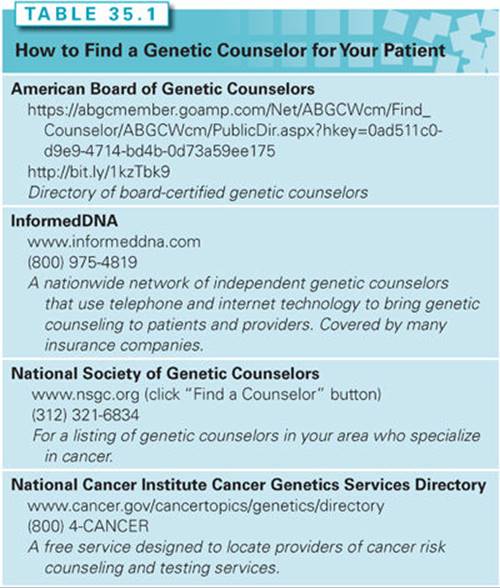
There are now a significant number of referral centers across the country specializing in cancer genetic counseling, and the numbers are growing. However, some experts insist that the only way to keep up with the overwhelming demand for counseling will be to educate more physicians and nurses in cancer genetics. The feasibility of adding another specialized and time-consuming task to the clinical burden of these professionals is questionable, particularly with average patient encounters of 19.5 and 21.6 minutes for general practitioners and gynecologists, respectively.7,8 A more practical goal is to better educate clinicians in the area of risk assessment so that they can screen their patient populations for individuals at high risk for hereditary cancer and refer them on to comprehensive counseling and testing programs. Access to genetic counseling is no longer an issue because there are now internet, phone, and satellite-based telemedicine services available (Table 35.1), with most major health insurance companies now covering these services9–11 and several requiring them.12
WHO IS A CANDIDATE FOR CANCER GENETIC COUNSELING?
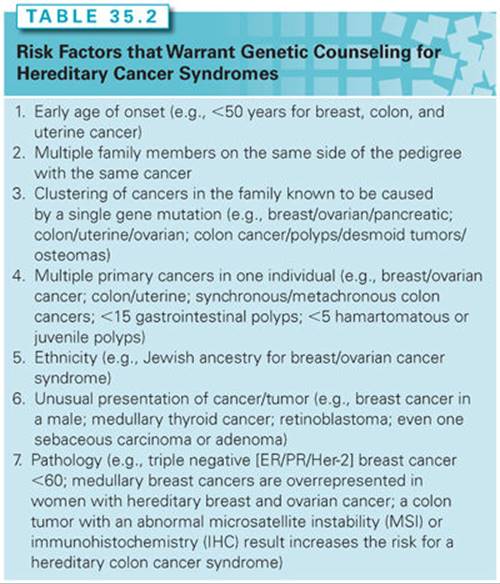
Only 5% to 10% of most cancer is thought to be caused by single mutations within autosomal-dominant inherited cancer susceptibility genes.13 The key for clinicians is to determine which patients are at greatest risk to carry a hereditary mutation. There are seven critical risk factors in hereditary cancer (Table 35.2). The first is early age of cancer onset. This risk factor, even in the absence of a family history, has been shown to be associated with an increased frequency of germline mutations in many types of cancers.14 The second risk factor is the presence of the same cancer in multiple affected relatives on the same side of the pedigree. These cancers do not need to be of similar histologic type in order to be caused by a single mutation. The third risk factor is the clustering of cancers known to be caused by a single gene mutation in one family (e.g., breast/ovarian/pancreatic cancer or colon/uterine/ovarian cancers). The fourth risk factor is the occurrence of multiple primary cancers in one individual. This includes multiple primary breast or colon cancers as well as a single individual with separate cancers known to be caused by a single gene mutation (e.g., breast and ovarian cancer in a single individual). Ethnicity also plays a role in determining who is at greatest risk to carry a hereditary cancer mutation. Individuals of Jewish ancestry are at increased risk to carry three specific BRCA1/2 mutations.15 The presence of a cancer that presents unusually—in this case, breast cancer in a male—represents a sixth risk factor and is important even when it is the only risk factor present. Finally, the last risk factor is pathology. Certain types of cancer are overrepresented in hereditary cancer families. For example, medullary and triple negative breast cancers (where the estrogen, progesterone and Her2 receptors are all negative, often abbreviated ER-/PR-/Her2) are overrepresented in BRCA1 families,16,17 and the National Comprehensive Cancer Network (NCCN) BRCA testing guidelines now include individuals diagnosed with a triple negative breast cancer 18 However, breast cancer patients without these pathologic findings are not necessarily at lower risk to carry a mutation. In contrast, patients with a borderline or mucinous ovarian carcinoma are at lower risk to carry a BRCA1 or BRCA2 mutation19 and may instead carry a mutation in a different gene. It is already well-established that medullary thyroid carcinoma, sebaceous adenoma or carcinoma, adrenocortical carcinoma before the age of 25 years, and multiple adenomatous, hamartomatous, or juvenile colon polyps are indicative of other rare hereditary cancer syndromes.11,20 These risk factors should be viewed in the context of the entire family history, and must be weighed in proportion to the number of individuals who have not developed cancer. The risk assessment is often limited in families that are small or have few female relatives; in such families, a single risk factor may carry more weight.
A less common, but extremely important, finding is the presence of unusual physical findings or birth defects that are known to be associated with rare hereditary cancer syndromes. Examples include benign skin findings, autism, large head circumference20,21 and thyroid disorders in Cowden syndrome, odontogenic keratocysts in Gorlin syndrome,22and desmoid tumors or dental abnormalities in familial adenomatous polyposis (FAP).23 These and other findings should prompt further investigation of the patient’s family history and consideration of a referral to genetic counseling.
In this chapter, the breast/ovarian cancer counseling session with a female patient will serve as a paradigm by which all other sessions may follow broadly.
COMPONENTS OF THE CANCER GENETIC COUNSELING SESSION
Precounseling Information
Before coming in for genetic counseling, the counselee should be informed about what to expect at each visit, and what information he/she should collect ahead of time. The counselee can then begin to collect medical and family history information and pathology reports that will be essential for the genetic counseling session.
Family History
An accurate family history is undoubtedly one of the most essential components of the cancer genetic counseling session. Optimally, a family history should include at least three generations; however, patients do not always have this information. For each individual affected with cancer, it is important to document the exact diagnosis, age at diagnosis, treatment strategies, and environmental exposures (i.e., occupational exposures, cigarettes, other agents).24The current age of the individual, laterality, and occurrence of any other cancers must also be documented. Cancer diagnoses should be confirmed with pathology reports whenever possible. A study by Love et al.25 revealed that individuals accurately reported the primary site of cancer only 83% of the time in their first degree relatives with cancer, and 67% and 60% of the time in second and third degree relatives, respectively. It is common for patients to report a uterine cancer as an ovarian cancer, or a colon polyp as an invasive colorectal cancer. These differences, although seemingly subtle to the patient, can make a tremendous difference in risk assessment. Individuals should be asked if there are any consanguineous (inbred) relationships in the family, if any relatives were born with birth defects or mental retardation, and whether other genetic diseases run in the family (e.g., Fanconi anemia, Cowden syndrome), because these pieces of information could prove to be important in reaching a diagnosis.
The most common misconception in family history taking is that somehow a maternal family history of breast, ovarian, or uterine cancer is more significant than a paternal history. Conversely, many still believe that a paternal history of prostate cancer is more significant than a maternal history. Few cancer genes discovered thus far are located on the sex chromosomes and, therefore, both maternal and paternal history are significant and must be explored thoroughly. It has also become necessary to elicit the spouse’s personal and family history of cancer. This has bearing on the cancer status of common children, but may also determine if children are at increased risk for a serious recessive genetic disease such as Fanconi anemia.26 Children who inherit two copies of a BRCA2 mutation (one from each parent) are now known to have this serious disorder characterized by defective DNA repair and high rates of birth defects, aplastic anemia, leukemia, and solid tumors.26 Patients should be encouraged to report changes in their family history over time (e.g., new cancer diagnoses, genetic testing results in relatives), because this may change their risk assessment and counseling.
A detailed family history should also include genetic diseases, birth defects, mental retardation, multiple miscarriages, and infant deaths. A history of certain recessive genetic diseases (e.g., ataxia telangiectasia, Fanconi anemia) can indicate that healthy family members who carry just one copy of the genetic mutation may be at increased risk to develop cancer.26,27 Other genetic disorders, such as hereditary hemorrhagic telangiectasia, can be associated with a hereditary cancer syndrome caused by a mutation in the same gene—in this case, juvenile polyposis.28
Dysmorphology Screening
Congenital anomalies, benign tumors, and unusual dermatologic features occur in a large number of hereditary cancer predisposition syndromes. Examples include osteomas of the jaw in FAP, palmar pits in Gorlin syndrome, and papillomas of the lips and mucous membranes in Cowden syndrome. Obtaining an accurate past medical history of benign lesions and birth defects, and screening for such dysmorphology can greatly impact diagnosis, counseling, and testing. For example, BRCA1/2 testing is inappropriate in a patient with breast cancer who has a family history of thyroid cancer and the orocutaneous manifestations of Cowden syndrome.
Risk Assessment
Risk assessment is one of the most complicated components of the genetic counseling session. It is crucial to remember that risk assessment changes over time as the person ages and as the health statuses of their family members change. Risk assessment can be broken down into three separate components.
 What is the chance that the counselee will develop the cancer observed in his/her family (or a genetically related cancer such as ovarian cancer due to a family history of breast cancer)?
What is the chance that the cancers in this family are caused by a single gene mutation?
What is the chance that we can identify the gene mutation in this family with our current knowledge and laboratory techniques?
Cancer clustering in a family may be due to genetic and/or environmental factors, or may be coincidental because some cancers are very common in the general population.29 Although inherited factors may be the primary cause of cancers in some families, in others, cancer may develop because an inherited factor increases the individual’s susceptibility to environmental carcinogens. It is also possible that members of the same family may be exposed to similar environmental exposures due to shared geography or patterns in behavior and diet that may increase the risk of cancer.30 Therefore, it is important to distinguish the difference between a familial pattern of cancer (due to environmental factors or chance) and a hereditary pattern of cancer (due to a shared genetic mutation). Emerging research is also evaluating the role and clinical utility of more common low-penetrance susceptibility genes and single nucleotide polymorphisms (SNP) that may account for a proportion of familial cancers.31
Several models are available to calculate the chance that a woman will develop breast cancer, including the Gail and Claus models.32,33 Computer-based models are also available to help determine the chance that a BRCA mutation will be found in a family.34 At first glance, many of these models appear simple and easy to use, and it may be tempting to exclusively rely on these models to assess cancer risk. However, each model has its strengths and weaknesses, and the counselor needs to understand the limitations well and know which are validated, which are considered problematic, when a model will not work on a particular patient, or when another genetic syndrome should be considered. For example, none of the existing models are able to factor in other risks that may be essential in hereditary risk calculation (e.g., a sister who was diagnosed with breast cancer after radiation treatment for Hodgkin disease).
The risk of a detectable mutation will also vary based on cancer history and the degree of relationship to an affected family member. For example, family members with early-onset breast cancer have a higher likelihood of testing positive than unaffected family members. Therefore, the risk assessment process should include a discussion of which family member is the best candidate for testing.
DNA Testing
DNA testing is now available for a variety of hereditary cancer syndromes. However, despite misrepresentation by the media, testing is feasible for only a small percentage of individuals with cancer. DNA testing offers the important advantage of presenting clients with actual risks instead of the empiric risks derived from risk calculation models. DNA testing can be very expensive; full sequencing and rearrangement testing of the BRCA1/2 genes currently averages $2,500, and full panel testing costs up to $7,000 per patient. Importantly, testing should begin in an affected family member whenever possible to maximize scientific accuracy. Most insurance companies now cover cancer genetic testing in families where the test is medically indicated.
One of the most crucial aspects of DNA testing is accurate result ordering and interpretation. Unfortunately, errors in ordering and interpretation are the greatest risk of genetic testing and are very common.35 Emerging data reveal that between 30% to 50% of genetic tests are ordered inappropriately, which is problematic for patients, clinicians, and insurers.36–38 Recent data demonstrate that many medical providers have difficulty interpreting even basic pedigrees and genetic test results.33–35 Additional studies have demonstrated that an inaccurate interpretation of genetic testing has been shown to result in inappropriate medical management recommendations, unnecessary prophylactic surgeries, a massive waste of health-care dollars, psychosocial distress, and false reassurance for patients.2,3
Interpretations are becoming increasingly complicated as more tests and gene panels become available. For example, one study demonstrated that approximately 25% of high-risk families that were BRCA1 and BRCA2 negative by commercially available sequencing were found to carry a deletion or duplication in one of these genes, or a mutation in another gene.39
This is particularly concerning in an era in which testing companies are canvassing physicians, and now mammography technicians, and encouraging them to perform their own counseling and testing. The potential impact of test results on the patient and his/her family is great and, therefore, accurate interpretation of the results is paramount. Professional groups have recognized this and have adopted standards encouraging clinicians to refer patients to genetics experts to ensure proper ordering and interpretation of genetic tests. The U.S. Preventive Services Task Force recommends that women whose family history is suggestive of a BRCA mutation be referred for genetic counseling before being offered genetic testing.40 The American College of Surgeons’ Commission on Cancer standards include “cancer risk assessment, genetic counseling and testing services provided to patients either on site or by referral, by a qualified genetics professional.”4 In an effort to reduce errors, some insurance companies are requiring genetic counseling by a certified genetic counselor before testing for hereditary breast or colon cancer syndromes.12
Results can fall into a few broad categories. It is important to note that a negative test result can actually be interpreted in three different ways, detailed in #2, #3, and #4, which follows.
1. Deleterious mutation “positive.” When a deleterious mutation in a well-known cancer gene is discovered, the cancer risks for the patient and her family are relatively straightforward. However, with the development of multigene panels and the inclusion of many lesser known genes, the risks of detecting a mutation within a gene whose cancer risks are ill defined and medical management options unknown is much greater. Even for well-known genes, the risks are not precise and should be presented to patients as a risk range.41,42 When a true mutation is found, it is critical to test both parents (whenever possible) to determine from which side of the family the mutation is originating, even when the answer appears obvious.
2. True negative. An individual does not carry the deleterious mutation found in her family, which ideally, has been proven to segregate with the cancer family history. In this case, the patient’s cancer risks are usually reduced to the population risks.
3. Negative. A mutation was not detected, and the cancers in the family are not likely to be hereditary based on the personal and family history assessment. For example, a patient is diagnosed with breast cancer at age 38 years and comes from a large family with no other cancer diagnoses and relatives who died at old ages of other causes.
4. Uninformative. A mutation cannot be found in affected family members of a family in which the cancer pattern appears to be hereditary; there is likely an undetectable mutation within the gene, or the family carries a mutation in a different gene. If, for example, the patient developed breast cancer at age 38 years, has a father with breast cancer, and has a paternal aunt who developed breast and ovarian cancers before age 50 years, a negative test result would be almost meaningless. It would simply mean that the family has a mutation that could not be identified with our current testing methods or a mutation in another cancer gene. The entire family would be followed as high risk.
5. Variant of uncertain significance. A genetic change is identified, the significance of which is unknown. It is possible that this change is deleterious or completely benign. It may be helpful to test other affected family members to see if the mutation segregates with disease in the family. If it does not segregate, the variant is less likely to be significant. If it does, the variant is more likely to be significant. Other tools, including a splice site predictor, in conjunction with data on species conservation and amino acid difference scores, can also be helpful in determining the likelihood that a variant is significant. It is rarely helpful (and can be detrimental) to test unaffected family members for such variants. The rates of variants of uncertain significance vary greatly depending on the reporting protocols of the lab and the genes analyzed. Creation of open databases through a nationwide movement called Free the Data will likely improve variant reporting for all laboratories.
In order to pinpoint the mutation in a family, an affected individual most likely to carry the mutation should be tested first whenever possible. This is most often a person affected with the cancer in question at the earliest age. Test subjects should be selected with care, because it is possible for a person to develop sporadic cancer in a hereditary cancer family. For example, in an early-onset breast cancer family, it would not be ideal to first test a woman diagnosed with breast cancer at age 65 years because she may represent a sporadic case.
If a mutation is detected in an affected relative, other family members can be tested for the same mutation with a great degree of accuracy. Family members who do not carry the mutation found in their family are deemed true negative. Those who are found to carry the mutation in their family will have more definitive information about their risks to develop cancer. This information can be crucial in assisting patients in decision making regarding surveillance and risk reduction.
If a mutation is not identified in the affected relative, it usually means that either the cancers in the family are (1) not hereditary, or (2) caused by an undetectable mutation or a mutation in a different gene. A careful review of the family history and the risk factors will help to decipher whether interpretation 1 or 2 is more likely. Additional genetic testing may need to be ordered at this point. In cases in which the cancers appear hereditary and no mutation is found, DNA banking should be offered to the proband for a time in the future when improved testing may become available. A letter indicating exactly who in the family has access to the DNA should accompany the banked sample.
The genetic counseling result disclosure session should also include a detailed discussion of which other family members would benefit from genetic counseling and testing and referral information. This can apply not only to families who have been found to carry a deleterious mutation, but may also prove useful in other families (e.g., test a higher risk relative or determine segregation of a variant within a family).
The penetrance of mutations in cancer susceptibility genes is also difficult to interpret. Initial estimates derived from high-risk families provided very high cancer risks for BRCA1 and BRCA2 mutation carriers.43 More recent studies done on populations that were not selected for family history have revealed lower penetrances.44 Because exact penetrance rates cannot be determined for individual families at this time, and because precise genotype/phenotype correlations remain unclear, it is prudent to provide patients with a range of cancer risk and to explain that their risk probably falls somewhere within this spectrum. This can prove challenging for genes that lack published long-term data on cancer associations and risks.
Female carriers of BRCA1 and BRCA2 mutations have a 50% to 85% lifetime risk to develop breast cancer and between a 15% to 60% lifetime risk to develop ovarian cancer.15,42,43 It is important to note that the classification “ovarian cancer” also includes cancer of the fallopian tubes and primary peritoneal carcinoma.44,45 BRCA2 carriers also have an increased lifetime risk of male breast cancer, pancreatic cancer, and possibly, melanoma.46,47
Options for Surveillance, Risk Reduction, and Tailored Treatment
The cancer risk counseling session is a forum to provide counselees with information, support, options, and hope. Mutation carriers can be offered: earlier and more aggressive surveillance, chemoprevention, and/or prophylactic surgery. Detailed management options for BRCA carriers are discussed in this chapter.
Surveillance recommendations are evolving with newer techniques and additional data. At this time, it is recommended that individuals at increased risk for breast cancer, particularly those who carry a BRCA mutation, have annual mammograms beginning at age 25 years, with a clinical breast exam by a breast specialist, a yearly breast magnetic resonance imaging (MRI) with a clinical breast exam by a breast specialist, and a yearly clinical breast exam by a gynecologist.48,49 It is suggested that the mammogram and MRI be spaced out around the calendar year so that some intervention is planned every 6 months. Recent data suggest that MRI may be safer and more effective in BRCA carriers <40 years of age and may someday replace mammograms in this population.50
BRCA carriers may take a selective estrogen-receptor modulator (SERM) or aromatase inhibitor in hopes of reducing their risks of developing breast cancer. These medications have been proven effective in women at increased risk due to a positive family history of breast cancer.51–53 There are limited data on the effectiveness of such medications in unaffected BRCA carriers54–56; however, there are some data to suggest that BRCA carriers taking tamoxifen as treatment for a breast cancer reduce their risk of a contralateral breast cancer.57 Additionally, the majority of BRCA2 carriers who develop breast cancer develop an estrogen-positive form of the disease,58 and it is hoped that this population will respond especially well to chemoprevention. Further studies in this area are necessary before drawing conclusions about the efficacy of chemoprevention in this population. Prophylactic bilateral mastectomy reduces the risk of breast cancer by >90% in women at high-risk for the disease.59 Before genetic testing was available, it was not uncommon for entire generations of cancer families to have at-risk tissues removed without knowing if they were personally at increased risk for their familial cancer. Fifty percent of unaffected individuals in hereditary cancer families will not carry the inherited predisposition gene and can be spared prophylactic surgery or invasive high-risk surveillance regimens. Therefore, it is clearly not appropriate to offer prophylactic surgery until a patient is referred for genetic counseling and, if possible, testing.60
Women who carry BRCA1/2 mutations are also at increased risk to develop second contralateral and ipsilateral primaries of the breast.61 These data bring into question the option of breast conserving surgery in women at high risk to develop a second primary within the same breast. For this reason, the BRCA1/2 carrier status can have a profound impact on surgical decision making,62 and many patients have genetic counseling and testing immediately after diagnosis and before surgery or radiation therapy. Those patients who test positive and opt for prophylactic mastectomy can often be spared radiation and the resulting side effects that can complicate reconstruction. Approximately 30% to 60% of previously irradiated patients who later opt for mastectomy with reconstruction report significant complications or unfavorable cosmetic results.62,63
Women who carry BRCA1/2 mutations are also at increased risk to develop ovarian, fallopian tube, and primary peritoneal cancer, even if no one in their family has developed these cancers. Surveillance for ovarian cancer includes transvaginal ultrasounds and CA-125 testing; however, the effectiveness of such surveillance in detecting ovarian cancers at early, more treatable stages has not been proven in any population. Oral contraceptives reduce the risk of ovarian cancer in all women, including BRCA carriers.64 Recent data indicate that the impact of this intervention on increasing breast cancer risk, if any, is low.56,65 Given the difficulties in screening and in the treatment of ovarian cancer, the risk/benefit analysis likely favors the use of oral contraceptives in young carriers of BRCA1/2 mutations30 who are not yet ready to have their ovaries removed. Prophylactic bilateral salpingo-oophorectomy (BSO) is currently the most effective means to reduce the risk of ovarian cancer and is recommended to BRCA1/2 carriers by the age of 35 to 40 or when childbearing is complete.66 Specific operative and pathologic protocols have been developed for this prophylactic surgery.67 In BRCA1/2 carriers whose pathologies come back normal, this surgery is highly effective at reducing the subsequent risk of ovarian cancer.68 A decision analysis, comparing various surveillance and risk-reducing options available to BRCA carriers, has shown an increase in life expectancy if BSO is pursued by age 40.69 Emerging data indicate that most ovarian cancers begin in the fallopian tube, and that salpingectomy may someday be sufficient in reducing ovarian cancer risk in young women; however, more data are needed before this option is offered to patients outside of clinical trials.70 A relatively small percentage of women who pursue BSO may develop primary peritoneal carcinoma.44,71 There has been some debate about whether BRCA1/2 carriers should also opt for total abdominal hysterectomy (TAH) due to the fact that small stumps of the fallopian tubes remain after BSO alone. The question of whether BRCA carriers are at increased risk for uterine serous papillary carcinoma (USPC) has also been raised.72–74 If a relationship does exist between BRCA mutations and uterine cancer, the risk appears to be low and not elevated over that of the general population.75 Removing the uterus may make it possible for a BRCA carrier to take unopposed estrogen or tamoxifen in the future without the risk of uterine cancer, but this surgery is associated with a longer recovery time and has more side effects than does BSO alone. Each patient should be counseled about the pros and cons of each procedure and the risks associated with premature menopause before having surgery.76
A secondary, but important, reason for female BRCA carriers to consider prophylactic oophorectomy is that it also significantly reduces the risk of a subsequent breast cancer, particularly if they have this surgery before menopause.77,78 The reduction in breast cancer risk remains even if a healthy premenopausal carrier elects to take low-dose hormone-replacement therapy (HRT) after this surgery79. Early data suggest that tamoxifen, in addition to premenopausal oophorectomy, in BRCA carriers may have little additional benefit in terms of breast cancer risk reduction.80 Research is needed in balancing quality of life issues secondary to estrogen deprivation with cancer risk reduction in these young female BRCA1/2 carriers.
New developments are also emerging in the treatment and, possibly, the prevention of BRCA-related cancers. Early data revealed that breast and ovarian cancers in BRCA carriers were particularly sensitive to treatment with poly adenosine diphosphate (ADP)-ribose polymerases (PARP) inhibitors in combination with chemotherapy.81,82 New trials are focusing on which chemotherapeutic regimens are most effective in mutation carriers. More data are needed on larger cohorts of patients and are currently being studies in multiple clinical trials.
Genetic counseling and testing is also available for dozens of cancer syndromes, including Lynch syndrome, von Hippel-Lindau syndrome, multiple endocrine neoplasias, and familial adenomatous polyposis. Surveillance and risk reduction for patients who are known mutation carriers for such conditions may decrease the associated morbidity and mortality of these syndromes.
Follow-up
A follow-up letter to the patient is a concrete means of documenting the information conveyed in the sessions so that the patient and his/her family members can review it over time. This letter should be sent to the patient and health-care professionals to whom the patient has granted access to this information. A follow-up phone call and/or counseling session may also be helpful, particularly in the case of a positive test result. Some programs provide patients with an annual or biannual newsletter updating them on new information in the field of cancer genetics or patient support groups. It is now recommended that patients return for follow-up counseling sessions months, or even years, after their initial consult to discuss advances in genetic testing and changes in surveillance and risk reduction options. This can be beneficial for individuals who have been found to carry a hereditary predisposition, for those in whom a syndrome/mutation is suspected but yet unidentified, and for those who are ready to move forward with genetic testing. Follow-up counseling is also recommended for patients whose life circumstances have changed (e.g., preconception, after childbearing is complete), who are preparing for prophylactic surgery, or who are ready to discuss the family genetics with their children.
ISSUES IN CANCER GENETIC COUNSELING
Psychosocial Issues
The psychosocial impact of cancer genetic counseling cannot be underestimated. Just the process of scheduling a cancer risk counseling session may be quite difficult for some individuals with a family history who are not only frightened about their own cancer risk, but also are reliving painful experiences associated with the cancer of their loved ones.13 Counselees may be faced with an onslaught of emotions, including anger, fear of developing cancer, fear of disfigurement and dying, grief, lack of control, negative body image, and a sense of isolation.24 Some counselees wrestle with the fear that insurance companies, employers, family members, and even future partners will react negatively to their cancer risks. For many, it is a double-edged sword as they balance their fears and apprehensions about dredging up these issues with the possibility of obtaining reassuring news and much needed information.
A person’s perceived cancer risk is often dependent on many “nonmedical” variables. They may estimate that their risk is higher if they look like an affected individual, or share some of their personality traits.24 Their perceived risks will vary depending on if their relatives were cancer survivors or died painful deaths from the disease. Many people wonder not if they are going to get cancer, but when.
The counseling session is an opportunity for individuals to express why they believe they have developed cancer, or why their family members have cancer. Some explanations may revolve around family folklore, and it is important to listen to and address these explanations rather than dismiss them.24 In doing this, the counselor will allow the clients to alleviate their greatest fears and to give more credibility to the medical theory. Understanding a patient’s perceived cancer risk is important, because that fear may decrease surveillance and preventive health-care behaviors.83 For patients and families who are moving forward with DNA testing, a referral to a mental health-care professional is often very helpful. Genetic testing has an impact not only on the patient, but also on his/her children, siblings, parents, and extended relatives. This can be overwhelming for an individual and the family, and should be discussed in detail prior to testing.
To date, studies conducted in the setting of pre- and post-genetic counseling have revealed that, at least in the short term, most patients do not experience adverse psychological outcomes after receiving their test results.84,85 In fact, preliminary data have revealed that individuals in families with known mutations who seek testing seem to fare better psychologically at 6 months than those who avoid testing.84 Among individuals who learn they are BRCAmutation carriers, anxiety and distress levels appear to increase slightly after receiving their test results but returned to pretest levels in several weeks.86 Although these data are reassuring, it is important to recognize that genetic testing is an individual decision and will not be right for every patient or every family.
Presymptomatic Testing in Children
Presymptomatic testing in children has been widely discussed, and most concur that it is appropriate only when the onset of the condition regularly occurs in childhood or if there are useful interventions that can be applied.87 For example, genetic testing for mutations in the BRCA genes and other adult-onset diseases is generally limited to individuals who are >18 years of age. The American College of Medical Genetics states that if the “medical or psychosocial benefits of a genetic test will not accrue until adulthood . . . genetic testing generally should be deferred.”88 In contrast, the DNA-based diagnosis of children and young adults at risk for hereditary medullary thyroid carcinoma (MTC) is appropriate and has improved the management of these patients.89 DNA-based testing for MTC is virtually 100% accurate and allows at-risk family members to make informed decisions about prophylactic thyroidectomy. FAP is a disorder that occurs in childhood and in which mortality can be reduced if detection is presymptomatic.90 Testing is clearly indicated in these instances.
Questions have been raised about the parents’ right to demand testing for adult-onset diseases, and this is now happening regularly with direct-to-consumer tests and whole exome testing of children.91 The risks of such testing to the child, and the child’s right not to be tested must be considered. Whenever childhood testing is not medically indicated, it is preferable that testing decisions are postponed until the children are adults and can decide for themselves whether to be tested.
Confidentiality
The level of confidentiality surrounding cancer genetic testing is paramount due to concerns of genetic discrimination. Careful consideration should be given to the confidentially of family history information, pedigrees, genetic test results, pathology reports, and the carrier status of other family members as most hospitals and clinicians transition to electronic medical records systems. The goal of electronic records is to share information about the patient with his/her entire health-care team. However, genetics is a unique specialty that involves the whole family. Patient’s charts often contain Health Insurance Portability and Accountability Act (HIPAA)–protected health information and genetic test results for many other family members. This information may not be appropriate to enter into an electronic record. The unique issues of genetics services need to be considered when designing electronic medical record standards.
Confidentiality of test results within a family can also be of issue, because genetic counseling and testing often reveals the risk statuses of family members other than the patient. Under confidentiality codes, the patient needs to grant permission before at-risk family members can be contacted. For this reason, many programs have built in a “share information with family members” clause to their informed consent documents. It has been questioned whether or not a family member could sue a health-care professional for negligence if they were identified at high risk yet not informed.92 Most recommendations have stated that the burden of confidentiality lies between the provider and the patient. However, more recent recommendations state that confidentiality should be violated if the potential harm of not notifying other family members outweighs the harm of breaking a confidence to the patient.93 There is no patent solution for this difficult dilemma, and situations must be considered on a case-by-case basis with the assistance of the in-house legal department and ethics committee.
Insurance and Discrimination Issues
When genetic testing for cancer predisposition first became widely available, the fear of health insurance discrimination by both patients and providers was one of the most common concerns.94,95 It appears that the risks of health insurance discrimination were overstated and that almost no discrimination by health insurers has been reported.96 HIPAA banned the use of genetic information as a preexisting condition.97,98 In May of 2008, Congress passed the Genetic Information Nondiscrimination Act (GINA, HR 493), which provides broad protection of an individual’s genetic information against health insurance and employment discrimination.99 In addition, the Heath Care and Education Reconciliation Act of 2010 (HR 4872) prohibits group health plans from denying insurance based on preexisting conditions and from increasing premiums based on health status.100 Health-care providers can now more confidently reassure their patients that genetic counseling and testing will not put them at risk of losing group or individual health insurance.
More and more patients are choosing to submit their genetic counseling and/or testing charges to their health insurance companies. In the past few years, more insurance companies have agreed to pay for counseling and/or testing,101 perhaps in light of data that show these services reduce errors related to ordering and interpreting genetic testing and that decision analyses have revealed subsequent prophylactic surgeries to be cost effective.102 The risk of life or disability insurance discrimination, however, is more realistic. Patients should be counseled about such risks before they pursue genetic testing.
Reproductive Issues
Reproductive technology in the form of preimplantation genetic diagnosis, prenatal testing, or sperm sorting are options103 for men and women with a hereditary cancer syndrome, but are requested by few patients for adult-onset conditions in which there are viable options for surveillance and risk reduction. Importantly, if a BRCA2 carrier is considering having a child, it is important to assess the spouse’s risk of also carrying a BRCA2 mutation. If the spouse is of Jewish ancestry or has a personal or family history of breast, ovarian, or pancreatic cancer, BRCA testing should be considered and a discussion of the risk of Fanconi anemia in a child with two BRCA2 mutations should take place.104
RECENT ADVANCES AND FUTURE DIRECTIONS
Cancer genetic counseling and testing were thrust into the national spotlight in the spring of 2013 when Hollywood icon Angelina Jolie publically disclosed that she was a BRCA1 carrier. One month later the Supreme Court unanimously ruled against gene patents. Referrals for genetic testing spiked across the country and have not returned to baseline levels at most centers. Within hours of the ruling, other labs began offering less expensive and more comprehensive BRCA testing, dramatically changing the marketplace of genetic testing for hereditary breast cancer.
All laboratories that have entered the BRCA marketplace have done so by including BRCA1 and BRCA2 in gene panels. These panels simultaneously analyze groups of genes that contribute to increased risk for breast, colon, ovarian, uterine, and other cancers. The cost of this technology continues to decrease with some multigene panels costing just a few hundred dollars less than traditional BRCA testing (~$4,000). Some panels include only well-known genes (e.g., p53, APC, MLH1), although many include lesser known genes (e.g., BRIP1, NBN, MRE11A) for which cancer risks are ill defined and medical management options are unknown. Because testing for these genes is new to the clinical setting, it is expected to take several years to compile accurate cancer risk estimates and appropriate recommendations for surveillance and risk reduction. Furthermore, the rate of variants of uncertain significance will likely be more common in the lesser known genes. These changes have increased the complexity of genetic testing exponentially. In response, several state and one national insurance company have mandated genetic counseling by certified providers before they will cover cancer genetic testing. In a surprising response, the American Society of Clinical Oncology (ASCO) opposed this insurer’s decision, despite more than a decade’s worth of data demonstrating that the majority of physicians do not have the time or expertise to offer genetic counseling and testing(38,105–108). The AMA will decide whether to back the ASCO resolution in June 2014.
Some companies are now offering direct-to-consumer (DTC) genetic testing via websites. The accuracy of some of these DTC genetic tests are in question, and the leading company, 23andMe, has recently come under fire by the U.S. Food and Drug Administration.105
Maintaining high standards for thorough genetic counseling, informed consent, and accurate result interpretation will be paramount in reducing potential risks and maximizing the benefits of genetic technology in the next century.
REFERENCES
1. Peters J. Breast cancer genetics: relevance to oncology practice. Cancer Control 1995;2:195–208.
2. Brierley KL, Campfield D, Ducaine W, et al. Errors in delivery of cancer genetics services: implications for practice. Conn Med 2010;74:413–423.
3. Brierley KL, Blouch E, Cogswell W, et al. Adverse events in cancer genetic testing: medical, ethical, legal, and financial implications. Cancer J 2012;18:303–309.
4. American College of Surgeons, Commission on Cancer: Cancer Program Standards 2012: Ensuring Patient-Centered Care. http://www.facs.org/cancer/coc/programstandards2012.html Accessed on December 3, 2012.
5. Yale Cancer Genetic Counseling Program. Mammography techs ordering their own genetic testing? It appears our suspicion was correct. yalecancergeneticcounseling.blogspot.com October 2, 2013. http://yalecancergeneticcounseling.blogspot.com/2013/10/mammography-techs-ordering-their-own.html
6. Lubin IM, Caggana M, Constantin C, et al. Ordering molecular genetic tests and reporting results: practices in laboratory and clinical settings. J Mol Diagn 2008;10:459–468.
7. Weeks WB, Wallace AE. Time and money: a retrospective evaluation of the inputs, outputs, efficiency, and incomes of physicians. Arch Intern Med 2003;163(8):944–948.
8. Doksum T, Bernhardt BA, Holtzman NA. Does knowledge about the genetics of breast cancer differ between nongeneticist physicians who do or do not discuss or order BRCA testing? Genet Med 2003;5:99–105.
9. Rosenthal ET. Shortage of genetics counselors may be anecdotal, but need is real. Oncology Times 2007;29:34–36.
10. Informed Medical Decisions. Adult Genetics: Genetic counseling for your health concerns. Available at: http://www.informeddna.com/index.php/patients/adult-genetics.html. Accessed August 24, 2009.
11. Informed Medical Decisions. News: Aetna Press Release: Aetna to offer access to confidential telephonic cancer genetic counseling to health plan members. Available at: http://www.informeddna.com/images/stories/news_articles/aetna%20press%20release%20bw.pdf . Accessed August 24, 2009.
12. Schneider, ME. Cigna to require counseling for some genetic tests. Internal Medicine News Digital Network. July 26, 2013. http://www.internalmedicinenews.com/single-view/cigna-to-require-counseling-for-some-genetic-tests/efd4f421df8b46ba2208da423adf198d.html
13. Claus E, Schildkraut J, Thompson W, et al. The genetic attributable risks of breast and ovarian cancer. Cancer 1996;77:2318–2324.
14. Loman N, Johannsson O, Kristoffersson U. Family history of breast and ovarian cancers and BRCA1 and BRCA2 mutations in a population-based series of early-onset breast cancer. J Natl Cancer Inst 2001;93:1215.
15. Struewing J, Hartge P, Wacholder S. The risk of cancer associated with specific mutations of BRCA1 and BRCA2 among Ashkenazi Jews. N Engl J Med 1997;336:1401–1408.
16. Eisinger F, Jacquemier J, Charpin C, et al. Mutations at BRCA1: the medullary breast carcinoma revisited. Cancer Res 1998;58:1588–1592.
17. Kandel M, Stadler Z, Masciari S, et al. Prevalence of BRCA1 mutations in triple negative breast cancer. Paper presented at: 2006 42nd Annual ASCO Meeting; 2006; Atlanta, GA.
18. National Comprehensive Cancer Network Clinical Guidelines in Oncology: Genetics/Familial High-Risk Assessment - Breast and Ovarian Cancer. http://www.nccn.org/professionals/physician_gls/f_guidelines.asp#detection Accessed November 2, 2012.
19. Risch H, McLaughlin J, Cole D, et al. Population BRCA1 and BRCA2 mutation frequencies and cancer penetrances: a kin-cohort study in Ontario, Canada. JNCI 2006;98:1694–706.
20. Matloff E, Brierley K, Chimera C. A clinician’s guide to hereditary colon cancer. Cancer J 2004;10(5):280–287.
21. Pilarski R. Cowden syndrome: a critical review of the clinical literature. J Genet Couns 2009 Feb;18:13–27.
22. Varga EA, Pastore M, Prior T, et al. The prevalence of PTEN mutations in a clinical pediatric cohort with autism spectrum disorders, developmental delay, and macrocephaly. Genet Med 2009;11:111–117.
23. Gorlin R. Nevoid basal-cell carcinoma syndrome. Medicine 1987;66(2):98–113.
24. Schneider K. Counseling About Cancer: Strategies for Genetic Counseling. 2nd ed. Wiley-Liss; 2001.
25. Love R, Evan A, Josten D. The accuracy of patient reports of a family history. J Chronic Dis 1985;38(4):289–293.
26. Alter B, Rosenberg P, Brody L. Clinical and molecular features associated with biallelic mutations in FANCD1/BRCA2. J Med Genet 2007;44:1–9.
27. Thompson D, Duedal S, Kirner J, et al. Cancer risks and mortality in heterozygous ATM mutation carriers. J Natl Cancer Inst 2005;97:813–822.
28. Korzenik J, Chung D, Digumarthy S, at al. Case 33-2005: a 43 year-old man with lower gastrointestinal bleeding. N Engl J Med 2005;353:1836–1844.
29. American Cancer Society. Cancer Facts and Figures 2009. Atlanta, GA: American Cancer Society; 2009.
30. Olopade O, Weber B. Breast cancer genetics: toward molecular characterization of individuals at increased risk for breast cancer. Part II. PPO Updates 1998;12:1–8.
31. Stratton MR, Rahman N. The emerging landscape of breast cancer susceptibility. Nat Genet 2008;40:17–22.
32. Gail M, Brinton L, Byar D. Projecting individualized probabilities of developing breast cancer for white females who are being examined annually. J Natl Cancer Inst 1989;81:1879–1886.
33. Claus E, Risch N, Thompson W. Autosomal dominant inheritance of early-onset breast cancer. Cancer 1994;73:643.
34. Parmigiani G, Berry D, Agiular O. Determining carrier probabilities for breast cancer susceptibility genes BRCA1 and BRCA2. Am J Hum Genet 1998;62:145–158.
35. Friedman S. Thoughts from FORCE: Comments Submitted to the Secretary’s Advisory Committee on Genetics Health and Society. http://facingourrisk.wordpress.com/2008/12/03/comments-submitted-to-the-secretarys-advisory-committee-on-genetics-health-and-society/. Accessed April 6, 2010.
36. UnitedHealth. Personalized Medicine: Trends and Prospects for the New Science of Genetic Testing and Molecular Diagnostics. Working Paper 7. Minnetonka, MN: UnitedHealth Center for Health Reform & Modernization; March 2012.
37. ARUP Laboratories. Value of Genetic Counselors in the Laboratory. Salt Lake City: ARUP Laboratories; March 2011.
38. Plon SE, Cooper HP, Parks B, et al. Genetic testing and cancer risk management recommendations by physicians for at-risk relatives. Genet Med 2011;13:148–154.
39. Walsh T. More Than 25% of Breast Cancer Families with Wild-Type Results from Commercial Genetic Testing of BRCA1 and BRCA2 Are Resolved by BROCA Sequencing of All Known Breast Cancer Genes. Paper presented at: 2013 American Society of Human Genetics Meeting Session #19; 2013; Boston, MA.
40. U.S. Preventive Services Task Force. Genetic Risk Assessment and BRCA Mutation Testing for Breast and Ovarian Cancer Susceptibility. Rockville, MD: Agency for Healthcare Research and Quality; 2013. http://www.uspreventiveservicestaskforce.org/uspstf12/brcatest/brcatestfinalrs.htm. Accessed June 2, 2014.
41. King MC, Marks JH, Mandell JB, et al. Breast and ovarian cancer risks due to inherited mutations in BRCA1 and BRCA2. Science 2003;302:643–646.
42. Antoniou A, Pharoah PD, Narod S, et al. Average risks of breast and ovarian cancer associated with BRCA1 or BRCA2 mutations detected in case Series unselected for family history: a combined analysis of 22 studies. Am J Hum Genet 2003;72:1117–1130.
43. Ford D, Easton D, Bishop D, et al. Risks of cancer in BRCA1 mutation carriers. Lancet 1994;343:692–695.
44. Piver M, Jishi M, Tsukada Y. Primary peritoneal carcinoma after prophylactic ooophorectomy in women with a family history of ovarian cancer. Cancer 1993;71:2751–2755.
45. Aziz S, Kuperstein G, Rosen B. A genetic epidemiological study of carcincoma of the fallopian tube. Gynecol Oncol 2001;80:341–345.
46. van Asperen C, Brohet R, Meijers-Heijboer, et al. Cancer risks in BRCA2 families: estimates for sites other than breast and ovary. J Med Genet 2005;42:711–719.
47. Breast Cancer Linkage Consortium. Cancer risks in BRCA2 mutation carriers. J Natl Cancer Inst 1999;91:1310–1316.
48. Warner E, Plewes D, Hill K, et al. Surveillance of BRCA1 and BRCA2 mutation carriers with magnetic resonance imaging, ultrasound, mammography, and clinical breast examination. JAMA 2004;202:1317–1325.
49. Kriege M, Brekelmans CT, Boetes C, et al. Efficacy of MRI and mammography for breast-cancer screening in women with a familial or genetic predisposition. N Engl J Med 2004;29:351:427–437.
50. Kuhl C, Weigel S, Schrading S, et al. Prospective multicenter cohort study to refine management recommendations for women at elevated familial risk of breast cancer: the EVA Trial. J Clin Oncol 2010:1450–1457.
51. Powles T, Ashley S, Tidy A, et al. Twenty-year follow-up of the Royal Marsden randomized, double-blinded tamoxifen breast cancer prevention trial. J Natl Cancer Inst 2007;99:283–290.
52. Cuzick J, Forbes J, Sestak I, et al. Long-term results of tamoxifen prophylaxis for breast cancer: 96 month follow-up of the randomized IBIS-I trial. J Natl Cancer Inst 2007;99:272–282.
53. Goss PE, Ingle JN, Alés-Martínez JE, et al. Exemestane for breast-cancer prevention in postmenopausal women. N Engl J Med 2011;364:2381.
54. Fisher B, Constantino J, Wickerman D. Tamoxifen for the prevention of breast cancer: report of the National Surgical Adjuvant Breast and Bowel Project P-1 Study. J Natl Cancer Inst 1998;90:1371–1388.
55. King M, Wieand S, Hale K. Tamoxifen and breast cancer incidence among women with inherited mutations in BRCA1 and BRCA2. JAMA 2001;286:2251–2256.
56. Narod S, Brunet J, Ghadirian P. Tamoxifen and risk of contralateral breast cancer in BRCA1 and BRCA2 mutation carriers: a case-control study. Lancet 2000;356:1876–1881.
57. Phillips KA, Milne RL, Rookus MA, et al. Tamoxifen and risk of contralateral breast cancer for BRCA1 and BRCA2 mutation carriers. J Clin Oncol 2013;31:3091–3099.
58. Lakhani S, van de Vijver M, Jacquemier J, et al. The pathology of familial breast cancer: predictive value of immunohistochemical markers estrogen receptor, progesterone receptor, HER-2, and p53 in patients with mutations in BRCA1 and BRCA2. J Clin Oncol 2002;20:2310–2318.
59. Hartmann L, Schaid D, Woods J. Efficacy of bilateral prophylactic mastectomy in women with a family history of breast cancer. N Engl J Med 1999;340:77–84.
60. Matloff E. The breast surgeon’s role in BRCA1 and BRCA2 testing. Am J Surg 2000; 180:294–298.
61. Turner B, Harold E, Matloff E, et al. BRCA1/BRCA2 germline mutations in locally recurrent breast cancer patients after lumpectomy and radiation therapy: Implications for breast-conserving management in patients with BRCA1/BRCA2 mutations. J Clin Oncol 1999;17:3017–3024.
62. Contant CM, et al. Clinical experience of prophylactic mastectomy followed by immediate breast reconstruction in women at hereditary risk of breast cancer (HBOC) or a proven BRCA1 or BRCA2 germ-line mutation. Eur J Surg Oncol 2002;28:627–632.
63. Forman DL, Chiu J, Restifo RJ, et al. Breast reconstruction in previously irradiated patients using tissue expanders and implants: a potentially unfavorable result. Ann Plast Surg 1998;40:360–363.
64. McLaughlin J, Risch H, Lubinski J, et al. Reproductive risk factors for ovarian cancer in carriers of BRCA1 or BRCA2 mutations: a case-control study. Lancet 2007;8:26–34.
65. Milne R, Knight J, John E, et al. Oral contraceptive use and risk of early-onset breast cancer in carriers and noncarriers of BRCA1 and BRCA2 mutations. Cancer Epidemiol Biomarkers Prev 2005;14:350–356.
66. Domchek S, Friebel T, Neuhausen S, et al. Mortality reduction after risk-reducing bilateral salpingo-oophorectomy in a prospective cohort of BRCA1 and BRCA2 mutation carriers. Lancet Oncol 2006;7:223–229.
67. Powel CB, Kenley E, Chen LM, et al. Risk-reducing salpingo-oophorectomy in BRCA mutation carriers: role of serial sectioning in the detection of occult malignancy. J Clin Oncol 2005;23:127–132.
68. Finch A, Beiner M, Lubinski J, et al. Salpingo-oophorectomy and the risk of ovarian, fallopian tube, and peritoneal cancers in women with a BRCA1 or BRCA2 mutation. JAMA 2006;296:185–192.
69. Kurian AW, Sigal BM, Plevritis SK. Survival analysis of cancer risk reduction strategies for BRCA1/2 mutation carriers. J Clin Oncol 2010;10;28:222–231.
70. Kwon JS, Tinker A, Pansegrau G, et al. Prophylactic salpingectomy and delayed oophorectomy as an alternative for BRCA mutation carriers. Obstet Gynecol 2013;121:14–24.
71. American College of Obstetricians and Gynecologists. ACOG committee opinion. Breast–ovarian cancer screening. Number 176, October 1996. Committee on Genetics. The American College of Obstetricians and Gynecologists. Int J Gynaecol Obstet 1997;56:82–83.
72. Hornreich G, Beller U, Lavie O. Is uterine serous papillary carcinoma a BRCA1 related disease? Case report and review of the literature. Gynecol Oncol 1999;75(2):300–304.
73. Levine D, Lin P, Barakat R. Risk of endometrial carcinoma associated with BRCA mutation. Gynecol Oncol 2001;80(3):395–398.
74. Goshen R, Chu W, Elit L. Is uterine papillary serous adenocarcinoma a manifestation of the hereditary breast-ovarian cancer syndrome? Gynecol Oncol 2000;79(3):477–481.
75. Boyd J. The breast, ovarian, and other cancer genes. Gynecol Oncol 2001;80(3):337–340.
76. Campfield Bonadies D, Moyer A, Matloff ET. What I wish I’d known before surgery: BRCA carriers’ perspectives after bilateral salipingo-oophorectomy. Fam Cancer 2011;10:79–85.
77. Rebbeck T, Lynch H, Neuhausen S, et al. Prophylactic oophorectomy in carriers of BRCA1 or BRCA2 mutations. N Engl J Med 2002;346:1616–1622.
78. Kauff N, Satagopan J, Robson M, et al. Risk-reducing salpingo-oophorectomy in women with a BRCA1 or BRCA2 mutation. N Engl J Med 2002;346:1609–1615.
79. Rebbeck T, Friebel T, Wagner T, et al. Effect of short-term hormone replacement therapy on breast cancer risk reduction after bilateral prophylactic oophorectomy in BRCA1 and BRCA2 mutation carriers: the PROSE study group. J Clin Oncol 2005;23:7804–7810.
80. Gronwald J, Tung N, Foulkes W, et al. Tamoxifen and contralateral breast cancer in BRCA1 and BRCA2 carriers: an update. Int J Cancer 2006;118:2281–2284.
81. Fong PC, Boss DS, Yap TA, et al. Inhibition of Poly (ADPRibose) Polymerase in Tumors from BRCA Mutation Carriers. N Engl J Med 2009;361:1–12.
82. Inglhart JD, Silver DP. Synthetic lethality – a new direction in cancer-drug development. N Engl J Med 2009;361:1–3.
83. Kash K, Holland J, Halper M, et al. Psychological distress and surveillance behaviors of women with a family history of breast cancer. J Natl Cancer Inst 1992;84:24–30.
84. Lerman C, Hughes C, Lemon S. What you don’t know can hurt you: adverse psychologic effects in members of BRCA1-linked and BRCA2-linked families who decline genetic testing. J Clin Oncol 1998;16:1650–1654.
85. Croyle R, Smith K, Botkin J. Psychological responses to BRCA1 mutation testing: preliminary findings. Health Psychol 1997;16:63–72.
86. Hamilton JG, Lobel M, Moyer A. Emotional distress following genetic testing for hereditary breast and ovarian cancer: a meta-analytic review. Health Psychol 2009;28:510–518.
87. Clayton E. Removing the shadow of the law from the debate about genetic testing of children. Am J Med Genet 1995;57:630–634.
88. ASHG/ACMG. Points to consider: ethical, legal, and psychosocial implications of genetic testing in children and adolescents. American Society of Human Genetics Board of Directors, American College of Medical Genetics Board of Directors. Am J Hum Genet 1995;57:1233–1241.
89. Ledger G, Khosia S, Lindor N, et al. Genetic testing in the diagnosis and management of multiple endocrine neoplasia type II. Ann Intern Med 1995;122:118–124.
90. Rhodes M, Bradburn D. Overview of screening and management of familial adenomatous polyposis. Br J Surg 1992;33:125–123.
91. Howard HC, Avard D, Borry P. Are the kids really all right? Direct-to-consumer genetic testing in children: are company policies clashing with professional norms? Eur J Hum Genet 2011;19:1122–1126.
92. Tsoucalas C. Legal aspects of cancer genetics - screening, counseling, and registers. In: Lynch H, Kullander S, eds. Cancer Genetics in Women. Vol I. Boca Raton, FL: CRC Press, Inc.; 1987:9.
93. American Society of Human Genetics. ASHG Statement: professional disclosure of familial genetic information. Am J Hum Genet 1998;62:474–483.
94. Bluman L, Rimer B, Berry D. Attitudes, knowledge, and risk perceptions of women with breast and/or ovarian cancer considering testing for BRCA1 and BRCA2. J Clin Oncol 1999; 17:1040–1046.
95. Matloff E, Shappell H, Brierley K, et al. What would you do? Specialists’ perspectives on cancer genetic testing, prophylactic surgery and insurance discrimination. J Clin Oncol 2000;18:2484–2492.
96. Hall MA, Rich SS. Patients’ fear of genetic discrimination by health insurers: the impact of legal protections Genet Med 2000:2:214–221.
97. Leib JR, Hoodfar E, Larsen Haidle J, Nagy R. The new genetic privacy law. Community Oncol 2008;5:351–354.
98. Hudson KL, Holohan JD, Collins FS. Keeping pace with the times — the Genetic Information Nondiscrimination Act of 2008. N Engl J Med 2008;358:2661–2663.
99. The Genetic Information Nondiscrimination Act of 2008 (H.R. 493). Library of Congress Web site. http://beta.congress.gov/bill/110th-congress/house-bill/493. Accessed June 2, 2014.
100. The Health Care and Education Affordability Reconciliation Act of 2010 (H.R. 4872). Library of Congress Web site. http://beta.congress.gov/bill/111th-congress/house-bill/4872: Accessed June 2, 2014.
101. Manley S, Pennell R, Frank T. Insurance coverage of BRCA1 and BRCA2 sequence analysis. J Genet Couns 1998;7:A462.
102. Grann V, Whang W, Jabcobson J, et al. Benefits and costs of screening Ashkenazi Jewish women for BRCA1 and BRCA2. J Clin Oncol 1999;17:494–500.
103. Offit K, Kohut K, Clagett B, et al. Cancer genetic testing and assisted reproduction. J Clin Oncol 2006;24:4775–4782.
104. Offit K, Levran O, Mullaney B, et al. Shared genetic susceptibility to breast cancer, brain tumors, and Fanconi anemia. J Natl Cancer Inst 2003;95(20):1548–1551.
105. Greendale K, Pyeritz RE. Empowering primary care health professionals in medical genetics: How soon? How fast? How far? Am J Med Genet 2001;106:223–232.
106. Wilkins-Haug L, Hill LD, Power ML, et al. Gynecologists’ training, knowledge, and experiences in genetics: a survey. Obstet Gynecol 2000;95:421–424.
107. Wood ME, Stockdale A, Flynn BS. Interviews with primary care physicians regarding taking and interpreting the cancer family history. Fam Pract 2008; 25:334–340.
108. Bellcross CA, Kolor K, Goddard K, et al. Awareness and utilization of BRCA1/2 testing among U.S. primary care physicians. Am J Prev Med 2011;40:61–66.
109. Pollack A. F.D.A. Orders genetic testing firm to stop selling DNA analysis service. New York Times. November 25, 2013. http://www.nytimes.com/2013/11/26/business/fda-demands-a-halt-to-a-dna-test-kits-marketing.html?_r=0