
Kristen M. Shannon and Anu Chittenden
INTRODUCTION
Women in the United States have a 12% lifetime risk of developing breast cancer.1 Although only about 5% to 10% of all cases of breast cancer are attributable to a highly penetrant cancer predisposition gene, individuals who carry a mutation in one of these genes have a significantly higher risk of developing breast cancer, as well as other cancers, over their lifetime compared with the general population. The ability to distinguish those individuals at high risk allows health-care providers to intervene with appropriate counseling and education, surveillance, and prevention with the overall goal of improved survival for these individuals. This chapter focuses on the identification of patients at high risk for breast cancer and provides an overview of the clinical features, cancer risks, causative genes, and medical management for the most clearly described hereditary breast cancer syndromes.
IDENTIFICATION OF HIGH-RISK INDIVIDUALS
An accurate and comprehensive family history of cancer is essential for identifying individuals who may be at risk for inherited breast cancer. As with any family history, it is important to gather a three-generation family history with information on both maternal and paternal lineages.2,3 Particular focus should be on individuals with malignancies (affected), but those family members without a personal history of cancer (unaffected) should also be included. It is also important to include the presence of nonmalignant findings in the proband and family members, as some inherited cancer syndromes have other physical characteristics associated with them (e.g., trichilemmomas with Cowden syndrome [CS]).
When taking the family history, the accuracy of the information obtained from an individual patient should be considered. Many factors can influence an individual’s knowledge of his/her family history, and errors in the reporting of family history have been documented.4,5 A recent study indicates that individuals are often confident that a family member has had cancer but are typically unsure of the details surrounding that diagnosis.6,7 Reports of breast cancer tend to be accurate, whereas reports of ovarian cancer are less trustworthy.8,9 It is important to note that family histories can change over time, with clinically relevant diagnoses arising in family members, especially between the ages of 30 and 50 years.10 Finally, the physical examination of the proband and family members can be incredibly helpful in the identification of some inherited breast cancer syndromes, such as CS.
GENETIC TESTING
Although some published guidelines for genetic testing exist, much of the time the decision to offer genetic testing is based on clinical judgment. The National Comprehensive Cancer Network® (NCCN®) provides guidelines for individuals who should be offered genetic testing for some of the genes mentioned in this text. In the end, however, it is up to the individual provider’s judgment as to whether genetic testing is indicated.
Genetic testing for breast cancer susceptibility is rapidly changing. The classic method includes pursuing genetic testing for individual cancer predisposition gene(s) that the clinical suspects may be the cause of breast cancer in the family. In this scenario, finding the appropriate laboratory to perform the testing is very important because laboratory techniques (as well as sensitivity of the technique) vary. Most genetic testing includes sequencing of the gene in question. However, there are emerging data that suggest deletion/duplication studies are imperative for genetic testing as the mutational spectra include various rare, yet important genomic rearrangements.11
Recent changes in genetic testing, and specifically the advent of next-generation sequencing tests, have led various genetic testing companies to establish “panel” testing for multiple breast cancer susceptibility genes. In this scenario, up to 14 different breast cancer susceptibility genes are analyzed from one blood specimen. These genes vary in clinical significance from the very highly penetrant breast cancer susceptibility gene TP53 to the low penetrant breast cancer gene CHEK2. How this testing will evolve and the role it will play in clinical care remains to be seen.
BRCA1 AND BRCA2
Description
Mutations in the BRCA1 and BRCA2 genes give rise to the “classic” inherited breast cancer syndrome “hereditary breast and ovarian cancer (HBOC) syndrome.” The vast majority of cases of HBOC are due to mutations in the BRCA1 and BRCA2 genes,12,13 which were cloned in 1994 and 1995, respectively.14,15 BRCA1 and BRCA2 mutations are rare in most populations, occurring in approximately 1 of 400 individuals, but much more common in the Ashkenazi Jewish population in which 1 of 40 individuals carries one of three main disease-causing mutations: two in BRCA1 (185delAG and 5382insC) and the 6174delT mutation in BRCA2.16,17 Other founder mutations have been identified, but the utility of these in the US population is minimal.18,19
There has been a great deal of research into the tumor biology associated with BRCA1/2 mutation carriers. BRCA2-associated breast cancers are similar in phenotype and clinical behavior in comparison to sporadic cancers.20,21BRCA1-related breast cancers are often of higher histologic grade, show an excess of medullary histopathology, and are more likely than sporadic tumors to be “triple negative” (i.e., estrogen receptor–negative, progesterone receptor–negative, and are less likely to demonstrate HER2/neu overexpression).22 Serous papillary ovarian carcinoma is a key feature of hereditary cancers in BRCA1mutation carriers; it is less common in BRCA2 carriers. Endometrioid and clear-cell subtypes of ovarian cancer have been observed,23 but borderline ovarian tumors do not seem to be a part of the phenotype.24Both primary tumors of the fallopian tubes and peritoneum occur with increased frequency in mutation carriers.25 The prognosis of ovarian cancer in BRCA1 and BRCA2 carriers is better than age-matched controls.23,26,27
Identifying BRCA1/2 Carriers
Identifying those individuals at highest risk for harboring a mutation in BRCA1 or BRCA2 is of utmost importance so that they can benefit from surveillance and prevention options. There exist various models designed to estimate the likelihood of identifying a mutation in the BRCA1 or BRCA2 gene13,28–31; these models have strengths and limitations that health-care providers need to be familiar with to use and interpret them appropriately.32–34 The BRCAPRO model, likely the most often used in clinical cancer genetics, estimates the probability that an individual is a carrier of a BRCA mutation using family history and Bayes theorem.28 It is important when using these risk models to understand the limitations of these risk calculations and to place risk estimates into the appropriate context. It is important to note that risk estimates calculated by different models may vary, a factor that complicates the use of quantitative thresholds for making screening recommendations.35 The health-care provider should use clinical judgment in conjunction with estimates from models to provide the most precise risk assessment for an individual patient.
Cancer Risks
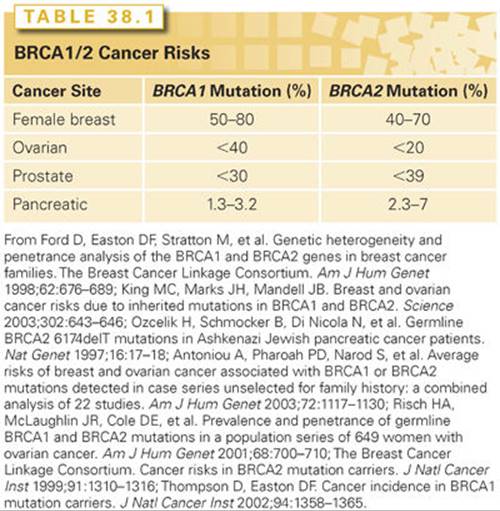
The penetrance associated with mutations in BRCA1 and BRCA2 remains an active area of research. The risks of developing specific cancers can be found in Table 38.1. The range of breast cancer risk is influenced by the population under study: Higher risk estimates have come from studies with affected families and somewhat lower risk estimates from studies in populations. Also, the risk of ovarian cancer is not the same for all BRCA2 mutations, with mutations in the central ovarian cancer cluster region conferring a higher lifetime risk.42 Other factors, such as birth cohort, oral contraceptive use, age at first pregnancy, and exercise, have all been shown to influence penetrance risk in populations.36 There has been a report of increased risk of gallbladder and bile duct cancer, stomach cancer, and melanoma withBRCA2 mutation, none of which seem to be clinically actionable.37,43
Management
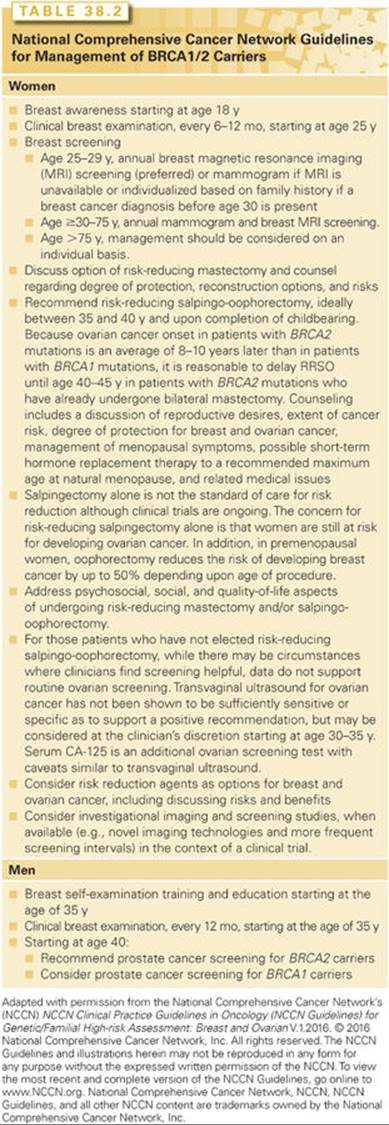
The current recommendations for the screening of women at risk for HBOC is based on the best available evidence and is expected to change as more specific features of BRCA1- and BRCA2-related disease become available. The current screening recommendations for women are listed in Table 38.2.
Risk-reduction mastectomies are an appropriate consideration for women at the highest hereditary risk for breast cancer. Studies have shown a 90% to 95% reduction in breast cancer risk following prophylactic mastectomy.44–47The evidence for the use of tamoxifen or raloxifene as a chemopreventive agent in BRCA carriers is limited; however, tamoxifen has been shown to reduce the risk of contralateral breast cancers in BRCA carriers.48,49 Two recent studies support the role of risk-reducing salpingo-oophorectomy: The hazard ratio for ovarian cancer for women who underwent prophylactic surgery and that for those who chose close surveillance were 0.15 and 0.04, respectively.50,51 Women should be informed about the potential for the subsequent development of peritoneal carcinomatosis, which has been reported up to 15 years after risk-reducing bilateral salpingo-oophorectomy.25,52Combination oral contraceptives containing estrogen and progestin result in a protective effect against ovarian cancer in some studies, but not in others.53–55
Male BRCA mutation carriers are advised to undergo training in breast self-examination with regular monthly practice and semiannual clinical breast examinations, and workup of any suspected breast lesions is recommended. The NCCN Clinical Practice Guidelines in Oncology (NCCN Guidelines®) recommend that male BRCA mutation carriers should adhere to the current prostate cancer screening guidelines.56,57
Psychosocial Considerations
The psychosocial needs of BRCA-positive women have been studied fairly widely. Studies have shown that although there is slight worsening of distress symptoms following cancer genetic counseling inBRCA1/BRCA2 mutation carriers, these symptoms were minimal, did not affect everyday life activities, and had almost disappeared at 1-year follow-up.58–62 Approximately 20% of BRCA1/2 mutation carrier women experience high distress after learning their test result.63,64 Factors that are related to high posttest distress include a high level of pretest anxiety, higher pretest perceived risk, and whether they are opting for prophylactic surgery to reduce their risk.5 It is important to note, however, that even in women who experienced distress after receipt of genetic test information, women do not “regret” their decision to be tested.66 It has been suggested that health-care providers consider including a brief pretest psychological assessment before initiating genetic testing for BRCA1 and BRCA267 so that these women can be targeted for more comprehensive support once test results are available.68
The anxiety-associated symptoms reported by BRCA1/2 carriers include sleeplessness and “bad mood.”60,69,70 One other psychosocial issue reported by single women with BRCA1/2 mutations is that they experience increased urgency at finding a life partner capable of handling the emotional strain of the cancer world and open to pursuing multiple paths toward parenthood.71
Various studies have suggested that existing social support networks are inadequate for BRCA1/2 mutation carriers and that formal services are unavailable or underutilized.66,70,72 To address this lack of formal support services, a retreat for BRCA1/2 carriers that includes educational updates about medical management, genetic privacy, and discrimination and addresses psychological and family issues may provide a valuable opportunity for BRCA carriers and their families to receive updated medical information, share personal experiences, provide and receive support, and change health behaviors.73
Distress in male BRCA carriers has not be studied quite as widely, but one study noted that high distress after disclosure of the result was reported by one of four male mutation carriers.74
TP53
Description
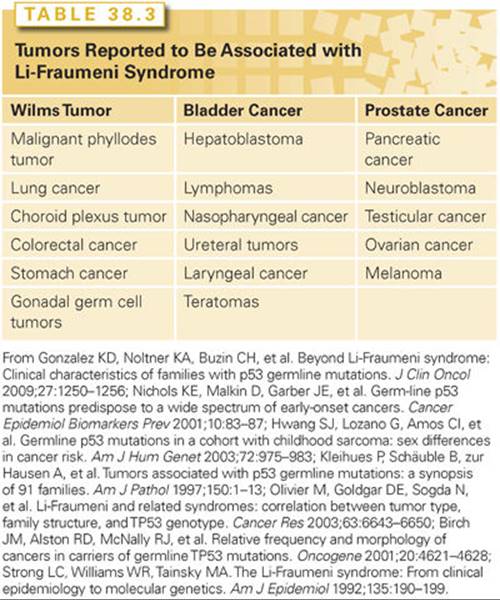
Germline mutations in the TP53 gene give rise to a disease called Li-Fraumeni syndrome (LFS), which is a rare cancer predisposition syndrome thought to be responsible for ~1% of breast cancers.75 LFS is often thought of as a hereditary predisposition to cancer in general, involving many tumor types and occurring at any point in an individual’s lifetime, including childhood. The majority of cases of LFS are due to mutations in the p53 gene.76–79 The component tumors of LFS include bone sarcomas (primarily osteosarcomas and chondrosarcomas), soft tissue sarcomas, breast cancer, brain tumors, leukemia, and adrenocortical carcinomas.80 The classic component tumors are thought to account for 63% to 77% of cancer diagnoses in individuals with LFS.80–83 Breast cancer is the most common tumor in p53 mutation carriers (24% to 31.2%), followed by soft tissue sarcomas (11.6% to 17.8%), brain tumors (3.5% to 14%), osteosarcomas (12.6% to 13.4%), and adrenocortical tumors (6.5% to 9.9%).84,85 Other tumors that have been argued to be component tumors of LFS are listed in Table 38.3.
There are some data regarding common histology of LFS component tumors. Breast cancers are most commonly invasive ductal carcinomas.80 Rhabdomyosarcomas account for 55% of soft tissue sarcomas, followed by fibrosarcomas (13%) and then malignant fibrous histiocytomas.84 For LFS-associated brain tumors, 69% are astrocytic (astrocytoma or glioblastoma), followed by medulloblastoma/primitive neuroectodermal tumors (17%).84
Identifying Li-Fraumeni Syndrome
Li et al.80 first defined LFS in 1988 at which point clinical criteria were established, now known as classic LFS criteria (Table 38.4). In 1994, Birch et al.77 went on to define less stringent criteria (see Table 38.4) in an attempt to capture families with p53 mutations who did not necessarily conform to the classic criteria. Families who met the broader criteria of Birch et al.77 were referred to as “LFS-like (LFL)” families. Both classic and LFL criteria are based on family history and fail to recognize potential p53 mutation carriers who have de novo germline p53 mutations. Although the de novo rate is not well defined for p53, one study showed as high as a 24% rate.88
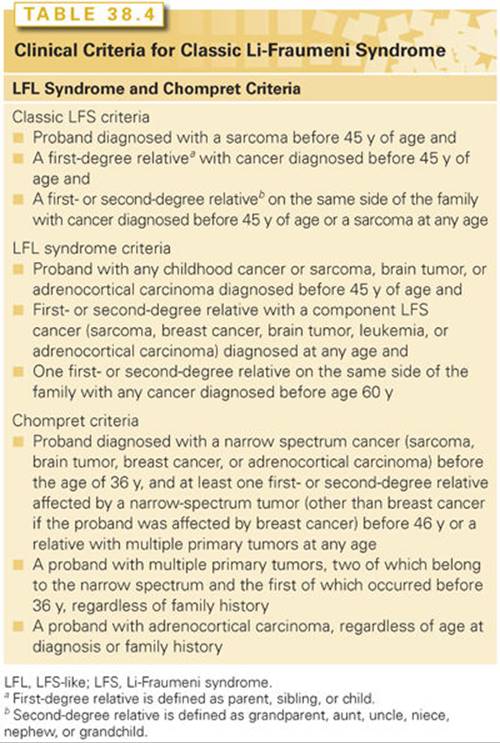
More recently in 2001, Chompret et al.89 developed criteria for identifying patients likely to carry p53 mutations (see Table 38.4) and included criteria that address families who display a collection of component tumors but also address individuals whose personal histories are suggestive of p53 mutation even in the absence of a suggestive family history. The Chompret criteria were designed to include individuals who may potentially carry de novo p53mutations.
Fifty to seventy percent of individuals who meet the classic definition of LFS will have a mutation in p53.77,89–92 Individuals who meet the LFL criteria are less likely to be p53 mutation carriers, estimated at 21% to 40%.79,90Twenty percent of individuals meeting the Chompret criteria will be identified as p53 mutation carriers.89
Cancer Risks
Typically, LFS-associated tumors occur at significantly younger ages than when they occur sporadically. However, depending on tumor type, the mean age at diagnosis varies from childhood well into adulthood.84 Understanding cancer risk for LFS is somewhat complicated as the ranges of risk vary greatly between studies and depend largely on study population. When pooling studies that examine overall cancer risk in p53 mutation carriers (both female and male), the risk of developing cancer by ages 15 to 20 years is 12% to 42%, by ages 40 to 45 years is 52% to 66%, by age 50 years is 80%, and by age 85 years is 85%.82,83,88,93 When separating out the sexes, it is apparent that female p53 mutation carriers have generally a higher lifetime cancer risk in comparison to males.83,88,94
Individuals with a diagnosis of LFS are also at markedly increased risk of developing multiple primary tumors. Hisada et al.95 found that, following a first cancer diagnosis, there is a 57% risk for a second primary tumor within 30 years of the first diagnosis, followed by a 38% risk for a third primary tumor within 10 years of the second cancer diagnosis. In addition, it has been widely observed that second, third, and so on primary cancers commonly occur in the radiation field of previously treated cancers.76,80,88,95
Psychosocial Issues
The psychosocial effects of being a member of an LFS family and/or being affected with LFS have not been widely studied.96,97 The nature of the disease itself leads to unique psychosocial implications with individual members of LFS families often experiencing many cancer diagnoses (and deaths) in their immediate and extended family. These cancer diagnoses will be throughout the life span, with many parents having to deal with a child’s diagnosis and many children needing to deal with a parent’s diagnosis. It is likely that these repeated experiences of grief and stress pose a significant psychological burden for the members of LFS families.98 Although no data exist, this psychosocial burden may also impact individuals’ relationships with their family members including, but not limited to, children and spouses.
Because of the rarity of the syndrome, many individuals with LFS may feel isolated. Other inherited syndromes, in general, and inherited cancer syndromes, in particular, have “support groups” that can help with the coping process when an individual is diagnosed with the disease. Unfortunately, no such group exists in the United States today. An online discussion group/support group for individuals with LFS is available (http://listserv.acor.org/SCRIPTS/WA-ACOR.EXE?OK=53111E8B&L=LI-FRAUMENI). Members of the listserv include patients with LFS, health-care providers, and spouses and friends of individuals with LFS. The listserv serves as a place not only to share information about the disease but also to discuss fears, anxiety, grief, and other psychological manifestations of the disease.
COWDEN SYNDROME (PHOSPHATE AND TENSIN HOMOLOG)
Description
CS is a rare hereditary cancer syndrome that is characterized by overgrowth in different organ systems. The incidence of CS is thought to be about 1 in 200,000, but it may be underdiagnosed.99 CS belongs to the set of syndromes known as the phosphatase and tensin homolog (PTEN) hamartoma tumor syndromes.100 PTEN mutations are found in the vast majority of patients with CS, although mutations in other genes such as BMPR1A and the succinate dehydrogenase genes have been reported in a small number of patients who have features of CS but do not meet diagnostic criteria (CS-like).101,102
Diagnostic Criteria Testing Criteria
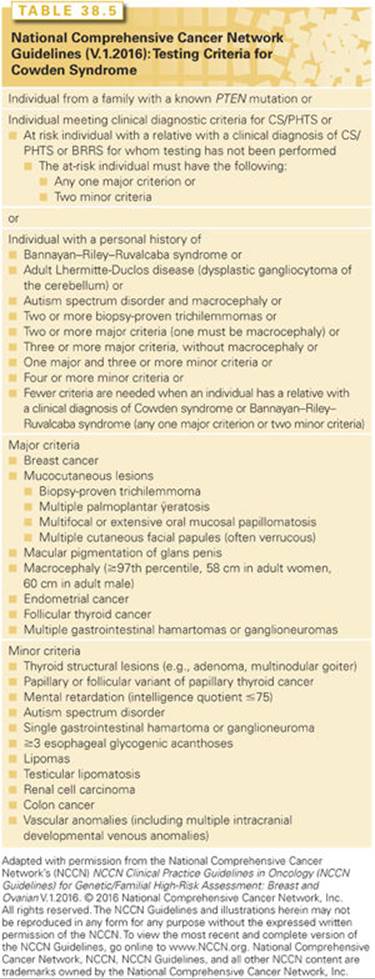
Traditionally, one of the hallmark features of CS is the development of multiple hamartomas of the skin and mucosa. A thorough physical examination, including head circumference measurement and examination for skin manifestations, is an important component of assessing for CS. However, a lack of hamartomas does not exclude CS; diagnostic criteria are complicated.103 The NCCN’s most recent guidelines (V.1.2016) for testing for CS are in Table 38.5.
Identifying Cowden Syndrome
In 2011, the Cleveland Clinic made available an online calculator for risk of a PTEN mutation in adults, as well as a set of pediatric criteria (http://www.lerner.ccf.org/gmi/ccscore/). Risk estimates were based on data from the largest prospective cohort of patients collected with a potential diagnosis of CS. Information on physical findings, specific cancer diagnoses, intestinal polyps, and other benign conditions is collected. If a patient has a risk of mutation greater than 3%, testing for PTEN is recommended.104
Cancer Risks
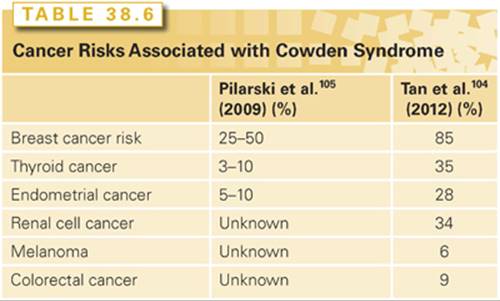
The highest risk of cancer associated with CS is for female breast cancer. Other cancers that are thought to be a part of the spectrum of cancers seen in CS include thyroid cancer and uterine cancer; more recently, renal cell cancer, melanoma, and colorectal cancer have also been reported. The magnitude of risk for the cancers associated with CS varies widely.104,105 A recent article from Cleveland Clinic estimated the lifetime risks of cancer to be much higher than previously reported; however, it is likely that there is significant ascertainment bias present in this cohort.104 A comparison of two publications reviewing the cancer risks associated with CS is presented in Table 38.6.
Management
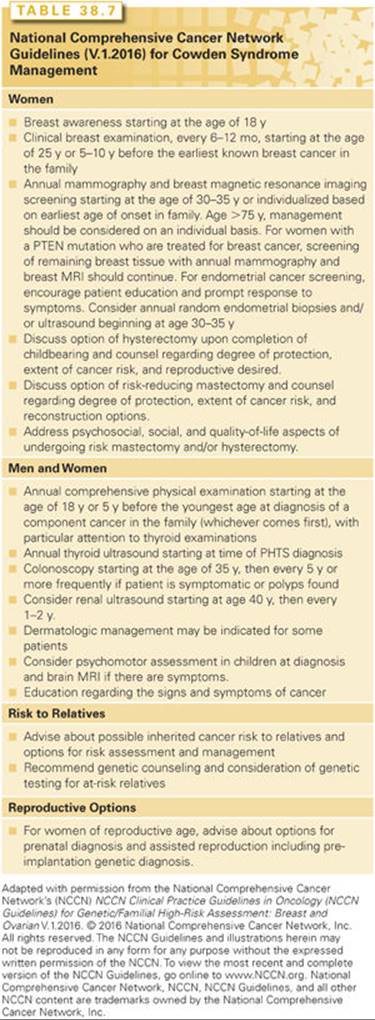
CS is a complex diagnosis to make and to receive. Because of the degree of variability in CS, it is difficult for clinicians to make a firm diagnosis except in the most obvious of cases. In situations where there is a high suspicion, a negative genetic test result may be uninformative for the patient and her family. Conversely, a positive result or variant of uncertain significance in an individual without classic features of Cowden can lead to uncertainty regarding how aggressive to be about screening and prevention measures. The NCCN Guidelines® for management are in Table 38.7.
Psychosocial Issues
There is a dearth of literature addressing the psychological issues for individuals and families with a clinical and/or genetic diagnosis of CS, possibly due to its rarity. However, there are several factors associated with CS that could add to the psychological burden of having a hereditary syndrome. These include variability in clinical presentation, difficulty screening (especially for breast cancer), disfigurement due to mucocutaneous lesions and surgical procedures, the possibility of intellectual disabilities and/or autism in children, lack of knowledge about how often PTEN mutations are found de novo versus inherited in a family, a large number of uncertain variants found through genetic testing, and overall lack of knowledge about the syndrome.
Because of the association of CS with autism and macrocephaly, many children are now undergoing genetic testing for alterations in the PTEN gene; a small number of them will be found to have CS or a related disorder.106 When the child is the index case in the family, testing him/her may provide information for adult family members about cancer risks. In addition, parents may find value in knowing that there is an underlying genetic cause to their child’s issues and in finding a community with a shared diagnosis. There is also the hope that the development of targeted therapies may help ameliorate the disease in children and, going forward, in adults.
The benefit of testing an asymptomatic child whose parent has a known mutation in PTEN is still unknown. Although childhood cancers have been reported in CS, these cancers appear to be rare. Some experts argue that thyroid and other screening is warranted in children for the early detection and prevention of related cancers107; however, others would say that the psychological burden of screening outweighs any small medical benefit that may be derived from discovering benign lesions that are unlikely to become cancerous at a young age. Testing unaffected children for CS remains controversial.
OTHER GENETIC MUTATIONS AND BREAST CANCER
STK11
Peutz–Jeghers syndrome (PJS) is a rare autosomal dominant gastrointestinal hamartomatous polyposis syndrome. It is estimated that the incidence is approximately 1 in 150,000 in North America and Western Europe.108,109 PJS is characterized by the development of Peutz–Jeghers polyps in the intestine in conjunction with pigmentation (brown or bluish spots) around and inside the mouth, nose and lips, and perianal area, as well as other parts of the body. These lesions are often most prominent in childhood and fade with age.
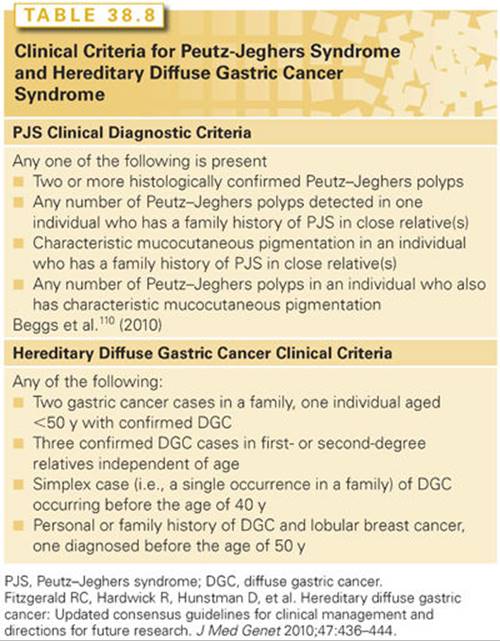
Most families with PJS have mutations in the STK11 gene, although this gene does not explain all inherited cases of PJS as well as many simplex cases.110 The lifetime risk of breast cancer in females is reported in a wide range, with the most consistent risks being in the 30% to 50% range.111,112 Other cancers that can be seen in PJS include cancers of the colon, pancreas, stomach, ovary, small intestine, lung, cervix, testes, uterus, and esophagus.110 Consensus diagnostic criteria were published in 2010 and are listed in Table 38.8.110
CDH1
Hereditary diffuse gastric cancer is a rare autosomal dominant hereditary syndrome characterized by diffuse (or signet ring cell pathology) stomach cancer. The incidence of this syndrome is not well known but likely to be rare. The lifetime risk of stomach cancer is thought to be approximately 80% compared with <1% in the general population.114,115 The second most common cancer in families with this syndrome is lobular breast cancer, with a lifetime risk of about 40% in women.116–120 Cleft lip and palate have also been reported in some families.121 The International Gastric Cancer Linkage Consortium published clinical criteria in 2010, shown in Table 38.8.113 The incidence of CDH1mutations in lobular breast cancer cases is thought to be low in the absence of a family history of gastric cancer.122
MODERATE- AND LOW-PENETRANCE BREAST CANCER GENES
There are several genes that have already been described in families with breast cancer including CHEK2 and ATM. The risk of breast cancer associated with alterations in these genes is thought to be lower than with traditional hereditary breast cancer syndromes; other factors are likely to interact with the effects of changes in these genes and result in a more moderate increase in risk for breast cancer.
Recently, a US group published a study on 12 genes linked to hereditary ovarian cancer, which are also being analyzed in families with hereditary breast cancer.123–125 More laboratories are beginning to offer genetic testing for panels of genes that are important in DNA repair pathways.126 There are several categories of these genes.
1. Category 1—genes functionally related to BRCA1 and BRCA2 (ATM, BARD1, CHEK2, MRE11A, NBN, RAD50, RAD51D)
• ATM (ataxia telangiectasia mutated)
• BARD1 (BRCA1-associated RING domain 1)
• CHEK2 (cell cycle checkpoint kinase 2)
• MRE11A (meiotic recombination 11 homolog A)
• NBN (nibrin; aka NBS1)
• RAD50
• RAD51D
2. Category 2—(other) genes in the Fanconi anemia pathway that increase breast cancer risk (BRIP1, PALB2, RAD51C)
• BRIP1 (BRCA-interacting protein C-terminal helicase 1; FANCJ)
• PALB2 (partner and localizer of BRCA2; FANCN)
• RAD51C (FANCO)
3. Category 3—genes involved in hereditary colorectal cancer (MLH1, MSH2, MSH6, PMS2, EPCAM, MYH)
For many of the genes in categories 1 and 2, risks of breast cancer are not well defined, and it is unclear if women who test negative for a mutation that was found in an affected relative (“true negatives”) are really at general population risk.
Lynch Syndrome and MYH-Associated Polyposis
Lynch syndrome (LS) is the most common hereditary form of colorectal cancer, accounting for about 2% to 3% of colorectal cancer cases. It is caused by mutations in genes involved in DNA mismatch repair, including MLH1, MSH2, MSH6, PMS2, and, indirectly, EPCAM. LS is typically characterized by the development of relatively early-onset colorectal and uterine cancer; risks for other cancers including stomach cancer, cancer of the small intestine, pancreatic cancer, sebaceous carcinomas, ovarian cancer, and cancers of the urinary collecting tract. Rarely, brain tumors are thought to be increased.127 Most studies have not shown a significant increase in breast cancer risk for MMR mutation carriers versus noncarriers,128 although a more recent article studying a cohort of LS families prospectively did show a fourfold increase in breast cancer risk.129 It is clear that defective mismatch repair can be seen in some breast cancers in women from LS families.130–131 Whether there is a true increase in risk (and the magnitude of this risk) remains to be seen.
MYH-associated polyposis (MAP) is the lesser known of the adenomatous polyposis syndromes (versus familial adenomatous polyposis). MYH is involved in base excision repair; without MYH, oxidative DNA damage leads to the formation of 8-oxo-G, which mispairs with adenine. This leads to an increase in G:C>T:A transversions in APC and other genes.132 MAP is associated with an attenuated phenotype; fewer adenomas (generally in the range of 10 to 100) and a mixture of polyp types (serrated adenomas, hyperplastic polyps) and duodenal polyps are often seen.133,134 Extraintestinal manifestations, including breast cancer, have been reported in MAP.135,136 However, MYH does not appear to be a common cause of breast cancer.137
CONCLUSION
This chapter has provided a synopsis of the genes linked to the most well-defined syndromes associated with breast cancer and an introduction to breast cancer gene panels. It is important for clinicians to be able to identify the classic breast cancer syndromes, know the relevant genes, and understand the medical management and psychosocial issues associated with the syndromes. The advent of whole genome sequencing and the ability to analyze the estimated 22,000 genes in the human genome with cheap and efficient technology bring the hope that all of the genes involved in hereditary and familial breast cancer will be found. However, making this information clinically relevant will require much more research. Elucidating the interaction of mutations in these genes with modifying factors could help clarify risks in families and lead to targeted screening and prevention measures. It is clear that genetic testing will become more complicated over time and that the interpretation of test results will require continuing education and expertise in the field.
REFERENCES
1. Howlander N, Noone AM, Krapcho M, et al, eds. SEER Cancer Statistics Review, 1975–2008. Bethesda, MD: National Cancer Institute; 2011.
2. Bennett RL, French KS, Resta RG, et al. Standardized human pedigree nomenclature: Update and assessment of the recommendations of the National Society of Genetic Counselors. J Genet Couns 2008;17:424–433.
3. Bennett RL, Steinhaus KA, Uhrich SB, et al. Recommendations for standardized human pedigree nomenclature. Pedigree Standardization Task Force of the National Society of Genetic Counselors. Am J Hum Genet 1995;56:745–752.
4. Love RR, Evans AM, Josten DM. The accuracy of patient reports of a family history of cancer. J Chronic Dis 1985;38:289–293.
5. Theis B, Boyd N, Lockwood G, et al. Accuracy of family cancer history in breast cancer patients. Eur J Cancer Prev 1994;3:321–327.
6. Reid GT, Walter FM, Brisbane JM, et al. Family history questionnaires designed for clinical use: a systematic review. Public Health Genomics 2009;12:73–83.
7. Jefferies S, Goldgar D, Eeles R. The accuracy of cancer diagnoses as reported in families with head and neck cancer: A case-control study. Clin Oncol (R Coll Radiol) 2008;20:309–314.
8. Murff HJ, Spigel DR, Syngal S. Does this patient have a family history of cancer? An evidence-based analysis of the accuracy of family cancer history. JAMA 2004;292:1480–1489.
9. Chang ET, Smedby KE, Hjalgrim H, et al. Reliability of self-reported family history of cancer in a large case-control study of lymphoma. J Natl Cancer Inst 2006;98:61–68.
10. Ziogas A, Horick NK, Kinney AY, et al. Clinically relevant changes in family history of cancer over time. JAMA 2011;306:172–178.
11. Walsh T, Casadei S, Coats KH, et al. Spectrum of mutations in BRCA1, BRCA2, CHEK2, and TP53 in families at high risk of breast cancer. JAMA 2006;295:1379–1388.
12. Ford D, Easton DF, Stratton M, et al. Genetic heterogeneity and penetrance analysis of the BRCA1 and BRCA2 genes in breast cancer families. The Breast Cancer Linkage Consortium. Am J Hum Genet 1998;62:676–689.
13. Frank TS, Manley SA, Olopade OI, et al. Sequence analysis of BRCA1 and BRCA2: Correlation of mutations with family history and ovarian cancer risk. J Clin Oncol 1998;16:2417–2425.
14. Miki Y, Swensen J, Shattuck-Eidens D, et al. A strong candidate for the breast and ovarian cancer susceptibility gene BRCA1. Science 1994;266:66–71.
15. Wooster R, Bignell G, Lancaster J, et al. Identification of the breast cancer susceptibility gene BRCA2. Nature 1995;378:789–792.
16. Struewing JP, Hartge P, Wacholder S, et al. The risk of cancer associated with specific mutations of BRCA1 and BRCA2 among Ashkenazi Jews. N Engl J Med 1997;336:1401–1408.
17. Kauff ND, Perez-Segura P, Robson ME, et al. Incidence of non-founder BRCA1 and BRCA2 mutations in high risk Ashkenazi breast and ovarian cancer families. J Med Genet 2002;39:611–614.
18. Thorlacius S, Olafsdottir G, Tryggvadottir L, et al. A single BRCA2 mutation in male and female breast cancer families from Iceland with varied cancer phenotypes. Nat Genet 1996;13:117–119.
19. Unger MA, Nathanson KL, Calzone K, et al. Screening for genomic rearrangements in families with breast and ovarian cancer identifies BRCA1 mutations previously missed by conformation-sensitive gel electrophoresis or sequencing. Am J Hum Genet 2000;67:841–850.
20. Chappuis PO, Nethercot V, Foulkes WD. Clinico-pathological characteristics of BRCA1- and BRCA2-related breast cancer. Semin Surg Oncol 2000;18:287–295.
21. Phillips KA, Andrulis IL, Goodwin PJ. Breast carcinomas arising in carriers of mutations in BRCA1 or BRCA2: Are they prognostically different? J Clin Oncol 1999;17:3653–3663.
22. Rakha EA, Reis-Filho JS, Ellis IO. Basal-like breast cancer: A critical review. J Clin Oncol 2008;26:2568–2581.
23. Boyd J, Sonoda Y, Federici MG, et al. Clinicopathologic features of BRCA-linked and sporadic ovarian cancer. JAMA 2000;283:2260–2265.
24. Lakhani SR, Manek S, Penault-Llorca F, et al. Pathology of ovarian cancers in BRCA1 and BRCA2 carriers. Clin Cancer Res 2004;10:2473–2481.
25. Levine DA, Argenta PA, Yee CJ, et al. Fallopian tube and primary peritoneal carcinomas associated with BRCA mutations. J Clin Oncol 2003;21:4222–4227.
26. Cass I, Baldwin RL, Varkey T, et al. Improved survival in women with BRCA-associated ovarian carcinoma. Cancer 2003;97:2187–2195.
27. Arun B, Bayraktar S, Liu DD, et al. Response to neoadjuvant systemic therapy for breast cancer in BRCA mutation carriers and noncarriers: A single-institution experience. J Clin Oncol 2011;29:3739–3746.
28. Berry DA, Iversen ES Jr, Gudbjartsson DF, et al. BRCAPRO validation, sensitivity of genetic testing of BRCA1/BRCA2, and prevalence of other breast cancer susceptibility genes. J Clin Oncol 2002;20:2701–2712.
29. Tyrer J, Duffy SW, Cuzick J. A breast cancer prediction model incorporating familial and personal risk factors. Stat Med 2004;23:1111–1130.
30. Couch FJ, DeShano ML, Blackwood MA, et al. BRCA1 mutations in women attending clinics that evaluate the risk of breast cancer. N Engl J Med 1997;336:1409–1415.
31. Shattuck-Eidens D, Oliphant A, McClure M, et al. BRCA1 sequence analysis in women at high risk for susceptibility mutations. Risk factor analysis and implications for genetic testing. JAMA 1997;278:1242–1250.
32. Kang HH, Williams R, Leary J, et al. Evaluation of models to predict BRCA germline mutations. Br J Cancer 2006;95:914–920.
33. Barcenas CH, Hosain GM, Arun B, et al. Assessing BRCA carrier probabilities in extended families. J Clin Oncol 2006;24:354–360.
34. James PA, Doherty R, Harris M, et al. Optimal selection of individuals for BRCA mutation testing: A comparison of available methods. J Clin Oncol 2006;24:707–715.
35. Saslow D, Castle PE, Cox JT, et al. American Cancer Society Guideline for human papillomavirus (HPV) vaccine use to prevent cervical cancer and its precursors. CA Cancer J Clin 2007;57:7–28.
36. King MC, Marks JH, Mandell JB. Breast and ovarian cancer risks due to inherited mutations in BRCA1 and BRCA2. Science 2003;302:643–646.
37. Ozçelik H, Schmocker B, Di Nicola N, et al. Germline BRCA2 6174delT mutations in Ashkenazi Jewish pancreatic cancer patients. Nat Genet 1997;16:17–18.
38. Antoniou A, Pharoah PD, Narod S, et al. Average risks of breast and ovarian cancer associated with BRCA1 or BRCA2 mutations detected in case series unselected for family history: a combined analysis of 22 studies. Am J Hum Genet 2003;72:1117–1130.
39. Risch HA, McLaughlin JR, Cole DE, et al. Prevalence and penetrance of germline BRCA1 and BRCA2 mutations in a population series of 649 women with ovarian cancer. Am J Hum Genet 2001;68:700–710.
40. The Breast Cancer Linkage Consortium. Cancer risks in BRCA2 mutation carriers. J Natl Cancer Inst 1999;91:1310–1316.
41. Thompson D, Easton DF. Cancer incidence in BRCA1 mutation carriers. J Natl Cancer Inst 2002;94:1358–1365.
42. Thompson D, Easton D. Variation in cancer risks, by mutation position, in BRCA2 mutation carriers. Am J Hum Genet 2001;68:410–419.
43. van Asperen CJ, Brohet RM, Meijers-Heijboer EJ, et al. Cancer risks in BRCA2 families: Estimates for sites other than breast and ovary. J Med Genet 2005;42:711–719.
44. Hartmann LC, Sellers TA, Schaid DJ, et al. Efficacy of bilateral prophylactic mastectomy in BRCA1 and BRCA2 gene mutation carriers. J Natl Cancer Inst 2001;93:1633–1637.
45. Rebbeck TR, Friebel T, Lynch HT, et al. Bilateral prophylactic mastectomy reduces breast cancer risk in BRCA1 and BRCA2 mutation carriers: The PROSE Study Group. J Clin Oncol 2004;22:1055–1062.
46. Meijers-Heijboer H, van Geel B, van Putten WL, et al. Breast cancer after prophylactic bilateral mastectomy in women with a BRCA1 or BRCA2 mutation. N Engl J Med 2001;345:159–164.
47. Robson M, Svahn T, McCormick B, et al. Appropriateness of breast-conserving treatment of breast carcinoma in women with germline mutations in BRCA1 or BRCA2: A clinic-based series. Cancer 2005;103:44–51.
48. Narod SA, Brunet JS, Ghadirian P, et al. Tamoxifen and risk of contralateral breast cancer in BRCA1 and BRCA2 mutation carriers: a case-control study. Hereditary Breast Cancer Clinical Study Group. Lancet 2000;356:1876–1881.
49. Gronwald J, Tung N, Foulkes WD, et al. Tamoxifen and contralateral breast cancer in BRCA1 and BRCA2 carriers: an update. Int J Cancer 2006;118:2281–2284.
50. Kauff ND, Satagopan JM, Robson ME, et al. Risk-reducing salpingo-oophorectomy in women with a BRCA1 or BRCA2 mutation. N Engl J Med 2002;346:1609–1615.
51. Rebbeck TR, Lunch HT, Neuhausen SL, et al. Prophylactic oophorectomy in carriers of BRCA1 or BRCA2 mutations. N Engl J Med 2002;346:1616–1622.
52. Piver MS, Jishi MF, Tsukada Y, et al. Primary peritoneal carcinoma after prophylactic oophorectomy in women with a family history of ovarian cancer. A report of the Gilda Radner Familial Ovarian Cancer Registry. Cancer 1993;71:2751–2755.
53. Modan B, Hartge P, Hirsh-Yechezkel G, et al. Parity, oral contraceptives, and the risk of ovarian cancer among carriers and noncarriers of a BRCA1 or BRCA2 mutation. N Engl J Med 2001;345:235–240.
54. Narod SA, Risch H, Moslehi R, et al. Oral contraceptives and the risk of hereditary ovarian cancer. Hereditary Ovarian Cancer Clinical Study Group. N Engl J Med 1998;339:424–428.
55. Narod SA, Dubé MP, Klihn J, et al. Oral contraceptives and the risk of breast cancer in BRCA1 and BRCA2 mutation carriers. J Natl Cancer Inst 2002;94:1773–1779.
56. Daly MB, Pilarski R, Axilbund JE,et al. NCCN Clinical Practice Guidelines in Oncology (NCCN Guidelines®). Genetic/Familial High-Risk Assessment: Breast and Ovarian V.1.2016. © 2016 National Comprehensive Cancer Network, Inc. www.nccn.org. Accessed February 18, 2016.
57. Liede A, Karlan BY, Narod SA. Cancer risks for male carriers of germline mutations in BRCA1 or BRCA2: A review of the literature. J Clin Oncol 2004;22:735–742.
58. DiCastro M, Frydman M, Friedman I, et al. Genetic counseling in hereditary breast/ovarian cancer in Israel: Psychosocial impact and retention of genetic information. Am J Med Genet 2002;111:147–151.
59. Lodder LN, Frets PG, Trisburg RW, et al. One year follow-up of women opting for presymptomatic testing for BRCA1 and BRCA2: Emotional impact of the test outcome and decisions on risk management (surveillance or prophylactic surgery). Breast Cancer Res Treat2002;73:97–112.
60. Crotser CB, Boehmke M. Survivorship considerations in adults with hereditary breast and ovarian cancer syndrome: State of the science. J Cancer Surviv 2009;3:21–42.
61. Hamilton JG, Lobel M, Moyer A. Emotional distress following genetic testing for hereditary breast and ovarian cancer: A meta-analytic review. Health Psychol 2009;28:510–518.
62. Reichelt JG, Møller P, Heimdal K, et al. Psychological and cancer-specific distress at 18 months post-testing in women with demonstrated BRCA1 mutations for hereditary breast/ovarian cancer. Fam Cancer 2008;7:245–254.
63. Lodder L, Frets PG, Trijsburg RW, et al. Psychological impact of receiving a BRCA1/BRCA2 test result. Am J Med Genet 2001;98:15–24.
64. Power TE, Robinson JW, Bridge P, et al. Distress and psychosocial needs of a heterogeneous high risk familial cancer population. J Genet Couns 2011;20:249–269.
65. O’Neill SC, Rini C, Goldsmith RE, et al. Distress among women receiving uninformative BRCA1/2 results: 12-month outcomes. Psychooncology 2009;18:1088–1096.
66. Di Prospero LS, Seminsky M, Honeyford J, et al. Psychosocial issues following a positive result of genetic testing for BRCA1 and BRCA2 mutations: Findings from a focus group and a needs-assessment survey. CMAJ 2001;164:1005–1009.
67. Ertmanski S, Metcalfe K, Trempała J, et al. Identification of patients at high risk of psychological distress after BRCA1 genetic testing. Genet Test Mol Biomarkers 2009;13:325–330.
68. Roussi P, Sherman KA, Miller S, et al. Enhanced counselling for women undergoing BRCA1/2 testing: Impact on knowledge and psychological distress-results from a randomised clinical trial. Psychol Health 2010;25:401–415.
69. Shochat T, Dagan E. Sleep disturbances in asymptomatic BRCA1/2 mutation carriers: Women at high risk for breast-ovarian cancer. J Sleep Res 2010;19:333–340.
70. Werner-Lin A. Formal and informal support needs of young women with BRCA mutations. J Psychosoc Oncol 2008;26:111–133.
71. Werner-Lin A. Beating the biological clock: The compressed family life cycle of young women with BRCA gene alterations. Soc Work Health Care 2008;47:416–437.
72. Metcalfe KA, Liede A, Hoodfar E, et al. An evaluation of needs of female BRCA1 and BRCA2 carriers undergoing genetic counselling. J Med Genet 2000;37:866–874.
73. McKinnon W, Naud S, Ashikaga T, et al. Results of an intervention for individuals and families with BRCA mutations: a model for providing medical updates and psychosocial support following genetic testing. J Genet Couns 2007;16:433–456.
74. Lodder L, Frets PG, Trijsburg RW, et al. Men at risk of being a mutation carrier for hereditary breast/ovarian cancer: An exploration of attitudes and psychological functioning during genetic testing. Eur J Hum Genet 2001;9:492–500.
75. Sidransky D, Tokino T, Helzlsouer K, et al. Inherited p53 gene mutations in breast cancer. Cancer Res 1992;52:2984–2986.
76. Malkin D, Li FP, Strong LC, et al. Germ line p53 mutations in a familial syndrome of breast cancer, sarcomas, and other neoplasms. Science 1990;250:1233–1238.
77. Birch JM, Hartley AL, Tricker KJ, et al. Prevalence and diversity of constitutional mutations in the p53 gene among 21 Li-Fraumeni families. Cancer Res 1994;54:1298–1304.
78. Srivastava S, Zou ZQ, Pirollo K, et al. Germ-line transmission of a mutated p53 gene in a cancer-prone family with Li-Fraumeni syndrome. Nature 1990;348:747–749.
79. Varley JM, McGown G, Thorncraft M, et al. Germ-line mutations of TP53 in Li-Fraumeni families: An extended study of 39 families. Cancer Res 1997;57:3245–3252.
80. Li FP, Fraumeni JF Jr, Mulvihill JJ, et al. A cancer family syndrome in twenty-four kindreds. Cancer Res 1988;48:5358–5362.
81. Gonzalez KD, Noltner KA, Buzin CH, et al. Beyond Li Fraumeni syndrome: Clinical characteristics of families with p53 germline mutations. J Clin Oncol 2009;27:1250–1256.
82. Nichols KE, Malkin D, Garber JE, et al. Germ-line p53 mutations predispose to a wide spectrum of early-onset cancers. Cancer Epidemiol Biomarkers Prev 2001;10:83–87.
83. Hwang SJ, Lozano G, Amos CI, et al. Germline p53 mutations in a cohort with childhood sarcoma: sex differences in cancer risk. Am J Hum Genet 2003;72:975–983.
84. Kleihues P, Schäuble B, zur Hausen A, et al. Tumors associated with p53 germline mutations: a synopsis of 91 families. Am J Pathol 1997;150:1–13.
85. Olivier M, Goldgar DE, Sodha N, et al. Li-Fraumeni and related syndromes: Correlation between tumor type, family structure, and TP53 genotype. Cancer Res 2003;63:6643–6650.
86. Birch JM, Alston RD, McNally RJ, et al. Relative frequency and morphology of cancers in carriers of germline TP53 mutations. Oncogene 2001;20:4621–4628.
87. Strong LC, Williams WR, Tainsky MA. The Li-Fraumeni syndrome: From clinical epidemiology to molecular genetics. Am J Epidemiol 1992;135:190–199.
88. Chompret A, Brugières L, Ronsin M, et al. P53 germline mutations in childhood cancers and cancer risk for carrier individuals. Br J Cancer 2000;82:1932–1937.
89. Chompret A, Abel A, Stoppa-Lyonnet D, et al. Sensitivity and predictive value of criteria for p53 germline mutation screening. J Med Genet 2001;38:43–47.
90. Varley JM, Evans DG, Birch JM. Li-Fraumeni syndrome—a molecular and clinical review. Br J Cancer 1997;76:1–14.
91. Frebourg T, Barbier N, Yan YX, et al. Germ-line p53 mutations in 15 families with Li- Fraumeni syndrome. Am J Hum Genet 1995;56:608–615.
92. Brugières L, Gardes M, Moutou C, et al. Screening for germ line p53 mutations in children with malignant tumors and a family history of cancer. Cancer Res 1993;53:452–455.
93. Le Bihan C, Moutou C, Brugières L, et al. ARCAD: A method for estimating age-dependent disease risk associated with mutation carrier status from family data. Genet Epidemiol 1995;12:13–25.
94. Wu CC, Shete S, Amos CI, et al. Joint effects of germ-line p53 mutation and sex on cancer risk in Li-Fraumeni syndrome. Cancer Res 2006;66:8287–8292.
95. Hisada M, Garber JE, Fung CY, et al. Multiple primary cancers in families with Li-Fraumeni syndrome. J Natl Cancer Inst 1998;90:606–611.
96. Dorval M, Patenaude AF, Schneider KA, et al. Anticipated versus actual emotional reactions to disclosure of results of genetic tests for cancer susceptibility: findings from p53 and BRCA1 testing programs. J Clin Oncol 2000;18:2135–2142.
97. Peterson SK, Pentz ED, Marani SK, et al. Psychological functioning in persons considering genetic counseling and testing for Li-Fraumeni syndrome. Psychooncology 2008;17:783–789.
98. Oppenheim D, Brigieres L, Chompret A, et al. The psychological burden inflicted by multiple cancers in Li-Fraumeni families: Five case studies. J Genet Couns 2001;10:169–183.
99. Nelen MR, Kremer H, Konings IB, et al. Novel PTEN mutations in patients with Cowden disease: Absence of clear genotype-phenotype correlations. Eur J Hum Genet 1999;7:267–273.
100. PTEN hamartoma tumor syndrome (PHTS). 2011. http://www.ncbi.nlm.nih.gov/books/NBK1488/. Accessed April 23, 2012.
101. Zhou XP, Woodford-Richens K, Lehtonen R, et al. Germline mutations in BMPR1A/ALK3 cause a subset of cases of juvenile polyposis syndrome and of Cowden and Bannayan-Riley-Ruvalcaba syndromes. Am J Hum Genet 2001;69:704–711.
102. Ni Y, Zbuk KM, Sadler T, et al. Germline mutations and variants in the succinate dehydrogenase genes in Cowden and Cowden-like syndromes. Am J Hum Genet 2008;83:261–268.
103. Eng C. Will the real Cowden syndrome please stand up: Revised diagnostic criteria. J Med Genet 2000;37:828–830.
104. Tan MH, Mester JL, Ngeow J, et al. Lifetime cancer risks in individuals with germline PTEN mutations. Clin Cancer Res 2012;18:400–407.
105. Pilarski R. Cowden syndrome: A critical review of the clinical literature. J Genet Couns 2009;18:13–27.
106. Conti S, Condò M, Posar A, et al. Phosphatase and tensin homolog (PTEN) gene mutations and autism: Literature review and a case report of a patient with Cowden syndrome, autistic disorder, and epilepsy. J Child Neurol 2012;27:392–397.
107. Smith JR, Margusee E, Webb S, et al. Thyroid nodules and cancer in children with PTEN hamartoma tumor syndrome. J Clin Endocrinol Metab 2011;96:34–37.
108. Zbuk KM, Eng C. Hamartomatous polyposis syndromes. Nat Clin Pract Gastroenterol Hepatol 2007;4:492–502.
109. Kutscher AH, Zegarelli EV, Rankow RM, et al. Incidence of Peutz-Jeghers syndrome. Am J Dig Dis 1960;5:576–577.
110. Beggs AD, Latchford AR, Vasen HF, et al. Peutz-Jeghers syndrome: A systematic review and recommendations for management. Gut 2010;59:975–986.
111. Lim W, Olschwang S, Keller JJ, et al. Relative frequency and morphology of cancers in STK11 mutation carriers. Gastroenterology 2004;126:1788–1794.
112. Hearle N, Schumacher V, Menko FH, et al. Frequency and spectrum of cancers in the Peutz-Jeghers syndrome. Clin Cancer Res 2006;12:3209–3215.
113. Fitzgerald RC, Hardwick R, Hunstman D, et al. Hereditary diffuse gastric cancer: Updated consensus guidelines for clinical management and directions for future research. J Med Genet. 2010;47:436–444.
114. Kluijt I, Sijmons RH, Hoogerbrugge N, et al. Familial gastric cancer: Guidelines for diagnosis, treatment and periodic surveillance. Fam Cancer 2012;11:363–369.
115. Howlader N, Noone AM, Krapcho M, et al. (eds). SEER Cancer Statistics Review, 1975–2008, National Cancer Institute. Bethesda, MD. http://seer.cancer.gov/csr/1975_2008/, based on November 2010 SEER data submission, posted to the SEER web site, 2011. Accessed September 3, 2014.
116. Kaurah P, MacMillan A, Boyd N, et al. Founder and recurrent CDH1 mutations in families with hereditary diffuse gastric cancer. JAMA 2007;297:2360–2372.
117. Brooks-Wilson AR, Kaurah P, Suriano G, et al. Germline E-cadherin mutations in hereditary diffuse gastric cancer: Assessment of 42 new families and review of genetic screening criteria. J Med Genet 2004;41:508–517.
118. Pharoah PD, Guilford P, Caldas C, et al. Incidence of gastric cancer and breast cancer in CDH1 (E-cadherin) mutation carriers from hereditary diffuse gastric cancer families. Gastroenterology 2001;121:1348–1353.
119. Keller G, Vogelsang H, Becker I, et al. Diffuse type gastric and lobular breast carcinoma in a familial gastric cancer patient with an E-cadherin germline mutation. Am J Pathol 1999;155:337–342.
120. Oliveira C, Bordin MC, Grehan N, et al. Screening E-cadherin in gastric cancer families reveals germline mutations only in hereditary diffuse gastric cancer kindred. Hum Mutat 2002;19:510–517.
121. Frebourg T, Oliveira C, Hochain P, et al. Cleft lip/palate and CDH1/E-cadherin mutations in families with hereditary diffuse gastric cancer. J Med Genet 2006;43:138–142.
122. Schrader KA, Masciari S, Boyd N, et al. Germline mutations in CDH1 are infrequent in women with early-onset or familial lobular breast cancers. J Med Genet 2011;48:64–68.
123. Walsh T, Casadei S, Lee MK, et al. Mutations in 12 genes for inherited ovarian, fallopian tube, and peritoneal carcinoma identified by massively parallel sequencing. Proc Natl Acad Sci U S A 2011;108:18032–18037.
124. Ripperger T, Gadzicki D, Meindl A, et al. Breast cancer susceptibility: Current knowledge and implications for genetic counselling. Eur J Hum Genet 2009;17:722–731.
125. Lalloo F, Evans DG. Familial breast cancer. Clin Genet 2012;82:105–114.
126. Shuen AY, Foulkes WD. Inherited mutations in breast cancer genes—risk and response. J Mammary Gland Biol Neoplasia 2011;16:3–15.
127. Weissman SM, Bellcross C, Bittner CC, et al. Genetic counseling considerations in the evaluation of families for Lynch syndrome—a review. J Genet Couns 2011;20:5–19.
128. Watson P, Vasen HF, Mecklin JP, et al. The risk of extra-colonic, extra-endometrial cancer in the Lynch syndrome. Int J Cancer 2008;123:444–449.
129. Win AK, Young JP, Lindor NM, et al. Colorectal and other cancer risks for carriers and noncarriers from families with a DNA mismatch repair gene mutation: a prospective cohort study. J Clin Oncol 2012;30:958–964.
130. Walsh MD, Buchanan DD, Cummings MC, et al. Lynch syndrome-associated breast cancers: Clinicopathologic characteristics of a case series from the colon cancer family registry. Clin Cancer Res 2010;16:2214–2224.
131. Buerki N, Gautier L, Kovac M, et al. Evidence for breast cancer as an integral part of Lynch syndrome. Genes Chromosomes Cancer 2012;51:83–91.
132. Lefevre JH, Colas C, Coulet F, et al. MYH biallelic mutation can inactivate the two genetic pathways of colorectal cancer by APC or MLH1 transversions. Fam Cancer 2010;9:589–594.
133. Sieber OM, Lipton L, Crabtree M, et al. Multiple colorectal adenomas, classic adenomatous polyposis, and germ-line mutations in MYH. N Engl J Med 2003;348:791–799.
134. Boparai KS, Dekker E, Van Eeden S, et al. Hyperplastic polyps and sessile serrated adenomas as a phenotypic expression of MYH-associated polyposis. Gastroenterology 2008;135:2014–2018.
135. Vogt S, Jones N, Christian D, et al. Expanded extracolonic tumor spectrum in MUTYH-associated polyposis. Gastroenterology 2009;137:1976–1985.e1–e10.
136. Nielsen M, Franken PF, Reinards TH, et al. Multiplicity in polyp count and extracolonic manifestations in 40 Dutch patients with MYH associated polyposis coli (MAP). J Med Genet 2005;42:e54.
137. Beiner ME, Zhang WW, Zhang S, et al. Mutations of the MYH gene do not substantially contribute to the risk of breast cancer. Breast Cancer Res Treat 2009;114:575–578.