
Richard J. Lee
EPIDEMIOLOGY AND RISK FACTORS
More than 350,000 new cases of bladder cancer are diagnosed per year worldwide. In the United States, bladder cancer is the 4th most common cancer, with 72,570 new cases in 2013 (1). Bladder cancer is three times more common in men (54,610 cases) than women (17,960 cases). There will be an estimated 15,210 deaths from bladder cancer in 2013. The median age at diagnosis is 65 years.
The best established risk factor for bladder cancer development is tobacco use, which is linked to 50% of bladder cancer cases (2). Carcinogens from tobacco are filtered from the blood into urine, and have sustained contact with urothelial cells lining the bladder, ureter, and renal pelvis. Tobacco-related cancer risk is dose dependent and diminishes with tobacco cessation. Pelvic irradiation and exposure to the chemotherapeutic cyclophosphamide also increase the risk of developing bladder cancer. In some areas of the world, chronic bladder inflammation caused by schistosomiasis is linked to a squamous cell subtype of bladder cancer.
CLINICAL PRESENTATION AND DIAGNOSIS
Hematuria is the most common presenting symptom for bladder cancer. Hematuria may be gross or microscopic and is often painless, unless associated with clots and obstruction. Evaluation of asymptomatic patients for microscopic hematuria has not been an effective screening test for detection of bladder cancer.
When bladder cancer is suspected, workup should include urine cytology, cystoscopy, and an upper tract imaging study. Urine cytology has a sensitivity of 40%–60% with a specificity of greater than 90%. Spiral computed tomography (CT) can evaluate the upper urothelial tracts (renal pelvis and ureter), renal parenchyma, and lymph nodes. The definitive diagnosis can only be established by biopsy via transurethral resection of the bladder tumor (TURBT). Fluorescence in situ hybridization (FISH) of specific genes cannot be used to diagnose bladder cancer in the absence of a tissue biopsy, and the role of FISH in management of bladder cancer patients is not well established.
Transitional cell (urothelial) carcinoma is the most common subtype of bladder cancer (>90%), and can arise in other organs lined by transitional epithelium, including renal pelvis, ureter, and the proximal two-thirds of the urethra. Other histologic subtypes include squamous cell carcinoma (3% of bladder tumors in the United States), adenocarcinoma (2%; includes tumors at the bladder dome originating from the urachal remnant), and small cell tumors (1%). Further classification of transitional cell carcinoma subtypes includes the particularly aggressive micropapillary and sarcomatoid histologies. The remainder of this chapter will discuss management of transitional cell carcinoma.
STAGING
Urinary bladder cancer can be grouped into three general categories by stage at presentation: non-muscle-invasive (formerly described as superficial), muscle-invasive, and metastatic. Each differs in clinical behavior, primary management, and outcome.
The primary bladder tumor is staged according to the depth of invasion into the bladder wall or beyond (see Figure 42-1). During TURBT, the visible tumor is resected along with sampling of involved or adjacent muscularis propria, to assess for the presence of muscle invasion. Non-muscle-invasive tumors include papillary mucosal tumors (Ta), flat mucosal tumors (carcinoma in situ [CIS], or Tis), and tumors involving the lamina propria (T1). Tumors that invade the muscularis propria layer comprise T2 disease. Tumors that penetrate beyond the muscle layer to the serosa are classified as T3. Tumors that involve contiguous pelvic structures such as the prostate, vagina, uterus, or pelvic/abdominal walls are classified as stage T4.
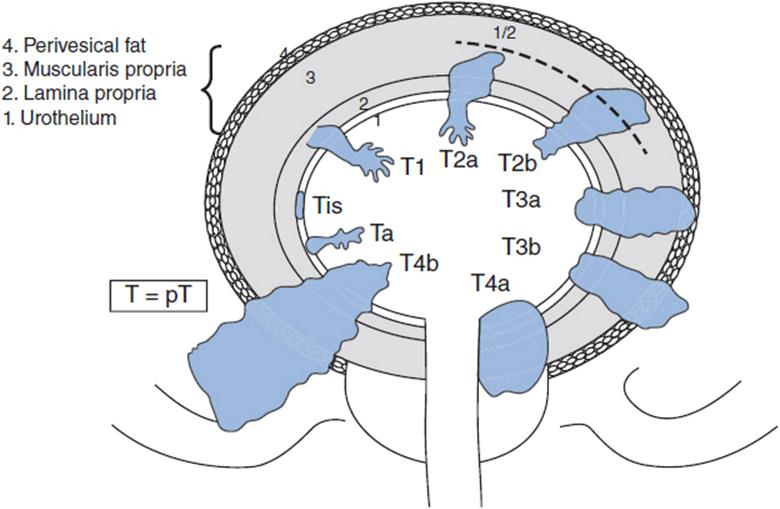
Figure 42-1 Primary bladder tumor staging. (Adapted from Reference 3.)
Patients with muscle-invasive bladder cancer require further staging workup beyond the initial abdominopelvic CT scan, including chest CT, complete blood count, blood chemistries, and consideration of a bone scan. Although the presence of urinary bladder cancer is associated with upper tract disease in <5% of cases, careful evaluation of the upper tracts is warranted due to the “field defect” from carcinogen exposure throughout the urothelium.
In the absence of lymph node or distant metastasis, T stage determines anatomic stage. Stage 0 disease constitutes Ta and Tis tumors. Stage I and II cancers have T1 and T2 tumors, respectively. Stage III cancers include T3 tumors and T4a tumors (involvement of prostate, uterus, or vagina). Stage IV cancers include T4b tumors (invading pelvic or abdominal wall), and tumors of any T stage that include lymph node or distant metastasis. Survival by stage is described in Table 42-1.
TABLE 42-1 FIVE-YEAR SURVIVAL RATE BY STAGE

MANAGEMENT
 NON-MUSCLE-INVASIVE BLADDER CANCER (TA, TIS, T1)
Non-muscle-invasive tumors constitute 70% of new diagnoses. Approximately 15%–20% of these patients will eventually progress to stage T2 or worse disease. Up to 70% of patients diagnosed with non-muscle-invasive cancer will have a local recurrence following initial therapy. Low-grade tumors and low-stage (Ta) disease tend to have a lower recurrence rate at about 50%, with a 5% rate of progression to higher stage disease. However, high-risk disease (high-grade disease, multifocal disease, or T1 disease) has a 70% recurrence rate and a 30% progression rate to stage T2+ disease. Due to high recurrence and progression rates, these patients require close urologic follow-up indefinitely, initially consisting of cystoscopy and urine cytology every 3 months. Fewer than 5% of patients with non-muscle-invasive bladder cancer will develop metastatic disease without exhibiting evidence of muscle invasion during the course of surveillance, underscoring the importance of close follow-up.
Patients at high risk for development of progressive or recurrent disease are generally considered candidates for adjuvant intravesical therapy. In general, this group includes patients with T1 tumors, multifocal CIS, high-grade tumors, or rapidly recurrent disease following initial resection. Standard options for intravesical therapy include immunologic agents such as Bacillus Calmette-Guérin (BCG) with or without interferon, or chemotherapy agents such as mitomycin C or doxorubicin. The goal of therapy is to decrease the rate of recurrence and progression.
Radical cystectomy of non-muscle-invasive bladder cancer is occasionally considered for patients with frequent recurrences, multiple tumors despite intravesical therapy, or intolerance of intravesical therapy.
MUSCLE-INVASIVE BLADDER CANCER (T2-4)
Surgical Approaches
The standard of care for muscle-invasive bladder cancer is radical cystectomy with bilateral pelvic lymph node dissection. In female patients, an anterior exenteration is performed, which includes removal of the bladder and urethra (the urethra may be spared if uninvolved and an orthotopic bladder reconstruction is to be performed), the ventral vaginal wall, and the uterus. In male patients, when the prostate stroma is involved with cancer or when there is concomitant CIS of the urethra, a cystoprostatourethrectomy is the treatment of choice.
Urinary diversion techniques include formation of an ileal conduit or construction of an orthotopic neobladder, an internal urinary reservoir that can drain via the urethra or abdominal wall. The morbidity of cystectomy is significant, with one case series at a high-volume center describing 64% of cases with one or more complications, 26% requiring readmission to the hospital, and 2.7% 90-day mortality (4).
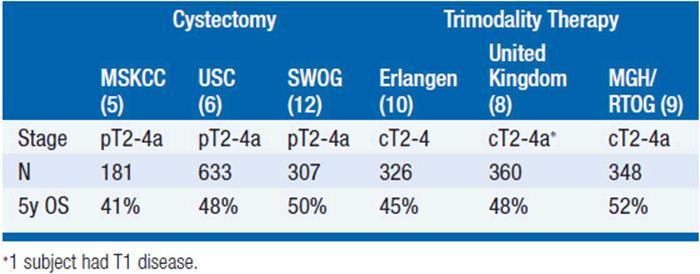
The probability of survival from bladder cancer following cystectomy is determined by the pathologic stage of the disease. Five-year overall survival (OS) is markedly influenced by the presence of lymph node involvement. In contemporary series, survival for pathologic T2 disease ranges from 59% to 72%, whereas T3/T4 disease survival ranges from 26% to 58%. Node positive disease survival rates range from 26% to 35% (5–7).
Selective Bladder-Preserving Approaches
An alternative to radical cystectomy with lymph node dissection is organ preservation with trimodality therapy in selected patients. This approach requires the use of early cystectomy at the first sign of failure of local control. Successful approaches have evolved over the past three decades following the initial reports of the effectiveness of cisplatin against transitional cell carcinoma. Trials in the United States and Europe have evaluated various schedules of concurrent chemoradiotherapy with or without neoadjuvant or adjuvant chemotherapy, with iterative improvements in the treatment regimens concurrent with improved radiation techniques. Radiosensitizing drugs studied in these series, either singly or in various combinations, include cisplatin, carboplatin, paclitaxel, 5-fluorouracil, mitomycin C, and gemcitabine.
A phase III trial of 360 patients evaluated radiation therapy with or without 5FU and mitomycin C chemotherapy (8). Subjects largely had clinical T2-T4a disease. Subjects were also randomized to either whole-bladder or modified-volume radiation therapy. The primary endpoint of locoregional disease-free survival favored chemoradiotherapy at 2 years (67% vs. 54%; p = 0.03). Five-year OS also favored chemoradiotherapy, but the difference was not statistically significant (48% vs. 35%; p = 0.16).
The long-term outcomes of the approach at Massachusetts General Hospital via the Radiation Therapy Oncology Group (RTOG) was updated (9). Successive protocols involving 348 patients with clinical T2-T4a disease were combined. In summary, 72% of patients had complete response (CR) to induction chemoradiotherapy. Five-year OS was 52%. For clinical stage T2 disease (54% of subjects), the 5-year OS rate was 61%, as opposed to 41% for patients with T3-T4 disease. Greater than 70% of subjects retained their native bladder. Predictors of outcome include clinical T stage and CR to induction therapy.
The University of Erlangen has published the largest bladder-sparing study to date, involving 415 subjects that included 89 subjects with “high-risk T1” disease (10). This group included 126 patients who received radiation without any chemotherapy. The CR rate of all 415 patients was 72%. The 10-year disease-specific survival was 42%, and more than 80% of these survivors preserved their bladders.
The currently open North American protocol for bladder-sparing treatment (RTOG 0712) is a randomized phase II study comparing induction chemoradiotherapy with cisplatin plus 5FU with twice-daily radiation treatment, versus gemcitabine with once-daily radiation treatment. Consolidation chemoradiotherapy and adjuvant chemotherapy are given to subjects whose post-induction evaluation reveals<="" p="">
Bladder preserving trimodality therapy should be one of the approaches considered in the treatment of selected patients with muscle-invasive bladder cancer. For example, eligible patients should have transitional cell carcinoma histology, absence of hydronephrosis, and tumors that can be maximally resected at TURBT. Published reports indicate comparable survival rates with contemporary cystectomy series (Table 42-2). This approach requires closely coordinated care among urologic surgeons, radiation oncologists, and medical oncologists. Patient-reported quality of life is favorable (11).
TABLE 42-2 FIVE-YEAR OVERALL SURVIVAL RATES ACROSS CONTEMPORARY STUDIES EVALUATING RADICAL CYSTECTOMY AND BLADDER PRESERVATION STRATEGIES
EVOLVING ROLE FOR PERIOPERATIVE CHEMOTHERAPY
Neoadjuvant Chemotherapy
Radical cystectomy for muscle-invasive bladder cancer fails to cure a significant proportion of patients, suggesting that micrometastatic disease exists in many cases at the time of initial diagnosis. The goals of neoadjuvant chemotherapy are to eradicate micrometastatic disease and improve cure rates.
Two prospective studies have influenced the use of neoadjuvant chemotherapy. Southwest Oncology Group (SWOG) 8710 was a randomized controlled trial of 317 subjects comparing neoadjuvant methotrexate, vinblastine, doxorubicin, cisplatin (MVAC) chemotherapy preceding radical cystectomy, versus cystectomy alone (12). Neoadjuvant chemotherapy prolonged median survival (77 vs. 46 months, p = 0.06) and improved 5-year OS (57% vs. 43%, p = 0.06), but these effects were not statistically significant. There were higher rates of pathologic CR with chemotherapy (38% vs. 15%, p < 0.001). The International Collaboration of Trialists study was a randomized controlled trial of 976 subjects comparing neoadjuvant cisplatin, methotrexate, vinblastine (CMV) chemotherapy or no chemotherapy, preceding local therapy (13). Local therapy in this trial could include radical cystectomy, radiation therapy, or low-dose radiation with radical cystectomy. The initial report did not demonstrate a statistically significant difference in outcome. With longer follow-up, 10-year OS was significantly improved by neoadjuvant chemotherapy (36% vs. 30%, p = 0.037) (13).
A meta-analysis of 11 randomized trials reported by the Advanced Bladder Cancer Meta-Analysis Collaboration found an absolute 5-year OS benefit of 5% favoring neoadjuvant platinum-based chemotherapy (HR: 0.86; CI: 0.77–0.95; p = 0.003) (14). Careful discussion of the potential benefits and risks of neoadjuvant chemotherapy is warranted during planning for radical cystectomy, and may be of particular importance to those patients at highest risk for disseminated disease. Ongoing studies are evaluating dose-dense MVAC, gemcitabine-cisplatin doublet, and targeted therapies, among others, as neoadjuvant regimens.
Adjuvant Chemotherapy
The advantage of adjuvant, as opposed to neoadjuvant, chemotherapy is the selection of patients at highest risk for disease recurrence using pathologic staging. Node-positive disease or pathologic T3-4 stages are clear risk factors for disease progression. Unfortunately, there are no data to support adjuvant chemotherapy in resected bladder cancer. Trials that have attempted to evaluate adjuvant chemotherapy were underpowered or closed early due to poor accrual. Disadvantages to adjuvant chemotherapy include the delay to systemic therapy during surgery and recovery, high rates of postoperative complications that increase the delay to chemotherapy (4), and lack of clinical endpoints that allow assessment of response to treatment. Despite the lack of evidence demonstrating improved cure rates, investigators generally agree that in the face of high-risk pathologic features, adjuvant chemotherapy is worthy of consideration.
METASTATIC DISEASE
Bladder cancer typically spreads first to pelvic lymph nodes. Lymphatic and hematogenous spread can also produce metastases to distant organs, including lungs, bones, liver, and brain. The prognosis of metastatic bladder cancer is poor, with a median survival of 12–14 months.
Compared with other solid tumors, transitional cell carcinoma is particularly sensitive to chemotherapy. Numerous agents are active as single agents in bladder cancer, including cisplatin, carboplatin, docetaxel, doxorubicin, 5FU, gemcitabine, ifosfamide, paclitaxel, pemetrexed, methotrexate, vinblastine, and vinflunine. In contemporary trials, overall response rates to first-line chemotherapy are as high as 50%–80%. Moreover, a small but measurable minority of responding patients manifest a CR. Among these patients, some durable responses are observed. For most patients, however, the duration of response to chemotherapy is brief (median, 4–6 months), and thus the impact of chemotherapy on OS has been disappointing.
The standard chemotherapy regimen for advanced bladder cancer has been MVAC, developed at Memorial Sloan-Kettering Cancer Center in the 1980s. The response rate to MVAC is 40%–65%, and there is improved progression-free and OS compared with either single-agent cisplatin or cisplatin, cyclophosphamide, doxorubicin (CISCA). CR is seen in 15%–25% of patients.
The combination of gemcitabine and cisplatin (GC) showed promise in early phase clinical trials in terms of response rate with modest side effects (15). A phase III randomized controlled trial of GC compared to standard MVAC evaluated 405 subjects with metastatic bladder cancer. Median survival was statistically comparable (GC: 13.8 months; MVAC: 14.8 months; p = 0.75) (16). The response rates were 49% for the GC arm and 46% for the MVAC arm. The toxic death rate was 1% for subjects receiving GC, compared with 3% for subjects receiving MVAC. On this basis, GC is broadly considered a standard first-line choice for metastatic bladder cancer, and has been used for both neoadjuvant and adjuvant purposes.
Other chemotherapy regimens have been tested, largely as second-line treatments after first-line cisplatin-containing chemotherapy. Addition of paclitaxel to GC did not significantly increase OS in untreated patients (17). Vinflunine conferred a survival advantage (6.9 vs. 4.3 months, p = 0.040) compared with best supportive care in a phase III randomized controlled trial in subjects who progressed after first-line platinum-containing chemotherapy (18). The combination of paclitaxel and gemcitabine has been examined in numerous small studies as second-line therapy, with response rates up to 40% (19). Vinorelbine with gemcitabine is another active regimen with a 39% overall response rate in a small study (n = 31) (20).
The use of targeted therapies has revolutionized treatment in many solid tumors. Potential molecular targets in bladder cancer have been identified including HER2, FGFR3, and VEGF, among others. The role of bevacizumab, an antiangiogenesis antibody, is currently being evaluated in combination with GC chemotherapy in a randomized phase III trial sponsored by CALGB.
FUTURE DIRECTIONS
Numerous unanswered questions in bladder cancer management remain. For non-muscle-invasive disease, can patients at highest risk for disease progression be identified and treated prior to development of metastatic disease? For localized, muscle-invasive disease, which patients are optimally treated with neo-adjuvant chemotherapy? Which patients can have bladder preservation using trimodality approaches? For advanced or metastatic disease, can survival be improved using targeted therapies either as single agents or in combination with chemotherapy? In this era of rapid advances in molecular understanding of cancers, will the power of molecular biology improve survival and cure rates for this common malignancy?
REFERENCES
1. Siegel R, Naishadham D, Jemal A. Cancer statistics, 2013. CA Cancer J Clin. 2013; 63: 11–30.
2. Freedman ND, Silverman DT, Hollenbeck AR, et al. Association between smoking and risk of bladder cancer among men and women. JAMA. 2011; 306: 737–745.
3. AJCC Cancer Staging Handbook, 6th ed. New York: Springer; 2002. p. 370.
4. Donat SM, Shabsigh A, Savage C, et al. Potential impact of postoperative early complications on the timing of adjuvant chemotherapy in patients undergoing radical cystectomy: a high-volume tertiary cancer center experience. Eur Urol. 2009; 55: 177–186.
5. Dalbagni G, Genega E, Hashibe MIA, et al. Cystectomy for bladder cancer: a contemporary series. J Urol. 2001; 165: 1111–1116.
6. Stein JP, Lieskovsky G, Cote R, et al. Radical cystectomy in the treatment of invasive bladder cancer: long-term results in 1,054 patients. J Clin Oncol. 2001; 19: 666–675.
7. Madersbacher S, Hochreiter W, Burkhard F, et al. Radical cystectomy for bladder cancer today: a homogeneous series without neoadjuvant therapy. J Clin Oncol. 2003; 21: 690–696.
8. James ND, Hussain SA, Hall E, et al. Radiotherapy with or without chemotherapy in muscle-invasive bladder cancer. N Engl J Med. 2012; 366: 1477–1488.
9. Efstathiou JA, Spiegel DY, Shipley WU, et al. Long-term outcomes of selective bladder preservation by combined-modality therapy for invasive bladder cancer: the MGH experience. Eur Urol. 2012; 61: 705–711.
10. Rodel C, Grabenbauer GG, Kuhn R, et al. Combined-modality treatment and selective organ preservation in invasive bladder cancer: long-term results. J Clin Oncol. 2002; 20: 3061–3071.
11. Zietman AL, Sacco D, Skowronski URI, et al. Organ conservation in invasive bladder cancer by transurethral resection, chemotherapy and radiation: results of a urodynamic and quality of life study on long-term survivors. J Urol. 2003; 170: 1772–1776.
12. Grossman HB, Natale RB, Tangen CM, et al. Neoadjuvant chemotherapy plus cystectomy compared with cystectomy alone for locally advanced bladder cancer. N Engl J Med. 2003; 349: 859–866.
13. International Collaboration of Trialists on behalf of the Medical Research Council Advanced Bladder Cancer Working Party. International phase III trial assessing neoadjuvant cisplatin, methotrexate, and vinblastine chemotherapy for muscle-invasive bladder cancer: long-term results of the BA06 30894 trial. J Clin Oncol. 2011; 29: 2171–2177.
14. Vale CL. Neoadjuvant chemotherapy in invasive bladder cancer: update of a systematic review and meta-analysis of individual patient data: advanced bladder cancer (ABC) meta-analysis collaboration. Eur Urol. 2005; 48: 202–206.
15. Kaufman D, Raghavan D, Carducci M, et al. Phase II trial of gemcitabine plus cisplatin in patients with metastatic urothelial cancer. J Clin Oncol. 2000; 18: 1921–1927.
16. von der Maase H, Hansen SW, Roberts JT, et al. Gemcitabine and cisplatin versus methotrexate, vinblastine, doxorubicin, and cisplatin in advanced or metastatic bladder cancer: results of a large, randomized, multinational, multicenter, phase III study. J Clin Oncol. 2000; 18: 3068–3077.
17. Bellmunt J, von der Maase H, Mead GM, et al. Randomized phase III study comparing paclitaxel/cisplatin/gemcitabine and gemcitabine/cisplatin in patients with locally advanced or metastatic urothelial cancer without prior systemic therapy: EORTC Intergroup Study 30987. J Clin Oncol. 2012; 30: 1107–1113.
18. Bellmunt J, Theodore C, Demkov T, et al. Phase III trial of vinflunine plus best supportive care compared with best supportive care alone after a platinum-containing regimen in patients with advanced transitional cell carcinoma of the urothelial tract. J Clin Oncol. 2009; 27: 4454–4461.
19. Albers P, Park SI, Niegisch G, et al, for the AUOBCG. Randomized phase III trial of 2nd line gemcitabine and paclitaxel chemotherapy in patients with advanced bladder cancer: short-term versus prolonged treatment (German Association of Urological Oncology [AUO] trial AB 20/99). Ann Oncol. 2011; 22: 288–294.
20. Turkolmez K, Beduk Y, Baltaci S, et al. Gemcitabine plus vinorelbine chemotherapy in patients with advanced bladder carcinoma who are medically unsuitable for or who have failed cisplatin-based chemotherapy. Eur Urol. 2003; 44: 682–686.