
Erin Allen and Gail Bishop
Key Points
Supporting the grieving client
· Clients experience grief before, during, and after a loss.
· Grief occurs on physical, intellectual, social, and spiritual levels.
Children grieve too.
· Children express grief differently from adults due to shortened attention spans and varying intellectual levels of understanding of death and loss.
· The death of a pet is often a child’s first experience with loss.
Supportive communication skills
· Clients rely on the veterinary healthcare team for support during the time of their pet’s illness or death.
· Employing simple communication techniques will greatly enhance relationships with clients and staff: nonverbal communication, empathy, reflection, and self-disclosure are vital skills to master.
Quality of life discussions
· Objective tools to help clients define quality of life for their pet
· Pain versus suffering
End-of-life decision making
· Guidelines in helping clients make an end-of-life decision
· Euthanasia versus natural death
· Helping clients create a plan
Self-care and team care
· Compassion fatigue, how to identify it, and how to avoid it
· Six strategies to utilize in taking care of yourself
· Debriefing cases and promoting closure reduce the chance of compassion fatigue.
Introduction
More than three quarters of pet owners report a strong relationship between their ability to cope with grief for a pet and the support they received from their veterinary team. People develop very strong attachments to the animals in their lives. These days, pets are more often than not considered as family members. This generates greater client expectations for compassionate veterinary care and respectful communication from the veterinary team. The majority of clients are deeply affected by a terminal diagnosis of their pet, and many will experience severe grief, beginning well before their pet dies.
The focus of this chapter is to provide you with some insight to what the client may be experiencing, some helpful tools you can utilize to ensure supportive communication, and an examination of how this type of work can personally affect you, emphasizing the importance of caring for yourself. Remaining aware that every client, patient, and situation is unique, this chapter takes a general approach to creating and maintaining compassionate relationships with clients during difficult times.
Ms. Sandra Brown came into the hospital today with her 8-year-old bassett hound, Barkley, for the first of many chemo treatments for Barkley’s lymphoma, diagnosed last week. Usually a chatty person, Sandra is very quiet after she checks in for her appointment.
The Grieving Client
As a technician, you spend a great deal of time with your clients. During a cancer treatment process, you will witness a broad spectrum of emotions with each client. These emotions are likely related to the impending loss of the animal and the client’s grief. Grief is not only experienced after a loss. Anticipatory grief begins when someone realizes there will soon be a loss, resulting in a drastic change of day-to-day life. It is often during this period of anticipation that people begin to experience the various feelings and manifestations commonly associated with grief (Figure 9.1).
Figure 9.1 Anticipatory grief, which is often experienced at the time of a terminal diagnosis, can also occur as a pet grows old.
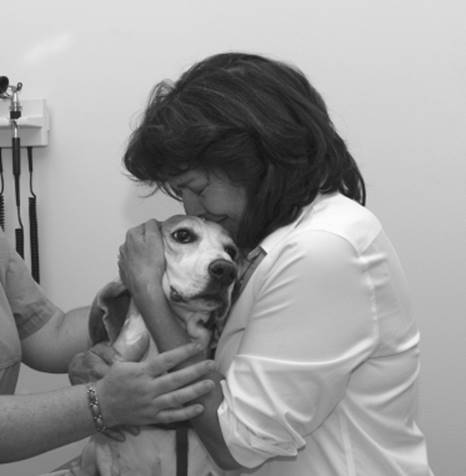
Receiving a diagnosis of cancer has been compared with watching a fireworks show: numbing, deafening, and overwhelming. One of the most common feelings during this period is an increase in anxiety, which can intensify as the time of death draws closer. This strong feeling can be quite overwhelming for people, especially those who have little experience with how to manage it. The grief process is unique for each individual, and intense emotions often ebb and flow as a client works through his or her grief and begins to adjust to the idea of his or her impending loss.
This can set in motion a roller coaster of very painful and confusing feelings, most of which are very difficult to cope with. The intensity of this experience depends greatly on the strength of the bond between the client and his or her pet. Many pets are viewed as sources of emotional and social support, eliciting feelings of strong attachment from the client. Clients who have an unusually strong bond with their pets are more likely to experience intense grief emotions. This tremendous attachment can occur for several reasons, such as when clients believe their pets “got them through” a difficult period of life, have relied on their pets as their most significant social support, or have anthropomorphized the animal. Some may view the pet as a symbolic link to significant people no longer part of their lives (i.e., children, parents, and friends who have died or moved away) or significant times in their lives (i.e., childhood, ended marriage). In such cases, losing this pet may be symbolic of other previous losses. Knowing this may help you appreciate your client’s experience.
Sandra hugs Barkley and begins to sob. She asks, “Are you sure it’s cancer? Couldn’t it be just an infection?” You offer her some tissue and after a moment, she says, “Why did this have to happen? He is too young for this. Was it something I did? I just don’t know what to do.”
You respond softly, “I’m sorry to say that he does have lymphoma, not just an infection. I wish I knew why dogs get cancer. I can assure you it isn’t anything that you did. This is a difficult time, and it’s natural to feel overwhelmed and scared.”
Through each encounter with a grieving client, you may witness many different grief expressions. Remember that these commonly occur well before the death of a pet. These manifestations occur on physical, intellectual, emotional, social, and spiritual levels. Before, during, and after loss, grief may appear as, but not limited to, the following forms:
Physical: crying, sobbing, wailing, shock and numbness, dry mouth, a lump in the throat, shortness of breath, stomachache or nausea, tightness in the chest, restlessness, fatigue, exhaustion, sleep disturbance, appetite disturbance, body aches, stiffness of joints or muscles, and dizziness or fainting.
Intellectual: denial, confusion, inability to concentrate, feeling preoccupied by the impending loss, a need to reminisce about the loved one and to talk about the circumstances of the loss, a desire to rationalize or intellectualize feelings about the loss, and thoughts or fantasies about suicide (not accompanied by concrete plans or behaviors).
Emotional: sadness, anger, guilt, depression, anxiety, relief, loneliness, irritability, a desire to blame others for the loss, resentment, embarrassment, self-doubt, feelings of being overwhelmed or out of control, feelings of hopelessness and helplessness, and behaviors and emotions that seem inappropriate for the situation (nervous smiles and laughter).
Social: feelings of withdrawal, isolation, a greater dependency on others, a rejection of others, a reluctance to ask others for help, change in support system, a desire to relocate or move, and a need to find distractions from the intensity of grief (to stay busy or to overcommit to activities).
Spiritual: bargaining with God in an attempt to prevent loss, feeling angry at God, renewed or shaken religious beliefs, feelings of being either blessed or punished, searching for a meaningful interpretation of a loved one’s death, visions or dreams concerning a dead loved one, wondering what happens to loved ones after death, and the need for a purposeful ending or closure to the relationship (a funeral, memorial service, last rites ceremony, or good-bye ritual).
Moving Through Grief
Individuals move through their grief at different rates, and the course of grief varies greatly. Some people have extreme difficulty accepting the impending death of a loved one. Clients who are having difficulty coping with an impending loss may not know how to handle their emotions. They may attempt to intellectualize or rationalize the experience in some way or use questionable humor to deflect others’ support and concern. Others sometimes move too close to the patient in attempts to overmanage the patient’s medical care. It is very important to recognize that the person’s grief is most likely compelling these emotions.
Having an awareness of what your client may be experiencing can help you alleviate any reactions you may have to their behaviors and emotions by validating that their actions are brought about by their grief. This can play a key role in redefining a “difficult client” as truly a “grieving client” (Figure 9.2).
Sandra rushes in the door with Barkley, an hour late for the appointment. “No one told me that he had to be here early. I expected a call to remind me of the appointment and didn’t get that either.”
You respond softly, “Yes, I realize how complicated Barkley’s treatment schedule is. Having him here early helps us get him back home with you sooner. Let’s work together to make this as smooth as possible. How can I help?”
Figure 9.2 People can exhibit grief in many ways, including anger, frustration, and blame, as they adapt to the news of a cancer diagnosis. This can make a client come across as “difficult” when, in reality, they are simply grieving.

While leading grief theorists may describe the process of grieving a bit differently, they all involve an initial period of shock or denial, a middle period of emotional pain and finally acceptance and recovery. In 1969, Kubler-Ross pioneered these studies and described five stages through which one processes grief: denial, anger, bargaining, depression, and acceptance. Since her work, Kubler-Ross’ stages have been explained as not sequential, but dynamic in nature, with a person often moving between different phases as they grieve. Theorists agree that even when death follows a progressive illness and is expected, the moment of death can still be shocking. When working with your clients, William Worden’s four tasks of mourning, described as a path to processing one’s grief, may be helpful to understanding what your clients are experiencing:
· The first task involves accepting the reality of the loss. The acceptance takes time, considering it is not only an intellectual acceptance but also an emotional one. This reality is tested quite often following the death of a pet, with established habits such as calling the pet’s name at dinnertime, as one begins to create new routines to replace old ones.
· The second task is to work through the emotional pain of grief. Many clients may believe that their grief pain is wrong or “crazy” in some way, especially since their emotions are induced by the loss of an animal, not a person. In general, society does not encourage grief for pet loss as it does for human loss, making the process difficult or even embarrassing for some.
· Worden’s third task is to adjust to an environment in which the deceased is missing. It involves coming to terms with changes resulting from the pet’s death. This adjustment is unique to each client and the role the animal played in his or her life. Depending on how active a role this was and how responsible the client was for the pet’s health care and well-being, the client may also adjust to a change in his or her own sense of self and purpose.
· The final task of mourning is to emotionally relocate the deceased. This can be the most difficult part of the grieving process. This involves developing a relationship with the thoughts and memories of the deceased versus a physical relationship, allowing the person to continue on with life after the loss.
Pain of the loss can resurface during certain events, such as birthdays and anniversaries. Although there is no certain time line for grief, when a person can think of the deceased pet in fond memories, with less disruption in his or her daily life and feel hopeful for the future, the person is moving in a healing direction.
Children and Grief
The death of a family pet is often a child’s first experience with loss. Children experience grief also, though their age and development levels influence their grief reactions. They express grief differently than adults do, due to shortened attention spans and varying intellectual levels of understanding death and loss. Each child is unique, and overlap occurs across levels of development, so the following overview should be used only as a guide. Please see the Preparing children for pet illness and loss section for recommendations in helping families with children.
Children Ages 1–2
Their world is experienced through their senses. At this age, they do not understand death. Instead, they respond to their caregiver’s emotions and behaviors. They may express grief as irritability, changes in sleep and eating patterns, and quietness. For caregivers, supportive actions include continuing nurturing interactions and maintaining routines.
Children 2–6
For children at these ages, death is like sleeping. Death is temporary and perhaps reversible, not final. The deceased pet can come back to life. Children may ask and repeat many questions, such as “When will he be back?”, “Where did he go?”, or “What will he eat in the ground?” They may also believe that their own magical thinking can have realistic results. At this stage, children can be very focused on the concrete details, often very curious of the physical aspects of the dead body. Still, they are very sensitive to their caregiver’s emotions and behaviors. They may express their grief as irritability, change in regular patterns, regression, and acting out behaviors. The maintenance of schedules is important. Children often process their emotions through play, so themes of death, dying, and funerals may be displayed with toys. Parents and caregivers are encouraged to answer questions truthfully, using simple and appropriate language.
“Barkley is sick and suffering with cancer.”
“We will have the doctor give Barkley medicine that only animals can have to help him to die.”
“When Barkley dies, his body will still be here but he will not be alive anymore.”
This is also an opportunity for adults to model appropriate expression of feelings. This not only helps the child identify what they are feeling themselves, but also creates a sense of safety about experiencing emotions and expressing them appropriately.
Children 6–12
Children in this age range begin to understand death as final. They may be curious of the physical and biological aspects of the deceased. In the earlier years of this developmental phase, children may believe that death is something that occurs only to the old and only to others. Soon an understanding will occur that death can happen to anyone, as well as themselves. Fear of death may occur. Acting out behaviors at home and at school may be exhibited. Social development is occurring so children may imitate how others around them respond to death. It is important for parents to continue to model appropriate behaviors and to be honest and factual with children.
Teenage Children
These young adults are able to think abstractly about death. They understand it is the end of a physical life. At this age, teenagers are searching for identity and are attempting to find a balance between independence and dependence on their caregiver. They may struggle with needing support and not wanting it. It is important to help them find personal ways to express their grief, such as writing, drawing, and talking.
In all areas of development, the ways in which parents process and display their grief will greatly impact their children’s ability to grieve. It is an important time for parents and other adults to teach children how to express grief in emotionally healthy ways free of shame or embarrassment—lessons carried into adulthood.
Supporting Clients
Comfort with one’s own grief comes from a variety of sources and can be greatly increased by the support from those close to the situation, such as you and your medical team. Research shows that almost all clients believe that the veterinary team should provide some sort of emotional support at the time of the pet’s illness and death. It is not suggested that you become a grief counselor, but rather, learn how to respond appropriately to your client’s grief. Grief is an experience best handled in cooperation with others, where support and understanding is available.
In providing support to clients, it is essential to employ compassionate support skills to emphasize your care and enhance the client’s experience with you. You and your team can pick up cues from your client to read what the client is experiencing and tailor your efforts to his or her needs. Effective support begins with effective communication.
There are several simple communication techniques that you can keep in mind as you seek to support your clients. To master these skills, you must simply be compassionate and respectful. Using the word “we” when talking about treatment and decision making will help your client feel a sense of partnership from you. It will create rapport with your client and will create teamwork as you progress through the situation. This rapport and relationship can be emphasized in other ways also. Experts believe that only 7% of communication happens verbally, so at times, no words are needed.
Nonverbal Communication
There are several forms of nonverbal communication that you can employ while communicating with clients. Facial expressions, vocal tone and inflections, and the use of touch and personal space all exhibit communication messages. Think of facial expressions as the famous quote “a picture is worth a thousand words.” It is important to maintain an awareness of what message you are sending through the expressions you display. The way you wrinkle your forehead, smile, frown, and tilt or nod your head can translate into many different messages, some of which may not be what you want to portray. Eye contact is essential in displaying support and understanding. It also invites trust from your client. Silence is helpful to support your client while they contemplate without interruption. It is important to not try and fill the empty space when silence occurs, but rather, be comfortable and sit, wordlessly, for a while. When you speak, do so softly and slowly so you convey empathy and compassion while remaining appropriate to your client’s needs and responses. Speaking loudly and fast-paced can be perceived as rushed and uncaring, creating a separation between you and your client.
The use of touch is a communication tool that demonstrates care and concern (Figure 9.3). Touch can soothe an emotional client. Neutral areas to touch are the arms and shoulders. Placing a hand on someone’s shoulder can demonstrate a great deal of empathy. If you use touch to comfort clients, remain aware of the client’s nonverbal reactions. If you sense that he or she is uncomfortable, or if you are uncomfortable, you can support the client verbally instead or focus your caring touch on the pet. Personal space and body position also send a message to your client. If you are sitting with your client, face and lean a bit toward him or her to show your engagement in the conversation. Some men may be more comfortable having conversations sitting side by side, while women may prefer facing one another. If you lean away or stand at a different level from your client, you give the impression of someone uncomfortable, unconcerned, or uncaring with the situation. It also becomes difficult to use touch as a supportive gesture. Any compassion or empathy you try to convey may be lost.
Figure 9.3 A compassionate touch is a supportive gesture to show your concern for your client.

Empathy
Empathy can be shown silently through your nonverbal communication or through your words. Empathy is not sympathy. Being empathetic is to stand in your client’s shoes and to have an emotional and intellectual comprehension of what they are experiencing without taking on the actual feelings yourself.
You tell Sandra, “I can imagine how sad you must feel to have received such bad news about Barkley. What a heartbreaking diagnosis this is. I know what a sweet boy he is and it must be hard to see him feeling badly.”
Reflection
Another skill to use in creating support for your client is reflection. When reflecting, you are focusing not only on the content of the conversation but also on the feelings your client expresses. Your client is assured that his or her message was heard when you paraphrase or reflect what he or she has said, creating a mutual understanding. There are many ways to begin a reflective statement, many of which you use in day-to-day conversations. Examples are, “It sounds like … ,” “It seems as though … ,” and “What I’m hearing is. …” Using your own words, you can simply repeat what you have heard the client express. This tells the client that you comprehend his or her feelings and care about what he or she is going through.
Sandra tells you, “I just don’t know what I’m going to do when the chemo isn’t working for Barkley anymore.”
You say, “I can tell that you are worried about how to handle Barkley’s disease progression and how to prepare yourself.”
Self-Disclosure
Self-disclosure is another communication tool that can help you relate to your clients. Sharing a similar experience you have faced can help your client feel less isolated and can normalize his or her emotions. It is important to keep in mind that sharing this information is for the benefit of your client, not for your own therapeutic purpose. This helps create rapport, builds trust, and enhances your relationship.
You tell Sandra, “My dog had the same kind of cancer last year. It was really hard on me too.”
She asks, “What did you do when he was gone?”
You tell her, “I cried for a long time, which is normal. It took me a while to get used to not having him with me.”
While supporting a client during the highly emotional period of cancer treatment for his or her pet, remember to consider the client’s privacy. If the information that the client shares would be helpful to understand his or her perspective, it is respectful to ask permission to share it with the medical team.
Quality of Life Decisions
When you have been working with your client for so long to manage his or her pet’s illness, it can be very difficult for your client to switch gears from striving for quality of life to preparing for quality of death.
Sandra says, “I don’t want Barkley to suffer. How will I know when it’s time to say goodbye?”
This question can come up when the client begins to prepare for the end of his or her pet’s life. This is something that you will be asked many times throughout your career in the veterinary field. Clients will turn to you for support and assistance in determining their pets’ quality of life and making a heartbreaking decision on their pets’ behalf for euthanasia (Figure 9.4). Quality of life is the degree of well-being felt by the animal. It consists of two components: pain and suffering. In helping your client make this important assessment for his or her pet, it can be helpful to provide some ideas to distinguish the two and to evaluate them objectively. The veterinary team can also provide input and perspective.
Figure 9.4 Difficult conversations around end-of-life topics can go more comfortably when you utilize your supportive communication skills, such as compassionate nonverbal cues, reflection, and empathy.

Pain is a physical and emotional sensation that can be complicated to assess. Keep in mind that a pet’s reaction to pain is dependent on the animal’s personality and the degree of pain experienced. It is important to educate your client that his or her pet may display these signs to indicate pain:
· trembling or shaking,
· panting,
· slow to rise,
· whining or lack of vocalization,
· decreased or absent appetite,
· acting out of character,
· being restless or unable to get comfortable,
· sitting or laying abnormally,
· bearing little or no weight on affected limb,
· hesitant to be touched in painful areas, and
· changes in energy level.
Suffering is more than solely physical attributes and involves the ability to enjoy living life. When your client says he or she wants to prevent suffering, it is important to help the client define and understand what suffering would look like in his or her pet. To start this conversation, encourage the client to define quality in terms of basic functions:
· Does he eat and drink normally?
· Can he relieve himself on his own?
· Can she move around on her own?
· Is she interested in the activities around her?
· Is he withdrawn much of the time?
As the client assesses these areas, you may then encourage them to gain a deeper understanding from the pet’s point of view. Some objective tools you can share are the following:
· Suggest that your client create a list of the pet’s unique qualities:
o chasing a ball,
o playing with other pets,
o scratching on a post,
o rubbing on your legs,
o barking at a neighbor, and
o enjoying daily walks.
As the disease progresses and these qualities fade, have the client mark them off the list. Decide which and how many traits can go before too much quality diminishes from the animal’s day to day life.
· Suggest that your client keep a good day/bad day calendar.
o Evaluate what a good day would be for the pet, and also what a bad day looks like. Each evening, recall the day and decide if it was a good or bad day, marking a calendar with a  or
or  . Decide how many bad days in a row occur before quality is compromised.
· Suggest that your client keep a journal or daily record of events in the pet’s life.
o This can be helpful in looking back to reflect on changes that occur and how the animal’s and client’s life are affected.
These tools can help your client decide if important qualities are diminishing or are no longer present in the pet’s life. This may help the client to define what suffering would be for his or her pet. It is important to empower your client to also rely on his or her special relationship with the pet and trust that the decision will become clear with time.
End-Of-Life Decision Making
Sandra tells you, “I think we’re getting close, but not there yet. I am so scared of when that day comes because I don’t think I’ll know what to do.”
You reply, “Yes, this can be a scary time. Let’s talk about what will help to prepare you and your family so that you know what to expect.”
When a pet’s death is impending, some individuals have a religious or spiritual belief system that does not support euthanasia. For others, it is a thoughtful decision and is considered a humane option. It is important to determine your client’s perspective as you discuss end-of-life issues. When a natural death is the client’s choice, some issues to discuss are
· the client’s expectations of the natural dying process,
· physiological effects of the dying process (disease specific),
· pain management, and
· available hospice care.
The decision to euthanize a beloved pet is probably the hardest decision your client will have to make regarding the pet’s care. Uncertainty surrounding the euthanasia can be extremely frightening. One way you can provide support and help alleviate fear is to encourage the clients to plan what is important for them on that day. Planning ahead is in no way equivalent to giving up, but rather, it is a means of taking care of one’s self and one’s pet during a very emotional and exhausting time. It is also a way to have some control where there has been little thus far by planning their pets’ last day. Knowing that cancers can be unpredictable, it can be beneficial to encourage your clients to develop two plans: one for how they would wish the day to go and another for crisis situations.
In an emergency, some concerns you want your clients to be aware of are as follows:
· Will they have assistance to manage the pet physically? (i.e., a 120-lb dog with pathological bone fracture, unable to stand)
· What veterinary hospitals are available? (location, hours)
· Who can the client call for help? (child care, other pets, transportation)
In determining a plan for a day that goes as the client hopes, encourage your client to consider these issues:
· Where would the client prefer the euthanasia to occur? (at home, in the hospital, outdoors)
· Will the client be present? Who else in the pet’s life should be present? (family, friends, other pets)
· Which doctor would the client prefer?
Important details to be considered regardless of an emergency or planned euthanasia, or natural death include the following:
· body care (cremation, burial, other options available) and
· memorializing object (paw print or hair clipping).
As you help the client identify the answers to these questions, you can also gain an understanding of what circumstances need to be in place for this to occur. You may need to determine specific details, such as the doctor’s schedule and choices available for euthanasia location, body care, and memorializing objects. You can help facilitate financial issues prior to the euthanasia if billing is not preferred nor even an option. It is appropriate and important to inquire if your client has experienced euthanasia of a pet previously. If no such experience has occurred, a client may be very fearful of the unknown. Regardless of a client’s experience, it is very important to explain what your hospital’s euthanasia protocol is and educate the client about what to expect. Use layman’s terms during these conversations. Words such as reflexes, muscle twitches, and sighing can be less scary than reactions, muscle spasms, and agonal breathing. While the responsibility of these conversations often falls on the doctor, the client may ask you to discuss end-of-life concerns.
Preparing Children for Pet Illness and Loss
“What do I tell my kids about Barkley?” Sandra asks you.
Parents may see you and your team as experts to help explain cancer to their children. They may also ask your help in preparing their children for the loss of a beloved family pet (Figure 9.5). Remember to use simple, age-appropriate terminology. It is helpful to know what the parents have already shared so you can use similar language. Along with educating them about how children grieve (please see the Children and grief section), you can prepare them for how to approach their child’s involvement in the pet’s illness.
Figure 9.5 Involving children in the dying process of their pets can help them gain an understanding of and alleviate some fear about death.

Some helpful ideas you can share are the following:
· Be as honest as possible. Encourage parents to be open and honest with their children about a pet’s illness and death. Even when done out of a desire to protect children, fabrication can result in a loss of trust and anger when the truth is uncovered. Young children can believe the death resulted from their own thoughts or actions. Falsehoods such as “he ran away” or “we had to find him another home” can leave children wondering what they did wrong or blaming themselves for the animal leaving and provides no resolution.
· Avoid euphemisms like “put to sleep.” These can be frightening and confusing especially to young children.
· Understand that the loss of a pet is a significant loss for children and is not to be trivialized or minimized.
· Be prepared to answer many questions, often repeatedly, depending on the child’s age.
· Include children as much as possible in decisions and discussions about the pet’s illness and death. Allow children to have a choice if they want to be present for the euthanasia or see the body afterward, preparing them for what to expect. This can help a child gain an understanding of the death.
· Do not encourage replacement of pets.
· Encourage parents to involve their children in a good-bye ceremony and in memorializing the pet.
· Help children find ways to express their grief. This can include talking, drawing, sharing memories, writing poems or stories, or creating shadow boxes.
Your practice may want to consider having some books on children’s pet loss to offer parents facing this challenging time. There are many that are available for various age groups. These books can be used as a starting point for discussions regarding illness, death, and euthanasia.
Follow-Up Communication
Follow-up contact after a death, such as a phone call, a condolence card, or a memorial acknowledgment, is a meaningful gesture to support clients. This shows your continued care and compassion for your client as well as offers you an opportunity to process your relationship with the pet and family. When writing on a condolence card, everyone who cared for the pet is encouraged to sign. Personalized messages convey your empathy much stronger than a simple “Sorry for your loss” sentence. An example is as follows:
Dear Mr. and Mrs. Brown,
You are in my thoughts since you said goodbye to your beloved boy, Barkley. He was such a brave boy through his treatments, always jumping up to say hello to everyone in the clinic. I will always remember him with a stuffed toy in his mouth, like he carried around here so often. You took such wonderful care of him, throughout his entire life and especially as he battled the cancer. I know it will be very hard to be without him, though I hope you can take some comfort from knowing you did all that you could, and made a heartbreaking decision to spare him any pain or suffering. He was lucky to have you love him so much.
Sincerely,
Even when speaking from a heartfelt place, there are some phrases to avoid when supporting a client:
· Avoid clichés, such as “Time will heal,” as well as responses that promote avoidance such as “Be strong now,” “Try and stay busy,” or “Don’t cry.” These can stall a person’s grief by promoting unhealthy coping methods.
· Do not encourage immediate replacement of the deceased pet or removal of the pet’s belongings. Each individual will come to these decisions in his or her own time and for his or her own reasons.
· Do not try and cheer up a grieving client by giving advice or pep talks such as “He lived a long life” and “You still have other pets.” Validating and normalizing the person’s grief is the best approach, as well as suggesting grief resources if appropriate.
Your client may ask for pet loss support or resources, so it is helpful to be familiar with resources, such as professional pet loss support groups, counselors, and pet loss websites.
Cost of Caring
Through all of your actions and caring support, you help your clients in a variety of important ways. You acknowledge their grief and often grieve with them. You help them adjust to the changes that losing a pet brings. You impart compassion and care through difficult and sad times. Providing such support takes effort and great strength. In this field, veterinary professionals experience death of patients five times more often than physicians for humans. Even with this statistic, you are in this field because of your desire to care, not only for the animals but also for the clients that you build relationships with. The compassion it takes to care for terminally ill patients and their families can come at a price. Depletion of your emotional resources can leave you with no way to continue caring for your patients, your clients, or yourself.
Compassion fatigue is often mistaken for burnout. The easiest way to distinguish the two is to recognize that compassion fatigue is caused by the work you do, while burnout is caused by where you do it. While each may seem similar, they are actually very different and have different paths to recovery. Burnout is driven by organizational concerns, policies, procedures, and bureaucracy. It often involves feelings of hopelessness and helplessness in doing your job effectively. Such negative feelings usually have a gradual onset. They can reflect the feelings that your work makes no difference and are often associated with a very high workload or unsupportive work environment. Burnout is felt to be a contributing factor in compassion fatigue by intensifying the sense of emotional exhaustion that one experiences.
Compassion fatigue results when you have no more empathy to give. Each interaction with someone in an emotional event, such as cancer treatment, compels you to “stand in their shoes,” compassionately wishing to ease their pain somehow. As stated before, the key to empathy is to not take on the other person’s feelings. When you experience someone else’s emotions repeatedly, it can become hard not to suffer the feelings yourself. The chain reaction that begins to take place means the more you care, the less you are able to care.
You may not experience complete compassion fatigue after working with just a few cases, but you can begin to feel the pull at your compassion “strings.” Be aware of these pulls and identify when you feel them getting stronger. If unattended, you run the risk of fatiguing yourself completely and developing a list of problems, such as
· dissociation or “checking out” mentally,
· numbness in emotional situations,
· isolation,
· hypervigilance and heightened alertness,
· sleep problems,
· tearfulness, and
· avoidance and/or obsession.
Other signs are a loss in sense of humor, loss of fulfillment from previously enjoyable activities, overreacting, ongoing feelings of sadness, and self-medication with drugs, food, or alcohol. The ability to cope with this emotional stress is unique to each member of the veterinary team, based on each person’s life experiences, beliefs, and values.
Working within a veterinary healthcare team has its ups and downs. A healthy and balanced team can help every member reduce the chances of compassion fatigue, while an unsupportive team environment can foster negative emotional effects.
Members of the veterinary healthcare team often experience intense situations repeatedly, without stopping to mentally or emotionally rest. Some may overcommit to clients and patients. Putting in late hours to care for patients when others are available, sharing personal contact information with clients to remain in touch, and allowing breeches of hospital protocol for particular clients, such as after-hour visits and discharges, all begin to wear on the team as well as the individual. Technicians often experience less control over their work situations and feelings of powerlessness, and frustration can result. You may begin to feel isolated in your devotion to your patients—another setup for compassion fatigue. You cannot avoid experiencing compassion fatigue by remaining emotionally detached from your patients. Research has shown that behaving in an empathic way with patients leads to a better level of care, whereas remaining detached leads to stress and emotional exhaustion.
It does not take much time working in the veterinary field to realize the attachment you will form with many of your clients. When you work with oncology clients and patients, you can expect to experience your own sense of grief and loss when the pet dies. You will not only have lost a relationship with that patient that you have cared for and nurtured throughout treatments, but also the client whom you have stood beside throughout the duration of the pet’s illness (Figure 9.6). Research has shown that grief responses of professional caregivers are similar to those experienced by the families with whom they worked. Your grief, though it will be shorter and less intense than your client’s, is of great importance and worthy of the same care that you give to your clients. When you acknowledge your grief and establish a plan to care for yourself, both in and out of the workplace, you will be at less risk for compassion fatigue.
Figure 9.6 Technicians often grieve not only the loss of the patient but also their relationship with the client. Allowing time to process one’s grief is important to maintaining a healthy self-care regimen.

Team-Care Strategies
Employing strategies within the work environment can enhance teamwork and communication as a way to reduce the chance of compassion fatigue:
· Debrief cases: Meeting as a group to discuss case specifics as well as the emotional components experienced can act as a release for team members. These discussions can provide opportunities to share perspectives of the case, affirm personal contributions, and identify the needs of the team. This is especially important for ongoing and emotionally charged cases.
· Promote closure: Case closure is important for you to transition from work life to personal life. It can be something that the team does together or individually before leaving for the day or when a case ends. Closure can also occur when you sign a condolence card or debrief the case. Creating a purposeful ending helps you to take closure a step further and acknowledge the patient and client in your own way. Some ideas are to have a special place or journal where members of the veterinary team can write their favorite memories of the patient, allow time during debriefing or staff meetings to share heartwarming stories of clients and patients, or plan a memorial to commemorate all the animals you have worked with. The only requirement for creating a purposeful ending is that it has meaning for you and the team. This will help you to process the events and then let them go.
Self-Care Strategies
When you begin to care for yourself appropriately, you create a balance between life and work, and are able to enjoy each separately. Instead of treading down the path to compassion fatigue, begin to recognize the signs and put into place some self-care strategies to prevent it.
Prioritizing your self-care techniques can help you to maintain them (Figure 9.7). It can be difficult to start many new practices at once. Try out different ones to see which fit best in your lifestyle. It can be good to ask your support system (family and friends) to help you continue these practices.
· Boundaries: The best way to start caring for yourself is to set boundaries. This helps you protect your time. Boundaries include the following:
o Work a full day and then go home.
o Avoid going into work on your days off or checking work e-mails.
o Refrain from sharing personal phone numbers with clients.
o When you are home, turn off your “work” thinking.
o Trust your coworkers to take care of patients in your absence so you can keep your mind away from work when you are not there.
· Reconnect with yourself: Remember the things that you loved to do before your life became entangled with your work. Treat yourself to a massage, get your hair done, plant a garden, read a book, exercise, watch the sunset, and so on. Each person has specific activities that fulfill them. It is important to identify what they are for you and commit to nurturing yourself.
· Reconnect with others: Schedule fun social events or outings with your family, friends, or pets. Make a point to interact in events not related to work.
· Care for your body: Maintaining a healthy diet is important for keeping your immune system strong and helps your body respond to stress. This allows more energy for the things you enjoy. Exercise is a natural way to relieve stress by raising endorphins, the feel-good chemicals in your brain. Exercise also reduces anxiety and promotes good sleep. Research shows that it is a proven mood enhancer. Eating healthy and creating a daily exercise routine can help maintain balance in your life and mood.
· Take a break: When you begin to feel that emotional pull of compassion at work, check that your patient is being cared for and allow yourself to step away for a short break from the situation. Walk outside or go to a break room. Wherever you go, breathe deeply and use positive self-talk and imagery as a way to rebalance yourself emotionally.
· Talk to a professional: Sometimes, caring deeply can be too much to handle on your own. Seeking out the help of a professional therapist or counselor is nothing to be ashamed of. It can even set an example for others in need of help. Talking with someone can help you see outside the box and gain an appreciation of yourself.
Figure 9.7 To maintain a healthy work–life balance, it is good to identify what hobbies and activities are helpful.

Your work is meaningful to many, including yourself and your clients. You have the skills and compassion to create lasting memories even in the face of diseases. As long as you remember to care for yourself as you do for your patients and clients, you will continue to enjoy a fulfilling career.
Additional Reading
Adams CL, Bonnett BN, Meek AH. 2000. Predictors of owner response to companion animal death in 177 clients from 14 practices in Ontario. J Am Vet Med Assoc 217:1303–9.
Arnetz BB. 1997. Physicians’ view of their work environment and organization. Psychother Psychosom 66:155–62.
Bartholomew J, Morrison D, Ciccolo JT. 2005. Effects of acute exercise on mood and well-being on patients with major depressive disorder. Med Sci Sports Exerc 37(12):2032–7.
Cohen S. 2002. Can pets function as family members? West J Nurs Res 24(6):621–38.
Cohen S. 2007. Compassion fatigue and the veterinary health team. Vet Clin North Am Small Anim Pract 37:123–34.
Figley CR, Roop RG. 2006. Compassion Fatigue in the Animal-Care Community. Washington, DC: Humane Society Press.
Kubler-Ross E. 1969. On Death and Dying. New York: Collier Books/Macmillan.
Lagoni L, Hetts S. 1990. Bereavement. In: McCurnin D (ed.), Clinical Textbook for Veterinary Technicians (2nd Ed.). Philadelphia: Saunders.
Lagoni L, Butler C, Hetts S. 1994. The Human-Animal Bond and Grief. Philadelphia: Saunders.
Mehrabian A. 1972. Nonverbal Communication. Chicago, IL: Aldine-Atherton.
Mitchener K, Ogilvie GS. 2002. Understanding compassion fatigue: Keys for the caring veterinary healthcare team. J Am Anim Hosp Assoc 38:307–10.
Swanson TR, Swanson MJ. 1977. Acute uncertainty: The intensive care unit. In: Pattison EM (ed.), The Experience of Dying. Englewood Cliffs, NJ: Prentice Hall, pp. 245–51.
Worden, JW. 1991. Grief Counseling and Grief Therapy (2nd Ed.). New York: Springer.