
John Whitworth
10.1 Introduction
Teeth with vital pulps contain perfused pulp tissue, which in most circumstances responds clinically to thermal and electronic sensibility tests. This includes everything from the pristine tooth with a completely healthy pulp, to the grossly carious tooth with extensive, irreversible pulpitis. The important inference is that teeth with vital pulps contain little or no microbial infection, at least in their apical regions [95]. As such, their clinical management differs from those with completely necrotic, infected pulp systems and established apical periodontitis.
Assuming the desired outcome of endodontic treatment is to prevent or heal apical periodontitis, teeth with no preoperative infection or radiographically-detectable periapical lesion enjoy higher levels of treatment success than those with necrotic/ infected pulps and periapical inflammation [76]. Against this background, dentists may approach the treatment of teeth with vital pulps as a simple technical exercise - a rapid and predictable mechanical task, rewarded by instant pain relief, a pleasing postoperative radiograph and guaranteed long-term periapical health. Often overlooked is the attention to detail necessary to manage the vital pulp space under aseptic conditions, to prevent clinically-acquired (nosocomial) infection during treatment procedures and to safeguard against microbial colonization during a lifetime of function. In order to pro- mote the long-term survival of root canal treated teeth, dentists should also minimize the risks of unduly harsh mechanical and chemical treatments on structurally important hard tissues, and restore them appropri- ately after treatment [74].
Although an account of this sort must contain some discussion of instruments, materials and techniques, emphasis is placed wherever possible on biological principles for the infection-controlling and tissue- preserving management of teeth with compromised, vital pulps.
10.2 Pulpectomy - Definition and Rationale
Pulpectomy is quite simply the removal of vital pulp tissue from a tooth, severing the soft tissues close to the apical foramen, in a site that is likely to be sterile. The empty canal space is then sealed, and a coronal res- toration applied to protect the pulp system from the oral environment and to safeguard the tooth against fracture.
The most obvious indication for pulpectomy is symptomatic irreversible pulpitis, where vital pulp tissue is removed for pain relief and to prevent the cascade of events that will ultimately lead to complete pulp necrosis, established pulp-space infection and the development of apical periodontitis.

Figure 10.1 Deep pulpotomy in an immature tooth with partial pulp necrosis. (a) Tooth at presentation with recurrent caries and apical periodontitis. Root formation is incomplete. (b) After isolation of the tooth, removal of caries and restorative materials, bleeding pulp tissue was identified 5 mm from root end with a long shanked round bur. The wound was dressed over an extended period with multiple changes of non-setting Ca(OH)2. (c) One year after treatment was initiated, the tooth apex is complete, the walls of the root have thickened and a mineralized bridge divides the pulp from overlying restorative materials.
Carious pulp exposure in an asymptomatic tooth is considered by many as an example of asymptomatic irreversible pulpitis and unfavorable for conservative pulp-capping or pulpotomy procedures. In this situation, pulpectomy currently has a stronger base of evidence for the preservation of periapical health than vital pulp therapies, particularly when followed up in the long-term [10]. A notable exception is the immature permanent tooth, where there may be stringent efforts to preserve the radicular pulp, at least until root apices have fully formed (apexogenesis) and root walls have gained thickness and strength. Here, a deep pulpotomy is usually performed, resecting pulp tissue at a level judged to be sterile, before applying a wound dressing and sealing coronal restoration in an effort to exclude new infection and preserve vital pulp functions (Figure 10.1).
Extrapolating from this and from the evidence of successful pulpotomy outcomes after pulp-exposing trauma [21], interest has re-surfaced on the potential of carefully-conducted pulp capping [14] and pulp chamber pulpotomy procedures [59, 94, 106, 119] as predictable treatments for cariously involved permanent teeth. Many attribute the apparent success of these procedures to the properties of calcium silicate cements [65], yet reports also point to the meticulous attention to detail required at all stages of clinical management if favorable outcomes are to be predicted. Attractive though they may appear, these are not quick and easy fixes and long-term outcome data are currently lacking. Patients may be offered such treatment options, but only after open discussion of the potential benefits and risks. They are experimental interventions at this stage with less certain outcomes than pulpectomy.
Another form of asymptomatic irreversible pulpitis is internal inflammatory root resorption, where pulpectomy is the only sure way of arresting the process.
Pulpectomy may also been indicated for teeth with normal, healthy pulps that are at risk of serious damage from restorative procedures. Examples include the decoronation of teeth as overdenture abutments, and heavy crown preparations to compensate for tooth misalignment or rotation. Elective pulpectomy may also be considered when teeth cannot be restored to long-term function without using the pulp space for posts or other retentive devices.
Elective pulpectomy has also been sug- gested in teeth with signs of progressive root canal obliteration following trauma. Clinical data suggest that between 10 and 20% of these may become infected and necrotic within 20 years [41, 99] and some have seen this as justification for intervention, removing the pulp before it becomes impossible to access. Relevant to this discussion is that the hard tissue deposition in such cases does not always represent an organized diminution of the pulp space by concentrically-retreating odontoblasts; a situation that inevitably leaves a central, though reduced pulp space for instrumentation (Figure 10.2). In many circumstances, the hard tissue deposited is rather chaotic in structure, sometimes even osteodentine, with no central lumen to negotiate with endodontic instruments (Figure 10.3). Others use the same data to suggest that the risk of pulp breakdown is relatively low and does not justify prophylactic treatment. Reports from the pre- microscope era suggest that 80% of such teeth could be successfully managed if apical periodontitis did subsequently develop [22], and it is likely that the situation will have improved since then. The advent of 3D scanning and guide-sleeves to control bur alignment open further opportunities for safe, conservative, and efficient entry to diminished pulp spaces [137], and under- mines further the case for routine prophylactic intervention.
10.3 The Challenge of Effective Local Anesthesia
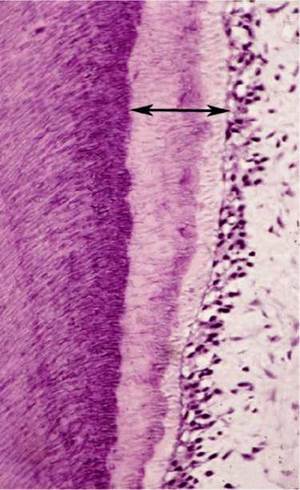
Figure 10.2 Photomicrograph showing the locally accelerated deposition of tertiary reactionary dentin matrix in response to cavity preparation. This physiological response to mild trauma will continue for as long as the stimulus is present. It will not lead to pulp necrosis or the complete mineralized obliteration of the pulp space.
The acutely inflamed vital pulp presents a recognized challenge for effective local anes- thesia. Most clinicians will have encountered patients with a profoundly numb lip after inferior alveolar nerve block injection, but with a tooth that remains exquisitely sensitive to operative intervention - the so-called “hot pulp” [81]. Explanations are complex and incompletely understood, though peripheral sensitization caused by increased excitability of sensory nerves in the pulp and central sen- sitization caused by changes in pain processing within the central nervous system play important parts. Approaches include the administration of additional injections to increase the dose, and expose greater lengths of sensory nerve trunks to anesthetic solution, such as higher, Gow-Gates [35] and Akinosi [3] nerve blocks in the mandible. Supplementary infiltrations with articaine have also received considerable interest in the mandible [56]. Some of the most effective supplementary techniques involve local, intraosseous delivery of anesthetic solutions, including intraligamentary, intraseptal and frank intraosseous delivery through a perforation in the buccal cortical plate [81]. The practice of medicating acutely inflamed pulps with “mummifying pastes” to induce necrosis is discouraged, as case reports have shown extensive tissue damage from the local actions of these highly toxic materials [112]. On occasion, it is still necessary to inject directly into inflamed pulp tissue in order to secure effective anesthesia, a procedure associated with momentary pain, but usually rewarded with comfort as sensory nerves are concussed by the entry of solution into the non-compliant pulp space.
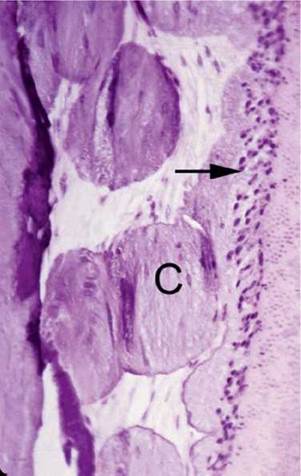
Figure 10.3 Photomicrograph showing mineralized obliteration of the pulp space. The mineralized deposits (C) are not associated with odontoblast function, but a sign of poor pulpal health. Note that the odontoblast layer (arrowed) has been included in the mineralized tissue. The progress of mineralization will be unpredictable, may be associated with pulp necrosis, and may leave a pulp space that is difficult or impossible to negotiate with endodontic instruments.
Investigators have also explored the potential of premedication with a variety of non- steroidal and steroidal anti-inflammatory agents as a means of enhancing anesthetic success [103]. No premedication regime has yet achieved widespread acceptance. Occasionally, patients may require sedation to supplement local anesthesia for the com- fortable extirpation of a pulp.
10.4 Principles of Effective Pulpectomy
A central tenet of vital pulp management is the exclusion of microbial infection, principally from the oral microbiota, but also from commensal and environmental pathogens derived from the patient, dental person- nel, clinical materials, and equipment [78]. Standard measures are summarized in the following paragraphs.
10.4.1 The Aseptic Working Environment
10.4.1.1 Preparing the Tooth for Treatment
Pulpectomy should generally be limited to teeth that can be isolated from the oral environment during treatment and are capable of restoration when it is complete. Ideally, all restorations should be removed from teeth before endodontic treatment and the remaining tooth tissue assessed for caries, cracks, volume and distribution [1]. In this way, unrestorable teeth are identified early, teeth that need support from an orthodontic band and/or preoperative res- toration can be appropriately managed, and final restorations can be planned from the outset. Defective restorations must be removed and caries excavated to the brink of pulp exposure before penetrating the pulp chamber with fresh, sterile burs, reducing the risk of pulp-space contamination. It is also good practice to eliminate supragingival calculus and plaque from teeth before isolation with rubber dam and entry to the pulp space.
10.4.1.2 Isolation with Rubber Dam
Isolating teeth from the oral environment with a well-fitting rubber dam is a recognized prerequisite for safe and effective endodontic practice. This standard measure has the support of professional bodies [27, 28], yet its adoption in general practice may vary [5, 73, 132]. The rubber dam is an integral part of the efforts to exclude infection from the operating field [20]. It also protects patients from pungent and caustic irrigating solutions such as NaOCl. Published reports have shown improved healing of periapical lesions after treatment including rubber dam isolation, though the effect is not strong [58, 128]. Routine rubber dam isolation will also protect the oropharynx from mislaid instruments. While very few endodontic instruments are likely to be swallowed or inhaled in general practice [118], the avoid- ance of even one such incident is probably sufficient justification for the routine application of this simple and inexpensive measure. The benefits of using rubber dam, including improved vision, improved patient comfort and the improved working environment for the dentist, should also be emphasized. Given the unequivocal, causal association of infection with periapical inflammation [70], randomized controlled studies that compare endodontic outcomes with and without the use of rubber dam are unlikely to be conducted and would be unethical to perform. The timing of rubber dam isolation should be tailored to clinical circumstances. On the grounds of infection control, it is probably wise to isolate teeth before the pulp space is entered, though this must be balanced against the risks of excessive tissue removal and catastrophic tooth perforation if the dam impairs bur alignment and depth orientation.
10.4.1.3 Disinfection of the Operating Field
Removal of caries and defective restorations and the application of rubber dam are mechanical means to prevent contamination of the pulp space during treatment. As an additional safeguard, surface or field disinfection of the isolated tooth and rubber dam is mandatory. Documented procedures include the use of hydrogen peroxide, iodine or chlorhexidine preparations that are applied before entering the pulp space. Field disinfection is common in many surgical disciplines and was promoted in endodontics by researchers taking microbiological samples from root canals [71]. The relative effectiveness of different regimes remains uncertain [77].
These preoperative measures represent small infection-controlling steps that build an environment compatible with optimal infection control, thus swinging the balance of probabilities in favor of clinical success. Practitioners who adopt these measures are likely to be focused on infection control as a key outcome determinant and carry that approach through all of their decision making and actions.
10.4.1.4 Sterile Instruments
Surgical instruments must be sterile before use on patients. In many instances, endodontic instruments are pre-sterilized by the manufacturer, and often marked for single use only. For instruments supplied in a non- sterile state, contemporary washer/disinfec- tor and autoclaving protocols allow them to be satisfactorily cleansed of environmental contaminants before use. The decontamination of used endodontic instruments is more problematic. Practices of “sterilizing” endodontic instruments during treatment by chairside immersion in hot salt, glass beads or even molten tin [29] are now largely his- torical. Even with contemporary and rigor- ously controlled sterilization practices, the intricate blades of endodontic shaping tools are notoriously difficult to clean and effectively sterilize. The specter of prion-based disease has presented a special challenge, and the impossibility of eliminating such materials from endodontic instruments led in 2007 to the recommendation that all endodontic reamers and files should be consid- ered as single-use instruments [131]. Despite these potential concerns, there have been no reported cases of prion-based disease linked to dental interventions.
Handling the blades of endodontic instruments and points of filling materials must be avoided to reduce the risks of nosocomial infection with microorganisms derived from skin and from the clinical environment [78]. The negative potential of nosocomial infection was highlighted in two CBCT-based endodontic outcome studies in which approximately 20% of teeth without apical periodontitis developed lesions within 1-5 years of pulpectomy [31, 87]. The true impact of nosocomial infection remains a hot topic for research, as does the use of 3D imaging in assessing endodontic outcomes.
10.4.2 Tissue-preserving Access
To eliminate tissue from the entire pulp space, it is necessary to unroof all canal entrances. Shaping, cleaning and filling will then be optimized. At the same time, endodontic treatment aims to provide reliable foundations for effective long-term restoration, and it makes sense to adopt principles of minimally invasive dentistry and preserve as much dentin as possible. This may be particularly important in the cervical regions of teeth, where large access cavities and extensive pre-flaring of canal entrances may inadvertently weaken teeth and increase the risk of fracture [34].
10.4.3 Pulp Tissue Resection and Elimination
The term pulpectomy may conjure images of clean surgical resection, yet the procedure is rarely so precise. Although the notion was discussed more than 90 years ago [23] and modified instruments for the purpose have been suggested [67], microscalpels are not currently available to neatly divide the apical pulp tissue with its rich network of neurovas- cular bundles. After unroofing the chamber, vital pulp tissue in young teeth may some times be removed by engaging a barbed broach with a half-turn and pulling to remove an apparently intact pulp from the canal (Figure 10.4). Alternatively, endodontic files can be extended to the desired working length in rotational or rasping motions to sever the pulp and shape the surrounding hard tissues. This sort of resection inevitably involves the compression, twisting, stretching, and tearing of apical soft tissues (Figure 10.5) [82], including the afferent trigeminal sensory nerve fibers that will be preserved within the apical wound. Few patients experience significant persistent symptoms after vital pulp extirpation [80], though lasting symptoms associated with endodontic deafferentation injury are occasionally encountered [79].

Figure 10.4 Extirpation of a young vital pulp with a barbed broach.
In the necrotic, infected case, it is logical to extend instrumentation as close to the root canal terminus as possible in order to remove microbial biofilm, infected dentin and decomposing pulp tissues from an avascular and defenseless environment [111]. In such cases, the practice of securing and maintaining apical patency has also been advocated as a means to preserve access to the deepest parts of the canal system throughout instrumentation and disinfection [75].
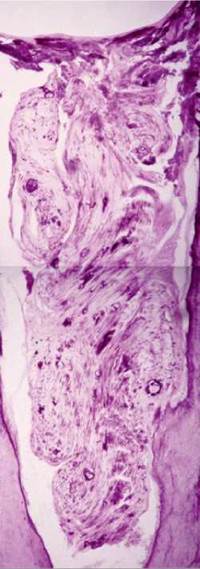
Figure 10.5 Remaining pulp tissue after pulpectomy with a root canal reamer. The pulp tissue was twisted all the way to the apical foramen. (Courtesy of Dr H. Nyborg.)
In teeth with vital pulps, the situation is somewhat different. Since the radicular pulp and dentin walls are uninfected, it is suggested that the wound may legitimately be placed 1-2 mm from radiographic root end [48, 51] with the expectation that strict asepsis will allow the apical pulp stump to survive. A shorter section of disturbed apical pulp stump may re-vascularize more readily after the traumas of resection than a longer one, whereas an apical pulp stump greater than 2 mm may not recover [110]. Experimental studies in the 1970s provided evidence that if the pulp was removed aseptically and the canal was subsequently filled 2-4 mm short of working length, healing would occur [40, 83] presumably by reorganization of a sterile blood clot. Contemporary electronic apex locators offer good length control and facilitate our ability to contain instrumentation within 0.5-1.0 mm short of the point of maximal constriction [72]. At this point, the severed pulp wound is likely to be as small in cross-section as possible, and this will not be influenced by the degree to which the canal walls are enlarged (Figure 10.6a). Extending instrumentation beyond the point of maximal constriction may open the apical wound to a greater cross-section and promote bleeding into the canal that may compromise apical seal. In the case of apical stop-preparations (see later) it may also promote the overextension of filling materials (Figure 10.6b). Although it is necessary to touch periapical ligament with a small file in order to secure an electronic apex locator “zero” reading, the maintenance of apical patency may be unwise in vital cases, where an already disrupted apical pulp stump would be repeatedly impaled with instruments during canal instrumentation. Yet the apical part of the pulp and surrounding periodontal tissues have great ability to recover following non-infectious tissue damage. This is normally characterized by an initial resorption of apical root dentin and cementum (Figure 10.7), providing access for periapical connective tissues to the narrowly enclosed apical pulp that is severely damaged during pulpectomy [82]. The pulp that may survive will form an osteodentin wall that will close off the vital pulp tissue from the subsequent root canal filling. In most instances, the damaged pulp tissue is re-vascularized and a fibrous connective tissue replaces the pulp. When the apical resorption is arrested, cementum will form to replace lost dentin and further close off the pulp space (Figure 10.8) [30, 83]. Damage caused by over-instrumentation will heal with apical repair provided the root canal is adequately and aseptically filled after pulpectomy [8, 40]. Maintaining asepsis remains the key to successful treatment.
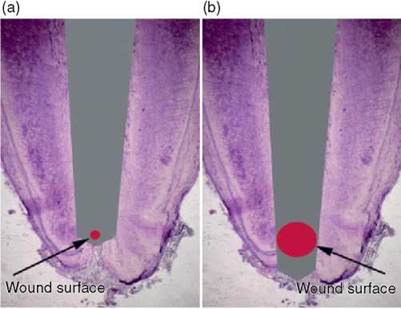
Figure 10.6 (a) Apical pulp resection at a level that minimizes the cross- sectional area of the wound. The surface area of the soft tissue wound will not increase, regardless of how widely the canal walls are instrumented. (b) Over-extension of the same instrument greatly enlarges the wound surface, as well as promoting bleeding into the canal. With a modestly tapered instrument, apical resistance form may be lost, risking the over-extension of filling materials.
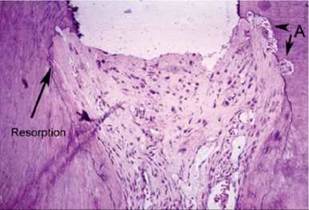
Figure 10.7 Tissue in the apical 2-3 mm of a root canal subsequent to pulpectomy. The lateral walls of the root canal have undergone resorption on a broad front (arrow) and in localized areas (A); no inflammatory cell infiltrate can be seen.
Even when the pulp appears to have been removed intact, it should not be anticipated that it has been completely eliminated from complex webs, fins, cul-de-sacs, isthmuses, and lateral canals. Neither should it be expected that all odontoblast processes will have slid neatly from their tubules along with the main body of pulp tissue. The walls and ramifications of freshly-extirpated pulp systems contain variable amounts of cellular material, blood and micoorganisms (Figure 10.9). Key to the successful management of this situation is that the apical pulp stump is maintained in a healthy and uninfected condition, and that as much cellular debris/avascular pulp material is removed from canal walls and ramifications as possible.
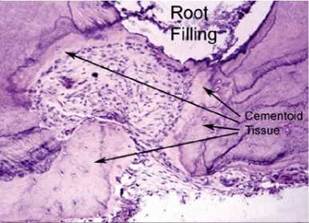
Figure 10.8 Tissue in the apical 2-3 mm after pulpectomy and root canal filling. After the initial dentin and cementum resorption following pulpectomy (Figure 10.7), the tissue has undergone repair. Apposition of cementum-like tissue can be seen around the entire pulp space (arrows).
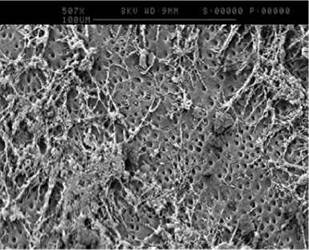
Figure 10.9 SEM image of debris-covered root canal wall immediately following pulp extirpation with a broach.
Such material may compromise the seal of the root canal filling and provide substrate for any microorganisms that may find their way into the canal system during a lifetime of function.
10.5 Canal Shaping
Most root canals require some mechanical enlargement if they are to be adequately cleaned and filled. The prepared canal should facilitate easy placement of the root filling while limiting periapical extrusion. The opti- mal root canal shape for this purpose is a smoothly tapering conical form, with its narrowest point apically and widest point coro- nally. Issues that are currently discussed include:
• Degree of taper: what is sufficient for effective cleaning and filling but without unnec- essary sacrifice of tissue?
• Apical shape: is there an optimal apical shape for cleaning during pulpectomy and for containment of the root filling within the tooth?
• Wall contact: is it necessary or even desir- able for instruments to shape all walls of the root canal during pulpectomy?
Degree of taper (Figure 10.10a): The classical, standardized root canal instruments had a taper of 0.02 mm mm-1 or 2%. Some of the most popular shaping techniques have involved step-back or crown-down instrumentation with such instruments. Applied sequentially at 1 mm increments from the root apex, they created nominal tapers of 0.05 mm mm-1 or 5%. The apparent success of such techniques suggests that this may have been sufficient for effective cleaning and filling, though other techniques have been successful with considerably smaller (e.g. Lightspeed [93]) and larger (e.g. GT rotary [17]) degrees of taper.
Apical shape: Resistance to the apical dis- placement of root filling materials during compaction can be accomplished with a stop preparation or with tapering resistance form (Figure 10.10b). Traditionally, advocates of preparing vital cases short of the root-terminus have practiced stop-type preparations [48], while others may have advocated preparation up to or slightly beyond the point of maximal constriction with tapering apical resistance form (Figure 10.10b). While propo- nents of each approach may be able to support their views with successfully-treated cases, there is little high-level clinical evidence to advocate one approach over the other. During pulpectomy, apical canal enlargement must be sufficient to resect pulp tissue, but in contrast with infected, necrotic cases, there is probably no need to enlarge the apical canal dimensions greatly, since the canal walls are unlikely to be colonized by microorganisms.
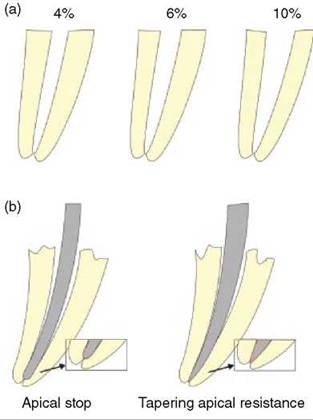
Figure 10.10 (a) Differing degrees of canal taper, but how much is sufficient? (b) Apical stop and tapering resistance form.
Wall contact: Mechanical instrumentation undoubtedly plays a part in cleaning canal walls during pulpectomy, and it is also necessary for the development of taper and apical resistance form.
It is, however, fallacious to imagine that reaming and filing instruments will evenly contact all root canal walls, particularly those of wide, oval, ribbon-shaped, or irregular cross-section [91, 133]. Even with efforts to guide them into canal irregularities, instruments cannot be controlled as they work around canal curvatures and many areas of canal wall will remain untouched. Instruments will equally not enter complex secondary anatomy, including lateral canals, webs, fins and isthmuses or areas of internal resorption. This may present limitations on the capacity of instruments to remove cellular debris in the case of pulpectomy and necrotic material/microbial biofilms and contaminated dentin in the case of on-vital cases. Irrigating solutions with antimicrobial and soft tissue dissolving properties are therefore necessary to compensate for the limitations of instrumentation.
10.5.1 Instrument Motion
Shaping instruments should be advanced into root canals in a manner that will optimize their cutting efficiency, while minimizing risks of tooth or instrument damage. Specific instrument motions are often recommended by manufacturers on the basis of instrument design (see section 10.5.2). During initial canal negotiation, small hand instruments are usually advanced with gentle reciprocating or watch-winding motions between index finger and thumb (Figure 10.11). This may be punctuated by short periods of low-amplitude up-down filing motions to open the coronal portion of the canal and allow instruments to advance more freely. Further canal enlargement with hand instruments may then continue with watch-winding and outward, rasping motions against canal walls. Balanced Force motion [98] is a development of watch-winding in which an instrument is first lightly engaged into the canal by gentle clockwise rotation. The instrument is then rotated anticlockwise with sufficient axial pressure to balance the force with which the instrument is seeking to reverse out of the canal. With the tip of the instrument engaged in dentin, stress builds within its shank until the canal walls are unable to restrain it, and dentin is cut, often with an audible and palpable click. The instrument is then advanced lightly clockwise once again to pick up dentin chippings before removal from the canal for cleaning and inspection. Balanced Force motion has proved to be safe and effective [19], though it is not the easiest method to conceptualize or master. Great tactile sense is needed to gauge the degree of rotation and the axial force that can be safely applied. This varies greatly for instruments of different sizes and for instruments manufactured from stainless steel and nickel titanium.
Hand pieces such as the Giromatic, Endocursor, Endolift, and M4 [38, 60, 61] delivered reciprocating file movements anal- ogous to watch-winding, with equal clock- wise/anticlockwise rotation (60° clockwise/ anticlockwise in the case of EndoCursor).
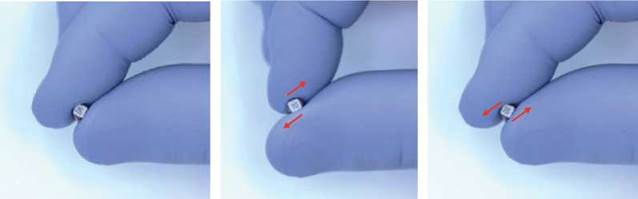
Figure 10.11 Manual, reciprocating, or watch-winding motions for initial canal negotiation with small, precurved stainless steel files.
Since the introduction of nickel titanium (see section 10.5.2), most instruments have been driven in continuous clockwise rotation. Instruments rotating clockwise have a tendency to engage walls and screw into the canal, risking damage to the instrument and the tooth. The application of engine-driven instruments to root canals is defined by the engineering terms speed and feed. Speed refers to the speed of instrument rotation and is specific to the instrument system (e.g. 300 rpm for ProTaper Universal; 600 rpm for BioRaCe, 800 rpm for XPEndo Shaper). Feed refers to manner in which the instrument advances into the canal. For many systems, this is a so-called pecking motion, applying momentary episodes of light axial pressure to advance the instrument by cutting the canal walls. Pecks are typically limited to 3 or 4 before removing the instrument for cleaning and inspection and to irrigate the canal. An alternative method is brushing, where the rotating instrument is inserted into the canal and dragged or brushed outwards against the walls. By flaring the canal in this way, space is created for the instrument to enter more deeply on its next insertion. This method of feed is less likely to engage canal walls and allow instruments to screw in, but may sacrifice greater amounts of tooth tissue. Interest has re-emerged in reciprocation, but with motors that deliver unequal clockwise/anticlockwise motion. The net result is full instrument rotation, but punctuated by short periods of reversal which reduce the risk of screwing in. Reciprocating instruments are also less likely to fracture than those in con- tinuous rotation [88], and may be fed into the canal with pecking or brushing motions.
10.5.2 Shaping Instruments
Root canals are generally enlarged with instruments manufactured from stainless steel or nickel-titanium (NiTi) alloys, while other areas are cleaned by the mechanical and chemical actions of irrigants and medicaments.
Stainless Steel
Stainless steel engine reamers and ISO specification hand files are not ideal tools for the optimal shaping and cleaning of root canals, especially those with any degree of curvature (Figure 10.12).
Mechanically-driven Gates-Glidden drills and Peezo reamers have been routinely used to enlarge the straight coronal portions of root canals. But they are aggressive and inflexible, and may rapidly work harden and fracture if flexed or driven into canal curvatures.
Stainless steel instruments become less flexible as their diameter increases, and their stiffness may cause transportation errors, even in the most expert hands. Up-down filing motions with stainless steel instruments have a special propensity to transport, while rotational watch-winding and Balanced
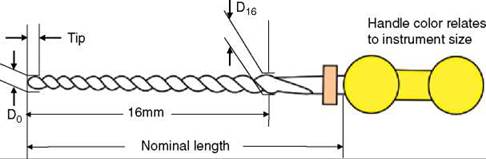
Figure 10.12 Schematic representation of an ISO endodontic hand instrument. D0 denotes the instrument diameter close to the tip. This determines the nominal size of the instrument: size 10, D0 = 0.01mm; size 30, D0 = 0.03mm. All have a 16 mm bladed region, with a taper from D0 to D16 of 0.02mm/mm or 2%. Thus a size 20 instrument is 0.52 mm in diameter at D16. Nominal length denotes the overall length of the instrument, typically 21, 25 or 31 mm. Handle color relates to instrument size: yellow = 20 or 50; red = 25 or 55.
Force motions are considered safer [98] (see section 10.5.1). Reports indicate that stainless steel files of size 25 and greater will transport curved canals and for this reason, it is common to limit apical preparations with stainless steel instruments to around size 25 or 30 in the curved canals of molars [75]. Paradoxically, classic morphometric studies on the apical dimensions of root canals [47] may suggest that this would leave many vital pulps incompletely resected and many root canals under-enlarged for optimal cleaning, especially if prepared short of the canal terminus. Some of this may be compensated by the lengthy preparation times required for stainless steel instrumentation and the extended periods of time during which canals are bathed with tissue-dissolving NaOCl solution.
Nickel-titanium
Most dentists are now well acquainted with the benefits of NiTi instrumentation. The rapid evolution of NiTi shaping instruments and engine-driven systems has been driven both by clinical need and by the commercial interests of manufacturers. All stakeholders, whether patients, dentists or commercial companies, have an interest in efficient systems that will quickly and safely shape canals without undue risk of instrument fracture or damaging teeth. Files are often packaged in systems with size-matched paper points for drying and gutta-percha points for filling. The pace of change in this field makes it nec- essary to seek up-to-date information from sources including current scientific literature and the web sites of leading manufacturers.
The following is a brief summary of NiTi alloys, instrument design, and key milestones in their evolution. This will allow future developments to be placed in context.
10.5.3 Fundamentals of NiTi Alloys
The unusual properties of equiatomic nickel- titanium alloys were observed by Beuhler at the US Naval Ordinance Laboratory in the 1960s [18]. Challenges in the processing and manufacture of objects from these alloys limited their use in endodontics until 1988 when Walia described the first NiTi root canal file [130]. NiTi alloys are stronger (higher compressive and tensile strength) and less stiff (greater flexibility, lower modulus of elasticity) than stainless steel alloys [139]. This means that NiTi instruments can be used to negotiate and enlarge curved canals with less risk of transportation than stainless steel instruments of equivalent size. Above room temperature, the metal alloy generally adopts an austenitic or “parent” crystal structure (Figure 10.13a) [125]. Endodontic instruments are usually manufactured to be straight in this austenitic form. The application of stress by bending or twisting NiTi instruments changes their metal structure by a process of stress-induced martensitic trans- formation (Figure 10.13b). In this state, they are able to absorb considerable energy with out permanent deformation and spring back to their original, straight, austenitic form when stress is released (Figure 10.13b-a). This super-elastic behavior is observed when NiTi instruments emerge from curved root canals straight and with regular cutting flutes after episodes of shaping activity. For this reason, it is difficult to pre-curve NiTi instruments before use, and pre-curved stainless steel instruments are often necessary for initial scouting and bypassing ledges. Unlike NiTi, bending of stainless steel alloys results in permanent slippage of the metal grain structure and any attempt to straighten a bent stainless steel instrument runs the risk of work hardening and fracture.
NiTi instruments are not, however, indestructible. Excessive stress may cause perma- nent deformation of the metal structure, which does not spring back fully when forces are removed. The clinical manifestation is an instrument that emerges from the canal bent or with irregular cutting flutes. Some, if not all, of this may be restored by heating NiTi instruments above a threshold temperature in a process of reverse transformation (Figure 10.13c). This is an example of shape memory, as the distorted instrument “remembers” and returns to parent austenitic state (Figure 10.13a). Such restoration may be claimed by manufacturers to allow the safere-use of NiTi instruments. What the user does not know is whether cracks or other unrestorable changes have occurred within the crystalline framework of the metal, and if the instrument will fracture on its next use. It is probably wise, if economically possible, to regard endodontic shaping instruments as single use [46] and certainly to discard them at the first signs of distortion.
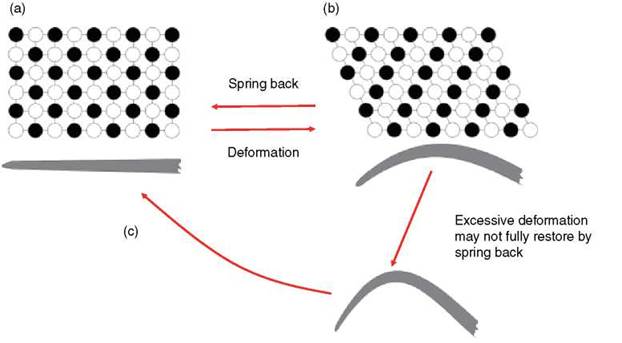
Figure 10.13 Schematic representation of stress and temperature-induced phase changes in NiTi alloys. (a) Non-deformed NiTi file in its parent, austenitic form. (b) Flexion of the instrument results in stress-induced martensitic transformation to detwinned, deformed martensite. Provided instrument deformation is not excessive, the release of stress allows springback to the parent austenitic form; an illustration of super-elastic behavior. Excessive deformation may not fully restore by springback. (c) The application of heat above a threshold temperature may allow partial or complete restoration of the alloy to its parent austenitic form by reverse transformation; an illustration of shape memory. (Adapted from Thomson 2000.)
The phenomenon of shape memory has been utilized more recently to produce instruments of radically different designs and behaviors. Shaping tools have been produced that are straight when chilled in cool water or with a pulp-testing refrigerant, but which adopt innovative helical or other forms when warmed to body temperature and adopt their parent form (see section 10.5.5: Innovations since 2013).
As the understanding of these immensely complex alloys continues to grow, proprie- tary thermomechanical treatments have been developed to manipulate them into still more helpful forms. R-phase NiTi represents an intermediate stage between austenite and martensite, and in this form, instruments may be expected to exhibit greater flexibility and still greater cyclic fatigue resistance than conventional austenitic forms. M-Wire is another thermomechanically derived variant, containing both austenite and martensite at room and body temperature and with a concomitant increase in flexibility and fatigue resistance. Martensite/austenite hybrid alloys are also available with controlled memory, and are thus capable of pre-curving before clinical use, while once again restoring to parent state after heating [139]. This is a rapidly developing area, and detailed accounts of the latest technology will quickly date.
From a clinical perspective, the unique properties of NiTi alloys allow the manufacture of instruments with:
1) Increased flexibility: virtually eliminating the classic shaping errors of transportation, even with larger instrument sizes. This permits greater enlargement of canals apically, potentially improving vital tissue resection, canal debridement and deep irrigant exchange without the risk of apical transportation.
2) Reduced fracture risk: NiTi instruments are able to absorb considerably more energy than stainless steel files before they fracture. They are also far more resistant to fracture in cyclic fatigue than stainless steel alloys.
Despite these improvements, the risk of instrument fracture remains a concern. Risks may be minimized by following the manufacturer's instructions, receiving adequate training, using instruments patiently and gently, and learning to feel when instruments are failing to advance. Any instinct to push should be resisted. Many NiTi instruments have the propensity to screw into root canals and can reach a point where they are locked tightly into dentine. They may reach a locked position where they are incapable of further rotation and advance, while the motor continues to turn, risking torsional overload and fracture. This is the phenomenon of taper lock, and can be avoided by gentle, progressive work, and using a torque-controlled motor that stops turning or may even reverse when the instrument is not free to rotate. Work-hardening or cyclic fatigue is caused by repetitive cycles of stretching and compression at metal grain boundaries as instruments are rotated around curves, with the development of microcracks that propagate through the instrument and result in failure. Measures to control this include rotating the instrument at the correct speed, avoiding the use of mechanically-driven NiTi instruments in acutely curved canals where the degree of repetitive compression and stretching is excessive, keeping the instrument moving up and down in the canal to avoid the concentration of flexure cycles at one level on the instrument, and keeping the instrument rotating in the canal for the minimum time possible. The disposal of instruments after a single use is again helpful.
The concluding note is that current NiTi alloys have allowed unprecedented opportunities for the safe, rapid and predictable manual and mechanized shaping of curved root canals during endodontic treatment, including pulpectomy.
10.5.4 Fundamentals of Instrument Design
Contemporary NiTi instruments are manu- factured by a variety of sophisticated milling and twisting techniques and can be produced in an almost limitless range of sizes, tapers and cutting-flute designs. The quest for quicker, sharper, safer and more efficient instrument systems has resulted in a large succession of tools, each claiming to achieve their goals in a distinctively superior way than rivals. Figure 10.14 illustrates a selection of variously configured NiTi endodontic instruments, all designed to perform similar shaping and cleaning tasks.
Some features that have been the focus of innovation are described in the following paragraphs.
1) Tip shape: Almost all NiTi endodontic files are now manufactured with noncutting tips. Not only is the leading point rounded, but the transitional angle between the smooth head and bladed region are gently blended (Figure 10.15). These features reduce the risk of engaging and perforating canal walls and of canal transportation during shaping.
2) Taper: Because of their increased flexibility, NiTi instruments can be supplied with increased tapers of 6, 8, 10 or even 12% without significant risk of transpor- tation. Sometimes, instruments of greatly increased taper have relatively shorter bladed regions in order to avoid excessive dentin removal in the cervical third of the canal. Equally, some manufacturers have designed instruments with short cutting heads and no taper, while others have justified the benefits of making taper variable throughout the length of the instrument in an effort to limit the risks of instruments screwing into canals, engaging too much of the canal wall at any given time or removing excessive volumes of dentin.
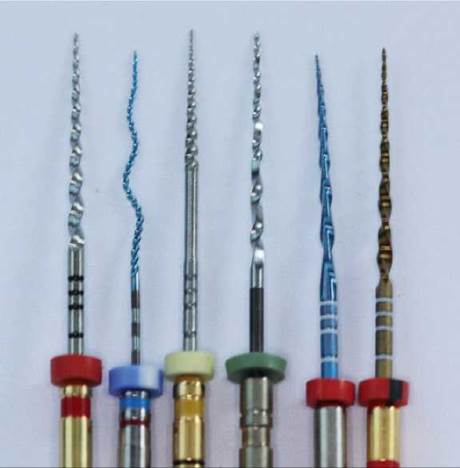
Figure 10.14 NiTi canal shaping instruments of varying design. All bring many benefits compared with stainless steel instruments. Which of their specific features have the greatest bearing on safety and performance remains uncertain.
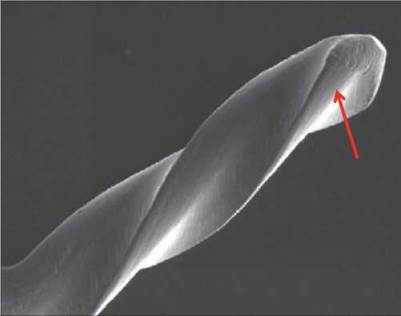
Figure 10.15 Instrument with non-cutting tip and smoothened transition angle between tip and bladed region (arrow) to minimize risks of transportation and canal wall damage (image courtesy of Paul Dummer).
3) Rake angle: This is the angle formed by the leading edge and the cross-sectional radius of the instrument as it rotates in the canal (Figure 10.16a). Many early instruments had negative or neutral rake angles to gently plane root canal walls, while others were more active and appar- ently aggressive, or - depending on your view - efficient, at dentin removal.
4) Helical angle: This is the angle formed between the blade and the long axis of the instrument (Figure 10.16b). When this is large, the blades of the instrument are close together, creating a greater density of cutting blades, but less space between them into which the cut chippings of dentin and other debris can gather. The space available between instrument blades into which debris may gather is termed the chip space (see 6 below). The relative benefits of the number of blades and space for material to be removed can be hotly debated. A constant helical angle throughout the length of an instrument can promote its tendency to screw into a canal, and this has prompted some manufacturers to vary the helical angle through- out the length of the instrument or at points along its bladed region.
5) Core diameter and flute depth: instruments milled with a narrow core of metal at their center are likely to be more flexible than comparable instruments with a thicker core (Figure 10.16c). A thin cen- tral core also allows the blades to be deeper, which may make them more efficient (aggressive) at cutting and less liable to clogging with cutting debris, provided they are regularly cleaned.
6) Cross-sectional chip space: Many file designs have emphasized the cross- sectional shape of the instrument, not only in terms of metal mass and flexibility, but again to emphasize the open space available for cutting debris to gather (Figure 10.16d). Instruments that provide little chip space may begin to cut efficiently, but as soon as their blades are clogged with debris, their action is compromised. This may impede the progress of instrumentation and even promote stress and instrument fracture. All instruments should be used for just a few sec- onds at a time before removing from the canal for cleaning of the blades and inspection for distortion. During this interval, the canal should be thoroughly irrigated to remove cutting debris and refresh tissue-dissolving and antimicrobial activity.
7) Surface treatment: The manufacture of most NiTi instruments involves milling shapes into sections of wire and leaves surface imperfections. These may become the focus of stress-concentration during use and predispose crack propagation and premature fracture. Strategies to improve the surface quality and consistency of endodontic instruments have included electro-polishing, and surface implantation with nitrogen ions. In a quite different approach, the manufacturer of at least one instrument system has roughened their surface by bead blasting to facilitate scrubbing of the root canal walls as they vibrate gently up and down.
The design features of instruments have complex interactions and cannot be consid- ered in isolation. A tool with a sharp, positive rake angle may, for example, be expected to cut efficiently, but if the cross-section allows little chip space, and the helical angle is unfavorable, performance may not be so efficient. This remains a highly active area for research and development.
10.5.5 The Evolution of NiTi Engine-driven Instrument Systems
The evolution of NiTi shaping instruments has seen shifts in focus to address emerging challenges. Several generations of instruments to 2013 have been succinctly summarized [37].
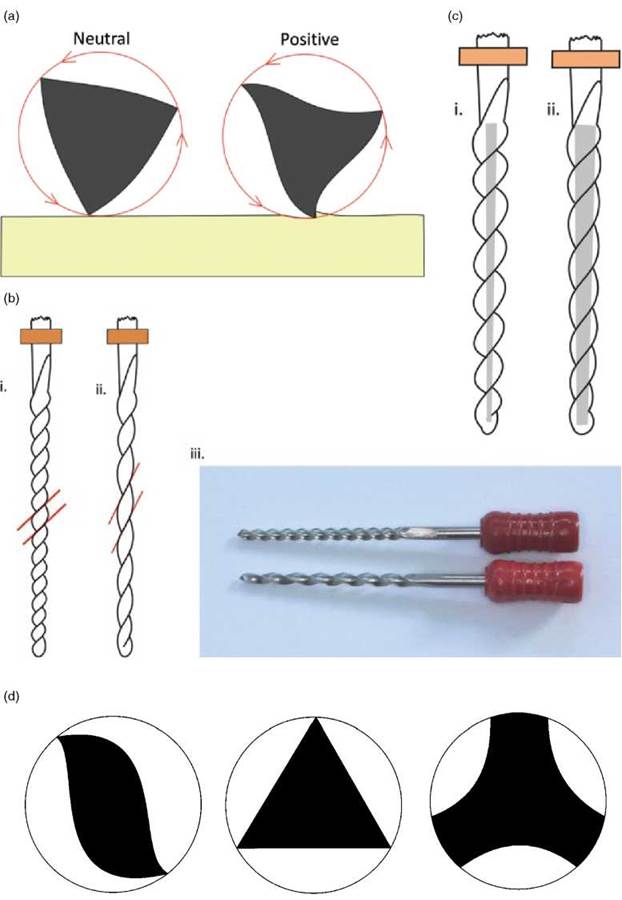
Figure 10.16 Design features of NiTi shaping instruments. (a) Rake angle influences the angle of engagement between instrument and dentin. Neutral angles plane the root canal surface. Positive angles cut more aggressively. (b) Helical angle: i) Shallow angle results in closely spaced blades, while steeper angle ii) results in greater spacing iii) The differing helical angles of traditional hand files (above) and reamers (below). (c) Core diameter: Instruments with a narrow central core of metal i) are more flexible than those with a thicker core ii) They also have deeper flutes and greater chip space and may therefore cut dentin more efficiently. (d) Chip space: the cross-sectional shape of an instrument may influence the amount of space available for cutting debris to accumulate.
First Generation: Increasing Taper and Radial Lands
Credit should be given to Drs John McSpadden in 1992 and Ben Johnson in 1994 for introducing mechanically-driven NiTi instruments to dentistry. The first were 2% taper and somewhat prone to fracture. These were rapidly followed by 4% and 6% tapered ProFiles and accompanying orifice shapers of even greater taper. In parallel, Dr Steve Buchanan was developing Greater Taper files of 6, 8, 10 and 12% taper, while Wildey and Senia were taking a different tack with their taperless Lightspeed instruments - a series of 22 instruments with small cutting heads reminiscent of Gates-Glidden drills, in sizes and half sizes from 20 to 140 [33].
A common feature of this first generation was a triple U-shaped cross-sectional design, creating three chip spaces, neutral or slightly negative rake angles for gentle plaining of root canal walls, and radial lands which were believed to keep instruments centered in the canal. All tapered instruments had a consistent taper throughout their length and constant helical angles.
Second Generation: Positive Rake Angles and Variable Taper and Helix
Key developments included positive rake angles for more active and efficient (aggressive) dentine removal while still avoiding transportation, smaller helical angles for more spaced cutting blades and a reduced tendency to screw into the canal. The ProTaper system incorporated variable tapers along the length of the shaping instruments to promote the enlargement of different parts of the canal by different instruments, and diminish the risk of instruments engaging along their entire length (taper lock). ProTaper Finisher instruments maintained fixed tapers for final apical enlargement. Other instruments including K3 and Quantec incorporated changes in their radial lands and chip-spaces in an effort to optimize the efficiency and safety of canal enlargement. BioRaCe instruments exhibited discontinuous helical angles to diminish screw-in effects. They were also electro-polished in an effort to smoothen out manufacturing imperfections. BioRaCe instruments were labeled as “bio” because the relatively large apical sizes and modest tapers of standard apical finishing instruments (size 35 and 40, 4% taper) were considered to fit the most common anatomy of teeth, while avoiding unnecessary tapering and tissue removal coronally.
Third Generation: Improvements in Metallurgy
The period from 2007 saw NiTi alloys under- going thermomechanical manipulation and endodontic instruments with even greater flexibility and fracture resistance. M-Wire, comprising 508 Nitinol which has been sub- ject to specific tensile stresses and temperatures [43], was the first, with early examples including Dentsply ProFile GT Series X, ProFile Vortex and Vortex Blue (the blueness created by oxides generated by the closely- guarded manufacturing process). In 2008, SybronEndo developed R-phase instruments by twisting rather than milling NiTi wires, with examples including K3XF and Twisted File. Controlled Memory Wire appeared in 2010, with HyFlex and Typhoon instruments as leading examples. These could be pre-curved before insertion into the canal, offered great flexibility, and could be restored to original shape by autoclaving - a benefit to those re-processing and re-using their instruments.
Fourth Generation: Reciprocation, Single-file and Single-use Instruments Until 2011, most mechanically-driven NiTi instruments were driven in constant clock- wise rotation. In 2008, experimentation revealed that a single ProTaper Finisher 2 file (size 25, 8% taper) could safely and efficiently shape many canals without the need for further instrumentation [134]. Out of this grew reciprocating file systems WaveOne and Reciproc, both manufactured from M-Wire, both involving the selection of a single instrument to shape the canal in question, and both being driven in clockwise/anticlockwise rotation - WaveOne 50° clockwise/170° anticlockwise; Reciproc 30° clockwise/150° anticlockwise. The net outcome is anticlockwise rotation, but punctuated by short reversals to diminish the tendency to screw in. The blades of both instruments are milled in the reverse direction to most endodontic instruments, so that the larger, anticlockwise element is the advancing, cutting motion. Additional innovations included the use of discontinuous tapers - greater in the apical 3 mm of the instruments and moderating towards the shank in order to minimize coronal third tissue loss. Thermally modified ver sions followed in the form of WaveOne Gold and Reciproc Blue, both offering greater flexibility, improved fracture resistance and the capacity to pre-curve.
Fifth Generation: Off-center Axis
This generation of instruments was characterized by an off-center axis of rotation, which results in a snaking or swaggering action of the instrument as it advances into the canal, reducing engagement and probably reducing stress on canal walls, creating more space for debris elimination, and reducing the tendency for instruments to screw in and lock. Key examples include ProTaper Next and Revo-S.
Innovations Since 2013: Exploiting Shape Memory to Create Less Aggressive Instruments
2016 saw the introduction of instruments that take advantage of thermally-induced shape-memory effects. Examples include the XPEndo file, which, despite its modest 1% taper when cold, adopts a helix with a taper of at least 4% when warmed. Running at a relatively high spin speed of 800 rpm, the instrument lightly contacts canal walls and is likely to induce less stress in root dentin than traditional tools that bore a path along the canal. Its relatively minimal mass may also theoretically result in better movement of irrigating solution and clearance of dentine chippings and other canal contents.
Other Designs and Areas of Use
Development continues along other innovative lines, including the Self-Adjusting File. Constructed by laser-cutting a fine mesh- work into a NiTi tube, instruments are bead- blasted for surface roughness and are driven in low-amplitude up-down vibration with a constant sodium hypochlorite feed. Their unusual design, analogous to stents for expanding narrowed coronary arteries, allows them to expand into irregular spaces, and to lightly remove debris and dentine from greater areas of the canal wall than traditional rotating tools.
Alongside advances in instrument systems for canal shaping, modestly tapered, engine- driven NiTi instruments have become estab- lished for safe and effective glide path development [13], and may reduce the stresses on subsequent shaping tools [12].
Many of the well-established frustrations, risks, and inefficiencies associated with stainless steel shaping instruments appear to have been addressed by NiTi systems. Yet innovation invariably raises further questions, and the advent of single-instrument shaping systems has led to new questions and concerns. It is conceivable that many single-instrument approaches result in excessive stress on root canal walls and increase the risk of developing microcracks [89] that may propagate with time into longitudinal root fractures. It remains to be determined whether this risk is real and if so to what extent in influences the outcome of treatment.
It has also been argued that single-instrument systems in rotary, especially reciprocating, systems may increase the risk of apical extrusion of excessive amounts of cutting debris [126].
The answers to these questions remain unresolved, but highlight the need for continued investigation, and for clinical vigilance.
In concluding this rather technologically- focused discussion, it is important to regain the biological perspective. The benefits of NiTi instrumentation have empowered clinicians who can now safely and quickly shape curved root canals that were until recently very difficult or impossible to treat. Many of the challenges caused by instrument straight- ening have been overcome, but issues of instrument fracture, weakening and stressing of teeth and the extrusion of debris require further research. Their impact on long-term pulpectomy outcomes is incompletely under- stood. It is still not known what degree of canal enlargement, both apically, and in terms of taper, is optimal for clinical success, and the limitations of mechanical shaping must still be managed by effective irrigation. The focus of this chapter is on pulpectomy, and it is not known which, if any, instrument system results in a better, more complete, or less traumatic apical pulp resection or in cleaner and better-shaped canals. The variations in technique associated with the many different instrumentation systems make it imperative that clinicians gain training and experience of any given system they choose to use, not least in order to understand the limitations of their mechanical efforts in addressing clinical endodontic problems.
10.5.6 Principles of Canal Shaping
In young vital cases, pulp tissue may preferably be extirpated with a barbed broach before shaping the canal. In the case of older, fibrotic pulps, negotiation with the help of an EDTA gel lubricant may allow instruments to glide through pulp tissue, rather than compact it apically and create a troublesome apical blockage. The tell-tale sign is an obstruction that feels “springy”, “rubbery', or “spongy”, resisting the passage of small instruments, and requiring considerable work, sodium hypochlorite irrigation, and ultrasound to disrupt and bypass.
Most manufacturers provide detailed guidelines for the optimal use of their instruments in uncomplicated cases. Enlargement generally follows a pattern of:
1) Scouting into the coronal thirds of canals with small stainless steel hand instruments or engine-driven NiTi pathfinders.
2) Flaring the coronal 1/2-2/3 of the canal.
3) Determining working length by electronic and/or radiographic means.
4) Flaring the apical 1/3-1/2 of the canal.
5) Gauging apical root canal diameter and finishing the apical region as required.
Instrumentation should be accompanied by frequent, deep irrigation to flush away cutting debris, lubricate file movement, kill microor- ganisms, and dissolve organic matter.
In canals that are already wide, it may be unnecessary to undertake much, if any, mechanical enlargement, and instrumentation may be limited to developing appropriate apical resistance form to prevent over-extension of the root filling. In this case, the canal is cleaned predominantly by the mechanical and chemical effects of irrigants rather than instruments.
10.6 Canal Irrigation and Medication
10.6.1 Irrigant Delivery and Exchange
Instrumentation creates significant cutting debris, in the form of dentine chippings, remnants of pulp tissue and often microor- ganisms. At the very least, irrigation is necessary to flush away the cutting debris that would otherwise result in canal obstruction and loss of working length. As an aid to instrumentation, it will lubricate and prevent clogging of cutting flutes that would compromise shaping efficiency and increase the risk of instrument fracture. Flushing efficiency is influenced by the depth of irrigant delivery and by fluid dynamics within the canal. Delivery is usually through a narrow needle with a Luer Lock connection to a small (3-10 mL) syringe. The needle is extended as close to the canal terminus as possible without binding against the canal walls or over-extending. Needles of 30 gauge (0.25 mm diameter; ISO size 25) are often considered optimal, though many still opt for wider needles of 27 gauge (0.36 mm diameter; approximately ISO size 35) or greater, probably to minimize the risk of over-extension during the use of sodium hypochlorite solutions [36]. Irrigating solutions adopt characteristic flow patterns, depending on the design of the needle tip and the position, shape, and orientation of the opening [104]. Generally, needles with closed ends and side vents are regarded as optimal to balance effective flushing with safety. One consistent observation is that even with open-ended needles, irrigating solutions do not exchange more than 2-3 mm beyond the needle tip [2], and simple flushing with a needle and syringe cannot be relied upon to effectively flush debris from the full length of canals, especially when deep penetration is compromised by curvature or narrowing [15]. It is also recognized that the chemical actions of irrigating solutions are optimized by frequent refreshing of solution against the canal walls.
For these reasons, interest has developed in “activated” irrigation, where mechanical energy is applied to encourage deep, high volume exchange of irrigating solutions, but without increasing the risk of extrusion into the periapical tissues [4]. Approaches have included manual agitation, mechanical brushing actions, sonic and ultrasonic vibration, laser irradiation and negative-pressure suction.
Manual Activation
Manual dynamic activation' describes the low-amplitude pumping of a gutta-percha cone up and down in an irrigant-filled canal, typically at a frequency of 2 Hz (approximately 100 strokes per minute). Extending close to working length, the moving gutta- percha cone is believed to exchange irrigant in the apical third of the canal where the needle may not penetrate. Its rhythmic action generates rapid fluid movement along the canal walls as the film thickness is repeatedly reduced and expanded by the advance and withdrawal of a tapered cone [42]. The same phenomenon may be created, to a lesser degree, by the insertion and removal of shaping instruments.
Mechanical Brushing
Canal brush is a tapered plastic instrument which is advanced to canal length in a slow- speed hand piece, scrubbing canal walls and creating turbulence and exchange in the irrigant solution [45]. In the same way, small “bottle brushes” of the sort employed for interdental plaque control may be applied in particularly wide canals.
Thermally-induced shape memory effects (see Section 10.5.4) allow taperless NiTi instruments (eg: XPEndo Finisher) to adopt a helical form at mouth temperature and create both turbulence in irrigating solutions, and repeated light contact with irregular canal walls as they are advanced and with- drawn while rotating at speeds of 600-1000 rpm. In vitro investigations suggest some promise, particularly in apical canal debridement and the management of internal resorption [7, 50].
Sonic and Ultrasonic Vibration
Sonic vibratory methods include vibrating syringe systems [100] that create turbulence during canal flushing, and devices including the “Endo Activator” [63] that agitate the irrigant at sonic frequency (<10,000 Hz) with a non-damaging plastic tip (Figure 10.17).
Ultrasonic activation (20-45 kHz) is well- established [66], delivering energy to create complex acoustic microstreaming patterns within irrigating solutions, with rapid fluid flow and whirlpool effects that are believed to promote deep cleaning. Additional benefits include warming the solution, which may promote tissue dissolution and antimicrobial effects, and occasional reports of cavitation [62] that may tear deposits from canal walls as bubbles in the solution implode. This was for some time described as passive ultrasonic irrigation (PUI), with a typical recommendation to flood canals after shaping was com- plete and activate the irrigant for 20 seconds with an ultrasonically-activated size 15 file before refreshing the solution and repeating twice more [127]. The process was described as passive because it was assumed that ultrasonically-activated files could be held within the irrigating solution and prevented from making canal wall contact. It has since become clear that activated instruments make frequent and sometimes damaging contact with canal walls [16]. It is also recog- nized that wall contact dampens vibration and diminishes the beneficial effects of activation. This process is now described simply as ultrasonically-activated irrigation, and fears about the potential damage caused to canal walls by ultrasonically-activated metal instruments has promoted interest in plastic alternatives.
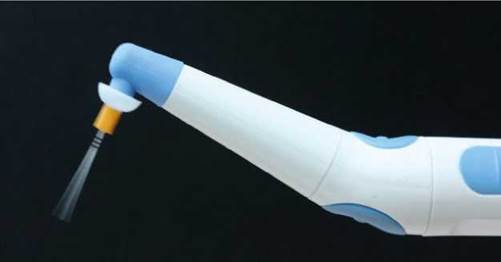
Figure 10.17 Endo activator for the sonic activation of irrigants with a vibrating plastic tip.
Laser Activation
Photon-induced photoacoustic streaming (PIPS) represents a further approach to irri- gant activation [53]. Here the canal system is flooded with irrigant, before applying an E:YAG laser through a specially designed tip that reaches only into the pulp chamber. Activation of the laser results in photoacoustic shock waves that are believed to transmit through the entire pulp system, disrupting debris, smear layer, and biofilm. The principle appears exciting, yet the hardware costs are considerable.
Negative Pressure Irrigation
Negative pressure approaches involve the placement of narrow suction catheters, first in the coronal 2/3 of the canal, and then in the apical third, while constantly feeding irrigant into the pulp chamber (Figure 10.18). Here, the solution moves rapidly as it is drawn into the canal, producing shearing forces that are expected to enhance wall cleanliness [108] and penetrate anatomical complexities, yet without the risk of apical extrusion that always accompanies positive pressure methods [68]. A variation on this theme is GentleWave, which combines negative pressure technology with multiple- frequency sonic activation [69]. Early reports show considerable promise, with high levels of clinical success at 6 months [105].
The current focus on activated irrigation, and the burgeoning technology for its delivery seems rational from a biological and therapeutic standpoint. Many laboratory studies can evidence improved dislodgement of debris, tissue dissolution and antimicrobial actions from irrigant activation, yet this has not currently translated into demonstrably improved clinical outcomes, either for necrotic/infected cases or after pulpectomy [55]. Clinical trials that are able to control for single variables such as irrigant activation may not be forthcoming, and practitioners should diligently apply methods that they believe will optimize cleanliness, without doing harm, whether canals are heavily infected or not.
Although canals should be constantly flushed with irrigant throughout instrumentation, their deepest elements and lateral complexities are most effectively flushed only after shaping is complete. In pulpectomy cases, it may be tempting to dismiss the need for post-instrumentation irrigation, since the canals are unlikely to be heavily infected. Yet the removal of cutting debris and pulp remnants from uninstrumented regions of the canal system suggest that a period of activated irrigation may be wise before preparing to fill. To emphasize this sequence of events, and the benefits of post- instrumentation cleaning, the term “shaping and cleaning” may be more helpful than “cleaning and shaping” for both infected and uninfected cases.
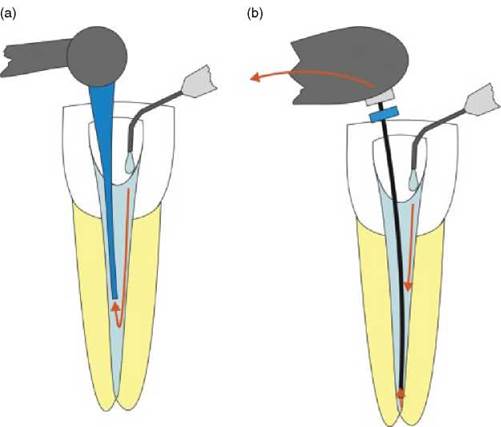
Figure 10.18 Schematic representation of EndoVac, negative pressure irrigation. (a) Irrigation to mid-root, with solution flowing into the pulp chamber and suctioned away through a plastic cannula extended to mid-root. (b) Apical fluid exchange following the extension of a metal micro-cannula to the canal terminus.
10.6.2 Solutions for Debris and Soft Tissue Removal
In pulpectomy, the focus is on asepsis, keeping the apical pulp stump alive and dissolving organic matter within canal ramifications. This contrasts with necrotic/infected cases, where the focus is on disrupting and eliminating established biofilms and large masses of necrotic tissue. Fortunately, many irrigating solutions have properties that make them suitable in both situations.
Sodium Hypochlorite
Evidence dating back 100 years to Dakin sug- gests that dilute (0.5%) NaOCl solutions are effective for cleaning wounds and preserving the health of vital tissues [57]. This observation is echoed in pulpotomy and pulp-cap- ping wounds, which have been managed effectively, at least in the short term, with strong (5%) NaOCl solutions [14], and it may be reasonable to regard pulpectomy as the creation of a (very) deep pulpotomy wound.
NaOCl is unusual among irrigating solutions with its combination of hemostatic/tissue-dissolving effects and antimicrobial actions stemming both from cell disruption and lysis of polymers within the biofilm matrix [121]. In addition to dissolving pulp debris, NaOCl will remove variable quantities of poorly mineralized predentin from the surfaces that it contacts (Figure 10.19). The optimal concentration for use in pulpectomy is not established and its effectiveness in key roles will be influenced not only by concentration but temperature, volume applied, depth of exchange, nature of activation and time [107]. It may be rationalized by some that less concentrated solutions of 0.5-2% may achieve their goals with good activation and time, yet others prefer more concentrated solutions (3-5%) for all of their cases whether infected or not. Strong solutions, particularly if heated, may increase the risks of damaging dentin by deproteination [120, 138].
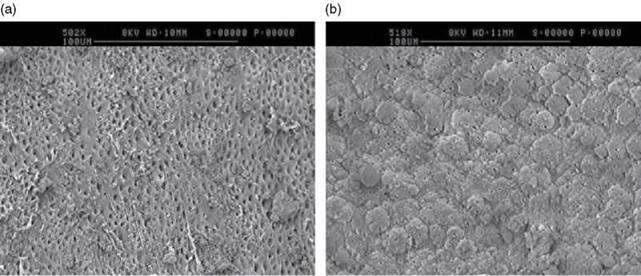
Figure 10.19 (a) Canal wall covered by predentin and small amounts of tissue debris. (b) Exposure to 5% NaOCl for 10 minutes removes cellular debris and predentin and exposes calcospherites of fully mineralized dentin on canal walls.
NaOCl, usually at 0.5-3% concentration, remains the gold standard agent for irrigation in pulpectomy cases.
Chlorhexidine
Chlorhexidine (0.5 to 2%), displays broad- spectrum antimicrobial activity, and may be expected to be well tolerated by the apical pulp stump, but has none of the tissue-dis- solving and hemostatic effects that may be important in pulpectomy. Chlorhexidine may be a legitimate alternative to NaOCl, but is generally regarded as a second choice to NaOCl. The combination of NaOCl and chlorhexidine results in an immediate, sticky precipitate of chloroaniline, which may not only cause blockages, but be toxic to vital tissues [11].
Alternative agents, including iodine potassium iodide and benzalkonium chloride are of particular interest for canal disinfection and there can be few indications for their use in pulpectomy.
10.6.3 Agents for Smear Layer Removal
Shaping instruments leave a smear layer on surfaces they touch. Some have argued that this should be removed, especially in infected cases, where the access of NaOCl to microor- ganisms residing in dentinal tubules may be compromised, and where there may be fears that the seal provided by the root filling against biofilm and debris-smeared walls may be compromised. Others have con- cluded that the impact of smear layer on clinical outcomes remains uncertain [129]. Common solutions for the removal of smear layer include EDTA (typically 17%) and citric acid (typically 5%) and their effectiveness in this role is recognized. Concerns have, how- ever, been expressed about the potential of such agents, especially if applied warm or in higher concentrations, to demineralize and etch dentine. Their alternating use with strong NaOCl solutions has been a particular concern, creating repeated cycles of demineralization and de-proteination and the potential for chemical damage to dentine. Combining NaOCl with EDTA also diminishes the antimicrobial activities of NaOCl. A recent alternative incorporates the reportedly gentle chelating actions of etidridic acid [86] or (1-hydroxyethylidene) bisphosphonic acid (HEDP) which is mixed with NaOCl without disrupting its properties to form a “dual rinse” solution.
Combination products such as the antibiotic-containing MTAD (Mixture of Tetracycline isomer, Acid and Detergent) and related Tetraclean are claimed to com- bine antimicrobial activity with gentle smear removal later. Yet the use of broad-spectrum antibiotics as topical agents against biofilm infections seems ill-advised as a global crisis of antibiotic resistance unfolds. It is particularly difficult to identify a role for such agents in minimally infected or uninfected pulpectomy cases. QMix is an alternative product, combining EDTA with chlorhexidine and a detergent to enhance canal wall wettability and tubular penetration. Much of its evaluation has focused antimicrobial activity [114] and the specific benefits of QMix in pulpectomy are unclear.
Hard scientific evidence is once again not available on the optimal irrigating solution for use during pulpectomy. To date, NaOCl solutions are probably the best evidenced.
10.6.4 Intracanal Medicaments
Discussion around the merits of single or multiple-visit endodontic treatment apply usually to necrotic/infected cases [64], and even here the case in support of multiplevisit treatment is not strong. For vital cases, there is general consensus that wherever possible, treatment should be completed in a single visit, primarily to safeguard asepsis [32].
Treatment of vital cases over more than one visit may be indicated if the patient is unable to tolerate further time in the chair, if there is insufficient time available for the dentist to complete treatment to the requisite standard, or if the canal continues to fill with blood and cannot be dried.
The standard inter-appointment medication is a soft slurry of calcium hydroxide in an aqueous or sodium hypochlorite vehicle [136] which will help to eliminate further organic matter from the canal and promote hemostasis, while acting kindly to the pulp stump. Calcium hydroxide may also disinfect and help to preserve canal asepsis until the canals can be filled.
The use of non-setting calcium hydroxide may be of particular value during pulpectomy for internal resorption, where the medicament may play a valuable role in cleaning tissue remnants from large regions of the canal that will be untouched by instruments.
In some countries, the application of ster- oid/antibiotic pastes is popular, with the supposed benefits of anti-inflammatory and antimicrobial activity. The value of such materials in pulpectomy, either in terms of postoperative pain control or wound healing, cannot be evidenced from the literature, and the topical application of broad-spectrum antibiotics is probably an unwise stewardship of a precious and diminishing resource when antimicrobial resistance is growing.
What is critical in such cases in the provision of a tight coronal seal, protecting canal entrances with a soft and easily-retrieved material such as Cavit Grey, or with a small increment of sterile cotton wool, foam sponge, or ball of polytetrafluoroethylene (PTFE) tape [102] before sealing with at least 3 mm thickness of well-adapted cement.
10.7 Preserving the Aseptic Environment: Root Canal Filling and Coronal Restoration
Kakehashi showed that mechanically injured and exposed pulp tissues were able to reorganize themselves and remain healthy, pro- vided their environment was microbe-free [44]. Similar observations have been made after traumatic pulp exposure and pulpotomy, and in numerous studies on the effects of dental materials on the pulp [9]. The positive impact of a microbe-free environment on periapical health after endodontic treatment has also been observed in classic literature [109]. Extrapolating from this, the root canal filling and coronal restoration should at the very least provide a microbe-free environment to promote the health of the apical pulp wound and hence the periapical tissues. Whether the root canal filling material that makes direct contact with the apical soft tissue wound must have any special “bioactive” properties is less certain. It may seem logical to speculate that materials based on calcium hydroxide and particularly hydraulic calcium silicate cements may have special properties to promote health in the apical pulp stump as they do in aseptically managed pulp wounds elsewhere. Yet the favorable treatment outcomes observed for pulpectomy procedures where the canals were filled with gutta-percha and a chemically diverse array of sealer cements suggests that clinical success may rely more heavily on the exclusion of infection rather than the active induction of biological healing processes. It follows from the principles of asepsis that all materials and instruments for root canal filling must be applied in a sterile or effectively disinfected condition.
A no-touch policy should be adopted, and it may be wise to soak gutta-percha points in 2% chlorhexidine for at least a minute before insertion in the canal [115]. Other items, including mixing pads, mixing spatulas, and foam sponges for instrument storage may be further sources of contamination. Quite how much the recognized and profound antimicrobial properties of most freshly-mixed root canal sealer cements [101] have on such low- level contamination is not known, though once again, small acts to preserve asepsis may cumulatively favor treatment success.
10.7.1 Preparing to Fill
After shaping and cleaning, it should be con- firmed that the canal is free from significant exudate from the apical pulp wound and can be dried. The incorporation of blood or tissue fluid within a root filling is not consistent with optimal sealing, and filling should be postponed to a later date, after further canal irrigation and medication. Canals are usually dried with absorbent paper points and care should be taken not to penetrate the apical pulp stump and provoke unwanted bleeding.
10.7.2 Master Cone Selection and Fit
Master cone fit is an essential first step in most root canal filling techniques. Guttapercha remains the commonest filling material, with contemporary variants including points containing “bioceramic” particles for use with calcium silicate sealer cements. Alternative materials based on polycaprolactone (eg: Real Seal, Sybron) have gained some popularity amid claims of better-sealing and root-strengthening, bonded root canal fillings. The theory may, however, be simpler than the reality of optimally etching, priming and bonding to dentine walls deep in the canal system [122]. This type of product may also be susceptible to enzymatic breakdown and alkaline hydrolysis by contaminating microbes [123, 124]. The unfavorable ratio of bound and unbound surfaces (configuration, or “c” factor) in such a deep and narrow cavity as a root canal also promotes pulling away of materials from canal walls as they undergo polymerization shrinkage [135].
Another innovation is C point, a product constructed from similar materials to soft contact lenses, and which expands laterally in the presence of an aqueous-based root canal sealer to provide a seal [25].
Many of the tapered NiTi instrument systems come with matched master cones, and the expectation that in many circumstances, the canal space can be filled with a single cone and sealer. In complex and ribbon-shaped canals, this may be fanciful (Figure 10.20). ISO master cones are also available for those who finish their apical preparations with ISO instruments, and these modestly tapered master cones provide the apical seal before filling the remainder of canal space, often by cold lateral condensation with an appropriate sealer cement.
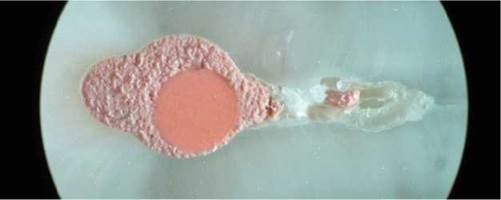
Figure 10.20 Irregularly shaped canal system incompletely instrumented, incompletely debrided and incompletely filled with a single gutta-percha cone and sealer.
Master cones may be trimmed with a sharp scalpel to provide apical tug-back, which is believed to demonstrate snugness of fit at full working length or 0.5 mm short if the cone is to be compacted.
10.7.3 Choice of Sealer Cement
Gutta-percha cannot be relied upon to seal canals without the help of a sealer cement, and the same is true for all other core filling materials currently available. Despite their critical role, sealer cements have traditionally been regarded as the vulnerable element of the root canal filling, with the potential for air entrapment and voids, shrinkage during setting and instability/solubility, particularly when used in large volume. This, added to concerns about length control and retrievability in the case of retreatment or post-space preparation, has discouraged the use of cement-only and cement-heavy root canal fillings.
Decisions on the choice of sealer cement may be influenced by a range of factors, some of which can be reasonably evidenced from scientific literature and others which may be related to convenience and local practice.
Much research on sealer cements during the last 30 years has focused on dye leakage and fluid filtration methods to determine the sealing potential of root filling materials and methods. The lack of correlation between such studies and clinical outcomes [84, 117] and their subsequent restriction from main- stream endodontic research-intensive jour- nals [24, 26] has largely eliminated this method of evaluation and comparison in recent times. The thrust of current root canal filling research remains largely laboratory-based, with evaluations of the biocompatibility of materials in contact with cultured tissues, antimicrobial properties, bond strength to dentin, ability to wet dentin and capacity for tubular penetration. These are all potential proxy markers for clinical performance, with few if any in vivo studies of sufficient scale to control for the impact of individual sealer cements on clinical outcomes in pulpectomy. It should also be recognized that parameters such as bond strength do not necessarily correlate with sealing effectiveness.
The desirable properties of a root canal sealer cement relate to:
1) Antimicrobial properties, to kill or imprison residual microorganisms [116] and prevent canal infection in the long-term.
2) Sealing ability, to prevent the entry of microorganisms and nutrient fluids into the canal system, and the exit of biologically significant materials such as microbial endotoxin into the periradicular tissues. Cements should be inert and insoluble within the canal system. Their seal should not be compromised in the long term by adverse interactions with core root canal filling materials and coronal restorative materials.
3) Interactions with host tissues, including adequate flow into anatomical complexities, wetting and adaptation against canal walls, biocompatibility on contact with apical soft tissues, and the absence of unsightly staining to hard and soft tissues.
4) Handling properties, to ensure ease of mixing and application, adequate working and setting time, and sufficient radiopacity to judge the extent and quality of fill.
Economics will also be a significant consid- eration for material selection, unless the properties of an individual material make it stand out significantly from alternatives.
A detailed appraisal of all of these parame- ters for all classes of root canal sealer cements, and an attempt to balance their relative importance in pulpectomy is not realistic. When used in combination with established gutta-percha compaction techniques, there is currently no convincing clinical evidence that superior pulpectomy outcomes will be achieved with zinc oxide- eugenol, epoxy resin, calcium hydroxide, polyvinylsiloxane, glass ionomer, meth- acrylate resin, or calcium silicate sealer cements. When the sealer cement may exert a systematic effect on the clinical prognosis, it appears to be small and quickly overridden by other biological and technical factors associated with a complex intervention such as endodontic treatment [85]. What is critical is preserving a sterile apical pulp wound and avoiding large-scale extrusion into the periapical tissues. For this reason, techniques that are more prone to drive larger volumes of gutta-percha or sealer into the apical pulp stump or beyond, such as thermoplastic and carrier-based methods [90], may seem less desirable in pulpectomy [54, 96]. Yet there is some evidence that vital apical stumps of pulp tissue may provide greater resistance to material extrusion than necrotic/infected tissues, and certainly the demonstration of fine anatomical complexity is less likely after pulpectomy [97]. Care should always be taken to avoid the damaging over-extension of endodontic materials into adjacent structures including the inferior alveolar nerve [92] and maxillary sinus [39].
10.7.4 Condensation
Despite growing interest in systems-based endodontics and the potential of single matched-cone cementation with an appro- priate sealer, concerns about filling the canal space in its totality encourages the use of compaction techniques to optimize the density of gutta-percha and drive sealer cement into as many ramifications as possible.
Cold lateral condensation remains popular and widely taught, requiring no expensive equipment and enjoying a reputation for clinical effectiveness [52]. Cold lateral con- densation is a generic term that embraces a variety of approaches, including the use of ISO or tapered master cones, ISO or tapered spreaders and accessory cones, stainless steel or NiTi spreaders, variable degrees of spreader penetration and loading, and variable methods for coronal cut-off and vertical compaction. If the master cone is tapered, it may be difficult to enter the canal deeply with a spreader and accessory cones and con- densation may be compromised. A particular concern is that the wedging forces applied to the canal interior during lateral condensation could promote the cracking or crazing of dentin, or aggravate defects that have arisen during instrumentation. This relatively slow technique demands a slow-setting sealer cement, and the relatively low risk of largescale apical extrusion means that canals can be loaded heavily with sealer, with excess displaced progressively in a coronal direction as the filling is compacted and built-up.
Cold lateral condensation often forms the foundation for further consolidation with heat, and several options are described. In thermomechanical compaction, a rotating instrument is applied to the cold-condensed material, and swept to mid-root, thermoplasticizing the material by the creation of frictional heat and driving the molten material apically on the instrument flutes [49]. A small, ultrasonically-energized file may also be advanced within a mass of cold-compacted gutta-percha, softening the material as the energized file warms, and providing after withdrawal a pathway for the re-insertion of a cold spreader and further accessory cones [6]. Alternatively, a heat carrier, warmed electronically or in a Bunsen flame may be used to remove increments of cold- compacted material to a deep level in the canal, softening the material ahead of its tip and providing the opportunity for vertical condensation with a cold plugger.
In the case of a tapered master cone that nominally matches the final shaping instrument, warm vertical condensation is the customary method of condensation. This may be accomplished in a single wave of heating and compaction, or in multiple waves, taking small increments of thermally softened material from the canal before compacting with cold pluggers and repeating the cycle until reaching 5-7 mm from working length. This approach demands a sealer with adequate working time in the presence of heat. The risk of apical extrusion is considered greater than with cold lateral condensation and it is usual to advise the sparing use of sealer.
Special considerations are necessary during pulpectomy for the management of internal root resorption. Here, the ballooned area of the canal does not lend itself well to filling by cold lateral condensation or single cone techniques and thermoplastic methods are positively indicated (Figure 10.21).
Once again, there is little compelling evidence that any particular filling method out- performs any other in pulpectomy cases. The evidence we do have points to well con- densed root canal fillings, extended to within 2 mm of radiographic root end and with no significant extrusion of materials as those which will perform best [54, 76].
All techniques may be performed well or not so well, and practitioners should work diligently to execute filling techniques with predictable quality, within the constraints of the environment in which they work. It seems more important to perform a technique predictably well rather than to agonize over which technique is “best"
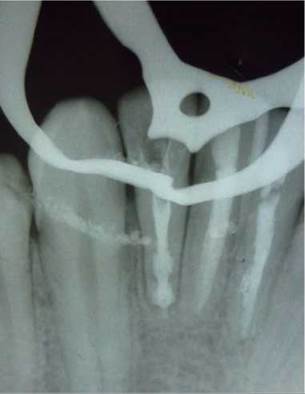
Figure 10.21 Thermoplastic filling of an internal resorption following pulpectomy (image courtesy of Dr Geoff Seccombe, Newcastle).
10.7.5 Protecting the Root Filling and the Tooth
Endodontically treated teeth are expected to perform for many years, if not decades, and the long-term prevention of infection after pulpectomy is critical. It may be advantageous to cut back root canal filing materials 2-3 mm below canal entrances, and seal the openings with a well-adapted cement canal plug [113] (Figure 10.22). Similar canal plugs may be placed after deep cut-back for an intraradicular post. It is probably wise to avoid the use of hard and well color-matched materials such as flowable composite for this purpose, as later re-entry may be greatly complicated.
All such procedures, including post-space preparation, whether conducted immediately after root canal filling or many years after initial treatment should be protected from oral contamination with a well-sealing rubber dam. The placement of this internal barrier may be logical to protect the root canal filling from oral fluids and microorganisms in the event of leakage around provisional or permanent restorations. All efforts should then be made to optimize the seal of all provisional and permanent coronal restorations by the meticulous cleaning of cavity walls, adapting materials carefully against dentin and optimizing material bonding. In the case of posterior teeth with a marginal ridge missing, cuspal coverage is strongly indicated as a means of promoting tooth survival [74] in the long term by safeguarding against catastrophic fracture.
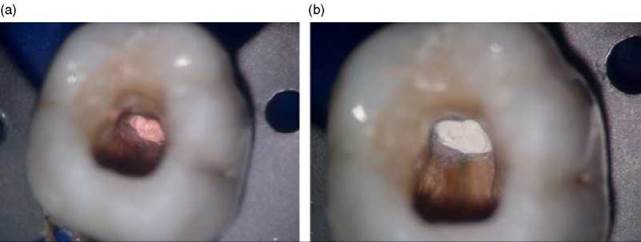
Figure 10.22 Canal plugs, a second layer of defense to protect root canal filling materials from the oral environment. (a) Cut-back of root canal filling material 2-3 mm below level of pulp chamber floor. (b) Canal plug of IRM cement.
10.8 Concluding Remarks
Pulpectomy may seem to be a simple and predictable treatment to preserve teeth with injured or endangered pulps. Outcome data, both in terms of periapical health and tooth survival, suggest that dentists should have confidence in the management of such teeth, but this should not make them complacent. The importance of strict asepsis at all stages of the procedure cannot be over-emphasized, and hard and soft tissues should be handled with care. In a complex intervention of this sort, it is impossible to identify from well conducted clinical trials which elements of treatment have the greatest bearing on outcome. Equally, it is virtually impossible to discern which subtleties of materials and techniques are responsible for optimizing success. In the final analysis, it is probably attention to detail and asepsis in a host of small acts that wins success. It is important to recognize that the behavior of dentists is greatly influenced by the community of prac- tice in which they work and that this can have positive and negative effects on treatment quality. Educators have great responsibility to promote optimal practice, and the principles outlined in this chapter encapsulate current best practice for the management of teeth with vital but irreversibly inflamed pulps.
References
1 Abbott, P.V. (2004) Assessing restored teeth with pulp and periapical diseases for the presence of cracks, caries and marginal breakdown. Aust Dent J, 49: 33-39; quiz 45.
2 Abou-Rass, M. and Piccinino, M.V. (1982) The effectiveness of four clinical irrigation methods on the removal of root canal debris. Oral Surg Oral Med Oral Pathol, 54: 323-328.
3 Akinosi, J.O. (1977) A new approach to the mandibular nerve block. Br J Oral Surg, 15: 83-87.
4 Amato, M. et al. (2011) Curved versus straight root canals: the benefit of activated irrigation techniques on dentin debris removal. Oral Surg Oral Med Oral Pathol Oral Radiol Endod, 111: 529-534.
5 Anabtawi, M.F. et al. (2013) Rubber dam use during root canal treatment: findings from The Dental Practice-Based Research Network. J Am Dent Assoc, 144: 179-186.
6 Bailey, G.C. et al. (2004) Root canal obturation by ultrasonic condensation of gutta-percha. Part II: an in vitro investigation of the quality of obturation. Int Endod J, 37: 694-698.
7 Bao, P. et al. (2017) In vitro efficacy of XP-endo finisher with 2 different protocols on biofilm removal from apical root canals. J Endod, 43: 321-325.
8 Benatti, O. et al. (1985) A histological study of the effect of diameter enlargement of the apical portion of the root canal. J Endod, 11: 428-434.
9 Bergenholtz, G. (2000) Evidence for bacterial causation of adverse pulpal responses in resin-based dental restorations. Crit Rev Oral Biol Med, 11: 467-480.
10 Bergenholtz, G. et al. (2013) Treatment of pulps in teeth affected by deep caries - A systematic review of the literature. Singapore Dent J, 34: 1-12.
11 Bernardi, A. and Teixeira, C.S. (2015) The properties of chlorhexidine and undesired effects of its use in endodontics. Quintessence Int, 46: 575-582.
12 Berutti, E. et al. (2014) Energy consumption of ProTaper Next X1 after glide path with PathFiles and ProGlider.J Endod, 40: 2015-2018.
13 Berutti, E. et al. (2009) Use of nickel- titanium rotary PathFile to create the glide path: comparison with manual preflaring in simulated root canals. J Endod, 35:408-412.
14 Bogen, G., Kim, J.S., and Bakland, L.K. (2008) Direct pulp capping with mineral trioxide aggregate: an observational study. J Am Dent Assoc, 139: 305-315; quiz 305-15.
15 Boutsioukis, C. et al. (2010) The effect of needle-insertion depth on the irrigant flow in the root canal: evaluation using an unsteady computational fluid dynamics model. J Endod, 36: 1664-1668.
16 Boutsioukis, C. et al. (2013) Measurement and visualization of file-to-wall contact during ultrasonically activated irrigation in simulated canals. Int Endod J, 46: 1046-1055.
17 Buchanan, L.S. (2000) The standardized- taper root canal preparation - Part 1. Concepts for variably tapered shaping instruments. Int Endod J, 33: 516-529.
18 Buehler, C.J.C. and Cross, W.B. (1969) 55-Nitinol unique wire alloy with a memory. Wire Journal, 2: 41-49.
19 Charles, T.J. and Charles, J.E. (1998) The “balanced force" concept for instrumentation of curved canals revisited. Int Endod J, 31: 166-172.
20 Cochran, M.A., Miller, C.H., and Sheldrake, M.A. (1989) The efficacy of the rubber dam as a barrier to the spread of microorganisms during dental treatment. J Am Dent Assoc, 119: 141-144.
21 Cvek, M. (1978) A clinical report on partial pulpotomy and capping with calcium hydroxide in permanent incisors with complicated crown fracture. J Endod, 4: 232-237.
22 Cvek, M., Granath, L., and Lundberg, M. (1982) Failures and healing in endodontically treated non-vital anterior teeth with posttraumatically reduced pulpal lumen. Acta Odontol Scand, 40: 223-228.
23 Davis, W.C. (1922) Partial Pulpectomy. Dental Items of Interest, 44: 801-809.
24 De-Deus, G. (2008) New directions in old leakage methods. Int Endod J, 41: 720-721; discussion 721-723.
25 Didato, A. et al. (2013) Time-based lateral hygroscopic expansion of a water- expandable endodontic obturation point. J Dent, 41: 796-801.
26 Editorial Board of the Journal of Endodontics (2007) Wanted: a base of evidence. J Endod, 33: 1401-1402.
27 Endodontists, A.A.O. (2010) AAEPosition Statement. Dental Dam [Online].
American Association of Endodontists. Available: https://www.aae.org/ uploadedfiles/publications_and_research/ guidelines_and_position_statements/ dentaldamstatement.pdf [Accessed 21.02.17 2017].
28 Endodontology, E.S.O. (2006) Quality guidelines for endodontic treatment: consensus report of the European Society of Endodontology. Int Endod J, 39: 921-930.
29 Engelhardt, J.P., Grun, L., and Dahl, H.J. (1984) Factors affecting sterilization in glass bead sterilizers. J Endod, 10: 465-470.
30 Engstrom, B. and Spângberg, L. (1967) Wound healing after partial pulpectomy. A histologic study performed on contralateral tooth pairs. Odontol Tidskr, 75: 5-18.
31 Fernandez, R. et al. (2013) Impact of three radiographic methods in the outcome of nonsurgical endodontic treatment: a five- year follow-up. J Endod, 39: 1097-1103.
32 Gesi, A. et al. (2006) Incidence of periapical lesions and clinical symptoms after pulpectomy - a clinical and radiographic evaluation of 1- versus 2-session treatment. Oral Surg Oral Med Oral Pathol Oral Radiol Endod, 101: 379-388.
33 Glossen, C.R. et al. (1995) A comparison of root canal preparations using Ni-Ti hand, Ni-Ti engine-driven, and K-Flex endodontic instruments. J Endod, 21: 146-151.
34 Gluskin, A.H., Peters, C.I., and Peters, O.A. (2014) Minimally invasive endodontics: challenging prevailing paradigms. Br Dent J, 216: 347-353.
35 Gow-Gates, G.A. (1973) Mandibular conduction anesthesia: a new technique using extraoral landmarks. Oral Surg Oral Med Oral Pathol, 36: 321-328.
36 Guivarc'h, M. et al. (2017) Sodium Hypochlorite Accident: A Systematic Review. J Endod, 43: 16-24.
37 Haapasalo, M.S. and Shen, Y.A. (2013) Evolution of nickel-titanium instruments: from past to future. Endodontic Topics., 29: 3-17.
38 Harty, F.J. and Stock, C.J. (1974) The Giromatic system compared with hand instrumentation in endodontics. Br Dent J, 137: 239-244.
39 Hauman, C.H., Chandler, N.P., and Tong, D.C. (2002) Endodontic implications of the maxillary sinus: a review. Int Endod J, 35: 127-141.
40 Horsted, P. and Nygaard-Ostby, B. (1978) Tissue formation in the root canal after total pulpectomy and partial root filling. Oral Surg Oral Med Oral Pathol, 46: 275-282.
41 Jacobsen, I. and Kerekes, K. (1977) Long- term prognosis of traumatized permanent anterior teeth showing calcifying processes in the pulp cavity. Scand J Dent Res, 85: 588-598.
42 Jiang, L.M. et al. (2012) Comparison of the cleaning efficacy of different final irrigation techniques. J Endod, 38: 838-841.
43 Johnson, E. et al. (2008) Comparison between a novel nickel-titanium alloy and 508 nitinol on the cyclic fatigue life of ProFile 25/.04 rotary instruments. J Endod, 34: 1406-1409.
44 Kakehashi, S., Stanley, H.R., and Fitzgerald, R.J. (1965) The effects of surgical exposures of dental pulps in germ-free and conventional laboratory rats. Oral Surg Oral Med Oral Pathol, 20: 340-349.
45 Kamel, W.H. and Kataia, E.M. (2014) Comparison of the efficacy of Smear Clear with and without a canal brush in smear layer and debris removal from instrumented root canal using WaveOne versus ProTaper: a scanning electron microscopic study. J Endod, 40: 446-450.
46 Kazemi, R.B., Stenman, E., and Spângberg, L.S. (1995) The endodontic file is a disposable instrument. J Endod, 21: 451-455.
47 Kerekes, K. and Tronstad, L. (1977) Morphometric observations on the root canals of human molars. J Endod, 3: 114-118.
48 Kerekes, K. and Tronstad, L. (1979) Long-term results of endodontic treatment performed with a standardized technique. J Endod, 5: 83-90.
49 Kersten, H.W., Fransman, R., and Thoden van Velzen, S.K. (1986) Thermomechanical compaction of gutta-percha. I. A comparison of several compaction procedures. Int Endod J, 19: 125-133.
50 Keskin, C., Sariyilmaz, E., and Sariyilmaz, O. (2017) Efficacy of XP-endo Finisher File in Removing Calcium Hydroxide from Simulated Internal Resorption Cavity. J Endod, 43: 126-130.
51 Ketterl, W. (1965) Kriterien fur den Erfolg der Vitalextirpation. Deutsch Zahnarztliche Zeitschrift, 20: 407-416.
52 Kirkevang, L.-L. and Horsted-Bindslev, P. (2002) Technical aspects of treatment in relation to treatment outcome. Endodontic Topics., 2: 89-102.
53 Koch, J.D. et al. (2016) Irrigant flow during photon-induced photoacoustic streaming (Pips) using Particle Image Velocimetry (PIV). Clin Oral Investig, 20: 381-386.
54 Kojima, K. et al. (2004) Success rate of endodontic treatment of teeth with vital and nonvital pulps. A meta-analysis. Oral Surg Oral Med Oral Pathol Oral Radiol Endod, 97: 95-99.
55 Konstantinidi, E. et al. (2016) Apical negative pressure irrigation versus syringe irrigation: a systematic review of cleaning and disinfection of the root canal system. Int Endod J.
56 Kung, J., Mcdonagh, M., and Sedgley, C.M. (2015) Does Articaine Provide an Advantage over Lidocaine in Patients with Symptomatic Irreversible Pulpitis? A Systematic Review and Meta-analysis. J Endod, 41: 1784-1794.
57 Levine, J.M. (2013) Dakin's solution: past, present, and future. Adv Skin Wound Care, 26: 410-414.
58 Lin, P.Y. et al. (2014) The effect of rubber dam usage on the survival rate of teeth receiving initial root canal treatment: a nationwide population-based study. J Endod, 40: 1733-1737.
59 Linsuwanont, P. et al. (2017) Treatment Outcomes of Mineral Trioxide Aggregate Pulpotomy in Vital Permanent Teeth with Carious Pulp Exposure: The Retrospective Study. JEndod, 43: 225-230.
60 Liolios, E. et al. (1997) The effectiveness of three irrigating solutions on root canal cleaning after hand mechanical preparation. Int Endod J, 30: 51-57.
61 Lloyd, A. et al. (1997) Shaping ability of the M4 handpiece and Safety Hedstrom files in simulated root canals. Int Endod J, 30: 16-24.
62 Macedo, R. et al. (2014) Cavitation measurement during sonic and ultrasonic activated irrigation. J Endod, 40: 580-583.
63 Mancini, M. et al. (2013) Smear layer removal and canal cleanliness using different Irrigation systems (EndoActivator, EndoVac, and passive ultrasonic irrigation): field emission scanning electron microscopic evaluation in an in vitro study. J Endod, 39: 1456-1460.
64 Manfredi, M. et al. (2016) Single versus multiple visits for endodontic treatment of permanent teeth. Cochrane Database Syst Rev, 12, Cd00(5296)
65 Marending, M., Attin, T., and Zehnder, M. (2016) Treatment options for permanent teeth with deep caries. Swiss Dent J, 126, 1007-(1027)
66 Martin, H. (1976) Ultrasonic disinfection of the root canal. Oral Surg Oral Med Oral Pathol, 42: 92-99.
67 Mejare, B., Nyborg, H., and Palmkvist, E. (1970) Amputation instruments for partial pulp extirpation. 3. A comparison between the efficiency of the Hedstrom file with cut tip and an experimental instrument. Odontol Revy, 21: 63-69.
68 Mitchell, R.P., Baumgartner, J.C., and Sedgley, C.M. (2011) Apical extrusion of sodium hypochlorite using different root canal irrigation systems. J Endod, 37: 1677-1681.
69 Molina, B. et al. (2015) Evaluation of Root Canal Debridement of Human Molars Using the GentleWave System. J Endod, 41: 1701-1705.
70 Moller, A.J. et al. (1981) Influence on periapical tissues of indigenous oral bacteria and necrotic pulp tissue in monkeys. Scand J Dent Res, 89:475-484.
71 Moller, A.J.R. (1966) Microbiological examination of root canals and periapical tissues of human teeth, methodological studies. Masters thesis, University of Lund.
72 Nekoofar, M.H. et al. (2006) The fundamental operating principles of electronic root canal length measurement devices. IntEndodJ, 39: 595-609.
73 Neukermans, M. et al. (2015) Endodontic performance by Flemish dentists: have they evolved? Int Endod J, 48: 1112-1121.
74 Ng, Y.L., Mann, V., and Gulabivala, K. (2010) Tooth survival following non-surgical root canal treatment: a systematic review of the literature. Int Endod J, 43: 171-189.
75 Ng, Y.L., Mann, V., and Gulabivala, K. (2011) A prospective study of the factors affecting outcomes of nonsurgical root canal treatment: part 1: periapical health. Int Endod J, 44: 583-609.
76 Ng, Y.L. et al. (2008) Outcome of primary root canal treatment: systematic review of the literature - Part 2. Influence of clinical factors. Int Endod J, 41: 6-31.
77 Ng, Y.L. et al. (2003) Evaluation of protocols for field decontamination before bacterial sampling of root canals for contemporary microbiology techniques. J Endod, 29: 317-320.
78 Niazi, S.A., Vincer, L., and Mannocci, F. (2016) Glove Contamination during Endodontic Treatment Is One of the Sources of Nosocomial Endodontic Propionibacterium acnes Infections. J Endod, 42: 1202-1211.
79 Nixdorf, D. and Moana-Filho, E. (2011) Persistent dento-alveolar pain disorder (PDAP): Working towards a better understanding. Rev Pain, 5: 18-27.
80 Nixdorf, D.R. et al. (2016) Frequency, impact, and predictors of persistent pain after root canal treatment: a national dental PBRN study. Pain, 157: 159-165.
81 Nusstein, J.M., Reader, A., and Drum, M. (2010) Local anesthesia strategies for the patient with a “hot" tooth. Dent Clin North Am, 54: 237-247.
82 Nyborg, H. and Halling, A. (1963) Amputation instruments for partial pulp extirpation. II. A comparison between the efficiency of the Anteos root canal reamer and the Hedstrom file with cut tip. Odontologisk Tidskrift, 71: 277-283.
83 Nygaard-Ostby, B. and Hjortdal, O. (1971) Tissue formation in the root canal following pulp removal. Scand J Dent Res, 79: 333-349.
84 Oliver, C.M. and Abbott, P.V. (2001) Correlation between clinical success and apical dye penetration. Int Endod J, 34: 637-644.
85 0rstavik, D. and Horsted-Bindslev, P. (1993) A comparison of endodontic treatment results at two dental schools. Int Endod J, 26: 348-354.
86 Paqué, F., Rechenberg, D.K., and Zehnder, M. (2012) Reduction of hard-tissue debris accumulation during rotary root canal instrumentation by etidronic acid in a sodium hypochlorite irrigant. J Endod, 38: 692-695.
87 Patel, S. et al. (2012) The detection of periapical pathosis using digital periapical radiography and cone beam computed tomography - part 2: a 1-year post-treatment follow-up. Int Endod J, 45: 711-723.
88 Pedulla, E. et al. (2017) Influence of continuous rotation or reciprocation of Optimum Torque Reverse motion on cyclic fatigue resistance of nickel-titanium rotary instruments. Int Endod J.
89 Pedulla, E. et al. (2017) Effects of 6 Single-File Systems on Dentinal Crack Formation. J Endod, 43: 456-461.
90 Peng, L. et al. (2007) Outcome of root canal obturation by warm gutta-percha versus cold lateral condensation: a meta-analysis. J Endod, 33: 106-109.
91 Peters, O.A. et al. (2003) ProTaper rotary root canal preparation: effects of canal anatomy on final shape analysed by micro CT. Int Endod J, 36: 86-92.
92 Pogrel, M.A. (2007) Damage to the inferior alveolar nerve as the result of root canal therapy. J Am Dent Assoc, 138: 65-69.
93 Portenier, I., Lutz, F., and Barbakow, F. (1998) Preparation of the apical part of the root canal by the Lightspeed and step-back techniques. Int Endod J, 31: 103-111.
94 Qudeimat, M.A., Alyahya, A., and Hasan, A.A. (2017) Mineral trioxide aggregate pulpotomy for permanent molars with clinical signs indicative of irreversible pulpitis: a preliminary study. Int Endod J, 50: 126-134.
95 Ricucci, D., Loghin, S., and Siqueira, J.F., Jr. (2014) Correlation between clinical and histologic pulp diagnoses. J Endod, 40: 1932-1939.
96 Ricucci, D. et al. (2011) A prospective cohort study of endodontic treatments of 1,369 root canals: results after 5 years. Oral Surg Oral Med Oral Pathol Oral Radiol Endod, 112: 825-842.
97 Ricucci, D. and Siqueira, J.F., Jr. (2010) Fate of the tissue in lateral canals and apical ramifications in response to pathologic conditions and treatment procedures. J Endod, 36: 1-15.
98 Roane, J.B., Sabala, C.L., and Duncanson, M.G., Jr. (1985) The “balanced force" concept for instrumentation of curved canals. J Endod, 11: 203-211.
99 Robertson, A. et al. (1996) Incidence of pulp necrosis subsequent to pulp canal obliteration from trauma of permanent incisors. J Endod, 22: 557-560.
100 Rodig, T. et al. (2010) Comparison of the Vibringe system with syringe and passive ultrasonic irrigation in removing debris from simulated root canal irregularities. J Endod, 36: 1410-1413.
101 Saleh, I.M. et al. (2004) Survival of Enterococcus faecalis in infected dentinal tubules after root canal filling with different root canal sealers in vitro. Int Endod J, 37: 193-198.
102 Sattar, M.M., Patel, M., and Alani, A. (2017) Clinical applications of polytetrafluoroethylene (PTFE) tape in restorative dentistry. Br Dent J, 222: 151-158.
103 Shahi, S. et al. (2013) Effect of premedication with ibuprofen and dexamethasone on success rate of inferior alveolar nerve block for teeth with asymptomatic irreversible pulpitis: a randomized clinical trial. J Endod, 39: 160-162.
104 Shen, Y. et al. (2010) Three-dimensional numeric simulation of root canal irrigant flow with different irrigation needles. J Endod, 36: 884-889.
105 Sigurdsson, A. et al. (2016) 12-month Healing Rates after Endodontic Therapy Using the Novel GentleWave System: A Prospective Multicenter Clinical Study. J Endod, 42: 1040-1048.
106 Simon, S. et al. (2013) Should pulp chamber pulpotomy be seen as a permanent treatment? Some preliminary thoughts. Int Endod J, 46: 79-87.
107 Sirtes, G. et al. (2005) The effects of temperature on sodium hypochlorite short-term stability, pulp dissolution capacity, and antimicrobial efficacy. J Endod, 31: 669-671.
108 Siu, C. and Baumgartner, J.C. (2010) Comparison of the debridement efficacy of the EndoVac irrigation system and conventional needle root canal irrigation in vivo. J Endod, 36: 1782-1785.
109 Sjogren, U. et al. (1997) Influence of infection at the time of root filling on the outcome of endodontic treatment of teeth with apical periodontitis. Int Endod J, 30: 297-306.
110 Sjogren, U. et al. (1990) Factors affecting the long-term results of endodontic treatment. J Endod, 16: 498-504.
111 Sjogren, U. et al. (1990) Factors affecting the long-term results of endodontic treatment. J Endod, 16: 498-504.
112 Smart, E.R. and Barnes, I.E. (1991) Tissue necrosis after using an arsenical endodontic preparation: a case report. Int Endod J, 24: 263-269.
113 Stassen, I.G. et al. (2006) The relation between apical periodontitis and root- filled teeth in patients with periodontal treatment need. Int Endod J, 39: 299-308.
114 Stojicic, S. et al. (2012) Antibacterial and smear layer removal ability of a novel irrigant, QMiX. Int Endod J, 45: 363-371.
115 Subha, N. et al. (2013) Efficacy of peracetic acid in rapid disinfection of Resilon and gutta-percha cones compared with sodium hypochlorite, chlorhexidine, and povidone-iodine. J Endod, 39: 1261-1264.
116 Sundqvist, G. et al. (1998) Microbiologic analysis of teeth with failed endodontic treatment and the outcome of conservative re-treatment. Oral Surg Oral Med Oral Pathol Oral Radiol Endod, 85: 86-93.
117 Susini, G. et al. (2006) Lack of correlation between ex vivo apical dye penetration and presence of apical radiolucencies. Oral Surg Oral Med Oral Pathol Oral Radiol Endod, 102, e19-23.
118 Susini, G., Pommel, L., and Camps, J. (2007) Accidental ingestion and aspiration of root canal instruments and other dental foreign bodies in a French population. Int Endod J, 40: 585-589.
119 Taha, N.A., Ahmad, M.B., and Ghanim, A. (2017) Assessment of Mineral Trioxide Aggregate pulpotomy in mature permanent teeth with carious exposures. Int Endod J, 50: 117-125.
120 Tartari, T. et al. (2016) Tissue dissolution and modifications in dentin composition by different sodium hypochlorite concentrations. J Appl Oral Sci, 24: 291-298.
121 Tawakoli, P.N. et al. (2017) Effect of endodontic irrigants on biofilm matrix polysaccharides. Int Endod J, 50: 153-160.
122 Tay, F.R. and Pashley, D.H. (2007) Monoblocks in root canals: a hypothetical or a tangible goal. J Endod, 33: 391-398.
123 Tay, F.R. et al. (2007) Susceptibility of a polycaprolactone-based root canal filling material to degradation. Evidence of biodegradation from a simulated field test. Am J Dent, 20: 365-369.
124 Tay, F.R. et al. (2005) Susceptibility of a polycaprolactone-based root canal filling material to degradation. I. Alkaline hydrolysis. J Endod, 31: 593-598.
125 Thompson, S.A. (2000) An overview of nickel-titanium alloys used in dentistry. Int Endod J, 33: 297-310.
126 Topcuoglu, H.S. et al. (2016) Apically extruded debris during root canal preparation using Vortex Blue, K3XF, ProTaper Next and Reciproc instruments. Int Endod J, 49, 1183-(1187)
127 Van der Sluis, L.W. et al. (2007) Passive ultrasonic irrigation of the root canal: a review of the literature. Int Endod J, 40: 415-426.
128 Van Nieuwenhuysen, J.P., Aouar, M., and d'Hoore, W. (1994) Retreatment or radiographic monitoring in endodontics. Int Endod J, 27: 75-81.
129 Violich, D.R. and Chandler, N.P. (2010) The smear layer in endodontics - a review. Int Endod J, 43: 2-15.
130 Walia, H.M., Brantley, W.A., and Gerstein, H. (1988) An initial investigation of the bending and torsional properties of Nitinol root canal files. J Endod, 14: 346-351.
131 Walker, J.T. et al. (2007) Cleanability of dental instruments - implications of residual protein and risks from Creutzfeldt-Jakob disease. Br Dent J, 203: 395-401.
132 Whitworth, J.M. et al. (2000) Use of rubber dam and irrigant selection in UK general dental practice. Int Endod J, 33: 435-441.
133 Wu, M.K., Van der Sluis, L.W., and Wesselink, P.R. (2003) The capability of two hand instrumentation techniques to remove the inner layer of dentine in oval canals. Int Endod J, 36: 218-224.
134 Yared, G. (2008) Canal preparation using only one Ni-Ti rotary instrument: preliminary observations. Int Endod J, 41: 339-344.
135 Yoshikawa, T. et al. (1999) Effects of dentin depth and cavity configuration on bond strength. J Dent Res, 78: 898-905.
136 Zehnder, M. et al. (2003) Tissue- dissolution capacity and dentin- disinfecting potential of calcium hydroxide mixed with irrigating solutions. Oral Surg Oral Med Oral Pathol Oral Radiol Endod, 96: 608-613.
137 Zehnder, M.S. et al. (2016) Guided endodontics: accuracy of a novel method for guided access cavity preparation and root canal location. Int Endod J, 49: 966-972.
138 Zhang, K. et al. (2010) Effects of different exposure times and concentrations of sodium hypochlorite/ ethylenediaminetetraacetic acid on the structural integrity of mineralized dentin. J Endod, 36: 105-109.
139 Zhou, H., Bin, P., and Zheng, Y.-F. (2013) An overview of the mechanical properties of nickel-titanium endodontic instruments. Endodontic Topics., 29: 42-54.