
Definition
• ↓ effective circulating insulin and ↑ counterregulatory hormones (glucagon, epinephrine) → glycogenolysis, gluconeogenesis (hyperglycemia), lipolysis
• Lipolysis + glucagon → ketogenesis and metabolic acidosis
• Hyperglycemia + acidosis → osmotic diuresis, dehydration, electrolyte loss
• Severity: Mild w/ venous pH <7.3, bicarbonate <15 mmol/L, moderate w/ venous pH <7.2, bicarbonate <10, severe w/ venous pH <7.1, bicarbonate <5
Clinical Manifestations
• Confirm dx and determine cause (evidence of infection; insulin omission, failure to follow sick day/pump failure mgmt guidelines)
• Exam: Weight (assess dehydration), Kussmaul respirations (rapid, deep, sighing)
• Assess clinical severity of dehydration: 5%: prolonged capillary refill time, abnormal skin turgor, hyperpnea; 10%: Weak pulse, hypotension, oliguria
• Level of consciousness (Glasgow coma scale)
• Headache or focal neurologic signs (suggests cerebral edema)
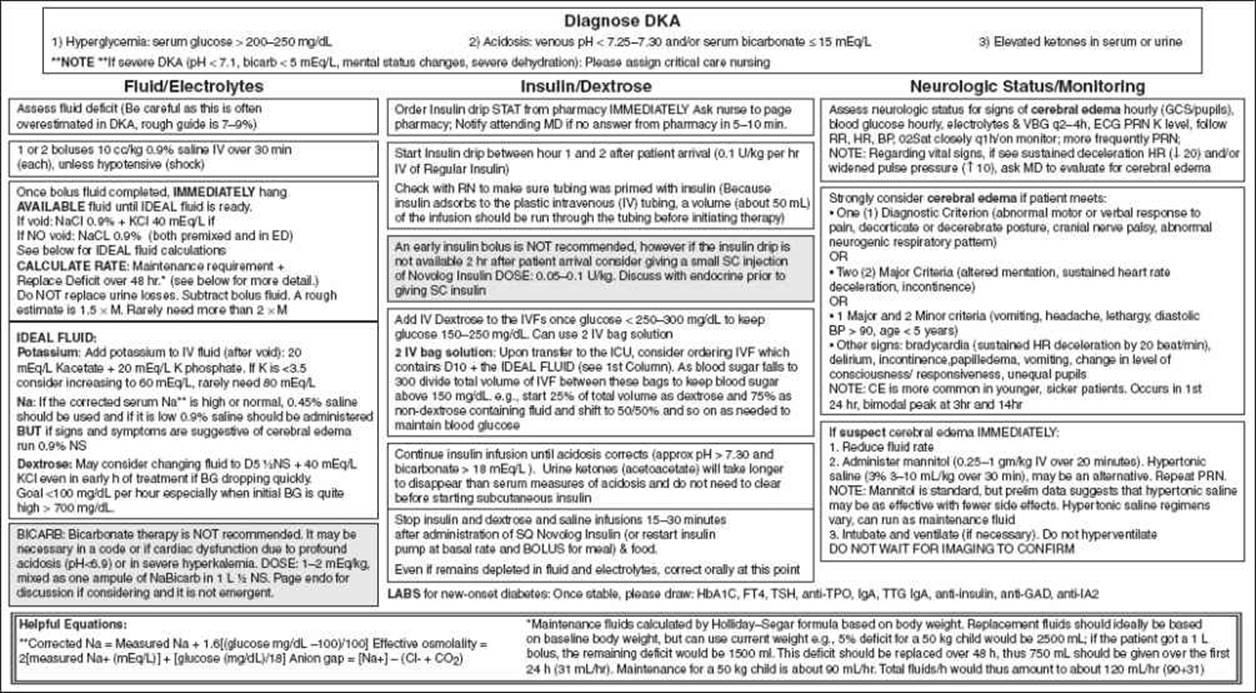
Diagnostic Studies and Treatment (Courtesy of Nicole Sherry, MD at MGH)
• See flow sheet in the next page
Complications (Pediatrics 2004;113:e133; Diabetes Care 2006;29:1150)
• Mortality from DKA is 0.15% in the United States
• 0.5–1% of episodes of DKA c/b cerebral edema; mortality risk of 20–25%
• Accounts for 60–90% of DKA-related mortality
• Risk factors for cerebral edema: Early bolus insulin, attenuated rise or drop in serum Na, severity of acidosis or hypocapnia, elevated BUN, but NOT degree of hyperglycemia
• Electrolyte abnormalities l (hypokalemia, hyperkalemia, hypophosphatemia) also occur
• Please see Neurology chapter section on treatment of cerebral edema
Prevention (Pediatrics 2004;113:e133)
• Earlier dx, pt, family and community education, responsible adults administering insulin, establishing comprehensive treatment networks