
Class: Angiotensin II Receptor Antagonist
Dosage Forms. Tablet: 75 mg, 150 mg, and 300 mg

Common FDA Label Indication, Dosing, and Titration.
1. Diabetic nephropathy: Adults: 75-300 mg po daily
2. Hypertension: Adults: initial, 150-300 mg po daily
Off-Label Uses.
1. Left ventricular hypertrophy: Adults: 150-300 mg po daily
2. Hypertension, renal impairment: Adults: 150-300 mg po daily
MOA. Irbesartan is a selective, reversible, competitive antagonist of the angiotensin II receptor (AT1), which is responsible for the physiologic effects of angiotensin II including vasoconstriction, aldosterone secretion, sympathetic outflow, and stimulation of renal sodium reabsorption.
Drug Characteristics: Irbesartan
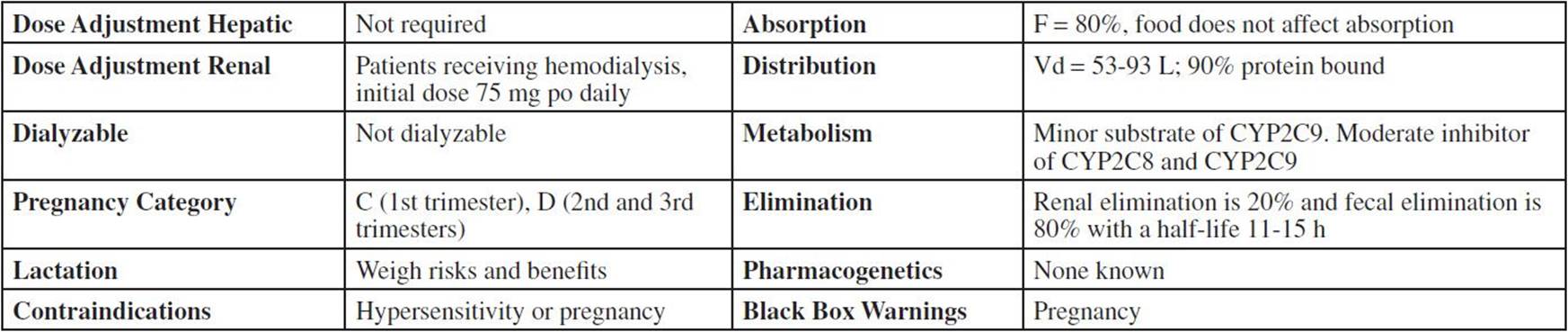
Medication Safety Issues: Irbesartan

Drug Interactions: Irbesartan
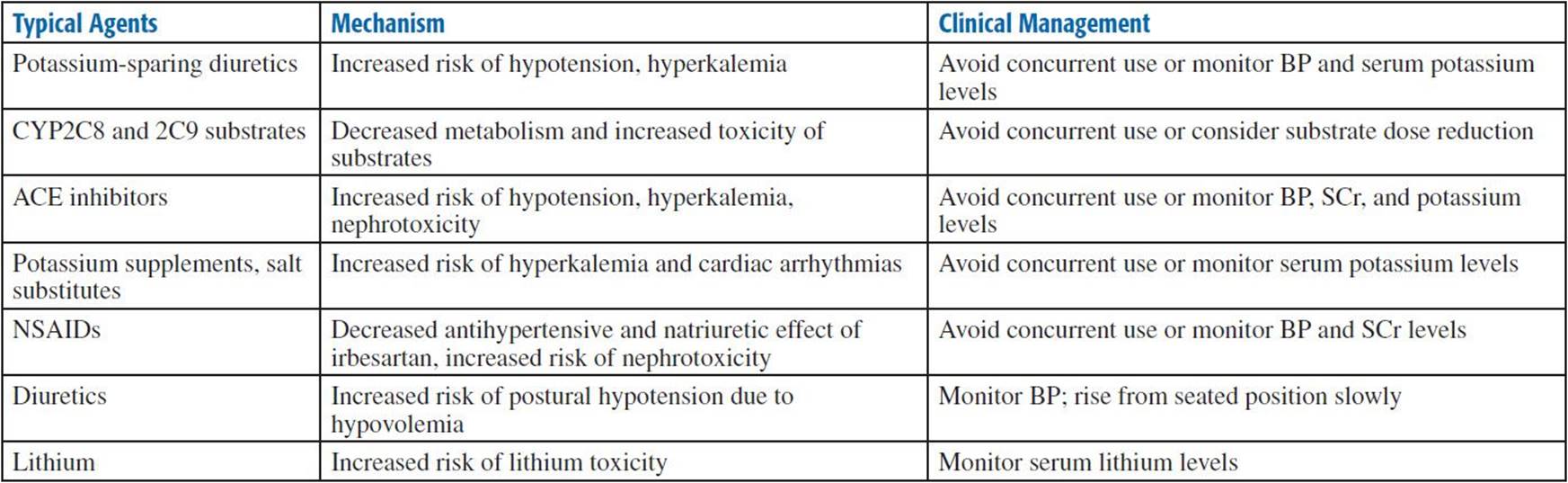
Adverse Reactions: Irbesartan

Efficacy Monitoring Parameters. Decreased blood pressure. Monitor BP weekly, may require 2-4 wk for full effect.
Toxicity Monitoring Parameters. Report signs/symptoms of hypotension, tachycardia. Baseline and periodic electrolyte panel, renal function tests, and urine protein are recommended.
Key Patient Counseling Points. Seek medical attention if angioedema (swelling of the face, eyes, lips, tongue, or throat), excessive fluid loss (vomiting, diarrhea, or excessive perspiration), hyperkalemia (confusion, body weakness, uneven heartbeat, or numbness/tingling in hands or feet), reduction in urination, jaundice, or skin rash occurs. Avoid pregnancy. Avoid abrupt discontinuation. Use potassium supplements or salt substitutes only under medical supervision. This medicine may cause dizziness. Avoid alcohol or driving.
Clinical Pearls. Safety and efficacy have not been established in children.