
Class: ACE-I, Antihypertensive
Dosage Forms. Tablet: 2.5 mg, 5 mg, 10 mg, 20 mg, 30 mg, 40 mg
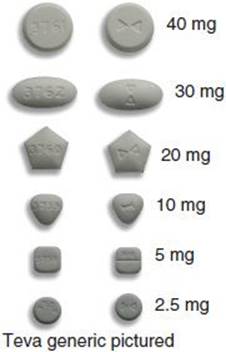
Common FDA Label Indication, Dosing, and Titration.
1. Acute myocardial infarction: 5-10 mg po daily × 6 wk
2. CHF: 5 mg po daily, may titrate to 40 mg/d
3. Hypertension: Adults, 10 mg po daily, may titrate to 80 mg/d; Children 6-16 y of age, 0.07 mg/kg (max 5 mg/d) po daily, may titrate to 0.61 mg/kg/d (max 40 mg/d)
Off-Label Uses.
1. Diabetic nephropathy: Adults: 20-40 mg po daily
2. Kidney disease: 5-20 mg po daily
3. Migraine prophylaxis: 10-20 mg po daily
MOA. Lisinopril is a competitive ACE inhibitor. It also reduces serum aldosterone, leading to decreased sodium retention, potentiates the vasodilator kallikrein-kinin system, and can alter prostanoid metabolism, inhibit the sympathetic nervous system, and inhibit the tissue renin-angiotensin system.
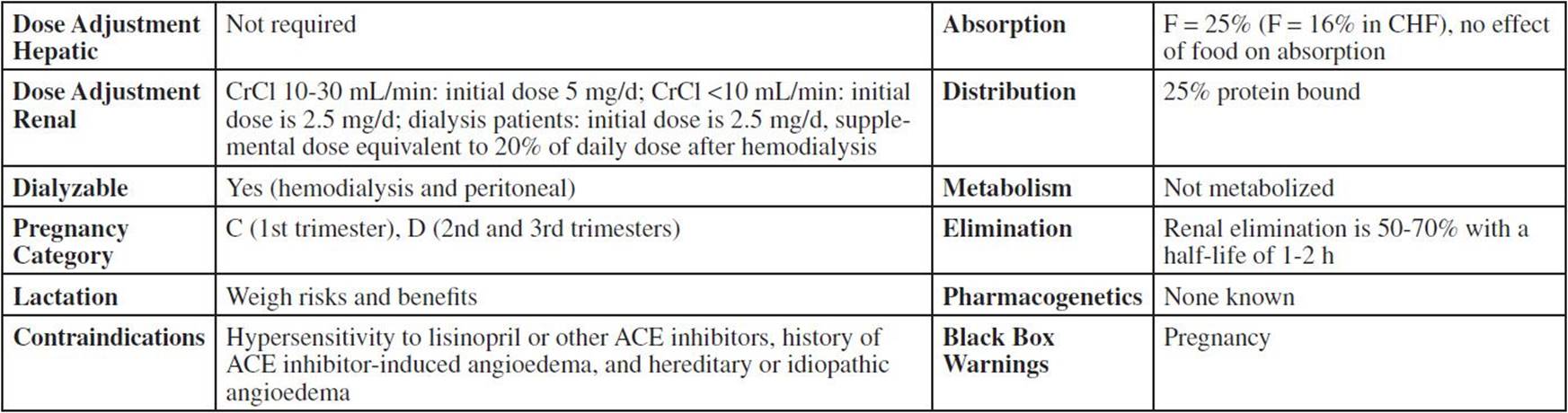
Drug Characteristics: Lisinopril
Medication Safety Issues: Lisinopril

Drug Interactions: Lisinopril

Adverse Reactions: Lisinopril

Efficacy Monitoring Parameters. Decreased BP.
Toxicity Monitoring Parameters. Signs/symptoms of angioedema (swelling of the face, eyes, lips, tongue, or throat), severe persistent cough, hypotension; monitor baseline and periodic electrolytes, SCr, BUN, and urine protein.
Key Patient Counseling Points. Avoid pregnancy. Use potassium supplements or salt substitutes only under medical supervision. May cause dizziness that may worsen if dehydrated.
Clinical Pearls. Observe patients who are volume depleted for at least 2 h after taking the initial dose of lisinopril. As effective as atenolol in the treatment of hypertension.