
Class: Opioid Analgesic. C-II
Dosage Forms. Tablet, Extended Release: 10 mg, 15 mg, 20 mg, 30 mg, 40 mg, 60 mg, 80 mg
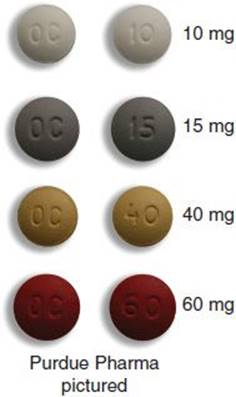
Common FDA Label Indication, Dosing, and Titration.
1. Pain, chronic, moderate to severe: 10-20 mg po q12h, titrate to response
Off-Label Uses. None
MOA. Oxycodone is pure mu agonist. Mu receptors are responsible for analgesia, respiratory depression, miosis, decreased GI motility, and euphoria. In the CNS, it promotes analgesia and respiratory depression by decreasing brain stem respiratory centers’ response to carbon dioxide tension and electrical stimulation. It also decreases gastric, biliary, and pancreatic secretion, induces peripheral vasodilation, and promotes opioid-induced hypotension due to histamine release.
Drug Characteristics: Oxycodone
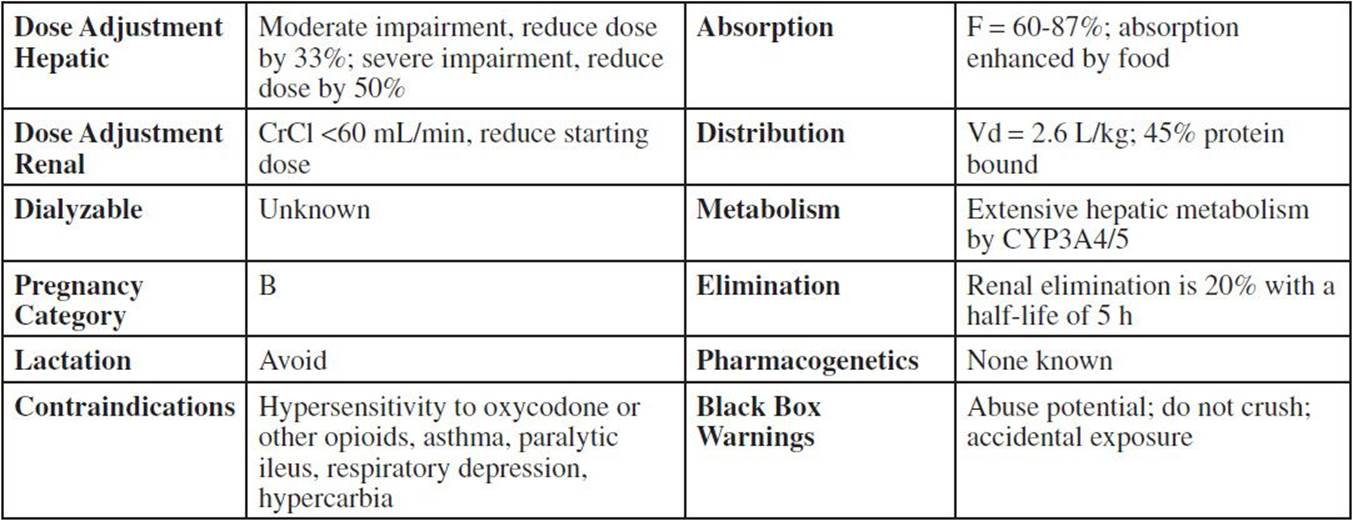
Medication Safety Issues: Oxycodone

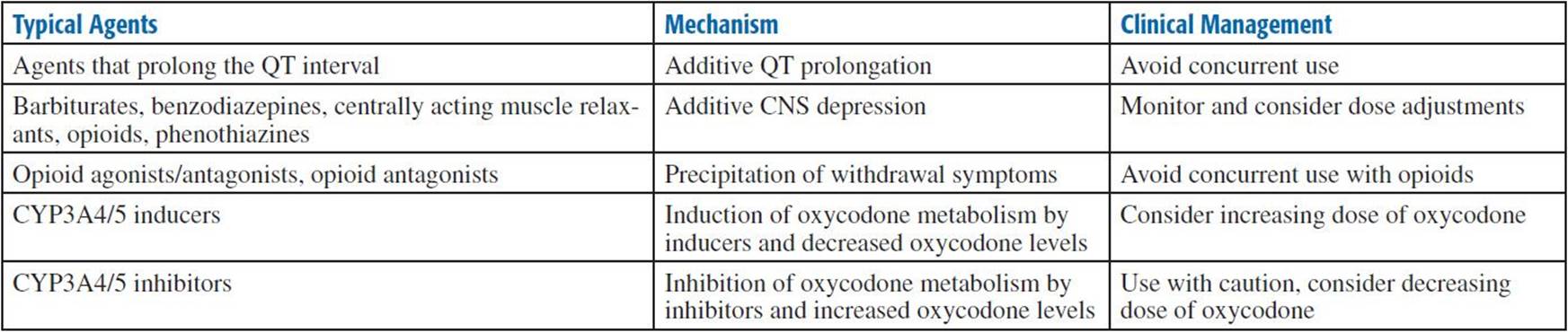
Drug Interactions: Oxycodone
Adverse Reactions: Oxycodone

Efficacy Monitoring Parameters. Relief of pain.
Toxicity Monitoring Parameters. Excessive drowsiness, severe skin rash, decreased breathing, severe constipation, chest pain, dizziness. Monitor vital signs.
Key Patient Counseling Points. Use a stool softener and/or laxative for preventing constipation. May cause drowsiness; avoid driving or other tasks requiring motor coordination. Avoid alcohol and other CNS depressants.
Clinical Pearls. Tolerance and physical dependence may occur with chronic use; avoid abrupt discontinuation. Extended-release products must not be crushed or chewed. Crushing or chewing will release the total dose of oxycodone at once and increase risk of respiratory depression. Extended-release products are not for use in children. Drug of choice for abuse amongst affluent teenagers. Advise patients to keep in safe place, and dispose off properly when no longer needed. Medication guide required at dispensing.