
Class: Benzisothiazoyl, Antipsychotic
Dosage Forms. Capsule: 20 mg, 40 mg, 60 mg, 80 mg
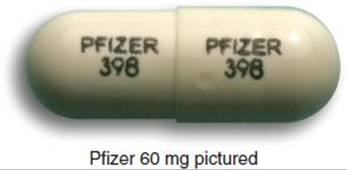
Common FDA Label Indication, Dosing, and Titration.
1. Bipolar disorder, acute manic or mixed episodes, monotherapy, or adjunct to lithium or valproate: 40-80 mg po bid
2. Schizophrenia: 20-80 mg po bid
Off-Label Uses.
1. Schizoaffective disorder: 20-80 mg po bid
MOA. Ziprasidone is an atypical antipsychotic drug with a very high ratio of 5-HT2A to dopamine-2 blockade, suggesting a very low risk of extrapyramidal effects. In addition, it is a 5-HT1A agonist like buspirone, and inhibits reuptake of both serotonin and norepinephrine like antidepressants. The clinical value of the latter two effects is not established.
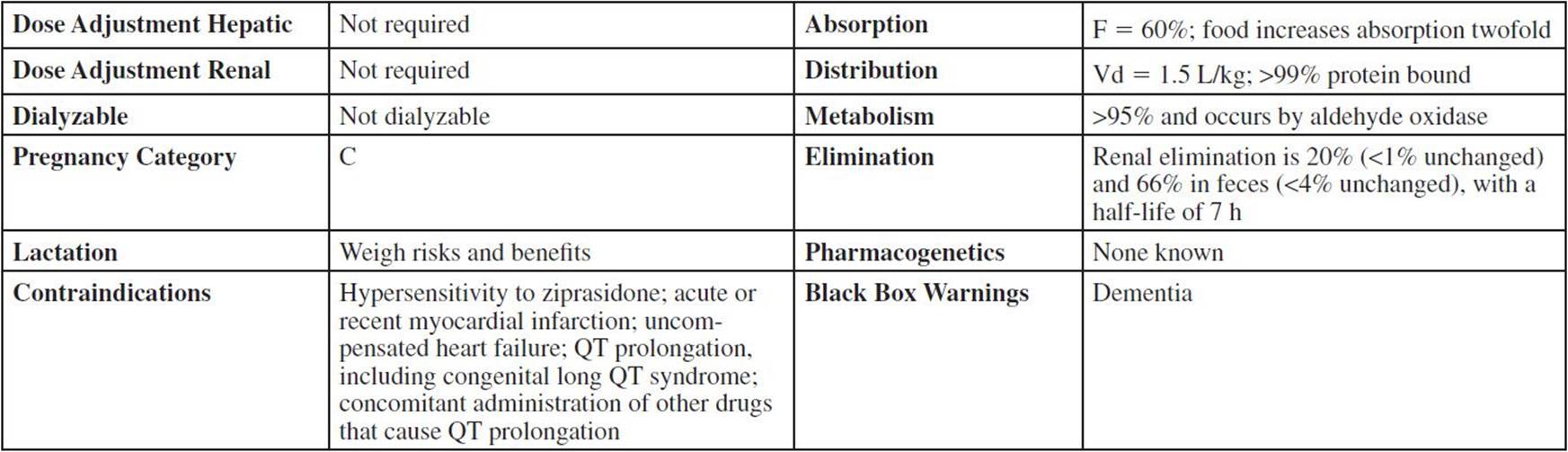
Drug Characteristics: Ziprasidone
Medication Safety Issues: Ziprasidone

Drug Interactions: Ziprasidone

Adverse Reactions: Ziprasidone

Efficacy Monitoring Parameters. Improvement in signs and symptoms of schizophrenia or manic or mixed episodes associated with bipolar disorder.
Toxicity Monitoring Parameters. FPG and CBC at baseline and periodically during therapy; patients at high-risk for suicide should be closely supervised during therapy. Monitor vital signs, including temperature.
Key Patient Counseling Points. Take with food but avoid alcohol. Avoid activities requiring mental alertness or coordination, as this medicine may cause dizziness and somnolence. Use caution with activities leading to an increased core temperature, such as strenuous exercise, exposure to extreme heat, or dehydration. Rise slowly from a sitting/supine position, as drug may cause orthostatic hypotension. Report signs/symptoms of bradycardia, arrhythmia, tardive dyskinesia, or neuroleptic malignant syndrome.
Clinical Pearls. Safety and effectiveness in pediatric patients have not been established. Elderly patients with dementia-related psychosis treated with atypical antipsychotic drugs are at an increased risk of death compared to placebo. Not approved for dementia-related psychosis.