
Class: Digitalis Glycoside
Dosage Forms. Tablet: 0.125 mg, 0.25 mg; Solution: 0.05 mg/mL
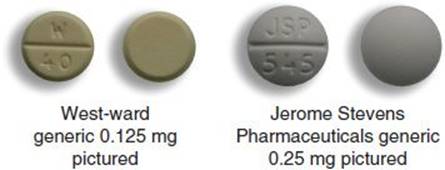
Common FDA Label Indication, Dosing, and Titration.
1. Atrial fibrillation: Loading dose of 0.25 mg po q2h to a total dose of 1.5 mg, then 0.125-0.375 mg po daily
2. CHF: Premature infant, loading dose of 20 mcg/kg, then 5 mcg/kg/d; Full-term infant to children 2 mo, loading dose of 30 mcg/kg, then 8-10 mcg/kg/d; Children 2-23 mo, loading dose of 40-50 mcg/kg, then 10-12 mcg/kg/d; Children 2-10 y, loading dose of 30-40 mcg/kg (solution), then 8-10 mcg/kg/d; Children >10 y, loading dose of 0.75-1.5 mg/kg, then 0.125-0.5 mg/kg po; Adults, loading dose of 0.5-0.75 mg po once, followed by 0.125-0.375 mg po q6-8h to achieve response, followed by 0.125-0.5 mg po daily
Off-Label Uses.
1. Fetal tachycardia, supraventricular tachycardia: 0.125-0.375 mg po daily (administered to mother)
MOA. Digitalis glycosides exert positive inotropic effects through improved availability of calcium to myocardial contractile elements, thereby increasing cardiac output in CHF. Antiarrhythmic actions are caused primarily by an increase in AV nodal refractory period via increased vagal tone, sympathetic withdrawal, and direct mechanisms.
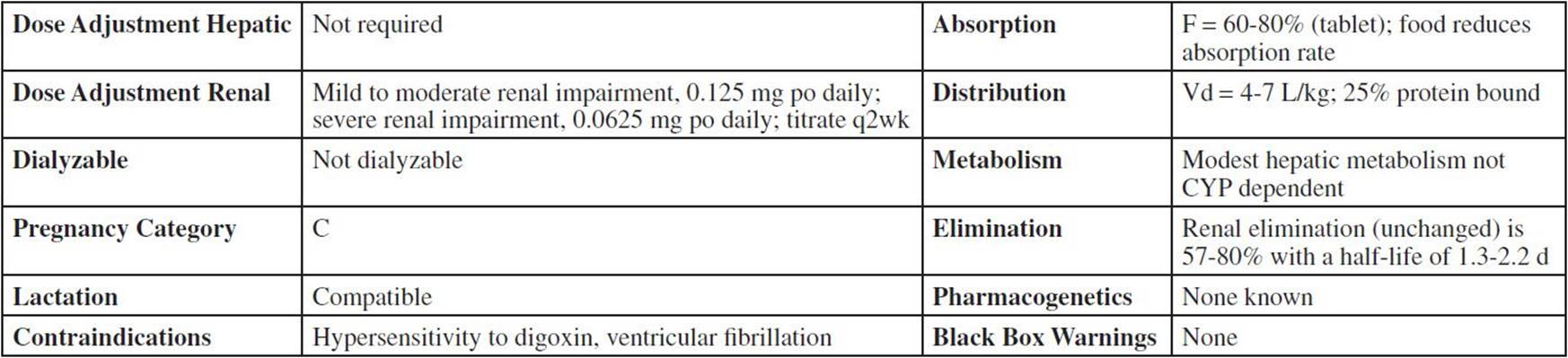
Drug Characteristics: Digoxin
Medication Safety Issues: Digoxin

Drug Interactions: Digoxin

Adverse Reactions: Digoxin

Efficacy Monitoring Parameters. ECG, decreased heart rate, improvement in signs/symptoms of heart failure; therapeutic serum range 0.8-2 ng/mL.
Toxicity Monitoring Parameters. ECG for cardiac dysrhythmia, excessive bradycardia; SCr and serum electrolytes (especially potassium, magnesium, calcium).
Key Patient Counseling Points. Take after morning meals (and after evening meals if giving in divided doses). Report signs/symptoms of bradycardia. Do not discontinue drug suddenly.
Clinical Pearls. Tablet and solution not interchangeable—dosing varies with dosage form. Use with caution in elderly.