
Viruses are obligate intracellular parasites that have no energy-generating enzymes. They require the metabolic processes and activities of the host cell; thus, virus reproduction requires the virus particle to infect a cell and use the cytoplasmic machinery to synthesize the macromolecules necessary for assembly of new virus particles. They contain DNA or RNA, not both, and range in size from 20 nm (parvoviruses) to 300 nm (poxviruses); the largest virus approximates the size of the smallest bacterial cells (chlamydiae and mycoplasma). They are not susceptible to antibacterial agents.
Viral replication begins with attachment whereby specific ligands (antireceptors) on the virus recognize and bind to specific receptors on the host cell surface. This interaction is temperature and energy independent and is also related to the tropism of the virus, i.e., the specificity of the virus to a particular host tissue. For example, poliovirus receptors exist on anterior horn cells of the spinal cord but not on kidney cells. The virus then penetrates the host cell by endocytosis (e.g., polyomaviruses), direct fusion with the host cell membrane (e.g., HIV and measles), or receptor-mediated endocytosis (e.g., influenza and Epstein—Barr virus). Penetration is also temperature and energy dependent. Once inside the host cell, there is viral uncoating or dismantling, which is the removal of the viral nucleic acid from the capsid. The last stage in viral replication is genome expression. Viruses adapt host cell machinery to transcribe viral RNA from a viral DNA template, producing key proteins for new virus synthesis. Release of daughter viruses results in the spread of the virus, both within and outside the host (Fig. 30.1).
Antiviral drugs are used to treat susceptible viral infections, which include herpes simplex virus, varicella zoster virus, cytomegalovirus (CMV), influenza viruses, respiratory syncytial virus (RSV), hepatitis B, hepatitis C, and human immunodeficiency virus (HIV). Antiviral drugs target an essential viral enzyme or protein to inhibit a pathway unique to the virus but not the cell (Fig. 30.1).
Fig. 30.1  Viral multiplication and mechanism of action of antiviral agents.
Viruses can be destroyed by cytotoxic T lymphocytes, which are part of the specific immune response. These lymphocytes detect the virus via proteins on the viral membranes. They may also be inactivated by antibodies. Interferons are glycoproteins that are released from virus-infected cells. They stimulate the production of antiviral proteins in neighboring cells, which destroy or suppress viral DNA and thus prevent viral protein synthesis.
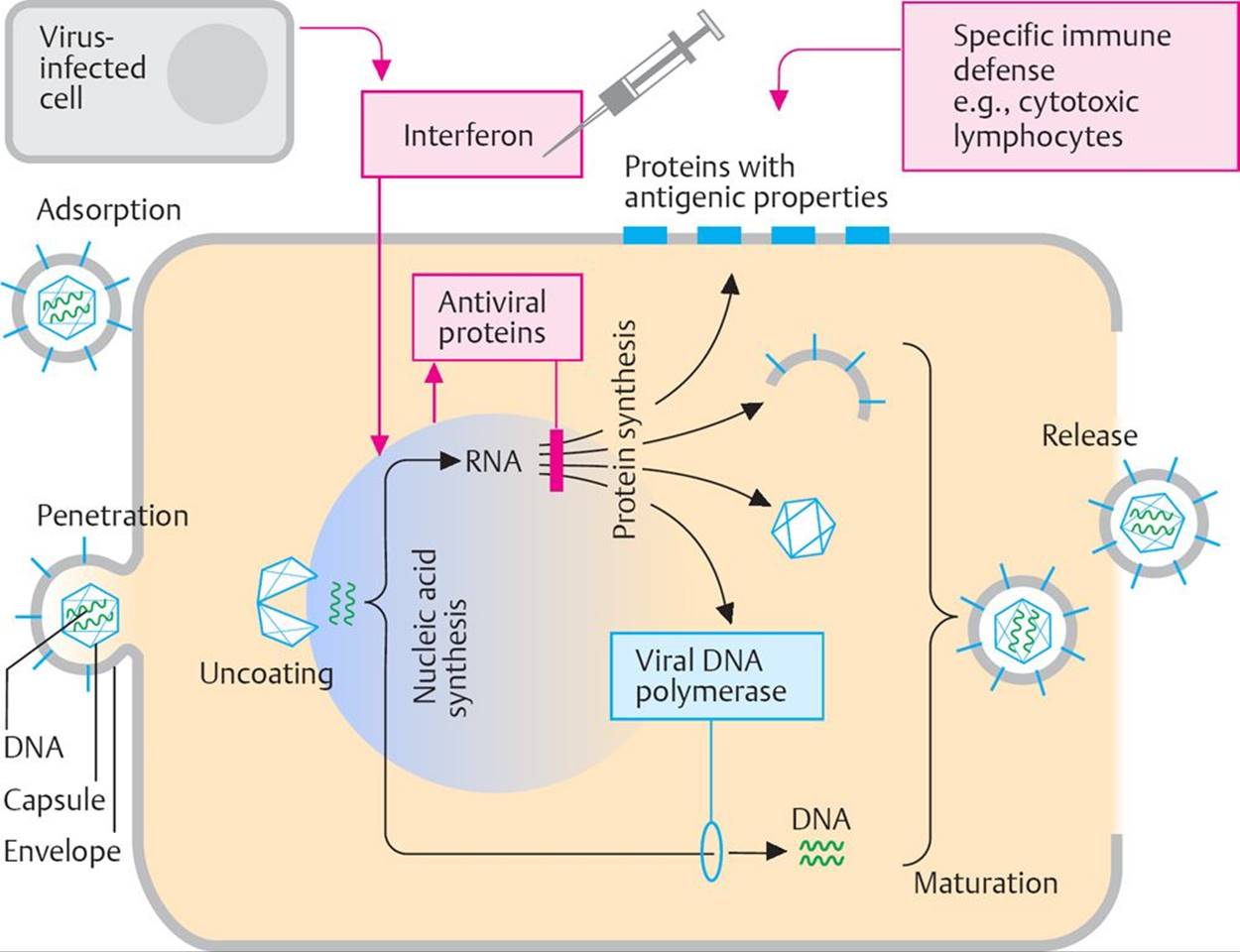
Table 30.1 is included for reference.
|
Table 30.1 |
|||
|
Family* |
Typical Example(s) |
Nucleic Acid Polarity and Structure |
Envelope |
|
DNA viruses |
|||
|
Parvoviridae |
Human parvovirus |
ssDNA (+ or −) |
No |
|
Hepadnaviridae |
Hepatitis B |
dsDNA/ss portions |
Yes |
|
Papovaviridae |
JC virus |
dsDNA circular |
No |
|
Adenoviridae |
Human adenovirus |
dsDNA |
No |
|
Herpesviridae |
Herpes simplex 1 (α) Herpes simplex 2 (α) CMV (β) Epstein–Barr (γ) |
dsDNA |
Yes |
|
Poxviridae |
Vaccinia virus |
dsDNA closed ends |
Yes |
|
RNA viruses |
|||
|
Togaviridae |
Rubella virus |
ssRNA (+) |
Yes |
|
Picornaviridae |
Poliovirus |
ssRNA (+) |
No |
|
Flaviviridae |
Yellow fever virus (hepatitis C virus) |
ssRNA (+) |
Yes |
|
Rhabdoviridae |
Rabies virus |
ssRNA (−) |
Yes |
|
Coronaviridae |
Coronaviruses |
ssRNA (+) |
Yes |
|
Paramyxoviridae |
Measles virus |
ssRNA () |
Yes |
|
Orthomyxoviridae |
Influenza virus |
ssRNA (−) segments |
Yes |
|
Bunyaviridae |
Encephalitis virus |
ssRNA (− circular) |
Yes |
|
Arenaviridae |
Lymphocytic choriomen |
ssRNA (− circular) |
Yes |
|
Retroviridae |
HIV |
ssRNA (+ identical) |
Yes |
|
Reoviridae |
Rotaviruses |
dsRNA (segments) |
No |
|
Caliciviridae |
Norwalk virus |
ssRNA (+) |
No |
|
Filoviridae |
Ebola, Marburg |
ssRNA |
Yes |
|
Abbreviations: CMV, cytomegalovirus; ds, double-stranded; HIV, human immunodeficiency virus; ss, single-stranded. |
|||
30.1 Inhibitors of Nucleic Acid Synthesis
Most inhibitors of nucleic acid synthesis are nucleoside analogues that must be phosphorylated intracellularly to exert their antiviral effects. They act by inhibiting viral replication by acting as false nucleosides (Fig. 30.2).
Acyclovir, Famciclovir, Penciclovir, and Valacyclovir
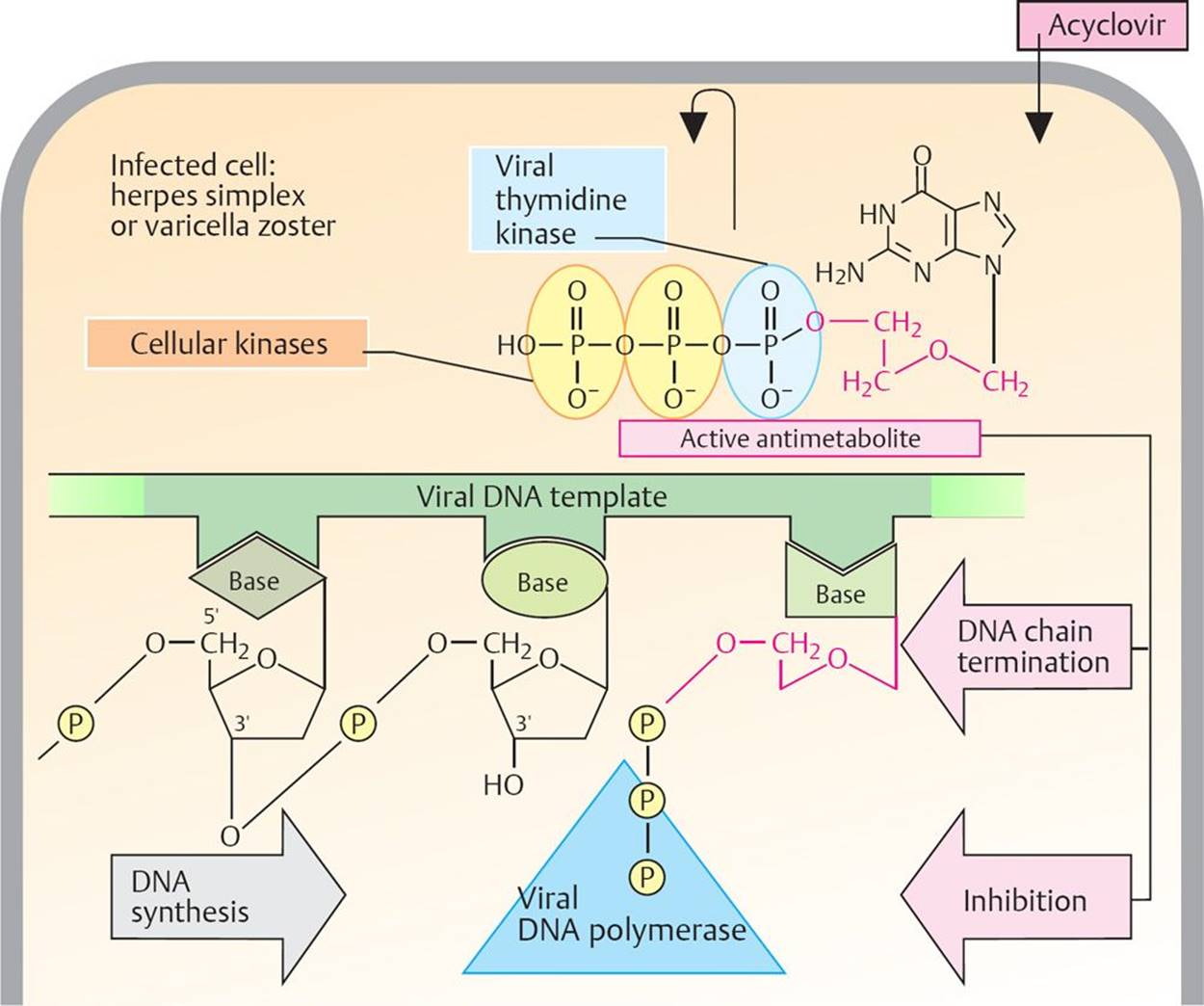
Mechanism of action. These agents inhibit DNA polymerase and, once incorporated into viral DNA, terminate chain elongation. They exhibit remarkable selective toxicity due to action on virus-specific thymidine kinase and viral DNA polymerase (Fig. 30.3).
Spectrum
– Herpes simplex virus (HSV) and varicella zoster virus
Pharmacokinetics. Although oral bioavailablity of acyclovir is low, this compound is effective after oral administration, by injection, or topically applied. The other agents are available for oral administration and have longer half-lifes that require one or two doses daily.
Fig. 30.2 Chemical structure of virustatic antimetabolites.
Nucleosides consist of a base (e.g. thymine) and deoxyribose. Virustatic antimetabolites act as false nucleosides or sugars. In the body, they are incorporated into viral DNA and terminate replication. Acyclovir and ganciclovir also inhibit viral DNA polymerase.
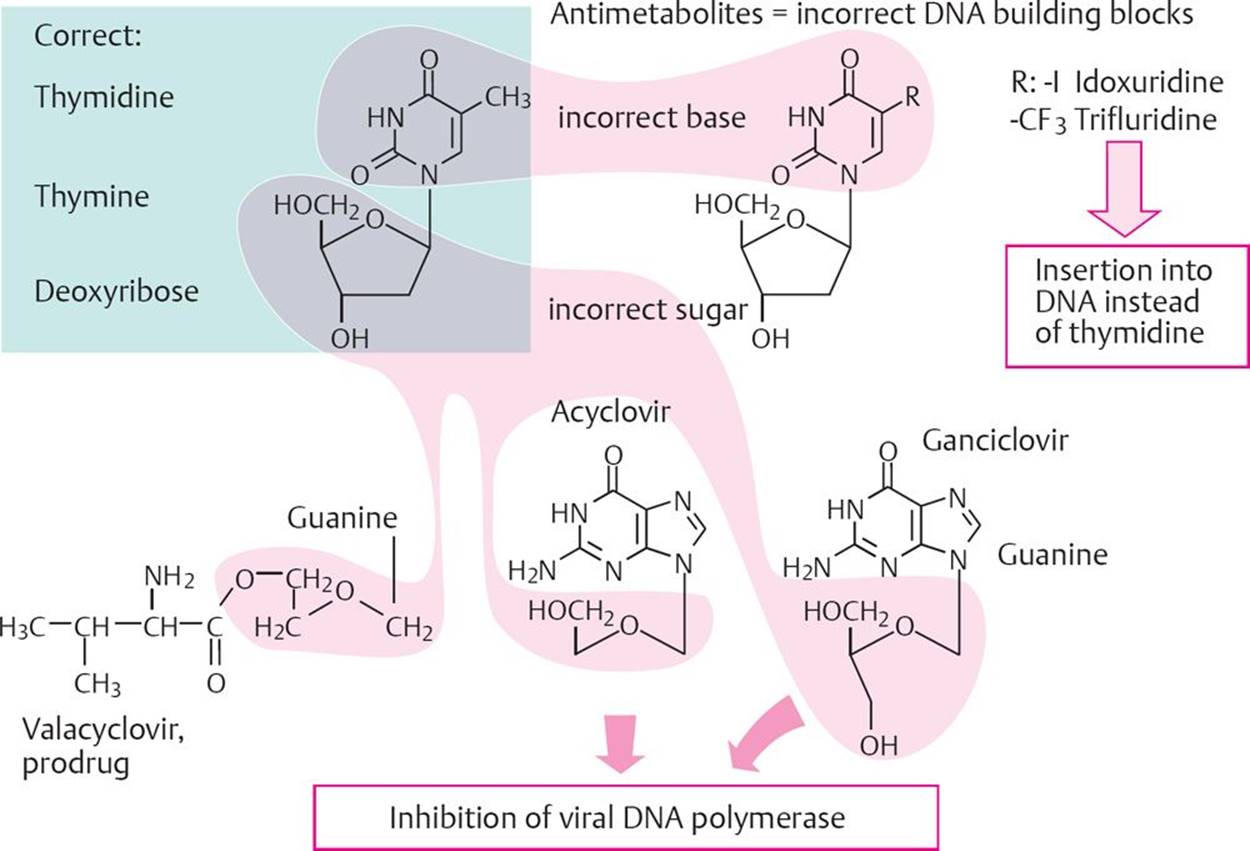
Fig. 30.3 Activation of acyclovir and inhibition of viral DNA synthesis.
In an infected cell, viral thymidine kinase performs the initial phosphorylation step then cellular kinases attach the remaining phosphate residues. This bioactivation of acyclovir occurs only in infected cells, which gives it high specificity and tolerability. Furthermore, the polar phosphate residues render acyclovir unable to diffuse across cell membranes and cause it to accumulate in infected cells. Acyclovir triphosphate is a preferred substrate of viral DNA polymerase and inhibits its activity. Following incorporation of acyclovir triphosphate into viral DNA, it induces strand breakage because it lacks the 3′-OH group of deoxyribose that is required for the attachment of additional nucleotides.
Uses
– Genital herpes
– Herpes simplex encephalitis
– Neonatal herpes
– Herpetic infections in immunocompromised patients
Herpes zoster (shingles)
Chickenpox is the primary infection with varicella zoster virus. Following the initial infection the virus remains dormant in the dorsal root ganglia. Reactivation of the virus causes shingles. Shingles starts with pain, tingling, or burning in a dermatomal distribution (often the ophthalamic division of the trigeminal nerve and lower thoracic dermatomes are affected). This is a ccompanied by fever and malaise. Later, a vesicular rash develops involving the same dermatome. Complications of shingles include post-herpetic neuralgia of the affected dermatome. This pain can range from mild to very severe and can persist for months or years. Treatment of shingles may involve the early use of antiviral medications, e.g., acyclovir, to shorten the course of the infection and to reduce pain and complications. Pain may also be treated with oxycodone (a narcotic analgesic), amitryptyline (a tricyclic antidepressant), gabapentin (an anticonvulsant), or lidocaine (a local anesthetic). Post-herpetic neuralgia can be treated with carbamazepine or phenytoin and prednisone. If these are unsuccessful, surgical ablation of the appropriate ganglion may be tried but this too is often unsuccessful and may leave the patient with numbness of the dermatome supplied.
Herpes simplex virus
Herpes simplex virus (HSV) type 1 is the most common HSV infection and usually produces cold sores and other blisters around the mouth, lips, and face. These may be accompanied by fever, sore throat, and lymphadenopathy. It is spread via saliva. HSV type 2 is usually responsible for genital herpes and is sexually transmitted. Symptoms include blisters around the vagina, anus, buttocks, penis shaft/glans, or scrotum that may be accompanied by itching, pain, dysuria (difficult or painful urination), and fever. Complications of HSV infections include herpetic whitlow (vesicles develop on an infected digit), herpetic simplex keratitis (corneal ulcers), herpetic simplex meningitis (rarely occurs but is usually due to HSV type 2), and herpetic simplex encephalitis (usually HSV type 1). Treatment of HSV may include the use of antiviral medications, e.g., acyclovir, and analgesics. Herpes simplex encephalitis has a high risk of mortality and requires urgent care.
Ganciclovir and Valganciclovir
Mechanism of action. The mechanism and structure are similar to acyclovir.
Spectrum. Ganciclovir and valganciclovir are 100 times more active against CMV than is acyclovir.
Pharmacokinetics. Ganciclovir is administered by intravenous (IV) infusion or as an intravitreal implant (for CMV retinitis). Valganciclovir is an orally active prodrug.
Uses
– Limited to treating CMV infection in immunocompromised patients
Side effects
– Bone marrow depression
Cytomegalovirus
Cytomegalovirus is an infection that is often asymptomatic and therefore goes unnoticed. It is spread by a variety of routes, e.g., saliva, blood, semen, urine, and breast milk. Like herpes simplex virus (HSV), it lies dormant after the initial infection and may become reactivated. Symptoms, if any, are similar to mononucleosis and include fever, fatigue, weakness, sore throat, swollen glands, muscle and joint aches, and a feeling of generally being unwell. Treatment with gancyclovir is generally reserved for immunocompromised patients.
Ribavirin
Ribavirin is a deoxyguanosine analogue that contains a fraudulent base.
Mechanism of action. Ribavirin is phosphorylated to mono-, di-, and triphosphate forms that interfere with viral RNA polymerases.
Spectrum
– Effective against respiratory syncytial virus (RSV) and hepatitis C
Pharmacokinetics. Ribavirin is administered by aerosol for RSV to prevent systemic toxicity. It is given orally for hepatitis C.
Uses. For RSV, its use is limited to infants and children with severe lower respiratory tract infections. For hepatitis C, it is used in combination therapy with interferon alfa.
Toxicity
– Hemolytic anemia (if taken systemically)
Respiratory syncytial virus
Respiratory syncytial virus (RSV) is a virus that causes infections of the respiratory tract and lungs. It gains entry to the body through the eyes, nose, or mouth and is typically spread by droplets via coughing or sneezing or direct contact (e.g., shaking hands). Symptoms are usually mild and include congested or runny nose, cough, sore throat, headache, fever, and a generally feeling of being unwell. Treatment is usually limited to over-the-counter drugs, e.g., acetaminophen to reduce fever. Treatment with ribavirin is reserved for infants and children with severe RSV infections.
Foscarnet
Foscarnet is a pyrophosphate analogue.
Mechanism of action. Foscarnet inhibits viral DNA and RNA polymerases.
Spectrum
– CMV infections resistant to other drugs
Pharmacokinetics
Foscarnet is infused IV or by intravitreal injection (for retinitis).
Uses
– CMV infections resistant to other drugs or in patients with HIV
Toxicity
– Renal toxicity leading to electrolyte imbalances
Cidofovir
Cidofovir is a cytosine analogue.
Mechanism of action. Cidofovir interferes with viral DNA polymerases.
Spectrum
– CMV infections resistant to other drugs
Pharmacokinetics. Cidofovir is infused IV or by intravitreal injection.
Uses
– CMV retinitis in patients with acquired immunodeficiency syndrome (AIDS) after ganciclovir and foscarnet therapy have failed
Toxicity
– Renal toxicity and neutropenia
Fomivirsen
Fomivirsen is an antisense oligonucleotide.
Mechanism of action. Fomivirsen is a synthetic RNA with a sequence that is complementary to and binds to the messenger RNA (mRNA) of the immediate-early transcriptional unit (IE2) of human CMV. This inhibits translation of IE2 proteins necessary for CMV replication.
Spectrum. Fomivirsen was approved for intravitreal treatment of CMV retinitis in HIV-infected patients who could not tolerate or did not respond to other therapies, but it is no longer commercially available in the United States.
Trifluridine
Mechanism of action. Trifluridine is an analogue of thymidine that acts by inhibiting viral DNA polymerase.
Uses
– Herpes simplex keratitis (applied topically to the cornea of infected eyes)
Side effects
– Local stinging and irritation around the eyes
30.2 Viral M2 Protein Blockers
Amantadine and Rimantadine
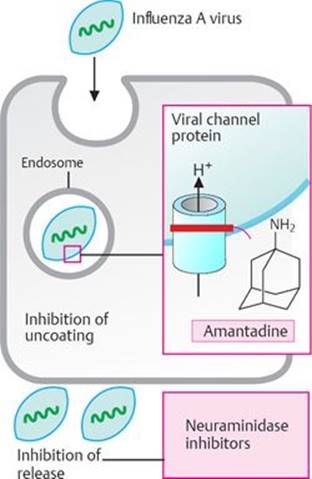
Mechanism of action. These agents are highly selective antiviral drugs that inhibit the growth of influenza A viruses by acting as ion channel blockers of the viral M2 protein, thus preventing viral uncoating (Fig. 30.4).
Spectrum
– Influenza A
Pharmacokinetics. Completely absorbed from the gastrointestinal (GI) tract and excreted unchanged in the urine.
Uses
– Prophylaxis and treatment of influenza A virus infections
Side effects. Central nervous system side effects (nervousness, confusion, insomnia, light-headedness, and hallucinations) are the most common.
Fig. 30.4 Prophylaxis for viral flu.
Amantadine specifically prevents uncoating of influenza A viruses. Influenza A is endocytosed into cells, but they require protons, supplied by the endosome, to penetrate the virus and allow it to release its RNA. Amantadine prevents this influx of protons into the virus. Neuraminidase inhibitors are effective against influenza A and B. Normally, viral neuraminidase splits off N-acetylneuraminic (sialic) acid residues on the cellular cell surface coat, thereby enabling newly formed virus particles to be detached from the host cell.
30.3 Selective Neuraminidase Inhibitors for Influenza A and B
Oseltamivir and Zanamivir
Mechanism of action. These agents are inhibitors of influenza neuraminidase. Without neuraminidase, the hemagglutinin of the virus binds to sialic acid, forming clumps and preventing virus release (Fig. 30.4).
Spectrum
– Influenza A and B
Pharmacokinetics. Oseltamivir is given orally. Zanamivir is inhaled.
Uses
– Used to reduce the severity and prevent the spread of influenza
Side effects
– Nausea and vomiting (oseltamivir)
– Cough, and nasal and throat symptoms (zanamivir)
Influenza
Influenza (or “flu”) is a viral infection that affects the respiratory tract and lungs. The virus has three types: A, B, and C. It is spread by droplets that are either inhaled following coughing or sneezing or directly transferred from an infected person. Symptoms of flu may mimic the common cold initially with nasal congestion or runny nose, sneezing, and sore throat. However, these symptoms rapidly become worse and progress to include fever, chills and sweats, aching muscles, headache, fatigue, weakness, and a general feeling of being unwell. Complications include pneumonia, otitis media, sinusitis, and bronchitis.Treatment for influenza usually involves bed rest, fluids, and NSAIDs. However, antiviral medications such as oseltamivir and zanamivir may sometimes be used to shorten the course of the infection.
30.4 Drugs for Hepatitis B and Hepatitis C
Interferon alfa
Several forms of interferon, including alfa-1, alfa-2a, and alfa-2b, are available.
Mechanism of action. Interferons are endogenous cytokine proteins that interfere with viral replication. They also activate immune responses.
Pharmacokinetics
– Injected subcutaneously
– Peginterferons, interferon formulated with polyethylene glycol, have longer half-lifes and can be given once weekly.
Uses
– Hepatitis B therapy
– Hepatitis C therapy when used in combination with ribavirin
Side effects. Flulike syndrome with headache, chills, fever, and muscle pain is common within hours of injection. Adverse effects on all systems may be observed with chronic use, including
– Alopecia, pruritis (itching), and rash
– Weight loss
– Bone marrow suppression
– GI upset
– Joint and muscle pain
– Dizziness, headache, and insomnia
– Anxiety, irritability, and depression
Hepatitis A, B, and C
Hepatitis is a viral infection that causes inflammation and dysfunction of the liver. The three main types are hepatitis A, B, and C (although D and E exist). Hepatitis A is spread by the fecal–oral route, often via contaminated food or water. Symptoms tend to appear one month following the initial infection and include nausea and vomiting, loss of appetite, fever, abdominal pain, muscle aches, fatigue, itching, and jaundice. Hepatitis A usually resolves with no treatment. Hepatitis B is spread via blood, semen, or saliva. Symptoms are the same as hepatitis A but itching and joint pain are more prominent. Chronic infection with hepatitis B may lead to cirrhosis and/or liver cancer. Antiviral drugs such as interferon alfa may be used to slow liver damage but treatment is usually limited to supportive measures. Hepatitis C is spread in the same manner as hepatitis B. It is typically asymptomatic initially and may remain so for many years. Symptoms, when they do occur, are the same as those listed for hepatitis A and B but are generally more mild. Like hepatitis B, chronic hepatitis C may lead to cirrhosis and liver cancer. Treatment may involve the use of interferon alfa. If hepatitis B or C lead to liver failure then liver transplantation may be indicated.
Adefovir Dipivoxil, Entecavir, Lamivudine, Telbivudine, and Tenofovir
Mechanism of action. These agents are nucleoside/nucleotide analogues that inhibit viral DNA polymerase.
Pharmacokinetics
– Orally effective
Side effects
– Asthenia and nephrotoxicity (adefovir dipivoxil [dose-dependent])
– Dizziness, fatigue, headache, and nausea (entecavir)
– Dizziness, headache, and nausea (lamivudine)
– Headache, cough, fatigue, flu, and increased serum creatine kinase level (telbivudine)
– Asthenia, rash, and GI upset (tenofovir)
Ribavirin
Mechanism of action. Ribavirin is a guanosine analogue that inhibits viral RNA polymerases.
Pharmacokinetics
– Orally effective
Uses
– Used in the therapy of hepatitis C in combination with interferon alfa
Side effects
– Hemolytic anemia
– Pruritis and rash
– Headache, fatigue, irritability, and insomnia
– Nausea
Table 30.2 summarizes the drugs used to treat non-HIV viral infections.
|
Table 30.2 |
||
|
Agents |
Antiviral Activity |
|
|
Amantadine/rimantadine |
Influenza A |
|
|
Neuraminidase inhibitors |
Influenza A and B |
|
|
Acyclovir and analogues |
Herpes viruses |
|
|
Ganciclovir and valganciclovir |
CMV in HIV patients |
|
|
Foscarnet |
CMV, HSV (resistant) |
|
|
Ribavirin |
RSV, hepatitis C |
|
|
Interferon |
Hepatitis B, C; papillomavirus |
|
|
Imiquimod, podoflox |
Topical agents for papillomavirus |
|
|
Abbreviations: CMV, cytomegalovirus; HIV, human immunodeficiency virus; HSV, herpes simplex virus; RSV, respiratory syncytial virus. |
||
30.5 Management of HIV and AIDS
HIV is a retrovirus transmitted by free viral particles or infected immune cells (e.g., CD4 [T helpe rcells], macrophages, and dendritic cells) in blood, semen, vaginal fluid, preejaculate, and breast milk. It causes acquired immunodeficiency syndrome (AIDS). The goal of HIV/AIDS therapy is to increase CD4 cell counts, suppress viral load, and reconstitute the immune system.
Highly active antiretroviral therapy (HAART) is combination therapy used in the treatment of HIV/AIDS to decrease the development of resistance. It usually involves using three agents from two different classes.
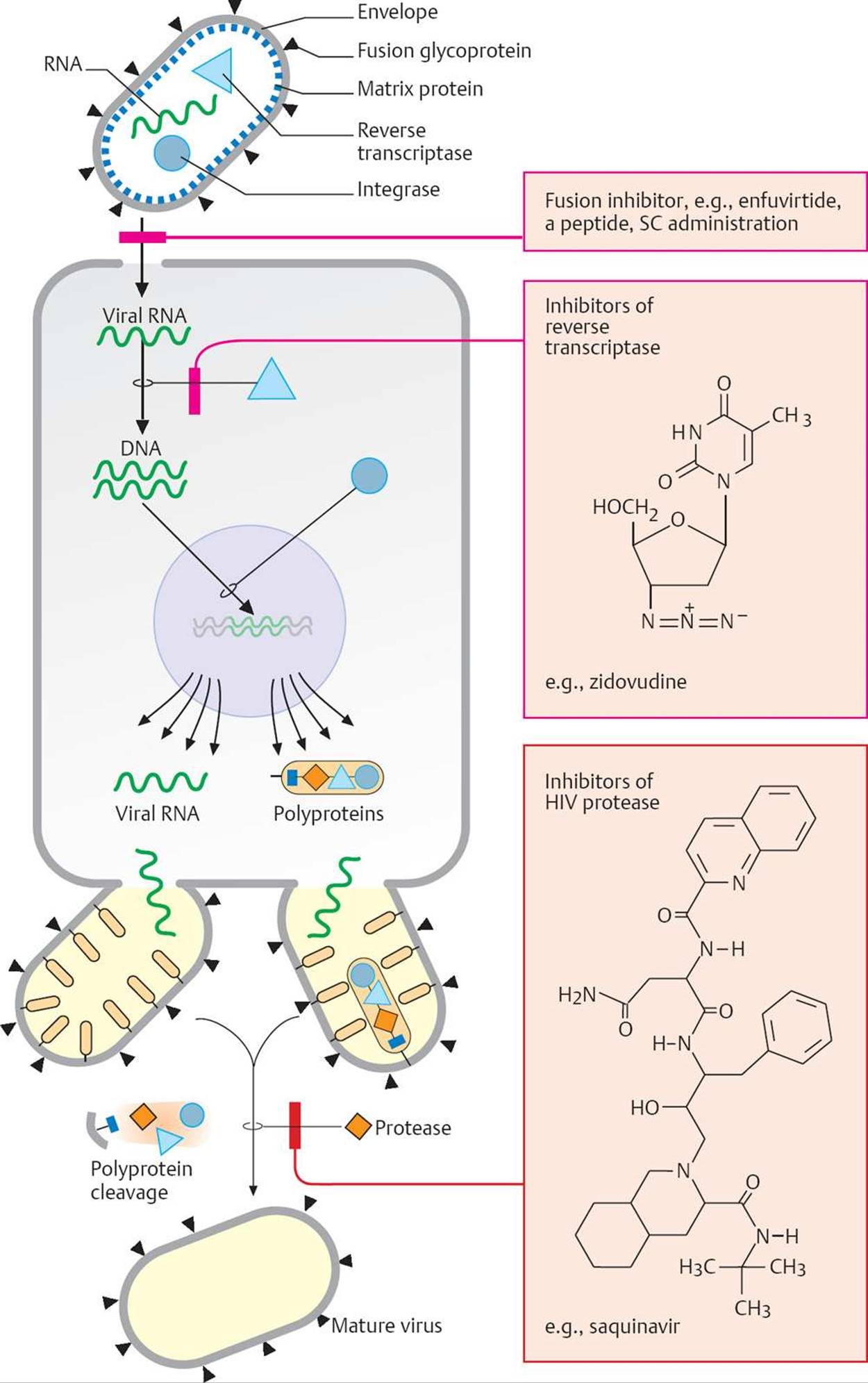
Replication of the HIV virus
There are several steps involved in the replication of the HIV virus:
1. Proteins (gp120 protein) on the surface of the HIV virus cell are fused to CD4+ receptors (glycoproteins) found on the surface of helper T cells, monocytes, and macrophages.
2. HIV RNA, reverse transcriptase, HIV integrase, and other viral proteins are released into the host cell.
3. Single-stranded viral RNA is transcribed to double-stranded DNA in the cytoplasm by the action of reverse transcriptase.
4. New viral DNA migrates into the nucleus and becomes spliced into host DNA by the action of HIV integrase.
5. DNA is transcribed into new viral RNA, which is then translated into viral proteins.
6. New viral RNA and proteins congregate near the cell membrane and become enclosed in the membrane, forming immature (not yet infective) HIV virus cells, which bud off from the host cell.
7. The virus is cleaved by proteases into its mature, infective form.
Nucleoside Reverse Transcriptase Inhibitors
Mechanism of action. Nucleoside reverse transcriptase inhibitors (NRTIs) are unnatural nucleoside analogues that decrease viral DNA synthesis by inhibiting viral reverse transcriptase (Fig. 30.5).
Abacavir (ABC), Didanosine (ddI), Emtricitabine (FTC), Lamivudine (3TC), Stavudine (d4T), Tenofovir, and Zidovudine (Azidothymidine, AZT),
– AZT is the first antiretroviral drug approved by the U.S. Food and Drug Administration for the treatment of HIV.
Pharmacokinetics
– Orally effective
Side effects. Serious adverse effects for NRTIs include pancreatitis, fatty liver, lactic acidosis, and peripheral neuropathy. See Table 30.3 for the side effects of individual agents.
|
Table 30.3 |
||
|
Agent |
Side Effects |
|
|
Abacavir (ABC) |
Hypersensitivity, liver disease |
|
|
Emtricitabine (FTC) |
Nausea, vomiting, headache, fatigue |
|
|
Lamivudine (3TC) |
Nausea, vomiting, headache, fatigue |
|
|
Stavudine (d4T) |
Peripheral neuropathy, diarrhea, nausea, vomiting |
|
|
Tenofovir |
Rash, mild GI upset |
|
|
Zidovudine (azidothymidine, AZT) |
Asthenia (lack of energy and strength), headache, fatigue, insomnia, anorexia, constipation, nausea, vomiting |
|
|
Abbreviations: GI, gastrointestinal; NRTI, nucleoside reverse transcriptase inhibitor. |
||
Nonnucleoside Reverse Transcriptase Inhibitors
Mechanism of action. Nonnucleoside reverse transcriptase inhibitors (NNRTIs) also interfere with viral DNA synthesis but bind near the active site of the viral reverse transcriptase to inhibit its activity (Fig. 30.5).
Side effects
– Hypersensitivity reactions and liver disease
Pharmacokinetics
– Orally effective
– These drugs are substrates of cytochrome P-450 enzymes and may induce or inhibit the metabolism of other drugs metabolized by the liver.
Fig. 30.5 AIDS drugs.
Inhibitors of reverse transcriptase are nucleosides containing an abnormal sugar moiety and require phosphorylation for activation. As triphosphates, they inhibit reverse transcriptase (RT) and induce strand breakage following incorporation into DNA. Nonnucleoside inhibitors inhibit RT without requiring prior activation. Protease inhibitors prevent polyprotein cleavage, which is necessary for the maturation of viral cells. Fusion inhibitors prevent the change in conformation of viral fusion proteins that allows them to attach to host CD4 cells. SC, subcutaneous.
Delavirdine
Side effects. A rash develops on the upper body and arms within the first 1 to 3 weeks after taking the medication. This rash usually goes away within ~2 weeks. Other side effects include
– Severe skin rash accompanied by blisters, fever, joint or muscle pain, redness and swelling of the eyes, sores in the mouth, and swelling
— Serious kidney problems
– Anemia
– Liver
– Muscle problems
Efavirenz
Side effects
– Abnormal thinking, confusion, depression, hallucinations, memory loss, paranoid thinking, and thoughts of suicide
– Convulsions
– Liver complications
– Increase in cholesterol, fat accumulation, and fat redistribution
Etravirine
Side effects
– Mild to moderate rash sometimes occurs in the second week of therapy and generally resolves within 1 to 2 weeks of continued therapy.
– Serious side effects may include a severe skin rash with or without an accompanying fever, muscle or joint aches, blistering, oral lesions, facial swelling, and swelling and reddening of the eye.
Nevirapine
Side effects
– Severe skin rash, chills, fever, sore throat, and other flulike symptoms. These may be signs of liver disease.
Protease Inhibitors
Saquinavir, Ritonavir, Lopinavir, Indinavir, Nelfinavir, Amprenavir, Atazanavir, Tipranavir, and Darunavir
Mechanism of action. Protease inhibitors inhibit viral assembly and release from the host CD4 cells (Fig. 30.5).
Pharmacokinetics. These drugs are substrates for CYP3A4. Thus, they may inhibit the metabolism of other drugs that are CYP3A4 substrates.
Side effects. The general side effects of these drugs include the following:
– Changes in body fat distribution (central obesity, buffalo hump, gynecomastia)
– Increased bleeding in patients with hemophilia
– High sugar levels in the blood; onset or worsening of diabetes
The additional side effects of individual drugs are listed in Table 30.4.
|
Table 30.4 |
||
|
Agent |
Side Effects |
|
|
Ritinavir |
Inflammation of the pancreas, which can cause severe stomach pain, nausea, or vomiting; heart dysrhythmias (this may happen when ritonavir is used alone or when used with other drugs that affect the heart) |
|
|
Lopinavir |
Disease of the pancreas; dizziness, lightheadedness, fainting, or sensation of abnormal heartbeats |
|
|
Indinavir |
Kidney stones |
|
|
Amprenavir |
Severe rash |
|
|
Atazanavir |
Yellowing of the eyes or skin; change in heart rhythm; diarrhea, infection, nausea, and blood in the urine |
|
|
Tipranavir |
Increased cholesterol and triglyceride levels; serious liver problems; bleeding in the brain; rash |
|
|
Darunavir |
Inflammation of the liver and abnormal liver function tests (liver injury, specifically drug-induced hepatitis, may occur when darunavir and ritonavir are taken together); severe skin rash; fever; abnormally high cholesterol and triglyceride levels; hypersensitivity; metabolic disturbances |
|
Entry (Fusion) Inhibitor
Enfuvirtide
Mechanism of action. Enfuvirtide binds to the transmembrane glycoprotein subunit (gp41) of the viral envelope and prevents the fusion of viral envelope and cell membrane (Fig. 30.5).
Chemokine coreceptor antagonist
Maraviroc
Mechanism of action. Maraviroc blocks certain strains of HIV from binding to chemokine receptor type 5 (CCR5) thus preventing the virus from entering target cells. This agent can only be used when the virus is CCR5-tropic. If the patient's virus is chemokine receptor type 4 (CCR4)-tropic or has a mixed population, as seen in later stages of the disease, maraviroc will not be effective.
Integrase Inhibitor
Raltegravir
Mechanism of action. Raltegravir inhibits the viral integrase that mediates the integration of the newly synthesized viral DNA into host cell DNA.
CD4 and CD8 cells
CD4 cells (T helper cells) play an important role in the immune system by alerting other immune cells—B cells and cytotoxic T cells (CD8)—to kill pathogens or tumor cells. The normal range for CD4 cells in a blood sample is 500 to 1500; for CD8 cells, it is ~1200.
Highly Active Antiretroviral Therapy (HAART)
HAART is combination therapy used in the treatment of HIV/AIDS to decrease the development of resistance. It usually involves using three agents from two different classes.
|
Table 29.4 |
||
|
Class of Substance |
Examples |
|
|
Detergents |
Anionic: ordinary soaps Cationic: benzalkonium chloride |
|
|
Phenols (probably also act as detergents) |
Phenol: hexylresorcinol Cresol: hexachlorophene |
|
|
Alcohols |
Ethanol and isopropyl alcohol |
|
|
Halogens |
Chlorine, chloramines, and iodine |
|
|
Metals |
Silver (used in combination with sulfadiazine) and mercury (thimerosal) |
|
|
Oxidants |
Hydrogen peroxide, permanganate, sodium peroxide, and perborate |
|
 Selected Viruses