
Autocoids are biological factors synthesized and released locally that play a role in vasoconstriction, vasodilation, and inflammation. These include serotonin, bradykinin, histamine, and eicosanoids.
32.1 Serotonin and Related Drugs
Serotonin
Serotonin is also discussed in Chapter 10.
Synthesis. Serotonin (5-hydroxytryptamine [5-HT]) is synthesized from tryptophan by tryptophan hydroxylase.
Location. High concentrations of serotonin are found in enterochromaffin cells of the gastrointestinal (GI) tract. They are also found in platelets and in the central nervous system (CNS).
Metabolism. Metabolism is by oxidative deamination via monoamine oxidase.
Receptors. Serotonin receptors are found in the CNS and GI tract and on smooth muscle. They are grouped into four major groups: 5-HT1, 5-HT2, 5-HT3, and 5-HT4–7. Each of these families has numerous members.
– The 5-HT1 (Gi), 5-HT2 (Gq), and 5-HT4–7 (Gs) receptor families are G-protein coupled receptors.
– The 5-HT3 receptor is a ligand-gated ion channel.
Effects
– CNS: ascending systems are involved in the promotion of sleep, in determining mood, and in mental illness (through interactions in limbic areas); descending systems may be involved in modulating pain perception.
– GI tract: increases contractility of the gut
– Smooth muscle: vasoconstriction
Serotonin Agonist Drugs: Triptans
Sumatriptan, Zolmitriptan, Naratriptan, Riatriptan, Eletriptan, Frovatriptan, and Almotriptan
Mechanism of action. These agents are selective 5-HT1B/1D receptor agonists. Their mechanism to decrease migraine may result from the ability of these drugs to
– Directly produce constriction of pial and dural blood vessels
– Inhibit the release of vasodilator and proinflammatory peptides (calcitonin gene-related peptide [cGRP], substance P, and vasoactive intestinal peptide [VIP])
– Activate presynaptic inhibitory serotonin receptors of trigeminal nerve afferents innervating intracranial vessels
Pharmacokinetics
– Administered by subcutaneous injection, as a nasal spray, or orally
– Agents vary in speed of onset and duration of action.
– Effective at any time during the attack but more effective if given earlier (during the aura preceding migraine onset)
– Also help to relieve nausea and vomiting, which accompany the attack
Uses
– Acute migraine
– Cluster headaches
Side effects
– Chest pain, flushing, nausea, weakness, and dizziness
– In rare cases, serious cardiac events (coronary artery vasospasm, transient myocardial ische mia, myocardial infarction, ventricular tachycardia, and fibrillation) and hypertensive episodes have occurred.
Contraindications
– Coronary, cerebrovascular, or other arterial disease; uncontrolled hypertension
Drug interactions
– Hypertensive crisis (see page 88) may occur if patient has used monoamine oxidase inhibitors (MAOIs) within 2 weeks.
– Serotonin syndrome (see page 89) may occur if these agents are combined with selective serotonin reuptake inhibitors (SSRIs).
Mixed Serotonin Drugs: Ergot Alkaloid Derivatives
Ergot alkaloids are also discussed in Chapter 17.
Ergotamine
Mechanism of action. Ergotamine causes intense vasoconstriction. It also has partial agonist or antagonist activity against serotonergic, dopaminergic, and α-adrenergic receptors.
Pharmacokinetics
– Variable absorption after oral administration
– May be given via sublingual, rectal, and intramuscular routes
– Caffeine enhances both the absorption and the peripheral action of ergotamine.
– Limitations have been placed on the total dose of ergotamine that can be taken per attack and per week to prevent ergot poisoning.
Uses
– Acute migraine
Side effects
– Nausea, vomiting, weakness, and paresthesias
Toxicity. The most serious toxic effects result from sustained vasoconstriction, which can lead to brain or cardiac ischemia.
Contraindications
– Pregnancy.
Dihydroergotamine Mesylate
Dihydroergotamine mesylate is an ergot alkaloid derivative.
Pharmacokinetics
– Given by intramuscular injection, subcutaneous injection, or nasal spray
Uses
– Acute migraine
Note: Dihydroergotamine mesylate is less effective than ergotamine but has a lower incidence of vomiting when injected.
Migraine
Migraines are characterized by a severe, uni-lateral throbbing headache, which is often preceded by an aura (usually visual), and may be accompanied by nausea, vomiting, and photophobia. They are caused by the dilation of blood vessels in the pia mater and dura mater surrounding the brain. This triggers the release of neuropeptides, such as calcitonin gene-related peptide (cGRP) and substance P from parasympathetic nerve fibers approximating these vessels, and excites nociceptive fibers, which travel in the trigeminal nerve back to the brain. The involvement of 5-HT in migraine is suggested by the finding that blockade of 5-HT receptors can prevent or stop migraine attacks. Treatment of acute migraine includes triptans and ergot alkaloid derivatives. Drugs used for migraine prophylaxis include the β-blockers, anticonvulsants, and antidepressants, although the mechanisms of action of these agents in migraine are not understood.
Cluster headaches
Cluster headaches (migrainous neuralgia) are severe, unilateral, nonpulsatile, peri-orbital headaches that occur frequently throughout the day for several weeks, followed by a pain-free period that can last several months. Like migraine headaches, cluster headaches have an unknown etiology but appear to result from changes in brain blood flow. Drugs that are effective in terminating migraine are usually effective in terminating cluster headaches, including the triptans and dihydroergotamine. Approximately 50 to 70% of cluster headaches can be terminated by inhalation of 100% oxygen.
Table 32.1 lists other serotonin agonists, and antagonists, noting their uses and where they have been discussed in other chapters.
|
Table 32.1 |
|||
|
Serotonin Agents |
Receptor Subtype |
Uses(s) |
Chapter/Page Reference(s) |
|
Agonists |
|||
|
Triptans |
5-HT1D |
Migraine |
Chapter 32/340, 341 |
|
Partial agonist |
|||
|
Buspirone |
5-HT1A |
Anxiety |
Chapter 9/85 |
|
Antagonists |
|||
|
Ondansetron, dolasetron, and palonosetron |
5-HT3 |
Nausea and vomiting |
Chapter 27/266 |
|
Trazadone |
5-HT2A |
Antidepressant |
Chapter 10/88 |
|
Clozapine and other atypical antipsychotic agents |
5-HT2A |
Antipsychotic |
Chapter 12/100, 101 |
|
Reuptake Inhibtors |
|||
|
Fluoxetine and other SSRIs* |
- |
Antidepressant |
Chapter 10/89 |
|
* These agents are thought to act by decreasing neuronal serotonin uptake. Abbreviations: 5-HT, 5-hydroxytryptamine; SSRI, selective serotonin reuptake inhibitor. |
|||
Carcinoid tumors and serotonin syndrome
Carcinoid tumors are neuroendocrine tumors of the GI tract, urogenital tract, or the pulmonary bronchioles. Carcinoid tumors can contain and secrete numerous autocoids, including prostaglandins and serotonin, causing symptoms such as flushing and diarrhea. Cardiac diseases due to fibrosis of the endocardium and valves, as well as asthmalike symptoms, are also common. Flushing may be precipitated by stress, alcohol, certain foods, and drugs, particularly selective serotonin reuptake inhibitors (SSRIs), so these should be avoided. Heart failure, wheezing, and diarrhea are treated, respectively, with diuretics, bronchodilators, and with antidiarrheal agents, such as loperamide and diphenoxylate. If patients remain symptomatic, serotonin receptor antagonists, antihistamines, and somatostatin analogues are the drugs of choice. 5-HT3 receptor antagonists (ondansetron, tropisetron, dolasetron, granisetron, palonosetron, ramosetron, alosetron, and cilansetron) can control diarrhea and nausea and occasionally ameliorate the flushing. A combination of histamine H1 and H2 receptor antagonists (diphenhydramine and cimetidine or ranitidine) may control flushing in patients with upper GI or pulmonary carcinoids. Synthetic analog of somatostatin (octreotide and lanreotide) are the most widely used agents to control the symptoms of patients with carcinoid syndrome.
32.2 Bradykinin and Related Drugs
Bradykinin
Synthesis. Bradykinin is formed from the α2 globulin precursor bradykininogen by the plasma enzyme kallikrein. Kallikrein is activated by kinins, trypsin, plasmin, factor XIIa, and pepsin.
Location. Bradykinin is found in plasma and tissues.
Metabolism. Bradykinin exists in plasma in an inactive form and has a half-life of ~15 seconds. A single passage through the pulmonary vascular bed destroys 80 to 90% of the kinins. The principal catabolizing enzymes in the lung are kininase I (carboxypeptidase) and kininase II (angiotensin-converting enzyme).
Receptors. There are three types of bradykinin receptors: B1, B2, and B3. B2 receptors mediate the majority of bradykinin effects, including vasodilation, stimulation of pain, smooth muscle contraction, and increased capillary permeability.
Sepsis
Sepsis is a potentially life-threatening condition in which there is a widespread inflammatory state caused by the release of inflammatory mediators, including cytokines and kinins. These inflammatory mediators are released in response to infection and cause damage to the endothelium of blood vessels, which allows them to leak fluid. This causes tissue edema, hypotension, and hypoperfusion of organs. It also activates the clotting cascade, which leads to disseminated intravascular coagulation (DIC). The hypoperfusion of organs (from hypotension or DIC) may result in multiple organ failure and death.
Disseminated intravascular coagulation
DIC is a pathologic activation of coagulation mechanisms. Events such as malignancy, infection, trauma, and obstetric complications trigger the release of kinins, which leads to the formation of small blood clots in blood vessels, which in turn consumes clotting factors and platelets (hence, DIC is known as a consumption coagulopathy). The fibrin strands in these blood clots also hemolyze passing red blood cells. Patients with DIC are acutely ill and show signs of shock. There is bleeding at any site in the body, including any old venipuncture sites or wounds. The patient may also have renal failure. Treatment mainly involves treating the underlying cause of the DIC, but other supportive measures, such as the administration of fresh frozen plasma, platelets, and blood, may be needed.
Effects
– Cardiovascular: bradykinin is a potent vasodilator (10 times more potent than histamine). It causes vasodilation of blood vessels in the muscle, kidney, viscera, heart, and brain. Plasma kinins increase capillary permeability, which leads to edema.
– Renal function and blood pressure: bradykinin may be involved in the local regulation of renal function. The kinin system may be activated to blunt the effects of pressor agents.
– Smooth muscle: bradykinin is a potent constrictor of uterine, bronchiolar, and GI smooth muscle.
– Nerve endings: bradykinin is a potent inducer of pain.
– Inflammation: kinins mimic the manifestations of inflammation.
Bradykinin Antagonists and Kallikrein Inhibitors
Bradykinin antagonists and kallikrein inhibitors are currently being developed. Initial trials suggest that they may be useful in the treatment of cold symptoms caused by rhinovirus, burn pain, and allergic asthma.
32.3 Histamine and Related Drugs
Histamine
Synthesis. Histamine is synthesized from histidine by histidine decarboxylase.
Location. Histamine is found in basophils within blood, in mast cells in tissues, and in some neurons. It is also found in high concentrations in the skin, mucosa of the bronchi, and intestinal mucosa.
Metabolism. The breakdown of histamine involves two main pathways:
– Ring methylation, which is catalyzed by histamine-N-methyltransferase, followed by oxidative deanimation by monoamine oxidase
– Oxidative deamination, which is catalyzed by diamineoxidase
The metabolites are excreted in urine.
Receptors
– H1 receptors are coupled to Gq, leading to activation of phospholipase C and the phosphatidylinositol (PIP2) signaling pathway. H1 receptors mediate bronchoconstriction, contraction of the gut, and vascular dilation.
– H2 receptors are coupled to Gs, activate adenylate cyclase, and stimulate cyclic adenosine monophosphate (cAMP) production. H2 receptors are present in gastric parietal cells. They mediate gastric secretion and vascular dilation.
– H3 and H4 receptors have also been identified, but there are no therapeutic agents that selectively interact with these receptors. H3 receptors are found mainly in the CNS, whereas H4 receptors are found in bone marrow and white blood cells.
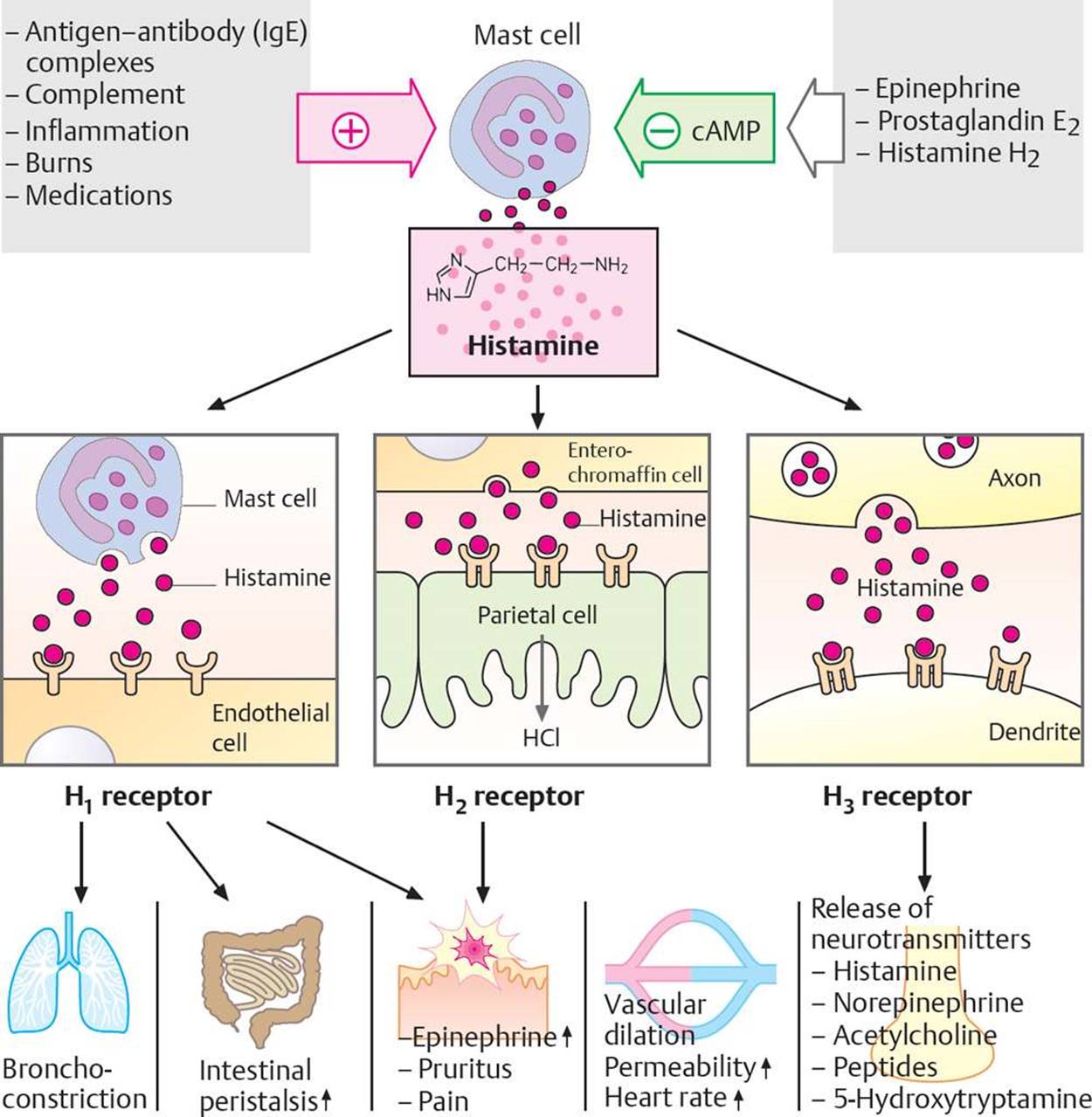
Release. Tissue release and production of histamine are stimulated by damage to cells and tissues (Fig. 32.1). Antigen-antibody reactions, snake venoms, and drugs (e.g., curare and morphine) can also liberate histamine from tissue stores.
Nitric oxide
Nitric oxide (NO) is a transmitter substance that is synthesized as required from arginine under the influence of the enzyme NO synthase. NO synthase is activated by Ca2+/calmodulin in neurons and endothelial cells. NO diffuses into neighboring cells, where it activates guanylate cyclase. This, in turn, activates protein kinase G, which blocks the nuclear IP3 receptor. This cascade of events results in decreased cytosolic Ca2+ concentration, and vasodilation. Histamine promotes vasodilation by causing the vascular endothelium to release NO.
Effects
– Cardiovascular system (effects are mediated by both H1 and H2 receptors): dilation of small blood vessels results in flushing and decreased systemic pressure. Increased capillary permeability results in edema.
– CNS: histamine acts as a neurotransmitter.
– Smooth muscle: with the exception of vascular smooth muscle (which is relaxed), most other smooth muscle is stimulated to constrict by histamine. Constrictor effects (H1) are most prominent in the bronchi and uterus. Responses of intestinal muscle vary, and there are few effects on the bladder, gallbladder, ureter, or iris.
– Glands: histamine stimulates secretions via H2 receptors from the salivary, bronchial, and gastric glands.
Fig. 32.1  Histamine.
Histamine is formed by tissue mast cells and basophils. Its release is stimulated by immunoglobulin E (IgE) complexes (type 1 hypersensitivity), activated complement, burns, inflammation, and some drugs. Its release is inhibited by epinephrine, prostaglandin E2, and feedback inhibition from histamine itself. The effects of histamine via its different receptors are shown.
– Nerve endings: histamine stimulates nerve endings via H1 receptors, causing pain and pruritus (itching).
– Inflammation: intradermally injected histamine elicits the following triple response: a localized red spot forms followed by a brighter red flush or flare extending ~1 cm beyond the original red spot, then a wheal that develops in 1 to 2 minutes.
Histamine and allergy
Allergy (also known as hypersensitivity [type I]) is an immune reaction to an allergen (e.g., pollen, dust, or insect stings) that would not elicit such a response in most people. When an allergen is encountered for the first time, it stimulates the production of immunoglobulin E (IgE). IgE attaches to mast cells and sensitizes these cells to this allergen, so that when it is next encountered, mast cells are stimulated to produce histamine and other inflammatory mediators (e.g., prostaglandins, interleukins, cytokines, and leukotrienes). The inflammatory mediators released are then responsible for producing all of the classic signs of allergy, such as rhinorrhea (runny nose), itch, swelling, and difficulty breathing. Anaphylactic shock is a severe type I hypersensitivity reaction characterized by generalized vasodilation, marked fall in blood pressure, and severe bronchoconstriction. Mediators other than histamine are also involved in the anaphylactic response, so the most effective treatment is epinephrine (given intramuscularly). Antihistamines and glucocorticoids decrease the magnitude of the late-occurring response (e.g., hives or itching).
H1 Antihistamines
Diphenhydramine, Promethazine, Chlorpheniramine, Loratadine, Fexofenadine, and Cetirizine
– First-generation H1 antihistamines: Diphenhydramine, promethazine, and chlorpheniramine. These agents have significant sedative, anticholinergic, and antiemetic effects.
– Second-generation H1antihistamines: Loratadine, fexofenadine, and cetirizine. These agents are nonsedating antihistamines.
Mechanism of action. H1 antihistamines block H1 receptors and prevent histamine-induced reactions, for example, increased vascular permeability, smooth muscle contraction, mucus production, and pruritus. They also inhibit the “wheal and flare” response of the skin.
Pharmacokinetics
– These agents are well absorbed following oral administration.
– They are widely distributed and extensively metabolized. They induce hepatic microsomal enzymes and may facilitate their own metabolism.
– First-generation agents can penetrate into the CNS, whereas second-generation agents show poor CNS penetration.
– Metabolites are eliminated in the urine (they are frequently eliminated more rapidly by children).
Effects
– Smooth muscle: these agents antagonize the constrictor action of histamine on respiratory and vascular smooth muscle. They also antagonize the changes in capillary permeability produced by histamine that results in edema.
– CNS: CNS depression is common with first-generation agents, characterized by sedation and decreased alertness. Paradoxical restlessness, nervousness, and insomnia are occasionally observed. These agents may possess antiemetic effects and are effective against motion sickness.
– Autonomic nervous system: anticholinergic effects
– Allergic reactions: antagonizes normal hypersensitivity symptoms
– Local anesthetics (promethazine): this effect is thought to be due to Na+ channel blockage in nervous tissue.
Uses
– Used for symptomatic relief of allergic rhinitis, allergic conjunctivitis, and the common cold
– Over-the-counter sedative drugs (diphenhydramine)
– Motion sickness, vertigo, and emesis (dimenhydrinate, meclizine, prochlorperazine, promethazine)
– Appetite suppressants
Side effects
– Sedation is the most common adverse effect and often is responsible for poor compliance.
– Loss of appetite, constipation or diarrhea, nausea, and vomiting
– Anticholinergic effects: dry mouth, cough, palpitations, and headache
– Allergic dermatitis (with topical application)
Toxicity. Initially, there are central excitatory effects, including hallucinations, excitement, ataxia, and convulsions. This can progress to coma, respiratory collapse, and death within 1 to 2 hours. Treatment is supportive, i.e., it involves treatment to prevent, control, or relieve side effects and complications.
H2 Antihistamines
These agents are also discussed in Chapter 27.
Cimetidine, Ranitidine, Famotidine, and Nizatidine
Mechanism of action. H2 antihistamines are competitive antagonists at the H2 receptor that inhibit gastric acid secretions elicited by histamine.
Gastric acid and histamine
Histamine is one of the main regulators of gastric acid secretion. It is released from enterochromaffin-like cells in response to stimulation by the vagus nerve and gastrin (a hormone). Once released, histamine acts on parietal cells to increase the activity of H+-K+-ATPase (the proton pump), which pumps H+ ions out of parietal cells in exchange for K+. The H+ ions cause an osmotic gradient across the membrane, resulting in an outward diffusion of water. The water then combines with H+ and Cl– ions to form gastric acid. (See call-out boxes on page 260 in Chapter 27.)
Pharmacokinetics
– Well absorbed orally and eliminated in the urine
– Cimetidine inhibits cytochrome P-450 in the liver, which metabolizes many drugs, thus potentiating the effects of such drugs.
Uses
– Treatment of peptic ulcers
– Treatment of gastroesophageal reflux disease (GERD)
Side effects. These include diarrhea, nausea and vomiting, dizziness, headaches, and skin rashes. Cimetidine may also cause loss of libido, impotence, and gynecomastia.
Inhibitors of Histamine-and Leukotriene Release from Mast Cells
Cromolyn Sodium and Nedocromil Sodium
These drugs are also discussed in Chapter 26.
Mechanism of action. These agents inhibit mast cell degranulation of histamine and other inflammatory mediators. They also reduce bronchial hyperresponsiveness.
Uses
– Used prophylactically for asthma
– Seasonal allergic rhinitis
Side effects. Side effects are minimal.
Other Histamine-Related Drug: Anti-IgE Antibody
Omalizumab
Mechanism of action. Omalizumab is a recombinant humanized monoclonal antibody directed against IgE. It binds to free IgE, thus preventing activation of mast cells and basophils.
Uses. IgE-mediated allergic asthma and has been proposed for use in other type I allergic reactions.
Table 32.2 summarizes the effects of serotonin, bradykinin, and histamine.
|
Table 32.2 |
|||
|
System |
Serotonin |
Bradykinin |
Histamine |
|
Smooth muscle: Vascular Bronchial Uterine Gastrointestinal |
Direct vasoconstriction and endothelial-mediated dilation Mild contraction Contraction Contraction |
Vasodilation Contraction Contraction Contraction |
Vasodilation Contraction Contraction Contraction |
|
Inflammation |
Mediator |
Mediator |
Mediator |
|
Platelet aggregation |
Enhances |
Inhibits |
Enhances |
|
Gastrointestinal system |
Stimulates smooth muscle to increase peristalsis |
Stimulates gastric acid secretion |
|
|
Cardiovascular system |
Direct vasoconstriction of pulmonary and lung vessels Endothelial-mediated vasodilation in heart and skeletal muscle |
Vasodilation, lowering blood pressure |
Vasodilation, lowering blood pressure Increases capillary permeability, leading to edema |
|
Central nervous system |
Ascending systems: – Sleep – Determining mood Descending systems: – Modulating perception of pain |
Acts as a neurotransmitter |
|
|
Peripheral nervous system |
Sensitizes sensory nerve endings, causing pain and itching |
Sensitizes sensory nerve endings to pain |
Sensitizes sensory nerve endings, causing pain and itching |
32.4 Eicosanoids and Related Drugs
Eicosanoids
Eicosanoids (eicosa = Greek for 20) are a group of autocoids derived from the 20-carbon fatty acid, arachidonic acid, and include the prostaglandins, prostacyclins, thromboxanes, and leuko trienes.
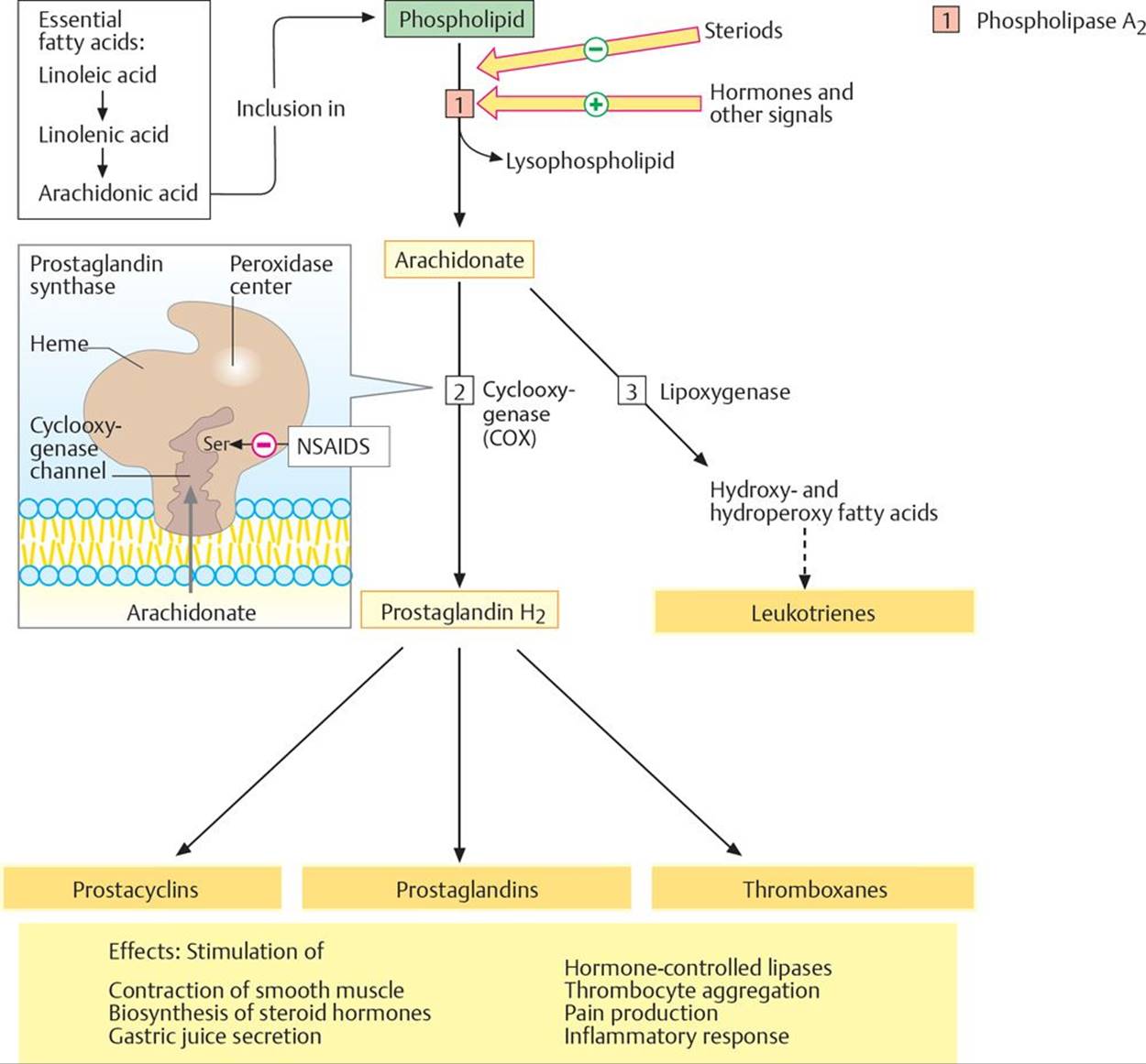
Synthesis. Eicosanoids are generated from cell membrane phospholipids. Phospholipase A2 is activated by hormones or other stimuli to form arachidonate, which is then metabolized by cyclooxygenases (COX-1, COX-2, and COX-3) to form prostaglandin H2 (PGH2). Alternatively, arachidonate is metabolized by lipoxygenase to form the leukotrienes. PGH2 is further converted to prostacyclin, other prostaglandins, and thromboxanes (Fig. 32.2). The eicosanoids bind to specific G protein-coupled receptors.
Fig. 32.2 Eicosanoid synthesis.
Arachidonic acid, a polyunsaturated fatty acid found in membrane phospholipids, is the starting material for eicosanoids. The arachidonate moiety is released from the phospholipids by the action of the enzyme phospholipase A2 (1). Phospholipase A2 is activated by hormones and other signals (via G proteins), and it is inactivated by steroids. Arachidonic acids may then form prostaglandin H2 (PGH2) when acted upon by cyclooxygenase (COX) (2). PGH2 is the parent substance for prostacyclins, prostaglandins, and thromboxanes. In a different pathway, PGH2 may be acted upon by lipoxygenase (3), forming hydro- and hydroperoxy fatty acids, which then form leukotrienes. Aspirin (acetylsalicylic acid) and related nonsteroidal antiinflammatory drugs (NSAIDs) inhibit the cyclooxygenase activity of prostaglandin synthase, so the formation of most eicosanoids is blocked. This explains their analgesic, antipyretic, and antirheumatic effects.
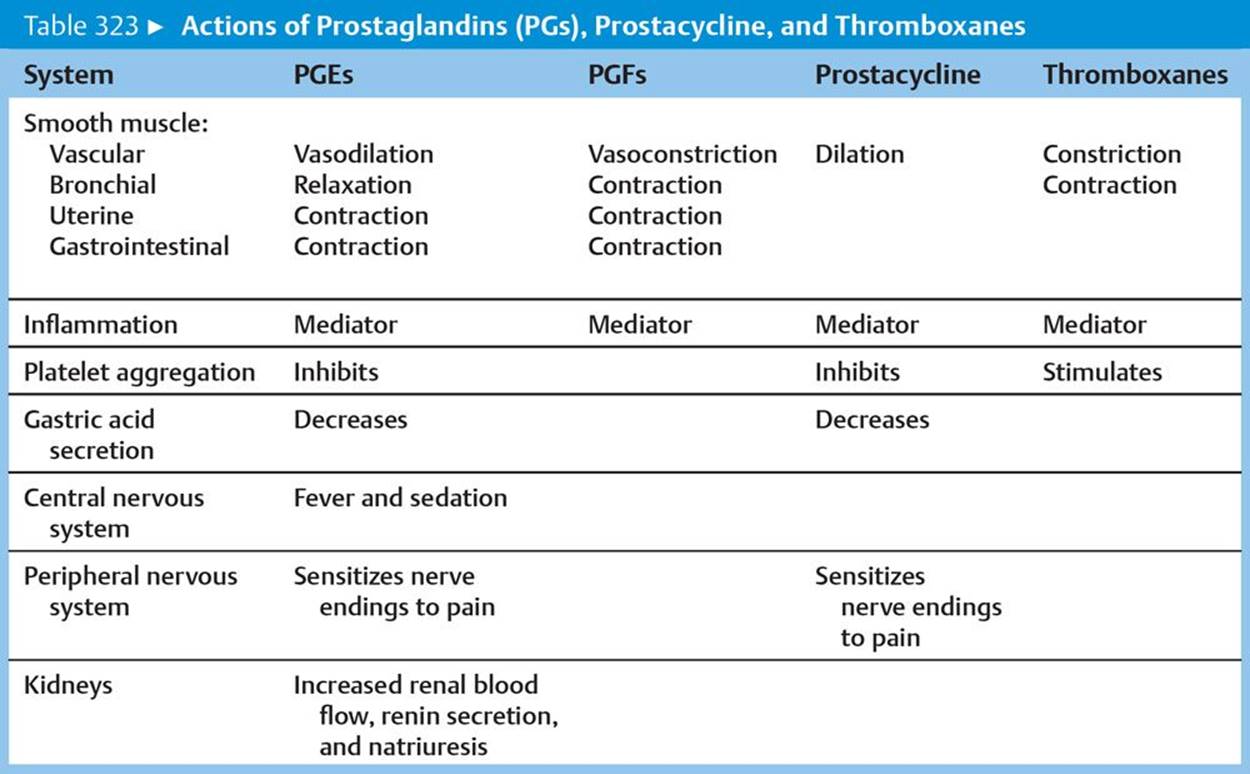
Effects. The major effects of prostaglandin, prostacyclin, and thromboxanes are summarized in Table 32.3.
Ductus arteriosus
Prostaglandin E (PGE2) is responsible for keeping the ductus arteriosus open during fetal development. The ductus arteriosus is the vascular connection between the pulmonary artery and aorta that allows blood to bypass the fetus's lungs in utero. It begins to close shortly after birth. If it fails to close, the condition is known as patent ductus arteriosus. This can be closed surgically or by using indomethicin, a nonsteroidal antiinflammatory drug (NSAID), which inhibits prostaglandin synthesis.
Prostaglandins in sperm
Sperm is rich in prostaglandins. Prostaglandins help to soften and ripen the cervix, which is why sexual intercourse is advocated as a natural way to induce labor around the time of the due date.
Prostaglandin Agonists
Alprostadil
Mechanism of action. Alprostadil is a prostaglandin E1 analogue that relaxes vascular smooth muscle, causing vasodilation.
Uses
– Maintaining the patency of ductus arteriosus in neonates who are dependent on the patent ductus for survival while they are awaiting surgery to repair the congenital heart defect. It is administered intravenously (IV).
– Treatment of erectile dysfunction in patients not responding to other therapies (behavioral therapy, vacuum constriction devices, or selective phosphodiesterase type 5 inhibitors). It is administered by intracavernosal injection or intraurethral suppository.
Side effects. No side effects have been noted.
Bimatoprost, Latanoprost, and Travoprost
Mechanism of action. These agents are prostaglandin F2α analogue agonists.
Uses
– Ocular hypertension or open-angle glaucoma. These agents are believed to reduce intraocular pressure by increasing uveoscleral outflow. They are administered as eyedrops.
– Hypotrichosis (reduced amount of hair) of the eyelashes (bimatoprost)
Dinoprostone and Carboprost Tromethamine
Mechanism of action
– Dinoprostone is a synthetic form of PGE2.
– Carboprost tromethamine is a synthetic form of 15-methyl PGF2α.
Uses
– Abortifacients (second trimester)
– Induction of labor at term
Misoprostol
Mechanism of action. Misoprostol is a synthetic PGE1 methyl ester.
Uses
– Abortifacient (in combination with mifepristone [see page 165]
– Prophylaxis of NSAID-induced gastric ulcers (as it is a potent inhibitor of gastric secretion of acid)
Contraindications. Do not administer any of the above synthetic prostaglandin agents to pregnant women, as they can cause abortion, premature birth, or birth defects.
Prostaglandin Antagonists: Nonsteroidal Antiinflammatory Drugs
Aspirin (Acetylsalicylic Acid)
Mechanism of action. NSAIDs (including aspirin) block the synthesis of prostaglandins by inhibiting cyclooxygenase and the formation of both PGG2 and PGH2, the precursors of all other prostaglandins. This mechanism is discussed in more detail in Chapter 33.
Prostaglandin Antagonists: Corticosteroids
Prednisone
Mechanism of action. Corticosteroids block the synthesis of prostaglandins by inhibiting the enzyme phospholipase A2, which blocks the conversion of membrane phospholipids into arachidonic acid, the precursor of all of the eicosanoids.
32.5 Leukotrienes and Related Drugs
Leukotrienes
Synthesis. See eicosanoid synthesis.
Location. Leukotrienes are produced in cells involved in inflammatory responses: mast cells, basophils, and eosinophils.
Effects
– Leukotrienes are involved in the development of the inflammatory responses by promoting endothelial cell adherence of inflammatory mediators, leukocyte chemotaxis (movement in response to the influence of chemical stimulation), and chemokine (a family of chemotactic cytokines) production at the site of inflammation.
– Leukotrienes are potent bronchoconstrictors.
Leukotriene Modifier Agents
These agents are discussed in Chapter 26 for the treatment of asthma.
 Serotonin Agents and Uses