
Drugs that mimic or enhance the actions of norepinephrine or epinephrine in adrenergic neurotransmission are termed sympathomimetics. These include the endogenous catecholamines, synthetic catecholamines, and directly- and indirectly-acting synthetic sympathomimetic drugs.
Drugs that inhibit adrenergic function are termed sympatholytics. These include the adrenergic receptor antagonists and drugs that deplete catecholamines.
6.1 Catecholamine Sympathomimetics
Endogenous Catecholamines
Norepinephrine
Norepinephrine is also discussed on pages 38 and 39.
Mechanism of action. Norepinephrine stimulates α1-, α2-, β1-, and β2-adrenergic receptors.
Effects
– Arterioles in the skin and mucosa, as well as splanchnic, renal, and coronary vascular beds, are directly constricted (α1 and α2). See Fig. 6.1.
– Total peripheral resistance (TPR), diastolic and systolic blood pressure (BP) increase. Increased BP activates baroreceptors to reflexly decrease sympathetic tone and to increase vagal activity.
– The direct effect on β1-adrenergic receptors of the heart to increase heart rate, force, and velocity of contractions is offset by this reflex vagal slowing of the heart rate (Fig. 6.2).
– Glycogenolysis occurs in the liver and skeletal muscle (β2) and lipolysis occurs in adipose tissue (β2 and β2). This is illustrated in Fig. 6.3.
Baroreceptor reflex
The baroreceptor reflex allows the body to compensate rapidly for changes in arterial pressure. It is mediated by receptors sensitive to mechanical stretch that are located in the carotid sinuses and in the walls of the aortic arch. The carotid sinus baroreceptors respond to both increases and decreases in arterial pressure; aortic arch baroreceptors only respond to increases in arterial pressure. Decreased arterial pressure causes carotid sinus baroreceptors to experience a reduced amount of stretch. This decreases the rate of action potential firing of the glossopharnygeal nerve (cranial nerve [CN] IX), which innervates the carotid sinus. Impulses from CN IX are then relayed to the vasomotor center in the medulla oblongata, which increases sympathetic outflow. This results in increased heart rate, contractility, and stroke volume. This also results in venoconstriction, which reduces the capacitance of veins thus increasing preload and cardiac output (via the Frank-Starling mechanism) and vasoconstriction of arterioles.
Fig. 6.1  Effects of catecholamines on vascular smooth muscle.
Differences in signal transduction are responsible for the opposing effects of α- and β-adrenergic receptor activation by epinephrine or norepinephrine. Binding to α1 causes stimulation of phospholipase C (PLC) and inositol triphosphate (IP3) and the release of Ca2+. Ca2+ and calmodulin then activate the enzyme myosin kinase, which phosphorylates myosin, leading to vasoconstriction. Binding to α2-adrenergic receptors also activates PLC via different subunits on G proteins. Binding to β2-adrenergic receptors activates adenylate cyclase, which increases cyclic adenosine monophosphate (cAMP) production intracellularly. Myosin kinase is inhibited by cAMP, leading to vasodilation.

Fig. 6.2 Cardiac effects of catecholamines.
Stimulation of β receptors in cardiac muscle increases cyclic adenosine monophosphate (cAMP), which then opens “pacemaker” channels. This hastens diastolic depolarization and reduces the threshold for action potential generation, resulting in an increase in conduction velocity, and thus increased heart rate. cAMP also activates protein kinase A, which phosphorylates various Ca2+ transport proteins, leading to more Ca2+ entering the cell and more Ca2+ being released from the sarcoplasmic reticulum. This results in greater contraction of heart muscle. The necessary accompanying increased rate of heart muscle relaxation is caused by the phosphorylation of troponin and phospholamban.

Fig. 6.3 Metabolic effects of catecholamines.
Stimulation of β receptors increases cyclic adenosine monophosphate (cAMP). This causes glycogenolysis in the liver and skeletal muscle, with glucose being released into the bloodstream. Lipolysis occurs in adipose tissue, causing the hydrolysis of triglycerides to fatty acids (and glycerol). These fatty acids are also released into the bloodstream.

Epinephrine
Epinephrine is also discussed on page 39.
Mechanism of action. Epinephrine stimulates α1-, α2-, and β2-adrenergic receptors (Fig. 6.4).
Pharmacokinetics
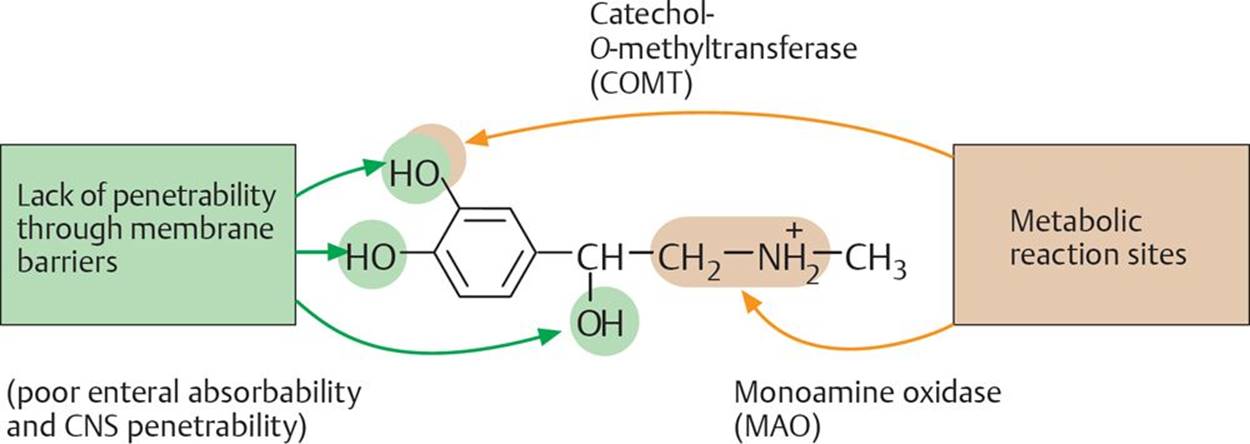
– Given by intravenous (IV) infusion as it has poor enteral absorbability (Fig. 6.5).
Fig. 6.4 Interaction between epinephrine and the β2-adrenergic receptor.
Epinephrine and other adrenergic receptor agonists typically share a phenylethylamine structure. The hydroxyl group on the side chain (pink) has an affinity to both α and β receptors. Substitution on the amino group (blue) decreases the affinity to α but increases the affinity to β receptors. Increasing the bulk of this amino substitute favors the β2 receptor. Both hydroxyl groups on the aromatic ring (purple) also contribute to affinity. If these hydroxyl groups are at positions 3 and 4, the ligand will have a greater affinity to α receptors, but if they are at positions 3 and 5, they will have greater affinity to β receptors.

Fig. 6.5 Structure–activity relationship of epinephrine.
Epinephrine and other catecholamines have poor lipophilicity and so have poor absorbability and penetrability through lipid membranes. This is caused by the hydroxyl group; thus, deletion of one or more of the hydroxyl groups will improve penetrability. Substances without one or more of the aromatic hydroxyl groups will have increased indirect sympathomimetic activity. A change in the position of one or more of the aromatic hydroxyl groups or their substitution prevents inactivation by catechol-O-methyltransferase (COMT). Introduction of a small alkyl residue on the carbon atom adjacent to the amino group prevents the breakdown of epinephrine by monoamine oxidase (MAO).
Effects
– With small doses or with slow infusion, vasodilation occurs (skeletal muscle), and diastolic BP decreases (β2 effect).
– With larger doses, vasoconstriction (skin and splanchnics) occurs, and TPR is increased (α effect). See Fig. 6.1.
– The direct effect on β1 receptors of the heart is the same as for norepinephrine: increased heart rate, force, and velocity of contraction. These effects combine to increase cardiac output. At large doses, it causes reflex vagal slowing of the heart and decreased cardiac output despite direct effects (Fig. 6.2).
Uses
– Often added to local anesthetic preparations to produce local vasoconstriction which decreases local bleeding and increases the duration of action of the anesthetic.
– Used clinically to treat anaphylaxis (parenterally) and bronchospasm (subcutaneously) and for minor bleeding (topically).
Dopamine
Dopamine is a precursor in the formation of norepinephrine and epinephrine in the peripheral nervous system.
Mechanism of action. Dopamine acts on dopamine receptors and on α1- and β1-adrenergic receptors (Fig. 6.6) in the peripheral autonomic nervous system.
Effects
– Increases BP and heart rate (β1 effect)
– In the CNS, it acts as a neurotransmitter, especially in the extrapyramidal motor system.
Pharmacokinetics
– Given by IV infusion as it is not orally effective
Uses
– Can be given to boost cardiac output in shock or heart failure
Synthetic Catecholamines
Isoproterenol
Mechanism of action. Isoproterenol acts directly on all subtypes of β-adrenergic receptors with no α action.
Effects
– Increases heart rate, force of contraction, and cardiac output with no reflex vagal activation (direct β1 effects).
– Vasodilation, resulting in decreased diastolic BP and decreased TPR (β2 effects).
Uses
– Torsades de points (with Mg2+). See call-out box on p. 217.
– Cardiac arrest or complete heart block (rarely)
– Asthma or COPD (rarely)
Fig. 6.6 Dopamine as a therapeutic agent.
Dopamine can be given as an infusion to treat circulatory shock with impaired renal blood flow. In this case, binding to the D1 receptor causes dilation of the renal and splanchnic arteries, thus increasing renal blood flow and reducing cardiac afterload. At higher doses, dopamine will stimulate β1receptors, resulting in cardiac stimulation, and at progressively higher doses, it will also stimulate α1 receptors. This will produce vasoconstriction, which would be undesirable in this case.

Dobutamine
Mechanism of action. Dobutamine is a direct-acting, selective β1-adrenergic receptor a gonist.
Pharmacokinetics
– Given by IV infusion
Effects
– Increases contractility and heart rate (contractility > heart rate)
Uses
– Severe congestive heart failure
6.2 Noncatecholamine Sympathomimetics
Noncatecholamine sympathomimetics may exert effects by direct or indirect actions. Direct sympathomimetics act to stimulate α- or β-adrenergic receptors. Indirect sympathomimetics may release stored norepinephrine from nerve terminals or may block reuptake mechanisms (many do both).
Direct-acting Sympathomimetics
Phenylephrine, Methoxamine, and Metaraminol
Mechanism of action. These agents are direct-acting α-adrenergic receptor agonists.
Effects
– Increases BP
Uses
– These drugs may be used to restore blood pressure during spinal or general anesthesia, in hypotensive emergencies, or after overdose of an antihypertensive medication.
– Nasal decongestant (phenylephrine)
Clonidine
Mechanism of action. Clonidine is a selective α2-agonist (Fig. 6.7).
Fig. 6.7 Inhibitors of sympathetic tone.
Clonidine is an α2 agonist that is lipophilic and so is able to penetrate the blood–brain barrier. Stimulation of central α2 receptors suppresses sympathetic impulses in the vasomotor center of the medulla oblongata, resulting in reduced arterial pressure. Methyldopa is an amino acid and as such is able to cross the blood–brain barrier. Methyldopa is decarboxylated in the brain to α-methyldopamine and is then hydroxylated to α-methylnorepinephrine (NE). The decarboxylation step requires dopa decarboxylase; thus reducing the amount of the enzyme available to convert l-dopa to NE.

Effects
– Acts in the CNS to decrease sympathetic outflow to periphery
Uses
– Hypertension
Metaproterenol, Terbutaline, and Albuterol
Mechanism of action. These agents are direct-acting β2-adrenergic receptor agonists.
Effects
– Bronchodilation
– Minimal cardiac effects
Uses
– Asthma
– Sometimes used to inhibit uterine contractions in premature labor
Mixed-acting Sympathomimetics
Amphetamine, Methamphetamine, and Ephedrine
Mechanism of action. These agents act as agonists at adrenergic receptors, cause the release of endogenous norepinephrine and inhibit its reuptake.
Pharmacokinetics
– Orally effective
Effects
– Increase BP, heart rate, and contractility
– Bronchodilation
– Mydriasis without cycloplegia
– Nasal decongestion
– Also act as stimulants in the CNS
Uses
– Attention deficit hyperactivity disorder (amphetamine) (see page 123)
– Nasal decongestant (ephedrine, but this was discontinued due to CNS stimulatory actions)
– Drug of abuse (methamphetamine)
Tolerance
– Readily develops to the CNS stimulant effects, appetite suppression, and mood elevation.
Tyramine
Mechanism of action. Tyramine causes the release of norepinephrine from sympathetic nerve terminals.
Effects
– Increases BP
Uses
– No therapeutic uses
Drug interactions. Tyramine may precipitate hypertensive crisis when ingested with MAO inhibitors (pp. 87–88).
6.3 Drugs Inhibiting Sympathetic Function (Sympatholytics)
α-Blockers
Phenoxybenzamine and Phentolamine
Mechanism of action. These agents are antagonists at both α1 and α2 receptors.
– Phenoxybenzamine is an irreversible, noncompetitive antagonist.
– Phentolamine is a competitive antagonist.
Effects. These agents block vasoconstriction caused by sympathetic nerve stimulation or sympathomimetic drugs, producing a fall in BP.
Uses
– Used during treatment of pheochromocytoma to prevent the effects of epinephrine released from tumor
Side effects
– Postural (orthostatic) hypotension, reflex tachycardia, miosis, nasal stuffiness, and inhibited ejaculation
Pheochromocytoma
Pheochromocytoma is a rare, benign tumor of the adrenal medulla (90% unilateral) that produces catecholamines. Signs and symptoms include hypertension, cardiomyopathy, weight loss, hyperglycemia, and periods of crisis, lasting ~15 minutes, characterized by fear, headache, palpitations, sweating, nausea, tremor, and pallor. Treatment involves reduction of blood pressure with phenoxybenzamine and propranolol, followed by surgery to remove the tumor.
Prazosin, Terazosin, and Doxazosin
Mechanism of action. These agents are selective blockers of α1 receptors.
Uses
– Hypertension
Side effects
– Benign prostatic hypertrophy
Note: The first dose may produce a precipitous hypotensive effect.
β-Blockers
Propranolol, Nadolol, and Timolol
Mechanism of action. These agents are nonselective β-receptor antagonists (block both β1- and β2-adrenergic receptors).
Uses
– Hypertension, angina, and cardiac arrhythmias. They are also used to reduce the incidence of myocardial reinfarction (Fig. 6.8).
– Glaucoma
– Treatment of the peripheral effects of hyperthyroidism
– Prophylactic agents for migraine headache
Side effects
– Hypotension, bradycardia, increased airway resistance, decreased response to hypoglycemia, and fatigue
Note: Use with caution in patients with heart disease, asthma, or diabetes (may mask the tachycardic sign of hypoglycemia in diabetics taking insulin).
Acebutolol, Atenolol, Esmolol, and Metoprolol
Mechanism of action. These agents are cardioselective β1-adrenergic receptor antagonists (50 times more potent for β1).
Effects. These agents are designed to have less effect on bronchial smooth muscle than the nonselective agents (Fig. 6.9).
Fig. 6.8 Beta-blockers: effect on cardiac function.
Beta-blockers antagonize epinephrine and norepinephrine at β receptors. They reduce cardiac work to its base (“coasting”) level and ensure that it cannot be stimulated above this level. As a consequence of this reduced cardiac work, oxygen consumption in cardiac muscle is reduced. Beta-blockers also reduce heart rate and blood pressure and protect the failing heart against excessive sympathetic stimulation. However, exercise capacity is reduced because the heart cannot respond in the normal way to β1 stimulation. 1 sec

Fig. 6.9 Beta-blockers: effect on bronchial and vascular tone.
Beta-blockers cause bronchoconstriction in healthy individuals. In asthmatic patients, β-blockers may cause bronchospasm, leading to acute respiratory distress. Beta-blockers also cause partial vasoconstriction of blood vessels as β2-mediated vasodilation is blocked, but α-mediated vascular tone is maintained.

Labetalol
Mechanism of action. Labetalol is an α1 antagonist, a nonselective β antagonist, and a weak β2-adrenergic receptor agonist.
Uses
– Used to treat hypertension and clonidine withdrawal syndrome
Side effects
– Postural (orthostatic) hypotension (α) as well as β side effects listed above
6.4 Drugs that Deplete Catecholamines
Reserpine
Mechanism of action. Reserpine prevents the storage and reuptake of norepinephrine thus causing neuronal depletion of norepinephrine. It also depletes stores of epinephrine, dopamine, and serotonin (Fig. 6.10).
Effects. CNS effects include sedation.
Uses
– Hypertension
Guanethidine
Mechanism of action. Guanethidine blocks action potential propagation at fine terminals and acts like reserpine to deplete norepinephrine (Fig. 6.10). It must be taken up by nerve endings; thus, the effect is blocked by reuptake inhibitors (tricyclic antidepressants and cocaine).
Uses. Hypertension (rarely used)
Fig. 6.10 Inhibitors of sympathetic tone.
Reserpine prevents norepinephrine (NE) storage and causes the depletion of NE, dopamine, and serotonin by inhibiting a membrane transporter in storage vesicles. Free NE can then be degraded by monoamine oxidase. No epinephrine is released from the adrenal medulla. Guanethidine is taken up by the vesicular amine transporters and stored instead of NE, but it does not function as NE. It also blocks action potentials by stabilizing the axonal membrane. (CNS, central nervous system; DA dopamine; 5HT, 5-hydroxytryptamine.)
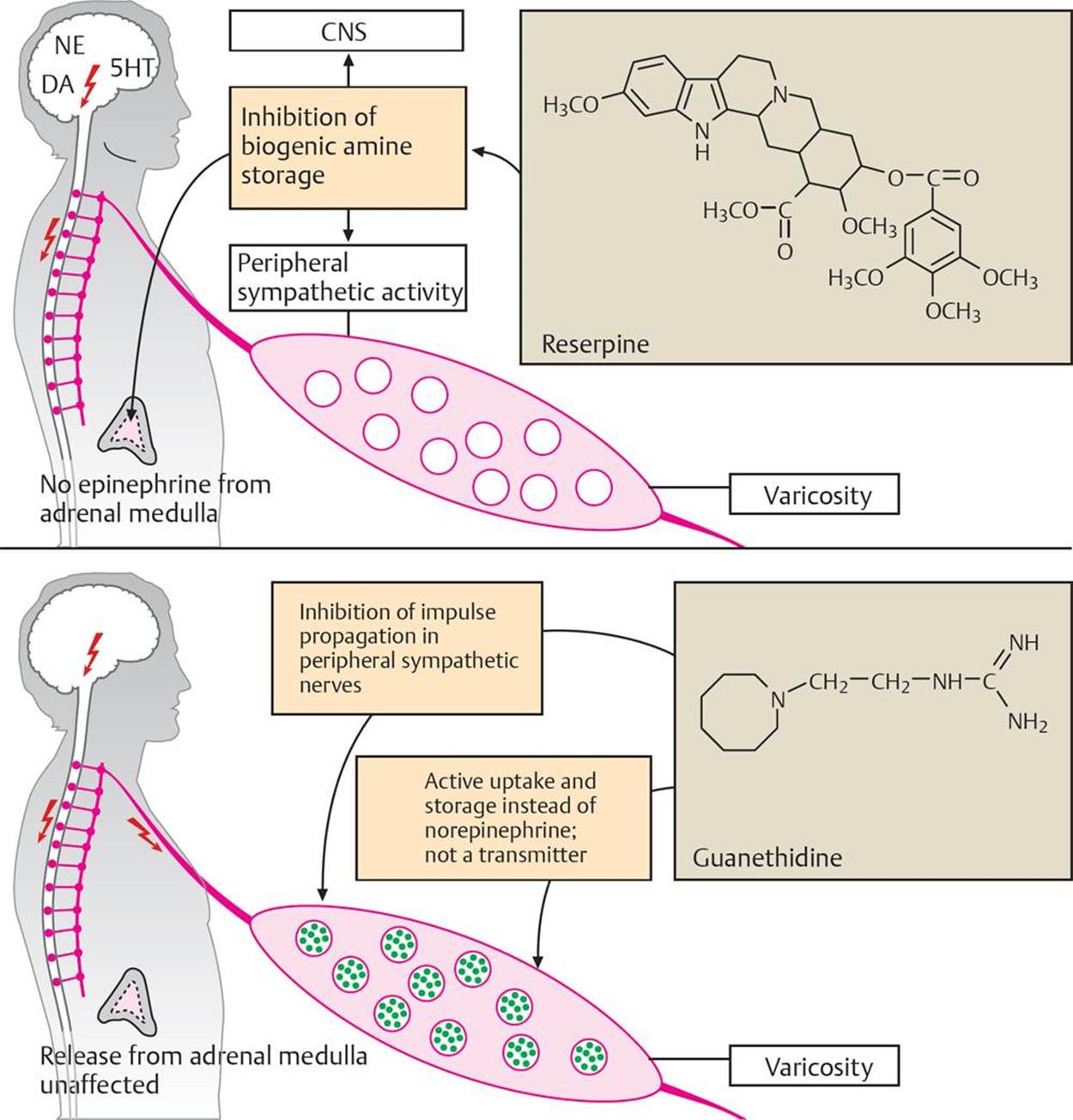
Table 6.1 Summarizes the receptor activation of adrenergic agonists and antagonists.
|
Table 6.1 |
|
|
Drug |
Receptor Affected |
|
Agonists |
|
|
Norepinephrine |
α1, α2, β1, β2 |
|
Epinephrine |
α1, α2, β1, β2, β3 |
|
Dopamine |
α1, β1 |
|
Isoproterenol |
β1, β2 |
|
Phenylephrine |
α1 |
|
Clonidine |
α2 |
|
Albuterol Terbutaline |
β2 |
|
Antagonists |
|
|
Phentolamine Phenoxybenzamine |
α1, α2 |
|
Propranolol Nadolol Timolol |
β1, β2 |
|
Prazosin |
α1 |
|
Yohimbine |
α2 |
|
Atenolol Metoprolol |
β1 |
 Interactions of Drugs with Adrenergic Receptors