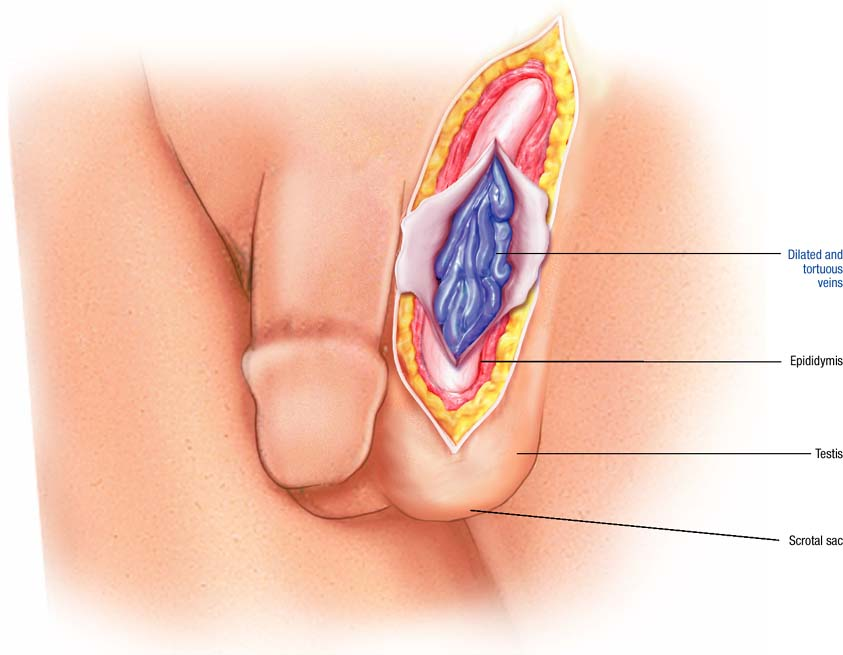
A mass of dilated and tortuous varicose veins in the spermatic cord is called a varicocele. It's classically described as a “bag of worms.” Thirty percent of all men diagnosed with infertility have a varicocele; 95% of cases affect the left spermatic cord.
 Age Alert
Varicoceles are more common in men between ages 15 and 25.
Causes
· Incompetent or congenitally absent valves in spermatic veins
· Tumor or thrombus obstructing inferior vena cava (unilateral left-sided varicocele)
 Clinical Tip
Sudden development of a varicocele in an older man may be caused by a renal tumor that has affected the renal vein and altered blood flow into the spermatic vein.
Pathophysiology
As a result of a valvular disorder in the spermatic vein, blood pools in the pampiniform plexus of veins that drain each testis rather than flowing into the venous system. One function of the pampiniform plexus is to keep the testes slightly cooler than the body temperature, which is the optimum temperature for sperm production. Inadequate blood flow through the testis thus compromises spermatogenesis and may lead to testicular atrophy.
Signs and symptoms
· Usually asymptomatic
· Feeling of heaviness on the affected side
· Testicular pain and tenderness on palpation
Diagnostic test results
None exist. A physical examination is performed.
Treatment
· Mild varicocele (fertility not a concern): scrotal support to relieve discomfort
· To retain or restore fertility, surgical repair or removal by ligation of the spermatic cord at the internal inguinal ring
P.347
VARICOCELE
|
|