
Basic Craft Recipes
Children begin to develop creative skills at a very early age. Most don’t care as much about what they make as about the process of working with materials of many different colors and textures. Whether it’s the process or the product that interests your child, the craft materials in this appendix are essential for his artwork. On the following pages you’ll find easy recipes for paint, glue, paste, modeling compounds, and more.
PAINT
Each of the following recipes will produce a good-quality paint for your child’s use. The ingredients and preparation vary from recipe to recipe, so choose one that best suits the supplies and time you have available.
When mixing paint, keep in mind the age of your young artist. As a general rule, younger children require thicker paint and brushes. Paint should always be stored in covered containers. Small plastic spillproof paint containers are available at art supply stores. Each comes with an airtight lid, holds brushes upright without tipping, and is well worth the purchase price of several dollars.
Flour-Based Poster Paint
1/4 cup flour
Saucepan
1 cup water
Small jars or plastic containers
3 tablespoons powdered tempera paint per container
2 tablespoons water per container
1/2 teaspoon liquid starch or liquid detergent per container (optional)
Measure the flour into a saucepan. Slowly add 1 cup of water while stirring the mixture to make a smooth paste. Heat the paste, stirring constantly, until it begins to thicken. Let it cool. Measure 1/4 cup of the paste into each container. Add 3 tablespoons of powdered tempera paint and 2 tablespoons of water to each container. If you like, add liquid starch for a matte finish or liquid detergent for a glossy finish.
Cornstarch Paint
1/2 cup cornstarch
Medium saucepan
1/2 cup cold water
4 cups boiling water
Small jars or plastic containers
1 teaspoon powdered tempera paint or 1 tablespoon liquid tempera paint per container
Measure the cornstarch into a saucepan. Add the cold water and stir the mixture to make a smooth, thick paste. Stir in the boiling water. Place the saucepan over medium-low heat and stir the paste until it’s boiling. Boil the paste for 1 minute, then remove it from the heat and let it cool. Spoon about 1/2 cup of the paste into each container. Stir 1 teaspoon of powdered tempera paint or 1 tablespoon of liquid tempera paint into each container, using a different container for each color. (Use more paint for a more intense color.) If the paint is too thick, stir in 1 teaspoon of water at a time until the desired consistency is achieved. Cover the containers and refrigerate them for storage.
Detergent Poster Paint
Small jars or plastic containers
1 tablespoon clear liquid detergent per container
2 teaspoons powdered tempera paint per container
In each container, mix 1 tablespoon of detergent and 2 teaspoons of powdered paint. Use a different container for each color.
Edible Egg Yolk Paint
Small jars or plastic containers
1 egg yolk per container
1/4 teaspoon water per container
Food coloring
In each container, mix 1 egg yolk with 1/4 teaspoon of water and many drops of food coloring. Use a paintbrush to apply paint to freshly baked cookies. Return cookies to the warm oven until the paint hardens.
Cornstarch Finger Paint
3 tablespoons sugar
1/2 cup cornstarch
Medium saucepan
2 cups cold water
Muffin pan or small cups
Food coloring
Soap flakes or liquid detergent
Mix the sugar and cornstarch in a saucepan. Turn the heat on low, add the water, and stir the mixture constantly until it’s thick. Remove it from the heat. Spoon the mixture into 4–5 muffin pan sections or small cups. Add a few drops of food coloring and a pinch of soap flakes or a drop of liquid detergent to each cup. Stir the paint and let it cool before use. Cover the paint and refrigerate it for storage.
Flour Finger Paint
1 cup flour
2 tablespoons salt
Saucepan
11/2 cups cold water
Wire whisk or eggbeater
11/4 cups hot water
Food coloring or powdered tempera paint
Mix the flour and salt in a saucepan. Beat in the cold water until the mixture is smooth. Mix in the hot water and boil the mixture until it’s thick, then beat it again until it’s smooth. Tint the paint however you like with food coloring or powdered tempera paint. Cover the paint and refrigerate it for storage.
PLAY DOUGH
Each of the following recipes produces a good-quality play dough. Some require cooking and some don’t; some are meant to be eaten and some aren’t. Choose the recipe that best suits your needs and the ingredients you have on hand. Store play dough in a covered container or Ziploc bag. If it sweats a little, just add more flour. For sensory variety, warm or chill the play dough before use.
Oatmeal Play Dough
Your child will be able to make this play dough with little help, but it doesn’t last as long as cooked play dough. This play dough isn’t meant to be eaten, but it won’t hurt a child who decides to taste it.
1 part flour
1 part water
2 parts oatmeal
Bowl
Place all the ingredients in a bowl; mix them well and knead the dough until it’s smooth. Cover the play dough and refrigerate it for storage.
Uncooked Play Dough
Bowl
1 cup cold water
1 cup salt
2 teaspoons vegetable oil
Tempera paint or food coloring
3 cups flour
2 tablespoons cornstarch
In a bowl, mix the water, salt, oil, and enough tempera paint or food coloring to make a brightly colored mixture. Gradually blend in the flour and cornstarch until the mixture has the consistency of bread dough.
Peanut Butter Play Dough
2 cups peanut butter
6 tablespoons honey
Nonfat dry milk or milk plus flour
Bowl
Cocoa or carob powder (optional)
Edible decorations like chocolate chips, raisins, candy sprinkles, and colored sugar
Mix the first 3 ingredients in a bowl, using enough dry milk or milk plus flour to give the mixture the consistency of bread dough. Flavor the dough with cocoa or carob powder if you like. Shape the dough, decorate it with edible treats, and eat your artwork!
Salt Play Dough
1 cup salt
1 cup water
1/2 cup plus additional flour
Saucepan
Mix the salt, water, and 1/2 cup of flour in a saucepan. Stir and cook the mixture over medium heat. Remove it from the heat when it’s thick and rubbery. As the mixture cools, knead in enough additional flour to make the dough workable.
Colored Play Dough
Cream of tartar makes this play dough last 6 months or longer, so resist the temptation to omit this ingredient if you don’t have it on hand.
1 cup water
1 tablespoon vegetable oil
1/2 cup salt
1 tablespoon cream of tartar
Food coloring
Saucepan
1 cup flour
Mix the water, oil, salt, cream of tartar, and a few drops of food coloring in a saucepan and heat the mixture until it’s warm. Remove the mixture from the heat and stir in the flour. Knead the dough until it’s smooth.
Kool-Aid Play Dough
This dough will last 2 months or longer.
1/2 cup salt
2 cups water
Saucepan
Food coloring, powdered tempera paint, or Kool-Aid powder
2 tablespoons vegetable oil
2 cups sifted flour
2 tablespoons alum
Mix the salt and water in a saucepan and boil the mixture until the salt dissolves. Remove the mixture from the heat and tint it with food coloring, powdered tempera paint, or Kool-Aid powder. Add the oil, flour, and alum. Knead the dough until it’s smooth.
CLAY
Use the following recipes to make clay that can be rolled or shaped into sculptures. Some clays should be dried overnight, while others are best baked in an oven. When hard, sculptures can be decorated with paint, markers, and/or glitter and preserved with shellac, acrylic spray, or clear nail polish. Store leftover clay in a covered container or Ziploc bag. Please note that none of these clays is edible.
Modeling Clay
2 cups salt
2/3 cup water
Saucepan
1 cup cornstarch
1/2 cup cold water
Stir the salt and 2/3 cup of water in a saucepan over heat for 4–5 minutes. Remove the mixture from the heat. Blend in the cornstarch and cold water until the mixture is smooth. Return it to the heat and cook it until it’s thick. Let the clay cool, then shape it however you like. Let your sculpture dry overnight before decorating and finishing it.
Baker’s Clay
4 cups flour
1 cup salt
1 teaspoon alum
11/2 cups water
Large bowl
Food coloring (optional)
Rolling pin, cookie cutters, drinking straw, and fine wire (optional)
Baking sheet
Fine sandpaper
Preheat your oven to 250°F. Mix the flour, salt, alum, and water in a bowl. If the clay is too dry, knead in another tablespoon of water. If you like, tint the clay by dividing it and kneading a few drops of food coloring into each portion. Shape the clay however you like. To make hanging ornaments, roll or mold the clay as follows, then attach a loop of fine wire to each ornament.
• To roll: Roll the clay 1/8 inch thick on a lightly floured surface. Cut it with cookie cutters dipped in flour. Make a hole for hanging the ornament by dipping the end of a drinking straw in flour and using the straw to cut a tiny hole 1/4 inch from the ornament’s edge. You can also use the straw to cut out clay dots for press-on decorations.
• To mold: Shape the clay into flowers, fruits, animals, and so on. The figures should be no more than 1/2 inch thick.
Bake your sculpture(s) on an ungreased baking sheet for about 30 minutes. Turn and bake them for another 90 minutes until they’re hard and dry. Remove them from the oven and let them cool, then smooth them with fine sandpaper before decorating and finishing them.
No-Bake Craft Clay
Food coloring (optional)
11/4 cups cold water
1 cup cornstarch
2 cups baking soda
Saucepan
Plate
Damp cloth
If you want tinted clay, mix a few drops of food coloring into the water. Then mix the water, cornstarch, and baking soda in a saucepan over medium heat for about 4 minutes until the mixture has the consistency of moist mashed potatoes. Remove the mixture from the heat, turn it onto a plate, and cover it with a damp cloth until it’s cool. Knead the clay until it’s smooth, then shape it however you like. Let your sculpture dry overnight before decorating and finishing it.
No-Bake Cookie Clay
2 cups salt
2/3 cup water
Medium saucepan
1 cup cornstarch
1/2 cup cold water
Rolling pin, cookie cutter, drinking straw, and fine wire (optional)
Mix the salt and 2/3 cup of water in a medium saucepan and boil the mixture until the salt dissolves. Remove it from the heat. Stir in the cornstarch and cold water. If the mixture doesn’t thicken right away, heat and stir it until it does, then let it cool. Shape the clay however you like. To make hanging ornaments, follow the instructions. Let your sculpture(s) dry overnight before decorating and finishing them.
GLUE AND PASTE
The following recipes use a variety of ingredients, and the resulting glues and pastes have a variety of uses. Choose the one that best suits your project. For fun, add food coloring to glue or paste before using it. Cover and refrigerate all glues and pastes for storage.
Glue
3/4 cup water
2 tablespoons corn syrup
1 teaspoon white vinegar
Small saucepan
Small bowl
2 tablespoons cornstarch
3/4 cup cold water
Mix 3/4 cup of water, corn syrup, and vinegar in a saucepan. Bring the mixture to a full rolling boil. In a small bowl, mix the cornstarch and cold water. Stir this mixture slowly into the hot mixture until it begins to boil again. Boil the mixture for 1 minute, then remove it from the heat. When it’s cooled slightly, pour it into another container and let it stand overnight before you use it.
Homemade Paste
This wet, messy paste takes a while to dry.
1/2 cup flour
Saucepan
Cold water
Measure the flour into a saucepan. Stir in the water until the mixture is as thick as cream. Simmer the mixture, stirring constantly, for 5 minutes. Remove it from the heat and let it cool before you use it.
Papier-Mâché Paste
6 cups water
Saucepan
1/4 cup flour
Small bowl
Lightly boil 5 cups of water in a saucepan. Measure the flour into a small bowl. Stir in 1 cup of water to make a runny mixture. Stir this mixture into the boiling water. Stir and gently boil the paste for 2–3 minutes. Let it cool before you use it.
No-Cook Paste
Water
1/2 cup flour
Bowl
Salt
Gradually mix water into the flour until the mixture is gooey. Stir in a pinch of salt.
OTHER CRAFT RECIPES
Use the following recipes to make interesting supplies for use in various arts-and-crafts projects.
Colorful Creative Salt
Use this salt as you would use glitter.
Small bowl
5–6 drops food coloring
1/2 cup salt
Microwave or wax paper
In a small bowl, stir the food coloring into the salt. Microwave the mixture for 1–2 minutes or spread it on wax paper and let it air-dry. Store the salt in an airtight container.
Dyed Pasta
1/2 cup rubbing alcohol
Food coloring
Small bowl
Dry pasta
Newspaper and wax paper
Mix the alcohol and food coloring in a small bowl. Add small amounts of dry pasta to the liquid and mix it gently. The larger the pasta, the longer it will take to absorb the color. Dry the dyed pasta on newspaper covered with wax paper.
Dyed Eggs
Small bowls
1/4 teaspoon food coloring per bowl
3/4 cup hot water per bowl
1 tablespoon white vinegar per bowl
Hard-boiled eggs
In each bowl, mix 1/4 teaspoon food coloring, 3/4 cup hot water, and 1 tablespoon white vinegar. Use a different bowl for each color. Soak hard-boiled eggs in the dyes. The longer you soak an egg, the more intense its color will be.
Ornamental Frosting
This frosting is an edible glue; use it for gingerbread houses or other food art. It can be made several hours or a day before you use it.
Electric mixer or eggbeater
3 egg whites
1 teaspoon cream of tartar
Bowl
4 cups powdered sugar
Beat the egg whites and cream of tartar in a bowl until stiff peaks form. Add the powdered sugar and continue beating the frosting until it’s thick and holds its shape. Cover the frosting with a damp cloth when you’re not using it. Store it in an airtight container in the refrigerator.
APPENDIX B
Crazy Can Activities
The following activities are suitable for a crazy can. These activities require no special materials, need no time-consuming preparation or cleanup, and above all, demand minimal adult participation. Some require a little planning (for example, preparing lists in advance for the scavenger hunt). These activities will provide you with an instant remedy when things start to get crazy, or when there’s just “nothing to do.” The number following each activity refers to the page on which that activity is found.
Battleships
Beanbag Race
Beanbag Throw
Card Toss
Cards in a Hat
Coin Toss
Cooperative Drawing
Crayon Rubbings
Cross the Creek
Fork Flower
Gomuku
Hangman
Hide the Clock
Jump Rope
Line Design
Marble Games
Marshmallow Sculpture
Nature Hunt
Penny Toss
Reverse Tick-Tack-Toe
Scavenger Hunt
Shuffleboard
Squares
Table Hockey
What’s Different?
What’s in the Bag?
Word Chain
Word Hunt
Word Pyramid
Wordgrams
APPENDIX C
Making Books with Children
Creating books with your child is fun to do and can be as simple or complex as you wish. Some home-schoolers spend weeks creating professional-looking bound books, but the process needn’t be time consuming. If you like, you can simply staple sheets of paper inside a construction paper cover or use a small notebook, scrapbook, photo album, or three-ring binder with plastic sleeves. Print the story your child dictates (or let him print it himself) at the bottom of each page, then let your child illustrate the pages with his own artwork, photos, or pictures cut from magazines.
Making a bound book with your child takes a little more time, but the quality of the finished book makes it well worth the effort. The following instructions were adapted from the book Parents Are Teachers, Too by Claudia Jones.
Scissors
1 sheet construction paper
Up to 8 sheets plain white paper (81/2 by 11 inches)
Sewing machine or needle and thread
Utility knife
Cardboard or matte board
Nonstretch fabric (at least 14 by 9 inches)
Paintbrush
White glue thinned with water
Wax paper
Several heavy books
1. Cut the construction paper to 81/2 by 11 inches. Stack up to 8 sheets of plain paper on top of the construction paper. Fold the whole stack in half, with the construction paper on the outside. Stitch along the fold with a sewing machine or needle and thread.

2. Use a utility knife or scissors to cut 2 pieces of cardboard or matte board each measuring 51/2 by 63/4 inches. Lay the 2 pieces side by side about 1/4 inch apart on the wrong side of a piece of non-stretch fabric. Trim the fabric, leaving a 1-inch border on all sides of the cardboard or matte board.
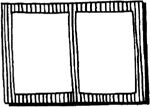
3. Paint a layer of watery white glue on 1 side of each piece of cardboard or matte board. Place the pieces of cardboard or matte board back in position (glue side down) on the fabric and press on them to glue them onto the fabric.
4. Brush glue on the 1-inch fabric border, then fold the fabric over onto the cardboard. Smooth out the edges of the fabric as best you can, but don’t worry about them too much, as they will be covered up in the next step.

5. Open the paper booklet you made in step 1. Paint the entire outside surface of the construction paper cover with glue. Press the gluey construction paper onto the inside of the fabric-covered cardboard cover.

6. Place wax paper inside the front and back covers. Close the book and place more wax paper around the outside of the book. Then place it under a stack of heavy books so it will dry flat.
Illustrations for Appendix C by Terri Moll
APPENDIX D
Best Books for Children
The books listed on the following pages are suitable for children from six to ten years old, and many are loved by older children, too. This list includes a variety of books: picture books, books for beginning readers, chapter books, and novels. Your child will likely enjoy reading some of the books by himself, and he’ll enjoy hearing others read aloud.
Keep in mind that this appendix is by no means a complete guide to the best authors and books for young children. An author listed may have written many titles, of which only one or two are noted. Other authors who have written excellent books are not listed at all. The purpose of this appendix is simply to suggest books you and your child may enjoy.
The books on this list are often recommended by experts in the field of children’s literature. Our family has enjoyed many of them over the years, but that doesn’t guarantee that your child will. The best way to determine what books your child will enjoy is to read children’s books—lots of them. Read award-winners and award-losers. (Some of the best-loved books are runners-up!) Read books about children’s books, too. In Appendix E I’ve listed my favorite such books—ones that I’ve relied on for many years.
Give your child high-quality books for his birthday and other special occasions. Visit your local bookstore and browse the shelves of the children’s section. But be cautious when asking for recommendations. Many clerks aren’t knowledgeable about children’s books, and they may simply recommend what everyone else is buying. That’s not necessarily a bad thing, but bear in mind that today’s buying trends tend to be based more on advertising and popular culture than on quality.
The librarians in the children’s room of your library are excellent sources of information. They can usually make suggestions tailored to your child’s reading ability and interests. The most popular books are usually checked out as soon as they are returned, so reserve them ahead of time if you can. If you have a computer with Internet access, you may be able to reserve books from home—a lifesaver for those who visit the library with small children! Alternatively, you could schedule an afternoon or evening to visit the library without children in tow and spend some time getting to know the best in old and new children’s books.
Aesop
Aesop’s Fables
Allard, Harry
Miss Nelson Is Missing!
The Stupids Step Out
Andersen, Hans Christian
The Little Match Girl
Atwater, Richard and Florence
Mr. Popper’s Penguins
Babbitt, Natalie
Tuck Everlasting
Banks, Lynne Reid
The Indian in the Cupboard
Bemelmans, Ludwig
Madeline series
Brenner, Barbara
Wagon Wheels
Brink, Carol Ryrie
Caddie Woodlawn
Brunhoff, Jean de
The Story of Babar
Bulla, Clyde Robert
The Chalk Box Kid
Burningham, John
Borka
Harquin
Mr. Gumpy’s Outing
Burton, Virginia Lee
Mike Mulligan and His Steam Shovel
The Little House
Byars, Betsy
The Summer of the Swans
Carlson, Natalie Savage
The Family under the Bridge
Cleary, Beverly
Ramona the Pest
Coerr, Eleanor
Sadako and the Thousand Paper
Cranes
Cohen, Barbara
Molly’s Pilgrim
D’Aulaire, Ingri and Edgar
D’Aulaires’ Book of Greek Myths
Dahl, Roald
Charlie and the Chocolate Factory
Dalgliesh, Alice
The Bears on Hemlock Mountain
The Courage of Sarah Noble
dePaola, Tomie
26 Fairmount Avenue
Estes, Eleanor
The Hundred Dresses
Gardiner, John Reynolds
Stone Fox
Gipson, Fred
Old Yeller
Godden, Rumer
The Mousewife
Grahame, Kenneth
The Reluctant Dragon
Haywood, Carolyn
“B” Is for Betsy
Little Eddie
Henry, Marguerite
Five O’clock Charlie
Henry, O.
The Gift of the Magi
Holling, Holling Clancy
Paddle-to-the-Sea
Isadora, Rachel
Ben’s Trumpet
Johnson, Crockett
Ellen’s Lion
Kinney, Jeff
Diary of a Wimpy Kid
Lewis, C. S.
The Lion, the Witch and the Wardrobe (and other books in the Chronicles of Narnia series)
Lindgren, Astrid
Pippi Longstocking
Lobel, Arnold
Frog and Toad Together
Lowry, Lois
The Giver
Mills, Lauren
The Rag Coat
Milne, A. A.
The House at Pooh Corner
Now We Are Six
When We Were Very Young
Winnie-the-Pooh
Minarik, Else Holmelund
Little Bear
Mosel, Arlene
The Funny Little Woman
Tikki Tikki Tembo
Mowat, Farley
Owls in the Family
Two against the North (or Lost in the Barrens)
Munsch, Robert
Love You Forever
The Paper Bag Princess
Naylor, Phyllis Reynolds
Shiloh
Newberry, Clare Turlay
Marshmallow
Numeroff, Laura Joffe
If You Give a Mouse a Cookie
Parish, Peggy
Amelia Bedelia
Perrault, Charles
Cinderella
Polacco, Patricia
Just Plain Fancy
Potter, Beatrix
The Tale of Peter Rabbit
Rawls, Wilson
Where the Red Fern Grows
Rey, H. A.
Curious George series
Robinson, Barbara
The Best Christmas Pageant
Ever
Rowling, J.K.
Harry Potter and the Sorcerer’s
Stone
Selden, George
The Cricket in Times Square
Sendak, Maurice
Where the Wild Things Are
Seuss, Dr.
The Cat in the Hat
The 500 Hats of Bartholomew Cubbins
Green Eggs and Ham
Sobol, Donald
Encyclopedia Brown series
Sorensen, Virginia
Miracles on Maple Hill
Speare, Elizabeth George
The Sign of the Beaver
Sperry, Armstrong
Call It Courage
Steig, William
The Amazing Bone
Brave Irene
Sylvester and the Magic Pebble
Stevenson, Robert Louis
A Child’s Garden of Verses
Taylor, Mildred D.
Song of the Trees
Waber, Bernard
Lyle, Lyle, Crocodile
The House on East 88th Street
White, E. B.
Charlotte’s Web
Stuart Little
The Trumpet of the Swan
Wilder, Laura Ingalls
Little House in the Big Woods (and other books in the Little House series)
Williams, Margery
The Velveteen Rabbit
Yolen, Jane
Owl Moon
Zion, Gene
Harry the Dirty Dog
APPENDIX E
Resources for Parents
The games, activities, and information that make up The Children’s Busy Book are gleaned from years of parenting experience as well as from friends, family members, and other books and resources. The following titles will help you plan activities and find the best, most practical ideas and information.
Atwood, Lisa. The Cookbook for Kids. Weldon Owen, 2011.
Beginning American Sign Language VideoCourse. Sign Enhancers, 1992.
Benchley, Nathaniel. Sam the Minuteman. HarperCollins, 1987.
Bennett, Steve and Ruth. 365 TV-Free Activities You Can Do with Your Child. Bob Adams, 1991.
Bledsoe, Karen E. Hanukkah Crafts. Enslow Elementary, 2004.
Block, Stanley. Marble Mania. Schiffer Publishing, 2011.
Bornstein, Harry and Karen L. Saulnier. Nursery Rhymes from Mother Goose. Gallaudet University Press, 1992.
Choron, Sandra and Harry. The All-New Book of Lists for Kids. Mariner Books, 2002.
Cole, Joanna. Anna Banana. HarperCollins, 1989.
Corwin, Judith Hoffman. Kwanzaa Crafts. Franklin Watts, 1995.
The Complete Book of Arts & Crafts. American Education Publishing, 2000.
Crocker, Betty. Betty Crocker’s Kids Cook! Betty Crocker, 2007.
Dalgliesh, Alice. The Thanksgiving Story. Atheneum Books for Young Readers, 1988.
d’Aulaire, Ingri and Edgar. Benjamin Franklin. Beautiful Feet Books, 1998.
DePaola, Tomie. Patrick: Patron Saint of Ireland. Holiday House, 1994.
Ellison, Sheila and Judith Gray. 365 Foods Kids Love to Eat. Sourcebooks, 2005.
Ellison, Sheila and Judith Gray. 365 Smart Afterschool Activities. Sourcebooks, 2005.
Englehart, Steve. Easter Parade. Avon Books, 1995.
Fisman, Karen. An Adventure in Latkaland: A Hanukkah Story. Jora Books, 2010.
Freedman, Russell. Out of Darkness: The Story of Louis Braille. Houghton Mifflin Company, 1997.
Fritz, Jean. Why Don’t You Get a Horse, Sam Adams? Puffin, 1996.
Gans, Roma. Let’s Go Rock Collecting. HarperCollins, 1997.
Gibbons, Gail. Easter. Holiday House, 1991.
Gibbons, Gail. Halloween Is . . .. Holiday House, 2003.
Gibbons, Gail. St. Patrick’s Day. Holiday House, 1994.
Gibbons, Gail. Thanksgiving Is . . .. Holiday House, 2005.
Golick, Margie. Wacky Word Games. Pembroke Publishing, 1995.
Gould, Toni S. Get Ready to Read. Walker Publishing, 1991.
Hablitzel, Marie and Kim Stitzer. Draw-Write-Now series. Barker Creek Publishing, 1995–2000.
Hanson, Lisa and Heather Kempskie. The Siblings’ Busy Book. Meadowbrook Press, 2008.
Hirsch, E. D. What Your 1st Grader Needs to Know. Delta, 1998.
Hirsch, E. D. What Your 2nd Grader Needs to Know. Delta, 1999.
Hirsch, E. D. What Your 3rd Grader Needs to Know. Delta, 2002.
Hunt, Gladys. Honey for a Child’s Heart. Zondervan Books, 2002.
Isaac, Dawn. Garden Crafts for Children. CICO Books, 2012.
Johnson, June. 838 Ways to Amuse a Child. Gramercy Publishing, 1997.
Jones, Claudia. More Parents Are Teachers, Too. Williamson Publishing, 1990.
Jones, Claudia. Parents Are Teachers, Too. Williamson Publishing, 1988.
Kelly, Marguerite and Elia Parsons. The Mother’s Almanac. Doubleday, 1975.
Kenda, Margaret and Phyllis S. Williams. Science Wizardry for Kids. Barron’s, 1992.
Kimmel, Eric A. The Golem’s Latkes. Amazon Children’s Publishing, 2011.
Kite, L. Patricia. Gardening Wizardry for Kids. Barron’s, 1995.
Kranowitz, Carol Stock. 101 Activities for Kids in Tight Spaces. St. Martin’s Press, 1995.
Lankford, Mary D. Hopscotch around the World. HarperCollins, 1996.
Lasky, Kathryn. The Librarian Who Measured the Earth. Little, Brown and Company, 1994.
LeBaron, Marie. Make and Takes for Kids: 50 Crafts Throughout the Year. Wiley, 2011.
Levine, Mark. Story of the Orchestra: Listen While You Learn About the Instruments, the Music and the Composers Who Wrote the Music! Black Dog & Leventhal Publishers, 2000.
Lewis, Amanda. Making Memory Books. Kids Can Press, 1999.
Macaulay, David. The New Way Things Work. Houghton Mifflin, 1998.
Martha Stewart’s Handmade Holiday Crafts: 225 Inspired Projects for Year-Round Celebrations. Potter Craft, 2011.
Morris, Karyn. The Kids Can Press Jumbo Book of Gardening. Kids Can Press, 2000.
National Audobon Society. The National Audubon Society Pocket Guide to Familiar Rocks and Minerals. Knopf, 1988.
Nissenberg, Sandra K. The Everything Kids’ Cookbook. Adams Media, 2008.
Nye, Bill. Bill Nye the Science Guy’s Big Blast of Science. Basic Books, 1993.
Otto, Carolyn B. Celebrate Kwanzaa: With Candles, Community, and the Fruits of the Harvest. National Geographic Children’s Books, 2008.
Paré, Jean. Company’s Coming Kids’ Healthy Cooking. Company’s Coming Publishing, 2006.
Peel, Kathy. The Family Manager’s Guide to Summer Survival. Fair Winds Press, 2006.
Pellant, Chris. The Best Book of Fossils, Rocks & Minerals. Kingfisher, 2007.
Perry, Susan K. Playing Smart. Free Spirit Publishing, 1990.
Prelutsky, Jack. It’s Valentine’s Day. HarperTrophy, 1996.
Riekehof, Lottie L. The Joy of Signing. Gospel Publishing House, 1987.
Ross, Kathy. More of the Best Holiday Crafts Ever!. 21st Century, 2003.
Rusackas, Francesca. 60 Super Simple Friendship Crafts. Lowell House Juvenile, 1999.
Sadler, Judy Ann. The New Jumbo Book of Easy Crafts. Kids Can Press, 2009.
Schuman, Jo Miles. Art from Many Hands. Prentice-Hall, 2003.
Schwake, Susan and Rainer. Art Lab for Kids. Quarry Books, 2012.
Sheinwold, Alfred. 101 Best Family Card Games. Sterling Publishing, 1992.
Sieber, Arlyn G. A Kid’s Guide to Collecting Coins. Krause Publications, 2011.
Smedley, Wendy. Start Scrapbooking: Your Essential Book to Recording Memories. Memory Makers, 2010.
Spier, Peter. The Star-Spangled Banner. Dragonfly Books, 1992.
Stenmark, Jean Kerr, Virginia Thompson, and Ruth Cossey. Family Math. Lawrence Hall of Science, 1986.
Toone, Matthew. Great Games! 175 Games & Activities for Families, Groups, & Children! Mullerhaus Publishing, 2009.
Trelease, Jim. The Read-Aloud Handbook, 6th Edition. Penguin Books, 2006.
Warner, Penny. Kids’ Holiday Fun! Meadowbrook Press, 1994.
Warner, Penny. Kids’ Party Games and Activities. Meadowbrook Press, 2012.
Washington, Donna L. and Stephen Taylor. The Story of Kwanzaa. HarperCollins, 1997.
Wilson, Mimi and Mary Beth Lagerborg. Once-a-Month Cooking: A Proven System for Spending Less Time in the Kitchen and Enjoying Delicious, Homemade Meals Every Day. St. Martin’s Griffin, 2007.
Woram, Catherine. Paper Scissors Glue: 45 Fun and Creative Papercraft Projects for Kids. Ryland Peters & Small, 2010.
The United States General Services Administration makes available many free and low-cost federal publications of consumer interest, including many on learning activities and parenting. If you would like a free copy of the Consumer Information Catalog, you can download or order a copy online at www.publications.usa.gov/USAPubs.php.