
Irene Cetin1 and Arianna Laoreti1
(1)
Unit of Obstetrics and Gynecology, Department of Mother and Child, Luigi Sacco, Via G.B. Grassi, 74, Milan, 20157, Italy
Irene Cetin (Corresponding author)
Email: irene.cetin@unimi.it
Arianna Laoreti
Email: arianna.laoreti@unimi.it
Keywords
AbortionFemale genital mutilationPathological conditionsWorld Health OrganizationPrevention
Introduction
In the past few years, the global health community has made a great effort to improve maternal and child health in low-income countries, in particular focusing on reproductive health. Although infertility is a critical component of reproductive health, it has often been neglected in these efforts [1].
Worldwide, between 8 and 12 % of the couples suffer from infertility. Contrary to popular belief, primary and secondary infertility are a major health problem in developing countries too, both quantitatively and qualitatively, affecting a high proportion of couples [2].
Prevalence of Infertility in Low-Income Countries
Assessing the prevalence, distribution and trends of infertility is an important first step towards shaping evidence-based interventions and policies to reduce the burden of this neglected condition. However, differences in the definition of infertility account for dissimilar estimates of infertility worldwide, both in developed and developing countries.
A recent study analysed household survey data from 277 demographic and reproductive health surveys to reveal global patterns and trends in infertility [3]. The authors used a demographic infertility measure with live birth as the outcome and a 5-year exposure period based on union status, contraceptive use, and desire for a child. As the main results, they found that in 2010 an estimated 48.5 million couples worldwide were infertile. Among women 20–44 years of age who were exposed to the risk of pregnancy, 1.9 % were unable to obtain a live birth (primary infertility). Out of women who had had at least one live birth and were exposed to the risk of pregnancy, 10.5 % were unable to have another child (secondary infertility; Figs. 8.1 and 8.2). Infertility prevalence was highest in South Asia, sub-Saharan Africa, North Africa/Middle East, Central/Eastern Europe and Central Asia. Levels of infertility in 2010 were similar to those in 1990 in most world regions, apart from decreases in primary and secondary infertility in sub-Saharan Africa (from 2.7 % in 1900 to 1.9 % in 2010 for primary infertility; from 13.5 to 11.6 % for secondary infertility) and primary infertility in South Asia. Owing to population growth, however, the absolute number of couples affected by infertility increased from 42.0 million in 1990 to 48.5 million in 2010.
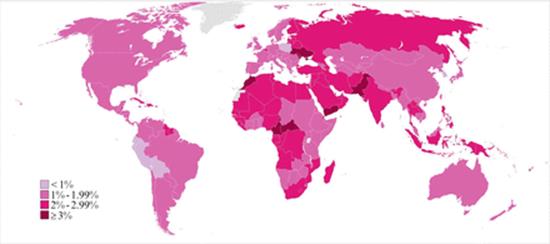
Fig. 8.1
Prevalence of primary infertility among women who seek a child, in 2010. Infertility prevalence relates the female partner; the age-standardised prevalence among women aged 20–44 years [3]
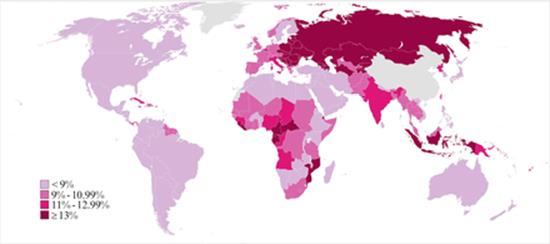
Fig. 8.2
Prevalence of secondary infertility among women who have had a live birth and seek another, in 2010. Infertility prevalence relates to the female partner; the age-standardised prevalence among women aged 20–44 years [3]
The authors of the study reported that their estimate of the global number of couples affected by infertility was lower than that of previous reports. This result is likely because of different definitions of infertility.
Boivin et al. [4] estimated that 72.4 million women were infertile in 2006. They used the median prevalence reported by seven published infertility studies that used a 12- or 24-month definition of infertility. The 12-month prevalence rate of infertility ranged from 6.9 to 9.3 % in less developed countries. Substantial geographical differences in the prevalence were noted, and these differences were largely explained by different environmental, cultural and socioeconomic influences [4].
A previous report by Rutstein and Shah [5] stated that 186 million ever-married women in developing countries (excluding China) were infertile in 2002. This larger number may also be a result of differences in definitions: they included women who may not have been exposed to the risk of pregnancy and women aged 15–20 years and 45–49 years, age groups that have a higher prevalence of infertility than women aged 20–44 years.
In conclusion, we can see the importance of a uniform definition of infertility. An infertility measure based on the ability to become pregnant may have different patterns, trends and levels from those based on the ability to obtain a live birth.
Irrespective of the different definitions of infertility used, there is a broad consensus that prevalence rates for infertility are higher in low-income countries than in developed countries, with the majority of people affected by infertility worldwide living in developing countries and having no access to infertility treatments, which are either unavailable or very costly.
Aetiology and Risk Factors for Infertility in Low-Income Countries
Infertility can be schematically determined by two broad groups of causes . The first group includes genetic, anatomical, hormonal and immunological problems. This group represents the “core” causes of infertility and it is responsible for about 5 % of the prevalence of infertility, with rates similar throughout the world. The second group includes causes that are preventable and their rates therefore differ widely around the world. These preventable causes are largely infection-related and iatrogenic [6].
In a large study performed by the WHO Task Force on the Diagnosis and Treatment of Infertility, 8504 infertile couples in 33 different countries were examined through a standard approach in all participating centres [7, 8]. The authors estimated that in Africa, over 85 % of women had an infertility diagnosis attributable to an infection, compared with 33 % of women worldwide [7]. The type and mode of infection varies from country to country depending on social factors, the health infrastructure, healthcare practices and environmental factors. Also, iatrogenic causes of infertility have higher rates in developing countries, representing approximately 15.5 % of all causes in Africa, compared with 5 % in Western Europe [9].
Most preventable infertility in couples results from one of the factors described in the following paragraphs.
Reproductive Tract Infections
Sexually transmitted diseases (STDs) are prominent risk factors for infertility in developing countries. It has been estimated that approximately 70 % of pelvic infections are caused by STDs, whereas the other 30 % are attributable to pregnancy-related sepsis [10].
A study of 5800 couples in 33 World Health Organisation (WHO) centres in 25 countries showed that almost 50 % of the African couples and 11–15 % of patients in other parts of the world had infectious tubal disease [11].
Studies from Nigeria, South Africa and Egypt have reported prevalence of tubal factor infertility ranging from 42 to 77 % [12].
Similarly, most cases of male factor infertility are caused by previous infections of the male genitourinary tract, and studies conducted in Nigeria have shown a prevalence of male infertility in 26–43 % of cases [13, 14].
The organisms most commonly involved in STD are Chlamydia trachomatis and Neisseria gonorrhoeae [12, 15]. Moreover, another sexually transmitted organism associated with infertility is HIV-1. Several studies have documented reduced fecundity in HIV-infected individuals [16]. Mechanisms involved include, essentially, tubal factor infertility through the greater susceptibility to other STDs and altered spermatogenesis [17]. Little is known about the possible direct role of HIV virus or antiretroviral therapy in female fertility, especially the negative influence on oocyte quality [16]. In addition, marital instability and polygamy secondary to infertility may in turn increase the spread of HIV-1 infection [18].
Infectious diseases other than STDs may also cause infertility. Among these, tuberculosis is another major cause in both men and women [19] and a high prevalence of pelvic tuberculosis has been reported in studies from the Indian subcontinent [20], leading to tubal pathological conditions.
Genital tuberculosis appears to be an important and common cause of Asherman’s syndrome in India, causing oligomenorrhoea or amenorrhoea with infertility. In a study of women with infertility and amenorrhoea/oligomenorrhoea, 68 % had a past history of tuberculosis [21], whereas the prevalence of genital tuberculosis in tubal factor infertility was 49 % in women requesting assisted reproduction [22].
Other infections associated with infertility in developing countries include lepromatous leprosy (which has been associated with an increased risk of semen abnormalities and azoospermia), schistosomiasis and malaria, through a pathogenic mechanism that is still to be explained [6].
Unsafe Abortion and Healthcare Practices
Unsafe abortion is one of the biggest public health issues faced by women worldwide [23]. The WHO defines unsafe abortion as a procedure for terminating a pregnancy performed by persons lacking the necessary skills or in an environment not in conformity with minimal medical standards, or both [24].
Nearly half of all abortions worldwide are unsafe, and nearly all unsafe abortions occur in developing countries (98 %). An estimated 21.6 million unsafe abortions took place worldwide in 2008, almost all being performed in developing countries (21.4 millions). In 2008, more than 97 % of abortions in Africa and 95 % of abortions in Latin America were unsafe [25].
Unsafe abortion can have severe consequences: 20–50 % of women have immediate complications (e.g. haemorrhage, sepsis or trauma) and 20–30 % suffer upper genital tract infection and become infertile. Unsafe abortions contribute to about 2 % of all causes of infertility [21]. Deaths due to unsafe abortion remain close to 13 % of all maternal deaths [25].
Unhygienic obstetric practices (other than unsafe abortion) in developing countries are also major contributors to infertility. In sub-Saharan Africa, only 40 % of births are attended by trained birth personnel, with severe complications such as trauma and sepsis, both of which increase the risk of future infertility [26].
Sociocultural Factors
The WHO estimates that between 100 and 140 million girls and women worldwide have been subjected to one of the first three types of female genital mutilation [27]. Estimates based on the most recent prevalence data indicate that 91.5 million girls and women above the age of 9 years in Africa are currently living with the consequences of female genital mutilation [28]. There are an estimated three million girls in Africa at risk of undergoing female genital mutilation every year [29].
Female genital mutilation is recognised internationally as a violation of the human rights of girls and women. The practice is mostly carried out by traditional circumcisers, who often play other central roles in communities, such as attending childbirths, and who often have limited knowledge about the principles of aseptic techniques and the underlying anatomy.
The procedure is associated with immediate and long-term complications, which include haemorrhage, urination problems, sepsis, haematocolpos, dysmenorrhoea, dyspareunia, obstructed labour, increased risk of newborn death, fistula formation and infertility [30].
Cultural beliefs such as early marriage, polygamy, aversion to female education and to condoms further contribute indirectly to infertility. There is also a disparity between rural and urban areas with regard to the number of healthcare facilities and access to health care [31].
Nutritional and Environmental Factors
Malnutrition, including micronutrient deficiencies, remains one of the major public health challenges, particularly in developing countries [32]. In 2011, almost 6.9 million children under 5 years of age died worldwide.
Micronutrient deficiencies have been associated with significantly high reproductive risks, ranging from infertility to fetal structural defects and long-term diseases [33].
The WHO estimates that in spite of recent efforts in the prevention and control of micronutrient deficiencies, over two billion people are at risk of vitamin A, iodine and/or iron deficiency globally [34]. Other micronutrient deficiencies of public health concern include zinc, folate and the B vitamins, elements of critical importance for women of reproductive age. In addition, in low-income country settings it is often the case that more than one micronutrient deficiency coexist [32], suggesting the need for simple approaches to correct multiple micronutrient malnutrition (MMN), to decrease malnutrition-related infertility rates.
Environmental factors also have a great impact on fertility and reproductive health, causing about 25 % of deaths and diseases globally, reaching nearly 35 % in regions such as sub-Saharan Africa [35]. A significant proportion of that overall environmental disease burden can be attributed to relatively few key areas of risk. These include: poor water quality and sanitation; vector-borne diseases; poor ambient and indoor air quality; and toxic substances [36].
Psychosocial , Religious and Political Aspects of Infertility
Infertility has a profound effect on women and men worldwide. The psychosocial consequences of infertility for couples in high-income countries have been widely described and include increased symptoms of anxiety and depression, loss of self-esteem, relationship difficulties, diminished sexual satisfaction, reduced life satisfaction and social isolation [37, 38].
In developing countries, those in Africa in particular, communities place a high value on fertility and children. This is the main means of developing the web of relations that is formed with the nuclear and extended family, including the dead and the unborn, the village and the nation. Without children, this web is curtailed and infertile women are considered to be almost non-existent as individuals [39]. Therefore, the inability to conceive represents a devastating burden to the social, economic and personal well-being of those affected, a burden that is disproportionately suffered by the women [40–42]. Womanhood is often defined through motherhood and childless women are frequently stigmatised, leading to a wide range of psycho-social consequences: loss of social status and security, isolation, neglect, domestic violence and abuse, marital instability, problems with gender instability, loss of continuity of family lines, general emotional distress and even suicide [43–49]. Furthermore, as many families in low-income countries depend on children for economic survival, childlessness and having fewer children than the number identified as appropriate are social and public health matters, not just medical problems [50].
Although always negative, the impact of infertility in developing countries varies among different regions and is influenced, among others, by religious, sociocultural and legal factors [12].
Three major religions, Islam, Judaism and Christianity, continue to influence behaviour, attitudes and policy-making. Judaism allows the practice of all techniques of assisted reproduction when the oocyte and spermatozoa originate from the wife and the husband respectively. The attitude towards the practice of assisted reproduction varies among Christian groups, especially those situated in Western Europe and the Americas. Although assisted reproduction is not accepted by the Vatican, it may be practised by Protestant, Anglican and other denominations. According to traditional Christian views, beginning at conception, the embryo has a moral status as a human being, and thus most assisted reproductive technologies (ARTs) are forbidden. Islam dominates the Middle East and North Africa. According to Islam, the procedures of in vitro fertilisation and embryo transfer are acceptable, although they can be performed only within marriage [51].
The rest of Africa and Asia consists of a patchwork of religions, including Buddhism, Hinduism, Taoism and Confucianism. People with Confucian or Buddhist beliefs consider infertility to be retribution for wrongdoing by the man, the woman or even the ancestors [52, 53].
The pattern of religion is changing rapidly in many countries worldwide, as a result of various influences, including migration, disaffection with religion in some populations, and conversion to old or new religions. These changes may lead the physician in the field of reproduction to encounter families with very different beliefs to those that dominated within a given society in the past.
Political context may also have a profound impact on infertility in developing countries. Despite representing a significant problem, there has been no political determination to directly address the problems associated with infertility in these countries. Attention has focused almost exclusively on the extremely high maternal mortality and overpopulation [54].
The overpopulation argument against infertility treatment in developing countries contends that there is already a problem of population growth in the world. From that perspective, infertility treatment not only has negative effects on population growth worldwide, but also diverts limited resources and funds from more important primary health needs [54, 55]. In this context, some believe that the infertile couple should be encouraged to courageously accept their condition of childlessness rather than be offered intervention [56]. Nevertheless, the effect of infertility on an individual’s quality of life is huge and it disproportionately affects women and the poor [57]. India has recognised that infertility treatment should not be given a lower priority than other medical conditions and now includes infertility in a comprehensive reproductive and child health programme [58].
It has been argued that, instead of ignoring the problem of infertility in terms of the population growth argument, a better strategy would be to increase the efforts at family planning, with the aim of substantially decreasing fertility rates. At the same time, subfertility needs to be taken seriously and cost-effective techniques of diagnosis and treatment should be implemented.
Prevention of Infertility
Although attitudes among people in high-income countries towards the provision of infertility care in low-income countries have been either uncaring or indifferent, with an emphasis on controlling overpopulation and dealing with limited funding, members of the medical and scientific community increasingly call for action to reduce the global burden of infertility [59–62].
Most authors share the opinion that the first priority should always be prevention rather than cure [60]. Preventive strategies, especially the prevention of pelvic infections caused by STDs or unsafe abortions, which play a major role in the aetiology of infertility, should be regarded as the most important, successful and cost effective strategies for decreasing infertility rates, in addition to strategies to improve women’s health in general.
Also, improving education about sexual and reproductive health in adolescents appears to be paramount in reducing the prevalence of infertility. It has been documented that reproductive and sexual events during the teenage years determine the future prospects of fertility [12]. Paradoxically, education not only helps to safeguard future fertility, but also reduces total fertility rates, as studies have shown that education, especially of women, is an important variable determining the desired number of children [63].
Provision of Reproductive Assistance
In 1948, the Universal Declaration of Human Rights stated that “Men and women of full age, without any limitation due to race, nationality or religion, have the right to marry and to raise a family” [64].
Almost 50 years later, at the United Nations International Conference on Population and Development in Cairo, the following statement was made “Reproductive health therefore implies that people have the capability to reproduce and the freedom to decide if, when and how often to do so … and to have the information and the means to do so…” [65].
In 2004, the World Health Assembly adopted the five core points of the WHO sexual and reproductive health package. One of these was the global need to provide high-quality services for family planning, including infertility services [66]. Furthermore, a stated target to “Achieve by 2015, universal access to reproductive health” represents Goal 5 among the United Nation’s Millennium Development Goals (www.un.org) [67].
Despite political and institutional statements, little progress has been made throughout the years towards the attainment of these goals with regard to infertility in developing countries. The reasons are multiple and include the lack of collaboration among non-governmental organisations, civil society groups, the government and the research community; budgetary constraints; and a lack of real political commitment [68].
Two important initiatives highlighted the implications of childlessness in developing countries and convinced many infertility specialists of the need for accessible infertility care.
In 2001, a meeting was organised the WHO “Medical, Ethical and Social Aspects of Assisted Reproduction” [69]. Among many different recommendations, it was stated that infertility should be recognised as a public health issue worldwide, including in developing countries. Moreover, infertility management should be integrated into national reproductive health education programmes and services and ART should be complementary to other ethically acceptable, social and cultural solutions to infertility.
A second milestone was the foundation of a Special Task Force on “Developing Countries and Infertility” by the European Society of Human Reproduction and Embryology in 2006 [70]. The following objectives were set out:
· To raise awareness surrounding the problem of childlessness in resource-poor countries within the donor community, politicians, funding agencies and research organisations through lobbying and publishing and the general population through information, education and counselling on infertility and its consequences.
· To study the ethical, sociocultural and economic aspects of childlessness and infertility care in resource-poor countries.
· To make infertility diagnosis and infertility treatment, including ARTs, available and accessible to a much larger proportion of the population, by simplifying the diagnostic procedures and simplifying and modifying the ovarian stimulation protocols and in vitro fertilisation procedures.
· To work together with other organisations and societies working in the field of reproductive health to reach the goal of “global access to infertility care”.
In 2010, The Walking Egg (www.thewalkingegg.com) was established, a not-for-profit foundation promoting accessible and affordable infertility services in developing countries [71]. The Walking Egg collaborates with the European Society of Human Reproduction and Embryology and the WHO to make infertility care an integral part of reproductive health care in low-income settings through innovation and research, advocacy and networking, training and capacity building, and service delivery [72].
Affordable Infertility Care
To make infertility care accessible to as many people as possible, it is suggested that services for basic infertility investigations and simple forms of infertility treatment, such as ovulation induction and artificial insemination, might be integrated into existing reproductive health settings [61]. Reduction of costs is also considered a fundamental prerequisite for implementing ARTs in resource-poor countries.
Sallam [66] proposed a model with three levels of assistance:
· A basic infertility clinic offering diagnostic tests and simple forms of infertility treatment
· An advanced clinic where in vitro fertilisation (the simplest procedure) and more advanced diagnostic procedures are available
· A tertiary-level infertility clinic offering specialised assisted reproduction and surgical procedures
Depending on the level of service, funding options include public–private partnership models and partnerships between the World Bank and government, donor agencies, professional societies and the WHO [66].
Standardised investigation of the couple at minimal cost enhances the likelihood of infertile couples seeking assistance. The one-stop diagnostic approach has been proposed, as it includes the responsibility for diagnosis and immediate management policy [71]. The consequences of the results for the management of the couple have to be discussed on the same day.
An accurate history of the couple’s personal and medical details, together with a simple light microscopy semen analysis, identifies the majority of infertility problems related to ovulatory dysfunction and male subfertility. As tubal obstruction associated with previous pelvic infections is the greatest cause of infertility in many regions, hysterosalpingography and/or hysterosalpingo-contrast sonography are simple and accessible techniques for detecting this problem without major costs [50]. Office hysteroscopy and diagnostic laparoscopy have also undergone simplification over the years, but are still to be considered second and third-line procedures among infertility investigation techniques.
The diffusion of ARTs in developing countries also requires the adaptation of infertility treatment protocols to low-resource settings. The development of ARTs associated with low costs and a very low complication rate is mandatory if governments are to be convinced to fund infertility clinics. In response, simplified protocols have been developed.
Preliminary awareness of fertility principles by the patients and staff working in the infertility clinics is important within a treatment programme and has been shown to be effective. This awareness includes the importance of timing intercourse to different cervical secretions and the harm caused by smoking and alcohol [6].
Simplicity, safety and cost make clomiphene citrate the first-line treatment for inducing ovulation, provided that tubal patency has been documented, in association with timed intercourse or intrauterine insemination (IUI).
Gonadotropins represent a second-line agent for inducing ovulation, and their use must be adopted by well-trained and experienced staff, to monitor cycles so as to avoid ovarian hyperstimulation syndrome (OHSS) and to reduce the risk of multiple pregnancies, both complications with devastating consequences in low-resource countries.
In vitro fertilisation represents the logical treatment for tubal infertility and a second-line treatment for infertility. However, the establishment of high-technology assisted reproduction programs in low-resource countries is not only extremely difficult, but also controversial because of the limited healthcare budgets. Simplified protocols have been developed over the years to overcome this obstacle. The use of less potent and cheaper drugs to stimulate oocyte development, minimal monitoring, simplified culture systems and less technologically advanced equipment [73–77] have been proposed as possible methods that may drastically reduce the per-treatment cycle cost, maintaining acceptable live birth rates [73]. Low-cost treatment models through the use of minimal ovarian stimulation and single-embryo transfer would also theoretically eliminate the risk of OHSS and multiple births [76].
Assisted Reproductive Technologies and HIV in Low-Income Countries
A large body of evidence suggests that reproductive technologies can help HIV-affected couples to conceive safely with a minimal risk of HIV transmission to their partner and baby [16]. However, the majority of those affected by HIV live in low-income countries, where such technologies are neither geographically nor economically easily accessible, as discussed above [78–80]. At the end of 2013, there were approximately 35.0 (33.1–37.2) million people living with HIV globally, with sub-Saharan Africa representing the most affected region, with 24.7 (23.4–26.2) million people living with HIV. Moreover, sub-Saharan Africa accounts for almost 70 % of the global total of new HIV infections [81].
Individuals with HIV-seropositive status deserve full reproductive rights and it has been widely demonstrated that simply encouraging HIV-affected couples to abstain from procreation may no longer be a realistic strategy, particularly in communities and cultures where the importance of having children is emphasised [82]. In the absence of counselling that recognises the desire and importance of having children, couples may deliberately take on the risks of transmission to have children, engaging in unprotected intercourse.
In this context, an increasingly crucial issue is the introduction of harm reduction and safer conception methods for people with HIV infection in settings where ART cannot be easily obtained. This is particularly urgent, considering that many countries have recently shown a decline in AIDS-related deaths, but continue to have a high prevalence of HIV infection, largely because of the increased longevity associated with antiretroviral therapy [83].
Most international research on safer conception interventions has been based on settings from industrialised-world contexts and has concentrated on options for couples in which the male partner is infected with HIV and the female partner is not, therefore focusing on “high-technology” methods such as sperm-washing with IUI or in vitro fertilisation/intracytoplasmic sperm injection in laboratory settings.
However, these interventions are not feasible on a widespread basis in resource-constrained settings. Furthermore, in low-income countries, such as in sub-Saharan Africa, most couples are serodiscordant for HIV female positivity, which is different from developed countries, where more men than women are seropositive. As a result, there is a considerable amount of data on the efficacy of sperm-washing, but limited data on timed, unprotected sex, and few data on vaginal insemination [78, 84].
In resource-limited settings, before any safer conception intervention, couples should be counselled and screened in line with the recommendations regarding viral load, CD4+ cell count and sexually transmitted infections. The counsellor should emphasise the need for a close adherence to antiretrovirals to attain an undetectable viral load in the infected partner [85]. Moreover, if the woman is infected, her ART regimen must exclude teratogenic antiretrovirals. Fertility screening is also advisable, if feasible, considering the high prevalence of infertility problems in people with HIV infection [78].
The most feasible method in low-income countries for HIV-serodiscordant couples in which the woman is HIV-seropositive seems to be vaginal self-insemination with sperm from the uninfected male partner, timed to the woman’s fertile period [78]. This intervention involves the couple either having intercourse with a condom and then drawing out the semen into a needleless syringe and inserting it as high as possible into the vagina, or the male partner ejaculating into a container and the semen being drawn up in a similar manner. A recent study conducted in Kenya recruited 33 HIV-serodiscordant couples and health-care providers. The authors found that educating and counselling HIV-serodiscordant couples on vaginal insemination could make it an acceptable and feasible safer conception method when associated with frequent communication and home visits by health-care providers [84].
The routine use of vaginal self-insemination as a safe method of conception in HIV-discordant couples for female positivity is of significant public health importance because it is expected to reduce the likelihood of riskier sexual practices (the inconsistent use of male condoms) for childbearing and decrease the incidence of HIV in low-income countries. Systematic research is needed to establish pregnancy rates and outcomes.
For couples in which the man or both partners are positive, the only feasible option is careful, informed natural conception [85]. Timed, limited, unprotected sex for HIV-seroconcordant couples should form part of a harm-reduction strategy to reduce exposure to HIV when planning conception in resource-limited settings.
With regard to HIV-serodiscordant couples with male infection, the use of periconception pre-exposure prophylaxis (PrEP) for the seronegative female partner during timed and limited intercourse is an important method of safer conception. A recent study found strong evidence of the cost-effectiveness of PrEP in South African women, with a reduced mean lifetime risk of HIV from 40 to 27 % [86].
In conclusion, permitting HIV-affected couples safer childbearing is crucial in decreasing both mother-to-child HIV transmission and the infection of seronegative partners.
Further research is needed to establish the awareness, understanding and acceptability of low-technology, safer conception strategies among people with HIV infection.
Conclusion
In developing countries infertility represents a significant problem, and women bear the major burden of this devastating social, medical and economic condition. Developing countries are also afflicted by high rates of HIV infection, with the majority of those affected by HIV living in countries where reproductive technologies for safer conception are not easily accessible.
The diffusion of affordable, effective and safe ARTs in this setting is possible and should be implemented to assist infertile couples and to permit HIV-affected couples safer childbearing, decreasing both vertical and horizontal HIV transmission.
References
1.
Cui W. Mother or nothing: the agony of infertility. Bull World Health Organ. 2010;88:881–2. doi:10.2471/BLT.10.011210.CrossRefPubMed
2.
ESHRE Task Force on Ethics and Law. Providing infertility treatment in resource-poor countries. Hum Reprod. 2009;24(5):1008–11.CrossRef
3.
Mascarenhas MN, Flaxman SR, Boerma T, Vanderpoel S, Stevens GA. National, regional, and global trends in infertility prevalence since 1990: a systematic analysis of 277 health surveys. PLoS Med. 2012;9(12):e1001356. doi:10.1371/journal.pmed.1001356.CrossRefPubMedPubMedCentral
4.
Boivin J, Bunting L, Collins JA, Nygren KG. International estimates of infertility prevalence and treatment-seeking: potential need and demand for infertility medical care. Hum Reprod. 2007;22:1506–12. doi:10.1093/humrep/dem046.CrossRefPubMed
5.
Rutstein SO, Shah IH. Infecundity, infertility, and childlessness in developing countries. Calverton: ORC Macro; 2004. 57 p.
6.
Sharma S, Mittal S, Aggarwal P. Management of infertility in low resource countries. BJOG. 2009;116 Suppl 1:77–83.CrossRefPubMed
7.
Cates W, Farley TMM, Row PJ. Worldwide patterns of infertility: is Africa different? Lancet. 1985;2:596–8.CrossRefPubMed
8.
World Health Organization. Infections, pregnancies and infertility: perspectives on prevention. Fertil Steril. 1987;47:944–9.CrossRef
9.
Aboulghair MA. The importance of fertility treatment in the developing world. BJOG. 2005;112:1174–6.CrossRef
10.
Ericksen K, Brunette T. Patterns and predictors of infertility among African women: a cross-national survey of twenty-seven nations. Soc Sci Med. 1996;42:209–20.CrossRefPubMed
11.
Sciarra JJ. Infertility: a global perspective. The role of pelvic infection. ORGYN. 1994;3:12–5.PubMed
12.
Ombelet W, Cooke I, Dyer S, Serour G, Devroey P. Infertility and the provision of infertility medical services in developing countries. Hum Reprod Update. 2008;14(6):605–21.CrossRefPubMedPubMedCentral
13.
Adeniji RA, Olayemi O, Okunlola MA, Aimakhu CO. Pattern of semen analysis of male partners of infertile couples at the University College Hospital, Ibadan. West Afr J Med. 2003;22:243–5.PubMed
14.
Ikechebelu JI, Adinma JI, Orie EF, Ikegwuonu SO. High prevalence of male infertility in southeastern Nigeria. J Obstet Gynaecol. 2003;23:657–9.CrossRefPubMed
15.
Sciarra JJ. Sexually transmitted diseases: global importance. Int J Gynaecol Obstet. 1997;58:107–19.CrossRefPubMed
16.
Savasi V, Mandia L, Laoreti A, Cetin I. Reproductive assistance in HIV serodiscordant couples. Hum Reprod Update. 2013;19(2):136–50.CrossRefPubMed
17.
Gilling-Smith C, Nicopoullos JD, Semprini AE, Frodsham LC. HIV and reproductive care—a review of current practice. BJOG. 2006;113:869–78.CrossRefPubMed
18.
Nabaitu J, Bachengana C, Seeley J. Marital instability in a rural population in south-west Uganda: implications for the spread of HIV-1 infection. Africa (Lond). 1994;64:243–51.CrossRef
19.
Parikh FR, Nadkarni SG, Kumat SA, Naik N, Soonawala SB, Parikh RM. Genital tuberculosis—a major pelvic factor causing infertility in Indian women. Fertil Steril. 1997;67:497–500.CrossRefPubMed
20.
Shaheen R, Subhan F, Tahir F. Epidemiology of genital tuberculosis in infertile population. J Pak Med Assoc. 2006;56:306–9.PubMed
21.
Sharma JB, Roy KK, Pushparaj M, Gupta N, Jain SK, Malhotra N, et al. Genital tuberculosis: an important cause of Asherman’s syndrome in India. Arch Gynecol Obstet. 2008;277:33–41.
22.
Singh N, Sumana G, Mittal S. Genital tuberculosis: a leading cause of infertility in women seeking assisted conception in north India. Arch Gynecol Obstet. 2008;278:325–7.CrossRefPubMed
23.
Grimes DA, Benton J, Singh S, Romero M, Ganatra B, Okonofua FE, et al. Unsafe abortion: the preventable pandemic. Lancet. 2006;238:1908–19.CrossRef
24.
Ganatra B, Tunçalp O, Johnston HB, Johnson Jr BR, Gülmezoglu AM, Temmerman M. From concept to measurement: operationalizing WHO’s definition of unsafe abortion. Bull World Health Organ. 2014;92:155. http://dx.doi.org/10.2471/BLT.14.136333.CrossRefPubMedPubMedCentral
25.
WHO. Unsafe abortion: global and regional estimates of the incidence of unsafe abortion and associated mortality in 2008. 6th ed. Geneva: World Health Organization; 2011.
26.
Stanton C, Blanc AK, Croft T, Choi Y. Skilled care at birth in the developing world: progress to date and strategies expanding coverage. J Biosoc Sci. 2007;39:109–20.CrossRefPubMed
27.
WHO. Female genital mutilation. Fact sheet No. 241. http://www.who.int/entity/mediacentre/factsheets/fs241/en/index.html (2014).
28.
Yoder PS, Khan S. Numbers of women circumcised in Africa: the production of a total. Calverton: Macro International; 2007.
29.
Yoder PS, Abderrahim N, Zhuzhuni A. Female genital cutting in the Demographic and Health Surveys: a critical and comparative analysis. Calverton: Macro International; 2004.
30.
Obermeyer CM. The consequences of female circumcision for health and sexuality: an update on the evidence. Cult Health Sex. 2005;7:443–61.CrossRefPubMed
31.
Dickens BM, Cook RJ. Reproductive health and public health ethics. Int J Gynaecol Obstet. 2007;99:75–9.CrossRefPubMed
32.
Bhutta ZA, Salam RA, Das JK. Meeting the challenges of micronutrient malnutrition in the developing world. Br Med Bull. 2013;106:7–17.CrossRefPubMed
33.
Cetin I, Berti C, Calabrese S. Role of micronutrients in the periconceptional period. Hum Reprod Update. 2010;16(1):80–95.CrossRefPubMed
34.
World Health Organization. World health report, 2000. Geneva: World Health Organization; 2000.
35.
Smith K, Corvalán C, Kjellstrom T. How much global ill health is attributable to environmental factors? Epidemiology. 1999;10(5):573–84.CrossRefPubMed
36.
WHO. Environment and health in developing countries. http://www.who.int/heli/risks/ehindevcoun/en/. Accessed Sept 2014.
37.
Boivin J, Griffiths E, Venetis CA. Emotional distress in infertile women and failure of assisted reproductive technologies: meta-analysis of prospective psychosocial studies. BMJ. 2011;342:d223.CrossRefPubMedPubMedCentral
38.
Fisher J, Hammarberg K. Psychological and social aspects of infertility in men: an overview of the evidence and implications for psychologically informed clinical care and future research. Asian J Androl. 2012;14:121–9.CrossRefPubMed
39.
Dhont N, Temmerman M, van de Wijgert J. Clinical, epidemiological and socio-cultural aspects of infertility in resource-poor settings. Evidence from Rwanda. Facts Views Vis Obgyn. 2011;3(2):77–88.PubMedPubMedCentral
40.
Dyer SJ, Abrahams N, Mokoena NE, van der Spuy ZM. “You are a man because you have children”: experiences, reproductive health knowledge and treatment-seeking behaviour among men suffering from couple infertility in South Africa. Hum Reprod. 2004;19:960–7.CrossRefPubMed
41.
Dyer SJ, Abrahams N, Mokoena NE, Lombard CJ, van der Spuy ZM. Psychological distress among women suffering from couple infertility in South Africa: a quantitative assessment. Hum Reprod. 2005;20:1938–43.CrossRefPubMed
42.
Wiersema NJ, Drukker AJ, Dung MBT, Nhu GH, Nhu NT, Lambalk B. Consequences of infertility in developing countries: results of a questionnaire and interview survey in the south of Vietnam. J Transl Med. 2006;4:54–61.CrossRefPubMedPubMedCentral
43.
Araoye MO. Epidemiology of infertility: social problems of the infertile couples. West Afr J Med. 2003;22:190–6.PubMed
44.
Daar AS, Merali Z. Infertility and social suffering: the case of ART in developing countries. In: Vayena E, Rowe PJ, Griffin PD, editors. Current practices and controversies in assisted reproduction. Geneva: World Health Organization; 2002. p. 15–21.
45.
Dyer S. The value of children in African countries—insights from studies on infertility. J Psychosom Obstet Gynaecol. 2007;28:69–77.CrossRefPubMed
46.
Fledderjohann JJ. ‘Zero is not good for me’: implications of infertility in Ghana. Hum Reprod. 2012;27:1383–90.CrossRefPubMed
47.
Obeisat S, Gharaibeh MK, Oweis A, Gharaibeh H. Adversities of being infertile: the experience of Jordanian women. Fertil Steril. 2012;98:444–9.CrossRefPubMed
48.
Papreen N, Sharma A, Sabin K, Begum L, Ahsan SK, Baqui AH. Living with infertility: experiences among urban slum populations in Bangladesh. Reprod Health Matters. 2000;8:33–44.CrossRefPubMed
49.
Van Balen F, Inhorn MC. Introduction interpreting infertility: a view from the social sciences. In: Inhorn MC, van Balen F, editors. Infertility around the globe: new thinking on childlessness, gender, reproductive technologies. Berkeley: University of California Press; 2002.
50.
Hammarberg K, Kirkman M. Infertility in resource-constrained settings: moving towards amelioration. Reprod Biomed Online. 2013;26(2):189–95.CrossRefPubMed
51.
Schenker JG. Assisted reproductive practice: religious perspectives. Reprod Biomed Online. 2005;10(3):310–9.CrossRefPubMed
52.
Handwerker L. Social and ethical implications of in vitro fertilization in contemporary China. Camb Q Healthc Ethics. 1995;4:355–63.CrossRefPubMed
53.
Qiu RZ. Sociocultural dimensions of infertility and assisted reproduction in the Far East. In: Vayena E, Rowe PJ, Griffin PD, editors. Current practices and controversies in assisted reproduction. Geneva: World Health Organization; 2002. p. 75–8.
54.
Macklin R. Reproductive technologies in developing countries. Bioethics. 1995;9:276–81.CrossRefPubMed
55.
Daar AS, Merali Z. Infertility and social suffering: the case of ART in developing countries. In: Vayena E, Rowe P, David Griffin P, editors. Current practices and controversies in assisted reproduction “medical, ethical and social aspects of assisted reproduction”. Geneva: WHO; 2004. p. 15–21.
56.
Tangwa GB. ART and African sociocultural practices: worldview, belief and value systems with particular reference to francophone Africa. In: Vayena E, Rowe PJ, Griffin PD, editors. Current practices and controversies in assisted reproduction. Geneva: World Health Organization; 2002. p. 55–9.
57.
WHO Department of Reproductive Health and Research. Accelerating progress towards the attainment of international reproductive health goals and framework for implementing the WHO global reproductive health strategy. Geneva: WHO Department of Reproductive Health and Research; 2006.
58.
Indian Council of Medical Research. Need and feasibility of providing assisted technologies for infertility management in resource-poor settings. ICMR Bull. 2000;3:6–7. www.icmr.nic.in.
59.
Gerrits T. Biomedical infertility care in low resource countries: barriers and access. Facts Views Vis OBGYN Monogr. 2012:1–6.
60.
Inhorn MC. Global infertility and the globalization of new reproductive technologies: illustration from Egypt. Soc Sci Med. 2003;56:1837–51.CrossRefPubMed
61.
Ombelet W. Reproductive healthcare systems should include accessible infertility diagnosis and treatment: an important challenge for resource-poor countries. Int J Gynaecol Obstet. 2009;106:168–71.CrossRefPubMed
62.
Vayena E, Peterson HB, Adamson D, Nygren K. Assisted reproductive technologies in developing countries: are we caring yet? Fertil Steril. 2009;92:413–6.CrossRefPubMed
63.
Potts D, Marks S. Fertility in Southern Africa: the quiet revolution. J South Afr Stud. 2001;27:189–205.CrossRefPubMed
64.
United Nations General Assembly. The Universal Declaration of Human Rights (UDHR). www.un.org/en/documents/udhr/ (1948).
65.
United Nations International Conference on Population and Development, Cairo. www.un.org/popin/icpd2.htm (1994).
66.
Sallam H. Infertility in developing countries: funding the project. ESHRE Monogr. 2008;1:97–101.CrossRef
67.
United Nations Millennium Development Goals. http://www.un.org/millenniumgoals.
68.
Fathalla MF, Sinding SW, Rosenfield A, Fathalla MM. Sexual and reproductive health for all: a call for action. Lancet. 2006;368:2095–100.CrossRefPubMed
69.
Vayena E, Rowe PJ, Griffin PD. Current practices and controversies in assisted reproduction. Report of a meeting. Geneva: World Health Organization; 2002.
70.
ESHRE. http://www.eshre.eu/Specialty-groups/Task-Forces/Task-Force-Developing-Countries-and-Infertility.
71.
Ombelet W. Is global access to infertility care realistic? The Walking Egg Project. Reprod Biomed Online. 2014;28:267–72.CrossRefPubMed
72.
Ombelet W, van Balen F. Future perspectives. Facts Views Vis OBGYN Monogr. 2012:87–90.
73.
Aleyamma TK, Kamath MS, Muthukumar K, Mangalaraj AM, George K. Affordable ART: a different perspective. Hum Reprod. 2011;26:3312–8.CrossRefPubMed
74.
Cooke ID, Gianaroli L, Hovatta O, Trounson A. Affordable ART in the Third World: difficulties to overcome. ESHRE Monogr. 2008;1:93–6.CrossRef
75.
Hovatta O, Cooke ID. Cost-effective approaches to in vitro fertilization: means to improve access. Int J Gynaecol Obstet. 2006;94:287–92.CrossRefPubMed
76.
Ombelet W, Campo R. Affordable IVF for developing countries. Reprod Biomed Online. 2007;15:257–65.CrossRefPubMed
77.
Van Blerkom J, Ombelet W, Klerkx E, Janssen M, Dhont N, Nargund G, Campo R. First births with a simplified culture system for clinical IVF and ET. Reprod Biomed Online. 2013;28:310–20.CrossRefPubMed
78.
Chadwick RJ, Mantell JE, Moodley J, Harries J, Zweigenthal V, Cooper D. Safer conception interventions for HIV-affected couples: implications for resource-constrained settings. Top Antivir Med. 2011;19(4):148–55.PubMed
79.
Frodsham LC, Boag F, Barton S, Gilling-Smith C. Human immunodeficiency virus infection and fertility care in the United Kingdom: demand and supply. Fertil Steril. 2006;85(2):285–9.CrossRefPubMed
80.
Stanitis JA, Grow DR, Wiczyk H. Fertility services for human immunodeficiency virus-positive patients: provider policy, practice, and perspectives. Fertil Steril. 2008;89(5):1154–8.CrossRefPubMed
81.
WHO. HIV/AIDS. Fact sheet N°360. Updated Jul 2014; 2014.
82.
Erhabor O, Akani CI, Eyindah CE. Reproductive health options among HIV-infected persons in the low-income Niger Delta of Nigeria. HIV AIDS. 2012;4:29–35.
83.
Myer L, Carter RJ, Katyal M, Toro P, El-Sadr WM, Abrams EJ. Impact of antiretroviral therapy on incidence of pregnancy among HIV-infected women in Sub-Saharan Africa: a cohort study. PLoS Med. 2010;7(2):e1000229.CrossRefPubMedPubMedCentral
84.
Mmeje O, van der Poel S, Workneh M, Njoroge B, Bukusi E, Cohen CR. Achieving pregnancy safely: perspectives on timed vaginal insemination among HIV-serodiscordant couples and health-care providers in Kisumu, Kenya. AIDS Care. 2015;27(1):10–6. Epub 2014 Aug 8.CrossRefPubMed
85.
Matthews LT, Mukherjee JS. Strategies for harm reduction among HIV-affected couples who want to conceive. AIDS Behav. 2009;13 Suppl 1:5–11.
86.
Walensky RP, Park JE, Wood R, Freedberg KA, Scott CA, Bekker LG, Losina E, Mayer KH, Seage III GR, Paltiel AD. The cost-effectiveness of pre-exposure prophylaxis for HIV infection in South African women. Clin Infect Dis. 2012;54(10):1504–13.CrossRefPubMedPubMedCentral