
Ron Charach, MD, MHA
Eyal Sheiner, MD, PhD
He who cures a disease may be the most skillful but he who prevents it is the safest physician.
—Thomas Fuller
Key Points
• Intrauterine environment can induce metabolic programing through epigenetic modification.
• Intrauterine exposure to maternal diabetes may have long-term effects on the developing fetus resulting in earlier onset of obesity and diabetes, cardiovascular abnormalities, and neurobehavioral problems.
• Early onset of obesity and diabetes may lead to a vicious cycle ofpre-gestational and gestational diabetes mellitus in the next generation.
• Health providers need to consider interventions in the critical “windows” of fetal programming such as pre-conception and during early pregnancy in order to decrease those long-term effects of maternal diabetes mellitus.
Pregnancy is a progressively hyperglycemic period which is necessary for the nutritional needs of the growing fetus.1 However, diabetes in pregnancy is associated with an increased risk of fetal, neonatal, and long-term complications in the offspring.2 This chapter summarizes the complications and outcomes seen in the offspring of the diabetic mother, starting from intrauterine developmental influences of hyperglycemia, “metabolic programming” and epigenetic modification in to future development of metabolic syndrome, diabetes mellitus (DM), obesity, and other long-term complications.
MATERNAL DM—SHORT-TERM NEONATAL COMPLICATIONS
Maternal DM may be gestational (diagnosed first during pregnancy) with a prevalence rate of about 7.5% or pre-gestational (i.e., type 1 and type 2 DM) with a prevalence rate of about 1.8%. The time the mother develops DM and the cell differentiation stage at this point will determine the kind and severity of compli- cations,3 and generally the outcome is related to the timing, duration and severity of glucose intolerance during pregnancy.
Pre-gestationaldiabetes mellitus (PGDM) leading to maternal hyperglycemia in the first trimester and time of conception, can affect organogenesis, resulting in diabetic embryopathy and major birth defects (i.e., open neural tube defect, transposition of great vessels, cardiac, renal, and gastrointestinal malformations). General mechanism to explain diabetic embryopathy may be impaired gene expression in the embryo, resulting from oxidative stress, and consequent apoptosis or disturbed organogenesis.4,5 In contrast to PGDM, the development of gestational diabetes mel- litus (GDM)is not known to be associated with an increased risk for teratogenesis6,7 unless type 2 diabetes was previously undiagnosed.7,8 Diabetic fetopathy, occurring in the second and third trimesters, results mainly in fetal hyperglycemia, hyperinsulinemia, and macrosomia.
UNDERLYING MECHANISM
Maternal serum glucose freely crosses the placenta, while maternal insulin does not. When a fetus is exposed to high levels of maternal glucose, its pancreas (although immature) responds by secreting high level of insulin into its circulation to control hyperglycemia which in turn, acts as a growth hormone and promotes fetal macrosomia and an increased rate of delivery complications.9 Although the newborn is usually overweighed (macrosomic), in cases of severe diabetes, when nephropathy is present (class F), the offspring may also be small for gestational age (SGA).10,11 Postpartum neonatal hypoglycemia may occur later due to continues neonatal production of insulin without further exposure to high levels of maternal glucose whichleads to a virtual neonatal hyperinsulinemia and subsequent hypoglycemia, requiring glucose infusion after delivery.12,13
RESISTANCE OR SECRETION?
Whether offspring displays reduced insulin secretion or heightened insulin resistance is not yet clear. While Silverman et al.14 reported a high insulin:glucose ratio in response to oral glucose load, suggesting reduced insulin action, Pirkola et al.15 and Plagemann et al.16 showed no abnormality in children from mothers with GDM suggesting a small difference in the underlying mechanisms of PGDM and GDM.9,17
LONG-TERM EFFECT
It is well-established that GDM has long-term maternal consequences such as a significant risk for maternal type 2 DM. Recently, GDM was found to be an independent risk factor for long-term cardiovascular morbidity in a follow-up period of more than a decade.18 In a retrospective population-based study on a cohort of women with and without a diagnosis of GDM, it was found that out of 47, 909 deliveries that met the inclusion criteria, 4928 (10.3%) occurred in patients with GDM. During a follow-up period (of more than a decade), after adjustment for age and ethnicity, patients with GDM had higher rates of cardiovascular morbidity including non-invasive cardiac diagnostic procedures (OR = 1.8; 95% CI 1.4-2.2), simple cardiovascular events (OR = 2.7; 95% CI 2.4-3.1), and total cardiovascular hospitalizations (OR = 2.3; 95% CI 2.0-2.5). Figure 10-1 presents a Kaplan-Meier analysis for the cumulative incidence of cardiovascular hospitalizations following the index birth in patients with and without GDM.
Likewise, there is growing evidence that maternal DM during gestation could result in subtle effects, which appear as health issues later in life including obesity, type 2 DM and post-natal neurobehavioral abnormalities in the offspring.19,20 These effects usually are not seen immediately after birth and might have an important impact on the health of the individual during adulthood.

THE CONCEPT OF INTRA-UTERINE AND EARLY LIFE METABOLIC PROGRAMMING
Epidemiological studies have raised the possibility that early lifestyle factors, which are not determined by the individual but rather by the intrauterine or neonatal environment, are critically important. A stimulus or an insult at a critical and sensitive period of time during development, especially when rapid cell division, differentiation and maturation are taking place, may lead to alteration of intrauterine and postnatal environment. Those alternations may be induced by nutritional, metabolic, and hormonal events21 and may permanently alter the organism’s physiology and metabolism. Accordingly, they might have long-lasting consequences on tissue or organ function by “programming”112 This metabolic programming (also known to be designated as fetal programming23 or metabolic imprinting24) may predispose the development of disorders and diseases later in life.
In the case of type 2 DM, elevated insulin concentrations, and less favorable early-life adaptations during critical periods of perinatal life may induce a long-lasting “malprogramming” of neuroendocrine systems (i.e., endocrine pancreas, and or insulin-sensitive target tissues) regulating body weight, food intake, and metabolism that persist into adult life and predispose to the development of obesity, DM, and consecutive risks.22 This acquired disposition depends, at least in part, on the fetal insulin levels and perinatal hyperinsulinism and may occur even irrespective of the genetic background.21
FETAL EXPOSURE TO MATERNAL DM-DEVELOPMENT PLASTICITY
As mentioned above, there are critical periods in differentiation and maturation of the tissues and cells involved in organogenesis throughout gestation and early postnatal life. It should be emphasized that although organogenesis mostly related to the first half of pregnancy there are still some major developmental events that occur during the second half of pregnancy when GDM develops.
Nephrogenesis occurs during fetal life and stops after birth in humans.25 Reduced numbers of nephrons at birth is a life-long deficit, as all nephrons are formed during a sensitive period of development during late gestation.14 Maternal hyperglycemia may lead to developmentally induced deviations from the optimal ratio of body mass to nephron number26 and alterations of insulin growth factor expression and their receptors in fetal kidney.27 A relative deficiency in the number of nephrons is thought to increase the risk of inadequate renal function and hypertension in later life.28,29 Ultimately, it could predispose renal failure and a potentially reduced life span.30
Echocardiography measurements of fetal cardiac left and right ventricular dimensions and contractility during the third trimester of in utero life, demonstrated cardiovascular changes in pregnancies complicated by diabetes. In relationship with the fetal size both of the ventricular dimensions, the contractility and left ventricular output were decreased. These findings may reflect biochemical alterations in diabetic myocardiumand cardiovascular system that affect its function.31 Manderson et al. suggested that exposure to a diabetic intrauterine environment during pregnancy is associated with an increase in plasma concentrations of soluble adhesion molecules in the diabetic offspring and significantly so for vascular adhesion molecule-1 (VCAM) and intercellular adhesion molecule-1 (ICAM), suggesting that inflammation could also be programmed by an adverse intrauterine environment. This may also be linked with development of cardiovascular disease later in life2,31 as increased plasma concentrations of soluble adhesion molecules have been shown to predict cardiovascular disease in healthy men.32
Late gestation isalso critical for the nervous system development, proliferation and differentiation of endocrine pancreas.33 During this period of time, fetal beta-cells respond readily to changes in the glucose and amino acid levels.34 Therefore, an event occurring during the second half of pregnancy may lead to neuronal and beta-cell defects which will increase beta-cell apoptosis, reduce the growth of the endocrine pancreas, and eventually lead to hyperglycemia and impaired insulin secretion when the offspring will become adult. Because the vascular system is critical for normal organogenesis, reduced angiogenesis linked to hyperglycemia may also relate to reduced pancreatic growth as an additional mechanism.11
Diabetes during pregnancy accompanied by maternal hyperglycemia stimulates fetal insulin synthesis and increases amniotic-fluid insulin levelsand fetal adiposity, which may permanently influence fetal adipocyte mass.35 The hypothalamus plays an essential role in the control of energy, and hypothalamic neuropeptides can be permanently altered by the maternal and fetal dietary environment.36 Maternal hyperglycemia during pregnancy was thought to be one of the most important predictive factors of infant obesity and impaired glucose tolerance (IGT).37,38 Recently, the neurotrophic role of insulin is emerging, show- ingthat elevated fetal insulin may affect its hypothalamic devel- opment.39-41 Suboptimal or neonatal hyperinsulinemia may result in the malformation of hypothalamic structures and their role in the control of food intake. In animal model, dysplasia of the ventromedial hypothalamic nucleus, an area known to inhibit food intake and insulin secretion via sympathetic tone, was observed in offspring of gestational diabetic rats. This abnormality was long lasting and is suggested to be induced by fetal hyperinsu- linemia in the perinatal period.42 Further studies showed thatislet transplantation occurs before the last third of gestation and normalization of maternal glucose levels can be preventthis abnormality.43,44
Insulin is also an important mediator of the development of hypothalamic circuits and is responsible for changes in the innervations and neurotransmitter secretion of hypothalamic neurons as demonstratedin animal models.45 Insulin in the brain decreases food intake and increases leptin secretion by adipocytes and placenta. When insulin resistance (or depletion) occurs, it may also promote hypothalamic resistance to leptin, elevated neuropeptide Y levels in the brain, and hyperphagia.21 Those neuroendocrine effects on the fetal brain during critical windows of brain development are also found to be long lasting, affecting hypothalamic organization, and metabolism throughout adulthood.21,41
Many of the major developmental events of the cerebral cortex occur during the second half of pregnancy. Ornoy et al. found that children born to mothers with either GDM or PGDM have more difficulties in their gross and fine motor function as observed on developmental testas compared with controls.10,19,36 There were also more children with an abnormally higher score on the questionnaires that screens for Attention Deficit Hyperactivity Disorder (ADHD).
THE ROLE OF EPIGENTIC REGULATION
Several studies were made in order to understand how do intrauterine growth disturbances remain as a stable memory in the later biology and behavior of the offspring. Early in 1975, Dorner et al. suggested the possibility of an epigenetic mode of diabetes transmission mediated by the mother.46 Although classical theories of disease development assumed that genetic susceptibility is involved in a certain fraction of such transmission of vulnerabilities from mother to offspring and from intrauterine nutritional changes to postnatal growth and development, this new understanding of genome-function is emerging.19 It suggests that epigenetic mechanisms are responsible for tissue-specific gene expression during differentiation and that these mechanisms underlie the processes of developmental plasticity.47
Epigenetic modifications in gene activity are taking place without a change in the nucleotide sequence. These modifications of the genomeare related to thetiming and expression of the genes and are being governed by a set of markings of the genome termed “epigenome.”19 This mechanism allows stable transfer of gene activity states from one generation of cells to the next. Examples for epigenetic mechanisms include DNA methylation, histone modification, and those of the microRNA machinery and it may be induced by the incidence of environmental factors such as hyperglycemia. Transcriptional factors,48 insulin-secretion related genes,49 glucokinase genes50 or imprinted genes inherited from either the mother or father51 are suggested to be influenced by intrauterine environment, making them good candidates for fetal programing.11 These modifications mayresult in a long-term imprint on gene expression that lasts into adulthood10,51,52 and it may affect biological systems, making them important pathogenic mechanisms in complex multifactorial diseases.
When malprogramming occurs in genes that are critical for development, it may result in teratogenicity or early neurodevelopmental deficits, whereas minor responses in the physiological range could increase the risk of development of neurobehavioral problems, obesity, and type 2 DM later in life.10 Restoring aberrant phenotypes to normal is a great deal of research nowadays and it has led to promising speculation that, ultimately, susceptible people might be identified by means of screening for epigenetic markers during early life and that customized interventions might then be instituted.47
EPIDEMIOLOGICAL AND HUMAN STUDIES
The metabolic predictors of development of type 2 DM such asinsulin resistance and insulin secretion53 and the long-term effects of a diabetic pregnancy on the offspring have been widely investigated. Although a great deal of literature is derived from animal models using various methods, this section addresses human epidemiological and observational studies.
Future Development of DM in the Offspring
Dorner’s original report over 35 years ago, suggested that susceptibility to DM could be acquired through transmission in utero from the mother to the child. He reported that adults with type 2 DM had a higher prevalence of type 2 DM on the maternal side compared with the paternal side.46 Dorner’s hypothesis has been supported in many observational studies since then, most studies relay on questionnaires and are retrospective, such as those of Thomas et al. and Alcolado and Alcolado who showed, in two cross-sectional epidemiological studies, that individuals with type 2 DM have approximately twice as many mothers (as compared with fathers) with DM.54,55 Very high risk (with an OR of about 9) for abnormal glucose homeostasis (IGT or type 2 DM) among offspring with early onset maternal diabetes (<50 year old) was demonstrated in the Framingham prospective study and is consistent with the hypotheses of intrauterine exposure to diabetes as a risk factor.56
Most frequently cited aretwo major prospective studies, evaluating the long-term effects of diabetic pregnancy on the offspring, the Pima Indian Study and the Diabetes in Pregnancy Study at Northwestern University in Chicago which was composed of American mixed racial and ethnic population. Silverman et al. at the Northwestern Universitystudyevaluated long-term complication among offspring of diabetic mothers with both PGDM and GDM compared to unrelated children born to normoglycemic mothers.14 Offspring of mothers with the highest amniotic fluid insulin concentrations in utero, as documented by measurement of the concentration of insulin in amniotic fluid at 32-38 weeks of gestation, had a remarkably high frequency of IGT by 10-16 years of age with characteristics of Type 2 DM, regardless of the mother’s type of diabetes. On the contrary, offspring of diabetic mothers with normal amniotic fluid insulin concentrations had an incidence of IGT similar to that of the general population.
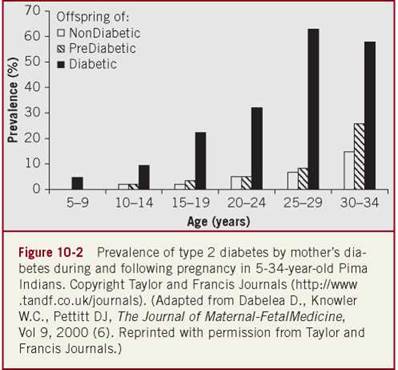
One of the most notable studies implyingmaternal transmission of type 2 DM was made on Pima Indiansfrom Southern Arizona, a population that suffers from high rates of obesity and the world’s highest rate of type 2 DM.57,58 Dabelea and Pettitt relied on true glucose measurements for over 30 years rather than on assessment of family history of DM.59-61 Patients were divided in to 3 different groups: (1) offspring of women who had DM before or during pregnancy (diabetic mothers), (2) offspring of mothers who developed DM after pregnancy (pre-diabetic mothers), and (3) offspring of mothers who remained non-diabetic. Comparison between these groups after adjustment for paternal diabetes, age of onset of diabetes in father and mother and obesity in the offspring, showed that during childhood and early adolescence DM was particularlyfound in offspring of diabetic mothers. Later on, there was up to a six-fold higher prevalence of type 2 DM in those born to diabetic than to non-diabetic or pre-diabetic mothers. There was almost no difference in the prevalence of DM between offspring of pre-diabetic and non-diabetic mothers.60 Figure 10-2 shows the age-specific prevalence of type 2 diabetes in the three subject groups (offspring of diabetic mothers, offspring of pre-diabetic mothers, and offspring of non-diabetic mothers).62 In order to strengthen the role of exposure tothe diabetic intrauterine environment, the prevalence of type 2 DM was compared in Pima Indian siblings born before and after their mother developed DM.59,63 By that, genetic predisposition as a sole factor for Type 2 DM transmission was eliminated since siblings born before and after a diabetic pregnancy shared the same environmental and genetic susceptibility. Offspring born after their mother displayed DM had a significantly higher risk for developing diabetes than those born before the mother’s diagnosis of diabetes (odds ratio 3.7, P = 0.02). In contrast, there were no significant differences in risk of diabetes between offspring born before and after the father was diagnosed with diabetes. Table 10-1 summarizes studies showing independent association between maternal hyperglycemia and offspring risk for type 2 DM. It should be emphasized, however, that several reports offer no evidence at all in support of independent association between maternal hyperglycemia and offspring risk for type 2 DM.31,64-67 Table 10-2 summarizes studies that do not support the association between maternal hyperglycemia and offspring risk for type 2 DM.
Obesity
In 1983, Pettitt el al. suggested in the Pima Indian study that prenatal environment of the offspring of diabetic women results in the development of obesity in childhood and early adulthood. In this study, it was found that the offspring of diabetic mother were about twice as likely to be severely obese as compared to nondiabetic or pre-diabetic mothers and that at the age of 15-19 years, 58% of the offspring of diabetic mothers weighed 140% or more of their desirable weight, as compared with 17% of the offspring of non-diabetics and 25% of those of prediabetics.68
Figure 10-3 shows the age-specific prevalence of obesity in the three groups: offspring of diabetic mothers, offspring of pre-diabetic mothers and offspring of non-diabetic mothers.62 Further studies have shown that offspring born after their mother displayed DM had a significantly higher (3.7-folds) mean body mass index (BMI).59
Those findings were supported by the Northwestern University study which also showed that amniotic fluid insulin concentration during 32-38 weeks of gestation may predict obesity during childhood.14
TABLE 10-1 Summary of Studiesin Favor of an Association Between Maternal Hyperglycemia and Offspring Risk for Type 2 Diabetes Mellitus
|
Method |
Study |
Year |
Conclusions |
P |
|
Retrospective parental and offspring phenotypes |
Dorner, et al.46 |
1975 |
Predominance on the maternal side as compared to the paternal. |
<0.001 |
|
Alcolado JC, Alcolado R.54 |
1991 |
Mothers were implicated in significantly more cases than fathers. |
<0.001 |
|
|
Thomas, et al.55 |
1994 |
Mothers were implicated two times more frequently than fathers. |
<0.001 |
|
|
Meigs, et al.56 |
2000 |
Maternal diabetes and an age of onset of <50 years had marked increased risk for both type 2 diabetes and abnormal glucose tolerance. |
N/A |
|
|
Prospective measurement ofamniotic fluid insulin at 32-38 weeks of gestation and postnatal glucose and insulin measurements |
Silverman, et al.14 |
1995 |
Excessive insulin secretion in utero is a strong predictor of IGT in childhood. |
<0.001 |
|
Longitudinal study comparing diabetes rates in offspring of pre- diabetic, non-diabetic and diabetic mothers during pregnancy |
Pettitt, et al.61 |
1985 |
In all age-groups, there was significantly more diabetes in the offspring of diabetic women than in those of prediabetic and non-diabetic women |
<0.05 |
|
Longitudinal study measuring the prevalence of diabetes in siblingsborn before and after their mother was recognized as having diabetes |
Dabelea, et al.59 |
2000 |
The risk of diabetes was significantly higher in siblings born after the mother developed diabetes than in those born before the mother’s diagnosis of diabetes. |
0.02 |
TABLE 10-2 Summary of StudiesThat Do Not Support an Association Between Maternal Hyperglycemia and Offspring Risk for Type 2 Diabetes Mellitus
|
Method |
Study |
Year |
Conclusions |
PI |
|
Retrospective parental and offspring phenotypes. |
Viswanathan, et al.66 |
1996 |
No evidence for substantial maternal excess in the transmission of diabetes. |
0.07 |
|
Kim, et al.64 |
2004 |
Excess maternal transmission of type 2 diabetes was not observed. |
0.104 |
|
|
Randomized control comparison of fasting blood measurements between type 1 diabetic offspring and controls. |
Manderson, et al.31 |
2002 |
Fasting glucose and insulin did not differ between the offspring of diabetic mothers and control offspring. |
>0.05 |
|
Prospective comparison of intravenous glucose tolerance test between offspring of type 1 and 2 diabetic women and controls. |
Hunter, et al.65 |
2004 |
Intrauterine exposure to hyperglycemia by itself was not associated with alterations in glucose regulation in pre-pubertal offspring. |
N/A |
|
Comparison of young adult with a maternal history of pre-gestational diabetes to controls with no maternal history of diabetes. |
Cross, et al.63 |
2008 |
Young adult offspring of mothers with pre- gestational diabetes do not differ in terms of glucose tolerance. |
N/A |
Blood Pressure and Cardiovascular Risks
Recently, the Pima Indian investigators have shown evidence for an association between maternal hyperglycemia and significantly higher systolic blood pressure emerging during childhood.69 This association confers an additional independent risk for the development of cardiovascular diseases later in life. Such risk was also demonstrated in the Diabetes in Pregnancy follow-up study at Northwestern University which found significantly higher systolic and mean arterial blood pressure in offspring of diabetic mothers.70

LEVELS OF MATERNAL HYPERGLYCEMIA AND THE LONG-TERM EFFECT OF TREATMENT
While levels of maternal fasting serum glucose concentration at diagnosis of GDM was a useful predictor for the risk of major anomalies,71 there has been little attempt to address the relationship between the degree ofmaternal hyperglycemia and the incidence of diabetes in offspring.12
Hillier et al. suggested a relationship between hyperglycemia levels in GDM and increased future risk of obesity in children at age 5-7 years. His group also suggested that this risk is modifiable by treating GDM, as obesity risk was attenuated and no longer significant in the treated GDM group.72 Clausen et al. followed 597 offspring of diabetic mothers at 22 years of age and compared them with a background population. They found that the degree of maternal hyperglycemia in the third trimester in type 1 diabetic mothers was a significant predictorof the child’s glucose tolerance.73
So far there are no randomized control trials in which diabetic mothers were treated during pregnancy and offspring were followed up for future glucose intolerance.12 Crowther et al.6 and Landon et al.74 demonstrated improved pregnancy outcome in the intensively treated groups compared to women with standard care treatment, implying a possible lower incidence of type 2 DM in offspring of intensively treated women. Future demonstration of this possibilitycould provide convincing evidence for the hypothesis of maternal transmission of type 2 DM.12

SUMMARY
Type 2 DM is increasing in epidemic proportions worldwide along with the tendency to develop DM at a younger age. This fact ultimately leads to epidemic range of GDM.11 Apart from the immediate effects of intrauterine exposure to maternal DM (i.e. macrosomia, birth defects) it may have long-term effects on the developing fetus resulting in cardiovascular abnormalities, neurobehavioral problems, earlier onset of obesity, and diabetes leading toa vicious cycle of PGDM and GDM in the next generation (Figure 10-4.)
On the metabolic and molecular level, intrauterine environment can induce metabolic programing through epigenetic modification. Intrauterine programing may permanently alter the expression of genes and therefore the structure and function of the developing systems (i.e., defect in pancreas morphology and function, defects of angiogenesis, hyperinsulinism).
The predisposing effect of intrauterine exposure to a diabetic environment has major public health implications such as the concernthat the current practice of diagnosing gestational hyperglycemia in late pregnancy might be just too late. We should not ignore the long-term outcomes that might contribute to diabetes pandemic. It seems that health providers will need to concentrate on the health of young women and consider interventions in critical “windows” of fetal programming such as pre-conception and during early pregnancy, in order to break this vicious cycle and decrease those long-term effects of maternal DM.
REFERENCES
1. Vitoratos N, Vrachnis N, Valsamakis G, et al. Perinatal mortality in diabetic pregnancy. Ann N Y Acad Sci. 2010;1205:94-98. doi: 10.1111/j.1749-6632.2010.05670.x; 10.1111/j.1749-6632.2010.05670.x.
2. Vrachnis N, Antonakopoulos N, Iliodromiti Z, et al. Impact of maternal diabetes on epigenetic modifications leading to diseases
TYPE 1 DM, TYPE 2 DM, OR MAYBE GDM?
There appears to be a higher incidence of type 2 DM in offspring of women with type 1 DM, type 2 DM or with GDM and it seems like the type of maternal diabetes may be irrelevant to the relationship between maternal hyperglycemia and offspring diabetes.16-38-72 in the offspring. Exp Diabetes Res. 2012;2012:538474. doi: 10.1155/2012/538474; 10.1155/2012/538474.
3. Kousseff BG. Diabetic embryopathy. Curr Opin Pediatr. 1999;11(4):348-352.
4. Gomez RA, Norwood VF. Recent advances in renal development. Curr Opin Pediatr. 1999;11(2):135-140.
5. Zhao Z, Reece EA. Experimental mechanisms of diabetic embryopathy and strategies for developing therapeutic interventions.
J Soc Gynecol Investig. 2005;12(8):549-557. doi: 10.1016/j. jsgi.2005.07.005.
6. Crowther CA, Hiller JE, Moss JR, et al. Effect of treatment of gestational diabetes mellitus on pregnancy outcomes. N Engl J Med. 2005;352(24):2477-2486. doi: 10.1056/NEJMoa042973.
7. Farrell T, Neale L, Cundy T. Congenital anomalies in the offspring of women with type 1, type 2 and gestational diabetes. Diabet Med. 2002;19(4):322-326.
8. Aberg A, Westbom L, Kallen B. Congenital malformations among infants whose mothers had gestational diabetes or preexisting diabetes. Early Hum Dev. 2001;61(2):85-95.
9. Fernandez-Morera JL, Rodriguez-Rodero S, Menendez-Torre E, Fraga MF. The possible role of epigenetics in gestational diabetes: cause, consequence, or both. Obstet Gynecol Int. 2010;2010:605163. doi: 10.1155/2010/605163; 10.1155/2010/605163.
10. Ornoy A, Ratzon N, Greenbaum C, et al. Neurobehaviour of school age children born to diabetic mothers. Arch Dis Child Fetal Neonatal Ed. 1998;79(2):F94-F99.
11. Fetita LS, Sobngwi E, Serradas P, et al. Consequences of fetal exposure to maternal diabetes in offspring. J Clin Endocrinol Metab. 2006;91(10):3718-3724. doi: 10.1210/jc.2006-0624.
12. Poston L. Intergenerational transmission of insulin resistance and type 2 diabetes. Prog Biophys Mol Biol. 2011;106(1):315-322. doi: 10.1016/j.pbiomolbio.2010.11.011; 10.1016/j.pbiomolbio .2010.11.011.
13. Persson B. Neonatal glucose metabolism in offspring of mothers with varying degrees of hyperglycemia during pregnancy. Semin Fetal Neonatal Med. 2009;14(2):106-110. doi: 10.1016/j. siny.2009.01.003; 10.1016/j.siny.2009.01.003.
14. Silverman BL, Metzger BE, Cho NH, Loeb CA. Impaired glucose tolerance in adolescent offspring of diabetic mothers. relationship to fetal hyperinsulinism. Diabetes Care. 1995;18(5):611-617.
15. Pirkola J, Vaarasmaki M, Leinonen E, et al. Maternal type 1 and gestational diabetes: postnatal differences in insulin secretion in offspring at preschool age. Pediatr Diabetes. 2008;9(6):583-589. doi: 10.1111/j.1399-5448.2008.00415.x; 10.1111/j.1399-5448.2008.00415.x.
16. Plagemann A, Harder T, Kohlhoff R, et al. Glucose tolerance and insulin secretion in children of mothers with pregestational IDDM or gestational diabetes. Diabetologia. 1997;40(9):1094-1100. doi: 10.1007/s001250050792.
17. Eriksson UJ, Cederberg J, Wentzel P. Congenital malformations in offspring of diabetic mothers-animal and human studies. Rev Endocr Metab Disord. 2003;4(1):79-93.
18. Kessous R, Shoham-Vardi I, Pariente G, et al. An association between gestational diabetes mellitus and long-term maternal cardiovascular morbidity. Heart. 2013 ;99(15):1118-1121. doi: 10.1136/heartjnl-2013-303945; 10.1136/heartjnl-2013-303945.
19. Ornoy A. Growth and neurodevelopmental outcome of children born to mothers with pregestational and gestational diabetes. Pediatr Endocrinol Rev. 2005;3(2):104-113.
20. Rizzo TA, Dooley SL, Metzger BE, et al. Prenatal and perinatal influences on long-term psychomotor development in offspring of diabetic mothers. Am J Obstet Gynecol. 1995;173(6):1753-1758.
21. Plagemann A. ‘Fetal programming’ and ‘functional teratogenesis’: on epigenetic mechanisms and prevention of perinatally acquired lasting health risks. J Perinat Med. 2004;32(4):297-305. doi: 10.1515/JPM.2004.055.
22. Holness MJ, Langdown ML, Sugden MC. Early-life programming of susceptibility to dysregulation of glucose metabolism and the development of type 2 diabetes mellitus. Biochem J. 2000;349 Pt 3:657-665.
23. Waterland RA, Garza C. Potential mechanisms of metabolic imprinting that lead to chronic disease. Am J Clin Nutr. 1999;69(2):179-197.
24. Loeken MR. Advances in understanding the molecular causes of diabetes-induced birth defects. J Soc Gynecol Investig. 2006;13(1):2-10. doi: 10.1016/j.jsgi.2005.09.007.
25. Amri K, Freund N, Vilar J, et al. Adverse effects of hyperglycemia on kidney development in rats: in vivo and in vitro studies. Diabetes. 1999;48(11):2240-2245.
26. Amri K, Freund N, Duong Van Huyen JP, et al. Altered nephrogen- esis due to maternal diabetes is associated with increased expression of IGF-II/mannose-6-phosphate receptor in the fetal kidney. Diabetes. 2001;50(5):1069-1075.
27. Langley-Evans SC, Welham SJ, Jackson AA. Fetal exposure to a maternal low protein diet impairs nephrogenesis and promotes hypertension in the rat. Life Sci. 1999;64(11):965-974.
28. Aihie Sayer A, Dunn R, Langley-Evans S, Cooper C. Prenatal exposure to a maternal low protein diet shortens life span in rats. Gerontology. 2001;47(1):9-14. doi: 52764.
29. Zandi-Nejad K, Luyckx VA, Brenner BM. Adult hypertension and kidney disease: the role of fetal programming. Hypertension. 2006;47(3):502-508. doi: 10.1161/01. HYP.0000198544.09909.1a.
30. Ktorza A, Gauguier D, Bihoreau MT, et al. Possible contribution of hyperglycemia in utero to glucose homeostasis disorders in the adult. Journ Annu Diabetol Hotel Dieu. 1997:55-68.
31. Manderson JG, Mullan B, Patterson CC, et al. Cardiovascular and metabolic abnormalities in the offspring of diabetic pregnancy. Diabetologia. 2002;45(7):991-996. doi: 10.1007/ s00125-002-0865-y.
32. Ridker PM, Hennekens CH, Roitman-Johnson B, et al. Plasma concentration of soluble intercellular adhesion molecule 1 and risks of future myocardial infarction in apparently healthy men. Lancet. 1998;351(9096):88-92. doi: 10.1016/S0140-6736(97)09032-6.
33. Fowden AL, Hill DJ. Intra-uterine programming of the endocrine pancreas. Br Med Bull. 2001;60:123-142.
34. Bateson P, Barker D, Clutton-Brock T, et al. Developmental plasticity and human health. Nature. 2004;430(6998):419-421. doi: 10.1038/nature02725.
35. Bush NC, Chandler-Laney PC, Rouse DJ, et al. Higher maternal gestational glucose concentration is associated with lower offspring insulin sensitivity and altered beta-cell function. J Clin Endocrinol Metab. 2011;96(5):E803-E809. doi: 10.1210/jc.2010-2902; 10.1210/jc.2010-2902.
36. Ornoy A. Prenatal origin of obesity and their complications: gestational diabetes, maternal overweight and the paradoxical effects of fetal growth restriction and macrosomia. Reprod Toxicol. 2011 ;32(2):205-212. doi: 10.1016/j.reprotox.2011.05.002; 10.1016/j.reprotox.2011.05.002.
37. HAPO Study Cooperative Research Group. Hyperglycemia and adverse pregnancy outcome (HAPO) study: associations with neonatal anthropometrics. Diabetes. 2009;58(2):453^59. doi: 10.2337/db08-1112; 10.2337/db08-1112.
38. Weiss PA, Scholz HS, Haas J, et al. Long-term follow-up of infants of mothers with type 1 diabetes: evidence for hereditary and nonhereditary transmission of diabetes and precursors. Diabetes Care. 2000;23(7):905-911.
39. Kanaka-Gantenbein C. Fetal origins of adult diabetes. Ann N Y Acad Sci. 2010;1205:99-105. doi: 10.1111/j.1749-6632.2010.05683.x; 10.1111/j.1749-6632.2010.05683.x.
40. Singh BS, Westfall TC, Devaskar SU. Maternal diabetes-induced hyperglycemia and acute intracerebral hyperinsulinism suppress fetal brain neuropeptide Y concentrations. Endocrinology. 1997;138(3):963-969.
41. Plagemann A, Harder T, Janert U, et al. Malformations of hypothalamic nuclei in hyperinsulinemic offspring of rats with gestational diabetes. Dev Neurosci. 1999;21(1):58-67. doi: 17367.
42. Harder T, Aerts L, Franke K, et al. Pancreatic islet transplantation in diabetic pregnant rats prevents acquired malformation of the ventromedial hypothalamic nucleus in their offspring. Neurosci Lett. 2001;299(1-2):85-88.
43. Harder T, Franke K, Fahrenkrog S, et al. Prevention by maternal pancreatic islet transplantation of hypothalamic malformation in offspring of diabetic mother rats is already detectable at weaning. Neurosci Lett. 2003;352(3):163-166.
44. Rkhzay-Jaf J, O’Dowd JF, Stocker CJ. Maternal obesity and the fetal origins of the metabolic syndrome. Curr Cardiovasc Risk Rep. 2012;6(5):487^95. doi: 10.1007/s12170-012-0257-x.
45. Vrachnis N, Belitsos P, Sifakis S, et al. Role of adipokines and other inflammatory mediators in gestational diabetes mellitus and previous gestational diabetes mellitus. Int J Endocrinol. 2012;2012:549748. doi: 10.1155/2012/549748; 10.1155/2012/549748.
46. Dorner G, Mohnike A, Steindel E. On possible genetic and epigenetic modes of diabetes transmission. Endokrinologie. 1975;66(2):225-227.
47. Gluckman PD, Hanson MA, Cooper C, Thornburg KL. Effect of in utero and early-life conditions on adult health and disease. N Engl J Med. 2008;359(1):61-73. doi: 10.1056/NEJMra0708473; 10.1056/ NEJMra0708473.
48. Stride A, Shepherd M, Frayling TM, et al. Intrauterine hyperglycemia is associated with an earlier diagnosis of diabetes in HNF-1alpha gene mutation carriers. Diabetes Care. 2002;25(12):2287-2291.
49. Vaxillaire M, Populaire C, Busiah K, et al. Kir6.2 mutations are a common cause of permanent neonatal diabetes in a large cohort of French patients. Diabetes. 2004;53(10):2719-2722.
50. Njolstad PR, Sovik O, Cuesta-Munoz A, et al. Neonatal diabetes mellitus due to complete glucokinase deficiency. N Engl J Med. 2001;344(21):1588-1592. doi: 10.1056/NEJM200105243442104.
51. Sinclair KD, Lea RG, Rees WD, Young LE. The developmental origins of health and disease: current theories and epigenetic mechanisms. Soc Reprod Fertil Suppl. 2007;64:425-443.
52. Simmons RA. Developmental origins of diabetes: the role of epigenetic mechanisms. Curr Opin Endocrinol Diabetes Obes. 2007;14(1):13-16. doi: 10.1097/MED.0b013e328013da5b.
53. Bogardus C. Metabolic abnormalities in the development of non- insulindependentdiabetes mellitus. In: LeRoith D, Taylor SI, Olefsky JM, eds. DiabetesMellitus. 2009, Lippincott Williams & Wilkins, Philadelphia, PA.
54. Alcolado JC, Alcolado R. Importance of maternal history of non-insulin dependent diabetic patients. BMJ. 1991;302(6786):1178-1180.
55. Thomas F, Balkau B, Vauzelle-Kervroedan F, Papoz L. Maternal effect and familial aggregation in NIDDM. The CODIAB study. CODIAB-INSERM-ZENECA study group. Diabetes. 1994;43(1):63-67.
56. Meigs JB, Cupples LA, Wilson PW. Parental transmission of type 2 diabetes: the Framingham Offspring Study. Diabetes. 2000;49(12):2201-2207.
57. Knowler WC, Bennett PH, Hamman RF, Miller M. Diabetes incidence and prevalence in Pima Indians: a 19-fold greater incidence than in Rochester, Minnesota. Am J Epidemiol. 1978;108(6):497-505.
58. Lillioja S, Mott DM, Spraul M, et al. Insulin resistance and insulin secretory dysfunction as precursors of non-insulin- dependent diabetes mellitus. Prospective studies of Pima Indians. N Engl J Med. 1993;329(27):1988-1992. doi: 10.1056/ NEJM199312303292703.
59. Dabelea D, Hanson RL, Lindsay RS, et al. Intrauterine exposure to diabetes conveys risks for type 2 diabetes and obesity: a study of discordant sibships. Diabetes. 2000;49(12):2208-2211.
60. Dabelea D, Pettitt DJ. Intrauterine diabetic environment confers risks for type 2 diabetes mellitus and obesity in the offspring, in addition to genetic susceptibility. J Pediatr Endocrinol Metab. 2001;14(8):1085-1091.
61. Petitt DJ, Bennett PH, Knowler WC, et al. Gestational diabetes mellitus and impaired glucose tolerance during pregnancy. Longterm effects on obesity and glucose tolerance in the offspring. Diabetes. 1985;34 (suppl 2):119-122.
62. Dabelea D, Knowler WC, Pettitt DJ. Effect of diabetes in pregnancy on offspring: follow-up research in the Pima Indians. J Matern Fetal Med.2000;9:83-88.
63. Poston L. Developmental programming and diabetes-the human experience and insight from animal models. Best Pract Res Clin Endocrinol Metab. 2010;24(4):541-552. doi: 10.1016/j. beem.2010.05.007; 10.1016/j.beem.2010.05.007.
64. Cross JA, Brennan C, Gray T, et al. Absence of telomere shortening and oxidative DNA damage in the young adult offspring of women with pre-gestational type 1 diabetes. Diabetologia. 2009;52(2):226-234. doi: 10.1007/s00125-008-1207-5; 10.1007/ s00125-008-1207-5.
65. Kim DJ, Cho NH, Noh JH, et al. Lack of excess maternal transmission of type 2 diabetes in a Korean population.
Diabetes Res Clin Pract. 2004;65(2):117-124. doi: 10.1016/j. diabres.2003.11.020.
66. Hunter WA, Cundy T, Rabone D, et al. Insulin sensitivity in the offspring of women with type 1 and type 2 diabetes. Diabetes Care. 2004;27(5):1148-1152.
67. Viswanathan M, McCarthy MI, Snehalatha C, et al. Familial aggregation of type 2 (non-insulin-dependent) diabetes mellitus in South India; absence of excess maternal transmission. Diabet Med. 1996;13(3):232-237. doi: 2-7.
68. Pettitt DJ, Baird HR, Aleck KA, et al. Excessive obesity in offspring of Pima Indian women with diabetes during pregnancy. N Engl J Med. 1983;308(5):242-245. doi: 10.1056/ NEJM198302033080502.
69. Bunt JC, Tataranni PA, Salbe AD. Intrauterine exposure to diabetes is a determinant of hemoglobin A(1)c and systolic blood pressure in Pima Indian children. J Clin Endocrinol Metab. 2005;90(6):3225- 3229. doi: 10.1210/jc.2005-0007.
70. Silverman BL, Rizzo T, Green OC, et al. Long-term prospective evaluation of offspring of diabetic mothers. Diabetes. 1991 ;40 (suppl 2):121-125.
71. Schaefer UM, Songster G, Xiang A, et al. Congenital malformations in offspring of women with hyperglycemia first detected during pregnancy. Am J Obstet Gynecol. 1997;177(5): 1165-1171.
72. Hillier TA, Pedula KL, Schmidt MM, et al. Childhood obesity and metabolic imprinting: The ongoing effects of maternal hyperglycemia. Diabetes Care. 2007;30(9):2287-2292. doi: 10.2337/ dc06-2361.
73. Clausen TD, Mathiesen ER, Hansen T, et al. High prevalence of type 2 diabetes and pre-diabetes in adult offspring of women with gestational diabetes mellitus or type 1 diabetes: the role of intrauterine hyperglycemia. Diabetes Care. 2008;31(2):340-346. doi: 10.2337/dc07-1596.
74. Landon MB, Spong CY, Thom E, et al. A multicenter, randomized trial of treatment for mild gestational diabetes. N Engl J Med. 2009;361(14):1339-1348. doi: 10.1056/NEJMoa0902430; 10.1056/NEJMoa0902430.