
Oded Langer, MD, PhD
The little present must not be allowed to elbow the great past out of view
—Andrew Lang
Key Points
• The most commonly accepted method of diagnosis of gestational diabetes mellitus (GDM) in the United States is the 100-g oral glucose tolerance test (OGTT) using the National Diabetes Data Group (NDDG) criteria
• The pathophysiology of women with one abnormal value is comparable to those with two or more abnormal values on the OGTT
• Similar adverse perinatal outcome is found in women with one abnormal and untreated GDM
• Two currently recommended diagnostic approaches are the one- and two-step methods
• Postpartum (6-8 weeks) 75-g OGTT should be administered to all GDM women. The test should be repeated on a regular basis every 1-3 years depending on the risk factors for developing type 2 diabetes
INTRODUCTION
The subtitle of this chapter, ascribed to the author Gertrude Stein, should focus our critical sensibilities on the evaluation of a change in practice. Some might suggest that given the thought, massive international observational study data and expert opinion that have contributed to the proposed fundamental change in our diagnostic approach to GDM, that it is too late to debate this question. We differ, agreeing with Joubert (1754-1824) that, “It is better to debate a question without settling it than to settle a question without debating it.” To evaluate the strength of evidence for the newly proposed GDM diagnostic criteria, we reviewed the English language literature associated with GDM diagnosis (2008-2011) and found 81 related citations. Of these, 69% were opinions and 31% provided primary evidence derived from clinical studies (whether prospective or retrospective in nature and of any size and design). Furthermore, in the opinion group, 75% of the authors supported the newly suggested diagnostic criteria of the International Diabetes in Pregnancy Study Group (IADPSG) while 25% opposed it. By contrast, of the 31% clinical studies that included newly published data, 27% had conclusions that supported the new criteria, with 73% opposing it. These numbers suggest an uncomfortable paradox for our classification of research that is, opinions supersede the evidence of well-designed studies. Some authors contend that consensus statements and the opinions of “experts” should be the modus operandi of proposed new diagnostic or therapeutic criteria.1-3 While reaching a consensus may ultimately improve care, basing consensus on questionable information may, in the long run, open Pandora’s Box.4 For a considerable amount of medical care, we are not always sure what really works. Even though diagnostic criteria rarely cause harm, the treatment we assign to the diagnosis may cause more harm than good and the patient, care provider and society pay for it in many ways. Perhaps the time has come to learn that diagnostic approaches will improve pregnancy outcome and at the same time minimize health-care costs that are already over-burdened. To begin to attain this goal, we need fewer opinions and consensus statements, less passionate reactions and public fanfare and more scientific data generated by research. We may then continue to argue about who pays for what, but maybe we will be closer to learning what’s worth paying for.
There are major principles that justify the revision of any diagnostic test. Primarily, the disease needs to be categorized as an important health problem with a significant adverse outcome. The prevalence will be determined based on the association between selected glucose thresholds and meaningful clinical outcome measures that justify intervention. Justification to accept a higher prevalence will be based on the severity of the principal outcome. For example, thresholds resulting in a high prevalence that identify and prevent potential stillbirth will be accepted while thresholds for large-for-gestational age (LGA) in which 70% of the cases are derived from nondiabetic pregnancies will be ques- tionable.5,6 Furthermore, the expenditures to accommodate the test would need to be economically balanced in relation to overall health-care costs.
ORAL GLUCOSE TOLERANCE TEST: REQUIREMENTS AND LIMITATIONS OF A DIAGNOSTIC TEST
Diagnostic tests differ from screening tests in that they are applied to patients with positive screening results and/or symptomatic populations. The definition of a clinical problem requires an understanding of what constitutes normality. For a clinical measure or test to be reliable, it must be able to distinguish between normal and abnormal values to identify those individuals who have already or will develop a pathological state. For a test to be considered clinically applicable, it must meet six criteria: (1) reproducibility, (2) precision, (3) simplicity (4) sensitivity, (5) specificity, and (6) cost-effectiveness.7 The ultimate benefit of the diagnostic test lies in the care provider’s ability to change the course of the disorder and reduce morbidity and mortality. The disease should have a prevalent and identifiable preclinical state during which diagnosis leads to improvement. The ideal diagnostic test for gestational diabetes has not yet been developed. There are limitations of the OGTT that include test duration, time of performance (morning only after nocturnal fast), patient discomfort, especially during the first trimester with potential nausea and vomiting as well as the supra-physiological glucose load unrelated to body weight. Finally, the issue of reproducibility remains a limitation.
REPRODUCIBILITY OF THE OGTT
Reproducibility was evaluated in multiple studies in pregnant and nonpregnant states. An increased variability was greater for pregnant versus nonpregnant women. When the values from two tests for reproducibility were compared, the least amount of variation was found in fasting plasma glucose 7-19 mg/dL and one-hour of 30-45 mg/dL. The lower the suggested criteria and number of abnormal values, the greater the potential for variability. The evidence has shown that the OGTT is not reproducible for diagnosis in 24% of cases when the NDDG criteria are used.8,9 We do not as yet have evidence of the level of reproducibility of the IADPSG criteria. It may not always be cost-effective to implement the use of a new diagnostic technique when relatively minor improvements do not justify the added costs. Knowing the nonuniform nature of hospitals, private offices, and clinics, each will make the determination if to implement high-tech time-consuming solutions when low-cost, low-tech alternatives are effective and acceptable for patients’ needs.
In nonpregnant individuals, repetition of the test showed a mean difference of 26 mg/dL at one-hour and 20 mg/dL at two-hour levels.10 In a study of 32 women of whom 16 were GDM and 16 had normal glucose tolerance test (GTT) results at 31 weeks gestation, we demonstrated that when the women were retested within 10 days, there was 18% variability for the nondiabetic and 10% for the GDM women. Significant differences in the OGTT results, especially in the nondiabetic group, at a gestational age at which one would expect the greatest reliability, must be taken into consideration with high-risk patients (e.g., previous GDM, obesity) and retesting should be a major consideration.11 Following our study, several investigators reported similar findings.9 They found significant variability in the OGTT results especially when glucose values were in the upper normal range. This resulted in reclassification of many patients from nondiabetic to diabetic. Therefore, they recommended that borderline OGTT results be repeated. Espinosa de los Monteros et al. demonstrated that the reproducibility of the 50-g load was 90% for normal test results and 83% for abnormal results when the test was repeated the following day.12 Catalano et al. reported that the OGTT was not reproducible for diagnosis in 24% (nine of 38) pregnant women.8
100 VERSUS 75-G GLUCOSE LOAD
There is no consensus on the glucose load concentration that needs be used for the glucose test. Several clinical studies have attempted to test if the 75-g load (recommended by the World Health Organization [WHO] and by the American Diabetes Association [ADA]) will be more convenient and provide greater accuracy than the 100-g load while others have suggested that some GDM women will not be identified with the lower load. The use of the 75-g load was first endorsed in 1997 by the Fourth International Workshop Conference on Gestational Diabetes13 and was incorporated into the ADA Clinical Practice Recommendations.14 This approach may be easier to tolerate by the patient (less nausea and vomiting), requires shorter testing time (three-hour determination eliminated) and is less expensive. Therefore, it is surprising that a survey conducted by Gabbe et al.15 failed to show a sizeable percentage of physicians who use this diagnostic test routinely. The most commonly accepted method of diagnosis of GDM in the United States is the 100-g OGTT using the NDDG criteria.16 The criteria has been continually endorsed by the American College of Obstetrics and Gynecology (ACOG), ADA and the Second, Third, and Fourth International Workshop Conferences on Gestational Diabetes.17-22
At no time during the diabetes, in pregnancy workshops or in institutional endorsements have the issues of hyperosmolarity of the glucose solution, delayed gastric emptying and associated patient nausea been addressed. We investigated the effect of different glucose loads, 50 versus 100 g, to gauge women’s comfort and homogeneity on the OGTT curve. We used a modified more physiologic glucose solution that enhances more rapid gastric emptying and, therefore, a marked decrease in the incidence of nausea and vomiting. Our findings suggest that a modified, lower osmolar glucose solution empties rapidly from the stomach and results in a more homogeneous glucose curve; it facilitates glucose absorption into the peripheral circulation more smoothly.23,24
Today, with the 100-g load, physicians often obtain results in which the two-hour or three-hour results are greater than the one- hour. A common practice in these cases is to assume a lab error and to reassign the results according to the expected curve. This reversal can make a diabetic patient a nondiabetic one. Rather than reverse results to resolve the unexpected glucose pattern, patients and care providers should be aware that it is the hyperosmolar solution and the delayed stomach emptying that are probably responsible for this phenomena.
A report by Mello et al.25 suggested that more women meet the diagnostic threshold for GDM when the 100-g glucose is used in comparison to the 75-g load. We compared 75 and 100-g loads with each patient serving as her own control. Women were diagnosed with GDM with the 100-g load (NDDG criteria); 63% of them were categorized as non-GDM when the 75-g load was administered. In addition, 50% of the GDM patients when tested with the 75-g load had only one abnormal value. However, using the NDDG criteria with one or more abnormal values on the 75-g load resulted in identification of 90% of GDM patients.26 In contrast, some investigators found that the lower load is ben- eficial.27-29 Schmidt et al. in a large scale observational study (n = 4977) demonstrated that a 75-g glucose load identified women who were at risk for preeclampsia, delivery of a macro- somic infant and increased perinatal mortality. Their data confirmed that GDM is independently associated with fetal macrosomia and preeclampsia as previously described by Sacks and Sermer et al.30 These studies demonstrated that GDM, independent of age, obesity, and other risk factors, predict perinatal mortality. For example, the adjusted (for age and obesity) relative risk for perinatal mortality in Schmidt’s study was 3.1. However, these studies did not address how many of the GDM women (by the NDDG criteria) will remain undiagnosed with the 75-g load. Only after addressing the rate of misdiagnosed women can we make a determination of the most efficacious load.
OGTT: DIFFERENT DIAGNOSTIC THRESHOLDS
In preexisting diabetes, the level of glucose used for diagnosis is based on the risk for microvascular disease. For example, in recent years, the fasting plasma glucose threshold for diagnosis of overt diabetes was reduced from 140 mg/dL to 126mg/dL. Although this automatically increased the number of patients diagnosed (labeled) with diabetes, it also enhanced the possibility for earlier detection, intervention and potential for decreased morbidity. Similarly, the lower threshold of impaired fasting plasma glucose was changed from 115 mg/dL to 100 mg/dL to detect individuals at risk for metabolic syndrome. Plasma glucose is a more accurate measure than hemoglobin A1c (HbA1c) for diagnostic purposes since the coefficient of variation of glucose is 3% while that of HbA1c is 16.5%.31 The use of HbA1c for the diagnosis of GDM is not currently recommended.14,18,32
In contrast to preexisting diabetes, the diagnostic criteria for GDM were based on long-term effects on the mother and only in the past decades has the association between OGTT thresholds and neonatal outcome been investigated. The original O’Sullivan criteria were based on the risk for developing type 2 diabetes rather than the risk for adverse pregnancy outcome. In 1964, O’Sullivan and Mahan33 reported the results of a study of a three- hour oral 100-g GTT in 752 healthy pregnant women. Norms were established for whole blood during fasting, one-hour, two-hour, and three-hour values after glucose ingestion. The authors then followed a group of 1,013 women undergoing the OGTT during pregnancy and determined the incidence of adult onset diabetes in this population. After several years of follow-up, the cumulative incidence rate was 29% for women exhibiting OGTT values greater than two standard deviations during pregnancy. The authors suggested that pregnant women exhibiting this degree of carbohydrate intolerance during pregnancy be designated gestational diabetic. Subsequent follow-up of O’Sullivan’s study population demonstrated that risk for the development of overt diabetes exceeds 50% within 15 years. More recent studies report the risk for subsequent diabetes may be as high as 15%-30% after two years of follow-up.34
Many diverse diagnostic criteria have been proposed throughout the world (Table 26-1). In 1990, at the Third International Workshop Conference on GDM, the consensus statement read: “Because it is hoped that international agreement will soon be reached as to appropriate and globally acceptable diagnostic criteria, it is advisable to introduce minor corrective modifications at present.”20 More than 20 years have passed; no international agreement has been reached and millions of women worldwide with a potential GDM diagnosis remain untreated and have suffered with the burdens of a degenerative disease.
The current diagnostic criteria for gestational diabetes in the United States were derived from the work of O’Sullivan and Mahan. The NDDG accepted and then converted the O’Sullivan criterion by applying a factor of 1.14 to convert whole blood to plasma thus creating the glucose thresholds known as the NDDG criteria. These criteria are the most widely used in the United States (approximately 56%) by obstetricians.15 Carpenter and Coustan (C&C)35 suggested an additional modification of the O’Sullivan criteria. This modification incorporates the change in the substrate and method used. The NDDG criteria did not correct for the reducing substances that are no longer measured in current laboratory procedures. The Somogy-Nelson technique uses whole blood and identifies other reducing substances in addition to glucose. Today, newer techniques measuring glucose oxidase or hexokinase are specific to glucose. Therefore, in addition to the change from whole blood to plasma (14%), the C& criteria subtracted 5 mg from the threshold created by the original conversion and rounded out the results. These criteria are used by approximately 33% of the obstetricians in the United States.
Using a mathematical model, Sacks et al.36 studied the OGTT results of 994 pregnant women. The samples were tested with the Somogy-Nelson technique for whole blood and glucose oxidase for plasma. The study demonstrated that the Somogy-Nelson technique results in 2-6 mg higher values due to the presence of reducing substances. The diagnostic thresholds derived from the study were lower than those in the C&C study. The C&C and NDDG criteria were further compared with a prospective observational outcome study of 3,778 women aged 24 or older.37 All subjects were subjected to the OGTT regardless of the screening results. One hundred and forty-three women met the criteria for gestational diabetes by the NDDG and received treatment. Care providers were blinded to the OGTT results of the remaining subjects. Of these, 115 subjects were identified as GDM using the C&Cr criteria. Similar rates of GDM (NDDG 3.9% vs. C&C 3.2%) were found although it would have been reasonable to assume that the lower threshold criteria would have resulted in a higher prevalence. Comparison between the untreated (C&C) and the treated GDM subjects revealed an increased risk for macrosomia (28.7% vs. 13.7% P < .001) and cesarean delivery (29.6% vs. 20.2% P < .02). In addition, the author found a twofold increased risk for cesarean delivery for the treated GDM women. This can be explained by the physician’s knowledge of the existence of disease; this knowledge often becomes a self-fulfilling prophecy to deliver by cesarean section. The study may also support the idea that even the lower threshold criteria is associated with a higher rate of macrosomia compared to the general population.
TABLE 26-1 Varying Criteria of Gestational Diabetes
|
Fasting mmol/L |
1 Hour mmol/L |
2 Hours mmol/L |
3 Hours mmol/L |
Values# |
Load |
Comment |
|
|
NDDG |
5.8 |
10.6 |
9.2 |
8.1 |
2 |
100 |
Risks of GDM |
|
C&C |
5.3 |
10 |
8.6 |
7.8 |
2 |
100 |
Conversion of Factor |
|
Sacks |
5.3 |
9.6 |
8.4 |
7.3 |
2 |
100 |
Mathematical Conversion |
|
Langer (NDDG) |
5.8 |
10.6 |
9.2 |
8.1 |
1 |
100 |
Randomized |
|
United Kingdom |
8.0 |
— |
11 |
— |
1 |
75 |
Consensus |
|
IADPSG |
5.1 |
10.0 |
8.5 |
— |
1 |
75 |
Consensus |
|
Australia |
5.5 |
8.0 |
1 |
1 |
2 |
75 |
Consensus |
|
Canada |
5.3 |
10.6 |
8.9 |
— |
2 |
75 |
Consensus |
|
WHO |
7.0 |
— |
7.8 |
— |
2 |
75 |
Consensus |
|
4th International |
5.3 |
10 |
8.6 |
2 |
75 |
Consensus |
Langer, one or more abnormal value based on NDDG criteria. To convert to mmol/L to mg % multiple by 18.
THE OGTT ONE-ABNORMAL VALUE: PREDICTIVE VALUE, PATHOPHYSIOLOGY, AND GLUCOSE ABNORMALITY FOR A GDM DIAGNOSIS
Several investigators in the mid-80s proposed that glucose is a continuum and even relatively mild hyperglycemia is associated with adverse outcome in pregnancy. The majority of these studies used LGA or macrosomia as the outcome measure. Tallarigo et al.38 found that even limited degrees of maternal hyperglycemia on the OGTT results within the normal range were associated with a significant increase in the rate of macrosomia, congenital anomalies, preeclampsia, and cesarean delivery. Similar findings were recently demonstrated.39,40
To make the determination if a condition is a disease, three criteria must be met: the presence of a significant adverse pregnancy outcome, pathophysiology that explains the condition, that is, GDM, and the availability of a treatment modality to mitigate the outcome. The concept that one abnormal value on the OGTT is sufficient for the diagnosis of gestational diabetes was proposed in the 1980s in retrospective, prospective, and randomized studies. In a case-controlled study, gravid subjects with untreated one abnormal value were compared to treated gestational diabetics and nondiabetic women. We reported a significantly higher rate of fetal macrosomia and metabolic complications in the untreated (one abnormal group) and a similar rate for nondiabetic and treated GDM subjects.42 In another study,42 we randomized gravidas with one abnormal value on the OGTT into treatment and nontreatment groups. The treatment group had a significant reduction in adverse pregnancy outcome. Furthermore, the untreated group had higher rates of hypoglycemia (13 vs.2%, P < .02); polycythemia (14 vs. 2%, P < .02); and, LGA infants (24 vs. 6%, P < .03), respectively (Figure 26-3). Leikin et al. and Lindsay et al. concurred with our findings.43,44 Leikin showed that patients with elevated screening tests but normal GTT results had an increased risk for delivering a macrosomic infant. Lindsay et al. reported a relationship between one abnormal value on the OGTT and pregnancy complications. Similar findings were reported by several other authors.45-47 The results of these studies demonstrated that there is an adverse influence of even one abnormal GTT value on pregnancy outcome. Finally, it was demonstrated that patients with one abnormal value on the GTT by the C&C criteria when retested four weeks later, 34% were found to have two or more abnormal values on the OGTT results.48
The multiple criteria for diagnosis have resulted in different rates of prevalence even within the same geographic and demographic catchments. As a rule of thumb, the lower the thresholds (one abnormal value or glucose), the higher the prevalence. For example, a clinical evaluation of the two sets of criteria in 103 patients found that 10 of 39 (26%) patients whose GTTs were abnormal by the C&C criteria but not by the NDDG criteria required insulin during pregnancy.48 This is a substantial number compared with the 20/65 patients (30%) who met only the higher NDDG criterion and suggests that the higher thresholds are not sensitive enough. In our own data, we found that over 70% of women who had one abnormal value using the NDDG criteria had two or more abnormal values when their results were applied to the C&C criteria. Again, this demonstrates that one abnormal value is indicative of disease and that it should be treated as such. Timely identification and treatment will result in improved perinatal outcome.
Furthermore, the studies demonstrated that untreated women with one abnormal OGTT values are at two-to threefold higher risk compared to treated subjects. In a large cohort of women (n = 89,141), the two-step procedure supported the use of isolated abnormal fasting value based on the IADPSG with odds ratio for LGA of 1.89, 95th confidence interval, 1.45-2.45.49 In addition, it was shown that adverse pregnancy outcome and glucose characteristics are similar in women with 1, 2, and even 3 abnormal values on the OGTT.50 When patients with one abnormal value were compared to GDM (equal or greater than two abnormal values), both groups had similar rates of neonatal metabolic syndrome (20% vs. 18%).51
GLUCOSE PROFILE AND PATHOPHYSIOLOGY
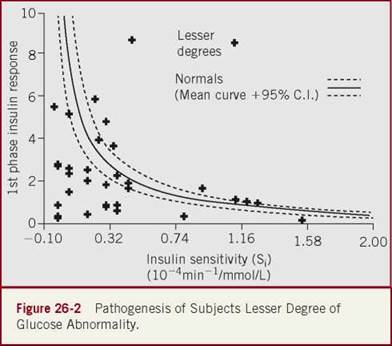
In an attempt to determine the ambulatory metabolic control of subjects (n = 126) with one abnormal, or two or more abnormal values (before and after treatment) and nondiabetic women, we used the Ambulatory Glucose Profile.41,52 Glucose profiles from women with either two or more abnormal values or one abnormal value were comparable. In another study of 36 women with one abnormal value and 29 nondiabetic controls, we used the Bergman Minimal Modeling Method that provides a means to assess insulin sensitivity and Β-cell function in vivo. We demonstrated that 66% of women with one abnormal value on the OGTT had an insulin sensitivity response below the nondiabetic fit curve. Finally, in the one abnormal group, obese subjects had lower sensitivity than lean subjects. (Figures 26-1 and 26-2) and those with two or more abnormal values (C&C criteria). Furthermore, 80% of low responders exhibited abnormal findings postpartum.53,54 Similar findings in other studies showed that fasting insulin and insulin resistance were indistinguishable in patients with one abnormal value or GDM. Moreover, higher insulin levels and greater insulin to glucose ratios, a reflection of insulin resistance, was identified in these “normal” gravidas.55 Recently, it was reported that ...” like GDM, isolated one-hour hyperglycemia on the OGTT is associated with Β-cell function and increased risk for LGA neonates.56,57 They reported that women with one abnormal glucose test value have an increased risk for fetal obesity, hyperinsulinemia, postpartum hypoglycemia, and placental immaturity.
The current findings of the existence of pathophysiology in women with one abnormal value and the existence of increased adverse outcome of pregnancy supports the recommendation of the IADPSG criteria58 endorsed by the ADA. However, we need to observe caution since the impact of one abnormal value on the prevalence by the suggested criteria remains unknown. Furthermore, there is paucity of information on the benefit of treatment of these patients diagnosed using one abnormal under the IADPSG criteria. The impact on outcome may be relatively small while the impact on the prevalence may be the reverse with an unsupported cost-benefit formula. On the other hand, we suggest that these data are much stronger in supporting the change and that the similarity in pathophysiology and outcome suggest that treatment should be similar.


THE CURRENT DEBATE AND WHERE ARE WE HEADED
To alter the current diagnostic criteria to conform to the IADPSG proposal, several distinct unknowns and areas of difference need to be addressed.
1. Which clinical outcomes do we seek to improve and how will we measure them?
2. Do we adopt a one-or (sequential) two-step screening strategy?
3. Should the GDM diagnosis be based on a single abnormal value or require two or more abnormal values?
4. Is there justification to lower the OGTT glucose threshold?
5. Should we be concerned if different populations of women exhibit markedly varying GDM prevalence due to adoption of new diagnostic criteria?
6. Should we consider cost-benefit and resource allocation implications of increased GDM prevalence as consequences of broadened diagnosis?
The Fourth International Workshop on Gestational Diabetes13 supported by the ADA and the ACOG attempted to decrease controversy surrounding screening and diagnosis of gestational diabetes. It recommended that both the C&C and NDDG criteria be used for diagnosis of GDM in either a one or a two-step approach. The recommendation of the conference participants did not produce a definitive diagnostic protocol but instead endorsed approaches for diagnosis, the 100-g and 75-g oral glucose loads using the C&C threshold.
ONE-STEP APPROACH
The one-step approach uses the 75-g load (popular in Europe) with the threshold suggested by the C&C criteria (fasting 95 mg/dL, one-hour 180 mg/dL, two-hour 155 mg/dL); it eliminates the three-hour sample and relies on two or more abnormal values for diagnosis. It is performed without prior plasma or serum glucose screening. This approach may also be cost-effective for high-risk patients. This consensus was a significant change from the traditional WHO criteria (Table 26-2).
TWO-STEP APPROACH
This model recommends using universal or selective screening with an initial 50-g oral glucose load (glucose challenge test [GCT]). The glucose thresholds that are used as positive test results are still not universally accepted and range from 130 mg/ dL to 140 mg/dL (see Chapter 25). A positive screening result should be followed by the traditional OGTT as recommended by the NDDG or C&C criteria (Table 26-3) (Figure 26-4). The Consensus statement, instead of creating consensus has left us with universal versus selective screening and at least three different diagnostic criteria for gestational diabetes. This lack of uniformity precludes comparison and with multiple criteria results in different patient populations being designated GDM.
TABLE 26-2 One-Step Approach for Diagnosis
|
Perform OGTT without prior plasma or serum glucose screening May be cost effective in high-risk patients Diagnosis of GDM with a 75-g oral glucose load |
||
|
Mg/dL |
mmol/L |
|
|
Fasting |
95 |
5.3 |
|
1-h |
180 |
10.0 |
|
2-h |
155 |
8.6 |
The National Institutes of Health (NIH) consensus statements present up-to-date research on a particular topic followed by open discussion of the merits of each argument. Thus, these consensus statements represent the findings and opinions of the conference participants and not those of the NIH. The primary mission of the NIH is research; it does not give specific, detailed practice algorithms. Nevertheless, its consensus statements are widely read and have the potential to have immediate clinical impact, if properly timed.
TABLE 26-3 Two-Step Approach of Diagnosis
|
Initial 50-g oral glucose load (GCT) Perform a diagnostic OGTT for women exceeding the glucose threshold value on the GCT Diagnosis of GDM with 100-g Oral Glucose Load |
||
|
C & C |
NDDGa |
|
|
Fasting |
95 |
105 |
|
1-h |
180 |
190 |
|
2-h |
155 |
165 |
|
3-h |
140 |
145 |
|
Two or more abnormal values. aOne of more abnormal values. |
||
Currently, two schools of thought have emerged regarding the diagnostic criteria. One methodology supports the one- step approach and change in the diagnostic threshold, that is, IADPSG.58 The second approach recommended by ACOG, the NIH Consensus Conference and several experts21-22-59-60 seek to maintain the two-step approach with the current criteria for diagnosis. The National Institute of Child Health and Human Development (NICHD) and the Hyperglycemia and Adverse Pregnancy Outcome (HAPO) studies and Landon et al.61-62 helped us to determine the lower end of the hyperglycemic spectrum that should be considered GDM and define the rate of morbidity in this subset of women. However, neither study addressed the question of the magnitude of the adverse perinatal outcome in all disease severity levels of the spectrum since they a priori excluded women who would have been candidates for pharmacological therapy with either fasting plasma glucose of >95 mg/dL (NICHD) or >105 mg/ dL (HAPO). Another two studies shed light on the association between the GDM severity spectrum of GDM and morbidity.63
The reason to apply lower glycemic thresholds for the interpretation of OGTT results is not surprising when one evaluates the history of the GTT as a diagnostic instrument for GDM. The diverse prevalence reported from different countries or even centers within the United States are, in part, the result of different criteria. A diagnosis of normal in one area reverts to diabetic in another. The intensity of screening of patients at risk for the disease will affect the prevalence of the disease in a given population.

The prevalence of GDM ranges from 4%-6% in the United States. In fact, the majority of reported studies in the past decade demonstrated a significant increase in the rate of GDM in relation to different diagnostic criteria thereby altering the resulting prevalence of GDM. In a recent study of 4,659 women, comparing the NDDG to the C&C criteria demonstrated that the prevalence of GDM was 3.3% with the NDDG and 4.6% with the C&C standard. This represents a 30%-50% increase in the number of women who are labeled diabetic.64,65 In a study by Gokcel et al.66 the prevalence of GDM was 6.5% using the C&C criteria and 4.1% using the NDDG. In Taiwan, the incidence of GDM was 3.5% using the NDDG and increased to 7.9% using the C&C criteria. The authors concluded that in their target population, using the C&C criteria showed no benefits over using NDDG criteria.67 In Turkey, a comparison study revealed a prevalence of 8.1% with the C&C criteria and 5.6% using the NDDG criteria.68 Some authors have even suggested ethnic-specific guidelines for GDM diagnosis.69
The contributing factors to GDM prevalence include obesity, racial, ethnic disparities, and the threshold used for diagnosis. Each incremental modification in the threshold criteria can potentially elevate or lower the disease prevalence. An increased prevalence of about 3% occurred when the C&C criteria substituted the NDDG standard. Using the IADPSG criteria will result in an 18% increased prevalence. Even the frequency of GDM at the various HAPO testing centers using the IADPSG consensus showed substantial center-to-center variation with a range of 9.3%-25.5% with an overall prevalence of 17.8%.70,71 For varying regions of the world, similar findings, using the new proposed criteria found a prevalence ranging from 12.4%-37.7%.
The new criteria have not extended the options available for GDM diagnosis; they have, however, raised the issue that given the regional differences, can a single, uniform criteria adequately identify GDM and at what cost? Is there justification for substituting GDM diagnosis with the new criteria with the knowledge that any decrease in the threshold will result in an increased prevalence of 18% or more with the accompanying social and economic burden? There have been no adequately designed and powered randomized studies to answer the question if new diagnostic criteria as recommended by the IADPSG consensus will clinically, socially, and economically be efficient and effective. The medical model does not exist in a cultural vacuum. The social nature of illness is particularly evident with the application of a medical label, that is, GDM. When a woman is identified with an expensive or feared medical condition, it significantly disrupts her life and often increases her psychological stress. The experience of being labeled “sick” has both short- and long-term social as well as physical consequences.72-74
If the new IADPSG criteria, one-step diagnostic test, using one-abnormal value on the OGTT are implemented, the result will be a significant increase in patient volume. Hospitals, clinics, and private physician offices will now need to determine how to deploy and manage personnel and space. Access to enhanced testing may lead to greater demands on staff as productivity rises and more is expected of them. How many more doctors, nurses, diabetic nurse educators, clerks, and so forth will need to be employed to accommodate the increased number of patients that will now be screened and diagnosed? How will current physical facilities address the issue of enhanced allocation of space to accommodate greater patient volume needing testing? Will current laboratories be able to accurately and efficiently handle the increased volume? These are just a few of the decisions that will need to be made59,60,75-77
New diagnostic criteria should be selected with the patient in mind. It should be easy to test and pose minimal invasion to the other areas of her life. A patient may be willing to test but may not be able to test because of familial (i.e., child care) or employment commitments. The employed patient who needs to test early in the morning will generally forgo returning to work that day. The number of work days lost to testing multiplied by the millions of pregnant women in the USA will impose an additional economic burden to the already overburdened health-care system.78-80 Recent studies evaluating the cost-effectiveness of the one-step method recommended by the IADPSG and the two-step currently used in many institutions worldwide have shown that the two-step approach will be more cost efficient. A single study found that the one-step approach will be more beneficial but only when postpartum counseling and care were included. When the postpartum component was not part of the provision of care, there was no difference in the diagnostic approaches.81-83
POSTPARTUM EVALUATION OF THE GDM PATIENT
GDM does not end with the birth of the child. On the contrary, for many mothers it may be the onset of a chronic disease. Glucose homeostasis and insulin sensitivity appear to change within the first few days postpartum. These changes may be the result of diet, enhanced activity, and onset of lactation and decreased placental hormones. Several investigators have reported a decrease in fasting plasma insulin levels two days postpartum while fasting plasma glucose levels increased. These changes may last 5-6 weeks after delivery while the glucose metabolism stabilizes.84,85 About 30% of GDM women may have diabetes or prediabetes postpartum. Depending on ethnicity and other risk factors for a given population, the incidence of undiagnosed type 2 diabetes ranges from 9%-15%.86-89 Furthermore, a significant number of the GDM women will be classified as impaired glucose tolerant. In our own data of 5,000 OGTT results performed during pregnancy in GDM patients, after correcting for the 10 mg physiological decrease of fasting plasma during pregnancy, approximately 70% will have fasting plasma results >100 mg/dL that classifies them as impaired fasting glucose (Table 26-4). However, only about half are tested and even fewer are tested 6-12 weeks postpartum.
TABLE 26-4 Criteria for the Diagnosis of Diabetes Mellitus
|
Nondiabeticaa |
CTRa |
Diabetesa |
|
FPG |
||
|
>100 |
>100 <126 |
>126 |
|
2-h PP |
||
|
<140 |
>140 < 200 |
>200 |
|
Symptoms of DM And casual plasma Glucose > 200 mg/dL |
||
|
Abbreviations: DM, diabetes mellitus; FPG, fasting plasma glucose; IGT, impaired glucose tolerance. Diagnosis confirmed on a subsequent day. amg/dL. |
||
Timely testing for prediabetes may provide an opportunity for care providers to prevent or delay the onset of type 2 diabetes through diet, physical activity, weight management, and pharmacological therapy. ACOG and the ADA currently recommend testing women with a history of GDM 6-12 weeks postpartum. If the test results are normal, they recommend retesting every three years and at the first prenatal visit in a subsequent pregnancy. If prediabetes is diagnosed, the test should be administered annually (Figure 26-5).90,91
SUMMARY
Gestational diabetes is characterized by a decrease in insulin secretion and/or increase in insulin resistance. This is true in all disease severity levels (from one abnormal to four abnormal values). Early diagnosis will result in a significant improvement in perinatal outcome. The method of diagnosis (one- or two-step approach) is of less importance. Although multiple thresholds have been suggested for diagnosis, their practical value is limited since the differences are minimal. However, the lower the threshold, the higher the prevalence of the disease and the greater the number of women committed to treatment. We need to press the pause button. Rather than moving forward into as yet not fully vetted criteria, we have a moral responsibility to encourage empirical research that will maximize certainty, consistency, and predictability. Our standard needs to be: do not block the road to inquiry and repeatedly address the questions of why and how.

REFERENCES
1. Cosson E. Diagnostic criteria for gestational diabetes mellitus. Diabetes Metab 2010;36:538-548.
2. Hadar E, Hod M. Establishing consensus criteria for the diagnosis of diabetes in pregnancy following the HAPO study. Ann New York Acad Sci. 2010;1205:88-93.
3. Long H. Diagnosing gestational diabetes: can expert opinions replace scientific evidence? Diabetologia. 2011;54:2211-213.
4. Moses R. New consensus criteria for GDM: problem solved or a Pandora’s Box? Diabetes Care. 2010;33:690-691.
5. Langer O. The Diabetes in Pregnancy Dilemma. Lanham, MD: University Press of America; 2006:364.
6. Feinstein AR. Clinical Epidemiology. Philadelphia, PA: Saunders; 1985:609-610.
7. Cooke ID. Is biochemical screening useful? J Med Eng Tech. 1980;4(3):130-135.
8. Catalano PM, Avallone DA, Drago NM, Amini SB. Reproducibility of the oral glucose tolerance test in pregnant women. Am J Obstet Gynecol. 1993;169:874-881.
9. Harlass FE, Brady K, Read JA. Reproducibility of the oral glucose tolerance test in pregnancy. Am J Obstet Gynecol. 1991;164:564-568.
10. Rushforth NB, Bennett PH, Steinberg AG, et al. Comparison of the value of the two- and one-hour glucose levels of the oral GTT in the diagnosis of diabetes in Pima Indians. Diabetes. 1975;24:538-546.
11. Langer O, Anyaegbunam A, Brustman L, et al. Reproducibility of oral glucose tolerance test on same individuals in pregnancy. Proceedings of the 7th Annual Meeting of the Society of Perinatal Obstetricians; 1987; Orlando, FL.
12. Espinosa de los Monteros A, Parra A, Carino N, et al. The reproducibility of the 50-g, 1-hour glucose screen for diabetes in pregnancy. Obstet Gynecol. 1993;82:515-518.
13. Metzger B, Coustan D. Summary and recommendations of the Fourth International Workshop Conference on Gestational Diabetes Mellitus. The Organizing Committee. Diabetes Care. 1998;(suppl 2):B161-B167.
14. Standards of Medical Care in Diabetes-2011. Diabetes Care. 2011;34(suppl 1):S11-S61.
15. Gabbe SG, Gregory RP, Power ML, et al. Management of diabetes mellitus by obstetrician-gynecologists. Obstet Gynecol. 2004;103:1229-1234.
16. National Diabetes Data Group. Classification and diagnosis of diabetes mellitus and other categories of glucose intolerance. Diabetes. 1979;28:1039-1057.
17. ACOG Practice Bulletin. Clinical management guidelines for obstetricians gynecologists no.30, September 2001 (replaces Technical Bulletin Number 200, December 1994). Gestational diabetes. Obstet Gynecol. 2001;98(3):525-538.
18. American Diabetes Association. Gestational diabetes mellitus. Diabetes Care. 2004;27(suppl 1):S88-S90.
19. Summary and Recommendations of the Second International Workshop Conference on Gestational Diabetes Mellitus. Diabetes. 1985;34(suppl 2):123-126.
20. Summary and Recommendations of the Third International Workshop Conference on Gestational Diabetes Mellitus. Diabetes. 1991;40(suppl 2):197-201.
21. National Institutes of Health Consensus Development Conference Statement. Obstet Gynecol. 2013;122(2); Part 1:358-365.
22. Practice Bulletin of ACOG. 2013. (137). Obstet Gynecol. 2013;122(2), Part I:406^16.
23. Schwartz J, Phillips W, Langer O. Use of a more physiologic oral glucose solution during testing for gestational diabetes mellitus. Am J Clin Pathol. 1992;97:831-835.
24. Schwartz J, Phillips W, Blumhardt M, et al. Use of more physiologic oral glucose solution during screening for gestational diabetes mellitus. Am J Obstet Gynecol. 1994;17(3):685-691.
25. Mello G, Cioni R, Martini E, et al. Lack of concordance between 75-G and 100-G glucose loads for the diagnosis of gestational diabetes mellitus. Program and Abstract Book of the Diabetic Pregnancy Study Group of the EASD, 34th Annual Meeting. 2002:45.
26. Brustman L, Langer O. Does variation exist between 100-gram versus 75-gram oral glucose tolerance tests? J Assoc Acad Minor Phys. 1995;6(2):70-72.
27. Pettitt D. The 75-g oral glucose tolerance test in pregnancy. Diabetes Care. 2001;24(7):1129.
28. Schmidt M, Duncan B, Reichelt A, et al. Gestational diabetes melli- tus diagnosed with a 2-h 75-g oral glucose tolerance test and adverse pregnancy outcomes. Diabetes Care. 2001;24(7):1151-1155.
29. Sacks DA, Greenspoon JS, Abu-Fail S, et al. Toward universal criteria for gestational diabetes: the 75-gram glucose tolerance test in pregnancy. Am J Obstet Gynecol. 1995;172:607-614.
30. Sermer M, Naylor CD, Gare DJ, et al. Impact of increasing carbohydrate intolerance on maternal-fetal outcomes in 3637 women without gestational diabetes. Am J Obstet Gynecol. 1995;173:146-156.
31. Lowe L, Metzger B, Dyer A, et al. Hyperglycemia and adverse pregnancy outcome (HAPO) study: associations of maternal A1c and glucose with pregnancy outcomes. Diabetes Care. 2012;35(3):574-580.
32. Picon M, Murri M, Munoz A, et al. Hemoglobin A1c versus oral glucose tolerance test in postpartum diabetes screening. Diabetes Care. 2012;(35):1648-1653.
33. O’Sullivan J, Mahan C. Criteria for the oral glucose test in pregnancy. Diabetes. 1964;13:278-284.
34. O’Sullivan J. Body weight and subsequent diabetes mellitus. JAMA. 1982;248:949-952.
35. Carpenter M, Coustan D. Criteria for screening tests for gestational diabetes. Am J Obstet Gynecol. 1982;144:768-773.
36. Sacks D, Abu-Fadil, Greenspoon J, et al. Do the current standards for glucose tolerance testing in pregnancy represent a valid conversion of O’Sullivan’s original criteria? Am J Obstet Gynecol. 1989;161:638-641.
37. Naylor C, Sermer M, Chen E, et al. Cesarean delivery in relation to birth weight and gestational glucose tolerance: pathophysiology or practice style? Toronto Tri-Hospital Gestational Diabetes Investigators. JAMA. 1996;275:1165-1170.
38. Tallarigo L, Giampietro O, Penno G, et al. Relation of glucose tolerance to complications of pregnancy in non-diabetic women. N Engl J Med. 1986;315:989-992.
39. Cooperative Research Group. Hyperglycemia and adverse pregnancy outcomes. N Engl J Med. 2008;358:1991-2002.
40. Landon M. The relationship between maternal glycemia and perinatal outcome. Obstet Gynecol. 2011;117:218-224.
41. Langer O, Brustman L, Anyaegbunam A, Mazze R. The significance of one abnormal glucose tolerance test value on adverse outcome in pregnancy. Am J Obstet Gynecol. 1987;157(3):758-763.
42. Langer O, Anyaegbunam A, Brustman L, Divon M. Management of women with one abnormal oral glucose tolerance test value reduces adverse outcome in pregnancy. Am J Obstet Gynecol. 1989;161(3):593-599.
43. Leikin E, Jenkins J, Pomerantz G, Klein L. Abnormal glucose screening tests in pregnancy: a risk factor for fetal macrosomia. Obstet Gynecol. 1987;69:570-573.
44. Lindsay M, Graves W, Klein L. The relationship of one abnormal glucose tolerance test value and pregnancy complications. Obstet Gynecol. 1989;73:103-106.
45. Gruendhammer M, Brezinka C, Lechleitner M. The number of abnormal plasma glucose values in the oral glucose tolerance test and the feto-maternal outcome of pregnancy. Eur J Obstet Gynecol Reprod Biol. 2003;108:131-136.
46. Forest J, Masse J, Garrido-Russo M. Glucose tolerance test during pregnancy: the significance of one abnormal value. Clin Biochem. 1994;27:200-204.
47. Rudge M, Calderon I, Ramos M, et al. Diabetes and by maternal daily hyperglycemia not related to diabetes: a retrospective 10 year analysis. Gynecol Obstet Invest. 2000;50:108-113.
48. Neiger R, Coustan DR. The role of repeat glucose tolerance tests in the diagnosis of gestational diabetes. Am J Obstet Gynecol. 1991;165:787-790.
49. Erlich S, Crites Y, Hedderson M, et al. The risk of large for gestational age across increasing categories of pregnancy glycemia. Am J Obstet Gynecol. 2011;204(3):240.e31-240.e36.
50. Berkus M. Langer O. Glucose tolerance test: degree of glucose abnormality correlates with neonatal outcome. Obstet Gynecol. 1993;81(3):344-348.
51. Bo S, Menato G, Gallo M, et al. Mild hyperglycemia, the Metabolic syndrome and adverse neonatal outcomes. Obstet Gynecol Scand. 2004;83(4):335-339.
52. Mazze R, Lucido D, Langer O, et al. The ambulatory glucose profile: a representation of verified self-monitored blood glucose data. Diabetes Care. 1987;10:111-117.
53. Berkus M, Field N, Langer O. Insulin resistance in patients with one abnormal OGTT value. Proceedings of the 41st Annual Meeting of the Society for Gynecologic Investigation; 1994; Chicago, IL.
54. Berkus M, Fields N, Langer O. Decreased insulin sensitivity in gravidas with minimal glucose intolerance. Proceedings of the 41st Annual Meeting of the Society for Gynecologic Investigation; 1994; Chicago, IL.
55. Ergin T, Lembet A, Duran H, et al. Does insulin secretion in patients with one abnormal glucose tolerance test value mimic gestational diabetes mellitus? Am J Obstet Gynecol. 2002;186(2):204-209.
56. Miyakoshi K. Pancreatic beta-cell function and fetal growth in gestational impaired glucose tolerance. Acta Obstet Gynecol Scand. 2010;89(6):769-775.
57. Schaefer-Graf U, Dupak J, Vogel M, et al. Hyperinsulinism, neonatal obesity and placental immaturity in infants born to women with one abnormal glucose tolerance test value. J Perinatal Med. 1998;26:27-36.
58. International Association of Diabetes and Pregnancy Study Groups recommendations on the diagnosis and classification of hyperglycemia in pregnancy. Diabetes Care. 2010;33:676-682.
59. Langer O, Umans J, Miodovnik M. Perspectives on the proposed gestational diabetes mellitus diagnostic criteria. Obstet Gynecol. 2013;121(1):177-182.
60. Langer O, Umans J, Miodovnik M. The proposed GDM diagnostic criteria: a difference, to be a difference, must make a difference. J Matern Fetal Neonatal Med. 2013;26(2):111-115.
61. HAPO Study Cooperative Research Group. Hyperglycemia and adverse pregnancy outcomes. N Engl J Med. 2008;358:1991-2002.
62. Landon M, Spoong C, Thorn E, et al. A multicenter, randomized trial of treatment for mild gestational diabetes. N Engl J Med. 2009;361:1339-1348.
63. Crowther CA, Hiller JE, Moses JR, et al. Effect of treatment of gestational diabetes mellitus on pregnancy outcomes. N Engl J Med. 2005;352:2477-2486.
64. Langer O, Yogev Y, Most O, Xenakis E. Gestational diabetes: the consequences of not treating. Am J Obstet Gynecol. 2005;192:989-997.
65. Reyes-Munoz E, Parra A, Castillo-Mora A, Ortega-Gonzalez C. Impact of the International Association of Diabetes and Pregnancy Study Groups diagnostic criteria on the prevalence of gestational diabetes mellitus in urban Mexican women: a crosssectional study. Endocr Pract. 2012;18(2):146-151.
66. Gokcel A, Bagis T, Killicadag EB, et al. Comparison of the criteria for gestational diabetes mellitus by NDDG and Carpenter and Coustan, and the outcomes of pregnancy. J Endocrinol Invest. 2002;25:357-361.
67. Chou, Ching-Ling Lin, Chun-Kuang Yang, et al. Pregnancy outcomes of Taiwanese women with gestational diabetes mellitus: a comparison of carpenter-coustan and national diabetes data group criteria. J Womens Health. 2010;19(5):935-939.
68. Aydin K, Kosüs N, Turhan N. Gestational diabetes: comparison of the Carpenter and Coustan thresholds with the new thresholds of Turkish women and implications of variations in diagnostic criteria. J Matern Fetal Neonatal Med. 2012;25:616-622.
69. Pedula K, Hiller T, Schmidt M, et al. Ethnic differences in gestational oral glucose screening in a large US population. Ethnic Dis. 2009;19:414-419.
70. Sacks D, Hadden D, Maresh M, et al; HAPO Study Cooperative Research Group. Frequency of gestational diabetes mellitus (GDM) at collaborating centers based on IADPSG consensus panel recommended criteria: the Hyperglycemia and Adverse Pregnancy Outcome (HAPO) Study. Diabetes Care. 2012;35:526-528.
71. O’Sullivan E, Avalos G, O’Reilly M, et al. Atlantic Diabetes in Pregnancy (DIP): The prevalence and outcomes of gestational diabetes mellitus using new diagnostic criteria. Diabetologia. 2011;54:1670-1675.
72. Moses R, Morris G, Petocz P, et al. The impact of potential new diagnostic criteria on the prevalence of gestational diabetes mellitus in Australia. Med J Aust. 2011;194(7):338-340.
73. Agarwal M, Dhatt G, Shah S. Gestational diabetes mellitus: simplifying the International Association of Diabetes and Pregnancy diagnostic algorithm using fasting plasma glucose. Diabetes Care. 2010;33:2018-2020.
74. Flack J, Ross G, Suyen H, McElduff A. Recommended changes to diagnostic criteria for gestational diabetes: impact on workload. Aust N Z J Obstet Gynaecol. 2010;50:439-443.
75. Saade G. Expanding the screening for diabetes in pregnancy. Obstet Gynecol. 2013;122(2), Part I:195-197.
76. Reece A, Moore T. The diagnostic criteria for gestational diabetes: to change or not to change? Am J Obstet Gynecol. 2013;208: 255-259.
77. Visser G, de Valk H. Is the evidence strong enough to change the diagnostic criteria for gestational diabetes now? Am J Obstet Gynecol. 2013;208:260-264.
78. Welch G, Schwartz L, Woloshin S. Overdiagnosed: Making People Sick in Pursuit Of Health. Boston, MA: Beacon Press; 2011.
79. Moynihan R. Preventing overdiagnosis: how to stop harming the healthy. BMJ. 2012;344:e3502.
80. Chen Y, Quick W, Yang W, et al. Cost of gestational diabetes in the United States in 2007. Popul Health Manage. 2009;12:1.
81. Meltzer S, Snyder J, Penrod J, et al. Gestational diabetes melli- tus screening and diagnosis: a prospective randomized controlled trial comparing of one-step and two-step methods. BJOG. 2010;117(4):407^15.
82. Werner E, Pettker C, Zuckerwise L, et al. Screening for gestational diabetes mellitus: are the criteria proposed by the International Association of the Diabetes and Pregnancy Study Groups cost effective? Diabetes Care. 2012;35(3):529-535.
83. Holt R, Coleman M, McCance D. The implications of the new International Association of Diabetes and Pregnancy Study Groups (IADPSG) diagnostic criteria for gestational diabetes. Diabetes Med. 2011;28:382-385.
84. Macdonald H, Good W, Schwartz K, et al. Serial observations of glucose tolerance in pregnancy and the early puerperium. BJOG. 1971;78:489.
85. Lind T, Harris V. Changes in the oral glucose tolerance test during the puerperium. BJOG. 1976;83:460.
86. Conway D, Langer O. Effects of new criteria for type 2 diabetes on the rate of postpartum glucose intolerance in women with gestational diabetes. Am J Obstet Gynecol. 1999;181(3):610-614.
87. Schaefer-Graf U, Buchanan T, Xiang A, et al. Clinical predictors for a high risk for the development of diabetes mellitus in the early puerperium in women with recent gestational diabetes mellitus. Am J Obstet Gynecol. 2002;186:751-756.
88. Bellamy L, Casas J, Hingorani A, et al. Type w diabetes mellitus after gestational diabetes: a systematic review and meta-analysis. Lancet. 2009;373:1773-1779.
89. Lawrence J, Black M, Hsu J, et al. Prevalence and timing of postpartum glucose testing and sustained glucose dysregulation after gestational diabetes mellitus. Diabetes Care. 2010;33:569-576.
90. Gabbe S, Landon M, Warren-Boulton E. Promoting health after gestational diabetes. Obstet Gynecol. 2012;119(1):171-176.
91. ACOG Committee Opinion Postpartum screening for abnormal glucose tolerance in women who had gestational diabetes mellitus. Obstet Gynecol. 2009;435:1-3.