
Barak M. Rosenn, MD
The mother of excess is not joy - but joylessness
—Nietzsche
Key Points
• Hypoglycemia is a common complication of insulin therapy in people with diabetes.
• Type 1 diabetes may cause hypoglycemia unawareness that may lead to neuroglycopenia, seizures, coma, injury, and death.
• Pregnancy diminishes the counterregulatory responses to hypoglycemia.
• The incidence of hypoglycemia in women with type 1 diabetes increases during pregnancy, particularly during the first half of pregnancy.
• Animal studies demonstrate that hypoglycemia during critical periods of embryogenesis may affect embryonic development and survival.
• Maternal hypoglycemia does not appear to have adverse effects on the developing human fetus.
• Meticulous self-monitoring of blood glucose and measured corrections of abnormal levels are the key to avoiding extreme fluctuations of glycemic control.
INTRODUCTION
Hyperglycemia is well known to have adverse effects on the outcome of pregnancy in women with diabetes. Therefore, the primary focus in the management of pregnant women with diabetes is on maintaining normoglycemia throughout pregnancy. Women with pregestational diabetes (either type 1 or type 2) often receive during pregnancy the most intensive insulin therapy they have ever experienced, and concern for the well-being of their offspring will often motivate them to be receptive to this mode of therapy. Obstetricians providing prenatal care for women with pregestational diabetes usually set targets of glycemic control that are considerably stricter than those for nonpregnant diabetics. Consequently, hypoglycemic episodes are quite common in these patients, primarily in those that have type 1diabetes and predominantly during the first half of pregnancy. When severe, these episodes of hypoglycemia may result in significant maternal morbidity, or even mortality. Women with long-standing type 2 diabetes who have diminished endogenous production of insulin and who are dependent on exogenous insulin or certain oral hypoglycemic agents are also at risk for hypoglycemia, although the incidence and severity of hypoglycemia in this population is lower. Even women with gestational diabetes who are treated with insulin or with oral hypoglycemic agents are at risk for hypoglycemia, but the risk in this population is considerably smaller than in those with pregestational diabetes. In caring for pregnant women with pregestational diabetes, particularly those with type 1diabetes, the potentially life-threatening risk of hypoglycemia is often downplayed, or even overlooked, in the unrelenting pursuit of normoglycemia.
HYPOGLYCEMIA IN THE NONPREGNANT DIABETIC
In type 1 diabetes, the pancreas is unable to secrete insulin and to modify its concentration in accordance with the concentration of glucose in the blood (i.e., decrease insulin secretion in the face of declining blood glucose concentrations). All insulin in these patients is delivered from an exogenous source, and often there is too much insulin relative to the prevailing blood glucose concentration, and hypoglycemia ensues. Indeed, hypoglycemia is the most common side effect in patients with type 1 diabetes receiving intensive insulin therapy, and it is also their greatest fear.
Iatrogenic hypoglycemia is defined as an abnormally low plasma glucose concentration that exposes the individual to potential harm.1 The threshold glucose concentration associated with symptomatic hypoglycemia varies among individual patients, such that a single value cannot be assigned for all patients. The American Diabetes Association and The Endocrine Society have suggested that a glucose concentration of 70 mg/dL or less should alert to the possibility of developing symptomatic hypoglycemia.1 Symptomatic hypoglycemia is an event during which typical symptoms of hypoglycemia are associated with a low glucose concentration. Severe symptomatic hypoglycemia is an event requiring assistance of another person to actively administer carbohydrates, glucagon, or take other corrective actions. Patients with type 1 diabetes who are treated with conventional therapy experience an average of one symptomatic hypoglycemic episode a week, whereas intensive insulin therapy is associated with two symptomatic episodes a week.2 Estimates on the frequency of severe hypoglycemia among nonpregnant individuals with type 1 diabetes range from 115 to 320 episodes per 100 patient-years, and from 35 to 70 per 100 patient-years among those with type 2 diabetes.3,4 Such episodes include the need for glucagon or intravenous glucose administration, emergency room treatment, seizures, loss of consciousness, coma, or even death. In fact, current estimates attribute 4%-10% of all deaths in patients with type 1 diabetes to hypoglycemia.5-8
Much of the variation in the reported incidence of hypoglycemia stems from lack of uniformity with respect to the definition of hypoglycemia. The threshold of biochemical hypoglycemia (a measured low blood glucose concentration without consideration of presence or absence of symptoms) has variably been set between 45 and 70 mg/dL glucose in plasma. The term “symptomatic hypoglycemia” encompasses those symptoms that are commonly associated with low blood glucose concentrations and includes the symptoms of neuroglycopenia (altered sensation, inability to concentrate, disorientation, seizures, coma) and the symptoms associated with activation of the sympathetic system (tremor, palpitations, perspiration, agitation). However, these symptoms lack specificity and they do not correlate well with glucose concentrations.9 Apparently, several additional factors besides the actual glucose concentration contribute to the presence or absence of symptoms, such as antecedent episodes of hypoglycemia, the prevailing level of glycemic control, the duration of diabetes, the rate of decline in the glucose concentration, and individual variation.
NORMAL COUNTERREGULATORY PHYSIOLOGY
The central nervous system is dependent on glucose as its primary source of energy. Because the brain can neither synthesize glucose nor store more than minute amounts of glycogen, it is critically dependent on continuous delivery of glucose in the circulation to maintain its function. Hypoglycemia results in neuroglycopenia, which is manifested clinically as altered mentation and may progress to seizures, coma, and even death.
The intact body has redundant protective mechanisms to prevent hypoglycemia. These counterregulatory hormonal responses include the secretion of glucagon and epinephrine that act within minutes to maintain euglycemia, and the secretion of growth hormone and cortisol that have a prolonged action lasting several hours. These mechanisms are invoked in the presence of insulin-induced hypoglycemia, late after glucose ingestion, and during exercise. During insulin-induced hypoglycemia in normal subjects, secretion of counterregulatory hormones and recovery from hypoglycemia occur within minutes. Glucagon and epinephrine can each act independently to counteract the hypoglycemic insult, by triggering breakdown of glycogen stores in the liver (glycogenolysis) and synthesis of glucose from precursors (gluconeogenesis). Glucagon may also act by limiting peripheral utilization of glucose. Moreover, activation of the autonomic system causes hypoglycemia awareness, characterized by irritability, anxiety, tremor, sweating, and palpitations. Hypoglycemia awareness promotes caloric intake and thus contributes further to counteract the hypoglycemic episode.
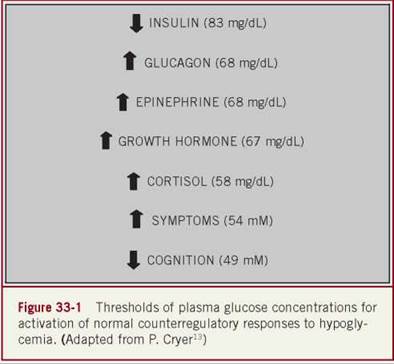
Glycemic thresholds for activation of the counterregulatory mechanisms, as well as thresholds for hypoglycemia awareness and altered mentation, are subject to individual variability. In general, secretion of epinephrine and glucagon in normal subjects begins at glucose concentrations of 64-68 mg/dL in arterialized venous plasma; autonomic symptoms begin at 56-60 mg/ dL, and symptoms of neuroglycopenia begin at 48-54 mg/dL (Figure 33-1).10,11 Thus, the human body has a cascade of responses to progressive hypoglycemia which maximizes the opportunity to prevent, as well as correct, its deleterious effects.
IMPAIRED GLUCOSE COUNTERREGULATION IN DIABETES
Insulin-dependent diabetes is associated with defective glucose counterregulation and hypoglycemia unawareness. Impairment of glucagon secretion from the pancreatic islet alpha cells usually occurs within five years of onset of type 1 diabetes,12 although the mechanisms underlying this deficiency are unknown. Many patients with type 1 diabetes, particularly those with long-standing disease of 10 years or more, also manifest a deficient coun- terregulatory epinephrine response to hypoglycemia. Several investigators have shown that in subjects with type 1 diabetes, secretion of epinephrine in response to falling blood glucose concentrations is both delayed (occurs at lower glucose concentrations) and diminished (lower peak epinephrine responses) compared to normal controls.13-15 Defective epinephrine secretion in response to hypoglycemia in these subjects is associated with hypoglycemia unawareness, namely the lack of perceived autonomic responses to hypoglycemia (palpitations, tremor, sweating, etc.). Consequently, many subjects fail to recognize the impending dangers of the falling blood glucose concentration and do not react to prevent the progression to neuroglycopenia. Once in the altered mental state associated with neuroglycopenia, the ability to recognize the dangerous situation and to take action becomes increasingly difficult, and the patient may deteriorate to a state of seizures, coma, or even death.16 Defective glucose counterregulation and hypoglycemia unawareness are components of hypoglycemia-associated autonomic failure (HAAF), a form of sympatho-adrenal failure that should be distinguished from classic diabetes-associated autonomic neuropathy. A major contribution to the development of HAAF is recent antecedent iatrogenic hypoglycemia17 and avoidance of hypoglycemia may contribute to reversing that process.
The pathophysiology of deficient autonomic counterregulation and hypoglycemia unawareness in type 1 diabetes is not clear. This autonomic failure is distinct from classic diabetic peripheral and autonomic neuropathy which involves loss of nerve fiber. It is possible that the defective counterregulatory response to hypoglycemia in type 1 diabetes is related to a cerebral defect in the hypothalamus, where the counterregulatory response is thought to be initiated and regulated.18 Indeed, the decreased pituitary responses to hypoglycemia (decreased adrenocorticotropic hormone [ACTH], growth hormone, and prolactin responses) found in subjects with type 1 diabetes19 may point to the role of the central nervous system in the syndrome of defective counterregulation. Another factor that may have a role in hypoglycemia unawareness is the level of angiotensin-converting enzyme (ACE) activity. Low levels of ACE activity have been associated with lower frequency of severe hypoglycemia, whereas subjects with high levels of ACE activity are more prone to severe hypoglycemia and more susceptible to cognitive impairment during hypoglycemia.20-22
In addition to defects in counterregulation that occur as a result of the disease process in type 1 diabetes, there is evidence suggesting that institution of intensive insulin therapy to achieve euglycemia may alter the counterregulatory response to hypoglycemia. Simonson et al.23 showed that release of epinephrine, growth hormone and cortisol in response to hypoglycemia were significantly reduced in patients with type 1 diabetes following 4-8 months of insulin pump therapy, compared to their responses prior to therapy. Indeed, patients with well-controlled type 1dia- betes often tolerate subnormal plasma glucose concentrations without any symptoms of hypoglycemia. In such patients, a lower glucose concentration may be required to elicit symptoms and hormonal counterregulatory responses compared to patients who are less strictly controlled.24,25 Furthermore, episodes of hypoglycemia compound the problem by further lowering glycemic thresholds for autonomic and symptomatic responses to subsequent episodes of hypoglycemia;26,27 in other words, progressively lower glucose concentrations are required for activation of responses, following recurrent episodes of hypoglycemia. Whether the altered thresholds for activation of counterregulatory responses are also associated with altered thresholds for impairment of cognitive functions, is still a matter of debate.16,28,29
Thus, a vicious cycle of iatrogenic hypoglycemia is set into motion in patients with type 1 diabetes placed on intensive insulin therapy16 (Figure 33-2): strict glycemic control predisposes to hypoglycemia, which is most severe in patients with compromised counterregulatory responses and hypoglycemia unawareness. Intensive insulin therapy further compromises counterregulatory responses, and increases the risk of hypoglycemia. The resulting recurrent episodes of hypoglycemia compromise counterregulatory responses even further, thereby setting into motion a vicious cycle.
Indeed, findings from the diabetes control and complications trial (DCCT) indicate that the substantially lower level of glycemia achieved with intensive insulin therapy compared to conventional therapy was accompanied by more than a threefold higher rate of severe hypoglycemia.30 A third of these episodes were associated with seizure or coma, 20% resulted in emergency room treatment or hospitalization, and 1.5% of all severe hypoglycemia events resulted in motor vehicle accidents. In all, 70% of episodes occurred during sleep or without apparent warning symptoms. In this study, the risk of severe hypoglycemia was related to both the magnitude of decline in glycohemoglobin A1c and to the absolute level achieved. However, multivariate analyses that included demographic and disease-related variables failed to yield sensitive models for prediction of hypoglycemia.
INCIDENCE OF HYPOGLYCEMIA DURING PREGNANCY
Several investigators have reported high rates of moderate and severe hypoglycemia in pregnant women with type 1 diabetes treated with intensive insulin therapy. Rayburn31 reported that 36% of pregnant women with type 1diabetes had severe hypoglycemia during pregnancy, with the peak incidence occurring during sleep between midnight and 8:00 am. Similar results were reported by Coustan32 and Steel.33 In Kimmerle's34 sample population of 77 women with type 1 diabetes, a total of 94 episodes of severe hypoglycemia occurred in 35 of the 85 pregnancies (41%). The majority of these episodes occurred during the first half of pregnancy (84%) and during sleep (77%).
Hellmuth studied overnight hourly glucose concentrations in 43 women with type 1 diabetes during the first trimester of pregnancy.35 Sixteen (37%) patients had at least one episode of biochemical hypoglycemia (venous whole blood glucose <55 mg/dL) during the night, and only one of these was symptomatic. A blood glucose <118 mg/dL at 23.00 hours was associated with a 71% risk of nocturnal hypoglycemia.

More recently, Evers et al.36 compared the incidence of severe hypoglycemia during the first trimester (before 17 weeks) to the incidence during the four months immediately preceding pregnancy among 278 women with type 1 diabetes. There was a threefold increase in the mean number of severe hypoglycemia episodes (from 0.9 to 2.6), and the proportion of women affected by severe hypoglycemia rose from 25% to 41%. Severe hypoglycemia was associated with a history of severe hypoglycemia prior to pregnancy, longer duration of diabetes, a lower HbA1c, and a higher total daily insulin dose. The same authors subsequently reported the incidence of severe hypoglycemia in a nationwide study in the Netherlands encompassing 323 women with type 1 diabetes.37 They found that 41% of women had severe hypoglycemia during the first trimester and 17% during the third trimester. There was one maternal death following cardiac arrest attributed to severe hypoglycemia at 17 weeks gestation.
Nielsen et al.38 conducted a prospective observational study of 108 pregnant women with type 1 diabetes, recording self-monitored plasma glucose values eight times a day for three days each time at 8, 14, 21, 27, and 33 weeks of gestation. Subjects completed a questionnaire on nausea, vomiting, hypoglycemia awareness, and history of mild and severe hypoglycemia. The incidence of mild hypoglycemia was 5.5 events per patient- week in early pregnancy and decreased throughout pregnancy. Forty-five percent of women experienced 178 episodes of severe hypoglycemia, corresponding to 5.3, 2.4, and 0.5 events per patient-year in the first, second, and third trimesters, respectively. The vast majority (80%) of severe hypoglycemic episodes occurred before 20 weeks, peaking at nine weeks gestation. Among the 34 women who experienced more than one episode of severe hypoglycemia, 11 women had five or more recurring episodes, accounting for 60% of all episodes. A history of severe hypoglycemia during the year preceding pregnancy and impaired hypoglycemia awareness were found to be independent predictors for severe hypoglycemia.
In our own study population of 84 pregnant women with type 1 diabetes followed prospectively within the framework of a clinical trial,39 79% had at least one recorded capillary blood glucose concentration of 35 mg/dL or less, and 27% had more than 10 such episodes during pregnancy. Furthermore, 33% of women had at least one episode of severe, symptomatic hypoglycemia resulting in seizure, coma, injury, or need for intravenous administration of glucose. Seven women were involved in motor vehicle accidents associated with severe hypoglycemia. Sixty-seven percent of the women had at least one episode of hypoglycemia requiring the assistance of another individual for recovery. The majority of symptomatic hypoglycemic episodes occurred during the first half of pregnancy, with the peak incidence between 8 and 13 weeks’ gestation. Furthermore, a third of the patients had at least three episodes of severe biochemical hypoglycemia (recorded capillary blood glucose <35 mg/dL) during every two-week period of the first trimester (up to 17 weeks). It is very likely that the true incidence of biochemical hypoglycemia in this study population was much higher since not all such episodes were necessarily recorded by the patients. Conversely, the reported incidence of symptomatic hypoglycemia most likely reflects the true incidence of this complication; patients in this prospective study were seen every two weeks during pregnancy and were specifically queried during each visit on the details of any symptomatic hypoglycemic episodes that might have occurred since the previous visit, thus minimizing recall bias.
The advent of continuous glucose monitoring with a subcutaneous sensor that measures interstitial glucose concentrations every few minutes has allowed a more valid and comprehensive assessment of the 24-hour glucose profile compared to self-glucose monitoring performed several times a day. It also allows monitoring of nocturnal glucose levels as well as changes that precede hypoglycemia. Continuous glucose monitoring has demonstrated that over each 24-hour period, pregnant women with type 1 diabetes spend 3.5 hours in the hypoglycemic range of <70 mg/dL, and 1.4 hours at <50 mg/dL. At night, from 10 pm to 6 am, glucose is <50 mg/dL during 0.6 hours. The duration of time spent in the hypoglycemic range decreases somewhat as pregnancy progresses. Interestingly, pregnant women with type 2 diabetes have similar durations of hypoglycemia during the night, but less so during other times of the day.40
Although hypoglycemia is primarily a matter of concern in pregnant women with pregestational diabetes treated with insulin, particularly those with type 1diabetes, recent data suggest that asymptomatic hypoglycemia is very common even among women with gestational diabetes treated with either insulin or glyburide. Yogev et al.41 monitored interstitial glucose concentrations in 82 pregnant women with gestational diabetes and 35 nondiabetic controls. Using a continuous glucose monitoring system for 72 hours, they found that asymptomatic hypoglycemia (glucose concentration <50 mg/dL) occurred in 19 of 30 insulin-treated women (63%) and in 7 of 35 patients treated with glyburide (28%) but in none of the diet-treated or nondiabetic women. The mean number of recorded hypoglycemic episodes per day was twice as high in the insulin-treated women (4.2/day) than in the gly- buride-treated women (2.1/day). Hypoglycemic episodes were primarily nocturnal (84%) in the insulin-treated women but were evenly distributed during the day and night among the glyburide-treated women.
Brustman et al.42 reported on the incidence of hypoglycemia in 674 women with gestational diabetes who were treated with glyburide. Although two-thirds of the women had no documented blood glucose values in the hypoglycemic range (<50 mg/dL), one- third had 1%-7% of all their recorded glucose values <50 mg/dL. None of these women reported severe symptomatic hypoglycemia, although this information was not systematically sought in each follow-up visit. The incidence of asymptomatic hypoglycemia was associated with overall mean blood glucose, but not with the glyburide dose.
ETIOLOGY OF HYPOGLYCEMIA DURING PREGNANCY
It is not entirely clear why hypoglycemia occurs with such increased frequency in early pregnancy in women with type 1 diabetes compared to the nonpregnant state. As most patients with diabetes conceive without attaining strict glycemic control preconceptionally, the phenomenon may be related to the rapid institution of intensive insulin therapy once pregnancy has been diagnosed. As mentioned previously, such therapy results in diminished counterregulatory hormonal responses to hypoglycemia23 and an increased risk of hypoglycemia unawareness.16 Another possibility is that pregnancy itself independently increases the risk of hypoglycemia. This could be related to hormonal changes of pregnancy as well as to the effects of pregnancy on the gastrointestinal system. The nausea and vomiting of pregnancy and delayed emptying of the stomach may both increase the likelihood of an insulin overdose, particularly during the first trimester. However, one study found no association between hypoglycemia and severe nausea and vomiting during pregnancy.43
The effects of pregnancy on the counterregulatory hormonal responses to hypoglycemia have been studied both in animals and in humans. Connoly et al.44 studied counterregulatory responses in pregnant and nonpregnant dogs and found that pregnancy was associated with significantly diminished responses of glucagon and norepinephrine to hypoglycemia and markedly diminished net hepatic glucose output when compared to the nonpregnant state. Diamond et al.45 induced hypoglycemia (plasma glucose concentration 44 mg/dL) in nine pregnant women with type 1 diabetes during the third trimester using the hypoglycemic clamp technique. Hypoglycemia failed to elicit a counterregulatory glucagon response and the epinephrine response was suppressed compared to historical data in nonpregnant subjects. Moreover, the plasma glucose level that elicited an epinephrine and growth hormone response was 5-10 mg/dL lower than in the nonpregnant state. We performed hypoglycemic clamp studies in a group of 17 women with type 1 diabetes and in 10 nondiabetic controls during which plasma glucose concentrations were decreased to 60 mg/dL.46 Each subject underwent three studies: at 24-28 weeks gestation, at 32-34 weeks gestation, and at 12 weeks, or more, postpartum. This study design allowed each subject to serve as her own control in comparing counterregulatory responses during two stages in pregnancy and in the nonpregnant state, and to compare counterregulatory responses in women with diabetes to women without diabetes in pregnancy and postpartum. Women with diabetes had no detectable glucagon or cortisol responses to this level of hypoglycemia and the epinephrine response was significantly diminished compared to the nondiabetic controls. Additionally, the epinephrine response during pregnancy was significantly diminished compared to the nonpregnant state. In the nondiabetic controls, the counterregulatory glucagon response was diminished during pregnancy compared to the nonpregnant state. In both groups, the counterregulatory growth hormone response diminished progressively during pregnancy. Thus, there is ample data suggesting that diminished counterregulatory responses to hypoglycemia during pregnancy contribute to the increased incidence of hypoglycemia in pregnant women in general, and particularly in those with type 1 diabetes. It is also possible that pregnancy and intensive insulin therapy result in an additive effect that increases the risk of hypoglycemia in this population.
THE EFFECTS OF MATERNAL HYPOGLYCEMIA ON THE FETUS: ANIMAL MODELS
Several animal studies have demonstrated deleterious effects of hypoglycemia on embryonic development both in vivo and in vitro. Most studies have found that these effects depend on the timing and on the duration of hypoglycemia (Table 33-1). Thus, rat47 and mouse48 embryos cultured in hypoglycemic media for 24-48 hours demonstrated growth retardation and severe dysmorphic lesions. The effect of brief exposure to hypoglycemia (1-4 hours) appears to be dependent on the timing of the insult. When exposed to a brief (one hour) episode of hypoglycemia during an early and vulnerable period of embryogenesis, mouse48 and rat49 embryos had growth retardation and gross developmental anomalies. However, brief exposure to hypoglycemia at a later stage of development did not produce any abnormalities.50 In other rat studies, brief maternal hypoglycemia was associated with skeletal malformations and delayed ossification in the fetuses, particularly in the fetuses of diabetic rats.51 Smoak52 has demonstrated a deleterious effect of hypoglycemia on the developing hearts of mouse embryos. Brief periods of hypoglycemia were associated with structural cardiac malformations, slowing of the heart rate, and increased glucose uptake and glycolysis by the heart. It appears that during embryogenesis, the heart is dependent on glucose for energy production. Initially, energy production is primarily dependent on glycolysis prior to switching to the Krebs cycle and oxidative phosphorilation.53 Exposure to hypoglycemia during this early glycolysis-dependent phase is associated with increased levels of lactate in the heart, which may be the proximate cause of the observed hypoglycemia-associated cardiac defects.
TABLE 33-1 Effects of Hypoglycemia on the Embryo: Animal Models
|
Author |
Species |
Timing of Hypoglycemia |
Duration of Hypoglycemia (h) |
Effects |
|
Buchanan, 19 8697 |
Rat |
Day 9.5-9.75 |
1 |
Growth retardation, neural tube defects |
|
Buchanan, 19 8950 |
Rat |
Day 10.6 |
1 |
None |
|
Akazawa, 198949 |
Rat embryo culture |
Day 10.3 |
1 |
Growth retardation, neural tube defects |
|
Smoak, 199098 |
Mouse embryo culture |
Day 8 |
2-29 |
Growth retardation, neural tube defects |
|
Taganawa, 199151 |
Rat |
Day 9.5-10.5 |
2 |
Skeletal malformations |
|
Peet, 199653 |
Mouse embryo culture |
Day 10-12 |
6 |
Increased cardiac lactate |
|
Smoak, 199752 |
Mouse embryo culture |
Day 8.5-10.5 |
6 |
Cardiac malformations |
|
Edwards, 200155 |
Sheep |
Late gestation |
2 |
Increased ACTH |
Besides the possible teratogenic effects of hypoglycemia on embryogenesis, maternal hypoglycemia may affect the fetus in several other ways. Gardner et al.54 have demonstrated that in the ovine fetus, exposure to sustained hypoglycemia alters the capacity of the fetus to respond to repetitive episodes of acute hypoxemia. Edwards et al.55 studied the responses of the fetal pituitary-adrenal axis to acute and chronic hypoglycemia in sheep. They found that the threshold for activation of the fetal ACTH response to acute hypoglycemia changes with increasing gestational age: as gestational age progresses, the fetus acquires an increased capacity to sense low glucose concentrations and activate the pituitary-adrenal response. Indeed, fetal sheep with low plasma glucose concentrations have higher plasma cortisol concentrations. This exposure of the fetus to excess glucocorticoid concentrations may program permanent changes in the fetal cardiovascular, endocrine, and metabolic systems that could result in a higher risk of adult pathophysiology.56
Despite the aforementioned potentially adverse effects of hypoglycemia on the fetus, the fetus may have the ability to protect its developing brain from acute hypoglycemia. Das et al.57 have shown that the level of the insulin-insensitive glucose transporter Glut-1 in the brain increases in response to hypoglycemia. Furthermore, Lapidot et al.58 found that when pregnant rabbits were made acutely hypoglycemic, the fetuses were able to maintain energy metabolism by utilizing lactate as a substrate.
In summary, studies in animal models have demonstrated that hypoglycemia may affect the developing fetus in a time and duration dependent fashion, both at the structural and the functional level. Whether these observations have any relevance to human pregnancy is, as yet, undetermined.
THE EFFECTS OF MATERNAL HYPOGLYCEMIA ON THE FETUS: HUMAN PREGNANCY
Although concerns regarding the hazards of hypoglycemia are primarily related to the pregnant diabetic patient herself, the potential effects of maternal hypoglycemia on the developing fetus need to be considered. As glucose freely traverses the placenta by facilitated diffusion, fetal glucose concentrations closely mirror maternal concentrations, and maternal hypoglycemia is necessarily associated with fetal hypoglycemia. In light of the data presented above suggesting a teratogenic effect of hypoglycemia in animal models, and considering the high incidence of maternal hypoglycemia during the first half of pregnancy, the possibility of an adverse effect of hypoglycemia on the developing human embryo becomes a matter of concern. However, the impact of maternal hypoglycemia on human fetal development and neonatal outcome has not been extensively studied. An early report on women undergoing psychiatric treatment with insulin shock therapy suggested an association between severe hypoglycemia induced during the first trimester and adverse pregnancy outcome.59 However, since that report, not one of the studies involving pregnant women with type 1 diabetes has found any association between maternal hypoglycemia and adverse fetal outcome.33,34,39,60,61 In our own study involving 84 women with type 1 diabetes, we specifically analyzed the possibility that severe maternal hypoglycemia in the first trimester might be associated with an increased risk of spontaneous abortion and major congenital malformations.39 In this study, all 84 women were recruited prior to 11 weeks gestation, and 53 of them before seven weeks. We summarized the rates of spontaneous abortion and major malformations among subjects who did or did not have severe symptomatic hypoglycemia by 7, 9, 11, and 13 weeks’ gestation. There were no congenital malformations among the offspring of women who had severe hypoglycemia in the first trimester. Furthermore, the rate of spontaneous abortion in this group was actually lower than among the women who did not have severe hypoglycemia, although this difference did not attain statistical significance (Table 33-2).
The aforementioned findings further support the observation that transient maternal hypoglycemia in human pregnancy, although very common, is not associated with embryonic demise or teratogenesis. Indeed, the effects of hypoglycemia on human pregnancy are most likely very different from the effects observed in rodents. Development in the rodent is primarily dependent on glycolysis during the period of neurulation but an analogous glycolytic dependence has not been clearly established in human embryos.62 Furthermore, even among rodents there are variations in the responses of different species and different strains to altered glucose concentrations.63 Thus, one needs to exercise great caution when attempting to apply findings from animal studies to human pregnancy.
TABLE 33-2 First Trimester Severe Symptomatic Hypoglycemia, Spontaneous Abortions (SAB) and Congenital Malformations (CM)
|
Weeks |
N |
Patients With Severe Hypoglycemia |
SAB |
CM |
Patients Without Severe Hypoglycemia |
SAB |
CM |
|
7-8 |
53 |
2 (4%) |
0/2 (0%) |
0/2 |
51 (96%) |
12/51 (24%) |
1/39 (3%) |
|
9-10 |
70 |
8 (11%) |
0/8 (0%) |
0/8 |
62 (89%) |
17/62 (27%) |
2/45 (4%) |
|
11-12 |
84 |
11 (13%) |
1/11 (9%) |
0/10 |
73 (87%) |
18/73 (25%) |
2/55 (3%) |
|
13 |
84 |
16 (19%) |
1/16 (6%) |
0/15 |
68(81%) |
18/68 (26%) |
2/50 (4%) |
Source: Adapted from Rosenn et al.31
Some controversy exists regarding the effect of maternal hypoglycemia on fetal biophysical characteristics in the third trimester of pregnancy. During a case of maternal hypoglycemic coma, Confino et al.64 observed a pseudosinusoidal oscillating pattern with frequent decelerations followed by nonreactive tachycardia. Conversely, Matias et al.65 observed a reassuring fetal heart rate (FHR) pattern with prolonged accelerations of great amplitude in their case report of a woman monitored during hypoglycemic coma at 29 weeks gestation. They suggested that this pattern may result from increased sympatheto-adrenergic activity in response to hypoglycemia, either maternal or fetal in origin.
In two separate reports, hypoglycemia in women with type 1 diabetes was associated with changes in fetal baseline heart rate66 and heart rate variability.67 Conversely, Reece et al.68 performed insulin-induced hypoglycemic clamp studies in pregnant women with type 1 diabetes, lowering the blood glucose concentration to 45 mg/dL. During hypoglycemia, there was a nonsignificant increase in fetal limb and body movements, and no changes in fetal breathing movements or FHR. Other authors reported that insulin-induced maternal hypoglycemia was associated with increased frequency and amplitude of FHR accelerations69 and fetal activity,70 and with very slight or inconsistent changes in umbilical artery Doppler indices.68,69
Many clinicians believe that low maternal blood glucose levels are associated with a nonreactive FHR tracing and that maternal oral intake may improve the chances of it becoming reactive. In fact, there is conflicting evidence regarding this matter. Zimmer et al.71 found that ingestion of 50 g oral glucose in 27 healthy pregnant women at 37-40 weeks gestation was followed by a decrease in FHR indices of variation. Similarly, Holden et al.70 found that maternal hyperglycemia did not stimulate FHR accelerations. Other authors found increased reactivity,72,73 increased mean FHR74 or no difference75 after ingestion of glucose.
In summary, there is considerable controversy in the literature regarding the effects of maternal hypoglycemia on fetal behavior and outcome. It is, however, reassuring that transient maternal hypoglycemia does not appear to affect embryonic survival and embryogenesis, even when it is severe and symptomatic.
MANAGEMENT OF HYPOGLYCEMIA
General Considerations
It is incumbent on health providers caring for pregnant women with diabetes, particularly those with type 1 diabetes, to be thoroughly knowledgeable about the characteristics and the management of hypoglycemia and to save no effort in educating patients and their families on these matters. At the time of the initial visit, that ideally should take place prior to pregnancy, the patient should be questioned about her history of hypoglycemic episodes, what kind of symptoms she usually experiences, whether she has primarily adrenergic symptoms or whether she has neuroglycopenia and requires assistance from other people, at what level of blood glucose do hypoglycemic symptoms usually occur, and how she usually treats hypoglycemia. This will provide basic information that may indicate how likely she is to experience severe hypoglycemia during pregnancy. A history of severe hypoglycemia in the year preceding pregnancy and self-reported hypoglycemia unawareness are strongly associated with severe hypoglycemia in pregnancy.43 But even in women who have not had recent experience with severe hypoglycemia, it is important to emphasize to the patient and her family that the characteristics of hypoglycemia may change during pregnancy: institution of strict glycemic control increases the risk of hypoglycemia, the responses to hypoglycemia are diminished, and the phenomenon of hypoglycemia unawareness increases. All these require thorough understanding by the patient and her family of the measures that need to be taken to prevent and treat hypoglycemia. The patient's immediate family and coworkers should learn to recognize symptoms of hypoglycemia and how to respond when hypoglycemia occurs. The dangers of nocturnal hypoglycemia should be emphasized, and the patient should be encouraged to avoid sleeping alone. If the patient routinely spends the day at home on her own, family or friends should establish a routine of checking on her several times during the day. All patients should have a glucagon emergency kit (see below) available at home and at work, and the family and coworkers should be familiar with its use.
Prevention of Hypoglycemia
Frequent determinations of glucose concentrations are essential if one is to maintain strict glycemic control while avoiding hypoglycemia. Although many patients with type 1 diabetes may be used to checking glucose levels 3-4 times a day, it is practically impossible to maintain the level of strict control required in pregnancy without committing to self-monitoring at least 6-7 times a day. Because patients with type 1 diabetes are usually quite sensitive to insulin, minor alterations in caloric intake, insulin dose, or physical activity may induce surprisingly large alterations in blood glucose concentrations. This is particularly true during the first half of pregnancy, before the characteristic insulin resistance of pregnancy begins to develop. Thus, many patients with type 1 diabetes experience varying glycemic responses on different occasions to apparently identical quantities of carbohydrate intake. A specific dose of insulin that proved adequate for a specific meal on one occasion, may be too small or too large for the very same meal on another occasion, and result in either hyperglycemia or hypoglycemia. Understandably, patients tend to overcorrect with insulin when they encounter high levels of blood glucose resulting in inadvertent hypoglycemia, or to ingest excessive amounts of glucose in trying to overcome the unpleasant symptoms of hypoglycemia. Thus, the patient sets in motion cycles of alternating hyperglycemia and hypoglycemia resulting in wide glucose “excursions.” By increasing the frequency of glucose testing, the patient can fine tune the boluses of insulin required to maintain strict control while responding to downward and upward trends of blood glucose in a timely and measured fashion. Indeed, some patients self-monitor glucose levels 10-12 times a day and inject small boluses of rapid acting insulin (either by syringe or insulin pen or through a continuous subcutaneous insulin pump) several times a day. The newer ultra-rapid insulin analogs (e.g., aspart or lispro) appear to be particularly suited for this kind of rapid-response strategy. If a dose of intermediate-acting insulin (neutral protamine Hagedorn [NPH]) is taken in the evening, it should be taken close to bedtime rather than at dinnertime to help avoid nocturnal hypoglycemia. Patients who have difficulty in controlling the morning fasting glucose level should check glucose level at 3-4 o'clock in the morning. This will help to determine the causes of glucose instability and help guide the appropriate management.
In nonpregnant individuals with well-controlled type 1 diabetes, use of continuous subcutaneous glucose monitoring is associated with significantly less time spent in the hypoglycemic range (60 mg/dL or less).76 However, such a benefit was not demonstrated in a randomized trial that included 123 pregnant women with type 1 diabetes and 31 with type 2 diabetes who were randomized to self-monitoring or intermittent monitoring with a continuous glucose monitor. The incidence of severe hypoglycemia was 16% in both these groups.77 Despite these data, using a continuous glucose sensor can often help the patient detect downward or upward glucose trends, and an alarm may alert her to impending hypoglycemia. Analysis of the continuous glucose monitor can also aid the care provider in fine-tuning the insulin doses by providing comprehensive and continuous glucose data.
Treatment of nonpregnant individuals with type 1 diabetes with rapid and long-acting insulin analogs has been associated with a decrease in the incidence of severe hypoglycemia. Data on the use of insulin analogs in pregnancy are available from prospective and retrospective studies. A small retrospective study described the use of insulin lispro in 62 pregnant women with type 1 diabetes and reported that 14 (23%) had at least one episode of severe hypoglycemia.78 A multicenter, multinational trial reported on 322 pregnant women with type 1 diabetes who were recruited either prior to pregnancy or during the first 10 weeks of pregnancy.79,80 All enrollees were treated with NPH insulin once or twice daily and were randomized to additional treatment with multiple doses of either regular human insulin or insulin aspart. Major (severe) hypoglycemia occurred among 24.2% of those randomized to aspart compared to 21.2% of those randomized to regular insulin (nonsignificant difference). The rate of severe hypoglycemia was 1.4 per patient-year in the aspart group compared to 2.1 in the regular insulin group, again a nonsignificant difference. The authors estimated that treatment with aspart was associated with a 28% reduction in overall number of severe hypoglycemic episodes, and a 52% reduction in nocturnal episodes, both of which did not attain statistical significance. A subsequent analysis of the results of this trial sought to determine the effect of preconceptional randomization compared to randomization in early pregnancy.81 Patients randomized preconceptionally to aspart had lower rates of severe hypoglycemia (0.9 per patient-year) in the first half of pregnancy compared to those randomized to regular insulin (2.4 per patient-year), as well as during the second half of pregnancy (0.3 vs. 1.2, respectively). However, these differences did not attain statistical significance. Another smaller study in which women were assigned preconceptionally to treatment with insulin lispro or regular human insulin found no difference in the rates of maternal hypoglycemia reported by patients.82 In 24-hour glucose profiles performed during the first trimester, more women in the lispro group (56%) had no episodes of hypoglycemia compared to the human insulin group (38%), but this difference was not statistically significant. It seems that more data are necessary to determine conclusively whether use of rapid acting insulin analogs in pregnancy may decrease the incidence of hypoglycemia.
Glargine and detemir are two long-acting insulin analogs that have been used and studied in pregnant women. In a recent prospective observational study from Brazil,83 a group of 56 women with pregestational diabetes and 82 with gestational diabetes were treated during pregnancy with either glargine or NPH combined with a rapid acting insulin analog. In the pregestational group, severe hypoglycemia occurred in 10 of the 38 (27%) women treated with NPH, but in none of the 18 treated with glargine. Severe hypoglycemia occurred in one woman with gestational diabetes treated with NPH. In a recent multicenter multinational prospective study, 310 pregnant women with type 1 diabetes were randomly assigned either preconceptionally or in early pregnancy to treatment with either NPH or detemir in combination with aspart before meals.84 Although fasting glucose at 24 weeks gestation was lower in the group treated with detemir, there was no difference in the incidence of severe hypoglycemia (16% of women in the detemir group and 21% in the NPH group). There was also no difference in the rate of nocturnal hypoglycemia.
Continuous subcutaneous insulin infusion (CSII) with an insulin pump in individuals with type 1 diabetes is associated with a reduced rate of severe hypoglycemia without adversely affecting the level of glycemic control.85 It is less certain whether treatment with an insulin pump during pregnancy can attain the same effect. Coustan et al.86 randomized 22 pregnant women to either multiple dose injections or CSII and found no differences with respect to glycemic control, fetal outcome, or the frequency of adverse events, including maternal hypoglycemia. Similar results were reported by Carta et al.87 Gabbe et al.89 found that maternal and perinatal outcomes in women who started using CSII during pregnancy was comparable to outcomes in women who started CSII therapy prior to pregnancy or women on multiple-dose insulin therapy. Switching to CSII during pregnancy appeared to decrease the incidence of severe hypoglycemia. In a recent retrospective case-control study from Poland,90 64 pregnant women with type 1 diabetes treated with an insulin pump were matched with 64 women treated with multiple daily insulin injections. The incidence of hypoglycemia (less than 60 mg/dL) was similar in both groups in each of the 3 trimesters, but the incidence decreased significantly in the insulin pump group during the course of pregnancy. Lapolla et al.91 compared 25 women who were treated with CSII to 68 women who were treated with conventional intensive insulin therapy during pregnancy. They found no significant differences between the two groups in metabolic control and maternal outcome. However, in this nonrandomized study, it appeared that women on CSII tended, a priori, to have more brittle diabetes and more advanced disease. The authors concluded that this mode of therapy allows better metabolic control in complicated cases where conventional multidose insulin therapy proves more problematic. These observations are in line with the empiric experience of most seasoned clinicians: CSII is not a panacea for brittle patients who are difficult to control and does not resolve the problem of hypoglycemia. It does not obviate the need for frequent determinations of glucose concentrations, and it certainly requires that the patient fully comprehend the dynamics of her disease and the mechanics of the pump. Nevertheless, there are some patients who seem to benefit greatly from CSII therapy and learn to use it efficiently while stabilizing their glycemic control and decreasing the incidence of severe hypoglycemia.
The desire to develop an “artificial pancreas” that will mimic the response of the human pancreas and regulate the delivery of insulin based on the blood glucose concentration has led to the development of closed-loop systems. In these systems, computerized algorithms link insulin delivery by a pump to the input obtained from a continuous glucose monitor, or suspend insulin delivery when glucose sensor values reach a predetermined threshold. Studies in children and adults have demonstrated the potential of these systems to decrease the incidence of nocturnal hypoglycemia.92,93 Two small studies in pregnant women with type 1 diabetes have demonstrated that closed-loop systems are effective in maintaining good glycemic control while avoiding nocturnal hypoglycemia.94
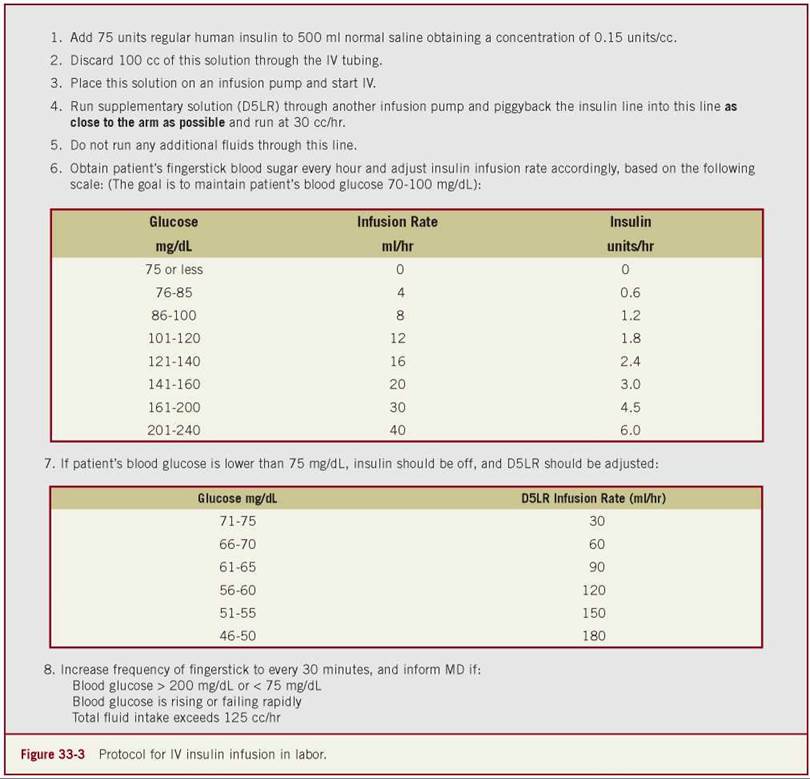
During labor, insulin requirements may change rapidly both due to the energy expended by the laboring woman and because most patients are kept fasting during active labor. On admission to the labor and delivery unit, women with type 1 diabetes should be placed on an insulin drip protocol. A suggested protocol is depicted in Figure 33-3. Capillary glucose concentrations should be monitored frequently (at least every hour, or more frequently if glucose levels are rising or declining) and the insulin drip should be adjusted accordingly with addition of 5% dextrose, as needed, to avoid hypoglycemia. Following delivery, insulin doses are best returned to slightly less than the prepregnancy doses with frequent monitoring of glucose levels.
Treatment of Hypoglycemia
Oral carbohydrate intake is the most common method of overcoming hypoglycemia, and in the vast majority of cases, it is the only one needed. Approximately 10-15 g of a simple carbohydrate in the form of simple sugar cubes, glucose tablets, orange juice, or a similar substance are usually sufficient to raise the level of glucose in the blood and abort the hypoglycemic event. Most often, the patient herself will become aware of the evolving hypoglycemic event and will be prompted by the adrenergic symptoms to ingest a carbohydrate-rich substance. However, in patients who suffer from hypoglycemia unawareness, it is often the people around who first notice the manifestations of neuroglycopenia: the patient starts acting in a somewhat bizarre manner, may demonstrate inability to concentrate or respond in a clear manner, or may actually have slurred speech. Family members and close associates often learn to recognize the signs of hypoglycemia and will encourage the patient to eat something. The hypoglycemic patient will often resist these attempts and deny being hypoglycemic, but an immediate determination of the glucose concentration will quickly settle the matter. It is important for the patient to continue and eat some food (a combination of carbohydrate with protein or fat) to maintain an acceptable level of blood glucose and to recheck the glucose level within a short period of time to determine the trend of blood glucose and respond accordingly. The urge to overcorrect the hypoglycemia with excessive carbohydrate intake should be avoided, as it tends to initiate a cycle of excessive glucose excursions.
Sometimes the degree of hypoglycemia is such that the patient is unable to correct it herself; she may either be obtunded to a degree that does not enable her to drink or eat or she may actually be unconscious. Under these circumstances, the best approach is to inject glucagon available as a glucagon emergency kit. These kits are readily obtainable by prescription at pharmacies and are stable for at least two years when stored at room temperature. The kit contains 1 mg of glucagon in lyophilized form that is dissolved in 1cc of solution in a presterilized syringe that is part of the kit. The glucagon may be injected subcutaneously, intramuscularly, or intravenously and will raise the blood glucose concentration within minutes by acting directly on the liver to promote glycogenolysis. A patient in hypoglycemic coma will usually regain consciousness within 10 minutes of receiving glucagon and should then be fed carbohydrate to prevent a relapse.
Although glucagon is an excellent mode of treatment for the unconscious or semiconscious patient in a setting that does not enable intravenous access, its efficacy in situations of prolonged hypoglycemic coma is less certain.95,96 In these circumstances, intravenous administration of approximately 50 mL of 50% dextrose provides 25 g of dextrose and will cause almost all patients to regain consciousness in a matter of minutes. The only patients who do not respond to intravenous dextrose are those who have cerebral edema, a rare and severe complication of prolonged hypoglycemic coma that carries a poor prognosis. A suggested treatment algorithm for hypoglycemia is presented in Figure 33-4.

SUMMARY
Several clinical studies have demonstrated the beneficial effects of improved glycemic control on pregnancy outcome in women with diabetes. Intensive insulin therapy in these pregnancies is now widely advocated, and commonly accepted as the best approach most likely to optimize pregnancy outcome. At the same time, it is important to recognize the potential risks of this approach in women with diabetes who are prone to severe hypoglycemia. It is presently unknown what level of glycemia conveys the benefits of improved glycemic control in terms of pregnancy outcome without increasing the risk of hypoglycemia. It would, therefore, be prudent to exercise a measure of caution in setting goals of glycemic control for the occasional patient who demonstrates a tendency to have recurrent episodes of severe hypoglycemia that cannot be resolved with the usual tactics of modifying insulin regimens, caloric intake, and physical activity.
REFERENCES
1. Senquist ER, Anderson J, Childs B, et al. Hypoglycemia and diabetes: a report of a workgroup of the American diabetes association and the endocrine society. J Clin Endocrinol Metab. 2013;98(5):1845-1859.
2. Cryer PE, Binder C, Bolli GB, et al. Conference summary. Hypoglycemia in IDDM. Diabetes. 1989;38:1993.
3. Heller SR, Choudhary P, Davies C, et al. UK Hypoglycaemia Study Group. Risk of hypoglycaemia in types 1 and 2 diabetes: effects of treatment modalities and their duration. Diabetologia. 2007;50:1140-1147.
4. Donnelly LA, Morris AD, Frier BM, et al. DARTS/MEMO Collaboration. Frequency and predictors of hypoglycaemia in type 1 and insulin-treated Type 2 diabetes: a population based study. Diabet Med. 2005;22:749-755.
5. Patterson CC, Dahlquist G, Harjutsalo V, et al. Early mortality in EURODIAB population-based cohorts of type 1 diabetes diagnosed in childhood since 1989. Diabetologia. 2007;50: 2439-2442.
6. Jacobson AM, Musen G, Ryan CM, et al. Diabetes Control and Complications Trial/Epidemiology of Diabetes Interventions and Complications Study Research Group. Long-term effect of diabetes and its treatment on cognitive function. N Engl J Med. 2007;356:1842-1852.
7. Feltbower RG, Bodansky HJ, Patterson CC, et al. Acute complications and drug misuse are important causes of death for children and young adults with type 1 diabetes: results from the Yorkshire Register of Diabetes in Children and Young Adults. Diabetes Care. 2008;31:922-926.
8. Skrivarhaug T, Bangstad HJ, Stene LC, et al. Longterm mortality in a nationwide cohort of childhood-onset type 1 diabetic patients in Norway. Diabetologia. 2006;49:298-305.
9. Palardy J, Havrankova J, Lepage R, et al. Blood glucose measurements during symptomatic episodes in patients with suspected postprandial hypoglycemia. N Engl J Med. 1989;321:1421.
10. Mitrakou A, Ryan C, Veneman T, et al. Hierarchy of glycemic thresholds for counterregulatory hormone secretion, symptoms, and cerebral dysfunction. Am J Physiol. 1991;260:E67-E74.
11. Schwartz NS, Clutter WE, Shah SD, Cryer PE. Glycemic thresholds for activation of glucose counterregulatory systems are higher than the thresholds for symptoms. J Clin Invest. 1987;79:777-781.
12. Cryer PE, Gerich JE. Hypoglycemia in insulin dependent diabetes mellitus: insulin excess and defective glucose counterregulation. In: Rifkin H, Porte D, editors. Ellenberg and Rifkin's Diabetes Mellitus. Theory and Practice. 4th ed. New York: Elsevier; 1990. pp. 526-546.
13. White NH, Skor DA, Cryer PE, et al. Identification of Type I diabetic patients at increased risk for hypoglycemia during intensive therapy. N Engl J Med. 1983;308:485-491.
14. Boden G, Reichard GA Jr., Hoeldtke RD, et al. Severe insulin-induced hypoglycemia associated with deficiencies in the release of counterregulatory hormones. N Engl J Med. 1981;305:1200-1205.
15. Bolli G, DeFeo P, Compagnucci P, et al. Abnormal glucose counterregulation in insulin-dependent diabetes mellitus: interaction of anti-insulin antibodies and impaired glucagon and epinephrine secretion. Diabetes. 1983;32:134-141.
16. Cryer PE. Iatrogenic hypoglycemia as a cause of hypoglycemia- associated autonomic failure in IDDM: a vicious cycle. Diabetes. 1992;41:255-260.
17. Cryer PE. The barrier of hypoglycemia in diabetes. Diabetes. 2008;57:3169-3176.
18. Benzo CA. The hypothalamus and blood glucose regulation. Life Sci. 1983;32:2509-2515.
19. Frier BM, Fisher BM, Gray CE, Beastall GH. Hormonal responses to acute insulin-induced hypoglycemia in Type I diabetes: evidence for dysfunction of the hypothalamic-pituitary axis. Diabetologia. 1986;29:538A.
20. Montgomery H, Clarkson P, Barnard M, et al. Angiotensinconverting-enzyme gene insertion-deletion polymorphism and response to physical training. Lancet. 1999;353:541-545.
21. Pedersen-Bjergaard U, Dhamrait SS, Sethi AA, et al. Genetic variation and activity of the renin-angiotensin system and severe hypoglycemia in type 1 diabetes. Am J Med. 2008;121:246-248.
22. Pedersen-Bjergaard U, Thomsen CE, Hogenhaven H, et al. Angiotensin-converting enzyme activity and cognitive impairment during hypoglycaemia inhealthy humans. J Renin Angiotensin Aldosterone Syst. 2008;9:37-48.
23. Simonson DC, Tamborlane WV, DeFronzo RA, Sherwin RS. Intensive insulin therapy reduces counterregulatory hormone responses to hypoglycemia in patients with Type I diabetes. Ann Intern Med. 1985;103:184-190.
24. Amiel SA, Tamborlane WV, Simonson DC, Sherwin RS. Defective glucose counterregulation after strict control of insulin-dependent diabetes mellitus. N Engl J Med. 1987;316:1376-1383.
25. Amiel SA, Sherwin RS, Simonson DC, Tamborlane WV. Effect of intensive insulin therapy on glycemic thresholds for counterregulatory hormone release. Diabetes. 1988;37:901-907.
26. Widom B, Simonson DC. Intermittent hypoglycemia impairs glucose counterregulation. Diabetes. 1992;41:1597-1602.
27. Davis M, Shamoon H. Counterregulatory adaptation to recurrent hypoglycemia in normal humans. J Clin Endocrinol Metab. 1991;73:995-1001.
28. Widom B, Simonson D. Glycemic control and neuropsychologic function during hypoglycemia in patients with insulin-dependent diabetes mellitus. Ann Intern Med. 1990;112:904-912.
29. Gerich JE, Campbell PJ. Overview of counterregulation and its abnormalities in diabetes mellitus and other conditions. Diabetes Metab Rev. 1988;4:93-111.
30. Diabetes Control and Complications Trial Research Group. Epidemiology of severe hypoglycemia in the diabetes control and complications trial. Am J Med. 1991;90:450-459.
31. Rayburn W, Piehl E, Jacober S, et al. Severe hypoglycemia during pregnancy: its frequency and predisposing factors in diabetic women. Int J Gynaecol Obstet. 1986;24:263-268.
32. Coustan DR, Reece EA, Sherwin RS, et al. A randomized clinical trial of the insulin pump vs. intensive conventional therapy in diabetic pregnancies. JAMA. 1986;255:631-636.
33. Steel JM, Johnstone FD, Hepburn DA, Smith AF. Can prepregnancy care of diabetic women reduce the risk of abnormal babies? BMJ. 1990;301:1070-1073.
34. Kimmerle R, Heinemann L, Delecki A, Berger M. Severe hypoglycemia, incidence and predisposing factors in 85 pregnancies of type I diabetic women. Diabetes Care. 1992;15:1034-1037.
35. Hellmuth E, Damm P, Molsted-Pederson L, Bendtson I. Prevalence of nocturnal hypoglycemia in first trimester of pregnancy in patients with insulin treated diabetes mellitus. Acta Obstet Gynecol Scand. 2000;79:958-962.
36. Evers IM, ter Braak EW, de Valk HW, et al. Risk indicators predictive for severe hypoglycemia during the first trimester of type 1 diabetic pregnancy. Diabetes Care. 2002;25:554-559.
37. Evers IM, de Valk HW, Visser GH. Risk of complications of pregnancy in women with type 1 diabetes: nationwide prospective study in the Netherlands. BMJ. 2004;17328:915.
38. Nielsen LR, Pedersen-Bjergaard U, Thorsteinsson B, et al. Hypoglycemia in pregnant women with type 1 diabetes: predictors and role of metabolic control. Diabetes Care. 2008;31:9-14.
39. Rosenn B, Miodovnik M, Holcberg G, et al. Hypoglycemia: The price of intensive insulin therapy in insulin-dependent diabetes mellitus pregnancies. Obstet Gynecol. 1995;85:417-422.
40. Murphy HR, Rayman G, Duffield K, et al. Changes in the glycemic profiles of women with type 1 and type 2 diabetes during pregnancy. Diabetes Care. 2007;30:2785-2791.
41. Yogev Y, Ben-Haroush A, Chen R, et al. Undiagnosed asymptomatic hypoglycemia: diet, insulin, and glyburide for gestational diabetic pregnancy. Obstet Gynecol. 2004;104:88-93.
42. Brustman L, Langer O, Scarpelli S, et al. Hypoglycemia in gly- buride- treated gestational diabetes. It is dose-dependent? Obstet Gynecol. 2011;117:349-353.
43. Nielsen L, Pedersen-Bjergaard U, Thorsteinsson B, et al. Hypoglycemia in pregnant women with type 1 diabetes. Diabetes Care. 2008;31:9-14.
44. Connolly CC, Aglione LN, Smith MS, et al. Pregnancy impairs the counterregulatory response to insulin-induced hypoglycemia in the dog. Am J Physiol Endocrinol Metab. 2004;287:E480-E488.
45. Diamond MP, Reece EA, Caprio S, et al. Impairment of counterregulatory hormone responses to hypoglycemia in pregnant women with insulin-dependent diabetes mellitus. Am J Obstet Gynecol. 1992;166:70-77.
46. Rosenn BM, Miodovnik M, Khoury JC, Siddiqi TA. Counterregulatory hormonal responses to hypoglycemia during pregnancy. Obstet Gynecol. 1996;87(4):568-574.
47. Ellington SK. Development of rat embryos cultured in glucose-deficient media. Diabetes. 1987;36:1372-1378.
48. Hunter ES III, Sadler TW. Fuel-mediated teratogenesis: biochemical effects of hypoglycemia during neurulation in mouse embryos in vitro. Am J Physiol. 1989;257:E269-E276.
49. Akazawa M, Akazawa S, Hashimoto M, et al. Effects of brief exposure to insulin-induced hypoglycemic serum during organogenesis in rat embryo culture. Diabetes. 1989;38:1573-1578.
50. Buchanan TA, Sipos GF. Lack of teratogenic effect of brief maternal insulin-induced hypoglycemia in rats during late neurulation. Diabetes. 1989;38:1063-1066.
51. Tanigawa K, Kawaguchi M, Tanaka O, Kato Y. Skeletal malformations in rat offspring. Long-term effect of maternal insulin-induced hypoglycemia during organogenesis. Diabetes. 1991;40:1115-1121.
52. Smoak IW. Brief hypoglycemia alters morphology, function, and metabolism of the embryonic mouse heart. Repro Toxicol. 1997;11:495-502.
53. Peet JH, Sadler TW. Mouse embryonic cardiac metabolism under euglycemic and hypoglycemic conditions. Teratology. 1996;54:20-26.
54. Gardner DS, Fletcher AJW, Bloomfield MR, et al. Effects of prevailing hypoxaemia, acidaemia or hypoglycaemia upon the cardiovascular, endocrine and metabolic responses to acute hypoxaemia in the ovine fetus. J Physiol. 2002;550:351-366.
55. Edwards LJ, Symonds ME, Warnes KE, et al. Responses of the fetal pituitary-adrenal axis to acute and chronic hypoglycemia during late gestation in the sheep. Endocrinology. 2001;142:1778-1785.
56. Nyirenda MJ, Lindsay RS, Kenyon CJ, et al. Glucocorticoid exposure in late gestation permanently programs rat hepatic phosphoe- nolpyruvate carboxykinase and glucocorticoid receptor expression and causes glucose intolerance in adult offspring. J Clin Invest. 1998;10:2174-2181.
57. Das UG, Schroeder RE, Hay WW Jr, Devaskar SU. Time-dependent and tissue-specific effects of circulating glucose on fetal ovine glucose transporters. Am J Physiol. 1999;276:R809-R817.
58. Lapidot A, Haber S. Effect of acute insulin-induced hypoglycemia on fetal versus adult brain fuel utilization, assessed by (13)C MRS isotopomer analysis of [U-(13)C] glucose metabolites. Dev Neurodci. 2000;22:444-455.
59. Impastato DJ, Gabriel AR, Lardaro HH. Electric and insulin shock therapy during pregnancy. Dis Nerv Syst. 1964;25:542-546.
60. Kitzmiller JL, Gavin LA, Gin GD, et al. Preconception care of diabetes: glycemic control prevents congenital anomalies. JAMA. 1991;265:731-736.
61. Mills JL, Knopp RH, Simpson JL, et al. Lack of relationship of increased malformation rates in infants of diabetic mothers to glyce- mic control during organogenesis. N Engl J Med. 1988;318:671-676.
62. Steel JM. Hypoglycemia and diabetic pregnancy. In: Frier B, Fisher M, editors. Hypoglycemia and Diabetes: Clinical and Physiological Aspects. London, UK: Edward Arnold; 1993. p.247.
63. Eriksson UT, Dahlstrom VE, Lithel HO. Diabetes in pregnancy: influence of background and maternal diabetic state on the incidence of skeletal malformations in the fetal rat. Acta Endocrinologica (Copenh). 1986;112:66-73.
64. Confino E, Ismajovich B, David M, Gleicher N. Fetal Heart rate in maternal hypoglycaemic coma. Int J Gynaecol Obstet. 1985;23:59-60.
65. Matias A, Xavier P, Bernardes J, Patricio B. Fetal heart-rate monitoring during maternal hypoglycaemic coma: a case report. Eur J Obstet Gynecol Reprod Biol. 1998;79:223-225.
66. Langer O, Cohen WR. Persistent fetal bradycardia during maternal hypoglycemia. Am J Obstet Gynecol. 1984;149:688-690.
67. Stangeberg M, Persson B, Stange L, Carlstrom K. Insulin-induced hypoglycemia in pregnant diabetics. Acta Obstet Gynecol Scand. 1983;62:249--52.
68. Reece EA, Hagay Z, Roberts AB, et al. Fetal Doppler and behavioral responses during hypoglycemia induced with the insulin clamp technique in pregnant diabetic women. Am J Obstet Gynecol. 1995;172:151-155.
69. Bjorklund AO, Adamson UKC, Almstrom NHH, et al. Effects of hypoglycaemia on fetal heart activity and umbilical artery Doppler velocity waveforms in pregnant women with insulin-dependent diabetes mellitus. BJOG. 1996;103:413-420.
70. Holden KP, Jovanovic L, Druzin ML, Peterson CM. Increased fetal activity with low maternal blood glucose levels in pregnancies complicated by diabetes. Am J Perinatol. 1984;1:161-164.
71. Zimmer EZ, Paz Y, Goldstick O, et al. Computerized analysis of fetal heart rate after maternal glucose ingestion in normal pregnancy. Eur J Obstet Gynecol Reprod Biol. 2000;93:57-60.
72. Graca LM, Meirinho M, Sanches JF, Saraiva J. Modification of fetal reactivity for an intravenous glucose load to the mothers. J Perinat Med. 1981;9:286-292.
73. Gillis S, Connors G, Potts P, et al. The effect of glucose on Doppler flow velocity waveforms and heart rate pattern in the human fetus. Early Hum Dev. 1992;30:1-10.
74. Bocking A, Adamson L, Carmichael L, et al. Effect of intravenous glucose injection on human maternal and fetal heart rate at term. Am J Obstet Gynecol. 1984;148:414-420.
75. Druzin ML, Foodim J. Effect of maternal glucose ingestion compared with maternal water ingestion on the nonstress test. Obstet Glynecol. 1986;67:425-426.
76. Beck RW, Hirsch IB, Laffel L, et al. Juvenile Diabetes Research Foundation Continuous Glucose Monitoring Study Group. The effect of continuous glucose monitoring in well-controlled type 1 diabetes. Diabetes Care. 2009;32:1378-1383.
77. Secher AL, Ringholm L, Andersen HU, et al. The effect of realtime continuous glucose monitoring in pregnant women with diabetes. Diabetes Care. 2013;36:1877-1883.
78. Garg SK, Frias JP, Anil S, et al. Insulin lispro therapy in pregnancies complicated by type 1 diabetes: glycemic control and maternal and fetal outcomes. Endocr Pract. 2003;9:187-193.
79. Hod M, Damm P, Kaaja R, et al. Maternal glycemic control and hypoglycemia in type 1 diabetes pregnancy: a randomized study comparing insulin aspart with human insulin in 322 subject. Am J Obstet Gynecol. 2008;198:186-187.
80. Mathiesen ER, Kinsley B, Amiel SA, et al. Maternal glycemic control and hypoglycemia in type 1 diabetic pregnancy: a randomized trial of insulin aspart versus human insulin in 322 pregnant women. Diabetes Care. 2007;30:771-776.
81. Heller S, Damm P, Mersebach H, et al. Hypoglycemia in type 1 diabetic pregnancy; role of preconception insulin aspart treatment in a randomized study. Diabetes Care. 2010;33:473-477.
82. Loukovaara S, Immonen I, Teramo KA, Kaaja R. Progression of retinopathy during pregnancy in type 1 diabetic women treated with insulin lispro. Diabetes Care. 2003;26:1193-1198.
83. Negrato CA, Rafacho A, Negrato G, et al. Glargine vs. NPH insulin therapy in pregnancies complicated by diabetes: an observational cohort study. Diabetes Res Clin Pract. 2010;89:446-451.
84. Mathiesen ER, Hod M, Ivanisevic M, et al. Maternal efficacy and safety outcomes in a randomized, controlled trial comparing insulin detemir with nph insulin in 310 pregnant women with type 1 diabetes. Diabetes Care. 2012;35:2012-2017.
85. Bode BW, Steed RD, Davidson PC. Reduction in severe hypoglycemia with long term continuous subcutaneous insulin infusion in type 1 diabetes. Diabetes Care. 1996;19:324-327.
86. Coustan DR, Reece EA, Sherwin RS, et al. A randomized clinical trial of the insulin pump vs. intensive conventional therapy in diabetic pregnancies. JAMA. 1986;255:631-636.
87. Carta Q, Meriggi E, Trossarelli GF, et al. Continuous subcutaneous insulin infusion versus intensive conventional insulin therapy in type I and type II diabetic pregnancy. Diabete Metab. 1986;12(3):121-129.
88. Mathiesen JM, Secher AL, Ringholm L, et al. Changes in basal rates and bolus calculator settings in insulin pumps during pregnancy in women with type 1 diabetes. J Matern Fetal Neonatal Med. 2014;27:724-728
89. Gabbe SG, Holing E, Temple P, Brown ZA. Benefits, risks, costs, and patient satisfaction associated with insulin pump therapy for the pregnancy complicated by type 1 diabetes mellitus. Am J Obstet Gynecol. 2000;182:1283-1291.
90. Orzegowska EW, Zawiejska A, Orzegowska K, et al. Multiple daily injections of insulin versus continuous subcutaneous insulin infusion for pregnant women with type 1 diabetes. Aust N Z J Obstet Gynaecol. 2013;53:130-135.
91. Lapolla A, Dalfra MG, Masin M, et al. Analysis of outcome of pregnancy in type 1 diabetics treated with insulin pump or conventional insulin therapy. Acta Diabetol. 2003;40:143-149.
92. Thabit H, Hovorka R. Closed-loop insulin delivery in type 1 diabetes. Endocrinol Metab Clin North Am. 2012;41:105-117.
93. Bergenstal RM, Klonoff DC, Satish K, et al. Threshold-based insulin pump interruption for reduction of hypoglycemia. N Engl J Med. 2013;369:3.
94. Murphy H, Kumareswaran K, Elleri D, et al. Safety and efficacy of 24-h closed loop insulin delivery in well-controlled pregnant women with type 1 diabetes. Diabetes Care. 2011;34: 2527-2529.
95. MacCuish AC, Munro JF, Duncan LJP. Treatment of hypoglycae- mic coma with glucagon, intravenous dextrose, and mannitol infusion in a hundred diabetics. Lancet. 1970;2:946-949.
96. Collier A, Steedman DJ, Patrick AW, et al. Comparison of intravenous glucagon and dextrose in treatment of severe hypoglycemia in an accident and emergency department. Diabetes Care. 1987;10:712-715.
97. Buchanan TA, Schemmer JK, Freinkel N. Embryotoxic effects of brief maternal insulin-hypoglycemia during organogenesis in the rat. J Clin Invest. 1986;78:643-49.
98. Smoak IW, Sadler TW. Embryopathic effects of short-term exposure to hypoglycemia in mouse embryos in vitro. Am J Obstet Gynecol. 1990;163:619-24.