
Rodrick Wallace1
(1)
New York State Psychiatric Institute, New York, NY, USA
Summary
Chemical exposures, pre- and neonatal infections, psychosocial stress, and the cross-generational cultural and epigenetic impacts of these and other toxicants become an integrated, sometimes synergistic, signal that can overwhelm essential neurodevelopmental regulation. We characterize that dynamic through statistical models based on the asymptotic limit theorems of control and information theories. Schizophrenia and autism emerge as two different “phases” of pathological neurodevelopmental “condensations” that impair the dynamic, shifting global workspace of normal mental function.
Early neglect and life course environmental insults…can lead to impaired neuronal responsiveness and symptoms of profound prefrontal cortical dysfunction, providing a direct link between the environment and the cognitive impairments observed in psychotic syndrome. (van Os et al. 2010)
4.1 Introduction
Growing horror over the possible relation between the rapid spread of mosquito-borne Zika virus and increased rates of microcephaly among children born to women infected during pregnancy (Hayden 2016; Garcez et al. 2016) sharply focuses attention on how environmental exposures, in a large sense, might trigger neurodevelopmental disorders. Here, we extend the perspective of Wallace (2015a), which focused on the pathologies of aging, to examine the induction of developmental disorders in the presence of environmental disruption, in a large sense.
The underlying importance of neurodevelopment in the etiology of serious mental disorder has been described cogently by Corbin et al. (2008) who conclude that
…[U]nraveling the mechanisms of neural progenitor cell diversity in the brain has tremendous clinical importance…[D]efects in any of these processes can have devastating and long lasting consequences on brain function…
…[A]bnormal development of interneurons may be an underlying causative factor, or contribute to the phenotype of a variety of developmental disorders…[including] autism spectrum disorders…[and] schizophrenia…
Similarly, Tiberi et al. (2012) describe how the cerebral cortex is composed of hundreds of different types of neurons, which underlie its ability to perform highly complex neural processes. How cortical neurons are generated during development constitutes a major challenge in developmental neurosciences with important implications for brain repair and diseases. Cortical neurogenesis is dependent on intrinsic and extrinsic clues, which interplay to generate cortical neurons at the right number, time, and place. Recent evidence, in their view, indicates that most classical morphogens, produced by various neural and non-neural sources throughout embryonic development, contribute to the master control and fine tuning of cortical neurogenesis. They conclude that the molecular control of cortical neurogenesis involves the interplay of intrinsic and extrinsic cues that coordinate the pattern of neural progenitor division and differentiation.
Rapoport et al. (2012) find the neurodevelopmental model positing illness as the end stage of abnormal neurodevelopmental processes that began years before the onset of the illness. Environmental risk factors such as urbanicity, childhood trauma, and social adversity have received strong replication with marked phenotypic nonspecificity pointing to common brain development pathways across disorders. The neurodevelopmental model of schizophrenia has long existed as a model for other childhood-onset conditions, including attention deficit hyperactivity disorder, intellectual deficiency, autism spectrum disorders, and epilepsy.
Rapoport et al. specifically identify infection/famine, placental pathology, low birth weight, urban environment, childhood trauma, and ethnic minority/immigrant status in disease etiology, concluding that in the central nervous system, neuronal proliferation, cell migration, morphological and biochemical differentiation, and circuit formation all depend on cell and cell–environment interactions that control developmental process, and so can cause altered trajectories. Their Fig. 1 provides a summary schematic.
A parallel line of argument explores mitochondrial abnormalities that are closely associated with both schizophreniform and autism spectrum disorders.
Ben-Shachar (2002) finds mitochondrial impairment could provide an explanation for the broad spectrum of clinical and pathological manifestations in schizophrenia. Several independent lines of evidence, Ben-Shachar asserts, suggest an involvement of mitochondrial dysfunction in the disorder, including altered cerebral energy metabolism, mitochondrial polyplasia, dysfunction of the oxidative phosphorylation system, and altered mitochondrial related gene expression. They conclude that the interaction between dopamine, a predominant etiological factor in schizophrenia, and mitochondrial respiration is a possible mechanism underlying the hyper- and hypo-activity cycling in schizophrenia.
Prabakaran et al. (2004) claim that almost half the altered proteins identified by a brain tissue proteomics analysis of samples from schizophrenic patients were associated with mitochondrial function and oxidative stress responses. They propose that oxidative stress and the ensuing cellular adaptations are linked to the schizophrenia disease process.
Shao et al. (2008) similarly find evidence of mitochondrial dysfunction in schizophrenia. Likewise, Scaglia (2010) suggests involvement of mitochondrial dysfunction in schizophrenia and argues that mechanisms of dysfunctional cellular energy metabolism underlie the pathophysiology of major subsets of psychiatric disorders.
Clay et al. (2011) point to an underlying dysfunction of mitochondria in bipolar disorder and schizophrenia including (1) decreased mitochondrial respiration; (2) changes in mitochondrial morphology; (3) increases in mitochondrial DNA (mtDNA) polymorphisms and in levels of mtDNA mutations; (4) downregulation of nuclear mRNA molecules and proteins involved in mitochondrial respiration; (5) decreased high-energy phosphates and decreased pH in the brain; and (6) psychotic and affective symptoms, and cognitive decline in mitochondrial disorders. They conclude that understanding the role of mitochondria, both developmentally and in the ailing brain, is of critical importance to elucidate pathophysiological mechanisms in psychiatric disorders.
There is likewise considerable and growing evidence for mitochondrial mechanisms in autism spectrum disorders (ASD).
Palmieri and Persico (2010) find ASD often associated with clinical, biochemical, or neuropathological evidence of altered mitochondrial function. The majority of autistic patients display functional abnormalities in mitochondrial metabolism seemingly secondary to pathophysiological triggers. Thus, in their view, mitochondrial function may play a critical role not just in rarely causing the disease, but also in frequently determining to what extent different prenatal triggers will derange neurodevelopment and yield abnormal postnatal behavior.
Giulivi et al. (2010) similarly assert that impaired mitochondrial function may influence processes highly dependent on energy, such as neurodevelopment, and contribute to autism. In their study, children with autism were more likely to have mitochondrial dysfunction, mtDNA overreplication, and mtDNA deletions than typically developing children.
A long series of studies by Rossignol and Frye (2010) find evidence accumulating that ASD is characterized by certain physiological abnormalities, including oxidative stress, mitochondrial dysfunction, and immune dysregulation/inflammation. Recent studies, they conclude, have reported these abnormalities in brain tissue derived from individuals diagnosed with ASD as compared to brain tissue derived from control individuals, suggesting that ASD has a clear biological basis with features of known medical disorders.
Goh et al. (2014) argue that impaired mitochondrial function impacts many biological processes that depend heavily on energy and metabolism and can lead to a wide range of neurodevelopmental disorders, including ASD. Although, in their view, evidence that mitochondrial dysfunction is a biological subtype of ASD has grown in recent years, no study had previously demonstrated evidence of mitochondrial dysfunction in brain tissue in vivo in a large, well-defined sample of individuals with ASD. Their use of sensitive imaging technologies allowed them to identify in vivo a biological subtype of ASD with mitochondrial dysfunction. Lactate-positive voxels in their sample were detected most frequently in the cingulate gyrus, a structure that supports higher order control of thought, emotion, and behavior, and one in which both anatomical and functional disturbances have been reported previously in ASD.
For neurodevelopment, control of gene expression is everything, and mechanisms by which environmental factors interfere with control are of essential clinical and epidemiological concern.
Here, we will describe statistical models of developmental failure based on the asymptotic limit theorems of control and information theories that may provide new tools in exploring such mechanisms. The models are analogous to more familiar empirical least-squares regression and may permit deep scientific inference arising from comparison of similar systems under different, or different systems under similar, experimental or observational circumstances.
4.2 A Control Theory Model
It is well understood that there is no gene expression without regulation. This implies that gene expression is inherently unstable in the formal control theory sense of the Data Rate Theorem (Nair et al. 2007), and must be stabilized by provision of control information at a critical rate. Failure to provide control information at or above that rate initiates characteristic modes of system failure that, for neural systems, are expressed as developmental disorders. More explicitly, assuming an approximate nonequilibrium steady state, the simplest “regression” model of deviations from that state—described in terms of an n-dimensional vector of observables xt at time t—has the form

(4.1)
where xt+1 is the state at time t + 1, ut is the imposed n-dimensional control signal vector at time t, Wt is an added noise signal, and A and B are, in this approximation, fixed n × n matrices. See Fig. 4.1 for a schematic.

Fig. 4.1
“Regression model” for a control system near a nonequilibrium steady state. xt is system output at time t, ut the control signal, and Wt an added noise term
The Data Rate Theorem (Nair et al. 2007) states that, for an inherently unstable system, the control information represented by the vector ut must be provided at a rate  that is greater than the rate at which the system produces “topological information.” For the system of Eq. (4.1) and Fig. 4.1, that rate is given as
![$$\displaystyle{ \mathcal{H}>\log [\vert \det (\mathbf{A}^{u})\vert ] \equiv \alpha _{ 0} }$$](computational-psychiatry.files/image155.png)
(4.2)
where det is the determinant and Au is the component submatrix of A that has eigenvalues ≥ 1.
An alternate derivation of Eq. (4.2) is given in the Mathematical Appendix.
Generalization to more complex inherently unstable systems in the context of a scalar integrated environmental insult ρ—for example, taken as the magnitude of the largest vector of an empirical principal component analysis—suggests that Eq. (4.2) will become something like

(4.3)
f(0)α0 is then interpreted as the rate at which the system generates topological information in the absence of an integrated environmental exposure.
What are the forms of  and f(ρ)? In the Mathematical Appendix we calculate
  as the “cost” of control information, given the “investment” ρ, using a classic Black–Scholes approximation (Black and Scholes 1973). To first order,

(4.4)
where the κi are positive or zero.
If we take the same level of approximation, f(ρ) in Eq. (4.3) can be similarly expressed as κ3 ρ +κ4 so that the stability condition is

(4.5)
For small ρ the stability requirement is κ 2∕κ4 > α 0, and at high ρ it becomes κ1∕κ 3 > α0. If κ 2∕κ4 ≫ κ 1∕κ3, then at some intermediate value of ρ the essential inequality may be violated, leading to failure of neurodevelopmental regulation. See Fig. 4.2.

Fig. 4.2
The horizontal line is the limit α0. If κ2∕κ 4 ≫ κ1∕κ 3, at some intermediate value of integrated environmental insult ρ,  falls below criticality, and control of neural gene expression fails catastrophically. ρ itself might be calculated as the magnitude of the “volume” vector in an empirical Principal Component Analysis or through a more complicated model that explicitly accounts for different epigenetic inheritances and their cross-influences
Fetal, child, and indeed adult, developmental trajectories are embedded not only in environments of direct exposure, but also of multimodal inheritance, both through cross-generational gene methylation and other biochemical mechanisms and via sociocultural influences. It is, however, implicit that direct environmental exposures, inherited gene methylation, sociocultural inheritance, and other important factors must interact along the developmental trajectory. Thus, rather than a simple scalar we are confronted by an m × m matrix having elements ρi, j i, j = 1… m.
Square matrices of order m, however, have m scalar invariants, m real numbers that characterize the matrix regardless of how it is expressed in different coordinate systems. The first is the trace, and the last ± the determinant. In general, the invariants are the coefficients of the characteristic polynomial  :
:

(4.6)
where λ is a parameter that is an element of some ring, det is the determinant, and I the m × m identity matrix. Note that λ may, in fact, be taken as the matrix ρ itself, since square matrices form a ring, in which case the relation is a matrix polynomial  .
.
For an m × m matrix we have invariants r 1, …, rm and an appropriate scalar “ρ” in Eq. (4.6)—determining the “temperature”  —is then a monotonic increasing function of the ri :

(4.7)
so that

(4.8)
We have invoked the “Rate Distortion Manifold” of Glazebrook and Wallace (2009)—formulated as a “generalized retina” in Wallace and Wallace (2010)—to project a complicated “information manifold” down onto a lower dimensional “tangent space” tuned across that manifold in such a way as to preserve most of the underlying information. Here, we assume a scalar tangent space. Higher dimensional structures are possible in a standard manner at the cost of some considerable increase in mathematical overhead.
What are the dynamics of  under stochastic circumstances? We explore this by examining how a control signal ut in Fig. 4.1 is expressed in the system response xt+1. More explicitly, we suppose it possible to deterministically retranslate a sequence of system outputs Xi = x 1 i , x2 i , … into a sequence of possible control signals
 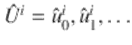 and then compare that sequence with the original control sequence Ui = u 0 i , u1 i , …. The difference between them is a real number measured by a chosen distortion measure, enabling definition of an average distortion

(4.9)
where (1), p(Ui ) is the probability of the sequence Ui (2),  is the distortion between Ui and
  and (3), the sequence of control signals has been deterministically reconstructed from the system output.
It then becomes possible to apply a classic Rate Distortion Theorem (RDT) argument. According to the RDT, there exists a Rate Distortion Function (RDF) that determines the minimum channel capacity, R(D), necessary to keep the average distortion < d > below some fixed limit D (Cover and Thomas 2006). Based on Feynman’s (2000) interpretation of information as a form of (free) energy, we can then construct a Boltzmann-like pseudoprobability density in the “temperature” as
![$$\displaystyle{ dP(R,\mathcal{T} ) = \frac{\exp [-R/\mathcal{T} ]dR} {\int _{0}^{\infty }\exp [-R/\mathcal{T} ]dR} }$$](computational-psychiatry.files/image174.png)
(4.10)
since higher necessarily implies greater channel capacity.
The integral in the denominator is essentially a statistical mechanical partition function, and we can then define a “free energy” Morse Function F (Pettini 2007) as
![$$\displaystyle{ \exp [-F/\mathcal{T} ] =\int _{ 0}^{\infty }\exp [-R/\mathcal{T} ]dR = \mathcal{T} }$$](computational-psychiatry.files/image175.png)
(4.11)
so that ![$$F(\mathcal{T} ) = -\mathcal{T}\log [\mathcal{T} ]$$](computational-psychiatry.files/image176.png) .
.
Then an entropy-analog can also be defined as the Legendre transform of F:

(4.12)
As a first approximation, Onsager’s treatment of nonequilibrium thermodynamics (de Groot and Mazur 1984) can be applied, so that system dynamics are driven by the gradient of  in essential parameters—here —under conditions of noise. This gives a stochastic differential equation

(4.13)
where μ is a “diffusion coefficient” representing the efforts of the underlying control mechanism, and β is the magnitude of an inherent impinging white noise dWt in the context of volatility, i.e., noise proportional to signal.
Somewhat heuristically, applying the Ito chain rule to  in Eq. (4.13), via Jensen's inequality for a concave function, a nonequilibrium steady state (nss) expectation for can be calculated as

(4.14)
Again, μ is interpreted as indexing the attempt by the embedding control apparatus to impose stability—raise . Thus impinging noise can significantly increase the probability that falls below the critical limit of Fig. 4.2, initiating a control failure.
However,  is an expectation, so that, in this model, there is always some nonzero probability that will fall below the critical value α0 in the multimodal expression for : sporadic control dysfunctions have not been eliminated. Raising μ and lowering β decreases their probability, but will not drive it to zero in this model, a matter of some importance for population-rates of neurodevelopmental disorders.
4.3 A “Cognitive” Model
A different approach to the dynamics of neurodevelopmental regulation applies the “cognitive paradigm” of Atlan and Cohen (1998), who recognized that the immune response is not merely an automatic reflex, but involves active choice of a particular response to insult from a larger repertoire of possible responses. Choice reduces uncertainty and implies the existence of an underlying information source as argued in earlier chapters.
Given an information source associated with an inherently unstable, rapidly acting cognitive neurodevelopmental control system—called “dual” to it—an equivalence class algebra can be constructed by choosing different system origin states a0 and defining the equivalence of two subsequent states at times m, n > 0, written as am , a n , by the existence of high probability meaningful paths connecting them to the same origin point. Disjoint partition by equivalence class, analogous to orbit equivalence classes in dynamical systems, defines a symmetry groupoid associated with the cognitive process. Groupoids are deep generalizations of the group concept in which there is not necessarily a product defined for each possible element pair (Weinstein 1996).
The equivalence classes define a set of cognitive dual information sources available to the inherently unstable neurodevelopment regulation system, creating a large groupoid, with each orbit corresponding to a transitive groupoid whose disjoint union is the full groupoid. Each subgroupoid is associated with its own dual information source, and larger groupoids will have richer dual information sources than smaller.
Let  be the control system’s dual information source associated with the groupoid element G i , and let Y be the information source associated with embedding “normal” environmental variation that impinges on development. Wallace (2012, 2015b) gives details of how environmental regularities imply the existence of an environmental information source that, for humans, particularly includes cultural and socioeconomic factors (e.g., Wallace 2015c).
We can again construct a “free energy” Morse Function (Pettini 2007). Let  be the joint uncertainty of the two information sources. Another Boltzmann-like pseudoprobability can then be written as
![$$\displaystyle{ P[H_{G_{i}}] = \frac{\exp [-H_{G_{i}}/\mathcal{T} ]} {\sum _{j}\exp [-H_{G_{j}}/\mathcal{T} ]} }$$](computational-psychiatry.files/image185.png)
(4.15)
is the “temperature” from Eq. (4.9), via the  of Eq. (4.7), and the sum is over the different possible cognitive modes of the full system.
A new Morse Function  is defined by
![$$\displaystyle{ \exp [-\mathcal{F}/\mathcal{T} ] \equiv \sum _{j}\exp [-H_{G_{j}}/\mathcal{T} ] }$$](computational-psychiatry.files/image188.png)
(4.16)
Given the inherent groupoid structure as a generalization of the simple symmetry group, it becomes possible to apply an extension of Landau’s picture of phase transition (Pettini 2007). In Landau’s “spontaneous symmetry breaking” , phase transitions driven by temperature changes occur as alteration of system symmetry, with higher energies at higher temperatures being more symmetric.
For this model, the shift between symmetries is highly punctuated in the “temperature” index under the Data Rate Theorem for unstable control systems. Typically, there are only a very limited number of possible phases, which may or may not coexist under particular circumstances.
Decline in can lead to punctuated decline in the complexity of cognitive process possible within the neurodevelopmental control system, driving it into a ground state collapse in which neural systems fail to develop normally.
The essential feature is the integrated environmental insult . Most of the topology of the inherently unstable neurodevelopmental system has been “factored out” so that  remains the only possible index of the rate of topological information generation for the DRT. Thus, in Eqs. (4.15) and (4.16), is again the driving parameter.
Increasing is then equivalent to lowering the “temperature” , and the system passes from high symmetry “free flow” to different forms of “crystalline” structure—broken symmetries representing the punctuated onset of significant neurodevelopmental failure.
Again, if κ2∕κ 4 ≫ κ1∕κ 3 in Eq. (4.8), accumulated environmental insult will quickly bring the effective “temperature” below some critical value, raising the probability for, or triggering the collapse into, a dysfunctional ground state of low symmetry in which essential network connections are not made or else become locally overconnected and globally disjoint.
Sufficient conditions for the intractability—stability—of the pathological ground state can be explored using the methods of Wallace (2016). Given a vector of parameters characteristic of and driving that phase, say J, that measures deviations from a nonequilibrium steady state, the “free energy” analog  in Eq. (4.16) can be used to define a new “entropy” scalar as the Legendre transform

(4.17)
Again, a first order dynamic equation follows using a stochastic version of the Onsager formalism from nonequilibrium thermodynamics (de Groot and Mazur 1984)

(4.18)
where μi, k defines a diffusion matrix, the σi are parameters, and dBt represents a noise that may be colored, i.e., not the usual Brownian motion under undifferentiated white noise.
If it is possible to factor out Ji , then Eq. (4.18) can be represented in the form

(4.19)
where Yt i is a stochastic process.
The expectation of J can then be found in terms of the Doleans-Dade exponential (Protter 1990) as
![$$\displaystyle{ E(J_{t}^{i}) \propto \exp (Y _{ t}^{i} - 1/2[Y _{ t}^{i},Y _{ t}^{i}]) }$$](computational-psychiatry.files/image194.png)
(4.20)
where [Yt i , Y t i ] is the quadratic variation of the stochastic process Yt i (Protter 1990). Heuristically, invoking the Mean Value Theorem, if
![$$\displaystyle{ 1/2d[Y _{t}^{i},Y _{ t}^{i}]/dt> dY _{ t}^{i}/dt }$$](computational-psychiatry.files/image195.png)
(4.21)
then the pathological ground state is stable: deviations from nonequilibrium steady state measured by Jt i then converge in expectation to 0. That is, sufficient ongoing “noise”—determining the quadratic variation terms—can lock-in the failure of neurodevelopment with high probability, in this model.
Parallel stability arguments arise in ecosystem resilience theory (Holling 1973) which characterizes multiple quasi-stable nonequilibrium steady states among interacting populations. Pristine alpine lake ecosystems, having limited nutrient inflows, can be permanently shifted into a toxic eutrophic state by excess nutrient influx, e.g., a sewage leak, fertilizer runoff, and so on. Once shifted, the lake ecology will remain trapped in a mode of recurrent “red tide”-like plankton blooms even after sewage or fertilizer inflow is stemmed.
The quadratic variation of a stochastic process Xt , which we write as [Xt , X t ], is important to understanding the pathological stability of “eutrophic” neurodevelopmental trajectories, in this model. It can be estimated from appropriate time series data using a Fourier expansion methodology adapted from financial engineering, as described in the Mathematical Appendix.
4.4 The Mitochondrial Connection
Development is not simply a matter of response to external signals, powerful as such effects may be. Metabolic free energy—the high-energy conversion of ATP to ADP—powers the many cognitive process of gene expression that must control developmental trajectories. Most directly, we can posit a Rate Distortion argument in which a developmental message is sent along biochemical channels, and the success of failure measured by complicated control and feedback mechanisms as indicated by the schematic of Fig. 4.1. In essence, there must be a parallel argument to that leading to Eq. (4.10), where is replaced by the rate of metabolic free energy M.
Assuming a Gaussian channel, having the Rate Distortion Function R(D) = (1∕2)log[σ 2∕D], where D is the average distortion by the square measure (Cover and Thomas 2006) and σ2 the inherent channel noise, we can write, for the mean of D = σ 2exp[−2R],
![$$\displaystyle\begin{array}{rcl} <D>= \frac{\int _{0}^{\infty }\sigma ^{2}\exp [-2R]\exp [-R/\omega M]dR} {\int _{0}^{\infty }\exp [-R/\omega M]dR} = \frac{\sigma ^{2}} {2\omega M + 1}& &{}\end{array}$$](computational-psychiatry.files/image196.png)
(4.22)
ω represents the efficiency with which the system converts mitochondrial free energy into control information. Small ω implies greatly increased levels of mitochondrial free energy are necessary for successful development, i.e., small < D > . The obvious inference is that ω will be affected by the degree of integrated environmental insult indexed by , so that we can, to first order at least assume  and write the synergistic relation

(4.23)
inversely characterizing the success of the developmental control systems: large < D > indicates failure. Other channels, as a consequence of the convexity of the Rate Distortion Function in D, will have similar expressions.
A next level of approximation takes M itself as a monotonic increasing function of —normalized by α0 of Eq. (4.2)—so that, to first order,  . Under such a model, rising environmental insult, leading to the condition
  , rapidly distorts developmental process by impairing mechanisms for both the generation and use of mitochondrial free energy.
4.5 Discussion and Conclusions
Chemical exposures, pre- and neonatal infections, psychosocial stress, genetic predisposition, and the cross-generational cultural and epigenetic impacts of these and other toxicants become an integrated, perhaps synergistic, signal that can overwhelm essential neurodevelopmental regulation, demanding levels of mitochondrial free energy that cannot be met. Such insult may, as well, directly interfere with the production of mitochondrial free energy. We have characterized that dynamic through statistical models based on the asymptotic limit theorems of control and information theories, models that are the functional equivalent of the usual least-squares regression based on other asymptotic limit theorems of probability theory. The greatest scientific utility of such models remains the experimental or observational comparison of similar systems under different, and different systems under similar, conditions.
The use of such tools, however, often is not easy, as the sometimes deceptive subtleties of “ordinary” regression remind us. Nonetheless, the conceptual approach taken here may still illuminate empirical studies.
A recent paper by Berman et al. (2016) describes the phenomenon of childhood-onset schizophrenia, a “pure” form of the disorder observed without the often confusing correlates of an extended disease course (Lancaster and Hall 2016). Berman et al. write:
…[W]e examined large-scale network interactions in childhood-onset schizophrenia…Using…resting-state functional magnetic resonance imaging…[that] identified 26 regions with decreased functional correlations in schizophrenia compared to controls…
Lancaster and Hall (2016) find that the results of Berman et al. are compatible with a pathodevelopmental model in which patients with childhood-onset schizophrenia experience excessive “over-pruning” of short-distance functional connections.
By contrast, autism spectrum disorders are marked by excessive early neural growth. Rapoport et al. (2009) assert that in autism there is an acceleration or excess of early postnatal brain development (1–3 years), whereas in childhood-onset schizophrenia (COS) there is exaggeration of the brain maturation processes of childhood and early adolescence (10–16 years):
Both could be seen as “increased gain” of general developmental processes, albeit at different stages; both patterns could also be seen as an abnormal “shift to the left” with respect to age compared to normal brain development, with autism showing initial overgrowth and COS showing greater “pruning down” of the cortex in early and middle parts of the trajectory; both accelerations normalizing with age…
Indeed, a recent comprehensive analysis of US insurance data indicates a strong role for environmental factors in the etiology of autism spectrum disorders. Rzhetsky et al. (2014) write
By analyzing the spatial incidence patterns of autism and intellectual disability drawn from insurance claims for nearly one third of the total US population, we found strong statistical evidence that environmental factors drive apparent spatial heterogeneity of both phenotypes [intellectual disability and autism] while economic incentives and population structure appear to have relatively large albeit weaker effects. The strongest predictors for autism were associated with the environment…The environmental factors implicated so far include pesticides…environmental lead…, sex hormone analogs…medications…plasticizers…and other synthetic molecules…
It is very likely that the list of environmental factors potentially affecting development of human embryo is large and yet predominantly undocumented…
Our results have implications for the ongoing scientific quest for the etiology of neurodevelopmental disorders. We provide evidence [for] routinely expanding the scope of inquiry to include environmental, demographic and socioeconomic factors, and governmental policies at a broad scale in a unified geospatial framework.
Environmental effects are now frequently cited as important in the etiology of autism and similar conditions (e.g., Croen et al. 2011; Landrigan 2012; DeSoto 2009). Keil and Lein (2016) in particular identify epigenetic mechanisms linking environmental chemical exposures to risk of autism spectrum disorders. Govorko et al. (2012) explore the male germline transmission of adverse effects of alcohol on fetal development.
Thus, it seems reasonable to infer that cross-generational transmission of gene methylation may also affect probabilities of ASD and other neurodevelopmental disorders. As Bohacek et al. (2013) comment,
Psychiatric diseases are multifaceted disorders with complex etiology, recognized to have strong heritable components. Despite intense research efforts, genetic loci that substantially account for disease heritability have not yet been identified. Over the last several years, epigenetic processes have emerged as important factors for many brain diseases, and the discovery of epigenetic processes in germ cells has raised the possibility that they may contribute to disease heritability and disease risk.
They specifically note “..[E]vidence suggests that highly stressful experiences at different stages of life can markedly affect behaviors across generations and might constitute heritable risk factors for affective disorders” and go on to examine the opposite effects of chemical exposures and environmental enrichment.
One central feature of the cognitive “phase change” approach above is the possibility of a “supercooled” state during critical neurodevelopmental periods. That is, although the “temperature” defined by falls below threshold for phase transition, “condensation” into nonfunctional neuronetwork configuration during a critical growth domain is made more probable rather than inevitable.
Under such a condition, however, as with supercooled liquids, some sudden perturbation can then trigger “crystallization” from high to low symmetry states, i.e., from a normal system capable of the full “global workspace” dynamics that Bernard Baars asserts are necessary and sufficient for consciousness in higher animals as described in Chap. 1, to a fractured and fragmented structure in which essential subcomponent networks are not sufficiently linked, or become, in fact, overlinked. Different condensation dynamics would broadly account for the observations of Berman et al. and Rapoport et al., the difference between autism spectrum and COS disorders being seen as different condensation phases. Typically, in such “spontaneous symmetry breaking,” there will be only a small number of possible different phases. Comorbidity would be seen as the existence of both possible phase types in the same individual.
This inference may constitute the most central outcome of the modeling exercise, i.e., that “environmental” stress, in a large sense, during a critical growth regime can trigger a relatively small number of characteristic phase change analogs in neurodevelopment, although the symmetry shifts will likely involve subtle groupoid changes rather than alterations of the finite groups more familiar from network theory (Yeung 2008, Chap. 16; Golubitsky and Stewart 2006). Again, simultaneous occurrence of several such “phase condensations” would account for observed patterns of comorbidity, albeit with distinct cultural convolutions.
Indeed, as the previous chapter (following Wallace 2015c) puts it, the stabilization of human cognition via feedback from embedding social and cultural contexts is a dynamic process deeply intertwined with it, constituting the “riverbanks” directing flow of a stream of generalized consciousness at various scales and levels of organization: cultural norms and social interaction are synergistic with individual and group cognition and their disorders. That analysis finds high rates of psychopathic and antisocial personality disorder, as well as obsessive/compulsive disorder, to be culture-bound syndromes particular to Western “atomistic” societies, or to those undergoing social disintegration. Some such cultural patterning may well express itself across the forms of developmental neural malcondensation described here (e.g., Kleinman 1991; Kleinman and Cohen 1997).
While detailed application of the modeling strategies outlined here to experimental or clinical data remains to be done, the unification, after a concerted 50 year effort, of control and information theories via the Data Rate Theorem may provide opportunity for conceptual advance. Although high-end neural structures and the genetic regulators that build them are most definitely not computers in the severely limited mathematical venue of the Turing Machine, all such systems—including computers—are bounded by the asymptotic limit theorems that constrain the generation and transmission of information in the context of dynamic control.
Acknowledgements
The author thanks Drs. D.N. Wallace, J.L. Rapoport, K. Keil, and P. Lein for useful discussions, and several anonymous reviewers for comments helpful in revision.
References
Atlan, H., and I. Cohen. 1998. Immune information, self-organization, and meaning. International Immunology 10: 711–717.CrossRefPubMed
Ben-Shachar, D. 2002. Mitochondrial dysfunction in schizophrenia: A possible linkage to dopamine. Journal of Neurochemistry 83: 1241–1251.CrossRefPubMed
Berman, R., S. Gotts, H.J. McAdams, D. Greenstein, F. Lalonde, L. Classen, R. Watsky, L. Shora, A. Ordonex, A. Raznahan, A. Martin, N. Gogtay, and J. Rapoport. 2016. Disrupted sensorimotor and social-cognitive networks underlie symptoms in childhood-onset schizophrenia. Brain 139: 276–291.CrossRefPubMed
Black, F., and M. Scholes. 1973. The pricing of options and corporate liabilities. Journal of Political Economy 81: 637–654.CrossRef
Bohacek, J., K. Gapp, B. Saab, and I. Mansuy. 2013. Transgenerational epigenetic effects on brain functions. Biological Psychiatry 73: 313–320.CrossRefPubMed
Clay, H., S. Sillivan, and C. Konradi. 2011. Mitochondrial dysfunction and pathology in bipolar disorder and schizophrenia. International Journal of Developmental Neuroscience 29: 311–324.CrossRefPubMed
Corbin, J., N. Gaiano, S. Juliano, et al. 2008. Regulation of neural progenitor cell development in the nervous system. Journal of Neurochemistry 106: 2272–2287.CrossRefPubMedPubMedCentral
Cover, T., and J. Thomas. 2006. Elements of Information Theory, 2nd ed. New York: Wiley.
Croen, L., J. Grether, C. Yoshida, R. Odouli, and V. Hendrick. 2011. Antidepressant use during pregnancy and childhood autism spectrum disorders. Archives of General Psychiatry 68: 1104–1112.CrossRefPubMed
de Groot, S., and P. Mazur. 1984. Nonequilibrium Thermodynamics. New York: Dover.
DeSoto, M. 2009. Ockham’s razor and autism: The case for developmental neurotoxins contributing to a disease of neurodevelopment. Neurotoxicology 30: 331–337.CrossRefPubMed
Feynman, R. 2000. Lectures on Computation. Boulder CO: Westview.
Garcez, P., E.C. Loiola, R. Madeiro da Costa, et al. 2016. Zika virus impairs growth in human neurospheres and brain organoids. https://peerj.com/preprints/1817v3.
Giulivi, C., et al. 2010. Mitochondrial dysfunction in autism. Journal of the American Medical Association 304: 2389–2395.CrossRefPubMedPubMedCentral
Glazebrook, J.F., and R. Wallace. 2009. Rate distortion manifolds as model spaces for cognitive information. Informatica 33: 309–346.
Goh, S.A., Z. Dong, Y. Zhang, S. DiMauro, and B. Peterson. 2014. Mitochondrial dysfunctions as a neurobiological subtype of Autism Spectrum Disorder. JAMA Psychiatry. doi: 10.1001/jamapsychiatry.2014.179.PubMedPubMedCentral
Golubitsky, M., and I. Stewart. 2006. Nonlinear dynamics of networks: The groupoid formalism. Bulletin of the American Mathematical Society 43: 305–364.CrossRef
Govorko, D., R. Bekdash, C. Zhang, and D. Sakar. 2012. Male germline transmits fetal alcohol adverse effect on hypothalamic proopiomelanocortin gene across generations. Biological Psychiatry 72: 378–388.CrossRefPubMedPubMedCentral
Hayden, E. 2016. Zika highlights role of controversial fetal-tissue research: Fetal tissue may prove crucial to probing link between virus and birth defects. Nature 532: 16.CrossRef
Holling, C. 1973. Resilience and stability of ecological systems. Annual Reviews of Ecological Systematics 4: 1–23.CrossRef
Keil, K., and P. Lein. 2016. DNA methylation: A mechanism linking environmental chemical exposures to risk of autism spectrum disorders? Environmental Epigenetics. doi: 10.1093/eep/dvv012.PubMedPubMedCentral
Kleinman, A. 1991. Rethinking Psychiatry: From cultural category to personal experience. New York: Free Press.
Kleinman, A., and A. Cohen. 1997. Psychiatry’s global challenge. Scientific American 276(3): 86–89.CrossRefPubMed
Lancaster, T., and J. Hall. 2016. Altered intra- inter-network dynamics reflect symptom dimensions in childhood-onset schizophrenia. Brain 139(10): 12.
Landrigan, P. 2010. What causes autism? Exploring the environmental contribution. Current Opinion in Pediatrics 22: 219–225.CrossRefPubMed
Nair, G., F. Fagnani, S. Zampieri, and R. Evans. 2007. Feedback control under data rate constraints: An overview. Proceedings of the IEEE 95: 108–137.CrossRef
Palmieri, L., and A. Persico. 2010. Mitochondrial dysfunction in autism spectrum disorders: Cause or effect? Biochimica et Biophysica Acta 1797: 1130–1137.CrossRefPubMed
Pettini, M. 2007. Geometry and Topology in Hamiltonian Dynamics. New York: Springer.CrossRef
Prabakaran, S., et al. 2004. Mitochondrial dysfunction in schizophrenia: Evidence for compromised brain metabolism and oxidative stress. Molecular Psychiatry 9: 6840697.CrossRef
Protter, P. 1990. Stochastic Integration and Differential Equations. New York: Springer.CrossRef
Rapoport, J., A. Chavez, D. Greenstein, A. Addington, and N. Gogtay. 2009. Autism-spectrum disorders and childhood onset schizophrenia: Clinical and biological contributions to a relationship revisited. Journal of the American Academy of Childhood and Adolescent Psychiatry48: 10–18.CrossRef
Rapoport, J., J. Giedd, and N. Gogtay. 2012. Neurodevelopmental model of schizophrenia: Update 2012. Molecular Psychiatry 17: 1228–1238.CrossRefPubMedPubMedCentral
Rossignol, R., and R. Frye. 2010. Mitochondrial dysfunction in autism spectrum disorders: A systematic review and meta-analysis. Molecular Psychiatry 17: 290–314.
Rzhetsky, A., S. Bagley, K. Wang, C. Lyttle, E. Cook, R. Altman, and R. Gibbons. 2014. Environmental and state-level regulatory factors affect the incidence of autism and intellectual disability. PLOS Computational Biology 10(3): e1003581.CrossRef
Scaglia, F. 2010. The role of mitochondrial dysfunction in psychiatric disease. Developmental Disabilities Research Reviews 16: 136–143.CrossRefPubMed
Shao, L., et al. 2008. Mitochondrial involvement in psychiatric disorders. Trends in Molecular Medicine 40: 281–295.
Tiberi, L., P. Vanderhaeghen, and J. van den Ameele. 2012. Cortical neurogenesis and morphogenesis: Diversity of cues, sources and functions. Current Opinion in Cell Biology 24: 269–276.CrossRefPubMed
van Os, J., G. Kenis, and B. Rutten. 2010. The environment and schizophrenia. Nature 468: 203–212.CrossRefPubMed
Wallace, R. 2012. Consciousness, crosstalk, and the mereological fallacy: An evolutionary perspective. Physics of Life Reviews 9: 426–453.CrossRefPubMed
Wallace, R. 2015a. An Information Approach to Mitochondrial Dysfunction: Extending Swerdlow’s hypothesis. Singapore: World Scientific.
Wallace, R. 2015b. Metabolic free energy and biological codes: A ‘Data Rate Theorem’ aging model. Bulletin of Mathematical Biology 77: 879–903.
Wallace, R. 2015c. Closed-system ‘economic’ models for psychiatric disorders: Western atomism and its culture-bound syndromes. Cognitive Processing 16: 279–290.
Wallace, R. 2016. Subtle noise structures as control signals in high-order biocognition. Physics Letters A 380: 726–729.CrossRef
Wallace, R., and D. Wallace. 2010. Gene Expression and Its Discontents: The Social Production of Chronic Disease. New York: Springer.CrossRef
Weinstein, A. 1996. Groupoids: Unifying internal and external symmetry. Notices of the American Mathematical Association 43: 744–752.
Yeung, R. 2008. Information Theory and Network Coding. New York: Springer.