
1. A 16-year-old male suffers from irritable mood, increased energy, decreased need for sleep, and pressured speech. He was recently started on medication by his psychiatrist to control these symptoms. He comes into your office complaining of a significant worsening of his acne since starting this new medication. What drug was he started on?
A Oxcarbazepine
B Lorazepam
C Risperidone
D Lithium
E Lamotrigine
2. Which one of the following is not true regarding bonding and attachment?
A Attachment lasts for life
B Attachment is the emotional dependence of an infant on his mother
C Bonding is the emotional attachment of a mother to her child
D Bonding is anchored by resources and security
E Poor attachments may lead to personality disorders
3. What is the best test for diagnosing Huntington’s disease?
A Karyotype of chromosomes
B Serum ceruloplasmin
C Urine porphobilinogens
D Serum polymerase chain reaction (PCR)
E Cerebrospinal fluid (CSF) assay for 14-3-3 proteinase inhibitor protein
4. Lesions in the orbitofrontal region of the brain will present as a patient who is:
A Profane, irritable, and irresponsible
B Manic
C Depressed
D Apathetic
E Psychotic
5. A 65-year-old woman with schizophrenia believes that she is pregnant with God’s child. She has been convinced of this for the past 5 years. When you confront her on this she tells you that she is certain that she is pregnant and that God is the father. She will not agree that this is not true. Her thinking is an example of which one of the following?
A Egomania
B Coprolalia
C Delusion
D Ailurophobia
E Obsession
6. A group of patients are looked at with regard to a risk factor for heart disease. They are divided into those who have the risk factor and those who do not. These groups are then followed for a number of years to see who does and who does not develop heart disease. This is an example of a:
A Cohort study
B Case–control study
C Clinical trial
D Cross-sectional survey
E Crossover study
7. Who developed the theory of “good enough mothering”?
A Piaget
B Freud
C Mahler
D Winnicott
E Erikson
8. A 47-year-old man presents to the emergency room in an acute state of disorientation, with tachycardia, ophthalmoparesis, diaphoresis, and ataxia. He dies in the hospital 48 hours later. Brain autopsy of this patient would reveal:
A Frontal and temporal lobe atrophy
B Substantia nigra depigmentation
C Hemorrhages in the ependyma of the third ventricle and superior vermis
D Diffuse Lewy bodies in cortex
E Subcortical white matter lesions perpendicular to the ventricles
9. Which one of the following statements is true concerning monoamine oxidase inhibitors (MAOIs)?
A MAOIs are not likely to cause orthostatic hypotension
B To switch between an MAOI and a selective serotonin reuptake inhibitor (SSRI) you need a 3-day washout period
C Giving meperidine with an MAOI is contraindicated
D Lithium is contraindicated with MAOIs
E All MAOIs require adherence to a tyramine free diet
10. You are called to consult on an agitated patient on the medical unit. The patient is elderly, confused and pulling out her lines. You decide that she must be tranquilized for her own safety. Which one of the following drugs would be the best choice?
A Lorazepam
B Lithium
C Diazepam
D Aripiprazole
E Haloperidol
11. You are talking to one of your colleagues from surgery. He tells you about a postoperative patient that he is covering who keeps complaining of pain. He tells you that the patient was originally on intramuscular meperidine and was switched to the same dose of oral meperidine just yesterday. The patient has been complaining constantly and is getting the nursing staff upset. What do you think is responsible for this situation?
A The patient has low pain tolerance
B The patient has borderline personality disorder and is splitting the staff
C The patient has an intractable pain disorder
D The analgesic potency of oral meperidine is less than intramuscular meperidine
E The patient has a conversion disorder
12. A therapist gets assigned a new patient in his clinic. While looking at the materials the patient filled out in the waiting area he finds out that the patient has a substance abuse history. He immediately says “Stupid drug addicts, they’re so annoying. They’re such a waste of time. They never want to get better.” This is an example of:
A Projection
B Transference
C Countertransference
D Resistance
E Confrontation
13. What is the likelihood of a patient acquiring Huntington’s disease if his father is a carrier and has the illness?
A 25%
B 50%
C 75%
D 90%
E 100%
14. Which one of the following is not a developmental task of middle adulthood?
A Taking stock of accomplishments
B Reassessing commitments to family, work and marriage
C Using accumulated power ethically
D Engaging in risk-taking behavior
E Dealing with parental illness and death
15. A chronic schizophrenic has been taking medication for 20 years. Every morning he goes to his pill bottle and takes the pills his doctor prescribes. This is an example of:
A Primary prevention
B Secondary prevention
C Tertiary prevention
D Malingering
E Noncompliance
16. A patient with metastatic carcinoma of the lung presents with generalized muscle weakness and is found to have improved muscle strength with minimal exercise. The most likely diagnosis is:
A Myasthenia gravis
B Multiple sclerosis
C Guillain–Barré syndrome
D Polymyositis
E Lambert–Eaton myasthenic syndrome
17. Which one of the following tests does NOT detect psychotic thought processes?
A Draw a person test
B Minnesota multiphasic personality inventory (MMPI)
C Sentence completion test
D Thematic apperception test (TAT)
E Rorschach test
18. A patient presents with slowly progressive muscle weakness, fasciculations of arm muscles and tongue, difficulty swallowing and becomes wheelchair-bound. The diagnosis is amyotrophic lateral sclerosis. Postmortem studies of this patient’s central nervous system would reveal:
A Nigrostriatal depigmentation and atrophy
B Frontal and temporal lobe atrophy
C Anterior horn cell degeneration
D Corpus callosum thinning and atrophy
E Dorsal column volume loss
19. Which one of the following is not part of the ethical code of the American Psychiatric Association?
A It is unethical to accept a commission for patient referrals
B It is unethical to have sexual relations with patients
C It is a psychiatrist’s obligation to report other psychiatrist’s unethical behavior
D Retiring psychiatrists must provide patients with sufficient notice of their retirement and make every reasonable effort to find follow up care for their patients
E Psychiatrists have an obligation to participate in executions
20. You are called by the medicine team to do a psychiatric consultation on a 90-year-old female with sepsis who is agitated, confused, disoriented and pulling out her lines. The medical team tells you that her mentation has been waxing and waning throughout the day. Your first consideration in approaching the case is:
A Determining capacity to refuse treatment
B Speaking to the patient’s family
C Examining the patient’s medication regimen
D Developing a therapeutic relationship with the patient
E Protecting the patient from unintended harm
21. Positive reinforcement, negative reinforcement, the operant, and the reinforcing stimulus are integral parts of what theory?
A Operant conditioning developed by Skinner
B Operant conditioning developed by Bandura
C Attribution theory developed by Hull
D Learned helplessness developed by Kandel
E Habituation theory developed by Pavlov
22. A 7-year-old girl with staring spells and 3-per-second spike and wave activity on electroencephalogram (EEG) fails therapy with ethosuximide and has breakthrough spells. The next best medication of choice to treat this patient is:
A Phenytoin
B Divalproex sodium
C Phenobarbital
D Diazepam
E Carbamazepine
23. Episodes of sudden sleep onset, with sudden loss of muscle tone, followed by quick entry into rapid eye movement (REM) sleep are characteristic of which one of the following?
A Sleep changes associated with depression
B Sleep apnea
C Primary insomnia
D Narcolepsy
E Shift-work sleep disorder
24. Which one of the following neurotransmitters is not associated with the inhibition of aggressive behavior?
A Dopamine
B Norepinephrine
C Serotonin
D GABA
E Glycine
25. Which one of the following anticonvulsant agents needs rapid dosage increases early in therapy due to autoinduction of its own metabolism?
A Carbamazepine
B Divalproex sodium
C Phenytoin
D Phenobarbital
E Diazepam
26. Giving positive reinforcement intermittently at a variable schedule is the best way to prevent:
A Discrimination
B Generalization
C Extinction
D Respondent conditioning
E Transference
27. A young woman presents to the emergency room with a history of intractable seizures and mental retardation. You discover she has severe acne, skin depigmentation on her back and blotchy patches on her retinal surface on funduscopic examination. The most likely diagnosis is:
A Down’s syndrome
B Rett’s disorder
C Neurofibromatosis
D Tuberous sclerosis
E Williams’ syndrome
28. Which one of the following drugs does not work by blocking the catabolism of acetylcholine?
A Donepezil
B Memantine
C Tacrine
D Rivastigmine
E Galantamine
29. Which one of the following tests would be best used for testing executive function?
A Thematic apperception test
B Halstead–Reitan neuropsychological battery
C Minnesota multiphasic personality inventory (MMPI)
D Brief psychiatric rating scale (BPRS)
E Trail-making tests
30. You are asked as a psychiatrist to determine if a patient has the capacity to make a will. In order to make the will which one of the following does the patient not have to prove to you?
A He knows that he is making a will
B He knows how the will distributes his property
C He knows the nature of the property to be distributed
D He knows who will inherit the property
E He understands court procedure
31. Which one of the following is not correct regarding the onset of puberty?
A Onset of puberty is triggered by the maturation of the hypothalamic–pituitary–adrenal–gonadal axis
B Primary sex characteristics are those directly involved in coitus and reproduction
C The average age of onset of puberty is 11 years of age for boys and 13 years of age for girls
D Increases in height and weight occur earlier in girls than in boys
E In adolescent boys testosterone levels correlate with libido
32. Sumatriptan (Imitrex) is contraindicated in patients with:
A Ischemic heart disease
B Kidney disease
C Obstructive pulmonary disease
D Inflammatory bowel disease
E Carcinoma
33. Which one of the following does not increase tricyclic antidepressant concentrations?
A Clozapine
B Haloperidol
C Risperidone
D Cigarette smoking
E Methylphenidate
34. Which one of the following is true regarding suicide?
A Completed suicide is most frequently related to bipolar disorder
B Adolescents most frequently succeed in committing suicide by hanging
C In recent years the suicide rate has increased dramatically among middle-aged adults
D Previous suicidal behavior is the best predictor of risk for future suicide
E Women successfully commit suicide more often than men
35. Which one of the following symptoms is not part of the classic stroke condition known as Gerstmann’s syndrome
A Acalculia
B Right and left confusion
C Finger agnosia
D Alexia without agraphia
E Pure agraphia
36. Which one of the following is most appropriate for treatment with dialectical behavioral therapy
A Histrionic personality disorder
B Borderline personality disorder
C Dependant personality disorder
D Schizoid personality disorder
E Obsessive–compulsive personality disorder
37. A 45-year-old woman with bipolar disorder complains of amenorrhea, galactorrhea, decreased libido and anorgasmia. She presents to the emergency room with an elevated serum prolactin level and is on risperidone 4 mg daily for bipolar disorder. On neurologic examination you discover decreased vision in both lateral visual fields. The most likely diagnosis is:
A Acute right parietal stroke
B Thalamic hemorrhage
C Pituitary macroadenoma
D Acute left parietal stroke
E Midbrain infarct
38. Which one of the following is not true regarding the mental status examination?
A Racing thoughts are considered part of thought process
B Blunted is a term used to describe affect
C Hallucinations are part of thought content
D Delusions are part of thought content
E Circumstantiality is part of thought form
39. A Malaysian man was brought into the emergency room after trying to commit suicide. The family describes an unusual course of events preceding the suicide attempt. The patient was depressed, preoccupied and brooding. He suddenly had an unprovoked outburst of rage in which he went around the neighborhood and indiscriminately maimed two people and three dogs. Two of the dogs died. Afterwards he had no memory of the episode and was exhausted. He then went into the kitchen of his home, picked up a knife and slit his wrists. The most appropriate diagnosis is:
A Koro
B Amok
C Piblokto
D Wihtigo
E Mal de ojo
40. An 80-year-old man with known vascular dementia presents to your emergency room with care givers complaining of new onset right hemiparesis and mutism. Which one of the following signs is not compatible with this clinical presentation?
A Meyerson’s sign
B Right-sided Hoffman’s sign
C Right-sided Babinski sign
D A positive palmomental reflex
E Complete loss of the gag reflex
41. Glutamate is not:
A One of the two major amino acid neurotransmitters
B An inhibitory neurotransmitter
C Involved in learning and memory
D The primary neurotransmitter in cerebellar granule cells
E A precursor of gamma aminobutyric acid (GABA)
42. Down’s syndrome is associated with defects in chromosome 21. This is a feature also shared by:
A Turner’s syndrome
B Klinefelter’s syndrome
C Huntington’s disease
D Alzheimer’s disease
E Parkinson’s disease
43. Which one of the following is not compatible with the diagnosis of brain death?
A Eyes fully open
B Absence of corneal reflexes
C Presence of oculovestibular reflexes
D Spontaneous activity seen on EEG
E Large, fixed pupils
44. Patients with compromised liver function should not use which one of the following drugs?
A Temazepam
B Diazepam
C Oxazepam
D Lorazepam
E Chlorazepate
45. Which one of the following is not an appropriate part of family therapy?
A Exploring family members’ beliefs about the meanings of their behaviors
B Reframing problematic behaviors positively
C Focusing most of the session on the most dysfunctional member of the family
D Encouraging family members to interact differently and observe the effects
E Giving the family members things to think about and work on outside of sessions
46. Which one of the following statements is true regarding neurotransmitters and anxiety?
A GABA has nothing to do with anxiety
B GABA, norepinephrine, and serotonin are associated with anxiety in some way
C Dopamine, glutamate, and histamine are associated with anxiety in some way
D Only acetylcholine is associated with anxiety
E Anxiety can be treated with injection of epinephrine
47. Which one of the following is not used in treating myasthenia gravis?
A Pyridostigmine
B Edrophonium chloride
C Plasmapheresis
D Intravenous immunoglobulin administration
E Thymectomy
48. You are called to evaluate a potentially delirious patient on a medical unit. As part of your workup you order an EEG. What do you expect to find on EEG if this is truly a delirium?
A 3-per-second spike and wave pattern
B Frontocentral beta activity
C Posterior alpha rhythm
D Generalized slow-wave activity consisting of theta and delta waves, with some focal areas of hyperactivity
E Right temporal spikes
49. Gower’s maneuver or sign is typically seen in which one of the following neurologic conditions?
A Myasthenia gravis
B Multiple sclerosis
C Huntington’s disease
D Duchenne’s muscular dystrophy
E Myotonic dystrophy
50. Which one of the following antidepressants does not have strong sedative effects?
A Trazodone
B Paroxetine
C Doxepin
D Clomipramine
E Mirtazapine
51. One of your patients of the opposite sex begins to act seductively and proceeds to ask you out for dinner. Which one of the following would be an appropriate response?
A Ignore the patient’s advances
B Compliment the patient on the way she is dressed
C Tell the patient that you are seeing someone and therefore can’t accept the offer
D Examine your own countertransference and explore the meaning of the patient’s behavior
E Have sex with the patient and then make the patient find a new doctor
52. While on call one night in the emergency room, you are asked to evaluate a distraught couple that has been brought in by the police following a fight that started after the wife found out that her husband was wearing her panties to work. It turns out that he has been wearing women’s undergarments for over a year because he finds this very sexually arousing. He has developed several fantasies imagining himself in women’s undergarments. The most appropriate diagnosis for the husband is:
A Exhibitionism
B Fetishism
C Frotteurism
D Voyeurism
E Transvestic fetishism
53. A 48-year-old woman presents to your office with complaints of lancinating, brief, sharp pain to the left side of her face. The pain is short-lived and recurrent. It is triggered frequently by cold air touching her face. The pharmacologic treatment of choice for this condition would be:
A Divalproex sodium
B Clonazepam
C Carbamazepine
D Tiagabine
E Risperidone
54. A 75-year-old man presents to the emergency room with new onset headache, fever, vague joint pains and complaints of recent diminished vision. The first test of choice in this case is:
A Head CT scan
B MRI brain with diffusion-weighted imaging
C Lumbar puncture looking for CSF xanthochromia
D Serum sedimentation rate
E Carotid ultrasound looking for dissection
55. The concept that different mental disorders have different outcomes was pioneered by:
A Freud
B Bleuler
C Winnicott
D Kraepelin
E Kohut
56. A patient comes into your practice after referral from his primary care physician. He is convinced that he has cancer. He thinks that it hasn’t been found yet, but is convinced that it is there. He remains convinced despite a full workup with negative results. Despite further reassurance by his doctors, he remains convinced that he has cancer. Which is the most appropriate diagnosis?
A Conversion disorder
B Hypochondriasis
C Body dysmorphic disorder
D Somatization disorder
E Briquet’s syndrome
57. Which one of the following is not characteristic of cluster headaches?
A Attacks of short duration of 3 hours or less.
B Daytime attacks
C Male predominance
D Sharp, severe, retro-orbital pain
E Cyclical pattern of occurrence mainly in spring and fall seasons
58. Which one of the following is not a contraindication to bupropion?
A Seizure
B Anorexia
C Use of a MAOI in the past 14 days
D Head trauma
E Hypertension
59. Which one of the following is it safe to combine with MAOIs?
A Meperidine
B Lithium
C Levodopa
D SSRIs
E Spinal anesthetic containing epinephrine
60. Which one of the following will not result in an acquired peripheral neuropathy?
A Systemic lupus erythematosus (SLE)
B Toluene intoxication
C Acetaminophen overdose
D Vincristine therapy
E Epstein–Barr virus infection
61. Which one of the following is false regarding tricyclic antidepressants (TCAs)?
A Cigarette smoking decreases TCA levels
B Clozapine will increase TCA levels
C Methylphenidate will decrease TCA levels
D TCAs can have adverse cardiac effects
E TCAs have strong anticholinergic effects
62. Which one of the following antidepressants has the longest half-life?
A Fluvoxamine
B Paroxetine
C Citalopram
D Fluoxetine
E Sertraline
63. Self-mutilation is most common in which one of the following personality disorders?
A Borderline
B Narcissistic
C Histrionic
D Dependent
E Schizoid
64. A young man is admitted to the hospital with progressive proximal muscle weakness, generalized fatigue and a red nonpruritic rash to the face and body, especially around the knees and elbows. His workup should include screening for:
A Carcinoma
B Heart disease
C Intestinal bleeding
D Fibrotic lung disease
E Stroke
65. You are on call and get paged to go see a schizophrenic patient on the inpatient unit. The patient has a tremor, is ataxic and is restless. During the interview the patient vomits. The nurse tells you he has been having diarrhea and has been urinating very frequently. What question would be most useful to ask the patient?
A Can you count from 100 backwards by sevens?
B Where are you right now?
C Who is the current president?
D How much water have you been drinking recently?
E Are you HIV positive?
66. In what kind of schizophrenia is the onset late, the thought process more linear, and the outcome usually better?
A Paranoid
B Disorganized
C Catatonic
D Residual
E Undifferentiated
67. Which one of the following is not associated with good outcomes in schizophrenia?
A High premorbid functioning
B Little prodrome
C Early age at onset
D Acute onset
E Absence of family history of schizophrenia
68. During a workup you send a patient for an EEG. The results reveal shortened latency of rapid eye movement (REM) sleep, decreased stage IV sleep and increased REM density. These findings are most consistent with:
A Tumor
B Petit mal epilepsy
C Hepatic encephalopathy
D Delirium
E Depression
69. Homozygosity for which one of the following is believed to predispose patients to Alzheimer-type dementia?
A Tau
B Apolipoprotein E4
C Amyloid precursor protein
D Trisomy 21
E Presenelin
70. Which one of the following is not characteristic of narcissistic personality disorder?
A Grandiosity
B Need for admiration
C Showing self-dramatization, theatricality, and exaggerated expression of emotion
D Preoccupation with fantasies of unlimited success, power and brilliance
E Interpersonally exploitative
71. Which one of the following is not a criterion of post-traumatic stress disorder?
A Re-experiencing the event
B Increased arousal
C Avoidance of stimuli associated with the trauma
D The duration of the disturbance is more than two months
E The person’s response to the trauma involved intense fear or horror
72. After her mother died, Sarah felt extreme sadness, cried, blamed God, felt guilty, and became convinced that she was worthless and eventually tried to hang herself. Her diagnosis is:
A Normal bereavement
B Bipolar disorder
C Delusional disorder
D Anticipatory grief
E Pathological grief
73. The brains of patients with schizophrenia often reveal enlargement of the:
A Hippocampus
B Caudate
C Ventricles
D Corpus callosum
E Cerebellum
74. A 20-year-old patient comes into the emergency room while you are on call. She is 5 feet (152 cm) tall and has difficulty maintaining her body weight above 67 pounds (30 kg). She has lost weight in the past by dieting and was encouraged by her progress. She continued to decrease food intake and increase exercising until her weight dropped below 63 pounds (28 kg). At this time she is no longer having her menstrual periods. She comes to the emergency room with symptoms of peptic ulcer disease. Which one of the following would be considered the most important and urgent part of her initial medical workup?
A Bone scan
B Head CT scan
C Gastric emptying study
D Cholesterol level
E Serum potassium level
75. Which one of the following is not true of delusional disorder?
A It involves nonbizarre delusions that could happen in real life
B It may involve tactile hallucinations
C The erotomanic type involves another person of higher social standing being in love with the patient
D Daily functioning is markedly impaired
E The person’s behavior is not markedly odd or bizarre
76. Which one of the following is false regarding female orgasmic disorder?
A Female orgasmic disorder is the persistent absence of orgasm following a normal sexual excitement phase
B The incidence of orgasm in women increases with age
C Fears of impregnation or damage to the vagina as well as guilt are psychological factors involved in this disorder
D Female orgasmic disorder can be either life long or acquired
E Criteria include involuntary spasm of the vaginal musculature that interferes with intercourse
77. A patient presents to your office with a complaint of intense fear of going to social functions at her child’s school. On further examination you note that she has fears that she will act in a way that will be humiliating or embarrassing. She is also made anxious by having to meet new people that she does not know. Your differential diagnosis of this patient should include which one of the following Axis II disorders?
A Borderline personality disorder
B Obsessive–compulsive personality disorder
C Narcissistic personality disorder
D Avoidant personality disorder
E Dependent personality disorder
78. Which one of the following anticonvulsant agents is known to cause hirsutism, facial changes and hypertrophy of the gingiva?
A Carbamazepine
B Valproate
C Phenobarbital
D Levetiracetam
E Phenytoin
79. A 52-year-old man is brought to the emergency room after being found by police prone on the edge of the sidewalk outside. He is moderately intoxicated with alcohol and unable to give an adequate history. Upon neurologic examination you discover that his right wrist and fingers are limp and he cannot lift them. He is also weak when he tries to extend his arm from a bent to straight position. He also has trouble turning his forearm over when it is placed palm down on a flat surface. The lesion in question here is most likely a(n):
A Radial nerve entrapment
B Ulnar nerve entrapment
C Median nerve entrapment
D Musculocutaneous nerve entrapment
E Suprascapular nerve entrapment
80. A patient comes into the emergency room complaining that twice during the past week he experienced a sudden loss of muscle tone. The first time occurred when he was told that his mother was diagnosed with cancer. The second came during a track meet while he was warming up before his turn to run. These episodes are most likely to be associated with which one of the following diagnoses:
A Sleep apnea
B Primary insomnia
C Primary hypersomnia
D Narcolepsy
E Circadian rhythm sleep disorder
81. Which one of the following is true regarding conversion disorder?
A It is intentionally produced
B It consists of complaints in multiple organ systems
C It involves neurologic symptoms
D It can be limited to pain
E It can be limited to sexual dysfunction
82. Which one of the following drugs is contraindicated in conjunction with therapy with levodopa/carbidopa in Parkinson’s disease patients?
A Amitriptyline
B Fluoxetine
C Gabapentin
D Tranylcypromine
E Sertraline
83. Piaget’s stage of concrete operations includes which one of the following?
A Identity versus role confusion
B Good enough mothering
C Conservation
D Inductive reasoning
E Object permanence
84. A 10-year-old child engages in sex play. This should be viewed as:
A A sign of homosexuality
B A sign of hormonal imbalance
C The result of excessive television viewing
D Normal development
E Premature development
85. You see a child in the clinic who has fragile X syndrome. Which one of the following would you not expect him to have?
A Mental retardation
B Long ears
C Narrow face
D Arched palate
E Short palpebral fissures
86. What would you expect from 18-month-old children with secure attachments after their parents leave them alone with you in a room?
A They would try to bring the parents back into the room
B They would immediately run to you and sit on your lap
C They would become more inquisitive
D They would not notice the parents’ absence
E They would become aggressive and violent
87. Which one of the following agents is a potent cytochrome P-450 inhibitor and can dangerously increase levels of lamotrigine in patients?
A Phenytoin
B Diazepam
C Valproate
D Phenobarbital
E Gabapentin
88. You are introduced to a child with a physical deformity. When would you predict that the deformity would have the greatest psychological impact on the child?
A Infancy
B Preschool
C Elementary school age
D Early adolescence
E Adulthood
89. Which one of the following is a specific inhibitor of monoamine oxidase type B (MAOI-B)?
A Moclobemide
B Phenelzine
C Tranylcypromine
D Selegiline
E Befloxatone
90. Which one of the following will produce a hypodopaminergic state when used chronically?
A Heroin
B PCP
C Alcohol
D Amphetamines
E Cocaine
91. The anticonvulsant agent valproic acid can cause which one of the following problems in the fetus of pregnant patients?
A Spina bifida
B Macrocephaly
C Hypertelorism
D Oligohydramnios
E Intrauterine growth retardation
92. Which one of the following agents is a dopamine agonist?
A Haloperidol
B Pergolide
C Quetiapine
D Buspirone
E Fluphenazine
93. A 25-year-old man is brought to see you because of change in personality following a boating accident. He fell off of his boat and landed head first on the dock. He was previously friendly, happy, and high functioning. Now his speech is pressured and his mood is labile. He has been irresponsible at work and has been fired from his job. His memory is intact. Which one of the following brain areas did he damage?
A Temporal lobe
B Occipital lobe
C Basal ganglia
D Substantia nigra
E Frontal lobe
94. Which one of the following inhibits norepinephrine reuptake?
A Haloperidol
B Ziprasidone
C Chlorpromazine
D Olanzapine
E Aripiprazole
95. Which one of the following is a partial agonist at the D2 receptor?
A Haloperidol
B Ziprasidone
C Chlorpromazine
D Olanzapine
E Aripiprazole
96. Damage to which one of the following brain areas is most likely to present with depression?
A Occipital lobe
B Right prefrontal cortex
C Left prefrontal cortex
D Right parietal lobe
E Left parietal lobe
97. Which one of the following brain areas is characteristically serotonergic?
A Ventral tegmental area
B Substantia nigra
C Nucleus accumbens
D Cerebellum
E Raphe nuclei
98. A patient presents to your office with a history of wing-flapping coarse tremor of the upper extremities, ataxia and a rapidly progressive confusional state developing over several months. The test of choice to diagnose this patient is:
A Serum ACE level
B Chromosomal analysis for CAG triplet repeats
C Serum ceruloplasmin level
D Lumbar puncture and CSF titer for oligoclonal bands and myelin basic protein
E Edrophonium hydrochloride testing (Tensilon test)
99. A patient comes into the emergency room high on cocaine. Which one of the following brain regions would you expect to be most active in terms of the reward he is experiencing from the drug?
A Neocortex
B Substantia nigra
C Nucleus accumbens
D Locus ceruleus
E Raphe nuclei
100. What is the therapeutic focus of motivational enhancement therapy?
A Anger
B Depression
C Medical comorbidity
D Ambivalence
E Environment
101. You are teaching a class to a group of first year psychiatric residents. You review some of the psychological tests with them and describe their use. One of the anal-retentive types in the front row asks which of the tests has the highest reliability. Your answer is?
A Wechsler adult intelligence scale
B Thematic apperception test
C Draw a person test
D Minnesota multiphasic personality inventory
E Projective personality assessment
102. Freud is best associated with which one of the following?
A Learning theory
B Mesolimbic dopamine theory of positive psychotic symptoms
C Conflict theory
D Self psychology
E Drive theory
103. The most common cause of intracerebral hemorrhage is:
A Hypertension
B Intracranial tumors or metastases
C Disorders of coagulation (coagulopathies)
D Vascular malformations
E Trauma
104. How would Beck describe the problem found in depression?
A Learned helplessness
B Not good enough mothering
C Neurochemical imbalance
D Cognitive distortion
E Lack of social skills
105. A Type I error occurs when:
A The null hypothesis is rejected when it should have been retained
B The null hypothesis is retained when it should have been rejected
C There is false rejection of a difference that was truly significant
D The probability of an event occurring is 0
E The probability of an event occurring is 1
106. The process by which a patient in a clinical trial has an equal likelihood of being in a control group versus an experimental group is:
A Probability
B Risk
C Percentile rank
D Power
E Randomization
107. A 32-year-old man who is HIV positive presents to the emergency room with mild fever to 101°F (38.3°C), headache, stiff neck, photophobia and lethargy. His CD4 count is zero and he has a highly elevated viral load. The most useful immediate diagnostic test for his current condition would be:
A Head CT scan with contrast
B MRI of the brain with and without gadolinium
C Lumbar puncture for CSF analysis and India ink staining
D Chest radiography and blood cultures
E Serum cold agglutinin assay
108. The probability of finding a true difference between two samples is:
A Probability
B Risk
C Percentile rank
D Power
E Randomization
109. The number of people who have a disorder at a specified point in time is:
A Probability
B Risk
C Point prevalence
D Power
E Randomization
110. To diagnose anorexia nervosa, the patient must be below what percentage of normal body weight?
A 85%
B 65%
C 93%
D 50%
E 75%
111. How long after taking PCP can it still be found in the urine?
A 1 day
B 2 days
C 5 days
D 8 days
E 10 days
112. Which one of the following is associated with the amyloid precursor protein?
A Wilson’s disease
B Schizophrenia
C Alzheimer’s disease
D Bipolar disorder
E Huntington’s disease
113. A patient you put on carbamazepine has weakness and a rash. Which lab test would you order first?
A Liver profile
B Electrolytes, BUN, creatinine, glucose (Chem-7)
C Complete blood count
D Thyroid function tests
E VDRL
114. Which one of the following should not be part of an initial workup of a patient with anorexia nervosa?
A Complete blood count
B Chem-7
C Thyroid function tests
D Electrocardiogram
E Head CT scan
115. The test of choice to diagnose human central nervous system prion disease is:
A Serum assay for 14-3-3 proteins
B CSF assay for 14-3-3 and tau proteins
C EEG
D MRI of the brain with and without gadolinium
E Head CT scan with contrast
116. Which eye findings are common in schizophrenia?
A Failure of adduction
B Failure of accommodation
C Pupillary dilatation
D Abnormal smooth pursuit saccades
E Weakness of the third cranial nerve
117. A patient on risperidone comes into your office and reports that she intends on going to her gynecologist because she hasn’t been having her menstrual periods. She has taken a pregnancy test and it was negative. Which lab test would you order?
A Lumbar puncture
B Risperidone level
C Complete blood count
D Liver profile
E Prolactin level
118. A 20-year-old man comes into the emergency room. He has superficial cuts on his arms, legs and abdomen. He reports being very depressed and feels that his neighbors are out to harm him. His most likely diagnosis is:
A Dysthymic disorder
B Schizoaffective disorder
C Borderline personality disorder
D Bipolar disorder
E Adjustment disorder with mixed anxiety and depressed mood
119. Which one of the following conditions has the highest prevalence?
A Depressive disorders
B Anxiety disorders
C Schizophrenia
D Dementia
E Substance abuse
120. Which one of the following has the greatest comorbidity with pathological gambling?
A Schizophrenia
B Post-traumatic stress disorder
C Agoraphobia
D Major depressive disorder
E Intermittent explosive disorder
121. A couple comes into the emergency room. The wife says that her husband has become convinced that she is cheating on him, and that it is not true. He has been following her, smelling her clothing, going through her purse, and making regular accusations. He does not meet criteria for a mood disorder. He denies other psychotic symptoms. Medical and substance abuse history are negative. What is his diagnosis?
A Schizophrenia
B Major depressive disorder with psychotic features
C Delusional disorder
D Delirium
E Shared psychotic disorder
122. Which one of the following disorders presents with the patient being preoccupied with having a given illness based on misinterpretation of bodily sensations?
A Somatoform disorder
B Factitious disorder
C Conversion disorder
D Pain disorder
E Hypochondriasis
123. A patient asks you about the data proving that alcoholism is hereditary. During your discussion, the patient asks you the following question: “The study of which group most strongly supports the heredity of alcoholism?” Your answer is:
A Siblings
B Cousins
C Parents
D Mothers–daughters
E Adopted siblings
124. A patient falls down on the floor of your office. He states that he has a terrible headache. He begins to hyperventilate. He has asynchronous tonic–clonic movements on both sides of his body. He is not incontinent, and is not injured. He is conscious the whole time. What is the most likely explanation for this presentation?
A Complex seizure
B Simple seizure
C Psychogenic seizure
D Myoclonus
E Carpal tunnel syndrome
125. The lesion that produces the classic signs of internuclear ophthalmoplegia in multiple sclerosis is most often found in the:
A Superior colliculus
B Medial longitudinal fasciculus
C Inferior colliculus
D Nucleus of the third nerve
E Nucleus of the sixth nerve
126. Which form of schizophrenia occurs later, and results in less decline in cognitive functioning as compared to the others?
A Disorganized
B Paranoid
C Catatonic
D Undifferentiated
E Residual
127. A middle-aged man comes to you with the complaint that he cannot stop gambling. He has wasted tens of thousands of dollars in casinos and his wife just left him. He has also been fired from his job because he misses so much work to gamble. Where would his diagnosis best fit in the following choices?
A Personality disorders
B Psychotic disorders
C Anxiety disorders
D Substance abuse disorders
E Impulse control disorders
128. An 8-year-old boy is getting beaten up at school because of his social interactions. He talks at the other children rather than to them. He is obsessed with cats. His cognitive and language development are appropriate. His diagnosis is:
A Conduct disorder
B Oppositional defiant disorder
C Attention deficit–hyperactivity disorder
D Autism
E Asperger’s disorder
129. An 8-year-old boy is getting beaten up at school because of his lack of social interactions. He talks at the other children rather than to them. He is obsessed with cats. His cognitive and language development are significantly impaired. His diagnosis is:
A Conduct disorder
B Oppositional defiant disorder
C Attention deficit–hyperactivity disorder
D Autism
E Asperger’s disorder
130. A subjective sense that the environment is changed or unreal is:
A Depersonalization
B Derealization
C Fugue
D Amnesia
E Anosognosia
131. A young patient presents to your office with dementia. He has been involved in heavy drug use. He has used heroin, PCP, LSD, amphetamines and inhalants. If you were to postulate which most likely caused his dementia, which one would you choose?
A Heroin
B LSD
C PCP
D Amphetamines
E Inhalants
132. Which is the best matched pair among the following?
A Family therapy – seclusion and restraint
B Vocational assessment – social skills training
C Assertive community treatment – psychoanalysis
D ADHD – ECT
E Psychiatric rehabilitation – social skills training
133. Which one of the following is not a clinical feature highly suggestive of multiple sclerosis?
A Optic neuritis
B Worsening with elevated body temperature
C Fatigue
D Steady progression from initial onset
E Lhermitte’s sign
134. A 20-year-old woman comes to the emergency room with hypokalemic alkalosis, enlarged parotids, hypotension and Russell’s sign. What diagnosis do you suspect?
A Psychosis
B Major depressive disorder
C Bulimia
D Inhalant induced euphoria
E HIV
135. While on call in the emergency room you receive a phone call from emergency medical services (EMS) to say that they are bringing in a patient who is highly intoxicated and behaviorally out of control. The patient’s friend told EMS that he has been taking amphetamines. If this is true, what is the most prominent psychiatric symptom you would expect to see?
A Hallucinations
B Suicidal tendencies
C Disorganized speech
D Paranoia
E Anxiety
136. A 29-year-old woman has begun hearing voices since seeing her child hit by a car three weeks ago. She has become irritable, fearful, and is not sleeping well. The most likely diagnosis is:
A Schizophrenia
B Acute stress disorder
C Dysthymic disorder
D Bipolar II disorder
E Adjustment disorder with depressed mood
137. Children with depression often present with which one of the following?
A Urinary incontinence
B Violence
C Irritability
D Hallucinations
E Delusions
138. A patient comes into the clinic carrying a diagnosis of schizoid personality disorder. To confirm this diagnosis, you would look for which one of the following?
A Bright, revealing clothing
B Grandiosity
C Paranoia
D Lack of close relationships
E Magical thinking
139. If you apply your abilities solely for the patient’s well being, and do no harm to the patient, you are said to have:
A Beneficence
B Malignancy
C Justice
D Validity
E Autonomy
140. Which one of the following is not true of Tourette’s syndrome?
A The course is usually not progressive
B Symptoms increase in times of stress
C Initial symptoms may decrease, increase, or persist
D Vocal tics are done to intentionally provoke others
E Medication can be helpful
141. On your drive in to work you wonder if you will encounter any violent patients during your day. If you encounter the following types of patients today, which group of patients is the most likely to attack you?
A Bipolar patients
B Schizophrenic patients
C Borderline patients
D Substance abusers
E Major depressive disorder patients
142. What is the best indicator that a patient has the ego strength for psychodynamic psychotherapy?
A Diagnosis
B Age
C Quality of relationships
D Gender
E Mental status examination
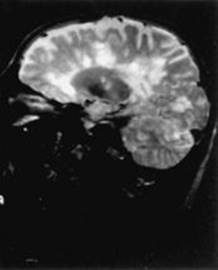
143. T2-weighted MRI brain imaging of a patient reveals the scan pictured below. The patient is a 36-year-old woman who presented to the emergency room with recurrent episodes of unilateral arm and leg weakness and numbness with gait instability. The treatment of first choice in this case would be:
A Intravenous ceftriaxone administration
B Intravenous immunoglobin therapy
C Plasmapheresis
D Sublingual aspirin and intravenous heparin therapy
E Intravenous corticosteroid therapy
144. A patient with borderline personality disorder and past suicide attempts calls you after a fight with her boyfriend. She has been cutting herself since the fight and is hearing voices. What is the best level of care for this patient at this time?
A Inpatient hospitalization
B Outpatient therapy
C Speak to her again in 5 days
D Extended inpatient stay (1+ months)
E Group therapy session
145. A 75-year-old woman is referred to your practice by an internist for depression. On initial examination you discover that the patient has recently just recovered from a heart attack. Which one of the following medications would be the best choice for this patient?
A Amitriptyline
B Doxepin
C Bupropion
D Methylphenidate
E Citalopram
146. Which one of the following is not a classic characteristic of neurofibromatosis type 1 (von Recklinghausen’s disease)?
A Café au lait spots and cutaneous neurofibromas
B Bilateral acoustic schwannomas
C Optic gliomas
D Lisch nodules
E Axillary or inguinal freckling
147. The sign that best differentiates between delirium and dementia is:
A Sleep disturbance
B Hallucinations
C Disorientation to place
D Violent behavior
E Alteration of consciousness
148. What is the first step towards treating a 23-year-old medical student who comes to your office with a complaint of insomnia?
A Prescribe zolpidem
B Prescribe benzodiazepines
C Prescribe diphenhydramine
D Restrict the use of the bed to sleep and intimacy only
E Obtain a sleep study
149. What is the American Psychiatric Association’s position on therapy to change the sexual orientation of homosexuals?
A This type of therapy should be encouraged
B Homosexuality is a medical disorder
C Only teens should be treated, before they become sexually active
D There is little data showing negative outcomes of such therapy
E No existing data supports doing this therapy
150. A 20-year-old college student is brought into the emergency room after a party. He has tenting of the skin on the backs of his hands, is nauseated and vomits, acts seductively towards the nursing staff, and thinks the security guards are out to kill him. He tells you: “The one with the red hair is out to slay me.” The emergency medical technician tells you the patient apparently collapsed while dancing at a “rave”. What substance has he most likely taken?
A Cannabis
B Ketamine
C Diacetylmorphine
D Methylenedioxyamphetamine
E Some form of volatile inhalant