
Approaches to aetiology in psychiatry
General issues relating to aetiology
Aetiological models
The historical development of ideas of aetiology
The contribution of scientific disciplines to psychiatric aetiology
Relationship of this chapter to those on psychiatric syndromes
Approaches to aetiology in psychiatry
Psychiatrists are concerned with aetiology in two ways. First, in everyday clinical work they try to discover the causes of the mental disorders presented by individual patients. Secondly, in seeking a wider understanding of psychiatry they are interested in aetiological evidence obtained from clinical studies, community surveys, or laboratory investigations. Correspondingly, the first part of this chapter deals with some general issues relating to aetiology in the assessment of the individual patient, while the second part deals with the various scientific disciplines that have been applied to the study of aetiology.
General issues relating to aetiology
Aetiology and intuitive understanding
When the clinician assesses an individual patient, he draws on a common fund of aetiological knowledge that has been derived from the study of groups of similar patients, but he cannot understand the patient in these terms alone. He also has to use everyday insights into human nature. For example, when assessing a depressed patient, the psychiatrist should certainly know what has been discovered about the psychological and neuro-chemical changes that accompany depressive disorders, and what evidence there is about the aetiological role of stressful events, and about genetic predisposition to depressive disorder. At the same time he will need intuitive understanding in order to recognize, for example, that this particular patient feels depressed because he has learned that his wife has cancer.
Common-sense ideas of this kind are an important part of aetiological formulation in psychiatry, but they must be used carefully if superficial explanation is to be avoided. Aetiological formulation can be done properly only if certain conceptual problems are clearly understood. These problems can be illustrated by a case history.
For 4 weeks a 38-year-old married woman became increasingly depressed. Her symptoms started soon after her husband left her, saying that he wanted to live by himself. In the past the patient’s mother had received psychiatric treatment on two occasions, once for a severe depressive disorder and once for mania; on neither occasion was there any apparent environmental cause for the illness. When the patient was 14 years old, her father went away to live with another woman, leaving his children with their mother. For several years afterwards the patient felt rejected and unhappy, but she eventually settled down. She later married, and she had two children, aged 13 and 10 years, at the time of her illness. Two weeks after leaving home the patient’s husband returned, saying that he had made a mistake and really loved his wife. Despite his return the patient’s symptoms persisted and worsened. She began to wake early, gave up her usual activities, and spoke at times of suicide.
When thinking about the causes of this woman’s symptoms, the clinician would first draw on knowledge of aetiology derived from scientific enquiries. Genetic investigations have shown that if a parent suffers from mania as well as depressive disorder, a predisposition to depressive disorder is particularly likely to be transmitted to the children. Therefore it is possible that this patient received this predisposition from her mother.
Clinical investigation has also provided some information about the effects of separating children from their parents. In the present case, the information is not helpful because it refers to people who were separated from their parents at a younger age than the patient. On scientific grounds there is no particular reason to focus on the departure of the patient’s father, but intuitively it seems likely that this was an important event. From everyday experience it is understandable that a woman should feel very upset if her husband leaves her. It is also understandable that she is likely to feel even more distressed if this event recapitulates a related distressing experience in her own childhood. Therefore the clinician would recognize intuitively that the patient’s depression is likely to be a reaction to the husband’s departure. The same sort of intuition might suggest that the patient would start to feel better when her husband came back. In the event she did not recover. Although her symptoms seemed understandable when her husband was away, they seemed less so after his return.
This simple case history illustrates some important aetiological issues in psychiatry:
• the complexity of causes
• the classification of causes
• the concept of stress
• the concept of psychological reaction
• the relative roles of intuition and scientific knowledge in aetiological formulations.
The complexity of causes in psychiatry
In psychiatry, the study of causation is complicated by three problems. These problems are encountered in other branches of medicine, but to a lesser degree.
Lack of temporal association
The first problem is that causes are often remote in time from the effects that they produce. For example, it is widely believed that childhood experiences partly determine the occurrence of emotional difficulties in adult life. It is difficult to test this idea, because the necessary information can only be gathered either by studying children and tracing them many years later, which is difficult, or by asking adults about their childhood experiences, which is unreliable.
Cause and effect
The second problem is that a single cause may lead to several effects. For example, being deprived of parental affection in childhood has been reported to predispose to antisocial behaviour, suicide, depressive disorder, and several other disorders. Conversely, a single effect may arise from several causes. The latter can be illustrated either by different causes in different individuals or by multiple causes in a single individual. For example, learning disability (a single effect) may occur in several children, but the cause may be a different genetic abnormality in each child. On the other hand, depressive disorder (a single effect) may occur in one individual through a combination of causes, such as genetic factors, adverse childhood experiences, and stressful events in adult life.
Indirect mechanisms
The third problem is that aetiological factors in psychiatry rarely exert their effects directly. For example, the genetic predisposition to depression may be mediated in part through psychological factors which make it more likely that the individual concerned will experience adverse life events. Thus aetiological effects are usually mediated through complex intervening mechanisms which also need to be investigated and understood.
The classification of causes
A single psychiatric disorder, as just explained, may result from several causes. For this reason a scheme for classifying causes is required. A useful approach is to divide causes chronologically into those that are predisposing, precipitating, and maintaining.
Predisposing factors
These are factors, many of them operating from early in life, that determine a person’s vulnerability to causal factors acting close to the time of the illness. They include genetic endowment and the environment in utero, as well as physical, psychological, and social factors in infancy and early childhood. The term ‘constitution’ is often used to describe the mental and physical make-up of a person at any point in their life. This make-up changes as life goes on under the influence of further physical, psychological, and social influences. Some writers restrict the term constitution to the make-up at the beginning of life, while others also include characteristics that are acquired later (this second usage is adopted in this book). The concept of constitution includes the idea that a person may have a predisposition to develop a disorder (e.g. schizophrenia) even though the latter never manifests itself. From the standpoint of psychiatric aetiology, one of the important parts of the constitution is the personality.
When the aetiology of an individual case is formulated, the personality is always an essential element. For this reason, the clinician should be prepared to spend sufficient time talking to the patient and to people who know them in order to build up a clear picture of their personality. This assessment often helps to explain why the patient responded to certain stressful events, and why they reacted in a particular way. The obvious importance of personality in the individual patient contrasts with the small amount of relevant scientific information so far available. Therefore when evaluating personality it is particularly important to acquire sound clinical skills through supervised practice.
Precipitating factors
These are events that occur shortly before the onset of a disorder and which appear to have induced it. They may be physical, psychological, or social. Whether they produce a disorder at all, and what kind of disorder, depends partly on constitutional factors in the patient (as mentioned above). Examples of physical precipitants include cerebral tumours and drugs. Psychological and social precipitants include personal misfortunes such as the loss of a job, and changes in the routine of life, such as moving home. Sometimes the same factor can act in more than one way. For example, a head injury can induce psychological disorder either through physical changes in the brain or through its stressful implications for the patient.
Maintaining factors
These factors prolong the course of a disorder after it has been provoked. When planning treatment, it is particularly important to pay attention to these factors. The original predisposing and precipitating factors may have ceased to act by the time that the patient is seen, but the maintaining factors may well be treatable. For example, in their early stages many psychiatric disorders lead to secondary demoralization and withdrawal from social activities, which in turn help to prolong the original disorder. It is often appropriate to treat these secondary factors, whether or not any other specific measures are carried out. Maintaining factors are also called perpetuating factors.
The concept of stress
Discussions about stress are often confusing because the term is used in two ways. First, it is applied to events or situations, such as working for an examination, which may have an adverse effect on someone. Secondly, it is applied to the adverse effects that are induced, which may involve psychological or physiological change. When considering aetiology it is advisable to separate these components.
The first set of factors can usefully be called stressors. They include a large number of physical, psychological, and social factors that can produce adverse effects. The term is sometimes extended to include events that are not experienced as adverse at the time, but which may still have adverse long-term effects. For example, intense competition may produce an immediate feeling of pleasant tension, although it may sometimes lead to unfavourable long-term effects.
The effect on the person can usually be called the stress reaction, to distinguish it from the provoking events. This reaction includes autonomic responses (e.g. a rise in blood pressure), endocrine changes (e.g. the secretion of adrenaline and noradrenaline), and psychological responses (e.g. a feeling of being keyed up). Much current neurobiology research is involved in studying the effects of stress on the brain, and in particular how stress affects the mechanisms involved in the regulation of mood and processing of emotional information (see Chapter 8).
The concept of a psychological reaction
As already mentioned, it is widely recognized that psychological distress can occur as a reaction to unpleasant events. Sometimes the association between event and distress is evident—for example, when a woman becomes depressed after the death of her husband. In other cases it is far from clear whether the psychological disorder is really a reaction to an event, or whether the two have coincided fortuitously—for example, when a person becomes depressed after the death of a distant relative.
Jaspers (1963, p. 392) suggested three criteria for deciding whether a psychological state is a reaction to a particular set of events:
• The events must be adequate in severity and closely related in time to the onset of the psychological state.
• There must be a clear connection between the nature of the events and the content of the psychological disorder (in the example just given, the person should be preoccupied with ideas concerning their distant relative).
• The psychological state should begin to disappear when the events have ceased (unless, of course, it can be shown that perpetuating factors are acting to maintain it).
These three criteria are useful in clinical practice, although they can be difficult to apply (particularly the second criterion).
Understanding and explanation
As already mentioned, aetiological statements about individual patients must combine knowledge derived from research on groups of patients with intuitive understanding derived from everyday experience. Jaspers (1963, p. 302) has called these two ways of making sense of psychiatric disorders ‘Erklären’ and ‘Verstehen’, respectively.
In German, these terms mean ‘explanation’ and ‘understanding’, respectively, and they are usually translated as such in English translations of Jaspers’ writing. However, Jaspers used them in a special sense. He used ‘Erklären’ to refer to the sort of causative statement that is sought in the natural sciences. It is exemplified by the statement that a patient’s aggressive behaviour has occurred because he has a brain tumour. He used ‘Verstehen’ to refer to psychological understanding, or the intuitive grasp of a natural connection between events in a person’s life and his psychological state. In colloquial English, this could be called ‘putting oneself in another person’s shoes.’ It is exemplified by the statement ‘I can understand why the patient became angry when her children were shouted at by a neighbour.’
These distinctions are reasonably clear when we consider an individual patient, but confusion sometimes arises when attempts are made to generalize from insights obtained in a single case to widely applicable principles. Understanding may then be mistaken for explanation. Jaspers suggested that some psychoanalytical ideas are special kinds of intuitive understanding that are derived from the detailed study of individuals and then applied generally. They are not explanations that can be tested scientifically. They are more akin to insights into human nature that can be gained from reading great works of literature. Such insights are of great value in conducting human affairs. It would be wrong to neglect them in psychiatry, but equally wrong to see them as statements of a scientific kind.
The aetiology of a single case
How to make an aetiological formulation was discussed in Chapter 3 (see p. 64). An example was given of a woman in her thirties who had become increasingly depressed. The formulation showed how aetiological factors could be grouped under headings of predisposing, precipitating, and perpetuating factors. It also showed how information from scientific investigations (in this case genetics) could be combined with an intuitive understanding of personality and the likely effects of family problems on the patient. The reader may find it helpful to re-read the formulation on p. 64 before continuing with this chapter.
Aetiological models
Before considering the contribution that different scientific disciplines can make to psychiatric aetiology, attention needs to be given to the kinds of aetiological model that have been employed in psychiatry. A model is a device for ordering information. Like a theory, it seeks to explain certain phenomena, but it does so in a broad and comprehensive way that cannot readily be proved false.
Reductionist and non-reductionist models
Two broad categories of explanatory model can be recognized. Reductionist models seek to understand causation by tracing back to increasingly simple early stages. Examples include the ‘narrow’ medical model, which is described below, and the psychoanalytic model. This type of model can be exemplified by the statement that the cause of schizophrenia lies in disordered neurotransmission in a specific area of the brain.
Non-reductionist models try to relate problems to wider rather than narrower issues. The explanatory models that are used in sociology are generally of this kind. In psychiatry, this type of model can be exemplified by the statement that the cause of a patient’s schizophrenia lies in his family; the patient is the most conspicuous element in a disordered group of people. In the same way it can be asserted that certain depressive states are associated with indices of social deprivation and isolation, and can be best understood as being caused by these factors.
The neuroscience approach
The technical and conceptual advances in brain sciences have led to what is often called the neuroscience approach. Kandel (1998) has outlined the key assumptions underlying this approach to aetiology, which can be summarized as follows.
• All mental processes derive from operations of the brain. Thus all behavioural disorders are ultimately disturbances of brain function, even where the original ‘cause’ is clearly environmental.
• Genes have important effects on brain function and therefore exert significant control over behaviour.
• Social and behavioural factors exert their effects on the brain in part through changes in gene expression. Changes in gene expression leading to altered patterns of synaptic connectivity underlie the ability of experiences such as learning and psychotherapy to change behaviour.
The latter concept derives from the ability of a wide range of environmental stimuli to modulate gene expression by various mechanisms, including epigenetic modifications (see below). Thus while genes coding for particular proteins are inherited, environmental and developmental influences are involved in determining whether and to what extent a particular gene is expressed. This provides a plausible mechanism by which nature and nurture interact in the production of a behavioural phenotype.
The neuroscience approach therefore seeks to comprehend the role of social, family, and personal factors in behaviour by relating them to changes in brain function. For example, in understanding the effect of childhood neglect on liability to adult depression, it is important to find out how adverse childhood experiences might alter relevant brain mechanisms (e.g. the endocrine response to stress), and how this abnormality might predispose to depression when the individual is exposed to difficulties in adulthood. Thus, although a neuroscience approach encompasses the importance of social and personal factors, it seeks to understand their consequences in a reductionist way.
Medical models
Several models are used in psychiatric aetiology, but the so-called medical model is the most prominent one. It represents a general strategy of research that has proved useful in medicine, particularly in studying infectious diseases. A disease entity is identified in terms of a consistent pattern of symptoms, a characteristic clinical course, and specific biochemical and pathological findings (see Chapter 2regarding models of disease). When an entity has been identified in this way, a set of necessary and sufficient causes is sought. In the case of tuberculosis, for example, the tubercle bacillus is the necessary cause, but it is not by itself sufficient. However, the tubercle bacillus in conjunction with either poor nutrition or low resistance is sufficient cause.
The importance of social and cultural factors in the presentation and course of illness is now well recognized in general medicine, and modern medical models are therefore considerably broader than those based on the elucidation of the mechanism of infectious disease. Modern medical models also recognize that much illness is characterized by quantitative rather than qualitative deviations from normal (e.g. high blood pressure). This applies to certain disorders in psychiatry, particularly anxiety and milder depressive disorders, which can therefore be accommodated in a broad medical model.
Difficulties with the medical model arise particularly in relation to disorders that are characterized principally by abnormalities of conduct and social behaviour, such as antisocial behaviour and substance misuse. As mentioned above, current neuroscience approaches would seek to understand these disorders through changes in the relevant brain systems. This is because causal factors in abnormal social behaviour, such as environmental hardship and personal deprivation, must ultimately express their effects on behaviour through changes in brain mechanisms.
Although the latter view appears theoretically valid and increases the aetiological power of the medical model, the key decision for both clinician and policy maker is at what level the disorder is best understood and managed. For example, it is possible to understand problems in substance misuse as arising from a defect in brain reward systems which, in a vulnerable individual, results in ‘normal’ experimentation with illicit substances leading to substance misuse, with adverse personal and social consequences. Equally, one can see excessive drug misuse in society as a ‘symptom’ of social deprivation and family disruption (see Chapter 17). Both kinds of aetiology can be comprehended in a broad medical model, but different forms of intervention would result.
The behavioural model
As explained above, certain disorders that psychiatrists treat, particularly those defined in terms of abnormal behaviour, do not fit readily into the medical model. The latter include deliberate self-harm, the misuse of drugs and alcohol, and repeated acts of delinquency. The behavioural model is an alternative way of comprehending these disorders. In this model the disorders are explained in terms of factors that determine normal behaviour. These include drives, reinforcements, social and cultural influences, and internal psychological processes such as attitudes, beliefs, and expectations. The behavioural model predicts that there will not be a sharp distinction between the normal and the abnormal, but a continuous gradation. This model can therefore be a useful way of considering many of the conditions that are seen by psychiatrists.
Although the behavioural model is mainly concerned with psychological and social causes, it does not exclude genetic, physiological, or biochemical causes. This is because normal patterns of behaviour are partly determined by genetic factors, and because psychological factors such as reinforcement have a basis in physiological and biochemical mechanisms. Also, the behavioural model employs both reductionist and non-reductionist explanations. For example, abnormalities of behaviour can be explained in terms of abnormal conditioning (a reductionist model), or in terms of a network of social influences.
Box 5.1 Psychoanalysis
Psychoanalysis is derived from clinical experience rather than from basic sciences, and consists of elaborate theories of both normal and abnormal mental development. Compared with experimental psychology it is more concerned with irrational aspects of mental activity.
Psychoanalytic theories are derived from data obtained in the course of psychoanalytic treatment, and relate to the patient’s thoughts, dreams, and fantasies, as well as their memories of childhood experiences and relationships with carers and siblings. Therefore psychoanalytic theories are forms of intuitive understanding (‘Verstehen’) rather than scientific explanation (‘Erklären’) (see p. 86).
Freud developed a number of ideas about the unconscious mind, from which he believed all mental processes originated. The unconscious mind has three key features that are important in the genesis of psychological problems.
1. It is divorced from reality.
2. It is dynamic and contains powerful forces.
3. It is in conflict with the conscious mind.
Freud believed that the unconscious mind could be probed by dream analysis and free association. The manifest content of a dream can be traced back to a latent content which is an infantile wish. This wish is disguised by dreamwork, which through various psychological mechanisms transforms the latent content into a manifest form that is more acceptable to consciousness.
The unconscious mind is the seat of powerful instinctual drives (e.g. sexual and aggressive impulses). The forces in the unconscious mind struggle against the conscious mind, which can give rise to anxiety. This anxiety can be reduced by a variety of defence mechanisms which can be discerned in the behaviour of healthy people as well as those with psychological disorders (see p. 155).
Sexual impulses are present from the earliest stages of child development, and there is a progression through different stages of organization (oral, anal, and genital) as the child grows. Failure to pass through these stages effectively can lead to sexual energy (libido) becoming fixated, which results in the individual exhibiting infantile patterns of behaviour or regressing to them when under stress. The object of libido also changes with development, first focusing on the self and then focusing on the mother. In the course of this maternal attachment, boys experience angry feelings towards their father (the Oedipus complex), while girls develop reverse attachments. Difficulties in resolving these conflicted attachments can give rise to problems in interpersonal relationships later in life.
Freud’s theories were developed by many others. Melanie Klein’s work, which addresses pre-Oedipal aggressive and sexual drives in a theory of object relations, has been influential in the UK.
Developmental models
Medical and behavioural models incorporate the idea of predisposing as well as precipitating causes (i.e. the idea that past events may determine whether or not a current cause gives rise to a disorder). Some models place even more emphasis on past events in the form of a sequence of experiences leading to the present disorder. This approach has been called the ‘life story’ approach to aetiology. One example is Freud’s psychoanalysis (see Box 5.1), and another is Meyer’s psychobiology. These ideas are considered further below.
Political models (‘anti-psychiatry’, ‘critical psychiatry’)
The models outlined above rely on a scientific approach to psychiatric aetiology. This implies that psychiatric disorders, like other medical conditions, can be studied and understood in an objective and empirical way using the methods of natural sciences. In the history of psychiatry this view has often been regarded as far from self-evident, and other conceptual frameworks have sometimes been advocated. For example, it was customary in the Middle Ages to explain mental illness in terms of demonic possession and witchcraft (see below). Over the last 50 years, however, criticisms of scientific approaches to aetiology have most often taken the view that psychiatric illness is defined by social and political imperatives, and represents at best a cultural value judgement and at worst an abusive means of social control.
Arguments of this nature were put forward strongly by the French philosopher, Michel Focault (1926–1984), and were further developed by psychiatrists such as RD Laing (1927–1989), who employed a phenomenological approach to argue that schizophrenia is an understandable response of an individual to a culture of exploitation and alienation. Lack of faith in a scientific approach to mental experience was exemplified by the psychiatrist Thomas Szasz, who commented that ‘There is no psychology; there is only biography and autobiography.’ These ideas are sometimes called ‘anti-psychiatry’ to emphasize their fundamental contrast with the medical models employed by conventional psychiatry.
Most psychiatrists have believed that these formulations do not advance the understanding of mental illness, and in fact provide rather poor explanations of the range of clinical psychopathology. For example, they seem unable to account for the existence of schizophrenia in all human societies (see Chapter 11). However, political perceptions of psychiatry are important because they have powerful effects on how mentally ill people are treated and on what services are provided (see Chapter 21). Furthermore, there is no doubt that political abuse of psychiatric patients has occurred, as demonstrated by the cooperation of many German psychiatrists with the euthanasia programmes of the Nazi regime (Torrey and Yolken, 2010).
While this is an extreme and abhorrent example, political analyses of psychiatric practice highlight the need for the rights of patients to be respected and their experiences understood in a personal and social context as outlined above. (For a discussion of the limits of scientific approaches to psychiatric illness, see Thomas and Bracken, 2004.)
The historical development of ideas of aetiology
From the earliest times, theories of the causation of mental disorder have recognized both somatic and psychological influences. Greek medical literature referred to the causes of mental disorders, mainly in the Hippocratic writings (fourth century BC). Serious mental illness was ascribed mainly to physical causes, which were represented in the theory that health depended on a correct balance of the four body ‘humours’ (blood, phlegm, yellow bile, and black bile). Melancholia was ascribed to an excess of black bile. Most of the less severe psychiatric disorders were thought to have supernatural causes and to require religious healing. An exception was hysteria, which was thought to be physically caused by the displacement of the uterus from its normal position. Nowadays hysteria is attributed mainly to psychological causes.
Roman physicians generally accepted the causal theories of Greek medicine, and developed them in some respects. Galen accepted that melancholia was caused by an excess of black bile, but suggested that this excess could result either from cooling of the blood or from overheating of yellow bile. Phrenitis, the name given to an acute febrile condition with delirium, was thought to result from an excess of yellow bile.
Throughout the Middle Ages these early ideas about the causes of mental illness were largely neglected, although they were maintained by some scholars, such as Bartho-lomeus Anglicus. The causes of mental illness were now formulated in theological terms of sin and evil, with the consequence that many mentally ill people were persecuted as witches. It was not until the middle of the sixteenth century that beliefs in the supernatural and witchcraft were strongly rejected as causes of mental disorder, notably by the Flemish writer Johan Weyer (1515–1588) in his book De Praestigiis Demonum, published in 1563. Earlier, the renowned physician Paracelsus (1491–1541) had emphasized the natural causes of mental illness.
In the seventeenth and eighteenth centuries, a more scientific approach to the causation of mental illness developed as physicians became interested in mental disorders, mainly hysteria and melancholia. The English physician Thomas Willis attributed melancholia to ‘passions of the heart’, but considered that madness (illnesses with thought disorder, delusions, and hallucinations) was due to a ‘fault of the brain.’ Willis realized that this fault was not a recognizable gross structural lesion, but a functional abnormality. In the terminology of the time, he referred to a disorder of the ‘vital spirits’ that were thought to account for nervous action. He also pointed out that hysteria could not be caused by a displacement of the womb, because the organ is firmly secured in the pelvis.
Another seventeenth-century English physician, Thomas Sydenham, rejected the alternative theory that hysteria was caused by a functional disorder of the womb (‘uterine suffocation’), because he had observed the condition in men. Despite this renewed medical interest in the causes of mental disorder, the most influential seventeenth-century treatise was written by a clergyman, Robert Burton. This work, The Anatomy of Melancholy (1621), described in detail the psychological and social causes (such as poverty, fear, and solitude) that were associated with melancholia and seemed to cause it.
Aetiology depends on nosology. Unless it is clear how the various types of mental disorder relate to one another, little progress can be made in understanding causation. From his observations of patients with psychiatric disorders, the Italian physician, Giovanni Battista Morgagni, became convinced that there was not one single kind of madness, but many different ones (Morgagni, 1769). Further attempts at classification followed. One of the best known was proposed by William Cullen, who included a category of neurosis for disorders not caused by localized disease of the nervous system.
The idea that individual mental disorders are caused by lesions of particular brain areas can be traced back to the theory of phrenology proposed by Franz Gall (1758–1828) and his pupil Johann Spurzheim (1776–1832). Gall proposed that the brain was the organ of the mind, that the mind was made up of specific faculties, and that these faculties originated in specific brain areas. He also proposed that the size of a brain area determined the strength of the faculty that resided in it, and that the size of brain areas was reflected in the contours of the overlying skull. Thus the shape of the head reflected a person’s psychological make-up. Although the last steps in Gall’s argument were erroneous, the ideas of cerebral localization were to develop further. An increased interest in brain pathology led to theories that different forms of mental disorder were associated with lesions in different parts of the brain.
It had long been observed that serious mental illness ran in families, but in the nineteenth century this idea took a new form. Benedict-Augustin Morel (1809–1873), a French psychiatrist, put forward ideas that became known as the ‘theory of degeneration.’ He proposed not only that some mental illnesses were inherited, but also that environmental influences (such as poor living conditions and the misuse of alcohol) could lead to physical changes that could be transmitted to the next generation. Morel also proposed that, as a result of the successive effect of environmental agents in each generation, illnesses appeared in increasingly severe forms in successive generations. It was inherent in these ideas that mental disorders did not differ in kind but only in severity, with neuroses, psychoses, and mental handicap being increasingly severe manifestations of the same inherited process.
These ideas were consistent with the accepted theories of the inheritance of acquired characteristics, and they were widely accepted. They had the unfortunate effect of encouraging a pessimistic approach to treatment. They also supported the Eugenics Movement, which held that the mentally ill should be removed from society in order to prevent them from reproducing. These developments are an important reminder that aetiological theories may give rise to undesirable attitudes to the care of patients.
Mid-nineteenth-century views of the causation of mental illness can be judged from the widely acclaimed textbooks of Jean-Étienne Esquirol, a French psychiatrist, and of Wilhelm Griesinger, a German psychiatrist. Esquirol (1845) focused on the causes of illness in the individual patient, and was less concerned with general theories of aetiology. He recorded psychological and physical factors, which he believed to be significant in individual cases, and he distinguished between predisposing and precipitating causes. He regarded heredity as the most important of the predisposing causes, but he also stressed that predisposition was acted on by psychological causes and by social (at that time called ‘moral’) causes such as domestic problems, ‘disappointed love’, and reverses of fortune. Important physical causes of mental disorder included epilepsy, alcohol misuse, excessive masturbation, childbirth and lactation, and suppression of menstruation. Esquirol also observed that age influenced the type of illness. Thus dementia was not observed among the young, but mania was uncommon in old age. He recognized that personality was often a predisposing factor.
In Pathology and Therapy of Mental Disorders, which was first published in 1845, Griesinger maintained that mental illness was a physical disorder of the brain, and he considered at length the neuropathology of mental illness. He paid equal attention to other causes, including heredity, habitual drunkenness, ‘domestic unquiet’, disappointed love, and childbirth. He emphasized the multiplicity of causes when he wrote:
A closer examination of the aetiology of insanity soon shows that in the great majority of cases it was not a single specific cause under the influence of which the disease was finally established, but a complication of several, sometimes numerous causes, both predisposing and exciting. Very often the germs of the disease are laid in those early periods of life from which the commencement of the formation of character dates. It grows by education and external influences.
(Griesinger, 1867, p. 130)
British views on aetiology in the late nineteenth century can be judged from A Manual of Psychological Medicine by Bucknill and Tuke (1858), and from The Pathology of Mind by Henry Maudsley (1879). Maudsley described the causes of mental disorder in terms similar to those of Griesinger. Thus causes were multiple, while predisposing causes (including heredity and early upbringing) were as important as the more obvious proximal causes. Maudsley held that mistakes in determining causes were often due to ‘some single prominent event, which was perhaps one in a chain of events, being selected as fitted by itself to explain the catastrophe. The truth is that in the great majority of cases there has been a concurrence of steadily operating conditions within and without, not a single effective cause’ (Maudsley, 1879, p. 83).
Although these nineteenth-century writers and teachers of psychiatry emphasized the multiplicity of causes, many practitioners focused narrowly on the findings of genetic and pathological investigations, and adopted a pessimistic approach to treatment. However, Adolf Meyer (1866–1950), a Swiss psychiatrist who worked mainly in the USA, emphasized the role of psychological and social factors in the aetiology of psychiatric disorder. Meyer applied the term psychobiology to this approach, in which a wide range of previous experiences were considered and then common-sense judgements used to decide which experiences might have led to the present disorder. Meyer acknowledged the importance of heredity and brain disorder, but emphasized that these factors were modified by life experiences which often determined whether or not a particular disorder would be clinically expressed. Meyer’s approach remains the basis of the evaluation of aetiology for the individual patient (see p. 83).
The aetiological theories considered so far were mainly concerned with the major mental illnesses. Less severe disorders, particularly those that came to be called neurosis, hysteria, and hypochondriasis, and milder states of depression, were treated mainly by physicians. Pierre Charcot, a French neurologist, carried out extensive studies of patients with hysteria and of their response to hypnosis. He believed that hysteria resulted from a functional disorder of the brain and could be treated by hypnosis. In the USA, Weir Mitchell proposed that conditions akin to mild chronic depression were due to exhaustion of the nervous system—a condition he called neurasthenia.
In Austria, another neurologist, Sigmund Freud, tried to develop a more comprehensive explanation of nervous diseases, first of hysteria and then of other conditions. After an initial interest in physiological causes, Freud proposed that the causes were psychological, but hidden from the patient because they were in the unconscious part of the mind. Freud took a developmental approach to aetiology, believing that the seeds of adult disorder lay in the process of child development (see below). In France, Pierre Janet developed an alternative psychological explanation, which was based on variations in the strength of nervous activity and on narrowing of the field of consciousness.
Interest in psychological explanations of the whole range of mental disorders grew as neuropathological and genetic studies failed to yield new insights. Freud and his followers attempted to extend their theory of the neuroses to explain the psychoses. Although the psychological theory was elaborated, no new objective data were obtained about the causes of severe mental illness. Nevertheless, the theories provided explanations which some psychiatrists found more acceptable than an admission of ignorance. Psychoanalysis became increasingly influential, particularly in American psychiatry, where it predominated until the 1970s. Since that time there has been renewed interest in genetic, biochemical, and neuropathological causes of mental disorder—an approach that has become known as biological psychiatry (Guze, 1989).
Perhaps the most important lesson to learn from this brief overview of the history of ideas on the causation of mental disorder is that each generation bases its theories of aetiology on the scientific approaches that are most active and plausible at the time. Sometimes psychological ideas prevail, sometimes neuropathological ones, and sometimes genetic ones. Throughout the centuries, however, observant clinicians have been aware of the complexity of the causes of psychiatric disorders, and have recognized that neither aetiology nor treatment should focus narrowly on the scientific ideas of the day. Instead, the approach should be broader, encompassing whatever psychological, social, and biological factors seem to be most important in the individual case. Modern psychiatrists are working in an era of rapid development of the neurosciences, but they need to keep the same broad clinical perspective of aetiology while assimilating any real scientific advances.
The contribution of scientific disciplines to psychiatric aetiology
The main groups of disciplines that have contributed to the knowledge of psychiatric aetiology are shown in Table 5.1. In this section each group is discussed in turn, and the following questions are asked:
• What sort of problem in psychiatric aetiology can be answered by each discipline?
• How, in general, does each discipline attempt to answer the questions?
• Are any particular difficulties encountered when applying its methods to psychiatric disorders?
Clinical descriptive studies
Before reviewing more elaborate scientific approaches to aetiology, attention is drawn to the continuing value of simple clinical investigations. Psychiatry was built on such studies. For example, the view that schizophrenia and the mood disorders are likely to have separate causes depends ultimately on the careful descriptive studies and follow-up enquiries carried out by earlier generations of psychiatrists.
Table 5.1 Scientific disciplines that contribute to psychiatric aetiology
|
Clinical descriptive studies |
|
Epidemiology |
|
Social sciences |
|
Experimental and clinical psychology |
|
Genetics |
|
Biochemical studies |
|
Pharmacology |
|
Endocrinology |
|
Physiology |
|
Neuropathology |
Anyone who doubts the value of clinical descriptive studies should read the paper by Aubrey Lewis on ‘melancholia’ (Lewis, 1934). This paper describes a detailed investigation of the symptoms and signs of 61 cases of severe depressive disorder. It provided the most complete account in the English language and it remains unsurpassed. It is an invaluable source of information about the clinical features of depressive disorders untreated by modern methods. Lewis’s careful observations drew attention to unsolved problems, including the nature of retardation, the relationship of depersonalization to affective changes, the presence of manic symptoms, and the validity of the classification of depressive disorders into reactive and endogenous groups. None of these problems has yet been solved completely, but the analysis by Lewis was important in focusing attention on them.
Although many opportunities for this kind of research have been taken already, it does not follow that clinical investigation is no longer worthwhile. For instance, the study by Judd et al. (2002) described in Chapter 6 (p. 126) is a recent example of how a clinical follow-up study can provide important insight into the aetiology of milder mood disorders in relation to bipolar disorder. Well-conducted clinical enquiries are likely to retain an important place in psychiatric research for many years to come.
Epidemiology
Epidemiology is the study of the distribution of a disease in space and time within a population, and of the factors that influence this distribution. Its concern is with disease in groups of people, not in the individual person.
Concepts and methods of epidemiology
The basic concept of epidemiology is that of rate, or the ratio of the number of instances to the numbers of people in a defined population. Instances can be episodes of illness, or people who are or have been ill. Rates may be computed on a particular occasion (point prevalence) or over a defined interval (period prevalence).
Other concepts include inception rate, which is based on the number of people who were healthy at the beginning of a defined period but became ill during it, and lifetime expectation or risk, which is based on an estimate of the number of people who could be expected to develop a particular illness in the course of their whole life. In cohort studies, a group of people are followed for a defined period of time in order to determine the onset of or change in some characteristic with or without previous exposure to a potentially important agent (e.g. lung cancer and smoking).
Three aspects of method are particularly important in epidemiology:
• defining the population at risk
• defining a case
• finding cases.
It is essential to define the population at risk accurately. Such a population can be all the people living in a limited area (e.g. a country, an island, or a catchment area), or a subgroup chosen by age, gender, or some other potentially important defining characteristic.
Defining a case is the central problem of psychiatric epidemiology. It is relatively easy to define a condition such as Down’s syndrome, but until recently the reliability of psychiatric diagnosis has not been satisfactory. The development of standardized techniques for defining, identifying, rating, and classifying mental disorders (see pp. 29–33) has greatly improved the reliability and validity of epidemiological studies.
Two methods are used for case finding. The first is to enumerate all cases known to medical or other agencies (declared cases). Hospital admission rates may give a fair indication of rates of major mental illnesses, but not, for example, of most mood or anxiety disorders. Moreover, hospital admission rates are influenced by many variables, such as the geographical accessibility of hospitals, attitudes of doctors, admission policies, and the law relating to compulsory admissions.
The second method is to search for both declared and undeclared cases in the community. In community surveys, the best technique is often to use two stages—preliminary screening to detect potential cases with a self-rated questionnaire such as the General Health Questionnaire (Goldberg, 1972), followed by detailed clinical examination of potential cases with a standardized psychiatric interview.
Aims of epidemiological enquiries
In psychiatry, epidemiology attempts to answer three main kinds of question:
• What is the prevalence of psychiatric disorder in a given population at risk?
• What are the clinical and social correlates of psychiatric disorder?
• What factors may be important in aetiology?
Prevalence can be estimated in community samples or among people attending general practitioners or hospital cases. Studies of prevalence in different locations, social groups, or social classes can contribute to aetiology. Studies of associations between a disorder and clinical and social variables can do the same, and may be useful for clinical practice. For example, epidemiological studies have shown that the risk of suicide is increased in elderly men with certain characteristics, such as living alone, misusing drugs or alcohol, suffering from physical or mental illness, and having a family history of suicide.
Causes in the environment
Epidemiological studies of aetiology have been concerned with predisposing and precipitating factors, and with the analysis of the personal and social correlates of mental illness. Among predisposing factors, the influence of heredity has been examined in studies of families, twins, and adopted people, as described below in the section on genetics. Other examples are the influence of maternal age on the risk of Down’s syndrome, and the psychological effects of parental loss during childhood. Studies of precipitating factors include life-events research, which is described below in the section on the social sciences.
Epidemiological approaches to aetiology can be illustrated by the results of studies of environmental correlates of mental disorders. For example, it has been apparent for many years that schizophrenia is more common in urban environments, particularly in disadvantaged inner-city areas. This finding could be of aetiological importance or it could be a consequence of the experience of schizophrenia with, for example, people in the early stages of illness seeking isolation. In a study of this question, van Os et al. (2003) confirmed that the prevalence of psychosis increased linearly with the degree of urbanicity (overall odds ratio, 1.57; 95% CI, 1.30–1.89). This significant effect remained after adjustment for factors such as age, gender, education level, parental psychiatric history, and country of birth.
As expected, there was in addition an independent and highly significant influence of a family history of psychosis on the risk of an individual developing psychosis (odds ratio, 4.59; 95% CI, 2.41–8.74). Further analysis showed that the effect of urbanicity on increasing the risk of psychosis was much greater in individuals with a family history of psychosis than in those without such a history. These findings suggest an important interaction between gene and environment, such that the adverse environmental effects of urbanicity are expressed particularly in individuals with a genetic predisposition to psychosis.
Social sciences
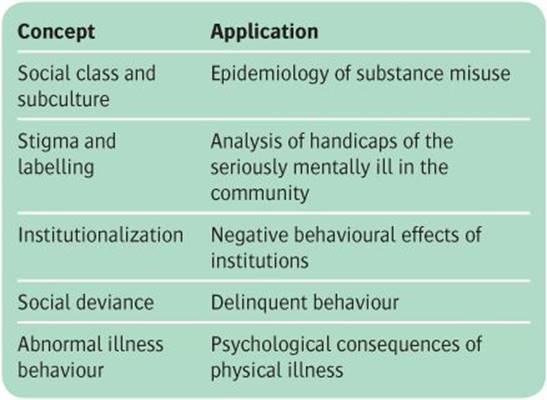
Many of the concepts used by sociologists are relevant to psychiatry (see Table 5.2). Unfortunately, some of these potentially fruitful ideas have been used uncritically—for example, in the suggestion that mental illness is no more than a label for socially deviant people, the so-called ‘myth of mental illness.’ This development points to the obvious need for sociological theories to be tested in the same way as other theories by collecting appropriate data.
Some of the concepts of sociology overlap with those of social psychology—for example, attribution theory, which deals with the way in which people interpret the causes of events in their lives, and ideas about self-esteem. An important part of research in sociology, namely the study of life events, uses epidemiological methods (see below).
Table 5.2 Some applications of social theory to psychiatry
Transcultural studies
Studies conducted in different societies help to make an important causal distinction. Biologically determined features of mental disorder are likely to be similar in different cultures, whereas psychologically and socially determined features are likely to be dissimilar. Thus the ‘core’ symptoms of schizophrenia have a similar incidence in people from widely different societies, which suggests that a common neurobiological abnormality is likely to be important in aetiology (see Chapter 11).
By contrast, depressive disorders have a wider range of prevalence. The Cross-National Collaborative Group (Weissman et al., 1996) found lifetime rates of depression ranging from 1.5% in Taiwan to 19% in Lebanon. In addition, there are variations in the clinical presentation of depressive states, with prominent somatic symptoms being more common in non-Western cultures. In all societies, however, sadness, joylessness, anxiety, and lack of energy are common symptoms (see Bhugra and Mastro-gianni, 2004).
The study of life events
Epidemiological methods have been used in social studies to examine associations between illness and certain kinds of events in a person’s life. In an early study, Wolff (1962) studied the morbidity of several hundred people over many years, and found that episodes of illness clustered at times of change in the person’s life. Holmes and Rahe (1967) attempted to improve on the highly subjective measures used by Wolff. They used a list of 41 kinds of life event (e.g. in the areas of work, residence, finance, and family relationships), and weighted each according to its apparent severity (e.g. 100 for the death of a spouse, and 13 for a spell of leave for a serviceman).
In later developments the study of the psychological impact of life events has been further improved in a number of ways.
• To reduce memory distortion, limits are set to the period over which events are to be recalled.
• Efforts are made to date the onset of the illness accurately.
• Attempts are made to exclude events that are not clearly independent of the illness (e.g. losing a job because of poor performance).
• Events are characterized in terms of their nature (e.g. losses or threats) as well as their severity.
• Data are collected with a semi-structured interview and rated reliably.
Although they are significant, life events taken in isolation may be less important than first appears to be the case. For example, in one study, events involving the loss or departure of a person from the immediate social field of the respondent (‘exit events’) were reported in 25% of patients with depressive disorders, but in only 5% of controls. This difference was significant at the 1% level and appears impressive, but Paykel (1978) questioned its real significance on the basis of the following calculation.
The incidence of depressive disorder is not accurately known, but if it is taken to be 2% for new cases over a 6-month period, a hypothetical population of 10 000 people would yield 200 new cases. If exit events occurred for 5% of people who did not become cases of depressive disorder, in the hypothetical population, exit events would occur for 490 of the 9800 people who were not new cases. Among the 200 new cases, exit events would occur for 25% (i.e. 50 people). Thus the total number of people experiencing exit events would be 490 plus 50, or 540, of whom only 50 (less than 1 in 10) would develop depressive disorders. Thus the greater part of the variance in determining depressive disorder must be attributed to something else. That is, life events trigger depression largely in predisposed individuals.
This idea leads us on to the consideration of vulnerability and protective factors (see below). However, at this point it is also worth noting that studies of genetic epidemiology have taken life events research a stage further by showing that the tendency to experience adverse life events is itself partly genetically determined. For example, individuals differ genetically in their liability to ‘select’ those environments that put them at relatively higher risk of experiencing adverse life events. Presumably this is one way in which the genetic vulnerability to depression may be expressed (see Kendler et al., 2004).
Vulnerability and protective factors
People may differ in their response to life events for three reasons. First, the same event may have different meanings for different people, according to their previous experience. For example, a family separation may be more stressful to an adult who has suffered separation in childhood. Thus adverse experiences that are remote in time from the adverse life event itself may predispose to the later development of psychiatric disorder.
The other reasons are that certain contemporary factors may increase vulnerability to life events or protect against them. Ideas about these last two factors derive largely from the work of Brown and Harris (1978), who found evidence that, among women, vulnerability factors include being responsible for the care of small children and being unemployed, while protection is conferred by having a confidant with whom problems can be shared. The idea of protective factors has been used to explain the observation that some people do not become ill even when they are exposed to severe adversities. Recent studies suggest that similar protective and vulnerability factors may also modify the response to life stress in other cultures. For example, in women living in an urban setting in Zimbabwe, the risk of depression following a severe adverse life event was substantially reduced by the presence of a supportive family network (Broadhead et al., 2001).
Causes in the family
It has been suggested that some mental disorders are an expression of emotional disorder within a whole family, not just a disorder in the person seeking treatment (the ‘identified patient’). Although family problems are common among people with psychiatric disorder, their general importance in aetiology is almost certainly overstated in this formulation, as emotional difficulties in other family members may be the result of the patient’s problems, rather than its cause. In addition, emotional difficulties in close relatives may result from shared genetic inheritance. For example, the parents of children with schizophrenia have an increased risk of schizotypal personality disorder (see p. 282). It seems more likely that family difficulties may modify the course of an established disorder. For example, high levels of ‘expressed emotion’ from family members increase the risk of relapse in patients with schizophrenia (see p. 285). However, in terms of aetiology, twin studies show that shared (family) environment is less important than shared genes in explaining familial clustering in most psychiatric phenotypes.
Migration
Moving to another country, or even to an unfamiliar part of the same country, is a life change that has been suggested as a cause of various kinds of mental disorder. A number of possible mechanisms have been identified:
• Selective migration. People in the early stages of an illness such as schizophrenia may migrate because of failing relationships in their country of origin.
• Process of migration. Events relating to the process of migration itself (e.g. physical and emotional trauma, prolonged waiting periods, exhaustion, and social deprivation and isolation) may cause several different kinds of stress-related disorder.
• Post-migration factors. Many factors come into play post migration which could influence the risk of developing mental illness. These include social adversity caused, for example, by racial discriminationand acculturation, in which the breakdown of traditional cultural structures results in loss of self-esteem and social support. Disparities between aspiration and achievement may also cause stress and depression. Finally, immigrants may be exposed to unfamiliar viruses, which could conceivably affect intrauterine development and predispose to psychiatric disorder in the next generation.
It is fairly well established that immigration is associated with higher rates of psychosis in several ethnic groups, but the mechanisms involved are unclear (see Chapter 11). The effects of immigration on other psychiatric disorders are less consistent, and some groups experience a relative improvement in mental health compared with their native populations. Clearly, refugees who have fled persecution are likely to have elevated rates of stress-related symptomatology, and many of them will meet the formal diagnostic criteria for post-traumatic stress disorder. However, it is important that such symptoms are interpreted sensitively in the context of the relevant cultural ways of dealing with trauma.
Experimental and clinical psychology
The psychological approach to psychiatric aetiology has a number of characteristic features:
• the idea of continuity between the normal and abnormal. This idea leads to investigations that attempt to explain psychiatric abnormalities in terms of processes that determine normal behaviour
• concern with the interaction between the person and their environment. The psychological approach differs from the social approach in being concerned less with environmental variables and more with the person’s ways of processing information that is coming from the external environment and from their own body
• an emphasis on factors that maintain abnormal behaviour. Psychologists are less likely to regard behavioural disorders as resulting from internal disease processes, and more likely to assume that persisting behaviour is maintained by abnormal coping mechanisms (e.g. by anxiety-reducing avoidance strategies).
Neuropsychology
Neuropsychological approaches share common ground with biological psychiatry in attempting to identify the neurobiological substrates for psychological phenomena. Various methodologies are employed, but the aim is to understand psychopathology in the context of brain science. Investigations may therefore involve animal experimental work or a range of human studies, including neurological patients with defined brain lesions and patients with psychiatric disorders.
For example, animal experimental models have shown that there is a crucial role for the amygdala in fear conditioning. Furthermore, because of its connections to the thalamus, the amygdala is activated by threatening stimuli and can produce autonomic fear responses before there is any conscious awareness of threat. LeDoux (1998) has related this circuitry to traumatic anxiety by proposing an imbalance between the implicit (unconscious) emotional memory system involving the thalamus and amygdala and the explicit (conscious) declarative memory system in the temporal lobe and hippocampus (see below).
In addition to animal experimental studies, neuropsychological investigations also involve different groups of human subjects. Valuable information may be gained from subjects who have suffered well-defined brain lesions. For example, patients with bilateral amygdala lesions can recognize the personal identity of faces, but not the facial expression of fear. This supports the notion that the amygdala is important in the processing of fear-related stimuli.
Current neuropsychological approaches also make extensive use of functional brain imaging techniques. This allows localization of the brain regions and neural circuitry involved in specific psychological processes, and facilitates comparisons between healthy subjects and patients who experience abnormalities in the processes concerned. For example, in a magnetic resonance imaging investigation it was found that when patients with depression were shown pictures of fearful facial expressions, they exhibited greater activation than controls in brain circuitry related to the processing of anxiety, including the amygdala. This increased activation was attenuated by treatment with antidepressant medication (Fu et al., 2004). This suggests that increased activity of the amygdala may play a role in the anxious preoccupations which are characteristic of depression, and that anti-depressants may act by decreasing amygdala function.
Information processing
The information theory approach to psychology proposes that the brain can be regarded as an information channel, which receives, filters, processes, and stores information from sense organs, and retrieves information from memory stores. This approach, which compares the brain to a computer, suggests useful ways of thinking about some of the abnormalities in psychiatric disorders. There are various mechanisms involved at different stages of information processing and therefore different points at which dysfunctional processing could give rise to psychiatric disorder. Two of these mechanisms are attention and memory, changes in which have been linked to psychiatric symptomatology.
Attention
Attention is viewed as an active process of selecting, from the mass of sensory input, the elements that are relevant to the processing that is being carried out at the time. There is evidence that attentional processes are disturbed in some psychiatric disorders. For example, anxious patients attend more than non-anxious controls to stimuli that contain elements of threat. This can be shown experimentally as a disruption of psychological performance where the task involves ignoring threat-related words. One example is the use of a modified Stroop test, where subjects have to name the colour of a background on which a word is written. When the word is a threatening one (e.g. ‘kill’), the latency taken to name the background colour is increased, and this increase is exaggerated in anxious subjects.
Subsequent studies have made two additional observations that are clinically important. First, the attentional bias in anxiety disorders is probably due to a failure to disengage attention from threat-related stimuli, rather than to excessive initial orientation towards them. Secondly, anxious subjects still produce greater responses to threat-related stimuli than controls, even when the stimuli are ‘masked’ so that they are received outside conscious awareness. Masking is achieved by presenting the stimulus for a very short time (less than 40 milliseconds), immediately followed by the longer presentation of another stimulus (the mask). The fact that masked stimuli elicit greater behavioural responses in anxious subjects suggests that the abnormal attentional mechanisms in anxiety involve the non-conscious threat-processing pathways associated with the amygdala (LeDoux, 1998). Although these findings are of interest, it is important to remember that they may in fact be a consequence of the anxiety disorder rather than a causal mechanism. However, even in the former case they could still play a role in maintaining symptomatology.
Memory
The information-processing model has been applied fruitfully to the study of memory. It suggests that there are different kinds of memory store, namely sensory stores in which sensory information is held for short periods while awaiting further processing, a short-term store in which information is held for only 20 seconds unless it is continually rehearsed, and a long-term store in which information is retained for long periods. There is a mechanism for retrieving information from this long-term store when required, and this mechanism could break down while memory traces are intact. This model has led to useful experiments. For example, patients with the amnestic syndrome (see p. 319) score better on memory tests that require recognition of previously encountered material than on tasks that require unprompted recall. This finding suggests a breakdown of information retrieval rather than of information storage.
It is well established that low mood facilitates recall of unhappy events. This can be demonstrated in healthy subjects undergoing a negative mood induction as well as depressed patients (Clark and Teasdale, 1982). Once again, it is not clear whether in depressed patients this phenomenon is a manifestation of depressed mood, or one of its causes. However, it is possible that it could play a role in maintaining the depressive state. More recent research has focused on the way that patients with mood disorders recall personal memories. For example, when asked to think of a specific event associated with the word ‘happy’, a depressed patient may give the response ‘when I used to go for long walks by myself’, which is a rather general reply. In contrast, a non-depressed person is more likely to respond quite specifically—for example, ‘when I went for a walk in Leighton Forest last Sunday with my family.’ This over-generalized style of memory recall is associated with a history of negative life events, and might also be linked to impaired problem-solving ability (Hermans et al., 2008).
As noted above, there is increasing interest in how explicit declarative and implicit emotional memories might be involved in the processing of traumatic events. It has been suggested that during highly traumatic experiences, explicit memory of the event is relatively poor whereas implicit (unconscious emotional memory) is vivid. This could give rise to the automatic intrusions and poor explicit memory that are seen in post-traumatic stress disorder (Amir et al., 2010).
Beliefs and expectations
The information-processing model also predicts that responses to information, including emotional responses, are determined by beliefs and expectations. This idea proposes that behaviour of all individuals is guided by their beliefs, and that psychopathology is associated with altered content of beliefs about the self and the world. Cognitive psychology assumes that such beliefs are organized into schemas. Schemas have important properties in relation to different kinds of psychopathology.
• They influence information processing, conscious thinking, emotion, and behaviour.
• Although not necessarily accessible to direct introspection, their content can usually be reconstructed in verbal terms (known as assumptions or beliefs).
• In patients with psychiatric disorders, these beliefs are dysfunctional, resistant to refutation, and play a part in the aetiology and maintenance of the disorder.
These ideas have been used in the development of cognitive therapy, where researchers aim to identify the dysfunctional beliefs associated with particular disorders and apply techniques that help the patient to re-evaluate and change them. For example, experimental work has shown that patients with panic disorder (see p. 197) have inaccurate expectations that sensory information about rapid heart action predicts an imminent heart attack. This expectation results in anxiety when the information is received, with the result that the heart rate accelerates further and a vicious circle of mounting anxiety is set up. Changing these expectations can alleviate panic attacks (see Chapter 9).
Ethology and evolutionary psychology
Many psychological studies involve quantitative observations of behaviour. In some of these investigations, use is made of methods that were originally developed in the related discipline of ethology. Complex behaviour is divided into simpler components and counted systematically. Regular sequences are noted as well as interactions between individuals (e.g. between a mother and her infant). Such methods have been used, for example, to study the effects of separating infant primates from their mothers, and to compare this primate behaviour with that of human infants separated in the same way.
More recent applications of ethology have used insights from the field of volutionary psychology to understand both normal and abnormal behaviour in an evolutionary context. This approach attempts to explain why various behaviours might have arisen in terms of evolutionary adaptation.
For example, because depressive states are ubiquitous in human societies, it is reasonable to ask what their adaptive value may be. One suggestion is that depression may reflect a form of subordination in animals who have lost rank in a social hierarchy. Rather than fighting a losing battle, the depressed individual withdraws and conserves their emotional resources for another day.
Such ideas are not readily testable experimentally, but can give rise to hypotheses concerning possible brain mechanisms. One theoretical difficulty is that psychiatric disorders often appear to represent maladaptive rather than adaptive behaviours. For example, Wolpert (1999) has drawn an analogy with cancer, in which the consequences of abnormal cell growth are clearly maladaptive and injurious to the individual. As cancer can be regarded as normal cell division ‘gone wrong’, so depression might be normal emotion (e.g. sadness) ‘gone wrong.’ From this viewpoint the question is not what is the adaptive value of the abnormal behaviour, but rather what is the adaptive value of the normal behaviour to which the abnormal state is related (for a review, see Varga, 2011).
Genetics
Most psychiatric disorders have a genetic contribution, and a significant amount of aetiological research is currently devoted to identifying the genes concerned, and the mechanisms by which they influence the risk of illness. The concepts, methods, and terminology of psychiatric genetics are complex, and will only be introduced briefly here. For more detailed coverage, the textbook by Owen et al. (2003) listed in the Further Reading section provides a useful starting point, and can be supplemented and updated by Thapar and McGuffin (2009) and Flint (2009).
The genetic contribution to psychiatric disorders
The first clue that a disorder has a genetic component usually comes from studying aggregation in families. In psychiatry, this is often complemented by adoption studies. However, it is twin studies that provide the most compelling evidence. Positive findings then provide the impetus to use techniques of molecular genetics to locate and identify the genes concerned.
Family studies
In family studies, the investigator determines the risk of a psychiatric condition among the relatives of affected individuals and compares it with the expected risk in the general population. The affected individuals are usually referred to as index cases or probands. Such studies require a sample that has been selected in a strictly defined way. Moreover, it is not sufficient to ascertain the current prevalence of a psychiatric condition among the relatives, because some of the population may go on to develop the condition later in life. For this reason, investigators use corrected figures known as expectancy rates (or morbid risks).
Family risk studies have been used extensively in psychiatry. Since families share environments as well as genes, these studies by themselves cannot clearly reveal the importance of genetic factors. However, by demonstrating that the disorder of interest shows familial clustering, they are a valuable first step, pointing to the need for other kinds of investigation.
Adoption studies
Adoption studies provide another useful means of separating genetic from environmental influences. The basic method is to compare rates of a disorder in biological relatives with those in adoptive relatives. Three main designs are used:
• adoptee study: the rate of disorder in the adopted-away children of an affected parent is compared with that in adopted-away children of healthy parents
• study of the adoptee’s family: the rate of disorder in the biological relatives of affected adoptees is compared with the rate in adopted relatives
• cross-fostering study: the rate of disorder is measured in adoptees who have affected biological parents but unaffected adoptive parents, and compared with the rate in adoptees who have healthy biological parents but affected adoptive parents.
Adoption studies are affected by a number of biases, such as the reasons why the child was adopted, the consequences of adoption itself, the non-random nature of the placement (i.e. efforts are made to match the characteristics of the child to those of the adoptive parents), and the effects on adoptive parents of raising a difficult child. They may also be limited by small sample sizes, especially as adoption becomes a rarer event in many countries. A more fundamental limitation is that adoption studies do not control for the prenatal environment, which may be important for disorders associated with intrauterine factors or birth complications. The value and limitations of adoption studies are perhaps best illustrated in schizophrenia research (see Chapter 11).
Twin studies
Twin studies are now the most important and widely used method for measuring the genetic contribution to a phenotype (an observable characteristic, such as a personality trait or a disorder). In twin studies the investigator seeks to separate genetic and environmental influences by comparing rates of concordance (i.e. where both co-twins have the same disorder) in uniovular (monozygotic, MZ) and binovular (dizygotic, DZ) twins (Kendler, 2001). If concordance for a psychiatric disorder is higher in MZ twins than in DZ twins, a genetic component is presumed; the greater the difference in concordance, the greater the heritability (see below). As well as showing the size of the genetic contribution, modern twin studies allow the environmental contribution to be divided into that which is unique to the individual (‘non-shared’) and that which reflects the common (‘shared’) environment experienced by the twins. This is usually done using a statistical approach called structural equation modelling.
Despite their key role in genetic epidemiology, the results of twin studies should not be accepted uncritically, as they make several assumptions, which are outlined in Box 5.2.
Heritability
Heritability is a measure of the extent to which a pheno-type is ‘genetic.’ More precisely, it refers to the proportion of the liability to the phenotype that is accounted for by additive genetic effects (Visscher et al., 2008). Recent estimates for common psychiatric disorders, based on population-based twin studies, are shown in Table 5.3 (see also Box 5.5). The data show that most psychiatric disorders—like most biological and behavioural traits—are heritable to a degree, and many show a substantial heritability.
Box 5.2 Considerations in the interpretation of twin studies in genetic epidemiology
• Has zygosity been accurately determined? Although MZ co-twins are virtually genetically identical, there can be minor differences.
• It is assumed that MZ and DZ twin pairs both experience the same degree of environmental sharing, and this ‘equal environments assumption’ appears to hold for most disorders. However, this may not necessarily be true, especially with regard to the prenatal environment; counter-intuitively, this is more dissimilar for MZ than for DZ co-twins. It should also be noted that gene and environment effects interact with each other, and so their effects are not simply additive. For example, parents with antisocial personality disorder may pass on genes which increase the risk that their children will inherit a liability to conduct disorder, but may also produce a family environment that itself increases the risk of behavioural disturbance.
• Most twin studies are now population based, rather than being derived from psychiatric case registers. This reduces the biases of the latter, but does mean that relatively few cases are detected even in large samples, resulting in estimates that can have wide confidence intervals. In addition, the reliability of diagnoses may be less certain.
• Being a twin might in itself affect the risk of developing a psychiatric disorder. However, there is little evidence of this.
Given the importance of the concept, some further comments on heritability estimates and their interpretation are relevant here.
• Estimates of heritability may vary in different populations under different environmental conditions.
• Heritability cannot be applied to an individual, only to a population. For example, some cases may not have a genetic predisposition, and are called phenocopies.
• Heritability does not give any indication as to the number, nature, or mechanisms of the genes involved.
• Heritability should not be confused with concordance, or with penetrance. A phenotype can show high concordance in MZ twins without being genetic (e.g. religious faith, or football team supported). Equally, modest concordance rates between MZ twins may still denote high heritability—it is the difference in concordance rates between MZ and DZ twins that denotes heritability. Penetrance refers to the likelihood that a specific phenotype occurs in people who carry a particular genotype. This does not always happen, probably reflecting protective genetic or environmental factors, or ‘stochastic factors’ (i.e. chance). Indeed, only a few conditions are fully penetrant.
The mode of inheritance
A useful intermediate step between finding that a disorder or other phentoype clusters in families and is heritable, and applying molecular methods to find the gene(s) responsible, is to determine the mode of inheritance. In essence, the question is whether the disorder has the characteristics of a Mendelian trait (i.e. whether the family history shows a classic Mendelian pattern of dominant, recessive, or X-linked inheritance). If it does, the disorder can be assumed to be caused by a single major gene. Indeed, in the rare instances where this pattern is observed in psychiatry, causative genes have in many cases already been discovered (e.g. for familial Alzheimer’s disease and Huntington’s disease). However, such examples are very rare. Most psychiatric disorders, like most common medical disorders, do not show classic Mendelian patterns of inheritance. They are called non-Mendelian or complex genetic disorders. No gene is either necessary or sufficient to cause the disorder; these susceptibility genes are best considered as risk factors that set the genetic threshold of vulnerability.
Table 5.3 Heritability estimates for selected psychiatric disorders
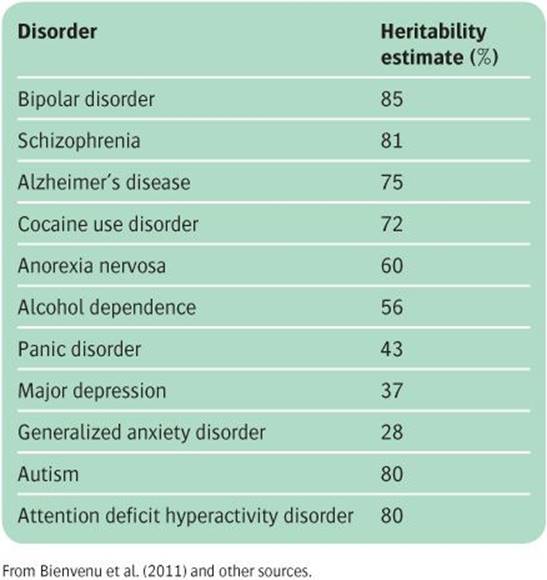
Within the large category of non-Mendelian disorders, the ‘genetic architecture’ of most psychiatric disorders (i.e. the number of genes and genetic variants, and how they operate to increase risk) is unclear (Frazer et al., 2009). Much of the heritability is thought to come from genetic variants (polymorphisms; see below) which are common in the population and which, although they are important epidemiologically, confer only a small increase in risk to the individual (the common disease–common variant model). There may also be genetic variants that are rare in the population, but which when present put the individual at a more substantial risk. The relative importance of these two forms of genetic variation in psychiatric disorders is unknown (McClellan and King, 2010).
Linkage and association
The distinction between Mendelian and non-Mendelian disorders has implications for how best to find the genes involved. The former are best studied using genetic linkage, in which affected and unaffected individuals within large families are compared with genetic markers to identify which region (locus) of which chromosome segregates with (shows linkage to) the illness. The result is usually expressed as the logarithm of the odds of detection of linkage (LOD score). A LOD score of 3 or more is conventionally regarded as reasonable evidence for linkage. Having identified the locus, the gene itself is then sought using other approaches.
In contrast, linkage does not work well in non-Mendelian disorders (largely because there is no one gene, nor therefore one locus, to be found). In this situation, genetic association is a more feasible strategy. The basic design involves comparing cases with unaffected, unrelated control subjects to find out whether the groups differ in the frequency of specific genetic polymorphisms (see below), measured using a chi-squared test or another similar test. If a significant difference is found, that variant is said to be genetically associated with the disorder concerned; whether the association reflects a true aetiological role of the variant in the disorder requires further study. Genetic association studies, which have become the workhorse of psychiatric genetics, are described further below.
For a discussion of linkage and association, and other methods for finding genes, see Altshuler et al. (2008) and Burmeister et al. (2008). An introduction to the relevant statistical issues can be found in Balding (2006).
Types of genetic variation and their psychiatric relevance
Genetic differences between individuals are of several different types. Each is relevant in the causation of psychiatric disorders.
Chromosomal (cytogenetic) abnormalities
Cytogenetics is concerned with identifying structural abnormalities in chromosomes. The abnormality can be in the number of chromosomes (aneuploidy), a deletion or duplication of part of a chromosome, or translocation of part of one chromosome to another. Cytogenetic abnormalities are usually suspected on the basis of a characteristic physical appearance. They are often associated with learning disability, and can be diagnosed relatively easily by clinical geneticists using karyotyping in which the chromosomes are visualized.
A good example in psychiatry is Down’s syndrome, which is usually caused by an additional copy of chromosome 21 (trisomy 21, an example of aneuploidy), although some result from translocation of part of chromosome 21 with a portion of another chromosome. Other examples involve the X and Y chromosomes, such as Turner’s syndrome (XO) and Klinefelter’s syndrome (XXY). Prominent examples of a more subtle cytogenetic disorder are fragile X syndrome, in which part of the X chromosome is abnormal, and velocardiofacial syndrome (VCFS), in which part of one copy of the long arm of chromosome 22 is deleted (see p. 694).
Although cytogenetic abnormalities are extremely rare causes of psychiatric disorders other than those involving learning disability, their occurrence provides important clues as to where susceptibility genes may be located. For example, it was the observation that Alzheimer’s disease occurs earlier and more commonly in Down’s syndrome which encouraged investigators to search chromosome 21 for genes that might cause the disease even in non-trisomic subjects. In this way the amyloid precursor protein (APP) gene (see Chapter 13) was identified. Similarly, the markedly increased frequency of psychosis in VCFS has focused attention on genes located in that region of chromosome 22 as predisposing to psychosis in general (see Chapter 11).
Mutations and polymorphisms
Most genetic variation between individuals, and their vulnerability to disease, is attributable to changes in one or a few nucleotides (bases) of DNA sequence. These are called mutations or polymorphisms. These and related terms are discussed in Box 5.3. Box 5.4 gives three examples of polymorphisms that are relevant to psychiatry.
Copy number variation
Between the extremes of a cytogenetic abnormality and a single nucleotide polymorphism (SNP), an intermediate type of genetic variation has recently become apparent, called structural variation or copy number variation (CNV). CNVs were discovered by chance, as described in the following section. They are duplications or deletions of stretches of DNA ranging in size from hundreds to millions of nucleotides, and they may be thought of as miniature chromosomal abnormalities. Indeed, there is no absolute distinction from the latter; VCFS is a large CNV. CNVs are a feature of the normal genome, but there is increasing evidence that they are also genetic risk factors for some psychiatric disorders, notably schizophrenia, autism, and learning disability. The pathogenicity of CNVs depends on their size, their co-occurrence with other variants, and their location in the genome. Large CNVs, and those that disrupt key genes, are more likely to be harmful. CNVs can either be inherited, or occur de novo (i.e. are not seen in either parent). For a review, see Wain et al. (2009).
Genetic association studies
We have already noted that multiple SNPs appear to underlie most of the genetic predisposition to most psychiatric disorders, and that their role is investigated using genetic association. Genetic association studies are of two main types.
Candidate gene studies
As noted earlier, an association study measures the frequency of a genetic polymorphism in a group of individuals who have the phenotype of interest, and compares it with the frequency in a group of matched healthy controls. Such studies have been widely used in psychiatry, as it is relatively easy to collect samples (DNA can be extracted from blood or a cheek swab), and then to genotype using methods based on the polymerase chain reaction (PCR). However, until recently, for technical and financial reasons, only a very limited number of genes and SNPs were studied at a time. A gene was usually selected for study because researchers considered it to be a candidate gene—that is, one which they considered to be a plausible candidate for contributing to the phenotype in question (e.g. a dopamine receptor for schizophrenia). Within the gene, the specific polymorphism was chosen because it was common (providing more statistical power), easy to measure, or has been the subject of a previous positive report.
Box 5.3 The terminology of molecular genetic variation: polymorphisms, alleles, and mutations
• No two people share precisely the same genome (the total genetic information contained on our 23 pairs of chromosomes, about 3 billion base pairs of DNA). Each person has a unique DNA sequence (with the exception of MZ twins). DNA sequence variants are called polymorphisms or allelic variants. They occur on average every 1000 base pairs (around 2 million SNPs in total), both within genes and in the stretches of DNA between genes. A given polymorphism can be rare, or both variants (alleles) can occur at equal frequency in the population.
• The term mutation can be used to refer to any very rare polymorphism (i.e. one present in less than 1% of people). However, it is often used in a more restricted way to denote a change in DNA sequence which is by definition harmful—that is, it causes a disease. This differs from polymorphisms in general, which, as noted above, often have no consequences at all; if they do, they can be beneficial, neutral, or harmful, and any effects are not deterministic but merely change the probability of a particular phenotype. The term mutation is therefore used largely with reference to Mendelian disorders.
• Most polymorphisms involve a change in a single nucleotide, hence the term single nucleotide polymorphism (SNP), although others involve insertions, deletions, or repeats of short stretches of DNA. Most polymorphisms have no known significance, especially those which are called conservative or non-coding substitutions, because they do not lead to a change in the amino acid encoded in the protein, either because the SNP is in non-coding parts of the DNA, or because of the degeneracy of the genetic code. However, some SNPs do have functional correlates, or affect disease risk, as discussed below.
• Because we have two copies of every autosomal gene (autosomes are chromosomes other than X or Y), one from each parent, at any point in the genome the two alleles may be identical (homozygosity), or they may differ (heterozygosity).
• SNPs that are close together tend to be inherited together. They are said to be in linkage disequilibrium, and the SNPs together comprise a haplotype. These properties and concepts are important for the conduct and interpretation of genetic association studies. For example, linkage disequilibrium means that if one SNP is measured and shown to be genetically associated with a disorder, it cannot be concluded that it is the biologically important variant; it might simply be a marker for another SNP within the haplotype that is in fact the important one. And the haplotype itself might be more significant than any one of its constituent SNPs. For a review of this subject, see Slatkin (2008).
There have been a huge number of candidate gene association studies in psychiatry. Some findings have proved robust, but most have not, reflecting several major limitations.
• The fundamental problem is that there are about 25 000 genes in the human genome, and over two million SNPs. The prior probability that any one gene, let alone any one polymorphism, is truly associated with the phenotype that one is measuring is therefore very small, unless there is already compelling evidence implicating the gene (which is rarely the case in psychiatry). There is therefore a high probability of obtaining a false-positive result, especially as these are more likely to be published than is a negative result.
• The groups that are being compared must have closely similar ethnic backgrounds, as the frequency of polymorphisms can vary markedly. For example, the COMT Met158 allele (see Box 5.3) varies from 1% to 60% in populations across the world. This can lead to artefactual group differences due to ethnic stratification. One method of avoiding this problem is not to use a control group, but to genotype the parents of the cases to see whether affected children inherit alleles more often than would be expected by chance. These family-based association studies often use the transmission disequilibrium test.
Box 5.4 Examples of polymorphisms in psychiatry
Apolipoprotein E4 in Alzheimer’s disease
The apoE gene on chromosome 19 exists in three common forms (alleles): apoE2, apoE3, and apoE4. ApoE3 is the commonest variant in the population. Since 1993, dozens of studies involving thousands of people have shown an unequivocal association between apoE4 and Alzheimer’s disease—a higher proportion of patients have the apoE4 variant of the gene than do age-matched subjects without the disease. In some populations, apoE2 is protective. ApoE4 is thus said to be genetically associated with Alzheimer’s disease, and as such is a genetic risk factor for it. Individuals with one copy of apoE4 (heterozygotes, with their other chromosome carrying apoE3 or apoE2) are two to three times more likely to develop Alzheimer’s disease, and the risk is over fivefold greater in apoE4 homozygotes (in whom both copies of the gene are apoE4). In other words, apoE4 accounts for about one-third of all cases of Alzheimer’s disease. However, about half of all Alzheimer’s disease occurs in people without an apoE4 allele, and some apoE4 homozygotes never develop it.
ApoE4 represents the best established example of a genetic risk factor for a common psychiatric disorder. However, it also emphasizes that apoE4, like most genes involved in psychiatric disorder, acts as a risk factor, not a determinant; it is neither necessary nor sufficient. The apoE genotype also affects the risk of developing certain other neurological conditions, illustrating the fact that genes can have effects across different disorders. For a further discussion of apoE4, see Chapter 13, and for a review, see Verghese et al. (2011).
Catechol-O-methyl transferase (COMT) and dopaminergic function and dysfunction
The enzyme catechol-O-methyl transferase (COMT) metabolizes monoamines, especially dopamine. It occurs as a high-activity form and a low-activity form, which in turn results in lesser or greater availability of dopamine in the synapse. The difference is due to an SNP (called Val158Met, or V158M), which leads to a single amino acid being changed in the COMT protein. The high-activity allele encodes valine (Val-COMT) and the low-activity allele encodes methionine (Met-COMT). Egan et al. (2001) showed that subjects with Val-COMT had a less efficient prefrontal cortex, and tended to perform less well during working memory tasks compared with Met-COMT subjects. In other situations (e.g. during emotional processing), Val-COMT subjects are more efficient than Met-COMT subjects.
The COMT Val158Met is perhaps the best psychiatric example of a polymorphism that is known to be functional (i.e. it affects the protein which the gene encodes, and since that protein regulates dopamine, it in turn affects dopamine-mediated brain functions). For that reason it has been extensively studied in a range of behaviours, and in many psychiatric disorders. For example, there is some evidence that Val-COMT may be associated with psychosis, and that Met-COMT may be associated with obsessive–compulsive disorder. However, the results have generally not been conclusive, and have led to controversies about the data and their interpretation. Possible reasons for the inconclusive results include the occurrence of sex differences in COMT function, and the presence of other SNPs in the gene which interact with Val158Met to determine COMT activity. For a review of this subject, see Tunbridge et al. (2006).
5-HT transporter (5-HTT) gene, stress, and depression
The 5-HT transporter (5-HTT) regulates synaptic 5-HT availability and is the target of SSRIs. Its gene contains a polymorphism in its ‘upstream’ promoter region (which regulates the expression of the gene). The polymorphism is unlike the above examples in two ways. First, it is non-coding (i.e. it does not change the amino acid sequence of the protein). Secondly, it is not an SNP, but is a polymorphism in the length of the DNA, the two alleles being called short (S) and long (L). Lesch et al. (1996) showed that the S allele was associated with neuroticism (trait anxiety), and Caspi et al. (2004) found that it influenced whether a person who had experienced adverse early-life events developed depression. The polymorphism may also contribute to individual differences in the therapeutic response to, and side-effects of, SSRIs.
The finding of Caspi et al. (2004) is a prominent example of a gene–environment interaction (see below). It is also a prime example of the controversies in the field, since there have been multiple subsequent studies, and controversies as to whether the result is robust, with different meta-analyses coming to opposite conclusions. For a review of this subject, see Karg et al. (2011).
• Other problems include genotyping errors and inadequate sample sizes.
Genome-wide association studies
Candidate gene association studies have now been largely supplanted by genome-wide association studies (GWAS), in which hundreds of thousands of SNPs, selected to cover the whole of the genome, can be tested at the same time. This is done using a silicon ‘chip’ which contains probes for the SNPs, and on to which the person’s DNA is added. A scanner then ‘reads’ the genotype at each SNP. (It was from these readouts that the existence and importance of CNVs became apparent.) The fundamental advantage of GWAS is that the whole genome is surveyed without the need to have prior hypotheses (or biases). The major problem is that of multiple testing. Because so many SNPs are tested, the criterion for statistical significance between groups must be correspondingly lowered, to approximately P ≤ 10−8. This in turn requires very large samples to provide the necessary power (tens of thousands of cases, and a similar number of controls). Studies of this size, and meta-analyses of these, are now being reported for several psychiatric disorders, with significant progress being made in psychosis and autism, as well as in some neurodegenerative disorders. However, there is still considerable debate about the value and limitations of GWAS in psychiatry, and how to interpret the results. For example, GWAS are suited to detecting common but not rare variants. Furthermore, the need for large samples often means that the clinical evaluation of the subjects is limited. For a review of GWAS concepts and methods, see Corvin et al. (2009).
Other aspects of psychiatric genetics
Relationships between genotype and phenotype
Genes do not code for psychiatric disorders—they code for RNA and protein, which in turn influence the functioning of cells, tissues, organs, and ultimately individuals. This simple point has several implications (Kendler, 2005). First, it is not surprising that genes do not map closely on to our current diagnostic categories. For example, one gene can contribute to various disorders (pleiotropy). Secondly, it may contribute to the difficulty in finding genes for disorders because there are so many intervening steps which may mask the relationship. In response to this problem, researchers often study endophenotypes (also called intermediate phenotypes), which are features that are thought to be more closely related to a disorder’s underlying genetic basis than is the clinical syndrome itself. For example, eye-tracking dysfunction, impaired working memory, and neuroimaging abnormalities are all endophenotypes in schizophrenia. For a review of the concept, see Gottesman and Gould (2003), and for a critique see Flint and Munafo (2007).
In terms of molecular mechanisms, there are two main ways in which genetic variation can affect phenotype and the risk of a disorder. If the variant alters the sequence of the encoded protein, the function of that protein may be impaired. Even a single amino acid change can be significant—for example, the APP mutations that cause familial Alzheimer’s disease, or the apoE4 and COMT Val158Met SNPs mentioned in Box 5.4. Larger deletions or insertions within proteins caused by CNVs are also likely to impair, inactivate, or change the function of the protein. However, most SNPs which have been associated with psychiatric disorders to date do not alter the protein sequence (see Box 5.3). Their effects on disease risk probably occur because they alter the way in which the gene is regulated (i.e. the amount, timing, and location of gene expression and the synthesis of the protein). For a review of this subject, see Harrison and Weinberger (2005).
Epistasis
Epistasis refers to the non-additive interactions between two or more genes (Phillips, 2008). For example, an SNP in gene A and an SNP in gene B each confer an odds ratio of 1.2 for a disorder. However, individuals who happen to have both of these risk SNPs have an odds ratio of 6. The possibility that epistasis is important in psychiatric disorders is currently under investigation (e.g. Nicodemus et al., 2010).
Gene–environment interactions and correlations
Genes and the environment are sometimes considered separately, but they are inextricably linked in aetiology (Rutter, 2006). That is, genes affect our susceptibility to environmental factors (gene-environment interaction; Thomas, 2010). They also affect our exposure to particular environments (gene–environment correlation; Jaffee and Price, 2007). Although this importance is clear from epidemiological studies, few interactions between a specific gene variant and a specific environmental factor have yet been demonstrated in psychiatry (see Box 5.4 for one controversial example), probably because they require very large samples and also careful measurements of the environment. Note that heritability estimates such as those in Table 5.3 can be affected by gene–environment interactions and correlations (Visscher et al., 2008).
Epigenetics
Epigenetics describes chemical modifications of DNA, and of its binding proteins called histones, which regulate gene activity without changing the DNA sequence. Important examples are methylation of cytosine nucleotides in the promoter region of genes, and the acetylation of specific histone amino acids. A range of environmental factors, including drugs, childhood abuse, and stress, have been shown to affect these modifications. As such, epigenetic regulation provides one mechanism by which genes and environment interact. There is also interest in the possibility that some epigenetic ‘marks’ may be heritable. For a review of this subject, see Petronis (2010).
Epigenetics, together with epistasis and gene–environment interactions, may help to reconcile the relatively high heritability of psychiatric disorders with the very small odds ratios associated with all of the individual risk variants discovered so far (Maher, 2008). They also provide some of the reasons why finding genes for psychiatric disorders has proved so difficult, as discussed in this section and summarized in Box 5.5.
Biochemical studies
Biochemical studies can be directed either to the causes of diseases or to the mechanisms by which disease produces its effects. The methods of biochemical investigation are too numerous to consider here, and it is assumed that the reader has some knowledge of them. The main aim here is to consider some of the problems of using biochemical methods to investigate psychiatric disorder.
Box 5.5 Some reasons why finding genes for psychiatric disorders is difficult
• Starting with the ‘wrong’ clinical phenotype. Genes are highly unlikely to map on to current diagnostic categories, yet samples are usually collected based upon the latter. Stronger genotype–phenotype relationships may be seen if categories are broadened (e.g. ‘psychosis’ rather than schizophrenia and bipolar disorder), or decomposed (e.g. schizophrenia into cognitive deficits and psychotic symptoms, etc.).
• No ‘major genes’ exist. Each gene on its own contributes only a small fraction of the heritable risk.
• Different genes may affect risk in different people (genetic heterogeneity).
• Within a given gene, different variants may affect risk in different people (allelic heterogeneity).
• The presence of phenocopies and de novo mutations.
• Gene–gene interactions (epistasis).
• Gene–environment interactions.
It will be clear from the above account that the scope for molecular genetic studies is greatly enhanced by the presence of a biochemical abnormality that reliably distinguishes patients with a particular psychiatric disorder. The value of such an abnormality would be greater still if the biochemical abnormality concerned played a significant role in the cause of the illness or its pathophysiology. However, the nature of the biochemical changes associated with most psychiatric disorders remains unknown. This is due both to our lack of knowledge about the biochemical complexities of the normal brain, and to the difficulty of investigating the biochemistry of the living human brain directly. Moreover, because most psychiatric disorders do not lead to death (other than by suicide), post-mortem material is not widely available except among the elderly.
Because of these problems, workers have adopted a variety of indirect methods involving sampling of peripheral tissues and fluids, such as cerebrospinal fluid (CSF), blood cells, and urine. These studies, although more feasible to carry out, are not always easy to interpret. For example, concentrations of neurotransmitters and their metabolites in lumbar CSF have an uncertain relationship to the corresponding functionally active neurotransmitter in the brain. Equally, neurotransmitter receptors and their second messengers in blood platelets and lymphocytes often appear to be regulated in a different way to their brain counterparts. Finally, measures in plasma and urine are very susceptible to confounding dietary and behavioural changes (see below).
The reader will find accounts of the results of biochemical research in subsequent chapters, especially those on mood disorders and schizophrenia. At this point a few examples will be given of the different kinds of investigation that are used.
Post-mortem studies
Post-mortem studies of the brain can provide direct evidence of chemical changes within it. Unfortunately, interpretation of the findings is difficult, because it must be established that any changes in the concentrations of neurotransmitters or enzymes did not occur after death. Moreover, because psychiatric disorders do not lead directly to death, the ultimate cause of death is another condition (often bronchopneumonia, or the effects of a drug overdose) that could have caused the observed changes in the brain.
Even if this possibility can be ruled out, it is still possible that the biochemical changes are the result of treatment rather than of disease. For example, the increases in density of dopamine receptors in the nucleus accumbens and caudate nucleus in patients with schizophrenia might be interpreted as supporting the hypothesis that schizophrenia is caused by changes in dopamine function in these areas of the brain. On the other hand, the finding could equally be the result of long-term treatment with antipsychotic drugs which block dopamine receptors and might lead to a compensatory increase in the number of receptors.
As mentioned above, molecular genetic techniques can be used to complement biochemical investigations in postmortem brain, to quantify mRNA or other parameters of gene expression. Although these techniques have the benefits of greater sensitivity and molecular specificity, they suffer from the same inherent limitations.
A recent development in post-mortem studies is to use them to investigate how genetic variants that have been associated with risk of a disorder affect the expression and function of the gene. These studies suggest that some of the key molecular events underlying psychiatric disorder may occur long before the clinical onset of the disorder (e.g. prenatally) and affect brain-specific aspects of genetic regulation (Kleinman et al., 2011).
Brain biochemistry and brain imaging
Over the last few years, effective methods of studying biochemical events in the living brain have become available and have been used in some studies of psychiatric disorders. These methods include the following:
• magnetic resonance imaging (MRI)
• single-photon emission tomography (SPET)
• positron emission tomography (PET).
The use of these techniques to measure cerebral structure and blood flow is discussed below under the relevant headings. However, brain imaging can also be employed to measure aspects of brain biochemistry. For example, it is possible to carry out in-vivo receptor binding in different groups of psychiatric patients using positron-labelled ligands and PET or SPET imaging.
Receptor binding with PET and SPET
The 5-HT1A receptor plays an important role in the regulation of 5-hydroxytryptophan (5-HT) neurotransmission, and is an important target for antidepressant medications. Using PET imaging in conjunction with a positron-labelled 5-HT1A-receptor antagonist, a number of groups have found that the binding of 5-HT1A receptors in the brain is decreased in patients with major depression. Moreover, this abnormality appears to persist in patients who have recovered from depression and are no longer taking medication. This suggests that low 5-HT1A-receptor binding might represent a trait marker for vulnerability to depression. Alternatively, the diminished receptor availability could be a consequence of having been depressed (see Drevets at al, 2007).
For reasons of cost, studies employing PET are likely to remain restricted to a small number of specialist research centres. However, SPET imaging is more widely available, and increasing numbers of specific receptor ligands suitable for SPET studies are being developed. For example, there are already several studies using SPET in conjunction with specific dopamine-receptor ligands examining dopamine-receptor binding in mood disorders and schizophrenia.
Neurotransmitter release in vivo
Studies using PET and SPET in conjunction with specific dopamine-receptor ligands have enabled estimation of dopamine release in vivo. The principle is to scan subjects on two occasions—after administering a drug that modulates endogenous dopamine release (e.g. amphetamine), and after administering placebo. Amphetamine increases dopamine release pre-synaptically, and the increased levels of endogenous dopamine compete with the tracer ligand for access to post-synaptic receptors. Therefore the specific binding of the tracer is reduced and the difference in tracer signal between the amphetamine and placebo scans provides a measure of how much dopamine was released by the amphetamine.
A similar approach can be used with drugs that lower endogenous dopamine release, such as the tyrosine hydroxylase inhibitor, α-methyl-para-tyrosine (AMPT). Use of these models has led to the conclusion that dopamine release is increased in patients with acute schizophrenia (see p. 278). Current studies are investigating how these techniques can be applied to the release of other neurotransmitters.
Magnetic resonance imaging (MRI)
MRI has the advantage over SPET and PET that subjects are not exposed to radiation. Although MRI has proved to be an excellent tool for structural brain imaging and more recently for the examination of cerebral blood flow, its application to the study of brain biochemistry (magnetic resonance spectroscopy, MRS) has been somewhat limited by its lack of sensitivity. However, there are growing numbers of applications of MRS to the study of psychiatric disorders and their treatment (Dager et al., 2008).
• Proton (1H) MRS can be used to detect a number of compounds of neurobiological interest, including the important amino acid neurotransmitters, gamma-aminobutyric acid (GABA) and glutamate (see Table 5.4).
• MRS can also be used to identify the spectrum of phosphorus-containing compounds, and thus can provide information about energy metabolism and intracellular pH.
• A number of psychotropic drugs (e.g. fluoxetine) possess fluorine atoms, which can be imaged by MRS. This provides a means of imaging the distribution of such drugs at their specific receptor sites in the brain.
• MRS has also been used to image lithium in the human brain, where it appears that brain levels of lithium are about half those seen in plasma.
One reasonably consistent finding from proton MRS is that patients with depression have decreased levels of cortical GABA (Sanacora, 2010). This has shed some new light on a condition where aetiological hypotheses have been dominated for decades by the monoamine theory (see p. 225).
Peripheral measures
There have been long-standing doubts as to whether changes in the composition of neurotransmitters in the CSF reflect functionally significant changes in the brain. However, there are reasonably reproducible links between lowered CSF levels of 5-hydroxyindoleacetic acid (5-HIAA) and impulsive aggressive behaviour in both human and non-human primates (Gerald et al., 2002). This suggests that CSF 5-HIAA does correlate with certain defined aspects of behaviour. The major limitation of CSF studies is that it is often ethically and practically difficult to obtain CSF samples from psychiatric patients. In addition, it is not feasible to monitor time-dependent changes in neurotransmitter metabolism by repeated sampling.
Ingenious attempts have been made to infer biochemical changes in the brain from measurements of substances in the blood. For example, it is known that the rate of synthesis of 5-HT depends on the concentration of the 5-HT precursor tryptophan in the brain. Several studies have shown that plasma tryptophan levels are decreased in patients with major depression, a finding which supports the hypothesis that brain 5-HT function may be impaired in depressive disorders. However, it cannot be assumed that a modest reduction in concentrations of plasma tryptophan will necessarily be associated with impaired brain 5-HT neurotransmission. Furthermore, the same reduction in plasma tryptophan levels is found when healthy people lose weight by dieting. Therefore it is quite possible that the decrease in plasma tryptophan levels found in depressed patients is a consequence of concomitant weight loss. Interestingly, recent theories concerning the role of inflammation in depression have suggested that low tryptophan levels in depressed patients may be due to induction of the tryptophan-metabolizing enzyme, indoleamine 2,3-dioxygenase (Maes et al., 2011).
Table 5.4 Neuronal metabolites and transmitters measured by MRS

Investigations of biochemical abnormalities in blood and urine have so far not proved particularly fruitful in understanding the aetiology of psychiatric disorders. A recent example of the approach is provided by assay of serum levels of brain-derived neurotropic factor (BDNF) in the hope that such measures might correlate with the elaboration of BDNF in the brain, and therefore permit examination of the neurotropic hypothesis of depression (see p. 230). Indeed the majority of published studies suggest that serum BDNF levels are lowered in depressed patients and increased after antidepressant treatment (Groves, 2007). However, before the serum measures can be taken as a valid index of BDNF changes in relevant brain regions, it will be necessary to clarify the origin of serum BDNF.
In contrast, peripheral biochemical measures have proved useful in the field of learning disability, where measurement of metabolites in blood and urine can provide a valid picture of the abnormalities present in the brain, as well as valuable diagnostic tests. A good example is phenylketonuria (see p. 594).
Peripheral blood cells such as platelets and lymphocytes possess receptors for neurotransmitters that often resemble the analogous receptor-binding sites in the brain. There have been many studies of monoamine receptors in the platelets of depressed patients, but the findings tend to be inconsistent and easily confounded by factors such as drug treatment. In addition, it is far from clear whether abnormalities found in these peripheral binding sites will necessarily also be present in the brain. Indeed, those studies that have looked simultaneously at peripheral receptor binding and in-vivo receptor imaging have not found correlations. Similar comments apply to the use of blood cells to investigate neurotransmitter-linked second messengers and ion flux processes such as calcium entry.
Despite these limited successes, peripheral tissue studies of psychiatric disorder are entering a renaissance because of the ability to create induced pluripotent stem cells (iPSCs) from skin fibroblasts. iPSCs can in turn be ‘reprogrammed’ into neurons (or other cell types), and are being used both to study cellular mechanisms of disease, and also as potential therapies of the future. For a striking recent example, see Brennand et al. (2011).
Pharmacology
The study of effective treatment of disease can often throw light on aetiology. In psychiatry, because of the great problems of studying the brain directly, research workers have examined the actions of effective psycho-tropic drugs in the hope that the latter might indicate the biochemical abnormalities in disease. Of course, such an approach must be used cautiously. If an effective drug blocks a particular transmitter system, it cannot be concluded that the disease is caused by an excess of that transmitter. The example of Parkinsonism makes this clear—anticholinergic drugs modify the symptoms, but the disease is due to a deficiency in dopaminergic transmission and not an excess of cholinergic transmission.
It is assumed here that the general methods of neuropharmacology are familiar to the reader, and attention is focused on the particular difficulties involved in using these methods in psychiatry. There are two main problems. First, most psychotropic drugs have more than one action, and it is often difficult to decide which action is relevant to the therapeutic effects. For example, although lithium carbonate has a large number of known pharmacological effects (see p. 548), it has so far not been possible to link any of these effects specifically to its remarkable ability to stabilize mood in bipolar illness.
The second difficulty arises because the therapeutic effects of many psychotropic drugs are slow to develop, whereas most pharmacological effects identified in the laboratory are quick to appear. For example, it has been suggested that the beneficial effect of antidepressant drugs depends on alterations in the reuptake of transmitter at pre-synaptic neurons. However, changes in reuptake occur quickly, whereas obvious therapeutic effects are usually delayed for a number of weeks, suggesting that ‘adaptive’ responses of the brain to medication are important in clinical antidepressant action. Over the years several different adaptive responses to antidepressant drugs have been identified, but none of them has yet led to new kinds of antidepressant medication. Current ideas in this area focus on the effects of antidepressants in modifying synaptic growth and plasticity via actions on gene transcription factors and neurotropins such as brain-derived neurotropic factor (BDNF) (see Duman, 2004).
The introduction of new drugs with different pharmacological actions from conventional compounds can often be used to generate hypotheses about the mode of action of beneficial treatments and the pathophysiology of the disorder concerned. For example, with the introduction of selective serotonin reuptake inhibitors (SSRIs), it became clear that only drugs with potent 5-HT reuptake inhibitor properties are effective in the pharmacological treatment of obsessive–compulsive disorder. Conventional tricyclic antidepressants (with the exception of clomipramine) are not useful in this context. This suggests that the pathophysiology of obsessive–compulsive disorder is likely to differ from that of major depression, for which both classes of compounds are equally effective.
Another drug that has stimulated research in this way is clozapine, an antipsychotic drug that is effective in a significant proportion of patients who are unresponsive to traditional antipsychotic agents. Most antipsychotic drugs are believed to produce their therapeutic effects through blockade of dopamine D2 receptors, but clozapine has a weak affinity for this binding site. In fact, clozapine binds potently to certain 5-HT receptor subtypes, particularly 5-HT2Aand 5-HT2C receptors.
This has led to the development of numerous ‘atypical’ antipsychotic agents which have combined 5-HT2 and dopamine D2 receptor-antagonist properties. Although these agents may have some advantages over conventional antipsychotic drugs in terms of a lower risk of movement disorders, they do not seem to be as effective as clozapine in patients with treatment-resistant illness (see p. 522).
Endocrinology
Changes in circulating concentrations of hormones can have profound effects on mood and behaviour, while abnormalities in endocrine function are responsible for a number of well-defined clinical syndromes, some of which have characteristic neuropsychiatric presentations (e.g. depression in Cushing’s disease).
Despite these intriguing associations, measurement of basal plasma hormone levels in psychiatric disorders has not, in general, shown consistent abnormalities in psychiatric patients or thrown much light on aetiology. The exception is major depression, in which a significant proportion of patients hypersecrete cortisol. There is increasing evidence that in some depressed patients elevated cortisol levels may play a role in the pathophysiology of depression, and perhaps in some of the associated medical morbidities (see p. 228).
Hormones and gene expression
Recently, knowledge of how hormones may alter brain function has increased, which makes it possible to see pathophysiological links between altered hormone secretion and changes in relevant brain mechanisms. Hormones can alter both intracellular and extracellular signalling, usually by altering gene expression.
For example, corticosteroids act on the cell nucleus to alter the expression of receptors for various neurotransmitters. In animal experimental studies, the density of 5-HT1A receptors is modulated by circulating corticosterone levels, and it has been proposed that excessive cortisol secretion may predispose to a depressive disorder through an attenuation of 5-HT1A-receptor function in limbic brain regions. Animal studies have also indicated that corticosteroid administration can cause cell loss in the hippocampus. This finding has led to the hypothesis that the cognitive impairment seen in elderly depressed patients may be a consequence of neuronal damage produced by excessive cortisol secretion (see p. 230).
Peptide-releasing factors
Hormones such as thyroid-stimulating hormone (TSH) and adrenocorticotropic hormone (ACTH) are regulated by peptide-releasing factors that have additional signalling roles in other brain regions, often those involved in the regulation of emotion. These peptides often coexist with classical neurotransmitters—for example, thyrotropin-releasing hormone (TRH) is co-localized with 5-HT in 5-HT neurons. There is growing interest in the development of drugs that act on peptide receptors. An example is the possible use of corticotropic-releasing hormone (CRH) antagonists in depression (see p. 229).
Neuroendocrine tests
Another use of plasma hormone measurement is to monitor the functional activity of brain neurotransmitters. The secretion of pituitary hormones is controlled by a variety of neurotransmitters. Under certain circumstances, changes in the concentration of a plasma hormone can be used to assess the function of the neurotransmitters involved in its release. For example, stimulation of brain 5-HT function with a specific drug gives rise to an increase in plasma prolactin levels. Accordingly, the rise in prolactin concentration that accompanies administration of a standard dose of the drug gives a measure of the functional state of brain 5-HT pathways.
These neuroendocrine challenge tests provide dynamic functional measures of brain neurotransmitter pathways, and in certain psychiatric disorders they have yielded consistent evidence of impairments in neurotransmitter function. For example, in depressed patients there is good evidence that the prolactin response to 5-HT stimulation is blunted, and that it remains blunted on clinical recovery.
This suggests that depressive disorders are associated with a deficit in brain 5-HT neurotransmission. However, as with other biological measures, great care must be taken to control for possible confounding effects such as weight loss and impaired sleep (for a review of this field, see Cowen, 2005).
Neuroendocrine challenge tests can also be used to assess the effect of psychotropic drugs on brain neurotransmitter function. For example, the cortisol response to the 5-HT2C receptor agonist, m-chlorophenylpiperazine, is blocked in patients who are receiving treatment with the atypical antipsychotic drug clozapine, but not in patients who are receiving a conventional antipsychotic agent such as fluphenazine. This suggests that clozapine treatment attenuates neurotransmission at a specific subpopulation of 5-HT receptors (in this case the 5-HT2C receptor), and this action may relate to its unusual therapeutic efficacy or perhaps to aspects of its side-effect profile, such as excessive weight gain.
Physiology
Physiological methods can be used to investigate the cerebral and peripheral disorders associated with disease states. The following methods have been used:
• psychophysiological methods, including measurements of pulse rate, blood pressure, blood flow, skin conductance, and muscle activity
• studies of cerebral blood flow
• electroencephalographic (EEG) studies.
Psychophysiological measures
Psychophysiological measures can be interpreted in at least two ways. The first interpretation is straightforward. The data are used to provide information about the activity of peripheral organs in disease—for example, to determine whether electromyographic (EMG) activity is increased in the scalp muscles of patients who complain of tension headaches. The second interpretation depends on the assumption that peripheral measurements can be used to infer changes in the state of arousal of the central nervous system. Thus increases in skin conductance, pulse rate, and blood pressure are taken to indicate greater arousal.
Measurement of cerebral blood flow and metabolism
Advances in brain imaging methods have led to increasing sophistication in the measurement of cerebral blood flow in psychiatric disorders. Studies using PET and SPET have replaced older techniques using xenon inhalation, because the addition of tomographic techniques allows a three-dimensional measurement of regional cerebral blood flow to be achieved.
Functional MRI (fMRI)
Another important recent development is the demonstration that MRI techniques that use the water proton signal are sufficiently sensitive to define regional increases in cerebral blood flow following neuronal activation. This technique is usually referred to as functional MRI (fMRI). The principal method of fMRI is blood oxygenation-level-dependent (BOLD) imaging. The use of BOLD depends on the fact that deoxyhaemoglobin is paramagnetic, and therefore aligns with an applied magnetic field, making the local magnetic field stronger. By contrast, oxygenated haemoglobin is only slightly diamagnetic, and creates weak local field disturbances.
Increases in neuronal activity are associated with increases in local cerebral blood flow, which cause decreases in deoxyhaemoglobin. This is because under normal conditions of activation there is a relatively greater increase in blood flow than neuronal oxygen consumption. The change in local deoxyhaemoglobin levels can be imaged and measured. It will be seen from this that fMRI can measure changes in activation but not in baseline local cerebral blood flow. Accordingly, it has to be used with an ‘activation’ paradigm. Such paradigms are usually those that can be readily repeated in an ‘off–on’ manner over time (e.g. a simple test of cognitive function). The advantages of fMRI are that it has greater spatial and temporal resolution than PET and SPET, and does not require the use of radioactivity.
fMRI has been widely used to map the neuronal representation of psychological functions in healthy subjects, and many interesting findings have emerged. For example, Pantev et al. (1998) were able to show that in trained musicians, musical tones activated a greater area of sensory cortex than in non-musical subjects. This study is a good demonstration of how the cortex is able to reorganize itself during learning, presumably via alterations in gene expression. Conceivably, aberrant effects of this nature could be important in the development of certain psychiatric disorders. Anderson et al. (2004) used fMRI to demonstrate that the active forgetting of unwanted material was associated with increased activation of dorsolateral prefrontal cortex and decreased activation of hippocampus. These findings indicate a possible biological substrate for repression, one of the key defence mechanisms described by Freud (see p. 154). For a discussion of the use of fMRI in psychiatric disorders, see Habecker et al. (2009).
PET imaging
PET imaging can be used to measure either cerebral metabolism or cerebral blood flow. Usually the two measures are closely correlated. In the adult brain, functional activity is almost entirely dependent on oxidative metabolism, which requires glucose and oxygen as substrates. Therefore rates of metabolism can be determined by measuring the utilization of oxygen or the accumulation of deoxyglucose. Measurements of regional cerebral blood flow can be made by assessing the accumulation of radioactivity in the brain during inhalation of suitably labelled CO2 or H2O.
SPET
Measurement of blood flow with SPET employs lipophilic radiotracers such as technetium-labelled hexamethylpropyleneamine oxime (99mTc-HMPAO). Following intravenous administration, these compounds are retained in the brain in a stable form for several hours. This enables high-resolution images to be obtained with the use of a conventional detector such as a rotating gamma camera. The uptake of 99mTc-HMPAO is linearly related to cerebral blood flow. However, unlike PET, SPET cannot provide an absolute measure of regional cerebral blood flow. Therefore the results of SPET studies are often expressed by comparing the radioactive counts in each brain region of interest with a reference area, usually either whole brain or cerebellum.
Baseline blood flow in psychiatric disorders
There have been many studies of basal blood flow in various psychiatric disorders, but the results of different investigations have often been contradictory. To a large extent the conflicting data may result from the considerable methodological difficulties in standardizing the imaging conditions and the patient population. Despite these difficulties, more recent, carefully controlled investigations in rigorously assessed drug-free patients are reaching a greater level of consensus. For example, PET studies of patients with depression have revealed decreased metabolic activity and blood flow in brain regions associated with the regulation of emotion (the dorsomedial and dorsolateral prefrontal cortex) and increased blood flow in areas concerned with the perception and experience of emotion (the ventrolateral pre-frontal cortex, anterior cingulate cortex, and amygdala) (see Price and Drevets, 2009). In addition, further information can be obtained by correlating basal regional cerebral blood flow with the psychopathology of the patient at the time of scanning. This approach has been successful in mapping symptom clusters in patients with schizophrenia to specific brain regions (see p. 259).
More recent work using fMRI has investigated the functional connectivity of different brain regions when subjects rest quietly in the camera. Appropriate mathematical modelling can then be used to delineate various resting state networks. These networks often subsume well-characterized functions of brain activity (e.g. the motor and visual networks). Of particular interest to psychiatry is the default mode networkconsisting of the precuneus, medial frontal, inferior parietal, and temporal regions. This network is more active when subjects are at rest, and has been linked to cognitive activities such as mind wandering and the integration of cognitive and emotional processing (see van den Heuvel and Hulshoff Pol, 2010).
Activation paradigms
As with fMRI, psychological activation paradigms have been widely used in PET studies of healthy volunteers to map the brain regions and distributed neuronal circuits involved in fundamental processes such as memory and language. Activation paradigms can also be applied to patients with psychiatric disorders, with perhaps more consistent results emerging than are obtained with baseline blood flow studies.
For example, when normal control subjects undertake the Wisconsin Card Sorting Test, there is an increase in blood flow in the prefrontal cortex. On this test, patients with schizophrenia perform less well than controls, and produce a different pattern of blood flow in the corresponding cortical area. This suggests that some patients with schizophrenia may have a dysfunction of the prefrontal cortex, which is associated with poor performance on tasks that depend on increased neuronal activity in this brain region. More recent studies have linked this altered performance and blood flow change with polymorphisms of the gene for catechol-O-methyltransferase (COMT), an enzyme involved in the metabolism of dopamine and a candidate gene for schizophrenia (see Box 5.4). Investigations that integrate genetic polymorphisms with variance in cognitive performance and changes in cerebral blood flow are a very active research area (see Meyer-Lindenberg, 2009).
Electroencephalography
Methods
The electroencephalograph (EEG) provides a measure of cortical neuronal activity through detection of potential differences across the scalp. The following techniques are relevant to studies of aetiology in psychiatry:
• standard (analogue) EEG
• quantified (digital) EEG
• sleep EEG (polysomnogram)
• magnetoencephalography (MEG)
• evoked potentials.
Standard EEG
The standard clinical EEG is a qualitative assessment of a paper trace by a trained observer using visual inspection. These kinds of recordings have been most helpful when studying the relationships between epilepsy and psychiatric disorders, but otherwise have not been particularly informative about aetiology. About 30% of psychiatric patients who are referred for an EEG are reported to have an abnormal recording, but the relevance of this has proved elusive. Artefacts from drug treatment are probably common. The standard EEG has good temporal but relatively poor spatial resolution.
Quantified EEG
The EEG signal can also be examined quantitatively using a number of different mathematical approaches. The most commonly used method employs power spectral analysis with Fourier transformation. Characteristic spectral patterns have been reported for certain disorders, although relating these to underlying brain mechanisms is not straightforward. Statistical removal of EEG artefact is also problematic. So far the main clinical research application has been in the analysis and detection of the effects of different drugs, with the hope of developing an objective method of screening for novel psychotropic compounds (see Saletu et al., 2002).
Sleep EEG (polysomnogram)
During sleep the EEG shows a characteristic recurrent pattern of waves which can be divided into stages. The fundamental distinction is between rapid eye movement (REM or dream sleep) and non-REM (or quiet) sleep. The sleep EEG or polysomnogram shows fairly consistent abnormalities in depressed patients, notably a decrease in the latency to the onset of REM sleep. Some of these abnormalities may persist into clinical remission, and may indicate vulnerability to mood disorder.
The main disadvantage of polysomnography has been the need for a specialized facility (a ‘sleep laboratory’). However, the development of home-based monitoring with ambulatory equipment has been helpful in this respect. The polysomnogram has also been useful for measuring the effects of drugs on sleep quality and architecture, and can be helpful in the diagnosis and management of sleep disorders (see p. 361).
Magnetoencephalography
Magnetoencephalography (MEG) is able to measure changes in extracranial magnetic fields to detect ion fluxes in cortical neurons. Like EEG, MEG has the ability to detect changes in physiological signals over time intervals of the order of milliseconds. It can provide better localization of signals than EEG, but the most useful information may come from using the techniques in combination, or by combining MEG with functional imaging. In this way superior temporal and spatial resolution of cortical processing can be obtained. Neither MEG nor EEG is generally helpful in identifying changes in subcortical neuronal activity. MEG can be used to measure cortical oscillations, and particular frequencies have been linked to the activity of large-scale neuronal networks, which in turn reflect the activity of particular neurotransmitters such as GABA. This has been used to analyse the pharmacodynamic effects of drugs on neural network activity (Hall and Barnes, 2010).
Evoked potentials
EEG techniques can also be used to detect changes in brain electrical activity in response to environmental stimuli. These evoked (or event-related) potentials can be detected by computerized averaging methods, and can be identified as waveforms occurring at particular times after the stimulus. For example, the P300 response is a positive deflection that occurs 300 milliseconds after a subject has identified a target stimulus embedded in a series of irrelevant stimuli.
The P300 wave probably corresponds to the cognitive processes required for the recognition, retrieval from memory, and evaluation of a specific stimulus. In patients with schizophrenia, the amplitude of the P300 wave is reduced. It is notable that the same abnormality can be found in first-degree relatives of schizophrenic patients and those with schizotypal personalities.
In these subjects, the change in the P300 response is likely to stem from an abnormality in information processing, and may represent a vulnerability trait marker factor for the development of schizophrenia. However, these changes are not specific in that they can also be found in patients with other disorders, such as bipolar disorder and alcohol misuse. In addition, interpretation of evoked potentials in terms of brain mechanism is not easy, because the potential recorded from the scalp is far from its generational source and reflects the activity of many different neural systems operating in parallel (Grillon and Ameli, 2004).
Neuropathology
Neuropathological studies attempt to answer the question of whether a structural change in the brain accompanies a particular kind of mental disorder. Brain structure can now be studied in life, usually with MRI scans, as well as by the traditional direct post-mortem examination of the brain. MRI structural imaging continues to develop, and diffusion tensor imaging (DTI) can be used to obtain detailed images of white matter tracts in vivo by measuring the diffusion of water in neural tissue. A review of studies in mood disorders indicated consistently reduced anisotropy of white matter in the frontal and temporal lobes, which suggests a loss of the integrity of white matter, although the precise pathological cause has yet to be established (Sexton et al., 2009).
Neuropathology has been central to the understanding of dementia and a few other psychiatric disorders in which lesions can readily and reliably be found, and if necessary quantified. It has not shown equivalent diagnostic kinds of lesion in other psychiatric disorders, a factor which contributed to the conventional view that most psychiatric conditions were functional as opposed to organic disorders. However, the advent of MRI and improved neuropathological methods has shown that there are structural correlates of many psychiatric disorders. For example, the brain is smaller and lighter in schizophrenia, associated with changes in its cellular and synaptic composition (see Chapter 11). Similarly, alterations in volume of parts of the limbic system and its cytoarchitecture have been reported in depression (see Chapter 10). Although none of these changes can yet be used for diagnostic purposes (because of overlap in each parameter with comparison subjects, and across diagnostic boundaries), they do argue strongly against the functional versus organic dichotomy.
These research advances are also a useful reminder that the methods of investigation that are available at a particular time may fail to detect relevant biological abnormalities even when the latter are present. (For example, Alois Alzheimer spent a decade searching for the neuro-pathology of schizophrenia before he came across the case of presenile dementia and identified the lesions which now define the disease that is named after him.) In addition, as neuropathological investigations embrace the molecular level, drawing distinctions between ‘functional’ and ‘structural’ disorders becomes somewhat arbitrary anyway. Finally, it is worth noting that progress in determining aetiology is most likely to be made through the combination of genetic, pathological, and biochemical investigations, and combining these with epidemio-logical ascertainment and careful clinical, psychological, and social characterization of subjects. In this way the various approaches can be used to inform and guide each other, and a more integrated view of psychiatric aetiology can ultimately emerge.
Relationship of this chapter to those on psychiatric syndromes
This chapter has reviewed several diverse approaches to aetiology. It may be easier for the reader to put these approaches into perspective when reading the sections on aetiology in the chapters on the different psychiatric syndromes, especially those on mood disorders (see p. 219) and schizophrenia (see p. 269).
Further reading
Charney DS and Nestler EJ (2008). Neurobiology of Mental Illness, 2nd edn. Oxford University Press, Oxford. (A comprehensive overview of the developing methods and concepts in biological psychiatry.)
Jaspers K (1963). General Psychopathology (translated by J Hoenig and MW Hamilton). Manchester University Press, Manchester. pp. 301–11, 355–64, 383–99. (The classical text: these selected pages explain the concepts of meaningful connections and psychological reactions.)
Owen MJ, O’Donovan M and Gottesman II (2003). Psychiatric Genetics and Genomics. Oxford University Press, Oxford. (A clear exposition of the principles of psychiatric genetics and their application.)