
Minh B. Luu, M.D., Keith W. Millikan, M.D.
1 Which of the following is true regarding the anatomy of the esophagus?
A The narrowest point of the esophagus is at the level of the bronchoaortic constriction.
B The Meissner plexus is located in the submucosa.
C The Auerbach plexus is located between the longitudinal muscle and the adventitia.
D The serosa is the strongest layer of the esophagus.
E The outer longitudinal layer is an extension of the cricopharyngeus muscle.
Ref.: 1
Comments
The esophagus is a two-layered muscular tube approximately 25 to 30 cm in length. The esophagus is unique from other parts of the alimentary tract in its lack of a serosal layer. The inner circular muscle is an extension of the cricopharyngeus muscle. Two nerve plexuses, the Meissner and Auerbach plexuses, are found in the submucosa and between the muscle layers of the esophagus, respectively. They are the intrinsic autonomic nerve system of the esophagus responsible for peristalsis. Three distinct anatomic constrictions of the esophagus occur at the level of the cricopharyngeal muscle (approximately 14 mm), left mainstem bronchus (15 to 17 mm), and the diaphragmatic hiatus (16 to 19 mm), in order of increasing diameter.
Answer
B
2 Which of the following is true of the esophageal sphincters?
A The upper esophageal sphincter (UES) is mainly composed of the inferior constrictor muscle.
B The mean resting pressure of the UES is approximately 20 to 30 mm Hg.
C The lower esophageal sphincter (LES) is approximately 2 to 5 cm in length.
D The LES can be identified by an area of hypertrophic muscle.
E LES resting pressure is between 6 and 26 mm Hg and can be overcome by normal peristalsis.
Ref.: 1, 2
Comments
The upper and lower esophageal sphincters are high-pressure zones rather than actual anatomic landmarks. The cricopharyngeus muscle is thought to be the main contributor to the upper high-pressure zone. On swallowing, UES pressure can reach 90 mm Hg and return to an average resting pressure of 60 mm Hg. The lower esophageal sphincter is characterized by a resting pressure zone of approximately 6 to 26 mm Hg that measures 2 to 5 cm in length. Vagal-mediated relaxation of the LES occurs during normal food transit. Gastrin and motilin increase LES pressure, whereas cholecystokinin and secretin decrease LES pressure.
Answer
C
3 Which of the following is not true regarding esophageal motility?
A Primary waveforms are initiated after swallowing and are peristaltic along the length of the esophagus.
B Primary waveforms can generate pressures from 40 to 80 mm Hg.
C Secondary waveforms are initiated by voluntary mechanisms and are peristaltic.
D Tertiary waveforms are nonprogressive and nonperistaltic.
E Tertiary waveforms represent uncoordinated contractions of smooth muscle and are responsible for esophageal spasm.
Ref.: 1, 2
Comments
There are three types of esophageal contractions: primary, secondary, and tertiary. Primary waveforms are propulsive, are initiated after swallowing, travel the entire length of the esophagus, and generate pressures of 40 to 80 mm Hg (Fig. 19-1). Secondary waves are also propulsive but are initiated by the presence of food rather than voluntary swallowing. Tertiary waveforms are uncoordinated contractions that are nonperistaltic.

Fig. 19-1 Normal esophageal peristalsis.
(From Bremner CG, DeMeester TR, Bremner RM, et al: Esophageal motility testing made easy, St. Louis, 2001, Quality Medical Publishing, p 35.)
Answer
C
4 A healthy 45-year-old woman is seen with a 6-month history of worsening heartburn, regurgitation, and dysphagia. Over-the-counter antacids have resulted in mild improvement in her symptoms. Which of the following is least likely to contribute to her symptoms?
A Presence of a hiatal hernia
B Cigarette smoking and alcohol consumption
C High-protein diet
D Obesity
E Abnormal peristalsis
Ref.: 3, 4
Comments
Reflux of gastric contents into the esophagus occurs once per hour in normal individuals without symptoms or signs of esophageal damage. Gastroesophageal reflux disease (GERD) is an imbalance of this normal physiology because of a defect in either the antireflux mechanism or esophageal protection. The presence of a hiatal hernia, obesity, consumption of alcohol, and tobacco smoking are associated with GERD. A high-protein diet is thought to increase LES pressure, thus decreasing the chance of GERD. After heartburn (80%), the most common symptom in a patient with GERD is regurgitation (54%). Abdominal pain, coughing, and dysphagia are present in less than 30% of patients. Wheezing is an atypical manifestation that occurs in less than 10% of patients with GERD.
Answer
C
5 The patient from Question 4 consents to a laparoscopic Nissen fundoplication. Which of the following is the least important when performing a Nissen fundoplication for reflux disease?
A Use of pledgets to prevent suture tears
B Lengthening the intraabdominal esophagus
C Division of the short gastric vessels
D Hiatal dissection and closure
E Short and floppy fundoplication around the esophagus with a bougie
Ref.: 3
Comments
The principles of antireflux surgery (ARS) that have been studied and accepted are hiatal dissection and closure, lengthening of the intraabdominal esophagus, division of the short gastric vessels, creation of a short (2 cm) and floppy fundoplication, and the use of a bougie. Common techniques often used by many surgeons but not well established are fixation of wrap, use of pledgets, bougie size, and number of sutures used.
Answer
A
6 Which of the following findings is a contraindication to ARS?
A Presence of severe esophagitis on endoscopy
B A DeMeester score of 55
C Type III hiatal hernia seen on an esophagogram
D Barrett esophagus with high-grade dysplasia
E A shortened esophagus
Ref.: 2, 3
Comments
The indications for antireflux surgery are severe esophageal injury, incomplete resolution of symptoms with medical therapy, patient preference against long-term pharmacologic therapy, or complications from a hiatal hernia. The success of ARS depends on the accuracy of diagnosing GERD, which can be enhanced by monitoring pH. The DeMeester score is used to assess the degree of abnormality (>14) of the pH study. The presence of a short esophagus requires a lengthening procedure such as a Collis gastroplasty in addition to fundoplication, but it is not a contraindication to ARS. The presence of high-grade dysplasia within a Barrett esophagus requires resection and is a contraindication to ARS.
Answer
D
7 Seven years after her initial ARS, a patient undergoes a reoperation for recurrence of symptoms. During the reoperation, what is the most likely finding?
A Disrupted wrap
B Loose wrap
C Herniated wrap
D Slipped wrap
E Stricture
Ref.: 3, 5
Comments
The long-term success rate of ARS approaches 90% with approximately a 1% per year failure rate. The most common operative finding on repeated fundoplication is a herniated fundoplication (33%) above the diaphragm followed by a disrupted wrap (18%), a tight wrap (13%), and a slipped wrap (10%) onto the body of the stomach.
Answer
C
8 Which of the following endoluminal options for the treatment of GERD is no longer available?
A NDO full-thickness plicator
B Enteryx injection
C Bard Endocinch
D Stretta
E Esophyx
Ref.: 6-9
Comments
The use of endoscopic techniques to treat esophageal reflux disease is an emerging field. The initial enthusiasm for an endoscopic method to augment the LES by suturing (NDO, Endocinch, Esophyx), radiofrequency energy (Stretta), or injection of a polymer (Enteryx) have been hampered by low success rates and lack of durability. Two reviews of the early experience with endoluminal therapy for GERD concluded that these procedures are safe and feasible but lack long-term durability. A recent report on the use of Esophyx showed that 82% of patients were not taking proton pump inhibitors and 63% of patients had a normal pH study after 12 months. Following a death because of injection of polymer into the aorta, Enteryx was recalled by Boston Scientific in 2005.
Answer
B
9 Which of the following is not true of hiatal hernias and hernia repair?
A The hernia sac is usually excised.
B The use of mesh is associated with a lower recurrence rate than primary cruroplasty is.
C Patients may initially be found to have iron deficiency anemia.
D The gastroesophageal (GE) junction is above the diaphragm in type II hiatal hernias.
E An antireflux procedure is usually added to the hernia repair after extensive hiatal dissection.
Ref.: 3, 10
Comments
A type II or paraesophageal hernia, in which the GE junction is below the diaphragm with the fundus of the stomach herniated into the chest, is the least common of the four types of hiatal hernia. Type I, also called a sliding hiatal hernia, is the most common hiatal hernia, and the GE junction is herniated into the chest. Type III is a combination of type I and II and involves herniation of the gastric fundus and body into the chest. Though not widely accepted, type IV hiatal hernia describes conditions in which the entire stomach and other intraabdominal organs (e.g., colon, spleen) are herniated into the chest. Hiatal hernias are often the cause of anemia that resolves after surgical repair. The principles of hiatal hernia repair are excision of the hernia sac, lengthening of the intraabdominal esophagus, primary cruroplasty with mesh reenforcement for defects larger than 5 cm, and the addition of a fundoplication or gastropexy.
Answer
D
10 A 55-year-old man is evaluated for dysphagia and chest pain. A barium esophagogram shows a 3-cm smooth filling defect in the distal end of the esophagus. Which of the following is true of his condition?
A Cystic transformation or central necrosis is often associated with these lesions.
B Patients often have hematemesis or chronic anemia because of ulceration.
C Endoscopic ultrasound (EUS) will show a hypoechoic mass in the submucosa.
D Endoscopic biopsy should be performed to rule out malignancy.
E Esophagectomy is recommended for lesions larger than 2 cm.
Ref.: 1
Comments
Benign tumors of the esophagus are rare and represent less than 1% of esophageal neoplasms. Leiomyomas account for 60% of these lesions and are often found in the distal two thirds of the esophagus. Most of these tumors are asymptomatic. Pain and dysphagia are the most common complaints. They have a characteristic smooth filling defect on contrast-enhanced study and are described as a hypoechoic mass within the submucosa or muscularis propria on EUS. Recently, they have been classified as a gastrointestinal stromal tumor (GIST). Most of these tumors occur from mutations of the c-KIT oncogene. Leiomyomas are removed by enucleation, and biopsy should be avoided because of the increased risk for perforation.
Answer
C
11 Which of the following most likely contributes to GERD?
A Intraabdominal LES length of 3 cm
B LES resting pressure of 12 mm Hg
C Thirty percent tertiary waveforms
D Total LES length of 5 cm
E Attachment of the phrenoesophageal ligament 4 cm above the GE junction
Ref.: 1-3, 10
Comments
Factors that contribute to failure of the intrinsic antireflux mechanism are intraabdominal lower esophageal sphincter length less than 1 cm, LES resting pressure less than 6 mm Hg, the presence of esophageal dysmotility, LES total length less than 2 cm, and a low attachment of the phrenoesophageal ligament.
Answer
C
12 A 35-year-old woman has complaints of dysphagia, regurgitation, and weight loss. Esophagography shows narrowing of the distal end of the esophagus, and manometry studies show significant tertiary waveforms. The LES has high residual pressure on swallowing. Which of the following has not been implicated as a possible cause of her disease?
A Helicobacter pylori infection
B Severe emotional stress
C A parasitic infection
D Drastic weight reduction
E Degeneration of the Auerbach plexus
Ref.: 1, 11
Comments
Achalasia is the most common motility disorder of the esophagus, and patients classically have dysphagia, regurgitation, and weight loss. The cause of achalasia is idiopathic; however, severe emotional stress, Trypanosoma cruziinfection causing destruction of the myenteric Auerbach plexus, and drastic weight loss have been implicated. No association between achalasia and H. pylori infection has been described.
Answer
A
13 Which of the following manometric findings is not consistent with her disease?
A LES pressure of 40 mm Hg
B LES pressure of 10 mm Hg with deglutition
C Esophageal body pressure above baseline
D Significant aperistalsis
E High-amplitude waveforms
Ref.: 1, 2, 11
Comments
Manometry is the “gold standard” for diagnosis of achalasia (Table 19-1). In typical achalasia, LES pressure is usually above 35 mm Hg and, more importantly, will fail to relax below 5 mm Hg with deglutition. Incomplete air evacuation will pressurize the esophagus and cause esophageal body pressures to be above baseline (Fig. 19-2). Low-amplitude aperistaltic waveforms are often seen.
TABLE 19-1 Manometric Features of Primary and Nonspecific Esophageal Motility Disorders


Fig. 19-2 Esophageal motility in a patient with achalasia.
(From Bremner CG, DeMeester TR, Bremner RM, et al: Esophageal motility testing made easy, St. Louis, 2001, Quality Medical Publishing, p 75.)
Answer
E
14 A patient arrives at the emergency department 8 hours after balloon dilation of her esophagus with complaints of dysphagia and chest pain. She was found to be febrile, tachycardic, and normotensive. Esophagography showed “bird’s beak” narrowing and a leak at the distal end of the esophagus with contrast material in the left side of the chest. After fluid resuscitation and antibiotics, which of the following is the most appropriate management?
A Nasogastric tube decompression and observation
B Endoscopic evaluation of the injury and stenting
C Left thoracotomy, primary repair, myotomy, and drain placement
D Laparotomy, primary repair, and gastrostomy tube placement
E Laparotomy, esophagectomy, and cervical esophagogastrostomy
Ref.: 1, 12
Comments
The rate of esophageal perforation after endoscopic pneumatic dilation is low (4%). Early diagnosis plus treatment of esophageal perforation is associated with improved survival. In stable patients with a contained perforation, there is a role for nonoperative management consisting of nothing by mouth and intravenous antibiotics. If the perforation is because of an underlying pathology that causes distal obstruction (e.g., achalasia, esophageal cancer, or stricture), the operative treatment must address the underlying disease. A myotomy should be performed in patients with achalasia and esophagectomy considered only in those with a sigmoid esophagus or megaesophagus.
Answer
C
15 Which of the following is a true diverticulum consisting of all layers of the esophageal wall?
A Zenker
B Parabronchial
C Epiphrenic
D Pharyngoesophageal
E Meckel
Ref.: 1, 13
Comments
A parabronchial diverticulum (midesophageal diverticulum of the esophagus) is a true diverticulum caused by traction on inflamed mediastinal nodes. Historically, the inflamed nodes were caused by tuberculosis but now are more often seen with Histoplasmosis infection. A Zenker (pharyngoesophageal) diverticulum and an epiphrenic diverticulum are false diverticula caused by a pulsion mechanism.
Answer
B
16 A 40-year-old woman complains of chest pain and dysphagia. Manometric studies show simultaneous multipeaked contractions of 140 mm Hg lasting 4 to 5 seconds and normal LES relaxation. Which of the following is true of her disease?
A Esophagography will show a “corkscrew esophagus.”
B It can be caused by infection with Trypanosoma cruzi.
C It is the result of fibrous replacement of esophageal smooth muscle.
D It is also known as “vigorous” achalasia.
E Bougie dilation is the first-line treatment.
Ref.: 1, 2
Comments
Diffuse esophageal spasm is a poorly understood motility disorder of the esophagus. Chest pain and dysphagia are often present. The diagnosis is made by esophagography demonstrating a classic picture of a corkscrew esophagus (Fig. 19-3). Manometry will show simultaneous multipeaked contractions similar to those seen in achalasia; however, the LES will have normal receptive relaxation. A variant of achalasia in which amplitude pressure is normal or elevated is also known as vigorous achalasia. Pharmacotherapy (nitrates, calcium channel blockers, phosphodiesterase inhibitors) aimed at smooth muscle relaxation is the first-line treatment of diffuse esophageal spasm. Bougie or pneumatic dilations are used with variable results for severe dysphagia with documented LES hypertension. Surgery, which involves a long esophagomyotomy from the level of the aortic arch to the LES, is reserved for patients who fail pharmacologic and endoscopic therapies.

Fig. 19-3 Barium esophagogram of diffuse esophageal spasm.
(Modified from Peters JH, DeMeester TR: Esophagus and diaphragmatic hernia. In Schwartz SI, Shires TG, Spencer FC, editors: Principles of surgery, ed 7, New York, 1999, McGraw-Hill, p 1129.)
Answer
A
17 A 65-year-old man has progressive dysphagia, halitosis, and regurgitation of undigested food. Esophagography shows a diverticulum at the level of the cricothyroid cartilage. Which of the following is not true of the disease?
A It is a false diverticulum.
B It is more commonly seen on the left side of the esophagus.
C It is the most common esophageal diverticulum.
D It is a traction diverticulum.
E It occurs in the Killian triangle.
Ref.: 1, 13
Comments
See Question 18.
Answer
D
18 Which of the following is true of treatment options for the patient from Question 17?
A Observation is the first-line treatment in symptomatic patients.
B For diverticula 3 cm or smaller, surgical repair is superior to endoscopic repair in eliminating symptoms.
C For diverticula larger than 3 cm, endoscopic repair is superior to surgical repair in eliminating symptoms.
D Myotomy alone is usually sufficient to treat diverticula larger than 5 cm.
E Length of hospital stay and inanition are equivalent in endoscopic and surgical repair.
Ref.: 1, 13
Comments
A Zenker diverticulum can be treated with surgical or endoscopic approaches. Regardless of the method used, a myotomy of the cricopharyngeus muscle must be performed. Because of the difficulty of completing the myotomy in cases in which the diverticula are 3 cm or smaller, surgical repair is superior to endoscopic repair of these smaller lesions. For diverticula larger than 3 cm, the success rates are similar; however, recovery is shorter with the endoscopic method. A Zenker diverticulum is the most common diverticulum of the esophagus in older patients. It is a false diverticulum, with the mucosa and submucosa herniating between the oblique muscle fibers of the thyropharyngeus and cricopharyngeus muscles (Killian triangle).
Answer
B
19 A 65-year-old man with a 10-year history of heartburn undergoes endoscopy with distal esophageal biopsy, which showed intestinal columnar metaplasia. Which of the following is true of his condition?
A The metaplastic cells are more prone to reflux injury than the squamous epithelium.
B The condition is found in 50% of patients with GERD.
C H. pylori is associated with the condition.
D More than 70% are found in men in their fifth and sixth decades.
E The condition is associated with a fivefold increase in risk for adenocarcinoma.
Ref.: 1
Comments
Esophageal mucosal injuries result from reflux of gastric juice that may contain bile salts from the duodenum. Within a pH range of 2 to 6.5, bile salts are soluble and nonionized; they are therefore better absorbed by esophageal mucosa cells and cause the greatest cell damage. Barrett esophagus is a condition in which intestinal columnar epithelium replaces the esophageal squamous epithelium as a result of inflammation secondary to chronic reflux. The metaplastic cells are more resistant to injury from reflux but are more prone to malignant transformation. Barrett esophagus is found in 10% of patients with GERD, and more than 70% of cases are found in men aged 55 to 63 years. Patients with Barrett esophagus have a 40-fold increased risk for esophageal carcinoma.
Answer
D
20 The biopsy result of the patient in Question 19 also showed low-grade dysplasia. Which of the following is not an accepted treatment option?
A Surveillance endoscopy
B ARS
C Radiofrequency ablation
D Endoscopic mucosal resection
E Esophageal resection
Ref.: 1
Comments
Endoscopic surveillance is recommended for all patients with Barrett esophagus. In patients with low-grade dysplasia, endoscopy is recommended at 6-month interval for the first year and yearly thereafter. Surveillance can be extended to every 2 to 4 years for individuals in whom there is no evidence of dysplasia on two consecutive yearly examinations. Antireflux, ablative therapy and mucosal resection are accepted options. Esophageal resection is recommended for patients in whom high-grade dysplasia is found. Ablative therapy for Barrett esophagus has been proposed for patients with high-grade dysplasia. Photodynamic therapy is the most common method used. Complications include persistent metaplasia (50%), as well as esophageal strictures (35%). Endoscopic mucosal resection has been used for the treatment of Barrett esophagus with low-grade dysplasia or as a tool for biopsy of the focus of Barrett esophagus with high-grade dysplasia. It is not recommended for long-segment Barrett esophagus.
Answer
E
21 An otherwise healthy 40-year-old man seeks treatment in the emergency department because of hematemesis after a night of binge drinking and retching. Which of the following is true of his condition?
A It is caused by a pulsion diverticulum.
B Endoscopy should not be performed because of the increased risk for perforation.
C The bleeding is from an arterial source.
D Surgical resection is often required.
E H. pylori infection is a known risk factor.
Ref.: 14
Comments
Mallory-Weiss tears are linear tears in the esophagogastric mucosa that cause bleeding in patients with repeated emesis. The diagnosis is made by endoscopy, and most bleeding stops spontaneously. Since the source of the bleeding is arterial, pressure tamponade is not helpful and may lead to perforation of the esophagus. For refractory bleeding, endoscopic injection or cautery can be used, but definitive treatment requires a gastrotomy and suture ligation.
Answer
C
22 A 60-year-old man has GERD and episodic dysphagia. An upper gastrointestinal contrast-enhanced study show a type I hiatal hernia and thin bandlike narrowing of the distal end of the esophagus. Which of the following is true of his condition?
A Oral dilation is the treatment of choice.
B It is to the result of hypertrophy of the circular muscle layer.
C Endoscopic mucosal resection is recommended.
D There is squamous mucosa above and below the narrowing.
E Surgical resection is indicated.
Ref.: 1
Comments
Schatzki rings are concentric constrictions of the distal end of the esophagus (Fig. 19-4) occurring at the squamocolumnar junction; as a result, there is esophageal mucosa above and gastric mucosa below. The rings consist of muscularis mucosa, connective tissue, and submucosal fibrosis. Treatment involves oral dilation, which can provide relief for up to 18 months. Excision of the rings should be avoided because the esophageal strictures that result from resection are much more difficult to manage.
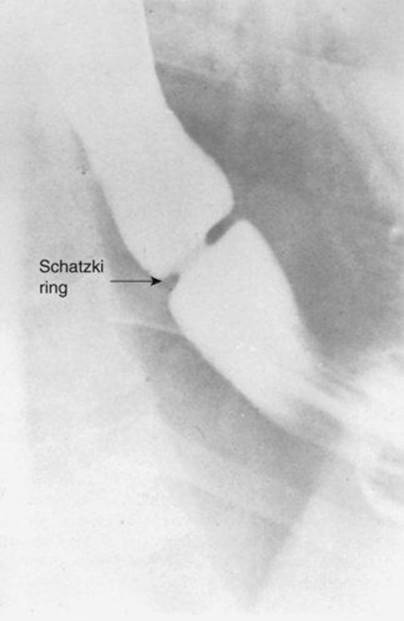
Fig. 19-4 Barium esophagogram of a Schatzki ring.
(Modified from Wilkins EW Jr: Rings and webs. In Pearson FG, Cooper JD, Deslauriers J, et al, editors: Esophageal surgery, ed 2, New York, 2002, Churchill Livingstone, p 298.)
Answer
A
23 With regard to squamous cell carcinoma of the esophagus, which of the following is not true?
A It affects mainly African-American men.
B Worldwide, it is the most common type of esophageal cancer.
C The male-to-female ratio is approximately 15 : 1.
D Alcohol and tobacco in combination are strong risk factors.
E Food additives such as nitrosamines have been implicated.
Ref.: 1, 15
Comments
Esophageal cancer is the sixth most common malignancy and has an incidence of 20 per 100,000 in the United States. Worldwide, squamous cell carcinoma is the most common type; however, in the United States, adenocarcinoma accounts for up to 70% of patients with esophageal cancer. The male-to-female ratio is 3 : 1 for squamous cell carcinoma and 15 : 1 for adenocarcinoma. In addition, squamous cell carcinoma affects black men, whereas adenocarcinoma mainly affects white men. Alcohol and tobacco smoking increase the risk for esophageal cancer 5-fold each and 25-fold to 100-fold in combination. Additives in pickled and smoked foods such as nitrosamines have been implicated in the risk for cancer.
Answer
C
24 A 75-year-old white man with a history of alcohol abuse, 40-pack-year tobacco use, and long-standing GERD controlled by antacids is evaluated for dysphagia and weight loss. Esophagography shows an apple core lesion at the distal end of the esophagus. Which of the following is true regarding further work-up?
A Endoscopic biopsy should be avoided because of the risk for perforation.
B Computed tomography (CT) is excellent for tumor staging.
C Positron emission tomography (PET) is an excellent tool for staging and can be used as a single diagnostic modality.
D Magnetic resonance imaging (MRI) is a poor imaging modality for liver metastasis.
E EUS is more sensitive than CT for evaluating the celiac lymph nodes.
Ref.: 1, 15
Comments
Many imaging modalities are available for the characterization of esophageal cancers. Barium esophagography is a good first test for patients with dysphagia and a history suspicious for cancer. Although CT is accurate for M staging, it is only 57% accurate for T staging. PET is an excellent tool that can be used to evaluate N and M staging but should not be used as a single diagnostic modality. MRI is excellent for detecting metastatic and T4 lesions. Endoscopic ultrasound is the most important diagnostic tool in esophageal cancer staging. Tissue samples can be obtained from lymph nodes, as well as from the primary lesion. EUS is more sensitive and specific than CT in evaluating the celiac lymph nodes.
Answer
E
25 The patient in Question 24 underwent EUS that showed a T2 lesion. The biopsy specimen is positive for adenocarcinoma of the esophagus. His chance of having a positive lymph node is:
A 20%
B 40%
C 60%
D 80%
E 100%
Ref.: 1
Comments
The risk of lymph node involvement is directly proportional to tumor depth or T stage. The incidence of positive lymph nodes is 18% for T1a intramucosa, 55% for T1b submucosa, 60% for T2 not beyond the muscularis propria, 80% for T3 with involvement of paraesophageal tissue but not adjacent structures, and 100% for T4 with involvement of adjacent structures.
Answer
C
26 The patient in Question 24 undergoes neoadjuvant chemoradiation therapy. Which of the following is true regarding multimodality therapy?
A A complete histologic response occurs in approximately 25% of patients.
B Squamous cell carcinoma and adenocarcinoma cell types have similar response rates to radiation therapy.
C Survival beyond 5 years has not been reported in patients with stage IV disease.
D Cisplatin-based combination therapy is no longer used because of the high rate of neuropathy.
E Radiation therapy alone is an option for stage I disease.
Ref.: 1, 16
Comments
Treatment of esophageal cancer is complex, and multiple modalities are often necessary. The decision regarding treatment options depends on whether the intent is curative or palliative. Squamous cell carcinoma is much more radioresponsive than adenocarcinoma, although with the latter, a complete histologic response is seen in approximately 25% of patients undergoing neoadjuvant chemoradiation therapy. Neoadjuvant radiation therapy is limited to 4500 cGy to avoid the surgical morbidity associated with high-dose radiation. Cisplatin in combination with 5-fluorouracil and epirubicin is an established chemotherapy regimen, but the use of mitomycin C, etoposide, and paclitaxel as a third agent is gaining favor. Stage I disease is best treated with curative surgical resection.
Answer
A
27 The patient in Question 24 undergoes transhiatal esophagectomy. Which of the following is true of the procedure?
A Three incisions are required: cervical, thoracic, and abdominal.
B A gastric conduit is preferred, and the blood supply is based on the right gastroepiploic artery.
C More lymph nodes can be harvested than with en bloc esophagectomy.
D A substernal route of the replacement conduit is preferred because of the shorter route and improved function.
E Cervical anastomotic leak rates are lower than thoracic leak rates but carry the same morbidity.
Ref.: 1, 15, 17, 18
Comments
Transhiatal esophagectomy was first described by Wolfgang Denk in 1913 and popularized by Orringer in the 1980s. Incisions in the left side of the neck and abdomen are used and a thoracotomy is avoided. The esophagus is bluntly dissected, and the tubularized stomach is pulled through the posterior mediastinum to create a cervical esophagogastric anastomosis. The blood supply to the gastric conduit is based on the right gastroepiploic artery. A gastric pull-up procedure, based on the right gastroepiploic artery, in the posterior mediastinal position has the best functional result. Alternative routes (subcutaneous, substernal, or right pleural space) or conduits (colon or jejunum) can be used but result in inferior function.
Answer
B
28 Which of the following is not true of palliative therapy for dysphagia associated with advanced esophageal cancer?
A Photodynamic therapy can provide relief for up to 10 months.
B Dilation and stent placement carry a 10% risk for perforation.
C Chemotherapy provides excellent relief with minimal morbidity.
D External beam radiation therapy is a good option for high-risk patients.
E Endoscopic laser therapy provides immediate relief of symptoms with low morbidity and mortality.
Ref.: 1, 15, 16, 18
Comments
The goal of palliative care is to relieve suffering and improve overall quality of life by reducing tumor burden and restoring nutritional access. Chemotherapy, radiation therapy, photodynamic therapy, laser treatment, stenting, and feeding tubes are options for palliation. Dysphagia is the most common initial symptom of patients with esophageal cancer, especially in those with advanced disease. Endoscopic laser fulguration with the neodymium : yttrium-aluminum-garnet (Nd : YAG) laser is 75% to 80% successful in treating dysphagia, but multiple treatments may be required. Photodynamic therapy, an alternative form of laser therapy, is also an excellent tool for palliation in patients suffering from dysphagia. A photosensitizing drug (porfimer [Photofrin]) is injected intravenously before treatment and is selectively taken up by neoplastic cells. Activation of Photofrin with red light at 630 nm releases singlet oxygen, which kills the host cell. Chemotherapy will treat systemic disease and reduce overall tumor burden but needs to be administered with radiation therapy to control local disease.
Answer
C
29 A 45-year-old man arrives at the emergency department after ingesting lye in a suicide attempt. Which of the following is true?
A Injury to the esophagus is the result of coagulative necrosis.
B Endoscopy should not be performed within the first 72 hours because of the risk for perforation.
C The lye should be neutralized with milk or egg whites if the patient is seen within the first hour of ingestion.
D Before reepithelialization, dilations should be performed to decrease the long-term stricture rate.
E For a long-segment interposition graft, the colon is the preferred conduit.
Ref.: 1, 18, 19
Comments
Caustic injury to the esophagus can be attributed to the ingestion of acidic or alkaline liquids. Alkaline substances (lye) produce liquefactive necrosis of tissue and can cause deep tissue penetration. If diagnosed within the first hour of ingestion, half-strength vinegar or citrus juice can be used to neutralize the ingested alkali. After careful examination of the oropharynx, airway, chest, and abdomen, endoscopy should be performed to grade the burn. Serial esophagograms should be performed to evaluate for stricture formation rather than waiting for symptoms of obstruction to develop. Early stent placement or bougie dilation is effective in preventing long-term strictures; however, dilation should be performed only after reepithelialization has been confirmed with endoscopy. For long-segment strictures requiring resection, colonic interposition is the preferred graft.
Answer
E
References
1 Maish M. Esophagus. In Townsend CM, Beauchamp RD, Evers BM, et al, editors: Textbook of surgery: the biological basis of modern surgical practice, ed 18, Philadelphia: WB Saunders, 2008.
2 Bremner CG. Esophageal function tests. In Cameron JL, editor: Current surgical therapy, ed 9, Philadelphia: CV Mosby, 2008.
3 Oelschlager BK, Eubanks TR, Pellegrini CA. Hiatal hernia and gastroesophageal reflux disease. In Townsend CM, Beauchamp RD, Evers BM, et al, editors: Sabiston textbook of surgery: the biological basis of modern surgical practice, ed 18, Philadelphia: WB Saunders, 2008.
4 Chung DH, Evers BM. The digestive system. In O’Leary JP, editor: The physiologic basis of surgery, ed 3, Philadelphia: Lippincott Williams & Wilkins, 2002.
5 Carlson MA, Frantzides CT. Complications and results of laparoscopic antireflux procedures: a review of 10,489 cases. J Am Coll Surg. 2001;193:428-439.
6 Poulose BK, Richards WO. Endoluminal approaches to gastroesophageal reflux disease. In Cameron JL, editor: Current surgical therapy, ed 9, Philadelphia: CV Mosby, 2008.
7 Fry LC, Monkenmuller K, Malfertheiner P. Systematic review: endoluminal therapy for gastro-oesophageal reflux disease: evidence from clinical trials. Eur J Gastroenterol Hepatol. 2007;19:1125-1139.
8 Torquati A, Richards WO. Endoluminal GERD treatments: critical appraisal of current literature with evidence-based medicine instruments. Surg Endosc. 2007;21:697-706.
9 Cadiere GB, Rajan A, Germay O, et al. Endoluminal fundoplication by a transoral device for the treatment of GERD: a feasibility study. Surg Endosc. 2008;22:333-342.
10 Smith CD. Paraesophageal Hiatal Hernia. In Cameron JL, editor: Current surgical therapy, ed 9, Philadelphia: CV Mosby, 2008.
11 Williams VA, Molena D, Peters JH. Achalasia of the esophagus. In Cameron JL, editor: Current surgical therapy, ed 9, Philadelphia: CV Mosby, 2008.
12 DeMeester SR. Esophageal perforation. In Cameron JL, editor: Current surgical therapy, ed 9, Philadelphia: CV Mosby, 2008.
13 Cohen JI. Management of pharyngoesophageal (Zenker’s) diverticula. In Cameron JL, editor: Current surgical therapy, ed 9, Philadelphia: CV Mosby, 2008.
14 Harbison SP, Dempsey DT. Mallory-Weiss syndrome. In Cameron JL, editor: Current surgical therapy, ed 9, Philadelphia: CV Mosby, 2008.
15 Peyre CG, DeMeester TR. Management of esophageal tumors. In Cameron JL, editor: Current surgical therapy, ed 9, Philadelphia: CV Mosby, 2008.
16 Gibson MK. Neoadjuvant and adjuvant therapy of esophageal cancer. In Cameron JL, editor: Current surgical therapy, ed 9, Philadelphia: CV Mosby, 2008.
17 Orringer MB. Transhiatal esophagectomy without thoracotomy for carcinoma of the thoracic esophagus. Ann Surg. 1984;200:282-288.
18 Jobe BA, Hunter JG, Peters JH. Esophagus and diaphragmatic hernia. In Brunicardi FC, Andersen DK, Billiar TR, et al, editors: Schwartz’s principles of surgery, ed 9, New York: McGraw-Hill, 2010.
19 Fischer AC. Chemical esophageal injuries. In Cameron JL, editor: Current surgical therapy, ed 9, Philadelphia: CV Mosby, 2008.