
John W. Devlin
LEARNING OBJECTIVES
Upon completion of the chapter, the reader will be able to:
1. Recognize differences between ulcers induced by Helicobacterpylori and nonsteroidal anti-inflammatory drugs (NSAIDs) in terms of risk factors, pathogenesis, signs and symptoms, clinical course, and prognosis.
2. Identify desired therapeutic outcomes for patients with H. pylori-associated ulcers and NSAID-induced ulcers.
3. Identify factors that guide selection of an H. pylori eradication regimen and improve compliance with these regimens.
4. Determine the appropriate management for a patient taking a nonselective NSAID who is at high risk for ulcer-related Gl complications or who develops an ulcer.
5. Devise an algorithm for evaluation and treatment of a patient with signs and symptoms suggestive of an H. pylori-associated or NSAID-induced ulcer.
6. Given patient-specific information and the prescribed drug treatment regimen, formulate a monitoring plan for a patient who is receiving drug therapy to either eradicate H. pylori or to treat an active NSAID-induced ulcer or Gl complication.
KEY CONCEPTS
 Patients with peptic ulcer disease (PUD) should avoid exposure to factors known to worsen the disease, exacerbate symptoms, or lead to ulcer recurrence (e.g., nonsteroidal anti-inflammatory drug [NSAID] use, alcohol consumption, or cigarette smoking).
 Reliance on conventional antiulcer drug therapy as an alternative to Helicobacter pylori eradication is inappropriate because it is associated with a higher incidence of ulcer recurrence and ulcer-related complications.
 Eradication therapy with a proton pump inhibitor (PPI) based three-drug regimen should be considered for all patients who test positive for H. pylori and have an active ulcer or a documented history of either an ulcer or ulcer-related complication. Different antibiotics should be used if a second course of H. pylori eradication therapy is required.
 In patients at risk for NSAID-induced ulcers, PPIs at standard doses reduce the risk of both gastric and duodenal ulcers (DU) as effectively as misoprostol and are generally better tolerated.
 Selective cyclooxygenase-2 (COX-2) inhibitors are no more effective than the combination of a PPI and a nonselective NSAID in reducing the incidence of ulcers and are associated with a greater incidence of cardiovascular (CV) events (e.g., ischemic stroke).
 Low-dose maintenance therapy with a PPI or histamine2-receptor antagonist (H2RA) is only indicated for patients who fail H. pylori eradication, have H. pylori-negative ulcers, are heavy smokers, or develop severe complications related to their ulcer disease.
INTRODUCTION
Peptic ulcer disease (PUD) refers to an ulceration that forms on the muscular mucosa in the wall of the Gl tract. The most common types of PUD are duodenal ulcers (DU) and gastric ulcers (GU). GU are usually located in the antrum or lesser curvature of the stomach. PUD is common and may adversely affect quality of life unless properly diagnosed and treated. The high prevalence and relapse rate associated with PUD pose a substantial economic burden. Peptic ulcers are most commonly caused by one of three etiologies: (a) Helicobacter pylori infection; (b) use of nonsteroidal anti-inflammatory drugs (NSAIDs); or (c) stress-related mucosal damage (SRMD). A number of pathophysiologic variables can be used to distinguish these three common types of peptic ulcer (Table 18–1). This chapter will focus on strategies to optimize pharmacotherapy for patients with PUD related to H. pylori or NSAID therapy.
Table 18–1 Characteristics of Common Causes of PUD
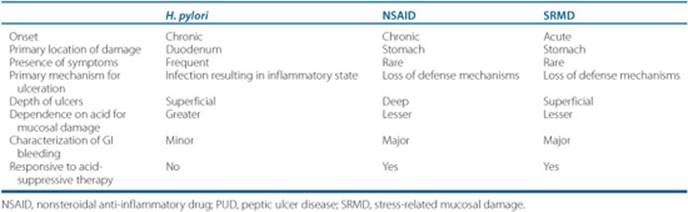
SRMD occurs most frequently in critically ill patients and is thought to be caused by factors such as compromised mesenteric perfusion rather than H. pylori or NSAIDs. Its onset is usually acute, and in a small proportion of patients may progress to deep ulceration and hemorrhage.
Less common causes of peptic ulceration include Zollinger-Ellison syndrome (ZES), cancer chemotherapy, radiation, and vascular insufficiency. ZES is caused by a gastrin-producing tumor called a gastrinoma and results in gastric acid hypersecretion. High-dose oral proton pump inhibitor (PPI) therapy is the initial treatment of choice for ZES; intermittent IV PPI therapy may be required for any patient in whom oral therapy is contraindicated.1
EPIDEMIOLOGY AND ETIOLOGY
Approximately, 25 million Americans are affected by PUD, with the lifetime prevalence estimated to be 12% in men and 10% in women.2 Annual direct and indirect costs associated with PUD in the United States are estimated to be more than $9 billion. Despite the widespread use of conventional anti-ulcer therapy that effectively reduces gastric acid secretion, ulcers frequently recur, with 1-year recurrence rates (after ulcer initial healing) estimated to range from 60% to 100%.1
H. pylori infection and NSAID use account for most cases of PUD. The relatively high incidence of PUD in the elderly may be due to higher NSAID use. Although hospitalizations related to PUD have decreased over the past two decades, the incidence of PUD-related complications such as bleeding and perforation remain unchanged.
In general, ulcers related to H. pylori infection more commonly affect the duodenum whereas ulcers related to NSAIDs more frequently affect the stomach (Fig. 18–1). However, ulcers may be found in either location from either cause. GU tend to occur much later in life than DU, with the peak incidence of GU occurring in patients over 60 years of age. Malignancy is more commonly found with GU than DU.
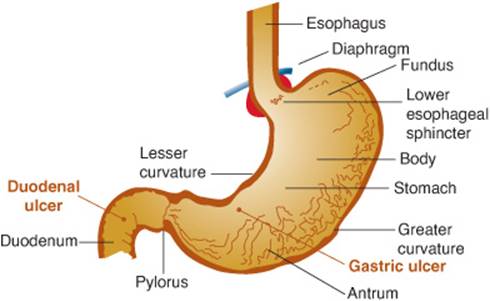
FIGURE 18–1. Anatomic structure of the stomach and duodenum and most common locations of gastric and duodenal ulcers. (From Ref. 37.)
Helicobacter pylori
Since its discovery nearly 25 years ago, the role of H. pylori in PUD has been increasingly recognized, and it is now one of the most common causes of PUD.3 While H. pylori causes gastritis in all infected patients, only a small proportion (less than 20%) of patients actually develop symptomatic PUD.
H. pylori normally resides in the human stomach and is transmitted via the fecal-oral route or through ingestion of fecal-contaminated water or food. Infection with H. pylori is more common in developing countries because of crowded conditions and the presence of contaminated food and water. H. pylori colonization does not necessarily reflect an active infection since the organism can attach itself to the gastric epithelium without invading cells. Cellular invasion by H. pylori is necessary for an active infection, which is usually asymptomatic and leads to chronic active gastritis.
Patient Encounter 1, Part 1
PUD Secondary to Helicobacterpylori
A 51-year-old woman presents to the emergency department complaining of abdominal pain for the past 3 days and dark tarry stools over the past 2 days. She states that she has never had these symptoms before and that she has been feeling weak and tired for the past 2 weeks. She denies having bright red blood in her stools or vomiting. She does not take any prescription medications and only takes extra-strength acetaminophen for occasional headaches.
PMH: Hypertension × 10 years
FH: Mother died of a stroke at age 81; father died of pneumonia at age 71
SH: Denies alcohol, tobacco, or illicit drug use
Allergies: NKDA
Meds: Acetaminophen extra-strength two tablets every 6 hours as needed for occasional headache
Which signs and symptoms are suggestive of PUD?
What are this patient’s risk factors for PUD?
What additional information do you need to know before creating a treatment plan for this patient?
Nonsteroidal Anti-Inflammatory Drugs
NSAIDs are one of the most widely used classes of medications in the United States, particularly in the elderly.4 More than 20,000 deaths and 100,000 hospitalizations occur in the United States per year as a direct result of adverse events related to NSAID use. Chronic NSAID ingestion leads to symptoms of nausea and dyspepsia in nearly half of the patients. Peptic ulceration occurs in up to 30% of patients who use NSAIDs (including aspirin) chronically, with GI bleeding or perforation occurring in 1.5% of patients who develop an ulcer. NSAID-related peptic ulcers usually occur in the stomach; DU are much less common.
Risk factors for NSAID-induced peptic ulcers and complications are presented in Table 18–2. Several important principles should be considered when estimating the risk for developing PUD in a patient taking an NSAID: (a) risk factors are generally additive; (b) some risk factors (e.g., corticosteroid therapy) are not by themselves a risk factor for ulceration but increase PUD risk substantially when combined with NSAID therapy; and (c) many of the risk factors postulated to increase PUD risk in a patient taking an NSAID (e.g., rheumatoid arthritis, tobacco smoking, and alcohol consumption) remain unproven and thus should not generally be considered independent risk factors for NSAID-induced ulceration.5 Whether H. pylori infection is a risk factor for NSAID-induced ulcers remains controversial. However, H. pylori and NSAIDs act independently to increase ulcer risk and ulcer-related bleeding and appear to have additive effects.
Table 18–2 Established Risk Factors for Ulcers and GI Complications Related to NSAID Use
|
Age over 60 |
|
Concomitant anticoagulant use |
|
Pre-existing coagulopathy (elevated INR or thrombocytopenia) |
|
Concomitant corticosteroid or selective serotonin reuptake inhibitor therapy |
|
Previous PUD or upper GI bleeding |
|
CV disease and other comorbid conditions |
|
Multiple NSAID use (e.g., low-dose aspirin in conjunction with another NSAID) |
|
Duration of NSAID use (greater than 1 month) |
|
High-dose NSAID use |
|
NSAID-related dyspepsia |
|
Cigarette smokers |
CV, cardiovascular; INR, International Normalized Ratio; NSAID, nonsteroidal anti-inflammatory drug; PUD, peptic ulcer disease.
Other Causative Factors
Cigarette smoking is associated with a higher prevalence of ulcers and may also impair healing of ulcers that develop.6 The exact mechanism(s) for the detrimental effects of smoking on the gastric mucosa are unclear but may involve increased pepsin secretion, duodenogastric reflux of bile salts, elevated levels of free radicals, and reduced bicarbonate and prostaglandin (PG) production.7,8 It is unknown whether nicotine or one of the many other ingredients found in cigarettes is responsible for these deleterious effects.
Until the discovery of H. pylori, psychological stress was considered one of the primary causes of PUD. Although psychosocial factors such as life stress, baseline personality patterns, and depression may influence PUD prevalence, a clear causal relationship has not been demonstrated.
Dietary factors such as coffee, tea, cola, beer, and a highly spiced diet may cause dyspepsia, but they have not been shown to independently increase PUD risk. Although caffeine increases gastric acid secretion and alcohol ingestion causes acute gastritis, there is inconclusive evidence to confirm that either of these substances are independent risk factors for peptic ulcers.
PATHOPHYSIOLOGY
Ulcer formation is the net result of a lack of homeostasis between factors within the GI tract responsible for the breakdown of food (e.g., gastric acid and pepsin) and factors that promote mucosal defense and repair (e.g., bicarbonate, mucus secretion, and PGs).
Gastric Acid and Pepsin
Hydrochloric acid and pepsin are the primary substances that cause gastric mucosal damage in PUD. Three different stimuli (i.e., histamine, acetylcholine, and gastrin) are responsible for acid secretion through their interactions with the histaminic, cholinergic, and gastrin receptors on the surface of parietal cells. Gastric acid output occurs in two stages: (a) basal acid output (BAO), which reflects the baseline output of acid during the fasting state; and (b) maximal acid output (MAO), which occurs in response to meals. Basal acid secretion follows a circadian cycle in which it is highest at night and lowest in the morning and is modulated by the effects of acetylcholine and histamine acting on the parietal cell.
Patient Encounter 2, Part 1
PUD Secondary to NSAID Use
A 65-year-old man with a history of osteoarthritis and chronic obstructive pulmonary disease (COPD) comes to your clinic complaining of burning abdominal pain. The pain has worsened over the past 2 weeks; it is worse at night and after meals.
PMH: Osteoarthritis for 5 years, started diclofenac within the past 2 months; COPD for 15 years
FH: Noncontributory
SH: Tobacco one pack per day × 40 years; drinks two beers per day
Meds: Ipratropium metered-dose inhaler (MDI) two puffs every 6 hours; albuterol (known as salbutamol outside the United States) MDI two puffs every 4 hours as needed; prednisone 10 mg orally daily; diclofenac 75 mg orally two times a day; aspirin 81 mg orally daily
Which signs and symptoms are suggestive of PUD?
What are this patient’s risk factors for PUD?
What additional information do you need to know before creating a treatment plan for this patient?
Food can cause maximal gastric acid secretion in two ways. In the cephalic phase of acid secretion, the vagus nerve stimulates acid secretion in response to the sight, smell, or taste of food. In both the gastric and intestinal phases of acid secretion, the physical distention caused by food in the gastric fundus and small intestine induces gastrin secretion resulting in acid production. After stimulation by histamine, acetylcholine, and gastrin, acid is secreted by the H+-K+-ATPase (proton) pump, located on the luminal side of parietal cells. Acid secretion in PUD is usually normal or slightly elevated. NSAID ingestion usually does not affect acid secretion, whereas H. pylori infection usually leads to a slight increase in acid output. This is in contrast to ZES, in which acid secretion is substantially elevated.
Pepsinogen released from chief cells in the body of the stomach during food digestion is converted to pepsin in the presence of an acidic environment and plays a key role in the initiation of protein digestion, proteolysis of collagen, and as a signal for the release of other digestive enzymes such as gastrin and cholecystokinin. The proteolytic activity of pepsin appears to influence ulcer formation.
Mucosal Defense and Repair
Several defense and repair mechanisms are responsible for preventing mucosal damage and subsequent ulcer formation. Mucus gel, through its buffering action, is the primary source of defense for the gastric epithelial surface against gastric acid. It allows an acidic environment to be maintained in the lumen but a near neutral pH to be maintained on the epithelial lining. On the epithelial lining, a number of protective mechanisms are responsible for the repair of damaged cells, production of defense mechanisms, and the promotion of epithelial growth.
PGs inhibit gastric acid secretion and have numerous mucosal protective effects, the most important of which include the stimulation of both mucus and phospholipid production, promotion of bicarbonate secretion, and increased mucosal cell turnover. Damage to the mucosal defense system is the primary method by which H. pylori or NSAIDs cause peptic ulcers.
Helicobacter pylori
H. pylori are a gram-negative microaerophilic rod that has a number of adaptive functions allowing it to live within the acidic environment of the stomach. It is an S-shaped bacterium with multiple flagella that initially inhabits the gastric antrum but migrates to the more proximal sections of the stomach over time. The motility provided by the flagella allows it to penetrate the mucous gel barrier, thus permitting a direct interaction with epithelial cells—the site where acute infection occurs. H. pylori are able to survive in the acidic conditions of the stomach because of its ability to induce a transient hypochlorhydria via production of urease, an enzyme that hydrolyzes urea into carbon dioxide and ammonia. Ammonia can both protect H. pylori and damage tissue.
A number of host and pathogenic factors contribute to the ability of H. pylori to cause gastroduodenal mucosal injury including: (a) direct mucosal damage; (b) alterations to host inflammatory responses; and (c) hypergastrinemia leading to a state of elevated acid secretion. Bacterial-surface adhesion components facilitate binding of H. pylori to epithelial cells, and vacuolating cytotoxin (vac A) facilitates the binding of H. pylori to the cell membrane, thus enabling the H. pylori organism better access to nutrients. The cag pathogenicity island (cag-PAI) leads to the release of cytokines thus leading to a chronic inflammatory state in H. pylori-infected patients.3 The complex interplay between bacterial virulence factors and an enhanced inflammatory response results in a chronic H. pylori infection that elevates acid production and reduces various protective factors.
Nonsteroidal Anti-Inflammatory Drugs
Nonselective NSAIDs (those that inhibit both cyclo-oxygenase-1 and -2 [COX-1 and COX-2]) cause gastric mucosal damage by two primary mechanisms: (a) direct or topical irritation of the gastric epithelium; and (b) systemic inhibition of endogenous mucosal PG synthesis.
Direct irritation of the mucosal lining by NSAIDs occurs because NSAIDs are weak acids. Topical irritation is therefore most pronounced with more acidic NSAIDs such as aspirin. While the direct irritant effects of NSAIDs play a contributory role in the development of NSAID-induced gastritis, this mechanism generally plays a minor role in the evolution of NSAID-induced PUD.
The systemic effects of NSAIDs are the primary cause of PUD. COX is the rate-limiting enzyme in the PG synthesis pathway (Fig. 18–2). Inhibition of PG production is the primary therapeutic effect of NSAIDs. COX is responsible for the conversion of arachidonic acid to PGs such as PGG2 and PGH2. There are two forms of the COX enzyme, COX-1 and COX-2. COX-1 is routinely found in body tissues that produce PGs for normal physiological maintenance. In contrast, COX-2 is an inducible enzyme that is expressed during states in which cytokines and inflammatory mediators are elevated (e.g., fever and pain). Inhibition of the COX-1 isoenzyme decreases production of endogenous PGs, particularly PGE1, PGE2, and PGI2. Administration of NSAIDs parenterally (e.g., ketorolac) and rectally (e.g., indomethacin) is associated with an incidence of PUD that is similar to that with oral NSAIDs. Topical NSAIDs (e.g., diclofenac) would be unlikely to cause PUD given the very low serum concentrations that are achieved with this route of administration compared to that observed with oral therapy.
PGs, through their effects on mucous cell secretion, basal bicarbonate secretion, and mucosal growth, are important factors in gastric healing and protection. Inhibition of PG production by NSAIDs compromises these important protective mechanisms. Finally, the antiplatelet effects of NSAIDs may worsen bleeding complications associated with PUD.
Complications
Hemorrhage is the most common complication of PUD and may occur when an ulcer erodes the wall of a gastric or duodenal artery. Bleeding may be occult (hidden) or may present as melena or hematemesis.Bleeding occurs in approximately 15% of PUD patients and is more common in patients more than 60 years of age, particularly those who ingest NSAIDs. Up to 20% of patients who develop a PUD-related hemorrhage do not have prior symptoms. Death occurs primarily in patients who continue to bleed, or in those who rebleed after the initial bleeding has stopped.
Gastric outlet obstruction occurs in approximately 2% of patients with PUD and is usually caused by ulcer-related inflammation or scar formation near the peripyloric region. Signs and symptoms of outlet obstruction include early satiety after meals, nausea, vomiting, abdominal pain, and weight loss. Ulcer healing with conventional acid-suppressive therapy is the primary treatment, but if this is unsuccessful then an endoscopic procedure (e.g., balloon dilation) is required.
CLINICAL PRESENTATION AND DIAGNOSIS
Diagnosis
Diagnostic tests for the presence of H. pylori can be either endoscopic or nonendoscopic. Endoscopic diagnosis requires the extraction of gastric tissue samples that are subsequently tested for H. pylori.9Recent antibiotic use can lead to a false negative biopsy result. Although endoscopy is the gold standard for detecting H. pylori infections, it may be associated with rare but severe complications and greater expense than nonendoscopic diagnostic methods. Endoscopy is therefore usually reserved for patients more than 50 years of age who have anemia, GI bleeding, or unexplained weight loss.
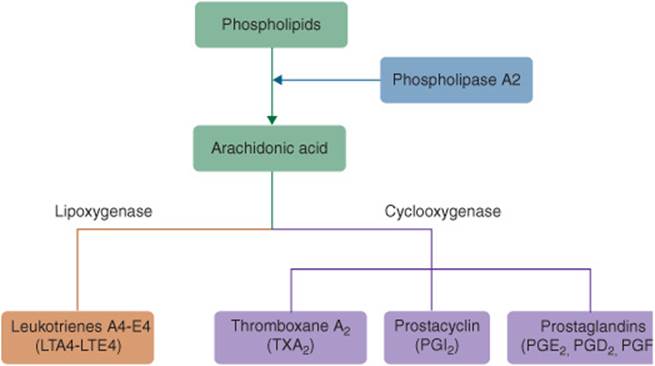
FIGURE 18–2. The arachidonic acid pathway.
Clinical Presentation and Diagnosis of PUD
Symptoms
• Mild epigastric pain that may be described as burning, gnawing, or aching in character.
• Abdominal pain may be described as burning or a feeling of discomfort.
• Some patients report nocturnal pain.
• The severity of pain often fluctuates.
• The intensity of pain can vary widely (e.g., from dull to sharp).
• DU pain occurs 1 to 3 hours after meals and may be relieved by food ingestion.
• GU pain occurs immediately after meals and is often aggravated by food.
• Patients may also complain of heartburn, belching, bloating, nausea, or vomiting.
Signs
• Weight loss may be associated with nausea and vomiting.
• Complications such as bleeding, perforation, or obstruction may occur.
• Alarm signs and symptoms include: bleeding, anemia, tarry stools or “coffee-grounds” emesis, and weight loss.
Nonendoscopic testing methods include the urea breath test, serological testing, and the stool antigen assay. Compared to endoscopic procedures, these tests are more comfortable, less expensive, and do not require a special procedure. The urea breath test is usually the first-line test to detect active H. pylori infection because it has a sensitivity and specificity greater than 95% and a short turnaround time. The BreathTek urea breath test used with a desktop infrared spectrometer can provide results within a few minutes. Concomitant acid-suppressive or antibiotic therapy may give false-negative results with this test.
Office-based serological testing provides a quick assessment (within 15 minutes) of an exposure to H. pylori, but patients can remain seropositive for up to 1 year after eradication, making the clinical utility of this test limited. Stool antigen assays can be useful for the initial diagnosis or to confirm H. pylori eradication, and unlike the urea breath test, are less affected by concomitant medication use.9 However, the stool antigen assay should not be used to test for eradication until 6 to 8 weeks after completion of therapy.
Radiological and/or endoscopic procedures are usually required to document the presence of ulcers objectively. Barium studies have a high sensitivity and are considered first-line tests to document an ulcer radiographically. However, the cost and complexity of all of these tests has led to the promotion of an early empiric treatment strategy for patients at low risk for PUD-related sequelae (e.g., malignancy). An empiric treatment strategy is appropriate for patients less than 50 years of age who have mild or intermittent epigastric symptoms and no evidence of PUD-related systemic symptoms or complications.
Patient Encounter 1, Part 2: Physical Examination, Laboratory Tests, and Diagnostic Procedures
PE:
VS: BP 135/90 mm Hg, P 89 bpm, RR 14/min, T 37.5°C (99.5°F)
Gen: NAD
Skin: Normal turgor
HEENT: PERRL
CV: RRR; S1, S2 normal; no S3 or S4
Lungs: Computed tomographic angiography (CTA) bilaterally
Abd: Soft, nontender, nondistended, (+) bowel sounds × 4 quadrants, 7/10 pain
Neuro: A&O × 3, cranial nerves intact, DTR 2+
Labs: WBC 4.6 × 10³/mm3 (4.6 × 10⁹L), hemoglobin 8.5 g/dL (85 g/L or 5.3 mmol/L), hematocrit 24.7%, platelets 327 × 103/mm3 (327 × 109L), aPTT 32.5 seconds, PT 12.1 seconds, INR 1.02
Fecal occult blood: (+)
EGD: Multiple superficial ulcerations in the duodenum; largest ulcer measures 2 cm in diameter; no active bleeding noted.
Campylobacter-like organism (CLO) test (urease test): (+) for H. pylori
Given this information, what is your assessment of the patient’s condition?
What are your treatment goals?
What nonpharmacologic and pharmacologic alternatives are available for this patient?
TREATMENT
The treatment selected for PUD depends on the following factors: (a) the etiology of the ulcer; (b) whether the ulcer is new or recurrent; and (c) whether complications have occurred.1 Figure 18–3 contains an algorithm for the evaluation and treatment of a patient with signs and symptoms suggestive of an H. pylori-associated or NSAID-induced ulcer.
Desired Outcomes
The goals of PUD therapy are to: (a) resolve symptoms; (b) reduce acid secretion; (c) promote epithelial healing; (d) prevent ulcer-related complications; and (e) prevent ulcer recurrence. For H. pylori-relatedPUD, eradication of H. pylori is an additional outcome.
Patient Encounter 2, Part 2: Physical Examination, Laboratory Tests, and Diagnostic Procedures
PE:
VS: BP 125/85 mm Hg, P 72 bpm, RR 12/min, T 37.5°C (99.5°F)
Gen: NAD
Skin: Dry, intact
HEENT: PERRL
CV: RRR, S1, S2
Lungs: CTA B/L
Abd: Soft, nontender, nondistended, (+) bowel sounds, 5/10 pain on the epigastric region
Neuro: A&O × 3, cranial nerves intact, DTR 2+
Labs: WBC 9.9 × 10³/mm3 (9.9 × 10⁹L), hemoglobin 12.1 g/dL (121 g/L or 7.5 mmol/L), hematocrit 38.3%, platelets 108 × 103/mm3 (108 × 109L), aPTT 27.9 seconds, PT 12.4 seconds, INR 1.09
EGD: One ulcer located on the antrum of the stomach measuring 3 cm in diameter; no bleeding or obstruction noted
Given this information, what is your assessment of the patient’s condition?
What are your treatment goals?
What nonpharmacologic and pharmacologic treatment alternatives are available for this patient?
Nonpharmacologic Therapy
Patients with PUD should avoid exposure to factors known to worsen the disease, exacerbate symptoms, or lead to ulcer recurrence. Patients should be advised to reduce psychological stress and avoid cigarette smoking, alcohol consumption, foods or beverages that exacerbate ulcer symptoms, and NSAID or aspirin use.10,11 Patients who require chronic NSAID therapy (e.g., rheumatoid arthritis) may be given prophylaxis with misoprostol or a PPI (see Treatment of NSAID-Induced Ulcers).
The high-success rates of medical therapies have reduced the number of surgical procedures performed and relegated surgery primarily to elective situations. For this reason, surgical interventions are generally reserved for complicated or refractory PUD. Some surgical procedures include: (a) vagotomy and pyloroplasty; (b) highly selective vagotomy; or (c) vagotomy combined with antrectomy. Vagotomy is the central component of most procedures because of its targeted effects on blocking further acid secretion. These procedures have a high success rate. Complications are rare but can include dumping syndrome, bile reflux, diarrhea, malabsorption, and gastric atony.12
Pharmacologic Therapy
Treatment of H. pylori-Associated Ulcers
The primary goal of H. pylori therapy is to completely eradicate the organism using an effective antibiotic-containing regimen. Reliance on conventional acid-suppressive drug therapy alone as an alternative to H. pylori eradication is inappropriate because it is associated with a higher incidence of ulcer recurrence and ulcer-related complications. Reinfection rates are generally low after the initial course of therapy as long as the patient has received a regimen with proven efficacy and is compliant with it. The H. pylori regimen that is chosen should have a per-protocol cure rate of 90% or more or a cure rate based on intention-to-treat analysis of 80% or more.9 In addition to proven efficacy, the optimal treatment regimen should cause minimal adverse events, have low risk for the development of bacterial resistance, and be cost effective.9
H. pylori treatment regimens are presented in Table 18–3. Eradication therapy with a PPI-based three-drug regimen should be considered for all patients who test positive for H. pylori and have an active ulcer or a documented history of either an ulcer or ulcer-related complication. Different antibiotics should be used if a second course of H. pylori eradication therapy is required.
The first-line regimen should contain a PPI plus clarithromycin and either amoxicillin or metronidazole. Amoxicillin should not be used in penicillin-allergic patients, and metronidazole should be avoided if alcohol is going to be consumed. The combination of two antimicrobials and a PPI leads to cure rates greater than 80% (by intention-to-treat basis) and reduces the risk of selecting out resistant organisms.13 A single daily dose of a PPI may be less effective than twice daily dosing when used as part of a triple-drug regimen. Substitution of one PPI for another is acceptable and does not appear to affect eradication rates. Monotherapy with a single antibiotic or antiulcer agent is not recommended due to high failure rates. In the United States, two-drug regimens consisting of a PPI and an antibiotic are also not recommended.
The duration of therapy is controversial and varies by continent. Europeans routinely treat patients for 7 days whereas Americans usually rely on a 14-day regimen. While these seven additional days of therapy improves the absolute cure rate by approximately 9%,14 longer courses decrease compliance and increase drug cost.
Bismuth-based four-drug regimens have clinical cure rates similar to three-drug, PPI-based regimens. Bismuth-based regimens usually include tetracycline, metronidazole, and an antisecretory agent (e.g., PPI or histamine2-receptor antagonist [H2RA]). Bismuth salts promote ulcer healing through antibacterial and mucosal protective effects. While cheaper than most other regimens, drawbacks of bismuth-based regimens include the frequency of administration (four times a day), risk for salicylate toxicity in patients with renal impairment, and propensity for bothersome side effects (e.g., stool and tongue discoloration, constipation, nausea, and vomiting).
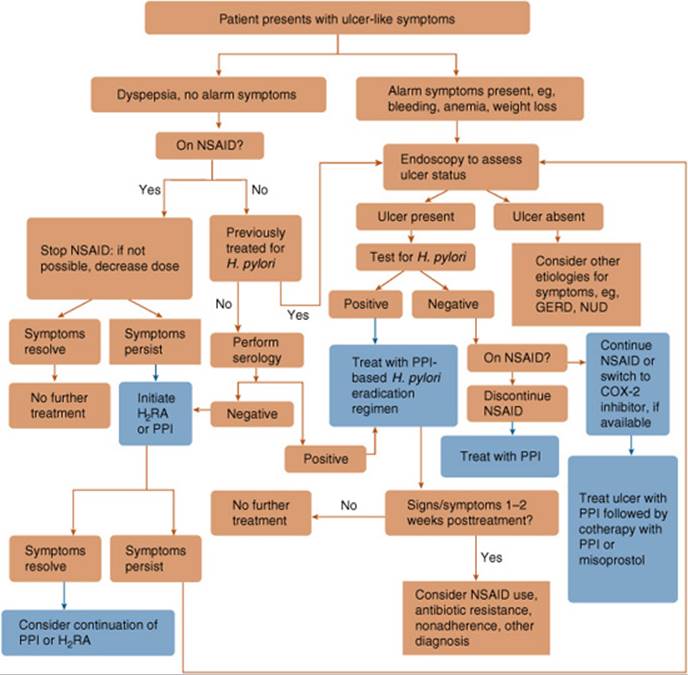
FIGURE 18–3. Approach to the patient presenting with ulcer-like symptoms. (GERD, gastroesophageal reflux disease; HP Helicobacter pylori; H2RA, histamine2-receptor antagonist; NSAID, nonsteroidal anti-inflammatory drug; NUD, nonulcer dyspepsia; PPI, proton pump inhibitor.) (From Ref. 37.)
The combination product Pylera (bikalcitrate potassium 140 mg, metronidazole 125 mg, and tetracycline 125 mg) when used in combination with omeprazole 20 mg twice daily (before breakfast and dinner) is as effective as omeprazole-amoxicillin-clarithromycin (OAC) in eradicating H. pylori in patients with DU. Although not FDA-approved for patients with GU, it would be expected to be effective in eradicating H. pylori in patients with GUs. The usual dose of Pylera is three capsules four times daily after meals and at bedtime with 8 oz. water for 10 days. The simultaneous administration of tetracycline and a metal-containing product (e.g., many antacids) may result in complexation and reduced tetracycline absorption. Consequently, the bismuth salt and tetracycline are physically separated in the capsule formulation of Pylera.
Helidac is a package of 14 blister cards with each card containing a single-day supply of bismuth subsalicylate (two 262.4-mg chewable tablets four times daily), metronidazole (250 mg tablet four times daily), and tetracycline (500 mg capsule four times daily). Unlike Pylera, Helidac is not a combination product; all three medications must be taken four times daily for 14 days in combination with an H2RA rather than a PPI.
The acquisition cost for a 10-day course of Pylera and a 14-day course of Helidac is more than $200, which is substantially more expensive than the cost of prescriptions for generic metronidazole and tetracycline and a bottle of nonprescription bismuth subsalicylate.
Patients may remain infected with H. pylori after the initial course of therapy because of reinfection, nonadherence with the initial regimen, or antimicrobial resistance. Factors associated with decreased adherence include use of a large number of medications, a need for frequent drug administration or long treatment duration, and the use of drugs that may cause intolerable side effects. Potential adverse drug events include taste disturbances (clarithromycin and metronidazole), nausea, vomiting, abdominal pain, and diarrhea. Superinfections with oral thrush or vaginal candidiasis can occur.
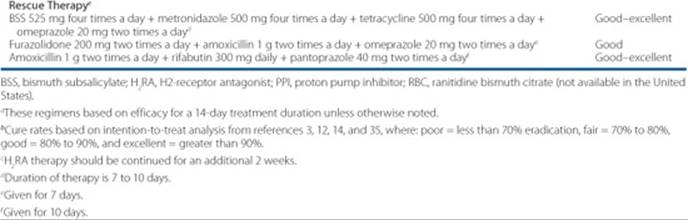
Table 18–3 Drug Regimens to Eradicate Helicobacter pylori”
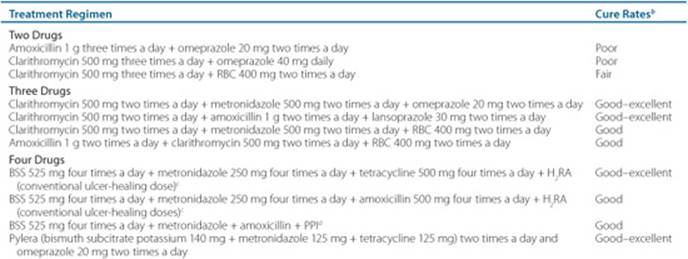
Pre-existing antimicrobial resistance is an increasing cause of treatment failure and is estimated to account for up to 70% of all treatment failures. Geography is the most important factor in H. pyloriresistance. Metronidazole -resistant strains are more prevalent in Asia (85%) than North America (30%).15 Primary resistance to amoxicillin and tetracycline remains low in both the United States and Europe. Clarithromycin resistance rates are estimated to be approximately 10% in the United States. Another confounding factor when evaluating potential antibiotic resistance is that culture and sensitivity studies are not routinely performed with H. pylori infection.
Initiation of a second H. pylori treatment regimen after failure of the initial treatment regimen is usually associated with a lower success rate. Reasons for failure are often the same as those reported with failure of the initial regimen: patient noncompliance and/or antimicrobial resistance. In these situations, quadruple therapy for 14 days is generally required, and metronidazole or clarithromycin should be replaced by another antibiotic if either one of these agents was used in the initial regimen. If both clarithromycin and metronidazole were used as initial therapy, a regimen consisting of furazolidone 100 mg four times a day with tetracycline, bismuth, and a PPI can be used. Another second-line regimen consisting of a PPI, amoxicillin 1 g twice daily, and rifabutin 300 mg once daily for 10 days resulted in eradication rates greater than 80%.16,17
Treatment of NSAID-lnduced Ulcers
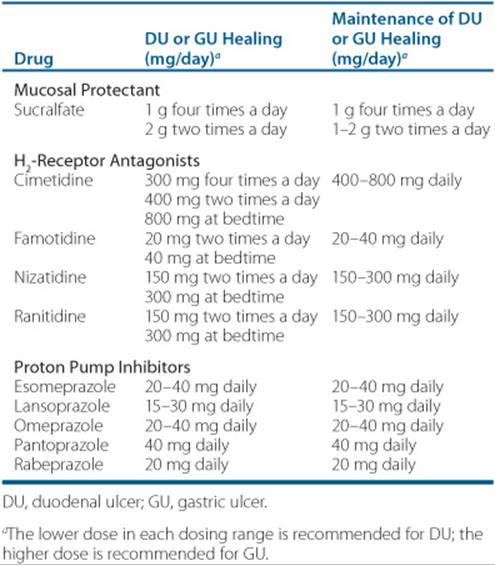
Treatment and dosing recommendations to heal NSAID-induced GU or provide maintenance therapy in patients receiving NSAIDS are shown in Table 18–4. Choice of regimen in a patient with PUD related to NSAID use depends on whether NSAID use is to be continued. NSAIDs should be discontinued if possible and replaced with alternatives (such as acetaminophen) although this may not be desirable or feasible in some patients. For patients discontinuing NSAID therapy, PPIs, H2RAs, or sucralfate are all effective for ulcer healing. PPIs are usually preferred because they provide more rapid relief of symptoms and ulcer healing than H2RAs or sucralfate.16,17 For patients continuing NSAID therapy, PPIs are preferred over H2RAs or sucralfate because potent acid suppression is required to accelerate ulcer healing.18–21 If the decision is made to continue NSAID therapy, adjunctive strategies may be required to promote ulcer healing and prevent future recurrences.
Table 18–4 Oral Drug Regimens to Heal Peptic Ulcers or Maintain Ulcer Healing in the Absence of Antibiotic Therapy
Prevention of NSAID-lnduced Ulcers
Prophylactic regimens against PUD are often required in patients who require long-term NSAID or aspirin therapy for osteoarthritis, rheumatoid arthritis, or cardioprotection. Misoprostol, H2RAs, PPIs, and COX-2 selective inhibitors have been evaluated in controlled trials to reduce the risk of NSAID-induced PUD. In patients at risk for NSAID-induced ulcers, PPIs at standard doses reduce the risk of both gastric and DU as effectively as misoprostol and are generally better tolerated.
Although acute GI bleeding is the most serious adverse outcome of NSAID therapy and is ultimately what clinicians are trying to prevent with prophylactic therapy, few studies have compared PUD prophylaxis strategies using this outcome measure. Acute GI bleeding is not usually evaluated in studies because of the low frequency with which bleeding occurs in NSAID users, the small size of most prophylaxis studies, and their short duration. Instead, studies usually rely on secondary outcome variables to evaluate efficacy such as the incidence of ulcers during screening endoscopy or the incidence of patient-reported ulcer symptoms. Correlation between these secondary outcomes and PUD-related bleeding events is poor and thus, clinicians must be cautious when extrapolating the results of these studies to patient care.
Misoprostol
Misoprostol is a synthetic PG E1 analog that exogenously replaces PG stores. It is indicated for reducing the risk of NSAID-induced GU in patients at high risk of complications from GU (e.g., the elderly and patients with concomitant debilitating disease), as well as patients at high risk of developing gastric ulceration, such as patients with a history of ulcer. The minimum effective dose shown to inhibit acid secretion and promote mucosal defense is 400 mcg/day.22,23 Misoprostol use is limited by a high frequency of bothersome GI effects such as abdominal pain, flatulence, and diarrhea.24–26 Misoprostol is contraindicated in pregnancy due to potential abortifacient effects. Arthrotec is a combination product that contains diclofenac (either 50 or 75 mg) and misoprostol 200 mcg in a single tablet.
H2-Receptor Antagonists
Refer to Chapter 17, for more information on the H2RAs. Standard doses of H2RAs (e.g., famotidine 40 mg/day) are effective in preventing NSAID-related duodenal ulceration but not gastric ulceration (the most frequent type of ulcer-associated with NSAIDs). Higher doses (e.g., famotidine 40 mg twice daily) may reduce the risk of gastric and duodenal ulceration in NSAID users, but results from clinical trials are variable.
Proton Pump Inhibitors
Refer to Chapter 17 for more information on the PPIs. PPI therapy is more effective than H2RAs in reducing the risk of nonselective NSAID-related gastric and duodenal ulceration. PPIs are also as effective as misoprostol but better tolerated. All PPIs are effective when used in standard doses. In patients who experience a PUD-related bleeding event while taking aspirin but who require continued aspirin therapy, the addition of a PPI reduces the incidence of recurrent GI bleeding.27 Prevacid NapraPAC provides naproxen (either 250, 375, or 500 mg) and lansoprazole 15 mg in individual blister packages.
COX-2 Selective Inhibitors
With the availability of NSAIDs with COX-2 selectivity, clinicians postulated that these agents would avoid the need to add an additional prophylactic agent in patients with PUD risk factors. However, selective COX-2 inhibitors are no more effective than the combination of a PPI and a nonselective NSAID in reducing the incidence of ulcers and are associated with a greater incidence of CV events (e.g., ischemic stroke). Celecoxib is the only agent in this class that remains on the market; its postulated improved GI safety when compared to nonselective NSAIDs has not been established.28,29 In addition, controlled studies demonstrated that celecoxib is no better than the combination of diclofenac and omeprazole.30
Longer-term studies evaluating the CV risks associated with the use of COX-2 inhibitors have found a higher incidence of CV mortality with these agents compared to traditional NSAIDs.31,32 This prompted the withdrawal of both rofecoxib and valdecoxib from the market and the inclusion of a black box warning in the celecoxib package insert.33 Given the CV risk of the COX-2 inhibitors, a nonselective NSAID and a PPI is recommended instead of celecoxib in patients at high risk for NSAID-related PUD.5–34
Sucralfate
Sucralfate is a negatively charged, nonabsorbable agent that forms a complex by binding with positively-charged proteins in exudates, forming a viscous, paste-like, adhesive substance. This forms a coating that protects the ulcerated area of the gastric mucosa against gastric acid, pepsin, and bile salts. Limitations of sucralfate include the need for multiple daily dosing, large tablet size, and interaction with a number of other medications (e.g., digoxin and fluoroquinolones).
Adverse effects of sucralfate include constipation, nausea, metallic taste, and the possibility for aluminum toxicity in patients with renal failure. While sucralfate may be used for the treatment of an NSAID-related ulcer when NSAID therapy is being stopped, it is not recommended for use as prophylaxis against NSAID-induced ulcers.
Conventional Treatment of Active DU and GU and Long-Term Maintenance of Ulcer Healing
Conventional therapy prior to the advent of H. pylori eradication therapy consisted of standard doses of sucralfate or an H2RA for 6 to 8 weeks. A PPI provides equivalent efficacy with treatment duration of only 4 weeks. Long-term antiulcer therapy is ineffective for treating H. pylori infections.
Low-dose maintenance therapy with a PPI or H2RRA is only indicated for patients who fail H. pylori eradication, have H. pylori-negative ulcers, or develop severe complications related to ulcer disease.Drug regimens and doses are presented in Table 18–4.
Treatment of Refractory Ulcers
The presence of refractory ulcers (ulcers that persist beyond 8 weeks [DU] or 12 weeks [GU]) requires thorough assessment, including evaluation of medication compliance. The patient should be questioned regarding recent NSAID ingestion. Tolerance has been reported with as few as 4 weeks of H2RA therapy, and thus a change to PPI therapy should be considered in this situation.35 Other assessments that maybe considered include an ulcer biopsy to exclude malignancy, H. pylori testing (if not done initially), a serum gastrin measurement to exclude ZES, and gastric acid studies. In one study, increasing the starting dose of PPI therapy healed 90% of refractory ulcers after 8 weeks of therapy.36
Patient Care and Monitoring
General Recommendations: H. pylori-Associated and NSAID-lnduced Ulcers
1. Assess the severity of signs and symptoms. Identify the presence of any alarm signs and symptoms.
2. Educate the patient on monitoring for alarm signs and symptoms.
3. Obtain a history of prescription medication, over-the-counter medication, and dietary supplement use.
4. Encourage lifestyle modifications such as reducing tobacco use and ethanol ingestion and decreasing psychological stress.
5. Determine the appropriate duration for acid-suppressive therapy.
6. Define the current impact of PUD on the patient’s quality of life and the improvement in these outcomes sought with drug therapy.
7. Evaluate current drug therapy for potential adverse drug reactions and drug interactions.
H.pylori-Associated Ulcers
1. Recommend an appropriate drug regimen that will eradicate the organism.
2. Identify the patient’s drug allergies and avoid drug classes a patient is allergic to.
3. Educate patients on specific adverse drug effects, particularly with metronidazole (avoidance of alcohol), bismuth (change in stool color), and clarithromycin (taste disturbance).
4. Assess the potential for drug interactions, particularly in patients taking regimens containing metronidazole, clarithromycin, and/or cimetidine.
5. Recommend different antibiotics if this treatment regimen is a result of failure of a prior H. pylori regimen.
6. Educate the patient on the importance of adherence to eradication therapy.
NSAID-Associated Ulcers
1. Assess for risk factors for NSAID ulcers and recommend an appropriate strategy to reduce ulcer risk.
2. Monitor for signs and symptoms of complications associated with NSAID-related ulceration.
3. Recommend an appropriate treatment regimen to heal the ulcer.
4. Assess and counsel patients on potential adverse drug events and drug interactions.
5. Inform patients who are receiving prophylactic therapy on the importance of its use, potential adverse drug events, and the possible alarm symptoms associated with PUD.
OUTCOME EVALUATION37
• Obtain a baseline CBC. Recheck the CBC if the patient exhibits alarm signs or symptoms.
• Obtain a baseline serum creatinine measurement. Calculate the estimated creatinine clearance and adjust the dose of H2RAs and sucralfate according to package insert recommendations.
• Obtain a history of symptoms from the patient. Monitor for improvements in pain symptoms (e.g., epigastric or abdominal pain) daily.
• Monitor the patient for the development of any alarm signs and symptoms.
• Recommend a follow-up visit if signs and symptoms worsen at any time or do not improve within the defined treatment period.
• Assess for potential drug interactions whenever there is a change in the patient’s medications, particularly for patients taking cimetidine, omeprazole, or sucralfate.
• Educate the patient on the importance of adhering to the H. pylori-eradication regimen.
• Monitor the patient for complications related to antibiotic therapy (e.g., diarrhea or oral thrush) during and after completion of H. pylori eradication therapy.
• Recommend follow-up care if the patient’s signs and symptoms do not improve after completion of H. pylori-eradication therapy.
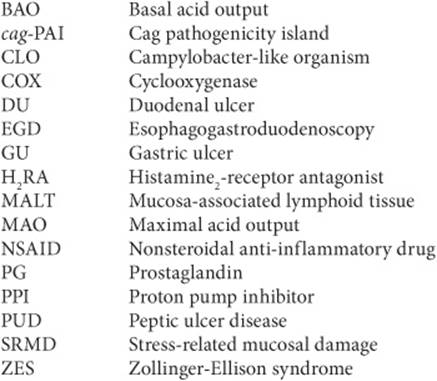
Abbreviations Introduced in This Chapter
 Self-assessment questions and answers are available at http://www.mhpharmacotherapy.com/pp.html.
REFERENCES
1. Del Valle J, Chey WD, Scheiman JM. Acid peptic disorders. In: T Yamada, DH Alpers, N Kaplowitz et al., eds. Textbook of Gastroenterology, 4th ed. Vol. 1. New York: Lippincott Williams & Wilkins, 2003:1321-1376.
2. Sonnenberg A. Peptic ulcer. In: J Everhart, ed. Digestive Diseases in the United States: Epidemiology and Impact. Washington, DC: US Department of Health and Human Services, Public Health Service, National Institutes of Health, 1994:359-408. NIH publication no. 94:1447.
3. Suerbaum S, Michetti P. Helicobacter pylori infection. N Engl J Med 2002;347:1175-1186.
4. Weaver AL. Review article: Aspirin, non-steroidal anti-inflammatory drugs and cyclo-oxygenase-1 sparing agents. AP&T Symposium Series 2005;1:2-5.
5. Chan FK, Graham DY. Review article: Prevention of non-steroidal anti-inflammatory drug gastrointestinal complications: Review and recommendations based on risk assessment. Aliment Pharmacol Ther 2004;19:1051-1061.
6. Friedman GD, Siegelaub AB, Seltzer CC. Cigarettes, alcohol, coffee and peptic ulcer. N Engl J Med 1974;290:469-473.
7. Wu WK, Cho CH. The pharmacological actions of nicotine on the gastrointestinal tract. J Pharmacol Sci 2004;94:348-358.
8. Quan C, Talley NJ. Management of peptic ulcer disease not related to Helicobacter pylori or NSAIDs. Am J Gastroenterol 2002;97:2950-2961.
9. Chey WD, Wong BCY, et al. American College of Gastroenterology guideline in the management of helicobacter pylori infection. Am J Gastroenterol 2007;102:1808-1825.
10. Laine L, Bombardier C, Hawkey CJ, et al. Stratifying the risk of NSAID-related upper gastrointestinal clinical events: Results of a double-blind outcomes study in patients with rheumatoid arthritis. Gastroenterology 2002;123:1006-1012.
11. Van Deventer G, Elashoff J, Reedy T, et al. A randomized study of maintenance therapy with ranitidine to prevent the recurrence of duodenal ulcer. N Engl J Med 1989;320:1113-1119.
12. Behrman SW. Management of complicated peptic ulcer disease. Arch Surg 2005;140:201-208.
13. Laheij RJ, Rossum LG, Jansen JB, et al. Evaluation of treatment regimens to cure Helicobacter pylori infection: A meta-analysis. Aliment Pharmacol Ther 1999;13:857-864.
14. Calvet X, Garcia N, Lopez T, et al. A meta-analysis of short versus long therapy with a proton pump inhibitor, clarithromycin and either metronidazole or amoxycillin for treating Helicobacter pyloriinfection. Aliment Pharmacol Ther 2000;14:603-609.
15. Meyer JM, Silliman NP, Wang W, et al. Risk factors for Helicobacter pylori resistance in the United States: The surveillance of H. pylori antimicrobial resistance partnership (SHARP) study, 1993-1999. Ann Intern Med 2002;136:13-24.
16. Jodlowski TZ, Lam S, Ashby CR. Emerging therapies for the treatment of helicobacter pylori infections. Ann Pharmacother 2008;42:1621-1639.
17. Qasim A, Sebastian S, Thornton O, et al. Rifabutin- and furazolidone-based Helicobacter pylori eradication therapies after failure of standard first- and second-line eradication attempts in dyspepsia patients. Aliment Pharmacol Ther 2005;21:91-96.
18. Agrawal NM, Campbell DR, Safdi MA, et al. Superiority of lansoprazole vs ranitidine in healing nonsteroidal anti-inflammatory drug-associated gastric ulcers: Results of a double-blind, randomized, multicenter study. NSAID-associated gastric ulcer study group. Arch Intern Med 2000;160:1455-1461.
19. Yeomans ND, Tulassay Z, Juhasz L, et al. A comparison of omeprazole with ranitidine for ulcers associated with nonsteroidal antiinflammatory drugs. Acid suppression trial: Ranitidine versus omeprazole for NSAID-associated ulcer treatment (ASTRONAUT) study group. N Engl J Med 1998;338:719-726.
20. Wolfe MM, Lichtenstein DR, Singh G. Gastrointestinal toxicity of nonsteroidal antiinflammatory drugs. N Engl J Med 1999;340:1888-1899.
21. Targownik LE, Metge CJ, Leung S, et al. The relative efficacies of gastroprotective strategies in chronic users of nonsteroidal anti-inflammatory drugs. Gastronenterology 2008;134:937-944.
22. Graham DY, White RH, Moreland LW, et al. Duodenal and gastric ulcer prevention with misoprostol in arthritis patients taking NSAIDs. Misoprostol study group. Ann Intern Med 1993;119:257-262.
23. Raskin JB, White RH, Jaszewski R, et al. Misoprostol and ranitidine in the prevention of NSAID-induced ulcers: A prospective, double-blind, multicenter study. Am J Gastroenterol 1996;91:223-227.
24. Silverstein FE, Graham DY, Senior JR, et al. Misoprostol reduces serious gastrointestinal complications in patients with rheumatoid arthritis receiving nonsteroidal anti-inflammatory drugs: A randomized, double-blind, placebo-controlled trial. Ann Intern Med 1995;123:241-249.
25. Taha AS, Hudson N, Hawkey CJ, et al. Famotidine for the prevention of gastric and duodenal ulcers caused by nonsteroidal antiinflammatory drugs. N Engl J Med 1996;334:1435-1439.
26. Hawkey CJ, Karrasch JA, Szczepanski L, etal. Omeprazole compared with misoprostol for ulcers associated with nonsteroidal antiinflammatory drugs. Omeprazole versus misoprostol for NSAID-induced ulcer management (OMNIUM) study group. N Engl J Med 1998;338: 727-734.
27. Chan FK, Ching JY, Hung LC, et al. Clopidogrel versus aspirin and esomeprazole to prevent recurrent ulcer bleeding. N Engl J Med 2005;352:238-244.
28. Silverstein FE, Faich G, Goldstein JL, etal. Gastrointestinal toxicity with celecoxib vs nonsteroidal anti-inflammatory drugs for osteoarthritis and rheumatoid arthritis: The CLASS study: A randomized controlled trial. Celecoxib long-term arthritis safety study. JAMA 2000;284:1247-1255.
29. Hrachovec JB, Mora M, Wright JM, et al. Reporting of 6-Month vs 12-Month data in a clinical trial of celecoxib. JAMA 2001;286:2398-2400.
30. Chan FK, Hung LC, Suen BY, et al. Celecoxib versus diclofenac and omeprazole in reducing the risk of recurrent ulcer bleeding in patients with arthritis. N Engl J Med 2002;347:2104-2110.
31. Nussmeier NA, Whelton AA, Brown MT, et al. Complications of the COX-2 inhibitors parecoxib and valdecoxib after cardiac surgery. N Engl J Med 2005;352:1081-1091.
32. Bresalier RS, Sandier RS, Quan H, et al. Cardiovascular events associated with rofecoxib in a colorectal adenoma chemoprevention trial. N Engl J Med 2005;352:1092-1102.
33. Administration FDA. FDA alert for practitioners celecoxib (marketed as Celebrex) 2005.
34. Chan FK, Abraham NS, Scheiman JM, et al. Management of patients on nonsteroidal anti-inflammatory drugs: A clinical practice recommendation from the first international working party on gastrointestinal and cardiovascular effects of nonsteroidal anti-inflammatory effects and anti-platelet agents. Am J Gastroenterol 2008; 103:2908-2918.
35. Prewett EJ, Hudson M, Nwokolo CU, et al. Nocturnal intragastric acidity during and after a period of dosing with either ranitidine or omeprazole. Gastroenterology 1991;100:873-877.
36. Brunner G, Arnold R, Hennig U, Fuchs W. An open trial of long-term therapy with lansoprazole in patients with peptic ulceration resistant to extendedhigh-doseranitidine treatment. AlimentPharmacolTher 1993; 7(Suppl 1):51-55, discussion 61-66.
37. Berardi R, Welage L. Peptic ulcer disease. In: DiPiro JT; Talbert RA; Yee GC, et al., eds. Pharmacotherapy: A Pathophysiologic Approach, 7th ed. New York: McGraw-Hill, 2008:576-587.