
Gretchen M. Brophy and Eljim P. Tesoro
LEARNING OBJECTIVES
Upon completion of the chapter, the reader will be able to:
1. Discuss the pathophysiology of status epilepticus (SE).
2. Explain the urgency of diagnosis and treatment of SE.
3. Recognize the signs and symptoms of SE.
4. Identify the treatment options available for termination of SE.
5. Formulate an initial treatment strategy for a patient in generalized convulsive SE.
6. Compare the pharmacotherapeutic options for refractory SE.
7. Describe adverse drug events associated with the pharmacotherapy of SE.
8. Recommend monitoring parameters for a patient in SE.
KEY CONCEPTS
 Status epilepticus (SE) is a neurologic emergency that can lead to permanent brain damage or death.
 SE can be defined as any seizure lasting more than 30 minutes, with or without loss of consciousness, or having recurrent seizures without regaining consciousness between episodes. However, this definition does not provide any guidance for treatment in the clinical setting where interventions begin within a few minutes of seizure onset. A more practical definition would be continuous seizure activity lasting more than 5 minutes, or two or more seizures without complete recovery of consciousness.
 It is important to evaluate possible etiologies of SE and treat underlying causes to optimize seizure control.
 The goal of therapy is to arrest physical and electroencephalographic evidence of seizures, prevent their recurrence, and minimize adverse drug events.
 The first-line treatment for SE is IV benzodiazepines. Lorazepam, diazepam, or midazolam may be used to rapidly control clinical signs of seizures. Lorazepam is currently considered the first-line agent by most clinicians.
 Antiepileptic drugs (AEDs) are used to prevent the seizure recurrence. IV phenytoin (or fosphenytoin) and phenobarbital are administered after benzodiazepines.
 Refractory status epilepticus (RSE) is seizure activity that is not controlled by first- and second-line therapies, including benzodiazepines and AEDs.
 Midazolam, propofol, and pentobarbital infusions can be used for RSE, but intensive monitoring and supportive care are required.
Status epilepticus (SE) is a neurologic emergency that can lead to permanent brain damage or death. SE can be defined as any seizure lasting more than 30 minutes, with or without a loss of consciousness; or having recurrent seizures without regaining consciousness between episodes.1 However, this definition does not provide any guidance for treatment in the clinical setting where interventions begin within a few minutes of seizure onset. A more practical definition would be continuous seizures lasting more than 5 minutes or two or more seizures without complete recovery of consciousness.2Refractory status epilepticus (RSE) can be defined as seizure activity that does not respond to first-or second-line antiepileptic therapy.3
SE can present as nonconvulsive status epilepticus (NCSE) or generalized convulsive status epilepticus (GCSE). NCSE is characterized by a persistent state of impaired consciousness and/or motor or sensory seizures without impaired consciousness. For patients with NCSE, electroencephalography (EEG) is essential for diagnosis. GCSE is characterized by full body motor seizures and involves the entire brain. This chapter will focus on GCSE, the most common type of SE, which is associated with the greatest risk of neurologic and physical damage.
Patient Encounter, Part 1
CH, a 42-year-old man, comes into the emergency department after his sister discovered him seizing at home. He has a history of hypertension, diabetes, epilepsy, and rheumatoid arthritis. His medications include hydrochlorothiazide, glyburide, phenytoin, and aspirin. He smokes one pack per day, drinks heavily on the weekends, and has a history of cocaine use. Upon further discussion with his sister, you discover that he stopped taking his phenytoin 4 days ago due to failure to obtain a refill from his doctor. He is currently unarousable since his last seizure 10 minutes ago.
What initial assessments should be performed?
What are some possible etiologies for his seizure?
What interventions need to be performed at this time?
EPIDEMIOLOGY AND ETIOLOGY
There are an estimated 150,000 cases of SE each year in the United States, with approximately 55,000 associated deaths, and an estimated annual direct cost for inpatient admissions of $4 billion.4,5 SE occurs more frequently in African Americans, children, and the elderly.
It is important to understand the underlying cause of SE, as this will guide the course of treatment, potentially shortening the duration of SE and improve outcomes. The causes of SE can be categorized as acute or chronic. Acute changes that cause SE include metabolic disturbances; CNS disorders, infections, or injuries; hypoxia; drug toxicity (e.g., theophylline, isoniazid, cyclosporine, cocaine); or acute illness. Chronic processes that cause SE includes pre-existing epilepsy, chronic alcohol abuse (withdrawal seizures), CNS tumors, and strokes.3 In epileptics, the common causes of SE are anticonvulsant withdrawal or subtherapeutic anticonvulsant levels. Patients with SE due to chronic processes generally respond well to antiepileptic drug (AED) therapy.
PATHOPHYSIOLOGY
SE occurs when the brain fails to stop an isolated seizure. The exact reason for this failure is unknown and probably involves multiple mechanisms. A seizure is likely to occur due to a mismatch of excitatory and inhibitory neurotransmitters in the brain. The primary excitatory neurotransmitter is glutamate. Glutamate stimulates postsynaptic N-methyl-D-aspartate (NMDA) receptors, causing an influx of calcium into the cells and depolarization of the neuron. Sustained depolarization may maintain SE and eventually cause neuronal injury and death.6 The primary inhibitory neurotransmitter, γ-aminobutyric acid(GABA), opposes the excitatory response by stimulating GABAAreceptors, enhancing chloride inhibitory currents, producing hyperpolarization, and inhibition of the postsynaptic cell membrane. The inhibitory ability of GABA diminishes as the duration of seizures increases, perhaps due to a mechanistic shift in the functional properties of the GABAA receptors, which causes a decrease in response to GABA-receptor agonists.7,8 Seizures lasting more than 30 minutes can cause injury and neuronal loss in the hippocampal, cortical, and thalamic regions. These neurologic sequelae are related to the excessive electrical activity and alterations in cerebral metabolic demand. The clinical impact of the GABAA-receptor changes on treatment response and the worsening degree of neuronal injury with prolongation of seizure activity highlights the urgency of rapid control of SE.
Several systemic changes occur in two phases during the course of SE. Phase I occurs during the first 30 minutes of seizure activity, and phase II occurs after 30 minutes of seizure activity.9
Phase I
During phase I, each seizure causes a sharp increase in autonomic activity with elevations in epinephrine, norepinephrine, and steroid plasma concentrations, resulting in hypertension, tachycardia, hyperglycemia, hyperthermia, sweating, and salivation. Cerebral blood flow is also increased to preserve the oxygen supply to the brain during this period of high metabolic demand. Increases in sympathetic and parasympathetic stimulation with muscle hypoxia can lead to ventricular arrhythmias, severe acidosis, and rhabdomyolysis, which could then lead to hypotension, shock, hyperkalemia, and acute tubular necrosis.
Phase II
After approximately 30 minutes of continuous seizure activity, phase II begins with loss of cerebral autoregulation, decreased cerebral blood flow, increased intracranial pressure, and systemic hypotension. Metabolic demand is still high; however, the body is no longer able to compensate. The systemic changes that may occur include hypoglycemia, hyperthermia, respiratory failure, hypoxia, respiratory and metabolic acidosis, hyperkalemia, hyponatremia, and uremia. It is important to note that motor activity may not be clinically evident during prolonged seizures, but the electrical activity may still exist. This is referred to as subclinical seizure activity and needs to be recognized and treated aggressively.
CLINICAL PRESENTATION AND DIAGNOSIS
History
When a patient presents with seizures, a thorough history is needed to determine the type and duration of the seizure activity. This will help guide therapy and identify which laboratory and diagnostic tests need to be conducted. A diagnosis of SE will be made when a patient with a history of repeated seizures and impaired consciousness has a seizure witnessed by a health care professional.
Clinical Presentation of SE
General
The patient may present with or without clinically noticeable seizure activity.
Symptoms
• Impaired consciousness ranging from lethargy to coma
• Disorientation after cessation of GCSE
• Pain from associated injuries (e.g., tongue lacerations, dislocated shoulder, head trauma, facial trauma)
Signs
Phase I:
• Generalized convulsions
• Hypertension, tachycardia
• Fever and sweating
• Muscle contractions, spasms
• Respiratory compromise
• Incontinence
Phase II (greater than 30 minutes of SE):
• Respiratory failure with pulmonary edema
• Cardiac failure (arrhythmias, shock)
• Hypotension
• Hyperthermia
• Rhabdomyolysis and multiorgan failure
Laboratory Tests
• Hyperglycemia (phase I) and hypoglycemia (phase II) can occur
• Hyponatremia, hypernatremia, hyperkalemia, hypocalcemia, hypomagnesemia, and hypoglycemia can cause SE
• The WBC count may slightly increase
• Abnormal ABGs due to hypoxia and respiratory or metabolic acidosis
• Elevated serum creatinine will be present in renal failure patients
• Myoglobinuria can occur in patients with continuous seizures
Diagnostic Tests
• EEG will show seizure activity
Physical Examination
Once seizures are controlled, a neurologic examination should be conducted to evaluate level of consciousness (coma, lethargy, or somnolence), motor function and reflexes (rhythmic contractions, rigidity, spasms, or posturing), and pupillary response. A physical examination to identify secondary injuries from SE should also be conducted.
Clinical Symptoms
Patients with SE usually present with generalized, convulsive tonic-clonic seizure activity that is unresponsive to initial AED treatment. They may also be hypertensive, tachycardic, febrile, and diaphoretic; however, these symptoms will resolve soon after the seizure is terminated. A loss of bowel or bladder function, respiratory compromise, and nystagmus may also be observed. When seizure activity is sustained for more than approximately 30 to 60 minutes, muscle contractions may no longer be visible, but the patient remains in SE. Twitching of the face, hands, or feet may be seen in these comatose patients with prolonged seizures. As motor signs diminish, an EEG will be necessary to diagnose SE.
Laboratory Parameters
It is important to obtain a serum chemistry profile to help identify the underlying cause of SE. Abnormalities that can cause seizures include hypoglycemia, hyponatremia, hypernatremia, hypomagnesemia, hypocalcemia, and renal and liver failure. In a febrile patient with an elevated white blood cell count (WBC), an active infection should be ruled out or treated appropriately. Cultures from the blood, cerebrospinal fluid (CSF), respiratory tract, and urine should be obtained once the seizures are controlled. CT or MRI can be done to rule out CNS abscesses, bleeding, or tumors, all of which may be a source for seizure activity. A blood alcohol level and urine toxicology screen for drugs of abuse should also be conducted to determine if alcohol withdrawal, illicit drug use, or a drug overdose could be the underlying cause of SE. Also, drug levels should be obtained in a drug overdose situation to rule out toxicity as a cause of SE. Knowing the source of SE will help guide the initial antiepileptic therapy and increase the probability of halting seizure activity.
In patients who use AEDs, a baseline serum concentration may be useful to determine if the drug concentration is below the desired range and if a loading dose is needed. Albumin levels, renal function tests, and liver function tests can also be utilized when assessing antiepileptic therapy.
Hypoxia and respiratory or metabolic acidosis are common in patients with SE. Therefore, pulse oximetry and arterial blood gas (ABG) measurements are used to assess respiratory status and determine if airway protection or supplemental oxygen is needed. Metabolic acidosis typically corrects on its own after seizure activity stops, so pharmacologic treatment is not required.
Diagnostic Tests
The only way to determine if a comatose patient has SE is by EEG, which should be used in patients who remain unconscious after initial antiepileptic treatment, and for those who receive long-acting paralytic agents or require prolonged therapy for RSE. Treatment should never be delayed while awaiting EEG results. An ECG should be obtained to rule out cardiac dysfunction when hypotension or an abnormal heart rate is observed.
Patient Encounter, Part 2
Physical examination and laboratory studies reveal the following additional information about CH.
PE:
VS: BP 148/87 mm Hg, pulse 115 bpm, RR 23/min, T 39.0°C (102.2°F), ht 180 cm (5’11”), wt 80 kg (176 lb)
CNS: Unresponsive, unarousable
CV: Sinus tachycardia; normal S1, S2; no murmurs, rubs, gallops
Pulmonary: Tachypneic; oxygen saturation 92% on room air; no rhonchi, wheezes, rales
Abdomen: Firm, nontender, nondistended; (+) bowel sounds; no hepatosplenomegaly
Extremities: Rhythmic tonic-clonic movements of all extremities
GU: Incontinent of urine and stool
HEENT: Persistent upward gaze
Labs:
Sodium 130 mEq/L (130 mmol/L)
WBC 12 × 103/mm3 (12 × 109/L)
Phenytoin 2.1 mcg/mL (8.3 μmol/L)
Albumin 3.5 g/dL (35 g/L)
Potassium 3.5 mEq/L (3.5 mmol/L)
Hemoglobin 14 g/dL (140 g/L or 8.7 mmol/L)
Chloride 100 mEq/L (100 mmol/L)
Hematocrit 42% (0.42 volume fraction)
Carbon dioxide 12 mEq/L (12 mmol/L)
Platelets 235 × 103/mm3 (235 × 109/L)
Blood urea nitrogen 10 mg/dL (3.6 mmol/L)
Prothrombin time 12 seconds
Serum creatinine 0.9 mg/dL (80 μmol/L)
International Normalized Ratio 1.1
Glucose 189 mg/dL (10.5 mmol/L)
Activated partial thromboplastin time 28 seconds
What is your assessment of the cause of this patient’s condition?
Identify your goals of therapy for this patient.
What therapies must be instituted next?
TREATMENT
Desired Outcomes
The goals of treatment of SE include the cessation of any seizure activity, both clinical and subclinical, and the prevention of further seizures. Ideally, this is accomplished through directed pharmacotherapy with minimization of any side effects or adverse reactions. Complications of SE should also be treated.
General Approach
The initial approach to SE involves first removing the patient from harmful surroundings and ensuring a safe airway to prevent respiratory collapse or aspiration. Benzodiazepines are the first medications administered, as they are the drugs of choice to stop acute seizure activity, followed by the initiation of an AED. Medications are typically given IV for immediate onset of action, but if no IV access is available, certain medications may be given intramuscularly (IM), rectally, buccally, or via an endotracheal tube. Once the seizures stop, clinicians must identify and treat the underlying cause of the seizures, such as toxins, hypoglycemia, or trauma. Patients with known seizure disorders should be evaluated for abrupt cessation of their medications or for history of noncompliance.
Nonpharmacologic Treatment
Nondrug interventions include administration of oxygen or intubation for mechanical ventilation in cases of hypoxia or body cooling for febrile seizures. Specialists in neurology or epileptology should be consulted as appropriate. Admission to an emergency department or intensive care unit will allow appropriate monitoring during the seizure and postictal period.
Pharmacologic Treatment
Initial Treatment
All patients should receive glucose in case of hypoglycemia-induced SE. In patients with a history of alcohol abuse, thiamine 100 mg should be given prior to the administration of any glucose-containing solutions to prevent encephalopathy
Benzodiazepines
Initial drug therapy begins with the administration of an IV benzodiazepine since they are most effective in aborting seizure activity. IV bolus doses of diazepam, lorazepam, and midazolam have all been used in SE because of their rapid effects at inhibitory GABA receptors in the CNS. Lorazepam is now considered the first-line agent by most clinicians. When treating patients on chronic benzodiazepines therapy, clinicians should consider higher doses to overcome the effects of tolerance. Diazepam and lorazepam should be diluted with normal saline in a 1:1 ratio before parenteral administration via peripheral veins to avoid venous irritation from the propylene glycol diluent in the formulation.
Diazepam
Being extremely lipophilic, diazepam penetrates quickly into the CNS, but can rapidly redistribute out into the body fat and muscle. This results in a faster decline in CNS levels and early recurrence of seizures. It is dosed at 5 to 10 mg (or 0.15 mg/kg) and infused no faster than 5 mg/min. Repeated doses can be given every 5 minutes until seizure activity stops or toxicities are seen (e.g., respiratory depression). Diazepam can also be administered as a rectal suppository, making it possible for nonmedical personnel to provide rapid therapy for seizures that develop at home or in public areas.10 The adult dose is 10 mg given rectally and this dose may be repeated once if necessary. Diazepam is erratically absorbed via the IM route; therefore, IM administration is not recommended.
Lorazepam
Less lipophilic than diazepam, lorazepam has a longer redistribution half-life, resulting in longer duration of action and a decrease in the need for repeated doses. Both lorazepam and diazepam are effective in stopping seizures,11 but lorazepam is currently the preferred agent due to a longer duration of action. Lorazepam is given as a single IV dose of 0.1 mg/kg (maximum dose is 4 mg) with a maximum rate of infusion of 2 mg/min. It can be redosed every 10 to 15 minutes (up to a maximum cumulative dose of 8 mg) until seizure activity stops or side effects such as respiratory depression occur. IM administration is not preferred due to slow and unpredictable absorption.
Midazolam
Midazolam is water-soluble and can be administered IV, IM,12 buccally,13 and nasally.14 At physiologic pH, it becomes more lipophilic and can diffuse into the CNS. Compared to diazepam and lorazepam, it has fewer effects on the respiratory and cardiovascular systems. Its short half-life requires that it be redosed frequently or administered as a continuous infusion. Midazolam can be given at 0.2 mg/kg either IV or IM as a single dose.15 The liquid or injectable formulation can be given buccally or intranasally (0.3 mg/kg) when IV access cannot be secured. Nasal administration in SE can be hindered by rapid breathing and increased nasal secretions.
Anticonvulsants
Once the first dose of benzodiazepine is given, an AED should be started to prevent further seizures from occurring. If the underlying cause of the seizures has been corrected (e.g., hypoglycemia) and seizure activity has ceased, an AED may not be necessary. AEDs must not be given as first-line therapy because they are infused relatively slowly to avoid adverse effects, delaying their onset of action.
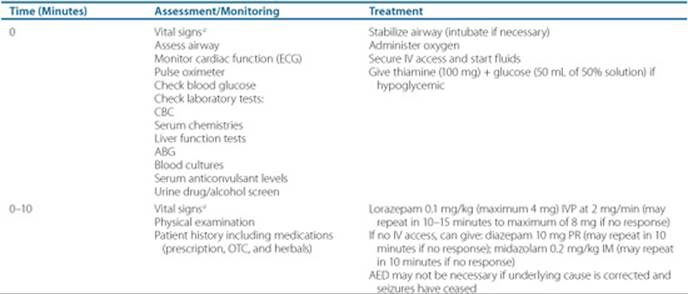
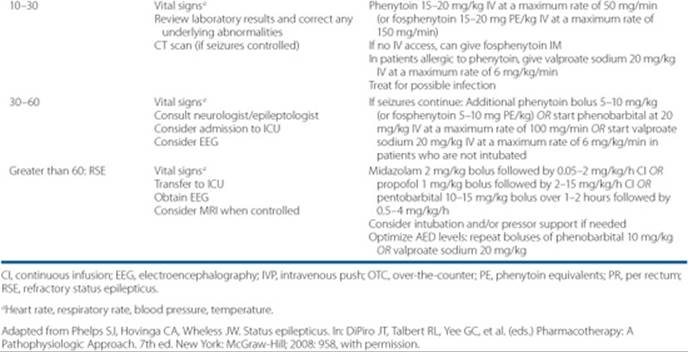
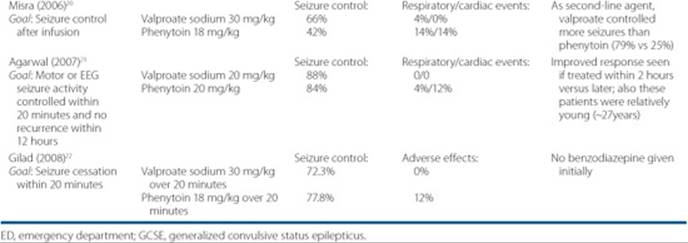
Once the loading dose of the AED is administered, it is important to initiate maintenance doses to ensure that therapeutic levels are sustained. Chronic and idiosyncratic side effects as well as potential drug interactions should be considered if the patient will continue AED therapy indefinitely. All drugs should be adjusted for any hepatic or renal disease states. Table 31–1 summarizes the drug doses used in SE, and Table 31–2 provides an example of an algorithm for the treatment of patients in SE. Published studies comparing these treatment strategies are summarized in Table 31–3.
Table 31–1 Parenteral Medications Used in SE in Adults
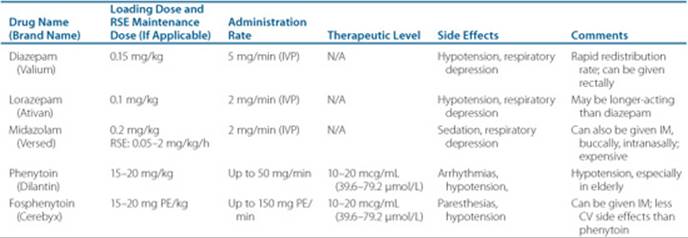

Table 31–2 Algorithm for Treatment of SE in Adults
Phenytoin
The most widely used AED is phenytoin, which is administered IV as a loading dose (for patients previously not on phenytoin) of 15 to 20 mg/kg. The loading dose must be modified in patients taking phenytoin who have subtherapeutic levels in order to avoid toxic serum concentrations. The loading dose is infused no faster than 50 mg/min due to potential risks of hypotension or arrhythmias. Continuous monitoring of ECG and blood pressure is recommended. Maintenance dosing can be started 12 hours after the loading dose. Phenytoin should not be infused with other medications because of stability concerns (it is soluble in propylene glycol and compatible only in 0.9% sodium chloride solutions). It should not be given via the IM route due to its alkaline nature. Extravasation of the drug can cause local discoloration, edema, pain, and sometimes necrosis (purple glove syndrome). Oral loading is not recommended in SE due to the delay in absorption.
Fosphenytoin
Fosphenytoin is a water-soluble, phospho-ester prodrug that is rapidly converted to phenytoin in the body. It is compatible with most IV solutions and is well tolerated as an IM injection, even with the large volumes associated with loading doses (20–30 mL).23 It is dosed in phenytoin equivalents (PE), and it can be infused three times as fast as phenytoin, up to 150 mg PE/min. The loading dose for patients not taking phenytoin is 15 to 20 mg PE/kg. It can be an advantage to use IM fosphenytoin when IV access cannot be obtained immediately and in patients without vascular access. Although it has fewer cardiovascular side effects than phenytoin, clinicians should still continuously monitor blood pressure, ECG, and heart rate. Maintenance doses are begun 12 hours after the loading dose. A common side effect is paresthesias, especially around the lips and groin, which typically resolves within a few minutes and should not necessitate stopping the infusion. If a post-load serum level is desired, it should be obtained 2 hours after an IV load or 4 hours after an IM load. Generic fosphenytoin is now available, so increased expense is no longer an issue.
Table 31–3 Randomized, Prospective Trials Comparing Treatments for SE in Adults

Phenobarbital
If phenytoin or fosphenytoin fails to prevent seizure recurrence, phenobarbital can be administered. However, emerging evidence suggests that phenobarbital may not be effective if SE persists after giving benzodiazepines and phenytoin. This may be due to the progressive resistance of the GABAA receptor, where barbiturates also act.24 It is dosed as an IV load of 15 to 20 mg/kg with a maximum rate of administration of 100 mg/min. Adverse reactions of phenobarbital include sedation, hypotension, and respiratory depression; therefore, patients who receive a rapid IV loading dose of phenobarbital should have hemodynamic monitoring and be mechanically ventilated. Its long half-life makes it a popular agent for both acute treatment and chronic maintenance therapy.
Valproate Sodium
Although valproate sodium is not FDA-approved for SE, its IV use has been documented in various types of SE including generalized tonic-clonic, myoclonic, and nonconvulsive SE.25,26 One study comparing it to phenytoin found similar efficacy (80% cessation of seizure activity) but with less cardiopulmonary side effects.21 It can be considered when the use of phenytoin and phenobarbital are precluded due to allergies or intolerance. Valproate sodium can be loaded IV at 15 to 20 mg/kg and infused at a rate of up to 6 mg/kg/min. Higher doses (up to 30–40 mg/kg) have also been used to attain serum levels of 100 to 150 mcg/mL (673-1,040 μmol/L), in less responsive cases of SE.27
Patient Encounter, Part 3
Treatment Failure
It has been 45 minutes since CH’s arrival, and he has been given lorazepam 4 mg twice and loaded with 1,500 mg of phenytoin. He received another 400 mg dose of phenytoin 15 minutes ago, but is still unarousable. His jerking movements have slowed down, but his temperature is now 39.9°C (103.8°F), and his blood pressure has dropped to 124/62 mm Hg. His oxygen saturation is 91% on 4 L oxygen via nasal cannula. Bilateral crackles are heard upon auscultation of his lungs. A CT scan of his head is obtained and shows no evidence of hemorrhage, tumor, or mass effect.
What is your assessment of this patient’s condition?
What possible treatment options exist at this time?
How would you optimize this patient’s outcome?
Treatment of RSE
Seizure activity that does not respond to benzodiazepines (first-line) and antiepileptics (second-line), or persists beyond 60 minutes in duration can be considered RSE.28 It can occur in up to 30% of patients with SE and has a mortality rate approaching 50%. Patients in RSE are unlikely to return to their baseline state, even if the seizures are eventually controlled. As RSE progresses, clinical signs may become subtle, and in certain patients, an EEG is required to detect ongoing seizure activity. Even SE patients without clinical signs of seizing are at risk for brain damage or even death.
The optimal therapy for RSE has not been determined. Clinicians must aggressively investigate and treat possible causes including infection, tumors, drugs or toxins, metabolic disorders, liver failure, or fever.29 In general, patients with RSE are managed in an ICU where hemodynamic and respiratory support are available and frequent monitoring can be performed. Continuous EEG monitoring is desirable to document cessation of seizure activity, but treatment should not be delayed if continuous EEG monitoring is not immediately available or while waiting for results. Any AEDs initiated before treatment for RSE should be continued, and their serum levels optimized in order to minimize any breakthrough or withdrawal seizures. Treatment of RSE typically consists of continuous IV infusions of benzodiazepines (midazolam), anesthetic agents (propofol), or barbiturates (pentobarbital) to suppress all clinical and EEG evidence of seizures.30 These agents are typically titrated to achieve “burst suppression” on the EEG, although no strong evidence exists to support this as the universal goal.31 Patients should be intubated and mechanically ventilated before initiating these treatment strategies for RSE. Consultation with a neurologist or epileptologist is highly recommended in these cases.
Midazolam
A loading dose of 0.2 mg/kg (repeated up to a maximum of 2 mg/kg) followed by a continuous infusion of 0.05 to 2 mg/kg/h is recommended in RSE.32–34 The dose must be adjusted during prolonged infusions, especially in patients with renal impairment, as the active metabolite can accumulate.35 Breakthrough seizures are common with midazolam infusions and usually respond to a bolus and a 20% increase in the rate. Despite this, tachyphylaxis can occur and the patient should be switched to another agent if seizures continue.
Propofol
The anesthetic agent propofol can be started with loading doses of 1 mg/kg repeated every 3 to 5 minutes until a clinical response is achieved, after which the infusion can be initiated at 2 to 4 mg/kg/h. Propofol can cause hypotension, especially with loading doses. Long-term, high-dose (greater than 5 mg/kg/h) propofol infusions are associated with rhabdomyolysis, acidosis, and cardiac arrhythmias (propofol infusion syndrome), especially in children.36 Propofol has a very short serum half-life and should be tapered off slowly to avoid withdrawal seizures. High-dose propofol infusions can also provide a considerable amount of calories (1 kcal/mL [4.2 kJ/mL]) over time, so other sources of nutrition may have to be adjusted accordingly.
Pentobarbital
Barbiturate infusions have been reported to be highly successful in treating RSE,37 but their side effects are considerable. They can cause significant hypotension, myocardial and respiratory depression, ileus, and infection (especially gram-positive organisms). As a result, patients often require mechanical ventilation, IV vasopressor therapy, invasive hemodynamic monitoring, and total parenteral nutrition while undergoing “barbiturate coma.” On the other hand, barbiturates are beneficial in patients with elevated intracranial pressure (ICP) problems.
Pentobarbital is commonly loaded at a dose of 10 to 15 mg/kg over 1 to 2 hours, followed by a continuous infusion of 0.5 to 4 mg/kg/h. Therapy can be tapered off after 12 to 24 hours of seizure control as evident on the EEG.38One meta-analysis reported a lower incidence of treatment failure with pentobarbital (3%) when compared to midazolam (21%) or propofol (20%), although the risk of hypotension requiring vasopressor therapy was higher with pentobarbital.39 This relative efficacy for pentobarbital must be considered together with its complications when determining which agent to use. Patients who fail midazolam and/or propofol infusions should be switched over to pentobarbital therapy.
Levetiracetam
Although not FDA approved for SE, levetiracetam is a newer antiepileptic that has ideal characteristics since it does not have the significant cardiopulmonary, hepatic, and sedative side effects seen with the other agents nor does it have potentially harmful drug interactions. Both IV and oral formulations have been used in RSE patients as add-on therapy with some success, although it is unclear if levetiracetam would be effective as a single agent in these cases.40 Loading doses of up to 2,000 mg over 15 to 30 minutes in the critically ill have been documented with very little toxicity noted.41
Other Agents
Ketamine,42 topiramate, and inhaled anesthetics have also been used to treat RSE. Ketamine is an NMDA-receptor antagonist that has been given orally43 and IV44 for RSE in children. Topiramate is a newer oral antiepileptic agent with multiple mechanisms of action that may have some benefit in RSE. The dose in adults ranges from 300 to 1,600 mg/day.45 Children have also been administered topiramate at a starting dose of 2 to 3 mg/kg/day and titrated to a maintenance dose of 5 to 6 mg/kg/day.46 Topiramate can induce metabolic acidosis, and this should be monitored carefully. The inhaled anesthetics, desflurane and isoflurane,47 are normally delivered in an operating room, and require special equipment for administration in an ICU. Future studies will determine their place in therapy.
Special Populations
Certain patient populations require special considerations due to their altered metabolism, unique volume of distribution, or increased risk for side effects.48 Although many of these patients are excluded from clinical trials in SE, the standard algorithm for SE still applies in terms of immediate care, assessment, and drugs (see Table 31–2).
Pediatrics
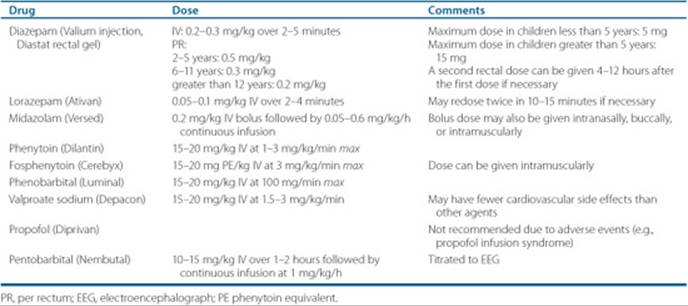
The treatment approach of SE in children is similar to that in adults with a few exceptions (Table 31–4). The doses are also weight-based but are typically higher than those used in adults due to higher clearance by the liver. It may be difficult to rapidly obtain IV access in children, so alternate routes of drug administration have been studied, including intranasal, buccal, rectal, and IM. Early administration of benzodiazepines and reduced time to hospital admission are important factors in decreasing the incidence of prolonged seizures.49
Geriatrics
The elderly are prone to injury and toxicity from multiple concomitant disease states and polypharmacy. Seizures in the elderly can easily arise from metabolic disorders, drug interactions, or even incorrect dosing of medications in patients with impaired renal and hepatic function and decreased protein binding. Clinicians treating elderly patients with SE should investigate drug- and disease state–induced causes, since treating these etiologies alone may terminate seizures. Acute treatment with benzodiazepines and AEDs is no different in the elderly, but they may have more pronounced reactions to these medications in terms of their sedative and cardiorespiratory side effects. Phenytoin and fosphenytoin loading doses should be carefully calculated in the elderly, as their weights may be overestimated, and they may not tolerate high doses. They should also be infused at slower rates to minimize hypotension and arrhythmias. Phenobarbital may cause respiratory depression earlier in the elderly, especially after benzodiazepines are administered. Clinicians should consider using smaller doses and evaluate for renal and hepatic insufficiency if repeated doses are to be given.
Table 31–4 Drugs Used in Pediatric SE
Pregnancy
The main concern in the treatment of pregnant females in SE is the safety of the fetus that is at risk of hypoxia during periods of prolonged seizures. Although many of the agents used in SE are teratogenic, clinicians should still use them as acute measures to stop the seizures and consider alternative agents as maintenance therapy. The volume of distribution and clearance of many drugs are typically increased during pregnancy, and this should be considered when calculating doses.
Patient Care and Monitoring
1. Obtain a seizure history from the patient or family members, including precipitating factors and duration of seizure activity.
2. Identify the underlying cause of the seizures and correct the cause, if possible. Does the patient have any laboratory abnormalities? Is there a positive toxicology screen for alcohol or drugs?
3. Obtain a thorough history of nonprescription, prescription, and alternative or herbal drug use. Determine adherence with the medication regimen and whether barriers to care exist. Does the patient have the financial ability and transportation to obtain their prescriptions?
4. Assess the AED serum concentration and adjust therapy as needed for agents with a defined therapeutic range (e.g., phenytoin, carbamazepine, valproic acid, and phenobarbital). Drug levels can also be used to determine adherence to medication regimens for agents that do not have defined ranges.
5. Evaluate the patient for adverse drug reactions, IV site extravasation, and allergic reactions. What alternative AEDs should be used if a drug allergy is identified?
6. Determine whether there are any drug interactions with the patient’s current or home medication regimens. Do you need to adjust the dose of any medications for toxic or subtherapeutic concentrations from the drug interaction?
7. Maintain adequate cardiovascular support, nutrition, and electrolyte and glucose serum concentrations to prevent recurrence of seizure activity.
8. Continue to evaluate the patient for seizure activity and adjust therapy as needed to control seizures and optimize quality of life.
OUTCOME EVALUATION
The success of treatment is measured by the early termination of seizures, without adverse drug effects or brain injury. Therefore, start pharmacologic treatment as soon as possible.
• First-line treatment for SE should halt seizure activity within minutes of administration.
• In patients who are unarousable following treatment, an EEG can confirm termination of seizures.
• Perform a physical exam and evaluation of the patient’s laboratory results to help determine if the cause or complications of seizure activity are being appropriately treated.
Once seizure activity has ceased and the patient has stabilized, review the patient’s therapeutic regimen.
• Evaluate and monitor serum trough concentrations of AEDs with defined target ranges to determine patient-specific therapeutic goals.
• If there is a known cause of SE, treat it and simplify therapy.
• In patients with RSE on multiple AEDs, slowly decrease the dose of one drug at a time while continuing to evaluate the patient for seizure activity.
• Base the titration schedule on the half-life of the drug and individual patient response.
• Optimize treatment using the fewest medications to prevent seizure recurrence without causing adverse drug reactions.
• Continue to monitor AED serum trough concentrations approximately every 3 to 5 days until the AEDs have reached steady-state concentrations.
• Give additional loading doses or hold doses as needed to maintain target trough concentrations.
• Monitor the patient for signs of drug toxicity and seizures until drug concentrations have stabilized.
• Drug interactions are common in patients taking multiple AEDs; therefore, closely evaluate their medication profiles and change drugs or doses to minimize any interaction, if possible.
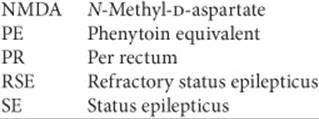
Abbreviations Introduced in This Chapter

 Self-assessment questions and answers are available at http://www.mhpharmacotherapy.com/pp.html.
REFERENCES
1. Commission on Classification of Terminology, International League against Epilepsy. Proposal for revised clinical and electroencephalographic classification of epileptic seizures. Epilepsia 1981;22:489–501.
2. Lowenstein D, Bleck T, Macdonald RL. It’s time to revise the definition of status epilepticus. Epilepsia 1999;40:120–122.
3. Lowenstein DH, Alldredge BK. Status epilepticus. N Engl J Med 1998;338:970–976.
4. DeLorenzo RJ, Pellock JM, Towne AR, Boggs JG. Epidemiology of status epilepticus. J Clin Neurophysiol 1995;12:316–328.
5. Penberthy LT, Towne A, Garnett LK, et al. Estimating the economic burden of status epilepticus to the health care system. Seizure 2005;14:46–51.
6. Pitkanen A. Efficacy of current antiepileptics to prevent neurodegeneration in epilepsy models. Epilepsy Res 2002;50:141–160.
7. Jones DM, Esmaeil N, Maren S, et al. Characterization of pharmacoresistance to benzodiazepines in the rat Li-pilocarpine model of status epilepticus. Epilepsy Res 2002;50:301–312.
8. Brooks-Kayal A, Shumate M, Rikhter T, Coulter D. Selective changes in single cell GABA A receptor subunit expression and function in temporal lobe epilepsy. Nat Med 1998;4:1166–1172.
9. Lothman E. The biochemical basis and pathophysiology of status epilepticus. Neurology 1990;40:13–23.
10. Fitzgerald BJ, Okos AJ, Miller JW. Treatment of out-of-hospital status epilepticus with diazepam rectal gel. Seizure 2003;12:52–55.
11. Cock HR, Schapira AH. A comparison of lorazepam and diazepam as initial therapy in convulsive status epilepticus. QJM 2002;95:225–231.
12. Towne AR, DeLorenzo RJ. Use of intramuscular midazolam for status epilepticus. J Emerg Med 1999;17:323–328.
13. Kutlu NO, Dogrul M, Yakinci C, Soylu H. Buccal midazolam for treatment of prolonged seizures in children. Brain Dev 2003;25: 275–278.
14. Knoester PD, Jonker DM, Van Der Hoeven RT, et al. Pharmacokinetics and pharmacodynamics of midazolam administered as a concentrated intranasal spray. A study in healthy volunteers. Br J Clin Pharmacol 2002;53(1):501–507.
15. Fountain NB, Adams RE. Midazolam treatment of acute and refractory status epilepticus. Clin Neuropharmacol 1999;22:261–267.
16. Leppik IE, Derivan AT, Homan RW, et al. Double-blind study of lorazepam and diazepam in status epilepticus. JAMA 1983;249: 1452–1454.
17. Shaner DM, McCurdy SA, Herring MO, Gabor AJ. Treatment of status epilepticus: A prospective comparison of diazepam and phenytoin versus phenobarbital and optional phenytoin. Neurology 1988;3(2):202–207.
18. Treiman DM, Meyers PD, Walton NY, et al. A comparison of four treatments for generalized convulsive status epilepticus. N Eng J Med 1998;339:792–798.
19. Alldredge BK, Gelb AM, Isaacs SM, et al. A comparison of lorazepam, diazepam, and placebo for the treatment of out-of-hospital status epilepticus. N Eng J Med 2001;345:631–637.
20. Misra UK, Kalita J, Patel R. Sodium valproate vs phenytoin in status epilepticus: A pilot study. Neurology 2006;67:340–342.
21. Agarwal P, Kumar N, Chandra R, et al. Randomized study of intravenous valproate and phenytoin in status epilepticus. Seizure 2007;16:527–532.
22. Gilad R, Izkovitz N, Dabby R, et al. Treatment of status epilepticus and acute repetitive seizures with i.v. valproic acid vs phenytoin. Acta Neurol Scand 2008;118:296–300.DOI: 10.1111/j.1600-0404.2008.01097.x.
23. Pryor FM, Gidal B, Ramsay RE, et al. Fosphenytoin: Pharmacokinetics and tolerance of intramuscular loading doses. Epilepsia 2001;42(2): 245–250.
24. Mazarati AM, Baldwin RA, Sankar R, Wasterlain CG. Time-dependent decrease in the effectiveness of antiepileptic drugs during the course of self-sustaining status epilepticus. Brain Res 1998;814:179–185.
25. Limdi NA, Shimpi AV, Faught E, et al. Efficacy of rapid IV administration of valproic acid for status epilepticus. Neurology 2005;64:353–355.
26. Peters CN, Pohlmann-Eden B. Intravenous valproate as an innovative therapy in seizure emergency situations including status epilepticus—Experience in 102 adult patients. Seizure 2005;14:164–169.
27. Uberall MA, Trollmann R, Wunsiedler U, Wenzel D. Intravenous valproate in pediatric epilepsy patients with refractory status epilepticus. Neurology 2000;54(11):2188–2189.
28. Mayer SA, Claassen J, Lokin J, et al. Refractory status epilepticus. Arch Neurol 2002;59:205–210.
29. Bleck TP. Refractory status epilepticus. Curr Opin Crit Care 2005;11: 117–120.
30. Kalviainen R, Eriksson K, Parviainen I. Refractory generalized convulsive status epilepticus—A guide to treatment. CNS Drugs 2005;19(9):759–768.
31. Marik PE, Varon J. The management of status epilepticus. Chest 2004;126:582–591.
32. Parent JM, Lowenstein DH. Treatment of refractory generalized status epilepticus with continuous infusion of midazolam. Neurology 1994;44(10):1837–1840.
33. Claassen J, Hirsch LJ, Emerson RG, et al. Continuous EEG monitoring and midazolam infusion for refractory nonconvulsive status epilepticus. Neurology 2001;57(6):1036–1042.
34. Ulvi H, Yoldas T, Mungen B, Yigiter R. Continuous infusion of midazolam in the treatment of refractory generalized convulsive status epilepticus. Neurol Sci 2002;23(4):177–182.
35. Nantoku DK, Sinha S. Prolongation of midazolam half-life after sustained infusion for status epilepticus. Neurology 2000;54(6): 1366–1368.
36. Kang TM. Propofol infusion syndrome in critically ill patients. Ann Pharmacother 2002;36(9):1453–1456.
37. Van Ness PC. Pentobarbital and EEG burst suppression in treatment of status epilepticus refractory to benzodiazepines and phenytoin. Epilepsia 1990;31(1):611–617.
38. Krishnamurthy KB, Drislane FW. Depth of EEG suppression and outcome in barbiturate anesthetic treatment for refractory status epilepticus. Epilepsia 1999;40(6):759–762.
39. Claassen J, Hirsch LJ, Emerson RG, et al. Treatment of refractory status epilepticus with pentobarbital, propofol, or midazolam: A systemic review. Epilepsia 2002;43:146–153.
40. Knake S, Gruener J, Hattemer K, et al. Intravenous levetiracetam in the treatment of benzodiazepine refractory status epilepticus. J Neurol Neurosurg Psychiatry 2008;79:588–589.
41. Ruegg S, Naegelin Y, Hardmeier M, et al. Intravenous levetiracetam: Treatment experience with the first 50 critically ill patients. Epilepsy Behav 2008;12:477–480.
42. Borris DJ, Bertram EH, Kapur J. Ketamine controls prolonged status epilepticus. Epilepsy Res 2000;42(2–3):117–122.
43. Mewasingh LD, Sekhara T, Aeby A, et al. Oral ketamine in paediatric non-convulsive status epilepticus. Seizure 2003;12(7):483–489.
44. Sheth RD, Gidal BE. Refractory status epilepticus: Response to ketamine. Neurology 1998;51(6):1765–1766.
45. Towne AR, Garnett LK, Waterhouse EJ, et al. The use of topiramate in refractory status epilepticus. Neurology 2003;60(2):332–334.
46. Kahriman M, Minecan D, Kutluay E, et al. Efficacy of topiramate in children with refractory status epilepticus. Epilepsia 2003;44(10): 1353–1356.
47. Mirsattari SM, Sharpe MD, Young GB. Treatment of refractory status epilepticus with inhalational anesthetic agents isoflurane and desflurane. Arch Neurol 2004;61(8):1254–1259.
48. Leppik IE. Treatment of epilepsy in 3 specialized populations. Am J Manag Care. 2001;7(Suppl 7):S221–226.
49. Chin RF, Neville BG, Peckham C, et al. Treatment of community-onset, childhood convulsive status epilepticus: A prospective, population-based study. Lancet Neurol 2008;7:696–703.