
Leigh Ann Ross and Brendan S. Ross
LEARNING OBJECTIVES
Upon completion of this chapter, the reader will be able to:
1. Differentiate among types of headaches based on symptoms and signs.
2. List underlying causes and precipitating factors of different types of headache disorders.
3. Recommend appropriate nonpharmacologic measures for headache treatment and prevention of headache.
4. Based on patient-specific data; determine when pharmacologic therapy is indicated for headache.
5. Propose individualized pharmacologic treatment regimens for the acute and chronic management of headache syndromes.
6. Construct therapeutic and adverse effect monitoring plans for patients with headache.
7. Discuss pertinent patient education points for patients with headache disorders.
KEY CONCEPTS
 Headache may be a primary condition, or a secondary disorder due to an underlying medical condition.
 Primary headaches are classified as migraine, tension-type, or cluster and other trigeminal autonomic cephalalgias.
 The pain experienced with headaches is likely due to overactivity in the trigeminovascular system of the brain.
 Migraine is further classified as migraine with aura and migraine without aura.
 The short-term goal of headache therapy is pain relief and a return to normal activities.
 The long-term goal of therapy is the prevention of headache recurrence.
 Pharmacologic treatment of acute headache should be started early to improve the response to therapy.
 Prophylaxis is indicated if headaches are frequent or severe, lead to significant disability, or require the use of pain-relieving medications two or more times per week.
 Regimens for headache disorders should be individualized based on the pattern of occurrence, response to therapy, medication tolerability, and comorbid medical conditions.
Headaches are common and have a significant impact on quality of life. They can be classified as primary or secondary; the latter are causally related to an underlying medical disorder. Primary headaches are more common and will be the focus of this chapter. Patients may seek evaluation of headache from a variety of health care providers. Therefore, all clinicians must be familiar with the types of headache, their diagnostic criteria, red flags indicating need for urgent intervention or specialist referral, and nonpharmacologic and pharmacologic options for treatment. The International Headache Society (IHS) classifies primary headaches as migraine, tension-type, or cluster and other trigeminal autonomic cephalalgias.1 Tension-type headaches (TTHs) are more common than migraine, and both are more common in women than men. Cluster is a less common chronic headache syndrome that affects predominantly men.
EPIDEMIOLOGY OF HEADACHE DISORDERS
Migraine Headache
Migraine is a primary headache disorder that is estimated to affect 10% to 15% of adults in the United States.2 Less than one-half of headaches meeting the diagnostic criteria for migraine are appropriately diagnosed. Migraine prevalence depends upon age and gender. In children younger than 12 years of age, migraines are more prevalent in males. After age 12, this prevalence shifts markedly to women. The evolution in this gender difference is brought on by the hormonal changes of menarche.3 Onset typically occurs between the ages of 10 and 30 years, but the prevalence is highest in the age range of 35 to 45 years.4 Migraines significantly impact patient function with over one-half of sufferers reporting severe disability requiring bed rest during an attack. The economic burden of migraine due to direct and indirect costs is substantial. Migraines are the leading cause of employee absenteeism and decreased workplace productivity.5
Tension-Type Headache
TTH is the most common primary headache disorder. It is often under-represented in clinical practice, as many patients do not present for care.6 The term TTH is used to describe all headache syndromes in which muscle contraction is the most significant factor in the pathogenesis of pain. The 1-year prevalence of TTH in the population ranges from 30% to 90%.6 It is more common in adult females. Environmental factors, as opposed to genetic predisposition, play a central role in the development of TTH. TTHs can be further divided into episodic or chronic. The mean frequency of attacks is 3 days per month in episodic disorders, and chronic TTH is defined as 15 or more attacks in a one-month period.7 The estimated prevalence of chronic TTH is less than 5%.6 Some researchers believe that chronic TTHs represent a continuum of headache severity with migraine headache.8 When severe headaches are difficult to differentiate clinically, treatment should initially target TTH.
Cluster Headache and Other Trigeminal Autonomic Cephalalgias
Cluster headache disorders are the most uncommon and severe primary headache syndromes.9 The estimated point prevalence is less than 0.5% to 1%. Unlike migraine and TTH, cluster headaches occur more frequently in men. Onset commonly occurs prior to age 30.6 A genetic predisposition is apparent, although affected individuals often provide a history of tobacco use and alcohol abuse.6 Attacks consist of debilitating, unilateral head pains that occur in series lasting up to months at a time, but which remit over months to years between occurrences. In rare instances, cluster headache can be a chronic disorder without remissions.4
ETIOLOGY AND PATHOPHYSIOLOGY OF HEADACHE DISORDERS
Migraine Headache
The mechanism by which headache occurs in migraineurs is not confirmed, and competing pathoetiologic theories exist: tissue pain generated by vascular reactivity and pain induced by neuronal imbalances accompanied by trigeminovascular system overactivity.10 The vascular hypothesis suggests that intracerebral vasoconstriction leads to neural ischemia, which is followed by reflex extracranial vasodilation and pain. Recent neuroimaging evidence and the effectiveness of medications with no vascular properties do not support this theory, and vascular changes alone are no longer accepted as the primary cause of migraine distress.6 A neuronal etiology has emerged as the leading mechanism for the development of migraine.11 Depressed neuronal electrical activity spreads across the brain, producing transitory neural dysfunction.12 Headache pain is likely due to compensatory overactivity in the trigeminovascular system of the brain. Activation of trigeminal sensory nerves leads to the release of vasoactive peptides (e.g., calcitonin gene-related peptide [CGRP], neurokinin A, substance P) that can produce a sterile inflammatory response around vascular structures in the meninges of the brain, which provokes a sensation of pain.11 Continued sensitization of CNS sensory neurons can potentiate and intensify headache pain as an attack progresses.12 Bioamine pathways projecting from the brain stem regulate activity within the trigeminovascular system. Thus, the pathogenesis of migraine may be due to an imbalance in the modulation of nociception and blood vessel tone by serotonergic and noradrenergic neurons.13
Patient Encounter, Part 1
A 28-year-old woman complains of a “terrible headache that won’t go away.” She describes the pain as “on one side and throbbing.” The pain began yesterday morning and caused her to have to leave work. She reports a history of similar headaches since the age of 16, but none lasted this long. In the past, her headaches were relieved with the use of over-the-counter (OTC) nonsteroidal anti-inflammatory drugs. She often has to take them multiple times per week.
What type of headache is the patient most likely experiencing?
What characteristics of the headache support this diagnosis?
What are possible causes or triggers of headache in this patient?
What additional information is needed to formulate a treatment plan?
Tension-Type Headache
The pathophysiologic mechanisms of TTH are not clearly understood. The pain is thought to originate in the myofascial tissues of the head, but central brain processing is believed to be an important modulator of pain perception.14Chronic TTH syndromes may evolve from recurrent episodic headaches as central nociception is sensitized.15
Cluster Headache and Other Trigeminal Autonomic Cephalalgias
Cluster headache is one of a group of disorders referred to as trigeminal autonomic cephalalgias.16 The autonomic dysfunction is characterized by sympathetic underactivity and parasympathetic activation. Similar to migraine, the pain of a cluster headache is believed to be the result of vasoactive peptide release and neurogenic inflammation. The exact cause of trigeminal activation is not clear.9 One hypothesis is that hypothalamic dysfunction, occasioned by diurnal or seasonal changes in neurohumoral balance, are responsible for headache periodicity.6 Serotonin affects neuronal activity in the hypothalamus and trigeminal system and may play a role in the pathophysiology of cluster headache. The precipitation of cluster headache by high-altitude exposure also implicates hypoxemia in the pathogenesis of trigeminal autonomic cephalalgias.17
Patient Encounter, Part 2: Medical History, Physical Examination, and Diagnostic Tests
PMH: Asthma, mild persistent; gastroesophageal reflux disease (GERD); generalized anxiety disorder
FH: Father living, age 58 years; hypertension, diabetes mellitus, dyslipidemia; mother living, age 57 years; chronic daily “sick” headaches; no siblings; paternal grandparents, died at ages 58 and 65 years, both of ischemic stroke; maternal grandparents, living, ages 73 and 84 years; hypertension, osteoarthritis
SH: Married; employed as an account officer in a local bank; no tobacco use, “social” alcohol intake (1-2 glasses of wine on weekends), drinks three to four caffeinated beverages per day
Meds: Advair 250/50 mg one inhalation twice daily; albuterol (salbutamol) two inhalations by MDI when necessary for bronchospasm; esomeprazole 20 mg orally daily; desvenlafaxine 50 mg orally daily; combination ethinyl estradiol/norgestimate oral contraceptive; naproxen sodium 220 mg, two tablets orally twice daily as needed headache
Review of Systems: Headache, severe in intensity; sensitivity to light; no chest pain or palpitations; no shortness of breath or wheezing; nauseated, anorectic; dizzy, difficulty concentrating
PE:
VS: BP 138/82, P 88, RR 16, T 37.0°C (98.6°F), oral
HEENT: No papilledema, no neck stiffness
CV: RRR, normal S1, S2, no MRG
Chest: CTA
Abd: Benign, bowel sounds positive
Neuro: Nonfocal
Labs: CBC and chemistry panel within normal limit
What is your assessment of this patient’s condition?
What medical comorbidities or drug therapies may be contributing to her distress?
Identify treatment goals for this patient.
What nonpharmacologic options are needed at present, and what options are appropriate in the long-term for this patient?
What pharmacologic therapy would you recommend for this patient in the acute setting?
Does this patient require long-term pharmacologic prophylaxis against recurrent headaches?
CLINICAL PRESENTATION OF HEADACHES
Migraine Headache
Migraine presents as a recurrent headache that is severe enough to interfere with daily functioning. Migraine headaches are classified as migraine with aura and migraine without aura.6 The correlating terms of “classic” and “common” migraine are no longer employed. Aura is defined as a transient focal neurologic symptom that can be positive or negative, which can occur prior to or during an attack.18Examples of positive symptoms include the visual perception of flickering lights, spots, or wavy lines, whereas a partial loss of vision, a scotoma, is considered a negative finding characteristic of migraine aura. The International Classification of Headache Disorders (ICHD) outlines diagnostic criteria that differentiate migraine without and with aura.6 The pain of a migraine headache is typically described as moderate to severe, throbbing, unilateral and retro-orbital in location. The pain is accompanied by nausea, sensitivity to light and sound, and difficulty in concentrating.19 Untreated migraines can last from 4 to 72 hours. Migraines occurring 15 days per month or more for 3 months or longer, without the overuse of analgesic medications, are classified as chronic migraines.6 Severe and debilitating migraine pain lasting greater than 72 hours is termed status migrainosus.19 Even in the absence of neurologic focality, brain imaging is mandated in patients with frequent, severe, and prolonged attacks or attacks, which are atypical for a migraineur’s stereotyped presentation.20
Tension-Type Headache
TTH pain differs from migraine pain in that it is usually reported to be mild-to-moderate, nonpulsating, and bilateral.6 The pain is described by sufferers as a band-like tightness or pressure around the head. No transient neurologic deficits are noted, and systemic symptoms are rare.4 TTHs infrequently disrupt normal activity. Muscle palpation in the frontotemporal and parietooccipital may identify localized tender points.4 Neuroimaging and laboratory testing are unrevealing, and such tests are unnecessary if the presentation and clinical history is classic for TTHs.
Clinical Presentation and Diagnosis of Migraine Without Aura
Patients experiencing “migraine without aura” display the following headache symptoms and characteristics:
Two or more of the following are present:
1. Pain interrupts or worsens with physical activity
2. Unilateral pain
3. Pulsating pain
4. Moderate to severe pain intensity
Two or more of the following are present during headache:
1. Nausea
2. Vomiting
3. Photophobia
4. Phonophobia
5. Osmophobia
Duration: 4 to 72 hours (treated or not treated)
Criteria for diagnosis: five or more attacks fulfilling above criteria are necessary for diagnosis
Laboratory assessments that may be helpful in excluding medical comorbidities: CBC, chemistry panel, thyroid function tests, erythrocyte sedimentation rate (ESR)
Clinical Presentation and Diagnosis of Migraine With Aura
Patients experiencing “migraine with aura” may display the following headache symptoms and characteristics:
One or more of the following present with no motor weakness:
1. Visual symptoms (positive and/or negative; reversible)
2. Sensory symptoms (positive and/or negative; reversible)
3. Dysphasic speech (reversible)
4. Moderate or severe pain intensity
Two or more of the following:
1. Homonymous visual symptoms and/or unilateral sensory symptoms
2. One aura symptom develops at least 5 minutes prior and/or a second aura symptom develops in 5 minutes or more after headache
3. Duration of each symptom 4 to 60 minutes
Criteria for diagnosis: two or more attacks fulfilling above criteria are necessary for diagnosis
Cluster Headache
Pain associated with cluster headache differs from migraine and TTH in that it is severe, intermittent, and short in duration.6 Headaches typically occur at night, but attacks may occur multiple times per day.9The pain is usually unilateral, but, unlike migraine, it is not described as pulsatile.6 Aura is not a feature, and pain intensity peaks early after onset and may persist for hours.6 The headache is described as explosive and excruciating. A constellation of features, ascribed to parasympathetic overactivity, can be seen, such as ipsilateral conjunctival injection, lacrimation, rhinorrhea, and sweating.9 Unlike the migraineurs, cluster headache disorder patients tend to become excited and restless during attacks, rather than seeking quiet and solitude.16
TREATMENT OF HEADACHE DISORDERS
Desired Outcomes
The primary short-term treatment goal of migraine is to achieve rapid pain relief allowing the patient to resume normal activities.21 The long-term goal of therapy is to prevent headache recurrences and to diminish headache severity. Similarly, the goal of TTH is to lessen headache pain, while the long-term goal is to avoid analgesic dependence.22 The short-term goal in cluster headache therapy is to achieve rapid pain relief. Prophylactic therapy may be necessary to obtain the intermediate-term outcome of reducing the frequency and severity of headaches within a periodic cluster series, as well as to achieve the long-term goal of delaying or eliminating recurrent periods.23
General Approach to Treatment
The most important goal of acute headache management is pain relief. First-line pharmacologic agents include nonsteroidal and opiate analgesics, and serotonin-receptor agonists (triptans).24 Despite the availability of targeted prescription therapies, most headache patients rely on OTC products for pain relief and so are not treated adequately.25 Pharmacologic treatment of acute headache should be started early to abort the intensification of pain and to improve response to therapy. The long-term management of headache syndromes focuses on lifestyle modification and other nonpharmacologic therapeutic options; if the headaches are severe and frequent, then prophylactic pharmacologic therapy is needed.26 Several clinical markers, so-called “red flags,” have been identified that warrant urgent physician referral and further diagnostic evaluation (Table 34–1).
Clinical Presentation and Diagnosis of TTH
Patients experiencing TTH may display the following headache symptoms and characteristics:
Two or more of the following present:
1. Bilateral pain
2. Nonpulsating pain
3. Mild or moderate pain intensity
Both of the following:
1. No nausea or vomiting (anorexia possible)
2. Either photophobia or phonophobia (not both)
Duration: 30 minutes to 7 days
Criteria for diagnosis: 10 or more attacks fulfilling above criteria occurring on average less than 1 day per month are necessary for diagnosis
Clinical Presentation and Diagnosis of Cluster Headache
Patients experiencing “cluster headache” may display the following headache symptoms and characteristics:
1. Unilateral pain
2. Orbital, supraorbital, or temporal pain
3. Sharp and stabbing pain
One or more of the following present:
1. Conjunctival injection and/or lacrimation
2. Nasal congestion and/or rhinorrhea
3. Eyelid edema
Duration of pain: 2 seconds to 10 minutes
Frequency of attacks: One or more per day more than half of the time
Criteria for diagnosis: 20 or more attacks fulfilling above criteria are necessary for diagnosis
Nonpharmacologic Therapy
Comprehensive patient education is key to the successful management of headache disorders. Recording headache frequency, duration, and severity in a “headache diary” provides beneficial information for the patient regarding headache precipitants and useful insights for the clinician selecting appropriate management strategies.27 To prevent future occurrences, exposure to headache triggers (Table 34–2) should be limited. In the acute setting, environmental control can lessen the severity of a migraine attack, so patients may benefit from resting in a dark, quiet area.28 Behavioral interventions, such as biofeedback therapy, relaxation training, and cognitive-behavioral training, are effective and can be recommended for headache prevention.17 TTHs may also be managed through stress management training.17 Acupuncture has yielded inconsistent benefits in clinical trials.22 Cluster headache patients should be advised to moderate alcohol use and curtail tobacco abuse.23 Emotional distress may compound headache pain through the outward displacement of inner conflicts: somatization. Psychological interventions are urged in such instances, and should be considered in all headache sufferers resistant to standard medication treatments.29 All such nonprescription therapies may be useful in augmenting pharmacologic response.
Table 34–1 Headache Red Flags Indicating Need for Urgent Medical Evaluation
|
New onset sudden and/or severe pain |
|
Onset after 40 years of age |
|
Stereotyped pattern worsens |
|
Systemic signs (e.g., fever, weight loss, and accelerated hypertension) |
|
Focal neurologic symptoms (i.e., other than typical visual or sensory aura) |
|
Papilledema |
|
Cough, exertion, or valsalva-triggered headache |
|
Pregnancy or postpartum state |
|
Patients with cancer, HIV, and other infectious and immunodeficiency disorders |
|
Seizures |
Pharmacologic Therapy
Migraine
Analgesics, such as nonsteroidal anti-inflammatory drugs (NSAIDs) and acetaminophen, without or with an opioid, are the initial pharmacologic option for the acute management of migraine headache. If these analgesics prove to be ineffective, then migraine-specific medications, such as triptans, are administered.30 Early, abortive treatment should be the rule. If the orally administered route is selected for medication administration, then larger doses than otherwise required to produce pain relief may need to be provided, due to the enteric stasis and poor drug absorption accompanying migraine attacks.20Intranasal, parenteral, and rectal administration can circumvent this complication.
Table 34–2 Migraine Triggers
|
Behavioral: |
|
Environmental: |
|
Food: |
|
Food containing: |
|
Medications: |
Clinical trial evidence supports many NSAID medications in the acute treatment of migraines with and without aura.30 The currently marketed cyclooxygenase-2 (COX-2) selective drugs are not clearly supported for migraine use, but are likely acceptable. Acetaminophen alone, or in proprietary combinations with aspirin, opioids, caffeine, or the barbiturate butalbital is also effective.28 Although deemed to have a benign adverse effect profile on gastric mucosal integrity and renal blood flow, overwhelming clinical experience supports the observation that the overuse of acetaminophen may lead to tolerance or dependence clinically manifested as acute withdrawal headaches.31These so-called “rebound” headaches are the result of poor attention to prevention therapies, and thus the chronic use of daily analgesics.32 A proprietary fixed-dose combination of the anti-inflammatory analgesic naproxen sodium with oral sumatriptan was recently approved for the acute management of migraine with and without aura in adults.
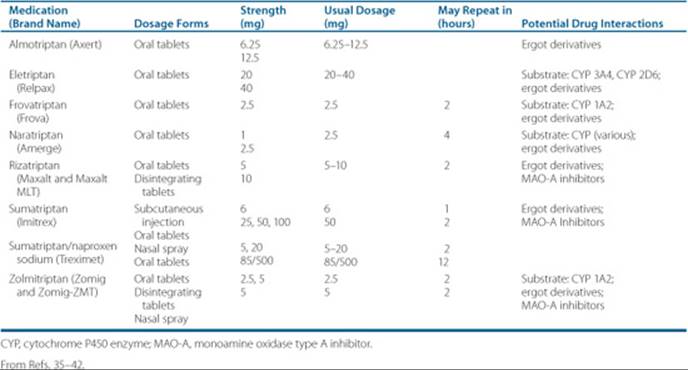
The triptans are considered specific therapies in that they target the pathophysiology underlying migraine.33 They abort headache through beneficial effects on neuronal imbalances.11 Triptans inhibit neurotransmission in the trigeminal complex and activate serotonin 1B/1D pathways in the brainstem, which modulate nociception. They also decrease the release of vasoactive peptides leading to vascular reactivity and to pain.34 The triptans are a welcome addition to the therapeutic armamentarium in that they are available in intranasal, subcutaneous, and oral dosage forms. The available agents differ in their dosing and pharmacokinetic properties, but all are effective treatments to abort or diminish migraine headache (Table 34–3).43 Patient responses can be variable. If a patient does not respond to one agent, then another is selected before a patient is prematurely labeled as triptan-unresponsive.44 The initial severity of headache correlates with symptomatic response, thus administration should be prompt. Relief is usually experienced within 2 to 4 hours. Treatment delay may lead to decreased analgesia through the development of refractory central pain sensitization. Efficacy tends to be dose related, though adverse effects are less so.45 These medications are well-tolerated; the most common side effects are dizziness, a sensation of warmth, chest fullness, and nausea. Rarely, ischemic vascular events may be precipitated by the vasoconstrictive nature of these drugs.34 An initial dose under direct practitioner supervision is indicated for patients presumed at cardiovascular risk. Triptans are avoided in patients with migraine associated with neurologic focality, a history of previous stroke, poorly controlled hypertension, or unstable angina. Triptans are relatively contraindicated for routine use in pregnancy.30 Triptans should not be used with concurrent ergotamine administration.34
Ergotamine derivatives produce salutary effects on serotonin receptors similar to triptans. They also impact adrenergic and dopaminergic receptors. Ergotamine tartrate and dihydroergotamine (DHE) are the most commonly employed agents.20 The latter is not available in an oral dosage form. Analgesic onset is within 4 hours, though additional dosing is required if an acceptable response is not achieved. When dosed parenterally, these drugs are usually provided with an antiemetic, due to their potential to worsen the nausea associated with migraine. Metoclopramide and chlorpromazine are the drugs of choice in such instances. Intranasal DHE can be self-administered to abort an attack.20 The outpatient use of subcutaneous ergotamines is limited by the lack of a prefilled syringe form. The same cautions associated with triptan use are also applicable to ergot use in patients at risk for vascular events.
The choice of initial therapy for acute migraine attacks is a subject of debate among specialists.46 Some believe that nonspecific analgesics should be used first-line, while others believe migraine-specific drugs should be the choice for patients with severe pain or a history of significant disability.47 A stepped-care approach within attacks from less-to-more specific drugs is usually recommended. Once a history of headache refractory to common analgesics is established, triptans should be utilized as initial therapy. In patients who present to the hospital with intractable pain, intravenous metoclopramide supplemented with DHE may be needed. Oral medications in this setting are not utilized, as nausea and vomiting limit their bioavailability. Migraneurs with frequent and severe attacks are candidates for prophylactic treatment.
Table 34–3 Comparison of Serotonin Receptor Agonists (Triptans)
Tension-Type Headache
Most individuals who experience episodic TTHs will not seek medical attention.22 Instead, they will find relief with the use of widely available OTC analgesics. Acetaminophen products and NSAIDs are commonly utilized. An individual patient may benefit from topical analgesics (e.g., ice packs) or physical manipulation (e.g., massage) during an acute attack, but the evidence supporting nonpharmacologic therapies is inconsistent.6 Relaxation techniques can often reduce headache frequency and severity. When pain is unrelieved, prescription-strength NSAID use is required or the combination of acetaminophen with an opioid analgesic may be necessary. The frequency of use of these more potent analgesics should be limited so as to prevent the development of dependency. Use for more than 2 days per week suggests the need for prophylactic therapy.48 In those sufferers who do not seek expedient medical attention, but rely instead on the frequent use of unprescribed analgesics, medication-overuse headache may supervene. This chronic daily-headache syndrome requires physician referral to desensitize patient-initiated analgesic tolerance and dependence.49
Cluster Headache
Cluster headache also responds to many of the treatment modalities used in acute migraine; however, initial prophylactic therapy is required to limit the frequency of recurrent headaches within a periodic series. A unique therapy specific to cluster headaches is the administration of high-flow-rate oxygen: 100% at 5 to 10 L/min by nonrebreather face mask for approximately 15 minutes.50 In case the pain is not aborted, retreatment is indicated. No side effects are seen with short-term oxygen use. If oxygen therapy is not wholly effective, then pharmaceuticals are useful as an adjunctive therapy. Drug therapy is also used when supplemental oxygen is not readily available. The triptan class is safe and effective. Intranasal or subcutaneous sumatriptan has demonstrated efficacy in decreasing cluster headache pain.51 Oral triptans are also effective, but their delayed onset of action may limit their applicability in acute cluster headache treatment.52 Cluster headache is rapid in onset and achieves peak intensity quickly, but can be of short duration. Oral agents may have utility in limiting the recurrence of cluster attacks. Intranasal, intramuscular, or IV ergotamine agents are an alternative to triptan use.6 Repeated dosing may break a cluster series. For those patients in whom triptans and ergotamine derivatives are contraindicated due to ischemic vascular disease, octreotide may be helpful to relieve pain.53 Octreotide is a somatostatin analogue that has a shorter half-life and may be administered subcutaneously. Unlike the other abortive agents, it has no vasoconstrictive effects. The most prominent treatment emergent adverse effect is gastrointestinal upset. Glucocorticoids, provided intravenously and later tapered orally, are effective when cluster headache attacks are not satisfactorily controlled.9
Pharmacologic Therapy for Headache Prophylaxis
Prophylaxis for headache disorders is indicated if headaches are frequent or severe, if significant disability occurs, or if pain-relieving medications are used two or more times per week.
Migraine Prophylaxis
Migraine headaches that are severe, frequent, or lead to significant disability will require long-term medication therapy. Prophylactic therapy is also recommended for migraines associated with neurologic focality, as it may prevent permanent sequelae. Although multiple medication classes have garnered FDA labeling for migraine prevention, there is no consensus on the best initial therapy (Table 34–4). The choice of pharmacologic agent is individually tailored to patient tolerability and medical comorbidities.
The β-blockers propranolol and timolol are FDA-approved for migraine prophylaxis, but others in the class are also as effective.57 Cautious dosage titration is advised for those patients who do not have other indications for β-blocker use. Rizatriptan interacts with propranolol, and thus dosages must be downward titrated, or another triptan should be chosen for abortive therapy.44 Comorbid reactive airway disease is a relative contraindication to β-blocker prophylaxis, and patients with cardiac conduction disturbances should be closely monitored. Calcium-channel antagonists are often used when patients cannot tolerate β-blockers. They are purported to beneficially impact aura as well as pain. Different calcium-blocker drugs are variably effective, and none carries an FDA indication. Moreover, even in responsive patients, tachyphylaxis may develop. Recently, rennin-angiotensin antagonists have been noted to decrease headache frequency and severity in migraine sufferers.58 Consensus recommendations for hypertension treatment often advocate multidrug regimens to achieve tight control59; combination therapies with the antihypertensive agents noted above are ideal combinations for migraneurs.
Low-dose amitriptyline or other tricyclic antidepressants (TCAs) are also of proven efficacy in migraine prevention.27 Due to sedation, these medications are commonly administered at night. The use of later generation tricyclic medications (e.g., nortriptyline) or heterocyclic compounds (e.g., trazodone) decreases the dose-limiting adverse effects of TCAs, especially those attributable to their anticholinergic properties (e.g., dry mouth, constipation, and urinary retention). Whether the various selective serotonin reuptake inhibitors (SSRIs) can yield consistent efficacy in the majority of migraneurs is questionable.21 Although they affect serotonin balance in the brain, their utility may be derived from their beneficial impact on mood and anxiety, rather than through serotonergic effects on migraine generation. Concurrent TCA and triptan administration may be rarely precipitate the serotonin syndrome, a serious and potentially life-threatening drug–drug interaction, which presents clinically with confusion, GI upset, symptomatic BP changes, and muscle rigidity.20
Table 34–4 Medications for Prophylaxis of Migraines
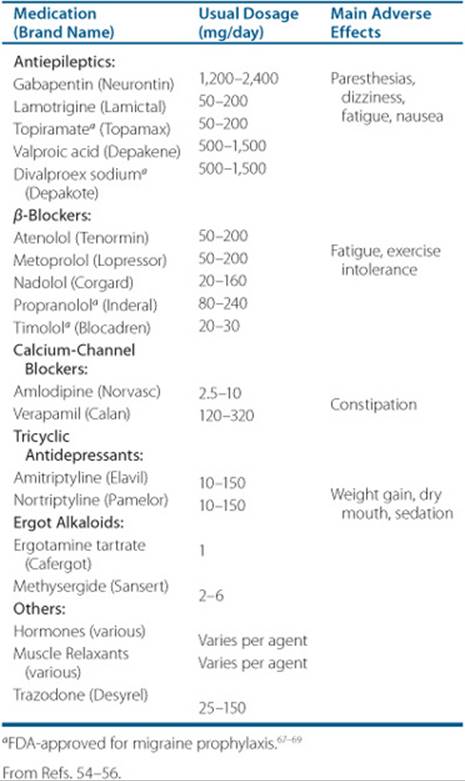
The antiepileptics valproic acid and topiramate are approved for migraine prophylaxis. Gabapentin and lam-otrigine are anecdotally reported to be efficacious as well. In patients whose migraine headaches are believed to be related to trigeminal neuralgia, carbamazepine is employed as prevention for both disorders. The precise mechanism of benefit of these agents is unclear, but enhancement of γ-aminobutyric acid (GABA) neuroinhibition and modulation of the neuroexcitatory amino acid glutamate is likely.60 Divalproex sodium doses are gradually titrated to 1,000 mg/day; topiramate is titrated to a maximum of 100 mg twice per day. At these doses, serum drug level monitoring is infrequently needed. These medications are as effective as propranolol at reducing the frequency and severity of migraines and are preferred for prevention in patients intolerant to β-blockers.61 Topiramate is especially useful in metabolic syndrome, diabetes, and dyslipidemic patients, as it is unlikely to lead to the weight gain often seen with valproic acid use. Patients prescribed topiramate should be advised to stay well hydrated to prevent dysgeusia, disordered taste, and, more seriously, hyperthermia.
Methysergide is an ergotamine derivative that impacts central serotonin balance. Inflammatory fibrosis is a rare, but serious, adverse reaction associated with prolonged use of methysergide. Retroperitoneal fibrosis, pulmonary fibrosis, or fibrosis in cardiac tissue can occur. These conditions may resolve upon drug withdrawal, but cardiac valvular damage can be irreversible. Some experts believe it is the best choice for refractory migraine with frequent attacks, but due to its significant adverse effect profile, it is not marketed in the United States.62
TTH Prophylaxis
The prevention of chronic TTHs employs the same pharmacologic strategies as for migraine prophylaxis. TCAs are a mainstay of chronic therapy. The efficacy of serotonergic agonists remains in question. Although there is little need for muscle relaxants (e.g., methocarbamol) in the treatment of acute TTH, they are often provided as a preventive intervention.6 Combination prophylactic therapies may be needed to wean patients from daily analgesic abuse. Stress reduction techniques may be particularly effective in this setting. The injection of botulinum toxin into cranial muscles has demonstrated prophylactic efficacy for severe TTHs.49
Cluster Headache Prophylaxis
The calcium channel blocker verapamil is the mainstay of cluster attack prevention and chronic prophylaxis.6 Within an attack period, it is dosed at 240 to 360 mg/day. Higher doses may be necessary to stave off recurrent cluster periods. Beneficial effects may be appreciated after 1 week of treatment, but 4 to 6 weeks is usually needed. Adverse effects include smooth muscle relaxation with the subsequent exacerbation of gastroesophageal reflux and the development of constipation. Caution should be exercised in patients with myocardial disease, as verapamil is an inotropic and chronotropic cardiac suppressant. Pharmacokinetic drug–drug interactions must be considered, as verapamil is a potent inhibitor of oxidative metabolism through cytochrome P450 (CYP) enzyme 3A4. Eletriptan is a CYP 3A4 substrate and should not be administered concurrently with verapamil.44 Lithium is another effective therapy to reduce headache frequency in a cluster series and to limit recurrences.9 The dose administered should be individualized to achieve a low serum concentration (0.4–0.8 mEq/L [mmol/L]). Dose adjustments in the setting of renal disease or congestive heart failure (CHF) are required.6 Lithium is contraindicated in patients concurrently prescribed thiazide diuretics and angiotensin-converting enzyme inhibitors (ACEIs) or angiotensin receptor blockers (ARBs). Patient persistence with long-term lithium therapy may be hindered by the emergence of tremor, GI distress, and lethargy. Verapamil and lithium doses can be lowered when used in combination with ergotamine. If possible, bedtime dosing is recommended, given the nocturnal predilection of cluster headache attacks.16 Methysergide can shorten the course of cluster attacks, but long-term use should be avoided.
Patient Encounter, Part 3: Creating a Care Plan
Based on the information presented, create a care plan for acute and chronic management of this patient’s headache. Your plan should include:
(a) a statement of the drug-related needs and/or problems,
(b) goals of therapy,
(c) patient-specific detailed therapeutic plan, and (d) plan for follow-up to determine whether the goals have been achieved and adverse effects avoided.
SPECIAL POPULATIONS
Migraine Headache in Children and Adolescents
Migraine headaches are common in children and their prevalence increases in the adolescent years.2,3 The diagnosis and evaluation of headaches is especially difficult in children, given their decreased ability to articulate symptoms. Treatment presents another challenge to the practitioner, because medications used for headache management in adults have not been fully evaluated for efficacy and safety in children. Consensus panel recommendations identify ibuprofen as effective and acetaminophen as probably effective in the acute treatment of headache in patients older than 6 years.26 Aspirin use is avoided due to the risk of precipitating Reye’s syndrome. Antiemetic therapy can be used alone or in combination with analgesics; promethazine is usually prescribed, as it is less prone to cause extrapyr-amidal reactions than other antiemetics. For adolescents older than 12, triptans are effective and are beneficial for abortive migraine therapy.26 Medication prophylaxis for migraines in children and adolescents is understudied. The data are conflicting, and no consensus recommendation for the use of preventive drug therapy exists.26Nonpharmacologic interventions and trigger identification and avoidance are advised.
Pregnancy
Headaches are more common in women than in men. Fluctuations in estrogen levels are believed to account for this gender discrepancy.63 Hence, headaches are common in pregnancy. TTHs predominate; migraine attacks may increase in frequency, but more usually they decrease in frequency during pregnancy.64 Recommendations for headache care during pregnancy are based on an insufficient evidence base and are largely anecdotal. As headaches are not associated with fetal harm, reflexive pharmacologic therapy should be avoided and drug treatment choices considered carefully. Standard nonpharmacologic therapies are often sufficient. Acetaminophen is safe for the pregnant woman and her fetus.65 NSAIDs are avoided late in the third trimester to prevent detrimental prostaglandin alterations, leading to premature ductus arteriosus closure. Opioids are second-line agents. They are not to be used chronically, as they can lead to dependence in the mother and to acute withdrawal in the baby after birth. Centrally acting antiemetic agents are safe and may be useful as adjunctive agents. Corticosteroids may be needed for intractable headache relief. Prednisone and methylprednisone are preferred, as they are metabolized in the placenta and do not expose the fetus. In pregnant women with migraine, vasoconstrictive agents such as triptans are relatively contraindicated, even though maternal registry data reveal little teratogenicity.66 Ergot compounds are strictly avoided, as they may precipitate uterine contractions and consequent ischemia leading to hypoxemia in the fetus. Migraine prophylaxis is considered cautiously, as β-blockers and calcium-channel antagonists may lead to maternal hypotension and diminished placental blood flow or fetal bradycardia. Antiepileptic drug use in this setting has not been sufficiently studied to allow definitive recommendations.
Some headache disorders are specific to the pregnant state. These include postprocedure headache and those associated with pre-eclampsia. The former are the result of dural puncture with cerebrospinal fluid (CSF) leak after spinal anesthesia.67 Puncture headache generally responds to bed rest in the supine position, though analgesics may be needed as well. The latter are seen in the third trimester accompanied by the clinical triad of hypertension, edema, and proteinuria. Pre-eclamptic headache is believed to result from alterations in cerebral blood flow.68 Headaches experienced in pre-eclamptic women herald eclampsia, and urgent delivery is indicated.69 Antihypertensives are administered to prevent intracranial thrombosis or hemorrhage, and prophylactic anticonvulsants are provided to prevent eclamptic seizures.
Patient Care and Monitoring
Regimens for headache disorders should be individualized based on headache type, pattern of occurrence, response to therapy, medication tolerability, and comorbid medical conditions.
1. Assess the patient complaint to yield a detailed description of headache: precipitating factors; presence or absence of prodromal symptoms; location, intensity, and duration of pain; changes in sensory acuity, and; neurologic alterations.
2. Determine if immediate referral for emergency or specialist care is necessary.
3. Identify medication allergies, and obtain a thorough history of nonprescription and prescription drug use and complementary and alternative therapies utilized.
4. Identify the presence of drug-drug interactions that may guide therapeutic decision making in regard to selecting acute and prophylactic headache treatments.
5. Obtain a complete medical and social history, and identify any potential drug-disease interactions or social factors that may influence treatment choices.
6. Obtain a family medical history, focusing on headache or mental health disorders in first degree relatives.
7. Complete a review of systems and physical examination to identify causes or complications of headache.
8. Determine the type of headache disorder and rule out acute complications.
9. Recommend appropriate pharmacologic therapy to abort headache based on type, patient characteristics, current medication profile, and comorbid conditions.
10. Educate the patient on administration, maximum dosage, and anticipated adverse effects of the prescribed medication.
11. Recommend appropriate nonpharmacologic therapy to abort headache and to prevent future headaches.
12. Determine if the patient is a candidate for prophylactic pharmacologic therapy.
13. Recommend appropriate pharmacologic treatment for the prevention of future headaches.
14. Assess response to therapy indicated by the absence of pain and a return to normal activities. Assess response to prophylactic therapy by improvements in headache frequency and severity.
15. Instruct the patient to keep a headache diary to identify potential causes of headaches and responses to therapy.
16. Provide the patient specific information regarding actions to take, if therapy is ineffective or adverse effects develop.
17. Educate the patient on the importance of adherence to their individualized pharmacologic regimen to prevent headache and to diminish pain upon recurrence.
18. Educate the patient on the warning symptoms and signs of headache complications, and when to seek emergency medical attention.
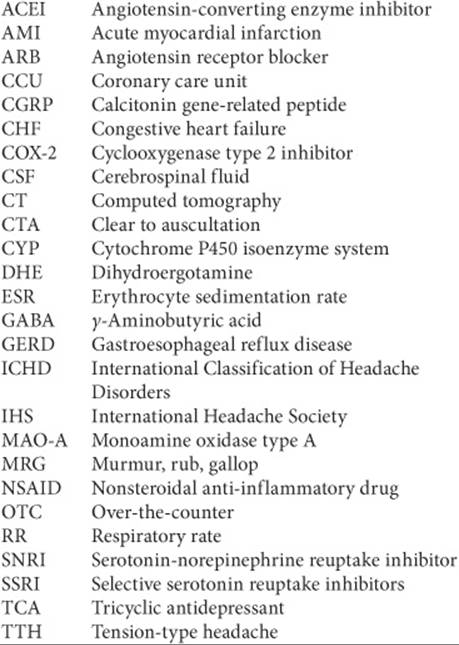
Abbreviations Introduced in This Chapter
 Self-assessment questions and answers are available at http://www.mhpharmacotherapy.com/pp.html.
REFERENCES
1. Silberstein SD, Lipton RB, Dalessio DJ. Overview, diagnosis, and classification of headache. In: Silberstein SD, Lipton, RB, Dalessio DJ, eds. Wolff’s Headache and Other Head Pain, 7th ed. New York: Oxford University Press, 2001:6–26.
2. Lipton RB, Stewart WF, Diamond S, et al. Prevalence and burden of migraine in the United States: Data from the American Migraine Study II. Headache 2001;41:646–657.
3. Loder E. Menstrual migraine: Timing is everything. Neurology 2004;63:202.
4. Headache Classification Committee of the International Headache Society. The international classification of headache disorders, 2nd ed. Cephalalgia 2004;24(supp 1):1–160.
5. Hu XH, Markson LE, Lipton RB, et al. Burden of migraine in the United States. Arch Intern Med 1999;159:813–818.
6. Silberstein SD, Lipton RB, Goadsby PJ. Headache in Clinical Practice. London: Martin Dunitz, 2002;21–33:69–128.
7. Lipton RB, Bigal ME, Steiner MB, et al. Classification of primary headaches. Neurology 2004;63:427–435.
8. Ruoff G, Urban G. Treatment of primary headache: episodic tension-type headache. In: Standards of Care for Headache Diagnosis and Treatment. Chicago IL: National Headache Foundation, 2004:53–58.
9. Bahra A, May A, Goadsby PJ. Cluster headache: a prospective clinical study with diagnostic implications. Neurology 2002;58:354–361.
10. Goadsby PJ, Lipton RB, Ferrari MD. Migraine—current understanding and treatment. N Engl J Med 2002;346:257–270.
11. Hargreaves RJ, Shepheard SL. Pathophysiology of migraine: New insights. Can J Neurol Sci 1999;26(Suppl 3):S12–S19.
12. Edvinsson L. On migraine pathophysiology. In: Edvinsson OL, ed. Migraine and Headache Pathophysiology. London: Martin Dunitz, 1999:3–15.
13. MacGregor EA, Brandes J, Eikermann A. Migraine prevalence and treatment patterns: The global migraine and zolmitriptan evaluation survey. Headache 2003;43:19–26.
14. Jenson R. Pathophysiological mechanisms of tension-type headache: A review of epidemiological and experimental studies. Cephalalgia 1999;19:602–621.
15. Dodick PW. Chronic daily headache. N Engl J Med 2006;354(2):158–165.
16. Matharu MS, Boees CJ, Goadsby PJ. Management of trigeminal autonomic cephalalgias and hemicrania continua. Drugs 2003;63:1637–1677.
17. King DS, Wofford MR. Headache Disorders. In: DiPiro JT, Talbert RL, Yee GC, et al., eds. Pharmacotherapy: A Pathophysiologic Approach. 7th ed. New York City: McGraw-Hill, 2008:1105–1121.
18. Silberstein SD. Migraine. Lancet 2004;363:381–391.
19. Solomon S. Migraine variants. Curr Pain Headache Rep 2001;5:165–169.
20. Silberstein SD. Practice parameter: Evidence-based guidelines for migraine headache (an evidence-based review). Neurology 2000;55:754–763.
21. Silberstein SD, Goadsby PJ, Lipton RB. Management of migraine: An algorithmic approach. Neurology 2000;55(Suppl 2):S46–S52.
22. Mueller L. Tension-type, the forgotten headache. Postgrad Med 2002;111:25–50.
23. Biondi D, Mendes P. Treatment of primary headache: Cluster headache. In: Standards of Care for Headache Diagnosis and Treatment. Chicago IL: National Headache Foundation, 2004:59–72.
24. Peters M, Abu-Saad HH, Vydelingum V, et al. Migraine and chronic daily headache management: A qualitative study of patients’ perceptions. Scand J Caring Sci 2004;18:294–303.
25. Wenzel RG, Schommer JC, Marks TG. Morbidity and medication preferences of individuals with headache presenting to a community pharmacy. Headache 2004;44:90–94.
26. Lewis D, Ashwal S, Hershey A, et al. Practice parameter: Pharmacological treatment of migraine headache in children and adolescents. Report of the American Academy of Neurology Quality Standards Subcommittee and the Practice Committee of the Child Neurology Society. Neurology 2004;63:2215–2224.
27. Silberstein SD, Goadsby PJ. Migraine: Preventive treatment. Cephalalgia 2002;22:491–512.
28. Snow V, Weiss K, Wall EM, Mottur-Pilson C. Pharmacologic management of acute attacks of migraine and prevention of migraine headache. Ann Intern Med 2002;137:840–849.
29. Rollnik JD, Karst M, Piepenbrock S, et al. Gender differences in coping with tension-type headaches. Eur Neurol 2003;50:73–77.
30. del Rio MS, Silberstein SD. How to pick optimal acute treatment for migraine headache. Curr Pain Headache Rep 2001;5:170–178.
31. Lipton RB, Stewart WF, Ryan RE, et al. Efficacy and safety of acetaminophen, aspirin, and caffeine in alleviating migraine headache pain: Three double-blind, randomized, placebo-controlled trials. Arch Neurol 1998;55:210–217.
32. Relja G, Granato A, Antonello RM, Zorzon M. Headache induced by chronic substance use: Analysis of medication overused and minimum dose required to induce headache. Headache 2004;44:148–153.
33. Goldstein J, Silberstein SD, Saper JR, et al. Acetaminophen, aspirin, and caffeine versus sumatriptan succinate in the early treatment of migraine: Results from the ASSET trial. Headache 2005;45(8):973–982.
34. Ferrari MD. Migraine. Lancet 1998;351:1043–1051.
35. Axert [package insert]. Raritan, NJ: Ortho-McNeil Pharmaceuticals, Inc.; 2005.
36. Relpax [package insert]. New York, NY: Pfizer Inc.; 2003.
37. Frova [package insert]. Chadds Ford, PA: Endo Pharmaceuticals Inc.; 2005.
38. Amerge [package insert]. Research Triangle Park, NC: GlaxoSmithKline; 2003.
39. Maxalt [package insert]. Whitehouse Station, NJ: Merck & Co., Inc.; 2003.
40. Imitrex [package insert]. Research Triangle Park, NC: GlaxoSmithKline; 2005.
41. Zomig [package insert]. Wilmington, DE: AstraZeneca Pharmaceuticals; 2005.
42. Treximet [package insert]. Research Triangle Park, NC: GlaxoSmithKline; 2008.
43. Ferrari MD, Roon KI, Lipton RB, Goadsby PJ. Oral triptans (serotonin 5-HT1B/1D agonists) in acute migraine treatment: A meta-analysis of 53 trials. Lancet 2001;358:1558–1575.
44. Pringsheim T, Gawel M. Triptans: Are they all the same? Curr Pain Headache Rep 2002;6:140–146.
45. Deleu D, Hanssens Y. Current and emerging second-generation triptans in acute migraine therapy: A comparative review. J Clin Pharmacol 2000;40:687–700.
46. Dahlof CGH. Current concepts of migraine and its treatment. Neurology 1999;14:67–77.
47. Pascual J, Cabarrocas X. Within-patient early versus delayed treatment of migraine attacks with almotriptan: The sooner the better. Headache 2002;42:28–31.
48. Lipton RB, Stewart WF, Stone AM, et al. Stratified care vs step care strategies for migraine: The Disability in Strategies of Care (DISC) Study: A randomized trial. JAMA 2000;284:2599–2606.
49. Jenson R, Olesen J. Tension-type headache: An update on mechanisms and treatment. Curr Opin Neurol 2000;13:285–289.
50. Rozen TD. High oxygen flow rates for cluster headache. Neurology 2004;63(3):593.
51. Gobel H, Lindner V, Heinz A, et al. Acute therapy for cluster headache with sumatriptan: Findings of a one-year long-term study. Neurology 1998;51:430–435.
52. Bahra A, Gawel MJ, Hardebo JE, et al. Oral zolmitriptan is effective in the acute treatment of cluster headache. Neurology 2000;54:291–296.
53. Goadsby PJ. New targets in the acute treatment of headache. Curr Opin Neurol 2005;18(3):283–288.
54. Topamax [package insert]. Titusville, NJ: Ortho-McNeil Neurologics, Inc.; 2005.
55. Depakote [package insert]. North Chicago, IL: Abbott Laboratories; 2006.
56. Inderal [package insert]. Philadelphia, PA: Wyeth Pharmaceuticals Inc; 2004.
57. Linde K, Rossnagel K. Propranolol for migraine prophylaxis. Cochrane Database Syst Rev 2004;2:CD003225.
58. Tronvik E, Stovener LJ, Helde G, et al. Prophylactic treatment of migraine with angiotensin II receptor blocker: A randomized, controlled trial. JAMA 2003;289:65–69.
59. Joint National Committee on Prevention, Detection, Evaluation, and Treatment of High Blood Pressure. The Seventh Report of the Joint National Committee on Prevention, Detection, Evaluation, and Treatment of High Blood Pressure: The JNC 7 Report. JAMA 2003;289:2560–2572.
60. Cutrer FM. Antiepileptic drugs: How they work in headache. Headache 2001;41(Suppl):S3–S10.
61. Bigal ME, Krymchantowski AV, Rapoport AM. New developments in migraine prophylaxis. Expert Opin Pharmacother 2003;4:433–443.
62. Silberstein SD. Methysergide. Cephalalgia 1998;18:421–435.
63. Winner P, Rothner AD, Saper J, Nett R. A randomized double-blind, placebo-controlled study of sumatriptan nasal spray in the treatment of acute migraine in adolescents. Pediatrics 2000;106:989.
64. Maggioni F, Alessi C, Maggino T, Zanchin G. Headache during pregnancy. Cephalalgia 1997;17:765.
65. Scharff L, Marcus DA, Turk DC. Headache during pregnancy and in the postpartum: A prospective study. Headache 1997;37:203.
66. Lipton RB, Baggish JS, Stewart WF, et al. Efficacy and safety of acetaminophen in the treatment of migraine: Results of a randomized, double-blind, placebo-controlled, population-based study. Arch Intern Med 2000;160:3486.
67. Olesen C, Steffensen FH, Sorensen HT, et al. Pregnancy outcome following prescription for sumatriptan. Headache 2000;40:20.
68. Evans RW, Armon C, Frohman EM, Goodin DS. Assessment: Prevention of post-lumbar puncture headaches. Report of the Therapeutics and Technology Assessment Subcommittee of the American Academy of Neurology. Neurology 2000;55:909.
69. Belfort MA, Saade GR, Grunewald C, et al. Association of cerebral perfusion pressure with headache in women with pre-eclampsia. Br J Obstet Gynaecol 1999;106:814.