
Michael D. Katz
LEARNING OBJECTIVES
Upon completion of the chapter, the reader will be able to:
1. Explain the major components of the hypothalamic-pituitary-thyroid axis and the interaction among these components.
2. Discuss the prevalence of thyroid disorders, including subclinical (mild) and overt (typical signs and/or symptoms present) hypothyroidism and hyperthyroidism.
3. Discuss the relationship between serum thyroid-stimulating hormone (TSH) levels and primary thyroid disease and the advantages for the use of TSH levels over other tests such as serum T4 (thyroxine) and T3 (triiodothyronine) levels.
4. Identify the typical signs and symptoms of hypothyroidism and the consequences of inadequate treatment.
5. Discuss the issues regarding levothyroxine (LT4) product bioequivalence and the advantages of maintaining patients on the same product.
6. Describe the clinical use of LT4 in the treatment of hypothyroidism.
7. Describe the management of hypothyroidism and hyperthyroidism in pregnant women.
8. Identify the typical signs and symptoms of Graves’ disease and the consequences of inadequate treatment.
9. Discuss the pharmacotherapy of Graves’ disease, including the advantages and disadvantages of antithyroid drugs versus radioactive iodine, adverse effects, and patient monitoring.
10. Describe the potential effects of amiodarone, lithium, and interferon-α on thyroid function.
KEY CONCEPTS
 In most patients with thyroid hormone disorders, the measurement of a serum thyroid-stimulating hormone (TSH) level is adequate for the initial screening and diagnosis of hypothyroidism and hyperthyroidism. Serum free thyroxine (T4) and triiodothyronine (T3) levels may be helpful in distinguishing subclinical (mild) thyroid disease from overt disease. The target TSH for most patients being treated for thyroid disorders should be the mean normal value of 1.4 milliunits/L (mU/L) or 1.4 microunits/mL (μU/mL) (target range 0.5–2.5 milliunits/L or 0.5–2.5 microunits/mL). The target TSH may be different in patients being treated with levothyroxine (LT4) for thyroid cancer.
 Hypothyroidism can affect virtually any tissue or organ in the body. The most common symptoms, such as fatigue, lethargy, sleepiness, cold intolerance, and dry skin, are nonspecific and are seen with many other disorders. The classic overt signs, such as myxedema and delayed deep tendon reflexes, are seen uncommonly now because more patients are screened or seek earlier medical attention. Patients with mild hypothyroidism may have subtle symptoms that progress so slowly that they are not noticed easily by the patient or family. The lack of overt or specific signs and symptoms emphasizes the importance of using the serum TSH level to identify patients with hypothyroidism.
 There are three major goals in the treatment of hypothyroidism: replace the missing hormones, relieve symptoms, and achieve a stable biochemical euthyroid state.
 Despite the availability of a wide array of thyroid hormone products, it is clear that synthetic LT4 is the treatment of choice for almost all patients with hypothyroidism. LT4 mimics the normal physiology of the thyroid gland, which secretes mostly T4 as a prohormone. As needed, based on metabolic demands, peripheral tissues convert thyroxine (T4) to triiodothyronine (T3). If T3 is used to treat hypothyroidism, the peripheral tissues lose their ability to control local metabolic rates. LT4 also has distinct pharmacokinetic advantages over T3. With a 7- to 10-day half-life, LT4 provides a very smooth dose-response curve with little peak and trough effect. In a small number of patients who have impairment of conversion of T4 to T3, addition of T3 may be warranted.
 There is no evidence that one LT4 product is better than another. However, given the evidence that these products have different bioavailabilities, patients should be maintained on the same specific LT4product. Given the generic substitution regulations of most U.S. states, this is best accomplished by prescribing a brand-name product or otherwise ensuring that the product remains constant. The prescriber should not allow substitution in the way mandated by state regulations.
 The goals of treating hyperthyroidism are to relieve symptoms, to reduce thyroid hormone production to normal levels, to achieve biochemical euthyroidism, and to prevent long-term adverse sequelae.
 Agranulocytosis is one of the most serious adverse effects of antithyroid drug therapy.
 The growth and spread of thyroid carcinoma are stimulated by TSH. An important component of thyroid carcinoma management is the use of LT4 to suppress TSH secretion. Early in therapy, patients receive the lowest LT4 dose sufficient to fully suppress TSH to undetectable levels. Controlled trials show that suppressive LT4 therapy reduces tumor growth and improves survival.
 Patients receiving amiodarone must receive monitoring for thyroid abnormalities. Baseline measurements of serum TSH, FT4, FT3, antithyroid peroxidase antibody (anti-TPOAb), and TSH receptor-stimulating antibodies (TSHR-SAb) should be performed. TSH, FT4, and FT3 should be checked 3 months after initiation of amiodarone and then at least a TSH every 3 to 6 months.
Thyroid disorders are common. Over 2 billion people, or 38% of the world’s population, have iodine deficiency, resulting in 74 million people with goiters. While iodine deficiency is not a significant problem in developed countries, a number of common thyroid conditions exist. The most common conditions are hypothyroidism and hyperthyroidism, which often require long-term pharmacotherapy. Undetected or improperly treated thyroid disease can result in long-term adverse sequelae, including increased mortality. It is important that clinicians are aware of the prevalence of thyroid disorders, the methods of identifying thyroid disorders, and the appropriate therapy. This chapter focuses on the most common pharmacologically treated thyroid disorders.
THYROID HORMONE PHYSIOLOGY AND BIOSYNTHESIS
The thyroid gland is the largest endocrine gland in the body, residing in the neck, anterior to the trachea, between the cricoid cartilage and the suprasternal notch. The thyroid gland produces two biologically active hormones, thyroxine (T4) and triiodothyronine (T4). Thyroid hormones are essential for proper fetal growth and development, particularly of the CNS. After delivery, the primary role of thyroid hormone is in the regulation of energy metabolism. These hormones can affect the function of virtually every organ in the body. The parafollicular C cells of the thyroid gland produce calcitonin. The function of calcitonin and its therapeutic use are discussed in other chapters in this book.
T4 and T3 are produced by the organification (binding of iodine to tyrosine residues of thyroglobulin) of iodine in the thyroid gland. Iodine is actively transported into the thyroid follicular cells. This inorganic iodine is oxidized by thyroid peroxidase and covalently bound to tyrosine residues of thyroglobulin. These iodinated tyrosine residues monoiodotyrosine and diiodotyrosine couple to form T4 and T3. Eighty percent of thyroid hormone is synthesized as T4 and is stored in the thyroid bound to thyroglobulin. Thyroid hormones are released from the gland when needed, primarily under the influence of TSH (thyroid stimulating hormone, thyrotropin) from the anterior pituitary. T4and T3 are transported in the blood by three proteins, 70% to thyroid-binding globulin (TBG), 15% to transthyretin (thyroid-binding prealbumin), and 15% to albumin. T4 is 99.97% protein-bound, and T3 is 99.7% protein-bound, with only the unbound or free fractions physiologically active. The high degree of protein-binding results in a long half-life of these hormones: approximately 7 to 10 days for T4 and 24 hours for T4.
Most of the physiologic activity of thyroid hormones is from the actions of T3. T4 can be thought of primarily as a prohormone. Eighty percent of needed T3 is derived from the conversion of T4 to T3 in peripheral tissue under the influence of tissue deiodinases. These deiodinases allow end organs to produce the amount of T3 needed to control local metabolic functions. These enzymes also catabolize T3 and T4 to biologically inactive metabolites.
The production and release of thyroid hormones are regulated by the hypothalamic-pituitary-thyroid axis (Fig. 44–1). Hypothalamic thyrotropin-releasing hormone (TRH) stimulates the release of TSH (thyrotropin) when there are physiologically inadequate levels of thyroid hormones. TSH promotes the production and release of thyroid hormones from the gland. As circulating thyroid hormone levels rise to needed levels, negative feedback results in decreased release of TSH and TRH. The release of TRH is inhibited by somatostatin and its analogs, and the release of TSH can be inhibited by dopamine, dopamine agonists, and high levels of glucocorticoids.
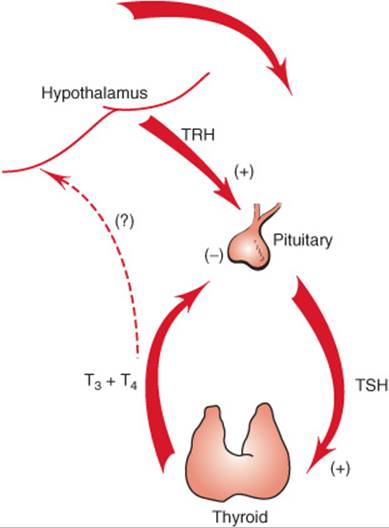
FIGURE 44–1. Hypothalamic–pituitary–thyroid axis. Thyrotropin-releasing hormone (TRH) is synthesized in the neurons within the paraventricular nucleus of the hypothalamus. TRH is released into the hypothalamic–pituitary portal circulation and carried to the pituitary, where it activates the pituitary to synthesize and release thyrotropin (TSH). TSH activates the thyroid to stimulate the synthesis and secretion of thyroxine (T4) and triiodothyronine (T3). T4 and T3 inhibit TRH and TSH secretion, closing the feedback loop.
SPECTRUM OF THYROID DISEASE
There are two general modes of presentation for thyroid disorders: changes in the size or shape of the gland and changes in secretion of hormone from the gland. In some cases, structural changes can result in changes in hormone secretion. Thyroid nodules and goiters in euthyroid patients are common problems. Patients with a goiter who are biochemically euthyroid often require no specific pharmacotherapy, unless the goiter is due to iodine deficiency. In developing countries, iodized salt is the primary therapy in treating goiter. Thyroid nodules, seen in 4% to 7% of adults, may be malignant or may autonomously secrete thyroid hormones. A discussion of thyroid nodules is beyond the scope of this chapter; however, thyroid cancer will be discussed briefly in the context of levothyroxine (LT4) suppressive therapy. Refer to other resources for a more extensive review of thyroid cancer management.
Changes in hormone secretion can result in hormone deficiency or excess. While patients with overt hypothyroidism and hyperthyroidism may have dramatic signs and symptoms, most patients have subtle signs and symptoms that progress slowly over time. The availability of sensitive and specific biochemical tests for the diagnosis of thyroid hormone disorders has facilitated screening and earlier diagnosis, including those with subclinical thyroid disorders. Screening of newborns for congenital hypothyroidism has reduced the incidence of mental retardation and cretinism dramatically in the United States. However, congenital hypothyroidism owing to iodine deficiency remains a significant worldwide public health problem.
EPIDEMIOLOGY OF THYROID DISEASE
A number of studies have assessed the epidemiology of thyroid hormone abnormalities. The 1999 to 2002 National Health and Nutrition Examination Survey (NHANES)1 reported the prevalence of thyroid hormone disorders in 4,392 people 12 years of age and over in a sample representing the geographic and ethnic distribution of the U.S. population. Hypothyroidism was found in 3.7% (3.4% mild) and hyperthyroidism in 0.5% of the sample. The prevalence of hypothyroidism was higher in older age groups and in whites and Hispanics, whereas blacks had a lower prevalence of hypothyroidism. The prevalence of hypothyroidism correlated with age. Compared to the total population, people of age 50 to 79 had an almost twofold higher prevalence, and those age 80 and older had a fivefold higher prevalence. Pregnant women also had a higher prevalence of hypothyroidism. The Colorado Thyroid Health Survey2 assessed thyroid function in 25,862 subjects attending a health fair. The overall prevalence of an abnormal TSH level was 11.7% of the study population, with 9.4% hypothyroid (9% subclinical) and 2.2% hyperthyroid (2.1% subclinical). Of the 916 subjects taking thyroid medication, 60% were euthyroid, with an equal distribution between subclinical hypothyroidism and hyperthyroidism. The NHANES study also found that many patients receiving thyroid medications had an abnormal TSH. These findings imply that many patients who are receiving thyroid medications are not being managed successfully.
PATIENT ASSESSMENT AND MONITORING
The assessment of patients for thyroid disorders entails a history and physical examination. In many patients with subclinical or mild thyroid disease, there may be an absence of specific signs and symptoms, and the physical examination may be normal. Various diagnostic tests can be used, including serum thyroid hormone(s), TSH, thyroid antibody levels, and imaging techniques to evaluate patients for thyroid disorders. Reference ranges for selected laboratory tests are given in Table 44–1.
TSH Levels
In most patients with thyroid hormone disorders, the measurement of a serum TSH level is adequate for the initial screening and diagnosis of hypothyroidism and hyperthyroidism. Serum free T4 and T3levels may be helpful in distinguishing subclinical (mild) thyroid disease from overt disease. The target TSH for most patients being treated for thyroid disorders should be the mean normal value of 1.4 milliunits/L (mU/L) or 1.4 microunits/mL (μU/mL) (target range 0.5–2.5 milliunits/L or 0.5–2.5 microunits/mL). The target TSH may be different in patients being treated with LT4 for thyroid cancer.
Table 44–1 Selected Thyroid Tests for Adults
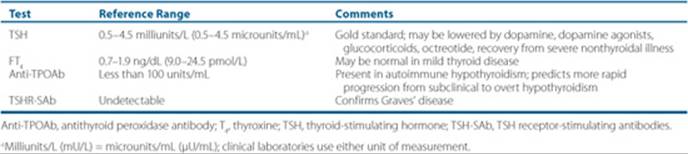
TSH is a highly sensitive bioassay of the thyroid axis. A two-fold change in serum free T4 levels will result in a 100-fold change in TSH levels. This biologic magnification by TSH allows the TSH to be used in early diagnosis as well as in closely titrating therapy in hypothyroidism and hyperthyroidism. In patients with primary hypothyroidism or hyperthyroidism resulting from gland dysfunction, there is an inverse relationship between the TSH level and thyroid function. High TSH signifies hypothyroidism (or iatrogenic under-replacement), and low TSH signifies hyperthyroidism (or iatrogenic over-replacement). There is controversy regarding the normal or laboratory reference ranges for TSH. NHANES3 showed that the mean TSH level in a normal population was 1.46 milliunits/L (milliunits/L = microunits/mL; clinical laboratories use either unit of measurement, usually expressed as mU/L or μU/mL), but the values were not normally distributed. While most laboratories quote the upper limit of normal for TSH as 4.5 milliunits/L based on NHANES data, 95% of subjects had a TSH level of between 0.5 and 2.5 milliunits/L. The population of subjects whose TSH level was 2.5 to 4.5 milliunits/L may have had mild hypothyroidism and should not have been included as part of the normal reference range for TSH. However, the mean normal TSH in the elderly appears to be higher, even in people with no clinical evidence of hypothyroidism.4 It has been proposed that the reference TSH range be redefined with an upper limit of normal of 2.5 or 3 milliunits/L.5 However, it is not clear what the clinical impact would be with such a change. The target TSH for most patients being treated for thyroid disorders is not the same as the reference range. Ideally, the TSH should be the mean normal value of 1.4 milliunits/L or 1.4 microunits/mL (target range 0.5–2.5 milliunits/L or 0.5–2.5 microunits/mL).
Serum Hormone Levels
Serum T4 and T3 levels were used commonly to assess thyroid function. Screening thyroid function tests measure total serum T4 or T3 levels. Because of the high degree of protein binding of these hormones, the free fraction can be altered by changes in the levels of binding proteins or the degree of protein binding. Because a number of factors can alter protein binding, the older assays are very insensitive and should no longer be used, even with protein-binding adjustment factors such as the free T4 index. Free or unbound T4 (FT4) and T3 (FT3) assays are readily available and are more sensitive in identifying thyroid dysfunction than the older total assays.6 However, patients with mild hypothyroidism or hyperthyroidism will have a normal FT4 level despite an abnormal TSH level.
The laboratory assessment of patients with suspected thyroid disorders must be based on the continuum of disease from subclinical or mild to overt (Fig. 44–2).
Other Diagnostic Tests
Global tests of thyroid gland function can be performed to assess the rate of hormone synthesis. The radioactive iodine uptake (RAIU) will be elevated in hyperthyroidism and can aid in identifying thyrotoxicosis owing to nonthyroid gland sources. Radionuclide thyroid scans are used in the evaluation of thyroid nodules. Because many thyroid disorders are autoimmune, measurement of various serum antithyroid antibodies can be performed. Antithyroid peroxidase (anti-TPOAb) and antithyroglobulin antibodies (anti-TGAb) are present in many patients with hypothyroidism. Most patients with Graves’ disease will have TSH receptor-stimulating antibodies (TSHR-SAb) as well as elevated anti-TPOAb and antimicrosomal antibodies.
HYPOTHYROIDISM
Hypothyroidism is the most common clinical disorder of thyroid function. It is the clinical syndrome that results from inadequate secretion of thyroid hormones from the thyroid gland. The vast majority of hypothyroid patients have primary gland failure, whereas rare patients have pituitary or hypothalamic failure. Most studies define hypothyroidism based on a serum TSH level above the upper limit of the laboratory reference range. In adults, 1.4% of women and 0.1% of men are biochemically hypothyroid. However, the incidence is highly age-dependent. In the Colorado Thyroid Health Study,2 by age 64, 12% of women and 5% of men were hypothyroid, and in the over 74 year age group, the incidence in men approached that of women. Most epidemiologic studies of hypothyroidism in the elderly show a prevalence of 6% to 12%. There is a strong correlation between the presence of anti-TPOAb or anti-TGAb and the risk of developing hypothyroidism. In patients with subclinical hypothyroidism and positive anti-TPOAb, 5% per year will progress to overt hypothyroidism.7 Other risk factors for the development of hypothyroidism include postpartum state, family history of autoimmune thyroid disorders, a previous history of head and neck or thyroid surgery, head and neck irradiation, other autoimmune endocrine disorders such as type 1 diabetes and Addison’s disease, other nonendocrine autoimmune diseases such as celiac disease and pernicious anemia, prior history of treatment for hyperthyroidism, treatment with amiodarone or lithium, and an iodine-deficient diet.
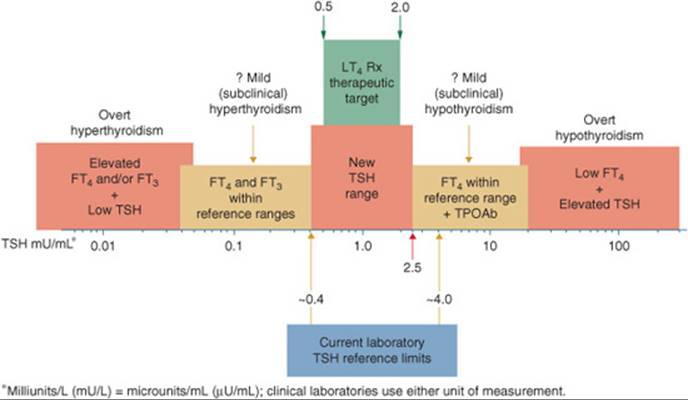
FIGURE 44–2. TSH and the continuum of thyroid disorders. (FT3, free T3; FT4, free T4; LT4, levothyroxine; TPOAb, thyroid peroxidase antibody; TSH, thyroid-stimulating hormone.) (From Ref. 5.)
Screening for Hypothyroidism
Because the prevalence of hypothyroidism is high in certain populations, screening may be useful. Screening for hypothyroidism in women over age 35 is as cost effective as screening for breast cancer and hypertension,8 although some organizations recommend screening of adults over the ages of 50 or 60. Others advocate a case-finding approach, defined as performing a TSH determination in patients based on risk factors or the presence of signs and symptoms.9,10 Refer to Clinical Presentation and Diagnosis of Hypothyroidism for more information regarding screening and diagnosis.
Causes of Hypothyroidism
The most common causes of hypothyroidism are listed in Table 44–2.11,12 Up to 90% of patients with autoimmune thyroiditis have circulating anti-TPOAbs. The autoimmune inflammatory response results in a lymphocytic infiltration of the thyroid gland and its eventual destruction.
Iatrogenic hypothyroidism can follow thyroid irradiation or surgery and excessive doses of antithyroid drugs. Several drugs can cause hypothyroidism, including iodine-containing drugs such as amiodarone and iodinated radiocontrast media, lithium, interferon-α, sunitinib, p-aminosalicylic acid, ethionamide, sulfonylureas, valproic acid, and aminoglutethimide.13 Iodine deficiency is a common worldwide cause of hypothyroidism, including congenital hypothyroidism in newborns. Patients with hypothalamic or pituitary disease often have other signs of piuitary disease, such as hypogonadism, and the TSH level will be low.
Table 44–2 Common Causes of Hypothyroidism
Primary Hypothyroidism
Autoimmune thyroiditis (Hashimoto’s disease)
Iatrogenic (irradiation, surgery)
Drugs (amiodarone, radiocontrast media, lithium, α-interferon, sunitinib)
Silent thyroiditis (including postpartum)
Iodine deficiency and excess
Secondary Hypothyroidism
Pituitary disease
Hypothalamic disease
From Refs. 11, 12.
Clinical Presentation and Diagnosis of Hypothyroidism
Symptoms
• Fatigue
• Lethargy
• Sleepiness
• Mental impairment
• Depression
• Cold intolerance
• Hoarseness
• Dry skin
• Decreased perspiration
• Weight gain
• Decreased appetite
• Constipation
• Menstrual disturbances
• Arthralgia
• Paresthesia
Signs
• Slow movements
• Slow speech
• Hoarseness
• Bradycardia
• Dry skin
• Nonpitting edema (myxedema)
• Hyporeflexia
• Delayed relaxation of reflexes
Screening/Diagnosis
A TSH level of 4.5 to 10 milliunits/L constitutes mild or subclinical hypothyroidism, and some patients with a TSH level of 2.5 to 4.5 milliunits/L also may be mildly hypothyroid. A TSH level greater than 10 milliunits/L signifies overt hypothyroidism.a The free T4 level will be normal (0.7-1.9 ng/dL or 9.0-24.5 pmol/L) in mild or subclinical hypothyroidism and low (less than 0.7 ng/dL or 9.0 pmol/L) in patients with obvious signs and/or symptoms.
a Milliunits/L (mU/L) = microunits/mL (μU/mL); clinical laboratories use either unit of measurement.
From Refs. 11, 12.
Signs and Symptoms of Hypothyroidism
Hypothyroidism can affect virtually any tissue or organ in the body. The most common symptoms, such as fatigue, lethargy, sleepiness, cold intolerance, and dry skin, are nonspecific and can be seen with many other disorders. The classic overt signs, such as myxedema and delayed deep tendon reflexes, are seen uncommonly now because more patients are screened or seek medical attention earlier. Patients with mild hypothyroidism may have subtle symptoms that progress so slowly that they are not noticed easily by the patient or family. The lack of overt or specific signs and symptoms emphasizes the importance of using the serum TSH level to identify patients with hypothyroidism.
Sequelae of Hypothyroidism
Hypothyroidism is a chronic disease that may result in significant long-term sequelae. Hypercholesterolemia is associated with hypothyroidism, increasing the long-term risk of cardiovascular disease and cardiovascular mortality.14Between 4% and 14% of patients with hypercholesterolemia are found to be hypothyroid. The Colorado Thyroid Health Study2 showed a direct correlation between the degree of TSH elevation and the rise in serum cholesterol. Hypothyroidism also may result in increased systemic vascular resistance, decreased cardiac output, and increased diastolic blood pressure. Hypothyroidism can cause significant neuropsychiatric problems, including a dementia-like state in the elderly that is reversible with LT4 therapy. Maternal hypothyroidism can have dire consequences for the developing fetus. The fetus is almost completely dependent on maternal thyroid hormones during the first trimester, a time crucial for development of the CNS. Inadequately treated maternal hypothyroidism results in increased risk of miscarriage and developmental impairment in the child.15
Myxedema coma is seen in advanced hypothyroidism. These patients develop CNS depression, respiratory depression, cardiovascular instability, and fluid and electrolyte disturbances. Myxedema coma often is triggered by an underlying acute medical condition such as infection, stroke, trauma, or administration of CNS depressant drugs.
Treatment of Hypothyroidism
There are three major goals in the treatment of hypothyroidism: replace the missing hormones, relieve symptoms, and achieve a stable biochemical euthyroid state. While these goals should not be difficult to achieve, 20% to 40% of treated patients are not receiving optimal pharmacotherapy.
Thyroid Hormone Products
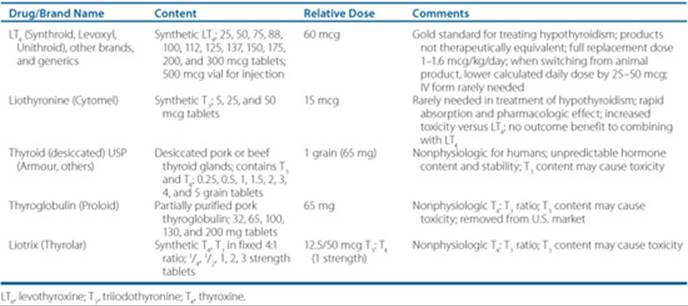
A number of thyroid hormone products are marketed in the United States (Table 44–3). These products include synthetic LT4 and T3, combinations of synthetic LT4 and T3, and animal-derived products. Despite the availability of a wide array of thyroid hormone products, it is clear that synthetic LT4 is the treatment of choice for almost all patients with hypothyroidism.11,12 Using LT4 mimics the normal physiology of the thyroid gland, which secretes mostly T4 as a prohormone. Peripheral tissues convert T4 to T3 as needed, based on metabolic demands. If T3 is used to treat hypothyroidism, the peripheral tissues lose their ability to control local metabolic rates. LT4 also has distinct pharmacokinetic advantages over T3. With a 7 to 10 day half-life, LT4 provides a very smooth dose-response curve with little peak and trough effect. In a small number of patients who have impairment of conversion of T4 to T3, addition of T3 may be warranted. T3, with a 24-hour half-life, provides a significant peak and trough effect, and many patients will have symptoms of thyrotoxicosis after each dose is administered. For patients who have difficulty adhering to a once-daily regimen, a once-weekly LT4 regimen is safe and effective.11
Animal-derived products such as desiccated thyroid and thyroglobulin are obtained from cow and pig thyroid and have various degrees of purity. These products contain both LT4 and T3, but the amount of T3is much higher (T4:T3 = 4:1) than what would be found in the human thyroid gland (T4:T3 = 14:1). With the desiccated thyroid products, there are concerns about standardizing the amount of hormone and lot-to-lot variability. While some patients want to use these agents because they are “natural,” they are not natural for humans. With the strong evidence supporting the safety and efficacy of LT4 in the treatment of hypothyroidism, there is no rationale for the use of these animal-derived products. Patients who are being treated with these agents should be strongly encouraged to switch to synthetic LT4. Also, patients should be encouraged not to purchase thyroid hormone- or iodine-containing products from health food stores or from questionable Internet sites.
Several studies have been published that evaluate the use of LT4 and T3 combinations in ratios that mimic human physiology. A meta-analysis of 11 randomized, controlled clinical trials comparing LT4 and T3combinations with LT4 monotherapy show no outcome benefit with combination therapy.16 Except in rare circumstances (such as patients with impaired T4-to-T3 conversion), there is no rationale for using combinations of LT4 and T3 to treat hypothyroidism.
Bioequivalence and LT4 Product Selection
LT4 products have a long history of bioavailability problems.17 Over the years, LT4 bioavailability has increased, so maintenance doses today are significantly lower than those seen in the 1970s and early 1980s. Currently, the average bioavailability of LT4 products is about 80%. Because of longstanding concerns about LT4 bioequivalence, and because LT4 products had never undergone formal approval by the FDA under the 1938 Food, Drug, and Cosmetics Act, the FDA mandated that all manufacturers of LT4 products submit an Abbreviated New Drug Application (ANDA) to keep their products on the U.S. market after 2001.18 Products approved under this process would have to comply with FDA manufacturing and bioequivalence standards. This FDA action has resulted in many changes in the U.S. LT4market, as well as renewed interest in LT4 bioequivalence. By 2009, a variety of brand and generic products had been approved by the FDA. Some of the generic products carry AB ratings (bioequivalence) to certain brand products.19
Table 44–3 Thyroid Preparations
For many years, there have been concerns regarding the FDA bioequivalence methodology for LT4 products. FDA bioequivalence standards allow a -20% to +25% variance in pharmacokinetic parameters between the test and reference products. Many people feel that this degree of allowed variance is not appropriate for a narrow-therapeutic-index (NTI) drug such as LT4.20 Also, there are unique challenges to performing bioequivalence studies with an endogenous hormone such as LT4. Because these single-dose pharmacokinetic studies are done in healthy volunteers, the pharmacokinetic data are a combination of endogenous and exogenous LT4. Seventy percent of the area under the curve (AUC) in these studies consists of the subjects’ endogenous T4. Thus, it is doubtful that bioavailability differences among products could be detected. Blakesley and colleagues21 showed that the standard FDA bioequivalence methodology would rate 600, 450, and 400 mcg LT4 doses as bio equivalent. This study also showed that mathematically removing the subjects’ endogenous T4 level (baseline correction) improves the sensitivity of the analysis, allowing a distinction between 33% and 25% but not 12.5% dose differences. Based on these data, the FDA, since 2003, has required that LT4 bioequivalence data undergo baseline correction. While this method has improved the ability to identify large differences in LT4 bioequivalence, small but clinically significant differences will not be identified.
More important than bioequivalence is the therapeutic equivalence of LT4 products. Will patients have the same outcomes if bioequivalent products are used? The study by Dong and colleagues22 helps to answer this question. Twenty-two well-controlled hypothyroid women were randomly switched to the same dose of four different products every 6 weeks. Nonbaseline corrected bioequivalence data showed these products to be bioequivalent. However, as each product switch occurred, more of the subjects had an abnormal TSH level.23 By the end of the third product switch, 52% had an abnormal TSH level. This is strong evidence that LT4 products are not therapeutically equivalent even if they are rated as bioequivalent by the FDA.
Evidence does exist that small differences in the LT4 dose can result in large changes in TSH. The impact on TSH of small changes in LT4 dose was assessed in 21 adult therapeutically optimized hypothyroid patients.24 When the daily dose was reduced by 25 mcg, 78% had an elevated TSH level. When the daily dose was increased by 25 mcg, 55% had a low TSH level. Clearly, differences in the LT4 dose or bioavailability within the FDA-allowed variance for bioequivalent products can cause significant changes in TSH.
There is no evidence that one LT4 product is better than another. However, given the evidence that these products do have different bioavailabilities, patients should be maintained on the same LT4 product. Given the generic substitution regulations of most states, this is best accomplished by prescribing a brand-name product or otherwise assuring that the product remains constant, and not allowing substitution in the way mandated by state regulations. While practitioners are pressured by managed-care organizations and employers to substitute LT4 products as a cost-saving measure, such switching is not in the best interest of the patient and should not be allowed. If patients are switched to a different product, a TSH determination should be done in 6 to 8 weeks to allow retitration. The economic impact of retitration must be considered when formularies are changed to reduce the drug acquisition cost.
Therapeutic Use of LT4
LT4 is indicated for patients with overt hypothyroidism.25 However, the need for treatment is controversial in patients with mild or subclinical disease (TSH less than 10 milliunits/L or 10 microunits/mL and normal free T4). There is some evidence that mild or subclinical hypothyroidism is associated with increased cardiovascular morbidity and mortality,26,27 though there are conflicting data.28 There are no large clinical trials that show an outcome benefit with treating these patients, and the therapeutic decision must be individualized. Many patients with “subclinical” hypothyroidism do, in fact, have subtle symptoms that improve with LT4 replacement. In patients without symptoms who have high cardiovascular risk, goiter, positive anti-TPOAb, and/or are infertile or pregnant, LT4 replacement should be considered.29
Patient Encounter 1, Part 1
HT, a 34-year-old woman, comes to the clinic complaining of fatigue, lethargy, and having a “fuzzy head” for the past 6 months. She thought it was because she was working too hard, but the symptoms have not improved despite a better work schedule. She has noticed a 2.3-kg (5-lb) weight gain over the past 6 months, her menses have become heavier, she feels cold all the time, and her skin is drier. She takes no medications other than occasional acetaminophen for headache and milk of magnesia for constipation. Her vital signs and physical examination, including pelvic examination are normal.
Labs
Serum cholesterol: 220 mg/dL (5.7 mmol/L; normal less than 200 mg/dL, or 5.2 mmol/L)
TSH: 9.7 milliunits/L (normal 0.5-2.5 milliunits/L)*
Free T4: 0.6 ng/dL (7.7 pmol/L; normal 0.7-1.9 ng/dL, or 9-24.5 pmol/L)
PE: Wt: 66 kg (145 lb), ht: 5 ft, 7 in. (170 cm).
Why should HT receive LT4 therapy?
What initial dose of LT4 would you choose?
How would you monitor and titrate her therapy?
What would you tell HT regarding the significance of her symptoms, elevated TSH level, and risk versus benefits of LT4 therapy?
*Milliunits/L (mU/L) = microunits/mL; (μU/mL); clinical laboratories use either unit of measurement.
In patients younger than age 65 with overt hypothyroid-ism, the average LT4 replacement dose is 1.6 mcg/kg/day (use ideal body weight in obese patients30). If there is no history of cardiac disease, these patients may be started on the full replacement dose. The full replacement dose in patients over age 75 is lower, about 1 mcg/kg/day11 In the elderly, the starting dose is 25 to 50 mcg/day, and the dose is titrated to the full replacement dose.31 In patients with ischemic heart disease, start with 12.5 to 25 mcg/day and slowly titrate to the full replacement dose. If the patient develops angina or other forms of myocardial ischemia, lower the dose and titrate more slowly. At the start of therapy and with each change in dose, recheck the TSH in 6- to 8-week intervals. If the TSH is not in the target range (0.5-2.5 milliunits/L or microunits/mL), change the dose by 10% to 20% and then recheck the TSH 6 to 8 weeks later. As the dose is titrated, assess the patient’s symptoms. Many patients will improve quickly, and many patients will feel the best if the TSH is titrated to low-normal to middle-normal levels (0.5-1.5 milliunits/L or microunits/mL).
Patients with mild or subclinical hypothyroidism do not need to be started on the full replacement dose because they still have some endogenous hormone production. Start these patients on 25 to 50 mcg/day, and titrate every 6 to 8 weeks based on TSH levels. Over time, it is likely that the LT4 dose will need to be increased slowly as the patient’s thyroid gland loses residual function.
Risks of Over- and Undertreatment
Patients receiving LT4 therapy who are not maintained in a euthyroid state are at risk for long-term adverse sequelae. In general, overtreatment and a suppressed TSH is more common than undertreatment with an elevated TSH.32Patients with long-term overtreatment are at higher risk for atrial fibrillation and other cardiovascular morbidities, depression or mental status changes, and postmenopausal osteoporosis. Patients who are undertreated are at higher risk for hypercholesterolemia and other cardiovascular problems, depression or mental status changes, and obstetric complications.
Alterations in LT4 Dose Requirements
A number of factors can alter LT4 dose requirements (Table 44–4). The most common cause of increased dose requirement is the coadministration of LT4 with calcium or iron supplements (including prenatal vitamins). Counsel patients that they should take the LT4 dose at least 2 hours before or 6 hours after the calcium or iron dose. The most common cause of decreased dose requirement is aging.
Patient Monitoring
Patients on stable LT4 therapy do not need frequent monitoring. In most patients, measuring a TSH every 6 to 12 months, along with an assessment of clinical status, is adequate (Table 44–5). If the patient’s clinical status changes (e.g., pregnancy, etc.), more frequent monitoring may be necessary. LT4 prescriptions should be written as microgram doses to avoid potential errors when written as milligram doses.
Table 44–4 Factors That Alter LT4 Dose Requirements
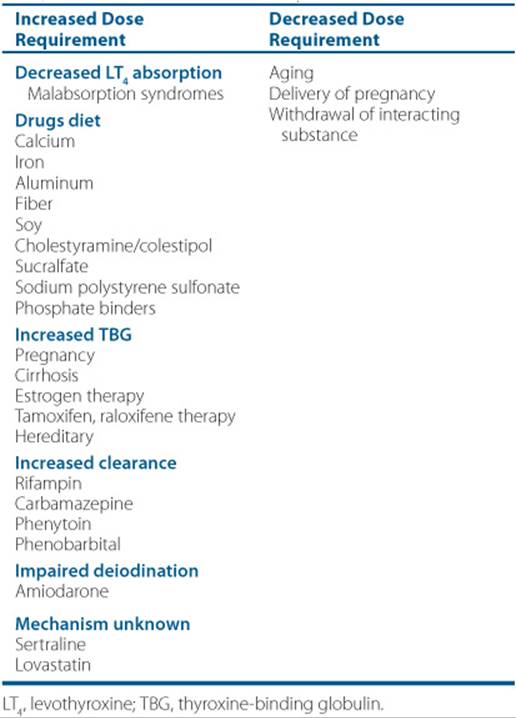
Table 44–5 Monitoring LT4 Therapy
• Serum TSH:
• Every 6–12 months or if change in clinical status
• 6–8 weeks after any dose or product change
• In first trimester pregnancy, then monthly
• Same product prescribed/dispensed with every refill
• Watch for mg/mcg dosing errors
• Assess patient’s understanding of disease, therapy, and need for adherence and tight control
• Assess for signs/symptoms of over- and undertreatment
• Identify potential interactions between LT4, and foods and/or drugs
LT, levothyroxine; TSH, thyroid-stimulating hormone.
Patient education is an important component of care. Treatment adherence rates (at least 80% of doses available) in hypothyroid patients are 68%, slightly less than adherence rates seen in hypertensive patients.33 Educate patients about the benefits of proper therapy, the importance of adherence, consistency in time and method of administration, and the importance of receiving a consistent LT4 product. Some patients will take excessive amounts of LT4 in an effort to “feel better” or as a weight-loss treatment. Explain to patients that excessive amounts of LT4 will not improve symptoms more than therapeutic doses will, can cause serious problems, and that this drug is not an effective treatment for obesity.
Special Populations and Conditions
Hypothyroidism and Pregnancy
Hypothyroidism during pregnancy has a variety of maternal and fetal adverse effects.15,34 During pregnancy, β-human chorionic gonadotropin (β-hCG) acts as a TSH receptor agonist, increasing the amount of thyroid hormone available for fetal growth and development. Maternal hypothyroidism results in an increased rate of miscarriage and decreased intellectual capacity of the child. Endocrinologists recommend a TSH measurement as soon as the pregnancy is confirmed. Most hypothyroid women who become pregnant will quickly need an increased dose of LT4, averaging 50% above the prepreg-nancy dose.34,35 The increased dose should be maintained throughout the pregnancy, with monthly TSH monitoring to keep the TSH in the middle- to low-normal range. After delivery, the LT4 dose can be reduced to prepregnancy levels. Since prenatal vitamins contain significant amounts of calcium and iron, remind these patients to take the LT4 dose at least 2 hours before or 6 hours after the vitamin.
Patient Encounter 1, Part 2
One year later, HT comes to you and excitedly states that she is pregnant. She just saw her obstetrician, who started her on a prenatal vitamin. She has felt very well since starting her LT4 and that she is amazed at how much better she feels (“I didn’t know how bad I felt until I started the thyroid medicine”). The most recent TSH determination, obtained 6 months ago, was 1.5 milliunits/L (normal 0.5-2.5 milliunits/L).* Her current LT4 dose is 88 mcg/day
How will pregnancy affect HT’s LT4 dose requirement?
What would you recommend regarding her LT4 dose and monitoring?
What would you tell HT regarding the potential impact of her pregnancy on her LT4 therapy and the potential risks to her baby if she is not given an adequate dose of LT4 during her pregnancy?
*Milliunits/L (mU/L) = microunits/mL (μU/mL); clinical laboratories use either unit of measurement.
Children
Congenital hypothyroidism is still seen in the United States, and all newborns in the United States undergo screening with a TSH level. As soon as the hypothyroid state is identified, the newborn should receive the full LT4replacement dose. The replacement dose of LT4 in children is age-dependent. In newborns, the usual dose is 10 to 17 mcg/kg/day. LT4 tablets may be crushed and mixed with breast milk or formula. Serum FT4 levels (target 1.6-2.2 ng/dL or 20.59-28.31 pmol/L) are used for dose titration in infants because the TSH level may not respond to treatment as it does in older children and adults. By 6 months of age, the required dose is reduced to 5 to 7 mcg/kg/day, and from ages 1 to 10 years, the dose is 3 to 6 mcg/kg/day. After age 12, adult doses can be given.
Myxedema Coma
This is a life-threatening condition owing to severe, long standing hypothyroidism and has a mortality rate of 60% to 70%. These patients are given 300 to 500 mcg IV LT4 initially, using caution in patients with underlying cardiac disease. While administration of T3 would provide a more rapid onset of action, there is no evidence that T3 improves outcomes in myxedema coma. Historically, glucocorticoids, such as hydrocortisone 50 to 100 mg every 6 hours, are administered owing to concern about simultaneous adrenal insufficiency. While there is no strong evidence for an outcome benefit, the use of glucocorticoids is reasonable because such treatment may be lifesaving, and the risks of a short course of corticosteroids at this dose are low. As patients improve, the LT4 dose can be given orally in a typical full replacement dose.
HYPERTHYROIDISM/THYROTOXICOSIS
Hyperthyroidism is much less common than hypothyroidism. In NHANES,1 0.5% of the population was hyperthyroid, with the highest incidences in women overall and in men and women in the over 80 years of age groups. The Colorado Thyroid Health Study2 showed a hyperthyroid incidence of 2.2% (2.1% subclinical).
Causes of Thyrotoxicosis/Hyperthyroidism
Thyrotoxicosis is any syndrome caused by excess thyroid hormone. Hyperthyroidism is related to excess thyroid hormone secreted by the thyroid gland. Thyrotoxicosis can be related to the presence or absence of excess hormone production (hyperthyroidism). The common causes of thyrotoxicosis are shown in Table 44–6.36–38 Graves’ disease is the most common cause of hyperthyroidism. Thyrotoxicosis in the elderly is more likely due to toxic thyroid nodules or multinodular goiter than to Graves’ disease. Excessive intake of thyroid hormone may be due to overtreatment with prescribed therapy. Surreptitious use of thyroid hormones also may occur, especially in health professionals or as a self-remedy for obesity. Thyroid hormones can be obtained easily without a prescription from health food stores or Internet sources. Refer to Clinical Presentation and Diagnosis of Hyperthyroidism for information regarding screening and diagnosis.
Patient Care and Monitoring: Hypothyroidism
1. Use serum TSH to identify patients with hypothyroidism and to monitor LT4 replacement therapy.
2. Use synthetic LT4 as the treatment of choice for hypothyroidism.
3. Provide LT4 replacement to patients with overt hypothyroidism.
4. Consider replacement therapy in patients with a TSH level of greater than 2.5 but less than 10 milliunits/L* who have subtle symptoms (e.g., mild fatigue, lethargy, etc.), elevated cholesterol, or positive anti-TPOAbs.
5. Provide the calculated full replacement LT4 dose (1.6 mcg/kg/day based on ideal body weight if obese) to patients with overt hypothyroidism who are older than 12 and younger than 65 years of age and who do not have cardiac disease.
6. Patients with mild hypothyroidism may be started at 25 to 50 mcg/day of LT4.
7. Elderly patients or those with cardiac disease should be started at a lower LT4 dose (e.g., 12.5–25 mcg/day).
8. Measure serum TSH 6 to 8 weeks after starting or any dose change. If the TSH level is not in the target range, alter the dose by 10% to 20% increments.
9. The target TSH for patients on LT4 replacement therapy for hypothyroidism is 0.5 to 2.5 milliunits/L. Most patients feel best at a TSH level in the low- to middle-normal range (i.e., 0.5-1.5 milliunits/L).*
10. Provide a brand-name LT4 product, and do not allow the patient to be switched to different products. If the product is switched, check a TSH in 6 weeks and retitrate the dose.
11. Write LT4 prescriptions as microgram not milligram doses to avoid errors.
12. Check a TSH every 6 to 12 months in stable patients receiving LT4 replacement.
13. Make sure that patients understand the importance of adherence and the risks of over- and underuse of LT4.
14. At each visit, assess the patient for signs and symptoms of over- and undertreatment.
15. Monitor for drug interactions, such as LT4 absorption problems caused by calcium and iron.
16. Check a TSH in pregnant women as soon as the pregnancy is diagnosed. In hypothyroid pregnant women, check the TSH monthly, and expect to raise the LT4 dose during the first trimester. Maintain the TSH in the low- to middle-normal range. After delivery, reduce the LT4 dose to the prepregnancy dose.
*Milliunits/L (mU/L) = microunits/mL (μU/mL); clinical laboratories use either unit of measurement.
Clinical Presentation and Diagnosis of Hyperthyroidism
Symptoms
• Nervousness
• Fatigue
• Weakness
• Increased perspiration
• Heat intolerance
• Tremor
• Hyperactivity, irritability
• Palpitations
• Appetite change (usually increased)
• Weight change (usually weight loss)
• Menstrual disturbances (often oligomenorrhea)
• Diarrhea
Signs
• Hyperactivity
• Tachycardia
• Atrial fibrillation (especially in elderly)
• Hyper-reflexia
• Warm, moist skin
• Ophthalmopathy, dermopathy (Graves’ disease)
• Goiter
• Muscle weakness
Screening/Diagnosis
• Low TSH level (less than 0.5 milliunit/L) will signify thyrotoxicosis.
• Free T4 is elevated in overt hyperthyroidism.
• Increased radioiodine uptake in the thyroid indicates increased hormone production by the thyroid gland.
• Almost all patients with Graves’ disease will have positive TSHR-SAbs and positive anti-TPOAbs.
From Refs. 36-38.
Table 44–6 Causes of Thyrotoxicosis
Primary hyperthyroidism
Graves’ disease
Toxic multinodular goiter
Toxic adenoma
Thyroid cancer
Struma ovarii
Iodine excess (including radiocontrast, amiodarone)
Thyrotoxicosis without hyperthyroidism
Subacute thyroiditis
Silent (painless) thyroiditis
Excess thyroid hormone intake (thyrotoxicosis factitia)
Drug-induced (amiodarone, iodine, lithium, interferons)
Secondary hyperthyroidism
TSH-secreting pituitary tumors
Trophoblastic (hCG-secreting) tumors
Gestational thyrotoxicosis
hCG, human chorionic gonadotropin; TSH, thyroid-stimulating hormone.
From Refs. 36-38.
Clinical Manifestations of Thyrotoxicosis
Many of the signs and symptoms seem to be related to autonomic hyperactivity. As with hypothyroidism, the clinical manifestations may be subtle initially and slowly progressive. Screening of patients for thyroid disease may identify patients with subclinical or mild thyrotoxicosis. Patients may seek medical attention only after a long period of thyrotoxicosis or owing to an acute complication such as atrial fibrillation. The clinical manifestations of thyrotoxicosis in the elderly may be blunted or atypical. These patients may present only with atrial fibrillation, depression, or altered mental status or cognition.
Subclinical Hyperthyroidism
Subclinical or mild hyperthyroidism is defined as a low TSH with a normal FT4 level. While there may be few or no symptoms in these patients, there are several areas of concern.29 Many patients will progress to overt thyrotoxicosis. Patients with subclinical hyperthyroidism have been shown to suffer long-term cardiovascular and bone sequelae. The impact of subclinical hyperthyroidism on cardiovascular mortality is not clear.26–29 Several studies have shown that prolonged subclinical thyrotoxicosis speeds the loss of bone mineral density and increases fracture rates in postmenopausal women.29 Treatment of patients with subclinical hyperthyroidism is controversial, but should be considered in postmenopausal women and in patients with underlying cardiovascular disease.29
Graves’ Disease
Graves’ disease36 is an autoimmune syndrome that includes hyperthyroidism, diffuse thyroid enlargement, exophthalmos and other eye findings, and skin findings. The prevalence of Graves’ disease in the United States is approximately 0.4% in women and 0.1% in men. The peak age of incidence is 20 to 49 years, with a second peak after 80 years of age. Hyperthyroidism results from the production of TSHR-SAbs in at least 80% of patients with clinical Graves’ disease. These antibodies have TSH agonist activity, thereby stimulating hormone synthesis and release. These antibodies cross-react with orbital and fibroblastic tissue, resulting in ophthalmopathy and dermopathy. While the underlying cause of Graves’ disease is not known, heredity seems to play a role. Subclinical Graves’ disease may become acutely overt in the presence of iodine excess, infection, stress, parturition, smoking, and lithium and cytokine therapy.
There are several features of Graves’ disease that are distinct from other forms of thyrotoxicosis. Clinically apparent ophthalmopathic changes are seen in 20% to 40% of patients and include exophthalmos, proptosis, chemosis, conjunctival injection, and periorbital edema. Lid retraction causes a typical staring or startled appearance (Fig. 44–3). Patients may complain of vague eye discomfort and excess tearing. In severe cases, the eyelids are unable to close completely, resulting in corneal damage. In very severe cases, the optic nerve can be compressed, resulting in permanent vision loss. All patients with suspected or known Graves’ disease must be evaluated and monitored by an ophthalmologist.
Dermopathy occurs in 5% to 10% of patients with Graves’ disease and usually is associated with severe ophthalmopathy. Skin findings include hyperpigmented, nonpitting induration of the skin, typically over the pretibial area (pretibial myxedema), the dorsa of the feet, and shoulder areas. Clubbing of the digits (thyroid acropachy) is associated with long-standing thyrotoxicosis.
Treatment of Hyperthyroidism
Treatment of thyrotoxicosis due to hyperthyroidism is similar, regardless of the underlying cause. The goals of treating hyperthyroidism are to relieve symptoms, to reduce thyroid hormone production to normal levels and achieve biochemical euthyroidism, and to prevent long-term adverse sequelae.
β-Blockers
Because many of the manifestations of hyperthyroidism appear to be mediated by the β-adrenergic system, β-adrenergic blockers are used to rapidly relieve palpitations, tremor, anxiety, and heat intolerance.38Because β-blockers do not reduce the synthesis of thyroid hormones, they are used only until more specific antithyroid therapy is effective. Since nonselective agents can impair the conversion of T4 to T3, propranolol and nadolol are used. An initial propranolol dose of 20 to 40 mg four times daily should be titrated to relieve signs and symptoms. β-Blockers should not be used in patients with decompensated heart failure or asthma. When a contraindication to β-blockers exists, clonidine or diltiazem may be used.
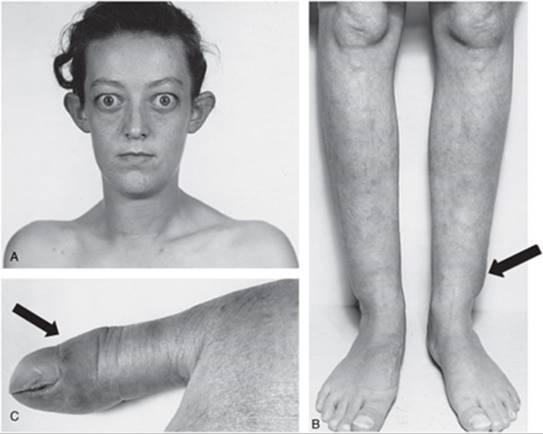
FIGURE 44–3. Features of Graves’ disease. (A) Facial appearance: exophthalmos, lid retraction, periorbital edema, and proptosis. (B) Thyroid dermopathy over lateral aspects of shins. (C) Thyroid clubbing (acropachy). (From Jameson JL, Weetman AP. Disorders of the thyroid gland. In: Kasper DL, Braunwald E, Fauci AS, et al., eds. Harrison’s Principles of Internal Medicine, 16th ed. New York: McGraw-Hill, 2004:2114.)
Patient Encounter 2, Part 1
GD is a 24-year-old woman who comes to the clinic stating, “I’m so nervous and hungry, and I’m losing weight. What is wrong with me?” She first noticed these symptoms 2 months ago, and they have worsened steadily. She feels anxious for no reason and has trouble sleeping. She has noticed that her appetite has increased, although she has lost about 4.6 kg (10 lb) over the past 2 months. Sometimes she can feel her heart beating in her chest, but she denies chest pain or syncope. She also has noticed that she is always sweaty and that her menses have become very light. Her only medications are a hormonal oral contraceptive and occasional naproxen for dysmenorrhea. She thinks that her mother had some kind of thyroid problem when she was pregnant.
PE:
VS: Pulse 112 bpm, blood pressure 108/72, RR 12, temperature 37.4°C (99.3°F)
HEENT: Diffusely enlarged thyroid; mild exophthalmos
CV: Tachycardic, RRR
Exts: Fine tremor
Skin: Warm and moist
ECG: Sinus tachycardia
Labs:
Electrolytes, complete blood count normal. Urine hCG negative. TSH less than 0.5 milliunit/L (normal 0.5-2.5 milliunits/L);* free T4 (FT4) 3.1 ng/dL (39.9 pmol/L; normal 0.7-1.9 ng/dL, or 9.0-24.5 pmol/L); +TSHR-SAbs
What therapeutic options exist for GD’s Graves’ disease?
What would you recommend?
How would you initiate and titrate therapy?
What would you tell GD regarding the cause of her signs and symptoms, significance of her abnormal thyroid function tests, and therapeutic options?
*Milliunits/L (mU/L) = microunits/mL (μU/mL); clinical laboratories use either unit of measurement.
Methods to Reduce Thyroid Hormone Synthesis
Excess production of thyroid hormone can be reduced in four ways: iodides, antithyroid drugs, radioactive iodine, and surgery.37–41
Iodide
Large doses of iodide inhibit the synthesis and release of thyroid hormones. Serum T4 levels may be reduced within 24 hours, and the effects may last for 2 to 3 weeks. Iodides are used most commonly in Graves’ disease patients prior to surgery and to quickly reduce hormone release in patients with thyroid storm. Potassium iodide is administered either as a saturated solution (SSKI) that contains 38 mg iodide per drop or as Lugol’s solution, which contains 6.3 mg iodide per drop. The typical starting dose is 120 to 400 mg/day. Iodide therapy should start 7 to 14 days prior to surgery. Iodide should not be given prior to radioactive iodine treatment because the iodide will inhibit concentration of the radioactivity in the thyroid. Iodides also are used to protect the thyroid from radioactive iodine fallout after a nuclear accident or attack. Daily administration of 30 to 100 mg iodide will markedly reduce thyroid gland uptake of radioactive iodine. The most frequent toxic effects with iodide therapy are hypersensitivity reactions, “iodism” (characterized by palpitations, depression, weight loss, and pustular skin eruptions), and gynecomastia.
Antithyroid Drugs
The thionamide agents propylthiouracil and methimazole are used in the United States to treat hyperthyroidism.40–42 Carbimazole, a methimazole prodrug, is available in Europe. These drugs inhibit thyroid hormone synthesis by interfering with thyroid peroxidase-mediated iodination of tyrosine residues in thyroglobulin. Propylthiouracil has the added effect of inhibiting the conversion of T4 to T3. The thionamides also have immuno-suppressant effects. In patients with Graves’ disease treated with thionamides, TSHR-SAb levels and other immune mediators decrease over time. Both drugs are well absorbed from the GI tract. Propylthiouracil has a half-life of 1 to 2.5 hours, whereas the half-life of methimazole is 6 to 9 hours.
Antithyroid drugs are used as primary therapy for Graves’ disease or as preparative therapy before surgery or radioactive iodine administration. The decision to use antithyroid drugs as primary therapy must be weighed against the risks and benefits of radioiodine or surgery. Patient preference must be considered.
In most patients, there is no clear advantage of one thionamide over the other. While propylthiouracil has the advantage of inhibiting T4-to-T3 conversion, methimazole can be given as a single daily dose. Methimazole is preferred to normalize thyroid function prior to radioactive iodine therapy, though both thionamides increase the failure rate of radioactive iodine therapy43 The usual starting dose of methimazole is 15 to 30 mg/day, and the usual starting dose of propylthiouracil is 100 mg three times daily. Thyroid hormone levels drop in 2 to 3 weeks, and after 6 weeks, 90% of patients with Graves’ disease will be euthyroid. Thyroid function testing should be performed every 4 to 6 weeks until stable. After the patient becomes euthyroid, the antithyroid drug dose often can be decreased (5-10 mg/day methimazole, 100–200 mg/day propylthiouracil) to maintain the euthyroid state. Excessive doses of antithyroid drugs will result in hypothyroidism.
Remission of Graves’ disease occurs in 40% to 60% of patients after 1 to 2 years of therapy. Antithyroid therapy may be stopped or tapered after 12 to 24 months. Relapse usually occurs in the first 3 to 6 months after stopping antithyroid therapy. Levels of TSHR-SAb after a course of treatment may have predictive value for the risk of relapse in that antibody-positive patients almost always will relapse. However, antibody-negative patients also may relapse after therapy is stopped. About 75% of women in remission who become pregnant will have a postpartum relapse. When therapy is discontinued, a therapeutic strategy should be in place in the event of relapse. Many patients will opt for radioactive iodine as a long-term solution.
Antithyroid drugs are associated with a low rate of adverse effects. Skin rash, arthralgias, and GI upset are seen in 5% of patients. While the drug can be continued in the presence of a minor skin rash, the development of arthralgia warrants discontinuation. Hepatotoxicity is an uncommon but potentially serious adverse effect, occurring in 0.1% to 0.2% of patients. However, transient rises in aminotransferase enzyme levels are seen in up to 30% of patients treated with propylthiouracil. Severe hepatocellular damage can occur from propylthiouracil, whereas methimazole can cause cholestatic jaundice. Vasculitis is another potentially serious but uncommon reaction that is more common with propylthiouracil. Patients may develop a drug-induced lupus syndrome, and some, particularly Asians, can develop antineutrophil cytoplasmic antibody-positive vasculitis.
Agranulocytosis is one of the most serious adverse effects of antithyroid drug therapy. Agranulocytosis must be distinguished from a transient decrease in white blood cell count seen in up to 12% of adults and 25% of children with Graves’ disease. Agranulocytosis occurs in 0.3% of patients, and the incidence may be the same with propylthiouracil and methimazole therapy. Agranulocytosis almost always occurs within the first 3 months of therapy, and it occurs suddenly and unpredictably. Patients will present with fever, malaise, and sore throat, and the absolute neutrophil count will be less than 1,000/mm3. Patients may develop sepsis and die rapidly. Agranulocytosis is thought to be autoimmune-mediated. If agranulocytosis occurs, discontinue the antithyroid drug immediately, administer broad-spectrum antibiotics if the patient is febrile, and consider the administration of granulocyte colony-stimulating factor. The white blood cell count should recover in a week or two. Patients who develop agranulocytosis should not be switched to another thionamide drug. Monitoring for agranulocytosis is controversial owing to its sudden and predictable nature. Most practitioners do not recommend routine monitoring of the complete blood count, although early detection could improve patient outcomes. Patients initiating thionamide therapy must be informed about the signs and symptoms of agranulocytosis, and other serious side effects. Patients should be asked to report signs and symptoms suggestive of infection, such as fever and sore throat lasting more than 2 or 3 days, or any bruising.
Patient Encounter 2, Part 2
One month later, GD is back for a follow-up visit. She notes that her thyrotoxic symptoms are gone, and overall, she feels great. She is receiving propylthiouracil 100 mg three times daily. Her most recent TSH was 0.9 milliunit/L (normal 0.5-2.5 milliunits/L)*, and her free T4 was 1.6 ng/dL (20.6 pmol/L; normal 0.7-1.9 ng/dL, or 9.0–24.5 pmol/L). However, over the past few days she has developed a sore throat and feels achy. She wonders if she has the flu. Her vital signs show a pulse of 92 bpm and a temperature of 38.3°C (101°F). A CBC reveals a total WBC of 0.1 × 10³/mm3 or 0.1 × 10⁹/L (normal 4–10 × 103/mm 3 or 4–10 × 109/L) with 15 neutrophils (absolute neutrophil count 150).
What has happened to GD?
What are you concerned about?
How will you manage this problem?
What will you tell GD regarding the possible cause of her new symptoms, the significance of her low WBC, and recommended actions?
*Milliunits/L (mU/L) = microunits/mL (μU/mL); clinical laboratories use either unit of measurement.
Radioactive Iodine
Radioactive iodine, typically 131 I, produces thyroid ablation without surgery. 131 I is well absorbed after oral administration. The iodine is concentrated in the thyroid gland and has a half-life of 8 days. Over a period of weeks, thyroid cells that have taken up the 131 I begin to develop abnormalities and necrosis. Eventually, thyroid cells are destroyed, and hormone production is reduced. After a single dose, 40% to 70% of patients will be euthyroid in 6 to 8 weeks, and 80% will be cured. In most patients, hypothyroidism will develop, and long-term LT4replacement will be necessary. Because 131 I has a slow onset of action, most patients are treated initially with β-blockers and antithyroid drugs. Thionamide drugs must be withdrawn for at least 4 to 6 days prior to 131 I administration to allow adequate accumulation of the radioactive iodine in the gland. β-Blockers can be continued during 131 I therapy. The dose of 131 I is based on the estimated weight of the patient’s thyroid gland. Radioactive iodine therapy is contraindicated during pregnancy and breast-feeding. Radioactive iodine therapy may acutely worsen Graves’ ophthalmopathy. Patients with prominent eye disease may be started on prednisone 40 mg/day, with the dose tapered over 2 to 3 months. Radioactive iodine also may cause a painful thyroiditis, which may necessitate anti-inflammatory therapy. Any long-term carcinogenic effect of 131 I has not been demonstrated in long-term clinical trials.
Surgery
Subtotal thyroidectomy is indicated in patients with very large goiters and thyroid malignancies and those who do not respond or cannot tolerate other therapies. Patients must be euthyroid prior to surgery, and patients often are administered iodide preoperatively to reduce gland vascularity. The overall surgical complication rate is 2.7%. Postoperative hypothyroidism occurs in 10% of patients who undergo subtotal thyroidectomy.
Special Conditions and Populations
Graves’ Disease and Pregnancy34,35,44
Pregnancy may worsen or precipitate thyrotoxicosis in women with underlying Graves’ disease owing to the TSH agonist effect of β-hCG. Untreated maternal thyrotoxicosis may result in increased rates of miscarriage, premature delivery, eclampsia, and low-birth-weight infants. Fetal and neonatal hyperthy-roidism may occur as a result of transplacental passage of TSHR-SAbs. Because radioactive iodine is contraindicated and surgery is best avoided during pregnancy, most patients are treated with antithyroid drugs. Propylthiouracil is considered the treatment of choice, and the lowest possible dose to maintain maternal euthyroidism should be used. Antithyroid therapy in excessive doses may suppress fetal thyroid function.
Neonatal and Pediatric Hyperthyroidism
Some neonates born to mothers with Graves’ disease will be hyperthy-roid at delivery. Antithyroid drug therapy (propylthiouracil 5–10 mg/kg/day or methimazole 0.5–1 mg/kg/day) may be required for up to 12 weeks. One drop per day of SSKI may be used in the first few days to rapidly reduce thyroid hormone synthesis and release.
Thyroid Storm
Thyroid storm is a life-threatening condition caused by severe thyrotoxicosis.45 Signs and symptoms include high fever, tachycardia, tachypnea, dehydration, delirium, coma, and GI disturbances. Thyroid storm is precipitated in a previously hyperthyroid patient by infection, trauma, surgery, radioactive iodine treatment, and sudden withdrawal from antithyroid drugs. Patients are treated with a short-acting β-blocker such as IV esmolol, IV or oral iodide, and large doses of propylthiouracil (900–1,200 mg/day in three to four divided doses). Supportive care with acetaminophen to suppress fever, fluid and electrolyte management, and antiarrhythmic agents are important components of therapy. IV hydrocortisone 100 mg every 8 hours is used often due to the potential presence of adrenal insufficiency.
NONTHYROIDAL ILLNESS (EUTHYROID SICK SYNDROME)
A number of changes in the hypothalamic–pituitary–thyroid axis occur during acute illness.46,47 These changes are termed nonthyroidal illness or euthyroid sick syndrome. The type and degree of abnormalities depend on the severity of illness. Mild to moderate medical illness, surgery, or starvation causes a decrease in serum T3 levels owing to decreased peripheral conversion of T4 to T3. The reduced T3 levels do not correlate with ultimate mortality and are thought to be an adaptive response to stress. Patients with more severe illness, especially those in the intensive-care unit, frequently have reduced total T4 levels, although FT4 levels usually are normal. In the critically ill, there is a correlation between the degree of serum T4 reduction and mortality. In most acutely ill patients who are euthyroid, the TSH level is normal. However, administration of dopamine, octreotide, or high doses of glucocorticoids can reduce TSH levels. During recovery from acute illness, the TSH level may become modestly elevated to renormalize serum T4 levels. During this time, thyroid function tests may be misinterpreted to indicate hypothyroidism. Despite the sometimes very low T4 levels, there is no evidence that LT4 administration has any benefit. Patients with possible thyroid abnormalities during acute illness should be evaluated by an endocrinologist.
Patient Care and Monitoring: Hyperthyroidism
1. A low or undetectable TSH level identifies thyrotoxicosis.
2. Refer the patient for a diagnostic assessment to identify the underlying cause. Identify Graves’ disease by the presence of eye and/or skin findings and the presence of TSHR-SAbs.
3. Refer patients with Graves’ disease to an ophthalmologist for assessment and monitoring.
4. Treat severe or troublesome autonomic signs and symptoms with a nonselective β-blocker such as propranolol 20 to 40 mg four times daily. Titrate the β-blocker dose based on signs and symptoms.
5. In patients with excess thyroid hormone production, reduce hormone production with an antithyroid drug and/or radioactive iodine. Choose therapy based on patient-specific factors and preference.
6. Antithyroid drugs have a delayed effect. After 2 to 4 weeks of therapy, adjust the dose if the TSH is not in the target range (0.5-2.5 milliunits/L).* Once the patient is euthyroid, consider reducing the dose of antithyroid drug to avoid hypothyroidism.
7. Consider stopping antithyroid therapy in Graves’ disease after 12 to 18 months to see if remission has occurred.
8. Monitor patients on antithyroid drugs for signs and symptoms of adverse effects.
9. Monitor for symptoms of neutropenia (e.g., fever or sore throat), and check white blood cell count if symptoms occur.
10. If radioactive iodine is given, make sure that antithyroid drugs are stopped 4 to 6 days prior to treatment.
11. Several months after radioactive iodine, expect that the patient will require permanent LT4 replacement.
12. Treat pregnant hyperthyroid women with propylthiouracil.
*Milliunits/L (mU/L) = microunits/mL (μU/mL); clinical laboratories use either unit of measurement.
THYROID CANCER AND LT4 SUPPRESSION
The growth and spread of thyroid carcinoma is stimulated by TSH. An important component of thyroid carcinoma management is the use of LT4 to suppress TSH secretion. Early in therapy, patients receive the lowest LT4 dose sufficient to fully suppress TSH to undetectable levels. Controlled trials show that suppressive LT4therapy reduces tumor growth and improves survival. These patients are purposefully “overtreated” with LT4, sometimes to a fully-suppressed TSH level and rendered subclinically hyperthyroid. Postmenopausal women should receive aggressive osteoporosis therapy to prevent LT4-induced bone loss. Other thyrotoxic complications, such as atrial fibrillation, should be monitored and managed appropriately.
DRUG-INDUCED THYROID ABNORMALITIES
Drugs can affect thyroid function in a number of ways.13,48 Effects of drugs on thyroid hormone protein binding, LT4 absorption, and metabolism have been discussed previously. Several commonly used medications can alter thyroid hormone secretion.
Amiodarone
Amiodarone49 is a commonly prescribed antiarrhythmic drug that contains two iodide atoms, constituting 38% of its mass. Each 200-mg dose of amiodarone provides 75 mg iodide. Amiodarone deiodination releases about 6 mg of free iodine daily, 20 to 40 times more than the average daily intake of iodine in the United States. Amiodarone blocks conversion of T4 to T3, inhibits entry of T3 into cells, and decreases T3 receptor binding. Amiodarone causes rapid reduction in serum T3 levels, increases free and total T4 levels, and increases TSH level. After 3 months of therapy, TSH levels usually return to normal, although the serum T3 and T4 level changes may remain. Most of these patients are euthyroid because the free T3 levels are in the low-normal range. Amiodarone can cause thyroid abnormalities frequently in previously euthyroid patients. In a study of amiodarone treatment of persistent atrial fibrillation,5025.8% of patients developed subclinical hypothyroidism, and 5% developed overt hypothyroidism. Hyperthyroidism occurred in 5.3%. Thyroid abnormalities, when they occurred, were seen within 6 months of initiation of amiodarone therapy in almost all patients. Amiodarone-induced hypothyroidism is more common in iodine-sufficient areas of the world. Patients with underlying autoimmune thyroiditis are much more likely to develop amiodarone-induced hypothyroidism. Amiodarone-induced hypothyroidism occurs most commonly within the first year of therapy. If amiodarone cannot be discontinued, LT4 therapy will be effective in most patients. If amiodarone can be stopped, thyroid function will return to normal in 2 to 4 months.
Amiodarone is more likely to cause thyrotoxicosis in iodine-deficient areas. Type 1 amiodarone-induced thyrotoxicosis is caused by iodine excess, and typically occurs in patients with pre-existing multinodular goiter or subclinical Graves’ disease. Type 2 amiodarone-induced thyrotoxicosis is a destructive thyroiditis that occurs in patients with no underlying thyroid disease. Amiodarone-induced thyrotoxicosis is more common in men. Because amiodarone has β-blocking activity, palpitations and tachycardia may be absent. In type 1 thyrotoxicosis, amiodarone should be discontinued. If amiodarone therapy cannot be stopped, larger doses of antithyroid drugs may be needed to control thyrotoxicosis. In type 2 thyroiditis, stopping amiodarone may not be necessary because spontaneous resolution may occur. Prednisone 40 to 60 mg/day will quickly improve thyrotoxic symptoms. Prednisone may be tapered after 1 to 2 months of therapy.
Patients receiving amiodarone must receive monitoring for thyroid abnormalities. Baseline measurements of serum TSH, FT4, FT3, anti-TPOAbs, and TSHR-SAbs should be performed. TSH, FT4, and FT3should be checked 3 months after initiation of amiodarone and then at least a TSH every 3 to 6 months.
Lithium
Lithium is associated with hypothyroidism in up to 34% of patients, and hypothyroidism may occur after years of therapy. Lithium appears to inhibit thyroid hormone synthesis and secretion. Patients with underlying autoimmune thyroiditis are more likely to develop lithium-induced hypothyroidism. Patients may require LT4 replacement even if lithium is discontinued.
Interferon-α
Interferon-α causes hypothyroidism in up to 39% of patients being treated for hepatitis C infection. Patients may develop a transient thyroiditis with hyperthyroidism prior to becoming hypothyroid. The hypothyroidism may be transient as well. Asians and patients with pre-existing anti-TPOAbs are more likely to develop interferon-induced hypothyroidism. The mechanism of interferon-induced hypothyroidism is not known. If LT4 replacement is initiated, it should be stopped after 6 months to reevaluate the need for replacement therapy.
OUTCOME EVALUATION
• Desired outcomes include relieving signs and symptoms and achieving a euthyroid state.
• Success of therapy for thyroid disorders must be based not only on short-term improvement of the patient’s clinical status and abnormal laboratory values but also on achievement of a long-term euthyroid state. Maintaining the TSH level in the normal range improves symptoms and reduces the risk of long-term complications.
• Because pharmacotherapy often is lifelong, especially in patients with hypothyroidism, patients must undergo periodic monitoring to avoid the long-term complications of hypothyroidism and hyperthyroidism. In the hypothyroid patient, such monitoring may involve simply asking the patient about signs and symptoms, and a yearly measurement of the TSH level.
• Any change in the patient’s clinical status, such as a new pregnancy or a major change in body weight, necessitates a reevaluation of therapy. Patients at high risk for complications, such as pregnant women, the elderly, and patients with underlying cardiac disease, must be monitored more closely.
• Patients should be educated and periodically reminded about the importance of adherence and long-term tight control, the need for periodic clinical and laboratory monitoring, and the importance of staying on one LT4 product.
• In the hyperthyroid patient, relieving signs and symptoms, and achieving a euthyroid state are the desired outcomes. The method of achieving these outcomes may change over time with the use of antithyroid drugs versus radioactive iodine.
• Patients with hyperthyroidism also must undergo periodic clinical and laboratory monitoring, with more frequent monitoring if there is a change in the patient’s clinical status.
• Patients who receive antithyroid drugs must be monitored for adverse drug events such as agranulocytosis.
• Patients who receive radioactive iodine must be monitored for the development of hypothyroidism.
• In patients with thyroid cancer, the desired outcomes with LT4 therapy often are different from those in the hypothyroid patient.
• LT4 doses sufficient to suppress tumor growth may result in a suppressed TSH and mild hyperthyroidism. These patients must be monitored closely for complications of the mild hyperthyroid state, such as bone mineral loss and development of atrial fibrillation.
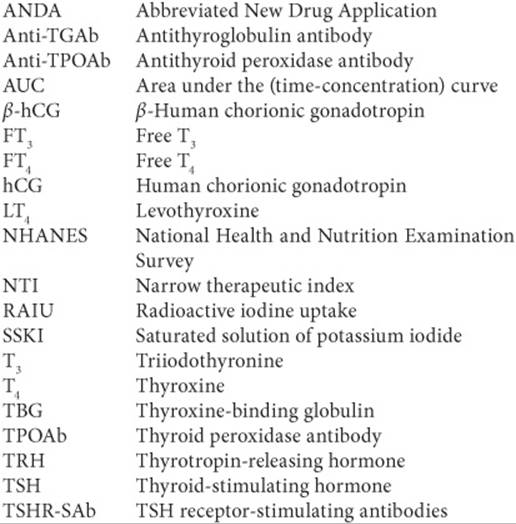
Abbreviations Introduced in This Chapter
 Self-assessment questions and answers are available at http://www.mhpharmacotherapy.com/pp.html.
REFERENCES
1. Aoki Y, Belin RM, Clickner R, et al. Serum TSH and total T4 in the United States population and their association with participant characteristics: National Health and Nutrition Examination Survey (NHANES 1999–2002). Thyroid 2007;17:1211–1223.
2. Canaris GJ, Manowitz NR, Mayor G, Ridgeway EC. The Colorado thyroid disease prevalence study. Arch Int Med 2000;160:526–534.
3. Spencer CA, Hollowell JG, Karazosyan M, Braverman LE. National Health and Nutrition Examination Survey III thyroid-stimulating hormone (TSH)-thyroperoxidase antibody relationships demonstrate that TSH upper reference limits may be skewed by occult thyroid dysfunction. J Clin Endocrinol Metb 2007;92:4236–4240.
4. Surks MI, Hollowell JG. Age-specific distribution of serum thyrotropin and antithyroid antibodies in the U.S. population: Implications for the prevalence of subclinical hypothyroidism. J Clin Endocrinol Metab 2007;92:4575–4582.
5. Wartofsky L, Dickey RA. The evidence for a narrower thyrotropin reference range is compelling. J Clin Endocrinol Metab 2005;90:5483–5488.
6. Toft AD, Beckett GJ. Measuring serum thyrotropin and thyroid hormone and assessing thyroid hormone transport. In: Braverman LE, Utiger RD, eds. Werner & Ingbar’s The Thyroid. A Fundamental and Clinical Text, 9th ed. Philadelphia: Lippincott Williams & Wilkins, 2005:329–344.
7. Vanderpump MPJ, Tunbridge WMG, French JM, et al. The incidence of thyroid disorders in the community: A twenty year follow-up of the Whickham survey. Clin Endocrinol (Oxf) 1995;43:55–69.
8. Danese MD, Powe NR, Sawin CT, Ladenson PW. Screening for mild thyroid failure at the periodic health examination. A decision and cost-effectiveness analysis. JAMA 1996;276:285–292.
9. Ladenson PW, Singer PA, Ain KB, Bagchi N, et al. American Thyroid Association guidelines for detection of thyroid dysfunction. Arch Int Med 2000;160: 1573–1575.
10. U.S. Preventative Services Task Force. Screening for thyroid disease: Recommendation statement. Ann Int Med 2004;140:125–127.
11. Devdhar M, Ousman YH, Burman KD. Hypothyroidism. Endocrinol Metab Clin North Amer 2007;36:595–615.
12. Vaidya B, Pearce SHS. Management of hypothyroidism in adults. BMJ 2008;337:284–289.
13. Ma RCW, Kong APS, Chan N, et al. Drug-induced endocrine and metabolic disorders. Drug Safety 2007;30:215–245.
14. Volzke H, Schwann C, Wallaschofski H, Dorr M. Review: The association of thyroid dysfunction with all-cause and circulatory mortality: Is there a causal relationship? J Clin Endocrinol Metab 2007;92:2421–2429.
15. Glinder D. Thyroid disease during pregnancy. In: Braverman LE, Utiger RD, eds. Werner & Ingbar’s The Thyroid. A Fundamental and Clinical Text, 9th ed. Philadelphia: Lippincott Williams & Wilkins, 2005:1086–1108.
16. Grozinsky-Glasberg S, Fraser A, Nahshoni E, et al. Thyroxine-triiodothyronine combination therapy versus thyroxine monotherapy for clinical hypothyroidism: Meta-analysis of randomized controlled trials. J Clin Endocrinol Metab 2006;91:2592–2599.
17. Hennessey JV. Levothyroxine a new drug? Since when? How could that be? Thyroid 2003;13:279–282.
18. U.S. Department of Health and Human Services, Food and Drug Administration Center for Drug Evaluation and Research Guidance for Industry. Levothyroxine Sodium Products Enforcement of August 14, 2001 Compliance Date and Submission of New Applications. www.fda.gov/cder/guidance/index.htm.
19. Food and Drug Administration Center for Drug Evaluation and Research Electronic Orange Book. Approved Drug Products with Therapeutic Equivalence Evaluations. www.fda.gov/cder/ob/default.htm.
20. Benet LZ, Goyan JE. Bioequivalence and narrow therapeutic index drugs. Pharmacother 1995;15:433–440.
21. Blakesley V, Awni W, Locke C, Ludden T, et al. Are bioequivalence studies of levothyroxine sodium formulations in euthyroid volunteers reliable? Thyroid 2004;14:191–200.
22. Dong BJ, Hauck WW, Gambertoglio JG, Gee L, et al. Bioequivalence of generic and brand-name levothyroxine products in the treatment of hypothyroidism. JAMA 1997;277:1205–1213.
23. Mayor GH, Orlando T, Kurtz NM. Limitations of levothyroxine bioequivalence evaluation: An analysis of an attempted study. Am J Ther 1995;2:417–432.
24. Carr D, McLeod DT, Parry G, Thornes HM. Fine adjustment of thyroxine replacement dosage: Comparison of the thyrotrophin releasing hormone test using a sensitive thyrotrophin assay with measurement of free thyroid hormones and clinical assessment. Clin Endocrinol 1988;28:325–333.
25. Toft AD. Thyroxine therapy. New Engl J Med 1994;331:174–180.
26. Singh S, Duggal J, Molnar J, et al. Impact of subclinical thyroid disorders on coronary heart disease, cardiovascular and all-cause mortality: A meta-analysis. Int J Cardiol 2008;125:41–48.
27. Ochs N, Auer R, Bauer DC, et al. Meta-analysis: Subclinical thyroid dysfunction and the risk for coronary heart disease and mortlity. Ann Int Med 2008;148: 832–845.
28. Cappola AR, Fried LP, Arnold AM, et al. Thyroid status, cardiovascular risk and mortality in older adults. JAMA 2006;295:1033–1041.
29. Biondi B, Cooper DS. The clinical significance of subclinical thyroid dysfunction. Endocrine Rev 2008;29:76–131.
30. Santini F, Pinchera A, Marsili A, et al. Lean body mass is a major determinant of levothyroxine dosage in the treatment of thyroid diseases. J Clin Endocrinol Metab 2005;90:124–127.
31. Laurberg P, Andersen S, Pedersen IB, Carle A. Hypothyroidism in the elderly: Pathophysiology, diagnosis and treatment. Drugs Aging 2005;22:23–38.
32. Helfand M, Crapo LM. Monitoring therapy in patients taking levothyroxine. Ann Int Med 1990;113:450–454.
33. Briesacher BA, Andrade SE, Fouayzi H, Chan A. Comparison of drug adherence rates among patients with seven different medical conditions. Pharmacother 2008;28:437–443.
34. LeBeau SO, Mandel SJ. Thyroid disorders during pregnancy. Endocrinol Clin North Amer 2006;35:117–136.
35. Abalovich M, Amino N, Barbour LA, et al. Management of thyroid dysfunction during pregnancy and postpartum: An Endocrine Society clinical practice guideline. J Clin Endocrinol Metab 2007;92(suppl):S1–S47.
36. Braverman LE, Utiger RD. Introduction to thyrotoxicosis. In: Braverman LE, Utiger RD, eds. Werner & Ingbar’s The Thyroid. A Fundamental and Clincal Text, 9th ed. Philadelphia: Lippincott Williams & Wilkins, 2005:453–455.
37. Cooper DS. Hyperthyroidism. Lancet 2005;362:459–468.
38. Nayak B, Hodak SP. Hyperythyroidism. Endocrinol Metab Clin North Amer 2007;36:617–656.
39. Cooper DS. Approach to the patient with subclinical hyperthyroidism. J Clin Endocrinol Metab 2007;92:3–9.
40. Farwell BP, Braverman LE. Thyroid and antithyroid drugs. In: Brunton L, Lazo J, Parker K, eds. Goodman & Gilman’s The Pharmacological Basis of Therapeutics, 11th ed. New York: McGraw-Hill, 2006:1511–1540.
41. Cooper DS. Treatment of thyrotoxicosis. In: Braverman LE, Utiger RD, eds. Werner & Ingbar’s The Thyroid. A Fundamental and Clinical Text, 9th ed. Philadelphia: Lippincott Williams & Wilkins, 2005:665–694.
42. Cooper DS. Drug therapy: Antithyroid drugs. New Engl J Med 2005;352:905–917.
43. Walker MA, Briel M, Chrit-Crain M, et al. Effects of antithyroid drugs on radioiodine treatment: Systematic review and meta-analysis of randomized controlled trials. BMJ 2007;335:1–7.
44. Marx H, Amin P, Lazarus JH. Hyperthyroidism and pregnancy. BMJ 2008;336:663–667.
45. Nayak B, Burman K. Thyrotoxicosis and thyroid storm. Endocrinol Metab Clin North Amer 2006;35:663–867.
46. Mebis L, Debaveye Y, Visser TJ, Van den Berghe G. Changes with the Clin North Amer 2006;35:807–821.
47. Langton JE, Brent GA. Nonthyroidal illness syndrome: Evaluation of thyroid function in sick patients. Endocrinol Metab Clin North Am 2002;31:159–172.
48. Surks MI, Sievert R. Drugs and thyroid function. New Engl J Med 1995;333:1688–1694.
49. Basaria S, Cooper DS. Amiodarone and the thyroid. Am J Med 2005;118:706–714.
50. Batcher EL, Tang C, Singh BN, et al. Thyroid function abnormalities thyroid axis during the course of critical illness. Endocrinol Metab during amiodarone therapy for persistent atrial fibrillation. Am J Med 2007;120:880–885.