
David R.P. Guay
LEARNING OBJECTIVES
Upon completion of the chapter, the reader will be able to:
1. Explain the pathophysiology of the major types of urinary incontinence (UI; urge, stress, overflow, and functional) and pediatric enuresis.
2. Recognize the signs and symptoms of the major types of UI and pediatric enuresis in individual patients.
3. List the treatment goals for a patient with UI or pediatric enuresis.
4. Compare and contrast anticholinergics/antispasmodics, α-adrenoceptor agonists, dual serotonin-norepinephrine reuptake inhibitors, vaginal estrogens, cholinomimetics, tricyclic antidepressants (TCAs), and vasopressin analogues in terms of mechanism of action, treatment outcomes, adverse effects, and drug–drug interaction potential when used to manage UI or pediatric enuresis.
5. Identify factors that guide drug selection for an individual patient.
6. Formulate a monitoring plan for a patient on a given treatment regimen based on patient-specific information.
7. Describe indicators for combination drug therapy of UI or pediatric enuresis.
8. Describe nonpharmacologic treatment approaches (including surgery) for UI or pediatric enuresis.
9. Formulate appropriate patient counseling information for patients undergoing drug therapy for UI or pediatric enuresis.
KEY CONCEPTS
 Accurate diagnosis and classification of urinary incontinence (UI) type is critical to the selection of appropriate drug therapy.
 Many medications can influence the lower urinary tract, including those not used for managing genitourinary disorders, and can precipitate new onset or aggravate existing voiding dysfunction and UI.
 Patient-specific treatment goals should be identified. This frequently requires reaching a compromise between efficacy and tolerability of drug therapy. These goals are not static and may change with time.
 Nonpharmacologic treatment can allow the use of lower drug doses. The combination of both therapies may have at least an additive effect on UI signs and symptoms.
 The anticholinergic/antispasmodic drugs are the pharmacologic first-line treatments for urge UI. They are the most effective agents in suppressing premature detrusor contractions, enhancing bladder storage, and relieving symptoms.
 Patient characteristics (e.g., age, comorbidities, concurrent drug therapies, and ability to adhere to the prescribed regimen) can also influence drug therapy selection.
 Careful dose titration is necessary to maximize efficacy and tolerability.
 If therapeutic goals are not achieved, a switch to an alternative agent should be made.
 Vaginally administered estrogen plays only a modest role in managing stress urinary incontinence (SUI; urethral underactivity), unless it is accompanied by local signs of estrogen deficiency (e.g., atrophic urethritis or vaginitis).
 The major impediment to using the α-adrenoceptor agonist class is the extensive list of contraindications.
 The use of duloxetine in SUI is complicated by: (a) the potential for multiple clinically relevant drug–drug interactions with cytochrome P-450 2D6 and 1A2 inhibitors; (b) withdrawal reactions if abruptly discontinued; (c) high rates of nausea and other side effects; (d) hepatotoxicity that contraindicates its use in patients with any degree of hepatic impairment; and (e) its mild hypertensive effect. Another disconcerting finding is the high discontinuation rate when duloxetine is used in a “usual use” clinic environment (68%, two-thirds due to adverse events and one-third due to lack of efficacy).
 In overflow UI due to atonic bladder, a trial of bethanecol may be reasonable if contraindications do not exist.
 In overflow UI due to obstruction, the goal of treatment is to relieve the obstruction.
 Considering that pharmacotherapy is inferior to select nonpharmacologic treatment modalities in pediatric enuresis, pharmacotherapy will be most valuable in patients who are not candidates for nonpharmacologic therapy due to nonadherence or who do not achieve the desired outcomes on nonpharmacologic therapy alone.
 Desmopressin (DDAVP) is the first-line drug choice in pediatric enuresis.
URINARY INCONTINENCE
INTRODUCTION
Urinary incontinence (UI) is defined as the complaint of involuntary leakage of urine.1 It is often associated with other bothersome lower urinary tract symptoms such as urgency, increased daytime frequency, and nocturia. Despite its prevalence across the lifespan and in both sexes, it remains an underdetected and underreported health problem that can have significant negative consequences for the individual’s quality of life. Patients with UI may be depressed due to a perceived loss of self-control, loss of independence, and lack of self-esteem, and often curtail or substantially modify their activities for fear of an “accident.” Serious medical and economic consequences may also occur in untreated or undertreated patients, including perineal dermatitis and infections, worsening or lack of healing of pressure ulcers, urinary tract infections (UTIs), falls, and the need for long-term institutionalization in extended care facilities (including skilled nursing facilities (SNFs), or nursing homes).
Patient Encounter 1, Part 1
A 50-year-old woman with hypertension and diabetes comes into your clinic seeking advice about which incontinence pads work best. After questioning her, you determine that she has multiple issues of low volume urine loss daily, which is a significant change (increase) from 1 year ago. All episodes occur at times of physical activity. She’s a single mother of three grown children, all delivered vaginally. Her last menstrual period was 11 months ago.
What information suggests that she has UI?
Does she have risk factors for UI?
What additional information do you need to know before creating a treatment plan for this patient?
EPIDEMIOLOGY AND ETIOLOGY
The true prevalence of UI has been difficult to determine because of methodologic issues such as varying definitions of UI and reporting bias.2 Although the condition occurs across the lifespan, the peak prevalence, at least in women, is around the age of menopause (approximately 50 years), which is followed by a slight decrease in the 55- to 60-year-old age group, and then a steadily increasing prevalence after age 65. In general, the median prevalences of UI are as follows3:
• 20% to 30% in young females
• 30% to 40% in middle-aged females
• 30% to 50% in elderly females (50–75% in female SNF residents)
• 10% in adult males (in excess of 50% in elderly male SNF residents)
UI can result from abnormalities within (intrinsic to) and outside of (extrinsic to) the urinary tract. Within the urinary tract, abnormalities may occur in the urethra (including the bladder outlet and urinary sphincters), the bladder, or a combination of both structures. Focusing on abnormalities in these two structures, a simple classification scheme emerges for all but the rarest intrinsic causes of UI. Accurate diagnosis and classification of UI type is critical to the selection of appropriate drug therapy.
PATHOPHYSIOLOGY
Stress Urinary Incontinence Related to Urethral Underactivity4
In stress urinary incontinence (SUI), the urethra and/or urethral sphincters cannot generate enough resistance to impede urine flow from the bladder when intra-abdominal pressures (that are transmitted to the bladder, which is an intra-abdominal organ) are elevated. Intra-abdominal pressures are elevated by exertional activities like exercise, running, lifting, coughing, and sneezing. The amount of urine lost is generally small with each episode. Nocturia and enuresis are rarely seen. The factors responsible for urethral underactivity are incompletely understood, although the loss of the trophic effects of estrogen on the uroepithelium at menopause is thought to be important. The peak of SUI prevalence in the perimenopausal years supports this hypothesis. Clearly established risk factors for SUI include5:
• Pregnancy (increased risk with increased parity)
• Childbirth (vaginal delivery)
• Menopause
• Cognitive impairment
• Obesity
• Increasing age
Clinical Presentation of SUI Related to Urethral Underactivity4
General
The patient usually notes UI during activities like exercise, running, lifting, coughing, or sneezing. This type of UI is much more common in females (seen only in males with lower urinary tract surgery or injury compromising the sphincter).
Symptoms
Urine leakage with physical activity (volume is proportional to activity level). No UI with physical inactivity, especially when supine (no nocturia). May develop urgency and frequency as a compensatory mechanism (or independently as a separate component of bladder overactivity).
Diagnostic Tests
Observation of urethral meatus (opening) while patient coughs or strains
Unless the sphincter mechanism is compromised by surgery or trauma, SUI is exceedingly rare in males. The most common surgeries predisposing to SUI in males are radical prostatectomy for prostate cancer and transurethral resection of the prostate for benign prostatic hyperplasia (BPH).
Urge Urinary Incontinence Related to Bladder Overactivity4
In urge urinary incontinence (UUI), the detrusor (bladder) muscle is overactive and contracts inappropriately during the filling phase. The amount of urine lost per episode can be as large as the entire contents of the bladder may empty. Sleep may be disrupted by nocturia and enuresis.
Clinical Presentation of UUI Related to Bladder Overactivity4
General
Can have bladder overactivity and UI without urgency, if sensory input from the lower urinary tract is absent.
Symptoms
Urinary frequency (greater than 8 micturitions/day); urgency with or without urge incontinence; nocturia (greater than or equal to 2 micturitions/night) and enuresis may be present as well.
Diagnostic Tests
Urodynamic studies are the gold standard for diagnosis. Also urinalysis and urine culture should be negative (rule out urinary tract infection (UTI) as cause of frequency).
In most patients, the cause of bladder overactivity is unknown (idiopathic). Clearly established risk factors for UUI include:
• Increasing age
• Neurologic disorders (e.g., stroke, Parkinson’s disease, multiple sclerosis, and spinal cord injury)
• Bladder outlet obstruction (e.g., benign or malignant prostatic enlargement or hyperplasia)
• Hysterectomy
• Recurrent UTIs
Overactivity may be myogenic or neurogenic in origin or a combination of both. These etiologies appear to be interconnected and complementary.
Overflow Urinary Incontinence Related to Urethral Overactivity and/or Bladder Underactivity4
In overflow urinary incontinence (OUI), an important but uncommon form of UI in both sexes, the bladder is filled to capacity at all times but cannot empty, causing urine to leak out episodically. If caused by bladder underactivity, the detrusor muscle has weakened, in some cases enough to lose the ability to voluntarily contract. In this case, the bladder cannot be emptied completely and large volumes of residual urine remain after micturition. Clinically, this is most commonly seen in the setting of long-term chronic bladder outlet obstruction due to benign or malignant prostatic enlargement. However, this may also be a manifestation of neurogenic bladder, frequently being seen in patients with diabetes, lower spinal cord injury, multiple sclerosis, or following radical pelvic surgery. If due to urethral overactivity, the resistance of the urethra and/or sphincters cannot be overcome by detrusor contractility. This functional or anatomic obstruction results in incomplete bladder emptying. Clinically, in males this most frequently occurs in the context of long-term chronic bladder outlet obstruction as outlined previously. In females, urethral overactivity is rare but may result from cystocele formation or surgical overcorrection during anti-SUI surgery. In both sexes, systemic neurologic diseases such as multiple sclerosis or spinal cord injury may be the etiology.
Clinical Presentation of OUI Related to Urethral Overactivity and/or Bladder Underactivity4
General
Important but rare type of UI in both sexes. Urethral overactivity usually due to prostatic enlargement (males) or cystocele formation or surgical overcorrection following antiurethral underactivity (SUI) surgery (females).
Symptoms
Lower abdominal fullness, hesitancy, straining to void, decreased force of stream, interrupted stream, sense of incomplete bladder emptying. May have urinary frequency and urgency, too. Abdominal pain if acute urinary retention is also present
Signs
Increased postvoid residual urine volume
Functional UI4
Functional UI is not generally caused by intrinsic urinary tract pathology. It is usually caused by factors extrinsic to the urinary tract. Examples of factors predisposing to functional incontinence include:
• Immobility (due to pain, traction, or use of nonportable medical devices)
• Lack of or slowed access to toileting facilities
• Cognitive impairment (difficulty with recognition of the urinary urge and proper response to it)
• UTIs
• Postmenopausal atrophic urethritis and/or vaginitis
• Diabetes mellitus (glucosuria leading to polyuria)
• Diabetes insipidus (polyuria due to decreased antidiuretic hormone [ADH])
• Pelvic malignancy (extrinsic pressure on urinary tract structures causing obstruction)
• Constipation or fecal impaction
• Congenital malformations
• CNS disorder resulting in a decreased level of consciousness
• Depression (apathy leading to recognition and response difficulties)
Mixed and Drug-Induced UI4
Frequently, two or more types of UI may coexist in a given patient, combinations termed mixed UI. This can lead to diagnostic and therapeutic difficulties due to the confusing array of presenting signs and symptoms and the opposing effects that a given treatment can have in different types of UI (i.e., a given drug may reduce the signs and symptoms of one type of UI but worsen those of other types). Another interesting type of mixed UI is coexisting bladder overactivity (UUI) and impaired bladder contractility (OUI). Most common in the elderly, this combination is called detrusor hyperactivity with impaired contractility (DHIC).
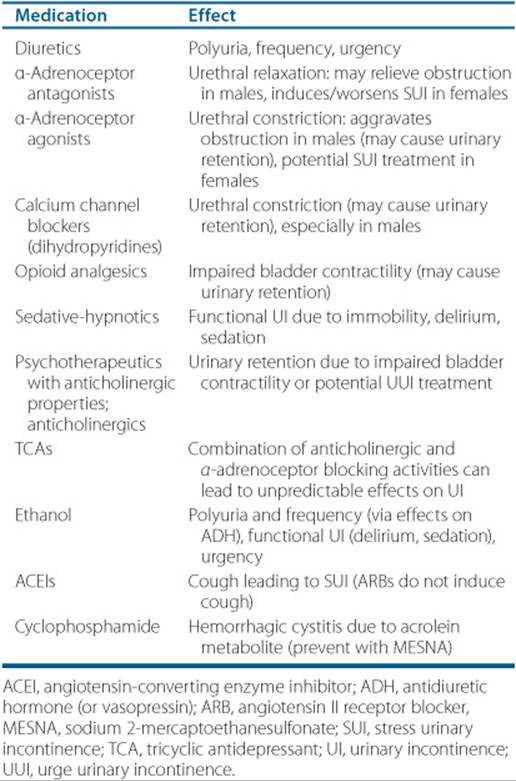
Many medications can influence the lower urinary tract, including those not used for managing genitourinary disorders, and can precipitate new onset or aggravate existing voiding dysfunction and UI(Table 53–1).
Table 53–1 Medications Influencing Lower Urinary Tract Function
CLINICAL PRESENTATION AND DIAGNOSIS
The clinical presentation of UI depends on the underlying pathophysiology. The literature evaluating the prevalences of different UI types by age and sex has produced widely varying results due to a number of factors. The clinician should thus consider a given patient as having virtually any type of UI until ruled out during diagnostic evaluation.
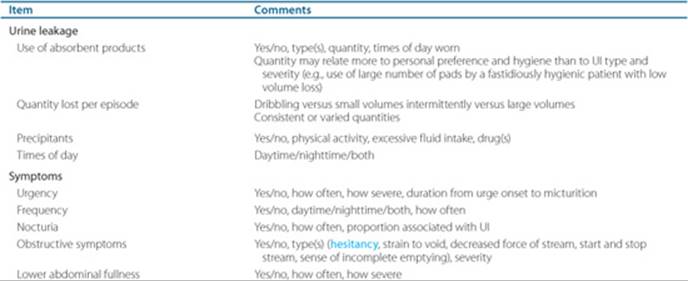
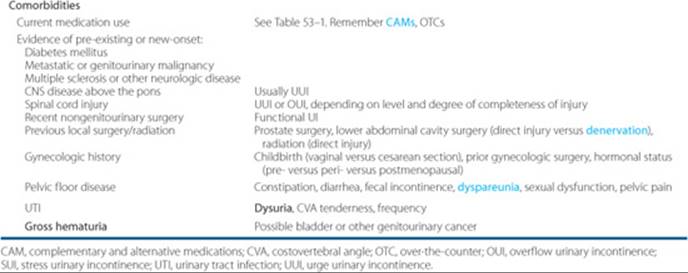
A complete medical history and targeted physical examination are essential to correctly classify the type(s) of UI present. It is important to assess the degree of annoyance of the patient due to UI signs and symptoms. The degree of annoyance of the patient may not correlate well with the results of quantitative tests such as symptom frequency/severity, use of absorbent products, frequency/severity of neurologic signs, and postvoid residual urine volume. This is especially the case in “hypersensitive” and “stoic” individuals. Items to address during the evaluation are illustrated in Table 53–2. Components of the physical examination include4:
Table 53–2 Items Which Should Be Addressed During Diagnostic Evaluation of UI
• Abdominal examination (look for distended bladder, organomegaly and masses).
• Neurologic evaluation of perineum and lower extremities to evaluate lumbosacral nerve function (includes digital rectal exam to check rectal tone, reflexes, ability to perform a voluntary pelvic muscle contraction in females and size and surface quality of prostate in males)
• Pelvic exam (females) (look for evidence of prolapse of bladder, small bowel, rectum, or uterus, or estrogen deficiency)
• Genital/prostate exam (men)
• Direct observation of urethral meatus (opening) when patient coughs/strains (urine spurt consistent with SUI)
• Perineal exam (looking for skin maceration, redness, breakdown, ulceration and evidence of fungal skin infection)
TREATMENT
Patient-specific treatment goals should be identified. This frequently requires reaching a compromise between efficacy and tolerability of drug therapy. These goals are not static and may change with time.
Desired Outcomes
• Restoration of continence
• Reduction of the number of UI episodes (daytime and nighttime) and frequency of nocturia
• Prevention of disease complications (e.g., dermatologic infections and skin breakdown, delay institutionalization)
Patient Encounter 1, Part 2: Medical History, Physical Examination, and Diagnostic Tests
PMH: Insulin-dependent diabetes mellitus since age 7; it is “reasonably well-controlled” per patient; hypertension for 2 years, currently “controlled” per patient
FH: Mother had diabetes and died of a myocardial infarction at 62 years of age; father smoked 1 to 3 packs of cigarettes per day and developed fatal lung cancer at age 57
SH: Works two jobs as a waitress; denies alcohol use or smoking
Meds: NPH insulin 20 units before breakfast and 5 units before supper; enalapril 10 mg twice daily; aspirin 325 mg once daily
ROS: (+) Recurrent coughing, UI, dyspareunia, vaginal itching, multiple UTIs; (-) nocturia, enuresis, urgency, dysuria, frequency, lower abdominal fullness, decreased force of stream
PE:
VS: BP 124/70 mm Hg, P 80 bpm, RR 16/min, T 37.0°C (98.6°F)
CV: RRR; normal S1, S2; no murmurs, rubs, gallops
Abd: Soft, nontender, nondistended; (+) bowel sounds; bladder not palpable
Neuro: Within normal limits (gross sensory, motor, reflexes)
GU: Valsalva caused urine spurt; friable, bleeding vaginal lining on pelvic exam
Labs: Hemoglobin A1 8.2% (0.082); rest within normal limits
Given this additional information, what is your assessment of the patient’s condition?
Identify your treatment goals for the patient.
What nonpharmacologic and pharmacologic alternatives are available to the patient?
• Avoidance or minimization of adverse consequences of treatment
• Minimization of treatment costs
• Improvement in patient’s quality of life
Nonpharmacologic Treatment
At the primary care level, nonpharmacologic treatment of UI constitutes the chief approach to UI management. In patients in whom pharmacologic or surgical management is inappropriate or undesirable or refused, nonsurgical nonpharmacologic treatment is the only option. Examples of patients fitting this scenario include:
• Those not medically fit for surgery
• Those who plan future pregnancies (as pregnancy/childbirth can compromise the long-term results of certain types of continence surgery)
• Those with OUI whose condition is not amenable to surgical or drug treatment
• Those with comorbidities which place them at high-risk for significant side effects to drug therapy
• Those who wish to delay or avoid surgery
• Those with mild to moderate symptoms who do not wish to undergo surgery or take medication
Nonpharmacologic approaches include lifestyle modifications, scheduled voiding regimens, pelvic floor muscle rehabilitation (PFMR), anti-incontinence devices, and supportive interventions.4,6 Many of these are best utilized through attendance at multidisciplinary UI clinics staffed by specialist nurses and/or physical therapists in addition to physicians. Behavioral interventions are among the first-line treatment approaches for SUI, UUI, and mixed UI. However, these lifestyle modifications, scheduling regimens, and PFMR methods require a motivated patient and/or caregiver who can play an active role in developing the treatment plan. Anything that interferes with active participation (including cognitive dysfunction) will render these approaches suboptimal. Patients/caregivers also must attend regular follow-up visits to monitor outcomes. Of interest, nonpharmacologic treatment may even be superior to pharmacologic treatment in select cases. For example, the short-term (6 months) and long-term (21 months) results of a combination of PFMR plus behavioral training produced statistically superior results compared to anticholinergic therapy in women with UUI.7,8 Even if the results of nonpharmacologic treatment have not fully achieved the desired outcomes, if it has provided at least some improvement in UI signs and symptoms, it should be continued during pharmacologic treatment. Nonpharmacologic treatment can allow the use of lower drug doses. The combination of both therapies may have at least an additive effect on UI signs and symptoms.
In the recent systematic review of nonsurgical treatments for UI by Shamliyan et al., the only nonpharmacologic treatment for which true objective evidence of benefit exists is the combination of PFMR plus behavioral training (restored continence with an effect size of 0.13 (95% CI, 0.07–0.20) but improvement in continence was not consistent between trials). Although PFMR alone or combined with biofeedback restored and improved continence, the effect size was not consistent between trials.9 Weight loss of 5% to 10% in overweight or obese women has an efficacy similar to that of other nonpharmacologic treatments.
Surgery is rarely a first-line treatment for UI. Surgery is generally considered only when the degree of bother or lifestyle compromise is sufficient and other nonoperative therapies are either undesired or have been ineffective. Surgery can be used to manage urethral overactivity due to benign prostatic enlargement and bladder outlet obstruction (via endoscopic incision using a cystoscope). Bladder underactivity cannot be managed surgically and rarely is surgery considered for UUI. Surgery is most effective in the management of SUI. Surgery for SUI is directed toward stabilizing the urethra and bladder neck and/or augmenting urethral resistance using periurethral collagen and other injectables. In males, SUI is best treated by implanting an artificial urinary sphincter.4
Pharmacologic Treatment
Urge Urinary Incontinence
The anticholinergic/antispasmodic drugs are the first-line pharmacologic treatment for UUI. They are the most effective agents in suppressing premature detrusor contractions, enhancing bladder storage, and relieving symptoms. It must be emphasized that the improvements in clinical and urodynamic parameters are modest at best, although still considered by experts in the field to be positive.10 In the recent systematic review/meta-analysis of 50 clinical trials in UUI by Novava et al., there were no clinically important or relevant differences found among different anticholinergics.10
The major problem with existing agents is their lack of selectivity to bladder muscarinic receptors, thus leading to dose-limiting side effects outside of the urinary tract. These include dry mouth, constipation, blurred vision, confusion, cognitive dysfunction, and tachycardia. With oxybutynin, orthostasis due to α-receptor blockade and sedation and weight gain due to histamine-1 receptor blockade may also occur. Dry mouth is the most problematic of the anticholinergic side effects and is frequently dose limiting. In the systematic review and meta-analysis cited previously, in terms of tolerability, only the difference between tolterodine immediate-release (IR) and oxybutynin IR (wherein the former was better and tolerable than the latter) was statistically and clinically significant. With regard to IR formulations, dose escalation might yield some limited improvements in efficacy, but at the cost of significant increases in the rates of adverse events. Comparing extended-release (ER) and IR formulations, the former demonstrated advantages in terms of efficacy and safety. Lastly, with regard to route of administration, the dermal route of administration did not provide a significant advantage over the oral route. Thus, oral ER formulations should probably be preferred over IR and/or dermal (i.e., transdermal or gel) ones. More clinical trials are necessary to identify first-, second-, and third-line agents.11 In terms of urinary retention, relative safety of at least one anticholinergic has been suggested. In a preliminary open-label trial in males with UUI and presumed nonobstructive BPH (where maximum urine flow rates were at least 15 mL/s), tolterodine LA (as monotherapy or combined with prior unsuccessful α-adrenoceptor antagonist therapy) produced significant objective and subjective benefits versus UUI and BPH. Mean postvoid residual urine volume did not increase and urinary retention occurred at a rate of only 0.3%.12
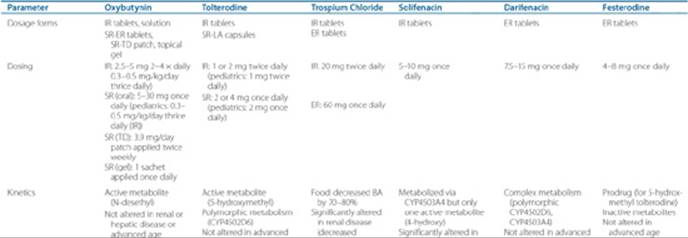
Details regarding the pharmacokinetics, contraindications/precautions, and dosing of the six recommended agents (oxybutynin, tolterodine, trospium chloride, solifenacin, darifenacin, and fesoterodine) are illustrated in Table 53–3.13–21 A current clinical controversy is which of these agents should be considered first line in UUI, and in the case of oxybutynin, tolterodine, and trospium chloride which formulations should be recommended. There are few head-to-head clinical trials to assist in decision making and those few that exist have demonstrated either broad equivalence or clinically unimportant differences in efficacy. In the recent systematic review of Shamliyan et al., data for analysis were adequate only for oxybutynin IR (5–10 mg/day) and tolterodine LA (4 mg/day). Both of these agents restored continence with an effect size of 0.18 (95% CI, 0.13–0.22). The authors could not claim one as being superior to the other.9 Patient characteristics (e.g., age, comorbidities, concurrent drug therapies, and ability to adhere to the prescribed regimen) can also influence drug therapy selection. Drug selection frequently will be based on differences in tolerability (wherein the ER oral, or gel TD formulations are better tolerated than the IR formulations) and cost. Careful dose titration is necessary to maximize efficacy and tolerability. The selected agent should be titrated to the maximum tolerated dose and maintained there for at least 4 weeks in order to assure an adequate therapeutic trial. If therapeutic goals are not achieved, a switch to an alternative agent should be made. There is no rationale for use of two or more anticholinergics concurrently at low doses. Another clinical controversy is the relevance of the pharmacologic antagonism between anticholinergics and cholinesterase inhibitors when used concurrently.22
Other drugs, such as propantheline, flavoxate, tricyclic antidepressants (TCA; especially imipramine), dicyclomine, and scopolamine, are less effective, no safer, and/or have not been adequately studied; therefore, their use is not recommended.6
Women with mixed UI (UUI plus SUI) or UUI plus atrophic vaginitis and/or urethritis may also benefit from the addition of a locally administered (per vagina [PV]) estrogen to anticholinergic therapy. Preliminary data suggest that desmopressin (DDAVP) may reduce daytime UUI symptoms (i.e., for up to approximately 8 hours after morning dosing) when used on both regular and “as needed” bases.23 An intriguing pilot placebo-controlled trial of duloxetine in UUI in individuals with bladder capacities below 400 mL suggests at least short-term (12 weeks) benefit.24
Stress Urinary Incontinence
The goal of pharmacologic therapy of urethral underactivity is to improve the urethral closure mechanism by one or more of the following:
• Stimulating α-adrenoceptors in the smooth muscle of the proximal urethra and bladder neck
• Enhancing the supportive structures underlying the urethral mucosa
• Enhancing the positive effects of serotonin and norepinephrine in the afferent and efferent pathways of the micturition reflex
Table 53–3 Anticholinergic/Antispasmodic Drugs Recommended for UUI
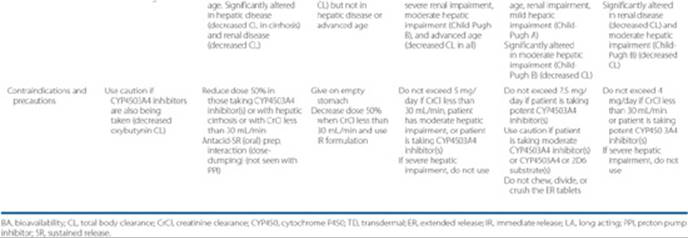
It is generally felt that there is no role for pharmacologic therapy in SUI in males resulting from surgery or trauma.25 Initial data, however, suggest a possible role for duloxetine added to nonpharmacologic treatment (PFMR), rather than PFMR alone, in males postradical prostatectomy, at least over the first 4 to 6 months.26 It should be kept in mind that SUI (in contrast to UUI) is frequently curable by surgery, thus obviating years of drug therapy that may be incompletely effective in symptom relief.
Estrogens4
Vaginally administered estrogen plays only a modest role in managing SUI (urethral underactivity), unless it is accompanied by local signs of estrogen deficiency (e.g., atrophic urethritis or vaginitis).
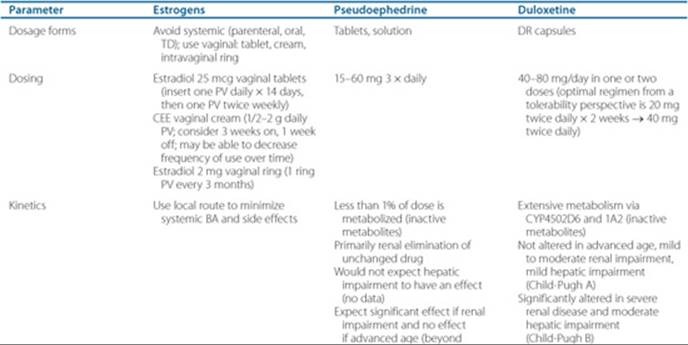
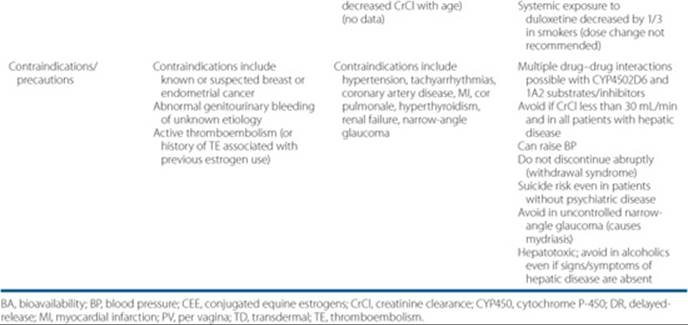
Although not supported by rigorous clinical trial evidence, local (PV) and systemic estrogens have been considered mainstays of pharmacologic management since the 1940s. They are believed to work by a trophic effect on uroepithelial cells and underlying collagenous subcutaneous tissue, enhancement of local microcirculation by increasing the number of periurethral blood vessels, and enhancement of the number and/or sensitivity of α-adrenoceptors. Open trials have supported the use of estrogens administered by the oral, TD, and local routes of administration. However, randomized controlled trials have found no significant clinical or urodynamic effects of oral estrogen compared to placebo in SUI. In fact, most trials have found that oral estrogen/hormone replacement therapy actually increases the risk of new-onset UI (SUI, UUI, mixed UI).9 Systemic estrogen therapy also carries numerous short- and long-term side effect risks (mastodynia, uterine bleeding, nausea, thromboembolism, cardiac and cerebrovascular ischemic events, and enhanced breast and endometrial cancer risks). If estrogens are to be used in SUI management, only locally administered products should be used (Table 53–4). Even with locally administered products, improvement of continence has been inconsistent between trials.9
α-Adrenoceptor Agonists4
Open and randomized controlled trials utilizing clinical and urodynamic endpoints have supported the use of a variety of α-adrenoceptor agonists, including phenylpropanolamine, ephedrine, and pseudoephedrine, in the therapy of mild and moderate SUI. In addition, several studies have demonstrated clinical and urodynamic benefits for combination estrogen-α-adrenoceptor agonist use over those of the individual agents. However, in the recent systematic review of Shamliyan et al., monotherapy with this class failed to restore continence or improve incontinence compared with placebo or PFMR.9Phenylpropanolamine was removed from the U.S. market in late 2000 due to the risk of ischemic stroke in women taking this drug.27 However, this drug is still available via the Internet, so clinicians need to monitor and discourage its use. Although still available by prescription, ephedrine is considerably more toxic than other α-adrenoceptor agonists and its use is not recommended. Although phenylephrine is now available in oral formulations, the lack of data regarding its use in SUI and the reported lack of efficacy in maximum recommended doses for rhinitis suggest that this agent should be avoided at present.
This leaves the clinician with only one practical agent to use pseudoephedrine: (Table 53–4). Side effects include hypertension, headache, dry mouth, nausea, insomnia, and restlessness.28 The major impediment to using the α-adrenoceptor agonist class is the extensive list of contraindications (Table 53–4). In the past, α-adrenoceptor agonist therapy was generally added to estrogen therapy in those insufficiently improved with estrogen alone and in whom its use was not contraindicated. With the recent availability of duloxetine, treatment is now available for estrogen non or hyporesponders whether they can or cannot take α-adrenoceptor agonists.
Duloxetine29
Duloxetine is a selective serotonin-norepinephrine reuptake inhibitor similar pharmacologically to venlafaxine. Approved for the treatment of major depression, painful diabetic peripheral neuropathy, fibromyalgia, and generalized anxiety disorder,, its use in SUI is off-label in the United States. Duloxetine enhances central serotonergic and adrenergic tone which is involved in ascending and descending control of urethral smooth muscle and the internal urinary sphincter. Urethral and urinary sphincter smooth muscle tone during the filling phase are thus enhanced.30,31 The pharmacokinetics, contraindications/precautions, and dosing of duloxetine are illustrated in Table 53–4.29,32 Clearly, duloxetine has demonstrated modest efficacy in SUI and a major question is its role in SUI compared to estrogen and α-adrenoceptor agonists as well as potentially curative surgery. In the absence of head-to-head clinical trial data, this is a difficult question to answer, at least for the comparison of duloxetine to α-adrenoceptor agonists. In the recent systematic review of Shamliyan et al., duloxetine improved incontinence with an effect size of 0.11 (95% CI, 0.07–0.14) but failed to restore continence.9 One controlled trial has demonstrated modest, although significant, benefit from duloxetine in the treatment of SUI in males after radical prostatectomy33 The use of duloxetine in stress UI is complicated by (a) the potential for multiple clinically relevant drug drug interactions with cytochrome P450 (CYP450) 2D6 and 1A2 inhibitors, (b) withdrawal reactions if abruptly discontinued, (c) high rates of nausea and other side effects, (d) hepatotoxicity contraindicating its use in patients with any degree of hepatic impairment, and (e) its mild hypertensive effect. Another disconcerting finding is the high discontinuation rate when duloxetine is used in a “usual use” clinic environment (68%, two-thirds due to adverse events and one-third due to lack of efficacy).34
Overflow Incontinence Due to Bladder Underactivity4
In overflow UI due to atonic bladder, a trial of bethanecol may be reasonable if contraindications do not exist. There is no established effective pharmacologic therapy for OUI due to poor bladder contractility (atonic bladder). The efficacy of the cholinomimetic bethanecol (25–50 mg three or four times daily) is uncertain and, in well done clinical trials, it has had mixed results. In addition, its cholinomimetic effect is not urospecific and its side effects are bothersome, including muscle and abdominal cramping, hypersalivation, diarrhea, and potentially life-threatening bradycardia and bronchospasm. α-adrenoceptor antagonists such as silodosin, prazosin, terazosin, doxazosin, tamsulosin, and alfuzosin may benefit this condition by relaxing the bladder outflow tract and hence reducing outflow resistance. If pharmacologic therapy fails, intermittent urethral catheterization by the patient or caregiver three or four times per day is recommended. Less satisfactory alternatives include indwelling urethral or suprapubic catheters or urinary diversion.
Table 53–4 Drugs Used for SUI
Overflow Incontinence Due to Obstruction
In overflow UI due to obstruction, the goal of treatment is to relieve the obstruction.
Patient Encounter 1, Part 3: Creating a Care Plan
Based on the information presented, create a care plan for this patient’s UI. Your plan should include:
(a) a statement of the drug-related needs and/or problems, (b) the goals of therapy, (c) a patient-specific detailed therapeutic plan, and (d) a plan for follow-up to determine whether or not the goals have been achieved and adverse events avoided.
OUTCOME EVALUATION
• Monitor the patient for symptom relief. Have the desired outcomes jointly developed by the health care team and the patient/caregiver been achieved and to what degree. Inspect the daily diary completed by the patient/caregiver since the last clinic visit and quantitate the clinical response (e.g., number of micturitions, number of incontinence episodes, and pad use). If a diary has not been used, ask the patient how many incontinence pads have been used and how they have been doing in terms of “accidents” since the last visit. If appropriate, administer a short-form instrument used to measure symptom impact and condition-specific quality of life and compare to previous result(s).
• Elicit adverse effects of drug therapy using a nonleading approach and ask the patient/caregiver to judge their severity and what measures, if any, the patient/caregiver used to ameliorate them. Assess adherence (ask patient/caregiver about missed doses or do a pill count if the prescription container was brought to the visit).
• The balance of clinical response and tolerability will dictate the approach to adjusting drug dosage. Potential approaches include dosage increase, maintenance, or decrease. If adverse effects are quite bothersome to the patient and patient safety and/or adherence are compromised, stop, or taper, the offender and initiate another drug option.
PEDIATRIC ENURESIS
INTRODUCTION
Pediatric enuresis is not a disease but a symptom, which can present alone or at the same time as other disorders, in children and adolescents. It is defined as the repeated voiding of urine into bed or clothes at least twice a week for at least three consecutive months in a child at least 5-years-old (per the Diagnostic and Statistical Manual of Mental Disorders, 4th ed., Text Revision).35,36 Enuresis can still be present even if the above frequency and duration parameters are not met, provided that associated distress or functional impairment exists. The terms “nocturnal” and “diurnal” refer to periods during sleep and while awake, respectively. Primary enuresis refers to a process wherein the patient has never been consistently dry throughout the night. Secondary enuresis refers to a process wherein the patient has resumed wetting after a period of dryness of at least 6 months in duration. Lastly, monosymptomatic and polysymptomatic enuresis should be differentiated. Monosymptomatic enuresis refers to wetting at nighttime with no other urinary tract and no daytime symptoms. Polysymptomatic enuresis refers to wetting at nighttime associated with other urinary tract symptoms (e.g., urge or frequency without any other urinary symptoms) and daytime symptoms as well.
Patient Care and Monitoring: UI
1. Assess the patient’s symptoms to determine if patient-directed therapy is appropriate or whether or not the patient should be evaluated by a physician. Assessment includes the types and severities of symptoms and the presence or absence of exacerbating factors. Does the patient have any UI-related complications?
2. Review any available diagnostic data to determine disease status.
3. Obtain a thorough medication history, including use of prescription, nonprescription, and complementary and alternative drug products. Determine which, if any, treatments in the past had been helpful as judged by the patient. Could any of the patient’s current medications be contributing to UI?
4. Educate the patient on lifestyle modifications that may improve symptoms, including but not limited to, smoking cessation (for patients with cough-induced SUI), weight reduction for those patients with SUI and UUI, prevention of constipation in patients at risk, caffeine reduction, and modification of diet and fluid intake (e.g., timing and quantity of fluid intake and avoidance of foods or beverages that worsen UI).
5. Is the patient taking the appropriate drug(s) for his or her type(s) of UI? Are the dose(s) appropriate? If no (to either question), why?
6. Develop a plan to assess efficacy after a minimum of 4 weeks.
7. Assess changes in quality of life (physical, psychological, social functioning, and well-being).
8. Evaluate the patient for drug-related adverse events, allergies, and interactions (drug-drug and drug-disease).
9. In cognitively intact elderly patients, focus communications to elicit the preferences of the patient, not those of potential proxies.
10. Stress the importance of adherence with the prescribed regimen, including lifestyle modifications. Recommend the most “patient-friendly” treatment regimen possible.
11. Provide patient education regarding the disease state, lifestyle modifications, and drug therapy:
• Causes of UI and what things to avoid (see 3 and 4 above)
• Possible UI complications
• Timing of medication intake
• Potential adverse events (limit to most frequent and/or clinically relevant)
• Potential drug-drug interactions
Enuresis is not a benign disorder that children will just “grow out of.” Emotional and/or physical abuse of the child by adult caregivers lead to secondary problems such as chronic anxiety, low self-esteem, and delayed developmental milestones such as attending camp or going on “sleepovers” at the homes of friends. The emotional and developmental damage produced by enuresis may be more significant to the child than the enuresis itself.
EPIDEMIOLOGY AND ETIOLOGY
Five to seven million children and adolescents in the United States suffer from nocturnal enuresis. Primary enuresis is twice as common as secondary enuresis. Enuresis is twice as common in boys as compared to girls. The incidence of enuresis varies as a function of age35,36:
• 40% in 3-year-olds
• 12% to 25% in 4-year-olds
• 15% to 20% in 5-year-olds
• 10% in 6-year-olds
• 6% to 10% in 7- and 8-year-olds
• 5% in 10-year-olds
• 2% to 3% in 12-year-olds
• 1% to 3% in adolescents
• 0.5% in adults
Five to ten percent of children with enuresis will suffer the condition as adults. It may also predispose to UUI in adults. In the enuretic population, 80% to 85% are monosymptomatic, 5% to 10% are polysymptomatic, and under 5% have an organic cause. The spontaneous annual cure rate (i.e., restoration of continence) ranges from 14% to 16% (exception: at about 4 or 5 years of age, it may be as high as 30%).
The etiology of enuresis is poorly understood, but there is a clear genetic link. The incidence in children from families in whom there are no members with enuresis, where one parent had enuresis as a child, and where both parents had enuresis as children are 14%, 44%, and 77%, respectively. Loci for enuresis have been located on chromosomes 12, 13, and 22. Sleep disorders are not considered major contributors with the exception of sleep apnea. Enuresis occurs in all sleep stages in proportion to the time spent in each stage. However, a small proportion of individuals are not aroused from sleep by bladder distention and have uninhibited bladder contractions preceding enuresis.
PATHOPHYSIOLOGY
The vast majority of children with enuresis have normal urodynamics, including nocturnal bladder capacity. Functional bladder capacity can be estimated using the formula: age in years +2 equals to the ounces of capacity. In some children, there appears to be a relationship between developmental immaturity (motor and language milestones) and enuresis, but the mechanism is unknown. There is evidence that affected individuals have an attenuated vasopressin circadian rhythm (females more so than males) with lower vasopressin plasma concentrations.37 Drugs like lithium, clozapine, risperidone, valproic acid, selective serotonin reuptake inhibitors, and theophylline can rarely cause and aggravate enuresis. Psychological factors are clearly contributory in only a minority of individuals. The most frequent example of this is secondary enuresis precipitated by a stressor such as divorce, school trauma, sexual abuse, or hospitalization. In rare cases, the family may be so dysfunctional that the child has never been properly toilet-trained.
CLINICAL PRESENTATION AND DIAGNOSIS
Clinical Presentation and Diagnosis: Pediatric Enuresis
Proper assessment of the child or adolescent with enuresis should explore every aspect of UI, especially the genitourinary and nervous systems. The minimum assessment should include34,35:
• Interview of child and parent(s), being sensitive to the emotional consequences of the enuresis
• Direct physical examination, looking for enlarged adenoids/tonsils, bladder distention, fecal impaction, abnormal genitalia, spinal cord anomalies, and abnormal neurologic signs (look for an organic cause amenable to surgery or drugs; see Table 53–5)
• Obtain a urinalysis (consider a urine culture at the same time)
• A 2-week diary of wet and dry nights prior to intervention is useful in that it can be used to monitor the response to treatment. A first-morning urine specific gravity may help to predict response to DDAVP therapy. Polysymptomatic presentation may require a more elaborate workup, including voiding cystourethrogram, renal and/or bladder ultrasound, urodynamics, and sleep studies.
Patient Encounter 2, Part 1
A 7-year-old female is brought into your clinic, her mother seeking advice about how to prevent her daughter’s nighttime bedwetting. She asks about the suitability of any OTC or complementary and alternative medications. After questioning both individuals, you determine that her daughter has been wetting the bed for several months, which has caused some ill-defined “family disharmony.” No obvious precipitating event is apparent.
What should you do at this point?
Table 53–5 Major Potentially Treatable Organic Causes of Enuresis
Potentially Treatable by Surgery
• Ectopic ureter
• Lower UTI (correct congenital anomalies)
• Neurogenic bladder
• Bladder calculus (stone) or foreign body
• Obstructive sleep apnea
Potentially Treatable by Drugs
• UTI
• Diabetes mellitus
• Diabetes insipidus
• Fecal impaction
• Constipation
UTI, urinary tract infection.
TREATMENT
Desired Outcomes
• Restoration of continence, which may not initially be a realistic outcome
• Reduction in the number of enuresis episodes
• Prevention or amelioration of disease complications including adverse psychological effects on the patient and caregivers or delay in developmental milestones
• Avoidance or prevention of adverse treatment effects
• Minimization of treatment costs
• Improvement in the patient–s and caregivers’ quality of life
General Approach to Treatment
Treatment is guided by the findings of the patient assessment. Daytime wetting, abnormal voiding such as unusual posturing, discomfort, straining, or poor stream, history of recurrent UTIs, and abnormalities of the genitalia suggest the need for referral to a urologist. In the rare circumstance of a true psychological cause, individual and/or family psychotherapy and crisis intervention are recommended.
Patient Encounter 2, Part 2: Medical History, Physical Examination, Diagnostic Tests, and Creating a Care Plan
PMH: Unremarkable pregnancy/delivery. All developmental milestones within normal limits. Two episodes of AOM treated with no sequelae. Current on all immunizations
FH, SH: Noncontributary
Meds: None
ROS: (+) nocturnal incontinence 5 nights/week or more; (-) vaginal itching, UTIs, urgency, frequency, dysuria, lower abdominal fullness
PE:
VS: BP_/_mm Hg, P___bpm, RR___/min, T 37.0°C (98.6°F)
Resp: Within normal limits
CV: Within normal limits
Abd: Soft, nontender, nondistended; (+) bowel sounds; bladder not palpable
Neuro: Within normal limits (gross sensory, motor, reflexes)
GU: Within normal limits per inspection only
Rectal: Deferred
Labs: Urinalysis within normal limits
Given this additional information, what is your assessment of this patient’s condition?
Identify your treatment goals for this patient.
What nonpharmacologic and pharmacologic alternatives are available to the patient?
What initial treatment would you suggest?
In the absence of an identified cause and comorbidities, monosymptomatic nocturnal enuresis is present which can be amenable to nonpharmacologic and pharmacologic therapies (Fig. 53–1). Nonpharmacologic therapy should be utilized initially, provided that the patient and family are sufficiently motivated. Use of one nonpharmacologic method at a time is reasonable, provided that each is given an adequate trial period. If response is suboptimal after 6 months, a different method should be substituted or added. There is some evidence to justify combination therapy. There is no consensus as to when pharmacologic therapy should be added to or substituted for nonpharmacologic therapy. Considering that pharmacotherapy is inferior to select nonpharmacologic treatment modalities in pediatric enuresis, pharmacotherapy will be most valuable in patients who are not candidates for nonpharmacologic therapy due to nonadherence or who do not achieve the desired outcomes on nonpharmacologic therapy alone.
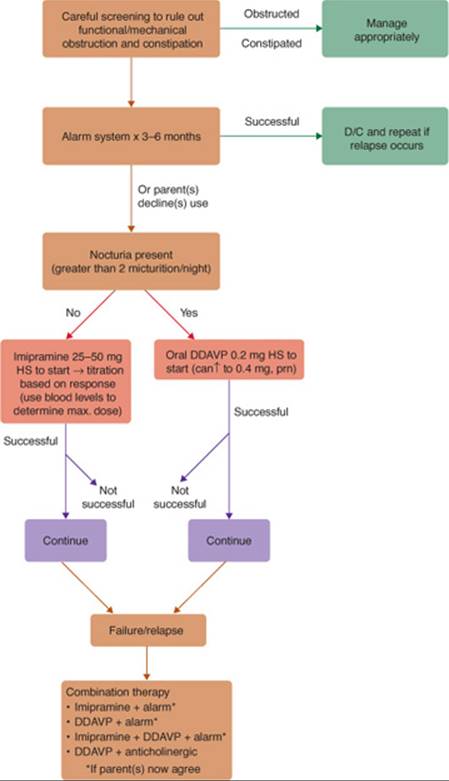
FIGURE 53–1. Enuresis treatment protocol. (DDAVP, desmopressin; HS, at bedtime; D/C, discontinue; prn, as needed.)
Nonpharmacologic Treatment38
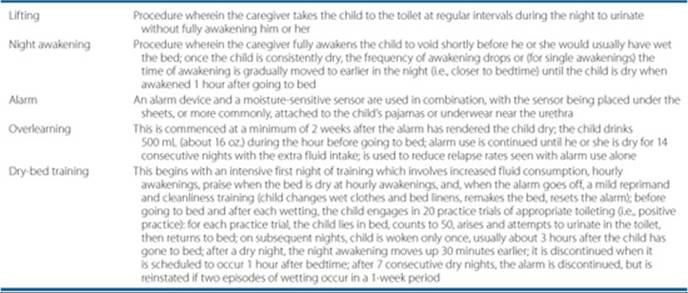
The standard first-line therapy is supportive in nature. This involves education about the condition, demystification, and assurance that the parents do not punish the child for enuresis. Journal keeping, fluid restriction, and nighttime awakenings of the child to pre-empt “accidents” make for a high level of caregiver involvement. The behavioral treatments of enuresis are explained in Table 53–6. Alarms, overlearning, and dry-bed training are the most complex and effective nonpharmacologic treatments available and compare favorably to pharmacologic therapy. A 3- to 6-month trial is recommended. Once dryness is achieved, relapse rates are low.
Measures that do not help include:
• Bladder stretching exercises (done by delaying voiding despite the urge to do so)
• Hypnotherapy
Table 53–6 Behavioral Treatments for Enuresis
• Dietary changes
• Desensitization to allergens
• Acupuncture39
• Chiropractic
Pharmacologic Treatment
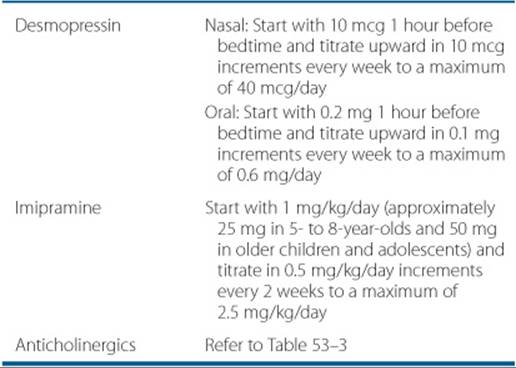
The two primary agents used to treat enuresis are DDAVP and imipramine (Table 53–7). DDAVP is the drug of choice in pediatric enuresis. Anticholinergics have a limited role (Table 53–7). Other agents have been studied with inconclusive results.40
Desmopressin41,42
A synthetic analogue of ADH, DDAVP was first studied in enuresis in the 1970s. It was approved by the FDA in 1990 for the treatment of nocturnal enuresis in children at least 6 years of age. It decreases the number of wet nights per week by a mean of 1.34. The between-study variability in response to DDAVP is quite large, with a frequency of wetting ranging from 10% to 91% of patients, but only 25% become completely dry on the drug. Response is dose-independent for the nasal formulation (20 = 40 = 60 mcg); however, 20 mcg is the minimum dose resulting in therapeutic benefit. Response is dose-dependent for the oral formulation (e.g., the number of wet nights fell 27%, 30%, and 40% with 0.2-, 0.4-, and 0.6-mg doses, compared to 10% with placebo in one study). Benefit exists only as long as the patient takes DDAVP, with relapse rates of up to 94% after discontinuation. Insufficient data are available to judge the relative efficacies of the two formulations. DDAVP appears to work better with monosymptomatic versus polysymptomatic enuresis. The oral route is generally preferred since nasal congestion and sinusitis can reduce the bioavailability (BA) of the nasal formulation. DDAVP is an ideal agent for rapid-onset, short-term use such as attendance at camp or going on a “sleepover.” If the desire is for long-term therapy and if it is sufficiently effective short-term, a 3- to 6-month trial is reasonable. At the end of this period, the drug should be tapered off by 0.1 mg (oral) or 10 mcg (nasal) per month. Relapse is less likely with a tapered withdrawal compared to an abrupt discontinuation. The following factors should be considered in individuals with partial responses to DDAVP: suboptimal dosing, poor adherence, poor BA (change nasal to oral preparation), and poor fluid/dietary habits (i.e., fluid restriction and high protein intake during the day and liberal salt and fluid intake after suppertime).43 In individuals with presumed DDAVP resistance (i.e., poor response to usual doses or deterioration after a good response has been established), oral furosemide 0.5 mg/kg in the early morning may be useful. Furosemide works by reversing the abnormal circadian rhythm of renal tubular sodium handling which is common in such individuals.44 In 12 patients with DDAVP-resistant enuresis, furosemide 0.5 mg/kg once daily in the morning was added to DDAVP therapy. In 9/12 (75%), enuresis events were reduced to less than one wet night per month. In the remaining three patients, although events were reduced from baseline (7 wet nights/week), they were still wet 2, 3, and 6 nights per week. Two of these three patients exhibited signs/symptoms of overactive bladder and one of the two patients had to discontinue furosemide therapy due to the increased frequency of daytime symptoms.44 Side effects to DDAVP are minor and infrequent.45 The most serious complication, water intoxication, is extremely uncommon when DDAVP is used to treat enuresis, with only 48 reported cases, all due to the nasal formulation.45 However, electrolyte monitoring is recommended if intercurrent illness complicates the situation. Children should also not drink more than 8 ounces (about 240 mL) of fluid at suppertime, 8 ounces (240 mL) in the evening, and none in the 2 hours prior to bed in order to reduce the risk of water intoxication.
Table 53–7Dosing of Pharmacologic Treatments of Enuresis
Imipramine46
The TCA imipramine was first used in the treatment of enuresis in the 1960s. Although trials involving other TCAs have been performed over the years, there is insufficient evidence to assess the relative performance of these agents versus imipramine and the latter is considered the gold standard TCA in enuresis management. Its mechanism of action is unclear, although it is an anticholinergic and antispasmodic and may increase plasma ADH concentrations. Up to 80% of treated patients may respond, although the long-term continence rate is only about 25%. A patient can expect approximately one fewer wet night per week with imipramine use. As with DDAVP, benefit only occurs as long as the drug is being taken, with relapse rates after discontinuation of therapy of up to 50%. There is no significant correlation of drug concentration with response. If sufficiently effective short-term, a 4- to 6-months trial is reasonable, followed by a weaning-off period of 3 to 4 weeks. There is a high frequency of neurologic side effects in children, including lethargy, dizziness, and headache in 5%; irritability in 11%; anxiety in 10%; and sleep disturbances in 16%.45 GI symptoms occur in about 25% of pediatric patients.45
Anticholinergics
Oxybutynin and tolterodine mono-therapies have no significant effect in monosymptomatic nocturnal enuresis. Oxybutynin and related agents (see adult UI section of this chapter) should be used only if the patient has concurrent daytime urgency or frequency. Combination therapy with DDAVP may also be worthwhile in patients refractory to combinations incorporating alarm therapy, DDAVP, and/or imipramine.
Comparison of Therapies
Most of the comparisons between treatments have been made by means of meta-analyses conducted by the Cochrane Enuresis Collabora-tive.40,42,46–48 Unfortunately, most enuresis treatment studies have been so poorly designed they compromise the ability to pool studies for meta-analysis. With this in mind, the comparative efficacies of monotherapy and combination therapies using the best data available follow.
The most effective nonpharmacologic method is the use of bed alarms. Defining success as less than 1 wet night per month, the initial success rate for alarms is 66%, with long-term success after discontinuation occurring in 45% (versus 1% with no treatment). However, this method requires highly motivated families and the development of improvement is slow (over 4 to 12 or more weeks). Data are inadequate to compare the various commercial brands of alarms available to consumers or to compare alarms to other behavioral interventions. Supplementing this method with either overlearning or dry-bed training significantly reduces the already low relapse rates seen with alarms. Alarm therapy is also significantly more effective than DDAVP, evaluated at both the end of therapy and long-term. Similar findings are noted for the alarm-versus-imipramine comparison. There are conflicting data regarding the value of supplementing the alarm method with DDAVP.
The American Academy of Child and Adolescent Psychiatry and the International Children’s Continence Society (ICCS) published preliminary practice guidelines for the assessment and treatment of pediatric enuresis in 2004.35,36 However, the modified algorithm of Reiner is inclusive of all potentially useful treatments and distinguishes approaches based on nocturnal urine output (nocturia), an important distinction not considered in previous recommendations.49–51
OUTCOME EVALUATION
• Monitor the patient for symptom relief. Have the desired outcomes jointly developed by the health care team, the patient, and his or her parents/guardians been achieved and to what degree? Evaluate the daily diary completed by the patient or parents/guardians since the last clinic visit and quantitate the clinical response (the number of dry nights versus the total number of nights, and the frequency of nights with greater than or equal to two enuresis episodes). If a diary has not been used, elicit the clinical response, in general terms, since the last visit.
• Elicit adverse events of therapy in a nonleading manner and ask the patient to judge their severity. Ask the patient or parents/guardians what measures if any were used to ameliorate them. Assess adherence (ask patient or parents/guardians about missed doses; do pill counts if the prescription vial is available).
• The balance of clinical response, tolerability, and burden on the family will dictate the approach to management. As most nonpharmacologic approaches are “all or none” and drug dosages after an initial titration period are fixed, the major decision process involves either changing therapy if clinical results are inadequate, or beginning or continuing tapering-off and discontinuation of therapy after success. There is no consensus on which treatment approach to withdraw first, although the ICCS recommends the nonpharmacologic (alarm) therapy first, then pharmacologic (DDAVP) therapy.
Patient Care and Monitoring: Pediatric Enuresis
1. Assess the patient’s symptoms to determine if patient-directed therapy is appropriate or whether the patient should be evaluated by a physician. Assessment includes the types and severities of symptoms and the presence or absence of exacerbating factors. Does the patient have any enuresis-related complications?
2. Review any available diagnostic data to determine disease status.
3. Obtain a thorough medication history, including use of prescription, nonprescription, and complementary and alternative drug products. Determine which, if any, treatments in the past had been helpful as judged by the patient and/or caregiver(s). Could any of the patient’s current medications be contributing to enuresis?
4. Educate the patient and/or caregiver(s) on lifestyle modifications that may improve symptoms or assist the clinician in monitoring the responses to therapy, including but not limited to, fluid restriction and journal keeping. The patient and/or caregiver(s) should be referred to local enuresis clinics (if available) for training in nonpharmacologic treatments such as use of bed alarms, overlearning, and dry-bed training.
5. Assess if the patient is taking the appropriate drug(s) for his or her enuresis? Are the doses appropriate? If no (to either question), why?
6. Develop a plan to assess efficacy after a minimum of 3 months.
7. Assess changes in quality of life (physical, psychological, and social functioning and well-being).
8. Evaluate the patient for drug-related adverse events, allergies, and interactions (drug-drug and drug-disease).
9. Stress the importance of adherence with the prescribed regimen, including lifestyle modifications and nonpharmacologic treatment. Recommend the most “patient-friendly” treatment regimen possible.
10. Provide the patient and/or caregiver(s) with education regarding the disease state, lifestyle modifications, and drug therapy:
• The causes of enuresis and what things the patient and/or caregiver(s) can do to reduce its frequency
• Possible enuresis complications
• Timing of medication intake
• Potential adverse events (limit to most frequent and/or clinically relevant)
• Potential drug-drug interactions.
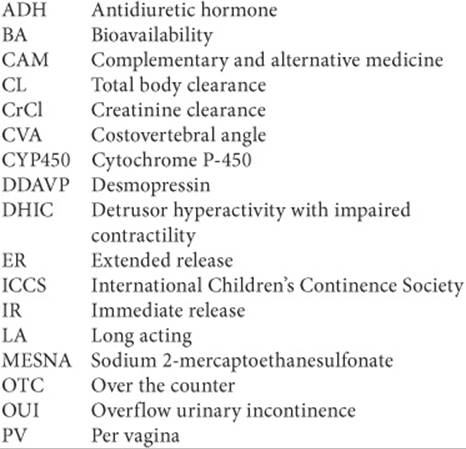
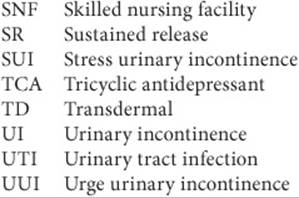
Abbreviations Introduced in This Chapter
 Self-assessment questions and answers are available at http://www.mhpharmacotherapy.com/pp.html.
REFERENCES
1. Abrams P, Cardozo L, Fall M, et al. The standardization of terminology of lower urinary tract function: Report from the standardization sub-committee of the International Continence Society. Neurourol Urodyn 2002;21:167–178.
2. Arnold EP, Burgio K, Diokno AC, et al. Epidemiology and natural history of urinary incontinence (UI). In: Abrams P, Khoury S, Wein AJ, eds. Incontinence. Plymouth, UK: Plymbridge Distributors; 1999:199–226.
3. Brown JS, Nyberg LM, Kusek JW, et al. Proceedings of the National Institute of Diabetes, Digestive and Kidney Diseases International Symposium on Epidemiologic Issues in Urinary Incontinence in Women. Am J Obstet Gynecol 2003;188:S77–S88.
4. Rovner ES, Wyman J, Lackner T, Guay DRP. Urinary Incontinence. In: DiPiro J, Talbert R, Hayes P, Yee G, Matzke G, Posey LM, eds. Pharmacotherapy: A Pathophysiologic Approach. 7th ed. New York: McGraw-Hill, 2008:1399–1415.
5. Groutz A, Gordon D, Keidar R, et al. Stress urinary incontinence: Prevalence among nulliparous compared with primiparous and grand multiparous premenopausal women. Neurourol Urodyn 1999;18:419–425.
6. Abrams P, Cardozo L, Khoury S, Wein A, eds. Incontinence. Second International Consultation on Incontinence. 2nd ed. Plymouth, UK: Health Publications Ltd, 2002.
7. Kafri R, Langer R, Dvir Z, et al. Rehabilitation vs drug therapy for urge urinary incontinence: Short-term outcome. Int Urogynecol J 2007;18:407–411.
8. Kafri R, Shames J, Raz M, et al. Rehabilitation versus drug therapy for urge urinary incontinence: Long-term outcomes. Int Urogynecol J Pelvic Floor Dyfunet 2008;19:47–52.
9. Shamliyan TA, Kane RL, Wyman J, et al. Systematic review: Randomized, controlled trials of nonsurgical treatments for urinary incontinence in women. Ann Intern Med 2008;148:459–473.
10. Chapple C, Khullar V, Gabriel Z, Dooley JA. The effects of antimuscarinic treatments in overactive bladder: A systematic review and meta-analysis. Eur Urol 2005;48:5–26.
11. Novara G, Balfano A, Secco S, et al. A systematic review and meta-analysis of randomized controlled trials with antiimmunocarcinic drugs for overactive bladder. Eur Urol 2008;54:740–763.
12. Hofner K, Burkart M, Jacob G, et al. Safety and efficacy of tolterodine extended release in men with overactive bladder symptoms and presumed non-obstructive benign prostatic hyperplasia. World J Urol 2007;25:627–633.
13. Ortho-McNeil Pharmaceutical. Ditropan XL (oxybutynin) package insert. Raritan, NJ: Ortho-McNeil Pharmaceutical, 2008.
14. Pharmacia & Upjohn. Detrol and Detrol LA (tolterodine) package inserts. New York: Pharmacia & Upjohn, 2005.
15. Watson Pharma. Oxytrol (oxybutynin transdermal system) package insert. Corona, CA: Watson Pharma, 2003.
16. Odyssey/Indevus Pharmaceuticals. Sanctura (trospium chloride) package insert. East Hanover, NJ/Lexington, MA: Odyssey/Indevus Pharmaceuticals, 2004.
17. Astellas Pharma U.S. VESIcare (solifenacin) package insert. Deerfield, IL: Astellas Pharma U.S., 2004.
18. Novartis. Enablex (darifenacin) package insert. East Hanover, NJ: Novartis, 2004.
19. Guay DRP. Drug forecast: Solifenacin (VESIcare): An investigational anticholinergic for overactive bladder. Consult Pharm 2004;19:437–444.
20. Guay DRP. Trospium chloride: An update on a quaternary anticholinergic for treatment of urge urinary incontinence. Ther Clin Risk Manag 2005;1:157–166.
21. Guay DRP. Darifenacin: Another antimuscarinic for overactive bladder. Consult Pharm 2005;20:424–431.
22. Sink KM, Thomas J 3rd, Xu H, et al. Dual use of bladder anticholinergics and cholinesterase inhibitors: Long-term functional and cognitive outcomes. J Am Geriatr Soc 2008;56:847–853.
23. Hashim H, Abrams P. Novel uses for antidiuresis. Int J Clin Pract 2007;(Suppl 155):32–36.
24. Steers WD, Herschorn S, Kreder KJ, et al. Duloxetine compared with placebo for treating women with symptoms of overactive bladder. BJU Int 2007;100:337–345.
25. Peyromaure M, Ravery V, Boccon-Gibod L. The management of stress urinary incontinence after radical prostatectomy. BJU Int 2002;90:155–161.
26. Filcamo MT, LiMarzi V, DelPopolo G, et al. Pharmacologic treatment in postprostatectomy stress urinary incontinence. Eur Urol 2007;51:1559–1564.
27. Kernan WN, Viscoli CM, Brass LM, et al. Phenylpropanolamine and the risk of hemorrhagic stroke. N Engl J Med 2000;343:1826–1832.
28. Owens RG, Karram MM. Comparative tolerability of drug therapies used to treat incontinence and enuresis. Drug Saf 1998;2:123–139.
29. Guay DRP. Duloxetine. The first therapy licensed for stress urinary incontinence. Am J Geriatr Pharmacother 2005;3:25–38.
30. Fraser MO, Chancellor MB. Neural control of the urethra and development of pharmacotherapy for stress urinary incontinence. BJU Int 2003;91:743–748.
31. Burgard EC, Fraser MO, Thor KB. Serotonergic modulation of bladder afferent pathways. Urology 2003;62(Suppl 1):10–15.
32. Eli Lilly & Co. Cymbalta (duloxetine) package insert. Indianapolis, IN: Eli Lilly & Co, 2004.
33. Filocamo MT, LiMarzi V, Del Popolo G, et al. Pharmacologic treatment in postprostatectomy stress urinary incontinence. Eur Urol 2007; 51: 1559–1564.
34. Duckett JR, Vella M, Kavalakuntla G, et al. Tolerability and efficacy of duloxetine in a nontrial situation. BJOG 2007;114:543–547.
35. Fritz G, Rockney R, Bernet W, et al. Practice parameter for the assessment and treatment of children and adolescents with enuresis. J Am Acad Child Adolesc Psychiatry 2004;43:1540–1550.
36. Hjalmar K, Arnold T, Bower W, et al. Nocturnal enuresis: An international evidence based management strategy. J Urol 2004;171(6 pt 2):2545–2561.
37. Rittig S, Schaumberg HL, Siggaard C, et al. The circadian effect in plasma vasopressin and urine output is related to desmopressin response and enuresis status in children with nocturnal enuresis. J Urol 2008;179:2389–2395.
38. Blum NJ. Nocturnal enuresis: Behavioral treatments. Urol Clin North Am 2004;31:499–507.
39. Bower WF, Diao M, Tang JL, Yeung CK. Acupuncture for nocturnal enuresis in children: A systematic review and exploration of rationale. Neurourol Urodyn 2005;24:267–272.
40. Glazener CM, Evans JH, Peto RE. Drugs for nocturnal enuresis in children (other than desmopressin and tricyclics). Cochrane Database Syst Rev 2003;(4):CD002238.
41. Aventis Pharmaceuticals. DDAVP (desmopressin) package inserts. Bridgewater, NJ: Aventis Pharmaceuticals, 2002.
42. Glazener CM, Evans JH. Desmopressin for nocturnal enuresis in children. Cochrane Database Syst Rev 2002;(3):CD002112.
43. Raes A, Dehoorne J, Van Laecke E, et al. Partial response to intranasal desmopressin in children with monosymptomatic nocturnal enuresis is related to persistent nocturnal polyuria on wet nights. J Urol 2007;178:1048–1052.
44. DeGuchtenaere A, Vande Walle C, Van Sintjan P, et al. Desmopressin resistant nocturnal polyuria may benefit from furosemide therapy administered in the morning. J Urol 2007;178:2635–2639.
45. Muller D, Roehr CC, Eggert P. Comparative tolerability of drug treatment for nocturnal enuresis in children. Drug Saf 2004;27:717–727.
46. Glazener CM, Evans JH, Peto RE. Tricyclic and related drugs for nocturnal enuresis in children. Cochrane Database Syst Rev 2003;(3):CD002117.
47. Glazener CM, Evans JH. Simple behavioural and physical interventions for nocturnal enuresis in children. Cochrane Database Syst Rev 2004;(2):CD003637.
48. Glazener CM, Evans JH, Peto RE. Complex behavioural and educational interventions for nocturnal enuresis in children. Cochrane Database Syst Rev 2004;(1):CD004668.
49. Reiner WG. Pharmacotherapy in the management of voiding and storage disorders, including enuresis and encopresis. J Am Acad Child Adolesc Psychiatry 2008;47:491–498.
50. Neveus T. The dilemmas of refractory nocturnal enuresis. J Urol 2008;179:817–818.
51. Neveus T, Tullus K. Tolterodine and imipramine in refractory enuresis: A placebo-controlled crossover study. Pediatr Nephrol 2008;23:263–267.