
Steven M. Smith, Benjamin J. Epstein, and John G. Gums
LEARNING OBJECTIVES
Upon completion of the chapter, the reader will be able to:
1. Identify risk factors associated with osteoarthritis (OA).
2. Recognize the signs and symptoms of OA.
3. Determine the goals of therapy for individual patients with OA.
4. Formulate a nonpharmacologic plan for patients with OA.
5. Recommend a pharmacologic plan for OA that considers individual patient factors.
6. Modify an unsuccessful treatment strategy for OA.
7. Develop monitoring parameters to assess effectiveness and adverse effects of pharmacotherapy for OA.
8. Deliver effective disease-state counseling, including lifestyle modifications and drug therapy, to facilitate effective and safe management of OA.
KEY CONCEPTS
 Osteoarthritis (OA) is the most common form of arthritis and is most prevalent in the middle to later years of life.
 The most common symptoms are joint pain, reduced range of motion, and brief joint stiffness after periods of inactivity.
 Treatment goals are to educate the patient and caregivers, relieve pain, maintain or restore mobility, minimize functional impairment, preserve joint integrity, and improve quality of life.
 Nonpharmacologic therapy is the cornerstone of treatment; education, exercise, weight loss, and cognitive behavioral intervention are integral components.
 Acetaminophen is the initial drug of choice; an adequate dose and duration of therapy should be used before resorting to other drug classes.
 Nonsteroidal anti-inflammatory drugs (NSAIDs) may be initiated if acetaminophen therapy fails. At equipotent doses, all NSAIDs elicit similar analgesic and anti-inflammatory responses. Selection is based on patient preference, dosing frequency, tolerability, and cost.
 Patients who do not respond adequately to one NSAID may respond to a different NSAID.
 NSAIDs are associated with GI, renal, hepatic, and CNS toxicity and may increase blood pressure.
 NSAIDs that are selective for the cyclooxygenase-2 (COX-2) isozyme are less likely to cause GI complications but may increase the risk of cardiovascular events. They are no more effective than nonselective NSAIDs and should be reserved for patients at high risk of GI complications and low risk for cardiovascular events.
 Glucosamine, tramadol, opioids, topical capsaicin, topical NSAIDs, intra-articular corticosteroids, hyaluronic acid, and surgery may be beneficial in certain situations.
INTRODUCTION
Osteoarthritis (OA) is the most common form of arthritis. Weight-bearing joints (e.g., hips and knees) are most susceptible, but nonweight-bearing joints, especially the hands, may also be involved. Because of its high prevalence and involvement of joints critical for daily functioning, the disease causes tremendous morbidity and financial burden.1 OA is the leading cause of chronic disability and the most common reason for total-hip and total-knee replacement.2 OA is strongly related to age; thus, its incidence and the cost of care will increase dramatically in the coming years due to a burgeoning senior citizenry. The National Arthritis Data Workgroup predicts that by the year 2020, the number of Americans affected by OA will double from current estimates.
EPIDEMIOLOGY AND ETIOLOGY
The National Arthritis Data Workgroup estimates that 27 million Americans have signs and symptoms of OA.3 The true extent of the disease is much larger; nearly everyone has radiographic evidence of OA by the eighth decade of life, but individuals without symptoms often go undiagnosed. Approximately 6% of U.S. adults have daily symptomatic knee OA, and 3% report daily symptoms affecting the hip.4After age 60, 10% to 15% of persons report such symptoms.
The prevalence of OA is higher in women, and they have more generalized disease. Women are also more likely to have inflammation of the proximal and distal interphalangeal joints of the hands, which manifest as Bouchard’s nodes and Heberden’s nodes, respectively. OA of the hip occurs more frequently in men.
The prevalence of OA in Caucasians approximates the rate in African Americans, but the latter may experience more severe and disabling disease. Persons of Chinese descent rarely have hip OA; they are also less likely to develop hand OA but more likely to develop knee OA.5
PATHOPHYSIOLOGY
OA is characterized by damage to diarthrodial joints and joint structures. In the past, OA was referred to as degenerative joint disease (DJD), hypertrophic arthritis, or osteoarthrosis. However, such nomenclature fails to appreciate the multiple metabolic and pathologic derangements that comprise OA (Fig. 58–1). OA is a multifactorial disease typified by progressive destruction of joint cartilage, erratic new bone formation, thickening of subchondral bone and the joint capsule, bony remodeling, development of osteophytes, variable degrees of mild synovitis, and other changes.6
The earliest stages of OA are characterized by increasing water content and softening of cartilage in weight-bearing joints. As the disease progresses, proteoglycan content of cartilage declines, and eventually, cartilage becomes hypocellular. Increasing levels of protease enzymes, such as matrix metalloproteinases (MMPs), occur before changes in cartilage, suggesting that these catabolic proteinases play an important role in the initiation and progression of OA.
Subchondral bone undergoes metabolic changes, including increased bone turnover, that appear to be precursors to tissue destruction. The normally contiguous bony surface becomes fissured. Persistent use of the joint eventually results in loss of cartilage, permitting bone-to-bone contact that ultimately promotes thickening and eburnation of exposed bone. Microfractures may appear in subchondral bone, and osteonecrosis may develop beneath the surface.
New bone is formed haphazardly, leading to the formation of osteophytes that extend into the joint capsule and ligament attachments and may encroach on the joint space. Progressive loss of joint cartilage, subchondral damage, narrowing of joint spaces, and changes in the underlying bone and soft tissues may culminate in deformed, painful joints.7
Classification
OA is often divided into primary (idiopathic) and secondary disease (Table 58–1). Primary OA is the predominant form and occurs in the absence of a precipitating event. It may assume a localized, generalized, or erosive pattern. Localized OA is distinguished from generalized disease by the number of sites involved, whereas erosive disease is characterized by an erosive pattern of bone destruction and marked proliferation of interphalangeal joints of the hands. Secondary OA results from congenital or developmental disorders or inflammatory, metabolic, or endocrine diseases.
Table 58–1 Classification of OA
Primary OA
Localized (involving one or two sites)
Generalized (involving three or more sites)
Erosive
Secondary OA
Mechanical incongruity of joint
Congenital or developmental defect
Posttraumatic
Prior inflammatory disease (rheumatoid arthritis, chronic gouty arthritis, pseudogout, infectious arthritis)
Metabolic disorder (hemochromatosis, ochronosis, Wilson’s disease, chondrocalcinosis, Paget’s disease)
Endocrinopathies (diabetes mellitus, obesity, acromegaly, iatrogenic hyperadrenocorticism, sex-hormone abnormalities)
Neuropathic disorders
Intra-articular corticosteroid overuse
Avascular necrosis
Bone dysplasia
OA, osteoarthritis.
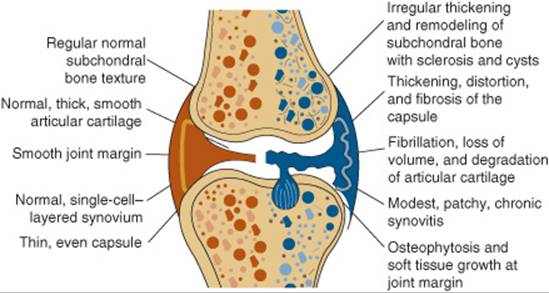
FIGURE 58–1. Characteristics of osteoarthritis in the diarthrodial joint. (From DiPiro JT, Talbert RL, Yee GC, et al., eds. Pharmacotherapy: A Pathophysiologic Approach. 7th ed. New York: McGraw-Hill; 2008: 1521, Figure 95–2, with permission.)
Risk Factors
OA develops when systemic factors and biomechanical vulnerabilities combine. Systemic factors include age, gender, genetic predisposition, and nutritional status. Age is the strongest predictor of OA, although advanced age alone is insufficient to cause OA.
Joints exposed to biomechanical factors are at increased risk. Occupational and recreational activities involving repetitive motion or injury can provoke OA, although most daily activities do not produce enough joint trauma to cause OA, even after decades of repeated use. However, daily activities may lead to OA if a joint is susceptible because of previous injury, joint deformity, muscle weakness, or systemic factors. Heavy physical activity is a stronger predictor of subsequent OA than light to moderate activities.8 This is especially true for older individuals, in whom the joint structure is less capable of coping with highly stressful activities. Obesity increases loadbearing stresses on hip and knee joints. The risk of OA increases by 10% for each kilogram of body weight above ideal body weight.9
TREATMENT
Desired Outcomes
Goals of therapy include: (a) educating the patient and caregivers; (b) relieving pain; (c) maintaining or restoring mobility; (d) minimizing functional impairment; (e) preserving joint integrity; and (f) improving quality of life.
Clinical Presentation and Diagnosis of OA
General
• Patients are generally over the age of 50.
• Presentations encompass a spectrum ranging from asymptomatic to severe joint pain and stiffness with functional limitations.
• Joint involvement has an asymmetric local distribution without systemic manifestations.
• In contrast with some other forms of arthritis (e.g., rheumatoid arthritis, gout), inflammation usually is absent or mild and localized when present.
Symptoms
• The cardinal symptoms are use-related joint pain, typically described as deep and aching in character, and stiffness. In advanced cases, pain also may be present during rest.
• Weight-bearing joints may be hindered by instability.
• Joint stiffness (“gelling”) abates with motion and recurs with rest.
• Joint stiffness generally lasts less than 30 minutes after periods of inactivity, limits the range of joint motion, impairs daily activities, and may be related to weather.
Signs
• One or more joints may be involved, usually in an asymmetric pattern.
• The following sites are most often involved in primary OA:
• Distal interphalangeal finger joints (Heberden’s nodes)
• Proximal interphalangeal finger joints (Bouchard’s nodes)
• First carpometacarpal joint
• Knees, hips, and cervicolumbar spine
• Metatarsophalangeal joint of the great toe
• The following sites are involved most often in secondary OA:
• Metacarpophalangeal joints
• Wrists
• Elbows
• Glenohumeral joints
• Ankles
• Joint examination may reveal local tenderness, bony proliferation, soft tissue swelling, crepitus, muscle atrophy, limited motion with passive/active movement, and effusion.
Laboratory Tests
• No specific laboratory test or value is diagnostic for OA.
• The erythrocyte sedimentation rate (ESR) and hematologic and chemistry panels are usually unremarkable.
• Aspirated synovial fluid (if obtained) often displays leukocytosis (WBC less than 2.0 × 10³/mm3 [2.0 × 10⁹/L]) and high viscosity.
Other Diagnostic Tests
• Radiologic evidence may be misleading because structural evidence of OA correlates poorly with symptoms.
• Radiographic changes are often absent in early OA.
• As the disease progresses, joint-space narrowing, subchondral bone sclerosis, and osteophytes may be detected.
• In late severe OA, there may be gross joint deformity and joint effusions.
Patient Encounter, Part 1
CS is a 62-year-old obese woman who presents to your family medicine clinic complaining of deep, aching pain localized to her right knee. The pain is provoked by walking and subsides with rest. She also notes that her knee is difficult to bend for 15 minutes after rising in the morning. The symptoms have worsened over the last several years. Your interview also reveals that she injured her knee several years ago in a minor motor vehicle accident.
What information is suggestive of OA?
What risk factors for OA does CS have?
What other information will you need to differentiate between OA and RA?
What other information will you need before formulating a treatment plan for this patient?
General Approach to Treatment
Treatment is individualized and should consider medical history, physical examination, radiographic findings, distribution and severity of joint involvement, and response to previous treatment. Comorbid diseases, concomitant medications, and allergies are integrated into a holistic treatment approach.
A comprehensive treatment algorithm for OA is given in Figure 58–2. Nonpharmacologic treatment is integral to achieving optimal outcomes in patients with OA. Pharmacologic therapy is used as an adjunctive measure to relieve pain; most treatments do not modify the disease course. Surgical intervention generally is reserved for patients with advanced disease complicated by unremitting pain or severely compromised function.
Nonpharmacologic Therapy
Nondrug therapy consists of a three-pronged approach of education, lifestyle modification, and physical therapy. Educational programs include a set of systematic educational activities designed to improve health behaviors and health status, thereby slowing OA progression. The goal is to increase patient knowledge and self-confidence in adjusting daily activities in the face of evolving symptoms. Effective programs produce positive behavioral changes, decreased pain and disability, and improved functioning. In addition to physical outcomes, psychological outcomes such as depression, self-efficacy, and life satisfaction are positively influenced. Patients can be referred to the Arthritis Foundation (www.arthritis.org) for educational materials and information on support groups.
Lifestyle modification should be employed in all patients at risk for OA and in those with established disease. Aerobic exercise and strength-training programs improve functional capacity in older adults with OA. Stretching and strengthening exercises should target affected and vulnerable joints. Isometric exercises performed three to four times weekly improve physicalfunctioning and decrease disability, pain, and analgesic use. Some patients have the misconception that increased activity will exacerbate joint symptoms, but controlled clinical trials have invalidated this belief.10 The American Geriatrics Society issued guidelines on the implementation of exercise in OA patients.11In general, it is advisable to recommend performing low-impact exercise routinely.
Obesity’s association with both the onset and progression of OA make weight loss a pivotal treatment strategy in overweight and obese patients. Women who lose an average of 5 kg (11 lb) lower their risk of knee OA by more than 50%. Symptomatic relief from knee OA and improved quality of life occur in people with knee OA who reduce their body weight. Weight loss should be pursued through dietary modification and increased physical activity (see Chap. 102). It is important to consider the patient’s physical capabilities when implementing an exercise program.
Application of heat or cold treatments to involved joints improves range of motion, reduces pain, and decreases muscle spasms. Practical applications of heat therapy include warm baths or warm water soaks. Heating pads should be used with caution, especially in the elderly, and patients must be warned of the potential for burns if used inappropriately.
Referral to a physical or occupational therapist may be helpful, particularly in patients with functional disabilities. Physical therapy is tailored to the patient and may include assessment of muscle strength, joint stability, and mobility; use of heat (especially prior to episodes of increased physical activity); structured exercise regimens; and implementation of assistive devices, such as canes, crutches, and walkers. The occupational therapist ensures optimal joint protection and function, energy conservation, and use of splints and other assistive devices.
Pharmacologic Therapy
Simple analgesics such as acetaminophen and nonsteroidal anti-inflammatory drugs (NSAIDs) are first-line agents for treating OA (Table 58–2).
Acetaminophen
Acetaminophen is a centrally acting analgesic that produces analgesia by inhibiting prostaglandin production in the brain and spinal cord. It is an effective and inexpensive analgesic with a favorable risk-benefit profile.12 For treatment of mild to moderate pain, acetaminophen should be tried initially at an adequate dose and duration before considering an NSAID.13–15 Acetaminophen is generally considered to be as effective as NSAIDs for mild to moderate joint pain with a superior safety profile.16,17
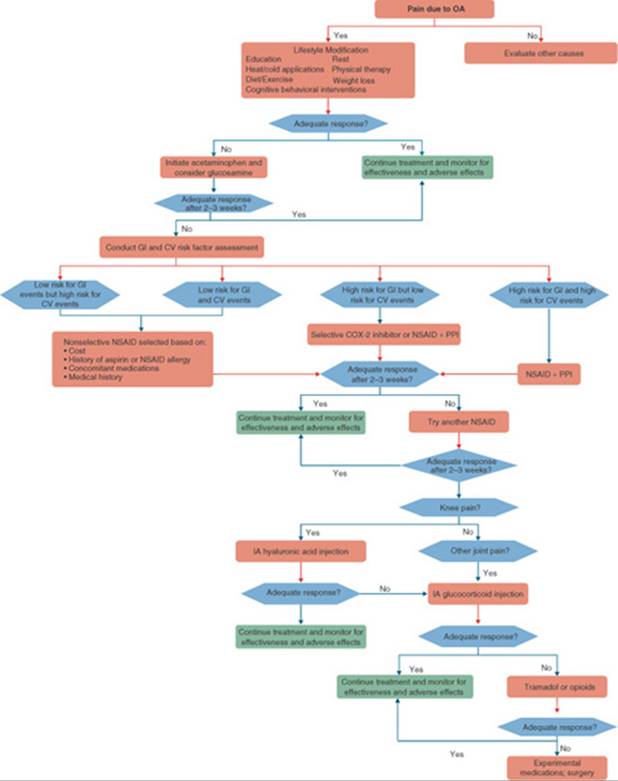
FIGURE 58–2. Treatment of osteoarthritis. (COX-2, cyclooxygenase-2; CV, cardiovascular; IA, intra-articular; NSAID, nonsteroidal anti-inflammatory drug; OA, osteoarthritis; PPI, proton pump inhibitor.)
Table 58–2 Dosing Parameters of Agents Commonly Used to Treat OA
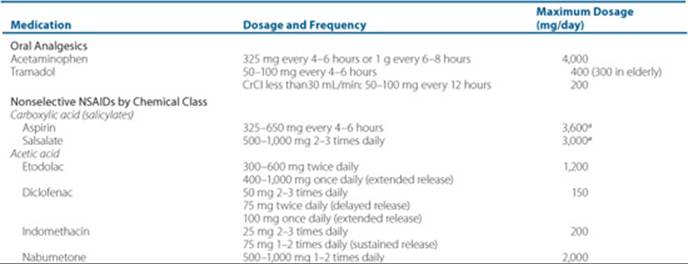
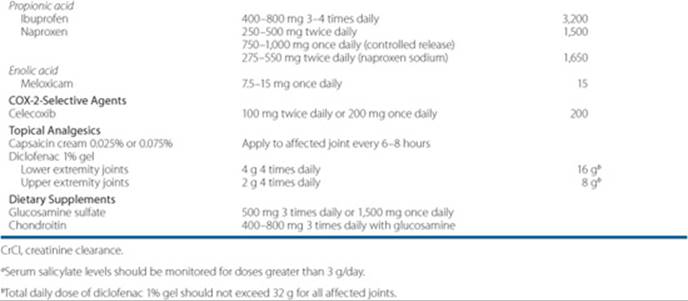
Acetaminophen should initially be administered on an as-needed basis in doses up to 4 g daily. However, some patients may require scheduled dosing to achieve adequate pain relief. Periodic assessment of pain control should be performed to maintain the lowest effective dose. A common reason for an inadequate response to acetaminophen is failure to use a sufficient dose for an adequate duration. A sufficient trial is defined as up to 4 g daily in divided doses for 4 to 6 weeks.
Despite being one of the safest analgesics, important adverse effects attributable to acetaminophen can occur, including hepatic and renal toxicity.18 Total daily doses of 4 g have been associated with significant liver enzyme elevations.19 Doses greater than 4 g are associated with an increased risk of hepatotoxicity. Concomitant use of alcohol may increase this risk; a maximum acetaminophen dose of 2.5 g daily is recommended in patients who consume more than two to three alcoholic beverages per day. Acetaminophen does not appear to exacerbate stable, chronic liver disease; it can be used with caution and vigilant monitoring of liver function in this population.18
Acetaminophen may worsen kidney function and increase blood pressure.20,21 Nevertheless, acetaminophen remains the preferred analgesic for mild to moderate pain in patients with hypertension or kidney disease because of the greater risks associated with NSAID use.22 Monitoring specifically for these toxicities generally is unnecessary.
Nonsteroidal Anti-inflammatory Drugs
Prostaglandins play an important role in the function of several organ systems. These compounds are synthesized via the interaction of two isoforms of the cyclooxygenase enzyme (COX-1 and COX-2) with their substrate, arachidonic acid (Fig. 58–3).
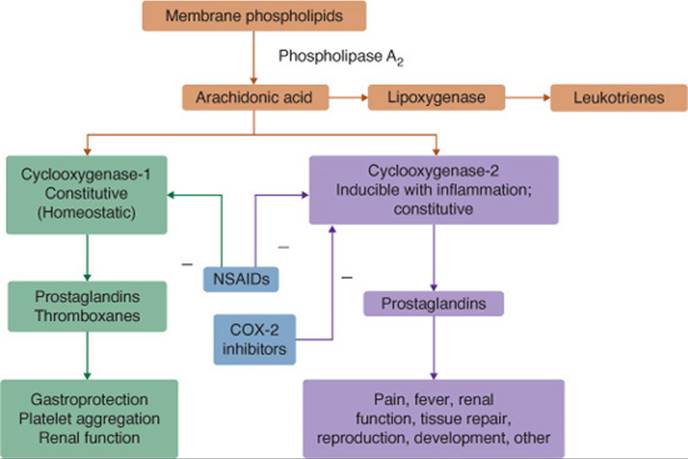
FIGURE 58–3. Synthesis pathway for prostaglandins and leukotrienes. (COX-2, cyclooxygenase enzyme 2; NSAIDs, nonsteroidal anti-inflammatory drugs.) (From DiPiro JT, Talbert RL, Yee GC, et al., eds. Pharmacotherapy: A Pathophysiologic Approach. 7th ed. New York: McGraw-Hill; 2008: 1528, Figure 95–6, with permission.)
The COX-1 enzyme is produced normally in various body tissues (e.g., gastric mucosa, kidney, and platelets). Prostaglandins produced by the actions of the COX-1 enzyme in the GI tract preserve the integrity of the GI mucosa by increasing mucus and bicarbonate secretion, maintaining mucosal blood flow, and decreasing gastric acid secretion. COX-1-associated prostaglandins also promote normal platelet activity and function. In the kidney, COX-1-mediated prostaglandins dilate the afferent arteriole, thereby maintaining intraglomerular pressure and glomerular filtration rate when renal blood flow is reduced.
In contrast, the COX-2 enzyme is not produced normally in most tissues, but its production is increased rapidly in the presence of inflammation and local tissue injury. This leads to the synthesis of prostaglandins involved in pain and inflammation. Consequently, blocking the COX-2 enzyme results in analgesic and anti-inflammatory effects. The beneficial effects of NSAIDs in reducing pain, decreasing joint stiffness, and improving function in patients with OA are thought to be due to inhibition of the COX-2 isoenzyme.
Most NSAIDs (e.g., ibuprofen, naproxen, and others) inhibit both COX-1 and COX-2 isoforms. That is, they are nonselective inhibitors of the COX enzyme system. Inhibition of COX-2 is responsible for analgesic effects, whereas inhibition of COX-1 is responsible for the most common adverse effects of NSAIDs. COX-2-selective inhibitors were developed in attempts to preserve the beneficial effects of COX-2 inhibition while avoiding the deleterious effects associated with inhibition of the COX-1 enzyme. This approach has not been entirely successful, as discussed below.
NSAIDs are a reasonable alternative when acetaminophen fails to provide an acceptable analgesic response. Some authorities recommend NSAIDs over acetaminophen for patients presenting with severe pain or signs and symptoms of inflammation, but this is a matter of much contention. The rationale for this recommendation is that acetaminophen’s central mechanism of action renders it ineffective against peripheral joint inflammation, and therefore less effective.23 Consensus guidelines support the use of NSAIDs as an alternative to acetaminophen if clinical features of peripheral inflammation or severe pain are present.14,15 Unfortunately, there is no validated mechanism to identify patients who are more likely to respond to NSAIDs than acetaminophen.
At equipotent doses, the analgesic and anti-inflammatory activity of all NSAIDs and aspirin are similar. The selection of a specific NSAID should be based on tolerability, previous response, and cost. Some patients respond to one NSAID better than to another. If an insufficient response is achieved with one NSAID, another agent from the same or a different chemical class should be tried. There is no convincing evidence that changing to an NSAID from a different chemical class is more likely to be effective than selecting another drug from the same chemical class. Pain relief occurs rapidly (within hours), but anti-inflammatory benefits are not realized until after 2 to 3 weeks of continuous therapy. This period is the minimal duration that should be considered an adequate NSAID trial.
Inhibition of the COX-1 isoenzyme is thought to be responsible primarily for the adverse effects of NSAIDs on the gastric mucosa, kidney, and platelets. Direct irritant effects also may contribute to adverse GI events. Minor GI complaints, including nausea, dyspepsia, anorexia, abdominal pain, flatulence, and diarrhea, are reported by 10% to 60% of patients treated with NSAIDs. Asymptomatic gastric and duodenal mucosal ulceration can be detected in 15% to 45% of patients.24 Perforation, gastric outlet obstruction, and GI bleeding are the most severe complications and occur in 1.5% to 4% of patients annually.24
Several risk factors predict a greater likelihood of GI complications in NSAID-treated patients (see Chap. 18). It is not possible to detect high-risk patients based on symptoms alone because there is poor correlation between the presence of symptoms and actual gastroduodenal damage. Patients at high risk for GI complications should be evaluated for the use of a COX-2-selective NSAID or concomitant treatment with a prophylactic gastroprotective agent such as a proton pump inhibitor or misoprostol. However, these strategies do not completely mitigate the risk of GI complications.
NSAIDs can cause renal insufficiency when administered to patients whose renal function depends on prostaglandins. Patients with chronic renal insufficiency or left ventricular dysfunction, the elderly, and those receiving diuretics or drugs that interfere with the renin-angiotensin system are particularly susceptible. Decreased glomerular filtration also may cause hyperkalemia. NSAIDs rarely cause tubulointerstitial nephropathy and renal papillary necrosis.
Caution is warranted in pregnant women and women of childbearing age because the risk of bleeding may be increased if the fetus is subjected to the antiplatelet activity of NSAIDs. Ibuprofen and naproxen are rated FDA pregnancy category B in the first and second trimesters. Indomethacin and sulindac have not been rated, whereas celecoxib and etodolac are category C. NSAIDs are contraindicated during the third trimester because they may promote premature closure of the ductus arteriosus in the fetus.
NSAIDs are prone to drug interactions due to high protein binding, detrimental renal effects, and antiplatelet activity. Interactions are encountered frequently with aspirin, warfarin, oral hypoglycemics, antihypertensives, angiotensin-converting enzyme (ACE) inhibitors, angiotensin-receptor blockers (ARBs), β-blockers, diuretics, and lithium. When an interaction with an NSAID is present, vigilant monitoring is warranted for therapeutic efficacy (e.g., NSAIDs blunt the antihypertensive efficacy of diuretics) and adverse effects (e.g., NSAIDs increase the risk of bleeding in anticoagulated patients).
Selective COX-2 Inhibitors
Elucidation of the activities of individual COX isoforms led to the development of drugs that selectively inhibit the inducible form of the enzyme, COX-2. Thus COX-2 inhibitors were expected to minimize NSAID GI toxicity and antiplatelet effects (see Fig. 58–3).25 A common misconception is that COX-2 inhibitors are more effective than nonselective NSAIDs in relieving pain and inflammation. In clinical trials, patients experienced similar levels of pain relief with COX-2 inhibitors and nonselective NSAIDs. This is to be expected since both drug classes inhibit the COX-2 enzyme, which is responsible for producing prostaglandins that result in pain and inflammation.
Celecoxib is the only agent currently marketed in the United States that is considered a true COX-2-selective inhibitor. However, meloxicam, sulindac, and diclofenac also display preferential affinity for the COX-2 isozyme. Celecoxib reduces endoscopically detected GI lesions. However, the clinical importance of this observation has been challenged because many of these lesions are clinically silent and resolve spontaneously. Celecoxib did not reduce the incidence of significant upper GI toxicity compared with NSAIDs in a large clinical trial.26 However, this study allowed patients to take concomitant low-dose aspirin. A post hoc analysis in patients who did not take aspirin revealed celecoxib to be effective in reducing significant upper GI toxicity.
The selective agents rofecoxib (removed from the U.S. market in 2004) and lumiracoxib (not currently FDA approved) decrease clinically important events such as perforations, ulcers, and bleeding.27,28
The advent of COX-2-selective inhibitors has led to unexpected results. By selectively inhibiting the COX-2 isoform, COX-2-selective NSAIDs may increase the risk of cardiovascular events in certain patients.29 COX-2 is responsible for the production of prostacyclin, a vasodilatory and antiplatelet substance. In contrast, COX-1 controls the production of thromboxane A2, a vasoconstrictor and platelet aggregator. Selective inhibition of COX-2 results in decreased prostacyclin levels in the face of stable thromboxane A2levels. An imbalance in the thromboxane A2: prostacyclin ratio ensues, which creates an environment that favors thrombosis.
As a consequence, COX-2-selective inhibitors may offer enhanced GI safety but compromised cardiovascular safety. Increased cardiovascular risk associated with COX-2 inhibitors is likely multifactorial in nature and may be attributable primarily to selectivity, dosage, and potency of selective agents. This relationship can be explained in part by the mechanism of theses drugs—greater inhibition of COX-2 results in a larger decrease in prostacyclin relative to thromboxane A2 (favoring thrombosis) but also less GI ulceration because of the greater preservation of mucosal protective factors. Other mechanisms for increasing cardiovascular risk have been proposed for various agents.30
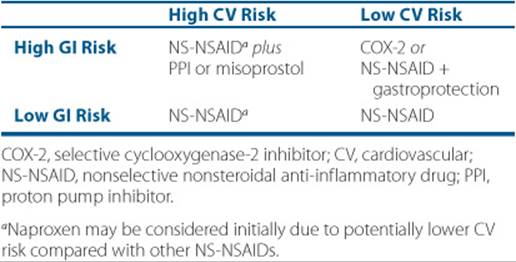
Concomitant use of low-dose aspirin mitigates some of the increased cardiovascular risk but also obliterates the GI safety of COX-2 selectivity.26–28 Patients treated with a COX-2-selective agent plus aspirin experience GI complications at a rate commensurate with that of patients given traditional nonselective agents. Use of less selective agents (e.g., meloxicam) to avoid cardiovascular concerns with COX-2 inhibitors may not be justified because neither GI nor cardiovascular safety is optimized. In patients at risk for cardiovascular disease, a nonselective NSAID plus a proton pump inhibitor is a reasonable option (Table 58–3). Naproxen appears to have the least cardiovascular risk of the nonselective NSAIDs and should generally be considered first.16
Table 58–3 Treatment Options Based on CV and
The COX-2 enzyme is also produced normally in the kidney; thus COX-2 inhibitors exert renal effects similar to those of conventional NSAIDs. Both drug classes may increase sodium reabsorption and fluid retention and can provoke renal insufficiency and hyperkalemia. COX-2 inhibitors should be used with caution in patients with heart failure or hypertension.
COX-2 inhibitors are susceptible to the same drug interactions as nonselective agents. However, the interaction with warfarin is less pronounced because platelet function is affected to a lesser degree.
Glucosamine and Chondroitin
Glucosamine is believed to function as a “chondroprotective” agent, stimulating the cartilage matrix and protecting against oxidative chemical damage. Chondroitin is administered often in conjunction with glucosamine. It is thought to inhibit degradative enzymes and serve as a substrate for the production of proteoglycans. Numerous clinical trials have evaluated the efficacy of these substances for the treatment of OA. However, results vary widely and the quality of several of these studies has been questioned. Of the two available glucosamine salts, glucosamine hydrochloride has consistently demonstrated poor efficacy, whereas glucosamine sulfate may provide benefit.31 In the context of such limitations, glucosamine and chondroitin reduce pain and improve mobility by 20% to 35%.31,32 They also may slow disease progression by decreasing the rate of cartilage destruction, although the clinical impact of this 9 effect is not clear.33 Glucosamine is not effective for treating acute pain; beneficial effects often mature over a period of weeks. Because these agents are loosely regulated in the United States as dietary supplements, product standards are inconsistent, and the constituents are not validated by any regulatory agency.
In the landmark GAIT trial conducted by the National Institutes of Health (NIH), glucosamine, chondroitin, and their combination were no more effective than placebo in decreasing pain symptoms in patients with knee OA after 24 weeks.34 Celecoxib was significantly more effective than placebo. In the subgroup of patients with moderate to severe OA pain, the combination of glucosamine and chondroitin appeared to have a moderate effect, although this subgroup analysis must be interpreted with caution. Analysis of radiologic changes after 2 years of treatment showed no significant benefit of glucosamine, chondroitin sulfate, or the combination over placebo.35
In contrast, a European study (the GUIDE trial) that compared a prescription glucosamine product with acetaminophen and placebo in patients with knee OA found that glucosamine performed better versus placebo than did acetaminophen.36
Interpretation of these results is challenging given the inconsistencies in study design, differences in end points applied, preparations of glucosamine tested (glucosamine hydrochloride versus sulfate), and the comparator agents (celecoxib versus acetaminophen). Based on the available data, it appears that glucosamine and chondroitin may be effective for some patients with OA of the knee.
The use of glucosamine (derived from crab, lobster or shrimp shells) and/or chondroitin (derived from cattle or shark cartilage) may warrant caution in patients with shellfish allergies, but preliminary evidence suggests little drug-allergy interaction.37 Additionally, glucosamine may alter cellular glucose uptake, thus elevating blood glucose levels in diabetic patients. A randomized, placebo-controlled trial of 38 diabetic participants failed to detect any significant alteration in hemoglobin A1c levels after 3 months of glucosamine/chondroitin therapy; however, a relatively short study period and low number of participants may account for these negative findings.38 Blood glucose levels in diabetic patients should be monitored closely after glucosamine initiation or dosage adjustments. Given the favorable safety profile of glucosamine and chondroitin, it is reasonable to present these agents as a treatment option to patients with symptomatic knee OA in the absence of contraindicating factors.
Intra-articular Therapy
Intra-articular injection of corticosteroids or hyaluronan represents an alternative to oral agents for the treatment of joint pain.39 These modalities usually are reserved for patients unresponsive to other treatments because of the relative invasiveness of intra-articular injections compared with oral drugs, the small risk of infection, and the cost of the procedure.
Hyaluronan (or Hyaluronic Acid)
The mechanism of action of hyaluronan is not fully understood. Healthy cartilage and synovial fluid are replete with hyaluronic acid, a viscous substance believed to facilitate lubrication and shock absorbency under varying conditions of load bearing. Patients with OA demonstrate an absolute and functional decline in hyaluronic acid; thus exogenous administration is referred to as viscosupplementation. In responders, the benefit of hyaluronan administration persists for periods that exceed its residence time in the synovium, suggesting that benefits beyond viscoelasticity are involved. Inhibition of inflammatory mediators and cartilage degradation, stimulation of the cartilage matrix, neuroprotective actions, and the ability of hyaluronan to induce its own synthesis may account in part for the benefit.
Pain and joint function have been evaluated frequently in clinical trials administering hyaluronan to patients with OA. Results are conflicting, with some suggesting dramatic improvements and others indicating no effect. In one controlled trial, hyaluronan injections relieved pain to a similar extent as oral NSAIDs.40 Hyaluronan provides greater pain relief for a longer time than intra-articular corticosteroids, but corticosteroids work more rapidly.40
Several formulations of hyaluronan are available for the treatment of knee pain in patients with OA who are unresponsive to other measures. Administration typically consists of weekly injections for 3 to 5 weeks and is well tolerated, although some patients may report local reactions. Rarely, postinjection flares and anaphylaxis have been reported. Intra-articular injection is associated with a low risk of infection (approximately 1 joint in 50,000 injections). Patients should be counseled to minimize activity and stress on the joint for several days after each injection.
Corticosteroids
Use of systemic corticosteroids is discouraged in patients with OA. However, in a subset of patients with an inflammatory component or knee effusion involving one or two joints, intra-articular corticosteroids can be useful as monotherapy or as an adjunct to analgesics. The affected joint can be aspirated and subsequently injected with a corticosteroid. The aspirate should be examined for the presence of crystalline formation and infection. A single joint should not be injected more than three to five times per year.
The crystalline nature of corticosteroid suspensions can provoke a postinjection flare in some patients. The ensuing flare mimics the flare of arthritis and inflammation that accompanies infection. Cold compresses and analgesics are recommended to treat symptoms in affected patients.
Tramadol
Use of opioid analgesics may be warranted when pain is unresponsive to other pharmacologic agents or when such agents are contraindicated. Tramadol is a centrally acting synthetic opioid oral analgesic that also weakly inhibits the reuptake of serotonin and norepinephrine. It is effective for treatment of moderate pain but is devoid of anti-inflammatory activity. There is a low potential for abuse compared with conventional opioid analgesics, and tramadol is not scheduled as a controlled substance in the United States.
Tramadol is a reasonable option for patients with contraindications to NSAIDs or failure to respond to other oral therapies. For the treatment of hip or knee OA, tramadol is as effective as NSAIDs. The addition of tramadol to NSAIDs or acetaminophen may augment the analgesic effects of a failing regimen, thereby securing sufficient pain relief in some patients. Moreover, concomitant tramadol may permit the use of lower NSAID doses.
Dizziness, vertigo, nausea, vomiting, constipation, and lethargy are all relatively common adverse events. These effects are more pronounced for several days after initiation and following upward dose titration. Seizures have been reported rarely; the risk is dose-related and appears to increase with concomitant use of antidepressants, such as tricyclic antidepressants or selective serotonin reuptake inhibitors. Tramadol should be avoided in patients receiving monoamine oxidase (MAO) inhibitors because tramadol inhibits the uptake of norepinephrine and serotonin.
Other Opioid Analgesics
Opioids decrease pain, improve sleep patterns, and increase functioning in patients with OA who are unresponsive to nonpharmacologic therapy and nonnarcotic analgesics. Use of opioid analgesics for nonmalignant pain is becoming more acceptable. Emerging evidence suggests that patients can achieve satisfactory analgesia by using nonescalating doses of opioids with a minimal risk of addiction.41 Opioid analgesics should be reserved for patients who experience moderate to severe pain and do not respond to or are not candidates for other pharmacologic and nonpharmacologic strategies.42 Opioids also may be useful in patients with conditions that preclude the use of NSAIDs, such as renal failure, heart failure, or anticoagulation.
Opioid analgesics should be initiated at low doses in combination with acetaminophen or an NSAID when possible. Combining opioids with other analgesics reduces the opioid requirement, thereby minimizing adverse events. Conservative initial doses are warranted, with the dose titrated to adequate response with minimal side effects.
Oxycodone is the most extensively studied of the opioids recommended for OA. However, other agents such as morphine, hydromorphone, methadone, and transdermal fentanyl are also effective.43 The American Pain Society (APS) recommends against using codeine and propoxyphene for OA because of the high incidence of adverse effects and limited analgesic effectiveness.
If opioid therapy is considered, there should be an initial comprehensive medical history and physical examination, firm documentation that nonopioid therapy has failed, clearly defined treatment goals, an understanding between the provider and the patient of the true benefits and risks of long-term opioids, use of a single provider and pharmacy whenever possible, and comprehensive follow-up.
Topical Analgesics
Topical analgesics sometimes are used for mild pain or as an adjunct to systemic therapy. There are limited data to support the use of salicylate-containing rubefacients (e.g., methyl salicylate and trolamine salicylate) or other counterirritants (e.g., menthol, camphor, and methyl nicotinate) in OA.44 See Chapter 60 for more information on these products when used for musculoskeletal disorders.
Capsaicin achieves pain relief by depleting substance P from sensory neurons in the spine, thereby decreasing pain transmission. Capsaicin is not effective for acute pain; up to 2 weeks may be necessary before pain relief is appreciated. Most patients experience a local burning sensation at the site of application. The discomfort usually does not result in discontinuation and often abates within the first week. Patients should be cautioned not to allow capsaicin to come into contact with eyes or mucous membranes and to wash their hands after each application.
Topical NSAID preparations are effective for treating OA involving the superficial joints of the hands, wrists, elbows, knees, ankles, or feet. Administration via a topical vehicle targets the joints involved and decreases systemic exposure. This may be an attractive option for patients at risk of developing adverse events from oral NSAIDs.
Diclofenac sodium topical gel 1% (Voltaren Gel) is available in the United States; its approval was based on two clinical trials that found decreased pain and improved joint function in patients with hand or knee OA.45,46 Systemic absorption of topical diclofenac sodium is ~17 times lower than that seen with oral diclofenac. Thus, GI, cardiovascular and renal adverse effects would not be expected with proper administration. The most common adverse effects include application site dermatitis, pruritus, and phototoxicity.
Surgery
Surgery generally is reserved for patients who fail to respond to medical therapy and have progressive limitations in activities of daily living (ADL). In joint replacement surgery (arthroplasty), the damaged joint surfaces are replaced with metal or plastic prosthetic devices. Hip and knee joints are most commonly replaced, but arthroplasty may also be performed on shoulders, elbows, fingers, and ankles. Most patients achieve significant pain relief and functional restoration after arthroplasty, and it is a reasonable option in carefully selected refractory patients.47
Surgical debridement may be performed arthroscopically. With this procedure, a tiny video camera is inserted into the affected joint through a small incision, and the surgeon removes torn cartilage or other debris from the joint. The long-term benefits of arthroscopic surgery for OA are unclear, and it may be no better than optimized physical and medical therapy.48,49
Patient Encounter, Part 2: Medical History, Physical Examination, and Diagnostic Tests
PMH: Obesity (BMI = 34 kg/m2); hypertension for 7 years; type 2 diabetes mellitus; hyperlipidemia, currently at goal; gastroesophageal reflux disease
FH: Father died of stroke at age 72; mother had OA of the hands.
SH: Works as a secretary. Denies alcohol, tobacco, and illicit drug use.
Allergies: NKDA
Meds: Hydrochlorothiazide 12.5 mg once daily; enalapril 10 mg twice daily; metformin 1,000 mg twice daily; atorvastatin 10 mg once daily; pantoprazole 40 mg every morning; enteric-coated aspirin 81 mg once daily; ibuprofen 200 mg as needed for pain
Labs: Within normal limits.
Radiology: Radiography of the affected knee shows joint space narrowing and subchondral bone sclerosis.
Which parameters are consistent with a diagnosis of OA?
What are the treatment goals for this patient?
What nonpharmacologic options are available to treat this patient?
What pharmacologic options are available to treat this patient?
What factors are important to consider when selecting medications for this patient?
Patient Encounter, Part 3: Creating a Care Plan
Based on the information available, create a care plan for this patient’s OA. The plan should include:
(a) a statement of the drug-related needs and/or problems;
(b) an individualized, detailed therapeutic plan; and
(c) a plan for follow-up monitoring to document the patient’s response and identify adverse reactions.
OUTCOME EVALUATION
• At baseline, quantify the patient’s pain using a visual analogue scale, assess range of motion of affected joints, and identify activities of daily living that are impaired.
• In patients treated with acetaminophen or oral NSAIDs, assess pain control after 2 to 3 weeks. It may take longer for the full anti-inflammatory effect of NSAIDs to occur.
• Incorporate other measures to track disease progress. Use radiography to assess severity of joint destruction, determine 50-ft walking time and grip strength, and administer the Western Ontario and McMaster Universities Osteoarthritis Index (WOMAC) and the Stanford Health Assessment Questionnaire, where appropriate, to assess activities of daily living.
• Ask patients if they are experiencing side effects or other problems with their medications and follow-up with more specific questions.
• In patients taking oral NSAIDs, monitor for increases in blood pressure, weight gain, edema, skin rash, and CNS adverse effects such as headaches and drowsiness.
Patient Care and Monitoring
1. Determine whether the patient’s symptoms are consistent with OA. Review the medical history to determine whether other rheumatologic diseases may be involved.
2. Assess symptoms to determine if pain warrants additional attention. Does the pain affect quality of life or interfere with activities of daily living?
3. Evaluate symptoms to determine what nonpharma-cologic interventions can be recommended and whether pharmacologic treatment is warranted.
4. Obtain a thorough history of previous drug use, including prescription drugs, over-the-counter drugs, and dietary supplements. Determine whether any of these treatments have been effective. Ask the patient about the dose and frequency of previous pharmacologic agents to determine if an adequate trial was given.
5. Educate the patient about appropriate use of nonpharmacologic treatments for OA.
6. Formulate a drug therapy plan, taking into consideration the patient’s medical history, concomitant medications, and previous use of medications.
7. Develop a plan to monitor the patient’s response to therapy.
8. Evaluate for the presence of adverse drug reactions, drug hypersensitivity, and drug interactions.
9. Document whether the patient has had improvements in quality-of-life measures, such as improved functioning, increased ability to perform activities of daily living, and improved well-being.
10. Emphasize the value of adherence to medication regimens and lifestyle modifications. Facilitate adherence by implementing medication regimens and lifestyle plans that are simple and consistent with the patient’s lifestyle.
11. Educate the patient about OA, lifestyle modifications, and medications:
• What causes OA?
• How will lifestyle modifications affect the disease?
• What are the expectations of treatment?
• When and how should medications be taken?
• What adverse effects are most common, do they decrease during therapy, and what are the warning signs of more severe complications?
• What prescription and over-the-counter medications should be avoided to prevent drug-drug, drug-food, or drug-disease interactions?
• What options are available if the current regimen fails?
• Evaluate serum creatinine, complete blood count, and serum transaminases at baseline and at every 6 to 12 months in patients treated with oral NSAIDs or acetaminophen.
• Perform stool guaiac in patients taking oral NSAIDs when clinically indicated.
• Monitor for drug interactions, including alcohol, at every visit.
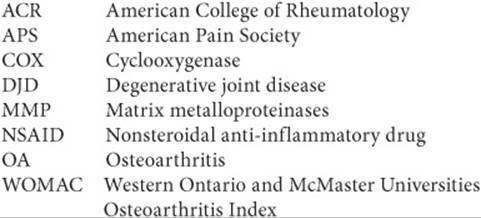
Abbreviations Introduced in This Chapter
 Self-assessment questions and answers are available at http://www.mhpharmacotherapy.com/pp.html.
REFERENCES
1. Centers for Disease Control and Prevention. National and state medical expenditures and lost earnings attributable to arthritis and other rheumatic conditions—United States, 2003. MMWR Morb Mortal Wkly Rep 2007;56(1):4–7.
2. CDC. Prevalence of disabilities and associated health conditions among adults—United States, 1999. MMWR Morb Mortal Wkly Rep 2001;50:120–125.
3. The National Arthritis Data Workgroup. Estimates of the prevalence of arthritis and other rheumatic conditions in the United States: Part II. Arthritis Rheum 2008;58:26–35.
4. Felson DT, Lawrence RC, Dieppe PA, et al. Osteoarthritis: New insights. Part 1: The disease and its risk factors. Ann Intern Med 2000;133:635–646.
5. Felson DT. An update on the pathogenesis and epidemiology of osteoarthritis. Radiol Clin North Am 2004;42:1–9.
6. Brandt KD. Osteoarthritis. In: Kasper DL, Braunwald E, Fauci AS, et al., eds. Harrison’s Principles of Internal Medicine, 16th ed. New York: McGraw-Hill, 2005:1692–1698.
7. Lane NE, Schnitzer TJ. Osteoarthritis. In: Goldman L, Ausiello DA, eds. Cecil Medicine, 23rd ed. (Philadelphia, PA: Saunders Elsevier;). 2007, http://www.mdconsult.com/das/book/0/view/1492/1009.html
8. McAlindon TE, Wilson PW, Aliabadi P, et al. Level of physical activity and the risk of radiographic and symptomatic knee osteoarthritis in the elderly: The Framingham Study. Am J Med 1999;106:151–157.
9. Fife RS. Epidemiology, pathology, and pathogenesis. In: Klippel JH, ed. Primer on Rheumatic Diseases, 11th ed. Atlanta, GA: Arthritis Foundation; 1997:216–217.
10. Bennell K, Hinman R. Exercise as a treatment for osteoarthritis. Curr Opin Rheumatol 2005;17:634–640.
11. American Geriatrics Society Panel on Exercise and Osteo arthritis. Exercise prescription for older adults with osteoarthritis pain: Consensus practice recommendations. J Am Geriatr Soc 2001;49:808–823.
12. Nikles CJ, Yelland M, Del Mar C, Wilkinson D. The role of paracetamol in chronic pain: An evidence-based approach. Am J Ther 2005;12:80–91.
13. Felson DT, Lawrence RC, Hochberg MC, et al. Osteoarthritis: New insights. Part 2: Treatment approaches. Ann Intern Med 2000;133:726–737.
14. American College of Rheumatology Subcommittee on Osteoarthritis Guidelines. Recommendations for the medical management of osteoarthritis of the hip and knee: 2000 update. Arthritis Rheum 2000;43:1905–1915.
15. American Pain Society. Guideline for the management of pain in osteoarthritis, rheumatoid arthritis, and juvenile chronic arthritis. American Pain Society 2002;2:43–74.
16. Towheed TE, Maxwell L, Judd MG, et al. Acetaminophen for osteoarthritis. Cochrane Database Syst Rev 2006;(1): CD004257.
17. Courtney P, Doherty M. Key questions concerning paracetamol and NSAIDs for osteoarthritis. Ann Rheum Dis 2002;61:767–773.
18. Graham GG, Scott KF, Day RO. Tolerability of paracetamol. Drug Saf 2005;28:227–240.
19. Watkins PB, Kaplowitz N, Slattery JT, et al. Aminotransferase elevations in healthy adults receiving 4 grams of acetaminophen daily. JAMA 2006;296:87–93.
20. Fored CM, Ejerblad E, Lindblad P, et al. Acetaminophen, aspirin, and chronic renal failure. N Engl J Med 2001;345:1801–1808.
21. Curhan GC, Knight EL, Rosner B, et al. Lifetime non-narcotic analgesic use and decline in renal function in women. Arch Intern Med 2004;164:1519–1524.
22. Forman JP, Stampfer MJ, Curhan GC. Non-narcotic analgesic dose and risk of incident hypertension in U.S. women. Hypertension 2005; 46:500–507.
23. Henrich WL, Agodoa LE, Barrett B, et al. Analgesics and the kidney: Summary and recommendations to the Scientific Advisory Board of the National Kidney Foundation from an Ad Hoc Committee of the National Kidney Foundation. Am J Kidney Dis 1996;27:162–165.
24. Laine L. Approaches to nonsteroidal anti-inflammatory drug use in the high-risk patient. Gastroenterology 2001;120:594–606.
25. Felson DT. The verdict favors nonsteroidal anti-inflammatory drugs for treatment of osteoarthritis and a plea for more evidence on other treatments. Arthritis Rheum 2001;44:1477–1480.
26. Silverstein FE, Faich G, Goldstein JL, et al. Gastrointestinal toxicity with celecoxib vs nonsteroidal anti-inflammatory drugs for osteoarthritis and rheumatoid arthritis: The CLASS study: A randomized controlled trial. Celecoxib Long-term Arthritis Safety Study. JAMA 2000;284: 1247–1255.
27. Bombardier C, Laine L, Reicin A, et al. VIGOR Study Group. Comparison of upper gastrointestinal toxicity of rofecoxib and naproxen in patients with rheumatoid arthritis. N Engl J Med 2000;343: 1520–1528.
28. Schnitzer TJ, Burmester GR, Mysler E, et al. Comparison of lumiracoxib with naproxen and ibuprofen in the Therapeutic Arthritis Research and Gastrointestinal Event Trial (TARGET), reduction in ulcer complications: Randomised controlled trial. Lancet. 2004;364: 665–674.
29. Howard PA, Delafontaine P. Nonsteroidal anti-inflammatory drugs and cardiovascular risk. J Am Coll Cardiol 2004;43:519–525.
30. Zarraga IG, Schwarz ER. Coxibs and heart disease: What we have learned and what else we need to know. J Am Coll Cardiol 2007;49: 1–14.
31. Richy F, Bruyere O, Ethgen O, et al. Structural and symptomatic efficacy of glucosamine and chondroitin in knee osteoarthritis: A comprehensive meta-analysis. Arch Intern Med 2003;163:1514–1522.
32. Vlad SC, LaValley MP, McAlindon TE, Felson DT. Glucosamine for pain in osteoarthritis: Why do trial results differ? Arthritis Rheum 2007;56:2267–2277.
33. Reginster JY, Deroisy R, Rovati LC, et al. Long-term effects of glucosamine sulphate on osteoarthritis progression: A randomised, placebo-controlled clinical trial. Lancet 2001;357:251–256.
34. Clegg DO, Reda DJ, Harris CL, et al. Glucosamine, chondroitin sulfate, and the two in combination for painful knee osteoarthritis. N Engl J Med 2006;354: 795–808.
35. Sawitzke AD, Shi H, Finco MF, et al. The effect of glucosamine and/or chondroitin sulfate on the progression of knee osteoarthritis. Arthritis Rheum 2008;58:3183–3191.
36. Herrero-Beaumont G, Ivorra JA, Del Carmen Trabado M, et al. Glucosamine sulfate in the treatment of knee osteoarthritis symptoms: A randomized, double-blind, placebo-controlled study using acetaminophen as a side comparator. Arthritis Rheum 2007;56: 555–567.
37. Gray HC, Hutcheson PS, Gray RG. Is glucosamine safe in patients with seafood allergy? J Allergy Clin Immunol 2004;114:459–460.
38. Scroggie DA, Albright A, Harris MD. The effect of glucosamine–chondroitin supplementation on glycosylated hemoglobin levels in patients with type 2 diabetes mellitus. Arch Intern Med 2003;163:1587–1590.
39. Gossec L, Dougados M. Intraarticular treatments in osteoarthritis: From the symptomatic to the structure modifying. Ann Rheum Dis 2004;63:478–482.
40. Petrella RJ, DiSilvestro MD, Hildebrand C. Effects of hyaluronate sodium on pain and physical functioning in osteoarthritis of the knee: A randomized, double-blind, placebo-controlled clinical trial. Arch Intern Med 2002;162:292–298.
41. Ballantyne JC, Mao J. Opioid therapy for chronic pain. N Engl J Med 2003;349:1943–1953.
42. The American Academy of Pain Medicine, the American Pain Society: The use of opioids for the treatment of chronic pain: A consensus statement from the American Academy of Pain Medicine and the American Pain Society. Clin J Pain 1997;13:6–8.
43. Avouac J, Gossec L, Dougados M. Efficacy and safety of opioids for osteoarthritis: A meta-analysis of randomized controlled trials. Osteoarthritis Cartilage 2007;15:957–965.
44. Mason L, Moore RA, Edwards JE, et al. Systematic review of efficacy of topical rubefacients containing salicylates for the treatment of acute and chronic pain. BMJ 2004;328:995–998.
45. FDA Center for Drug Evaluation and Research (CDER). Summary Review: Voltaren Gel. http://www.accessdata.fda.gov/drugsatfda_docs/nda/2007/Voltaren_022122.cfm.
46. Altman RD, Dreiser RL, Fisher CL. Diclofenac sodium gel in patients with primary hand osteoathritis: A randomized, double-blind, placebo-controlled trial. J Rheumatol 2009;36(9):1991–1999.
47. Dieppe P, Basler HD, Chard J, et al. Knee replacement surgery for osteoarthritis: Effectiveness, practice variations, indications and possible determinants of utilization. Rheumatology 1999;38:73–83.
48. Mosely JB, O’Malley K, Peterson NJ, et al. A controlled trial of arthroscopic surgery for osteoarthritis of the knee. N Engl J Med 2002; 347:81–88.
49. Kirkley A, Birmingham TB, Litchfield RB, et al. A randomized trial of arthroscopic surgery for osteoarthritis of the knee. N Engl J Med 2008;359: 1097–1107.