
Amy M. Pick
LEARNING OBJECTIVES
Upon completion of the chapter the reader will be able to:
1. Explain the role of the Philadelphia chromosome (Ph) in the pathophysiology of chronic myelogenous leukemia (CML)
2. Describe the natural history of CML.
3. Identify the clinical signs and symptoms associated with CML.
4. Discuss treatment options for CML with special emphasis on tyrosine kinase inhibitors.
5. Describe the clinical course of chronic lymphocytic leukemia (CLL).
6. Describe patients who may be observed without treatment and those who receive aggressive treatment for CLL.
7. Discuss the various treatment options available for CLL.
8. Describe the clinical presentation of multiple myeloma.
9. Discuss treatment options available for multiple myeloma.
KEY CONCEPTS
 The Philadelphia chromosome (Ph) is a chromosomal translocation responsible for chronic myelogenous leukemia (CML).
 The Ph results in the formation of an abnormal fusion gene, BCR-ABL, which encodes an overly active tyrosine kinase.
 Allogeneic stem cell transplantation is the only curative treatment option for CML.
 Imatinib is a tyrosine kinase inhibitor used as first-line therapy in patients with CML.
 Dasatinib and nilotinib are second-generation tyrosine kinase inhibitors used to overcome imatinib resistance or intolerance.
 Chronic lymphocytic leukemia (CLL) can have a variable disease course but most patients survive for many years.
 Chemotherapy does not improve overall survival in early-stage CLL.
 Fludarabine-based chemotherapy is commonly used as first-line therapy for younger patients with CLL.
 Autologous transplant either as a single or double transplant offers younger patients with myeloma longer disease-free survival.
 Newer therapies for multiple myeloma including thalidomide, lenalidomide, and bortezomib in combination with dexamethasone produce major responses.
INTRODUCTION
Several diseases comprise chronic leukemia. The two most common forms are chronic myelogenous leukemia (CML) and chronic lymphocytic leukemia (CLL). The slower progression of the disease contrasts it from acute leukemia, with the survival of chronic leukemia often lasting several years without treatment. This chapter will cover CML and CLL. There will also be a discussion of multiple myeloma and a brief discussion of Waldenstrom macroglobulinemia.
CHRONIC MYELOGENOUS LEUKEMIA
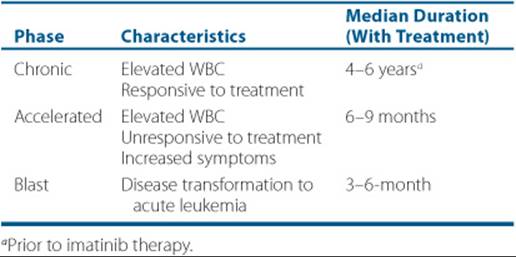
CML is a hematological cancer that results from an abnormal proliferation of an early myeloid progenitor cell.1 The clinical course of CML has three phases: chronic phase, accelerated phase, and blast crisis. Chemotherapy can be used to control WBC counts in the chronic phase but as CML slowly progresses the cancer becomes resistant to treatment. Blast crisis resembles acute leukemia and immediate aggressive treatment is required. Table 96–1 describes each of the phases of CML.
Table 96–1 Clinical Course of CML
EPIDEMIOLOGY AND ETIOLOGY
It was estimated that 5,050 new cases of CML were diagnosed in 2009, accounting for 15% of all adult leukemias.2 The incidence of CML increases with age, with the median age of diagnosis in the fifth decade of life.1 In most newly diagnosed cases, the etiology cannot be determined but high doses of ionizing radiation and exposure to solvents such as benzene are recognized risk factors.
PATHOPHYSIOLOGY
Cell of Origin
CML arises from a defect in an early progenitor cell. The pluripotent (noncommitted) stem cell is implicated as the origin of the disease, thus multiple cell lineages of hematopoesis may be affected, including myeloid, erythroid, megakaryocyte, and rarely, lymphoid lineages. These cells remain functional in chronic phase CML, which is why patients in this phase are at low risk for developing infections.
Ph Chromosome
 The Philadelphia chromosome (Ph) results from a translocation between chromosomes 9 and 22, leaving a shortened chromosome 22. The Ph results in the formation of an abnormal fusion gene between the breakpoint cluster region and the abelson proto-oncogene (BCR-ABL), which encodes an overly active tyrosine kinase. The loss of control of tyrosine kinase activity causes abnormal cellular proliferation and inhibition of apoptosis.1,3 Molecular tools such as quantitative and qualitative polymerase chain reaction (Q-PCR) and fluorescence in situ hybridization (FISH) are used in the detection and monitoring of CML.4
TREATMENT
Desired Outcome
The primary goal in the treatment of CML is to eradicate the Ph positive clones. Elimination of the Ph is termed cytogenetic complete remission. If treatment produces Q-PCR negative disease, this is termed molecular complete remission and indicates a several log reduction over cytogenetic complete remission. An early goal of therapy is to achieve hematologic complete remission or to normalize peripheral blood. A cure from CML can only come from complete eradication of the Ph clone.
Clinical Presentation and Diagnosis of CML
Signs and Symptoms
• 30–50% are asymptomatic at diagnosis.1,5
• Symptoms may include fatigue, fever, weight loss, bleeding.
• Organomegaly consisting of splenomegaly and hepatomegaly.
Diagnostic Procedures
• Peripheral blood smear
• Bone marrow biopsy (required for diagnosis)
• Cytogenetic studies
• Molecular testing (Q-PCR and FISH)
Laboratory Findings
• Peripheral blood smear
• Leukocytosis (most present with WBC greater than 100 × 109/L [100 × 103/mm3])
• Thrombocytosis (approximately 50% of patients in chronic phase)1
• Anemia
• Presence of blasts
• Bone marrow
• Hypercellularity with presence of blasts
• Presence of Ph
Poor Prognostic Factors1
• Older age
• Splenomegaly
• High percentage blasts in the blood
• High or low platelet count
• Increased eosinophils or basophils
General Approach to Treatment
There have been significant advances in the treatment of CML since the discovery of the Ph in 1960. The success of therapy is partially dependent on the clinical phase of the disease. Treatment decisions are based on patient’s age, phase of CML, comorbidities, and availability of a donor for transplant. Nearly all patients with CML are treated initially with imatinib. Hydroxyurea may be used after diagnosis to rapidly reduce high WBC counts and prevent potentially serious complications (respiratory and neurologic) associated with large numbers of circulating neutrophils. Hydroxyurea, though, does not alter the disease process. Imatinib can also reduce peripheral WBC counts over several weeks, thus many patients are started on imatinib alone. Dasatinib or nilotinib are second-generation tyrosine kinase inhibitors used when patients cannot tolerate or are resistant to imatinib. Prior to the development of the imatinib, interferon-α was once the treatment of choice. With the emergence of more effective therapies in CML, today interferon-α’s role is minimal. Interferon-α should be reserved for use in patients who do not respond to tyrosine kinase therapy and do not enroll in a clinical trial. Allogeneic stem cell transplant is the only curative therapy for CML and is used in younger patients with a matched donor. Figure 96–1 illustrates one common method of clinically managing newly diagnosed CML patients.
Nonpharmacologic Therapy
Hematopoetic Stem Cell Transplantation
Allogeneic stem cell transplantation is the only curative treatment option for CML.1 It is an option for younger patients (younger than 50 years) in chronic phase CML that have an HLA-matched donor. Cure rates are superior when patients are transplanted in chronic phase within the first year of diagnosis and may be as high as 70%.5,6 Unfortunately, only 30% to 40% of patients will be candidates for transplantation. There are significant risks associated with allogeneic transplant with a 10% to 20% early mortality, or within 100 days of transplant.6 Patients may also have a significant decline in quality of life from chronic graft-versus-host disease and other long-term complications associated with allogeneic stem cell transplantation. For those patients who do not achieve a molecular complete remission or have a relapse after transplant the infusion of donor lymphocytes will usually place the patient back into a durable remission. The National Comprehensive Cancer Network (NCCN) recommends that allogeneic stem cell transplant be reserved for rare cases considering the effectiveness and survival benefit of imatinib and other tyrosine kinase inhibitors.7
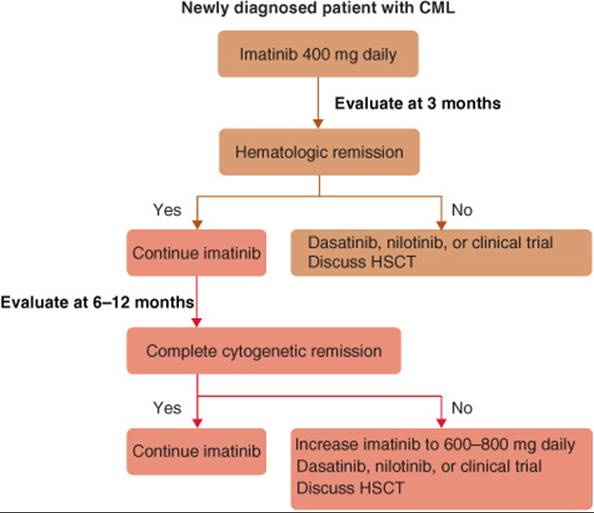
FIGURE 96–1. Algorithm for imatinib therapy in newly diagnosed CML patients. (HSCT, hematopoietic stem cell transplantation.)
Pharmacologic Therapy (Table 96–2)
The treatment of CML has experienced a dramatic change since the introduction of first- and second-generation tyrosine kinase inhibitors. These oral agents do not cure CML but are able to produce long-term disease control in the vast majority of patients.
Imatinib Mesylate (Gleevec)
Imatinib mesylate (STI-571; Gleevec) is a tyrosine kinase inhibitor used as first-line therapy in patients with CML. As a potent first-generation tyrosine kinase inhibitor, imatinib inhibits phosphorylation of various proteins involved in cell proliferation. Imatinib works by binding to the ATP binding pocket of BCR-ABL.8 Data show that the use of imatinib in chronic phase CML results in 89% of patients reaching 5-year survival.9 The drug induces complete hematologic responses in more than 97% of patients and complete cytogenetic responses in about 87% of patients in chronic phase.9 As expected in more aggressive disease, lower response rates are reported in accelerated phase and blast crisis.10,11 Disease progression is typically attributed to imatinib resistance.12,13
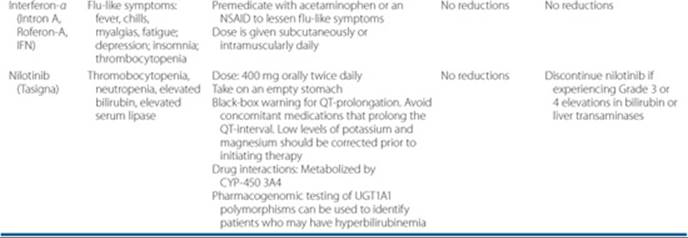
Table 96–2 Drugs Used in CML
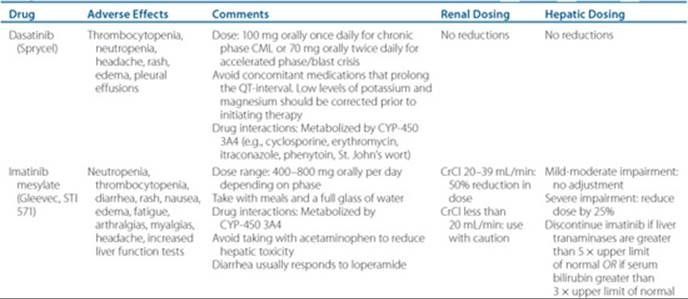
The dosing of imatinib depends on the phase with 400 mg/day used in the majority of patients in chronic phase CML. Because lower responses are seen with advanced disease studies are investigating the use of 600 to 800 mg/day of imatinib in accelerated phase and blast crisis. Although these higher doses are used quite often in clinical practice, increased efficacy over standard dose imatinib has not been demonstrated.
Therapy with imatinib is generally well tolerated. Common side effects include myelosuppression (phase and dose-related), rash, nausea, edema, fatigue, arthralgias, myalgias, and headaches. Imatinib is metabolized by CYP-450 3A4 and possible drug interactions include those agents which inhibit or induce 3A4, such as erythromycin, ketoconazole, and phenytoin.14
Dasatinib (Sprycel) and Nilotinib (Tasigna)
There is a small percentage of patients that will fail to respond to or are intolerant to imatinib therapy. Dasatinib and nilotinib are two second-generation tyrosine kinase inhibitors used to overcome imatinib resistance or intolerance. These inhibitors are anywhere from 10 to 325 times more potent than imatinib in inhibiting BCR-ABL and are able to overcome most BCR-ABL mutations that lead to resistance.12,13 Dasatinib and nilotinib should be used in disease progression when patients have failed imatinib therapy. There are studies investigating the role of these agents as first-line therapy, however, this use is currently not recommended.7 Common side effects are similar to imatinib. A significant and potentially severe side effect of pleural effusions has been reported with the use of imatinib and dasatinib but not with the use of nilotinib. Additional side effects include QT-prolongation (dasatinib and nilotinib) and increase in indirect bilirubin (nilotinib).12
Interferon-α and Cytarabine
Prior to the introduction of tyrosine kinase inhibitors, the combination of interferon-α and low-dose cytarabine was the nontransplant treatment of choice for patients in chronic phase CML. The precise mechanism of action of interferon-α remains unknown. The addition of cytarabine to interferon-α improves the response compared to interferon alone. This combination produces cytogenetic response rates of 30%, much lower than imatinib.15 One of the major drawbacks, in addition to the low response rates, is interferon’s toxicity including flu-like symptoms, depression, and thrombocytopenia. Today, interferon-α and cytarabine should only be considered in rare circumstances for those patients who do not respond to any tyrosine kinase inhibitor and are not candidates for stem cell transplantation or a clinical trial.
OUTCOME EVALUATION
Successful treatment for CML depends on the elimination of the Ph. Nearly all newly diagnosed CML patients will initially be placed on imatinib. If patients fail to obtain a cytogenetic response within 12 months, dose escalation of imatinib or a change in therapy to dasatinib or nilotinib is recommended.7 Patients who do not respond to a tyrosine kinase inhibitor and cannot be transplanted should be encouraged to enroll in a clinical trial. Some patients will not respond to treatment and will progress to blast crisis where they will receive treatment for acute leukemia. Although its use is limited, allogeneic transplant offers the only cure for CML. Allogeneic stem cell transplantation may be discussed with the minority of patients who have a matched donor and are young enough to tolerate transplant.7
Patient Encounter, Part 1
A 40-year-old woman well known to you comes into your pharmacy complaining of fatigue. You suggest she see her M.D. to have some blood work done. A CBC shows the following:
Total WBC: 158 × 109/L (158 × 103/mm3), (20% [0.20] blasts, 70% [0.70] segs, 10% [0.10] lymphs)
HgB/HCT: 9 g/dL (5.6 mmol/L)/32% (0.32)
Platelets: 650 × 109/L (650 × 103/mm3)
Bone marrow biopsy: Hypercellular, FISH is positive for Ph
What is the treatment of choice for this chronic-phase CML patient?
How would you evaluate response to therapy?
If this patient has suboptimal response to initial therapy what would you recommend?
CHRONIC LYMPHOCYTIC LEUKEMIA
CLL is a cancer that results in the accumulation of functionally incompetent lymphocytes.15 CLL is considered an indolent, incurable disease where treatment should only be initiated when patients have symptoms. There is a subset of patients who will have aggressive disease and these individuals need to be treated aggressively.
EPIDEMIOLOGY AND ETIOLOGY
CLL is the most common type of leukemia diagnosed in adults. It is estimated that, in 2009, 15,490 new cases were diagnosed in the United States.2 Median age at diagnosis is the sixth decade with the incidence increasing with age. The etiology of CLL is unknown but hereditary factors may have a role, with family members of CLL patients having a two- to sevenfold increased risk of CLL.16
PATHOPHYSIOLOGY
Cell of Origin
CLL is characterized by small, relatively incompetent B-lymphocytes that accumulate in the blood and bone marrow over time. It is the lack of apoptotic mechanisms that leads to the persistence and accumulation of B-lymphocytes. The exact cell of origin is controversial but has been described as an antigen activated B-lymphocyte.16 Chromosomal abnormalities have been identified in 40% to 50% cases of CLL. Detection of some of these markers may predict clinical course and prognosis and may influence treatment decisions.16,17
Clinical Course
 CLL can have a variable clinical course with survival ranging from months to decades. Low-risk disease is asymptomatic and median survivals exceed 10 years, intermediate risk is associated with lymphadenopathy and has median survivals of about 7 years, and high-risk patients with anemia have median survivals of only 3 years.18 The typical low-risk patient is an elderly patient without symptoms who is diagnosed on routine blood draw. The typical high-risk patient is a middle-aged patient in which symptoms have brought them to their physician.
PROGNOSTIC FACTORS
Two staging systems, Rai’s and Binet’s, have been developed to help practitioners determine the overall prognosis of patients with CLL. They are comparable systems and useful when broadly determining good, intermediate, and poor prognostic disease.16,17 These systems are less useful in accurately determining prognosis in an individual patient.19 Increasingly a number of biological markers of the disease such as deletion of chromosome 17p and mutational status of immunoglobulin heavy chain variable region gene (IgVH) are being used to predict likely clinical course.18
Clinical Presentation and Diagnosis of CLL
Signs and Symptoms
• 40% are asymptomatic at diagnosis16
• Lymphadenopathy
• Organomegaly consisting of splenomegaly and hepatomegaly
• Fatigue, weight loss, night sweats, fevers
• Chronic infections due to immature lymphocytes
Diagnostic Procedures
• Peripheral blood smear
• Bone marrow biopsy (required for diagnosis)
• Cytogenetic studies
• Molecular testing
Laboratory Findings
• Peripheral blood smear
• Leukocytosis (WBC greater than 100 × 109/L [100 × 103/mm3])
• Lymphocytosis (absolute lymph count greater than 5 × 10⁹/L [5 × 10³/mm3])
• Anemia
• Thrombocytopenia
• Hypogammaglobinemia
• Bone marrow
• Must have at least 30% lymphocytes
Poor Prognostic Factors
• Lymphocytosis with accompanying:
• Anemia (hemoglobin less than 11 g/dL)
• Thrombocytopenia (platelets less than 100 × 109/L [100 × 103/mm3])
• ZAP-70 and CD38 antigen expression
• Cytogenetics (17p-)
TREATMENT
Desired Outcomes
The primary goals in the treatment of CLL are to provide palliation of symptoms and improve overall survival. Because the current treatments for CLL are not curative, reduction in tumor burden and improvement in disease symptoms are reasonable endpoints particularly in the older patient. A complete response (CR) to therapy can be defined as a resolution of lymphadenopathy and organomegaly, normalization of peripheral blood counts, and elimination of lymphoblasts in the bone marrow.
Nonpharmacologic Therapy
Chemotherapy does not improve overall survival in early-stage CLL. In addition, deferring therapy until a patient becomes symptomatic does not alter overall survival.20,21 For this reason, the notion of “watch and wait” is considered reasonable for older patients with indolent disease. Several factors will influence this approach including the patient’s life expectancy, disease characteristics, and the patient’s ability to tolerate therapy.22
Hematopoietic Stem Cell Transplantation
The use of hematopoietic stem cell transplantation in CLL is limited. Allogeneic transplantation offers longer disease-free remissions than autologous transplantation but neither has demonstrated the ability to cure patients.16 Several factors must be considered before allogeneic stem cell transplantation. The lack of a donor, older age, and poor performance status makes transplant an uncommon procedure in this population. Allogeneic transplantation may be an option for younger patients who have aggressive disease. NCCN guidelines suggests that patients younger than 70 years of age with the deletion of chromosome 17p or who relapse after initial treatment consider allogeneic stem cell transplantation because these patients have a poor response to conventional therapies.23 Although its use is currently limited, hematopoietic stem cell transplantation may someday be an important component in achieving a cure for CLL.16
Pharmacologic Therapy (Table 96–3)
Single-Agent Chemotherapy
The treatment for CLL has changed with the development of the purine analogue fludarabine (Fludara). Historically, chlorambucil (Leukeran), an alkylating agent, was considered standard treatment for CLL. Today, fludarabine-based chemotherapy is used as first-line therapy for younger patients with CLL. Randomized clinical trials have shown that fludarabine is superior to chlorambucil in achieving higher response rates and producing a longer duration of response (CR 20% versus 4%, respectively).24 Fludarabine is effective in previously untreated patients as well as patients who have chlorambucil-resistant disease.25 Although fludarabine is one of the most effective agents in the treatment of CLL, it is rarely used as a sole agent. Instead fludarabine is given in combination with other drugs.16,23,24
The most common dose for fludarabine is 20 mg/m2 IV daily for 5 consecutive days, whereas chlorambucil can be taken daily as an oral tablet with the dose ranging from 4 to 10 mg/day.25 Fludarabine is associated with more toxicities than chlorambucil, including myelosuppression and prolonged immunosuppression.24 Resultant infectious complications may occur during the periods of prolonged immunosuppression. NCCN guidelines recommend that clinicians consider antibacterial and antiviral prophylaxis for Pneumocystis and Varicella zoster when using fludarabine-based therapy.23 Today, chlorambucil remains a practical option for the symptomatic elderly patient who requires palliative therapy because of the ease of oral administration and limited side effects profile.
Bendamustine (Treanda) is an alkylating agent approved in 2008 for the treatment of CLL. As first-line therapy for CLL, bendamustine was shown to have superior overall response rates, complete responses and longer progression-free survival than chlorambucil.23 The efficacy of bendamustine has not been compared to fludarabine-based combination therapy. NCCN guidelines suggest that bendamustine can be given as single-agent therapy or in combination with rituximab.23 The dosing for bendamustine is 100 mg/m2 given IV on days 1 and 2 of a 28-day cycle. Table 96–3 lists some of the adverse effects seen with bendamustine.
Monoclonal Antibodies
Rituximab (Rituxan) Rituximab is a naked chimeric monoclonal antibody directed against the CD20 antigen on B-lymphocytes.25 Similar to other B-cell malignancies, CLL expresses CD20 antigens. Dose escalation studies suggest that higher doses are required than those used in nonHodgkin’s lymphoma.24,26 The higher doses required in CLL is probably a combined effect of lower CD20 antigen expression and higher concentrations of soluble CD20 antigen than in non-Hodgkin’s lymphoma.16,24 Rituximab is typically given in combination with other therapies since these combinations result in higher complete responses than rituximab alone.27 The most commonly observed side effects of rituximab include infusion reactions consisting of fever, chills, hypotension, nausea, vomiting, and headache.16 Premedication with diphenhydramine and acetaminophen is recommended to minimize infusion reactions.
Table 96–3 Drugs Used in CLL
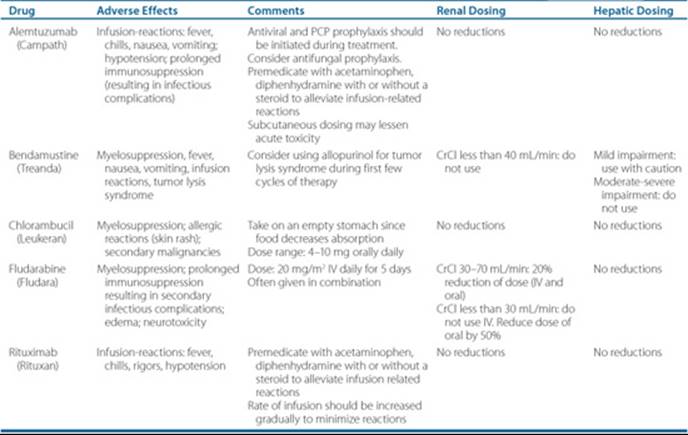
Alemtuzumab (Campath) Alemtuzumab is a humanized monoclonal antibody directed against the CD52 antigen.27 CD52 antigen is expressed on the majority of B- and T- lymphocytes. Alemtuzumab is FDA-approved for single agent use in the treatment of CLL. Studies have shown alemtuzumab to be effective in fludarabine-resistant disease, in patients with the deletion of 17p and as front-line therapy.24Infusion-related reactions can be significant and typically occur with the initial dose and lessen in severity with subsequent doses. To limit acute allergic reactions, subcutaneous administration may be given instead of IV dosing.16,24 Premedication with oral antihistamines and acetaminophen is recommended. Alemtuzumab also suppresses the T-cells, resulting in prolonged immunosuppression. Infectious complications may occur from the reactivation of Cytomegalovirus and herpes virus and from infection with Pneumocystis. These infections have been shown to occur with both the IV and subcutaneous routes of administrations. Guidelines recommend that patients receive trimethoprim–sulfamethoxazole and famciclovir or valacyclovir to prevent these infections.16,28
Fludarabine-Based Combination Therapy Fludarabine-based combination therapy may improve long-term disease free survival. The combination of fludarabine, cyclophosphamide, and rituximab improves CR rates compared to fludarabine alone (70% versus 20%) but at the expense of increased infections.29,30 The combination of fludarabine and alemtuzumab is also being investigated, with the hopes of improving overall survival.16 No fludarabine-based regimen has been shown to be superior to another.24
OUTCOME EVALUATION
Successful outcomes depend on the appropriate treatment selection for a specific patient. A risk versus benefit analysis should be done in the treatment of older CLL patients. Because CLL is not curable, watch and wait is a reasonable approach for those with indolent disease. Treatment can then begin when the patient becomes symptomatic. Aggressive fludarabine-based therapy is often reserved for younger patients with high-risk CLL, with the goal being prolonged disease-free survival. A desirable response to therapy includes a reduction in lymphocytes, decrease in stage of the disease, and resolution of symptoms.
MULTIPLE MYELOMA
Multiple myeloma is a malignancy of the plasma cell and is characterized by an abnormal production of a monoclonal protein in the bone marrow. Features of the disease include bone lesions, anemia, and renal insufficiency.31Multiple myeloma is an incurable disease; however, advancements in the treatment of myeloma have significantly extended survival.
Patient Encounter, Part 2
A 72-year-old man presents to his primary care physician for his yearly check-up. He reports feeling fine over the past year. A physical exam appears normal, however, the patient had an abnormal WBC count of 20 × 109/L (20 × 103/mm3) with 80% (0.80) lymphocytes. The bone marrow exam reports 60% (0.60) lymphocytes and the diagnosis of CLL is made.
What treatment approach do you recommend?
Would your treatment options change if the patient becomes symptomatic? If so, what would be your new options?
Would your treatment options change if the patient were 48 years old? If so, what would be your new options?
EPIDEMIOLOGY AND ETIOLOGY
Multiple myeloma is the second most common hematological malignancy. It is estimated that approximately 20,580 new cases of multiple myeloma were reported in 2009, accounting for 1% to 2% of all cancers.2 The median age at diagnosis is 68 years and less than 2% are diagnosed under the age of 40.32 The incidence of myeloma is highest in African Americans, lowest in Asians, and occurs more frequently in men than women.32 The etiology of multiple myeloma is unknown.
PATHOPHYSIOLOGY
The pathogenesis of multiple myeloma is quite complex with multiple step models created to postulate the process. Myeloma must be distinguished from a condition called monoclonal gammopathy of unknown significance (MGUS), which is characterized by a monoclonal immunoglobulin without malignant plasma cells. Yearly, about 1% of patients with MGUS will develop multiple myeloma. The pathophysiology of multiple myeloma involves complex bone-marrow microenvironment and cytokine interactions. Interleukin-6, tumor necrosis factor, vascular endothelial growth factor and stroma-derived factor-1 support the establishment and proliferation of myeloma cells.32,33 Chromosomal abnormalities and other genetic changes often occur as the disease progresses, which leads to cell cycle dysregulation.32 It is the understanding of these interactions that has led to the newer agents used in the treatment of multiple myeloma.
PROGNOSTIC FACTORS
Prognostic factors for myeloma include extent of tumor burden and patient performance status. The International Staging System is used to predict outcomes following therapy. Staging is stratified based on the levels of serum β2-microglobulinemia and serum albumin. High β2-microglobulinemia and low albumin are poor prognostic factors and are indicative of high tumor load.34 Cytogenetic abnormalities are not included in the staging system. The older aged patient, renal impairment, and other comorbidities also predict for poorer outcomes.34 Increasingly, chromosomal changes are being used to predict the high-risk patient with perhaps the most important being deletion of the long arm of chromosome 13.33
TREATMENT
Desired Outcomes
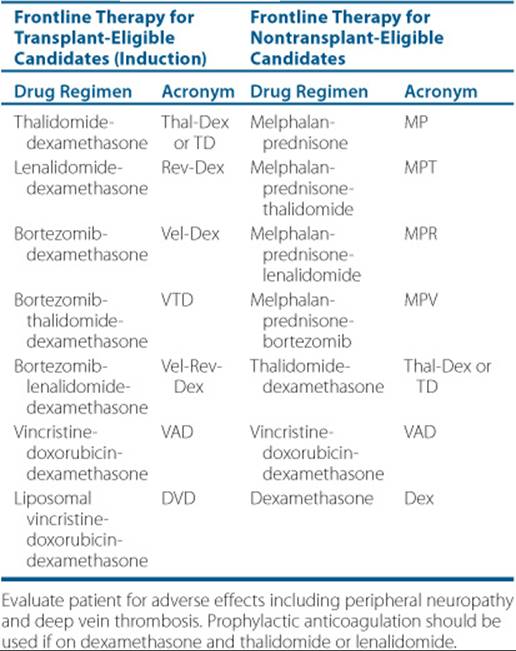
The primary goal in the treatment of multiple myeloma is to decrease tumor burden and minimize complications associated with the disease. A watch and wait approach is an option for asymptomatic patients who have no lytic lesions in the bone. Once symptoms occur, treatment is required. All patients should be evaluated to see it they are eligible candidates for transplant. Autologous stem cell transplantation prolongs overall survival in patients who can tolerate high-dose chemotherapy. Immunomodulators such as thalidomide should be incorporated into initial therapy to reduce tumor burden in patients with symptomatic disease. Almost all patients will become refractory to initial treatment and will require the use of salvage therapies. Table 96–4 lists the treatment options for transplant eligible and ineligible patients.
Clinical Presentation and Diagnosis of Multiple Myeloma
Signs and Symptoms
• “CRAB”
• “C”—hyperCalcemia
• “R”—Renal failure
• “A”—Anemia (fatigue)
• “B”—Bone pain/lesions (fractures)
• Weight loss
• Recurrent infections
Diagnostic Procedures
• Laboratory
• CBC, chemistry panel, β2 microglobulin
• Peripheral blood smear
• Serum protein electrophoresis and immunofixation
• Urine protein electrophoresis and immunofixation
• Freelite assay
• Radiologic evaluation (MRI, bone densitometry)
• Bone marrow biopsy
• Cytogenetic studies
• Molecular testing
Laboratory Findings
• Peripheral blood
• Monoclonal protein in serum (usually IgG or IgA)
• High β2 microglobulin
• Low platelets and hemoglobin
• High creatinine, urea, LDH, C-reactive protein, and calcium
• Rouleaux formation
• Urinalysis
• Bence-Jones Protein
• Bone marrow
• Plasma cells (greater than or equal to 10%)
• Abnormal cytogenetics
• Radiologic findings
• Bone lesions, fractures, osteoporosis
Poor Prognostic Factors
• High serum β2-microglobulin and low serum albumin
• Elevated C-reactive protein
• Elevated LDH
• IgA isotype
• Low platelet count
• Chromosome 13 deletions and other cytogenetic abnormalities
Nonpharmacologic Therapy
Autologous Stem Cell Transplantation
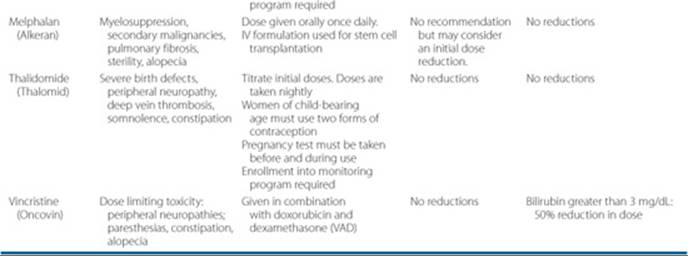
Autologous stem cell transplantation results in higher response rates and extends overall survival compared to those who receive conventional therapy such as VAD. Since overall median survival is prolonged from 42 to 54 months, stem cell transplant should be considered in all patients who can tolerate high-dose chemotherapy.35,36 High-dose melphalan is the most common preparative regimen. Two sequential transplants (tandem transplants) improve overall survival in those patients who do not have a good partial response after one transplant.32 The use of maintenance therapy after autologous transplantation with thalidomide or bortezomib is under investigation.32
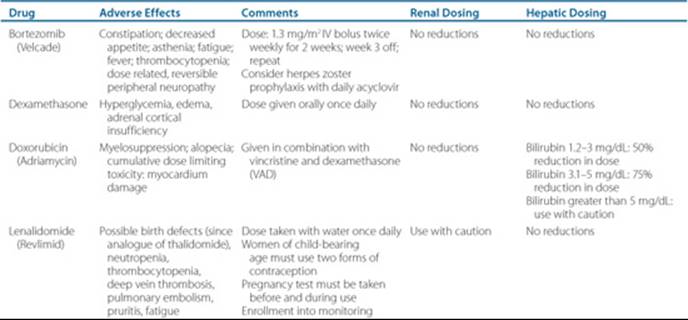
Pharmacologic Therapy (Table 96–5)
Conventional-Dose Chemotherapy
Once patients present with symptomatic disease they will be started on therapy. Melphalan and prednisone (MP) was once the most common initial treatment combination for myeloma. Today, MP is often used in combination therapy with immunomodulators as front-line therapy for patients who are not eligible for transplant. Vincristine/doxorubicin/dexamethasone (VAD) is another combination chemotherapy regimen that was often utilized in myeloma. With the advent of thalidomide and other newer agents, the use of VAD has declined. VAD may be used as induction therapy for patients who are transplant eligible because it avoids the alkylating agent melphalan, thus minimizing the risk of secondary malignancies that are associated with chronic alkylating therapy.32,36
Thalidomide (Thalomid)
Thalidomide as monotherapy or combination therapy is effective in the treatment of multiple myeloma. The precise mechanism of action of thalidomide is unknown, but its antimyeloma activity may be due to its antiangiogenic and anticytokine properties.33 The combination of thalidomide and dexamethasone has emerged as the one of the most commonly used induction regimens in the treatment of transplant eligible patients with myeloma. Thalidomide and steroid combinations produce responses in 60% to 80% of previously untreated patients.37 The addition of thalidomide to MP improves overall response and overall survival in newly diagnosed patients.38 This combination (MPT) can be used as initial therapy in patients who are not transplant-eligible. Common side effects of thalidomide therapy include somnolence, constipation, peripheral neuropathy, and deep vein thrombosis. Standard dose warfarin or low-molecular-weight heparins are recommended to prevent deep vein thrombosis.36,39 There are substantial teratogenic effects of thalidomide if used during pregnancy so distribution of the drug is closely monitored through the STEPS program.33
Table 96–4 Possible Combination Therapies for Multiple Myeloma
Lenalidomide (Revlimid)
Lenalidomide is an immunomodulating agent related to thalidomide that is approved for the treatment of relapsed myeloma in combination with dexamethasone. Phase III trials showed that lenalidomide in combination with dexamethasone produced higher response rates and longer time to progression than dexamethasone alone in relapsed and refractory myeloma.32,40 Lenalidomide–dexamethasone is an alternative to thalidomide–dexamethsone for induction therapy prior to a transplant. The combination of melphalan, prednisone, and lenalidomide (MPR) is being studied for initial therapy in patients not eligible for transplant. The response rate appears to be quite high at 81% with 24% achieving a complete response.40 A randomized trial comparing MPR to MPT is currently underway. Lenalidomide has a more favorable safety profile over thalidomide being that it lacks the common side effects of somnolence, constipation, and peripheral neuropathy. Significant adverse effects of lenalidomide include myelosuppression and deep vein thrombosis. Like thalidomide-dexamethasone, DVT prophylaxis is recommended with lenalidomide–dexamethasone combinations.36,39
Patient Encounter, Part 3
A 50-year-old male presents with fatigue and back pain. A CBC reveals the following: hemoglobin 8.7 g/dL (5.4 mmol/L), platelets 128 × 109/L (128 × 103/mm), corrected calcium 11.8 mg/dL (2.95 mmol/L), serum creatinine 1.4 mg/dL (124 µmol/L), and serum IgG 3,500 mg/dL (35 g/L) (normal: 620–1,500 mg/dL [6.2–15 g/L]). A subsequent bone marrow biopsy confirms multiple myeloma.
Assuming this patient is a candidate for autologous stem cell transplantation, what would be an appropriate induction regimen?
Assuming this patient is a not a candidate for autologous stem cell transplantation, what would be an appropriate induction regimen?
Discuss whether this patient is a candidate for autologous stem cell transplantation.
Bortezomib (Velcade)
Bortezomib is a proteosome inhibitor approved for the treatment of multiple myeloma. Proteosome inhibitors induce myeloma cell death by modulating NF-kappa-B products including inflammatory cytokines and adhesion molecules that support myeloma cell growth. Bortezomib also disrupts the myeloma microenvironment by inhibits the binding of myeloma cells to the bone marrow stromal cells.32 The role of bortezomib in the treatment of myeloma has expanded since the introduction of the agent. Initially approved in the treatment of relapsed disease, bortezomib produces response rates of 35% in heavily pretreated individuals.41 Today, bortezomib is frequently given in combination with dexamethasone and thalidomide or lenalidomide as induction therapy prior to a transplant. The response rates have been reported as high as 90% in newly diagnosed myeloma.32 Bortezomib can also be given in combination with prednisone and melphalan (MPV) in patients who are not transplant eligible. Superior response rates and survival are seen with the combination of MPV compared to MP.40 Side effects of bortezomib include fatigue, nausea, peripheral neuropathy, and hematologic effects.42
Table 96–5 Drugs Used in Multiple Myeloma
Bisphosphonates
Bone disease is a common manifestation of multiple myeloma. Bisphosphonates should be initiated in symptomatic patients with bone lesions to slow osteopenia and reduce the fracture risk associated with the disease. Pamidronate 90 mg and zolendronic acid 4 mg have equivalent efficacy in the management of osteolytic lesions.43 The use of zolendronic acid decreases pain and bone-related complications and improves quality of life. Osteonecrosis of the jaw is a major concern with bisphosphonate therapy. Risk factors are unclear but osteonecrosis of the jaw is more common in patients receiving IV administration of bisphosphonates and having dental procedures performed. It is recommended that patients have dental restoration work prior to starting bisphosphonate therapy. Several consensus guidelines have been published on the use of bisphosphonates and myeloma. Recommendations on the duration of therapy and which bisphosphonate to use have largely been left up to the practitioner.44,45
OUTCOME EVALUATION
Newly diagnosed, asymptomatic patients with myeloma may be observed without treatment. This asymptomatic period may last for months to a couple years. All patients with multiple myeloma will become symptomatic and once this occurs, treatment is required. All patients should be evaluated for an autologous stem cell transplant. For those patients who are eligible for transplant, induction therapy will often consist of thalidomide or lenalidomide and dexamethasone. For those patients who are not transplant-eligible, therapy may consist of MPT, MPV, or MPR. Nearly all patients will progress at some point and second-line therapy will usually include bortezomib. Monthly bisphosphonates should be given to patients who have bone lesions with the hope of reducing pain and fractures.
Patient Care and Monitoring
CML
1. Patients are placed on imatinib at the time of diagnosis. Patients should be monitored for a dose-dependent myelosuppression, GI intolerance, edema, and rash. Drug interactions with CYP450 3A4 inducers are clinically important and should be monitored.
2. Imatinib resistance should be identified when patients fail to respond to imatinib therapy. A change to dasatinib or nilotinib may be necessary when patients fail to have a complete cytogenetic response at 6 to 12 months.
3. Allogeneic stem cell transplantation may be considered when the patient fails to respond or is intolerant to imatinib. Ideal candidates include younger patients in chronic phase CML that have a HLA-matched related or unrelated donor.
CLL
1. Watch and wait is a reasonable approach if the patient is asymptomatic.
2. Monitor WBC and watch for signs of infection if patients are receiving fludarabine-based chemotherapy.
3. Watch for infusion reactions with rituximab and alemtuzumab. Premedicate with acetaminophen and diphenhydramine to prevent these reactions.
4. Prophylactic trimethoprim-sulfamethoxazole and an antiviral (famciclovir or valacyclovir) are recommended for all patients receiving alemtuzumab. Consider adding an antifungal (fluconazole) if warranted.
Multiple Myeloma
1. During chemotherapy, monitor myeloma monoclonal protein in urine and serum, renal function, hemoglobin, and platelets.
2. Bisphosphonates should be initiated in symptomatic patients. Renal function must be monitored. Patients may need pain medication for bone pain.
3. If a reduction in myeloma protein is not seen with one chemotherapy regimen, another regimen should be used.
WALDENSTROM MACROGLOBULINEMIA
Waldenstrom macroglobulinemia is a rare immunoglobulin disorder that is associated with non-Hodgkin’s lymphoma. Approximately 4/1 million individuals are affected with the disease. Waldenstrom macroglobulinemia is characterized by an elevation of serum IgM and the involvement of the lymph nodes, bone marrow and spleen. Patients are typically asymptomatic at the time of diagnosis, with the disease being discovered by routine laboratory examination. Similar to indolent lymphomas, the watch and wait approach is employed for asymptomatic patients. Symptomatic patients experience anemia, fatigue, hepatosplenomegaly, lymphadenopathy, and hyperviscosity syndrome. When these symptoms arise, treatment is necessary with the goal being palliation. Systemic therapy includes alkylating agents, nucleoside analogs, rituximab, thalidomide, or bortezomib.36 Treatment is often continued until a desired response (reduction in symptoms) is achieved. Plasmapheresis may be required in addition to systemic therapies to alleviate symptoms associated with hyperviscosity syndrome.46
Abbreviations Introduced in This Chapter
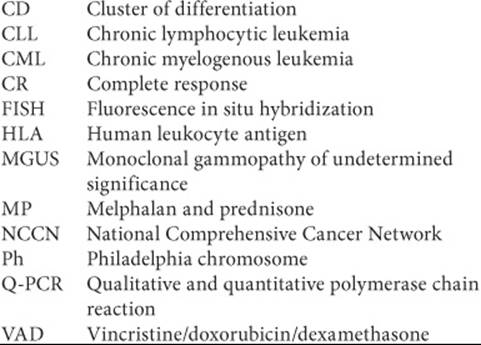
 Self-assessment questions and answers are available at http://www.mhpharmacotherapy.com/pp.html.
REFERENCES
1. Garcia-Manero G, Faderl S, O’Brien S, et al. Chronic myelogenous leukemia: A review and update of therapeutic strategies. Cancer 2003;98:437–457.
2. Jemal A, Siegel R, Ward E, et al. Cancer statistics, 2008. CA Cancer J Clin 2008;58:71–96.
3. Nowell PC. Progress with chronic myelogenous leukemia: A personal perspective over four decades. Annu Rev Med 2002;53:1–13.
4. Kantarjian H, Schiffer C, Jones D, et al. Monitoring the response and course of chronic myeloid leukemia in the modern era of BCRABL tyrosine kinase inhibitors: Practical advice on the use and interpretation of monitoring methods. Blood 2007;111:1774–1780.
5. Lowenberg B. Minimal residual disease in chronic myelogenous leukemia. N Engl J Med 2003;96:358–361.
6. Faderl S, Talpaz M, Estrov Z, Kantarjian HM. Chronic myelogenous leukemia: Biology and therapy. Ann Intern Med 1999;131:207–219.
7. National Comprehensive Cancer Network Clinical Practice Guidelines in Oncology. Chronic myelogenous leukemia. Rockland, PA. Version 2009, www.nccn.org.
8. Druker BJ, Talpaz M, Resta DJ, et al. Efficacy and safety of a specific inhibitor of the bcr-abl tyrosine kinase in chronic myeloid leukemia. N Engl J Med 2001;344:1031–1037.
9. Druker BJ, Guilhot F, O’Brien S, et al. Five year follow-up of patients receiving imatinib for chronic myelogenous leukemia. N Eng J Med 2006;355:2408–2417.
10. Talpaz M, Silver TR, Druker BJ, et al. Imatinib induces durable hematologic and cytogenetic responses in patients with accelerated phase chronic myeloid leukemia: Results of a phase 2 study. Blood 2002;99:1928–1937.
11. Sawyers CL, Hochhaus A, Feldman E, et al. Imatinib induces hematologic and cytogenetics responses in patients with chronic myeloid leukemia in myeloid blast crisis. Blood 2002;99:3530–3539.
12. Kantarjian HM, Giles F, Quintas-Cardama A, Cortes J. Important therapeutic targets in chronic myelogenous leukemia. Clin Cancer Res 2007;13:1089–1097.
13. Kantarjian HM, Talpaz M, Giles F, O’Brien S, Cortes J. New insights into the pathophysiology of chronic myeloid leukemia and imatinib resistance. Ann Intern Med 2006;145:913–923.
14. Deininger MWN, O’Brien SG, Ford JM, Druker BJ. Practical management of patients with chronic myeloid leukemia receiving imatinib. J Clin Oncol 2003;21:1637–1647.
15. O’Brien SG, Guilhot F, Larson RA, et al. Imatinib compared with interferon and low-dose cytarabine for newly diagnosed chronic-phase chronic myeloid leukemia. N Engl J Med 2003;348:994–1004.
16. Wierda WG, Keating MJ, O’Brien S. Chronic Lymphocytic Leukemias. In: Devita VT, Hellman S, Rosenberg SA, eds. Cancer: Principles and Practice of Oncology, 8th ed. Philadelphia, PA: Lippincott, 2008:2278–2304.
17. Hallek M. Prognostic factors in chronic lymphocytic leukemia. Ann Oncol 2008;19:iv51–iv53.
18. Montserrat E. New prognostic markers in CLL. Hematology Am Soc Hematol Educ Program 2006:279–284.
19. Chiorazzi N, Rai KR, Ferrarini M. Chronic lymphocytic leukemia. N Engl J Med 2005;352:804–815.
20. Dighiero G, Maloum K, Desablens B, et al. Chlorambucil in indolent chronic lymphocytic leukemia. N Engl J Med 1998;338:1506–1514.
21. Chemotherapeutic options in chronic lymphocytic leukemia: A meta-analysis of the randomized trials. CLL Trialists’ Collaborative Group. J Natl Cancer Inst 1999;91:861–868.
22. Shanafelt TD, Kay NE. Comprehensive management of the CLL patient: A holistic approach. Hematology Am Soc Hematol Educ Program 2007:324–331.
23. National Comprehensive Cancer Network Clinical Practice Guidelines in Oncology. Non Hodgkin’s Lymphoma. Rockland, PA. Version 3. 2008, www.nccn.org.
24. Wierda WG. Current and investigational therapies for patients with CLL. Hematology Am Soc Hematol Educ Program 2006:285–294.
25. Ferrajoli A, O’Brien SM. Treatment of chronic lymphocytic leukemia. Sem Oncol 2004;31:60–65.
26. Hillmen P. Advancing therapy for chronic lymphocytic leukemia—The role of rituximab. Sem Oncol 2004;31(Suppl 2):22–26.
27. Byrd JC, Rai K, Peterson BL, et al. Addition of rituximab to fludarabine may prolong progression-free survival and overall survival in patients with previously untreated chronic lymphocytic leukemia: An updated retrospective comparative analysis of CALGB 9712 and CALGB 9011. Blood 2005;105:49–53.
28. Moreton P, Hillmen P. Alemtuzumab therapy in B-cell lymphoproliferative disorders. Sem Oncol 2003;30:493–501.
29. Keating MJ, O’Brien S, Albitar M, et al. Early results of a chemoimmunotherapy regimen of fludarabine, cyclophosphamide, and rituximab as initial therapy for chronic lymphocytic leukemia. J Clin Oncol 2005;23:4079–4088.
30. Wierda W, O’Brien S, Wen S, et al. Chemoimmunotherapy with fludarabine, cyclophosphamide, and rituximab for relapsed and refractory chronic lymphocytic leukemia. J Clin Oncol 2005;23:4070–4078.
31. Sirohi B, Powles R. Multiple myeloma. Lancet 2004;363:875–887.
32. Munshi NC, Anderson KC. Plasma cell neoplasms. In: Devita VT, Hellman S, Rosenberg SA, eds. Cancer: Principles and Practice of Oncology, 8th ed. Philadelphia, PA: Lippincott, 2008:2305–2342.
33. Kyle RA, Rajkumar SV. Multiple myeloma. N Engl J Med 2004;351:1860–1873.
34. Greipp PR, San Miguel J, Durie BGM, et al. International staging system for multiple myeloma. J Clin Oncol 2005;23:3412–3420.
35. Child JA, Morgan GJ, Davies FE, et al. High-dose chemotherapy with hematopoietic stem-cell rescue for multiple myeloma. N Engl J Med 2003;348:1875–1883.
36. National Comprehensive Cancer Network Clinical Practice Guidelines in Oncology. Multiple Myeloma. Rockland, PA. Version 2. 2009, www.nccn.org.
37. Weber D, Rankin K, Gavino M, et al. Thalidomide alone or with dexamethasone for previously untreated multiple myeloma. J Clin Oncol 2003;21:16–19.
38. Facon T, Mary JY, Hulin C, et al. Melphalan and prednisone plus thalidomide versus melphalan and prednisone alone or reduced-intensity autologous stem cell transplantation in elderly patients with multiple myeloma (IFM 99–06): A randomized trial. Lancet 2007;370:1209–1218.
39. Palumbo A, Rajkumar SV, Dimopoulous MA, et al. Prevention of thalidomide- and lenalidomide-associated thrombosis in myeloma. Leukemia 2008;22(2):414–423.
40. Kyle RA, Rajkumar SV. Multiple myeloma. Blood 2008:2962–2972.
41. Richardson PG, Barlogie B, Berenson J, et al. A Phase 2 study of bortezomib in relapsed, refractory myeloma. N Engl J Med 2003;348:2609–2617.
42. Blade J, Cibeira MT, Rosinol L. Bortezomib: A valuable new antineoplastic strategy in multiple myeloma. Acta Oncologica 2005;44:440–448.
43. Rosen LS, Gordon D, Kaminski M, et al. Long-term efficacy and safety of zoledronic acid compared with pamidronate disodium in the treatment of skeletal complications in patients with advanced multiple myeloma or breast carcinoma: A randomized, double-blind, multicenter, comparative trial. Cancer 2003;98:1735–1744.
44. Lacy MQ, Dispenzieri A, Gertz MA, et al. Mayo clinic consensus statement for the use of bisphosphonates in multiple myeloma. Mayo Clin Proc 2006;81:1047–1053.
45. Kyle Ra, Yee GC, Somerfield MR, et al. American Society of Clinical Oncology 2007 clinical practice guideline update on the role of bisphosphonates in multiple myeloma. J Clin Oncol 2007;25:2462–2472.
46. Dimopoulos MA, Kyle RA, Anagnostopoulos A, Treon SP. Diagnosis and management of Waldenstrom’s macroglobulinemia. J Clin Oncol 2005;23:1564–1577.