

Afoam roller is one of the most versatile, affordable, and easy-to-use pieces of fitness training equipment. Rollers come in a variety of sizes, materials, and densities, and they can be used for stretching, strengthening, balance training, stability training, and self-massage. This chapter will provide you with several foam roller exercises that incorporate both core stability and core strengthening, which will add another dimension to your workout.
If you do not have access to a foam roller, you can substitute a pool noodle or a homemade towel roller. To make a towel roller, place two bath towels together, firmly roll them lengthwise, and then wrap the ends with tape. Although a towel roller works well, the dense foam of the roller will provide you with the best results.
QUADRUPED KNEE PULL-IN
FOAM ROLLER
 Place the foam roller on the floor. Kneel on the roller with your hands placed on the floor in front of you. Your hands should be slightly in front of your torso, and your hips should be lifted off your heels.
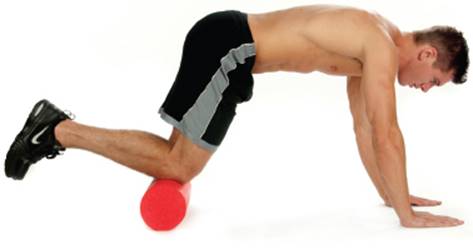
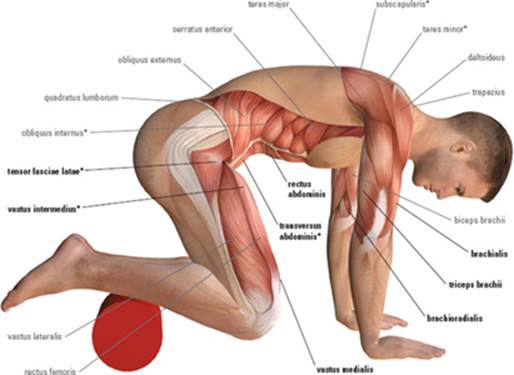
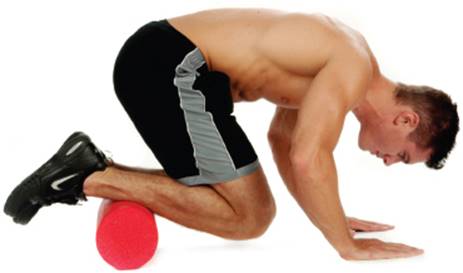
 Round out your torso as you pull your knees toward your hands, allowing the roller to move toward your feet. Repeat fifteen times for two sets.

DO IT RIGHT
LOOK FOR
• Your back to round as you draw your knees inward.
• Your head to be relaxed.
• Smooth transitions.
AVOID
• Allowing your shoulders to lift toward your ears.
• Moving your head forward.
BEST FOR
• rectus abdominis
• transversus abdominis
• triceps brachii
• serratus anterior
• trapezius
• deltoideus
• rectus femoris
• vastus intermedius
• vastus medialis
QUICK GUIDE
TARGET
• Triceps
• Abdominals
• Thigh muscles
BENEFITS
• Improves core, pelvic, and shoulder stability
NOT ADVISABLE IF YOU HAVE
• Wrist pain
• Shoulder pain
• Difficulty fully bending your knees
ANNOTATION KEY
Bold text indicates active muscles
Gray text indicates stabilizing muscles
* indicates deep muscles
MODIFICATION
More difficult: Follow previous instructions, and then bend your elbows into a pushup, straighten, and then roll slowly to the starting position.
THREAD THE NEEDLE
FOAM ROLLER
Sit on the floor with your legs outstretched in front of you, with the foam roller placed under your knees. Place your hands on the floor to support your torso, your fingers pointing toward your buttocks.
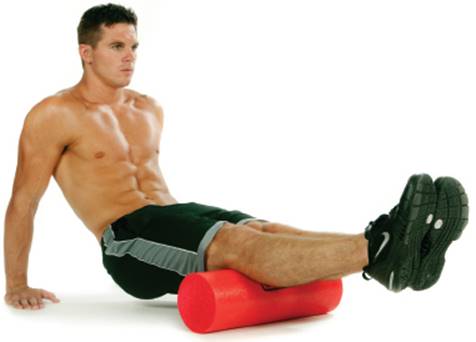
Press into the floor to raise your hips, keeping your legs firm.
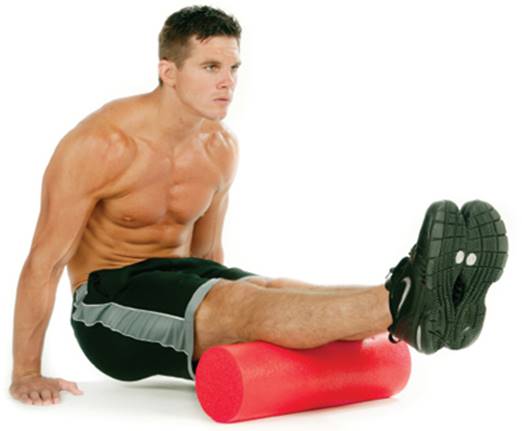
 Draw your hips backward through your arms, rolling your legs over the roller. Drop your head so that your gaze is directed at your thighs.
 Roll on the roller back to the starting position, keeping your hips lifted off the floor. Repeat fifteen times.

DO IT RIGHT
LOOK FOR
• All movement to happen at the same time.
• Your neck and shoulders to remain relaxed throughout the exercise.
AVOID
• Allowing your shoulders to lift toward your ears.
• Bending your knees as you pull back.
BEST FOR
• rectus abdominis
• transversus abdominis
• triceps brachii
• serratus anterior
• trapezius
• deltoideus
• rectus femoris
• vastus intermedius
• rectus medialis
QUICK GUIDE
TARGET
• Abdominals
• Triceps
• Shoulder stabilizers
BENEFITS
• Improves core, pelvic, and shoulder stability
NOT ADVISABLE IF YOU HAVE
• Wrist pain
• Shoulder pain
ANNOTATION KEY
Bold text indicates active muscles
Gray text indicates stabilizing muscles
* indicates deep muscles

SINGLE-LEG CALF PRESS
FOAM ROLLER
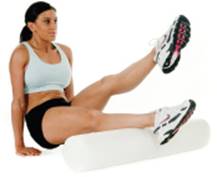
Sit on the floor with your legs outstretched in front of you, with the foam roller placed under your knees. Place your hands on the floor to support your torso, your fingers pointing toward your buttocks.

Press into the floor to lift your hips, keeping your legs firm.

Lift one leg off the roller and hold it steady, making sure not to drop your hips.
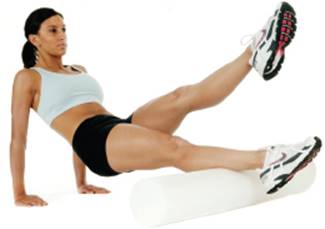
Keep the leg lifted, and press your opposite leg into the roller, drawing your hips back toward your hands.
 Return to the starting position, rolling your calf muscle along the roller and keeping your lifted leg straight in the air. Repeat fifteen times on each leg.
DO IT RIGHT
LOOK FOR
• Your lifted leg to form a long, straight line.
• Your hips to remain elevated throughout the exercise.
AVOID
• Allowing your shoulders to lift toward your ears.
• Bending your knees.
• Bending your elbows.
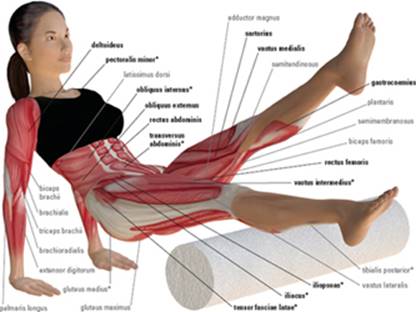
BEST FOR
• rectus abdominis
• transversus abdominis
• triceps brachii
• serratus anterior
• deltoideus
• biceps femoris
• semitendinosus
• semimembranosus
QUICK GUIDE
TARGET
• Triceps
• Shoulder stabilizers
• Abdominals
• Hamstrings
BENEFITS
• Improves core, pelvic, and shoulder stability
NOT ADVISABLE IF YOU HAVE
• Wrist pain
• Shoulder pain
• Discomfort in the back of the knee or knee swelling
ANNOTATION KEY
Bold text indicates active muscles
Gray text indicates stabilizing muscles
* indicates deep muscles
ROLLER TRICEPS DIP
FOAM ROLLER
Sit on the floor with your legs outstretched, the foam roller behind you. Place both hands on the foam roller, with your fingers facing toward your buttocks, elbows bent.
Press through your legs and straighten your arms to lift your hips and shoulders.

Keeping your shoulders pressed down away from your ears, bend your elbows and dip your trunk up and down. The foam roller should not move. Repeat fifteen times for two sets.

DO IT RIGHT
LOOK FOR
• Your legs to remain firm with your knees straight.
• Your neck and shoulders to remain relaxed throughout the exercise.
• The roller to remain firmly pressed to the floor.
AVOID
• Allowing your shoulders to lift toward your ears.
• Shifting the roller as you move up and down.
BEST FOR
• triceps brachii
• trapezius
• rhomboideus
• deltoideus
• rectus abdominis
• transversus abdominis
• serratus anterior
• biceps femoris
• semitendinosus
• semimembranosus
QUICK GUIDE
TARGET
• Triceps
• Shoulder stabilizers
• Abdominals
• Hamstrings
BENEFITS
• Improves core, pelvic, and shoulder stability
NOT ADVISABLE IF YOU HAVE
• Wrist pain
• Shoulder pain
• Discomfort in the back of the knee or knee swelling
ANNOTATION KEY
Bold text indicates active muscles
Gray text indicates stabilizing muscles
* indicates deep muscles


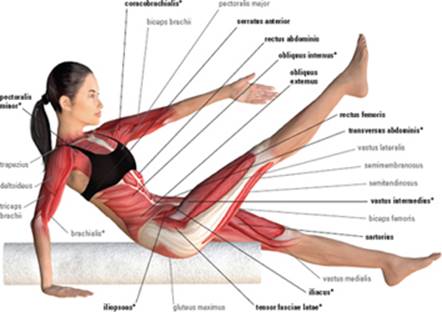
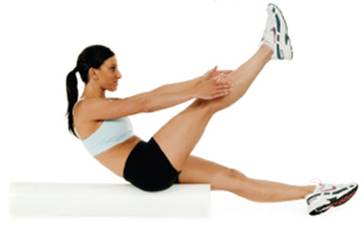
DIAGONAL CRUNCH
FOAM ROLLER
Lie lengthwise on the foam roller so that it follows the line of your spine. Your buttocks and shoulders should both be in contact with the roller.
With your legs straight and your feet pressed firmly into the floor, extend your arms over your head.

Raise your head, neck, and shoulders as if to do a crunch. Leave your right leg and left arm down on the ground, using your hand for support. Raise your left leg and right arm, and reach for your ankle.
Slowly roll down the roller, dropping your raised arm and leg. Repeat on the opposite leg and arm. Repeat fifteen times on each side.

DO IT RIGHT
LOOK FOR
• Your legs to remain firm throughout exercise.
• Your buttocks and shoulders to remain in contact with the roller throughout exercise.
AVOID
• Allowing your shoulders to lift toward your ears.
• Bending the knees.
BEST FOR
• rectus abdominis
• transversus abdominis
• triceps brachii
• trapezius
• pectoralis major
• deltoideus
• serratus anterior
• rectus femoris
• vastus intermedius
• biceps femoris
• semitendinosus
• semimembranosus
QUICK GUIDE
TARGET
• Triceps
• Shoulder stabilizers
• Abdominals
• Hamstrings
BENEFITS
• Improves core, pelvic, and shoulder stability
NOT ADVISABLE IF YOU HAVE
• Back pain
• Neck pain
ANNOTATION KEY
Bold text indicates active muscles
Gray text indicates stabilizing muscles
* indicates deep muscles
MODIFICATION
More difficult: Keep one leg on the floor for support, and reach both arms toward the raised leg as you crunch up.
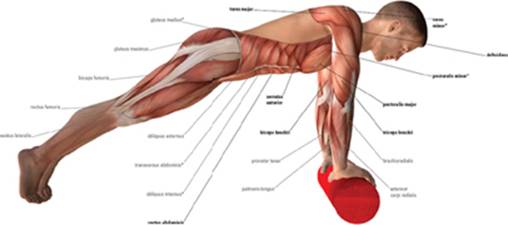
ROLLER PUSH-UP
FOAM ROLLER
Kneel on the floor with the roller placed crosswise in front of you. Place your hands on the roller with your fingers pointed away from you.

Press into a plank position, lifting your knees and straightening your legs. Keep your hips level with your shoulders, and without allowing your shoulders to sink, bend your elbows and lower your chest to the roller. Avoid any roller movement throughout the motion.
Return to the starting position by pressing upward, straightening your elbows, and maintaining a straight spine. Repeat fifteen times for two sets.

DO IT RIGHT
LOOK FOR
• A single plane of movement, with your body forming a straight line from shoulders to ankle.
• Your neck and shoulders to remain relaxed throughout the exercise.
AVOID
• Allowing your shoulders to lift toward your ears.
• Bending your knees.
• Raising or lowering your body in segments.
BEST FOR
• rectus abdominis
• transversus abdominis
• triceps brachii
• deltoideus
• pectoralis major
• pectoralis minor
• gluteus maximus
• gluteus medius
• rectus femoris
• biceps femoris
QUICK GUIDE
TARGET
• Triceps
• Shoulder stabilizers
• Abdominals
BENEFITS
• Improves core, pelvic, and shoulder stability
NOT ADVISABLE IF YOU HAVE
• Wrist pain
• Shoulder pain
• Lower-back pain
ANNOTATION KEY
Bold text indicates active muscles
Gray text indicates stabilizing muscles
* indicates deep muscles
SUPINE MARCHES
FOAM ROLLER
Lie lengthwise on the foam roller so that it follows the line of your spine. Place your arms on the floor by your sides, bending your knees so that your feet rest flat on the floor.

Pointing your toes and keeping the hips from lifting or shifting, raise one knee toward your chest.

Switch legs, again being careful not to allow your hips to lift.
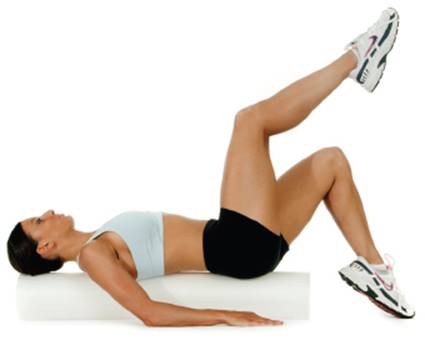
Repeat fifteen times on each leg as you establish a smooth “marching” rhythm.

DO IT RIGHT
LOOK FOR
• Your legs to remain firm and your toes pointed.
• Your neck and shoulders to remain relaxed throughout the exercise.
• Your hands and forearms to lie flat on the floor.
AVOID
• Allowing your shoulders to lift toward your ears.
• Allowing your hips and lower back to lift off the roller during the movement.
BEST FOR
• rectus abdominis
• transversus abdominis
• obliquus internus
• obliquus externus
• iliacus
• iliopsoas
• sartorius
• biceps femoris
• rectus femoris
QUICK GUIDE
TARGET
• Triceps
• Abdominals
• Hip flexors
• Quadriceps
BENEFITS
• Improves core and pelvic stability
NOT ADVISABLE IF YOU HAVE
• Lower-back pain
• Neck pain
• Shoulder pain
ANNOTATION KEY
Bold text indicates active muscles
Gray text indicates stabilizing muscles
* indicates deep muscles

ILIOTIBIAL BAND RELEASE
FOAM ROLLER
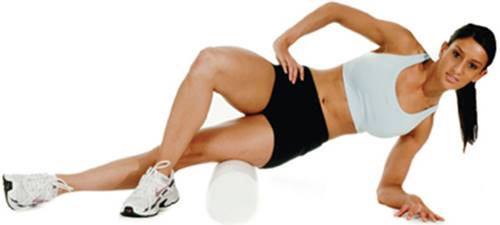
Lie on your left side, with the foam roller on the floor and placed under the middle of your thigh. Support your torso with your left forearm on the floor.
Bend your left leg and cross it in front of your right, so that your knee is pointed upward. Place your left foot flat on the floor.

Pulling with your shoulder and pushing with your supporting leg, roll back and forth along the side of your thigh. Adjust the placement of your arm as you make your motion bigger.
Repeat fifteen times on each side.
DO IT RIGHT
LOOK FOR
• Your shoulders to remain relaxed throughout the exercise.
• Your hands and forearms to press firmly into the floor.
AVOID
• Allowing your shoulders to lift toward your ears.
BEST FOR
• tractus iliotibialis
• rectus femoris
• vastus medialis
• vastus intermedius
• vastus lateralis
• biceps femoris
• infraspinatus
• supraspinatus
• teres minor
• subscapularis
QUICK GUIDE
TARGET
• Iliotibial band
• Lateral thigh muscles
• Scapular stabilizers
BENEFITS
• Releases the iliotibial band—this may be uncomfortable at first, but will become easier with repetition
• Strengthens the scapular stabilizers and lateral trunk muscles
NOT ADVISABLE IF YOU HAVE
• Shoulder pain
• Back pain
ANNOTATION KEY
Bold text indicates active muscles
Gray text indicates stabilizing muscles
* indicates deep muscles


TRICEPS ROLL-OUT
FOAM ROLLER
Kneel on the floor, with the foam roller placed crosswise in front of you. Place your wrists on top of the roller, your fingers facing away from you.

Maintaining a neutral spine and making sure not to sink your neck into your shoulders, roll forward on your forearms.

Continue to roll forward until the roller reaches your elbow. Press into the roller, keeping your hips aligned, and roll back to the starting position. Repeat fifteen times.

DO IT RIGHT
LOOK FOR
• All movement to happen at the same time.
• Your shoulders to remain relaxed throughout the exercise.
• Your feet to press firmly to the floor.
AVOID
• Allowing your shoulders to lift toward your ears.
• Allowing your hips and lower back to drop during the movement.
• Arching your back.
BEST FOR
• rectus abdominis
• transversus abdominis
• triceps brachii
• gluteus maximus
• gluteus medius
• rectus femoris
• biceps femoris
• semitendinosus
• semimembranosus
• erector spinae
QUICK GUIDE
TARGET
• Triceps
• Abdominals
• Trunk stabilizers
BENEFITS
• Improves core and shoulder stability
NOT ADVISABLE IF YOU HAVE
• Lower-back pain
• Shoulder pain
ANNOTATION KEY
Bold text indicates active muscles
Gray text indicates stabilizing muscles
* indicates deep muscles

BRIDGE WITH LEG LIFT I
FOAM ROLLER
Lie on your back, with the roller under your shoulders. Your buttocks should be on the floor, with your knees bent, and feet flat on the floor.

Press into the floor with your feet, and bridge up, lifting your hips toward the ceiling until they are parallel to the ground.

Extend your right leg.

Raise your right leg up to the height of your knees. Keeping your leg straight and the roller still, raise and lower your hips.
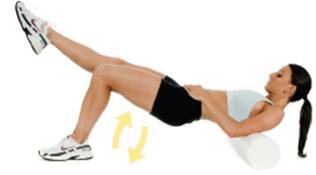
Return to step 2 and repeat step 3 and step 4 with the left leg.

 Repeat fifteen times on each leg.

DO IT RIGHT
LOOK FOR
• Your extended leg to remain straight.
AVOID
• Allowing your hips and lower back to drop during the movement.
• Arching your back.
BEST FOR
• rectus abdominis
• transversus abdominis
• obliquus internus
• obliquus externus
• gluteus maximus
• gluteus medius
• vastus intermedius
• rectus femoris
• sartorius
• biceps femoris
• erector spinae
QUICK GUIDE
TARGET
• Gluteal muscles
• Hamstrings
BENEFITS
• Improves pelvic stabilization
• Strengthens gluteal muscles
• Strengthens hamstrings
NOT ADVISABLE IF YOU HAVE
• Hamstring injury
• Lower-back pain
• Ankle pain
ANNOTATION KEY
Bold text indicates active muscles
Gray text indicates stabilizing muscles
* indicates deep muscles

BRIDGE WITH LEG LIFT II
FOAM ROLLER
Lie on your back, with the roller under your feet.
Without moving the roller or arching your back, bridge up, and lift your hips into the air.
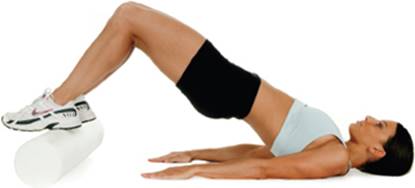
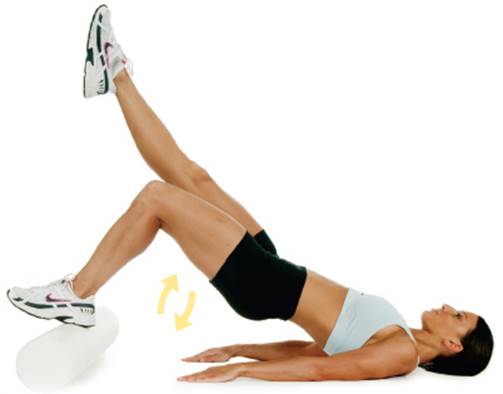
Keeping your muscles firm, raise your right leg up to the height of your knees, and straighten your raised leg.
Try to keep the roller from moving, and raise and lower your hips while keeping your outstretched leg raised. Repeat fifteen times.
DO IT RIGHT
LOOK FOR
• Your shoulders and neck to remain relaxed throughout the exercise.
• Your extended leg to remain straight.
AVOID
• Allowing your shoulders to lift toward your ears.
• Allowing your hips and lower back to drop during the movement.
• Arching your back.
BEST FOR
• rectus abdominis
• transversus abdominis
• obliquus internus
• obliquus externus
• triceps brachii
• gluteus maximus
• gluteus medius
• rectus femoris
• sartorius
• vastus intermedius
• biceps femoris
• semitendinosus
• semimembranosus
• erector spinae
QUICK GUIDE
TARGET
• Gluteal muscles
• Hamstrings
BENEFITS
• Improves pelvic stabilization
• Strengthens gluteal muscles
• Strengthens hamstrings
NOT ADVISABLE IF YOU HAVE
• Hamstring injury
• Lower-back pain
• Ankle pain
ANNOTATION KEY
Bold text indicates active muscles
Gray text indicates stabilizing muscles
* indicates deep muscles

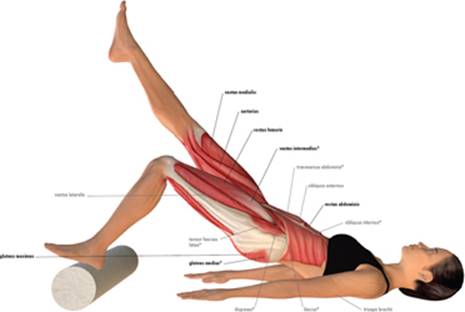
HAMSTRING PULL-IN
FOAM ROLLER
Lie supine on the floor, your knees bent and the roller under your feet.

Bridge up, lifting your hips so that they align with the shoulders in a neutral position.

Squeeze your buttocks, and pull your calves in and out as you roll the roller under your feet.

Repeat fifteen times for two sets.

DO IT RIGHT
LOOK FOR
• Your shoulders to remain relaxed throughout the exercise.
• Your body to form a straight line from shoulder to knee.
AVOID
• Allowing your hips and lower back to drop as movement is performed.
• Arching your back.
BEST FOR
• rectus abdominis
• transversus abdominis
• gluteus maximus
• gluteus medius
• biceps femoris
• semitendinosus
• semimembranosus
• erector spinae
• quadratus lumborum
QUICK GUIDE
TARGET
• Hamstrings
• Gluteal muscles
BENEFITS
• Increases hamstring strength and endurance
• Strengthens gluteal muscles and pelvic stabilizers
NOT ADVISABLE IF YOU HAVE
• Hamstring injury
• Lower-back pain
• Ankle pain
ANNOTATION KEY
Bold text indicates active muscles
Gray text indicates stabilizing muscles
* indicates deep muscles


STRAIGHT-LEG BICYCLE
FOAM ROLLER
Lie on your back with the roller placed lengthwise under your spine, your buttocks and shoulders resting on the roller. Place your forearms on the floor on either side of the roller to balance yourself.
Draw your knees up to a tabletop position, forming a 90-degree angle between your hips, thighs, and calves.

Keeping your back flat, lift your head, neck, and shoulders off the roller. Straighten your right leg and pull your left knee in toward your chest, keeping your head, neck, and shoulders lifted.

Switch legs while maintaining your balance, imitating the pedaling of a bicycle. Repeat fifteen times on each leg.

DO IT RIGHT
LOOK FOR
• Your neck to remain relaxed throughout the exercise.
• Your leg to fully extend during the downward phase of the “pedaling” movement.
AVOID
• Allowing your shoulders to lift toward your ears.
• Lifting your hips and lower back during the movement.
BEST FOR
• rectus abdominis
• transversus abdominis
• obliquus internus
• obliquus externus
• triceps brachii
• vastus intermedius
• rectus femoris
• vastus medialis
QUICK GUIDE
TARGET
• Abdominals
• Thigh muscles
BENEFITS
• Improves pelvic stabilization
• Strengthens abdominals
NOT ADVISABLE IF YOU HAVE
• Lower-back pain
• Neck pain
ANNOTATION KEY
Bold text indicates active muscles
Gray text indicates stabilizing muscles
* indicates deep muscles

THE DEAD BUG
FOAM ROLLER
Lie on your back with the roller placed lengthwise under your spine, your buttocks and shoulders resting on the roller. Place your hands and forearms flat on the floor for stabilization. Draw your knees up so that your legs form a tabletop position.

Lift your head, neck, and shoulders.
Press the palms of your hands onto your knees, creating your own resistance as you try to balance. Flex your toes and keep your elbows pulled in to your sides. Hold for ten seconds. Repeat ten times.

DO IT RIGHT
LOOK FOR
• Your hips, thighs, and calves to form a 90-degree angle.
• Your neck to remain relaxed throughout the exercise.
• Your shoulders and buttocks to remain flat on the roller throughout the exercise.
AVOID
• Allowing your shoulders to lift toward your ears.
• Lifting your hips or lower back during the movement.
BEST FOR
• rectus abdominis
• transversus abdominis
• gluteus maximus
• gluteus medius
• sartorius
• vastus intermedius
• iliacus
• iliopsoas
• infraspinatus
• supraspinatus
• teres minor
• erector spinae
• triceps brachii
QUICK GUIDE
TARGET
• Abdominals
• Leg muscles
BENEFITS
• Improves pelvic and core stabilization
• Strengthens abdominals
NOT ADVISABLE IF YOU HAVE
• Lower-back pain
• Neck pain
ANNOTATION KEY
Bold text indicates active muscles
Gray text indicates stabilizing muscles
* indicates deep muscles

