
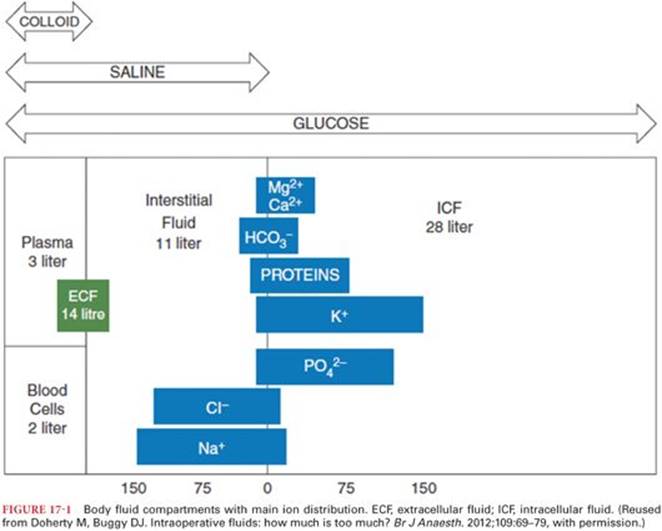
Total body water and electrolytes are divided between the intracellular and extracellular compartments. The major electrolytes in the intracellular compartment are potassium, magnesium, calcium, and phosphate. The extracellular compartment consists of the interstitial, plasma, and transcellular fluid components, where sodium and chloride are the major electrolytes. Fluid movement between these spaces, and thus the effect of fluid therapies, depends on the levels of water, electrolytes, and colloid proteins among them and the composition and permeability of the membranes that separate them.
Total Body Fluid Composition
The adult body is composed of approximately 60% water, with some variation with age and gender, as well as significant variation among different tissues. For example, muscle is about 75% water, whereas adipose tissue only 10%. About two-thirds of total body fluid is intracellular and one-third extracellular (Fig. 17-1). The intracellular compartment is rich in potassium (the major cation), magnesium, calcium, phosphate (the major anion), and proteins. Extracellular volume (ECV) includes interstitial fluids (about 80% of the ECV), plasma (about 20%), and transcellular fluids, which are anatomically separate fluid spaces, such as the intraocular, gastrointestinal, and cerebrospinal fluids, and are not available for water and solute exchange with the remainder of the ECV. Extracellular fluids are rich in sodium (the major cation) and chloride (the major anion). These and other small ions move freely between plasma and interstitium in the extracellular compartment. The plasma also contains proteins, such as albumin and globulins, which create the colloid oncotic pressure. Plasma proteins are prevented from freely moving from vascular to interstitial space by the interplay of the vascular endothelial cells and the endothelial glycocalyx layer (EGL) coating the inside of the vascular space. Macromolecule movement out of the vascular space is dependent on the type of EGL pores and endothelial cell junctions, which have four phenotypes throughout the body. In the liver, spleen, and marrow, sinusoidal capillaries have large EGL pores and open fenestrations allowing macromolecules to pass between plasma and the interstitial space. The glomeruli have open capillary fenestrations with the effective pore size reduced by overlying EGL. Endocrine, choroid plexus, and gut mucosa vascular endothelial cells have inducible fenestrations. Nerve, muscle, connective tissue, and lung have nonfenestrated or continuous capillaries so that little transvascular filtration into the interstitium occurs in these tissues. In states of inflammation, changes in the endothelial cells and an increase in the number of large pores in the capillaries increase the amount of protein passing from vascular into interstitial spaces. The transcapillary escape rate of albumin to tissues is normally 5% per hour but can double during surgery and increase to 20% in sepsis.1 Fluid in the interstitial space is returned to the circulation as lymph.2 The cell membrane prevents sodium, the primary extracellular cation, from moving into the cell, except for a small amount by active pump transport, but isotonic fluids containing sodium added to the vascular space are distributed throughout the ECV so that only 20% of the volume infused remains in the plasma.3
Intravenous Fluid Types
Crystalloids
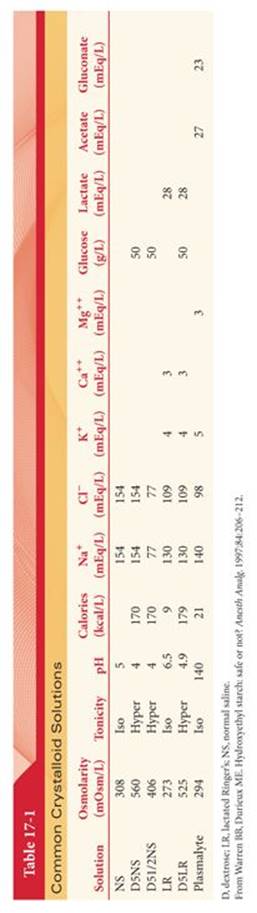
Crystalloids are fluid solutions containing ion salts and other low-molecular-weight substances. Crystalloids can be categorized based on their tonicity or osmotic pressure of the solution with respect to that of plasma. Examples are listed in Table 17-1. Administering large volumes of normal saline (NS) can result in hyperchloremic metabolic acidosis.4 “Balanced” or “physiologic” crystalloid solutions contain a composition approximating that of extracellular fluid but are usually slightly hypotonic because of lower sodium concentration. Administering large volumes of balanced salt solutions can result in hyperlactatemia, metabolic alkalosis, hypotonicity, and cardiotoxicity due to acetate. Calcium-containing balanced salt solution may cause formation of microthrombi when infused with citrate-containing banked blood.
Colloids
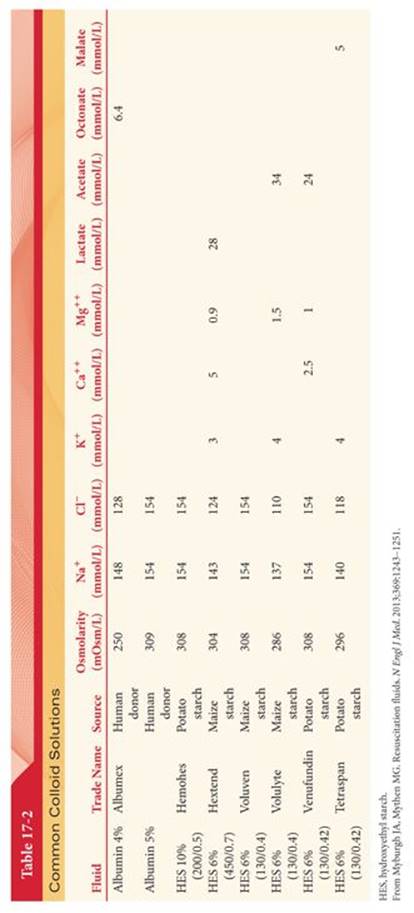
Colloid solutions contain macromolecules suspended in electrolyte solutions. These macromolecules, such as plant or animal polysaccharides or polypeptides, remain in the plasma compartment longer than crystalloid solutions; however, their distribution has been shown to be context sensitive, with larger percentages of the volume administered remaining intravascular in hypovolemic patients as compared to normovolemic patients.3 Semisynthetic colloid solutions are metabolized and excreted and thus have a shorter duration of effect than human albumin solutions.2 Examples are listed in Table 17-2.
Albumin (4% to 5%)
Albumin solution is produced from human blood and suspended in saline. It is heat-pasteurized at 60°C for 10 hours to reduce viral transmission. It is expensive to produce and distribute as compared to semisynthetic colloids and crystalloid solutions. The incidence of anaphylactoid reactions to albumin is 0.011%.5
The comparative effectiveness of fluid resuscitation with colloid versus crystalloid has been a long-standing controversy, which has been the subject of much recent clinical research. In the Saline versus Albumin Fluid Evaluation (SAFE) study, a multicenter, randomized, double-blind trial of 6,997 intensive care unit (ICU) patients, the effect of fluid resuscitation with albumin 4% or NS was evaluated. The primary outcome was death within 28 days. There was no significant increase in mortality (p = .87). The two groups also had similar rates of new single organ and multiple organ failure (p = .85), days spent in ICU (p = .44), days spent in hospital (p = .3), days of mechanical ventilation (p = .74), and days of renal replacement therapy (p = .41).6 In a post hoc analysis of the SAFE study, of 460 patients with traumatic brain injury, the primary outcome of mortality was increased in the albumin-treated group (33.2%) versus the NS group (20.4%, p = .03).7 In an additional subgroup analysis of 1,218 patients with severe sepsis, albumin administration was associated with a decreased risk of death as compared to NS with an adjusted odds ratio of 0.71 (95% CI, 0.52–0.97; p = .03).8 A more recent multicenter, open-label, randomized trial of 1,818 ICU patients with severe sepsis, the Albumin Italian Outcome Sepsis study, of 20% albumin and crystalloid versus crystalloid alone with primary outcome measure of death found no difference in survival at 28 or 90 days (p = .29).9
Semisynthetic Colloid Solutions
Solutions include hydroxyethyl starch (HES) solutions, succinylated gelatin, urea-linked gelatin–polygeline preparations, and dextran solutions. HES, the most commonly used semisynthetic colloid solutions, are created by attaching hydroxyethyl groups to carbons 2, 3, or 6 of the glucose moieties of starches of sorghum, maize, or potatoes. HES solutions vary with respect to HES concentrations (6% to 10%), molecular weights (70 to 670 kDa), molar substitution ratios (0.3 to 0.75), and crystalloid carrier solutions. The concentration influences the initial volume effect with 6% solutions being iso-oncotic and 10% solutions hyperoncotic. HES are polydisperse with particles in a wide range of molecular mass (dispersity is a measure of the heterogeneity of sizes of molecules or particles in a mixture); thus, the molecular weight is averaged by either weight or number, with high molecular weight preparations being associated with alterations in coagulation. The substitution ratio indicates the average fraction of glucose moieties bearing a hydroxyethyl group. HES can also be named hexa- (0.6), penta- (0.5), or tetra- (0.4) starches for this level of substitution. Substitution increases the solubility of the starch in water and inhibits the destruction of the starch by amylase, thus prolonging intravascular retention. HES can also be categorized with respect to the pattern of hydroxyethylation of the C2 and C6 carbon atoms. Hydroxyethyl groups in the C2 position inhibit amylase access to the starch more effectively than hydroxyethyl groups at the C6 position; thus, high C2/C6 ratios would be expected to hydrolyze more slowly. The maximum daily dose of HES is limited to 20 to 50 mL/kg of body weight/day but varies by solution.10
HES is removed from the circulation by redistribution and renal excretion. Redistribution of HES results in temporary storage in the skin, liver, and kidneys. Skin deposition results in non–histamine-associated pruritus. After 24 hours, 23% of the total dose is interstitial and at 26 weeks, trace amounts of HES are still detectable.6 HES molecules with greater molecular weights and increased substitution ratios tend to be stored more than those with more rapid clearance and deposition appears to be dose-dependent.10
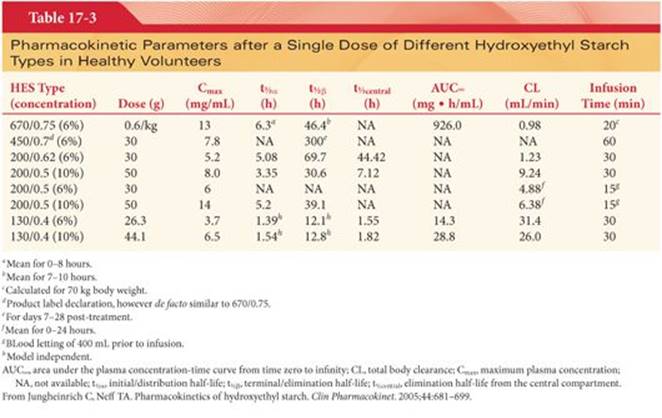
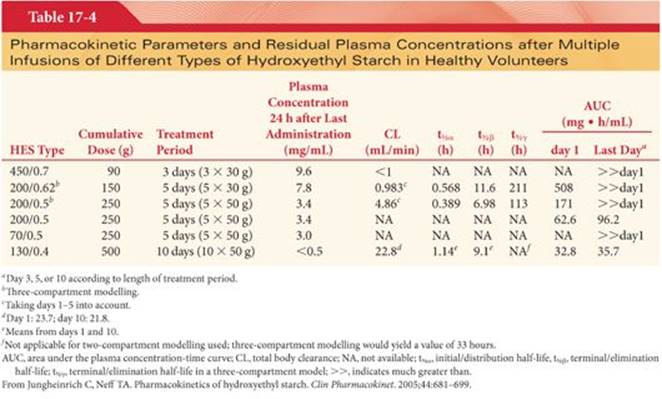
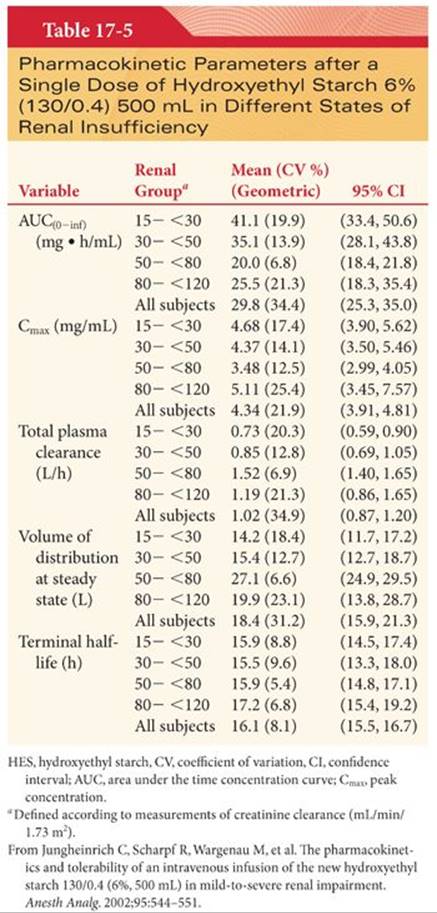
Renal excretion of HES occurs in two phases: immediate glomerular filtration of HES polymers less than 59 kDa and delayed glomerular filtration after HES metabolism by plasma α-amylase. This amylase functions as an endoamylase cleaving within the polyglucose chain instead of acting at the ends of the molecule, resulting in polydispersity and varying molecular weights of the remaining HES molecules in the plasma. Thus, pharmacokinetic parameters of plasma clearance and half-life will change over time, cannot be rigorously defined, and must not be interpreted as efficacy half-lives or contributing to the pharmacodynamics of volume effect of HES solutions.11Additionally, the hydroxyethyl groups retard hydrolysis of the compound by amylases, allowing longer presence in the plasma. Plasma levels of amylase are elevated after HES administration for 72 hours, without evidence of increased pancreatic production, owing to decreased renal elimination of amylase as it remains complexed to HES.5 The pharmacokinetic profile of some HES solutions after single dose and multiple infusions in healthy volunteers is described in Tables 17-311 and 17-4,11 and in impaired renal function in Table 17-5.12
HES compounds have effects on coagulation with reductions in factor VIII, von Willebrand factor, and platelet function, although the exact mechanisms are unclear. Coagulation effects are noted even when used below recommended maximum doses. Solutions with more rapid degradation are associated with less effects on coagulation.10 The incidence of anaphylactoid reactions with HES use is 0.085%.6
HES solutions carry a U.S. Food and Drug Administration black box warning with the following recommendations: Do not use HES solutions in critically ill adult patients including those with sepsis and those admitted to the ICU; avoid use in patients with preexisting renal dysfunction; discontinue use of HES at the first sign of renal injury; need for renal replacement therapy has been reported up to 90 days after HES administration, continue to monitor renal function for at least 90 days in all patients; avoid use in patients undergoing open heart surgery in association with cardiopulmonary bypass due to excess bleeding; discontinue use of HES at first sign of coagulopathy.13
The Crystalloid versus Hydroxyethyl Starch Trial evaluated HES versus NS in a multicenter, prospective, blinded, parallel-group, randomized controlled trial of over 7,000 adult ICU patients.14 Patients were randomized to receive either HES (6% [130/0.4] Voluven, Fresenius Kabi Norge AS, Halden, Norway) solution or NS until ICU discharge, death, or 90 days following randomization. Primary outcome was death 90 days after randomization, and secondary outcomes were acute kidney injury, failure, and treatment with renal replacement therapy. There was no significant difference in mortality during the study period (18% in the HES group and 17% in the NS group, p = .26) or renal failure (HES group 10.4% and 9.2% NS group, p = .12); however, significant differences in renal injury (34.6% HES group and 38% NS group, p = .005) and renal replacement therapy use (7% HES group, 5.8% NS group, p= .04) were found. Additionally, HES was associated with significantly more adverse events (0.3% vs. 2.8%, p<.001).
HES (6% [130/0.42] Tetraspan, B. Braun Melsungen AG, Melsungen, Germany) has also been evaluated in a multicenter, parallel-group, blinded, randomized trial of 798 adult ICU patients with severe sepsis versus Ringer’s acetate in the Scandinavian Starch for Severe Sepsis/Septic Shock trial. Primary outcomes measured were death or end-stage kidney failure at 90 days. Death was greater at 90 days in the HES group (51% vs. 43%, p = .03). One patient in each group had end-stage kidney failure; however, in the 90-day period, 22% of HES patients were treated with renal replacement therapy versus 16% in the Ringer’s acetate group (p = .04).15
In the Efficacy of Volume Substitution and Insulin Therapy in Severe Sepsis multicenter, randomized trial evaluating adult ICU patients with severe sepsis, patients were randomized to receive either intensive insulin therapy or conventional insulin therapy in addition to either HES 10% pentastarch, HES 200/0.5, or lactated Ringer’s for fluid resuscitation. Primary endpoints were death and mean score for organ failure. There were 537 patients who were evaluated and the trial was stopped early due to increased severe hypoglycemia events in the intensive insulin therapy group, but the comparison between HES and lactated Ringer’s was continued with all patients receiving conventional insulin therapy. HES therapy was associated with higher rates of acute renal failure (34.9%, 22.8% in the lactated Ringer’s group, p = 0.002) and renal replacement therapy than lactated Ringer’s (18.3%, 9.2% lactated Ringer’s group).16
Assessing Fluid Responsiveness
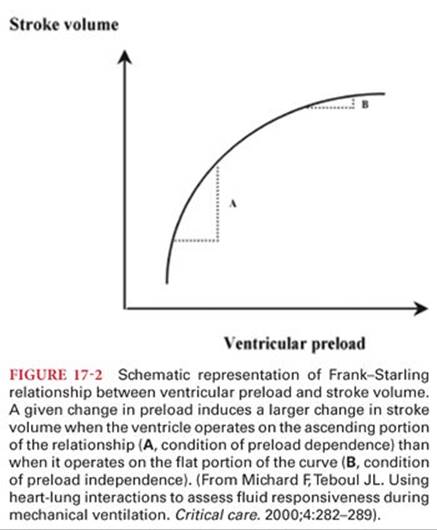
Fluid responsiveness may be defined as a 15% increase in cardiac output following a 500-mL IV fluid bolus, indicating that the patient is still on the ascending limb of the cardiac output/end diastolic volume curve, also referred to as the cardiac function curve17 (Fig. 17-2). Fluid administration to a patient on the plateau part of the curve may be of little benefit and result in adverse effects. Filling pressure measures, particularly central venous pressure, correlate poorly with blood volume, and changes in central venous pressure have been shown to poorly predict hemodynamic response to fluid challenge.18Stroke volume changes due to increases or decreases in right ventricular preload may be used to assess fluid responsiveness. Positive pressure ventilation decreases right ventricular stroke volume by decreasing venous return to the right heart and increasing right ventricular afterload. The decrease in right ventricular stroke volume is passed on to the left ventricle over subsequent cardiac cycles and if the left ventricle is preload dependent, decreases in the left ventricle stroke volume will cause a decrease in the arterial pulse pressure. These cyclic changes associated with positive airway pressure are greater when the ventricles are functioning on the steep, ascending portion of the cardiac function curve. Variation in the arterial pulse pressure (PPV) can be derived from analysis of the arterial pressure waveform and variation greater than 12% to 13% is predictive of volume responsiveness.19 Other measures of these positive pressure–associated stroke volume changes include systolic pressure variation of the arterial waveform, stroke volume variation (SVV) derived from arterial pulse contour analysis, pleth variability index derived from pulse oximeter waveform analysis, inferior vena cava diameter variation measured by echocardiography, and descending aortic blood velocity measured by esophageal Doppler. Measures dependent on variations caused by positive pressure ventilation are limited by the presence of arrhythmia, spontaneous breathing, tidal volume settings (8 mL/kg ideal body weight minimum required for PPV and SVV),19 low lung compliance (<30 mL/cm H2O), increased abdominal pressure, and open chest surgery.20
The end-expiratory occlusion test is useful in ventilated patients with cardiac arrhythmias, mild amplitude spontaneous breathing activity, or low tidal volume positive pressure ventilation. The test assesses the effect of a 15-second interruption in the ventilation on cardiac preload. A 5% increase in pulse contour cardiac output (sensitivity 91%, specificity 100%) or pulse pressure (sensitivity 87%, specificity 100%) is suggestive of volume responsiveness.21 Passive leg raising maneuvers (PLR) can be used to assess preload responsiveness in spontaneously breathing patients with arrhythmias but is limited in patients with intraabdominal hypertension. The test is performed in a supine patient by elevating the legs to 45 degrees while assessing cardiac output or stroke volume over 30 to 90 seconds. Cardiac output measures during PLR are more accurate in predicting fluid responsiveness than arterial pressure measurements during the maneuver.22
Important Fluid Constituents
Magnesium
Magnesium is almost all intracellular in bone (53%), muscle (27%), and soft tissues (19%), with less than 1% of total body magnesium in the extracellular fluid and only 0.3% in the plasma.23 Most intracellular magnesium is bound to adenosine 5’-triphosphate and DNA, with less than 3% being in solution and ionized immediately available for intracellular magnesium homeostasis.24 Plasma magnesium level is normally 1.7 to 2.4 mg/dL, where it is found in three states: ionized (62%), protein bound (33%), and complexed to anions (5%).23 Given these distributions, plasma magnesium measurements may not be representative of total body magnesium stores. Also, magnesium measurements can be falsely elevated with hemolysis of the blood sample, which releases the intracellular electrolytes. Ingested magnesium is absorbed in the small intestines, primarily the ileum (75%),24 via passive concentration effects and in the colon by active transcellular absorption.25 Excretion occurs via the kidney with more than 95% of the filtered magnesium being reabsorbed in the renal tubules, with this mechanism effectively regulating the plasma level. Reabsorption occurs primarily (70%) in the ascending loop of Henle via passive mechanisms with a small amount occurring in both the proximal tubule via passive mechanisms and distal convoluted tubules via active mechanisms.24 Bone, as the primary store of total body magnesium, provides a buffer for plasma magnesium levels through poorly understood mechanisms controlling magnesium incorporation into bone by osteoblasts and removal by osteoclasts.25 Genetic mutations in colon transport channels25 and loop of Henle junction proteins24 can both result in hypomagnesemia.
Role of Magnesium
Magnesium plays a key role in many biologic processes including protein synthesis, neuromuscular function, and nucleic acid stability. It is involved in adenosine 5′-triphosphatase function, antagonizes N-methyl-D-aspartate (NMDA) glutamate receptors, inhibits catecholamine release, and is involved in the regulation of other electrolytes. For instance, magnesium antagonizes the uptake and distribution of calcium and modulates sodium and potassium currents thru nicotinic acetylcholine receptors, NMDA receptors, and ion pumps, thus affecting membrane potentials. Magnesium has antiarrhythmic properties related to calcium channel antagonism.24 Intravenous (IV) magnesium administration can exert muscle-relaxing effects, enhance nondepolarizing neuromuscular blockers, attenuate muscle fasciculations and potassium release with administration of succinylcholine, and precipitate skeletal muscle weakness in patients with Lambert-Eaton syndrome and myasthenia gravis. It has been used to reduce anesthetic requirements and attenuate cardiovascular effects of laryngoscopy and intubation. Magnesium has been shown to vasodilate blood vessels in many vascular beds (mesenteric, skeletal muscle, uterine, cerebral, coronary, and the aorta). It also decreases blood–brain barrier disruption and limits cerebral edema formation after brain injury.26 Side effects of IV administration include burning or pain on injection, drowsiness, nausea, headache, dizziness, muscle weakness, hypotension, and bradycardia.
Hypomagnesemia
Hypomagnesemia may result from dietary deficiency (as seen in chronic alcoholism), gastrointestinal malabsorption or secretion (diarrhea, vomiting, laxative use), renal losses (medication effects, nephrotoxic agents, endocrine disease, diabetic nephropathy), and chelation (citrate binding in the case of massive transfusion).24 It is seen in as many as 11% of hospitalized patients and 65% of patients in the ICU. Clinical manifestations of hypomagnesemia result in cardiac and neuromuscular disorders and include symptoms of nausea, vomiting, weakness, convulsions, tetany, fasciculations, as well as electrocardiogram (ECG) abnormalities (prolonged PR and QT intervals, diminished T-wave morphology, torsades de pointes, and others) and accompanying hypokalemia and hypocalcemia.
Hypermagnesemia
Hypermagnesemia is rare and most commonly occurs with excessive administration of magnesium for therapeutic purposes. Clinical manifestations include QRS widening, hypotension, narcosis, diminution of deep tendon reflexes, respiratory depression from paralysis of muscles of ventilation, heart block, and cardiac arrest. Immediate treatment of life-threatening hypermagnesemia is with calcium gluconate, 10 to 15 mg/kg IV, followed by diuretics or dialysis, along with appropriate respiratory and circulatory support.
Preeclampsia
Magnesium appears to improve the clinical symptoms of preeclampsia by causing systemic, vertebral, and uterine vasodilation via direct effects on vessels as well as by increasing concentrations of endogenous vasodilators (endothelium-derived relaxing factor and calcitonin gene–related peptide) and attenuating endogenous vasoconstrictors (endothelin-1). Suggested dosing regimens of magnesium sulfate based on randomized trial data are 4 g IV loading dose over 10 to 15 minutes followed by infusion of 1 g per hour for 24 hours or 4 g IV loading dose with 10 g intramuscular (IM) followed by 5 g IM every 4 hours for 24 hours. Many other dosing regimens exist.27 Infusions or repeat dosing should be combined with clinical monitoring of urine output, respiratory rate, and deep tendon reflexes. Serum monitoring of magnesium levels should be performed for signs of toxicity or renal impairment. Magnesium crosses the placenta and may result in neonatal lethargy, hypotension, and respiratory depression if administered for prolonged duration (more than 48 hours).24 In a Cochrane Summaries review, magnesium was shown to decrease the risk of progression to eclampsia (RR, 0.41; CI, 0.29–0.58), decrease the risk of placental abruption (RR, 0.64; CI, 0.5–0.83), and increase caesarean section (RR, 1.05; CI, 1.01–1.1) but does not clearly affect maternal morbidity, stillbirth, or neonatal death or neurosensory disability at age 18 months. Reductions in maternal death were found to be nonsignificant.28
Cardiac Dysrhythmias
Excess magnesium blocks myocardial calcium influx resulting in decreased sinus node activity, prolonged atrioventricular (AV) conduction time, and increased AV node refractoriness. Arrhythmias associated with hypomagnesemia are often29 accompanied by hypokalemia. Normalization of both electrolytes is recommended.23 Magnesium administration may decrease the incidence of severe arrhythmia after myocardial infarction but use is limited by the incidence of hypotension.24 There is no evidence that magnesium infusion during human cardiopulmonary resuscitation increases survival to hospital discharge; however, magnesium is recommended for patients with polymorphic wide complex tachycardia associated with familial or acquired long QT syndrome (torsades de pointes).30 For digoxin-induced tachyarrhythmias in hypomagnesemic patients, magnesium should be administered while awaiting digoxin antibodies.24 Prophylactic administration of magnesium during cardiopulmonary bypass has been shown to decrease the incidence of postoperative atrial fibrillation after coronary artery bypass graft surgery.
Analgesia
Magnesium has antinociceptive effects when administered IV or intrathecally, possibly due to inhibition of calcium influx, antagonism of NMDA receptors, or prevention of NMDA signaling. Data to support the use of magnesium as an analgesic or for preventative analgesia at this point is conflicting.24
Asthma
Magnesium causes bronchodilatation via inhibition of calcium-mediated smooth muscle contraction, inhibition of histamine release from mast cells, and inhibition of nicotinic acetylcholine release. IV magnesium (not inhaled) has been reported to improve bronchodilatation when standard therapies have failed; however, responses are variable.23,31
Pheochromocytoma
Magnesium’s arteriolar-dilating effects combined with reduction in catecholamine release may be beneficial in the management of patients with pheochromocytoma prior to tumor excision and in hemodynamic catecholamine crisis.32,33
Calcium
As an important component of the skeleton, there is more calcium in the body than any other mineral. The plasma concentration of calcium is maintained between 4.5 and 5.5 mEq/L (8.5 to 10.5 mg/dL) by an endocrine control system involving vitamin D, parathyroid hormone, and calcitonin, which regulate intestinal absorption, renal reabsorption, and bone turnover. Total plasma calcium consists of calcium bound to albumin and proteins (40%), calcium complexed with citrate and phosphorus ions (9%), and freely diffusible ionized calcium (51%).34 It is the ionized fraction of calcium that produces physiologic effects and is normally 2 to 2.5 mEq/L. The ionized concentration of calcium depends on arterial pH, with acidosis increasing and alkalosis decreasing the concentration. Additionally, plasma albumin binds nonionized calcium, thus, in low albumin states, less nonionized calcium is protein bound making more available to return to storage sites, such as bone and teeth. This may decrease the total plasma calcium, but symptoms of hypocalcemia do not occur unless the ionized calcium concentration is also decreased. Thus, nonionized plasma calcium levels must be interpreted with knowledge of the plasma albumin concentration and can be corrected according to the following formula: corrected Ca++ (mg/dL) = measured Ca++ (mg/dL) + [0.8 × (4.0 − albumin (mg/dL)].35 However, calculations to correct serum nonionized calcium for hypoalbuminemia may not be reliable in critically ill patients.36
Role of Calcium
The majority of total body calcium (>99%) is present in bone and provides the skeleton with strength and a reservoir to maintain the intracellular and extracellular calcium concentrations. Calcium is important for neuromuscular transmission, skeletal muscle contraction, cardiac muscle contractility, blood coagulation, and intracellular signaling in its function as a second messenger. In cardiac myocytes, calcium regulates contraction, relaxation, and electrical signals that determine rhythm and triggers hypertrophy via calcineurin mechanisms.37 In vascular smooth muscle, calcium induces a change in contractile state, increasing and decreasing vessel diameter.38
Hypocalcemia
Hypocalcemia can result from decreased plasma concentration of albumin, hypoparathyroidism, acute pancreatitis, vitamin D deficiency, chronic renal failure associated with hyperphosphatemia, citrate binding of calcium (in the case of transfused blood, particularly in hepatic failure and reduced citrate metabolism39,40 or use of citrate in dialysis or plasmapheresis41), sepsis, and critical illness.41Malabsorptive states rarely result in hypocalcemia as serum levels are maintained by bone calcium stores. Symptoms of hypocalcemia include neuromuscular excitability, including muscle twitching, spasms, tingling, numbness, carpopedal spasm, tetany, seizures, and cardiac dysrhythmias.42Calcium can be administered by oral or IV route. IV preparations include calcium chloride which provides 27 mg of elemental calcium/mL and calcium gluconate which provides 9 mg.41 IV calcium chloride may cause local irritation and necrosis if extravasated into the subcutaneous tissues and therefore is best administered centrally.
Hypercalcemia
Hyperparathyroidism is the most important cause of hypercalcemia and may be primary from parathyroid adenoma (85%), parathyroid hyperplasia (10%) which may be associated with multiple endocrine neoplasia syndromes, or, rarely (<1%), parathyroid carcinoma. Secondary hyperparathyroidism results from abnormal feedback loops present in renal failure and tertiary hyperparathyroidism from overactive responses to normal negative feedback mechanisms. Malignancies, such as squamous cell lung, breast, prostate, colon, adult T-cell, and multiple myeloma, may result in release of parathyroid hormone–related peptide from tumor cells, resulting in inappropriate hypercalcemia.41 Malignancy-related hypercalcemia may also result from osteolytic activity at sites of skeletal metastases commonly seen in breast cancer, multiple myeloma, and lymphoma, and, rarely, malignancy-related hypercalcemia may result from tumor release of vitamin D.35 Hypercalcemia may be associated with benign familial hypocalciuric hypercalcemia syndrome resulting from a mutation in calcium-sensing receptors. Hypercalcemia is also associated with granulomatous diseases such as sarcoidosis, tuberculosis, leprosy, coccidioidomycosis, and histoplasmosis and may result from excessive dietary supplement or medication side effects as a result of diuretic or lithium administration. Symptoms of hypercalcemia result from smooth muscle relaxation in the gut (constipation, anorexia, nausea, vomiting), decreased neuromuscular transmission (lethargy, hypotonia, confusion), renal effects (polyuria, dehydration, nephrolithiasis), cardiac rhythm abnormalities (QTc shortening, J waves following QRS complex), as well as pancreatitis.41
Treatment of hypercalcemia depends on the exact etiology but usually includes promoting renal excretion of calcium with IV fluids and loop diuretics while avoiding dehydration that would worsen any renal injury. Medications contributing to hypercalcemia should be discontinued and parathyroidectomy performed if indicated. Corticosteroids can be used to lower excessive calcium levels by inhibiting the effects of vitamin D, reducing intestinal absorption, and increasing renal excretion. Hydrocortisone 200 to 400 mg IV per day for 3 to 5 days41 or prednisone 40 to 100 mg per day orally are recommended treatments for hypercalcemia associated with lymphoma and myeloma.35 IV bisphosphonates to inhibit osteoclast bone resorption may be useful: pamidronate 60 to 90 mg IV or zoledronate 4 mg IV. Gallium nitrate 100 to 200 mg/mL/day IV infusion for 5 days is used to inhibit osteoclastic bone resorption for paraneoplastic hypercalcemia refractory to bisphosphonate therapy.35 Calcitonin 4 to 8 International Units/kg subcutaneously or IM every 12 hours is less effective than bisphosphonates35 or gallium nitrate41 and works by inhibiting bone resorption and increasing renal calcium excretion. Mithramycin 25 µg/kg IV blocks bone resorption by inhibiting osteoclast RNA synthesis, but its use is limited by frequent dosing and toxicity (renal, hepatic, and hematologic).35 Hemodialysis may also be used to treat acute, severe hypercalcemia.
Bone Composition
Bone is composed of an organic matrix that is strengthened by deposits of calcium salts. The organic matrix is greater than 90% collagen fibers, and the remainder is a homogeneous material called ground substance. Ground substance is composed of proteoglycans that include chondroitin sulfate and hyaluronic acid. Salts deposited in the organic matrix of bone are composed principally of calcium and phosphate ions in a combination known as hydroxyapatites.
The initial stage of bone production is the secretion by osteoclasts of collagen and ground substance. Calcium salts precipitate on the surfaces of collagen fibers, forming nidi that grow into hydroxyapatite crystals. Bone is continually being deposited by osteoblasts and is constantly being absorbed where osteoclasts are active. The bone-absorptive activity of osteoclasts is regulated by the parathyroid gland. Except in growing bones, the rate of bone deposition and absorption are equal, so the total mass of bone remains constant.
Because physical stress stimulates new bone formation, calcium is deposited by the osteoblasts in proportion to the compression load that the bone must carry. The deposition of bone at points of compression may be caused by small electrical currents induced by stress, called the piezoelectric effect, stimulating osteoblastic activity at the negative end of current flow. Osteoblasts are maximally activated at a bone fracture, the resulting bulge of osteoblastic tissue and new bone matrix being known as callus.
Osteoblasts secrete large amounts of alkaline phosphatase when they are actively depositing bone matrix. As a result, the rate of new bone formation is reflected by elevation of plasma concentration in alkaline phosphatase. Alkaline phosphatase concentrations are also increased by any disease process that causes destruction of bone (e.g., metastatic cancer, osteomalacia, and rickets).
Calcium salts almost never precipitate in normal tissues other than bone. A notable exception, however, is atherosclerosis, in which calcium precipitates in the walls of large arteries. Calcium salts are also frequently deposited in degenerating tissues or in old blood clots.
Bisphosphonates
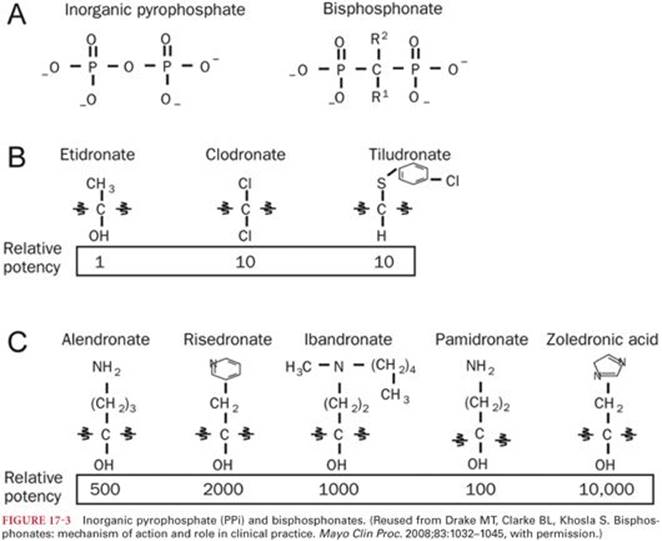
Bisphosphonates are drugs with a phosphorus-carbon-phosphorus (P-C-P) chemical structure that resemble inorganic pyrophosphate (Fig. 17-3).43 Inorganic pyrophosphate is involved in regulation of bone mineralization by binding hydroxyapatite crystals, inhibiting calcification. The phosphate groups of bisphosphonates, like inorganic pyrophosphate, bind hydroxyapatite crystals and become incorporated into sites of active bone remodeling, thus inhibiting calcification. The hydroxyl group attached to the central carbon further increases bisphosphonate’s ability to bind calcium, and the final structural grouping is attached to the central carbon to determine the bisphosphonate’s potency for inhibition of bone resorption. First-generation bisphosphonates (etidronate, clodronate, tiludronate), similar to inorganic pyrophosphate, become incorporated into adenosine triphosphate (ATP) by class II aminoacyl-transfer RNA synthetases after osteoclast-mediated uptake from bone and mineral surface. This abnormal ATP cannot be hydrolyzed, accumulates, and is believed to be cytotoxic to osteoclasts. Second- and third-generation bisphosphonates (alendronate, risedronate, ibandronate, pamidronate, and zoledronic acid) contain nitrogen or amino groups in this position, which increases the antiresorptive potency by binding and inhibiting farnesyl pyrophosphate synthase, leading to osteoclast apoptosis. Second- and third-generation bisphosphonate–induced osteoclast apoptosis can be detected by a reduction in biochemical markers of bone resorption; maximum suppression occurs within 3 months of initiation of oral therapy. Suppression is noted to be more rapid following IV administration. Duration of effect is a function of potency for mineral matrix binding, with zolendronic acid suppressing biochemical markers of bone resorption for up to 1 year in women with postmenopausal osteoporosis.
Clinical Uses
Bisphosphonates are useful in treating clinical conditions characterized by increased osteoclast-mediated bone resorption, for example: osteoporosis, Paget disease of bone, osteogenesis imperfecta, hypercalcemia, and malignant bony metastasis.
Pharmacokinetics
Oral bioavailability of bisphosphonates is low as they are hydrophilic with less than 1% absorbed after an oral dose. About 50% of the absorbed drug is retained in the skeleton, depending on renal function, rate of bone turnover, and binding site availability, and the remainder of drug is eliminated unchanged in the urine.43,44
Side Effects
Hypocalcemia may follow IV bisphosphonate infusion; treatment is supportive with calcium and vitamin D supplementation. Ten percent to 42% of patients receiving nitrogen-containing bisphosphonates IV may experience an acute phase reaction44 with fever, myalgias, arthralgias, headaches, and influenza-like symptoms. The incidence of this reaction decreases with each subsequent infusion; pretreatment with antihistamines and antipyretics44 can reduce the incidence and severity of symptoms. Severe musculoskeletal pain may occur at any point after initiating bisphosphonates. Ocular inflammation (conjunctivitis, uveitis, episcleritis, scleritis) has been associated with both oral and IV bisphosphonate. Symptoms resolve within a few weeks of discontinuation. Esophageal irritation and erosion can occur with oral bisphosphonate therapy, particularly in the presence of gastroesophageal reflux disease or esophageal stricture; thus, it is often recommended that upright posture be maintained for 30 minutes after ingestion and that oral preparations be taken with a full glass of water.44 Osteonecrosis of the jaw is associated with high-dose IV bisphosphonate use, primarily zoledronic acid and pamidronate, for oncologic conditions with an incidence of 1 to 10 per 100 patients. Associated risk factors for this complication include poor oral hygiene, history of recent dental procedures, denture use, and prolonged exposure to high IV bisphosphonate doses. The condition is rare for oral therapy of osteoporosis (1 in 10,000 to 1 in 100,000).43,44 Bisphosphonate dosing should be adjusted in patients with renal insufficiency, and its use is cautioned in patients with creatinine clearance less than 30 mL per minute because IV therapy may lead to rapid deterioration of renal function. Serious atrial fibrillation (life-threatening or resulting in hospitalization or disability) occurred more often in patients treated with zoledronic acid than placebo (1.3% vs. 0.5%, p <.001) in the Health Outcomes and Reduced Incidence with Zoledronic Acid Once Yearly trial; however, there was no difference in the overall number of atrial fibrillation events in the two groups, and post hoc analysis of other trials have not yielded an association.44 Hepatotoxicity has been reported with alendronate and zolendronate.44
Denosumab
Denosumab is another antiresorptive therapy for metabolic bone diseases. It is a human monoclonal antibody against RANKL, a receptor activator required to differentiate and activate osteoclasts. Denosumab is reversible, administered biannually via subcutaneous route, and is not eliminated by the kidneys. Like the bisphosphonates, it is also associated with osteonecrosis of the jaw.45
Potassium
Potassium is the second most common cation in the body and the principal intracellular cation. Approximately 3,500 mEq of potassium are present in the body of a 70-kg patient (40 to 50 mEq/kg). With 98% of the body’s potassium being intracellular,46 the concentration in the extracellular fluid is about 4 mEq/L, and the intracellular concentration is 150 mEq/L. Because of this huge difference in concentration, estimation of total body potassium content from serum potassium values is inaccurate, even though the vast majority of potassium (>90%) is readily exchangeable between the intra- and extracellular compartments.
Role of Potassium
Potassium has an important influence on the control of osmotic pressure and is a catalyst of numerous enzymatic reactions. It is involved in the function of excitable cell membranes (nerves, skeletal muscles, cardiac muscle) and is directly involved in the function of the kidneys. In cardiac cells, potassium decreases action potential duration, electrical inhomogeneity, and risk of digoxin toxicity. Potassium is an endothelial-dependent vasodilator; it decreases vascular smooth muscle cell proliferation and inhibits thrombus formation and platelet activation.46 Disturbances of potassium homeostasis contribute to cardiac dysrhythmias, skeletal muscle weakness, and acid–base disturbances.
The kidney is the principal organ involved in body potassium homeostasis, primarily through control of active potassium secretion in the urine. This is different from most other electrolytes, which are regulated by control of reabsorption in the distal tubule. A number of hormones influence renal potassium secretion including aldosterone, glucocorticoids, catecholamines, and arginine vasopressin. Aldosterone acts at the renal collecting duct to increase reabsorption of sodium ions, which favors potassium secretion. Arginine vasopressin also increases secretion of potassium at the distal collecting tubule. Glucocorticoids influence renal potassium secretion by a direct action in the renal parenchyma. Catecholamines decrease renal secretion of potassium by an effect on the distal collecting system. Acidosis opposes and alkalosis favors potassium secretion. When uremia develops, gastrointestinal secretion of potassium increases, and when creatinine clearance is less than 20% of normal, gastrointestinal potassium loss can approach 20% of uptake.
Drugs Causing Hypokalemia
Diuretics that induce renal potassium loss are probably the most common cause of hypokalemia, but there are a number of other drugs that may result in this condition. Catecholamines shift potassium intracellularly, predominantly into the liver and skeletal muscle cells, and administration of β-adrenergic agonists in the treatment of bronchial asthma or premature labor may cause hypokalemia; in fact, β agonists may be useful in the treatment of hyperkalemia. Theophylline also causes potassium to move into cells, and hypokalemia should be anticipated in the presence of theophylline toxicity. Insulin induces potassium to move into cells and is used to treat severe hyperkalemia. Hypokalemia is caused by gastrointestinal losses of potassium from chronic laxative abuse or overaggressive bowel preparation for abdominal surgery. Large doses of penicillin and its synthetic derivatives increase excretion of potassium in the urine, and the direct nephrotoxicity of aminoglycoside antibiotics can also lead to excessive potassium loss.
Drugs Causing Hyperkalemia
Drugs that increase serum potassium concentrations do so by redistribution, suppression of aldosterone secretion, inhibition of potassium secretion in the distal collecting duct, or by direct cell destruction. Extracellular movement of potassium can result in plasma hyperkalemia without an increase in total body potassium. For example, succinylcholine causes a release of potassium from skeletal muscle cells, resulting in an increase of the serum potassium concentration by as much as 0.5 mEq/L. Digitalis toxicity can cause hyperkalemia by preventing potassium entry into cells. β-Adrenergic antagonists can cause a modest increase in the serum potassium concentration by virtue of an extracellular shift. Nonsteroidal antiinflammatory drugs may cause hyperkalemia by preventing aldosterone release. Potassium-sparing diuretics such as spironolactone inhibit the secretion of potassium in the distal collecting duct and can cause clinical hyperkalemia. Abrupt cell lysis from chemotherapy for acute blood cell proliferative malignancies can cause hyperkalemia through the release of intracellular potassium.
Hypokalemia
Skeletal muscle weakness and a predisposition to cardiac dysrhythmias are the most prominent symptoms of clinically significant hypokalemia. At the cellular level, hypokalemia causes hyperpolarity, increases resting potential, hastens depolarization, and increases automaticity and excitability of cardiac cells,47 predisposing to tachydysrhythmias, including torsade de pointes48 and atrial fibrillation47, and sudden cardiac death particularly in the setting of acute myocardial infarction.46 Potassium depletion also produces diastolic dysfunction of the myocardium.46
Treatment
It is important to determine the cause of hypokalemia before aggressive potassium replacement is initiated. For example, if serum potassium concentrations are acutely decreased due to intracellular redistribution and potassium therapy is initiated, potentially serious hyperkalemia could occur. If total body depletion is the cause of hypokalemia, the amount of increase in the plasma concentration of potassium produced by supplementation may be small due to rapid redistribution into intracellular sites.
Life-threatening hypokalemia, presenting as malignant cardiac dysrhythmias, acute digitalis intoxication, or extreme neuromuscular collapse, requires supplemental IV potassium administration. The rate of potassium infusion depends on the urgency of the indication, with a common recommendation being administration of IV potassium no greater than 10 mEq per hour peripherally and 20 mEq per hour centrally in adults. Morbidity associated with supplemental potassium therapy is not trivial. Patients with diminished internal potassium regulation, especially diabetics and renal failure patients, are at risk for accidental treatment-induced hyperkalemia.
Hyperkalemia
The earliest sign of hyperkalemia is peaked T waves on ECG, which typically occurs when the serum potassium concentration reaches 6 mEq/L. As the extracellular concentration increases further, the transmembrane gradient is decreased, with prolongation of the P-R interval and QRS widening on the ECG. At this point, the risk of asystole or ventricular fibrillation due to cardiac conduction blockade increases dramatically. Asystole may also occur due to decreased automaticity in the sinoatrial node. Occasionally, hyperkalemia presents with neuromuscular symptoms such as paresthesias and skeletal muscle weakness.
Treatment
The decision to treat hyperkalemia, in contrast to hypokalemia, is based on the degree of increase in the serum potassium concentration and the symptoms and signs that are present. If ECG changes other than peaked T waves occur, or if the serum potassium concentration is greater than 6.5 mEq/L, the incidence of serious cardiac compromise is high and rapid intervention is indicated.
Calcium is administered to rapidly offset the adverse effects of potassium on cardiac conduction and contractility. Calcium activates calcium ion channels so that ion flux through these channels generates an action potential and restores myocardial contractility, effectively antagonizing the adverse cardiac effects of hyperkalemia. The IV administration of 10 to 20 mL of a 10% calcium chloride solution restores myocardial contractility in 1 to 2 minutes and lasts for 15 to 20 minutes. Some prefer calcium gluconate over the chloride form because it induces more potassium secretion by the renal tubules. The IV administration of calcium must be slower in patients on digitalis preparations because acute hypercalcemia can precipitate digitalis toxicity. Serum potassium concentrations are not significantly changed by IV administration of calcium.
Other measures to treat hyperkalemia include IV administration of sodium bicarbonate, glucose-insulin mixtures, and β agonists to shift extracellular potassium ions into the cells. Alkalization of the blood with sodium bicarbonate, 0.5 to 1.0 mEq/kg IV, rapidly moves potassium into cells, decreasing the serum potassium level for as long as the arterial pH is increased. Glucose-insulin infusion (50 mL of 50% glucose plus 10 units of regular insulin) produces a sustained transfer of extracellular potassium into cells, resulting in a 1.5 to 2.5 mEq/L decrease in the serum potassium concentration after approximately 30 minutes. Sodium polystyrene sulfonate (Kayexalate) is an orally or rectally administered sodium exchange resin used to remove extracellular potassium in exchange for sodium in the large intestine. Potassium removal from the body also may be achieved by loop diuretics or, most rapidly and effectively, hemodialysis.
Phosphate
Phosphate is the major intracellular anion. The majority (85%) of total body phosphate is stored in the bone as hydroxyapatite crystals within the organic matrix. Most of the remainder is stored in soft tissue as phosphate, with only 1% located in the plasma.49 The normal plasma concentration of phosphate is 3.0 to 4.5 mg/dL, accounting for both organic and inorganic forms.
Phosphate is important in energy metabolism, intracellular signaling (cyclic adenosine monophosphate and cyclic guanosine monophosphate), cell structure (phospholipids), oxygen delivery (2,3-disphosphoglycerate), regulation of the glycolytic pathway, the immune system, the coagulation cascade, and buffering to maintain normal acid–base balance. Phosphorus regulation is a result of the interplay of phosphate and calcium levels, vitamin D, and parathyroid hormone on gastrointestinal absorption, renal reabsorption, and bone storage. Phosphorous absorption from the gastrointestinal tract and reabsorption in the kidney proximal convoluted tubules is stimulated by Vitamin D, and renal reabsorption of phosphorous is inhibited by the effects of parathyroid hormone. Renal disease disrupts this regulation, and ectopic tissue calcification as well as hyperphosphatemia may result.34
A decrease in the plasma concentration of phosphate permits the presence of a higher plasma concentration of calcium and inhibits deposition of new bone salts. Hypophosphatemia (phosphorus concentration <1.5 mg/dL) causes a decrease in the concentration of ATP and 2,3-diphosphoglycerate in erythrocytes. Profound skeletal muscle weakness sufficient to contribute to hypoventilation may be caused by hypophosphatemia, as well as central nervous system dysfunction and peripheral neuropathy. Causes of hypophosphatemia include alcohol abuse; prolonged parenteral nutrition; medications such as acetazolamide, catecholamines, and theophylline; paracetamol overdose; large burns; recovery from hypothermia; hemodialysis; salicylate poisoning; and gram-negative bacteremia.49
Iron
Iron present in food is absorbed from the proximal small intestine, especially the duodenum, into the circulation, where it is bound to transferrin. Transferrin is a glycoprotein that delivers iron to specific receptors on cell membranes. Approximately 80% of the iron in plasma enters the bone marrow to be incorporated into new erythrocytes. In addition to bone marrow, iron is incorporated into reticuloendothelial cells of the liver and spleen. Iron is also an essential component of many enzymes necessary for energy transfer. A normal range for the plasma iron concentration is 50 to 150 µg/dL.
Iron that is stored in tissues is bound to protein as ferritin or in an aggregated form known as hemosiderin. Hemoglobin synthesis is the principal determinant of the plasma iron turnover rate. When blood loss occurs, hemoglobin concentration is maintained by mobilization of tissue iron stores. Indeed, hemoglobin concentrations become chronically decreased only after these iron reserves are depleted. For this reason, the presence of a normal hemoglobin concentration is not a sensitive indicator of tissue iron stores. The infant, parturient, and menstruating female may have iron requirements exceeding amounts available in the diet and develop iron-deficiency anemia. Absorption of iron from the gastrointestinal tract is increased by ascorbic acid (vitamin C) or in the presence of iron deficiency. Antacids bind iron and impair its systemic absorption.
Iron Deficiency
Iron deficiency is estimated to be present in 20% to 40% of menstruating females but only about 5% of adult males and postmenopausal females. Attempts to prevent this deficiency of iron in large parts of the population include the addition of iron to flour, use of iron-fortified formulas for infants, and the prescription of iron-containing vitamin supplements during pregnancy.
Causes
Causes of iron-deficiency anemia include inadequate dietary intake of iron, increased iron requirements due to pregnancy or blood loss, or interference with absorption from the gastrointestinal tract. Most nutritional iron deficiency in the United States is mild. Severe iron deficiency is usually the result of blood loss, either from the gastrointestinal tract or, in females, from the uterus. Partial gastrectomy,50malabsorptive bariatric surgery,51 and sprue are causes of inadequate iron absorption.
Diagnosis
Iron deficiency initially results in a decrease in iron stores and a parallel decrease in the erythrocyte content of iron. Depleted iron stores are indicated by decreased plasma concentrations of ferritin and the absence of reticuloendothelial hemosiderin in a bone marrow aspirate. Plasma ferritin concentrations of less than 12 µg/dL are diagnostic of iron deficiency. Iron-deficiency anemia is defined as depletion of total body iron associated with a decreased red cell hemoglobin concentration. The large physiologic variation in hemoglobin concentration, however, makes it difficult to reliably identify all individuals with iron-deficiency anemia. Because iron-deficiency anemia is so common in infants, menstruating females, and recent parturients, mild anemia in these patients is typically treated empirically with iron supplementation before pursuing a more exhaustive diagnostic workup. However, in males and postmenopausal females, iron deficiency is much less common so it is important to search for a cause of blood loss whenever anemia is present.
Treatment
Prophylactic use of iron preparations should be reserved for individuals at high risk for developing iron deficiency, such as pregnant and lactating females, low-birth-weight infants, and females with heavy menses. The inappropriate prophylactic use of iron should be avoided in adults because excessive accumulation of iron may damage tissues.
In iron-deficiency anemia, administration of medicinal iron increases the rate of erythrocyte production, resulting in a rise in hemoglobin concentration within 72 hours. If the concentration deficit of hemoglobin before treatment is more than 3 g/dL, therapeutic doses of oral or parenteral iron should increase the hemoglobin about 0.2 g/dL/day. An increase of 2 g/dL or more in the plasma concentration of hemoglobin within 3 weeks is evidence of a positive response to iron. If this response to iron therapy is not seen, other causes of anemia should be considered, such as the chronic blood loss, infectious process, or impaired gastrointestinal iron absorption.
There is no justification for continuing iron therapy beyond 3 weeks if a favorable response has not occurred. If a response to iron therapy is demonstrated, the iron should be continued until the hemoglobin concentration is normal and continued for 4 to 6 more weeks to reestablish iron stores. Full replenishment of tissue iron stores requires several months of therapy.
Oral Iron
Ferrous sulfate administered orally is the most frequent choice for the treatment of iron-deficiency anemia and is available as syrup, pills, or tablets. Ferric salts are less efficiently absorbed than ferrous salts from the gastrointestinal tract. Although other salts of the ferrous form of iron are available, they offer little or no advantage over sulfate preparations. The usual therapeutic dose of iron for adults to treat iron-deficiency anemia is 2 to 3 mg/kg (200 mg daily) in three divided doses. Prophylaxis and treatment of mild nutritional iron deficiency can be achieved with modest dosages of iron, such as 15 to 30 mg daily.
Nausea and upper abdominal pain are the most frequent side effects of oral iron therapy, particularly if the dosage is greater than 200 mg daily. Hemochromatosis is unlikely to result from oral iron therapy that is administered to treat nutritional anemia. Fatal poisoning from overdose of iron is rare, but children 1 to 2 years of age are most vulnerable. Symptoms of severe iron poisoning may occur within 30 minutes as vomiting, abdominal pain, and diarrhea. In addition, there may be sedation, hyperventilation due to acidosis, and cardiovascular collapse. Hemorrhagic gastroenteritis and hepatic damage are often prominent at autopsy in fatal iron toxicity. If iron overdose is suspected, a plasma concentration of greater than 0.5 mg/dL confirms the presence of a life-threatening situation, which should be treated with deferoxamine.
Parenteral Iron
Parenteral iron acts similarly to oral iron but should be used only if patients cannot tolerate or do not respond to oral therapy. In addition, tissue iron stores may be restored more rapidly with parenteral iron than oral therapy. There is no evidence, however, that the increase in hemoglobin is more prompt with parenteral iron than with oral iron.
Iron dextran injection contains 50 mg/mL of iron and is available for IM or IV use. After absorption, the iron must be split from the glucose molecule of dextran to become available to tissues. IM injection is painful, and there is concern about malignant changes at the injection site. For these reasons, IV administration of iron is preferred over IM injection. A dose of 500 mg of iron can be infused over 5 to 10 minutes.
The principal major adverse effect of parenteral iron therapy is the rare occurrence of a severe allergic reaction, presumably due to the presence of dextran. Less severe reactions include headache, fever, generalized lymphadenopathy, and arthralgias. Hemosiderosis is more likely to occur with parenteral iron therapy because it bypasses gastrointestinal absorptive regulatory mechanisms.
Copper
Copper is present in ceruloplasmin and is a constituent of other enzymes, including dopamine β-hydroxylase and cytochrome C oxidase. It is bound to albumin and is an essential component of several proteins. Copper is thought to act as a catalyst in the storage and release of iron from hemoglobin. It is believed to be essential for the formation of connective tissues, hematopoiesis, and function of the central nervous system. Copper deficiency is rare in the presence of an adequate diet. Supplements of copper should be given during prolonged hyperalimentation.
Zinc
Zinc is an enzymatic cofactor essential for cell growth and the synthesis of nucleic acid, carbohydrates, and proteins. Adequate zinc is provided by a diet containing sufficient animal protein. Diets in which protein is obtained primarily from vegetable sources may not supply adequate zinc. Zinc deficiency may occur in elderly or debilitated patients or during periods of increased requirements as in growing children, pregnancy, lactation, or infection. Severe zinc deficiency occurs most often in the presence of malabsorption syndromes. Symptoms of zinc deficiency include disturbances in taste and smell, suboptimal growth in children, hepatosplenomegaly, alopecia, cutaneous rashes, glossitis, and stomatitis.
Chromium
Chromium is important in a cofactor complex with insulin and thus is involved in normal glucose utilization. Deficiency has been accompanied by a diabetes-like syndrome, peripheral neuropathy, and encephalopathy.
Selenium
Selenium is a constituent of several metabolically important enzymes. A selenium-dependent glutathione peroxidase is present in human erythrocytes. There seems to be a close relationship between vitamin E and selenium. Deficiency of selenium has been associated with cardiomyopathy, suggesting the need to add this trace element to supplements administered during prolonged hyperalimentation.
Manganese
Manganese is concentrated in mitochondria, especially in the liver, pancreas, kidneys, and pituitary. It influences the synthesis of mucopolysaccharides, stimulates hepatic synthesis of cholesterol and fatty acids, and is a cofactor in many enzymes. Deficiency is unknown clinically, but supplementation is recommended during prolonged hyperalimentation.
Molybdenum
Molybdenum is an essential constituent of many enzymes. It is well absorbed from the gastrointestinal tract and is present in bones, liver, and kidneys. Deficiency is rare, whereas excessive ingestion has been associated with a gout-like syndrome.
References
1. Woodcock TE, Woodcock TM. Revised Starling equation and the glycocalyx model of transvascular fluid exchange: an improved paradigm for prescribing intravenous fluid therapy. Br J Anaesth. 2012;108:384–394.
2. Myburgh JA, Mythen MG. Resuscitation fluids. N Engl J Med. 2013;369:1243–1251.
3. Doherty M, Buggy DJ. Intraoperative fluids: how much is too much? Br J Anaesth. 2012;109:69–79.
4. Scheingraber S, Rehm M, Sehmisch C, et al. Rapid saline infusion produces hyperchloremic acidosis in patients undergoing gynecologic surgery. Anesthesiology. 1999;90:1265–1270.
5. Warren BB, Durieux ME. Hydroxyethyl starch: safe or not? Anesth Analg. 1997;84:206–212.
6. Finfer S, Bellomo R, Boyce N, et al. A comparison of albumin and saline for fluid resuscitation in the intensive care unit. N Engl J Med. 2004;350:2247–2256.
7. Myburgh J, Cooper DJ, Finfer S, et al. Saline or albumin for fluid resuscitation in patients with traumatic brain injury. N Engl J Med. 2007;357:874–884.
8. Finfer S, McEvoy S, Bellomo R, et al. Impact of albumin compared to saline on organ function and mortality of patients with severe sepsis. Intens Care Med. 2011;37:86–96.
9. Caironi P, Tognoni G, Masson S, et al. Albumin replacement in patients with severe sepsis or septic shock. N Engl J Med. 2014;370:1412–1521.
10. Westphal M, James MFM, Kozek-Langenecker S, et al. Hydroxyethyl starches. Anesthesiology. 2009;111:187–202.
11. Jungheinrich C, Neff TA. Pharmacokinetics of hydroxyethyl starch. Clin Pharmacokinet. 2005;44:681–699.
12. Jungheinrich C, Scharpf R, Wargenau M, et al. The pharmacokinetics and tolerability of an intravenous infusion of the new hydroxyethyl starch 130/0.4 (6%, 500 mL) in mild-to-severe renal impairment. Anesth Analg. 2002;95:544–551.
13. U.S. Food and Drug Administration. Hydroxyethyl starch solutions: FDA safety communication—boxed warning on increased mortality and severe renal injury and risk of bleeding. U.S. Food and Drug Administration Web site. http://www.fda.gov/Safety/MedWatch/SafetyInformation/SafetyAlertsforHumanMedicalProducts/ucm358349.htm. Accessed June 4, 2014.
14. Myburgh JA, Finfer S, Bellomo R, et al. Hydroxyethyl starch or saline for fluid resuscitation in intensive care. N Engl J Med. 2012;367:1901–1911.
15. Perner A, Haase N, Guttormsen AB, et al. Hydroxyethyl starch 130/0.42 versus Ringer’s acetate in severe sepsis. N Engl J Med. 2012;367:124–134.
16. Brunkhorst FM, Engel C, Bloos F, et al. Intensive insulin therapy and pentastarch resuscitation in severe sepsis. N Engl J Med. 2008;358:125–139.
17. Garcia X, Pinsky MR. Clinical applicability of functional hemodynamic monitoring. Ann Intens Care. 2011;1:35.
18. Marik PE, Baram M, Vahid B. Does central venous pressure predict fluid responsiveness? A systematic review of the literature and a tale of seven mares. Chest. 2008;134:172–178.
19. Marik PE, Monnet X, Teboul JL. Hemodynamic parameters to guide fluid therapy. Ann Intens Care. 2011;1:1.
20. Monnet X, Teboul JL. Assessment of volume responsiveness during mechanical ventilation: recent advances. Crit Care. 2013;17:217.
21. Monnet X, Osman D, Ridel C, et al. Predicting volume responsiveness by using the end-expiratory occlusion in mechanically ventilated intensive care unit patients. Crit Care Med. 2009;37:951–956.
22. Cacallaro F, Sandroni C, Marano C, et al. Diagnostic accuracy of passive leg raising for prediction of fluid responsiveness in adults: systematic review and meta-analysis of clinical studies. Intens Care Med. 2010;36:1475–1483.
23. Fawcett WJ, Haxby EJ, Male DA. Magnesium: physiology and pharmacology. Br J Anaesth. 1999;83:302–320.
24. Herroeder S, Schonherr ME, DeHert SG, et al. Magnesium—essentials for anesthesiologists. Anesthesiology. 2011;114:971–993.
25. Alexander RT, Hoenderop JG, Bindels RJ. Molecular determinants of magnesium homeostasis: insights from human disease. J Am Soc Nephrol. 2008;19:1451–1458.
26. Euser AG, Cipolla NJ. Magnesium sulfate treatment for the prevention of eclampsia: a brief review. Stroke. 2009;40:1169–1175.
27. Duley L, Gulmezoglu AM, Henderson-Smart DJ, et al. Magnesium sulphate and other anticonvulsants for women with pre-eclampsia. Cochr Database Syst Rev. 2010:CD000025.
28. Duley L, Matar HE, Almerie MQ, et al. Alternative magnesium sulphate regimens for women with pre-eclampsia and eclampsia. Cochr Database Syst Rev. 2010:CD007388.
29. Alghamdi AA, Al-Radi OO, Latter DA. Intravenous magnesium for prevention of atrial fibrillation after coronary artery bypass surgery: a systematic review and meta-analysis. J Cardiac Surg. 2005;20(3):293–299.
30. Hazinski MF, Nolan JP, Billi JE, et al. Part 1: executive summary: 2010 International Consensus on Cardiopulmonary Resuscitation and Emergency Cardiovascular Care Science With Treatment Recommendations. Circulation. 2010;122:S250–S275.
31. Edwards L, Shirtcliffe P, Wadsworth K, et al. Use of nebulized magnesium sulphate as an adjuvant in the treatment of acute exacerbations of COPD in adults: a randomized double-blind placebo-controlled trial. Thorax. 2013;68:338–343.
32. Lord MS, Augoustides JGT. Perioperative management of pheochromocytoma: focus on magnesium, clevidipine, and vasopressin. J Cardiothor Vasc Anesth. 2012;26:526–531.
33. James MF, Cronje L. Pheochromocytoma crisis: the use of magnesium sulfate. Anesth Analg. 2004;99:680–686.
34. Peacock M. Calcium metabolism in health and disease. Clin J Am Soc Nephrol. 2010;5:S23–S30.
35. Pelosof LC, Gerber DE. Paraneoplastic syndromes: an approach to diagnosis and treatment. Mayo Clin Proc. 2010;85:838–854.
36. Calvi LM, Bushinsky DA. When is it appropriate to order an ionized calcium? J Am Soc Nephrol. 2008;19:1257–1260.
37. Marks AR. Calcium and the heart: a question of life and death. J Clin Invest. 2003;111:597–600.
38. Amberg GC, Navedo MF. Calcium dynamics in vascular smooth muscle. Microcirculation. 2013;20:281–289.
39. Meier-Kriesche HU, Finkel KQ, et al. Unexpected severe hypocalcemia during continuous venovenous hemodialysis with regional citrate anticoagulation. Am J Kidney Dis. 1999;33:E8.
40. Diaz J, Acosta F, Parrilla P, et al. Correlation among ionized calcium, citrate, and total calcium levels during hepatic transplantation. Clin Biochem. 1995;28:315–317.
41. Ariyan CE, Sosa JA. Assessment and management of patients with abnormal calcium. Crit Care Med. 2004;32:S146–S154.
42. Cooper MS, Gittoes NJL. Diagnosis and management of hypocalcaemia. Br Med J. 2008;336:1298–1302.
43. Drake MT, Clarke BL, Khosla S. Bisphosphonates: mechanism of action and role in clinical practice. Mayo Clin Proc. 2008;83:1032–1045.
44. Suresh E, Pazianas M, Abrahamsen B. Safety issues with bisphosphonate therapy for osteoporosis. Rheumatology. 2014;53:19–31.
45. Rachner TD, Khosla S, Hofbauer LC. New horizons in osteoporosis. Lancet. 2011;377:1276–1278.
46. Macdonald JE, Struthers AD. What is the optimal serum potassium level in our patients? J Am Coll Cardiol. 2004;43:155–161.
47. Auer J, Weber T, Berent R, et al. Serum potassium level and risk of postoperative atrial fibrillation in patients undergoing cardiac surgery. J Am Coll Cardiol. 2004;44:938–939.
48. Johnston J, Pal S, Nagele P. Perioperative torsade de pointes: a systematic review of published case reports. Anesth Analg. 2013;117:559–564.
49. Bugg NC, Jones JA. Hypophosphataemia: pathophysiology, effects, and management on the intensive care unit. Anesthesiology. 1998;53:895–902.
50. Beyan C, Beyan E, Kaptan K, et al. Post-gastrectomy anemia: evaluation of 72 cases with post-gastrectomy anemia. Hematology. 2007;12:81–84.
51. Gloy VL, Briel M, Bhatt DL, et al. Bariatric surgery versus non-surgical treatment for obesity: a systematic review and meta-analysis of randomised controlled trials. Br Med J. 2013;347:f5934.