
Cardiac arrhythmias occur commonly in the perioperative period, most of which are relatively benign and are due to transient changes in physiology, surgical stimuli, or the effect of anesthetic agents. Arrhythmias that require treatment are most commonly supraventricular, with atrial fibrillation being especially common after cardiac surgery.1,2 The chronic use of antiarrhythmic drugs for treatment and prevention of cardiac arrhythmias is limited by the potential for these drugs to depress left ventricular contractility and the triggering of new arrhythmias3 (see the section “Proarrhythmic Effects”). Improved survival for patients receiving implantable cardiac defibrillator devices compared with antiarrhythmic drugs has altered the treatment paradigms for patients with ventricular arrhythmias.4 Likewise, catheter ablation techniques are preferred treatments for many supraventricular arrhythmias including atrial and certain types of atrial fibrillation.5 For these reasons, pharmacologic treatment of cardiac arrhythmias is principally used to suppress atrial fibrillation and atrial flutter that is not responsive to catheter ablation treatment and for patients with implantable cardioverter-defibrillator devices who are receiving frequent indicated electrical shocks.
Pharmacologic treatment of cardiac arrhythmias and disturbances of the conduction of cardiac impulses with antiarrhythmic drugs is based on an understanding of the electrophysiologic basis of the abnormality and the mechanism of action of the therapeutic drug to be administered.1,6 The two major physiologic mechanisms that cause ectopic cardiac arrhythmias are reentry and enhanced automaticity. Factors encountered in the perioperative period that facilitate cardiac arrhythmias due to both mechanisms include hypoxemia, electrolyte and acid–base abnormalities, myocardial ischemia, altered sympathetic nervous system activity, bradycardia, and the administration of certain drugs. It is not commonly appreciated that alkalosis is even more likely than acidosis to trigger cardiac arrhythmias. Hypokalemia and hypomagnesemia predispose to ventricular arrhythmias and must be suspected in patients who are being treated with diuretics. Increased sympathetic nervous system activity lowers the threshold for ventricular fibrillation, a phenomenon that is attenuated by β blockade and vagal stimulation. Bradycardia predisposes to ventricular arrhythmias by causing a temporal dispersion of refractory periods among Purkinje fibers, creating an electrical gradient between adjacent cells. Enlargement of a failing left ventricle stretches individual myocardial cells and can thereby induce cardiac arrhythmias. Decreasing left ventricular volume with administration of digitalis, diuretics, or vasodilators helps to control cardiac arrhythmias that are precipitated by this mechanism.
In some patients, correction of identifiable precipitating events is not sufficient to suppress cardiac ectopic rhythms, and therefore, specific cardiac antiarrhythmic drugs may be indicated. Drugs administered for the chronic suppression of cardiac arrhythmias pose little threat to the uneventful course of anesthesia and should be continued up to the time of induction of anesthesia.1,7 As mentioned earlier, the majority of cardiac arrhythmias that occur during anesthesia do not require therapy. Cardiac arrhythmias, however, do require treatment when hemodynamic function is compromised or the disturbance predisposes to more serious cardiac arrhythmias.
General anesthetic–related cardiac arrhythmias have been ascribed to abnormal pacemaker activity characterized by suppression of the sinoatrial node, with the emergence of latent pacemakers within or below the atrioventricular tissues.6 Furthermore, development of reentry circuits is likely to be important in the mechanism of cardiac arrhythmias that occur during anesthesia. Certain anesthetics, particularly volatile drugs, may have effects on the specialized conduction system for cardiac impulses.
Mechanism of Action
Antiarrhythmic drugs produce pharmacologic effects by blocking passage of ions across sodium, potassium, and calcium ion channels present in the heart (Fig. 21-1). The cardiac action potential results from the interplay of multiple inward and outward currents via specific ion channels responsible for each of the five phases. The duration of each phase of the action potential differs in atrial compared with ventricular myocardium and the specialized systems for conduction of cardiac impulses differ in ion channel density. Ion channels are large membrane-bound glycoproteins that provide a pathway across cell membranes for the passage of ions. Ion channels exist in different states (open, inactivated, closed). In the inactivated state, the ion channel is unresponsive to a continued or new stimulus. The resting state is more prevalent during diastole, the active state occurs during the upstroke of the action potential, and the inactivated state occurs during the plateau phase of repolarization.
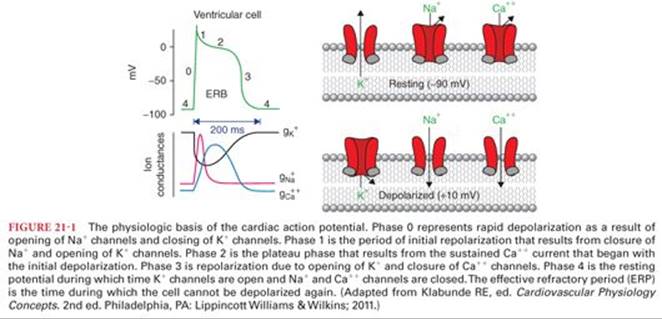
The effects of cardiac antiarrhythmic drugs on the action potential and effective refractory period of the cardiac action potential determine the clinical effect of these drugs. Drugs that primarily block inward sodium ion flow will slow conduction and result in suppression of the maximum upstroke velocity (Vmax) of the cardiac action potential. Potassium channel blocking drugs prolong repolarization by increasing the duration of the cardiac action potential and the effective refractory period resulting in prolongation of the QTc interval on the electrocardiogram (ECG). Calcium channels are present in myocardial cells, and the α subunit of L and T calcium ion channels is the site of action of some cardiac antiarrhythmic drugs.
Classification
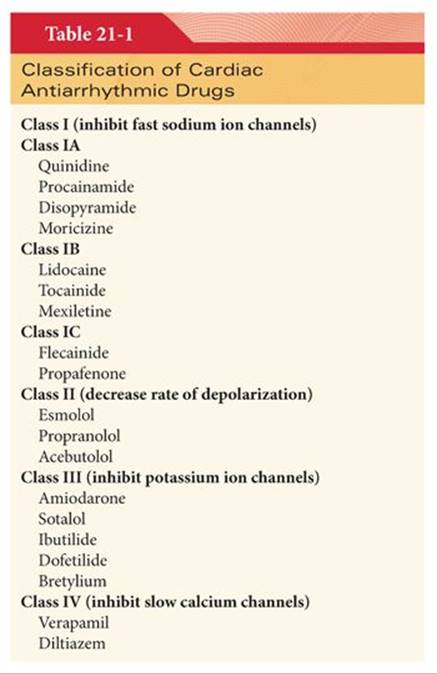
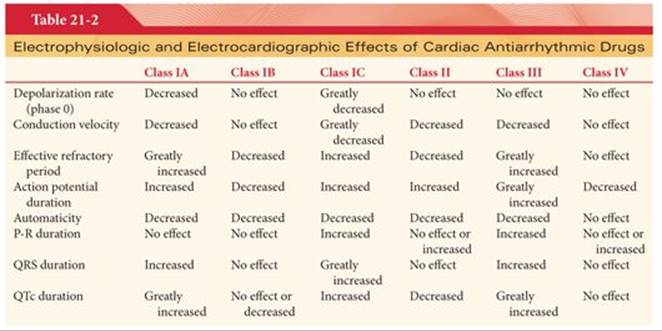
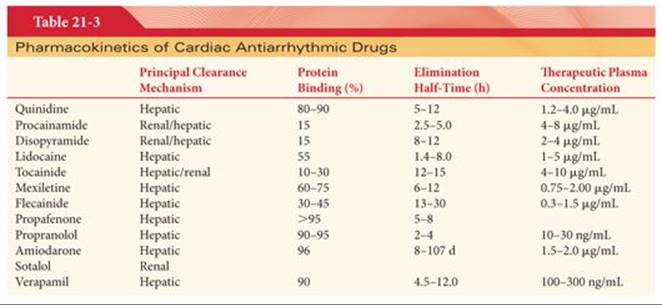
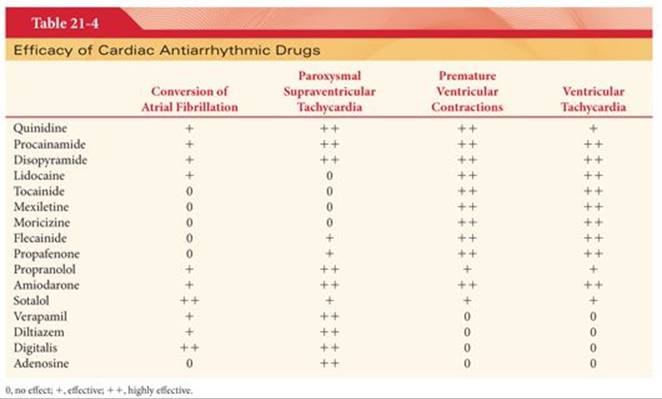
Cardiac arrhythmic drugs are most commonly classified into four groups based primarily on the ability of the drug to control arrhythmias by blocking specific ion channels and currents during the cardiac action potential (Tables 21-1and 21-2).8,9 Few cardiac antiarrhythmic drugs demonstrate completely specific effects on cardiac ion channels. Other characteristics including the impact of the drug on autonomic nervous system activity and myocardial contractility may be more important clinically. Antiarrhythmic drugs also differ in their pharmacokinetics and efficacy in treating specific types of arrhythmias (Tables 21-3 and 21-4).7
Class I Drugs
Class I drugs inhibit fast sodium channels during depolarization (phase 0) of the cardiac action potential with resultant decreases in depolarization rate and conduction velocity (see Fig. 21-1).8
Class IA Drugs
Class IA drugs (quinidine, procainamide, disopyramide, moricizine) lengthen both the action potential duration and the effective refractory period reflecting sodium channel inhibition and prolonged repolarization owing to potassium channel blockade.
Class IB Drugs
Class IB drugs (lidocaine, mexiletine, tocainide, phenytoin) are less powerful sodium channel blockers and, unlike class IA drugs, shorten the action potential duration and refractory period in normal cardiac ventricular muscle. In ischemic tissue, lidocaine may also block adenosine triphosphate (ATP)–dependent channels, thus preventing ischemia-mediated shortening of ventricular depolarization.
Class IC Drugs
Class IC drugs (flecainide, propafenone) are potent sodium channel blockers and markedly decrease the rate of phase 0 depolarization and speed of conduction of cardiac impulses. These drugs have little effect on the duration of the cardiac action potential and the effective refractory period in ventricular myocardial cells but do shorten the duration of the action potential in Purkinje fibers. This inhomogeneity of effects on the rate of cardiac depolarization plus the slowing of cardiac conduction may contribute to the proarrhythmic effects of these drugs.
Class II Drugs
Class II drugs are β-adrenergic antagonists. β-Adrenergic antagonists decrease the rate of spontaneous phase 4 depolarization resulting in decreased autonomic nervous system activity, which may be important in suppression of ventricular arrhythmia during myocardial ischemia and reperfusion. Drug-induced slowing of heart rate with resulting decreases in myocardial oxygen requirements is desirable in patients with coronary artery disease. β-Adrenergic antagonists slow the speed of conduction of cardiac impulses through atrial tissues resulting in prolongation of the P-R interval on the ECG, whereas the duration of action of the cardiac action potential in ventricular myocardium is not altered. These drugs are effective in decreasing the incidence of arrhythmia-related morbidity and mortality although the exact mechanism for this beneficial effect remains unclear.
Class III Drugs
Class III drugs (amiodarone, sotalol, bretylium) block potassium ion channels resulting in prolongation of cardiac depolarization, action potential duration, and the effective refractory period. These effects are beneficial in preventing cardiac arrhythmias by decreasing the proportion of the cardiac cycle during which myocardial cells are excitable and thus susceptible to a triggering event. Reentrant tachycardias may be suppressed if the action potential duration becomes longer than the cycle length of the tachycardia circuit.
In addition to class III effects, amiodarone exhibits sodium channel blockade (class I), β blockade (class II), and calcium channel blockade (class IV). Although this drug is U.S. Food and Drug Administration (FDA) approved for the treatment of refractory ventricular arrhythmias, it has become a widely used drug for the acute treatment and prevention of supraventricular and ventricular arrhythmias both in the operating room and the intensive care unit (see the following texts).
Sotalol is a long-acting, noncardioselective β-blocking drug consisting of a racemic mixture of levorotatory (L) and dextrorotatory (D) isomers that possess similar class III effects. The L isomer of sotalol acts as a β-adrenergic antagonist, whereas the D isomer may increase mortality in patients with ventricular dysfunction and recent myocardial infarction. The reduced incidence of proarrhythmia effects seen with amiodarone or racemic sotalol treatment may be related to beneficial class II effects.
Class IV Drugs
Class IV drugs are the calcium blockers verapamil and diltiazem, which act by inhibiting inward slow calcium ion currents that may contribute to the development of tachycardias. As such, these drugs may be useful in the treatment of both supraventricular tachyarrhythmias and idiopathic ventricular tachycardia. The dihydropyridine calcium blockers (nifedipine, nicardipine, nimodipine) do not have antiarrhythmic action.
Proarrhythmic Effects
Proarrhythmia effects describe bradyarrhythmias or tachyarrhythmias that represent new cardiac arrhythmias associated with antiarrhythmic drug treatment.3 These include torsades de pointes (most common), incessant ventricular tachycardia, and wide complex ventricular rhythm.8
Torsades de Pointes
Torsades de pointes is triggered by early afterdepolarizations in a setting of delayed repolarization and increased duration of refractoriness manifesting as prolongation of the QTc interval on the ECG. Class IA (quinidine and disopyramide) and class III drugs (amiodarone) prolong the QTc interval by potassium channel blockade providing the setting for torsades de pointes. Drug-induced torsades de pointes is often associated with bradycardia because the QTc interval is longer at slower heart rates. Exacerbating factors such as hypokalemia, hypomagnesemia, poor left ventricular function, and concomitant administration of other QT-prolonging drugs are important predisposing factors in the development of this life-threatening rhythm.
Incessant Ventricular Tachycardia
Incessant ventricular tachycardia may be precipitated by drugs that slow conduction of cardiac impulses (class IA and class IC drugs) sufficiently to create a continuous ventricular tachycardia circuit (reentry). Incessant ventricular tachycardia is more likely to occur with high doses of class IC drugs and in patients with a prior history of sustained ventricular tachycardia and poor left ventricular function. Ventricular tachycardia due to this mechanism is generally slower because of the drug effect but may be resistant to drugs or electrical therapy. This rhythm is rarely associated with class IB drugs, which have a weaker blocking effect of sodium channels.
Wide Complex Ventricular Rhythm
Wide complex ventricular rhythm is usually associated with class IC drugs in the setting of structural heart disease. Excessive plasma concentrations of the drug or an abrupt change in the dose may result in this arrhythmia. Wide complex ventricular rhythm is thought to reflect a reentrant tachycardia and easily degenerates to ventricular fibrillation.
Efficacy and Results of Treatment with Cardiac Antiarrhythmic Drugs
Chronic suppression of ventricular ectopy with an antiarrhythmic drug other than amiodarone does not prevent future life-threatening arrhythmias and may increase mortality.8 In fact, patients treated with class IC drugs experienced a higher incidence of sudden cardiac arrest reflecting the proarrhythmia effects of these drugs. Conversely, β-adrenergic antagonists that do not typically suppress ventricular arrhythmias appear to decrease mortality and the risk of life-threatening ventricular arrhythmias. In patients with a history of myocardial infarction and ventricular arrhythmias, mortality was increased in those who received class IA and class IC drugs, whereas mortality was decreased with amiodarone and β-adrenergic antagonists.10 Survivors of cardiac arrest have a high risk of subsequent ventricular fibrillation and treatment of these patients with amiodarone results in fewer life-threatening cardiac events. The proarrhythmic and negative inotropic effects of class IA and class IC drugs precludes their administration to patients with congestive heart failure. In these patients, administration of amiodarone appears to be safe and effective.
Prophylactic Antiarrhythmic Drug Therapy
Although commonly used in the past, lidocaine is no longer recommended as prophylactic treatment for patients in the early stages of acute myocardial infarction and without malignant ventricular ectopy.11 In fact, lidocaine does not decrease and may increase mortality because of an increase in the occurrence of fatal bradyarrhythmias and asystole.
Calcium channel antagonists are not recommended as routine treatment of patients with acute myocardial infarction because mortality is not decreased by these drugs. Calcium channel blockers may be administered to patients in whom myocardial ischemia persists despite treatment with aspirin, heparin, nitroglycerin, and β-adrenergic antagonists.
Magnesium is involved in many enzymatic reactions, produces systemic and coronary vasodilation, inhibits platelet aggregation, and decreases myocardial reperfusion injury. Data on the ability of magnesium to decrease mortality following myocardial infarction are conflicting.12 Treatment with magnesium is indicated in patients following an acute myocardial infarction who develop torsades de pointes ventricular tachycardia.13
In patients with heart failure, amiodarone reduces the risk of sudden cardiac death by 29% and therefore represents a viable alternative in patients who are not eligible for or who do not have access to implanted cardiac defibrillator (ICD) therapy for the prevention of sudden cardiac death from arrhythmias.14 Amiodarone can be considered as an adjuvant therapy to ICD in preventing recurrent shocks. However, amiodarone therapy is neutral with respect to all-cause mortality and is associated with a two- and fivefold increased risk of pulmonary and thyroid toxicity respectively.14 Prophylactic dofetilide and azimilide did not demonstrate a mortality benefit either.15 In summary, there is little role for prophylactic antiarrhythmic medications for the primary prevention of sudden cardiac death in patients with heart failure with the exception of amiodarone.
Atrial fibrillation after heart surgery is a common complication that has been associated with prolonged hospitalization and cardiovascular morbidity. Prophylactic therapy with amiodarone, β blockers, sotalol, and magnesium has been effective in reducing the occurrence of atrial fibrillation, length of hospital stay, and cost of hospital treatment and may be effective in reducing the risk of stroke.16
Decision to Treat Cardiac Arrhythmias
Drug treatment of cardiac arrhythmias is not uniformly effective and frequently causes side effects (see the section “Proarrhythmic Effects”).1,17 The benefit of antiarrhythmic drugs is clearest when it results in the immediate termination of a sustained tachycardia. There is no doubt that the termination of ventricular tachycardia by lidocaine or supraventricular tachycardia by adenosine or verapamil is a true benefit of antiarrhythmic therapy. Furthermore, when given for a limited period, side effects are less likely. Conversely, it has been difficult to demonstrate that antiarrhythmic drugs alleviate symptoms related to chronic cardiac arrhythmias, a situation in which the risk of side effects is greater. The increase in long-term mortality associated with certain drugs (Cardiac Arrhythmia Suppression Trial [CAST] and other trials) raises the possibility that some antiarrhythmics result in sensitization of the myocardium to concurrent triggering factors (myocardial ischemia, neurohumoral activation, myocardial stretch, slow healing process after a myocardial infarction) that then elicit cardiac arrhythmias.17 The mechanism by which β-adrenergic antagonists decrease mortality after an acute myocardial infarction is not known.
The value of monitoring plasma drug concentrations in minimizing the risks associated with therapy is not established. In fact, many side effects appear to depend as much on the nature and extent of the underlying heart disease as on increased plasma drug concentrations.17
Antiarrhythmic Drug Pharmacology
Quinidine
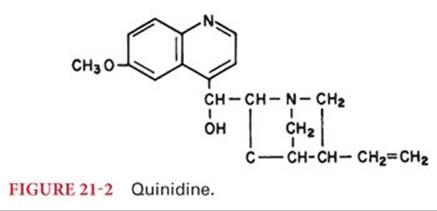
Quinidine is a class IA drug that is effective in the treatment of acute and chronic supraventricular arrhythmias (Fig. 21-2).18 Due to its side effect profile and low therapeutic index (see the following texts), and the availability of newer agents, quinidine is rarely used. It can prevent recurrence of supraventricular tachyarrhythmias or suppress premature ventricular contractions and can slow the ventricular rate in the presence of atrial fibrillation, and about 25% of patients with new-onset atrial fibrillation will convert to normal sinus rhythm when treated with quinidine. Supraventricular tachyarrhythmias associated with Wolff-Parkinson-White syndrome are effectively suppressed by quinidine.
Quinidine is most often administered orally in a dose of 200 to 400 mg four times daily. Oral absorption of quinidine is rapid, with peak concentrations in the plasma attained in 60 to 90 minutes and an elimination half-time of 5 to 12 hours. The therapeutic blood level of quinidine is 1.2 to 4.0 µg/mL. Intravenous (IV) quinidine is rarely used due to vasodilation and myocardial depression.
Mechanism of Action
Quinidine is the dextroisomer of quinine and, like quinine, has antimalarial and antipyretic effects. Unlike quinine, however, quinidine has intense effects on the heart. For example, quinidine decreases the slope of phase 4 depolarization, which explains its effectiveness in suppressing cardiac arrhythmias caused by enhanced automaticity. Quinidine increases the fibrillation threshold in the atria and ventricles. Quinidine-induced slowing of the conduction of cardiac impulses through normal and abnormal fibers may be responsible for the ability of quinidine to occasionally convert atrial flutter or fibrillation to normal sinus rhythm. This drug can abolish reentry arrhythmias by prolonging conduction of cardiac impulses in an area of injury, thus converting one-way conduction blockade to two-way conduction blockade. A decrease in the atrial rate during atrial flutter or fibrillation may reflect slowed conduction velocity, a prolonged effective refractory period in the atria, or both.
Metabolism and Excretion
Quinidine is hydroxylated in the liver to inactive metabolites, which are excreted in the urine. About 20% of quinidine is excreted unchanged in the urine. Enzyme induction significantly shortens the duration of action of quinidine. The concurrent administration of phenytoin, phenobarbital, or rifampin may lower blood levels of quinidine by enhancing liver clearance. Because of its dependence on renal excretion and hepatic metabolism for clearance from the body, accumulation of quinidine or its metabolites may occur in the presence of impaired function of these organs. About 80% to 90% of quinidine in plasma is bound to albumin. Quinidine accumulates rapidly in most tissues except the brain.
Side Effects
Quinidine has a low therapeutic ratio, with heart block, hypotension, and proarrhythmia being potential adverse side effects. As the plasma concentration increases to more than 2 µg/mL, the P-R interval, QRS complex, and QTc interval on the ECG are prolonged. Patients with preexisting prolongation of the QTc interval or evidence of atrioventricular heart block on the ECG should not be treated with quinidine.
Patients in normal sinus rhythm treated with quinidine may show an increase in heart rate that is a result of presumably either an anticholinergic action and/or a reflex increase in sympathetic nervous system activity. This atropine-like action of quinidine opposes its direct depressant actions on the sinoatrial and atrioventricular nodes and is why digitalis is often given before quinidine therapy is initiated.
Allergic reactions may include drug rash or a drug fever that is occasionally associated with leukocytosis. Thrombocytopenia is a rare occurrence that is caused by drug–platelet complexes that evoke production of antibodies. Discontinuation of quinidine results in return of the platelet count to normal in 2 to 7 days. Nausea, vomiting, and diarrhea occur in about one-third of treated patients.
Like other cinchona alkaloids and salicylates, quinidine can cause cinchonism. Symptoms of cinchonism include tinnitus, decreased hearing acuity, blurring of vision, and gastrointestinal upset. In severe cases, there may be abdominal pain and mental confusion.
Because quinidine is an α-adrenergic blocking drug, it can interact in an additive manner with drugs that cause vasodilation. Quinidine also interferes with normal neuromuscular transmission and may accentuate the effect of neuromuscular blockings drugs. Recurrence of skeletal muscle paralysis in the immediate postoperative period has been observed in association with the administration of quinidine.19
Procainamide
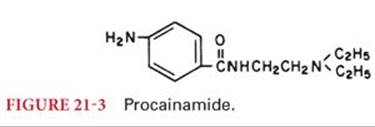
Procainamide is as effective as quinidine for the treatment of ventricular tachyarrhythmias but less effective in abolishing atrial tachyarrhythmias (Fig. 21-3). Premature ventricular contractions and paroxysmal ventricular tachycardia are suppressed in most patients within a few minutes after IV administration, which is better tolerated than IV quinidine but may still cause hypotension. Procainamide can be administered IV at a rate not exceeding 100 mg every 5 minutes until the rhythm is controlled (maximum 15 mg/kg). When the cardiac arrhythmia is controlled, a constant rate of infusion (2 to 6 mg per minute) is used to maintain a therapeutic concentration of procainamide. The systemic blood pressure and ECG (QRS complex) are monitored continuously during infusion of this drug. The therapeutic blood level of procainamide is 4 to 8 µg/mL.
Mechanism of Action
Procainamide is an analogue of the local anesthetic procaine. Procainamide possesses an electrophysiologic action similar to that of quinidine but produces less prolongation of the QTc interval on the ECG. As a result, paradoxical ventricular tachycardia is a rare feature of procainamide therapy. Procainamide has no vagolytic effect and can be used in patients with atrial fibrillation to suppress ventricular irritability without increasing the ventricular rate. Like quinidine, procainamide may prolong the QRS complex and cause ST-T wave changes on the ECG.
Metabolism and Excretion
Procainamide is eliminated by renal excretion and hepatic metabolism. In humans, 40% to 60% of procainamide is excreted unchanged by the kidneys. The dose of procainamide must be decreased when renal function is abnormal. In the liver, procainamide that has not been excreted unchanged by the kidneys is acetylated to N-acetyl procainamide (NAPA), which is also eliminated by the kidneys. This metabolite is cardioactive and probably contributes to the antiarrhythmic effects of procainamide. In the presence of renal failure, plasma concentrations of NAPA may reach dangerous levels. Eventually, 90% of an administered dose of procainamide is recovered as unchanged drug or its metabolites.
The activity of the N-acetyltransferase enzyme response for the acetylation of procainamide is genetically determined. In patients who are rapid acetylators, the elimination half-time of procainamide is 2.5 hours compared with 5 hours in slow acetylators. The blood level of NAPA exceeds that of procainamide in rapid but not slow acetylators. Unlike its analogue, procaine, procainamide is highly resistant to hydrolysis by plasma cholinesterase. Evidence of this resistance is the fact that only 2% to 10% of an administered dose of procainamide is recovered unchanged in the urine as paraaminobenzoic acid.
Only about 15% of procainamide is bound to plasma proteins. Despite this limited binding in plasma, procainamide is avidly bound to tissue proteins with the exception of the brain.
Side Effects
Similar to quinidine, use of procainamide has dramatically decreased due to its side effect profile and availability of newer agents. Hypotension that results from procainamide is more likely to be caused by direct myocardial depression than peripheral vasodilation. Indeed, rapid IV injection of procainamide is associated with hypotension, whereas higher plasma concentrations slow conduction of cardiac impulses through the atrioventricular node and intraventricular conduction system. Ventricular asystole or fibrillation may occur when procainamide is administered in the presence of heart block, as associated with digitalis toxicity. Direct myocardial depression that occurs at high plasma concentrations of procainamide is exaggerated by hyperkalemia. As with quinidine, ventricular arrhythmias may accompany excessive plasma concentrations of procainamide.
Chronic administration of procainamide may be associated with a syndrome that resembles systemic lupus erythematosus. Serositis, arthritis, pleurisy, or pericarditis may develop, but unlike systemic lupus erythematosus, vasculitis is not usually present. Patients with this lupus-like syndrome often develop antinuclear antibodies (positive antinuclear antibody test). Slow acetylators are more likely than rapid acetylators to develop antinuclear antibodies. Symptoms disappear when procainamide is discontinued.
As with many drugs, procainamide may cause drug fever or an allergic rash. Although agranulocytosis is rare, leukopenia and thrombocytopenia may be seen after chronic use of procainamide, often in association with the lupus-like syndrome. The most common early, noncardiac complications of procainamide are gastrointestinal disturbances, including nausea and vomiting.
Disopyramide
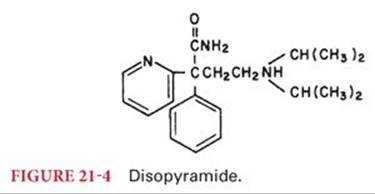
Disopyramide is comparable to quinidine in effectively suppressing atrial and ventricular tachyarrhythmias (Fig. 21-4). Absorption of oral disopyramide is almost complete, resulting in peak blood levels within 2 hours of administration. Therapeutic plasma concentrations of disopyramide are 2 to 4 µg/mL. About 50% of the drug is excreted unchanged by the kidneys. As a result, the typical elimination half-time of 8 to 12 hours is prolonged in the presence of renal dysfunction. A dealkylated metabolite with less antiarrhythmic and atropine-like activity than the parent drug accounts for about 20% of the drug’s elimination. Disopyramide is not available in an IV formulation.
Side Effects
The most common side effects of disopyramide are dry mouth and urinary hesitancy, both of which are caused by the drug’s anticholinergic activity. Some patients taking disopyramide also experience blurred vision or nausea. Prolongation of the QTc interval on the ECG and paradoxical ventricular tachycardia (similar to quinidine) may occur. For this reason, disopyramide should be administered cautiously if patients have known cardiac conduction effects. Disopyramide has significant myocardial depressant effects and can precipitate congestive heart failure and hypotension. The potential for direct myocardial depression, especially in patients with preexisting left ventricular dysfunction, seems to be greater with this drug than with quinidine and procainamide.
Moricizine
Moricizine is a phenothiazine derivative with modest efficacy in the treatment of sustained ventricular arrhythmias. In view of its proarrhythmic effects, this drug is reserved for the treatment of life-threatening ventricular arrhythmias when other drugs such as amiodarone are not available or contraindicated (e.g., allergy). It is not effective in the treatment of atrial arrhythmias. Moricizine decreases the fast inward sodium ion current and also decreases automaticity.
Side Effects
Proarrhythmic effects occur in 3% to 15% of patients treated chronically with moricizine. Patients with poor left ventricular function tolerate moricizine and small increases in systemic blood pressure and heart rate may accompany therapy. Plasma concentrations of theophylline may increase in patients treated with moricizine.
Lidocaine
Lidocaine is used principally for suppression of ventricular arrhythmias, having minimal if any effect on supraventricular tachyarrhythmias (see Chapter 10). This drug is particularly effective in suppressing reentry cardiac arrhythmias, such as premature ventricular contractions and ventricular tachycardia. The efficacy of prophylactic lidocaine therapy for preventing early ventricular fibrillation after acute myocardial infarction has not been documented and is no longer recommended (see earlier discussion).
In adult patients with a normal cardiac output, hepatic function, and hepatic blood flow, an initial administration of lidocaine, 2 mg/kg IV, followed by a continuous infusion of 1 to 4 mg per minute should provide therapeutic plasma lidocaine concentrations of 1 to 5 µg/mL. Decreased cardiac output and/or hepatic blood flow, as produced by anesthesia, acute myocardial infarction, or congestive heart failure, may decrease by 50% or more of the initial dose and the rate of lidocaine infusion necessary to maintain therapeutic plasma levels. Concomitant administration of drugs such as propranolol and cimetidine can result in decreased hepatic clearance of lidocaine. Advantages of lidocaine over quinidine or procainamide are the more rapid onset and prompt disappearance of effects when the continuous infusion is terminated, greater therapeutic index, and a much reduced side effect profile. Lidocaine for IV administration differs from that used for local anesthesia because it does not contain a preservative. Lidocaine is also well absorbed after oral administration but is subject to extensive hepatic first-pass metabolism. As a result, only about one-third of an oral dose of lidocaine reaches the circulation. Mexiletine (see the following texts) is an oral analogue of lidocaine. Intramuscular (IM) absorption of lidocaine is nearly complete. In an emergency situation, lidocaine, 4 to 5 mg/kg IM, will produce a therapeutic plasma concentration in about 15 minutes. This level is maintained for about 90 minutes.
Mechanism of Action
Lidocaine delays the rate of spontaneous phase 4 depolarization by preventing or diminishing the gradual decrease in potassium ion permeability that normally occurs during this phase. The effectiveness of lidocaine in suppressing premature ventricular contractions reflects its ability to decrease the rate of spontaneous phase 4 depolarization. The ineffectiveness of lidocaine against supraventricular tachyarrhythmias presumably reflects its inability to alter the rate of spontaneous phase 4 depolarization in atrial cardiac cells.
In usual therapeutic doses, lidocaine has no significant effect on either the QRS or QTc interval on the ECG or on atrioventricular conduction. In high doses, however, lidocaine can decrease conduction in the atrioventricular node as well as in the His–Purkinje system.
Metabolism and Excretion
Lidocaine is metabolized in the liver, and resulting metabolites may possess cardiac antiarrhythmic activity.
Side Effects
Lidocaine is essentially devoid of effects on the ECG or cardiovascular system when the plasma concentration remains less than 5 µg/mL. In contrast to quinidine and procainamide, lidocaine does not alter the duration of the QRS complex on the ECG, and activity of the sympathetic nervous system is not changed. Lidocaine depresses cardiac contractility less than any other antiarrhythmic drug used to suppress ventricular arrhythmias. Toxic plasma concentrations of lidocaine (>5 to 10 µg/mL) produce peripheral vasodilation and direct myocardial depression, resulting in hypotension. In addition, slowing of conduction of cardiac impulses may manifest as bradycardia, a prolonged P-R interval, and widened QRS complex on the ECG. Stimulation of the central nervous system (CNS) occurs in a dose-related manner, with symptoms appearing when plasma concentrations of lidocaine are greater than 5 µg/mL. Seizures are possible at plasma concentrations of 5 to 10 µg/mL. CNS depression, apnea, and cardiac arrest are possible when plasma lidocaine concentrations are greater than 10 µg/mL. The convulsive threshold for lidocaine is decreased during arterial hypoxemia, hyperkalemia, or acidosis, emphasizing the importance of monitoring these parameters during continuous infusion of lidocaine to patients for suppression of ventricular arrhythmias.
Mexiletine
Mexiletine is an orally effective amine analogue of lidocaine that is used for the chronic suppression of ventricular cardiac tachyarrhythmias. Combination with a β blocker or another antiarrhythmic drug such as quinidine or procainamide results in a synergistic effect that permits a decrease in the dose of mexiletine and an associated decrease in the incidence of side effects. Electrophysiologically, mexiletine is similar to lidocaine. The addition of the amine side group enables mexiletine to avoid significant hepatic first-pass metabolism that limits the effectiveness of orally administered lidocaine. The usual adult dose is 150 to 200 mg every 8 hours. As it is a lidocaine analog, mexiletine may be effective in decreasing neuropathic pain for patients in whom alternative pain medications have been unsatisfactory.20
Side Effects
Epigastric burning may occur and is often relieved by taking the drug with meals. Neurologic side effects include tremulousness, diplopia, vertigo, and occasionally slurred speech. Cardiovascular side effects resemble lidocaine. Increases in liver enzymes may occur especially in patients manifesting congestive heart failure. Blood dyscrasias occur rarely. Proarrhythmic effects may manifest in occasionally treated patients. Toxic effects may develop at plasma concentrations only slightly above therapeutic levels.
Tocainide
Tocainide, like mexiletine, is an orally effective amine analogue of lidocaine that was formerly used for the chronic suppression of ventricular cardiac tachyarrhythmias, but is no longer available in the United States. Its side effects resemble those of mexiletine, but in rare patients, this drug has caused severe bone marrow depression (leukopenia, anemia, thrombocytopenia) and pulmonary fibrosis.20 The usual adult dose is 400 to 800 mg administered every 8 hours. As with mexiletine, the combination of tocainide with a β-adrenergic blocker or another antiarrhythmic drug has a synergistic effect.
Phenytoin
Phenytoin is particularly effective in suppression of ventricular arrhythmias associated with digitalis toxicity. This drug is effective, although to a lesser extent than quinidine, procainamide, and lidocaine, in the treatment of ventricular arrhythmias due to other causes. Phenytoin may be useful in the treatment of paradoxical ventricular tachycardia or torsades de pointes that is associated with a prolonged QTc interval on the ECG. Treatment of atrial tachyarrhythmias with phenytoin is not very effective.
Phenytoin can be administered orally or IV. Intramuscular administration is too unreliable to treat cardiac arrhythmias. The IV dose is 100 mg (1.5 mg/kg) every 5 minutes until the cardiac arrhythmia is controlled or 10 to 15 mg/kg (maximum 1,000 mg) has been administered. Because phenytoin can precipitate in 5% dextrose in water, it is preferable to give the drug via a delivery tubing containing normal saline. Slow IV injection into a large peripheral or central vein is recommended to minimize the likelihood of discomfort or thrombosis at the injection site. Therapeutic blood levels range from 10 to 18 µg/mL.
Mechanism of Action
The effects of phenytoin on automaticity and velocity of conduction of cardiac impulses resemble those of lidocaine. Phenytoin exerts a greater effect on the electrocardiographic QTc interval than does lidocaine and shortens the QTc interval more than any of the other antiarrhythmic drugs. Phenytoin has no significant effect on the ST-T waves or the QRS complex. It does not significantly depress the myocardium in usual doses but can cause hypotension when administered in high doses rapidly. Conduction of cardiac impulses through the atrioventricular node is improved, but activity of the sinus node may be depressed. The ability of some volatile anesthetics to depress the sinoatrial node is a consideration if administration of phenytoin during general anesthesia is planned.
Metabolism and Excretion
Phenytoin is hydroxylated and then conjugated with glucuronic acid for excretion in the urine. The elimination half-time is about 24 hours. Because phenytoin is metabolized by the liver, impaired hepatic function may result in higher than normal blood levels of the drug. Blood levels of phenytoin can be lowered by drugs, such as barbiturates, that enhance its rate of metabolism. Warfarin, phenylbutazone, and isoniazid may inhibit metabolism and increase phenytoin blood levels. Uremia increases the unbound fraction of phenytoin relative to the plasma-bound portion.
Side Effects
Phenytoin toxicity most commonly manifests as CNS disturbances, especially cerebellar disturbances. Symptoms include ataxia, nystagmus, vertigo, slurred speech, sedation, and mental confusion. Cerebellar symptoms correlate with phenytoin blood levels of greater than 18 µg/mL. Cardiac arrhythmias that have not been suppressed at this concentration are unlikely to respond favorably to further increases in the dosage of phenytoin. Phenytoin partially inhibits insulin secretion and may lead to increased blood glucose levels in patients who are hyperglycemic. Leukopenia, granulocytopenia, and thrombocytopenia may occur as a manifestation of drug-induced bone marrow depression. Nausea, skin rash, and megaloblastic anemia may occur.
Flecainide
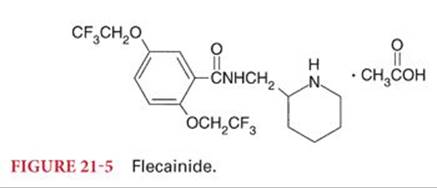
Flecainide is a fluorinated local anesthetic analogue of procainamide that is more effective in suppressing ventricular premature beats and ventricular tachycardia than quinidine and disopyramide (Fig. 21-5). Flecainide is also effective for the treatment of atrial tachyarrhythmias. Because it delays conduction in the bypass tracts, flecainide can be effective for the treatment of tachyarrhythmias due to reentry mechanisms as associated with the Wolff-Parkinson-White syndrome. Chronic treatment of ventricular arrhythmias with flecainide after myocardial infarction is not recommended due to an increased incidence of sudden death in treated patients.21 Thus, flecainide should be reserved for the treatment of life-threatening arrhythmias.
Metabolism and Excretion
Oral absorption of flecainide is excellent, and a prolonged elimination half-time (about 20 hours) makes a twice daily dose of 100 to 200 mg acceptable. This drug is not available in an IV formulation. About 25% of flecainide is excreted unchanged by the kidneys, and the remainder appears as weakly active metabolites. Elimination of flecainide is decreased in patients with congestive heart failure or renal failure. Flecainide competes with metabolic pathways used by other drugs and as a result may increase the plasma concentrations of digoxin and propranolol. Coadministration of amiodarone and flecainide can double plasma flecainide concentrations. Phenytoin and other drugs that stimulate hepatic P450 enzymes may speed the elimination of flecainide. The therapeutic plasma concentration of flecainide ranges from 0.2 to 1.0 µg/mL. Flecainide has a moderate negative inotropic effect and a proarrhythmic effect, especially in patients with preexisting decreased left ventricular function. Vertigo and difficulty in visual accommodation are common dose-related side effects of flecainide therapy.
Side Effects
Proarrhythmic effects occur in a significant number of treated patients especially in the presence of left ventricular dysfunction. Flecainide prolongs the QRS complex by 25% or more and, to a lesser extent, prolongs the P-R interval on the ECG. These changes suggest the possibility of atrioventricular or infranodal conduction block of cardiac impulses. Flecainide may depress sinoatrial node function as do β-adrenergic antagonists and calcium channel blockers. For these reasons, flecainide is not administered to patients with second- and third-degree atrioventricular heart block. The most common noncardiac adverse effect of flecainide is dose-related blurred vision. Flecainide increases the capture thresholds of pacemakers. This is the amount of current required to electrically capture cardiac tissue. Therefore, capture thresholds should be remeasured in individuals with pacemakers after the steady-state flecainide dosage is changed.22
Propafenone
Propafenone, like flecainide, is an effective oral antiarrhythmic drug for suppression of ventricular and atrial tachyarrhythmias. This drug possesses weak β-adrenergic blocking and calcium blocking effects. Propafenone may be proarrhythmic, especially in patients with poor left ventricular function and sustained ventricular tachycardia.
Absorption after oral administration is excellent, and peak plasma levels occur in about 3 hours. The rate of metabolism is genetically determined with about 90% of patients able to metabolize propafenone efficiently in the liver. The principal metabolites in those who metabolize the drug rapidly are pharmacologically active and equivalent in antiarrhythmic potency to the parent drug. Because of extensive metabolism, the availability of propafenone increases significantly in the presence of liver disease.
Side Effects
Proarrrhythmic effects are more likely to occur in patients with preexisting ventricular arrhythmias. Propafenone depresses the myocardium and may cause conduction abnormalities such as sinoatrial node slowing, atrioventricular block, and bundle-branch block. Small doses of quinidine inhibit the metabolism of propafenone, whereas propafenone interferes with the metabolism of propranolol and metoprolol resulting in increased plasma concentrations of these β blockers. This drug also increases the plasma concentration of warfarin and may prolong the prothrombin time. Vertigo, disturbances in taste, and blurred vision are the common side effects. Nausea and vomiting may occur, and, rarely, cholestatic hepatitis or worsening of asthma manifests.
β-Adrenergic Antagonists
β-Adrenergic antagonists are effective for treatment of cardiac arrhythmias related to enhanced activity of the sympathetic nervous system (perioperative stress, thyrotoxicosis, pheochromocytoma). Propranolol and esmolol are effective for controlling the rate of ventricular response in patients with atrial fibrillation and atrial flutter. Multifocal atrial tachycardia may respond to esmolol or metoprolol but is best treated with amiodarone. Comparable doses of metoprolol (5 to 15 mg IV over 20 minutes, which lasts 5 to 7 hours) produces antiarrhythmic effects similar to those of propranolol, as well as the same potential side effects. Acebutolol is effective in the treatment of frequent premature ventricular contractions. β-Adrenergic antagonists, especially propranolol, may be effective in controlling torsades de pointes for patients with prolonged QTc intervals. Acebutolol, propranolol, and metoprolol are approved for prevention of sudden death following myocardial infarction. For example, in contrast to class I antiarrhythmic drugs, propranolol decreases sudden death as well as reinfarction rates in the first year after acute myocardial infarction.11
Mechanism of Action
The antiarrhythmic effects of β-adrenergic antagonists most likely reflect blockade of the responses of β receptors in the heart to sympathetic nervous system stimulation, as well as the effects of circulating catecholamines. As a result, the rate of spontaneous phase 4 depolarization and sinoatrial node discharge is decreased. The rate of conduction of cardiac impulses through the atrioventricular node is slowed as reflected by a prolonged P-R interval on the ECG. This drug has little effect on the ST-T wave, although it may shorten the overall QTc interval. β-Adrenergic antagonists can depress the myocardium not only by β blockade but also by direct depressant effects on cardiac muscle. In addition to β-adrenergic blockade, these drugs cause alterations in the electrical activity of myocardial cells. This cell membrane effect is probably responsible for some of the antidysrhythmic effects of β-adrenergic antagonists. Indeed, dextropropranolol, which lacks β-adrenergic antagonist activity, is an effective cardiac antiarrhythmic.
The usual oral dose of propranolol for chronic suppression of ventricular arrhythmias is 10 to 80 mg every 6 to 8 hours. The total daily dose is determined by the physiologic effects of propranolol on the heart rate and systemic blood pressure. Effective β blockade is usually achieved in an otherwise normal person when the resting heart rate is 55 to 60 beats per minute. For emergency suppression of cardiac arrhythmias in an adult, propranolol may be administered IV in a dose of 1 mg per minute (3 to 6 mg). The onset of action after IV administration is within 2 to 5 minutes, the peak effect at the atrioventricular node is within 10 to 15 minutes, and the duration of action is 3 to 4 hours. Administration at 1-minute intervals is intended to minimize the likelihood of excessive pharmacologic effects on the conduction of cardiac impulses. In patients with marginal systemic blood pressure or left ventricular dysfunction, the rate of administration may need to be slowed and the total dose limited to less than 3 mg.
Metabolism and Excretion
Orally administered propranolol is extensively metabolized in the liver, and a hepatic first-pass effect is responsible for the variation in plasma concentration; the therapeutic plasma concentration of propranolol may vary from 10 to 30 ng/mL. Propranolol readily crosses the blood–brain barrier. The principal metabolite of propranolol is 4-hydroxypropranolol, which possesses weak β-adrenergic antagonist activity. This active metabolite most likely contributes to the antiarrhythmic activity after the oral administration of propranolol. The elimination half-time of propranolol is 2 to 4 hours, although the antiarrhythmic activity usually persists for 6 to 8 hours.
Side Effects
Bradycardia, hypotension, myocardial depression, and bronchospasm are side effects of β-adrenergic antagonists that reflect the ability of these drugs to inhibit sympathetic nervous system activity. Patients with any degree of congestive heart failure are highly dependent on increased sympathetic nervous system activity as a compensatory mechanism. Attenuation of this compensatory response may accentuate congestive heart failure. In addition, the direct depressant effects of propranolol on myocardial contractility may further accentuate congestive heart failure. The use of propranolol in patients with preexisting atrioventricular heart block is not recommended. Propranolol may cause drug fever, an allergic rash, or nausea and may increase esophageal reflux. Cold extremities and worsening of Raynaud disease may occur. Interference with glucose metabolism may manifest as hypoglycemia in patients being treated for diabetes mellitus. The most common CNS side effects are mental depression and fatigue. Reversible alopecia may occur. Upregulation of β-adrenergic receptors occurs with chronic administration of β-adrenergic antagonists such that abrupt discontinuation of treatment may lead to supraventricular tachycardia that is particularly undesirable in patients with coronary artery disease. Slowly tapering the dose of β-adrenergic antagonist will prevent withdrawal responses.
Amiodarone
Amiodarone is a potent antiarrhythmic drug with a wide spectrum of activity against refractory supraventricular and ventricular tachyarrhythmias. In the presence of ventricular tachycardia or fibrillation that is resistant to electrical defibrillation, amiodarone 300 mg IV is recommended. Preoperative oral administration of amiodarone decreases the incidence of atrial fibrillation after cardiac surgery.23 It is also effective for suppression of tachyarrhythmias associated with Wolff-Parkinson-White syndrome because it depresses conduction in the atrioventricular node and the accessory bypass tracts. Similar to β blockers and unlike class I drugs, amiodarone decreases mortality after myocardial infarction.24
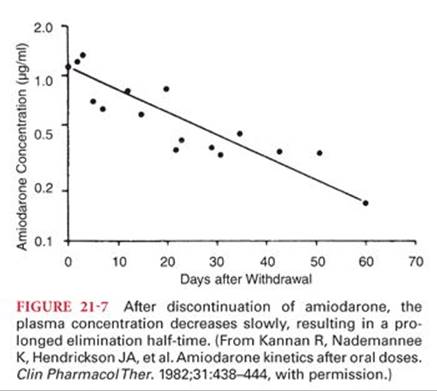
After initiation of oral therapy, a decrease in ventricular tachyarrhythmias occurs within 72 hours. The maintenance dose can usually be gradually decreased to about 400 mg daily for suppression of ventricular tachyarrhythmias and 200 mg daily for suppression of supraventricular tachyarrhythmias. Administered IV over 2 to 5 minutes, a dose of 5 mg/kg produces a prompt antiarrhythmic effect that lasts up to 4 hours. Therapeutic blood concentrations of amiodarone are 1.0 to 3.5 µg/mL. After discontinuation of chronic oral therapy, the pharmacologic effect of amiodarone lasts for a prolonged period (up to 60 days), reflecting the prolonged elimination half-time of this drug.
Mechanism of Action
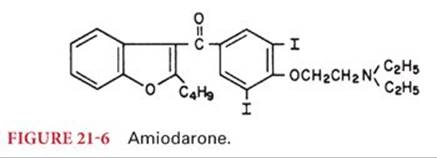
Amiodarone, a benzofurane derivative, is 37% iodine by weight and structurally resembles thyroxine (Fig. 21-6). It prolongs the effective refractory period in all cardiac tissues, including the sinoatrial node, atrium, atrioventricular node, His–Purkinje system, ventricle, and, in the case of Wolff-Parkinson-White syndrome, accessory bypass tracts. Amiodarone has an antiadrenergic effect (noncompetitive blockade of α and β receptors) and a minor negative inotropic effect, which may be offset by the drug’s potent vasodilating properties.25 Amiodarone acts as an antianginal drug by dilating coronary arteries and increasing coronary blood flow.
Metabolism and Excretion
Amiodarone has a prolonged elimination half-time (29 days) and large volume of distribution (Fig. 21-7).26 This drug is minimally dependent on renal excretion as evidenced by an unchanged elimination half-time in the absence of renal function.26 The principal metabolite, desethylamiodarone, is pharmacologically active and has a longer elimination half-time than the parent drug, resulting in accumulation of this metabolite with chronic therapy. Protein binding of amiodarone is extensive, and the drug is not easily removed by hemodialysis. There is an inconsistent relationship between the plasma concentration of amiodarone and its pharmacologic effects as the ultimate concentration of drug in the myocardium is 10 to 50 times that present in the plasma.
Side Effects
Side effects in patients treated chronically with amiodarone are common, especially when the daily maintenance dose exceeds 400 mg.27 Screening tests, such as chest radiographs and tests for pulmonary function, thyroid-stimulating hormone, and liver function, are recommended. Other than the pulmonary function tests, these studies should be repeated at 3, 6, and 12 months and annually thereafter.28
Pulmonary Toxicity
The most serious side effect of amiodarone is pulmonary alveolitis (pneumonitis).29,30 The overall incidence of amiodarone-induced pulmonary toxicity is estimated at 5% to 15% of treated patients, with a reported mortality of 5% to 10%. The cause of this drug-induced pulmonary toxicity is not known but may reflect the ability of amiodarone to enhance production of free oxygen radicals in the lungs that in turn oxidize cellular proteins, membrane lipids, and nucleic acids. It is suggested that high-inspired oxygen concentrations may accelerate these reactions.31 For this reason, it may be prudent to restrict the inspired concentration of oxygen in patients receiving amiodarone and undergoing general anesthesia to the lowest level capable of maintaining adequate systemic oxygenation.32 Indeed, postoperative pulmonary edema has been reported in patients being treated chronically with amiodarone.32Furthermore, there is evidence that patients with preexisting evidence of amiodarone-induced pulmonary toxicity are at increased risk for developing adult respiratory distress syndrome after surgery that requires cardiopulmonary bypass.33,34 It must be recognized, however, that no animal model has established a cause-and-effect relationship between oral amiodarone administration and secondary oxygen-enhanced pulmonary toxicity.
There are two distinct types of presentation of patients with amiodarone-induced pulmonary toxicity.30 The more common form of pulmonary toxicity consists of a slow insidious onset of progressive dyspnea, cough, weight loss, and pulmonary infiltrates on the chest x-ray. The second form of pulmonary toxicity has a much more acute onset of dyspnea, cough, arterial hypoxemia, and occasionally fever that may mimic an infectious pneumonia. Postoperative pulmonary edema attributed to amiodarone-induced pulmonary toxicity reflects this acute form of onset.
Cardiovascular
Like quinidine and disopyramide, amiodarone may prolong the QTc interval on the ECG, which may lead to an increased incidence of ventricular tachyarrhythmias, including torsades de pointes (proarrhythmic effect). Heart rate often slows and is resistant to treatment with atropine. Responsiveness to catecholamines and sympathetic nervous system stimulation is decreased as a result of drug-induced inhibition of α- and β-adrenergic receptors. Direct myocardial depressant effects are presumed to be minimal.35 IV administration of amiodarone may result in hypotension, most likely reflecting the peripheral vasodilating effects of this drug. Atrioventricular heart block may also occur when the drug is administered IV. The negative inotropic effects of amiodarone may be enhanced in the presence of general anesthesia, β-adrenergic blockers, and calcium channel blockers.36 Drugs that inhibit automaticity of the sinoatrial node (lidocaine) could accentuate the effects of amiodarone and increase the likelihood of sinus arrest. The potential need for a temporary artificial cardiac (ventricular) pacemaker and administration of a sympathomimetic such as isoproterenol may be a consideration in patients being treated with this drug and scheduled to undergo surgery.37
Ocular, Dermatologic, Neurologic, and Hepatic
Corneal microdeposits occur in most patients during amiodarone therapy, but visual impairment is unlikely. Optic neuropathy has been found in 1.8% of patients treated with amiodarone compared to 0.3% of the general population.38 Optic neuropathy from amiodarone typically has a more insidious onset, milder degree of visual loss, longer duration of disc edema, and more often bilateral. Discontinuation often leads to slow improvement in visual acuity. Photosensitivity and rash develop in up to 10% of patients. Rarely, there may be a cyanotic discoloration (slate-gray pigmentation) of the face that persists even after the drug is discontinued. Neurologic toxicity may manifest as peripheral neuropathy, tremors, sleep disturbance, headache, or proximal skeletal muscle weakness.39 Transient, mild increases in plasma transaminase concentrations may occur, and fatty liver infiltration has been observed.39
Pharmacokinetic
Amiodarone inhibits hepatic P450 enzymes resulting in increased plasma concentrations of digoxin, procainamide, quinidine, warfarin, and cyclosporine. Amiodarone also displaces digoxin from protein-binding sites. The digoxin dose may be decreased as much as 50% when administered in the presence of amiodarone. Amiodarone also increases the plasma concentrations of quinidine, procainamide, and phenytoin. The anticoagulant effects of warfarin are potentiated because amiodarone may directly depress vitamin K–dependent clotting factors.
Endocrine
Amiodarone contains iodine and has effects on thyroid metabolism, causing either hypothyroidism or hyperthyroidism in 2% to 4% of patients. Thyroid dysfunction may develop insidiously in these patients. Hyperthyroidism has occurred up to 5 months after discontinuation of amiodarone. Patients with preexisting thyroid dysfunction seem more likely to develop amiodarone-related alterations in thyroid function. Hyperthyroidism is best detected by finding an increased plasma concentration of triiodothyronine. Hypothyroidism is best detected by finding an increased plasma concentration of thyroid-stimulating hormone.
Amiodarone-induced hyperthyroidism reflecting the release of iodine from the parent drug is often refractory to conventional therapy. These patients may be intolerant of β-adrenergic blockade because of their underlying cardiomyopathies. When medical management fails, the performance of surgical thyroidectomy provides prompt metabolic control. Bilateral superficial cervical plexus blocks have been described for anesthetic management of subtotal thyroidectomy in these patients.40
Dronedarone
Dronedarone is a noniodinated benzofuran derivative of amiodarone that has been developed as an alternative for the treatment of atrial fibrillation and atrial flutter. Similar to amiodarone, dronedarone is a potent blocker of multiple ion currents. It is currently recommended for treatment of atrial fibrillation and atrial flutter in people whose hearts have either returned to normal rhythm or who undergo drug therapy or direct current cardioversion (DCCV) to maintain normal rhythm. Dronedarone reduced the rate of hospitalization in atrial fibrillation patients but did not demonstrate a reduction in mortality.41 A trial of the drug in heart failure was stopped as an interim analysis showed a possible increase in heart failure deaths in patients with moderate to severe congestive heart failure.42 As a result, the clinical utility of dronedarone is significantly limited by its efficacy and contraindication in patients with permanent atrial fibrillation or patients with advanced or recent congestive heart failure exacerbations.
Mechanism of Action
Dronedarone is a modified analogue of amiodarone and has the pharmacologic ability to block multiple ion channels, including the L-type calcium current, the inward sodium current, and multiple potassium currents. It also has sympatholytic effects.43 However, it is a more potent blocker of peak sodium current and has stronger in vitro antiadrenergic effects compared with amiodarone.
Metabolism and Excretion
Dronedarone is well absorbed (70% to 94%) after oral administration, and absorption increases two- to threefold when it is taken with food. Dronedarone undergoes significant first-pass metabolism that reduces its net bioavailability to 15%. With sustained administration of 400 mg twice daily, steady-state plasma concentrations of 84 to 167 ng/mL are reached in 7 days. The clearance of dronedarone is principally nonrenal, with a terminal half-life of 20–40 hours. Dronedarone is a substrate for and a moderate inhibitor of CYP3A4. Consequently, dronedarone should not be coadministered with other CYP3A4 inhibitors such as antifungals, macrolide antibiotics, or protease inhibitors. When coadministered with moderate CYP3A4 inhibitors such as verapamil and diltiazem, lower doses of concomitant drugs should be used to avoid severe bradycardia and conduction block.43
Side Effects
The most frequently reported adverse effect of dronedarone is nausea and diarrhea. As compared to placebo, patients in the treatment group of the ATHENA trial had significantly increased rates of bradycardia, QT interval prolongation, diarrhea, nausea, and serum creatinine increase. In the ATHENA trial, patients in the treatment group did not have increased rates of interstitial lung disease, hyperthyroid, or hypothryroidism.44
Sotalol
Sotalol is a nonselective β-adrenergic antagonist drug at low doses, and at higher doses, it prolongs the cardiac action potential in the atria, ventricles, and accessory bypass tracts. Sotalol is administered for the treatment of sustained ventricular tachycardia or ventricular fibrillation.45 This drug is also approved for the treatment of atrial tachyarrhythmia including atrial fibrillation as may follow cardiac surgery. Sotalol is not recommended in patients with asthma, left ventricular dysfunction, and cardiac conduction abnormalities including prolonged QTc intervals on the ECG. Because of its proarrhythmic effects, this drug is usually restricted for use in patients with life-threatening ventricular arrhythmias.
The daily oral dose of sotalol is 240 to 320 mg administered twice daily. Because sotalol is excreted mainly by the kidneys, the dosing intervals should be lengthened in patients with renal dysfunction. Sotalol does not bind to plasma proteins, is not metabolized, and it does not cross the blood–brain barrier to any extent. β-Adrenergic blocking effects of this drug primarily reflect activity of the levorotatory isomer.
Side Effects
The most dangerous side effect of sotalol is torsades de pointes, reflecting prolongation of the QTc interval on the ECG. Torsades de pointes is dose related, occurring in 0.5% of patients receiving 80 mg of sotalol daily and in 5.8% of patients receiving more than 320 mg daily. The β blocking effects of sotalol result in decreased myocardial contractility, bradycardia, and delayed conduction of cardiac impulses through the atrioventricular node. Other side effects of sotalol include fatigue, dyspnea, vertigo, and nausea.
Ibutilide
Ibutilide is effective for the conversion of recent onset atrial fibrillation or atrial flutter to normal sinus rhythm. Hepatic metabolism is extensive with production of inactive metabolites with the exception of hydroxy metabolites that possess weak antiarrhythmic effects. Polymorphic ventricular tachycardia with or without prolongation of the QTc interval on the ECG may occur during ibutilide treatment, especially in patient with predisposing factors (impaired left ventricular function, preexisting prolonged QTc intervals, hypokalemia, hypomagnesemia).
Dofetilide
Dofetilide is a potent, pure potassium channel blocking drug of the class III antiarrhythmic drugs. Dofetilide causes a dose-dependent prolongation of the action potential duration and hence, the QT interval. Dofetilide is effective for the conversion of recent onset atrial fibrillation or atrial flutter to normal sinus rhythm, as well as the maintenance of normal sinus rhythm in patients who have been successfully cardioverted. Oral absorption is greater than 90%, and 80% of the drug is excreted unchanged in the urine. The starting dose of 0.5 mg twice daily is the highest acceptable dose. Dosage adjustments are indicated based on renal function. Trimethoprim, cimetidine, and prochlorperazine can inhibit renal clearance of dofetilide. Proarrhythmic effects of dofetilide may occur when it is coadministered with calcium channel blocking drugs. Dofetilide does not depress myocardial contractility. Torsades de pointes occurs in a dose-related manner, especially in patients with preexisting left ventricular dysfunction. By FDA mandate, a patient must be admitted to a certified hospital for at least 72 hours for cardiac monitoring during initiation of dofetilide. Such monitoring is necessary to determine the presence of QT prolongation.
Bretylium
Bretylium is no longer recommended for treatment of ventricular fibrillation during cardiopulmonary resuscitation as it is less effective than amiodarone and has more side effects. It is no longer available in the United States and has been removed from advanced cardiac life support algorithms as it was found to be ineffective. This drug causes a direct early release of norepinephrine from adrenergic nerve endings, which can result in transient hypertension. Ultimately, the presence of bretylium in adrenergic nerve endings prevents the continued release of norepinephrine and may lead to orthostatic hypotension and bradycardia. Bretylium also potentiates the action of norepinephrine and epinephrine on adrenergic receptors by inhibiting the uptake of catecholamines.
Verapamil and Diltiazem
Among the calcium channel blockers, verapamil and diltiazem have the greatest efficacy for the treatment of cardiac arrhythmias.1 Verapamil is highly effective in terminating paroxysmal supraventricular tachycardia, a reentrant tachycardia whose pathway usually includes the atrioventricular node. This drug also effectively controls the ventricular rate in most patients who develop atrial fibrillation or flutter. Verapamil, however, does not have a depressant effect on accessory tracts and thus will not slow the ventricular response rate in patients with Wolff-Parkinson-White syndrome. In fact, verapamil may cause reflex sympathetic nervous system activity that enhances conduction of cardiac impulses over accessory tracts and thus increases the ventricular response rate similar to digitalis. Verapamil has little efficacy in the therapy for ventricular ectopic beats.
The usual dose of verapamil for suppression of paroxysmal supraventricular tachycardia is 5 to 10 mg IV (75 to 150 µg/kg) over 1 to 3 minutes followed by a continuous infusion of about 5 µg/kg/minute to maintain a sustained effect. The administration of calcium gluconate, 1 g IV, approximately 5 minutes before administration of verapamil may decrease verapamil-induced hypotension without altering the drug’s antiarrhythmic effects.46 Chronic treatment with oral verapamil, 80 to 120 mg every 6 to 8 hours, may be useful for prevention of paroxysmal supraventricular tachycardia and for control of the ventricular response rate in atrial fibrillation or atrial flutter. Diltiazem, 20 mg IV, produces antiarrhythmic effects similar to those of diazepam, and the potential side effects are similar.
Mechanism of Action
Verapamil and the other calcium channel blockers inhibit the flux of calcium ions across the slow channels of vascular smooth muscle and cardiac cells. This effect on calcium ion flux manifests as a decreased rate of spontaneous phase 4 depolarization. Verapamil has a substantial depressant effect on the atrioventricular node and a negative chronotropic effect on the sinoatrial node. This drug exerts a negative inotropic effect on cardiac muscle and produces a moderate degree of vasodilation of the coronary arteries and systemic arteries.
Metabolism and Excretion
An estimated 70% of an injected dose of verapamil is eliminated by the kidneys, whereas up to 15% may be present in the bile. A metabolite, norverapamil, may contribute to the parent drug’s antiarrhythmic effects. The need for a large oral dose is related to the extensive hepatic first-pass effect that occurs with the oral route of administration.
Side Effects
The side effects of verapamil used to treat cardiac arrhythmias reflect its effects on calcium ion flux into cardiac cells. Atrioventricular heart block is more likely in patients with preexisting defects in the conduction of cardiac impulses. Direct myocardial depression and decreased cardiac output are likely to be exaggerated in patients with poor left ventricular function. Peripheral vasodilation may contribute to hypotension. There may be potentiation of anesthetic-produced myocardial depression, and the effects of neuromuscular blocking drugs may be exaggerated.
By decreasing hepatic blood flow, cimetidine may increase the plasma concentration of verapamil. Verapamil, like quinidine, may increase the plasma concentration of digoxin by 50% to 75%. Excessive bradycardia has been observed when verapamil and propranolol are administered simultaneously.
Other Cardiac Antiarrhythmic Drugs
Digitalis
Digitalis preparations such as digoxin are effective cardiac antiarrhythmics for stabilization of atrial electrical activity and the treatment and prevention of atrial tachyarrhythmias. Because of their vagolytic effects, these drugs can also slow conduction of cardiac impulses through the atrioventricular node and thus slow the ventricular response rate in patients with atrial fibrillation. Conversely, digitalis preparations enhance conduction of cardiac impulses through accessory bypass tracts and can dangerously increase the ventricular response rate in patients with Wolff-Parkinson-White syndrome. The usual oral dose of digoxin is 0.5 to 1.0 mg in divided doses over 12 to 24 hours. Digitalis toxicity is a risk and may manifest as virtually any cardiac arrhythmia (most commonly atrial tachycardia with block).
Adenosine
Adenosine is an endogenous nucleoside that slows conduction of cardiac impulses through the atrioventricular node, making it an effective alternative to calcium channel blockers (verapamil) for the acute treatment of paroxysmal supraventricular tachycardia, including that due to conduction through accessory pathways in patients with Wolff-Parkinson-White syndrome.47 This drug is not effective in the treatment of atrial fibrillation, atrial flutter, or ventricular tachycardia. The usual dose of adenosine is 6 mg IV followed, if necessary, by a repeat injection of 6 to 12 mg IV about 3 minutes later.
Adenosine receptors represent a logical target for treatment of pain. Adenosine agonists result in blockade of acute nociception and reduce hypersensitivity to thermal or mechanical stimuli in the presence of sensitization after peripheral inflammation or nerve injury. This response most likely reflects actions on extracellular G protein–coupled receptors present in the periphery and CNS, primarily in the spinal cord. Intrathecal administration of adenosine produces selective inhibition of hypersensitivity presumed to be due to central sensitization.48
Mechanism of Action
Adenosine has cardiac electrophysiologic effects similar to those of the calcium channel blockers verapamil and diltiazem.1 It stimulates cardiac adenosine1 receptors to increase potassium ion currents, shorten the action potential duration, and hyperpolarize cardiac cell membranes. In addition, adenosine decreases cyclic adenosine monophosphate concentrations. Its short-lived cardiac effects (elimination half-time 10 seconds) are due to carrier-mediated cellular uptake and metabolism to inosine by adenosine deaminase. Methylxanthines inhibit the actions of adenosine by binding to adenosine1 receptors. Conversely, dipyridamole (adenosine uptake inhibitor) and cardiac transplantation (denervation hypersensitivity) potentiate the effects of adenosine.
Side Effects
The side effects associated with the rapid IV administration of adenosine include facial flushing, headache, dyspnea, chest discomfort, and nausea. Adenosine may produce transient atrioventricular heart block. Bronchospasm, although an uncommon complication, has been observed after the IV administration of adenosine, even in the absence of preexisting symptoms.49,50 It is recommended that adenosine be used with caution, if at all, in patients known to have active wheezing. Several theories have been proposed to account for adenosine’s bronchoconstrictor effect, including activation of adenosine receptors on the bronchial smooth muscle, mast cell degranulation, and stimulation of prostaglandin formation.51 The pharmacologic effects of adenosine are antagonized by methylxanthines (theophylline, caffeine) and potentiated by dipyridamole.
Ranolazine
Although developed as treatment for angina, ranolazine has been noted to have efficacy in treatment of atrial arrhythmias and suppression of nonsustained ventricular tachycardia. Ranolazine is a piperazine derivative with a chemical structure similar to lidocaine. The cellular effects of ranolazine are attributed to binding at the local anesthetic binding site of the voltage-gated sodium channel. It is currently approved for the adjunctive treatment of chronic stable angina; however, multiple ongoing studies are evaluating the efficacy and safety of ranolazine in treatment of atrial fibrillation.
References
1. Atlee JL. Perioperative cardiac dysrhythmias: diagnosis and management. Anesthesiology. 1997;86:1397–1424.
2. Creswell LL, Schuessler RB, Rosenbloom M, et al. Hazards of postoperative atrial arrhythmias. Ann Thorac Surg. 1993;56:539–545.
3. Ben-David J, Zipes DP. Torsades de pointes and proarrhythmia. Lancet. 1993;341:1578–1583.
4. Zipes DP. Implantable cardioverter-defibrillator: a Volkswagen or Rolls Royce. Circulation. 2001;103:1372–1377.
5. Morady F. Radio-frequency ablation as treatment for cardiac arrhythmias. N Engl J Med. 1999;340:534–539.
6. Atlee JL, Bosnjak ZJ. Mechanisms of cardiac dysrhythmias during anesthesia. Anesthesiology. 1990;72:347–374.
7. Lucas WJ, Maccioli GA, Mueller RA. Advances in oral antiarrhythmic therapy: implications for the anaesthetist. Can J Anaesth. 1990;37:94–101.
8. Langberg JJ, DeLurgio DB. Ventricular arrhythmias. Sci Am Med. 1999;1(VI):1–12.
9. Williams VEM. Cardiac arrhythmias. In: Sandoe E, Fiensted-Jensen E, Olson KH, eds. Symposium on Cardiac Arrhythmias. Sodertalje, Sweden: AB Astra; 1970:449–472.
10. Kennedy HL, Brooks MM, Barker AH, et al. Beta blocker therapy in the Cardiac Arrhythmia Suppression Trial. CAST Investigators. Am J Cardiol. 1994;74:674–680.
11. Teo KK, Yusuf S, Furberg CD. Effects of prophylactic antiarrhythmic drug therapy in acute myocardial infarction: an overview of results from randomized controlled trials. JAMA. 1993;270:1589–1594.
12. Schechter M, Hod H, Chouraqui P, et al. Magnesium therapy in acute myocardial infarction when patients are not candidates for thrombolytic therapy. Am J Cardiol. 1995;75:321–328.
13. Ryan TJ, Antman EM, Brooks NH, et al. 1999 Update: ACC/AHA guidelines for the management of patients with acute myocardial infarction. J Am Coll Cardiol. 1999;34:890–899.
14. Piccini JP, Berger JS, O’Connor CM. Amiodarone for the prevention of sudden cardiac death: a meta-analysis of randomized controlled trials. Eur Heart J. 2009;30(10):1245–1253.
15. Torp-Renderson C, Moller M, Bloch-Thomsen PE, et al. Dofetilide in patients with congestive heart failure and left ventricular dysfunction. Danish investigations of arrhythmia and mortality on Dofetilide Study Group. N Engl J Med. 1999;341(12):857–865.
16. Arsenault KA, Yusuf AM, Crystal E, et al. Interventions for preventing post-operative atrial fibrillation in patients undergoing heart surgery. Cochrane Database Syst Rev. 2013;1:CD003611.
17. Roden DM. Risks and benefits of antiarrhythmic therapy. N Engl J Med. 1994;331:785–791.
18. Grace AA, Camm AJ. Quinidine. N Engl J Med. 1998;338:35–45.
19. Way WL, Katzung BG, Larson CP. Recurarization with quinidine. JAMA. 1967;200:163–164.
20. Chabal C, Jacobson L, Mariano A, et al. The use of oral mexiletine for the treatment of pain after peripheral nerve injury. Anesthesiology. 1992;76:513–517.
21. Echt DS, Liebson PR, Mitchell LB, et al. Mortality in patients receiving encainide, flecainide, or placebo: the Cardiac Arrhythmia Suppression Trial. N Engl J Med. 1991;324:781–788.
22. Fornieles-Perez H, Montoya-Garcia M, Levine PA, et al. Documentation of acute rise in ventricular capture thresholds associated with flecainide acetate. Pacing Clin Electrophysiol. 2002;25(5):871–872.
23. Daoud EG, Strickberger SA, Man KC, et al. Preoperative amiodarone as prophylaxis against atrial fibrillation after heart surgery. N Engl J Med. 1997;337:1785–1791.
24. Nadeemanee K, Singh BN, Stevenson WG, et al. Amiodarone and post-MI patients. Circulation. 1993;88:764–769.
25. Gottlieb SS, Riggio DW, Lauria S, et al. High dose oral amiodarone loading exerts important hemodynamic actions in patients with congestive heart failure. J Am Coll Cardiol. 1994;23:560–566.
26. Kannan R, Nademannee K, Hendrickson JA, et al. Amiodarone kinetics after oral doses. Clin Pharmacol Ther. 1982;31:438–444.
27. Mason JW. Amiodarone. N Engl J Med. 1987;316:455–463.
28. Ganjehei L, Massumi A, Nazeri A, et al. Pharmacologic management of arrhythmias. Tex Heart Inst J. 2011;38(4):344–349.
29. Dusman RE, Marshall SS, Miles WM, et al. Clinical features of amiodarone-induced pulmonary toxicity. Circulation. 1990;82:51–59.
30. Martin WJ, Rosenow EC. Amiodarone pulmonary toxicity: recognition and pathogenesis (part 1). Chest. 1988;93:1067–1075.
31. Kay GN, Epstein AE, Kirklin JK, et al. Fatal postoperative amiodarone pulmonary toxicity. Am J Cardiol. 1988;62:490–492.
32. Herndon JC, Cook AO, Ramsay AE, et al. Postoperative unilateral pulmonary edema: possible amiodarone pulmonary toxicity. Anesthesiology. 1992;76:308–312.
33. Kupferschmid JP, Rosengart TK, McIntosh CL, et al. Amiodarone-induced complications after cardiac operation for obstructive hypertrophic cardiomyopathy. Ann Thorac Surg. 1989;48:359–364.
34. Nalos PC, Kass RM, Gang ES, et al. Life-threatening postoperative pulmonary complications in patients with previous amiodarone pulmonary toxicity undergoing cardiothoracic operations. J Thorac Cardiovasc Surg. 1987;93:904–912.
35. MacKinnon G, Landymore R, Marble A. Should oral amiodarone be used for sustained ventricular tachycardia in patients requiring open-heart surgery? Can J Surg. 1983;26:355–357.
36. Teasdale S, Downar E. Amiodarone and anaesthesia. Can J Anaesth. 1990;37:151–155.
37. Navalgund AA, Alifimoff JK, Jakymec AJ, et al. Amiodarone-induced sinus arrest successfully treated with ephedrine and isoproterenol. Anesth Analg. 1986;65:414–416.
38. Feiner LA, Younge BR, Kazmier FJ, et al. Optic neuropathy and amiodarone therapy. Mayo Clin Proc. 1987;62(8):702–717.
39. Heger JJ, Prystowsky EN, Jackman WM, et al. Amiodarone: clinical efficacy and electrophysiology during long-term therapy for recurrent ventricular tachycardia or ventricular fibrillation. N Engl J Med. 1981;305:539–545.
40. Klein SM, Greengrass RA, Knudsen N, et al. Regional anesthesia for thyroidectomy in two patients with amiodarone-induced hyperthyroidism. Anesth Analg. 1997;85:22–24.
41. Zimetbaum PJ. Dronedarone for atrial fibrillation—an odyssey. N Engl J Med. 2009;360(18):1811–1813.
42. Kober L, Torp-Pendersen C, McMurray JJ, et al. Increased mortality after dronedarone therapy for severe heart failure. N Engl J Med. 2008;358(25):2678–2687.
43. Patel C, Yan GX, Kowey PR. Dronedarone. Circulation. 2009;120(7):636–644.
44. Hohnloser SH, Crijns HJ, van Eickels M, et al. Effect of dronedarone on cardiovascular events in atrial fibrillation. N Engl J Med. 2009;360(7):668–678.
45. Hohnloser SH, Woosley RL. Sotalol. N Engl J Med. 1994;331:31–37.
46. Salerno DM, Anderson B, Sharkey PJ, et al. Intravenous verapamil for treatment of multifocal atrial tachycardia with and without calcium pretreatment. Ann Intern Med. 1987;107:623–628.
47. Lerman BB, Belardinelli L. Cardiac electrophysiology of adenosine: basic and clinical concepts. Circulation. 1991;83:1449–1455.
48. Eisenach JC, Hood DD, Curry R. Preliminary efficacy assessment of intrathecal injection of an American formulation of adenosine in humans. Anesthesiology. 2002;96:29–34.
49. Aggarwal A, Farber NE, Warltier DC. Intraoperative bronchospasm caused by adenosine. Anesthesiology. 1993;79:1132–1135.
50. Bennett-Guerrero E, Young CC. Bronchospasm after intravenous adenosine administration. Anesth Analg. 1994;79:386–388.
51. Crimi N, Palermo F, Polosa R, et al. Effect of indomethacin on adenosine-induced bronchoconstriction. J Allergy Clin Immunol. 1989;83:921–925.