
Paula C. Brady1 and J. Sawalla Guseh2
(1)
Department of Obstetrics, Gynecology and Reproductive Biology, Brigham and Women’s Hospital, Boston, MA, USA
(2)
Division of Cardiology, Massachusetts General Hospital (MGH), Boston, MA, USA
Paula C. Brady (Corresponding author)
Email: Pbrady2@partners.org
J. Sawalla Guseh
Email: jguseh@partners.org
Keywords
OliguriaHypertensionBradycardiaTachycardiaAtrial fibrillationNausea
Fever and incisional erythema or ecchymosis are common postoperative calls. Please refer to Chap. 16, Complications of Minimally Invasive Gynecologic Surgery, for more information.
Oliguria
Definitions
Oliguria
Urine output of less than 0.3–0.5 mL per kg per hour or less than 300–500 mL per day [1]. Urine output is reliant on adequate circulation to the kidneys, intrinsic renal function, and unobstructed urine drainage from the kidneys, ureters and bladder. Oliguria may be the first marker of hemorrhage and impending hemodynamic instability, particularly in a young healthy woman, and should be thoughtfully assessed when it occurs.
“Third Spacing ”
Extravasation of fluid from the intravascular space, commonly seen in patients with advanced malignancy, sepsis, and ovarian hyperstimulation syndrome (OHSS). Patients commonly have peripheral edema, ascites, pleural effusion and/or weight gain. In patients with critical medical illness or advanced malignancy (particularly ovarian cancer), third spacing is due to low albumin, which results in low intravascular oncotic pressure. Inflammation and vasodilation due to sepsis and ovarian hyperstimulation syndrome lead to capillary leakage [2].In general, while patients with sepsis require aggressive fluid replacement, women with advanced malignancy or OHSS are at risk of pulmonary edema, effusions and ascites due to excessive IV fluid replacement. Low or borderline urine output is expected in these patients. Thoughtful and restrained use of IV hydration is vital; daily weights and electrolyte monitoring, for the purposes of assessing fluid shifts, are recommended. Please see Chap. 1, Acute Pelvic Pain, for the diagnosis and management of sepsis, and Chap. 20, Reproductive Endocrinology and Infertility for more information on OHSS.
Differential Diagnosis
1. 1.
Prerenal: Essentially meaning inadequate renal perfusion, usually due to hypotension or hypovolemia. A mean arterial pressure of 60–65 millimeters of mercury (mmHg) is usually sufficient for renal perfusion in a patient without preexisting hypertension [3–5]. Causes of poor perfusion include bleeding, sepsis, inadequate resuscitation intraoperatively, excess vomiting or diarrhea, severe hepatic or renal disease and “Third spacing.” Medications can also affect renal inflow and commonly include nonsteroidal anti-inflammatory drugs (NSAIDs), angiotensin converting enzyme inhibitors and angiotensin II receptor blockers. Less immediately related to gynecology, cardiogenic shock, aortic or renal artery dissection (particularly in women with fibromuscular dysplasia) are possibilities as well [1].
2. 2.
Intrinsic renal: Referring to a parenchymal renal insult due to medication toxicity or intravenous contrast exposure, ischemia due to hypovolemia or hypoperfusion (such as in hemorrhage or sepsis). Intrinsic renal injury is most often acute tubular necrosis (ATN), due to prolonged ischemia or nephrotoxins [5].
3. 3.
Postrenal: Urinary outflow tract obstruction, including Foley catheter malfunction due to kinking or obstruction, urinary retention, or urinary tract injury [5].
When You Get the Call
Ask for a full set of vital signs, and ask the nurses to flush or even exchange the Foley catheter, to ensure that kinking or obstruction of the catheter is not the primary issue.
When You Arrive
Review the vital sign flow sheet; if the patient has signs of infection or hemodynamic instability, efforts may need to be redirected to emergent diagnosis and stabilization. Please see Chap. 1, Acute Pelvic Pain, for the diagnosis and management of sepsis.
In a stable patient, check the urimeter attached to the Foley to ensure that the reported urine output is accurate. Note whether the urine is highly concentrated (suggestive of hypovolemia) or bloody, which may occur after extensive pelvic surgery; significant bladder hemorrhage may lead to anemia and/or clots occluding the Foley catheter. Check the patient’s intake and output for past 2–3 days and assess the overall trend and fluid balance. Review the duration of surgery, surgical approach (vaginal, laparoscopic or open), and note the amount of intravenous resuscitation and blood loss.
History
Ask whether the patient is having lower pelvic pressure or intense urge to void, which suggests bladder distention and urinary retention. Ask the patient whether she has chest pain, newly worsened abdominal pain, or any other new or concerning symptoms.
Review whether the patient is being treated for OHSS or advanced malignancy (refer to “Third Spacing,” above). Review whether the patient has chronic cardiac or hepatic dysfunction, which may contribute to renal hypoperfusion. Patients with any of these conditions are at risk of pulmonary edema with administration of excessive IV fluid. Review whether the patient is at risk of acute renal dysfunction, due to chronic renal disease or recent exposure to intravenous radiocontrast media or other nephrotoxins (including chemotherapy).
Physical Examination
Palpate the patient’s abdomen for distention, which may represent ascites (in patients with malignancy or OHSS), or hemorrhage or visceral complication in a postoperative patient. Palpate the patient’s suprapubic region for a distended bladder. Examine the surgical sites and drains for signs of bleeding. Assess the patient’s mucous membranes for dryness, as a clinical marker of hypovolemia. Conversely, peripheral edema and decreased breath sounds may be suggestive of “Third spacing.”
Diagnosis
In patients with evidence of sepsis or postoperative bleeding, diagnosis and management should be quickly tailored to these acute issues. Having a low threshold to order a complete blood count in a recently postoperative patient (particularly one with tachycardia, worsening pain or abdominal distention) to assess for bleeding is prudent. In patients with chronic renal disease, check a serum creatinine to assess for worsening of baseline function. In stable patients with unexplained oliguria, the following steps can be taken.
In a patient with a Foley catheter in place (particularly a well-appearing patient with anuria), first flush and adjust the Foley catheter to rule out catheter dysfunction as a cause. A bladder scan can be performed for assessment of continued urinary accumulation in the bladder despite the presence of a Foley catheter [6].
In a patient without a Foley, an accumulation of 600 mL without the urge to void, or over 150 mL immediately after voiding, is indicative of retention [7, 8]. Urinary retention occurs following 7–15 % of hysterectomies and 4 % of general surgical procedures [9, 10]. Consider sending a urinalysis, as infection is associated with postoperative urinary retention.
If urinary retention is excluded and a patient does not appear fluid overloaded, consider prerenal etiology as a possible cause; a fluid bolus challenge (usually 500 mL to start, except in patients at high risk of fluid overload, such as those with significant cardiac or hepatic disease, advanced malignancy and OHSS) can be both diagnostic and therapeutic [5]. If a patient does not respond to a fluid bolus, check a complete blood count (as indicated) and a basic metabolic panel, to assess for acute anemia or renal dysfunction, respectively.
Urine studies are also helpful in diagnosing the cause of oliguria. Using urine electrolytes paired with serum electrolytes, the fractional excretion of sodium (FeNa) can be calculated as the product of urine sodium concentration (UrineNa) and serum creatinine concentration (SerumCr), divided by the product of the serum sodium concentration (SerumNa) and urine creatinine concentration (UrineCr). Essentially FeNa is calculated as follows: (UrineNa x SerumCr)/(SerumNa x UrineCr) × 100. A value of less than 1 % indicates prerenal etiology, while a value greater than 2 % is indicative of acute tubular necrosis (intrinsic renal injury) [11]. Also check a urinalysis to assess not only for infection but also for hematuria, which may indicate urinary tract injury or, most commonly, muddy brown casts suggestive of acute tubular necrosis.
Intraoperative urinary tract injuries may only present days after surgery. However, in patients with extensive ureteral or bladder dissections intraoperatively, or those complaining of acutely worsening abdominal or flank pain, particularly in conjunction with hematuria, assessment of a possible urinary tract injury is prudent. A renal ultrasound is a helpful first step, as a low cost study without radiation that can reveal hydronephrosis, absent ureteric jets, and peritoneal fluid suggestive of urinary tract leak [12]. For suspected ureteral injury, abdominopelvic CT with IV contrast or a CT urogram can be considered, while bladder injuries are diagnosed with cystoscopy, CT cystography, or abdominopelvic CT with IV contrast [12, 13]. The decision to pursue CT scanning with IV contrast is tempered by a risk of contrast nephropathy.
Management
Please refer to Chap. 13, Preparing for Urgent and Emergent Surgery, for management of bleeding complications and transfusion. In stable patients without evidence of bleeding but with clinical evidence of hypovolemia or a FeNa <1 %, fluid replacement is required. The exception is in patients with malignancy, OHSS or other significant medical illness associated with low intravascular volumes but high risk of worsening fluid extravasation (e.g. pulmonary edema) with IV hydration. In these patients, low or borderline urine output is tolerated, while daily weights and electrolyte monitoring are recommended to monitor fluid shifts.
Urinary retention is managed with replacement of the Foley catheter, usually for 24–72 h. Patients may also be discharged home with their catheters or, if they prefer, intermittent catheterization, ideally 4–5 times per day [10, 14]. Antibiotics are not required for either an indwelling Foley or intermittent self-catheterization.
In patients with renal injury—ATN or otherwise elevated creatinine—nephrotoxic medications, such as nonsteroidal anti-inflammatory drugs, should be discontinued, and doses of all necessary medications metabolized in the kidneys should be adjusted accordingly. Electrolytes should be checked daily to assess for hyperkalemia. ATN is usually self-limited; close assessment of urine output and daily serum creatinine levels should be performed.
For patients diagnosed with urinary tract injuries, please see Chap. 16, Complications of Minimally Invasive Gynecologic Surgery, for more information.
Tachycardia
Definitions
Tachycardia
Heart rate above 100 beats per minute. Tachycardia can result in decreased cardiac output as the heart does not have time to fill, potentially causing hypotension, syncope, or cardiac ischemia (particularly in those with pre-existing cardiac or coronary artery disease) [1].
Atrial Fibrillation
Irregular heart rhythm, due to aberrant electrical activity (classically in the left atrium arising from the pulmonary veins). The hallmark is an “irregularly irregular” rhythm without clear P waves on an electrocardiogram (ECG, Fig. 14.1). Atrial fibrillation is the most common arrhythmia, affecting over 4 % of noncardiothoracic postoperative patients—most often in the first 4 days postoperatively—and over 10 % of critically ill patients [15, 16]. Risk factors for the development of atrial fibrillation include advanced age, hypertension, electrolyte abnormalities, and pulmonary edema [17]. Underlying cardiac disease, hypervolemia, anemia, hypothermia, hypoxia, and sepsis can also contribute to the development of atrial fibrillation, particularly in postoperative patients [17, 18]. Atrial fibrillation may result in decreased cardiac output, cardiac ischemia (particularly in patients with coronary artery disease), hypotension, and syncope [1].
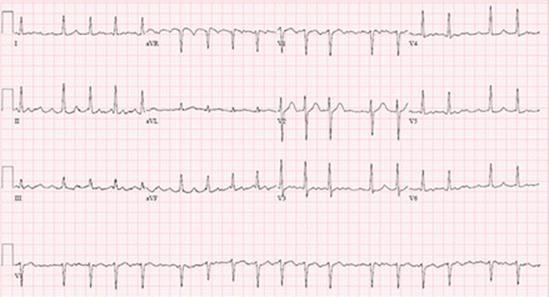
Fig. 14.1
ECG reveals coarse atrial fibrillation with a rapid ventricular response of 108 beats per minute. Note the irregularity of the QRS complexes
Pulmonary Embolism (PE)
Embolization of a preformed thrombus, usually from the lower extremities or, in gynecologic surgery, the pelvic vasculature, to the pulmonary arteries. Risk factors include age over 40 years, obesity, smoking, immobility, malignancy, acute medical illness, diabetes, cardiac disease, chronic pulmonary disease, prior venous thrombosis, pregnancy or the postpartum period, or inherited or acquired thrombophilias (including factor V Leiden mutation, prothrombin gene mutation, and antiphospholipid antibody syndrome) [19]. This is a potentially highly morbid complication, with a mortality rate up to 2.3 %, with increased risk of death reported in patients over 80 years and those with malignancy or chronic cardiac or pulmonary disease [20, 21].
Differential Diagnosis [1, 22]
· Hypovolemia
· Hemorrhage (intra-abdominal or vaginal)
· Anemia
· Pulmonary embolism (PE)
· Hypoxemia
· Fever, infection and/or sepsis
· Arrhythmia
· Cardiovascular disease (including acute coronary syndrome)
· Electrolyte derangement (particularly potassium and magnesium)
· Medication effect (including cessation of home medications such as beta-blockers)
· Thyroid dysfunction
· Alcohol and opiate withdrawal
· Nausea and vomiting
· Pain
· Anxiety
· Delirium
When You Get the Call
Ask for a full set of vital signs to assess for hemodynamic instability. Ask for an electrocardiogram (ECG) to be performed, if it has not been done already.
When You Arrive
Confirm the heart rate on exam. Review the full vital signs flow sheet to assess the heart rate trend, and note hypoxemia, fever, or signs of hemodynamic instability. In stable patients, review outpatient records for a reference heart rate, for comparison. Assess the record of intake and output, to review urine output and fluid balance; tachycardia paired with oliguria should raise concern for such conditions as hypovolemia, hemorrhage or sepsis. Review risk factors for hypercoagulability, including obesity, prolonged immobility, pregnancy, recent postpartum status, and known thrombophilia such as factor V Leiden. Also review the patient’s medications, including therapeutic anticoagulation and prophylactic measures against deep vein thrombosis (pneumatic compression boots or subcutaneous heparin). Review the operative report and record, including surgical duration, intraoperative fluid resuscitation and blood loss.
History
Ask the patient if she feels chest pain (particularly if it is pleuritic and worse with deep inspiration), palpitations, dizziness, shortness of breath, or any other new and concerning symptoms. If she is recently postoperative, assess whether her surgical pain is well controlled. Review her medical history, including active cancer, current or recent pregnancy, prior thrombosis (particularly within the last 3 months), cardiac disease, anxiety history or panic attacks [18].
Physical Examination
Confirm that the patient has IV access. Make note of whether she appears to be anxious or in pain and whether she is alert and oriented. Perform a cardiopulmonary exam, confirming the cardiac rate and noting the regularity of the rhythm, while also assessing for lung consolidations, crackles, or other signs of pulmonary pathology. Assess whether the patient’s abdomen is distended and whether she has signs of peritonitis; in a postoperative patient, this may be a sign of visceral injury or bleeding, while in a nonoperative patient, this may be a sign of worsening infection or a new complication, including bowel perforation or ischemia. Check the patient’s extremities for signs of deep vein thrombosis, which include asymmetric edema and pain.
Diagnosis
An ECG and a basic metabolic panel should be ordered. Cardiac arrhythmias will be diagnosed by ECG. The ECG of a patient with atrial fibrillation is shown in Fig. 14.1. If the patient is postoperative or otherwise at risk for bleeding, obtain a complete blood count. If a patient has signs of sepsis, a complete blood count with a differential should be obtained, in addition to a complete metabolic panel and lactate level. If the patient is anticoagulated, check a complete blood count and coagulation studies. If the patient does not have a recent thyroid function test, particularly if she has a history of thyroid dysfunction, check a thyroid stimulating hormone level.
The diagnosis of pulmonary embolism should be suspected in any patient with tachycardia with risk factors for PE, particularly in conjunction with hypoxemia [23]. Please see Chap. 15, High-Acuity Postoperative and Inpatient Issues, section “Hypoxemia”, for the diagnosis and management of pulmonary embolism.
A patient report of chest pain alters the differential diagnosis; please see Chap. 15, High Acuity Postoperative and Inpatient Issues, section “Chest pain” for the diagnosis of acute coronary syndromes.
Alcohol withdrawal is associated with symptoms of anxiety, tachycardia, tachypnea, hypertension, pyrexia, and hand tremors, and can result in seizures [24]. After alcohol cessation, symptoms may begin within 8 h, peak in 72 h, and begin to resolve within 5–7 days [25]. Please see Chap. 15, High-Acuity Postoperative and Inpatient Issues, section “Altered mental status,” for the diagnosis and management of alcohol withdrawal.
Opiate withdrawal is often suggested by the patient’s history. Physical findings of opiate withdrawal include hypertension, tachycardia, myalgias, rhinorrhea, lacrimation, emesis and diarrhea; this condition is managed with opiate or nonopiate replacement.
In a stable patient without arrhythmia or other significant systemic illnesses, particularly those who develop tachycardia with exertion, consider the documentation of orthostatic vital signs by checking the patient’s blood pressure and pulse while lying down then standing [26]. A positive finding is a decrease in systolic blood pressure by at least 20 mmHg or diastolic blood pressure by at least 10 mmHg within 3 min of standing, usually accompanied by compensatory tachycardia. Conditions associated with orthostasis are hypovolemia—such as due to hemorrhage, dehydration from vomiting/diarrhea, or inadequate resuscitation in the operating room—deconditioning, and medications such as diuretics and narcotics.
Inadequate pain control, anxiety and delirium are diagnoses of exclusion and suggested by the patient interview and examination.
Management
Please see Chap. 1, Acute Pelvic Pain, for further information on the diagnosis and management of sepsis. Urgent resuscitation of hemorrhage is addressed in Chap. 13, Preparing for Urgent or Emergent Surgery. Please refer to Chap. 15, High- Acuity Postoperative and Inpatient Issues, for the management of pulmonary embolism, acute coronary syndromes, alcohol withdrawal, and delirium.
In patients with atrial fibrillation, rate control is preferable, but a clinically unstable patient may require immediate cardioversion [27]. An optimally controlled heart rate is less than 110 beats per minute [28]. A selection of medications for acute and chronic rate control of atrial fibrillation is shown in Table 14.1 [18, 27]. These medications should be used with caution in patients with hypotension or heart failure, and beta-blockers should also be used with caution in patients with heart block, bradycardia, and bronchoconstrictive disease [27, 29]. Patients who are hemodynamically unstable, including a heart rate above 110 beats per minute, or unable to tolerate oral medications should be treated with intravenous medications [18]. Asymptomatic, stable patients may receive oral medications for ventricular rate control. Beta-blockers may be an advisable first step in postoperative patient due to these patients’ high adrenergic tone [18, 30]. Consider anticoagulation in patients with atrial fibrillation over 48 h and with risk factors for stroke [18].
Table 14.1
Medications for acute-onset atrial fibrillation
|
Medication |
Intravenous |
Oral |
|
Metoprolol |
2.5–5 mg IV every 5 min for up to 3 doses |
12.5–25 mg PO every 6 h; the dose can be uptitrated every 24 h |
|
Diltiazem |
0.25 mg/kg IV over 2 min, followed by a drip of 5–15 mg/h |
30 mg PO every 6 h. Titrate dose every 24 h, to a maximum total daily dose of 360 mg |
|
Digoxin |
1 mg IV over 24 h in fractionated doses: 0.5 mg as initial dose, followed by 0.25 mg in 6–8 h intervals with ECGs to assess for toxicity (ventricular tachycardia or heart block) |
From (1) Danelich et al. [18]. (2) Fuster et al. [27]
Thyroid dysfunction and electrolyte abnormalities must be addressed. In patient with orthostasis, intravenous resuscitation should be provided as needed, and potentially causal medication adjusted (including opiates, diuretics, and vasodilators). Until fully resuscitated, patients with orthostasis should be accompanied when standing and may ultimately benefit from physical therapy consultation depending on their functional capacity.
Sinus Bradycardia
Definition
Bradycardia
Heart rate less than 60 beats per minute. Bradycardia leads to decreased cardiac output and can result in hypotension or syncope [1]. Sinus bradycardia is common postoperatively due to anesthetic effects, hypothermia, or epidural anesthesia. Patients may also develop bradyarrhythmias, such as atrioventricular block.
Differential Diagnosis
· Medications (including acetylcholinesterase inhibitors for reversal of muscle relaxants, beta-blockers, calcium channel blockers, amiodarone, digoxin, and narcotics)
· Obstructive sleep apnea
· Hypothermia
· Epidural anesthesia
· Increased intracranial pressure
· Acute coronary syndrome
· Bradyarrhythmia, such as heart blockVagal reflex (such as due to urinary retention)
When You Get the Call
Ask for a full set of vital signs, to assess for hemodynamic stability. Ask for an ECG over the phone if one has not yet been obtained.
When You Arrive
Assess the patient’s mental status. Review the full vital sign flow sheet, including blood oxygenation level, and any vital signs prior to admission, to assess the baseline heart rate for reference. Review whether the patient is currently receiving epidural anesthesia.
History
Ask the patient whether she is having any associated symptoms including chest pain, dyspnea, headache, or vision changes. Review whether the patient has a history of a low resting heart rate. Many healthy, young individuals (particularly those who pursue exercise and physical conditioning) have slow resting heart rates. Also review her medical history for any neurological or cardiovascular disease, or obstructive sleep apnea (which is more common in obese patients).
Physical Examination
Confirm the patient’s heart rate on exam, and assess the regularity of the rhythm. In an immediately postoperative patient, ensure that she is normothermic (>36 C or 96.8 F). The physical exam should be targeted to any other complaints, including neurological symptoms, abdominal pain or chest pain.
Diagnosis
An ECG should be obtained. In patients with chest pain and/or ECG changes suggestive of ischemia including ST segment changes, serum troponins should be obtained as well as cardiology consultation.
In patients with bradyarrhythmias, such as heart block, a cardiology consult should be considered. In the example of patients with bradyarrhythmias such as second- or third-degree atrioventricular block with hemodynamic instability, emergency pacing (either transcutaneous or a temporary pacemaker wire) may be required [31].
Management
Postoperatively, if the patient is in sinus rhythm, hemodynamically stable, asymptomatic, and the heart rate is above 40 beats per minute, close monitoring is an appropriate intervention, ideally with transcutaneous pacing pads and atropine available in the event that the patient becomes symptomatic [1]. If the patient is hypotensive or has mental status changes, attach cutaneous pacing pads while mobilizing medical personnel and initiating a symptomatic bradycardia ACLS protocol. A multidisciplinary emergent team may administer medications such as atropine to increase the patient’s heart rate [31].
Asymptomatic Hypertension
Hypertensive Urgency
Elevated blood pressure , generally defined as above 180/120 mmHg (either systolic or diastolic threshold) in an asymptomatic patient. Blood pressure correction can be attained more gradually, as the risk of morbidity associated with severe range blood pressures in the absence of end-organ dysfunction is low [29, 32–35].
Hypertensive Emergency
Severely elevated blood pressure in a patient with evidence of end-organ compromise, including pulmonary edema, acute coronary syndrome, acute renal failure, encephalopathy, or stroke [33, 36].
Differential Diagnosis [1, 36]
· Preexisting hypertension
· Postoperative hypervolemia
· Poorly controlled pain
· Hypoxemia
· Withdrawal (alcohol, sedatives, opiates)Nausea and vomiting
· Bladder distention
· Anxiety or delirium
· Shivering
· Blood pressure cuff too smallPregnancy-related (see Chap. 12)
When You Get the Call
Ask for a full set of vital signs, and ask whether the patient’s pain is controlled.
When You Arrive
Assess the patient for signs of pain, agitation or mental status changes. Review the full vital signs flow sheet, and review outpatient records for the patient’s baseline blood pressure, which can provide insight into the degree of control of chronic hypertension. Repeat the blood pressure measurement and confirm that an appropriately sized cuff is being used; the arm circumference should fall within 80 % of the cuff length [32]. Blood pressure measurement manually should also be performed for verification of the elevated blood pressure, particularly for patients with arrhythmias (as automated measurements may be less accurate in these patients). Review the operative report and record, including intraoperative fluid resuscitation and blood loss.
History
Ask the patient about associated symptoms, namely, headache, vision changes, chest pain, dyspnea, and/or mental status changes. Inquire whether the patient has a history of elevated blood pressures; if the patient is taking antihypertensives at home, inquire whether she is taking her medications as prescribed and when she last took the medication. Review the rest of the patient’s medical history, including cardiac and renal disease. Review the patient’s other medications, as oral contraceptive pills, steroids, cyclosporine, tacrolimus, erythropoietin, tricyclic antidepressants, monoamine oxidase inhibitors, nonsteroidal anti-inflammatory drugs, nasal decongestants, and dietary supplements may contribute to elevated blood pressures [32, 34]. Alcohol intake and illicit drug use (cocaine, amphetamines) can also cause elevated blood pressures [34].
Physical Examination
Confirm that the patient has IV access. The physical exam can be tailored to the patient’s symptoms. Assess alertness and orientation, and assess for visual, motor, or sensory defects. In patients with severe hypertension, a fundoscopic examination can be performed, assessing for retinal hemorrhage or papilledema. The cardiopulmonary exam should identify signs of heart failure, including rales or an S3 heart sound [32].
Diagnosis
A diagnostic workup should be tailored to a patient’s symptoms. Please see Chap. 15, High-Acuity Postoperative and Inpatient Issues, for the diagnosis and management of acute chest pain, altered mental status, and hypoxemia. There are no clear recommendations regarding routine labs to obtain in an asymptomatic patient with severe hypertension; a basic metabolic panel to establish renal function may be helpful. A newly elevated creatinine or a urinalysis showing new hematuria suggests renal damage, indicative of a true hypertensive emergency. Finally, a urine screen for drugs of abuse, including cocaine or amphetamines, may identify the likely cause of acute hypertension in some patients [32].
Management
In caring for patients with acute hypertension and symptoms or clinical evidence of acute cardiac ischemia, neurologic morbidity or renal insufficiency, subspeciality teams (cardiology, neurology, and nephrology, respectively) should be urgently contacted, as blood pressure targets vary [32].
Hypertensive emergency is treated with IV medications, as blood pressure should be reduced from the severe range within 1–2 h (Table 14.2) [32]. When subspeciality teams, such as cardiology, neurology, or nephrology, are involved in the patient’s care, these providers should be consulted when making medication choices [29]. In addition to the list below, nitroprusside and nitroglycerin IV infusions can also be used, but are better managed by clinicians with experience with these, including cardiologists and intensivists [37].
Table 14.2
Parenteral medications for the management of hypertensive emergency
|
Medication |
Dose |
Time to onset (min) |
|
Hydralazine |
10–20 mg IV every 4–6 h |
20 |
|
Labetalol |
20 mg IV, with repeat doses of 20–80 mg IV every 10 min up to 300 mg per day |
5–10 |
|
Enalapril |
1.25 mg IV over 5 min, every 6 h. Dose can be increased by 1.25 mg every 12 h to a maximum of 5 mg every 6 h |
15–30 |
|
Esmolol |
500 μg/kg IV over 1 min, followed by an infusion at 25–50 μg/kg/min. The dose can be increased by 25 μg/kg/min every 10–20 min to maximum of 300 μg/kg/min |
1–2 |
From (1) Shayne and Pitts [32]. (2) Johnson and Nguyen [37]. (3) Haas and Marik [38]
Hydralazine should be used with caution in patients with increased intracranial pressure, myocardial ischemia, or aortic dissection and may cause reflex tachycardia [29, 37]. Beta-blockers (labetalol, esmolol) should be used with caution in patients with heart block, bradycardia, acute heart failure, and bronchoconstrictive disease [27, 37]. Enalapril should be used with caution in patients with renal insufficiency, hyperkalemia, or hypovolemia; patient responses to enalapril are variable, and the peak response may not be seen for up to 4 h [29, 32, 38]. Enalapril is contraindicated in pregnancy.
Hypertensive urgency can often be treated with oral medications, as the preferred time to reduction in blood pressure is 24–72 h (Table 14.3) [39, 40]. These oral medications can be redosed as listed below, but care should be taken not to administer excessive doses leading to hypotension.
Table 14.3
Oral medications for the management of hypertensive urgency
|
Medication |
Dose |
Time to onset (min) |
Duration (h) |
|
Labetalol |
200–400 mg PO, repeated every 2–3 h |
20–120 |
8–12 |
|
Captopril |
6.25–25 mg PO, uptitrated every 8 h |
15–60 |
4–6 |
|
Clonidine |
0.2 mg PO followed by 0.05–0.1 mg every hour if necessary with maximum total dose of 0.7 mg |
30–60 (max effect at 2–4 h) |
6–10 |
|
Hydralazine |
10–75 mg PO every 6 h |
20–30 |
Up to 8 |
From (1) Kessler and Joudeh [39]. (2) Hebert and Vidt [40]
Labetalol should be used with caution in patients with heart block, bradycardia, acute heart failure, and bronchoconstrictive disease [27, 32, 37]. Hydralazine should be used with caution in patients with increased intracranial pressure, myocardial ischemia, or aortic dissection and may cause reflex tachycardia [29, 37]. Clonidine should be used with caution in patients with heart failure or heart block; side effects include sedation and orthostatic hypotension [32]. Captopril should be avoided in pregnancy and in patients with renal artery stenosis [32, 41].
Nausea and Emesis
Definitions
Ileus
Abnormal motility of the gastrointestinal tract, which is not due to a mechanical obstruction. An ileus is multifactorial, caused by inflammation, electrolyte derangements, and changes in neurologic or receptor-mediated function, particularly in the postoperative period [42]. Opioids, in particular, are implicated in the pathogenesis of ileus [43]. The incidence of ileus varies by type of surgery and, for instance, occurs in up to 24 % of patients undergoing colectomy [44]. Patients may complain of nausea, vomiting, and distention and may report delayed passage of flatus and stool.
Bowel Obstruction
Mechanical impediment to normal gastrointestinal peristalsis, most commonly affecting the small bowel. Small bowel obstruction occurs after 0.53 % of benign gynecologic surgeries [45]. Patients commonly present with abdominal distention and pain, nausea, and vomiting 2–8 days after surgery, and report absence of flatus or stool [46]. Risk factors for bowel obstruction postoperatively include intraoperative lysis of adhesions and/or concomitant bowel surgery, blood transfusion, and cystotomy [47]. Obstructions may occur 5 years or more after abdominal surgery, due to adhesions [48].
Differential Diagnosis
· Ileus
· Bowel obstruction due to malignancy or prior pelvic adhesions
· Bowel perforation or injury
· Urinary tract injury (specifically urinary ascites causing ileus)Cardiac ischemia
· Medication effect (including anesthetics or chemotherapy)
· Thyrotoxicosis
· Diabetic ketoacidosis
· Hepatic, pancreatic, or biliary disease (such as hepatitis and pancreatitis)
· Urinary tract infection
· Gastroparesis
· Viral gastroenteritis
· Pain (such as from ovarian torsion)
When You Get the Call
Ask for a full set of vital signs and obtain an ECG in patients with risk factors for coronary artery disease.
When You Arrive
Review the full vital signs flow sheet, including whether the patient is febrile, tachycardic, hypotensive, or tachypneic. Assess the patient’s appearance for signs of pain or distress. Review the patient’s current medications, including current chemotherapy and recent opiate administration, both of which may produce nausea. If the patient is postoperative, review the operative report for the extent of dissection and whether any bowel injury or resection occurred. Of note, cardiac ischemia also commonly manifests as nausea and should be considered with a high index of suspicion in those with risk factors for coronary artery disease.
History
Ask the patient to describe any associated symptoms, including quality and distribution of any new or worsening pelvic pain. Ask the patient if she is having flatus or diarrhea. Assess for chest pain or “pressure.” Assess whether the jaw or arm is involved in the syndrome, suggestive of an acute coronary syndrome. Diabetic patients with cardiac ischemia often present silently or atypically and do not manifest classical chest pain; abdominal pain or nausea are possible presentations. Review from the medical record and with the patient any medical history, including malignancy, cardiac disease, diabetes, gastroparesis, thyroid dysfunction, and inflammatory bowel disease. Even if the patient has not recently had surgery, review her prior surgical history, as prior abdominal surgeries may increase the risk of adhesions and bowel obstruction.
Physical Examination
Assess the patient’s alertness and orientation and whether she is in distress. Perform a focused cardiovascular exam for new heart sounds or paradoxical splitting. Examine the patient’s abdomen, noting distention and bowel sounds. Absent or hypoactive bowel sounds may be noted in patients with ileus or obstruction, while high pitched bowel sounds may be associated with small bowel obstruction. Note the presence of peritoneal signs—including rebound (pain when abdominal pressure is quickly withdrawn), involuntary abdominal guarding, or shake tenderness (pain when shifting the patient’s abdomen or bed)—which may indicate the presence of intra-abdominal inflammation, infection or bleeding.
Diagnosis
In patients with emesis, check a complete metabolic panel to assess for electrolyte and metabolic derangements that should be corrected; diabetic ketoacidosis will also be detected with a metabolic panel. In a patient with hypotension, tachycardia, fever, or acute pain on exam, obtain a complete blood count, complete metabolic panel and lactate; causes of elevated lactate include, but are not limited to, sepsis and bowel ischemia [49]. A urinalysis may also be helpful, particularly in patients with a Foley catheter in place (or who had one recently), to assess for infection. Serum troponins may be sent for assessment of patients with possible coronary ischemia. Please see Chap. 15, High-Acuity Postoperative and Inpatient Issues, for more information on the diagnosis of acute coronary syndromes.
Please see Chap. 16, Complications of Minimally Invasive Gynecologic Surgery, for the diagnosis of ileus, bowel obstruction, and bowel and urinary tract injuries. For reference, the latter complications are commonly associated with abdominal pain and signs of systemic illness (such as fever and/or sepsis), in the days following surgery, though presentation may be delayed 1-2 weeks.
Management
If the patient is still in the Post-Anesthesia Care Unit (PACU), involve the anesthesia team in treatment of her postoperative nausea and emesis.
Administer antiemetics, which include ondansetron (4–8 mg IV or PO every 8 h), metoclopramide (10 mg IV or PO every 6 h), and/or prochlorperazine (10 mg IV or PO every 6 h, or 25 mg PR every 12 h). For patients receiving chemotherapy, an NK1 receptor antagonist such as aprepitant is often prescribed, in addition to ondansetron and dexamethasone (4 mg IV, IM or PO every 6 h) [50]. Lorazepam (0.5–2.5 mg IV, IM, or PO every 8–12 h) and antihistamines, including diphenhydramine (25–50 mg IM, IV, or PO every 6 h) or promethazine (12.5–25 mg IM, IV, PO, or PR every 4–6 h), may be helpful additions to an antiemetic regimen [51]. Electrolyte abnormalities should be corrected, and volume lost in emesis should be replaced with isotonic IV fluids. Thyrotoxicosis, acute coronary syndromes, and diabetic ketoacidosis also require immediate intervention, which is beyond the scope of this chapter.
Please see Chap. 16, Complications of Minimally Invasive Gynecologic Surgery, for the management of ileus, bowel obstruction, and bowel and urinary tract injury.
References
1.
Plante A, Ro E, Rowbottom JR. Hemodynamic and related challenges: monitoring and regulation in the postoperative period. Anesthesiol Clin. 2012;30:527–54.CrossRefPubMed
2.
Practice Committee of American Society for Reproductive Medicine. Ovarian hyperstimulation syndrome. Fertil Steril. 2008;90:S188–93.
3.
Liaño F, Pascual J. Epidemiology of acute renal failure: a prospective, multicenter, community-based study. Madrid Acute Renal Failure Study Group. Kidney Int. 1996;50:811–8.CrossRefPubMed
4.
Lee BK, Vincenti FG. Chapter 34. Acute kidney injury & oliguria. In: McAninch JW, Lue TF, editors. Smith and Tanagho’s general urology, 18e. New York: McGraw-Hill; 2013. http://accessmedicine.mhmedical.com.ezp-prod1.hul.harvard.edu/content.aspx?bookid=508&Sectionid=41088111. Accessed 08 Oct 2014.
5.
Chenitz KB, Lane-Fall MB. Decreased urine output and acute kidney injury in the postanesthesia care unit. Anesthesiol Clin. 2012;30:513–26.CrossRefPubMedPubMedCentral
6.
Geller EJ. Prevention and management of postoperative urinary retention after urogynecologic surgery. Int J Womens Health. 2014;6:829–38.CrossRefPubMedPubMedCentral
7.
Won HR, Maley P, Chetty N, Chan K, Abbott J. Bladder dysfunction after gynecologic laparoscopic surgery for benign disease. J Minim Invasive Gynecol. 2012;19:76–80.CrossRefPubMed
8.
Ghezzi F, Cromi A, Uccella S, Colombo G, Salvatore S, Tomera S, et al. Immediate Foley removal after laparoscopic and vaginal hysterectomy: determinants of postoperative urinary retention. J Minim Invasive Gynecol. 2007;14:706–11.CrossRefPubMed
9.
Smorgick N, DeLancey J, Patzkowsky K, Advincula A, Song A, As-Sanie S. Risk factors for postoperative urinary retention after laparoscopic and robotic hysterectomy for benign indications. Obstet Gynecol. 2012;120:581–6.CrossRefPubMed
10.
Lau H, Lam B. Management of postoperative urinary retention: a randomized trial of in-out versus overnight catheterization. ANZ J Surg. 2004;74:658–61.CrossRefPubMed
11.
Gotfried J, Wiesen J, Raina R, Nally Jr JV. Finding the cause of acute kidney injury: which index of fractional excretion is better? Cleve Clin J Med. 2012;79:121–6.CrossRefPubMed
12.
Briggs JH, Wing L, Macdonald AC, Tapping CR. Suspected iatrogenic ureteric injury: an approach to diagnostic imaging. Clin Radiol. 2014;69:e454–61.CrossRefPubMed
13.
Hodges KR, Davis BR, Swaim LS. Prevention and management of hysterectomy complications. Clin Obstet Gynecol. 2014;57:43–57.CrossRefPubMed
14.
Madersbacher H, Cardozo L, Chapple C, Abrams P, Toozs-Hobson P, Young JS, et al. What are the causes and consequences of bladder overdistension? ICI-RS 2011. Neurourol Urodyn. 2012;31:317–21.CrossRefPubMed
15.
Kanji S, Williamson DR, Yaghchi BM, Albert M, McIntyre L, Canadian Critical Care Trials Group. Epidemiology and management of atrial fibrillation in medical and noncardiac surgical adult intensive care unit patients. J Crit Care. 2012;27:326.e1–8.CrossRef
16.
Walsh SR, Tang T, Wijewardena C, Yarham SI, Boyle JR, Gaunt ME. Postoperative arrhythmias in general surgical patients. Ann R Coll Surg Engl. 2007;89:91–5.CrossRefPubMedPubMedCentral
17.
Walsh SR, Oates JE, Anderson JA, Blair SD, Makin CA, Walsh CJ. Postoperative arrhythmias in colorectal surgical patients: incidence and clinical correlates. Colorectal Dis. 2006;8:212–6.CrossRefPubMed
18.
Danelich IM, Lose JM, Wright SS, Asirvatham SJ, Ballinger BA, Larson DW, et al. Practical management of postoperative atrial fibrillation after noncardiac surgery. J Am Coll Surg. 2014;219:831–41.CrossRefPubMed
19.
Davis JD. Prevention, diagnosis, and treatment of venous thromboembolic complications of gynecologic surgery. Am J Obstet Gynecol. 2001;184:759–75.CrossRefPubMed
20.
Zondag W, Kooiman J, Klok FA, Dekkers OM, Huisman MV. Outpatient versus inpatient treatment in patients with pulmonary embolism: a meta-analysis. Eur Respir J. 2013;42:134–44.CrossRefPubMed
21.
Jiménez D, Aujesky D, Díaz G, Monreal M, Otero R, Martí D, et al. Prognostic significance of deep vein thrombosis in patients presenting with acute symptomatic pulmonary embolism. Am J Respir Crit Care Med. 2010;181:983–91.CrossRefPubMed
22.
McKean SC. Chapter 100. Tachyarrthymias. In: McKean SC, Ross JJ, Dressler DD, Brotman DJ, Ginsberg JS, editors. Principles and practice of hospital medicine. New York: McGraw-Hill; 2012. http://accessmedicine.mhmedical.com.ezp-prod1.hul.harvard.edu/content.aspx?bookid=496&Sectionid=41304072. Accessed 12 Oct 2014.
23.
Miniati M, Cenci C, Monti S, Poli D. Clinical presentation of acute pulmonary embolism: survey of 800 cases. PLoS One. 2012;7:e30891.CrossRefPubMedPubMedCentral
24.
Schuckit MA. Recognition and management of withdrawal delirium (delirium tremens). N Engl J Med. 2014;371:2109–13.CrossRefPubMed
25.
Kosten TR, O’Connor PG. Management of drug and alcohol withdrawal. N Engl J Med. 2003;348:1786–95.CrossRefPubMed
26.
Swope R, Adams A. Prevention and treatment of orthostatic hypotension in the orthopedic patient population. Orthopedics. 2012;35:600–3.CrossRefPubMed
27.
Fuster V, Rydén LE, Cannom DS, Crijns HJ, Curtis AB, Ellenbogen KA, et al. 2011 ACCF/AHA/HRS focused updates incorporated into the ACC/AHA/ESC 2006 Guidelines for the management of patients with atrial fibrillation: a report of the American College of Cardiology Foundation/American Heart Association Task Force on Practice Guidelines developed in partnership with the European Society of Cardiology and in collaboration with the European Heart Rhythm Association and the Heart Rhythm Society. J Am Coll Cardiol. 2011;57:e101–98.CrossRefPubMed
28.
Van Gelder IC, Groenveld HF, Crijns HJ, Tuininga YS, Tijssen JG, et al. Lenient versus strict rate control in patients with atrial fibrillation. N Engl J Med. 2010;362:1363.
29.
Ahuja K, Charap MH. Management of perioperative hypertensive urgencies with parenteral medications. J Hosp Med. 2010;5:E11–6.CrossRefPubMed
30.
European Heart Rhythm Association, European Association for Cardio-Thoracic Surgery, Camm AJ, Kirchhof P, Lip GY, Schotten U, Savelieva I, et al. Guidelines for the management of atrial fibrillation: the Task Force for the Management of Atrial Fibrillation of the European Society of Cardiology (ESC). Europace. 2010;12:1360–420.CrossRef
31.
Epstein AE, DiMarco JP, Ellenbogen KA, Estes 3rd NA, Freedman RA, Gettes LS, et al. ACC/AHA/HRS 2008 guidelines for device-based therapy of cardiac rhythm abnormalities: a report of the American College of Cardiology/American Heart Association Task Force on Practice Guidelines (Writing Committee to Revise the ACC/AHA/NASPE 2002 guideline update for implantation of cardiac pacemakers and antiarrhythmic devices) developed in collaboration with the American Association for Thoracic Surgery and Society of Thoracic Surgeons. J Am Coll Cardiol. 2008;51:e1–62.CrossRefPubMed
32.
Shayne PH, Pitts SR. Severely increased blood pressure in the emergency department. Ann Emerg Med. 2003;41:513–29.CrossRefPubMed
33.
Kaplan NM. Management of hypertensive emergencies. Lancet. 1994;344:1335–8.CrossRefPubMed
34.
Chobanian AV, Bakris GL, Black HR, et al. The seventh report of the joint national committee on prevention, detection, evaluation, and treatment of high blood pressure: the JNC 7 report. JAMA. 2003;289:2560–72.CrossRefPubMed
35.
Veterans Administration Cooperative Study Group on Antihypertensive Agents. Effects of treatment on morbidity in hypertension. Results in patients with diastolic blood pressures averaging 115 through 129 mm Hg. JAMA. 1967;202:1028–34.CrossRef
36.
Goldman L, Caldera DL. Risks of general anesthesia and elective operation in the hypertensive patient. Anesthesiology. 1979;50:285–92.
37.
Johnson W, Nguyen ML, Patel R. Hypertension crisis in the emergency department. Cardiol Clin. 2012;30:533–43.CrossRefPubMed
38.
Haas AR, Marik PE. Current diagnosis and management of hypertensive emergency. Semin Dial. 2006;19:502–12.CrossRefPubMed
39.
Kessler CS, Joudeh Y. Evaluation and treatment of severe asymptomatic hypertension. Am Fam Physician. 2010;81:470–6.PubMed
40.
Hebert CJ, Vidt DG. Hypertensive crises. Prim Care. 2008;35:475–87.CrossRefPubMed
41.
Thind GS, Mahapatra RK, Johnson A, Coleman RD. Low-dose captopril titration in patients with moderate-to-severe hypertension treated with diuretics. Circulation. 1983;67:1340–6.CrossRefPubMed
42.
Vather R, O’Grady G, Bissett IP, Dinning PG. Postoperative ileus: mechanisms and future directions for research. Clin Exp Pharmacol Physiol. 2014;41:358–70.CrossRefPubMed
43.
Bauer AJ, Boeckxstaens GE. Mechanisms of postoperative ileus. Neurogastroenterol Motil. 2004;16 Suppl 2:54–60.CrossRefPubMed
44.
Asgeirsson T, El-Badawi KI, Mahmood A, Barletta J, Luchtefeld M, Senagore AJ. Postoperative ileus: it costs more than you expect. J Am Coll Surg. 2010;210:228–31.CrossRefPubMed
45.
Muffly TM, Ridgeway B, Abbott S, Chmielewski L, Falcone T. Small bowel obstruction after hysterectomy to treat benign disease. J Minim Invasive Gynecol. 2012;19:615–9.CrossRefPubMed
46.
Allen AM, Antosh DD, Grimes CL, Crisp CC, Smith AL, Friedman S, McFadden BL, Gutman RE, Rogers RG. Management of ileus and small-bowel obstruction following benign gynecologic surgery. Int J Gynaecol Obstet. 2013;121:56–9.CrossRefPubMed
47.
Antosh DD, Grimes CL, Smith AL, Friedman S, McFadden BL, Crisp CC, et al. A case-control study of risk factors for ileus and bowel obstruction following benign gynecologic surgery. Int J Gynaecol Obstet. 2013;122:108–11.CrossRefPubMed
48.
Al-Sunaidi M, Tulandi T. Adhesion-related bowel obstruction after hysterectomy for benign conditions. Obstet Gynecol. 2006;108:1162–6.CrossRefPubMed
49.
Lange H, Jäckel R. Usefulness of plasma lactate concentration in the diagnosis of acute abdominal disease. Eur J Surg. 1994;160:381–4.
50.
Basch E, Prestrud AA, Hesketh PJ, Kris MG, Feyer PC, Somerfield MR, et al. Antiemetics: American Society of Clinical Oncology clinical practice guideline update. J Clin Oncol. 2011;29:4189–98.CrossRefPubMedPubMedCentral
51.
Hoffman BL, Schorge JO, Schaffer JI, Halvorson LM, Bradshaw KD, Cunningham F, Calver LE. Chapter 39. Perioperative considerations. In: Hoffman BL, Schorge JO, Schaffer JI, Halvorson LM, Bradshaw KD, Cunningham F, Calver LE, editors. Williams gynecology, 2e. New York: McGraw-Hill; 2012. http://accessmedicine.mhmedical.com.ezp-prod1.hul.harvard.edu/content.aspx?bookid=399&Sectionid=41722331. Accessed 09 Nov 2015.