
Mira Harrison-Woolrych1
(1)
Dean’s Department, Dunedin School of Medicine, University of Otago, Dunedin, 9054, New Zealand
Mira Harrison-Woolrych
Email: miraharrison-woolrych@outlook.com
Introduction
Medicines for women are not a minority issue: women represent half our worldwide population and at all ages women take more medicines than men (Kaufman et al.2002). A population survey conducted in the United States (USA) showed that 89 % of women aged 45–64 years took at least one medication – including prescription and non-prescription medicines – and 43 % in this age group took five or more medicines (Kaufman et al.2002). Women primarily take responsibility for contraception (Ringheim 1993) and mothers are responsible for administering medicines to babies – both before and after delivery – and to children too. The health of women determines the health of families and of wider communities, so we all have a vested interest in the medicines women take throughout their lifetimes.
In this book many issues concerning medicines for women are brought together for the first time in one volume. There have of course been other texts on specific groups of medicines for women (for example, contraception, medicines in pregnancy) and thousands of research publications on individual medicines, but my aim in editing this book was to construct a work which pulled the focus onto the subject of women’s medicines: to recognise women as important – and often vulnerable – consumers of medicines and address some of the issues which prescribers, healthcare workers, patients and their families face on a daily basis around the world.
In this opening chapter, I begin with some historical and social perspectives which provide the backdrop for the setting in which medicines for women are prescribed. I then present an overview of the following 18 chapters of this book, in which I summarise and comment on some of the most significant issues associated with the medicines, vaccines and devices available for women today. Amongst the technical evidence-based information presented in each chapter, there are many fascinating stories – some familiar and some less so – and important themes emerge throughout this book.
In the latter part of this chapter we discuss some general principles about prescribing medicines to women, again drawing on the valuable information provided in each of the other chapters. Finally, I present some conclusions from this book and how we might move forward from here.
Historical and Social Perspectives
Women have been using medicinal products for at least 2,000 years. Soranus was a Greek physician who practised medicine in Alexandria, Egypt and later in Rome during the first part of the second century A.D. He wrote a four-volume work on gynaecology which included the following advice on contraception (Shelton 1998):
It is safer to prevent conception from occurring than to destroy the fetus through abortion….therefore one must avoid intercourse at those times which we said were favourable for conception…It also helps, in preventing conception, to smear the entrance to the uterus with old olive oil or honey or sap from a cedar or balsam tree, alone or mixed with white lead….One might also add a clump of finespun wool…
The first part of this statement is very enlightened for its time, but it is sensible (perhaps even obvious) advice which remains true today. The latter part of Soranus’ text above, reveals some of the contraceptive products which women were advised to use in the second century AD. It is difficult to know whether women actually used these methods and if they did, how effective and safe they were. But this text shows that medicines for women have been a feature of gynaecological practice for the duration of the speciality itself.
It is also likely that women before this time were using their own treatments for female disorders and for prevention of pregnancy. A tutor at a family planning course in the UK told us that women have known for centuries that half a lemon could be inserted into the vagina for use as a cervical cap. She would not be drawn on the details of how effective or safe (or comfortable) this was, but advised that one advantage of the lemon method was that the other half could be used in a gin and tonic, either before or after coitus!
The history of medicines and devices for women to use as birth control is closely linked to the history of women’s development in many socio-cultural and economic respects. It has been a key component in movements for gender equality and women’s rights, as the ability to limit family size is an important factor in determining not only women’s and children’s health, but also in determining women’s opportunities (van der Gaag 2008). The broader aspects of women’s lives are the backdrop against which medicines for women are prescribed, researched and monitored. Throughout this book we will learn that the environment in which women live is a key factor determining how medicines are used and how effective and safe they are in real life use.
Marketing Medicines for Women: Early Tragedies for Women and Their Babies
The history of medicines for women has been central to the history of pharmacovigilance – the specialty which monitors the safety of medicines worldwide. This theme is developed further in Chap. 15on medicines regulation and is well illustrated in Fig. 15.2 of that chapter (p. 437). Pharmacovigilance in many countries began in the wake of the tragic story of thalidomide, when women and their babies became the innocent victims of a medicine designed to relieve morning sickness of pregnancy. Dr WG McBride, an obstetrician and gynaecologist from New South Wales, Australia was the first to report the shocking limb deformities he noticed in babies born to women who had taken thalidomide (Distival®). His short but effective letter to the Lancet in 1961 is shown in Box 1.1:
Box 1.1: Text of Dr WG McBride’s Letter to the Lancet, 1961
Thalidomide and Congenital Abnormalities
“Sir – congenital abnormalities are present in approximately 1.5 % of babies. In recent months I have observed that the incidence of multiple severe abnormalities in babies delivered of women who were given the drug thalidomide (“Distival”) during pregnancy, as an antiemetic or as a sedative, to be almost 20 %.
These abnormalities are present in the structures developed from mesenchyme – i.e. the bones and musculature of the gut. Bony development seems to be affected in a very striking manner, resulting in polydactyly, syndactyly, and failure of development of long bones (abnormally short femora and radii).
Have any of your readers seen similar abnormalities in babies delivered of women who have taken this drug during pregnancy?”
WG Mc Bride, Hurstville, New South Wales
Lancet Editor’s note – in our issue of December 2 we included a statement from the Distillers Company (Biochemicals) Ltd. referring to “reports from two overseas sources possibly associating thalidomide (Distival) with harmful effects on the fetus in early pregnancy”. Pending further investigation, the company decided to withdraw from the market all preparations containing thalidomide.
In addition to thalidomide, there have been other lesser-known tragedies relating to medicines for women. From the late 1940s onwards, diethylstilboestrol (DES) was widely prescribed to pregnant women for prevention of miscarriage and desPlex® was advertised for prophylactic use in all pregnancies (see Fig. 1.1).
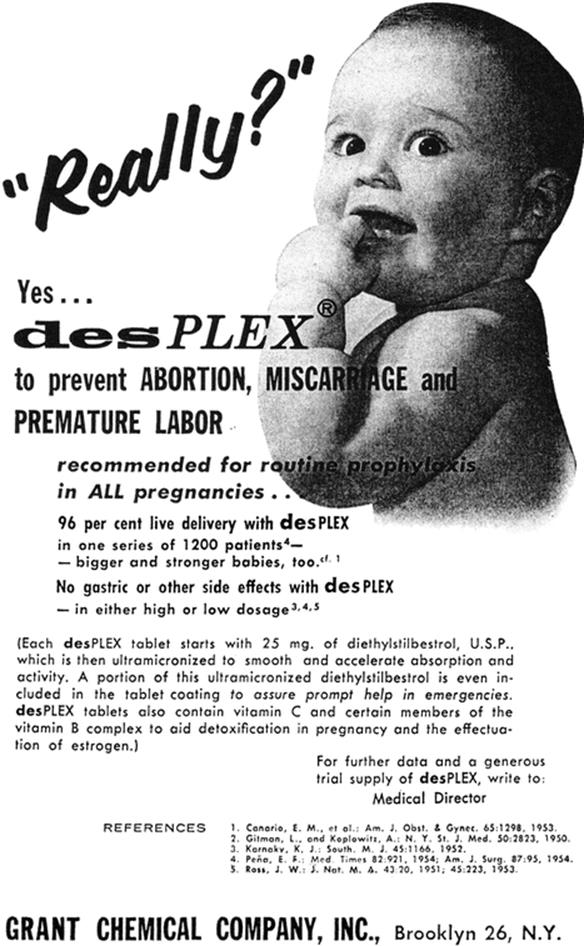
Fig. 1.1
1950s advertisement for desPlex (diethylstilboestrol)
In the following decades, cases of a rare clear-cell adenocarcinoma (CCA) of the vagina were reported in young women whose mothers had taken DES during pregnancy. This type of vaginal cancer had previously occurred mainly in post-menopausal women and the new cases (with a median age of 19 years, range 15–29 years) alerted researchers to an association with DES, although exposure to the medicine had occurred many years prior to diagnosis of the adverse event (Goodman et al.2011). The full story of DES was reviewed in the New England Journal of Medicine in 2011, 40 years after the issue was first reported in this journal (Goodman et al.2011).
In Box 1.2 I have included a powerful personal testimony from Elizabeth Claire Hooper who discovered she was a “DES baby”. It is a humbling and instructive story, which I hope will place women at the centre of all our efforts to prevent such tragedies happening again.
Box 1.2
It was my birthday and the phone was ringing. I expected it to be birthday greetings from a friend; instead, it was a nurse from the university health clinic. In an indifferent voice, she informed me that I had advanced cervical cancer and needed to seek treatment immediately. I quickly scheduled an appointment with a gynecologist for a second opinion; the second opinion was dire. The doctor flatly said I had both breast and cervical cancer. I desperately sought a third opinion from another OB/GYN. He examined me and told me that I did not have cancer, but I was a “DES Baby.” Fortunately, I had found a gynecologist who is an expert in DES exposure. I was relieved to not have cancer, but the ramifications of being a DES Baby didn’t fully sink into my consciousness at that moment.
Diethylstilbestrol (DES) is a synthetic form of estrogen that was prescribed to pregnant women in the United States from the 1940s through the early 1970s to prevent premature labor, miscarriage, and other potential complications of pregnancy; it was also used to “dry up” a mother’s lactation during the time in which American women were inculcated with the idea that “formula” was superior to breast milk. DES was still being used in Europe into the late 1970s. By one estimate, DES was prescribed to six million women worldwide, even though a clinical study done in 1953 concluded the drug did not prevent miscarriages.
DES is a potent carcinogen. Pregnant or nursing women who took the drug have higher risks of certain cancers; this carcinogen passes from generation to generation with no end in sight at present. As a DES Baby, it would be difficult for me to have biological children; and if I did so, that child and all my descendants would still suffer from the increased risks of cancers and of DES-related deformities.
I am lucky that I have not yet developed any DES-related cancers. I am lucky that my DES-related deformities are internal, not external. However, I’m not so fortunate in that this has been a “pre-existing condition,” and that I have had to pay “out of pocket” for all the required, extra cancer screenings. Ironically, miscarriages (and infertility) are common among those women who were the progeny of mothers exposed to DES.
Few class action lawsuits against the pharmaceutical companies that created and supplied this drug have been successful. To paraphrase one judge, when ruling against a “DES Baby” class action lawsuit, we wouldn’t want to stymie the pharmaceutical industry’s right to innovation.
Elizabeth Claire Hooper May 2014
Overview of This Book
In this section I will summarise key points from each chapter and identify some important matters for further consideration. One aim is to highlight issues to compel you to read more in each of the 18 chapters, which have been written by expert authors from around the world. I have also added my own comments on specific issues – some of which may be viewed as controversial, but one purpose of this book is to provoke discussion on some of the more difficult issues associated with medicines for women. A further aim of this summary is to consolidate the huge amount of information provided – to bring the book together as a whole and to highlight the important themes.
Medicines for Women is divided into three parts: first, issues relating to women’s exposure to medicines and considerations for particular subgroups of women are discussed; second, specific groups of medicines for women are reviewed; and in the third part different perspectives on women’s medicines are presented. I have also identified some interesting (and often alarming) facts and figures from the 18 chapters and these are presented in Table 1.1.
Table 1.1
Editor’s selection of interesting facts from this book
|
Summary of statement |
Chapter title (abbreviated) |
Chapternumber |
|
Several mechanisms relevant to drug absorption and disposition have been shown to exert sex-specific activity differences, and for some drugs these have the potential to result in clinically relevant differences in pharmacological response |
Pharmacokinetics |
2 |
|
Girls start their cognitive development earlier than boys and may be more advanced than boys in terms of their chronological age |
Adolescent women |
3 |
|
During the last 50 years the gap between biological and social adulthood has widened considerably |
||
|
Twelve million prescriptions for potentially teratogenic medications are prescribed annually to women of reproductive age in the USA |
Medication use in pregnancy |
4 |
|
Less than 50 % women prescribed potentially teratogenic medicines receive contraceptive counselling |
||
|
Clinical trials show a gross one year cumulative failure rate of the COC between 0.2 and 2.3 per 100women, but data from real life use suggest 9 % of women using oral contraceptives (COCs and POPs) will experience an unintended pregnancy in the first year |
Oral contraceptives |
5 |
|
Data largely support the view that use of oral contraceptives does not increase a woman’s risk of death as compared with non-use |
||
|
The rate of VTE in women using a COC containing levonorgestrel, norethisterone or norgestimate (second generation COCs) is approximately 5–7 per 10,000 women age <35 years |
Oral contraceptives and the risk of VTE |
6 |
|
In the USA one million teenage girls become pregnant each year |
Emergency contraception |
7 |
|
If the emergency contraceptive pill is used within 12 h of unprotected intercourse, the risk of pregnancy is less than 1 % |
||
|
Etonogestrel and levonorgestrel implants are reported to have pregnancy rates of 0.13 and 0 per 100 women respectively |
Contraceptive devices |
8 |
|
In the first 20 days following insertion of an intra-uterine device, the risk of PID is increased six fold but remains low thereafter |
||
|
HPV vaccines in women and girls who are not already infected prevent >98 % of HPV16/18 caused pre-cancers(e.g. CIN) |
HPV vaccine |
9 |
|
The most commonly reported vaccine related adverse events are injection site reactions including pain, swelling and erythema |
||
|
Chronic pelvic pain accounts for 10 % of referrals to a gynaecologist, 12 % hysterectomies and 40 % diagnostic laparoscopies. Prevalence in the community is estimated at 24 % |
Chronic pelvic pain |
10 |
|
Typical pharmacologic treatments for neuropathic pain achieve only partial relief in 40–60 % of individuals |
||
|
In the late 1990s about 50 % of UK women aged 50–64 years had ever used MHT |
Menopausal Hormone Therapy (MHT) |
11 |
|
5 years use of oestrogen-progestagen MHT results in a net excess of potentially life threatening events affecting 14 per 1,000 users aged 50–59 or 22 per 1,000 users aged 60–69 in women with a uterus |
||
|
The relative risk of clinical vertebral fractures was 0.23 (95 % CI 0.14–0.37) in zoledronic acid treated patients when compared with placebo. Corresponding values for non-vertebral, non-hip fractures were 0.75 (0.64–0.87) and for hip fractures were 0.59 (0.42–0.83) |
Bisphosphonates |
12 |
|
In 2000, about 16 % of the US population used herbal medicines: this increased to about 30 % by 2013 |
Herbal medicines |
13 |
|
In 2009, about 45 % of pregnant women used a herbal medicine |
||
|
In the USA, 18 women die every day from an overdose of prescription medicines (five-fold higher than 10 years ago) |
Primary care |
14 |
|
If all women were of normal weight, exercised daily and ate a healthy diet, the number of women with hypertension could be reduced by 50 % |
||
|
Animal studies conducted with thalidomide prior to marketing were only conducted in rodents, species which turned out to be incapable of identifying thalidomide embryopathy |
Medicines regulation |
15 |
|
For reports submitted by patients in the UK MHRA Yellow Card database, the proportion of ADRs reported for females is 64 %, compared with 35 % for males (with 1 % unknown gender) |
||
|
In Russia, a tremendous unmet need for contraception exists with abortion still remaining the main method of birth control |
Political and religious perspectives |
16 |
|
In Judaism at least a sixth of the Oral Tradition’s volume is dedicated to women, with a substantial amount dealing with female health and fertility |
||
|
Fifteen percentage of the world’s population utilises 91 % of pharmaceutical products available worldwide |
Developing countries |
17 |
|
Only one third of lower to middle income countries have access to essential drugs |
||
|
A national survey of physicians found that >65 % of respondents were unaware of gender differences in the symptoms and tests used to diagnose heart disease |
Risk communication and gender issues |
18 |
|
In Tibet women prefer to learn pregnancy-related health messages from their close family, especially their mothers, rather than group teaching, television/radio programs, and health professionals visiting patients’ homes as health communication modalities |
||
|
In his book “Risk Savvy” Gigerenzer proposes that free access to the Cochrane Library, to journal articles and to medical records are amongst the reforms necessary to support literate patients in their pursuit of the best possible information and decisions |
Risk communication and specific medicines for women |
19 |
|
Risk communication must take account of multiple variables intrinsic within patients and in the total context of their lives; it must also take account of the fact that many patients and many health professionals are seriously deficient in risk literacy |
Part I: Women’s Exposure to Medicines and Consideration of Special Sub-populations
Examination of the effect of sex differences on the phases of drug disposition is an appropriate way to begin to understand how women’s exposure to medicines may differ from men’s. In Chap. 2, Drs Emmanuel Fadiran and Lei Zhang from the US Food and Drug Administration (FDA) examine sex differences in pharmacokinetics and consider how these may impact on the safety of medicines in women. Compared with men, women generally have a lower total body weight, a higher proportion of body fat, a lower body surface area, lower muscle mass, smaller organ size, a lower glomerular filtration rate, and also gastrointestinal differences (e.g. lower gastric acid secretion, longer bowel transit times) – all of which may influence how medicines are processed.
Fadiran and Zhang carefully explore sex differences in all four phases of drug disposition: absorption, distribution, metabolism and excretion. Understanding these differences will enable us to consider how exposure to medicines may differ in women and the authors of this chapter conclude this is ‘critical for optimal dosing in both sexes’. They also consider how female sex hormones and changes during physiological processes (e.g. throughout the menstrual cycle or during pregnancy) and molecular differences (e.g. differences in metabolizing enzymes and transporter proteins) may affect these pathways. However, Fadiran and Zhang also point out that sex-based differences in pharmacokinetics do not apply to all medicines and when these do occur, the magnitude of any differences may be small.
In the second part of Chap. 2, the authors present some interesting examples of medicines for which there are known sex differences in pharmacokinetics. These include ondansetron, olanzapine, amlodipine and zolpidem. For each of these examples, information is presented which demonstrates how sex differences in drug disposition can result in exposure differences which may affect the efficacy and safety of the medicine. These differences also underline the need for dose adjustment in women. Moving to the future, Fadiran and Zhang suggest routine evaluation of potential sex differences in pharmacokinetic studies. Sex is among the factors that can affect a medicine’s pharmacokinetics and in turn, affect its safety and efficacy.
Whilst the US FDA has been collecting routine data on women in clinical trials for several decades, we learn elsewhere that it was not mandatory to include women in government funded clinical research protocols until after the 1993 US National Institute of Health (NIH) Revitalization Act (Chap. 16, political and religious perspectives, p. 487). Therefore, older medicines may have been approved without specific pharmacokinetic or other clinical data from women. Collection and analysis of more data from women in clinical trials will allow more accurate dosing regimens to be determined, which will hopefully improve the effectiveness and safety of medicines for women in due course.
Having considered differences between women and men in terms of how medicines are processed, we move on to consider some sub-groups of women and evaluate prescribing in these special populations. In Chap. 3, Dr Sue Bagshaw – a specialist in youth health in New Zealand – considers a group of patients who may fall between the two stools of girlhood and womanhood. Adolescent or young women require special consideration: some insightful comments, relating to the development of the brain during this time, show us why there may be challenges in prescribing to and advising young people. (This chapter is particularly interesting if you are the parent/caregiver of teenagers at the time of reading this book!) Bagshaw also covers the legal and medical issues of patient consent in this age group and concludes that assessment of a patient’s ability to consent to medical treatment should be based on competency, not absolute age.
To demonstrate the complexities of advising and prescribing to adolescent women, Bagshaw discusses two commonly prescribed medicine groups: contraceptive medicines and medicines used for mental health issues, in particular depression. The focus on management of depression is an important inclusion in this book as women suffer from mental health disorders more frequently than men (also discussed in Chap. 14, perspectives on primary care) and take more psychotropic medicines than men (Hausken et al.2007). Bagshaw shows us useful models of care for common clinical scenarios and encourages the use of simple diagrams to assist in communication with young women. Some examples included will be helpful aids for clinical practice. Bagshaw concludes that whilst the prescribing of medicines to young women may be similar to that for older women, the key difference is in the nature of the communication needed. The importance of good communication is a recurring theme of this book: the ability to listen to patients, relate what we know and assist women in their treatment decisions are all vital in our research and clinical practice.
The safety of medicines during pregnancy is a key concern to many women and their families and in Chap. 4 – by Dr Yifat Gadot and Professor Gideon Koren from the Canadian Motherisk programme – we learn that up to 90 % of pregnant women are reported to take at least one medicine during pregnancy. This remains a cause of anxiety for doctors and other prescribers: whilst knowing pregnant women should not be denied treatment with medicines, we are still haunted by the thalidomide and diethylstilboestrol tragedies. Gadot and Koren argue that perhaps prescribers have become too cautious and that pregnant women – many of whom have important medical conditions requiring treatment – have become therapeutic orphans.
In their masterly overview, Gadot and Koren first present us with summary information on medicines which are considered safe during pregnancy. Readers may be surprised by the number medicines which are considered safe (presented in Table 4.1, Chap. 4, p. 99). The authors of Chap. 4 then review the medicines for which there are safety concerns if taken during pregnancy or breast feeding. This list includes: antibiotics, biological therapies, angiotensin-converting enzyme inhibitors, antidepressants, lithium, anticonvulsants, codeine, corticosteroids, leflunomide, isotretinoin, methotrexate, misoprostol, mycophenolate mofetil, thiopurines, warfarin and also the rubella vaccine. This is an extensive list too and one which includes commonly prescribed medicines, both for acute illness and for women with long term conditions.
Many women face difficult choices about medicines during pregnancy and lactation, especially women with chronic diseases, whose condition may present significant risks if untreated. The example of women with epilepsy is discussed further in Chap. 19 on risk communication (p. 593) in which Bruce Hugman comments that good information is sometimes hard to find, especially for women themselves. For prescribers, information on risks of medicines during pregnancy may be presented in drug formularies and on product data sheets: in an attempt to standardise this, the FDA has assigned pregnancy categories which are summarised in Chap. 4. The value of these categories may be debated – some information is better than none and use of standardised categories should help prescribers and pharmacists around the world, but so often we read “there are no adequate and well-controlled studies in pregnant women” – for example in FDA category B or C (see Chap. 4, p. 122) and are still unsure how to advise patients.
What do we do in the face of uncertainty? We may look for pregnancy registries or post-marketing data on risks of particular medicines in pregnancy (but these are often lacking too) or turn to expert centres for advice. In this respect, most countries are not as fortunate as Canada which has the excellent Motherisk programme. If a global version of Motherisk could be developed, this would improve the available information on pregnancy and lactation drug exposure and reduce the anxiety associated with this area of medicines for women.
Part II: Specific Medicines for Women
In the second part of this book we move to the specific medicines, devices and vaccines commonly used by women.
Oral contraceptives
Oral contraceptive medicines are widely prescribed across the world and in Chap. 5 this group of products is expertly reviewed by Ms Julie Craik and Dr Louise Melvin from the Clinical Effectiveness Unit (CEU) of the UK Faculty of Sexual and Reproductive Healthcare. Oral contraceptives (OCs) are very effective in preventing pregnancy, but their effectiveness in real life use is dependent on accurate compliant use. Missed pills are an important concern for all women using OCs, but more so for users of traditional (i.e.non-desogestrel) progestogen-only pills (POPs) where the margins for late pills are shorter, due to different mechanisms of action. These issues are discussed in Chap. 5, which also includes review of the efficacy and safety of both types of OC.
An extensive amount of research over more than 50 years has identified and aimed to quantify the risks associated with oral contraceptive medicines, including breast cancer, cervical cancer, myocardial infarction and stroke, and venous thromboembolism (VTE). Craik and Melvin discuss these serious concerns in some detail (with VTE covered by Susan Jick in Chap. 6) and also cover other potential safety issues including bone health, glaucoma and gastrointestinal conditions – for which the evidence is currently less certain and more research is required. Whilst the results of most studies to date suggest an increased risk of cervical cancer and possibly a small increased risk of breast cancer in women taking combined oral contraceptives (COCs), Craik and Melvin also present evidence which demonstrates that COCs protect women against ovarian and endometrial cancer. This benefit lasts for several decades after stopping the pill and raises the question whether COCs should be prescribed for cancer prevention. However, the evidence is currently insufficient to allow such recommendations to be made at this time.
Other benefits of COCs, including the management of menstrual dysfunction (for example, dysmenorrhoea, menorrhagia and irregular bleeding) acne, polycystic ovarian syndrome and endometriosis, are also discussed in Chap. 5. Consideration of these benefits may be overshadowed by concerns women have about the risks of OCs, both serious and minor. Weight gain associated with the pill is an issue which has become almost an urban myth – according to colleagues in general practice, this is a commonly cited reason that younger women give for not wanting to take an OC. Craik and Melvin discuss the evidence on the weight issue, including two Cochrane reviews which did not find evidence supporting a causal association between OCs and weight change (Lopez et al.2013, Gallo et al.2014). However, the authors of these reviews also concluded that the available evidence was insufficient and further research on weight change with OCs is still needed.
There are fewer contra-indications to prescribing POPs and research to date suggests the ‘mini pill’ does not carry the same serious (but rare) risks of COCs – in particular cardiovascular risks – so is there an argument to support first line prescription of the POP to more women? Craik and Melvin present evidence which shows similar efficacy of COCs and POPs in the first year of real life use. However, most POPs need to be taken at the same time each day or effectiveness is reduced (and pregnancies may occur) and so adherence may be more difficult for women using POPs. Adverse effects may be an issue too and the higher likelihood of irregular bleeding patterns with POPs may also be a disadvantage for some women. In counselling women about the two main groups of OCs available, it is important to consider the circumstances of each individual and their socio-cultural circumstances.
Venous Thromboembolism and Oral Contraceptives
Safety concerns surrounding the risk of venous thromboembolism (VTE) with oral contraceptive pills have been a much discussed issue in pharmacovigilance of women’s medicines and inclusion in this book was mandatory. Professor Susan Jick is a highly respected researcher from the Boston Collaborative Drug Surveillance Program at Boston University, who has lead several epidemiological studies investigating the risk of VTE with oral contraceptives and had advised the US FDA on this issue. In Chap. 6 Jick provides an excellent overview of the major studies which have investigated the risk of VTE from the early 1960s to the present day. Her expertise as an epidemiologist is welcome in explaining the factors we need to consider when interpreting these studies.
VTE is a potentially serious and sometimes fatal complication associated with combined oral contraceptive (COC) pills and this risk was identified early in the history of the Pill. Because the incidence of VTE is very low in women taking OCs, large epidemiological studies have been required to investigate this further. In Chap. 6 Jick summarises the evidence from these studies which has shown that, in women without other predisposing risk factors, there is an absolute risk of around seven cases of VTE per 10,000 women taking a second generation pill for a year. In the past 20 years there have been concerns about a higher risk of VTE associated with newer third generation and drosperinone-containing pills and these discussions continue today in regulatory authorities around the world. Jick concludes that the risk of VTE with these newer pills is between 1.5 and 3 times higher than the risk with the older second generation pills.
While VTE is a rare adverse event of COCs, it may be fatal: deaths of healthy young women have made headline news in some countries. The issues surrounding media coverage of this risk and pill scares in some countries are discussed further in Chap. 19. Many women requesting COCs will have heard of the risk of VTE and we need to explain the facts to them clearly and objectively, using diagrams and charts (e.g. a Paling palette as illustrated in Fig. 19.2, Chap. 19, p. 620) if necessary, to explain the size of the risk. As the contraceptive effectiveness of all COCs is very similar, my advice would be to ignore the marketing hype of certain pharmaceutical companies and for first line prescribing i would recommend a second generation COC, as these products have the lowest risk of VTE. Dr Dee Mangin concurs with this advice in her chapter on primary care perspectives on prescribing medicines for women (Chap. 14).
Emergency Contraception
In Chap. 7, Dr Katarina Ilic reviews the topic of emergency contraception (EC). In this chapter she describes the main methods of post-coital contraception available and summarises their mechanism of action, efficacy and safety. An important reminder is that although in recent years more effective and safer emergency contraceptive pills (ECPs) have become available, the most effective method of post-coital contraception is insertion of a copper intra-uterine device (IUD). However, for most women, tablets offer a more acceptable method and ECPs may now be obtained without a prescription in many countries, with no need to see a doctor or have a physical examination and procedure, as is required for fitting an IUD. Increasing access to EC is an issue discussed in this chapter and also in Chap. 16 by Brian Edwards and Veronika Valdova in their coverage of political and religious issues which have affected the availability of EC in the USA.
Emergency contraceptive pills are safe and effective medicines for women. In most countries a single dose levonorgestrel (LNG) ECP is approved for use up to 72 hours after unprotected sexual intercourse and ulipristal acetate (UPA) is approved in some countries for use up to 5 days after unprotected sex. Women should be advised to take ECPs as soon as possible after unprotected intercourse or contraceptive failure and they also need to be informed about where and how ECPs may be obtained, including during outside clinic hours. To promote early use, we should stop referring to this method as the ‘morning after pill’ and start calling it the ‘immediately after pill’ – which also avoids the presumption that the unprotected sex happened during the evening or night!
Another incorrect presumption held by some, is that ECPs are abortifacient medicines. This is a sensitive issue which has been discussed at high level committees around the world. In Chap. 7 Ilic informs us that in 2002, a Judicial Review in the English High Court ruled that pregnancy begins at implantation, not with fertilization and as emergency contraception is a method of contraception not abortion, it can continue to be lawfully supplied. Chapter7 also discusses studies on the mechanisms of action of ECPs and understanding the results of these studies and the science of how these medicines work will enable us to have factual, rather than emotional, discussions with women (and men) who are concerned that using ECPs may conflict with their religious or ethical beliefs.
In many countries, even where access has been widened, women’s use of emergency contraception has been inexplicably low, including countries with high rates of teenage pregnancy and abortion. Some studies have suggested a gap between knowledge and actual use of EC. For example, Ilic describes an American study which reported that whilst 43 % of women who had had a termination of pregnancy knew EC was available, only 6 % of these women had ever used it (see p. 203). There are many issues regarding the uptake and use of EC still to be researched, but in the meantime, it is in the interest of women’s health that we promote the use of post-coital contraception – not as a regular method of contraception, but as a back-up emergency method when required. All methods of EC carry lower risks than abortion or pregnancy.
Contraceptive Devices for Women
For regular, long-acting and reversible contraception for women, in Chap. 8 Ms Julie Craik from the CEU of the UK Faculty of Sexual and Reproductive Healthcare and Dr Sam Rowlands, Chair of the Clinical Effectiveness Committee – describe a range of devices available. Contraceptive devices have been included in this book, not only because of the valuable options they provide to women, but also because most major medicines authorities worldwide now evaluate and regulate medical devices with the same rigour as for pharmaceutical products (FDA 2014). This is appropriate, because the efficacy and safety of devices for women is equally as important as for medicines.
Some contraceptive devices covered in Chap. 8 have been used by millions of women worldwide for many years, for example intrauterine contraceptive devices (IUDs). Craik and Rowlands provide a detailed yet concise review of the efficacy and safety of non-hormonal and hormonal IUDs. They conclude that IUDs are highly effective and present an objective assessment of the safety concerns. In some countries IUDs are still very under-utilised, despite evidence which, as discussed in Chap. 8, supports the effectiveness, safety and cost-effectiveness of this method.
While IUDs are effective and safe methods of contraception, continuing post-marketing monitoring is needed – as for other medicines for women. For many years, the NZ Intensive Medicines Monitoring Programme (IMMP) independently monitored the utilization and safety of IUDs (Zhou et al.2003) and published the results of nationwide cohort studies of women using these devices (Harrison-Woolrych et al.2002, 2003). Data from IMMP studies were shared with regulators and clinicians and for many years the IMMP was the only unit worldwide performing such cohort event monitoring studies of IUDs. However, from 2010 onwards, funding to continue these studies (or to initiate monitoring of new devices or medicines) could not be found from either the NZ Ministry of Health (Medsafe) nor from pharmaceutical companies or other sponsors. In December 2013 the IMMP closed due to insufficient funding. Now, the only type of post-marketing surveillance for IUDs (and other contraceptive products) in NZ and most other countries are spontaneous reporting programmes, which do not collect denominator data and are therefore unable to calculate frequency rates of adverse events (Harrison-Woolrych 2014).
Chapter 8 also includes a review of progestogen implants and other contraceptive devices for women. Again, Craik and Rowlands give an excellent summary of the evidence for effectiveness and safety of these products. Contraceptive implants are highly effective, at least partly because adherence with daily tablet taking is not required. However, there have been some concerns with implants, for example insertion problems with the etonogestrel implant Implanon®. This issue was first reported in 2005 (Harrison-Woolrych and Hill 2005) after more than 200 cases of unintended pregnancy were reported to the Australian Therapeutic Goods Administration (TGA). This led to training initiatives for Australian inserters, but in the UK, it took another 6 years for the Medical Defence Union to publish advice on this issue (MDU 2011). Craik and Rowlands document that by November 2013, 1,334 pregnancies associated with Implanon® had been reported to the UK Medicines and Healthcare products Regulatory Agency (MHRA), 1,076 of which were listed specifically under the heading Unintended Pregnancies (see Chap. 8, p. 4). Might some of these contraceptive failures in the UK have been prevented if earlier action had been taken following the Australian experience? This example underlines the need for collaborative global pharmacovigilance and effective systems of communication, where issues raised on one side of the world are relayed and acted upon in the rest of the world within the shortest possible time frame, in order to minimise risk to patients.
Newer contraceptive devices – including the combined hormonal patch and the vaginal ring are also included in Chap. 8. Craik and Rowlands conclude that “contraceptive devices releasing estrogen and progestogen directly through skin or mucous membrane are considered to have similar risk and benefit profiles as combined oral contraceptives”. This statement is based on data available to date (e.g. from clinical trials and epidemiological studies) but for newer products – such as the contraceptive patch and vaginal ring – this is much less information than has been collected for oral contraceptives over many years. Usually pre-licensing clinical trials do not include a sufficient number of patients to quantify the risk of rare adverse events, for example, VTE associated with combined hormonal contraceptives. Regulatory authority assessments of new medicines/devices are based on the information available at the time a licence application is submitted and it would be unrealistic to suggest that new products should not be approved until studies including thousands of women had been completed. NuvaRing® has been approved in the USA and other major markets as ‘adequate information was submitted to demonstrate the product was safe and effective for use’ (CDER 2001) but cases of VTE have been reported in the post-marketing period (DrugWatch 2014). In June 2014 Drugwatch.com (a website which offers women a ‘free case review’ if they have suffered a VTE whilst using NuvaRing®) reported:
More than 1,500 people have filed federal lawsuits against Merck, the product’s manufacturer, claiming the company created a defective product, failed to adequately test the product, engaged in deceptive marketing and failed to properly alert consumers to the dangers associated with NuvaRing. (DrugWatch 2014)
As NuvaRing® contains similar active ingredients to oral contraceptives, the occurrence of cases of VTE is not unexpected, as covered in Chap. 6. The number of lawsuits relating to the vaginal ring may well increase, but it will require collection of high quality post-marketing data to properly evaluate this risk further.
Sometimes pre-licensing clinical trials contain safety data which raise concerns about a product at the time of assessment of the licensing application. This was the case in 2007, when the NZ medicines regulatory body (Medsafe) declined an application to licence the Evra® contraceptive patch. Following assessment of data submitted with the licensing application, the NZ Medicines Assessment Advisory Committee advised that “the application for EVRA 150/20 (norelgestromin/oestradiol) be declined under section 21 of the Medicines Act 1981 for female contraception. This decline is because of an unfavourable risk: benefit ratio. The Committee remained concerned about the high incidence of oestrogenic side effects associated with EVRA” (information obtained in June 2014 via a request under the Official Information Act 1982). The decision not to approve the Evra® contraceptive patch in NZ could be seen as denying NZ women an alternative method of combined hormonal contraception which has since become available in other countries. Or, it could be seen as protecting NZ women from exposure to a product which appears to carry higher risks than other equally effective methods of combined hormonal contraception.
HPV Vaccines
Millions of girls and women worldwide have now been vaccinated against human papilloma virus (HPV) induced disease. Professor Margaret Stanley, from the University of Cambridge, concludes her excellent chapter on HPV vaccines (Chap. 9) by stating that this is a major public health achievement. It certainly is, and the story of development of a vaccine to prevent cervical cancer is perhaps the most positive account of a medical product in this book. The story began long before HPV was cloned from cervical cancer biopsies (confirming the link between these viruses and this cancer) in 1983 (see Chap. 9, p. 283). Early epidemiologists observed that nuns almost never developed cancer of the cervix (and this was shown in a study of 13,000 nuns performed in 1952) and that the incidence was highest in women with multiple sexual partners. This suggested that the cause of cervical cancer may be a sexually transmitted infection, but it was not until the 1970s that the link with HPV was recognised, leading to cloning of the virus from cancer biopsies in the 1980s. Stanley documents how this rapidly led to the development in the 1990s of two vaccines to target infection by the oncogenic HPV 16 and 18 and also one to target HPV 6 and 11 which cause genital warts. These vaccines were first licensed in 2006 which she believes is ‘a remarkable story of scientific achievement, entrepreneurial drive and commercial and scientific interaction’.
The HPV vaccines chapter provides a comprehensive account of the science of these vaccines and a review of their efficacy and safety. Both vaccines have been shown to be more than 94 % effective against HPV 16/18 induced high grade cervical intraepithelial neoplasia (CIN 2 and 3) – which is the ethically acceptable proxy endpoint for the efficacy of these vaccines against cervical cancer. Safety data are available from randomised controlled trials (RCTs), spontaneous reporting programmes worldwide, active surveillance schemes and some large post-licensing studies sponsored by the manufacturers and/or national regulatory authorities. The safety profile of the HPV vaccines in 2014 – after distribution of more than 160 million doses worldwide – is very reassuring, with the most common adverse event being a sore arm after the injection.
In view of the large amount of efficacy and safety data now available for HPV vaccines, Stanley writes that the focus and discussion has now moved to implementation, access and affordability. The key issue for implementation is the need to vaccinate young women before the age of sexual debut and schemes should aim to target girls aged 9–14 years. She describes highly successful school programmes in Australia which achieved coverage rates – for the full three dose regime – of about 75 %. The Australian programmes produced some striking effectiveness data: the incidence of genital warts fell by 93 % in women under 21 years and the vaccine was also effective in reducing CIN 2 and 3 by about 48 % (see Chap. 9, pp. 277–278). The story of the HPV vaccine gives hope that in years to come we will describe to our daughters (and sons) the 250,000 deaths per year from cervical cancer in historical terms. These vaccines will save women’s lives and will also reduce the significant morbidity associated with HPV infection, including genital warts and invasive procedures for high grade CIN and cancer.
Chronic Pelvic Pain
Sadly, the story for women with chronic pelvic pain (CPP) is not yet predicted to have such a positive outcome. In Chap. 10, Professor Wayne Gillett and Dr David Jones inform us that the prevalence of CPP – defined as non-menstrual pain of at least 6 months duration – is approximately 25 % in women aged 18–50 years. There are other worrying statistics in this chapter, especially for women needing surgical procedures. Gillett and Jones report that persistent post-surgical pain occurs in 12–18 % of women after Caesarean section and 32 % of women after hysterectomy: they comment that it is a largely unrecognised problem in clinical practice. This is important information for obstetricians and gynaecologists, when considering the benefits and risks of procedures for their patients – we should inform women having a hysterectomy that almost a third may experience chronic pelvic pain afterwards. This also adds to the ongoing debates about whether Caesarean section rates are too high in some countries (Robson 2001) and the need to consider medical alternatives to hysterectomy (Banu and Manyonda 2005).
Gillett and Jones provide a comprehensive overview of the mechanisms and causes of chronic pelvic pain. As experienced practitioners in this field, they offer insightful comments on how understanding pain mechanisms can assist in assessment and treatment of women with CPP. They include a review of the commonly used pharmacological treatments for CPP, but describe the evidence for effective treatment as ‘weak at best’ with only single studies representing much of the available evidence. Gillett and Jones report that of 2,000 citations on CPP, only 21 were identified as controlled trials or prospective cohort studies including 50 or more women, or cross sectional or case series studies with 100 women.
Traditional treatments for CPP have been directed at disease-based pathology and in Chap. 10 the authors suggest that this may be too simplistic. In presenting a ‘biopsychosocial model’ of pain Gillett and Jones emphasise the need to understand all the factors which may contribute to a woman’s experience of chronic pain. They observe “it is not surprising that failure to recognize a mechanism for pain leaves many women incorrectly labelled or dismissed under the guise of psychological problems” and note that an important issue for women suffering from chronic pain is communication. Chapter 10includes discussion of a study which examined the attitudes of women with pelvic pain to the gynaecological consultation (Price et al.2006). This showed that women want their pain to be taken seriously, they want an explanation as much as a cure, and that this in itself may be all that is required for them to manage better with their pain. Throughout this book we learn that women want to be treated as individuals, not just as vessels for medication, and that listening and understanding are essential components of communication in all areas of women’s health.
Menopausal Hormone Therapy
In Chaps. 11 and 12 we move to medicines which have been commonly prescribed to older women, particularly in the developed world. Professor Emily Banks (Head of Chronic Disease Epidemiology at the National Centre for Epidemiology and Population Health in Canberra, Australia) begins her excellent summary of Menopausal Hormone Therapy (MHT) by explaining this term is preferable to Hormone Replacement Therapy (HRT) because it avoids the implicit assumption that post-menopausal women have a hormone deficiency that requires replacement. MHT has been available in some countries since the 1930s, with use rapidly increasing in the 1980s and 1990s. Banks informs us that by the end of the 1990s, in the UK approximately one third of women aged 50–64 years were current users of MHT.
The rise and subsequent fall in use of MHT, is perhaps one of the best examples in pharmacoepidemiology of how utilization of a medicine can be affected by analysis of data from appropriately designed and suitably powered RCTs, the judicious interpretation of appropriate observational data and the prompt and informed actions of medicines regulators. Prior to analyses of data from the Women’s Health Initiative (WHI) and the Million Women Study (as discussed in Chap. 11), results from observational studies were interpreted as suggesting that MHT reduced the risk of coronary heart disease and it was undoubtedly this expectation which led to the intensive marketing, prescribing and consumption of MHT in many countries during the 1980s and 1990s.
However, as Banks explains in Chap. 11, results from the WHI study did not show reductions in coronary heart disease in women randomised to take MHT. In fact, the evidence of global harm with combined MHT led to the cessation of that arm of the trial. Further, in 2003 the writing group for the Million Women Study published results showing details of the increased risk of breast cancer in current users of MHT compared with women who had never used these medicines (Collaborators 2003). The results from these very large and well-designed studies gave prescribers, researchers, regulators, the pharmaceutical industry and women themselves more reliable data on the benefits and risks of MHT. More informed prescribing, including advice from regulators that MHT should be used for the short-term treatment of menopausal symptoms, rather than the prevention of disease, led to a significant fall in the use of MHT in many countries including the USA, UK and Australia.
The issues which arose with MHT demonstrate that observational studies are not necessarily the best tool for assessing an outcome such as coronary heart disease, because MHT tends to be prescribed preferentially to women at lower risk of the disease. Many of the factors influencing the risk of coronary heart disease, including silent pre-existing disease, are not fully accounted for in observational studies. When women were randomised to treatment groups in large well designed studies, a benefit of MHT in reducing coronary heart disease was not seen. Moreover, a significant increase in the risk of stroke and venous thromboembolism was observed.
In 2007 the UK Medicines and Healthcare products Regulatory Agency (MHRA) published an excellent Public Assessment Report on MHT and Banks summarises the key findings and recommendations from this independent and quantitative review in Chap. 11. The report describes the key benefits and risks of MHT, in particular with regard to serious disease. It states the absolute risks of breast cancer, endometrial cancer, ovarian cancer, stroke, coronary heart disease, VTE, hip fractures and other conditions in women with and without a uterus and for both 5 and 10 years use of MHT. The MHRA report – and Banks’ summary of it – are very clear, stating the number of additional cases of each disease which would be expected with use of MHT. They include strategies to minimise risk in women requesting MHT, the main advice being that these medicines should only be prescribed for moderate to severe menopausal symptoms and not for prevention of disease.
In the MHRA Public Assessment report it is gratifying to see results from work by British regulators and their advisory committees to help protect women from the risks of medicines. In the late 1990s, as a medical assessor at the MHRA, I was involved with formation of the first HRT sub-committee of the Committee on Safety of Medicines (CSM), which later developed into the body which produced the Public Assessment Report. However, it is disappointing to note that, 7 years after publication of the MHRA report, in many countries there are no independent and current guidelines for prescription of MHT.
Bisphosphonates for Osteoporosis
Bisphosphonates are amongst the most widely prescribed medicines for women, especially for the prevention and treatment of osteoporosis in older women. Utilisation of bisphosphonates has increased in many countries in recent years and this may be partly due to declining use of MHT since the early 2000s and the increased proportion of older women in the population of the developed world. In Chap. 12 Professor Stuart Ralston – a rheumatologist and specialist in metabolic bone disease from the University of Edinburgh in Scotland – provides a clear description of the mechanism of action of bisphosphonates and summarises the efficacy and safety of the currently marketed products including etidronate, alendronic acid, risedronate, ibandronate and zoledronic acid.
For women with osteoporosis, Ralston concludes that bisphosphonates reduce the risk of non-vertebral fractures by 20–25 %, hip fracture by 40 % and vertebral fractures by 50–70 %. He makes the interesting observation that there have been no direct comparative studies of bisphosphonates against other anti-osteoporosis medicines and few comparisons between different members of the class and so it is difficult to draw conclusions about comparative efficacy in fracture prevention. Indirect comparison of results from different studies suggest bisphosphonates have similar efficacy to MHT and denosumab and probably superior efficacy to strontium ranelate.
Upper gastro-intestinal (GI) adverse effects – for example dyspepsia and epigastric pain – are common with oral bisphosphonates and there have been cases of oesophageal perforation, thought to be due to tablets sticking in the oesophagus. For these reasons and the somewhat complicated administration instructions (patients need to take oral bisphosphonates on an empty stomach and remain upright for at least 30 minutes afterwards) non-oral formulations have been developed in recent years. These include zoledronic acid which can be administered intravenously (IV) once a year and in some countries – for example NZ – this is funded for administration in the primary care setting. Ralston describes the safety issues with IV formulations, the most common issue being a transient flu-like illness. More serious safety concerns with all bisphosphonate medicines include atypical sub-trochanteric fractures and osteonecrosis of the jaw (ONJ). ONJ is thought to be a rare adverse event, but more research is needed into the frequency of this potentially devastating condition in real life use of bisphosphonate medicines.
A further interesting issue with bisphosphonate medicines is duration of use. Bisphosphonates inhibit osteoclastic bone resorption and have a long duration of action, but it currently not fully understood for how long they should be taken and for IV formulations, how often they should be re-administered. Ralston describes the results of one study which showed that the relative risk reduction for fractures with a single infusion of zoledronic acid was similar to that in patients who had received three infusions (see Chap. 12, pp. 360–361). Although this was based on a post-hoc analysis, it raises the question as to whether zoledronic acid could be given less frequently: to reduce the risk of adverse reactions to medicines, it is pragmatic to prescribe the lowest effective dose for the shortest possible duration. Whilst Ralston concludes that the overall benefit to risk is very positive for bisphosphonates, it would seem more research is needed to further reduce potential harm to patients taking these medicines long term.
Herbal Medicines for Women
In Chap. 13, Dr Sheila Wicks and Dr Gail Mahady provide a fascinating overview of herbal medicines used by women. Whilst the focus of this book is mainly on prescription medicines, there has been increasing use of alternative or complementary treatments in recent years and prescribers should have some knowledge of these medicines. Wicks and Mahady start by defining terms such as ‘dietary supplement’, ‘traditional medicine’ and ‘herbal medicine’ and we begin to understand the enormous number of products available (usually without a prescription) throughout the world. In some countries – for example, China – traditional practitioners have used herbal products for centuries. In the western world of major pharmaceutical markets, the last 15–20 years has seen a steep increase in use of herbal medicines. Wicks and Mahady describe how this market in the USA is now worth about half a billion dollars per year.
In 2013 herbal medicines were used by approximately one third of the USA population. In Chap. 13 we learn that women are the primary consumers of these products, using them to treat a wide spectrum of ailments including anxiety and depression, dysmenorrhoea and other menstrual disorders, symptoms of menopause, fatigue and the common cold. (Note that in other chapters of this book, authors have argued that some of these female ‘ailments’ (e.g. menopause) are not illnesses and treatment of female physiological processes represents medicalization of women’s problems, often for commercial profit). Wicks and Mahady detail the use of five herbal products commonly used by women: black cohosh, cranberry, dang gui, green tea and panax ginseng. For each of these, they describe the common uses in women’s health and review the evidence for efficacy and safety of these products. A rather alarming conclusion of this chapter is that whilst for some herbal medicines there is evidence of efficacy and safety, Wicks and Mahady state that for many herbal medicines used worldwide ‘there is little in the way of information on quality, efficacy and safety.’ It should also be added that most of these products are available over the counter and most do not have an approved product licence, meaning they have not be subjected to the rigours of assessment by a medicines regulatory body.
Use of herbal medicines during pregnancy and labour is another concern. Chapter13 includes an interesting section on this aspect of use of herbal medicines by women. Wicks and Mahady describe how use of herbal medicines during pregnancy is widespread in many countries: in Malaysia, they report that 73 % of women used a herbal medicine during labour. Another study showed that use of herbal products in the first trimester was associated with an increase in perinatal mortality (p. 378). Again, these authors report that evidence on efficacy and safety is lacking. They call for better regulation and increased funding of international independent groups – for example the World Health Organisation – to review all herbal medicines.
Part III: Perspectives on Medicines for Women
For the final part of this book, I invited selected authors to give wider perspectives on women’s medicines. There are many different influences affecting how we care for and prescribe to female patients – some of these factors may seem obvious, others may not easily be discussed in the environment in which we work and there are others of which we may not even be aware. I encouraged the authors of these chapters to stand back from the individual medicines (although some products are discussed to illustrate particular issues) and look more broadly at the issues which may determine availability, utilisation and safety of women’s medicines worldwide.
Primary Care
Dr Dee Mangin begins Chap. 14 with an important observation: most prescribing occurs within the environment of primary care, but the vast majority of evidence for the safety and efficacy of medicines in obtained from secondary care settings. With years of experience as a general practitioner in New Zealand, as director of a primary care research unit and as a Chair in Family Medicine in Canada, Dr Mangin is well qualified to explain the ‘complex prescribing landscape of primary care’ which doctors and other primary health care workers navigate through when treating women in this environment. In many countries, this is where women are seen for the majority of their health care and where most medicines for women are prescribed.
In Chap. 14, Mangin discusses assessment of risks and benefits in women in primary care, illustrating her points with some interesting examples of commonly prescribed medicines. She informs us that for statin medicines “an analysis across all major prevention trials showed the absolute risk of benefit was less for women than for men, with no demonstrated statistically significant advantage in all-cause mortality, no clinically significant benefit in primary prevention and less absolute benefit (and therefore a higher number needed to treat) than men in secondary prevention (Roberts and Redberg 2013)”. This highlights the need to regularly re-evaluate the benefits (and risks) of continuing long term medication in primary care. Mangin suggests that computer software in general practice could assist with highlighting dates for review to ensure we consider stopping or reducing medicines as often as we consider starting them.
There are several other important issues relating to prescribing medicines to women which are covered in Chap. 14 including: polypharmacy (especially in older women), over-prescribing, medicalization of women’s health issues (medicines for healthy women) and ‘legacy drugs’ (medicines for which efficacy data suggest should have a time limited prescription duration, but are often carried on indefinitely in primary care). Mangin also discusses some of the pressures doctors and women face from advertising and promotion of new medicines. When prescribing for women in primary care, she suggests a ‘super-precautionary principle’ which might mean, in prescribing medications for chronic conditions, that dosing could start at the lowest possible dose – lower than the standard dose recommendation – and be titrated upwards according to effect where possible.
General practitioners are usually the healthcare providers who manage the long term medical well-being of women and they face many challenges. Chapter 14 includes depressing figures on prescription drug abuse and prescribed medicines overdose (see Table 1.1), both of which are increasing in women in recent years. Understanding how we may help women in desperate situations requires not just and understanding of the prescriptions we have given them, but (as we keep returning to throughout this book) a deeper understanding of the socio-cultural environment in which women live. For many problems, including those for which ‘lifestyle medicines’ may be requested, Mangin suggests we go even further than stopping a patient’s medicines and consider supporting women in using non-pharmacological treatments, which have lower rates of adverse reactions and other benefits. When assessing any treatment for women (or indeed any patient) our perspective should include comparative safety as much as comparative efficacy.
Medicines Regulation
The discipline of regulation of medicines may seem somewhat remote and complex to many practitioners, but in Chap. 15 we have an expert and experienced perspective from Dr June Raine and Dr Janet Nooney of the UK Medicines and Healthcare products Regulatory Agency (MHRA). Dr Raine is Director of Vigilance and Risk Management of Medicines Division of the MHRA and also Chair of the European Pharmacovigilance Risk Assessment Committee (PRAC) and Dr Nooney is Principal Assessor of the Medicines for Women’s Health Expert Advisory Group of the UK Commission on Human Medicines (CHM). Throughout this chapter we learn that the discipline of medicines regulation has been profoundly shaped and influenced by women’s medicines and many interesting examples are discussed, from the early thalidomide tragedy (in the 1960s thalidomide was widely available without prescription in the UK and Germany) through to very recent examples of regulatory action which have affected access to – and use of – medicines for women.
Chapter 15 includes an outline of the processes of product development and of regulatory assessment which lead to approval (or refusal) of a medicine. Whilst these processes are applicable for all medicines, Raine and Nooney highlight the special issues relating to medicines for women, for example, data are generally missing on safety during pregnancy. The authors then move on to cover the multiple roles of the regulator during the post-marketing period. A key function is monitoring the safety of medicines in ‘real life’ use by collection and analysis of post-marketing data. It is interesting to note that the assessment of safety issues in clinical use is now broadening to include consideration of the efficacy of medicines. In the European Union in recent years there has been a shift in the regulatory approach, from the progressive addition of safety information to product information to an overall assessment of both benefit and risk: this is reflected by the renaming of Periodic Safety Update Reports to Periodic Benefit Risk Evaluation Reports.
Another important public health role of regulators is to make decisions about access to medicines and this is especially relevant to medicines for women. Raine and Nooney discuss some examples of medicines which have been reclassified from prescription-only to pharmacy availability in the UK, including topical imidazole antifungals for vaginal candidiasis (reclassified in 1992), emergency contraception (reclassified in the UK in 2000) and tranexamic acid for menorrhagia (reclassified in 2007). There remain some interesting examples of other women’s medicines not yet reclassified from prescription-only in the UK, including oral contraceptive medicines. Access issues for new medicines are also discussed and Raine and Nooney describe some new initiatives to improve access to innovative medicines, which they believe “may have the potential not only to facilitate access to new treatments for patients with unmet medical need, but also to change the face of medicines’ regulation”.
Communication is discussed again in this chapter and European Union (EU) regulators continue to evaluate how to communicate the conclusions of their risk: benefit assessments, both to healthcare providers and to women themselves. There is evidence that in some situations Direct Healthcare Professional Letters have failed to make an impact, but Raine and Nooney inform us that there is now an EU requirement for companies to test patient information leaflets and that the European Commission has taken further steps to address the shortcomings of product information. However at this time, the impact of regulation of women’s medicines has not been systematically assessed. To learn for the future, this would seem the logical next step. At the heart of regulation of women’s medicines should be the need to involve women in the decisions about their medicines. This should include inviting women to contribute at all stages in the regulatory process: both as consumers of medicines and professional women as experts on medicines assessment advisory committees around the world.
Political and Religious Perspectives
Politics and religion are known to be contentious issues and Dr Brian Edwards and Ms Veronika Valdova conclude Chap. 16 with a key reason for including this fascinating chapter in a book about medicines for women: in some environments political and religious issues may determine aspects of medical practice and are not easily discussed. In some parts of the world, women may be scared to raise such issues, for fear of discrimination, fear of being denied treatment, or fear of mistreatment in the clinic and/or at home. Doctors may be frightened too, perhaps afraid of practising outside their own belief systems, or of not fully understanding the religious or political environments which influence female patients.
In Chap. 16, Edwards and Valdova summarise the political and religious issues surrounding several different aspects of women’s healthcare and the provision of medicines to women. The availability of the emergency contraceptive pill in the USA is one example. It is an intriguing story and there was significant fall-out, not just for women needing to access EC in the USA, but for some of the doctors involved too. In 2005 Dr Susan Wood, Director of the Office of Women’s Health at the FDA resigned from her position in protest over political interference in the availability of this medicine for women (Kaufman 2005). She wrote in an email to her staff and FDA colleagues: “I can no longer serve as staff when scientific and clinical evidence, fully evaluated and recommended for approval by the professional staff here, has been overruled”.
Although not discussed in Chap. 16, other doctors have paid an even higher price for providing treatment to women: in 2009 Dr George Tiller was murdered (in the foyer of his long-time church) for providing therapeutic abortions in a community where some thought this was wrong (Stumpe 2009). In many parts of the world, doctors providing medicines and other treatment for women live in fear of personal harm – as do the women themselves – and this is not acceptable.
Despite of, and because of our fears, we need to discuss political and religious issues openly and with respect to gain a better understanding. Edwards and Valdova believe the fundamental issue for women’s health is one of gender inequality on a global level. For most of recorded history, human societies have been largely paternalistically driven with women relegated to a secondary, even distant, second-class status. The male of any hierarchal structure determined what was best for, and what the woman would be allowed to have. We see this most glaringly today in the developing world and in Chap. 17 Nighat Khan documents how women are seen and treated in Pakistan. It could be argued that this historical gender inequality can be reduced to an anthropological issue, with how it manifests secondarily in all the social, political, religious, cultural and biological spheres, impacting collectively on women’s health.
Edwards and Valdova remind us that the right to control fertility, influence sexual behaviour and other key indications for women’s medicines, are some of the most delicate issues we will face and that a sensitive approach is required. In their comprehensive chapter they cover issues relating to women’s healthcare in many different countries including China, the Czech Republic, Cuba, the Middle East, North Africa, Romania, Russia and the USA. They give us examples of how religious, political and moral objections have affected the availability of women’s medicines and point out that formal legal availability of a medicine (for example contraception) does not necessarily guarantee access for women. Edwards and Valdova believe that despite the 1994 International Conference on Population and Development (ICPD) historic milestone resulting in four tenets under its Program of Action being a platform for 179 signatory governments and the United Nations (UN) and WHO follow-on actions furthering these tenets, we are still left dealing with little real movement in achieving gender health equality. Another important conclusion relating directly to medicines for women is that approaches to risk management should involve adapting plans in line with social, religious and cultural variation. Edwards and Valdova call for a more holistic approach which should take into account the social, political and religious environment in which a woman lives.
Women’s Medicines in Developing Countries
The influences of environment on women’s medicines, are discussed further in Chap. 17 in which Dr Nighat Khan gives her perspective on women’s health and women’s medicines in developing countries. Dr Khan lives and works in Pakistan and presents us with critical insights into the systems in which women seek healthcare and medicines in this country. She reports that these systems are ‘weak and fractured’ and explains how many women have no access to a skilled or qualified health professional in this patriarchal society. The figures for maternal mortality and other devastating outcomes for women and their families reflect the poor standard of care, limited access issues and the urban rural divide in many developing countries. Dr Khan explains how poverty is also driving many disturbing medical tourism practices in India, where Surat city in Gujrat State has become the ‘surrogacy capital’ of the world.
Access to and availability of essential medicines for women is extremely poor in developing countries like Pakistan. Adding to these problems are the issues of counterfeit medicines and poor legislative control over the regulation, marketing and sales of medicines. Dr Khan is concerned by the lack of accountability and lack of cohesion in the Pakistani systems and describes the tragedy which occurred at the Punjab Institute of Cardiology in 2012 (see Chap. 17, p. 508) as an example of the failure of systems to protect patients. There are also virtually no post-marketing systems to monitor the safety of medicines in Pakistan and there is no culture – amongst doctors, other health professional or patients – of reporting adverse reactions to medicines. Women, with their essential requirements for safe and effective medicines to control fertility and survive childbirth, are particularly vulnerable especially during their reproductive years. This enlightening chapter also includes discussion of some of the main contraceptive and obstetric medicines available to women in developing countries and the issues surrounding their use. Chapter 17 presents a very different perspective from that of the developed world and I suggest it as essential reading for all who work in women’s health. Many of the issues we face are global and therefore the solutions must be global too.
Communication
How we communicate with patients should be central to our practice of medicine, whatever area we work in. This is particularly true in women’s health and in prescribing medicines for women, where our discussions are often about major life decisions. In pharmacovigilance in recent years there has been increasing interest in risk communication and in 2012 Priya Bahri and I edited a theme edition of Drug Safety on this subject (Bahri and Harrison-Woolrych2012). For this book, I invited Bruce Hugman – a communications expert whose credentials include advising the WHO and writing books on managing risk – to contribute two chapters on risk communication. It seems appropriate to conclude Medicines for Women in this way as almost every other chapter of the book mentions communication. But in reading Chaps. 18 and 19, don’t expect a tidy wrap up of all the issues already discussed – prepare to be challenged and to challenge yourself!
Chapter 18 is presented in two parts: first, Hugman guides us through the basics of risk communication. He begins by exploring how women differ from men and how ‘one size does not fit all’ when it comes to discussions of risk or the provision of information. Then we move on to a key issue when discussing the safety of medicines: how is risk expressed? This is essential reading for anyone in clinical practice and for researchers, regulators and pharmaceutical companies who need to explain study findings to a general audience. Hugman reviews issues such as absolute versus relative risk; causality assessment and the challenges of risk: benefit assessment, or ‘Trade Offs’, to use language which patients might understand. Throughout this section – and throughout his two chapters – Hugman presents thought-provoking examples and challenges us to reform how we communicate.
The second part of Chap. 18 covers gender specific issues in risk communication for women. Even broadly scoping these issues is a huge task, but a worthwhile one as we believe that this is the first time this subject has been included in a published book. Hugman explores the evidence for women’s preferences and needs in several areas of their healthcare and in several different parts of the world, including preferred sources of information, degree of decision-making participation, preferences during pregnancy and choices regarding the gender of their healthcare provider. Of course, in many health care systems – often those in developing countries – women do not have the luxury of choice for many things (they may not have access to any health care provider at all) but this does not mean their views and preferences should not be considered. Even in resource poor environments, under great pressure of time, we can still apply Hugman’s advice and communicate with empathy, sympathy, altruism and compassion.
A range of issues of profound importance to women are also covered in Chap. 18. These include discussions of gender bias, issues relating to young people (also discussed in Chap. 3), body image and physical threats to women. Whilst some of these issues may not seem to be directly related to medicines for women, this would be too narrow a view to take when considering how we communicate with women about risk. Hugman concludes this chapter with several important questions including: (1) What are the unique personal, social, cultural characteristics of this woman that will influence her response and behaviour as a patient? (2) Are there high priority risk factors influencing this woman’s life, e.g. poverty, stress, male oppression, striving for ideal beauty?
In the final chapter – Chap. 19 – Hugman continues to develop the theme of how personal, social and cultural factors may influence how women take medicines and how we communicate information about these medicines. The chapter begins with review of some of the basic information and skills of understanding and communicating the risks of medicines; some of these points will be discussed further in the section ‘ How to Prescribe Medicines for Women’ below. Hugman suggests an approach which is ‘based on credible evidence and shaped by the perceptions and priorities of the patient’. This apparently simple and sensible sentence raises more questions explored further in Chap. 19, for example: what is credible evidence and how does a woman seeking information on her medicines know it is credible? The internet is a primary source of information for many people in today’s world and Hugman includes an interesting note about websites and the difficulties of assessing the quality and validity of information provided if you are not an expert with training in evidence-based medicine. The issues surrounding regulation of information provided about medicines on the internet are too broad and complex for this book, but it is worth remembering that patients may be obtaining inaccurate information from various sources which they believe are credible.
Four interesting examples of risk communication for specific medicines for women are discussed in Chap. 19. First, the dilemmas for women with epilepsy are explored, in particular the issues surrounding anticonvulsant medicines in pregnancy and how women may obtain good information on the benefits and risks of treatment. Next, Hugman discusses communication regarding the risks of oral contraceptives and provides an analytical commentary on media-generated ‘pill scares’ which have occurred in some countries. The third issue covered is risk communication in relation to HPV vaccines, which (as covered in Chap. 9) are highly effective and safe products which have now been administered to millions of women worldwide. In Chap. 19 Hugman describes how HPV programmes in Romania and India were abandoned and examines the reasons for this and how public concerns regarding vaccination programmes emerge and may be managed.
In the final example included, Hugman explores the socio-cultural aspects of menopause and some of the major narratives on this subject are summarised (see Chap. 19, p. 585). It is essential to understand the different socio-cultural beliefs which may be behind a women’s request for hormone therapy, although it is not always necessary to over-complicate a simple request for relief of menopausal symptoms. The benefits and risks of MHT are covered in Chap. 11 (as discussed above) and in the final chapter of this book we are encouraged to consider the menopausal woman’s situation more broadly. In his conclusions to this chapter Hugman writes “Women, in all their immense and remarkable variety, need a synthesis of risk information that matches the profile of their individual needs, presented in ways that leave them free to make a decision that is best for them”.
In summarising the key principles of risk communication and re-enforcing Hugman’s passionate promotion of empathy, I also offer the advice of the Chinese philosopher Lao Tzu who wrote:
I have just three things to teach: simplicity, patience, compassion. These three are your greatest treasures.
Simple, understandable explanations of complex issues are not always easy, but it is a skill worth learning in risk communication. With patience, I would include the importance of listening and taking time to understand another person’s perspective before talking and giving advice. Compassion should be a central principle of medical practice, but it is sometimes lost under the pressure of doing what we feel we need to do in the (often very limited) time available. However, if we can apply these three things to our discussions of the benefits and risks of women’s medicines, we will all have learnt something.
How to Prescribe Medicines for Women
Mira Harrison-Woolrych and Jonathan Woolrych
In this section we will discuss some general principles of prescribing medicines for women. It is not our intention to provide a detailed prescribing guide for any or all of the medicines which may be prescribed to women – for this, we suggest you refer to the national formulary for your country, which should contain information for specific medicines and also country-specific information (e.g. the indications approved in that country; whether the product has a government subsidy etc.). If your country does not have a national formulary, the British National Formulary (http://www.bnf.org/bnf/index.htm) remains a very good source of prescribing information, although it is not designed to include regional information for medicines marketed in other countries.
Here we aim to challenge your current mind-set on how you consult with women about medicines and other treatment options. We understand that time is often short in the average consultation in primary care and also in hospital environments and clinics. The demands on doctors, other prescribers and healthcare workers may be enormous, particularly in resource poor countries, but that does not justify prescribing without first pausing to consider whether this is in the best interest of the woman in front of you. Prescribing should not be an automatic reflex, but rather a thoughtful process which actively engages each individual patient in the decision. In the following section we present some questions which, even if you have been prescribing for many years, we suggest you re-examine in the context of prescribing for women.
1.
Writing a prescription is the most common outcome for most clinical consultations, especially in general practice. In some situations, it is the obvious thing to do – for example in consulting with a woman requesting contraception, one would usually respect her request, rather than question whether she needs it (she is the best judge of that) and we would proceed to the next steps of the consultation, as outlined below. There are other more acute situations – for example prescribing medicines during labour or delivery, especially in emergency situations – where there may not be time to have a lengthy discussion on whether the medicine is indicated. However, even within these two examples, there may still be exceptions where it would be appropriate to first discuss if writing a prescription is really required.
Examples throughout this book demonstrate how we should first listen to our patient and then, in consultation with her, determine if prescription of a medicine is the most appropriate clinical action. In Chap. 14, Dee Mangin suggests that in primary care we should always consider a non-pharmacological alternative where possible and we concur with this advice. This is particularly true for ‘lifestyle medicines’ which patients may request to aid in weight reduction or smoking cessation for example. A non-pharmacological option – for example an exercise programme – does not carry the risk of adverse reactions (all medicines have some risk of these) and may offer other benefits to the patient. In Chap. 3, Sue Bagshaw notes that anti-depressant medicines are not an effective treatment for grief and in this clinical situation it may be more appropriate to refer someone for counselling. In Chap. 10, Gillett and Jones discuss that for women with chronic pelvic pain, it may be enough to acknowledge the symptoms are real and provide reassurance that there is no serious underlying cause of the pain.
Medicalization of women’s physiology and sexuality is discussed in several chapters, including the classification of new conditions such as ‘overactive bladder’ (Chap. 14) and ‘female sexual dysfunction’ (Chap. 16) which are difficult to define and for which medicines are unnecessary (and also ineffectual). Another example is covered in Chap. 19, where Bruce Hugman discusses whether menopause is a clinical condition which needs treatment, or whether it should be seen as a normal physiological occurrence which may be managed in other ways. Medicalization of women’s lives is not a new issue and it is likely to continue if profit can be made from it. Pharmaceutical companies have a vested interest in marketing medicines for new indications and new populations and we need to ask ourselves in every consultation, is this medicine really needed by this woman or are there alternative ways of helping her?
2.
If the prescriber and patient agree that a medicine is indicated for a particular condition, it is then important to discuss the aims of treatment. Patients may have unrealistic expectations or may not understand how medicines work. One example is that the aim of oral contraceptive medicines is primarily to prevent pregnancy and whilst these medicines have other additional benefits (as discussed in Chap. 5) these medicines do not offer protection against sexually transmitted infections. Whilst this may be obvious to health practitioners, it may not always be obvious to the woman seeking advice and we should not make presumptions about the level of patients’ knowledge about medicines.
Another common example in general practice is a woman consulting for ‘period problems’. In order to determine the most appropriate treatment for each patient, it is first necessary to determine what she requires the aims of treatment to be. This should be identified by careful history taking to identify what symptoms and concerns actually need treating. Examination may also be indicated to identify any anatomical abnormalities which may need a specific treatment – for example uterine pathology which may cause abnormal bleeding. If examination is normal and the woman’s main concern is that her periods are painful (she may have no need for contraception and the heaviness of her periods is not an issue) then it may be most appropriate to prescribe non-steroidal anti-inflammatory (NSAID) medicines which are effective treatments for dysmenorrhoea (Livshits and Seidman 2010). If however, she requires contraception and is also troubled by heavy periods, then these would be the two aims of the treatment and a combined oral contraceptive pill may be indicated in this situation (see Chap. 5).
3.
Once we have agreed what the aims of treatment are, it is the prescriber’s duty to then explain clearly what benefits the medicine can and cannot offer. In Part II of this book, almost every chapter reviews the evidence for efficacy of specific medicines for women and we learn that even the best medicines are not 100 % effective. However, our clinical experience is that most patients do not fully understand this and may expect their medicine or device to offer a much higher level of effectiveness than we know is possible.
It may come as a huge shock for a woman to discover she is pregnant with an IUD in situ – such events are life-changing. This example should alert us to the important need to discuss effectiveness of medicines and devices with women, preferably before the medicine is prescribed or the device is inserted. Another important consideration is whether the woman is taking other medicines which may reduce the efficacy of the medicine about to be prescribed. Interactions with concomitant medications are discussed in Chap. 2 (sex differences in pharmacokinetics) Chap. 5 (oral contraceptives) Chap. 14 (primary care perspectives) and Chaps. 18 and 19 (risk communication). It is always important to take a full medication history, including details of over-the counter preparations and herbal and complementary medicines, as discussed in Chap. 13.
In several other chapters authors discuss evaluation and communication of the benefits and risks of medicines for women. Here we want to stress that communication about effectiveness should be a key part of any consultation when a medicine is prescribed.
4.
In our clinical practice we have found that most patients appear to know that medicines may have side effects. Reaction to this is very variable – some people are accepting of even quite large risks, whilst others may be concerned at even the small chance of a minor event. Much also depends on the nature of the condition being treated: the risk benefit assessment of a medicine for a life threatening disease (for example, breast cancer) is very different to evaluating a medicine for treatment of a less serious condition, or for prevention of a condition in a healthy woman.
A key issue in discussing the safety of a medicine in the consulting room is which adverse effects should be discussed and how? It would seem clear that it is our responsibility to inform women taking COCs that there is a risk of VTE (which may have serious or even fatal outcomes) and we should also explain this is a rare side effect (as discussed in Chap. 6) using terms that they can understand (as discussed in Chap. 19). What is less clear is whether it is our responsibility to inform women of every possible adverse event and the frequency at which it might occur. There may not be time for a long discussion of all side effects and patients vary in their need for detailed information. We suggest briefly covering the most commonly reported adverse reactions to the prescribed medicine and also any serious (for example life-threatening) adverse effects. It is also important to advise what action the patient should take if an adverse reaction occurs.
Providing the patient with written information about their medicine is a useful tool for clinicians to use to help explain safety issues. However, patient information leaflets based on the product licence (see Chap. 15, medicines regulation) may be too complex for some patients and other sources of information available on line may not always be accurate, reliable or up to date (see Chap. 19). Some clinicians or hospital departments develop their own patient leaflets and this can be useful, as long as the information included is evidence based, accurate and objective (and preferably not sponsored by a pharmaceutical company). Patient leaflets should also be reviewed and tested for readability and understanding (Dickinson et al.2001). A broader objective is to ensure that patients in different regions of the world have access to accurate, consistent and independent information and this is an advantage of patient information provided by national and international medicines regulatory authorities (see Chap. 15).
In Chaps. 18 and 19 Bruce Hugman discusses how a patient’s concept of a ‘safe’ medicine may differ from our understanding and how it is important to first understand the socio-cultural environment in which the woman lives. It helps to know your patient and one advantage of working in primary care is that general practitioners, practice nurses and pharmacists often know their patients very well. However, as we have already mentioned, assumptions should not be made about what patients know and if in doubt, it is perhaps better to say something twice than not at all.
5.
There are a number of practical considerations to be made when prescribing medicines for women (as detailed in Chaps. 18 and 19) but here we will focus on just a couple of issues. Adherence with medicine is obviously important because if a woman does not take her medicine it cannot be effective. This is a crucial issue for oral contraceptives (as discussed in Chap. 5) and for any medicine where the woman may not be able to comply with the dosing regimen for various reasons. Some discussion about compliance before the medicine is prescribed is advisable. Also consider offering alternative treatments – for example, a contraceptive implant may be preferable to a daily oral contraceptive pill, or a long acting injectable bisphosphonate may offer a better alternative than an oral bisphosphonate for some women (see Chap. 12).
Cost of the medicine prescribed (and who pays for it) is an issue which will vary greatly depending on individual countries and health systems. In some countries – for example, the UK with the National Health Service – this is less of an issue for the patient than countries like the USA where health systems are largely privatised and the patient is responsible for more costs. In New Zealand, a government agency subsidises some medicines (http://www.pharmac.health.nz/) and for prescribers and pharmacists in this country (or others with similar systems) it is important to know which medicines are subsidised, so that women can be offered the most affordable treatment. Cost may be a real barrier to accessing medicines, especially for poorer women and women in less affluent countries, and it is part of good prescribing to consider this issue.
There are numerous other matters to consider when prescribing medicines to women, many of which apply to all patients – for example, the importance of history taking to identify relevant family history, the woman’s personal medical history, known allergies, alcohol and smoking history; and examination may also be indicated. Special issues to consider when prescribing medicines for women are discussed throughout this book and in summary include:
· Are there sex differences in the pharmacokinetics for this medicine which may mean the dose should be altered in women? (see Chap. 2)
· For a young woman: is she able to give consent to treatment? (see Chap. 3)
· For women of reproductive age: could she be pregnant, or is there the chance of pregnancy occurring whilst taking the medicine? (see Chap. 4)
· For women who have recently been pregnant: is she breast feeding the infant? If so, is the medicine safe in lactation? (see Chap. 4)
· For women requesting oral contraceptives: discussion of the benefits and risks of these medicines, including interacting medicines and adherence issues (see Chaps. 5 and 6)
· For women who are sexually active and of reproductive age: does she know about emergency contraception and how to access it if needed? (Chap. 7)
· For women needing long term reversible contraception: have they considered an implant or other contraceptive device? (Chap. 8)
· Has she been offered relevant vaccinations, including the HPV vaccine (most effective if given before sexual debut) for prevention of cervical cancer and genital warts? (see Chap. 9)
· For women with chronic pelvic pain: has she received a full evaluation before medication has been prescribed? (see Chap. 10)
· For women requesting MHT – is hormone treatment needed and if so, does she understand all the risks of treatment? (see Chap. 11)
· For women with osteoporosis, is treatment with bisphosphonates to prevent fractures indicated and if so, for what duration should treatment continue? (see Chap. 12)
· Is she using any herbal or alternative/complementary medicines and if so for what reason? Is she aware that herbal medicines may have risks as for conventional medicines? (see Chaps. 13 and 15)
· Is the woman’s medication due for review? Is she taking more than five medicines and if so could any of these be stopped? (see Chap. 14)
· Are there socio-cultural issues which may affect adherence or other aspects of use of the medicine? (see Chaps. 16 and 17)
· Have I communicated clearly during this consultation and invited the patient to engage in the decisions about her medicine? (Chaps. 18 and 19)
Communication
As we have already discussed and will return to throughout this book, good communication is an essential part of prescribing medicines for women. Today we work in a world of information overload and one in which the information is always changing: new medicines for women continue to be developed and issues with older medicines continue to arise. As prescribers it is impossible to know everything and we must be honest about this with patients. When we don’t know, or are not sure, we need to verify or obtain more information and this means getting to know which sources are reliable and trust worthy (see Chaps. 18 and 19). If the guidance needed is not available in the consulting room, there is often the option of contacting the patient again once more information has been obtained.
Professional communication and collaboration is important too: asking colleagues for advice and offering to share knowledge is part of good practice. Good communication based on the principles of honesty and integrity should also apply in all stages of medicines development, licensing, marketing and post-marketing monitoring and research. It should go without saying that research studies should be conducted ethically and honestly and there need to be systems and processes to identify and deal with fraud when it arises (Breen 2003). Findings from research on medicines should be communicated widely and published in peer reviewed journals, even when there are ‘negative’ findings: these data are important too (Thornton and Lee 2000). In the field of medicines regulation and post-marketing monitoring, high quality and consistent communication is needed between national and international bodies. Only in this way will patient safety be adequately protected around the world.
Conclusions
Medicines for women are used by more than half the world’s population and women’s use of medicines also affects their children (while in utero, during breast feeding and in later phases of motherhood), their male sexual partners (women are primarily responsible for contraception) and others, as women’s health is central to community well-being. There are many important issues associated with women’s medicines and more broadly women’s health, which affect people all around the world. These concerns deserve to be discussed and this book is a vehicle for publishing evidence-based perspectives on selected subjects and bringing them together for the first time.
Several common themes emerge throughout the book. First is the conclusion that women themselves should be placed at the centre of discussions about their medicines. They should be invited to be involved in all stages of decision-making processes, both at an individual level and also professionally during the development, assessment, regulation and monitoring of women’s medicines. If more women become leaders in these fields (and in other professional arenas) women should have more say in determining their own futures (Sandberg 2013).
While there have been improvements in the processes for obtaining and evaluating data from women in recent years (for example from clinical trials), more still needs to be done. Further research and review is needed in many areas, for example, medicines taken in pregnancy and lactation, adolescent women, treatment of chronic pelvic pain, herbal medicines and bisphosphonates. For some products, for example, HPV vaccines and oral contraceptives, there has been extensive research and regulatory review and good clinical guidance is widely available. However, for other medicines, for example MHT, whilst evidence on benefits and risks is available and regulatory review has been performed, clinical guidelines for use are still lacking in some countries.
In studies of women’s medicines, comparative safety should be as important as comparative efficacy. Proactive post-marketing monitoring of medicines and devices for women (especially new products) should be conducted independently and in real life clinical settings, in addition to collecting data via national spontaneous reporting schemes. Global collaboration and communication is important in post-licensing surveillance: pharmacovigilance signals identified need to be shared in a timely manner with other national regulators and international bodies, so that prompt action can be taken to protect patients. Good communication about the benefits and risks of medicines for women is vital at all levels: in particular, drug information for women needs to be independent, high quality and consistent across different regions of the world.
Finally, prescribers, other healthcare workers, researchers and regulators must consider the socio-cultural environment in which women take medicines and how this make affect their use. In all countries of the world and in all systems in which medicines are administered and evaluated, there needs to be a more holistic approach towards women’s health care. This is particularly true in places where women are especially vulnerable due to poverty, oppression and gender inequality.
Take Home Messages
· Medicines for women are not a minority issue: this is a global matter
· More information is needed on exposure to medicines in sub-groups of women including pregnant and lactating women and adolescent women
· While there is good evidence about efficacy and safety of some products (for example, HPV vaccines; oral contraceptives), for other women’s medicines more research and review is needed (for example, bisphosphonates, treatments for chronic pelvic pain)
· Better regulation of herbal medicines is required and also increased funding of international independent groups to review all herbal medicines.
· More proactive global pharmacovigilance is required to monitor the safety of medicines for women.
· There need to be more effective systems of communication in place to relay information worldwide when new issues arise
· Global initiatives are needed to provide access to accurate, consistent and independent information on medicines for women throughout the world
· Women should be given the opportunity to be involved in discussions of their medicines, both at an individual level and also professionally during the development, assessment, regulation and monitoring of women’s medicines.
· A holistic approach which values women and considers their socio-cultural environment is important when prescribing medicines and in all stages of medicines regulation and monitoring.
Acknowledgement Many thanks to Dr Jonathan Woolrych (general practitioner, Mornington Health Centre, Dunedin, New Zealand) for his clinical advice and peer review of this chapter, especially for the section “How to Prescribe Medicines for Women”.
References
Bahri P, Harrison-Woolrych M (2012) Focusing on risk communication about medicines: why now? Drug Saf 35(11):971–975PubMedCentralPubMedCrossRef
Banu NS, Manyonda IT (2005) Alternative medical and surgical options to hysterectomy. Best Pract Res Clin Obstet Gynaecol 19(3):431–449PubMedCrossRef
Breen KJ (2003) Misconduct in medical research: whose responsibility? Intern Med J 33(4):186–191PubMedCrossRef
CDER (2001) Approval letter for NuvaRing. Retrieved August 2014, from http://www.accessdata.fda.gov/drugsatfda_docs/nda/2001/21-187_NuvaRing_Approv.pdf
Collaborators for the Million Women Study (2003) Breast cancer and hormone replacement therapy in the Million Women Study. Lancet 362:419–427
Dickinson D, Raynor DK, Duman M (2001) Patient information leaflets for medicines: using consumer testing to determine the most effective design. Patient Educ Couns 43(2):147–159PubMedCrossRef
DrugWatch (2014) NuvaRing overview. Retrieved August 2014, from http://www.drugwatch.com/nuvaring/
FDA (2014) Overview of device regulation. Retrieved August 2014, from http://www.fda.gov/MedicalDevices/DeviceRegulationandGuidance/overview/
Gallo MF, Lopez LM, Grimes DA, Carayon F, Schulz KF, Helmerhorst FM (2014) Combination contraceptives: effects on weight. Cochrane Database Syst Rev 1, CD003987PubMed
Goodman A, Schorge J, Greene MF (2011) The long-term effects of in utero exposures–the DES story. N Engl J Med 364(22):2083–2084PubMedCrossRef
Harrison-Woolrych M (2014) Prescription event monitoring in New Zealand. In: Mann’s pharmacovigilance, 3rd edn. Wiley, Chichester, pp 385–403CrossRef
Harrison-Woolrych M, Hill R (2005) Unintended pregnancies with the etonogestrel implant (Implanon): a case series from postmarketing experience in Australia. Contraception 71(4):306–308PubMedCrossRef
Harrison-Woolrych M, Ashton J, Coulter D (2002) Insertion of the Multiload Cu375 intrauterine device; experience in over 16,000 New Zealand women. Contraception 66(6):387–391PubMedCrossRef
Harrison-Woolrych M, Ashton J, Coulter D (2003) Uterine perforation on intrauterine device insertion: is the incidence higher than previously reported? Contraception 67(1):53–56PubMedCrossRef
Hausken AM, Skurtveit S, Rosvold EO, Bramness JG, Furu K (2007) Psychotropic drug use among persons with mental distress symptoms: a population-based study in Norway. Scand J Public Health 35(4):356–364PubMedCrossRef
Kaufman M (2005) FDA official quits over delay on Plan B. 2014, from http://www.washingtonpost.com/wp-dyn/content/article/2005/08/31/AR2005083101271.html
Kaufman DW, Kelly JP, Rosenberg L, Anderson TE, Mitchell AA (2002) Recent patterns of medication use in the ambulatory adult population of the United States: the Slone survey. JAMA 287(3):337–344PubMedCrossRef
Livshits A, Seidman DS (2010) Role of non-steroidal anti-inflammatory drugs in gynecology. Pharmaceuticals 3:2082–2089PubMedCentralCrossRef
Lopez LM, Edelman A, Chen M, Otterness C, Trussell J, Helmerhorst FM (2013) Progestin-only contraceptives: effects on weight. Cochrane Database Syst Rev 7, CD008815PubMed
MDU (2011) Advice to GPs inserting contraceptive implants. 2014, retrieved from http://www.themdu.com/guidance-and-advice/latest-updates-and-advice/advice-to-gps-inserting-contraceptive-implants
Price J, Farmer G, Harris J, Hope T, Kennedy S, Mayou R (2006) Attitudes of women with chronic pelvic pain to the gynaecological consultation: a qualitative study. BJOG 113(4):446–452PubMedCrossRef
Ringheim K (1993) Factors that determine prevalence of use of contraceptive methods for men. Stud Fam Plann 24(2):87–99PubMedCrossRef
Roberts H, Redberg R (2013) Gender disparity in statin response: are statins less effective in women? Clin Lipidol 8(2):161–163CrossRef
Robson MS (2001) Can we reduce the caesarean section rate? Best Pract Res Clin Obstet Gynaecol 15(1):179–194PubMedCrossRef
Sandberg S (2013) Lean in: women, work and the will to lead. Random House, New York
Shelton J (1998) Birth control. As the Romans did, vol 1. Oxford University Press, New York, pp 26–27
Stumpe JDM (2009) Abortion doctor shot to death in Kansas church. 2014, from http://www.nytimes.com/2009/06/01/us/01tiller.html?pagewanted=all&_r=0
Thornton A, Lee P (2000) Publication bias in meta-analysis: its causes and consequences. J Clin Epidemiol 53(2):207–216PubMedCrossRef
van der Gaag N (2008) The no-nonsense guide to women’s rights. New Internationalist, Oxford
Zhou L, Harrison-Woolrych M, Coulter DM (2003) Use of the New Zealand Intensive Medicines Monitoring Programme to study the levonorgestrel-releasing intrauterine device (Mirena). Pharmacoepidemiol Drug Saf 12(5):371–377PubMedCrossRef