
Sheila M. Wicks1 and Gail B. Mahady2
(1)
Department of Clinical Anatomy, City Colleges of Chicago and Rush University, Chicago, IL 60612, USA
(2)
Department of Pharmacy Practice, Rm 122, PAHO/WHO Collaborating Centre for Traditional Medicine, College of Pharmacy, University of Illinois, 833 S. Wood St., MC 886, Chicago, 60612, IL, USA
Sheila M. Wicks
Email: swicksmdmba@hotmail.com
Gail B. Mahady (Corresponding author)
Email: mahady@uic.edu
Email: gail.mahady@gmail.com
Introduction
Reports from the World Health Organization’s Traditional Medicine Programme indicate that a large percentage of the global population rely on traditional medicines as a part of their normal healthcare (WHO 2013). Traditional medicines are usually culturally acceptable within their country of origin and are also used by many populations worldwide. Herbal medicines, which are the primary focus of traditional medicine systems, are often more accessible and affordable than Western medicines in many countries (WHO 2013). It is this accessibility and affordability of most herbal medicines (HMs) that makes their use very practical in light of increasing healthcare costs.
There are several different terms used in the field of traditional and herbal medicines and the definitions for these are presented in Table 13.1 below.
Table 13.1
Definitions of terms used in this chapter
|
The Dietary Supplement Health and Education Act was enacted by Congress in 1994, defined dietary supplements as products intended to supplement the diet but not intended to treat, prevent, or cure any disease |
|
Traditional Medicines are the sum total of the knowledge, skills, and practices based on the theories, beliefs, and experiences indigenous to different cultures, whether explicable or not, used in the maintenance of health as well as in the prevention, diagnosis, improvement or treatment of physical and mental illness |
|
The terms “complementary medicine” or “alternative medicine” are used inter-changeably with traditional medicine in some countries. They refer to a broad set of health care practices that are not part of that country’s own tradition and are not integrated into the dominant health care system |
|
Herbal medicines include herbs, herbal materials, herbal preparations and finished herbal products that contain as active ingredients parts of plants, or other plant materials, or combinations |
|
Herbs: crude plant material such as leaves, flowers, fruit, seed, stems, wood, bark, roots, rhizomes or other plant parts, which may be entire, fragmented or powdered |
|
Herbal materials: in addition to herbs, fresh juices, gums, fixed oils, essential oils, resins and dry powders of herbs. In some countries, these materials may be processed by various local procedures, such as steaming, roasting, or stir-baking with honey, alcoholic beverages or other materials |
|
Herbal preparations: the basis for finished herbal products and may include comminuted or powdered herbal materials, or extracts, tinctures and fatty oils of herbal materials. They are produced by extraction, fractionation, purification, concentration, or other physical or biological processes. They also include preparations made by steeping or heating herbal materials in alcoholic beverages and/or honey, or in other materials |
|
Finished herbal products: herbal preparations made from one or more herbs. If more than one herb is used, the term mixture herbal product can also be used. Finished herbal products and mixture herbal products may contain excipients in addition to the active ingredients. However, finished products or mixture products to which chemically defined active substances have been added, including synthetic compounds and/or isolated constituents from herbal materials, are not considered to be herbal |
According to WHO TRM (2013)
Global Sales of Traditional and Herbal Medicines
The interest in traditional and herbal medicines has continued to increase over the past 10 years, as billions of people worldwide are using herbal medicines and other traditional complementary and alternative treatments such as acupuncture, massage therapy and traditional practitioners (healers), as part of their daily healthcare services. Recently, the Nigeria Natural Medicine Development Agency (Nigeria) has suggested that the global market for herbal medicines may be as high as $160 billion USD (Anon 2013). While the exact number is difficult to determine, it is known that the output for the Chinese Materia Medica (encompassing Chinese herbal medicines) alone was approximately $83 billion for 2012 (WHO 2013), so an estimate of over a $100 billion USD for the entire herbal market does not appear to be inflated.
Dietary Supplement Use in the United States
In 2012 dietary supplement sales reached an estimated $11.5 billion in the United States, and are predicted to hit $15.5 billion by 2017 (Schultz 2013a, b). Consumers over the age of 50, aging Baby Boomers and adolescents make up a large percentage of dietary and herbal supplement users (NIH 2007; Schultz 2013a, b). The most popular dietary supplements are those related to maintaining youth, joint health, probiotics, multiple vitamins, vitamin D, omega 3s/fish oils, calcium and vitamin C (Daniels 2013; Schultz 2013a, b). A “Consumer Survey on Dietary Supplements” published by the Council of Responsible Nutrition in 2013 in the U.S. has found that an estimated 68 % of Americans are now consuming dietary supplements, with 53 % considering themselves regular users, 12 % occasional users and 4 % seasonal users (CRN 2013; Daniels 2013). In terms of gender differences, women have always used more dietary supplements than men, so it comes as no surprise that this is still the case with 72 % women claiming to take dietary supplements over 64 % of men in 2013 (CRN 2013; Daniels 2013). In terms of age groups, 64 % of the 18–34 year olds reported dietary supplement use, which was similar to the 35–54 year olds (66 %). In 2013, dietary supplement use in the 55 year old and over group was an astonishing 74 % in the U.S. (CRN 2013; Daniels 2013).
Herbal Medicine Use in the United States
In the year 2000, only about 17 % of U.S. women took at least one herbal supplement (Yu et al. 2004). Logistical regression analyses showed that these women were non-Hispanic white, aged 35–64 years, well educated, not poor, current alcohol users, residents of the South and West, and those with functional limitations or chronic conditions were significantly more likely to use herbal supplements (Yu et al. 2004). By 2007, the percentage of the U.S. population that were using herbal supplements had increased to approximately 20 % (NIH 2007).
Factors associated with the use of herbal medicines included: ages 45–64 years old, being uninsured, being female, having a higher education, living in the West, using prescription medications or over-the-counter (OTC) medications, and self-identified as “non-Hispanic other” (Gardnier et al. 2007). Factors associated with no herb use included being non-Hispanic black and living in the South or Midwest. Seventy-two percent of those who used herbal medicines, also used prescription medications, and 84 % of those who used herbal medicines also used an OTC medication in the past 12 months. Among adults who used herbal medicines, the most commonly mentioned were Echinacea (41 %), ginseng (25 %), gingko (22 %), and garlic (20 %). The most frequent conditions for herbal use were head or chest cold (30 %), musculoskeletal conditions (16 %), and stomach or intestinal illness (11 %) (Gardnier et al. 2007).
In 2013, it was reported that almost 30 % of U.S. adults were using herbal medicines, and of the $11.5 billion spent on dietary supplements in the U.S., over half a billion dollars are spent on herbal medicines alone (Lynch and Blumenthal 2013).
Worldwide Use of Herbal Medicines
Interestingly, the global herbal supplements market is estimated at $160 billion with some of the most widely used herbal supplements being cranberry (Vaccinium macrocarpon), garlic (Allium sativum), saw palmetto (Serenoa repens), soy (Glycine max), ginkgo (Ginkgo biloba), milk thistle (Silybum marianum), black cohosh (Actaea racemosa), Echinacea (Echinacea species), St. John’s wort (Hypericum perforatum), ginseng (Panax ginseng), valerian (Valeriana officinalis), green tea (Camelia sinensis), Evening primrose (Oenothera biennis), and bilberry (Vaccinium myrtillus) (Anon 2013; Lynch and Blumenthal 2013; Schultz 2013a, b).
However, there are literally thousands of herbal medicines used worldwide, as all countries have their own system of traditional medicine that includes indigenous forms of healing and plant species that are native to these countries. These traditional medicines are firmly rooted in their own culture and history. Some of these systems of traditional medicine include more formal structures such as Ayurveda, traditional Chinese medicine (TCM) and Unani medicine, and other CAM systems such as anthroposophy, chiropractic, homeopathy, naturopathy and osteopathy are also recognized. However, is important to remember that in many developing countries, the traditional medicine system may not be formalized (written or organized) and thousands of plant species may be used as medicines in these countries even though there is little in the way of research or even written records for these plants.
It is currently estimated that over 100 million Europeans currently use complementary and alternative medicines, with one fifth regularly using TRM/CAM and there are millions of TRM and CAM users in Africa, Australia, China and Japan (WHO 2013). However, when it comes to accurate estimates on how many women are using herbal medicines in these different countries, much of this information is generally not available or only available for specific conditions and disease states. For example, in Western countries many patients with multiple sclerosis resort to CAM use with a prevalence ranging from 41 % in Spain to 70 % in Canada and 82 % in Australia (WHO 2013). This is often due to the fact that Western medicine has no specific cure or sufficient treatment for MS. While in Africa and countries in Central America, such as Guatemala, it is estimated that the overall use of traditional medicines may be as high as 80 % of the population due to the general lack of access and affordability of Western medicines (WHO 2013). Thus, in the countries where the use of herbal medicines is high, approximately 80 % of women would be using herbal medicines to treat ALL illnesses, not just conditions that have no sufficient modern treatment. The problem with this situation is that most of the herbal medicines used by women in developing countries have not been tested for safety or efficacy. Thus, there are literally millions of women using herbal therapies that have not ever been tested for their therapeutic effects or safety.
However, in cases where there is acceptable data, in the form of clinical trials, such as China and India, there is a great deal of interest in these specific traditional medicines that have sufficient scientific information concerning safety and efficacy. In fact, recently there has been an increase in TCM use in the U.S., and an influx of Chinese medicinal herbs, with sales up 10 % in 2012, to approximately $98 M USD (Lynch and Blumenthal 2013). Many of the Chinese traditional medicines are officially monographed in the Chinese Pharmacopoeia, and also have clinical trials supporting safety and efficacy.
Use of Herbal Medicines by Women
Since women make up the majority of consumers for dietary supplements in the U.S., it is also not surprising that they are the largest user of herbal medicines as well. What is clear from the data obtained from previous surveys is that the use of herbal medicines in the U.S. is increasing not decreasing. In 2000, approximately 16 % of the U.S. population used herbal medicines, and this number has increased to approximately 30 % in 2013. Women continue to be the primary users of dietary and herbal supplements in the U.S., although exact numbers are not available.
However, data suggest that women worldwide are increasingly using herbal medicines to treat or prevent a wide array of ailments including anxiety, depression, dysmenorrhea, pain during pregnancy and delivery, menopause, the common cold, and other non-life threatening medical conditions (Gardiner et al. 2007; Kim Sooi's Lean Keng 2013; Low Dog 2009; Mahady et al. 2003; NIH 2007). In the U.S., the reason for the increased use of herbal medicines include a desire to have personal control over their health (Low Dog 2009), as well as a personal lifestyle choices. Other reasons included dissatisfaction with conventional treatment and its disregard for a holistic approach, as well as concerns about the side effects of medications (Gardiner et al. 2007; Low Dog 2009; Mahady et al. 2003; NIH 2007). These concerns may explain, in part, the fact that many women are also using herbal remedies during pregnancy.
Use of Herbal Medicines During Pregnancy and Labour
A 2009 survey of 578 pregnant women in the eastern United States reported that 45 % of respondents had used herbal medicines (Low Dog 2009). In a 2014 study in Australia involving 1,835 women, most used pharmacologic (81.9 %) or non-pharmacologic (74.4 %) pain management therapies for labor and delivery (Steel et al. 2014). Many women (60.7 %) also used some form of CAM during pregnancy and delivery. More than two thirds of women (66.7 %) who used non-pharmacologic interventions, also used a CAM during pregnancy. There was an apparent inverse effect on use of epidural analgesia for women who consumed herbal teas during pregnancy (Steel et al. 2014), suggesting some therapeutic efficacy.
In developing countries the use of herbal medicines during pregnancy and delivery is a normal part of healthcare. For example, in Malaysia a cross-sectional, descriptive study was performed in 460 Malay women admitted in the antenatal and postnatal ward to determine their use of herbal medicines during pregnancy (Kim et al. 2013). Of the women surveyed, 34.3 % used herbal medicines during pregnancy, and 73 % used herbal medicines during labor. Herbal medicines use by these women was unsupervised (81 %), with most women getting information from their family (60.7 %) and 77 % agreed upon its efficacy and safety, although their knowledge of the medicines was low (Kim et al. 2013).
Another study published in 2007, Rahman et al. (2007) studied the relationship between the use of herbal medicines during pregnancy and perinatal mortality in Tumpat District, Kelantan, Malaysia (Rahman et al. 2007). Of a total of 316 mothers (106 cases and 210 controls), the use of unidentified herbs prepared by traditional midwives and other types of herbal medicines during the first trimester of pregnancy was positively associated with perinatal mortality. The use of a few unidentified herbs and coconut oil during the third trimester of pregnancy were negatively associated with perinatal mortality. This study demonstrates that the use of some herbs early in pregnancy may be dangerous and the lack of safety data for many of the herbs being used by women worldwide may negatively impact maternal and fetal mortality rates worldwide.
It is impossible to prevent the use of these herbal medicines without proper safety and efficacy testing. There should be a global initiative to catalogue and review or test herbal medicines used by women worldwide, particularly in countries with high maternal and fetal death rates.
Commonly Used Herbal Supplements by Women Worldwide
As mentioned previously, there are literally thousands of herbal medicines used worldwide by women for a wide range of conditions and ailments. However, the WHO has determined that specific herbal medicines are commonly used worldwide, and published monographs of the plants in the “Monographs of Selected Medicinal Plants”, Volumes 1–4 (WHO 1999a, b, c; WHO 2009a, b). Some of the main herbal medicines used by women are summarized in Fig. 13.1. In this section, we have outlined the issues of safety and efficacy for some of these most commonly used herbal medicines by women.
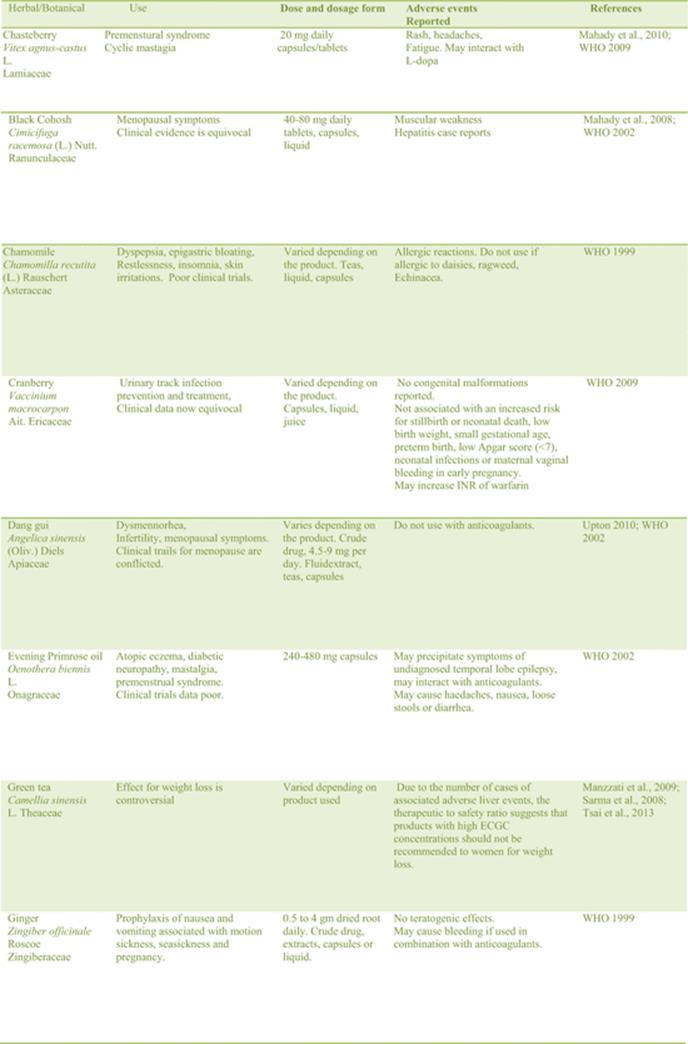
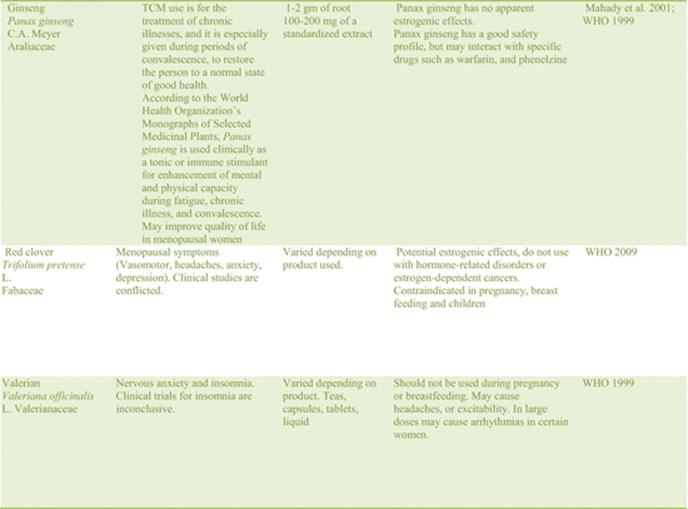
Fig. 13.1
Commonly used herbal supplements, uses, and adverse events, for women's reproductive health issues
Black Cohosh (Actaea racemosa L., Ranunculaceae)
The Efficacy of Black Cohosh for Menopausal Symptoms
Dietary supplements and herbal medicinal products containing Black cohosh are among the most commonly used products by women worldwide for the management of menopausal symptoms (Leach and Moore 2012; Low Dog 2005; Mahady et al. 2006). Data from numerous clinical trials suggest that black cohosh may be a useful alternative approach for the management of menopausal symptoms such as hot flashes, and night sweats, although the clinical trial data have been inconsistent to date (Leach and Moore 2012; Low Dog 2005; Mahady et al. 2006). The most recent Cochrane systematic review has suggested that currently there is insufficient clinical evidence to support the use of black cohosh for the treatment of menopausal vasomotor symptoms (Leach and Moore 2012).
Interestingly, a recently published re-analysis of all appropriate placebo-controlled clinical studies suggests that there is a standardized mean difference of 0.385 (p < 0.0001) in favor of black cohosh for the management of menopausal symptoms (Beer et al. 2013). This makes the point that there may be adequate justification for conducting further large-scale clinical studies to investigate the efficacy of black cohosh for menopausal symptoms. However, any new clinical trial must have significantly improved methodologies, including larger numbers of participants, and detailed descriptions of the study products, placebos and protocols, particularly with regards to allocation concealment and the handling of incomplete outcome data (Leach and Moore 2012). The impact of black cohosh treatments on health-related quality of life, sexual health, bone health, night sweats and cost-effectiveness should also been included in any new study (Leach and Moore 2012).
Safety Issues Associated with Black Cohosh
In 2006–2008, the regulatory agencies in Australia, Canada, and the European Union released statements regarding the “potential association” between black cohosh containing products and hepatotoxicity (Mahady et al. 2008). Thirty-six cases of black cohosh associated hepatotoxicity were also reviewed by the United States Pharmacopoeia (USP) and based on this safety review, as well as the need to guard public safety, it was determined that all U.S. black cohosh products should be labeled to include a cautionary statement for potential hepatotoxicity (Mahady et al. 2008).
Proving direct causality for black cohosh products and hepatotoxicity is very difficult, as has been pointed out by various groups and the results of such reviews depend on the method and scale used to determine causality (ATGA 2006; Beer et al. 2012; EMEA 2009; HMPC 2007; Mahady et al. 2008; MHRA 2006; NHPD 2007; Teschke 2010, 2011). Using a more general scale such as the Naranjo scale the USP review indicated that causality is possible (Naranjo et al. 1981; Mahady et al. 2008). However, when using a more liver specific scale such as the Council for International Organizations of Medical Sciences (CIOMS, also known as the Roussel Uclaf Causality Assessment Method-RUCAM) scale with modifications to review the case reports, causality is unlikely or excluded (Teschke et al. 2009, 2011). However, the CIOMS scale used in this study was modified by Teschke et al. (2009), but they did not provide evidence of validation. The European Medicines Agency (EMEA) concluded that changes made by Teschke of the established CIOMS scale were not validated, and thus the procedures recommended by Teschke and coworkers for the assessment of black cohosh hepatotoxicity were not feasible because nearly all cases would be rated “not assessable” according the proposed modifications (EMEA 2009). Teschke’s conclusions differed with those of the EMEA, that also analyzed reports of liver damage from black cohosh–containing products using a validated CIOMS scale. Similarly, the conclusions of “unlikely or excluded” causality were not supported by evaluations from several other organizations, although they used different causality analysis approaches (Mahady et al. 2012).
It should be noted that analyses of herbal medicines by regulatory bodies and government agencies have different objectives than private individuals or companies. Regulatory agencies regularly review safety and efficacy for herbal medicines both in Europe and the U.S. in order to identify possible safety signals. Currently, in the U.S. black cohosh is regulated as a dietary supplement under the Dietary Supplements Health and Education Act 1994. In Europe, black cohosh is regulated as a herbal medicinal product and there are stricter guidelines for these products. Furthermore, while the USP provides quality monographs for dietary supplements such as black cohosh, these standards are voluntary only and unlike Europe, there is no mandatory monograph system for companies to follow to manufacture these products. As a consequence, many dietary supplements such as black cohosh, are consumed by women with little guidance from healthcare professionals and there is usually no patient information leaflet provided with such products. This is problematic considering that many women in the U.S. consume herbal medicines concomitantly with prescription drugs, over-the-counter medications, and also with alcohol and drugs of abuse (Mahady et al. 2003).
The global number of adverse drug reaction (ADR) reports concerning liver damage associated with black cohosh was 82 in 2009 (Mahady et al. 2009). However, this number has since increased from reports worldwide (Guzman et al. 2009; Lim et al. 2013; Pierard et al. 2009; Zimmerman et al. 2010). While a direct causal role for black cohosh has not been established, the U.S. Pharmacopeia (the standards-setting organization for foods and drugs) put this explanation in many body of text and advises that black cohosh products be labeled with the following cautionary statement: “Discontinue use and consult a healthcare practitioner if you have a liver disorder or develop symptoms of liver trouble, such as abdominal pain, dark urine, or jaundice” (Mahady et al. 2008).
Since none of the clinical trials that performed liver tests when investigating the efficacy of black cohosh showed any signs of liver problems (Leach and Moore 2012; reviewed in Beer et al. 2013), it has been suggested that adulteration of black cohosh products may have occurred, and in fact this has been shown for some products (Jordan et al. 2010). Adulteration or substitution of black cohosh with ingredients of similar binomial name or similar common name (for example, blue cohosh, Caulophyllum thalictroides) may have occurred and is cause for concern. The recent introduction of cGMP in the U.S. will hopefully reduce the risk of adulterated products being on the market in the U.S.
The U.S. National Toxicology Program (NTP) assessed the toxicity of several commercially available black cohosh extracts (BCE) in rodents (Mercado-Feliciano et al. 2012). Female B6C3F1/N mice and Wistar Han rats were treated with increasing doses of black cohosh extracts up to 1,000 mg/kg/day BCE by gavage for 90 days starting at weaning. Administration of black cohosh extracts caused a dose-dependent non-regenerative macrocytic anemia and increased frequencies of peripheral micronucleated red blood cells (RBC) in both species. Mice showed decreased RBC counts at all doses and increased micronucleated RBC at doses above 125 mg/kg. Dose-dependent thymus and liver toxicity was observed only in rats. Uterotrophic assays conducted in mice found no estrogenic or anti-estrogenic effects after 3 days of treatment (Mercado-Feliciano et al. 2012). This was the first report of sub-chronic toxicity studies and liver toxicity in rodents due to the ingestion of black cohosh. The lowest administered dose to have an effect was 62.5 mg/kg/day, which is 125 times the currently recommended amount for daily human consumption (~0.5 mg/kg/day for a 70 kg human) (Mercado-Feliciano et al. 2012). While it is difficult to extrapolate these results from rodent studies to humans, it none-the less points to a need for at least a cautionary label to protect and inform consumers.
Cranberry (Vaccinium macrocarpon L.)
Efficacy of Cranberry for Urinary Tract Infections
Cranberry, the fresh or dried ripe fruit of Vaccinium macrocarpon Ait., Ericaceae, is currently used as a herbal adjunct therapy for the prevention and symptomatic treatment of urinary tract infections (Mahady et al. 2001a). Data from clinical trials indicates that extracts of cranberry or cranberry juice may reduce the bacterial load of E. coli and also suppress the inflammatory symptoms caused by the bacteria (Huang et al. 2009). Cranberry is one of the most commonly used herbal medicines by women in the U.S., and approximately $65 M USD was spent on cranberry containing products in 2012 (Lynch and Blumenthal 2013). While cranberry juice and products are used in complementary and alternative medicine for the management of urinary tract infections and during pregnancy, clinical trials supporting its use are conflicted (Jepson and Craig 2008; Jepson et al. 2013).
In the most recently published systematic review of clinical trials, the study concluded that prior to 2012, there was some evidence that cranberry juice decreased the number of symptomatic UTIs over a 12-month period, particularly for women with recurrent UTIs (Jepson and Craig 2008; Jepson et al. 2012). However, with the addition of 14 new clinical trials published from 2008 to 2012, (total of 4,473 participants) the review now indicates that cranberry juice may not be as effective as previously shown (Jepson et al. 2013). The authors of the systematic review further suggest that the lack of efficacy of cranberry on UTIs in clinical trials may be due to lack of participant adherence, lack of sufficient active ingredient in the cranberry product, or lack of sufficient statistical power (Jepson et al. 2013).
Safety of Cranberry Supplementation During Pregnancy
In terms of safety during pregnancy, one recent study performed in Norway found that of 68,522 women in the study, 919 (1.3 %) women had used various cranberry products during pregnancy (Heitmann et al. 2013). Information on pregnancy outcomes was retrieved from the Medical Birth Registry of Norway. The results of the study showed that of the women who used any cranberry when pregnancy, had no statistically significant increased risk to the fetus of congenital malformations. Cranberry was also not associated with increased risk for stillbirth/neonatal death, low birth weight, small gestational age, preterm birth, low Apgar score (<7), neonatal infections or maternal vaginal bleeding in early pregnancy (Heitmann et al. 2013). However, there was an association between cranberry use late in pregnancy and vaginal bleeding after week 17 of pregnancy (9.7 % vs. 5.8 %, p < 0.001). Sub-analyses of more severe bleeding outcomes did not support a significant risk (Heitmann et al. 2013).
Drug Interactions and Adverse Events Associated with Cranberry
In terms of drug interactions, since 2003 there have been published reports of an interaction of cranberry juice with warfarin resulting in increased International Normalized Ratios (INRs) and bleeding (Grant 2004; Isele 2004; Rindone and Murphy 2006; Suvarna et al. 2003). Since then there have been many published reports from different countries and speculation as to the potential interaction and its possible mechanism (Aston et al. 2006; Griffiths et al. 2008; Haber et al. 2012; Hamann et al. 2011; Niklasson and Andrén 2006; Rindone and Murphy 2006; Srinivas 2013). The adverse reactions caused by this interaction range from minor bleeding to fatal haemopericardium and gastrointestinal hemorrhage (Griffiths et al. 2008). Thus, it is prudent that women taking anti-coagulant drugs such as Coumadin should be very cautious when using cranberry products, and consult with their healthcare provider before they use cranberry to treat or prevent a UTI.
Dang Gui (Dong Quai)
Traditional Use of Dang Gui
Dang gui (Angelica sinensis [Oliv.] Diels Apiaceae), also known as Chinese angelica or female ginseng, has been used for thousands of years in traditional Chinese medicine (TCM) to treat a variety of women’s reproductive disorders and is available in the U.S. as a dietary supplement (Upton 2010). While dang gui has traditionally been used primarily for gynecological conditions such as irregular menstruation, amenorrhoea and dysmenorrhoea, more recent research has focused on its cardiovascular, hematopoietic, hepatoprotective, antioxidant, antispasmodic, and immunomodulatory properties (Upton 2010). Results from a very limited number of clinical trials also suggest that dang gui may have cardioprotective and hypotensive effects useful for the treatment of stroke and chronic obstructive pulmonary disease with pulmonary hypertension (Upton 2010; Wu et al. 2012).
In terms of traditional gynecological use, dang gui is used to treat uterine fibroids, endometriosis, amenorrhea, dysmenorrhea, and certain forms of infertility, as it has anti-inflammatory effects (Fu et al. 1998; Upton 2010). Results from a published survey from Taiwan showed that 53.4 % of 12,349 women with primary dysmenorrhea used TCM and 92.2 % of them sought TCM with the intention of treating their menstruation-related pain symptoms (Pan et al. 2014). In this Taiwanese study, of a total of 213,249 TCM visits for women with primary dysmenorrhea, more than 99 % were treated with Chinese herbal products. Dang-gui-shao-yao-san a combination Chinese herbal medicines containing dang gui was the most frequently prescribed formula for menstruation associated pain (Pan et al. 2014).
Clinical Efficacy of Dang Gui
Despite the extensive traditional use of dang gui, there are few randomized controlled clinical trials substantiating the efficacy. Two uncontrolled trials (no placebo control group) found that dang gui, both alone and in combination with other traditional Chinese medicinal herbs, was effective in the treatment of dysmenorrhea (Gao et al. 1988). In another uncontrolled study, infertility due to tubal occlusion was treated with a 9-month treatment using a uterine irrigation containing dang gui extract (Fu et al. 1998). The results of the study suggested that 79 % of the women regained tubal patency and 53 % became pregnant (Fu et al. 1998). However all of these clinical trials were uncontrolled and the methodology was poor based on current modern standards.
Three additional clinical trials have assessed the effects of dang gui on menopausal symptoms (Haines et al. 2008; Hirata et al. 1997; Wang et al. 2013). A randomized placebo-controlled trial involving 71 postmenopausal women concluded that 4.5 g of dang gui root daily in capsule form for 24 weeks had no effect on vasomotor menopausal symptoms such as hot flushes (Hirata et al. 1997). No differences were observed between groups in terms of serum hormone levels, vaginal cytology, hot flashes, or Kupperman Index scores (Hirata et al. 1997). As with most Chinese botanicals, dang gui is most often used in multi-ingredient formulas rather than as a single agent. However, a second 6-month randomized, double-blind, placebo-controlled study of the effect of Dang Gui Buxue Tang (DGBT); a 1:5 combination of Dang Gui (Angelica sinensis) and Huang Qi (Astragalus membranaceus) on acute menopausal symptoms in 103 women failed to show any effect of the combination product over placebo (Haines et al. 2008). However, the most recent study on the same combination reported more positive effects (Wang et al. 2013). These researchers performed a randomized, double-blind, multiple-dose escalation trial involving 60 postmenopausal women experiencing severe hot flushes and night sweats. Women were randomized to ingest 1.5, 3.0, or 6.0 g/day of dang gui root for 12 weeks. Both women receiving 3 and 6 g/day showed a dose-dependent reduction in hot flushes over time. The DGBT formula at a dose of 6.0 g/day (higher dose than used in previous studies) significantly improved physical and psychological scores and significantly reduced vasomotor symptoms from baseline as measured by the Greene Climacteric Scale (GCS) score. The treatment was well tolerated, with no serious adverse events noted during the 12-week intervention period. No effects on hormones and lipid profiles were observed (Wang et al. 2013).
Safety of Dang Gui
In terms of safety, few adverse events have been reported in the published clinical studies. One review article assessing 200 reports on dang gui pharmacology concluded that dang gui had no major side effects (Mei et al. 1991). In one published case report, a female patient developed occupational asthma and rhinitis (Lee et al. 2001). The patient had a positive response to skin prick tests using an extract of dang gui and had an early asthmatic response to dang gui in a bronchoprovocation test. Dang gui caused a greater histamine release from basophils in the patient compared to a healthy control (Lee et al. 2001).
Anticoagulant Effects of Dang Gui
In a recent review of Chinese medicinal herbs, the primary the mechanism of interaction of dang gui with other medicines was found to be attributable to its pharmacodynamic interactions, particularly when used with anticoagulant or antiplatelet drugs, where it induces additive effects (Tsai et al. 2013). Dang gui is one of the most commonly used Chinese herbs and has blood-activating or stasis-resolving effects and is widely used for the treatment of cardiovascular or cerebrovascular diseases (Tsai et al. 2013). Limited clinical evidence supports the effects of these Chinese herbs on stroke or coronary diseases and further large scale, rigorous clinical trials are needed to confirm the benefit and safety risks. Women interested in using Chinese herbs such as dang gui for reducing cardiovascular risk factors need to disclose their concurrent use of conventional medications, particularly those patients who are taking anticoagulant or antiplatelet drugs (Tsai et al. 2013). Dang gui contains several coumarin derivatives and should be used with caution in women on anti-coagulants because of the increased risk of bleeding.
Green Tea
Use of Green Tea by Menopausal Women
In 2003, we published a survey of women between the ages of 40 and 60 years at the University of Illinois at Chicago (UIC) clinics, to determine their use of botanical dietary supplements (Mahady et al. 2003). Of the 500 women interviewed, 79 % (n = 395) used herbal supplements, of which 36.5 % used herbal supplements daily. Commonly used botanicals included soy (42 %), green tea (34.68 %), chamomile (20.76 %), gingko (20.51 %), ginseng (17.97 %), Echinacea (15.44 %), and St. John’s wort (7.34 %) in the form of teas, capsules, tablets, and liquids (Mahady et al. 2003). Interestingly, with the exception of chamomile, all of the herbal supplements in the top five products in our study in 2003, are still in the top-ten list of best selling herbal supplements in the U.S. in 2013, including green tea (Sarma et al. 2008; CRN 2013).
Tea (Camellia sinensis (L.) Kuntze; Theaceae) is one of the most widely consumed beverages worldwide, second only to water (Anon 2000). Fermented black, semi-fermented oolong, and green tea are all produced from its leaves. Green tea is made from steaming the fresh leaves at high temperatures, thus inactivating the oxidizing enzymes and leaving the polyphenol content intact, which make up 30–40 % of the extractable solids of dried green tea leaves (Anon 2000; Brown 1999). The primary catechins in green tea include epicatechin, epicatechin-3-gallate, epigallocatechin, and epigallocatechin-3-gallate (EGCG), with EGCG being the most abundant. In the United States, green tea products rank in the top ten selling dietary supplements (Sarma et al. 2008).
Green Tea Research
Over the past 30 years, research has focused on the medicinal aspects of tea polyphenols, with demonstrated antioxidant, anticarcinogenic, anti-inflammatory, thermogenic, probiotic, and antimicrobial properties in numerous human, animal, and in vitro studies. Green tea extracts and supplements are commonly used by women worldwide to prevent breast cancer, reduce weight and improve digestion. Some clinical and epidemiological studies show an inverse relationship between green tea consumption and cancer risk, supporting a possible chemopreventive effect of green tea (Brown 1999). Thus, green tea is perceived by many women as having multiple health benefits, however when asked to articulate these benefits, most women in our survey were unable to do so (Mahady et al. 2003).
Green Tea as a Weight Loss Agent
Over the past 10 years there has been an increase in the number of studies investigating the usefulness of green tea as a natural weight loss supplement, a subject that is of great interest to many women (Thavanesan 2011). It is widely believed that the polyphenolic constituents of tea increase thermogenesis or reduce fat absorption, thereby having an anti-obesity effect. However, the published clinical data are inconsistent, with some studies showing no effect on weight loss and other studies showing minor to moderate effects (Thavanesan 2011). Evaluation of the available clinical data supporting the role of green tea in weight loss is conflicted, however considering that there are some positive results from a few studies, larger scale clinical trials using a well define product are warranted (Thavanesan 2011).
Hepatotoxicity Associated with the Ingestion of Green Tea
In a situation very reminiscent of the black cohosh story, six of the clinical trials conducted using various green tea preparations reported no difference in adverse reactions compared with placebo during these investigations (Sarma et al. 2008). However, in 2003 both the French and Spanish regulatory authorities suspended marketing authorization of Exolise, a weight-loss product containing a hydroalcoholic extract of green tea (standardized to 25 % catechins) (reviewed in Sarma et al. 2008). In these countries, the product was associated with elevated liver enzymes in 13 female subjects, 9 cases reported in France, and 4 cases reported in Spain (Sarma et al. 2008). Of the 13 affected women, hepatoxicity appeared after approximately 50 days of use of Exolise, and the problem resolved in 12 of the subjects following discontinuation of the product. Unfortunately, one woman who had concomitant alcohol and other drug use finally progressed to complete liver failure (Sarma et al. 2008).
In 2008, the USP Expert Committee on Dietary Supplements analyzed case reports pertaining to green tea and liver damage using the Naranjo causality algorithm scale (Naranjo et al. 1981), along with historical use, regulatory status, and current extent of use of green tea products (Sarma et al. 2008). A total of 216 adverse event reports for green tea products were analyzed, including 34 reports concerning liver toxicity (Sarma et al. 2008). Of the 34 cases of potential liver toxicity, 27 were categorized as possible causality and 7 as probable causality (Sarma et al. 2008). Further analysis of clinical pharmacokinetic and animal toxicological data suggested that the ingestion of concentrated green tea extracts on an empty stomach may lead to more adverse effects than taking the products with food. Since Exolise was a weight-loss product, it seemed likely that the affected women were taking the product on an empty stomach in attempts to lose weight.
In 2009, another extensive review of the case reports was published, which included two new previously unpublished reports (Mazzanti et al. 2009). These authors reviewed a total of 34 cases of hepatotoxicity associated with green tea ingestion. For some cases, histological evaluation of the liver showed inflammatory reactions, cholestasis, occasional steatosis, and necrosis. Fortunately, in most cases (n = 29), de-challenge (withdrawal of the medicine/product) resulted in complete recovery, but one death was reported. Positive re-challenge (reoccurrence of hepatotoxicity on re-administration of the product) was reported in seven cases (20 %) which strongly supports a casual association. In the two new cases, the causality assessment was judged as “possible” according to the RUCAM score (Mazzanti et al. 2009).
After the withdrawal of Exolise (the product with the most reported cases of liver toxicity) from the market in Europe, other green tea-based herbal supplements were marketed, and as a consequence, the reports of hepatotoxicity from green tea are still increasing. Since most of the cases of green tea associated hepatotoxicity involve women (particularly since these products are used for weight control), host genetic factors and gender may play a role in these cases (Jimenez-Saenz and Martinez-Sanchez 2007). To this end, it has been reported that Epigallocatechin gallate (EGCG)-mediated liver toxicity is more predominant in female than male mice (Goodin et al. 2006). Mazzanti et al. (2009) concluded that the suspected liver toxicity due to the ingestion of green tea extracts was likely due to the presence of the catechins, particularly to EGCG. Although the bioavailability of the tea catechins is low after oral administration, under fasting conditions, and repeated administration, the catechin plasma levels can build up and may reach toxic levels (Mazzani et al. 2009).
Hepatotoxicity of green tea extract may be due to the ability of EGCG or its metabolites to induce oxidative stress in the liver. Since many of the cases involved women, the reaction may be gender specific, however an idiosyncratic or an immune-allergic mechanism cannot be excluded (Mazzanti et al. 2009). While green tea products have been used for their health benefits, their efficacy has not been conclusively established, and in the light of associated adverse liver events, the therapeutic to safety ratio suggests that products with high ECGC concentrations should not be recommended to women for weight loss.
Impact of Green Tea on Sex Hormone Levels
On an interesting note, there is limited evidence suggesting that green tea may reduce the levels of circulating sex-steroid hormones, whereas black tea may actually increase hormone levels (Wu et al. 2012). One investigation of the relationship between tea intake and plasma estrogen and androstenedione levels was performed in 130 healthy post-menopausal Chinese women in Singapore (Wu et al. 2012). Of the 130 women, 84 were non- or irregular (less than once a week) tea drinkers, 27 were regular (weekly/daily) green tea drinkers and 19 were regular (weekly/daily) black tea drinkers. Analysis of plasma estrone levels in non- or irregular tea drinkers showed estrone at 29.5 pg/ml, which were 13 % lower in regular green tea drinkers (25.8 pg/ml) and 19 % higher in regular black tea drinkers (35.0 pg/ml). Although this was small study, these differences in estrone levels were statistically significant (P < 0.03) even after adjusting for age, body mass index, intake of soy, and other covariates. A similar pattern of differences between tea intake, and plasma levels of estradiol and androstenedione were found, but these were not statistically significant (Wu et al. 2012). These results preliminarily suggest that green tea may have chemopreventative effects for estrogen-dependent cancers by reducing circulating hormone levels over a lifetime.
Ginseng (Panax ginseng)
Ginseng History and Traditional Use
Some of the most popular and well-known herbal medicines used by menopausal women are known generically as “ginseng” (Mahady et al. 2001b; WHO 1999). The ginsengs are not similar taxonomically, and there are over 30 different species of plants commonly referred to as “ginseng” (Awang 2003; Mahady et al. 2001b). The common name “ginseng” is derived from the Chinese word “jen-shen”, which translated means “man-root” as the shape of the roots can resemble the human body (Awang 2003; Hu 1976). Panax ginseng is a traditional Chinese medicine (TCM) and has been used for thousands of years in Southeast Asia as a tonic to promote longevity (Shibata et al. 1985). The oldest Chinese Pharmacopoeia, Shen-Nung Pen Tsao Ching, described the use of ginseng for the “repairing of the five viscera, quieting the spirit, curbing the emotion, stopping agitation, removing noxious influence, brightening the eyes, enlightening the mind and increasing wisdom” (Shibata et al. 1985). Ginseng is used in prescriptions as a drug to restore Yang or to recover balanced homeostasis.
The traditional Chinese medical use of Panax ginseng is for the treatment of older patients with chronic illnesses, and it is especially given during periods of convalescence, to restore the person to a normal state of good health (Hu 1976; Mahady et al. 2001b). In the World Health Organization’s Monographs of Selected Medicinal Plants, Panax ginseng is used clinically as a tonic or immune stimulant for enhancement of mental and physical capacity during fatigue, chronic illness, and convalescence (WHO 1999; Mahady et al. 2001b).
Panax ginseng’s Effect on Cancer-Specific Mortality in Women
A 2009 study investigated the association between Panax ginseng intake and mortality among Korean elderly subjects, both male and female (Yi et al. 2009). The study involved a total of 6,282 subjects, over 55 years of age that were followed over 18.8 years in this progressive cohort study. The Cox proportional hazard regression model was used to evaluate effects of ginseng intake on overall mortality. After adjusting for age, education, occupation, drinking, smoking, self-reported chronic disease, body mass index, and blood pressure, the all-cause mortality for male ginseng users was significantly lower than that for male nonusers, but unfortunately a similar association was not observed in women (Yi et al. 2009). However, cancer-specific mortality was lower in female ginseng users than female nonusers after adjustment of relevant covariates. The cancer-specific mortality was not associated with ginseng intake in male subjects. Mortality caused by cardiovascular diseases was not related to ginseng intake in either men or women (Yi et al. 2009). To date no further studies have either confirmed or refuted this report.
Panax ginseng’s Effect on Fatigue
In a 2013 published study, the anti-fatigue effects of P. ginseng were investigated in a double-blind, randomized, placebo controlled study involving 90 subjects (21 men and 69 women) with idiopathic chronic fatigue (ICF; Kim et al. 2013). A 20 % ethanol extract of P. ginseng (oral dose of 1 g or 2 g day) or a placebo was administered to each group for 4 weeks, and then fatigue severity was monitored using a self-rating numeric scale (NRS) and a visual analogue scale (VAS) as the primary endpoints. After 4-weeks of treatment, P. ginseng decreased the total NRS score, but this was not statistically significant as compared with placebo (p > 0.05). Mental NRS score was significantly improved by P. ginseng administration for 1 g and 2 g, as compared with placebo (p < 0.01). However, only 2 g P. ginseng significantly (p < 0.01) reduced the VAS score as compared with placebo (Kim et al. 2013).
Panax ginseng’s Effect on Quality of Life for Post-menopausal Women
One randomized, multicenter, double-blind, parallel group study assessed the effects of a standardized ginseng extract compared with those of a placebo on quality of life (QoL) and on physiological parameters in 384 symptomatic postmenopausal women (Wiklund et al. 1999). Validated questionnaires [Psychological General Well-Being (PGWB) index, Women’s Health Questionnaire (WHQ)] and Visual Analogue (VA) scales were used as outcome measures. To assess the safety of the ginseng extract, physiological parameters such as follicle-stimulating hormone (FSH) and estradiol levels, endometrial thickness, maturity index and vaginal pH were measured at the same time points. The results on the PGWB index showed that the extract showed only a tendency for a slightly better overall symptomatic relief, but this was not statistically significant. Further analysis of PGWB subsets showed a statistically significant difference for depression, well-being and health subscales in favor of ginseng compared with placebo. The results of this study suggest that the effects of ginseng were not mediated through estrogenic like effects such as changes in FSH and estradiol levels, endometrial thickness, maturity index and vaginal pH (Wiklund et al. 1999).
Panax ginseng is not Estrogenic
In a double blind, placebo controlled clinical trial (60 females and 60 males), administration of 200 mg of a standardized ginseng extract per day for 12 weeks did not have any significant effect on sex hormone blood levels (luteinizing hormone, follicle stimulating hormone, testosterone, estradiol) in comparison with the placebo groups (Forgo et al. 1981). Furthermore, one clinical trial involving 49 menopausal women (33 of whom had a hysterectomy) regular speculum examinations and cytological smears from the cervix and the vaginal wall did not show any changes during 3 months of oral treatment with 20 standardized ginseng extract per day (Reinhold 1990).
The Safety of Panax ginseng
With few exceptions, Panax ginseng appears to be safe when administered within recommended therapeutic doses (WHO 1999a). However, according to WHO, Panax ginseng may reduce the blood concentrations of alcohol and warfarin (WHO 1999a). It has also been reported to induce mania when used concomitantly with phenelzine (WHO 1999a), and interestingly may increase the efficacy of the influenza vaccination (WHO 1999a). While co-administration of ginseng with warfarin did not appear to alter the International Normalized Ratio (INR) or platelet aggregation in one clinical trial, another study noted alterations (Yuan et al. 2004), therefore co-administration of warfarin with ginseng or any herbal medication is not recommended.
Information Resources for Herbal Medicines and Dietary Supplements
There are literally thousands of resources for finding information for herbal medicines and dietary supplements. In 1995 the WHO started a monograph series on commonly used medicinal plants worldwide. This work is published in a series of books entitled the “WHO Monographs on Selected Medicinal Plants” Volumes 1–4. These books cover global information on the most widely used herbal medicines from different countries. In addition to this global resource, the ESCOP has a continually updated series of monographs. ESCOP was founded in June 1989 as an umbrella organization representing national herbal medicine or phytotherapy associations across Europe. Their monographs are state-of-the – art reviews by leading herbal medicine experts and go through extensive scientific reviews. In the United States there are numerous websites for free information for herbs including the National Institutes of Health’s websites:
1.
2.
There are also subscription services such as:
1.
2.
In addition, the United States Pharmacopoeia ANON (2009), the European Pharmacopoeia, the British Herbal Pharmacopoeia, the African Pharmacopoeia, the Chinese Pharmacopoeia and many other global pharmacopoeias, most having information on the official herbal medicines of each country. These are all adequate resources for finding information on the quality, safety and efficacy of commonly used herbal medicines.
Discussion
Globally, herbal products are regulated differently in almost every country in the world with perhaps the exception of the European Union which is trying to harmonize the regulatory aspects of herbal medicine products before they are approved for the EU market. The EU has an official monograph system for most herbal medicines that is constantly in the process of review for quality, safety and efficacy to protect public health. Canada has a similar system.
In the United States herbal medicines are regulated as dietary supplements under the Dietary Supplements Health and Education Act of 1994 (Mahady et al. 2001; Jordan et al. 2010). While there are cGMP’s in place in the U.S., dietary supplements are not monitored for safety or efficacy by the FDA. Under the U.S. system, herbal medicines are not to be used as drugs for the diagnosis, treatment or cure of any disease, only to supplement the diet. However, women in the U.S. continue to use these products exactly to treat common disorders such as PMS, menopause, common cold, fatigue, etc. For some of these herbal medicines there is sufficient clinical data for safety and efficacy, however for many herbal drugs being used by women worldwide there is little in the way of information on quality, safety or efficacy.
This is particularly a problem in developing countries where herbal medicines are used commonly by women to treat all disease conditions, due to a lack of access of other types of healthcare. WHO estimates that the use of herbal medicines as part of the primary healthcare in parts of Africa and Guatemala may be as high as 80 %. However as was pointed out earlier in this chapter, the use of herbal medicines by American women is currently 30 % and increasing.
There are many products on the market in the U.S. that have no associated safety and efficacy studies, particularly the combination products. These products are directly marketed to women as treatments for menopausal symptoms, sleep, bone health, enhancing memory and reducing fatigue, etc. In developing countries the situation is much worse for women due to a lack of adequate health care and a lack of scientific information on the herbal medicines that make up their everyday healthcare (Locklear et al. 2013). The WHO and other international groups are not sufficiently funded to facilitate the review of all herbal medicines, and thus this kind of initiative needs to come from the governments of these countries perhaps working in concert with WHO or other regulatory agencies.
Conclusions
Data suggests that the global herbal medicines market continues to increase, with estimates of sales as high as $160 B USD. In the United States, the most recent surveys suggest that almost 30 % of U.S. adults use herbal medicines, and of the $11.5 billion spent on dietary supplements in the U.S., over half a billion dollars are spent on herbal medicines alone. Women continue to be the primary users of herbal supplements in the U.S. (10–80 % depending on age) and are increasingly using these products to treat or prevent a wide array of ailments including symptoms of menopause, the common cold, depression, and other non-life threatening medical conditions.
In terms of herbal medicines used by women, black cohosh, cranberry, dang gui, green tea, and ginseng are the most common in the U.S. Women use these products to treat a wide range of conditions including symptoms of menopause, premenstrual syndrome and urinary track infections. While the clinical data for efficacy are equivocal for most of these herbal medicines, there are contraindications, drug interactions and some serious adverse events associated with the use of these products. Where no clinical efficacy has been proven and serious adverse events have been reported, the safety risk in negative (no benefit and potential safety risk) and thus such products should not be recommended.
Take Home Messages
· The global use of herbal medicines and dietary supplements continues to increase with annual sales of herbs estimated at $160 B USD.
· The use of herbal supplements by the U.S. population has risen from ~15 % in 2000 to 30 % in 2013, and is expected to continue to increase over the next 5–10 years.
· Women are the largest users of herbal medicines in the U.S., and use them to treat or prevent a wide array of ailments including menopause, common cold, depression, pregnancy and other non-life threatening medical conditions.
· Women in developing countries are often dependent on herbal medicines for their primary healthcare.
· While some herbal products have quality, safety and efficacy data, many herbal medicines, many others particularly in developing countries have not been sufficiently scientifically investigated.
· Official pharmacopoeias, monographs and databases are good sources for scientific and medical information for herbal medicines.
References
Anon (2000) Green tea. Altern Med Rev 5(4):372–375
Anon (2009) USP revises admission criteria and safety classification for dietary supplements. http://www.usp.org/USPNF/notices/USPRevisedAdmissionCriteria.html. Posted: 10 Apr 2009
Anon (2013) The guardian Nigeria, Herbal medicine market hits $160 billion globally. Guardian Mobile
Aston JL, Lodolce AE, Shapiro NL (2006) Interaction between warfarin and cranberry juice. Pharmacotherapy 26(9):1314–1319PubMedCrossRef
ATGA (2006) Australian Therapeutic Goods Administration Statement. New labeling and consumer information for medicines containing black cohosh (Cimicifuga racemosa). http://www.tga.gov.au/cm/0705blkcohosh.htm. Accessed 10 Aug 2006
Awang D (2003) What’s in the name of Panax are those other “Ginsengs”? HerbalGram 57:35–40
Beer AM, Osmers R, Schnitker J et al (2013) Efficacy of black cohosh (Cimicifuga racemosa) medicines for treatment of menopausal symptoms – comments on major statements of the Cochrane Collaboration report 2012 “black cohosh (Cimicifuga spp.) for menopausal symptoms (review)”. Gynecol Endocrinol 29(12):1022–1025PubMedCrossRef
Brown MD (1999) Green tea (Camellia sinensis) extract and its possible role in the prevention of cancer. Altern Med Rev 4(5):360–370PubMed
Council of Responsible Nutrition (CRN) (2013) Consumer survey on dietary supplements. CRN.org
Daniels S (2013) CRN survey: 85 % of US adults confident in the safety, quality and effectiveness of dietary supplements. Nutraingredients (Nutraingredients-use.com), 23 Sept 2013
European Medicines Agency (EMEA) (2009) Draft assessment report on Cimicifuga racemosa (L.) Nutt., rhizome. Doc. Ref.: EMEA/HMPC/3968/2008. http://www.ema.europa.eu/pdfs/human/hmpc/cimicifugae_rhizoma/396808en.pdf. September 2009
Forgo I, Kayasseh L, Staub JJ (1981) Effect of a standardized ginseng extract on general well-being, reaction capacity, pulmonary function and gonadal hormones. Med Welt 19:751–756
Fu YF, Xia YK, Shi YP (1998) Treatment of 34 cases of infertility due to tubal occlusion with compound ganggui injection by irrigation. Jiangsu Zhongyi 9:15–16
Gao YM, Zhang HK, Duan ZX (1988) Treatment of 112 cases of dysmenorrhea with Danggui jingyou pill. Lanzhou Daxue Xuebao 1:36–38
Gardiner P, Graham R, Legedza AT et al (2007) Factors associated with herbal therapy use by adults in the United States. Altern Ther Health Med 13(2):22–29PubMed
Goodin MG, Bray BJ, Rosengreen RJ (2006) Sex- and strain dependent effects of epigallocatechin gallate (EGCG) and epicatechin gallate (ECG) in the mouse. Food Chem Toxicol 44:1496–1504PubMedCrossRef
Grant P (2004) Warfarin and cranberry juice: an interaction? J Heart Valve Dis 13(1):25–26PubMed
Griffiths AP, Beddall A, Pegler S (2008) Fatal haemopericardium and gastrointestinal haemorrhage due to possible interaction of cranberry juice with warfarin. J R Soc Promot Health 128(6):324–326PubMedCrossRef
Guzman G, Kallwitz ER, Wojewoda C et al (2009) Liver injury with features mimicking autoimmune hepatitis following the use of black cohosh. Case Report Med 2009:918156
Haber SL, Cauthon KA, Raney EC (2012) Cranberry and warfarin interaction: a case report and review of the literature. Consult Pharm 27(1):58–65PubMedCrossRef
Haines CJ, Lam PM, Chung TK et al (2008) A randomized, double-blind, placebo-controlled study of the effect of a Chinese herbal medicine preparation (Dang Gui Buxue Tang) on menopausal symptoms in Hong Kong Chinese women. Climacteric 11(3):244–251PubMedCrossRef
Hamann GL, Campbell JD, George CM (2011) Warfarin-cranberry juice interaction. Ann Pharmacother 45(3):e17PubMedCrossRef
Heitmann K, Nordeng H, Holst L (2013) Pregnancy outcome after use of cranberry in pregnancy–the Norwegian Mother and Child Cohort Study. BMC Complement Altern Med 13:345PubMedCentralPubMedCrossRef
Herbal Medicinal Products Committee (HMPC) (2007) Assessment of case reports connected to herbal medicinal products containing Cimicifuga racemosa rhizome (black cohosh, root). http://www.emea.europa.eu/pdfs/human/hmpc/26925806en.pdf. Accessed March 2014
Hirata JD, Swiersz LM, Zell B et al (1997) Does dong quai have estrogenic effects in postmenopausal women? A double-blind, placebo-controlled trial. Fertil Steril 68:981–986PubMedCrossRef
Hu SY (1976) The genus Panax (ginseng) in Chinese medicine. Econ Bot 30:11–28CrossRef
Huang Y, Nikolic D, Pendland S et al (2009) Effects of cranberry extracts and ursolic acid derivatives on P-fimbriated Escherichia coli, COX-2 activity, pro-inflammatory cytokine release and the NF-kappa-beta transcriptional response in vitro. Pharm Biol 47(1):18–25PubMedCentralPubMedCrossRef
Isele H (2004) Fatal bleeding under warfarin plus cranberry juice. Is it due to salicylic acid? MMW Fortschr Med 146(11):13PubMed
Jepson RG, Craig JC (2008) Cranberries for preventing urinary tract infections. Cochrane Database Syst Rev 1, CD001321PubMed
Jepson RG, Williams G, Craig JC (2012) Cranberries for preventing urinary tract infections. Cochrane Database Syst Rev 10, CD001321PubMed
Jepson R, Craig J, Williams G (2013) Cranberry products and prevention of urinary tract infections. JAMA 310(13):1395–1396PubMedCrossRef
Jimenez-Saenz M, Martinez-Sanchez C (2007) Green tea extracts and acute liver failure: the need for caution in their use and diagnostic assessment. Liver Transpl 13:1067PubMedCrossRef
Jordan SA, Cunningham DG, Marles RJ (2010) Assessment of herbal medicinal products: challenges, and opportunities to increase the knowledge base for safety assessment. Toxicol Appl Pharmacol 243(2):198–216PubMedCrossRef
Kim HG, Cho JH, Yoo SR et al (2013) Antifatigue effects of Panax ginseng C.A. Meyer: a randomised, double-blind, placebo-controlled trial. PLoS One 8(4):e61271PubMedCentralPubMedCrossRef
Kim Sooi L, Lean Keng S (2013) Herbal medicines: Malaysian women’s knowledge and practice. Evid Based Complement Alternat Med 2013:438139PubMedCentralPubMedCrossRef
Leach MJ, Moore V (2012) Black cohosh (Cimicifuga spp.) for menopausal symptoms. Cochrane Database Syst Rev 9, CD007244PubMed
Lee SK, Cho HK, Cho SH et al (2001) Occupational asthma and rhinitis caused by multiple herbal agents in a pharmacist. Ann Allergy Asthma Immunol 86(4):469–474PubMedCrossRef
Lim TY, Considine A, Quaglia A et al (2013) Subacute liver failure secondary to black cohosh leading to liver transplantation. BMJ Case Rep, bcr2012009325
Locklear TD, Perez A, Caceres A, Mahady GB (2013) Women’s health in Central America: the complexity of issues and the need to focus on indigenous healthcare. Curr Women’s Health Rev 9:1573–1584
Low Dog T (2005) Menopause: a review of botanical dietary supplements. Am J Med 118(Suppl 12B):98–108PubMedCrossRef
Low Dog T (2009) The use of botanicals during pregnancy and lactation. Altern Ther Health Med 15(1):54–58PubMed
Lynch M, Blumenthal M (2013) Herbal supplement sales increase 5.5 % in 2012; herbal supplement sales rise for 9th consecutive year; turmeric sales jump 40 % in natural channels. HerbalGram 99:60–65
Mahady GB, Fong HHS, Farnsworth NR (2001a) Cranberry. In: Botanical dietary supplements: quality, safety and efficacy. Swets Publishing, Lisse
Mahady GB, Fong HHS, Farnsworth NR (2001b) Ginseng. Botanical dietary supplements: quality, safety and efficacy. Swets & Zeitlinger, Lisse
Mahady GB, Parrot J, Lee C et al (2003) Botanical dietary supplement use in peri- and postmenopausal women. Menopause 10(1):65–72PubMed
Mahady GB, Doyle BJ, Locklear TD et al (2006) Black cohosh (Actaea racemosa) for the mitigation of menopausal symptoms: recent developments in clinical safety and efficacy. Womens Health 2(5):773–784
Mahady GB, Low Dog T, Barrett ML et al (2008) United States Pharmacopeia review of the black cohosh case reports of hepatotoxicity. Menopause 15:628–638PubMedCrossRef
Mahady G, Low Dog T, Sarma DN, Giancaspro GI et al (2009) Suspected black cohosh hepatotoxicity – causality assessment versus safety signal. Maturitas 64:139–140PubMedCrossRef
Mahady GB, Low Dog T, Sarma ND et al (2012) Response to Teschke et al. Pharmacoepidemiol Drug Saf 21(3):339–340PubMedCrossRef
Mazzanti G, Menniti-Ippolito F, Moro PA et al (2009) Hepatotoxicity from green tea: a review of the literature and two unpublished cases. Eur J Clin Pharmacol 65(4):331–341PubMedCrossRef
Mei QB, Tao JY, Cui B (1991) Advances in the pharmacological studies of radix Angelica sinensis (Oliv.) Diels (Chinese dang gui). Chin Med J 104(9):776–781PubMed
Mercado-Feliciano M, Cora MC, Witt KL et al (2012) An ethanolic extract of black cohosh causes hematological changes but not estrogenic effects in female rodents. Toxicol Appl Pharmacol 263(2):138–147PubMedCentralPubMedCrossRef
MHRA (2006) MHRA action on safety concerns over black cohosh and liver injury. http://www.mhra.gov.uk/NewsCentre/Pressreleases/CON2024116?ssSourceNodeId=663. Accessed June 2014
Naranjo CA, Busto U, Sellers EM et al (1981) A method for estimating the probability of adverse drug reactions. Clin Pharmacol Ther 30:239–245PubMedCrossRef
National Institutes of Health (2007) The use of complementary and alternative medicine in the United States. National Center for Complementary and Alternative Medicine
Natural Health Products Directorate (NHPD) (2007) Black cohosh. http://www.hc-sc.gc.ca/dhp-mps/alt_formats/hpfb-dgpsa/pdf/prodnatur/mono_cohosh-grappes_e.pdf. Accessed March 2014
Niklasson A, Andrén L (2006) Interaction between warfarin and cranberry juice. Lakartidningen 103(11):853–854PubMed
Pan JC, Tsai YT, Lai JN et al (2014) The traditional Chinese medicine prescription pattern of patients with primary dysmenorrhea in Taiwan: a large-scale cross sectional survey. J Ethnopharmacol S0378–8741(14):00011-17
Pierard S, Coche JC, Lanthier P et al (2009) Severe hepatitis associated with the use of black cohosh: a report of two cases and an advice for caution. Eur J Gastroenterol Hepatol 21:941–945PubMedCrossRef
Rahman AB, Ahmad Z, Naing L et al (2007) The use of herbal medicines during pregnancy and perinatal mortality in Tumpat District, Kelantan, Malaysia. Southeast Asian J Trop Med Public Health 38(6):1150–1157
Reinhold E (1990) Der Einsatz von Ginseng in der Gynäkologie. Natur-und GanzheitsMedizin 4:131–134
Rindone JP, Murphy TW (2006) Warfarin-cranberry juice interaction resulting in profound hypoprothrombinemia and bleeding. Am J Ther 21(3):283–284CrossRef
Sarma DN, Barrett ML, Chavez ML et al (2008) Safety of green tea extracts: a systematic review by the US Pharmacopeia. Drug Saf 31(6):469–484PubMedCrossRef
Schultz H (2013a) Herbal supplements sales rose 5.5 % in US in 2102, ABC says. Nutraingredients-usa.com. Accessed 5 Feb 2014
Schultz H (2013b) Supplement sales hit $11.5 B in U.S. report says. www.nutraingredients-usa.com/content/view/print/681603. Accessed 14 June 2014
Shibata S, Tanaka O, Shoji J, Saito H (1985) Chemistry and pharmacology of Panax. In: Wagner H, Farnsworth NR (eds) Economic and medicinal plants research, vol 1. Academic, London/San Diego/New York, pp 217–284
Srinivas NR (2013) Cranberry juice ingestion and clinical drug-drug interaction potentials; review of case studies and perspectives. J Pharm Pharm Sci 16(2):289–303PubMed
Steel A, Adams J, Sibbritt D, Broom A, Frawley J, Gallois C (2014) The influence of complementary and alternative medicine use in pregnancy on labor pain management choices: results from a nationally representative sample of 1,835 women. J Altern Complement Med 20(2):87–97PubMedCrossRef
Suvarna R, Pirmohamed M, Henderson L (2003) Possible interaction between warfarin and cranberry juice. BMJ 327(7429):1454PubMedCentralPubMedCrossRef
Teschke R (2010) Black cohosh and suspected hepatotoxicity: inconsistencies, confounding variables, and prospective use of a diagnostic causality algorithm. A critical review. Menopause 17:426–440PubMedCrossRef
Teschke R, Bahre R, Genthner A et al (2009) Suspected black cohosh hepatotoxicity, challenges and pitfalls of causality assessment. Maturitas 64:110–115CrossRef
Teschke R, Schmidt-Taenzer W, Wolff A (2011) Spontaneous reports of assumed herbal hepatotoxicity by black cohosh: is the liver-unspecific Naranjo scale precise enough to ascertain causality? Pharmacoepidemiol Drug Saf 20:567–582PubMedCrossRef
Thavanesan N (2011) The putative effects of green tea on body fat: an evaluation of the evidence and a review of the potential mechanisms. Br J Nutr 106(9):1297–1309PubMedCrossRef
Tsai HH, Lin HW, Lu YH et al (2013) A review of potential harmful interactions between anticoagulant/antiplatelet agents and Chinese herbal medicines. PLoS One 8(5):e64255PubMedCentralPubMedCrossRef
Upton R (2010) Dong quai. In: Coates PM, Betz JM, Blackman MR, Cragg GM, Levine M, Moss J, White JD (eds) Encyclopedia of dietary supplements, 2nd edn. Informa Healthcare, New York, pp 208–216CrossRef
Wang CC, Cheng KF, Lo WM et al (2013) A randomized, double-blind, multiple-dose escalation study of a Chinese herbal medicine preparation (Dang Gui Buxue Tang) for moderate to severe menopausal symptoms and quality of life in postmenopausal women. Menopause 20(2):223–231PubMed
WHO (1999a) Radix ginseng, vol 1, WHO monographs on selected medicinal plants. World Health Organization, Geneva, pp 168–182
WHO (1999b) Flos chamomillae, vol 1, WHO monographs on selected medicinal plants. World Health Organization, Geneva, pp 86–94
WHO (1999c) Radix valeriana, vol 1, WHO monographs on selected medicinal plants. World Health Organization, Geneva, pp 267–276
WHO (2009a) Fructus macrocarponii, vol 4, WHO monographs on selected medicinal plants. World Health Organization, Geneva, pp 149–166
WHO (2009b) Fructus agni casti, vol 4, WHO monographs on selected medicinal plants. World Health Organization, Geneva, pp 9–29
Wiklund IK, Mattsson LA, Lindgren R et al (1999) Effects of a standardized ginseng extract on quality of life and physiological parameters in symptomatic postmenopausal women: a double-blind, placebo-controlled trial. Swedish Alternative Medicine Group. Int J Clin Pharmacol Res 19(3):89–99PubMed
World Health Organization (WHO) (2013) WHO traditional medicine strategy 2014–2023. WHO, Geneva
Wu AH, Spicer D, Stanczyk FZ et al (2012) Effect of 2-month controlled green tea intervention on lipoprotein cholesterol, glucose, and hormone levels in healthy postmenopausal women. Cancer Prev Res (Phila) 5(3):393–402CrossRef
Yi SW, Sull JW, Hong JS, Linton JA, Ohrr H (2009) Association between ginseng intake and mortality: Kangwha cohort study. J Altern Complement Med 15(8):921–928PubMedCrossRef
Yu SM, Ghandour RM, Huang ZJ (2004) Herbal supplement use among US women, 2000. J Am Med Womens Assoc 59(1):17–24PubMed
Yuan CS, Wei G, Dey L et al (2004) Brief communication: ginseng reduces warfarin’s effect in healthy patients: a randomized, controlled Trial. Ann Intern Med 141(1):23–27PubMedCrossRef
Zimmerman R, Witte A, Voll RE et al (2010) Coagulation activation and fluid retention associated with the use of black cohosh: a case study. Climacteric 13:187–191CrossRef