
Johannes Bitzer1
(1)
Department Obstetrics and Gynecology, University Hospital Basel, Basel, Switzerland
Johannes Bitzer
Email: johannes.bitzer@usb.ch
1 Development and Classification of Protestogens in Contraception
The progestogens used for contraception, like all major steroid hormones are characterized biochemically by a C 21 carbon skeleton. Different progestogens have been developed, from the basic C21 skeleton for contraception. Ethinyl substitution of testosterone was found to result in an orally active compound (ethisterone). Removal of the carbon at the C-19 position of ethisterone changed ethisterone from an androgen to a progestin, resulting in the development of a class of progestins referred to as 19-nortestosterone derivatives. Included in this class are commonly used progestins such as norethindrone, norethindrone acetate, levonorgestrel and ethynodiol diacetate.
The first orally active progestogens used in combined hormonal contraceptives were norethynodrel and norethisterone.
The reason for the development of other progestogens was the observation that the early progestogens had androgenic properties leading to unwanted effects on lipids and the skin. The progestogens used in Combined Hormonal Contraceptives can be classified according to different criteria as follows:
1.1 The Time of Introduction into the Market
It has become common use to apply this “historical” classification. According to this 1st, 2nd, 3rd and 4th generation combined hormonal contraceptives can be distinguished:
· 1st generation: Norethynodrel, Norethisteron Acetate, (NET, NETA).
· 2nd generation: Levonorgestrel (LNG).
· 3rd generation: Gestodene, Desogestrel, Norgestimate (GEST, DES, NGM).
· 4th generation: Drospirenone (DROSP).
Cyproterone Acetate (CPA) and Chlormadinone Acetate (CMA) have never been included in this categorisation as CPA containing pills were originally classified as drugs to treat hyperandroegenism in women who required contraception. CMA was only introduced in some countries and was and is not internationally available. The same was true for Dienogest (DNG) which was developed in Germany and is mainly used in Germany.
1.2 Classification According to Molecular Structure
The molecular structure gives an indirect indication about the biologic action of the steroid.
Different groups of progestogen can be distinguished. These are described in Fig. 8.1.

Fig. 8.1
The contraceptive toolbox
1.2.1 Derivatives of Testosterone
The basic molecule is testosterone. Due to elimination at the C 19 position the molecule becomes more progestogenic and the different variations are called C 19 Nortestosterone derivatives (see Fig. 8.2). The structure closest to testosterone can be seen in Norenthynodrel, Norethindrone, Norethisterone Acetate, Lynestrenol (Estranes). Further modification has lead to from the original estranes to gonanes like Levonorgestrel, Gestoden, Desogestrel, Norgestimate.
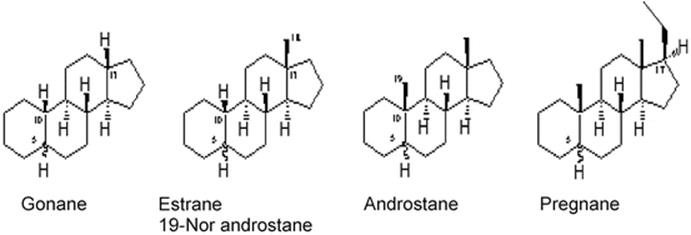
Fig. 8.2
C 19 Nortestosterone derivatives
A special molecule in this context is Dienogest.
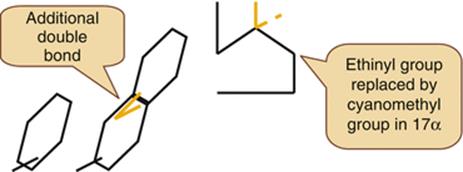
Dienogest is a 19 Nortestosterone derivative with a Cyanomethyl group instead of the usual Ethinyl Group in the 17 alpha position.
1.2.2 Derivatives of Progesterone
Subgroups can be distinguished depending on the different positions of double bindings between C atoms and the type of C group added.
An important molecule is Medroxyprogesteronacetate.

Another important progesterone derivatives in COCs are Cyproterone Acetate and Chlormadinone Acetate.


Both have a C-21 structure and are basically different from Testosterone derivates in their action in the body (see below). Both orally active progestogens suitable for use in combined hormonal contraceptives.
Another subgroup of progesterone derivatives are the 19 Norpregnanes.


Their structure is very similar to progesterone. At position 19 the C methyl group is removed.
They have strong progestogenic activity. Nomegestrol acetate is orally active.
1.2.3 Derivatives of Spironolactone
Drospirenone is the only progestogen which is derived from spironolactone, which is known to counteract sodium retention and has an antiandrogenic action on the skin.

The drospirenone Molecule is a “mixture” of the progesterone and the spironolactone molecule.
1.3 Classification According to Interaction with Steroid Receptors
Depending on structure progestogens have different interactions with the various steroid receptors in the body. Steroid receptors are located on the membrane of target cells and are linked to the DNA/RNA and Protein production via different messenger systems. Two properties can be distinguished:
(a)
(b)
The receptors to which progestogens bind can be the following:
· Progestogen receptor: The most important receptor to induce the desired effect.
· Androgen receptor: Activation of androgen receptors mediate androgenic effects on hair growth and activity of the sebaceous glands. Some progestogens bind to this receptor and can either block or activate it (antiandrogenic properties see below).
· Estrogen receptor: This receptor mediates effects in many tissues especially in the endometrial cells.
· Glucocorticoid receptor: The glucocorticoid effect is linked to the activation of the coagulation system.
· Mineralocorticoid receptor: This receptor mediates sodium retention.
Based on this classification of receptor activities several groups of progestogens can be differentiated. The clinical consequences of these differences are still controversial and research is going on.
· Androgenic progestogens: Norethyodrel, Levnorgestrel and Norgestimate have androgenic properties. LNG seems to have not only an androgenic but also an antiestrogenic effect. Antiandrogenic progestogens: The most important compounds are the progesterone derivatives CPA and CMA and drospirenone. These molecules bind to the receptor and exert competitive inhibition.
· Mildly antiandorgenic or neutral progestogens: GEST, DES, mainly interact with the progestogene receptor alone. Dienogest has a weak antiandrogenic action.
· Antimineralocorticoid progestogens: Only Drospirenone has antimineralocorticoid action.
The different receptor effects can be described are shown in Table 8.1.
Table 8.1
Contraceptive progestogens and extra-progestogenic effects (adapted from Benagiano et al. [24]
|
Glucocorticoid activity |
Estrogenic activity |
Antiestrogenic activity |
Androgenic activity |
Antiandrogenic activity |
Mineralocorticoid activity |
|
Medroxy progesterone acetate |
Norethisterone acetate |
Levonorgestrel |
Levonorgestrel |
Cyproterone acetate |
Drospirenone |
|
Megestrol acetate |
Desogestrel |
Chlormadinone acetate |
|||
|
Gestodene |
Dienogest |
2 Health Risks of Combined Hormonal Contraceptives in Relation to the Progestogen
2.1 Third Generation
Several registry based studies published in the British Medical Journal (BMJ), particularly the Danish registry indicated that there might be an increased risk of venous thromboembolism (VTE) associated with the intake of 3rd and 4th generation COCs compared to preparations containing the progestogen levonorgestrel (LNG) or other first and second generation progestogens [1–5].
The relative risk increase was approximately 2 and absolute attributable risk was given—dependent on the base prevalence rate—between 2 and 8 per 10,000 users [6]. These results contrast with those of published prospective cohort studies, sponsored by Bayer Health Care, at the request of health authorities for a large postmarketing survey, which did not find a differences between the various generations of progestogens The discrepancy led to intensive scientific discussion among epidemiologists about possible confounders and biases in the published studies [7, 8]. The present recommendation is to inform women about the controversial results and the suspected, but not confirmed risk of the newer preparations; Health care professionals are required to balance the risks and benefits of the different preparations in a process of shared decision making with the individual woman. Women should be advised to continue hormonal contraception, in order to avoid the previously observed rise in the number of artificial abortions following the “pill scare” in 1995 [9, 10].
The unresolved scientific debate about VTE has continued, and was given new impetus by another publication based on the Danish Registry indicating that treatment with the transdermal patch, the vaginal ring and the implant were also associated with an increased risk of VTE, whereas the LNG releasing intrauterine system (LNG-IUS) did not or even decreased the VTE risk compared to non users. In this publication the authors recommended and gave practical advice how to switch from the contraceptives mentioned to either a LNG containing pill, a LNG-IUS or a non hormonal method [11, 12].
These publications with warnings about the increased risk of 3rd and 4th generation contraceptives lead to an intensive debate among epidemiologists about the limitations of registry based observational studies in comparison to other study designs and about the clinical validity of these results [13–17].
In summary, most studies suggest that the third generation progestins, desogestrel and gestodene (but not norgestimate), may be associated with a higher risk of venous thromboembolism when compared with levonorgestrel, a second generation progestin. However, the absolute excess risk is small, and may be outweighed by the many benefits of OCs, including prevention of an unwanted pregnancy, and a reduction in ovarian and endometrial cancer risk.
2.2 Antiandrogens
There are some special concerns and considerations regarding progestogens with an antiandrogenic action.
Cyproterone acetate. In two studies, a higher risk of VTE was seen when compared with contraceptives containing levonorgestrel [18, 19]. In a report from the Danish National Registry the risk was not significantly different from LNG (absolute risk 4.2 and 3.1 per 10,000 woman-years for levonorgestrel and cyproterone acetate, respectively) [20].
Chlormadinone Acetate. There are no large epidemiological studies with CMA, but the post marketing studies especially in Germany and Austria did not show an increased risk for VTE in users. The European Authorities demand however more surveillance studies to be able to determine the cardiovascular risk of chlormadinone which has been shown to be effective in reducing acne and dysmenorrhea.
Drospirenone. Drospirenone, a progestin that also has antiandrogen and antimineralocorticoid properties, has been associated with a greater risk of VTE when compared with levonorgestrel in some, but not all studies (see also above).
Two observational studies have reported that oral contraceptives containing drospirenone were associated with an excess risk of venous thromboembolism (similar in magnitude to the third generation progestins) [1, 2]. Two previous large, prospective, surveillance studies of new users of drospirenone-containing oral contraceptives subsequently reported that the thromboembolism risk was no different from that for other OCs It has been estimated that 9,000 women would need to be treated with a drospirenone OC in order to see one additional case of venous thromboembolism [7, 8]. After the publication of the two surveillance studies, two additional case-control studies and a registry-based cohort study reported a two- to threefold increased risk of VTE with OCs containing drospirenone compared with levonorgestrel [3–5].
An FDA sponsored study published after the Drug Safety Communication utilized computerized data files from two integrated medical care programs and two state Medicaid programs to obtain data regarding the risk of several cardiovascular endpoints in combined hormonal contraceptives users. The authors identified a final cohort that included 189,210 person-years of exposure to drospirenone. In adjusted analyses, drospirenone use was associated with a significantly higher risk of VTE relative to low-estrogen comparators (RR 1.74; 95 % CI 1.42–2.14) [21].
In 2012, based upon available data, the US Food and Drug Administration (FDA) added revised labeling to all oral contraceptives containing drospirenone, stating that they may be associated with up to a threefold higher risk of VTE compared with OCs with levonorgestrel and some other progestins [22]. The FDA does not advise women to stop drospirenone-containing OCs, but does suggest that an individual’s risk of VTE be assessed before starting one in a new OC user, or before considering using one in a woman who has been on an OC not containing drospirenone. Lastly, the warning notes that the VTE risk with drospirenone is small and still lower than the risk of VTE during pregnancy.
In 2011, the European Medicines Agency also concluded that drospirenone-containing birth control pills carry a higher risk of venous thromboembolism, but noted the overall risk of blood clot from any birth control method remains small and stopped short of advising women to stop taking pills containing drospirenone [23].
3 Progestogen Only Contraception (Short Overview)
3.1 Common Features of Progestogen Only Contraception
3.1.1 General Principle of Action
The basis for progestogen only contraception lies in the specific action of progestogens on reproductive physiology. These actions are type and dose dependent and include:
· Inhibition of ovulation.
· Change of the cervical mucus to make it impenetrable.
· Endometrial changes which make implantation either difficult or impossible.
· Changes in tubal mobility.
The common clinical important features of these methods are:
3.1.2 Very Low or Absence of Cardiovascular Risks
Progestogens have very little impact on the coagulation system (see above). Their effects on blood flow and contractility of vessel walls is very limited. Epidemiological studies do not show any significant risk for thromboembolic venous or arterial disease. Therefore progestogen only contraceptives can be used in women who have a contraindication for combined hormonal contraceptives (WHO MEC Category 4) or where the use is not advised (Category 3).
Contraindications to combined hormonal contraception include:
· Women postpartum (during the first 21 days, lactating women).
· Women with a combination of cardiovascular risk factors (obesity, smoking, age).
· Women with specific venous thromboembolic risk factors (thrombophilia, family history, longer immobilisation, acute DVT with anticoagulant therapy).
· With women with specific arterial risk factors (hypertension, migraine with aura, valvular heart disease, past ischemic heart disease).
3.1.3 Contraindications for Progesterone Only Contraception
There are few contraindications to progestogen only contraception, but these include: Breast Cancer, active liver disease, benign and malignant liver tumours (except nodular hyperplasia).
3.1.4 Side Effects
The most frequent side effects attributed to the action of progestogens are acne, mild hirsutism, depressive mood, sexual pain and weight gain. This is however not based on prospective clinical comparative trials but mainly observational data. The most frequent side effect of continuous use of progestogens is irregular bleeding.
3.1.5 Additional Benefits and Therapeutic Indications
Progestogen only contraception confers several important additional benefits:
· Lactation: The progestogen only contraceptives can be used in lactating women because there is no reduction in milk production and no negative effect on the newborn.
· Menstrual symptoms: Contraceptive progestogens can, due to their antimitotic and transformational action on the endometrial cells reduce the frequency and intensity of uterine bleeding. The contraceptive progestogens with ovulation inhibition can reduce dysmenorrhea. Additionally progestogens block the synthesis of prostaglandins in the endometrium by reducing the endometrial thickness.
· Menstrual Migraine: Progestogens in continuous use reduce the intensity of menstrual migraine.
· Endometriosis: Progestogens can reduce the proliferative activity of the endometrium.
3.1.6 High Efficacy in Typical Use
The long acting preparations of contraceptive progestogens (injections, implants, medicated IUDs) have a very high efficacy in typical use due to the fact that the contraceptive effect is largely independent of the compliance of the user.
3.2 Routes of Application
Progestogen only contraception can be applied orally, by injection, as a intrauterine system or as implant.
3.2.1 Oral Preparations
Compositions
Older oral preparations containing Levonorgestrel and Norethisterone are unable to inhibit ovulation but their contraceptive effect is based on the action on the cervical mucus which becomes impenetrable to sperm. An additional effect of these progestogen only pills is effect on the endometrium desynchronising ovulation and endometrium transformation and preparation for implantation.
These preparations should be taken at more or less the same time every day in order to exert the contraceptive effect. The typical user Pearl Index is between 6 and 8. The newer progestogen only pill with 75 μg of desogestrel daily is taken continuously without a 7 day break. 75 μg of desogestrel inhibits ovulation inhibition and is as effective as combined hormonal contraceptives. This pill is also called an estrogen free inhibitor of ovulation. No major health risks are known.
Contraindications
Breast Cancer, active liver disease, benign and malignant liver tumours (except nodular hyperplasia).
Side Effects
Due to the daily intake needed for ovulation suppression there is no phase of progestogen withdrawal which is the reason for the bleeding occurring during the pill free interval during the use of combined hormonal contraceptives in the 21/7 regimen. Irregular bleeding is therefore the main complaint which may lead to discontinuation. Other progestogenic side effects such as acne, weight gain, depressed mood are rare.
Special Benefits
There is alleviation of menstrual migraine, pain reduction in patients with endometriosis and reduction of hypermenorrhea and dysmenorrhea.
3.2.2 Progestogen Implants
Compostions, Type of Preparations
Hormonal implants are subdermally inserted contraceptives that provide reliable contraception for 3–5 years. The matrices are inert or biologically degradable rods or capsules which release the respective steroid continuously over a lengthy period of time. The Population Council in New York has studied long-term contraception with subdermal hormonal implants since 1966. The hormone implants consist of one or several small flexible rods or a capsule inserted under the skin of the upper arm. Depending on the product, they release the progestins megestrol acetate, norethindrone, norgestrinone or etonogestrel for a period of 1 year to 5 years.
Norplant® was composed of six rods. Each rod contains 36 mg of levonorgestrel. The total duration of action of these 6 rods was 5 years. The product has not been marketed since 2002.
Norplant II® (Jadelle®), Norplant®’s successor product, is composed of two flexible silicone rods (43 mm Å–2.5 mm) each containing 75 mg of levonorgestrel and also has a duration of action of 5 years. The same product is commercially available in China under the name Sinoplant.
The etonogestrel Releasing Hormonal Implant Implanon®
Composition: Implanon® is an etonogestrel-releasing hormonal implant. The rod is 4 cm long and 2 mm in diameter and is composed of 40 % ethylene vinyl acetate (EVA) and 60 % (68 mg) etonogestrel (3-keto-desogestrel). The duration of action after subdermal implantation is 3 years.
Mechanism of Action: The main effect is ovulation inhibition, although this inhibitory effect is less at the end of the 3 years. Addtional contraceptive effects are the change in the composition of the cervical mucus and making the endometrium less receptive for a theoretical mplantation. The PI is 0.38 pregnancies per 100 women-years of use, which is similar to that of other long-acting methods of contraception.
The concentration falls over time at a rate that depends on body weight. Clinical experience with Implanon® in women weighing more than 80 kg is limited. Available data do not show a decrease in efficacy in obese women.
Accurate placement is crucial to the product’s reliability. There are reports of incorrect insertion of the Implanon® rod, possibly making the contraceptive rod impossible to palpate and difficult to find. To make the product easier to use safely and simpler to locate, the system was upgraded with Implanon NXT®. Efficacy may be hampered by drugs affecting the metabolism of etonogestrel like antiviral drugs. No major health risks are known. There is no concern regarding bone loss. Contraindications include Breast Cancer, active liver disease, benign and malignant liver tumours (except nodular hyperplasia).
Side Effects: As with other progesterone only contraceptives, the most frequent side effect are unscheduled bleeding. These lead to various degrees of discontinuation, (approximately 15–18 % in USA and Europe and 3–4 % in Southeast Asia and Russia. In approximately 5 % of users the following side effects were reported: acne, headache, weight gain, mastalgia, vaginal infections and bleeding disorders. Interactions with broad-spectrum antibiotics, St. John’s wort, a number of antiepileptic agents and mood-altering drugs have been documented. It should be borne in mind that placement and removal require special training.
Additional Benefits: Clinical studies have shown that Implanon® is also effective in treating heavy dysmenorrhea. However, the product is not approved for that purpose. Its use in this therapeutic indication is an off-label use Another possible beneficial effect is the diminuition of pain caused by endometriosis.
3.2.3 Injections (Intramuscular and Subcutaneous)
Composition
Medroxy progesterone acetate (DMPA) is available for injection as a depot either. In a dose of: 150 mg/1 mL injected intramuscularly or in a dose of 104 mg/0.65 mL injected subcutaneously. Both preparations last for 3 months. The mechanism of action of DMPA is similar to other progestogens and includes a strong antigonadotropic effect, inhibition of ovulation, inhibition of endometrial proliferation, and changes in the cervical mucus making the mucus impenetrable for sperm. The dose is a standard dose, and no adjustment is necessary for body weight. There is no reduction in efficacy with concurrent medication.
Health Risks
No major health risks have been found. However, long term DMPA use induces an unwanted increase of LDL Cholesterol and reduces peripheral arterial flow-mediated dilatation, which are matters of concern. DMPA does not alter coagulation factors nor increase blood pressure. Some studies have found an increased VTE risk but these studies have methodological weaknesses and a small number of cases. Nonetheless the World Health Organization has attributed category 23 to DMPA in women with current VTE, a history of stroke or ischemic heart disease.
The primary concern is the effect of DMPA on bone density. DMPA suppresses endogenous estrogen production from the ovaries by its strong antigonadotropic action. Compared to nonusers, the bone mineral density at the hip and spine of DMPA users decreases by 0.5–3.5 % after 1 year and 5.7–7.5 % after 2 years of use. There is therefore concerns about the use of DMPA in adolescents when the accumulation of bone mass is at its peak, and in premenopausal women as there may be an increased rate of bone density loss. However, many studies have shown that the bone loss is reversible and the best evidence available at present indicates that that DMPA does not reduce peak bone mass and does not increase the risk of osteoporotic fractures in later life in women with an average risk of osteoporosis.
At present, DMPA is considered to be contraindicated when pregnancy is planned within the next year, in the presence of osteoporosis and known risk factors for fractures, or in the presence of hypothalamic amenorrhea, anorexia nervosa or chronic glucocorticoid therapy.
Side Effects
Side effects include menstrual irregularities (during the first 3–6 months irregular bleeding and spotting, later there may be amenorrhea in up to 75 % of users). There may be weight gain of between 3 and 6 kg (especially in young obese women). Headache, abdominal discomfort and pain, dizziness, nervousness and asthenia have also been described.
Benefits
The benefits include, reduction of heavy menstrual bleeding due to the high incidence of amenorrhea after longer use, a reduced risk of pelvic inflammatory disease, reduction of endometriotic pain, fewer painful crisis in women with sickle cell disease and reduction in vasomotor symptoms.
3.2.4 Levonorgestrel Containing Intrauterine Systems
There are two types of Levonorgestrel containing intrauterine systems (a) Levonorgestrel-releasing Intra-uterine device IUD (LNg 20)—The LNg20 IUD consists of a T-shaped polyethylene frame with a collar containing 52 mg of levonorgestrel dispersed in polydimethylsiloxane attached to a vertical stem. In vivo, the LNg20 IUD initially releases 20 mcg of levonorgestrel daily, declining to 10–14 mcg per day after 5 years. The LNg20 IUD should be replaced after 5 years (b) Levonorgestrel-releasing IUD (LNg14) It contains 13.5 mg levonorgestrel, which is initially released at a rate of 14 mcg daily, declining to 5 mcg/day after 3 years. It is smaller in size (T shape 28 by 30 mm) than the LNg20 (T shape 32 by 32 mm) and has a smaller inserter diameter (3.8 mm versus 4.75 mm). It contains a silver ring to distinguish it on ultrasound from other IUDs and make it detectable by X-ray. The LNg14 IUD should be replaced after 3 years.
Both types of Levonorgestrel-releasing IUD’s act by thickening the cervical mucus, making it impervious to sperm, by causing endometrial decidualization and glandular atrophy, inducing expression of glycodelin A in endometrial glands which inhibits the binding of sperm to the ovum and in partial inhibition of ovulation (in approx. 20 % of users).
Both types of Levonorgestrel-releasing IUDs are efficacious. The cumulative pregnancy rate is 0.5–1.1 after 5 years of continuous use with the LNG 20 IUD. The 3 year cumulative pregnancy rate is 0.9 with the LNG 14 IUD.
Contraindications
Contraindications include severe deformity of the uterine cavity, acute sexually transmitted infections, unexplained vaginal bleeding, current breast cancer, Wilson’s disease and known or suspected pregnancy.
Side Effects
The major side effect is irregular bleeding, which is very common during the first 3–6 months. At 24 months 50 % of LNG20 users have amenorrhea, 25 % have oligomenorrhea and 11 % have spotting. The pattern is similar with the LNG 14 IUD with less amenorrhea (13 versus 24 % after 3 years).
Other side effects are rare and include breast tenderness, mood changes and acne.
Additional Benefits
There are many benefits to using the Levonorgestrel-releasing IUD. The major benefit is reduction in heavy menstrual bleeding and dysmenorrhea in patients without organic pathology and bleeding due to bleeding diathesis including anticoagulation therapy. The efficacy regarding reduction of bleeding intensity in women with fibroids and adenomyosis is yet unclear and under investigation. The Levonorgestrel-releasing IUD protects from pelvic inflammatory disease, due to cervical mucus thickening which acts as a barrier towards ascending infections. The Levonorgestrel-releasing IUD can be used to treat endometriosis. There is endometrial protection in premenopausal and menopausal women using estrogen replacement, and a concomitant reduction of the risk of endometrial cancer. The Levonorgestrel-releasing IUD can also be used to treat endometrial hyperplasia and cancer.
Special Consideration
LNG IUDs and especially the LNG14 IUD are a highly effective method of contraception in women under age 20 due to the facilitation of compliance and the high continuation rate. Rates of infection are similar in adolescent users to those of adults. Nulliparity is not a contraindication for the use of this method of contraception.
References
1.
Lidegaard O, Lokkegaard E, Svendsen AL, Agger C. Hormonal contraception and risk of venous thromboembolism: national follow-up study. BMJ. 2009;339:b2890.PubMedCentralCrossRefPubMed
2.
van Hylckama Vlieg A, Helmerhorst FM, Vandenbroucke JP, Doggen CJ, Rosendaal FR. The venous thrombotic risk of oral contraceptives, effects of estrogen dose and progestagen type: results of the MEGA case-control study. BMJ. 2009;339:b2921.PubMedCentralCrossRefPubMed
3.
Jick SS, Hernandez RK. Risk of non-fatal venous thromboembolism in women using oral contraceptives containing drospirenone compared with women using oral contraceptives containing levonorgestrel: case-control study using United States claims data. BMJ. 2011;340:d2151.CrossRef
4.
Parkin L, Sharples K, Hernandez RK, Jick SS. Risk of venous thromboembolism in users of oral contraceptives containing drospirenone or levonorgestrel: nested case-control study based on UK General Practice Research Database. BMJ. 2011;340:d2139.CrossRef
5.
Lidegaard Ø, Nielsen LH, Skovlund CW, Skjeldestad FE, Løkkegaard E. Risk of venous thromboembolism from use of oral contraceptives containing different progestogens and estrogen doses: Danish cohort study 2001–9. BMJ. 2011;343:d6423.PubMedCentralCrossRefPubMed
6.
Heinemann LAJ, Dinger JC. Range of published estimates of venous thromboembolism incidence in young women. Contraception. 2007;75:328–36.CrossRefPubMed
7.
Dinger JC, Heinemann LAJ, Kuhl-Habich D. The safety of a drospirenone-containing oral contraceptive: final results from the European Active Surveillance study on Oral Contraceptives based on 142,475 women-years of observation. Contraception. 2007;75:344–54.CrossRefPubMed
8.
Seeger JD, Loughlin J, Eng PM, et al. Risk of thromboembolism in women taking ethinylestradiol/drospirenone and other oral contraceptives. Obstet Gynecol. 2007;110:587–93.CrossRefPubMed
9.
Skjeldestad FE. Increased number of induced abortions in Norway after media coverage of adverse vascular events from the use of third-generation oral contraceptives. Contraception. 1997;55:11–4.CrossRefPubMed
10.
Goodyear-Smith A, Arroll B. Termination of pregnancy following panic-stopping of oral contraceptives. Contraception. 2002;66:163–7.CrossRefPubMed
11.
Lidegaard O, Nielsen LH, Skovlund CW, Lokkegaard E. Venous thrombosis in users of non-oral hormonal contraception: follow-up study, Denmark 2001–10. BMJ. 2012;344:e2990.PubMedCentralCrossRefPubMed
12.
Lidegaard O, Milsom I, Geirssons RT, Skjeldestrad FE. Hormonal contraception and venous thromboembolism. Acta Obstetricia et Gynecologica Scandinavica. 2012;91:769–78.CrossRefPubMed
13.
Spitzer WO. The aftermath of a pill scare: regression to reassurance. Hum Reprod Update. 1999;5:736–45.CrossRefPubMed
14.
Lewis MA, MacRae KD, Kuhl-Habichl D, Bruppacher R, Heinemann LA, Spitzer WO. The differential risk of oral contraceptives: the impact of full exposure history. Hum Reprod. 1999;14:1493–9.CrossRefPubMed
15.
Dinger J. Oral contraceptives and venous thromboembolism: old questions revisited. J Fam Plann Reprod Health Care. 2009;35:211–3.CrossRefPubMed
16.
Shapiro S, Dinger J. Risk of venous thromboembolism among users of oral contraceptives: a review of two recently published studies. J Fam Plann Reprod Health Care. 2010;36(1):33–8.CrossRefPubMed
17.
Heinemann K, Heinemann LA. Comparative risks of venous thromboembolism among users of oral contraceptives containing drospirenone and levonorgestrel. J Fam Plann Reprod Health Care. 2011;37:132–5.CrossRefPubMed
18.
Seaman HE, de Vries CS, Farmer RD. The risk of venous thromboembolism in women prescribed cyproterone acetate in combination with ethinyl estradiol: a nested cohort analysis and case-control study. Hum Reprod. 2003;18:522.CrossRefPubMed
19.
Vasilakis-Scaramozza C, Jick H. Risk of venous thromboembolism with cyproterone or levonorgestrel contraceptives. Lancet. 2001;358:1427.CrossRefPubMed
20.
Lidegaard Ø. Absolute and attributable risk of venous thromboembolism in women on combined cyproterone acetate and ethinylestradiol. J Obstet Gynaecol Can. 2003;25:575.PubMed
21.
FDA Office of Surveillance and Epidemiology. Combined hormonal contraceptives (CHCs) and the risk of cardiovascular disease endpoints. http://www.fda.gov/downloads/Drugs/DrugSafety/UCM277384.pdf. Accessed 3 Feb 2012.
22.
US Food and Drug Administration. Birth control pills containing drospirenone: label change-products may be associated with a higher risk for blood clots. http://www.fda.gov/Safety/MedWatch/SafetyInformation/SafetyAlertsforHumanMedicalProducts/ucm299605.htm. Accessed 17 Apr 2012.
23.
European Medicines Agency. PhVWP monthly report on safety concerns, guidelines and general matters. 2012; 1201. http://www.ema.europa.eu/docs/en_GB/document_library/Report/2012/01/WC500121387.pdf. Accessed 17 Apr 2012.
24.
Benagiano G, Carrara S, Filippi V. Safety, efficacy and patient satisfaction with continuous daily administration of levonorgestrel/ethinylestradiol oral contraceptives. Patient Prefer Adherence. 2009;3:131–43.PubMedCentralCrossRefPubMed