
There was a boy who excelled at school in every respect and went on to do the same at university. At the end of his second year he set off one morning to take an exam and disappeared. He was found twenty-four hours later, wandering around, completely lost. He was not just lost in the sense that he did not know which city he was in. He was lost existentially, did not feel he existed. Having developed an extraordinarily sophisticated and successful false self and lived behind it for two decades, his true self, the one experiencing his real needs, had become invisible to him. The problem was not just that his awareness of himself in social space had evaporated, his knowledge of such things as the name on his birth certificate. He also had lost track of who he was as a human being.
Having a weak identity – a fragile sense of self – makes it harder to live at first hand, in the present moment. If you do not know who you are, you become prone to pretences, to living ‘as if’ you are you, and to developing ways of coping that can be self-destructive. You may resort to game-playing (sometimes mistaken for playfulness), or striving for recognition and identity through achievements, to create meaning because nothing much feels very true or real. Equally, you may be prone to a hyperactive and hectic lifestyle, in order to distract yourself from the emptiness and loneliness of existing through a false self. This might be mistaken for vivacity. You may appear outwardly emotionally healthy, but in fact your identity is a pretence; you are not living in the present.
Inner identity
A weak sense of self evolves out of the way our needs are responded to by carers in our first year of life. Of course, social identity derives from one’s nationality, family background and gender. But the inner aspect of identity, hard though it may be to believe, derives from our earliest relationships. In the first year, our experience is governed by the physical and the primitive, unmediated by language. Existence can be simply going from feeling hungry to feeling full up, from feeling cold to feeling warm, from feeling unloved to feeling loved. Love is expressed by the meeting of the physical needs. At this stage, there are weak boundaries between what exists within and what exists outside, between Me and Not-me. Sucking on a bottle or breast, we have no idea what milk is, only an experience of needing something and either getting it or not. We are completely powerless, unable even to sit up, let alone use words to convey our wishes. It’s a vulnerable situation, potentially unbearable.
We depend wholly on the empathy of our carers to discern our needs. In this sense, the English psychoanalyst Donald Winnicott was right when he wrote that ‘there is no such thing as a baby’. A baby only exists insofar as he has his sensations confirmed by the care he receives. If this happens thousands and thousands of times, in tiny ways over many months, he gradually gains a consistent sense of what he wants, anchored in physical sensations, as opposed to what his carer wants him to want. Through these sensations, and the carer’s smiles and cooing and other communications, his sense of self emerges. The carer gets some good little gags going with the baby, tiny routines unique to the two of them that a stranger could never provide, however responsive. This joyful intimacy also becomes the foundation of playfulness, authenticity and vivacity. Such a solid base can confer emotional health in the face of daunting subsequent adversities.
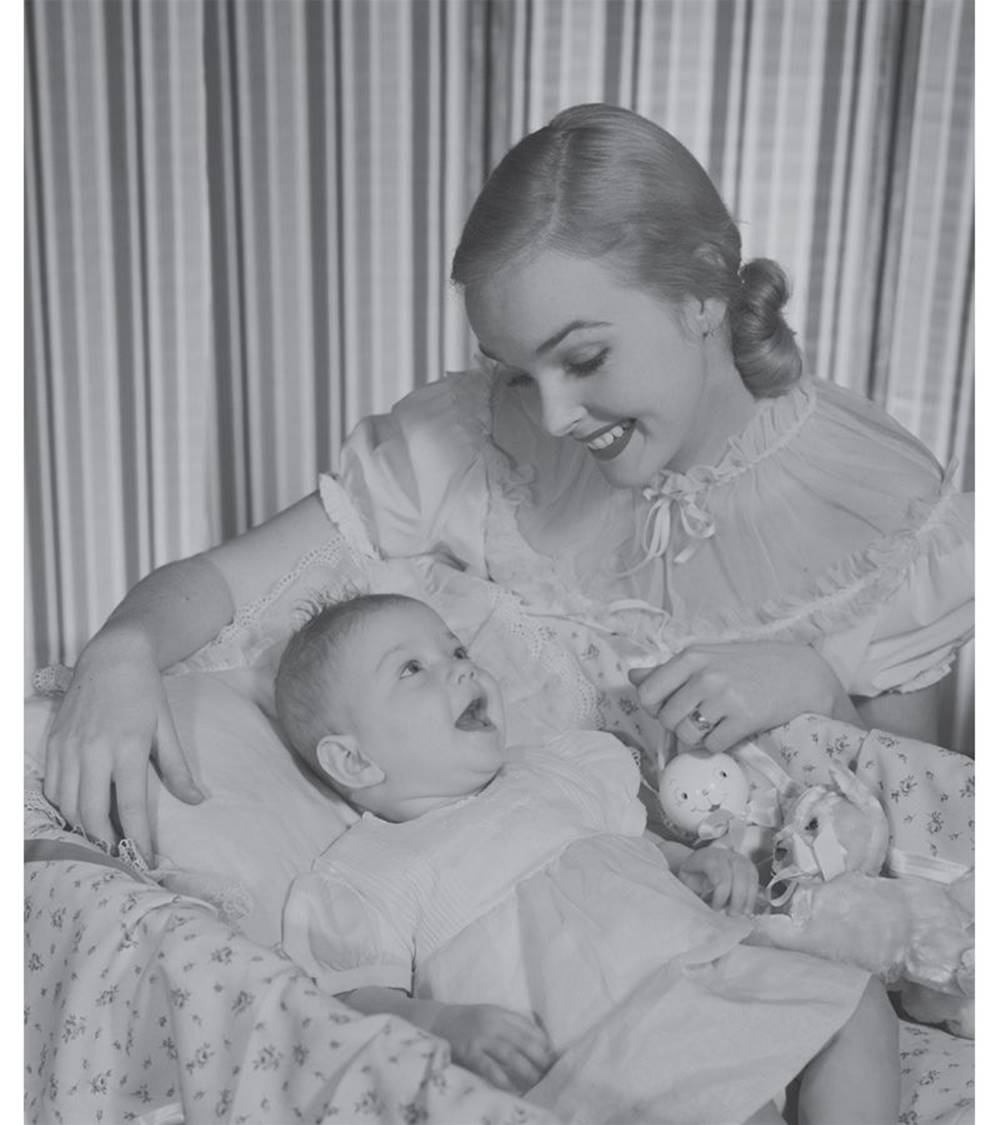
A baby only exists insofar as he has his sensations confirmed by the care he receives.
Take George, a 49-year old man from Shanghai, China. During the month I spent in that city interviewing about forty of its residents in 2004, he was the only one I met who had actually been cared for by his mother during the early years. Nearly everyone there was looked after by a grandmother or in nurseries, so that the more robust younger women, the mothers, could work. But in George’s case, his mum gave up her job to be there at all times and was very loving. This provided a strong sense of self, which stood him in good stead for what was to come.
His father was a drunk. His mother hated him (his father) for a fecklessness which meant that the family was poor even by the standards of poor families in 1950s China, often starving. At school George was mocked for not having shoes to wear or any lunch. Although uneducated herself, his mother stressed the importance of schooling, whilst his father denigrated it.
When he was nineteen, as a result of the Cultural Revolution, George was sent off to be a labourer. He had to dig irrigation dykes to reclaim the land. He and the other labourers left their dormitory at six in the morning and walked for an hour to get to the job site. Then began the digging and carrying of the soil. They were from the city and not used to such physical strain. The sludge was so slippery people often worked in bare feet, and in the winter it was freezing cold. They dug and carried until lunch, then went back to work, before the trudge home around 5 p.m.
Despite all these travails, George managed to learn English from a transistor radio (the Communist Party was transmitting lessons in the language at that time) and to get his hands on novels. When the Cultural Revolution ended he went on to university and has subsequently had a successful business career. But what is so startling is the way he radiates emotional health.
Despite his forty-nine years, he still has a full head of jet-black hair and only a slight paunch. He is a tremendously engaging fellow, warm, amusing and amused. Chinese people tend not to show a lot of emotion, displaying instead a flat, steady mood, whereas George is like an Italian. When he makes a point he waves his arms, his voice sometimes reaches contralto as he squeaks with amusement at some folly of Mao’s regime. At other times, his face goes black with despair and his voice is as sad as an operatic tenor bemoaning the suicide of his beloved. He has a fiercely independent view of Chinese society and its history, and is a man of mature opinion. But when I met him he was also full of curiosity about what I thought, and could be a good listener. Above all, he was a delight to share a meal with, full of funny stories and friendliness, and excited just to be alive. His sense of self infused all of this, and easily overrode misfortunes which would have weighed heavily on someone who had not had such a nurturing mother.
Dissociation
The absence of the kind of care experienced by George has been proven to result in a diminished sense of self. As long ago as the 1940s it was noticed that orphans housed in impersonal institutions suffered physical and mental harm, known as ‘hospitalism’: lethargy, failure to develop the most basic social and mental skills, and extreme susceptibility to infections and disease. Those in orphanages did far better if relationships with individual carers were encouraged. It was not the sensory deprivation of the children’s cribs, the lack of toys or stimulation, that damaged the neglected babies, nor was it simply the absence of their mother. What was critical was the presence of someone who knew the baby intimately and understood his or her specific needs, capacities, idiosyncrasies and vulnerabilities.
At least half of men and one third of women raised in institutions have depleted selves, with the likelihood of this occurring increasing according to how young the child was when poor parenting was experienced. But the same is true of those raised by unempathic parents at home. Researcher John Ogawa and his American colleagues followed 168 children from birth to the age of nineteen, measuring the quality of the care they received throughout childhood, to test whether early maltreatment correlated with problems in later life. The parents were selected because they were at high risk of depriving or abusing the children. In particular, the impact of early parental care on dissociation was measured.
Dissociation is a distinctive sign of a weak sense of self, entailing a variety of amnesiac mental tactics for evading painful realities, like failing to notice things, or forgetting or refusing to acknowledge them. Dissociated people also escape from the present by becoming distantly absorbed in a single aspect of the inner or outer world, for instance, gazing hypnotically at a pattern in the wallpaper, or disappearing into fantasies in the company of others. There may be depersonalization, in which events are experienced as if by a third party, disconnected from one’s own body or feelings. At its most extreme, the dissociated person may develop different sub-personalities into which they escape. (In some cases this is the precursor of schizophrenia, a state in which you may actually believe that you are someone else, like Jesus Christ.)
Ogawa demonstrated that the degree to which care was neglectful or abusive before the age of two predicted whether a person would suffer from dissociation seventeen years later. Despite the fact that an enormous number of influences intervened between the early care and the measurement of the 19-year-old personality, its substantial impact was proven. Those in the sample who were only maltreated after infancy – whether between the ages of two and four, or in middle or later childhood – were significantly less likely to be dissociated at nineteen: the earlier the maltreatment, the greater the likelihood of symptoms. Genetic factors appeared to play no part; the baby’s temperament immediately after birth or at three months did not predict how they turned out.
Ogawa also showed that if a child had developed a strong sense of self early on, through empathic care, it was more resilient and far less likely to become dissociated when faced by traumas in later life. Being uncertain of who they are, the weak-selfed require less severe and less frequent trauma to make them doubt their reality, compared to those with a stronger sense of self. Because their psychic boundaries are fragile, they are more prone to dissociative escape from intolerable realities. The stronger-selfed can manage to remain themselves, as George did, through thick and thin. This is suggested by another study which showed that 22-year-old adults had more insights about themselves and were more respectful of others’ autonomy, if their mothers had been sensitive in caring for them during the first year of their lives.
Of course, severe maltreatment after infancy does, in itself, greatly increase the risk of a weak sense of self. It is now an accepted fact (based on twenty-three different studies) that at least half of people with schizophrenia suffered childhood abuse, mostly sexual. Such abuse actually impedes brain growth, so that a woman who was sexually abused as a girl has 5 per cent less of a key part of the brain (the hippocampus) than one who was not. The earlier the abuse, the closer the familial relationship of abuser to abused (family members are far more harmful) and the more extreme the form of the abuse (sexual penetration being most damaging), the greater the number of sub-personalities developed and the more severe the symptoms of damage to the self. Whilst better early care can allow the sufferer to carve out some elements of emotional health, such abuse is a major independent cause of a weak self.
Emotional health with a weak self
The cost of a weak sense of self to emotional health is large, although, thankfully, not necessarily permanent. I once interviewed an American called Henry, a man whose mother believed herself to be the present Queen of England and had great difficulty in tuning into him as a baby. His home was a Petri dish for craziness.
His uncle lived with the family and believed that the Second World War was still going on, probably suffering from post-traumatic stress disorder from his time as a soldier. He would beat Henry and rub salt into his eyes (he also used to attack the Asian postman, believing he was a Japanese soldier). When Henry was only five years old, his older brother’s idea of an amusing jape was to wake him up with spooky howling, wearing a white sheet and holding a torch beneath his chin to create a spectral luminescence, impersonating a mad butcher-ghost, while holding up a meat cleaver. When he was placed in a children’s home, Henry was relieved to escape from his family home, only to suffer a new regime of extreme deprivation and physical abuse there.
Eventually returned to his crazy childhood home in his late teens, Henry (understandably) began to have delusions. Various voices in his head sought to convince him that he must buy guns and shoot as many people as possible. Interestingly, though, he had enough sense of self to resist these ideas, so he made a deal with himself that he hoped would preclude his committing such a massacre: he would only do it if he won the state lottery. Unfortunately, to his astonishment, this was exactly what happened. But on receipt of several thousand dollars he still did not act, and instead created another obstruction.
At the time he believed that one radio station was God speaking to him, while another was Satan. He made a pact that if the satanic station played the song ‘Another One Bites the Dust’ he would do the killings. When that happened, his resistance was overcome. With (shocking) ease he purchased a variety of dangerous weapons (he just walked into a gun shop and said ‘I want the gun that shoots the most bullets’). But the interesting thing was that even then he had enough sense of self to act in a relatively emotionally healthy way. Instead of going to the nearest highly populated public place and blasting away, he ran through his home, killing his mother, uncle and brother. Whilst murder is never a sign of emotional health as such, once you understand the full context, these particular murders can be said to display a certain amount of emotional health: his family were the historical and present cause of his madness; they were a far healthier target, from an emotional-health point of view, than random members of the public.
What struck me as remarkable when I met Henry was how very emotionally healthy he now seemed. This was some ten years after the killings and he had been the beneficiary of a superb therapeutic regime, unhampered by psychiatric medication. He spoke with calmness and clarity throughout. He was insightful, and despite the unrelenting darkness of what he had to say, delivered it with a playfulness in his choice of words and with a dark humour. For instance, when relating the move to a children’s home, he painted a hilarious picture of the way the director of that institution presented the place to his social worker as a loving, safe environment, only to turn into a monster as soon as she had left. He dealt with me skilfully, never becoming annoyed by my more or less ham-fisted, insensitive questions, always gently indicating that he would tell me what I wanted to know all in good time.
One striking detail did emerge from my questions, however. It turned out that his mother was not the only person who cared for him as a baby. During the periods when she was too disturbed to cope, a loving and sane relative often took over. That explained the strength of his sense of self, which had proven sufficient to survive gargantuan assaults on his grasp of reality.
I do not know where he is now (the interview was done in 1988) but I would lay money on the likelihood that Henry is a tremendously constructive member of a community, brimming with emotional health and spreading it around. The reason that the vast majority of people who have endured his mixture of infantile deprivation and subsequent abuse do not turn out like Henry is that they have not had his good fortune of being partly cared for by a loving, responsive person. It is very rare for this to happen in such families. If parents and relatives are deeply disturbed, the maltreatment tends to occur at all stages, more or less. As a result, the person has nothing to fall back on, no fragments of self on which to build. Whilst very intensive and skilled therapy can help the person to construct some self in later life, alas very few people can afford it, and it is hardly ever available from conventional mental health (or prison) services. However, therapy is not the only answer for those lacking a sense of self.
How to address a weak self
Almost any field of endeavour – a project or interest that demands time and attention – can be used as a way to cope with a weak self, some more conducive to emotional health than others. Alas, the commonest are self-destructive or unhelpful; coping is not the same as treating.
Substance abuse provides a form of self-coherence and powerful bodily sensations, addressing the electrochemical lacks originating in infancy. The sensations following ingestion of heroin, for example, can be very similar, in experiential terms, to those of being fed as a baby. The drugs are more reliable than an unresponsive or erratic mother and we can trust them to deliver instant and powerful feelings every time. They provide a reason to live, something someone with a weak sense of self is always searching for (most powerfully evoked in the Velvet Underground song ‘Heroin’). There is a reassuring, meaningful narrative which revolves around the getting of the drugs and the money to pay for them (as evoked in the Velvet Underground song ‘Waiting for the Man’). Alas, this latter often entails criminality – often prostitution in young women, and theft in young men.
However, hard work and exceptional achievement can also provide a self, and be every bit as addictive as heroin, producing electrochemical changes in the body which compensate for infantile lacks. I have interviewed about a hundred famous people from a wide variety of fields who are clearly seeking success in order to compensate for feelings of powerlessness and worthlessness dating back to infancy. The buzz of heightened cortisol experienced when making massive financial deals or performing to huge audiences can confer the same fundamental sense of meaning; likewise the floods of brain chemicals, like dopamine or oxytocin, that can come from being kowtowed to by compliant employees or worshipped by fans.
The successful frequently operate through a sophisticated false self. It creates a tragic spiral of loneliness. The more successful we become, the more people relate to the persona we have created. In the case of famous artists of all kinds, when strangers point to them in the street or come up and ask ‘Are you ___?’ they experience a temporary boost to their self-esteem and a reminder of who they are. Many of them are never far from feeling as lost as the man with whom this chapter began, who was found wandering the streets not knowing his name. Having felt invisible as infants, these people are given a fleeting sense of identity by being recognized. But it does not fix the basic problem, as they become increasingly liable to confuse the persona they have created with their true self. Intimates are either alienated – complaining that their starry husband or wife or sibling is no longer the person they once knew – or else start relating to the famous persona too.
Something very similar tends to happen to top business performers, except it is people within the organization and profession who relate to the persona. Such business tycoons tend to have minimal private lives, with little time available for family and friends, so their social exchanges are restricted to people over whom they have direct power. The employees ingratiate themselves to – and never challenge – the false self, and the true self gets lost.
Of course, it is not only the exceptionally successful to whom these factors apply. Those of us with difficulties in our selfhood are to be found at all levels of society. Through accidents of our history we may not be inclined to use dynamism or cleverness to compensate for weak selves. Some of us may simply have what psychiatrists call personality disorders, tending to be febrile in our emotions, very self-focused (narcissistic) and wild in our ideas. These traits tend to poison our personal and professional lives.
This is not to say that weak-selfed people have no elements of emotional health at all. The weak-selfed may use playfulness as a way of skating on the surface of life, perhaps being highly entertaining in their facetiousness or creating amusing characters through mimicry when socializing. They can have slightly manic bouts of vivacity – that person you know at work who sometimes becomes a very lively contributor to projects, while at other times barely says a word. These individuals can have astonishing insight into others, because the boundaries between themselves and others are weaker and they see people’s unconscious thoughts without trying. Alas, although they may have occasional shafts of insight into themselves, they are usually less able to see inwards. Likewise, they have difficulty achieving two-way, fluid communication. Either they are needily trying to make their point or to be the centre of attention, or they are hiding away and silent.
We nearly always have some healthy components which we can build on, and playfulness and vivacity are good starting points for the weak-selfed. However, it is important to differentiate between genuine playfulness and vivacity and counterfeit versions.
Play is a pretend state, where a person enjoys treating an imaginary scenario as real. It is one of the most rewarding of human attributes, usually entailing humour. Whether putting on accents or dialects in telling amusing stories, or allowing ourselves to exaggerate reality to tell a surreal story, we enjoy it richly. Play is at its most obvious in small children, their greatest source of pleasure. It is closely allied to vivacity, a heightened sense of being alive, often accompanied by a buoyant, active frame of mind. As we move through school and towards adulthood, playfulness can get redirected into Machiavellian gameplaying, and vivacity can be replaced by hyperactive, compulsive speech and action. For those working in professions which require marketing of self and products, these characteristics can be useful; likewise for anyone working in the arts or professions, such as the law, which demand performance. But they should not be mistaken for the real thing.
It is nonetheless possible, through one’s work, to gain a measure of selfhood and, thereby, some emotional health. The five-book sequence about the fictional life of Patrick Melrose, by the English novelist Edward St Aubyn, is a model for how to carve superb literature out of horrendous maltreatment.
Melrose was abused by his father, a man of sadism and some psychopathy. St Aubyn has revealed that the father was based on his own. Melrose wrestles throughout the books with a lack of self. As a youth he becomes a fanatical drug user. He struggles to stay sane, as voices in his head plague him. Free from drugs, he moves onto alcohol, and is unable to resist sexual infidelities. Yet as the books progress it becomes apparent that Melrose’s plight is no different at a fundamental level from our own; the books raise general questions of the greatest importance. They expose the universality of the tendency to either robotically reproduce, or react against, the care we received as children. Whether from an affluent home or a poor one, whether hideously mistreated or just averagely neglected, this is the human predicament. In a triumphant end to the books, St Aubyn provides a very moving, satisfying and optimistic basis for seeking independent volition.
Most striking of all, St Aubyn has discussed the role that the actual writing of the books played in his own development. Whilst by no means suggesting that it was therapy, he made a Faustian pact with himself to either tell this story, or kill himself. His purpose was not to unburden himself of guilt or to transfer his bad feelings to the reader, it was simply to create a beautiful work of art which illuminates the human quest for free choice.
In the view of newspaper reviewers, he succeeded. He created literature of astonishing virtuosity, exquisitely written, and filled with insights into the human condition. In doing so, he may have achieved some sense of self, because, just as Melrose discovers that insight into his motives and immediate actions is the only way for him to avoid re-enacting his miserable childhood history, so the same is true for St Aubyn. The problem of selfhood does not get solved, but it is substantially reduced.
Individualism
Community and group membership can provide another important potential route to greater emotional health for the weak-selfed. However, in developed nations, our tendency towards individualism can get in the way. There has been a huge shift towards it since the Second World War, accelerating in recent years. In the individualist society, identity is achieved first through education, and subsequently through career. ‘What is your job?’ becomes the first question a stranger wants answered. By contrast, in the collectivist society, it is ‘who are your parents?’ In the latter case, identity is conferred upon you by virtue of your family, your position in it, your gender and your society’s suppositions about who such a person should be.
For example, in 1978 I spent three months studying the inhabitants of Borbon, a village a small distance up a river on the west coast of Ecuador in South America. Who you were there depended first and foremost upon your gender.
If female, you were likely to begin having children as a teenager. Caring for your offspring and scraping together a living became your daily preoccupation. Although your partner or husband might stay around for a year or two, he would be liable to travel up and down the river, or even farther afield, in search of work. Men could not be relied upon to support the family at all times, so the women needed to cultivate crops and keep chickens, as well as acting as matriarchs, often supported by sisters and mothers. The men also began parenthood in their teenage years, but would expect to father children by several different women in different villages over the years.
The potential for the kind of individuality that is such an important aspiration of people in developed nations was considerably less in Borbon. This was partly a result of the material conditions. There was minimal difference in the wealth between different households. Your individualism would not be expressed by your possessions. Whilst there was a generator producing electricity for a handful of buildings for some hours of the day, in the villagers’ homes there were none of the electrical goods we take for granted, like fridges, dishwashers or televisions. On top of that, anyone wanting to challenge the social norms would be given very short shrift. A woman who started behaving like a man, for example, largely ignoring her children and travelling up and down the river in search of work, would be ostracized. Likewise, a man trying to behave like a woman. Not that anyone I met showed any sign of trying to rebel in these or other ways. With only small variations, everyone in that community received only very basic care in the early years. Yet because of the very strong collectivist social system, this did not result in personality disorders in later life. The lack of pressure for individualism reduced the damage that such early neglect would have brought in the West.
On the whole, emerging or developing nations are still strongly collectivist, whereas European and English-speaking ones are more individualistic. It is no coincidence that the highest rates of personality disorder are in ultra-individualistic America – many times higher than in Asian nations.
For the weak-selfed person, being an individual is hard. You have to decide who to be, what to do, and if you lack self, that is a huge demand, making resorting to drugs or alcohol or a workaholic lifestyle more likely. That is not to say that all collectivist societies are better for emotional health. In developed nations in the 1950s, both women and people from low-income homes were forced to stay in their boxes, suppressing their creativity and authenticity. Collectivism can be oppressive, but it does have some useful lessons for the weak-selfed person living in a developed nation.
Membership of groups, perhaps based on hobbies or ethical beliefs, promotes emotional health. Just being part of a tennis club or doing weekly line-dancing lessons will lessen your sense of rootlessness and emptiness, as will meeting friends in the pub. What is more, people who have a weekly religious practice are significantly less likely to suffer mental illness. Whether it be yoga, meditation or conventional religion, simply by being part of a community with shared ethical beliefs or rituals, you will gain identity. It is not going to fix a deep lack of a sense of self. But it can help to confer a sense of who you are and how to live your life, providing a foundation for vivacity and playfulness, and helping to foster authenticity.

Just being part of a tennis club or doing weekly line-dancing lessons will lessen your sense of rootlessness and emptiness.
As we saw in the cases of Henry (who murdered several of his family members) and Edward St Aubyn (the novelist), a weak self does not guarantee lack of emotional health. Even in very extreme situations, there is always the possibility of volition.